
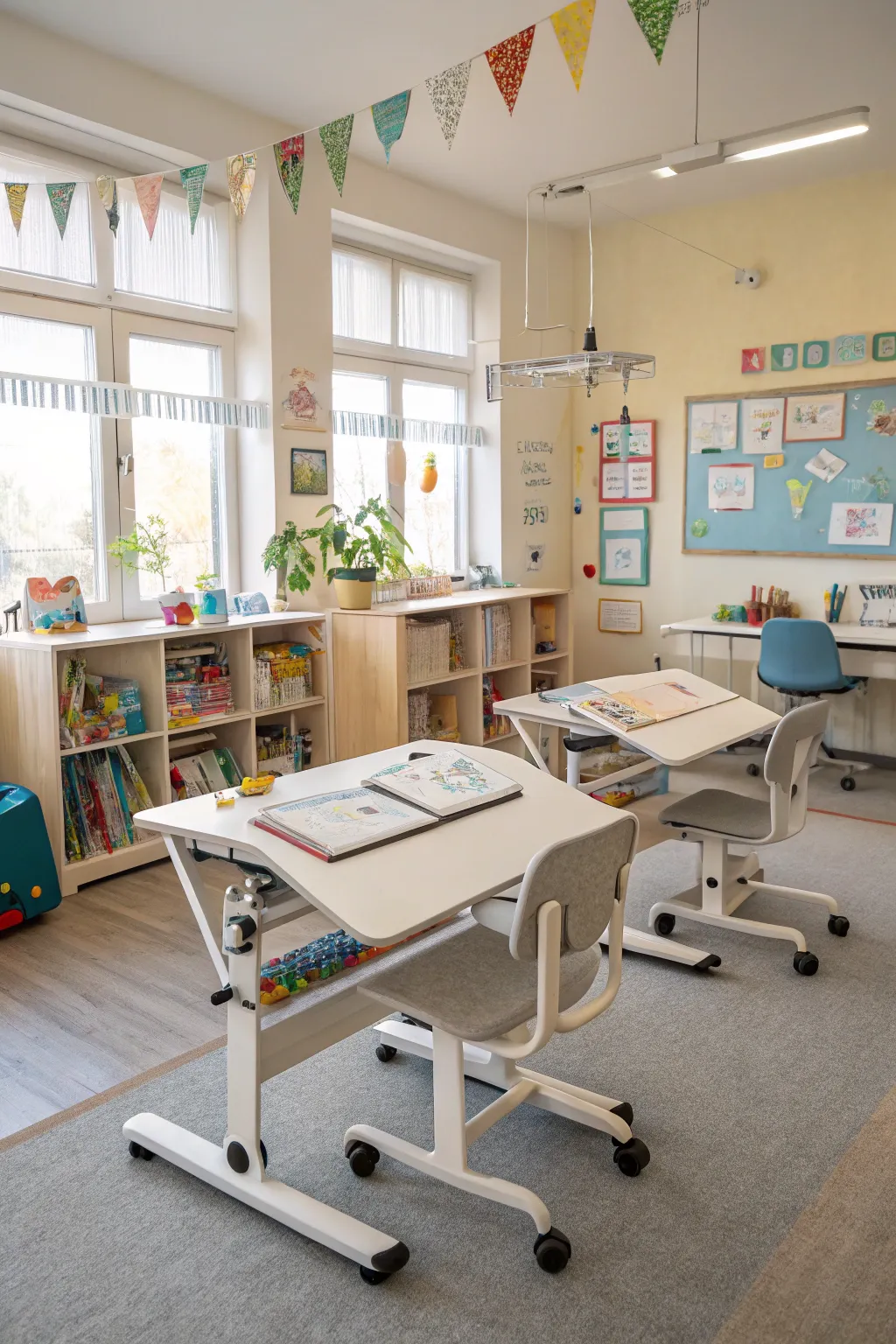
Crafting a room that nurtures both playtime and focused study can be a delightful design venture. Let’s uncover some playful yet practical concepts to morph a room into a sanctuary of amusement and education.
1. Mobile Learning Resources

Utilize mobile learning resources for flexibility in study locations. I suggest using kits containing all necessary supplies, simplifying the process for kids to study anywhere at home. You can also explore design tips for a chic living room study area to create a dedicated space.
2. Tailored Decorations

Inject a personal signature using bespoke decor like personalized items or unique wall art. I believe these touches render a space genuinely special and individualized for kids.
3. Imaginative Storage Options

Incorporate imaginative storage like wall-mounted shelving and cubbies to maintain a tidy space. I appreciate utilizing colorful bins to instruct kids about organization engagingly.
4. Themed Design Segments

Implement themed decor to transform the room into an adventure. A jungle or celestial theme can spark inquisitiveness and render learning pleasurable.
5. Vibrant Wall Art

A painted wall design can elevate a room from the mundane to the marvelous, igniting your child’s creative spirit. I once envisioned a cosmos-inspired wall that not only inspired games but also acted as a peaceful backdrop for academic moments. If you prefer natural textures, explore these wood wall design ideas to add warmth to your space.
6. Comfortable Seating Selections

Integrate comfortable seating like bean bags or low sofas for a relaxed atmosphere. I’ve always held the belief that comfort is crucial for encouraging extended play and study periods.
7. Abundant Sunlight

Enhance sunlight through expansive windows or overhead lights to maintain a cheerful, welcoming atmosphere. In my projects, I frequently harness sunlight to elevate both feelings and attention. You can also incorporate innovative playroom storage to keep these bright spaces organized.
8. Self-Serve Art Spaces

Establish a self-serve art space containing all the essentials for artistic endeavors. I appreciate utilizing pegboards to arrange supplies, rendering it straightforward for kids to access and tidy up. You can also incorporate unique playroom couches to create a comfortable area for them to relax while they create.
9. Embed Musical Components

Include musical components like miniature instruments or a music corner to spark creativity. Music has consistently been a delightful addition to any learning setting.
10. Eco-Conscious Details

Incorporate eco-conscious details like reclaimed wood shelves or rugs made from natural fibers. These features not only appear exquisite but also educate kids about sustainability. You can find more inspiration for these spaces in our creative playroom office combo ideas.
11. Secluded Reading Spaces

Construct a welcoming reading space equipped with comfortable cushions and ambient lighting. I’ve observed that these spots evolve into preferred locations for peaceful moments and imaginative journeys.
12. Padded Play Areas

Gentle play mats introduce an element of safety and comfort to any play zone. I suggest employing vibrant, puzzle-style mats that are effortlessly rearranged and moved. These are essential components when you are organizing your playroom.
13. Interactive Wall Elements

Integrate walls designed for interaction using chalkboard paint or magnetic panels. These features are not only useful but also function as creative channels for children. Explore our best chalkboard wall concepts to inspire your next project.
14. Engaging Wall Decor

Stimulating wall decor can serve both ornamental and educational roles. I often select pieces that foster learning and curiosity, like world maps or alphabet displays.
15. Adaptable Furnishings

Select adaptable furnishings that evolve alongside your child. I’m drawn to adding desks that feature integrated storage, delivering both practicality and flair. Explore our practical desk ideas to find the perfect fit for your child’s study area.
16. Adaptable Learning Hubs

Conceptualize adaptable learning zones capable of transitioning from studying to recreation. I’m keen on using adjustable desks and seating that adapt alongside your child, guaranteeing lasting usability.