How to Anchor Glass Coffee Table Decor (with Placement Map)
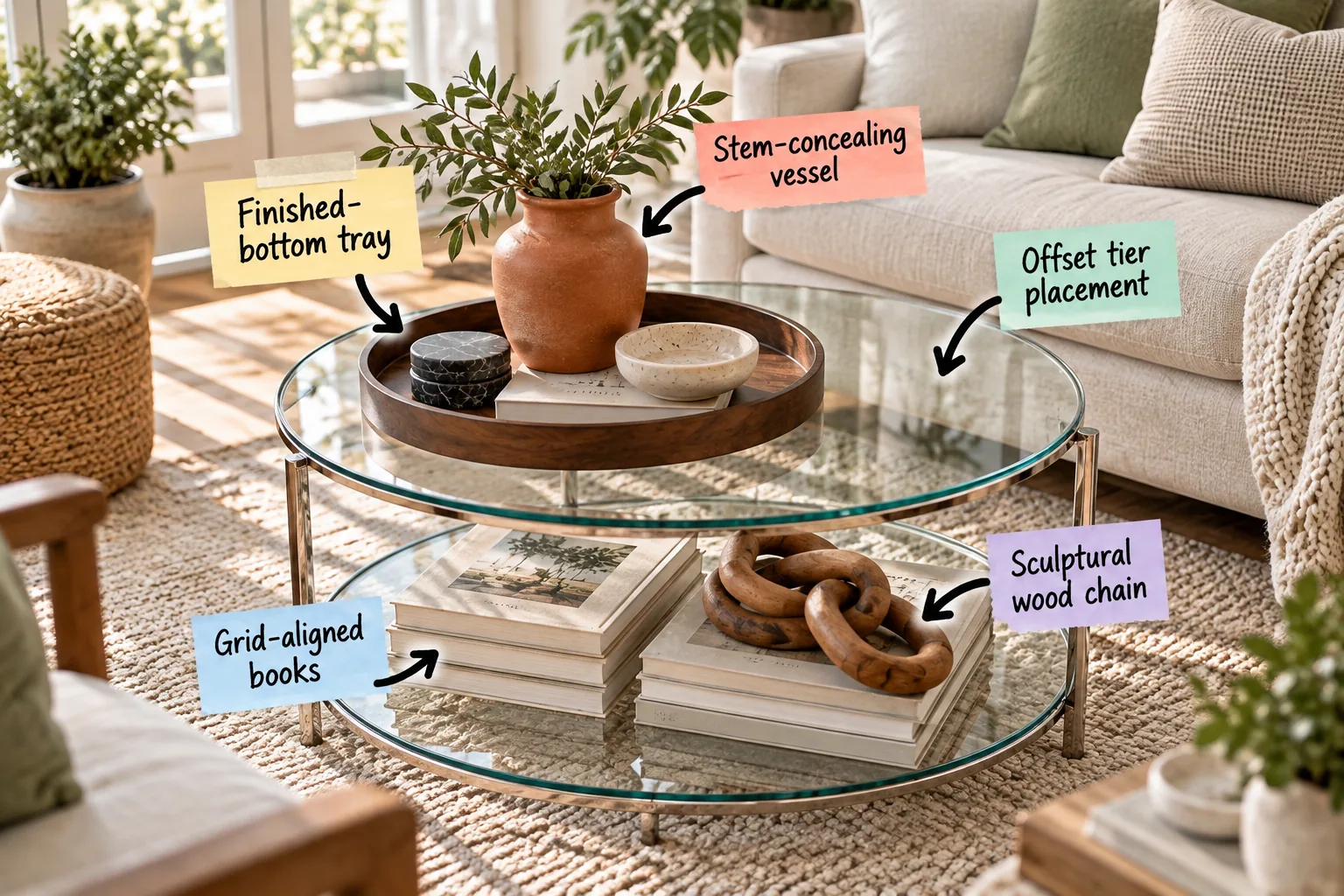
If you struggle with floating clutter, you can finally master the art of styling transparent surfaces using my exact Glass Table Placement Map. This structural layout grounds your decor and guarantees your two-tier table feels intentionally styled, visually balanced, and beautifully anchored.
The Glass Table Placement Map
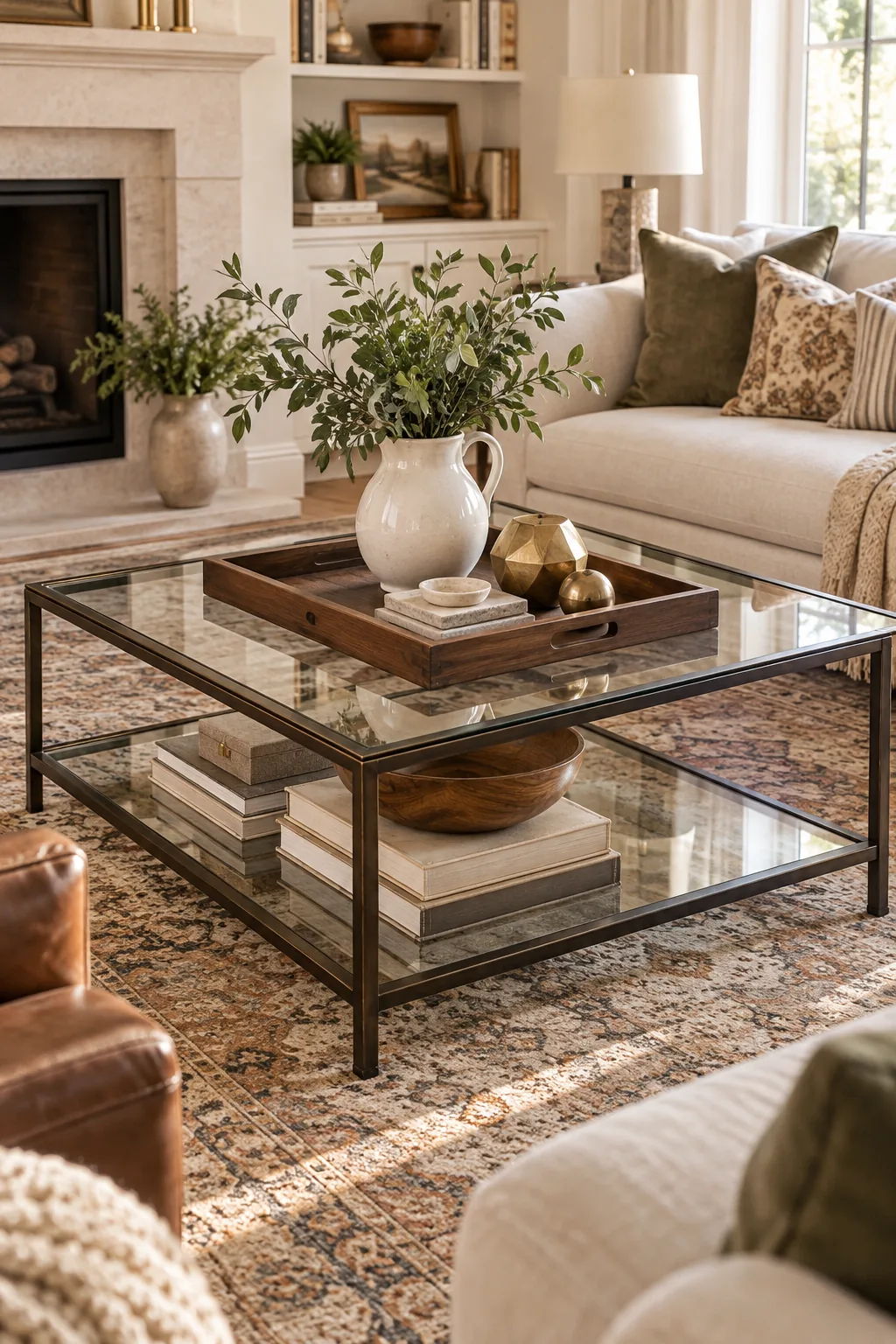
Glass tables require a strict zoning strategy because every structural layer remains completely visible at all times. Section 1 demonstrates the three-zone layout strategy that prevents the floating clutter effect on transparent surfaces by establishing clear visual boundaries.
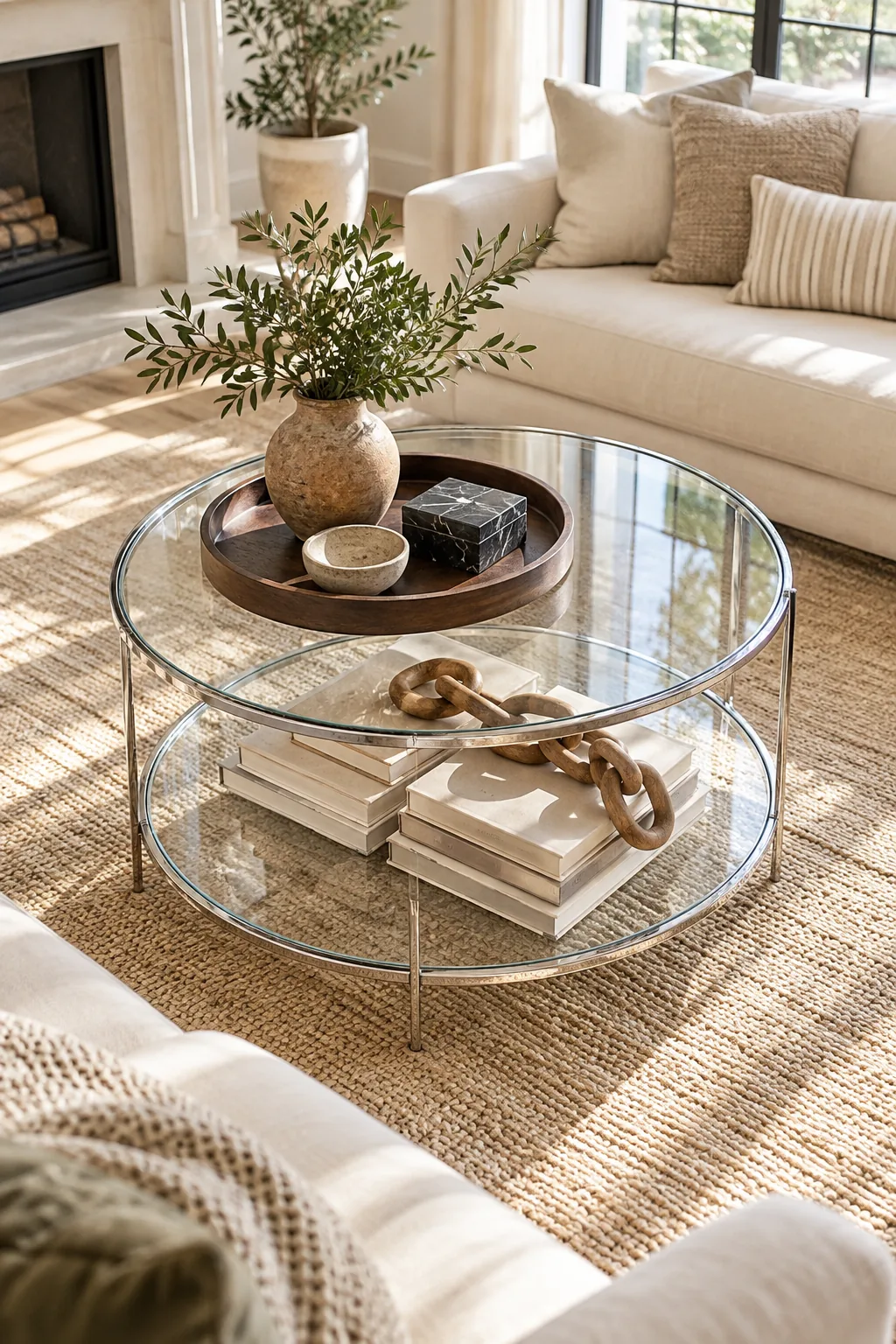
Divide your surface into a primary grounding tray taking up roughly 40 percent of the top, a negative space zone, and a structured lower grid. In my recent LoHi loft project, mapping out these exact zones transformed a chaotic catch-all into a structured, balanced focal point.
Grounding with a Finished-Bottom Tray
A solid tray provides the visual anchor that transparent glass desperately lacks, but the underside matters just as much as the top. Section 2 reveals why the underside of your top-tier tray must be completely finished and free of raw, exposed manufacturing materials.
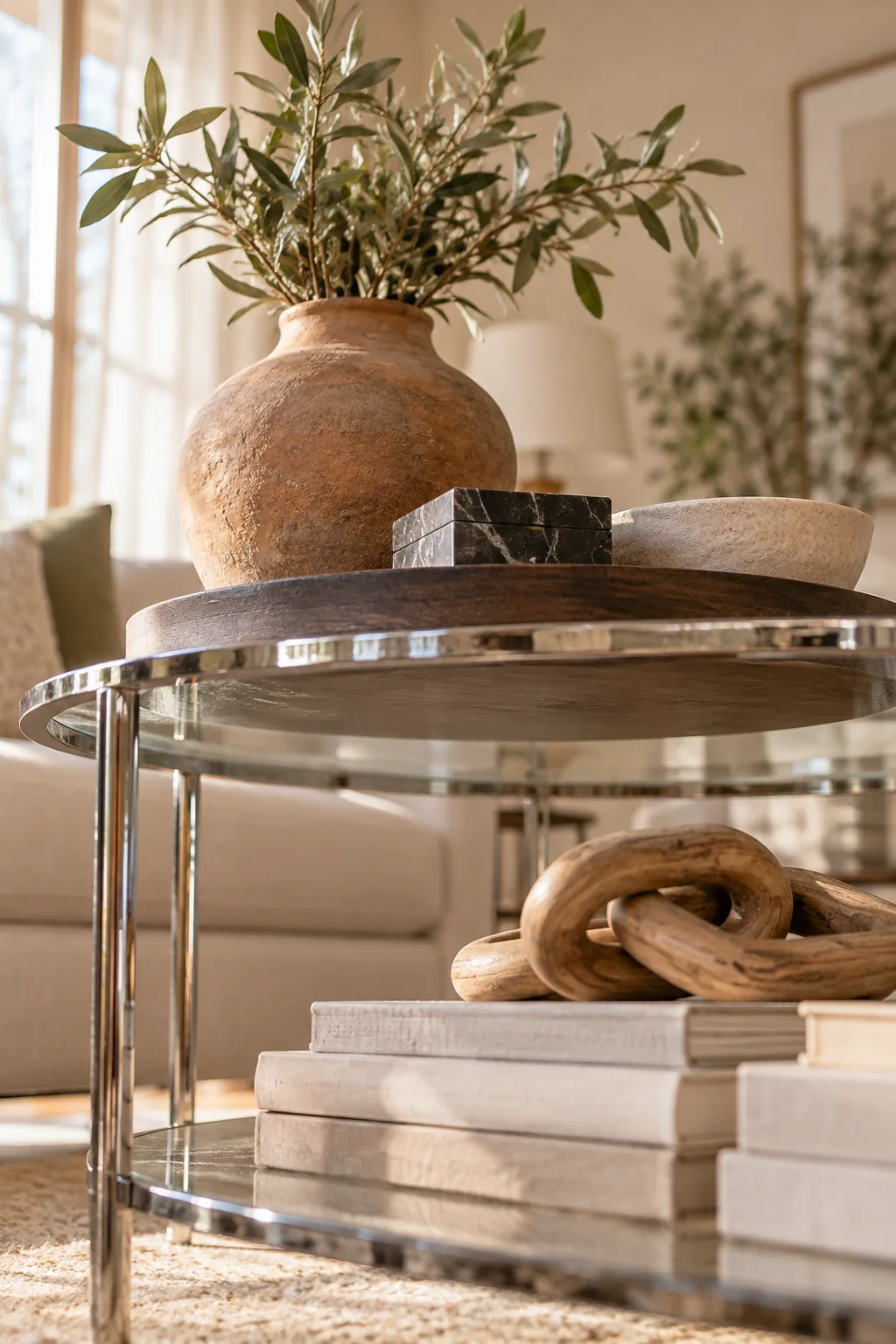
Because the lower tier offers a direct upward view, you must use a finished-bottom tray crafted from solid wood or wrapped leather. Avoid any pieces with exposed industrial staples, glued felt pads, or raw MDF bottoms that instantly ruin the illusion of quality.
Selecting the Right Wood Tone
Choosing the correct material for that foundational tray requires analyzing the other wooden elements currently grounding your living space. To establish harmony without feeling overly matched, I always recommend pulling tones from your existing architectural features rather than introducing a completely new stain.
- Walnut and teak: These rich, mid-tone woods provide excellent contrast against cold glass and pair beautifully with warm leather sofas.
- Ebonized oak: A matte black finish acts as a stark, graphic anchor that instantly modernizes traditional living room layouts.
- Bleached ash: Lighter woods work best when you want to maintain an airy, minimalist aesthetic while still providing necessary opacity.
Once you select your primary wood tone, ensure the tray features a substantial lip of at least 1.5 inches in height. This physical barrier contains your smaller accessories and prevents delicate items from visually bleeding out into the surrounding negative space.
Hiding Stems in a Solid Vessel
Clear glass vases compound the transparency problem by magnifying messy stems and exposing murky floral water to the entire room. Section 3 illustrates the necessity of using opaque, heavily textured vessels instead of clear glass to properly hide your botanical stems.
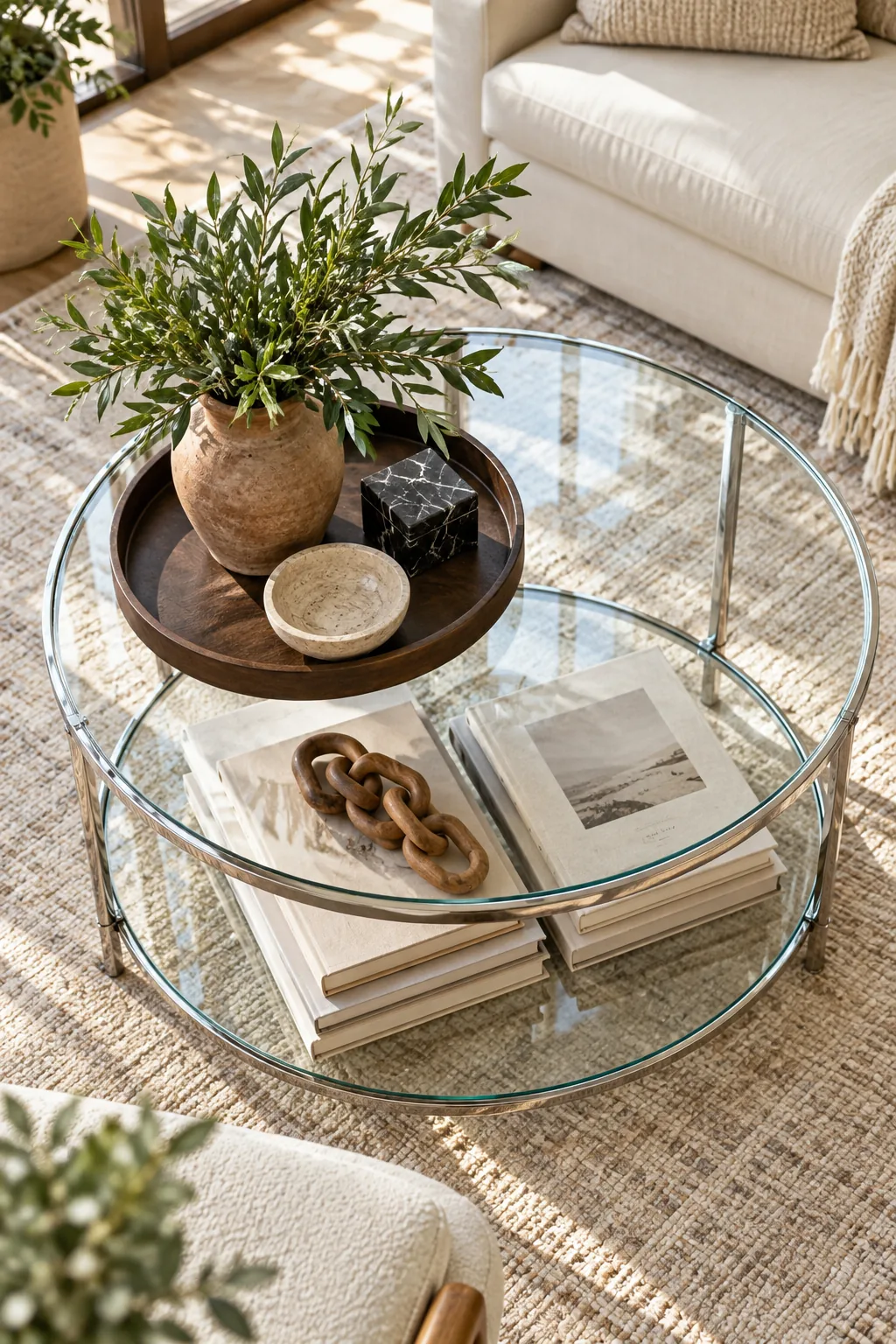
Swap transparent options for a stem-concealing vessel crafted from unglazed terracotta that introduces much-needed opacity and rough, earthy texture. I learned this the hard way in my own living room when a beautiful clear vase turned my table into a magnified display of murky water.
Choosing the Central Vessel Material
When selecting your primary floral container, prioritize matte finishes over high-gloss glazes to absorb light rather than reflect it. A chalky ceramic or raw stone surface provides a necessary visual break from the highly reflective, polished nature of the glass table itself.
Offsetting the Tier Placement
Never stack your heavy decorative elements directly above the lower shelf’s primary focal points, which creates a blocked, heavy appearance. Section 4 demonstrates how staggering the visual weight between tiers prevents this density and allows the eye to travel freely through the table.
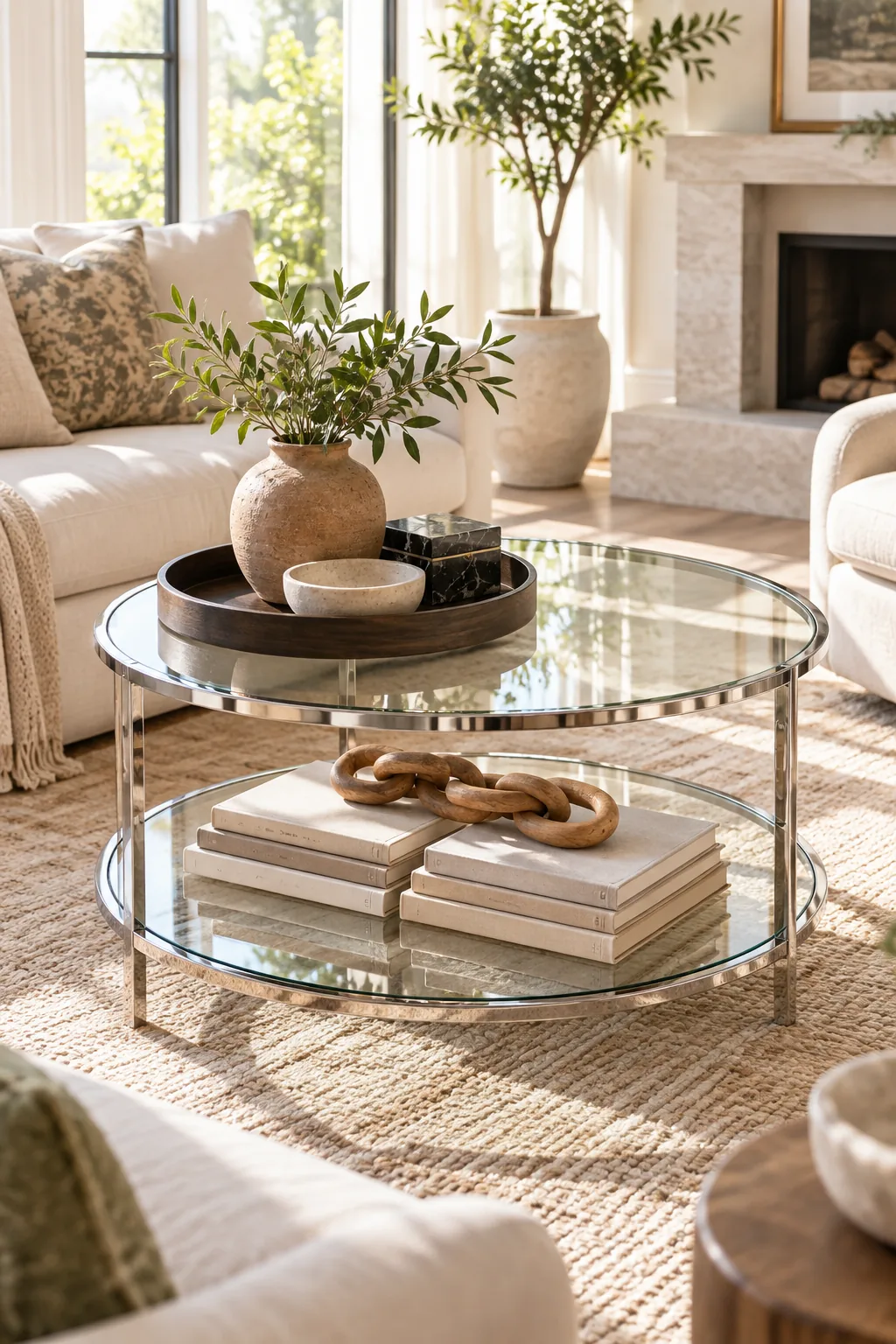
Implement an offset tier placement by positioning the top tray directly over an entirely empty section of the bottom glass. Whenever I style a client’s two-tier table, I treat the top and bottom like a yin-yang symbol, ensuring heavy elements never stack directly.
Balancing Negative Space Dimensions
Leaving intentional voids on your glass surface is just as critical as selecting the right decorative objects for your trays. Aim to keep exactly 60 percent of the top tier completely bare, allowing the room’s rug and architectural details to breathe through the transparent plane.
Building a Grid with Bottom-Shelf Books
The bottom tier serves as the architectural foundation of the entire table and requires strict, linear organization to look intentional. Section 5 shows how to create a rigid architectural foundation using perfectly aligned, neutral book stacks that ground the lower level.
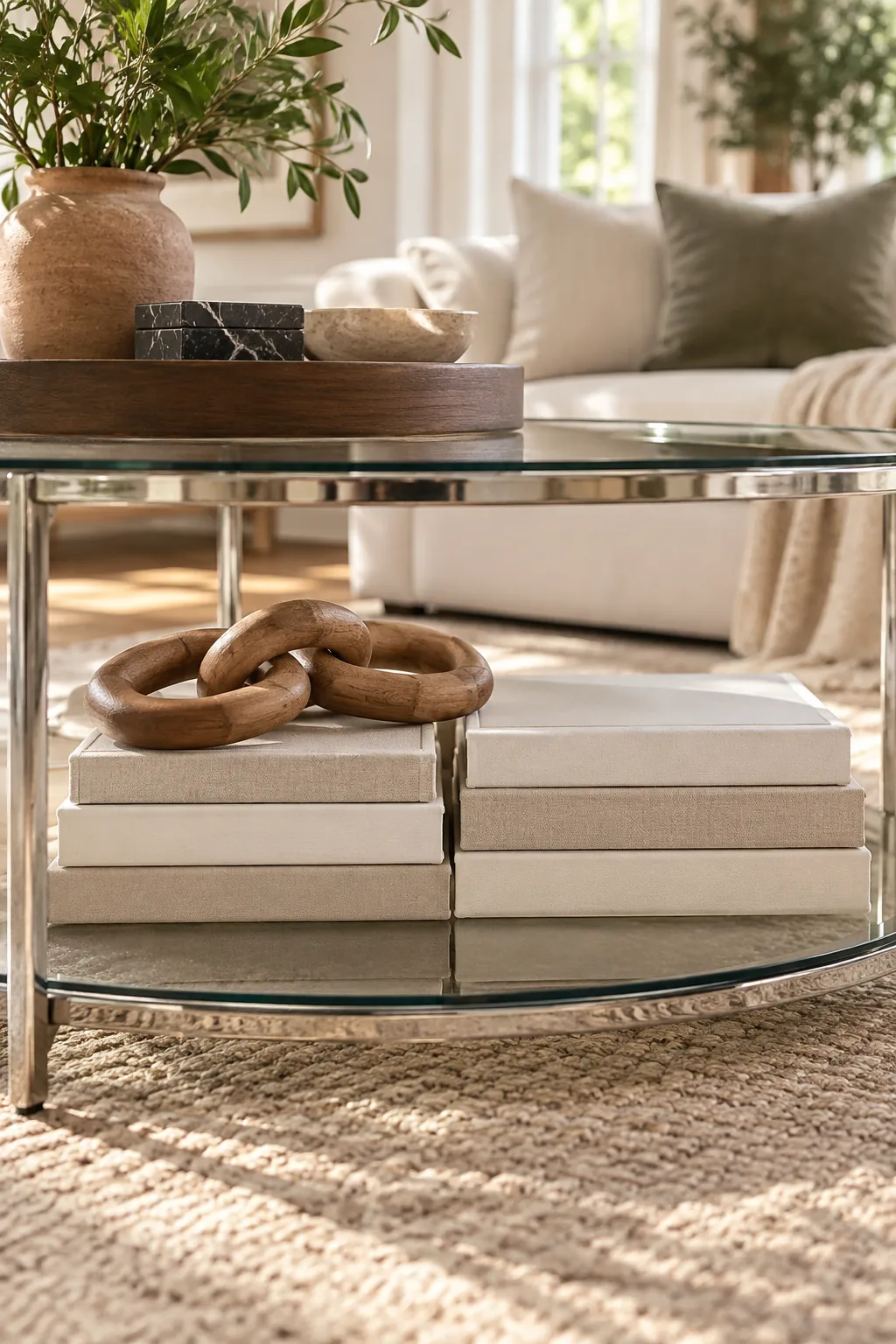
Create a rigid grid using grid-aligned books that are perfectly parallel to each other, leaving exactly 3 to 4 inches of breathing room between stacks. To keep the lower tier looking intentional rather than like a forgotten storage shelf, unify the color palette of your reading material.
Sizing the Book Stacks
Proportion is everything when building your lower grid, as undersized books will look like floating debris beneath the glass. I rely on specific dimensional rules to ensure the reading material carries enough visual weight to anchor the entire furniture piece.
| Book Type | Minimum Width | Minimum Length | Stack Height |
|---|---|---|---|
| Photography | 10 inches | 13 inches | 3 to 4 inches |
| Architecture | 11 inches | 14 inches | 4 to 5 inches |
| Travel/Lifestyle | 9 inches | 12 inches | 3 inches |
Always place the largest, heaviest volume at the absolute bottom of each stack to establish a sturdy visual foundation. Gradually decrease the footprint of each subsequent book by roughly half an inch per layer to create a subtle, stable pyramid effect.
Adding Weight with Sculptural Wood Chains
Flat, rectangular books require a three-dimensional, organic element to bring them to life and soften their harsh geometric corners. Section 6 demonstrates how breaking up flat book grids with three-dimensional, organic textures adds necessary visual weight to the lower level.
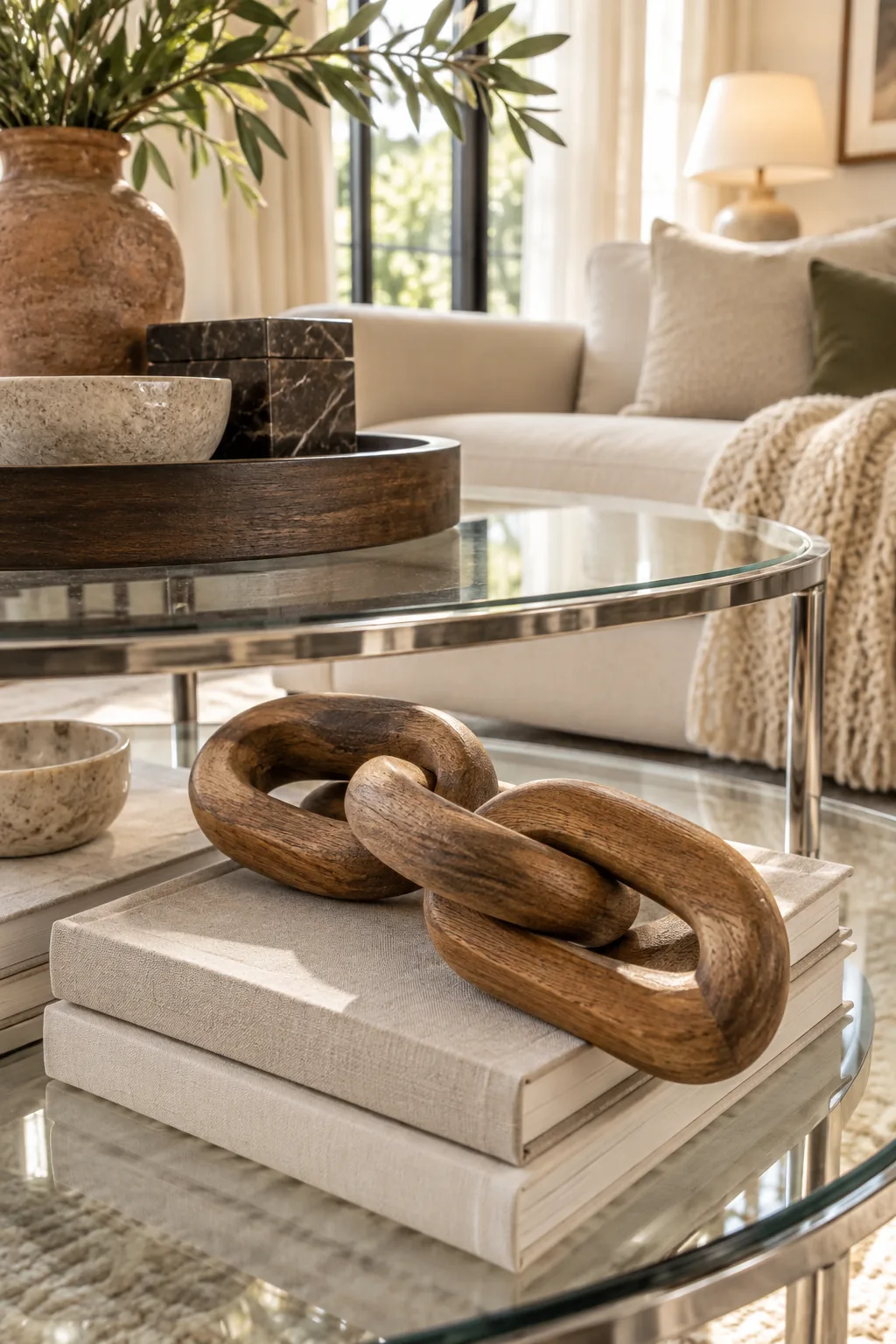
Drape a chunky, sculptural wood chain over the top book of one stack, allowing the links to spill slightly over the edge. These organic, oversized loops break up the rigid grid and introduce a dynamic sense of movement to the otherwise static lower tier.
Managing Visible Clutter Under Glass
Because you see both tiers simultaneously, every small decorative object counts double and can quickly overwhelm the transparent space. Section 7 proves why restricting your groupings to a strict maximum of three prevents the chaotic double-clutter effect inherent to glass furniture.
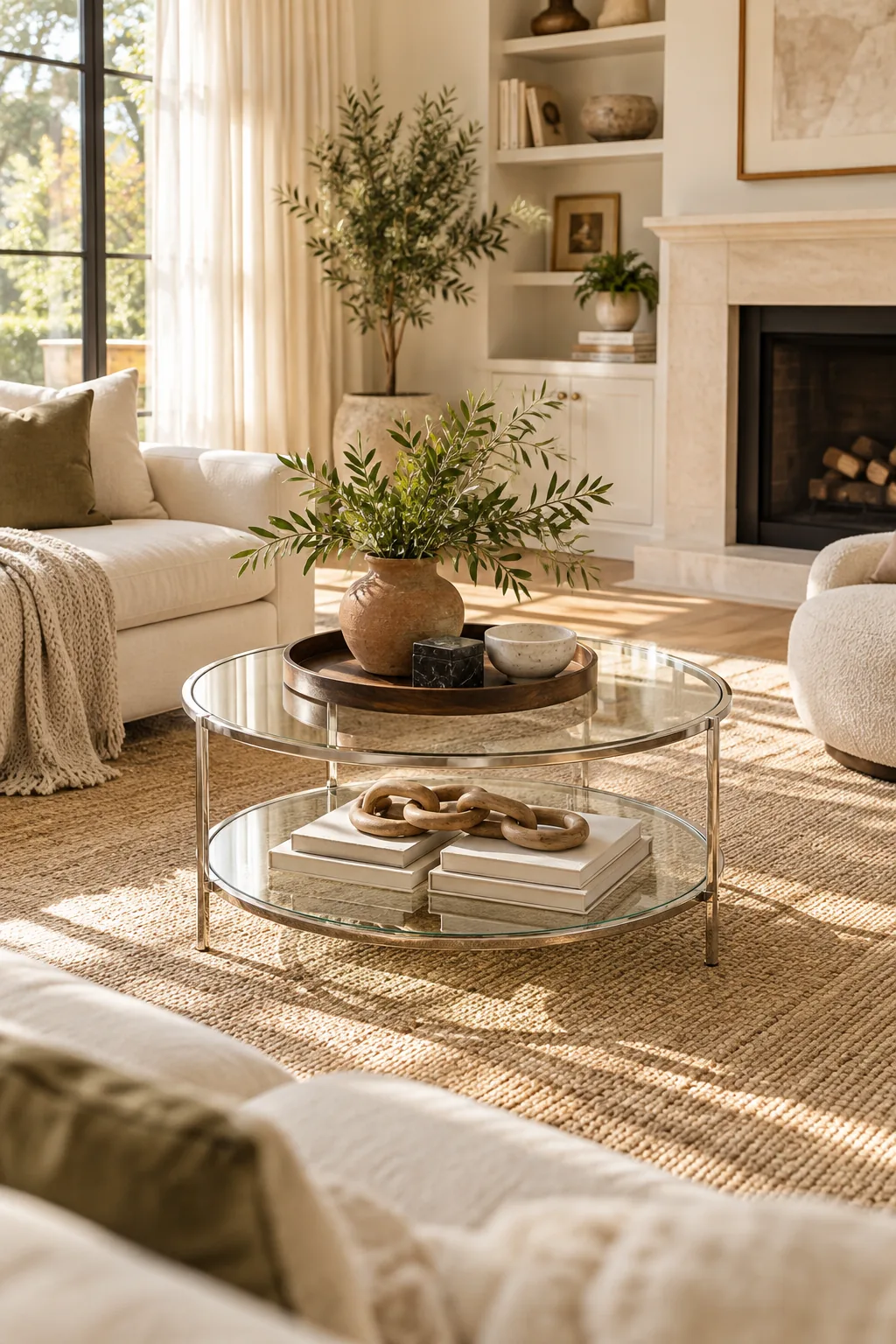
Restrict your styling to a maximum of three distinct groupings across the entire table, keeping small items strictly within tray boundaries. Before considering your glass table complete, step back and view it from your main seating area to verify these critical balance points.
Lighting the Lower Tier
Glass tables often cast strange, intersecting shadows onto their lower shelves, making the bottom decor look dark and forgotten. Position your surrounding floor lamps so their ambient glow catches the edges of the lower books, highlighting their linen textures and brightening the foundational grid.
The Under-Glass Dusting Strategy
The most beautiful styling falls flat if the glass itself looks cloudy, smudged, or covered in a layer of daily dust. Section 8 illustrates how leaving enough negative space on the lower tier allows you to easily clean the glass without moving heavy decor.
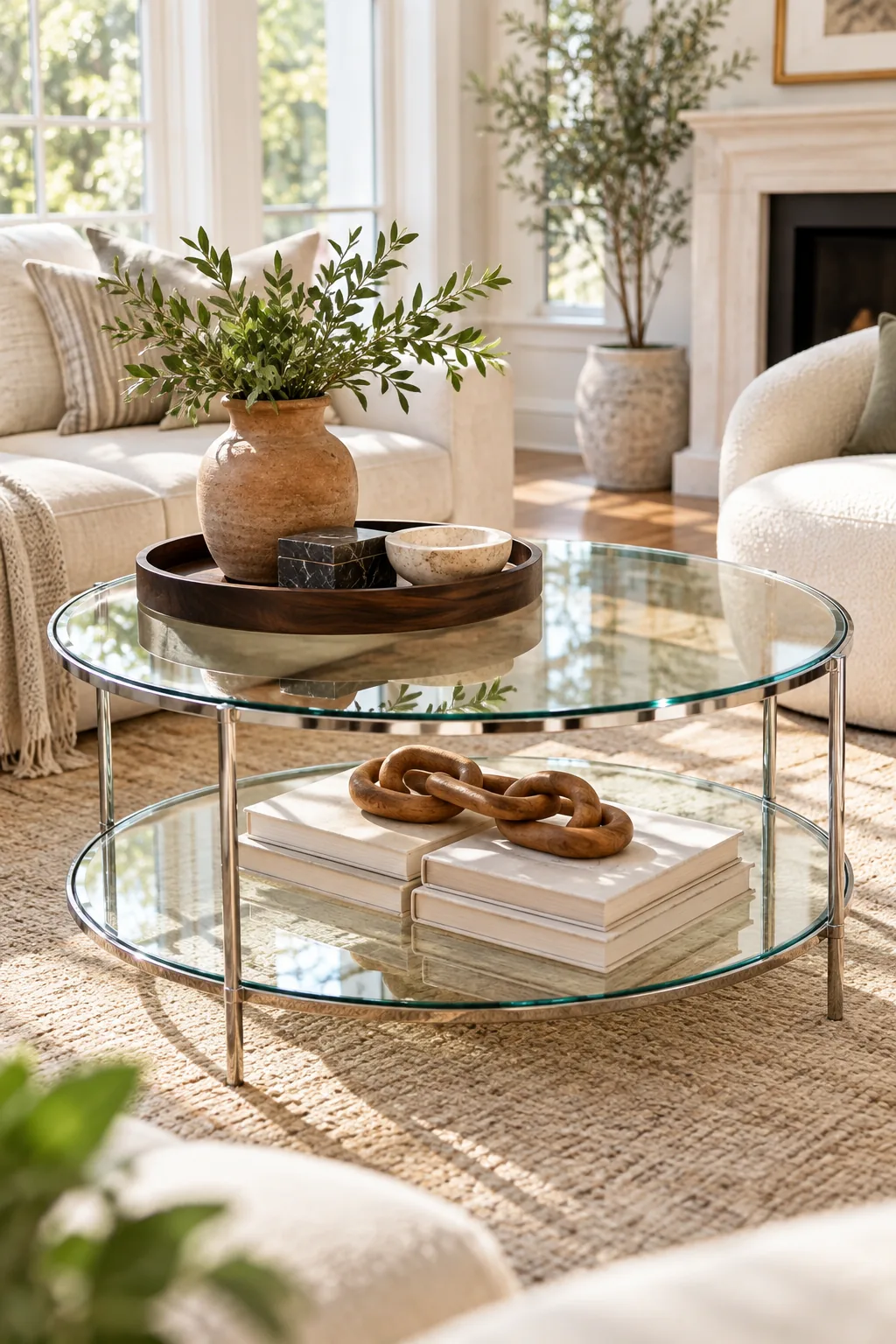
Leave wide channels of empty space around your book grid so you can easily swipe a microfiber cloth across the bottom shelf. Living in dusty Denver taught me that if I have to move twenty heavy books just to wipe the glass, the table will never get cleaned.
More Glass Table Styling Ideas
Explore how this two-tier placement strategy adapts to completely different room styles and color palettes.
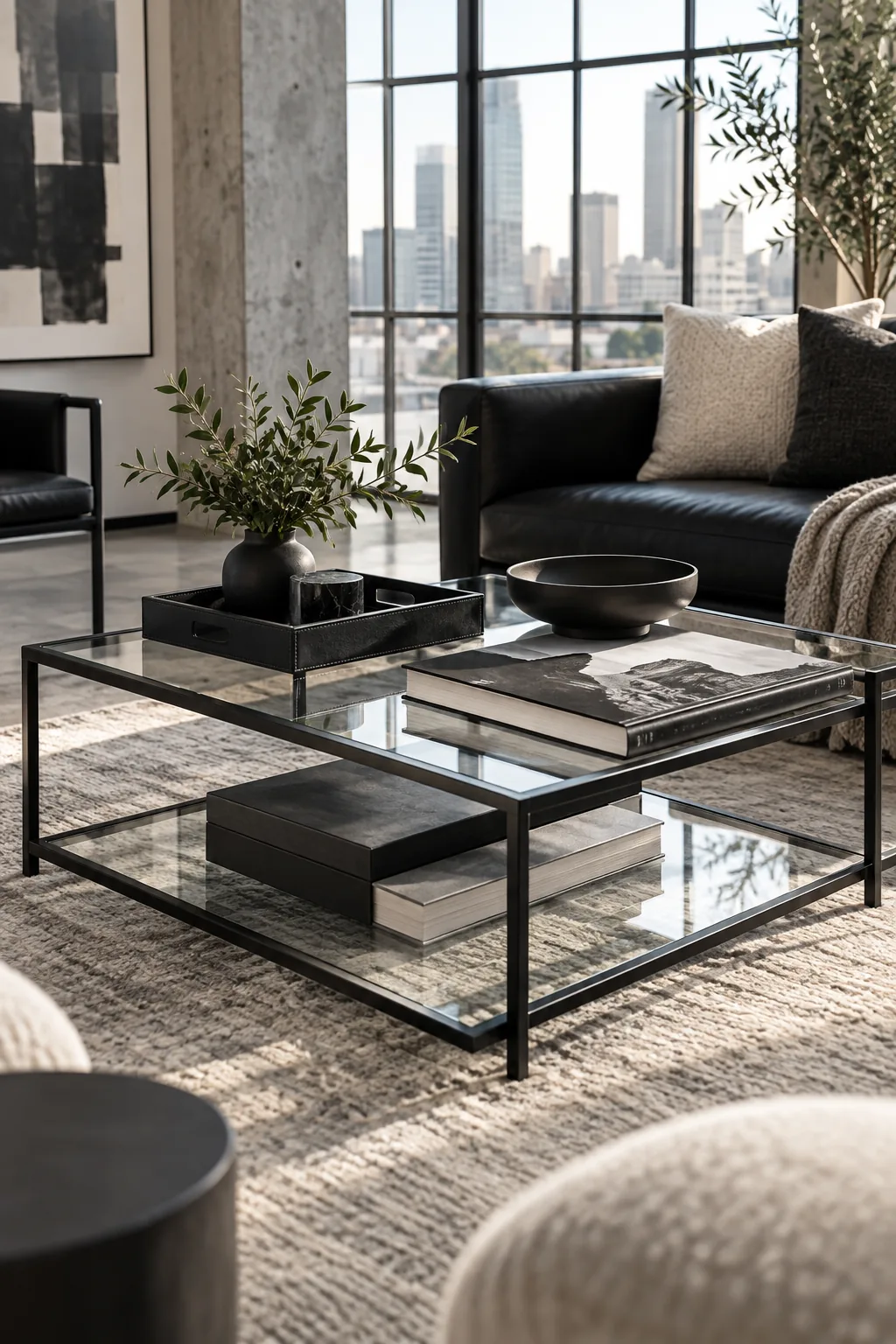
Modern Minimalist Monochrome: Embrace high contrast with a matte black frame and a matching leather tray to ground a stark, gallery-inspired living space.
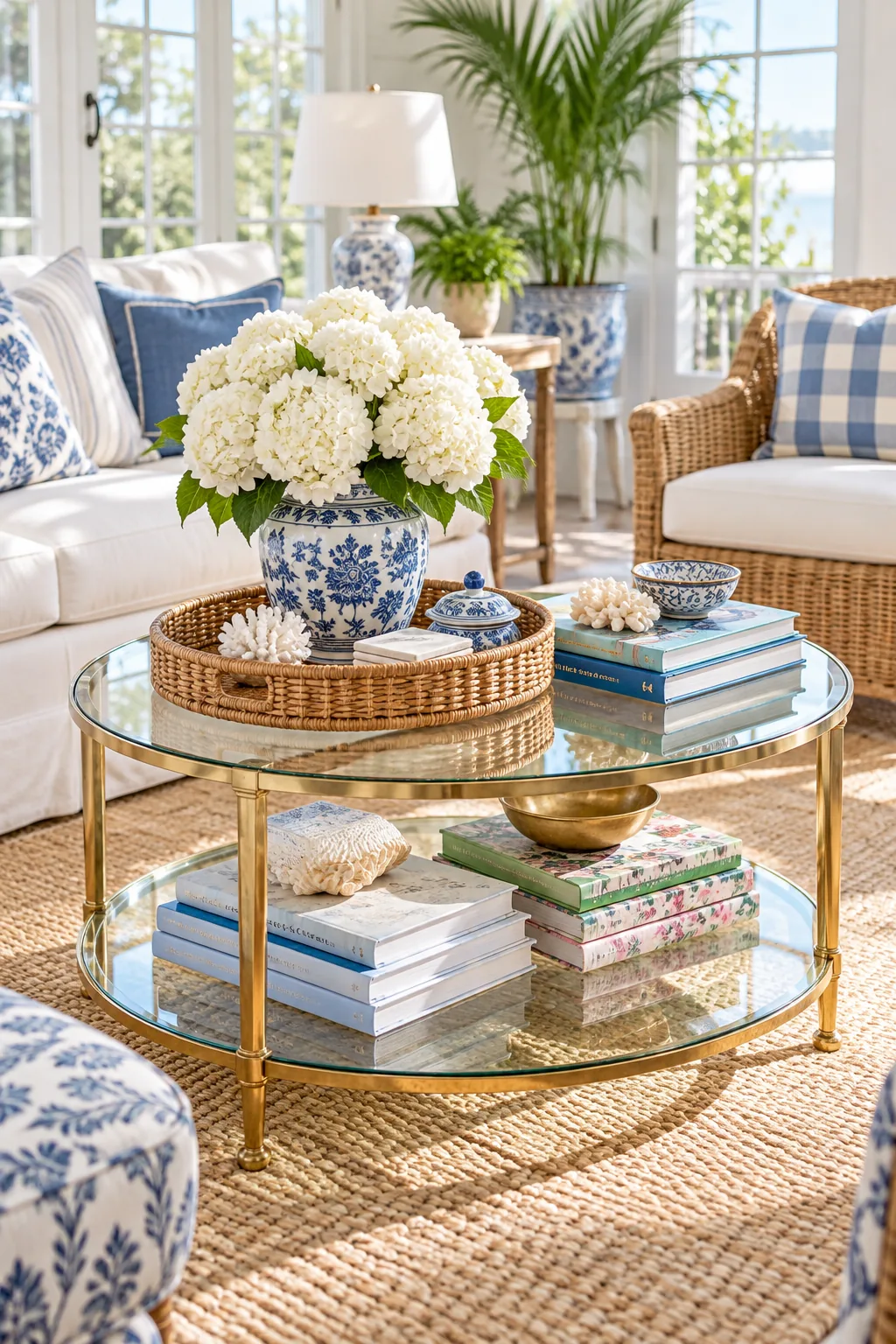
Coastal Grandmillennial Brass: Warm up a cool glass surface by introducing woven rattan textures and classic blue-and-white porcelain for a preppy coastal feel.
Warm Transitional Square: Mirror the geometry of a square table by using an oversized square walnut tray to anchor the exact center of the top tier.
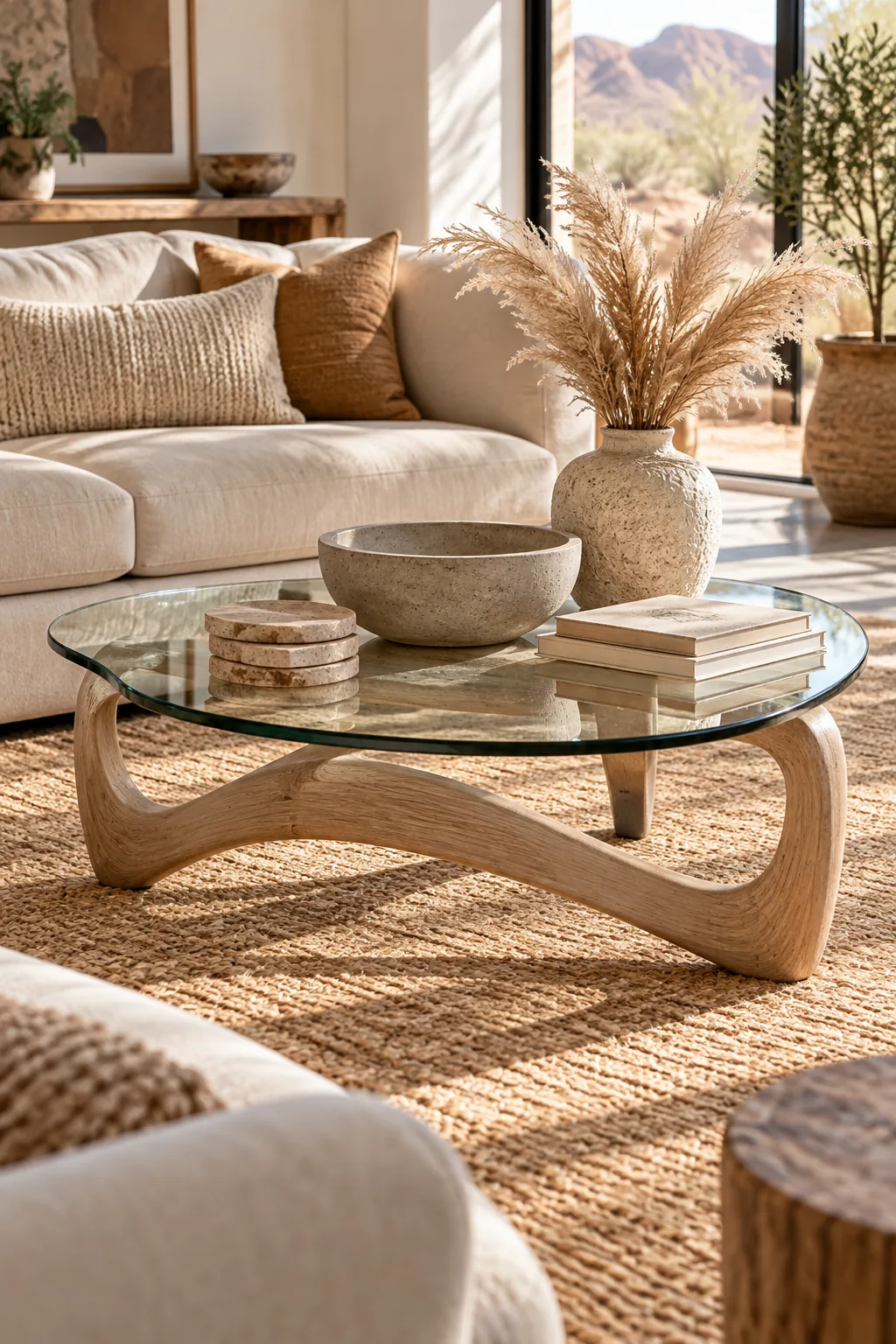
Organic Desert Neutrals: Soften the modern edge of glass by surrounding it with bleached oak framing, raw concrete vessels, and dried textural grasses.
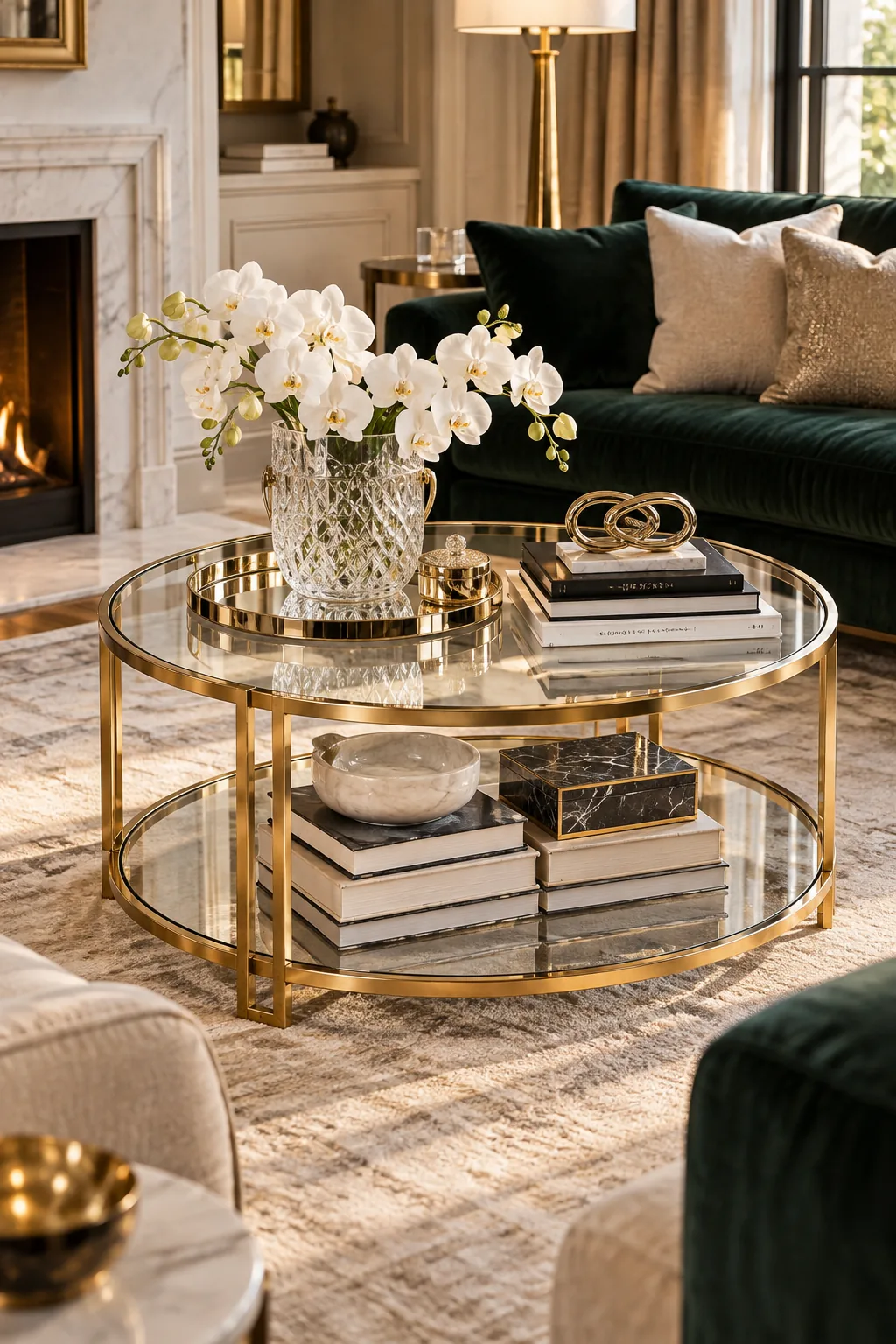
Glamorous Art Deco Gold: Lean into the reflective nature of glass by layering a mirrored tray and polished crystal to create a luxurious, light-bouncing focal point.