
Coastal Decorating: The Designer Texture Mixing Checklist
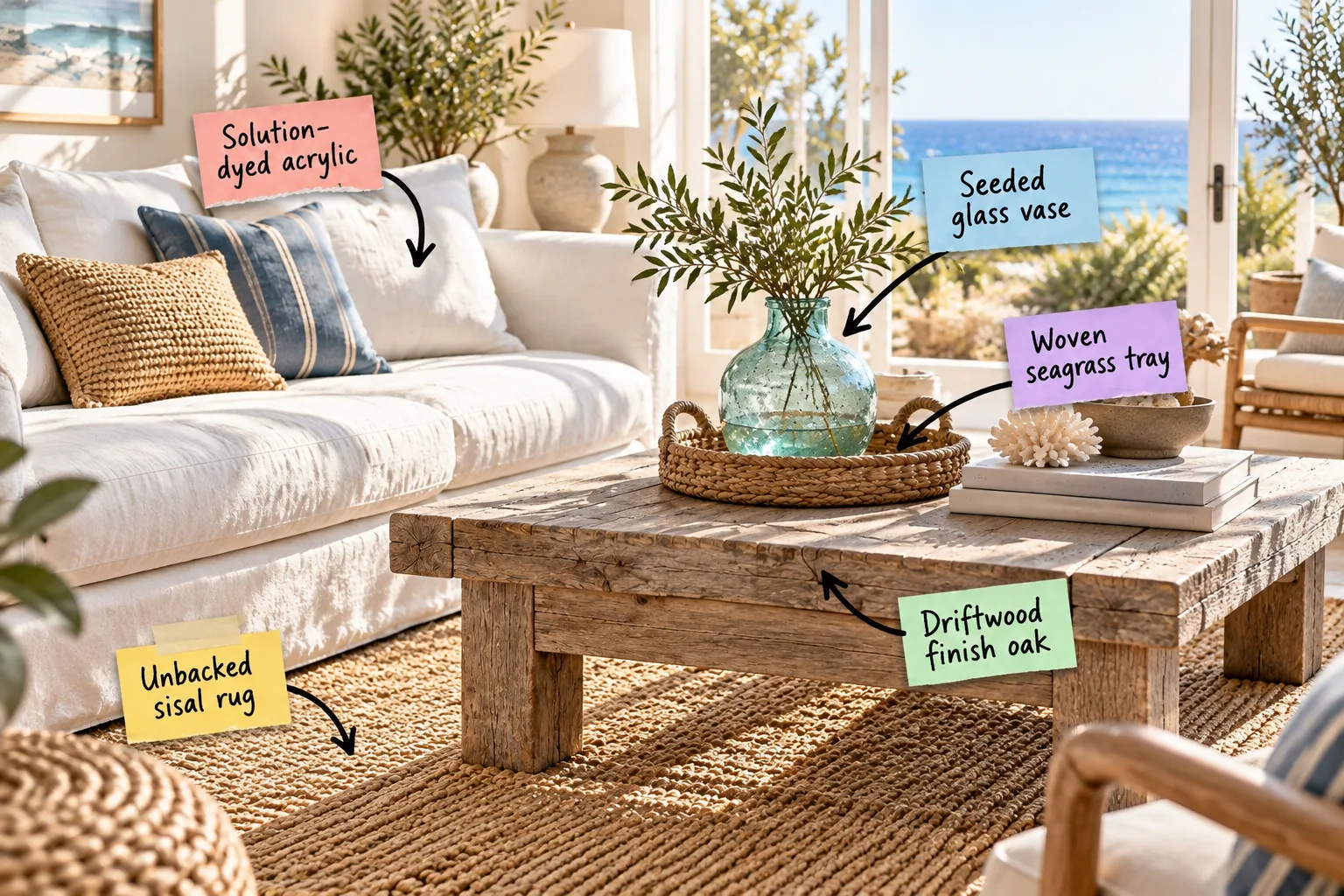
You can confidently layer durable fabrics, natural woods, and woven accents to create a sun-drenched living room using this step-by-step coastal texture mixing checklist. We will build your breezy space from the foundation up, ensuring every element balances perfectly.
Grounding the Room with an Unbacked Sisal Rug
Start your foundation by laying down an unbacked sisal rug, which provides the necessary barefoot texture and durability for a beautifully layered coastal home. This robust material immediately establishes a relaxed, organic tone that anchors the entire seating arrangement.
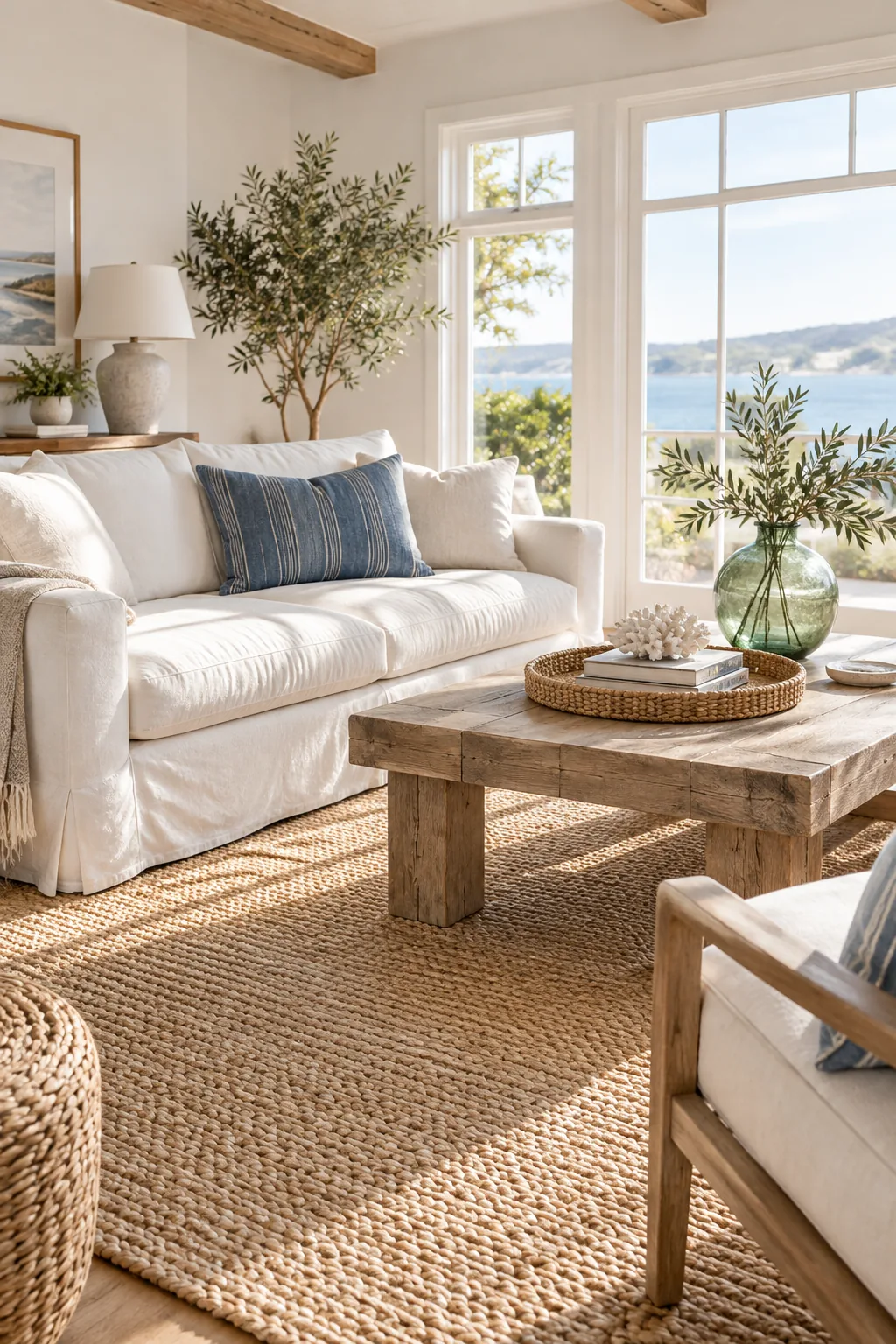
Select a rug with a minimum 0.5-inch pile thickness for adequate comfort, while ensuring the unbacked design allows the natural fibers to breathe in humid environments. A breathable base prevents trapped moisture from damaging your underlying hardwood floors over time.
Maintaining the Breathability of Natural Fibers
Coastal climates introduce significant ambient humidity, making synthetic rug backings a risky choice that can trap condensation directly against your floorboards. Prioritizing completely natural, woven undersides ensures continuous air circulation, preserving both your expensive flooring and the structural integrity of the rug itself.
Sizing Your Sisal Foundation for Proper Flow
Properly sizing your textured foundation is just as critical as selecting the right fiber, as an undersized rug will make the room feel disjointed. You must map out your furniture footprint before purchasing to guarantee a cohesive, expansive coastal aesthetic.
- Leave exactly 18 inches of bare floor between the rug edge and the walls.
- Ensure the front legs of all primary seating rest entirely on the sisal.
- Extend the rug at least 12 inches beyond the sides of your sofa.
Measuring these dimensions with painter’s tape on your floor provides a foolproof visual guide before making a final commitment. This simple preparation step eliminates the costly mistake of ordering a foundation piece that shrinks the visual scale of your room.
Choosing Solution-Dyed Acrylic for Slipcovers
Move to your primary seating by selecting a slipcovered sofa made of solution-dyed acrylic to handle intense afternoon sun and frequent daily use. This tailored performance material brings soft, inviting comfort without sacrificing the rigorous durability required in active households.
While performance fabrics resist stains, proper washing techniques keep the bright white finish looking crisp rather than dingy. Routine maintenance is the absolute secret to preserving that breezy, effortless appearance year after year.
Evaluating Upholstery Wear in Sunlit Spaces
Understanding how different textiles react to prolonged solar exposure helps you make informed investments for rooms featuring large, uncovered windows. Comparing industry-standard fade resistance ratings reveals exactly why specific synthetic weaves outperform traditional natural cottons in bright, south-facing environments.
| Fabric Type | UV Resistance | Best Application |
|---|---|---|
| Solution-Dyed Acrylic | 1,500+ hours | Direct sun seating |
| Performance Polyester | 500 hours | Filtered light areas |
| Natural Cotton Duck | 300 hours | Shaded or interior zones |
Selecting the highest rating for your main sofa guarantees your foundational seating will maintain its crisp, pristine color season after season. This upfront investment ultimately saves you from the frustration and expense of replacing faded, degraded slipcovers every few years.
Selecting Complementary Throw Pillows
Breaking up the expanse of a white slipcovered sofa requires carefully chosen textiles that introduce subtle patterns without disrupting the calm atmosphere. Incorporating muted, yarn-dyed stripes adds just enough visual interest to keep the primary seating area engaging and dynamic.
Maintaining a Crisp Upholstery Profile
Regularly plumping your feather-fill cushions ensures the sofa retains a structured yet inviting shape, preventing the relaxed coastal aesthetic from crossing into pure sloppiness. A quick daily adjustment keeps the entire room looking fresh, tailored, and always ready for guests.
Anchoring with a Driftwood Finish Oak Table
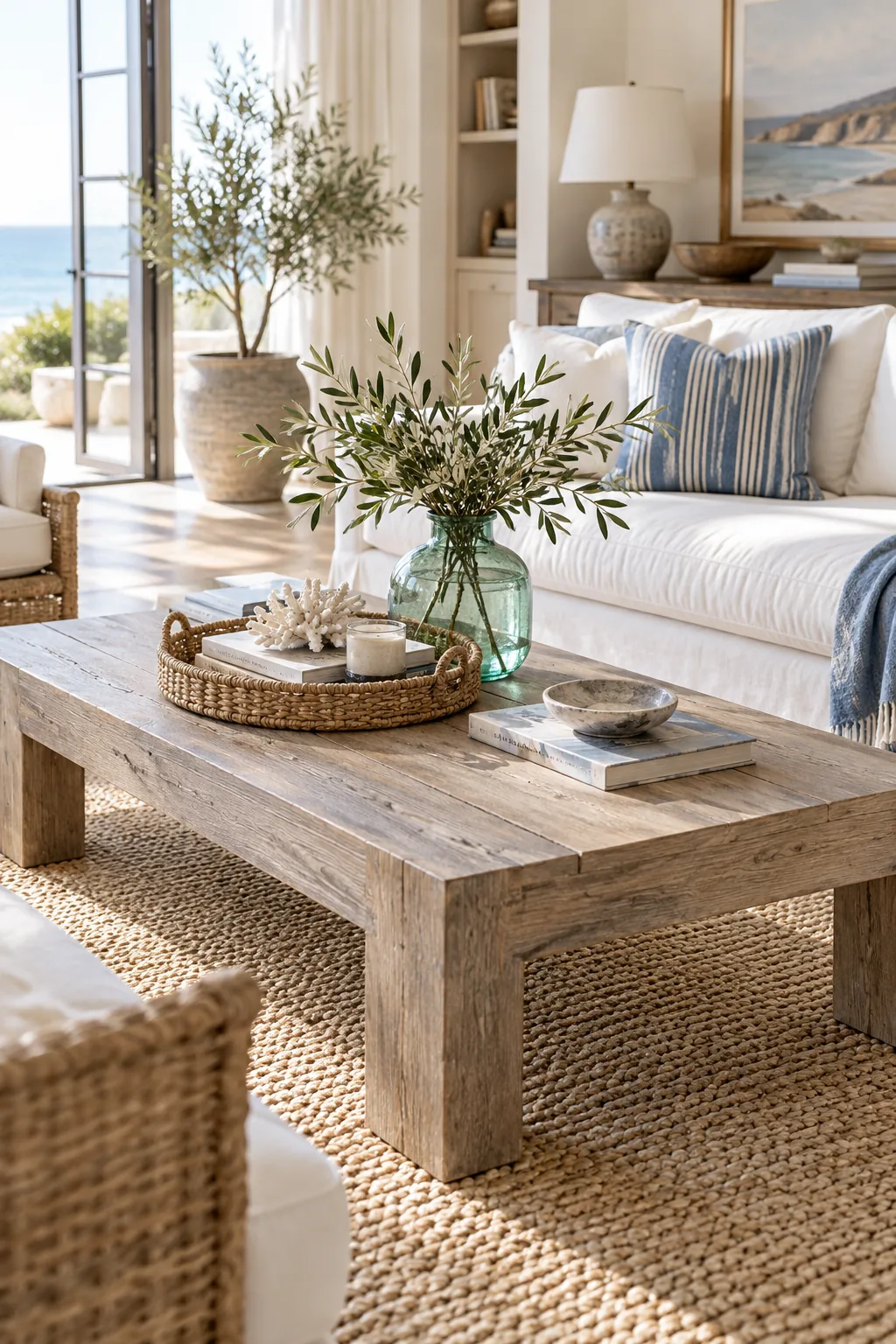
Introduce a solid coffee table featuring a driftwood finish oak surface to act as the room’s visual and functional hard anchor. This substantial central piece grounds the floating upholstery while providing a durable surface for daily entertaining and styling.
This specific matte treatment adds crucial visual weight and resilience without introducing the heavy, dark tones that can quickly overwhelm a light coastal palette. The weathered gray undertones perfectly bridge the gap between crisp white fabrics and warm natural floors.
Balancing the Scale of Solid Wood Furniture
Integrating heavy wooden pieces requires careful attention to spatial proportions, ensuring the table complements rather than dominates your carefully chosen seating. Calculating the ideal dimensions prevents the common error of overcrowding the central circulation path within your living space.
- Measure the interior length of your sofa seating area between the armrests.
- Select a table length that equals exactly two-thirds of that interior sofa measurement.
- Maintain a strict 16-inch clearance between the table edge and the sofa front.
Applying these precise spatial ratios creates a comfortable, easily navigable central zone that feels airy and deliberately planned. The resulting layout encourages relaxed conversation while leaving ample room to move freely around the heavy wooden anchor piece.
Layering Textures with a Woven Seagrass Tray
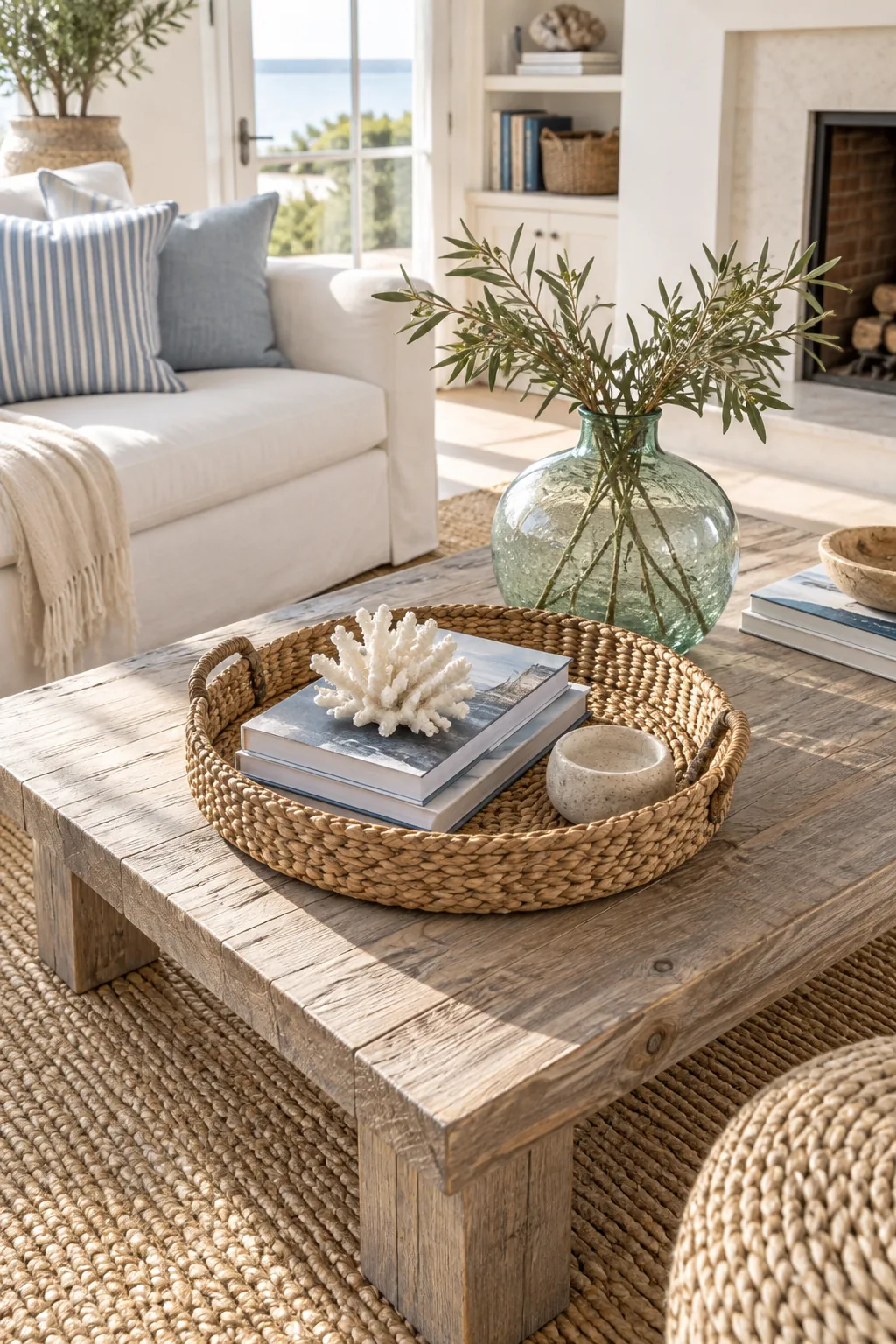
Transition to tabletop styling by adding a woven seagrass tray to corral smaller decor items and introduce a secondary natural fiber. I keep a 16 to 20-inch diameter tray on my own coffee table because it perfectly contrasts the smooth wood.
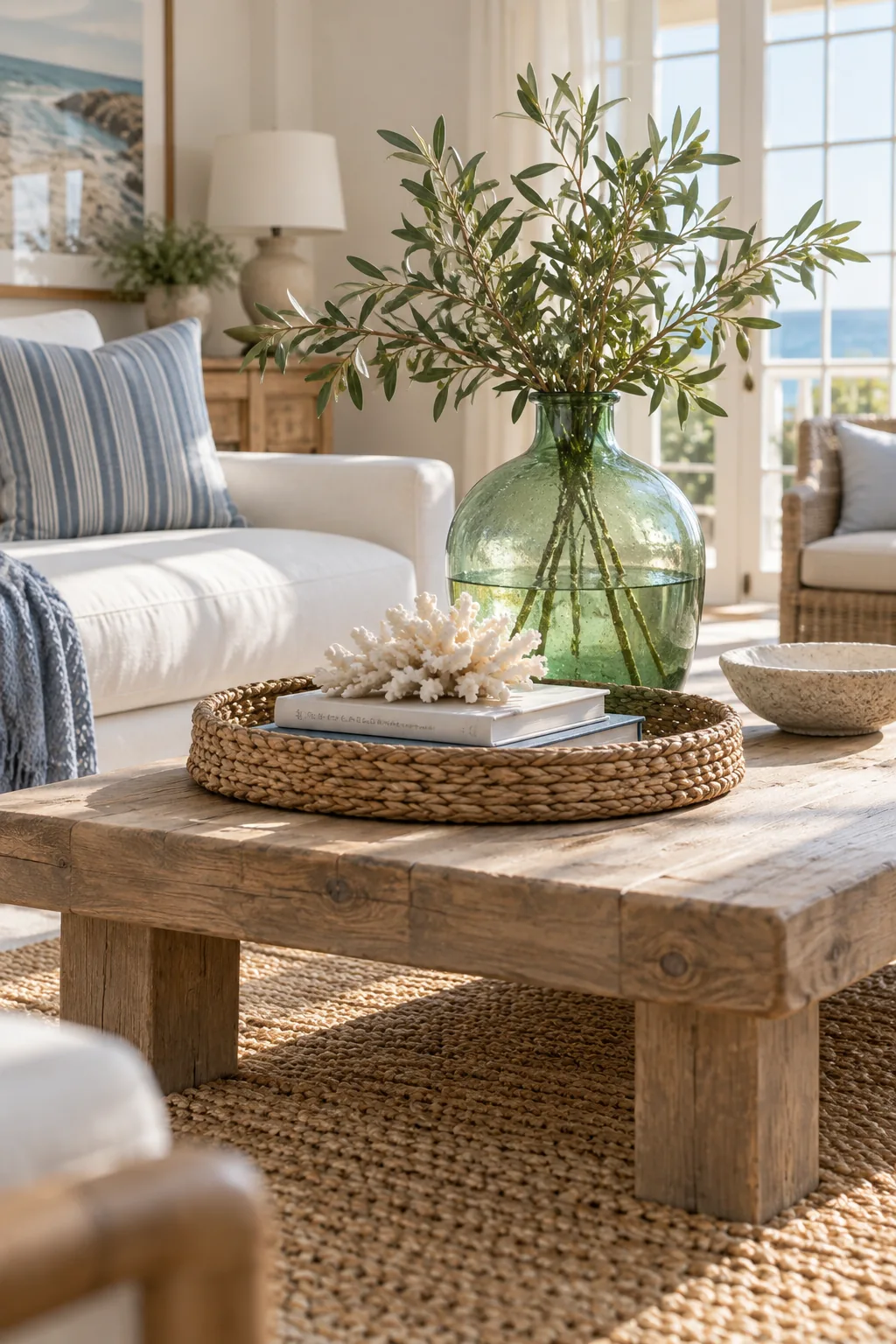
Establishing this clear woven boundary keeps daily clutter beautifully contained while adding a crucial layer of rough, organic texture to the flat wooden surface. It instantly elevates simple objects by framing them within a purposeful, tactile vignette.
Styling the Seagrass Tray for Daily Use
Curating the contents of your tray requires a disciplined approach to prevent the arrangement from feeling messy or overly complicated. Limiting your displayed items to a few intentional pieces ensures the beautiful woven texture remains visible and appreciated.
Adopting this minimalist styling strategy allows the natural materials to speak for themselves, reinforcing the relaxed coastal atmosphere you are building. The intentional negative space within the tray proves just as important as the decorative objects you choose to display.
Catching the Light with a Seeded Glass Vase
Finish your styling surface with a translucent green seeded glass vase to break up dense, matte textures by reflecting and diffusing coastal light. I always place one near a sunny window to cast dancing, water-like reflections across the entire room.
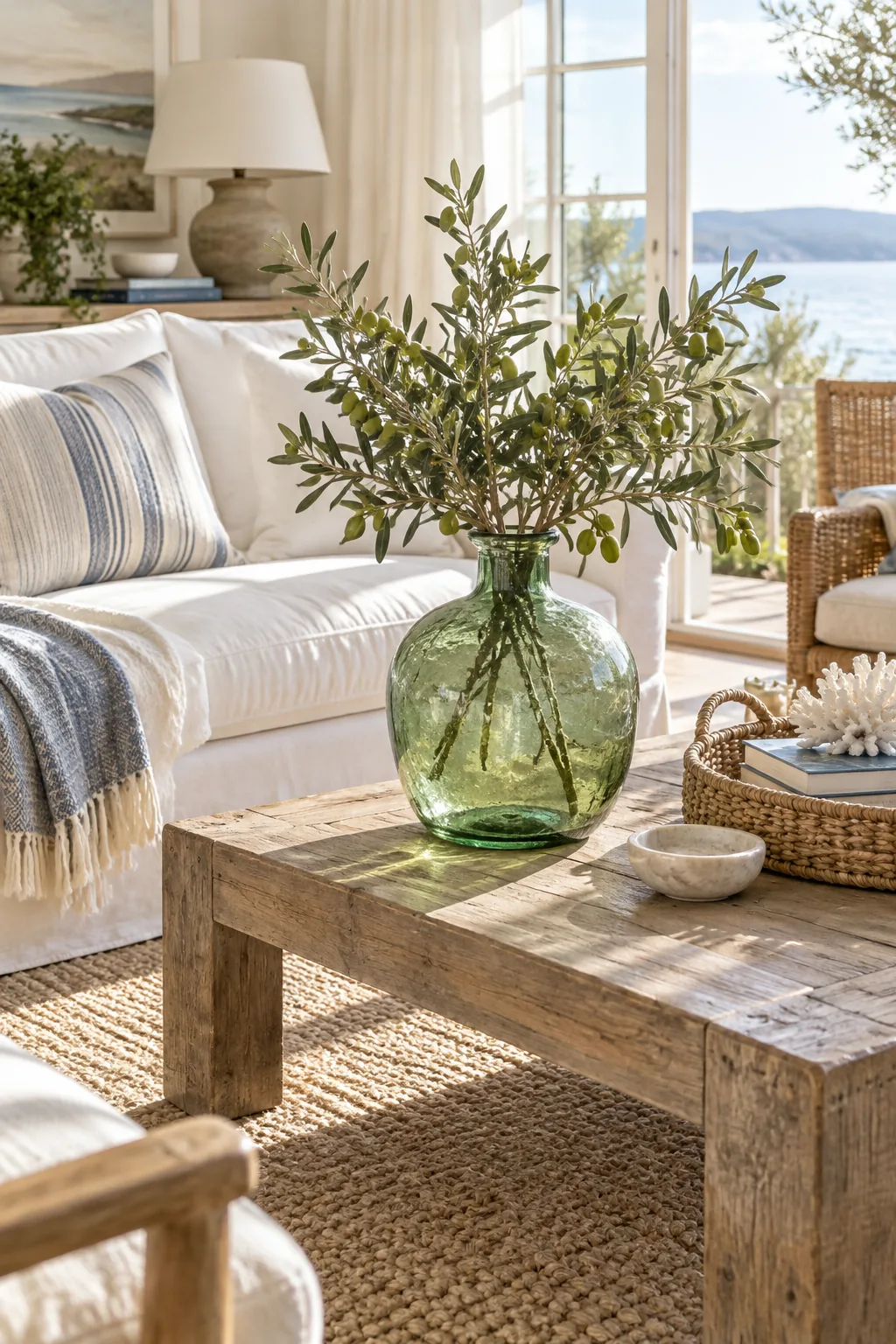
The tiny bubbles trapped naturally within the glass work to scatter harsh incoming rays, softening the overall illumination of your styled vignette. This delicate, transparent layer provides a vital visual break from the heavy wood and opaque woven fibers.
Positioning Glass Accents for Maximum Light
Strategic placement of transparent decor dramatically amplifies the natural brightness of your space, turning simple vessels into active light modifiers. Positioning these reflective pieces directly in the path of your primary light source maximizes their shimmering, atmospheric impact.
Introducing Organic Greenery
Filling your glass vessel with fresh, structural branches brings vital life and movement into the static arrangement of your central coffee table. The organic curves of natural foliage perfectly offset the rigid geometry of the surrounding wooden and woven furnishings.
Foraging for Authentic Coastal Branches
Sourcing your greenery directly from your local environment grounds the room’s design in a genuine sense of place, rather than relying on generic hothouse flowers. Cutting resilient, woody stems ensures your arrangement will thrive indoors with minimal daily maintenance.
5 Ways to Style the Coastal Texture Mix
Explore how changing your color palette and core materials can shift the coastal mood entirely.
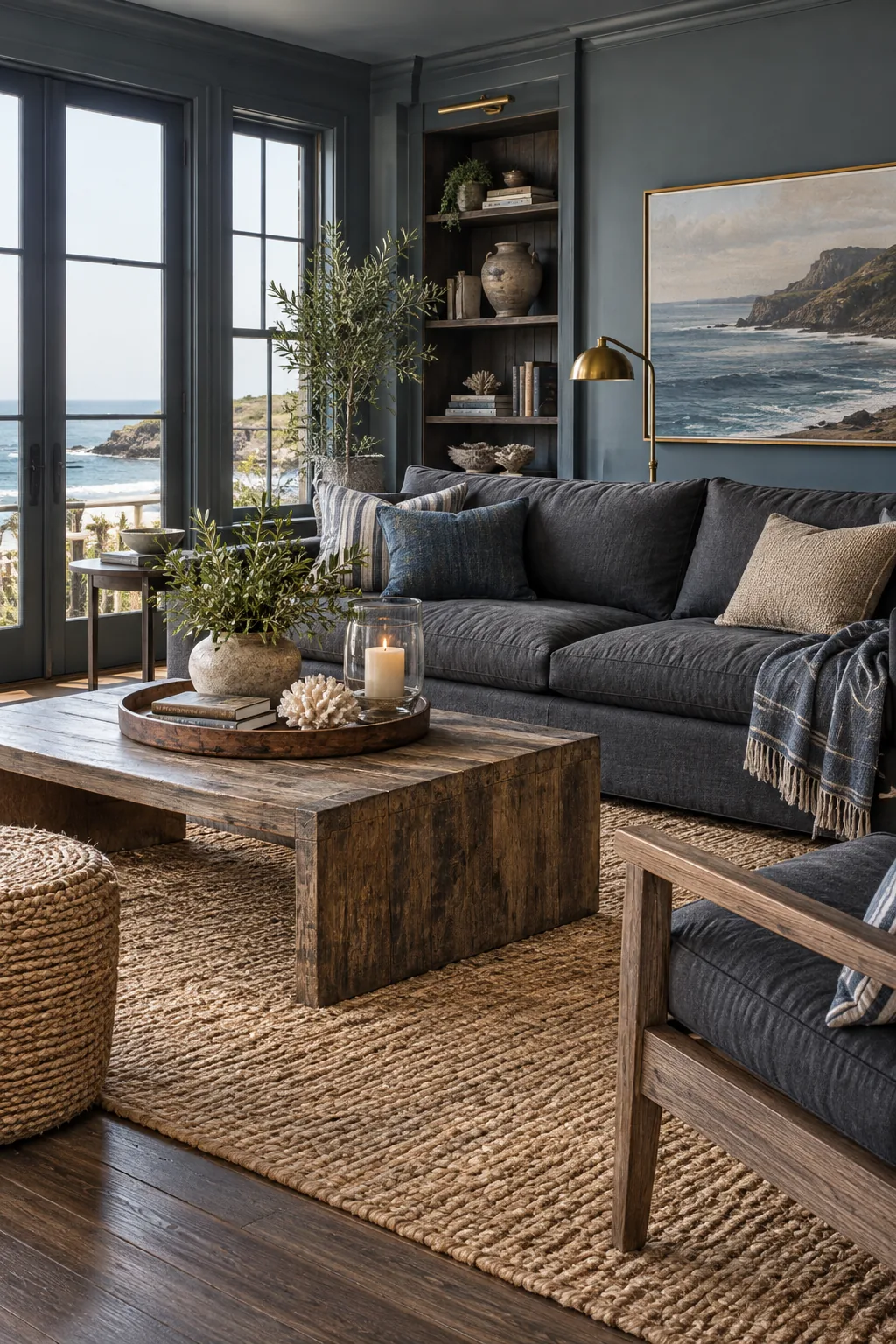
Moody Slate and Teak: Deep slate blue walls and charcoal linen create a dramatic, stormy coastal vibe that pairs beautifully with dark weathered teak.
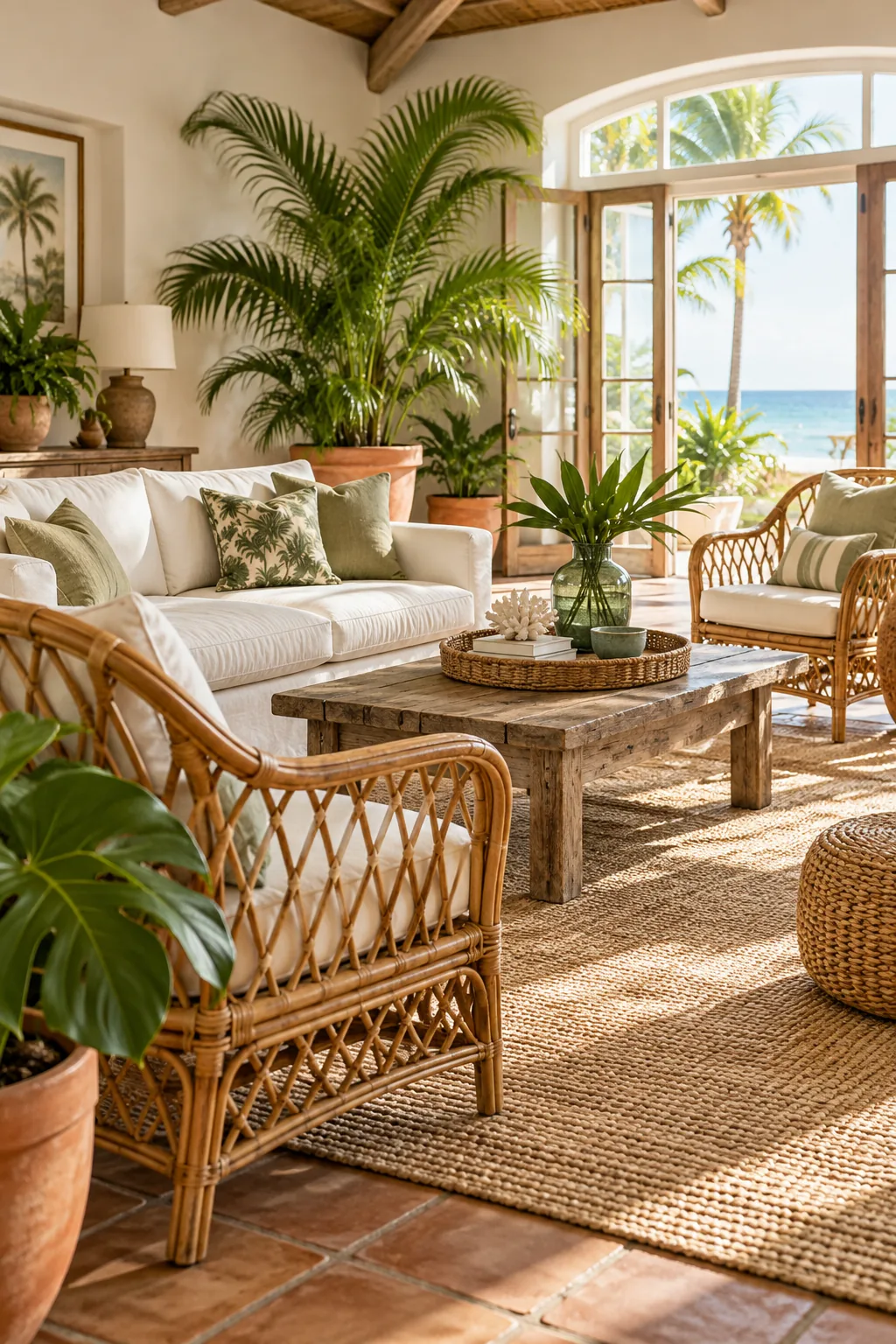
Warm Tropical Rattan: Lean into a warmer climate by mixing vintage rattan furniture with warm white canvas and vibrant green palm leaves.
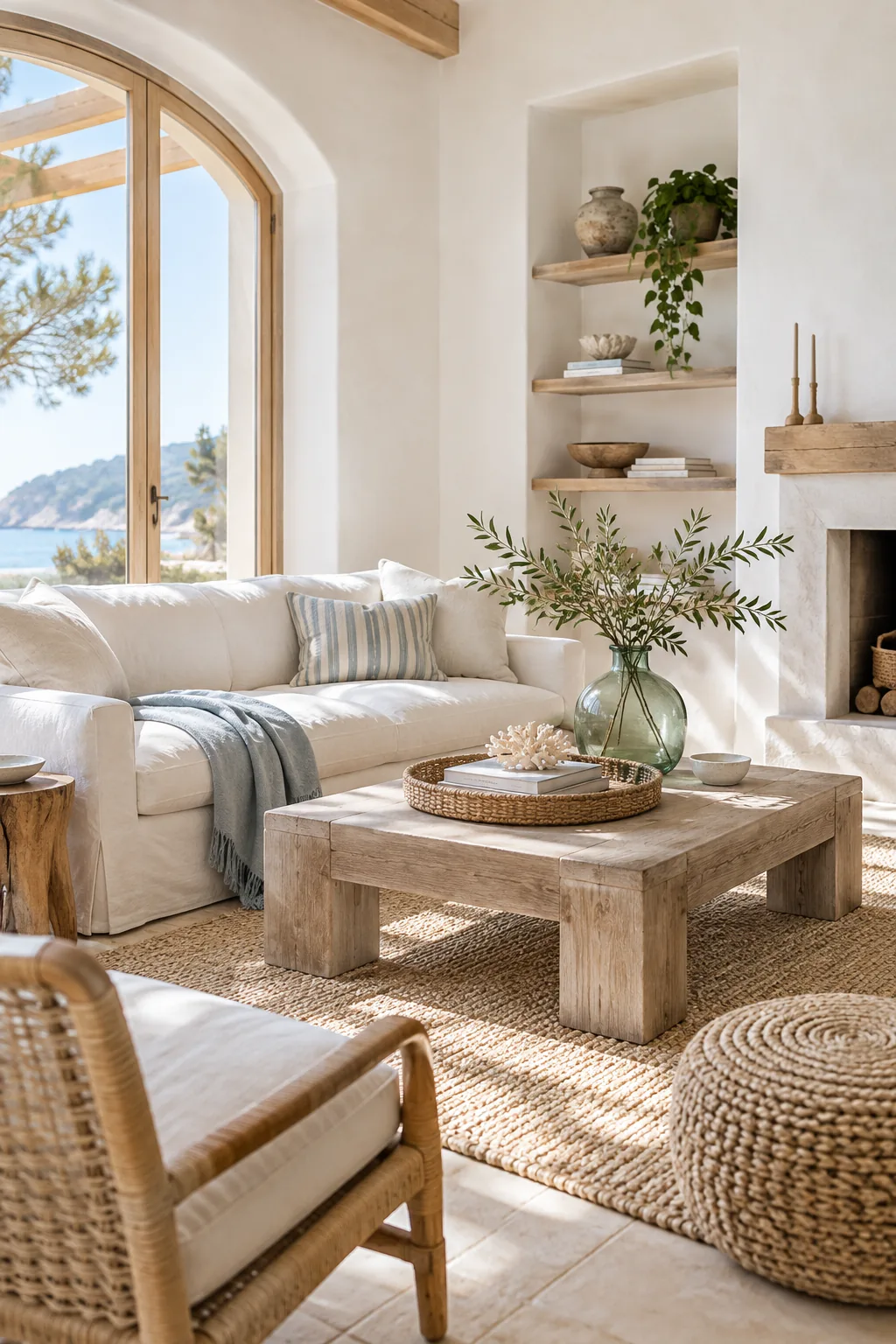
Minimalist Ash and Plaster: Keep the space serene and uncluttered by pairing crisp white plaster walls with pale ash wood and minimal accessories.
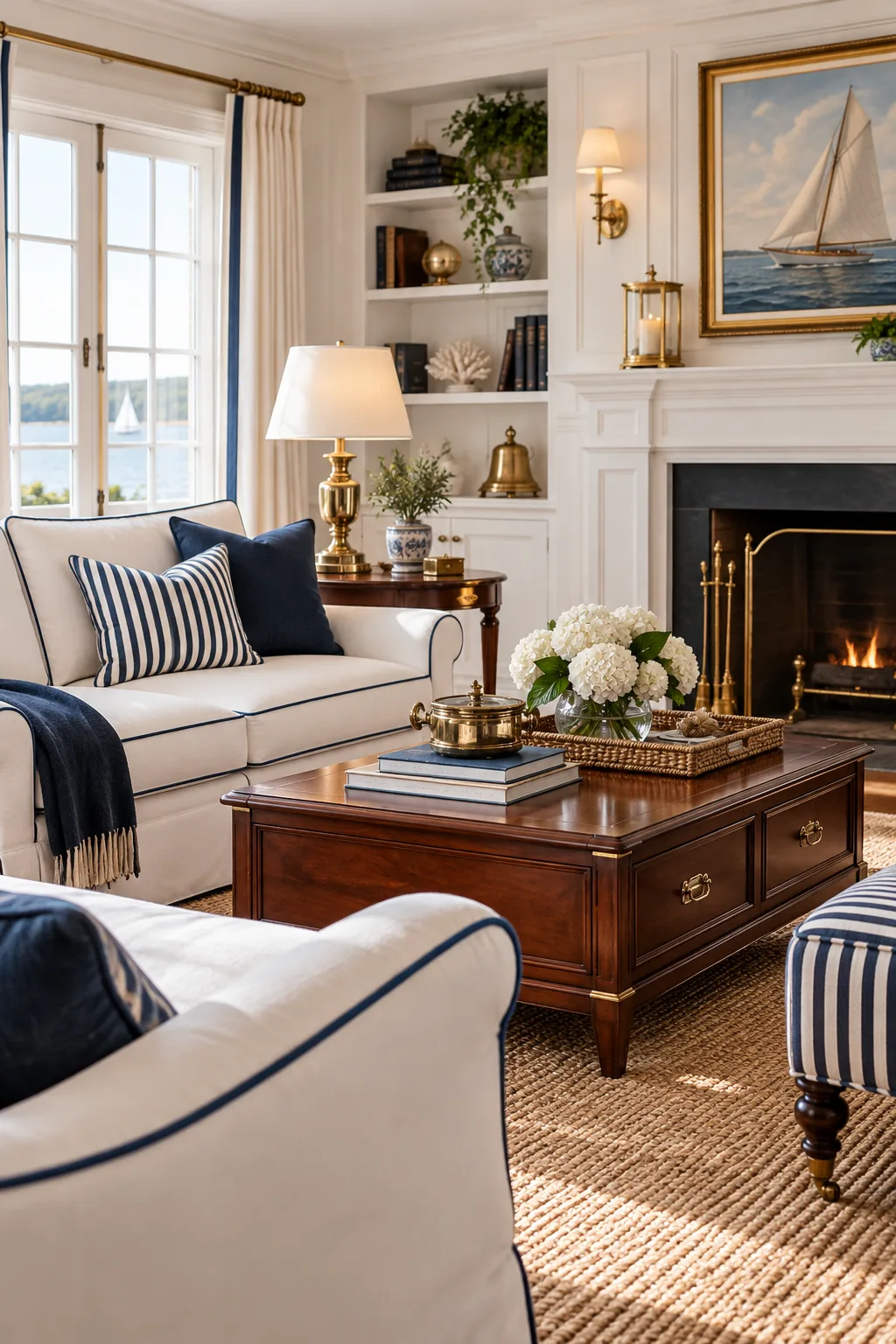
Classic Nautical Navy: Channel traditional yacht styling by incorporating crisp navy blue piping, polished brass hardware, and rich cherry wood tones.
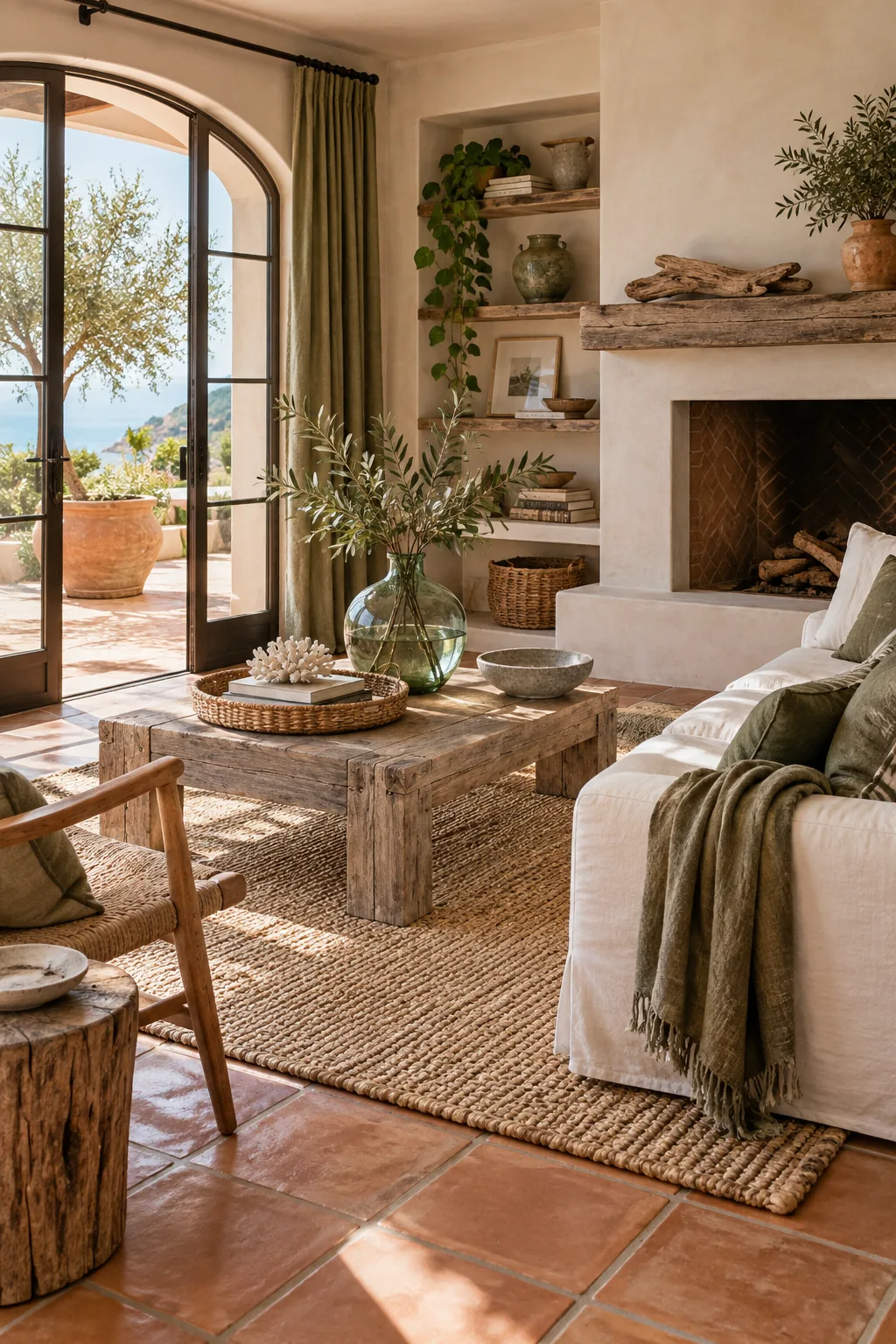
Earthy Olive and Terracotta: Ground your coastal design with earthy elements like terracotta floor tiles, olive green linen pillows, and raw, unpolished driftwood.
The Coastal Texture Mixing Checklist
Evaluating your complete material mix ensures the room feels intentionally designed rather than randomly assembled, perfectly balancing rough, soft, matte, and reflective surfaces. I run through this final audit on every client project to guarantee the living room achieves harmony.
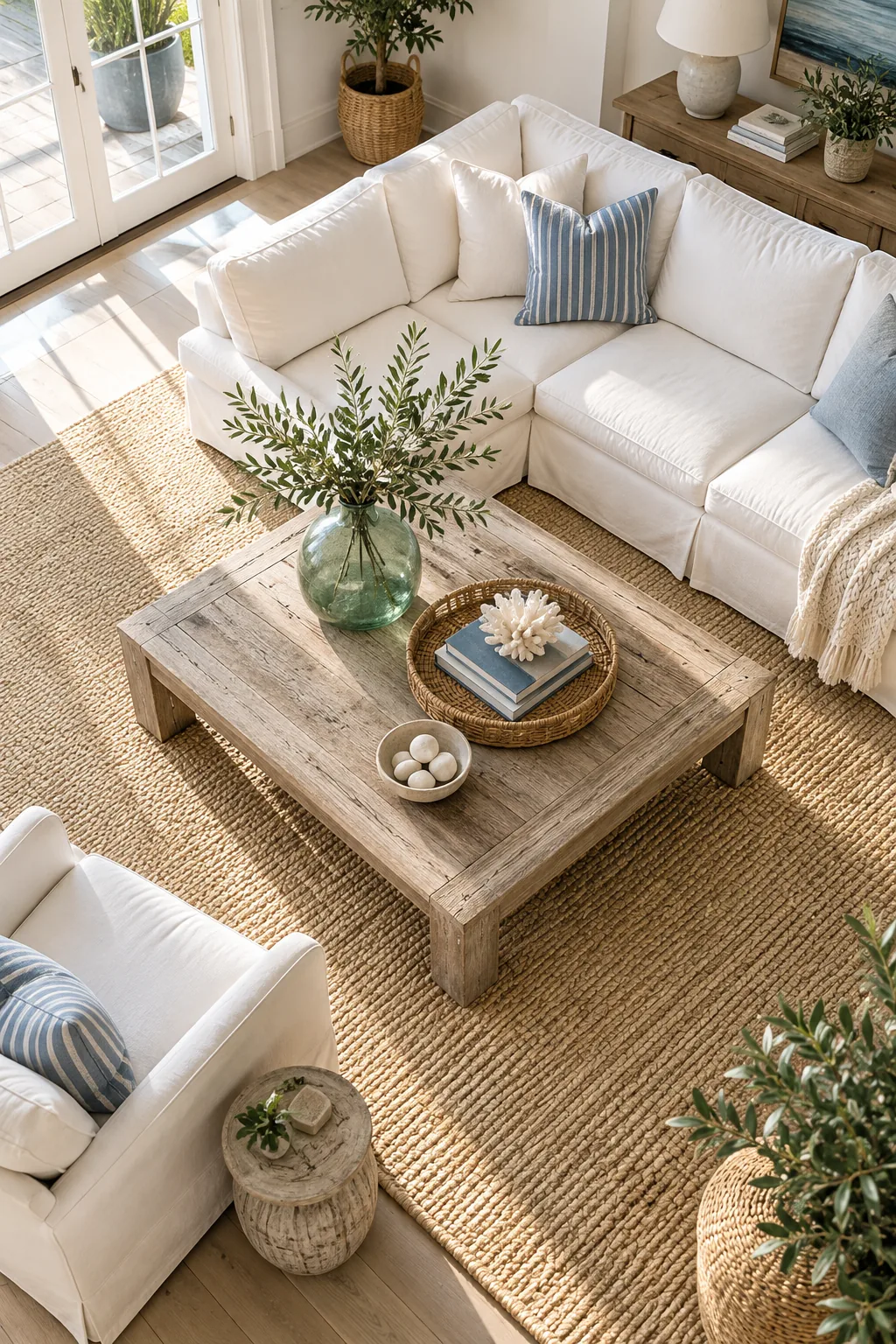
Run through this final audit to ensure your living room has the right balance of coastal elements without feeling overly themed. Checking off each distinct material category confirms you have built a sophisticated, multi-dimensional space that invites relaxation.