
11+ Practical Basement Gym Ideas for Your Home
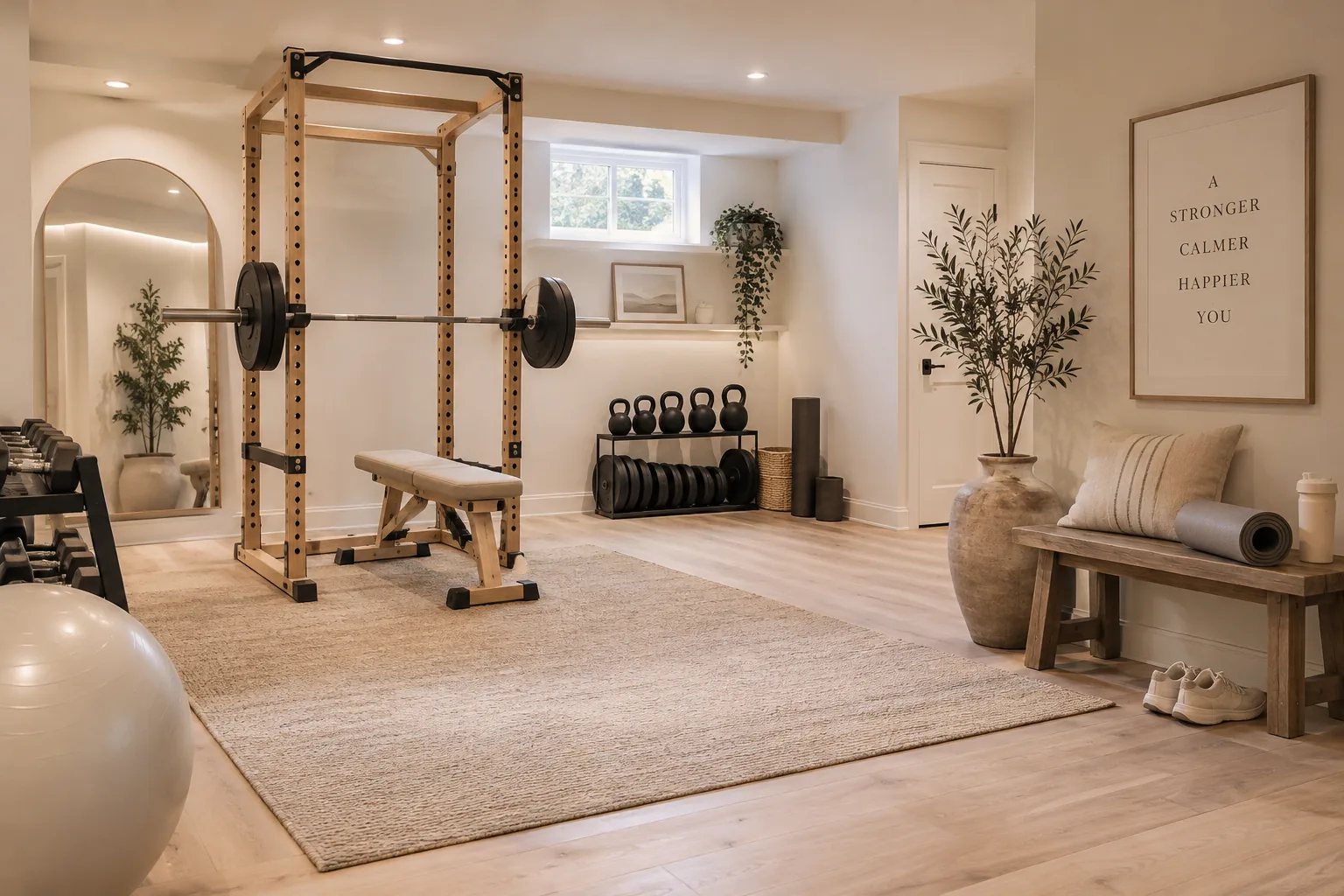
Turning a dark, unused lower level into a dedicated workout space completely changes how you approach fitness at home. I pulled together these reliable layouts and material choices to help you build a setup that actually motivates you to sweat.
1. Install Interlocking Rubber Tiles
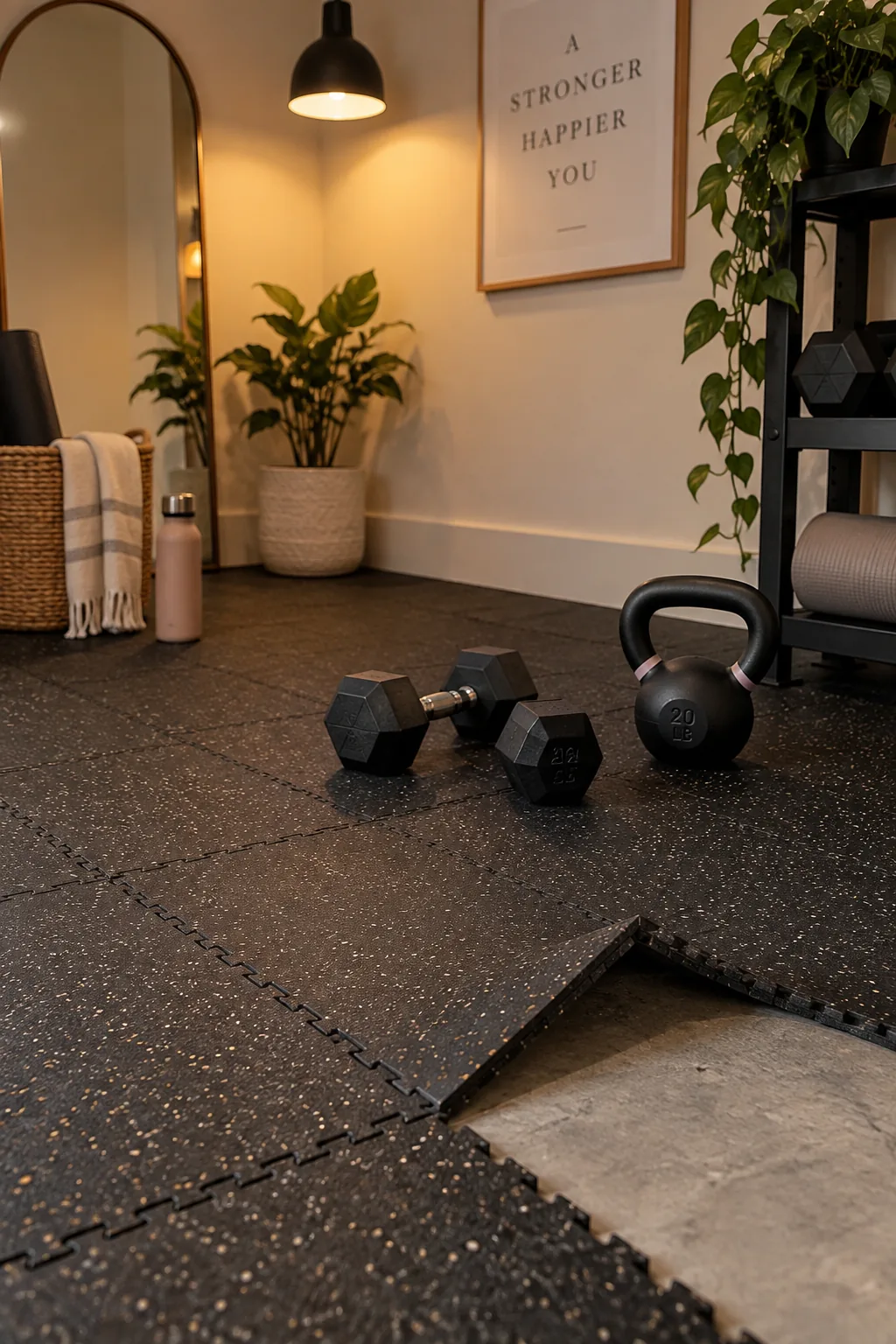
Standard interlocking rubber tiles measure 24 by 24 inches and absorb the heavy impact of dropped weights. They protect your concrete foundation while giving your joints much-needed cushioning during high-intensity jumps.
2. Add Floor-to-Ceiling Mirrors
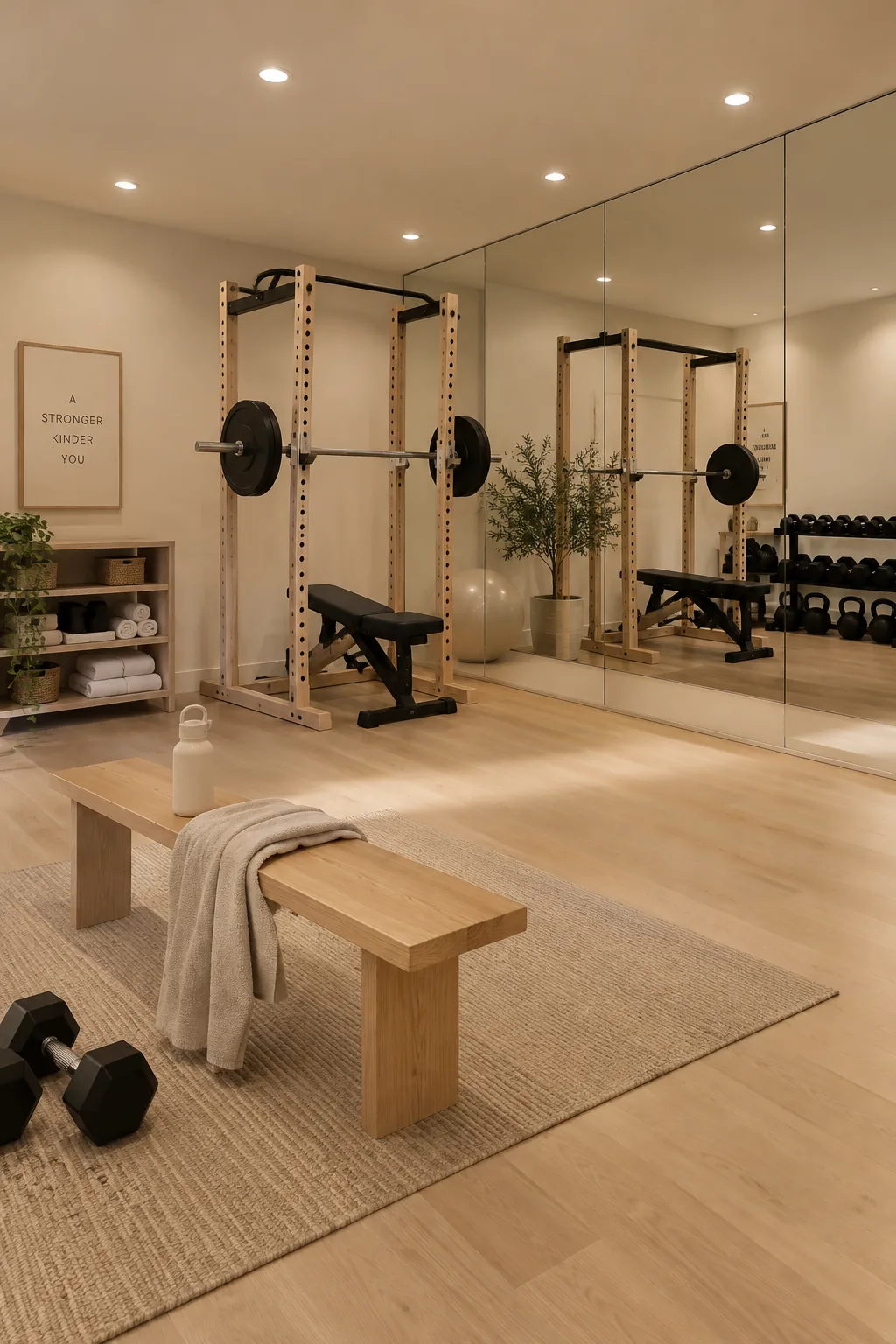
I always insist on adding floor-to-ceiling mirrors when designing a windowless workout room. They bounce the overhead light around the space and instantly make a cramped ceiling feel twice as high. You also need them to check your form during heavy lifts.
Just make sure to secure them directly to the wall studs so they stay perfectly flat.
3. Paint an Exposed Industrial Ceiling
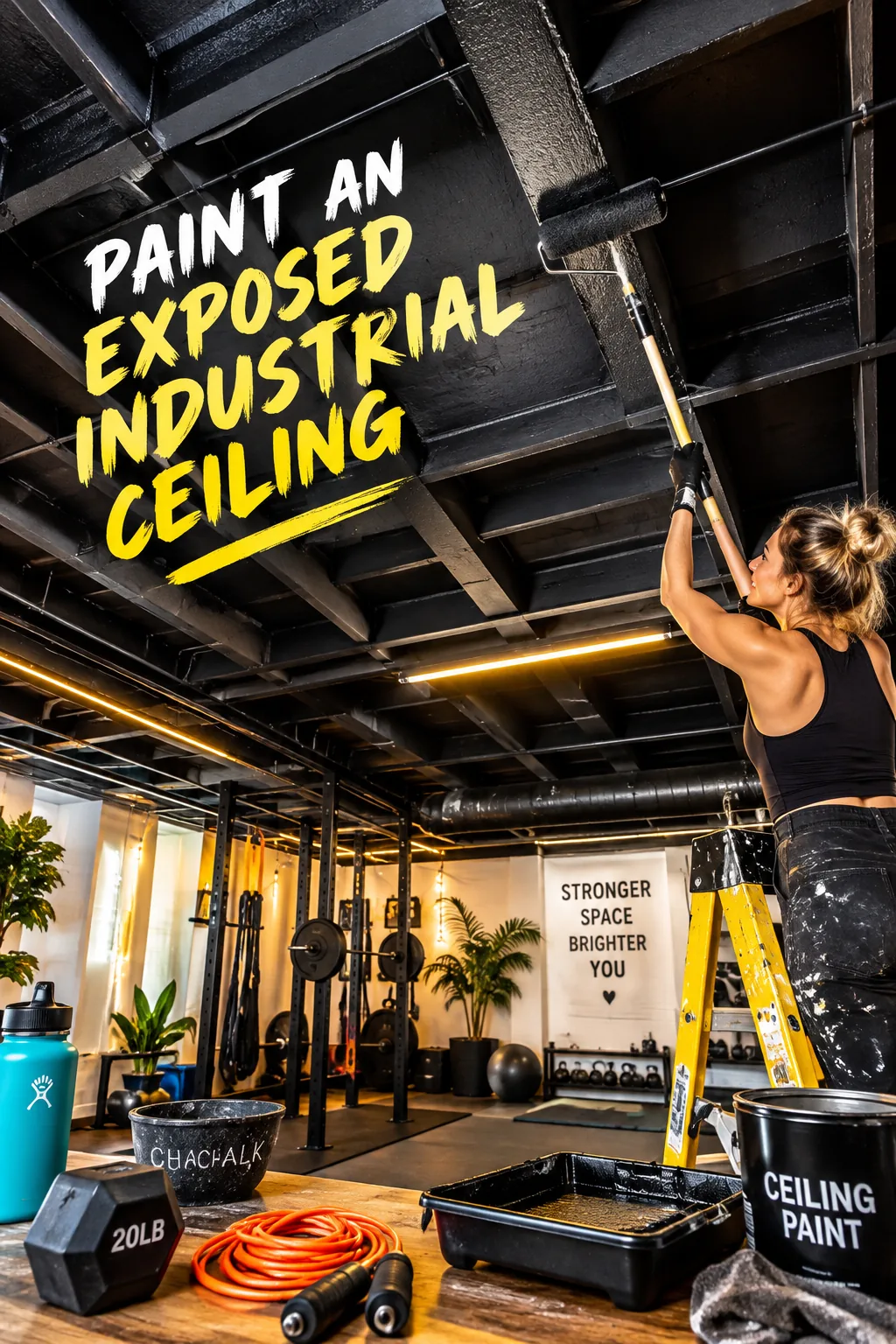
Leaving the ceiling joists exposed creates a raw, industrial aesthetic that fits a lifting zone perfectly. Spraying the entire ceiling matte black hides the messy ductwork and plumbing pipes completely. It also buys you a few extra inches of crucial headroom for overhead presses.
You can easily string up some bright LED shop lights between the joists later.
4. Layer Your Overhead Lighting
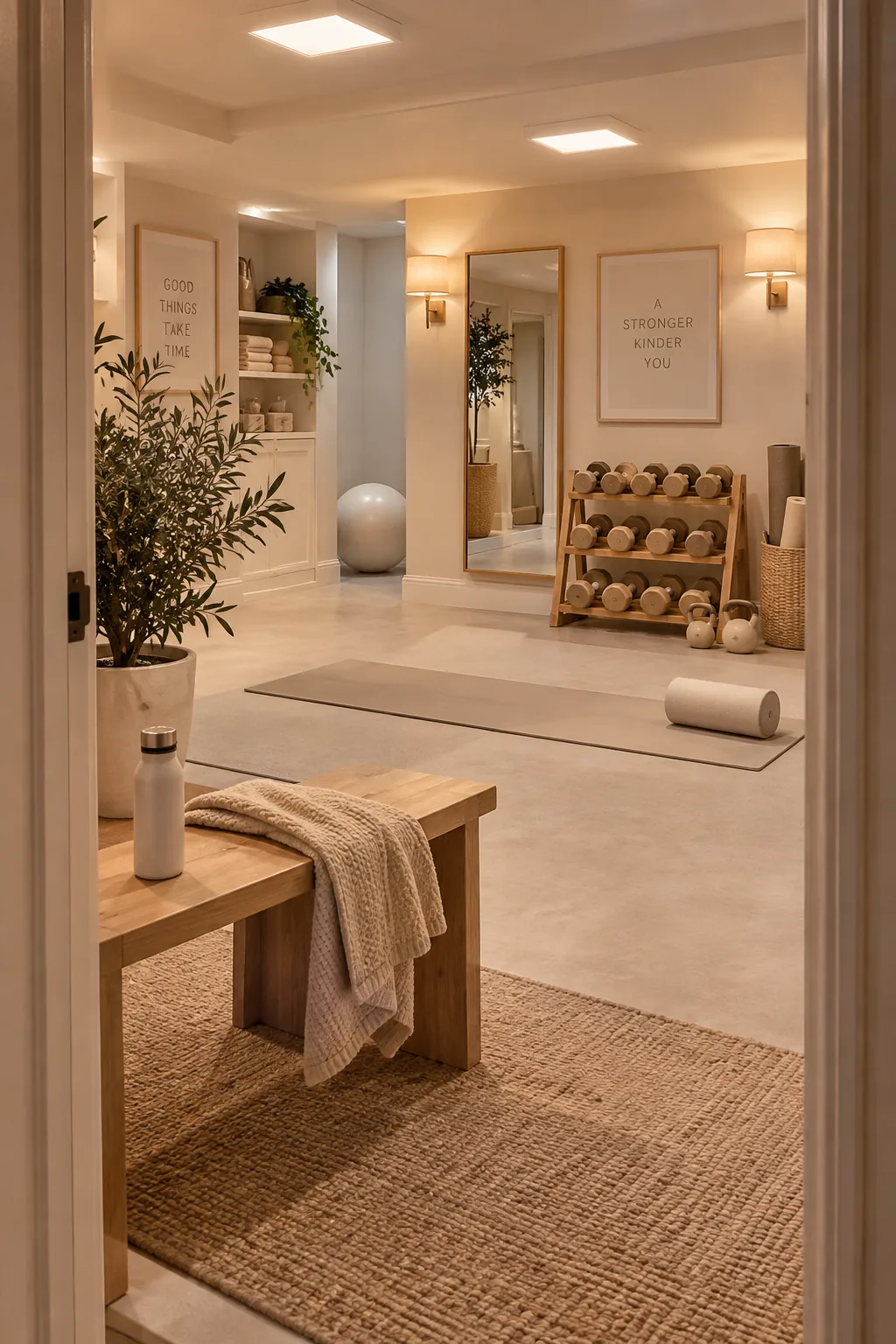
Basements naturally suffer from harsh shadows in the corners. You need to layer your overhead lighting to eliminate those dark spots entirely.
Flush-mount LED panels mimic natural daylight beautifully. Install them on a dimmer switch so you can adjust the mood for yoga or heavy lifting.
Adding a few wall sconces washes the walls in a softer, secondary glow.
5. Mount a Heavy-Duty Pegboard
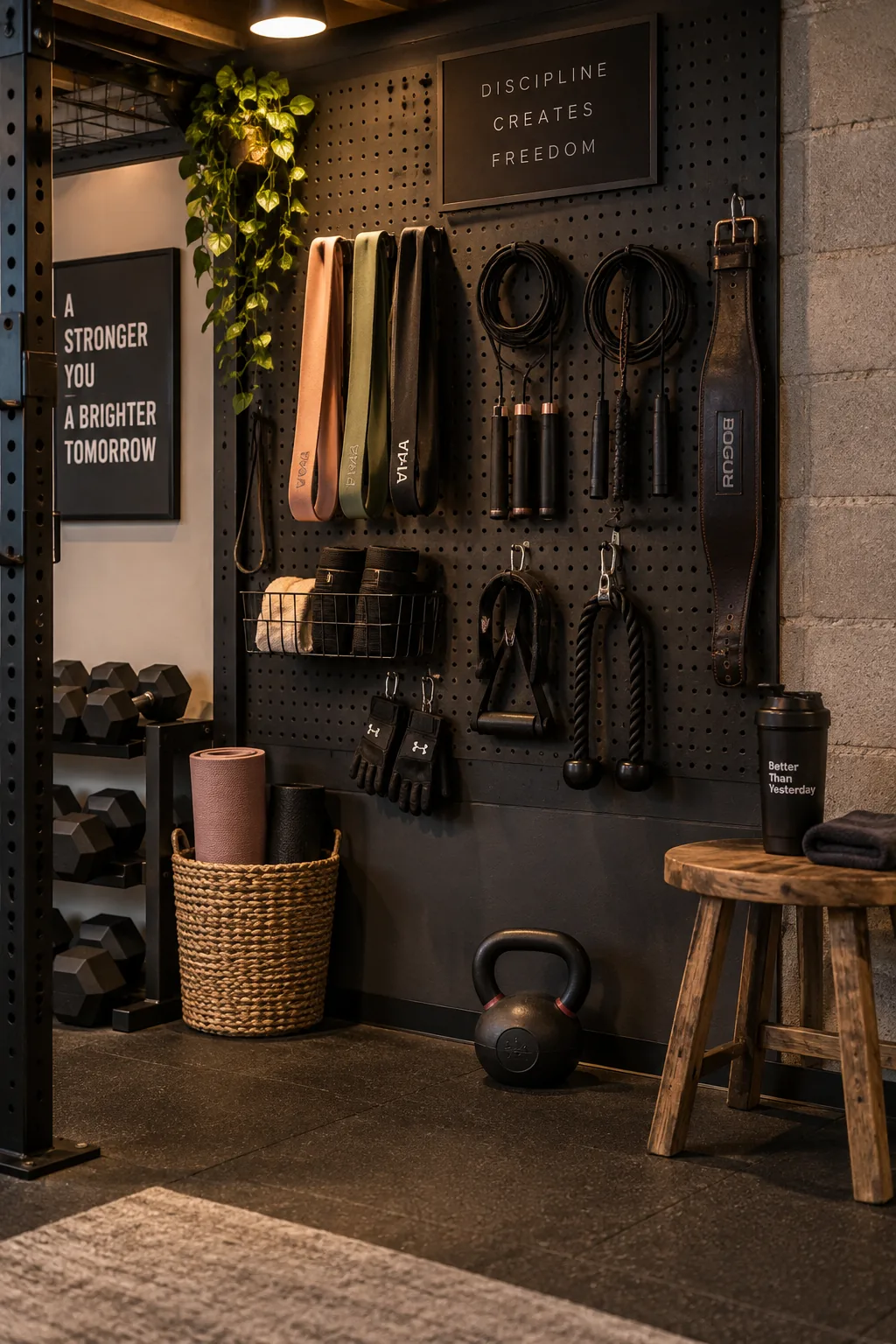
Grouping all your small accessories on a heavy-duty pegboard keeps the floor completely clear of tripping hazards. This vertical storage system lets you grab your resistance bands, jump ropes, and lifting belts the second you need them.
6. Separate with Sliding Glass Doors
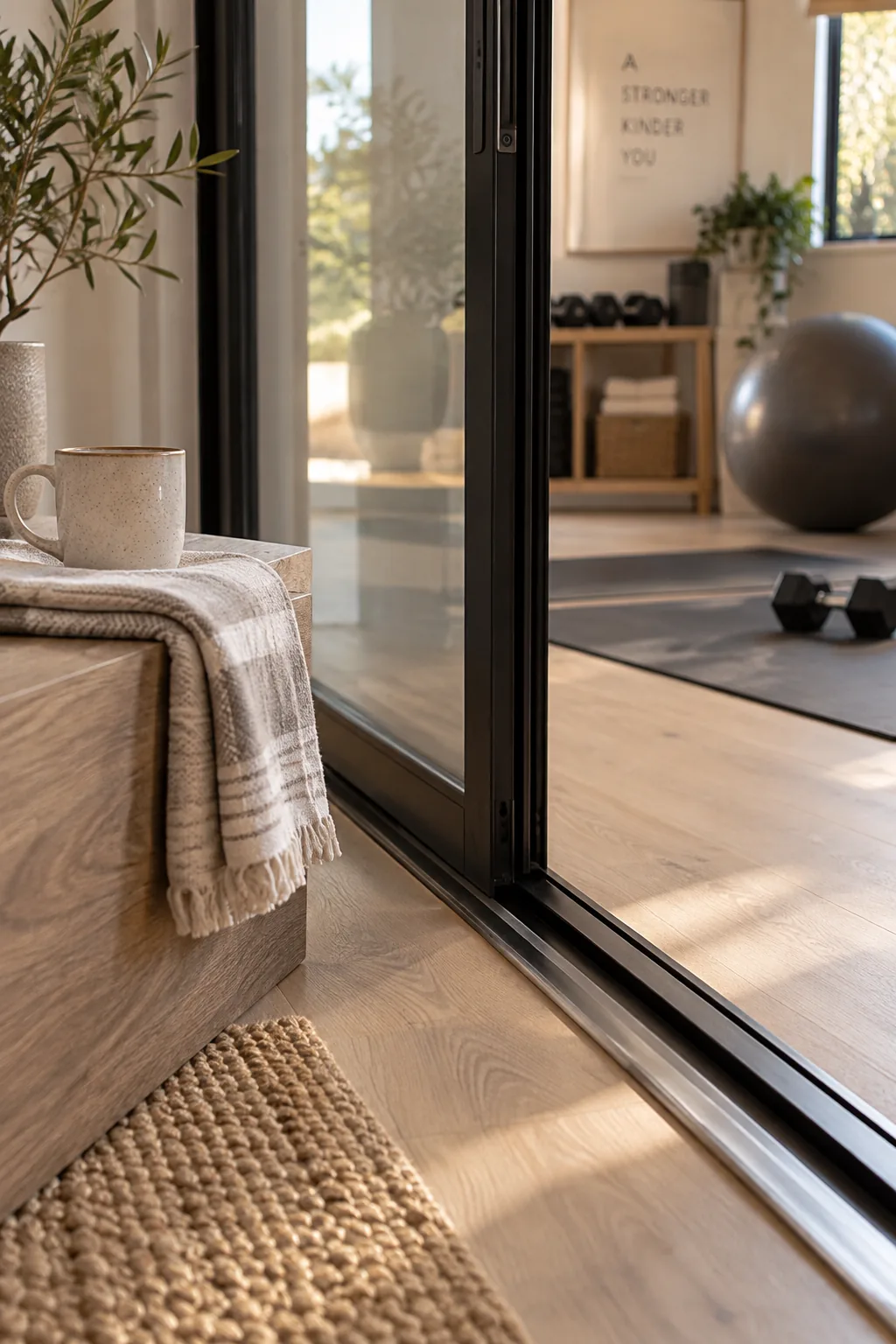
I love installing sliding glass doors to separate the gym from the rest of the finished basement. It blocks the grunting and music noise but still lets the natural light flow freely between the two spaces.
Why it works: The clear barrier keeps the floor plan feeling open and expansive while containing the gym odors.
7. Optimize the TV Placement
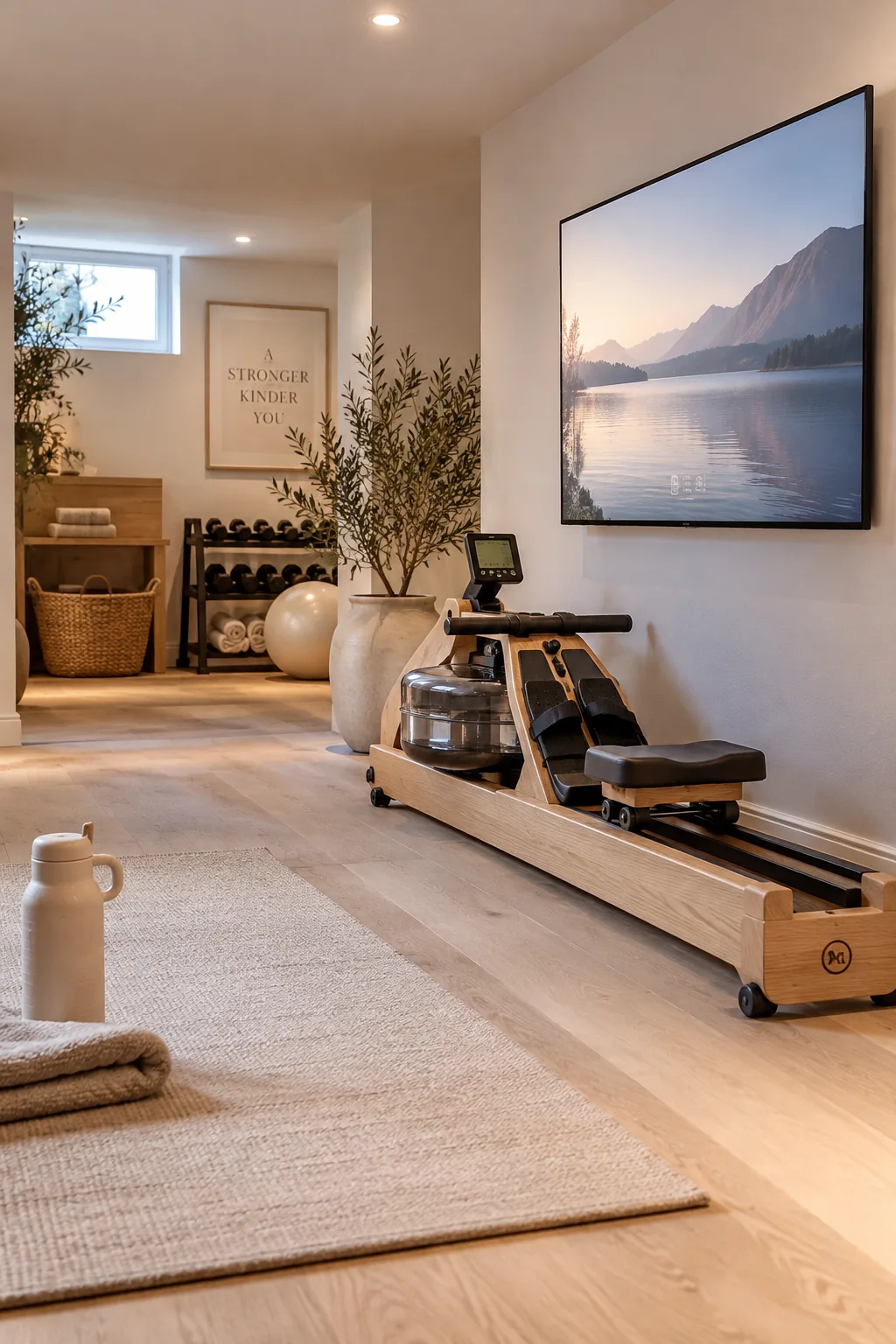
Mounting a flat screen exactly 42 inches off the floor puts it at the perfect viewing angle for a treadmill or rowing machine. Hiding the cords behind the drywall keeps the visual focus on your workout rather than a messy tangle of wires.
8. Build a Wood Slat Accent Wall
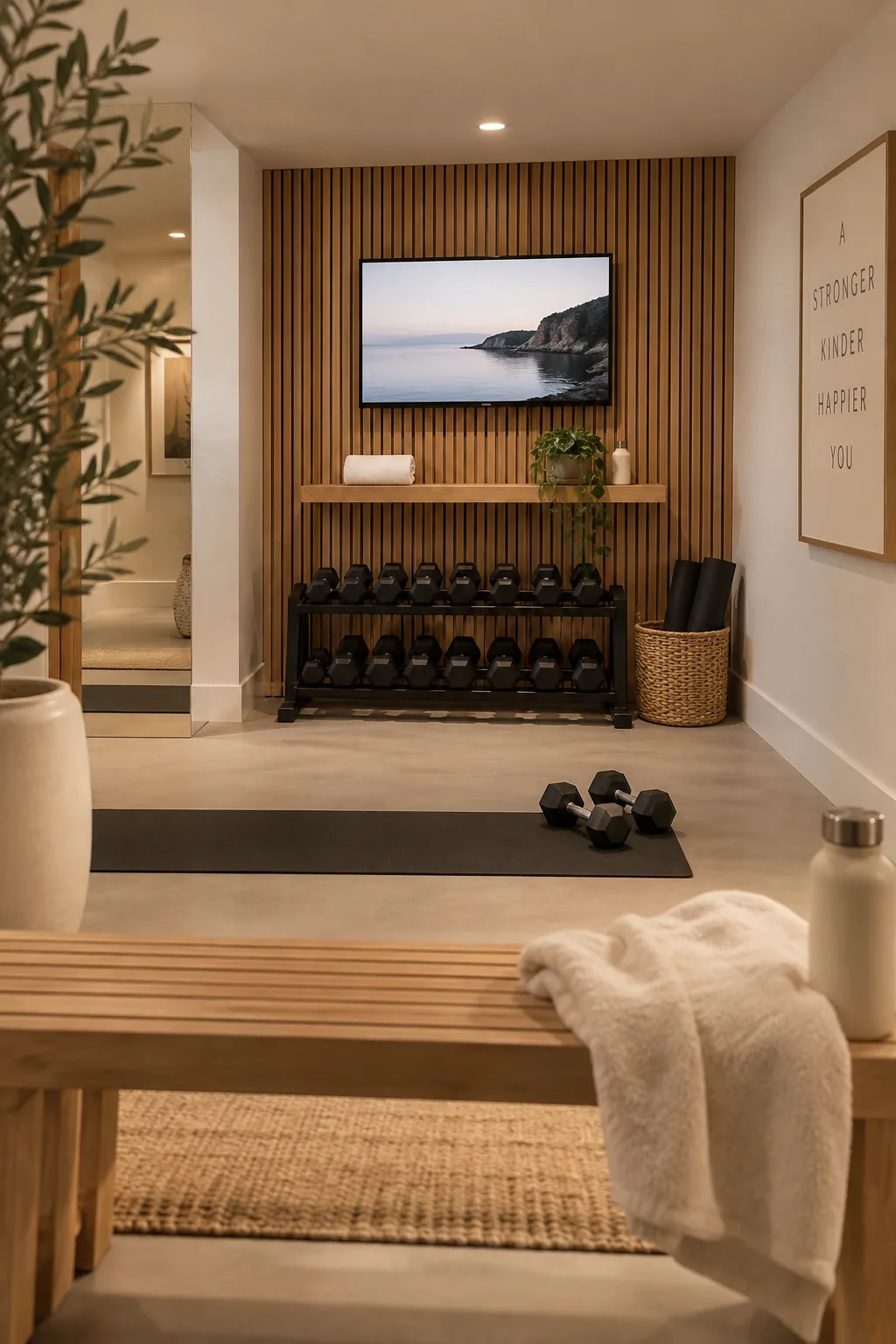
Installing a wood slat accent wall brings a high-end, boutique studio vibe to a damp, cold lower level. The warm wood tones immediately soften the harshness of the heavy metal equipment. You can easily mount your screen or a floating shelf directly into the sturdy wood backing.
- Vertical oak slats
- Matte black mounting hardware
- Hidden LED strip lights
9. Define Zones with Color Blocking
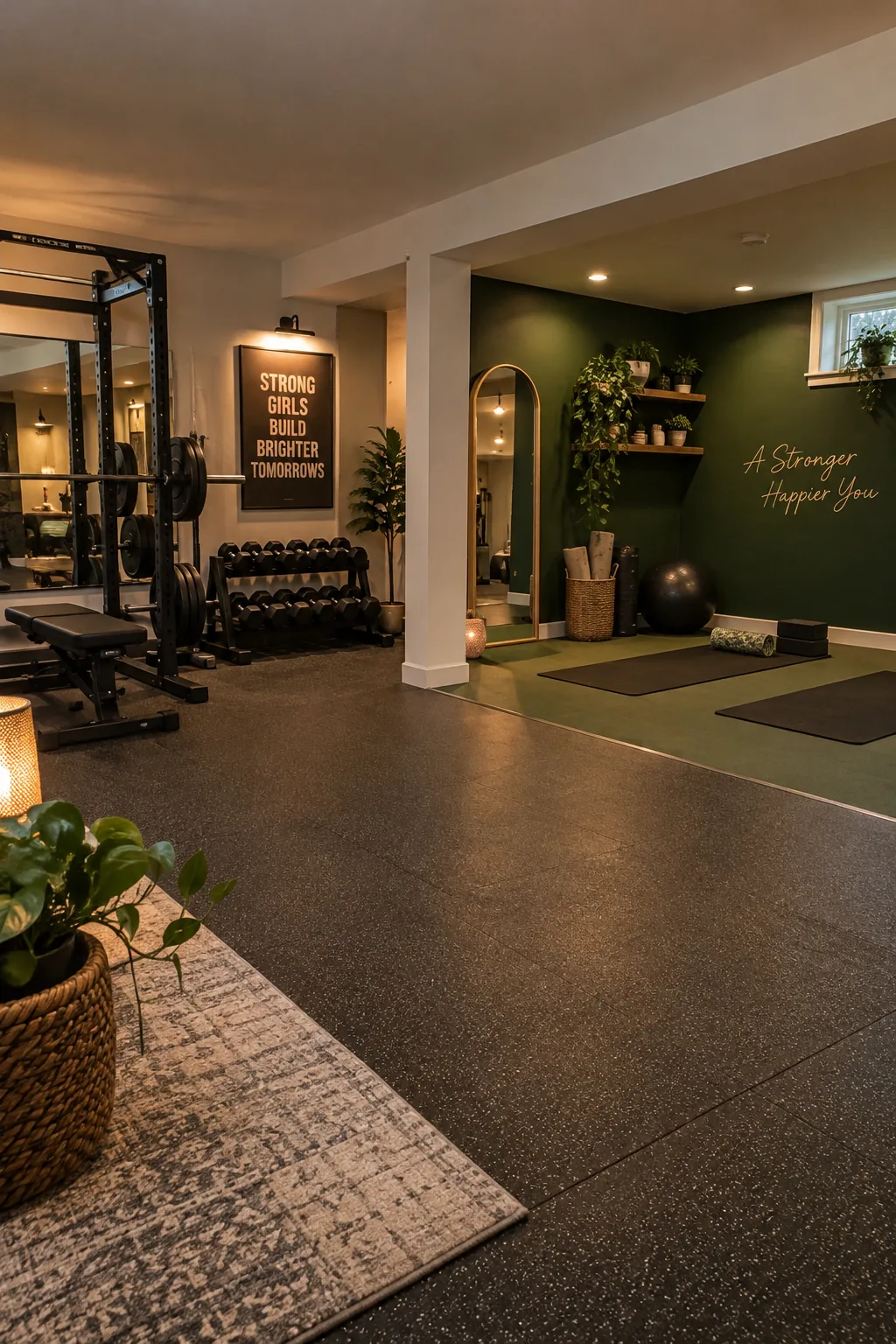
My own basement gym felt disjointed until I used a bold color-blocked wall to define the stretching area. Painting one specific corner a deep, moody green anchors the yoga mats and creates a natural boundary without needing physical walls. It visually separates the calming recovery zone from the aggressive weightlifting section. You can pull this off in a single weekend with just a roll of painter's tape and a gallon of high-quality interior paint.
Why it works: Visual zoning tricks the brain into shifting gears from high-intensity work to mindful recovery.
10. Install a Commercial Wall Fan
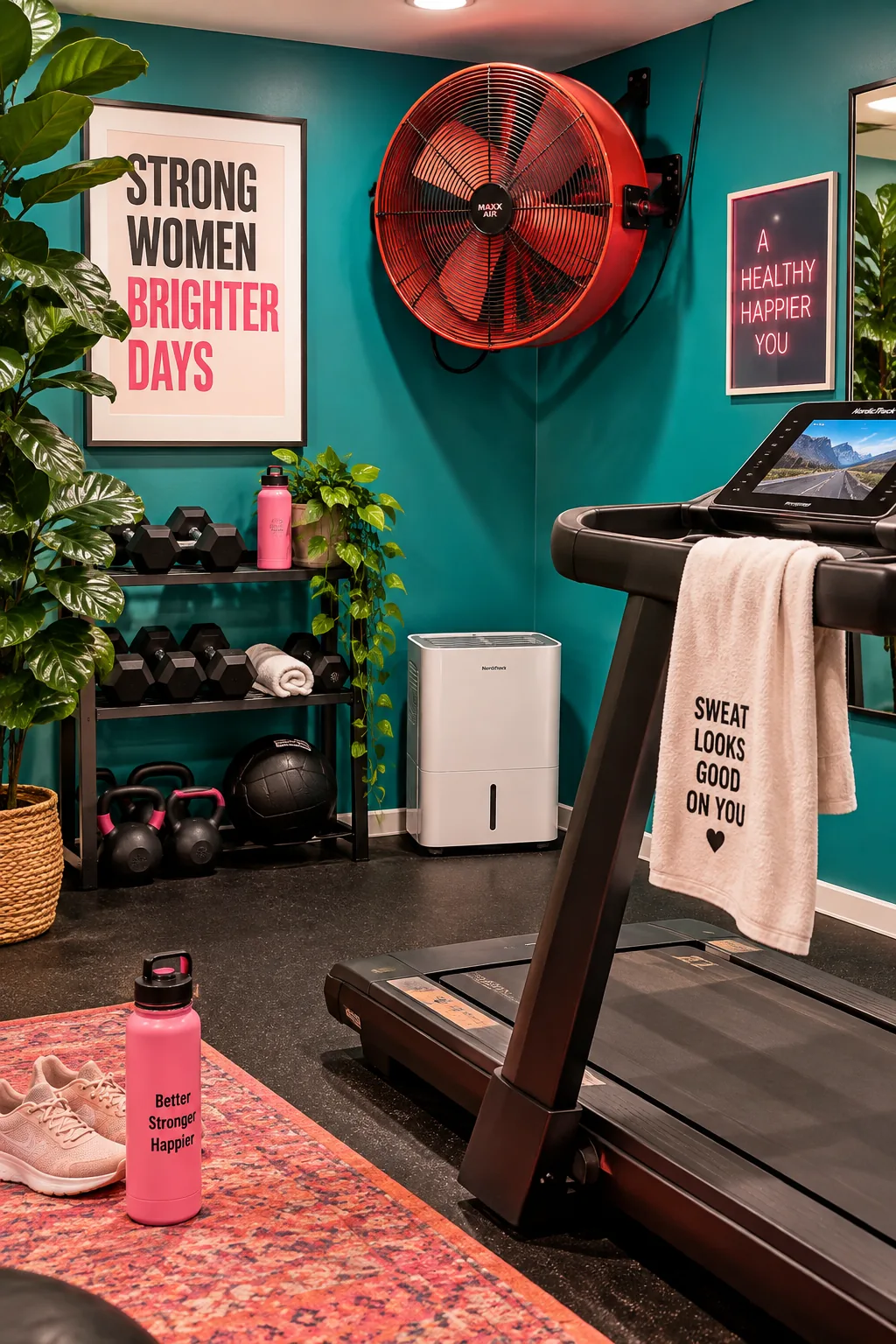
Enclosed basement rooms trap humidity and body heat incredibly fast during a tough workout. Installing a commercial-grade wall fan pushes that stale air around and keeps the temperature bearable. Pointing it directly at the cardio equipment mimics the breeze of an outdoor run.
A freestanding dehumidifier tucked in the corner will pull the remaining moisture out of the air.
11. Utilize Under-Stair Cubbies
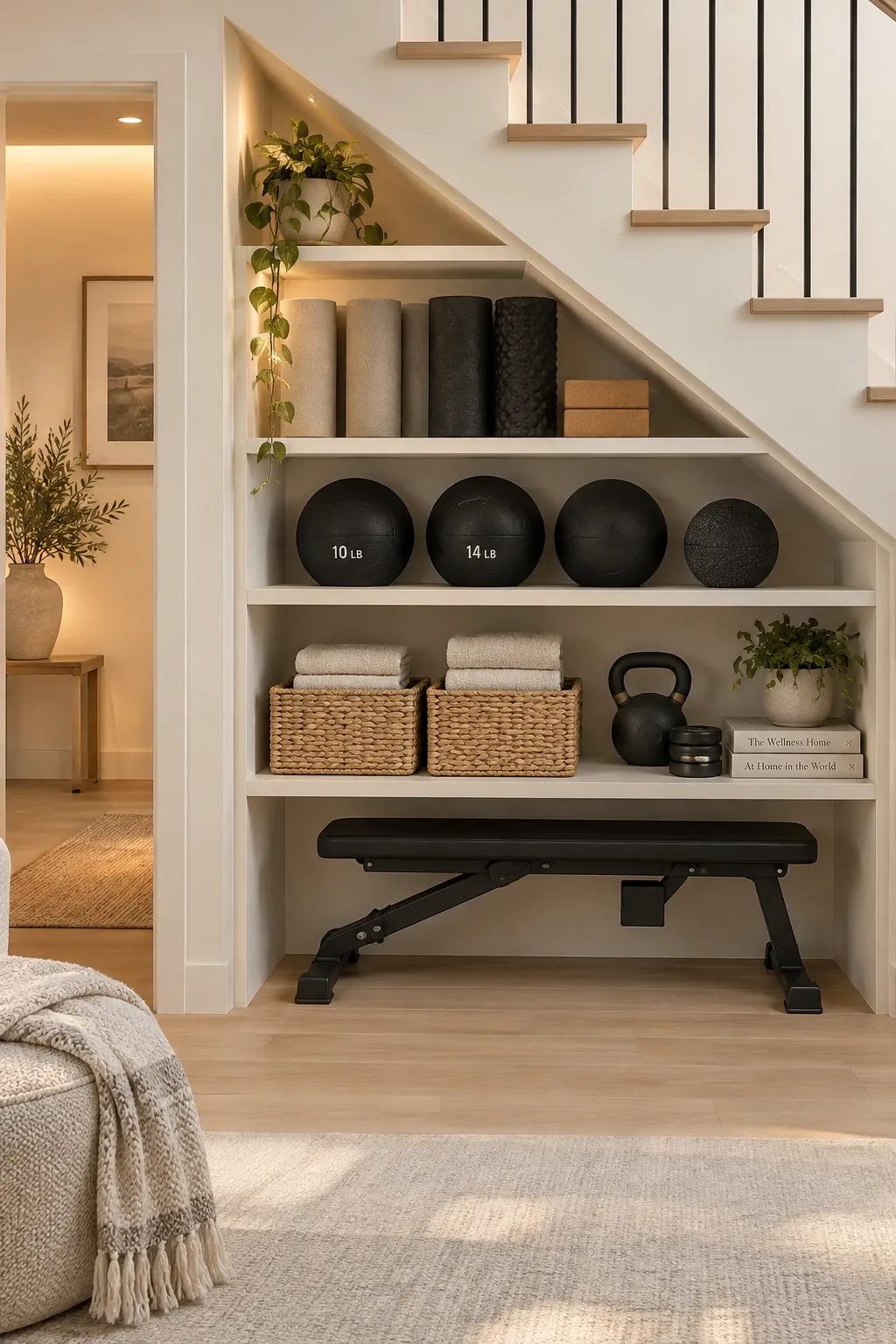
Tucking custom built-in cubbies under the basement stairs utilizes an awkward architectural footprint that usually goes to waste. This deep shelving easily holds bulky items like foam rollers, medicine balls, and clean towels. Painting the cubbies the exact same color as the surrounding walls makes the bulky storage unit recede into the background. You can even leave the bottom section open to slide a weight bench out of the way when you need floor space.
12. Roll Out a Turf Strip
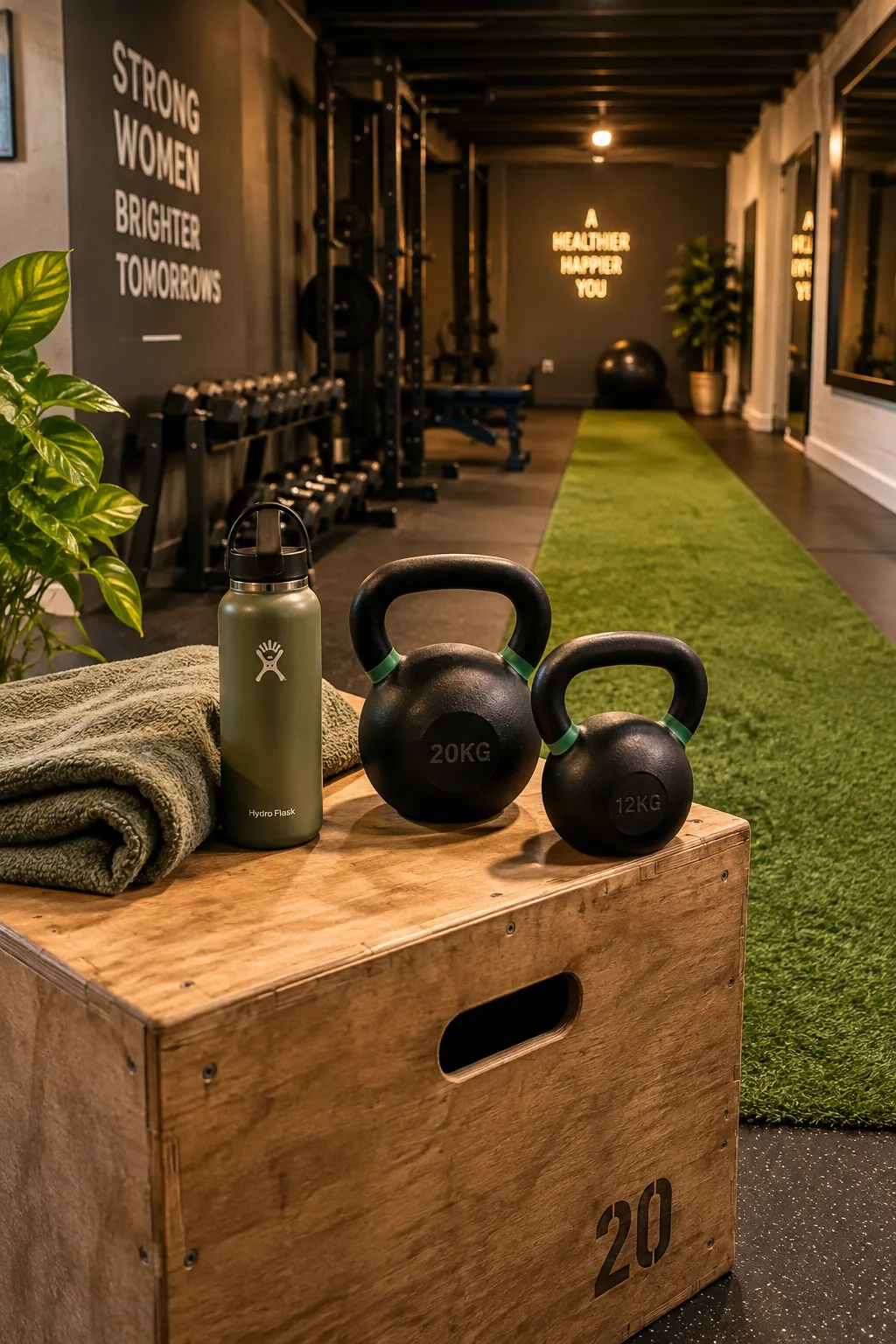
Long, narrow basement layouts often feel like useless hallway space until you add a dedicated artificial turf strip down the middle. This durable green runway provides the exact traction you need for heavy sled pushes and walking lunges. It breaks up the monotony of endless black rubber flooring while adding a fun, athletic pop of color to the room.