
One Nook, 12 Iconic Era Styles
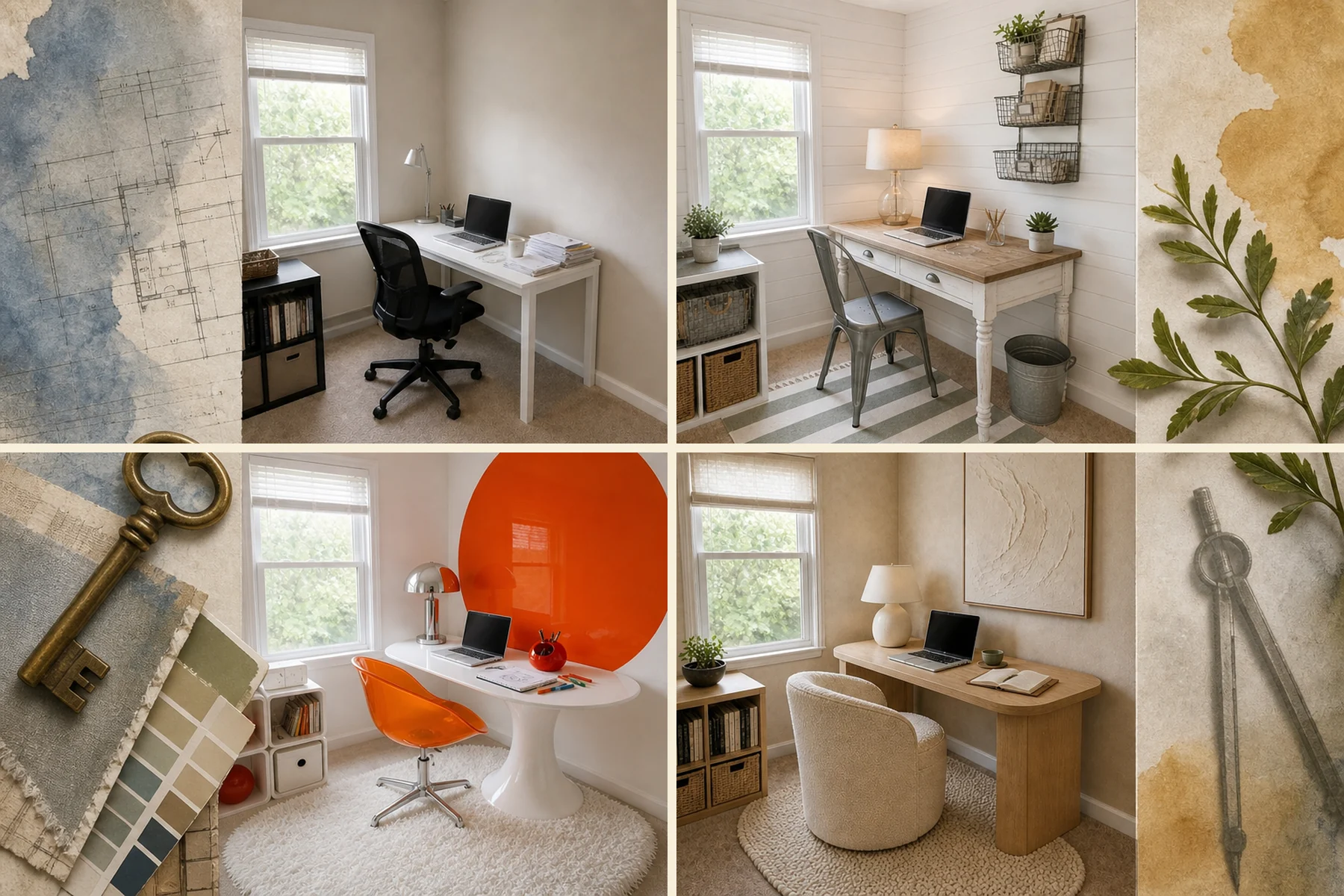
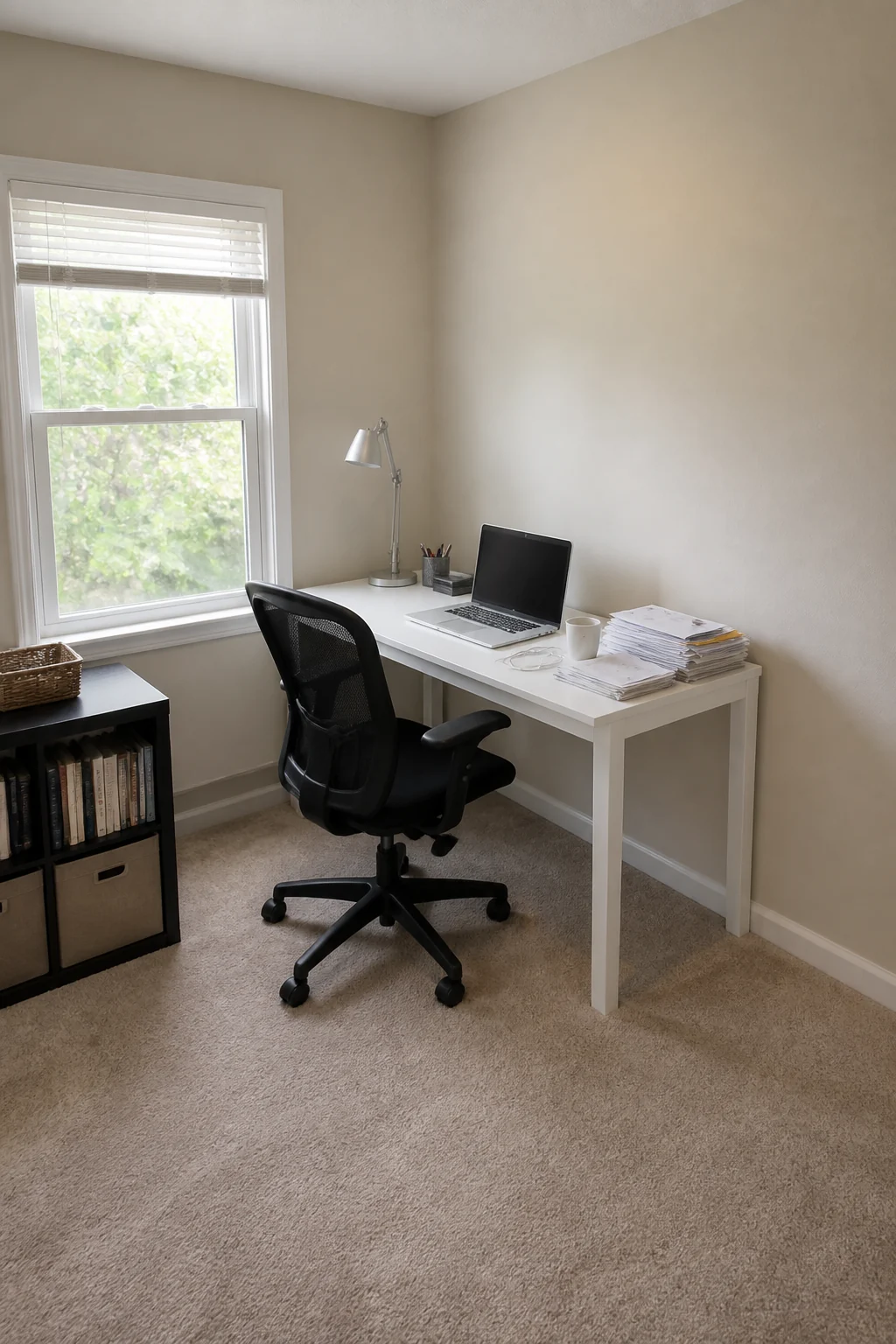
Watch a single 8×10 foot home office corner travel through over a century of design history. These twelve distinct eras reveal how changing materials completely redefine the exact same workspace, providing a visual timeline checklist matching each era to its defining modern shopping ingredients.
1890s Victorian
To establish an atmosphere of academic rigor, we applied dark plum damask wallpaper and hung heavy forest green velvet curtains. Swapping in a carved mahogany desk and a tufted leather wingback chair completes the moody, historical transformation. Adding a brass banker’s lamp brings an authentic antique glow to the desktop.
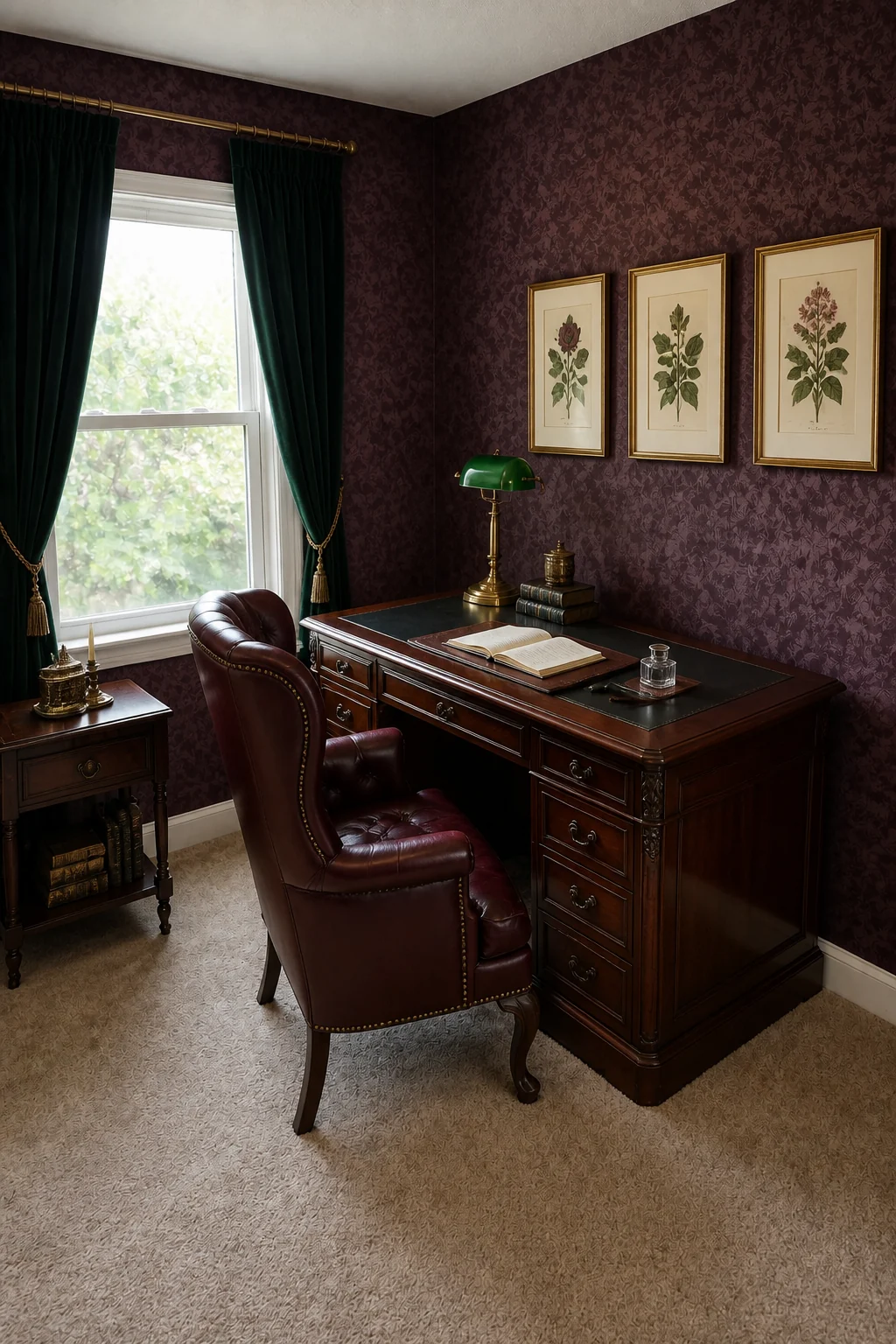
By anchoring the corner with a heavy pedestal desk, the small footprint feels intentionally intimate rather than cramped. The rich mahogany surfaces absorb light to create deep focus for deep work. Vintage botanical art on the right wall provides a scholarly finishing touch without overwhelming the compact space.
1910s Arts & Crafts
We painted the walls olive green and installed a high wood picture rail to ground the workspace in natural, artisanal warmth. A quarter-sawn oak mission desk, a geometric stained glass lamp, and a woven wool rug introduce beautiful earthy textures. These handcrafted details honor the historic bungalow aesthetic perfectly.
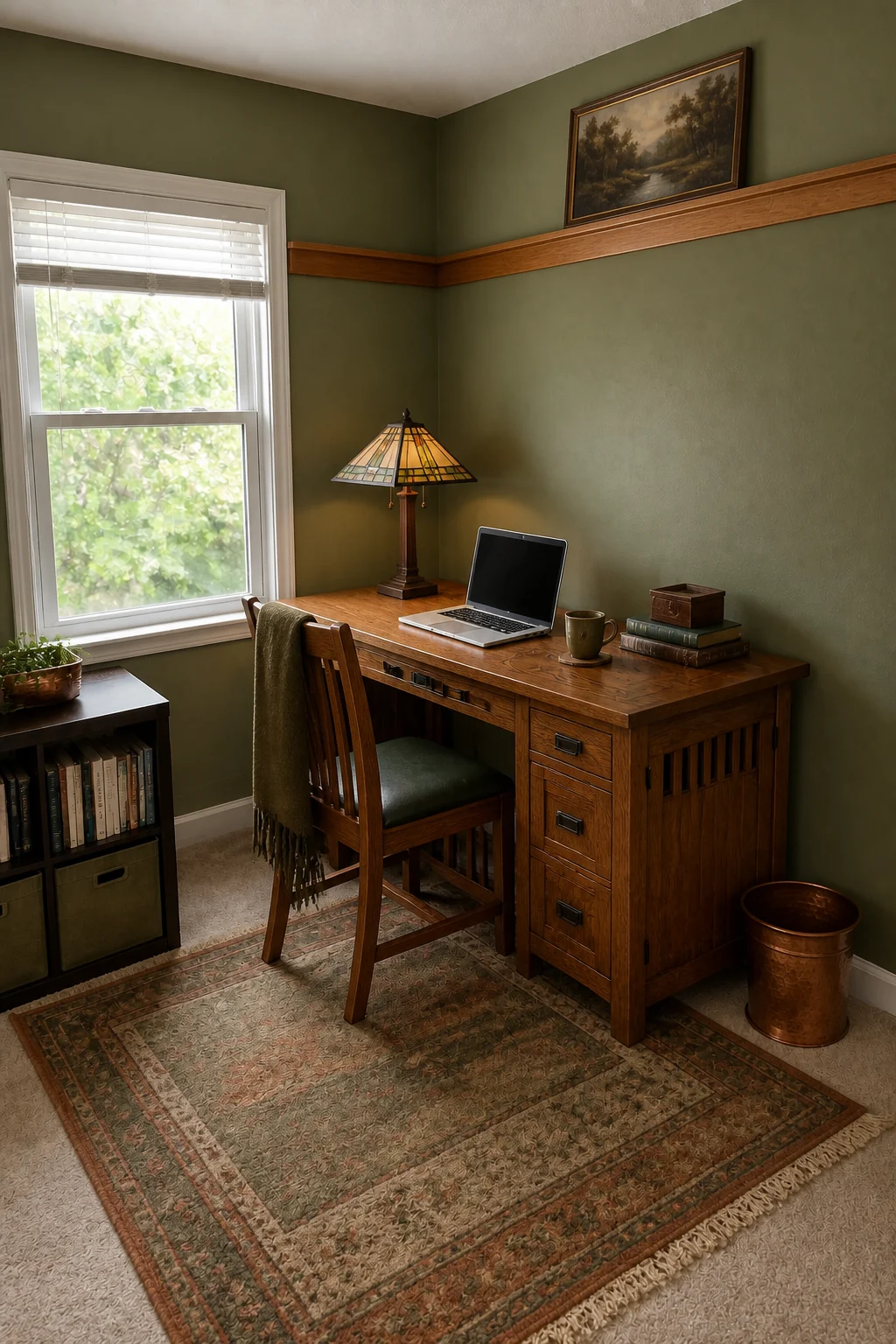
The high picture rail cleverly breaks up the vertical plane, giving the compact nook a more grounded, human scale. The straight, sturdy lines of the mission oak furniture ensure the tight corner remains highly functional. Adding a hammered copper wastebasket introduces a subtle metallic gleam to the muted palette.
1920s Art Deco
Burl wood veneer and emerald velvet inject immediate vintage luxury into the standard corner layout. We painted the walls matte black, applied gold geometric arch decals, and finished the glamorous look with a frosted glass globe lamp. A mirrored tray elegantly corrals everyday desk supplies.
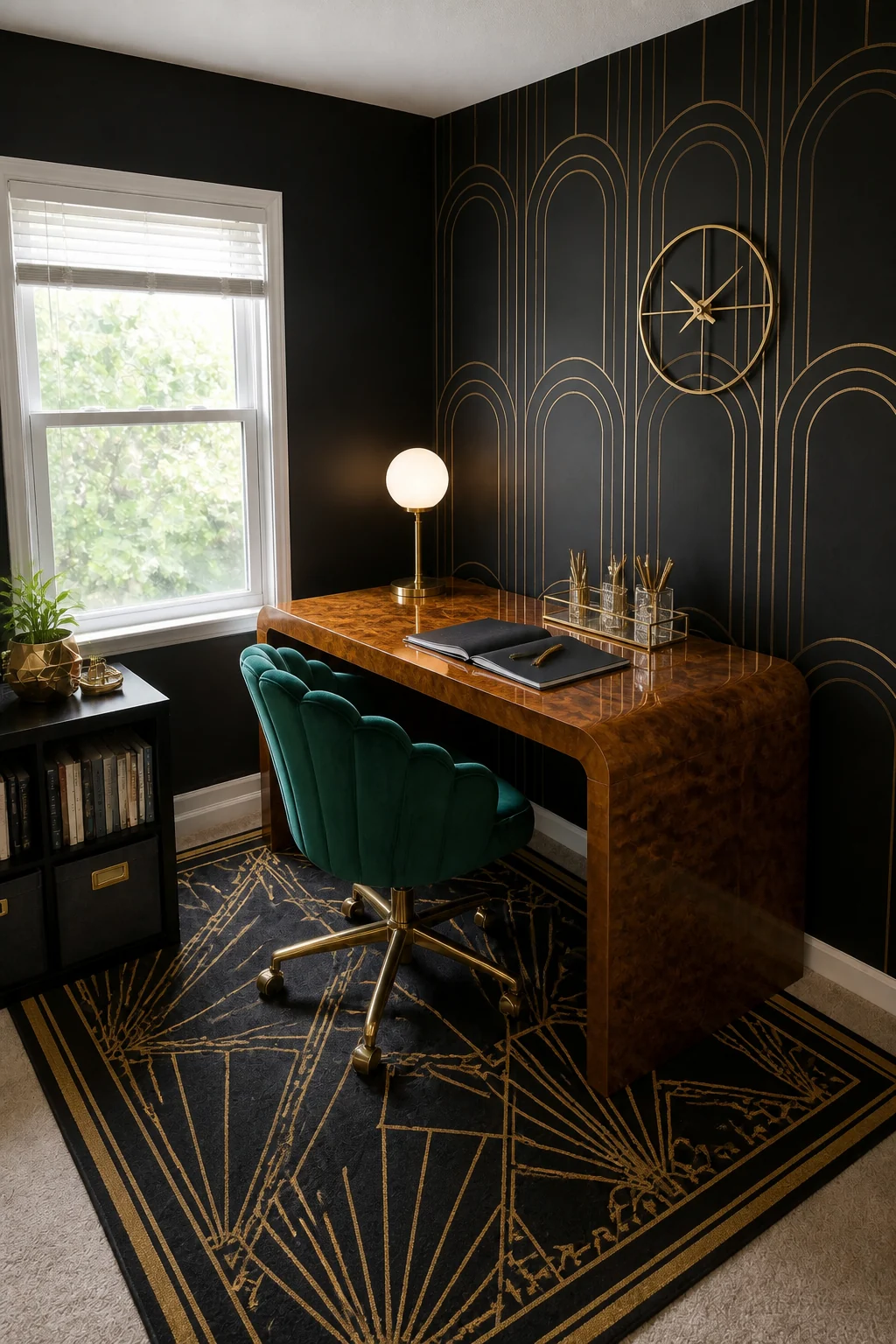
The reflective gold decals and frosted glass ensure the dark walls feel glamorous instead of heavy. High-contrast metallics bounce ambient light into dark corners, making this aesthetic perfect for windowless or dim spaces. The scalloped shell back of the chair adds a soft curve to the rigid room geometry.
Deco Office Essentials
- Burl wood waterfall desk
- Scalloped emerald velvet chair
- Frosted glass globe lamp
- Gold geometric wall decals
1930s Bauhaus
Stripping away ornamentation highlights the pure geometry of a tubular chrome desk and a cantilevered leather chair. We painted the walls stark white with a single red stripe and added an adjustable metal task lamp. A simple wire mesh wastebasket reinforces the strict industrial material palette.
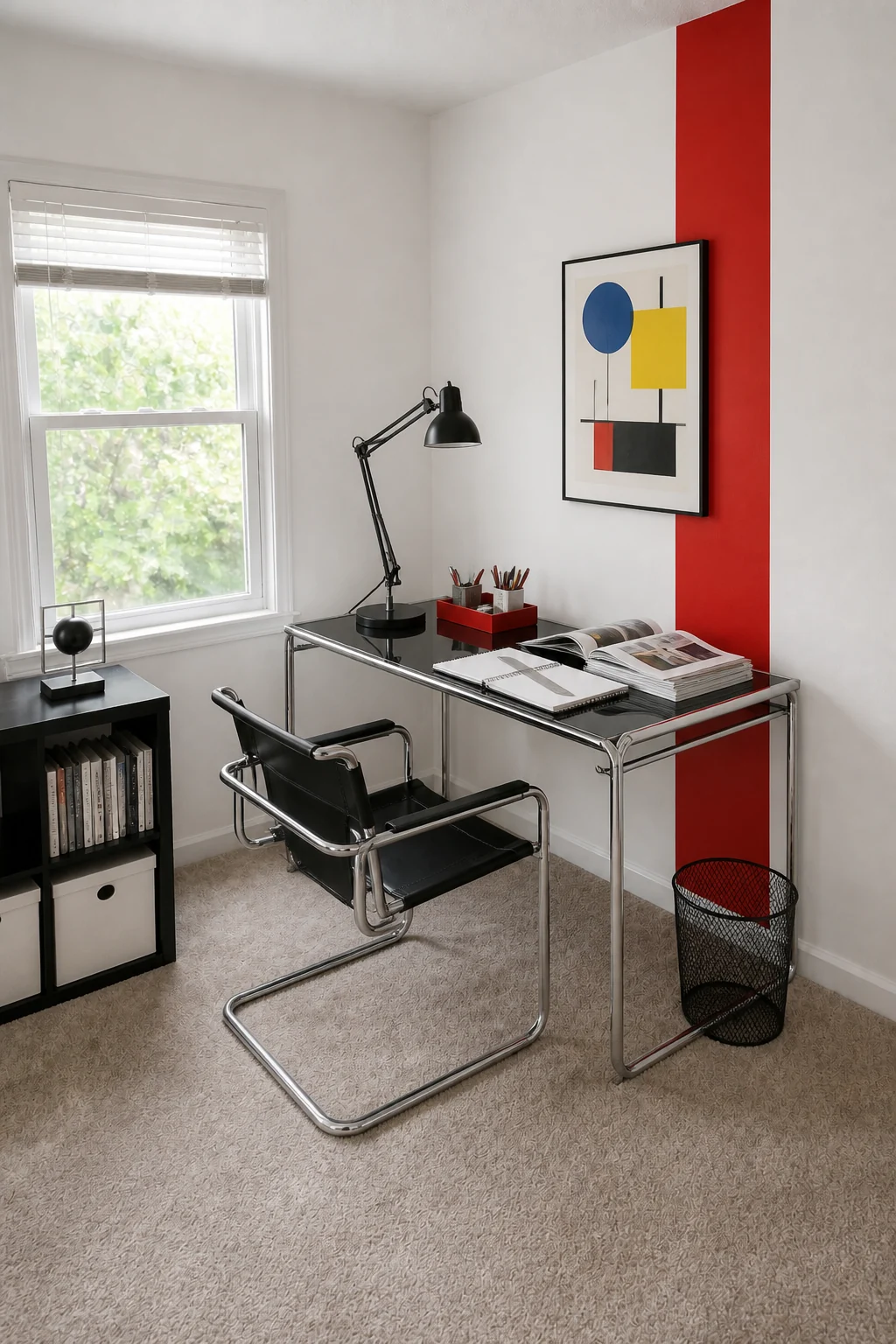
The single primary red stripe acts as a powerful focal point, turning a basic corner into a functionalist architectural statement. The sleek black glass top provides a distraction-free surface for strict minimalists. This stark contrast emphasizes pure utility over decorative excess, maximizing mental clarity.
1950s Mid-Century
We installed warm teak wood-slat paneling and mounted a sunburst clock to capture classic atomic era style. A tapered-leg walnut desk and molded plywood chair soften the rigid right angle of the room’s corner. A matte black cone lamp provides targeted task lighting for reading or writing.
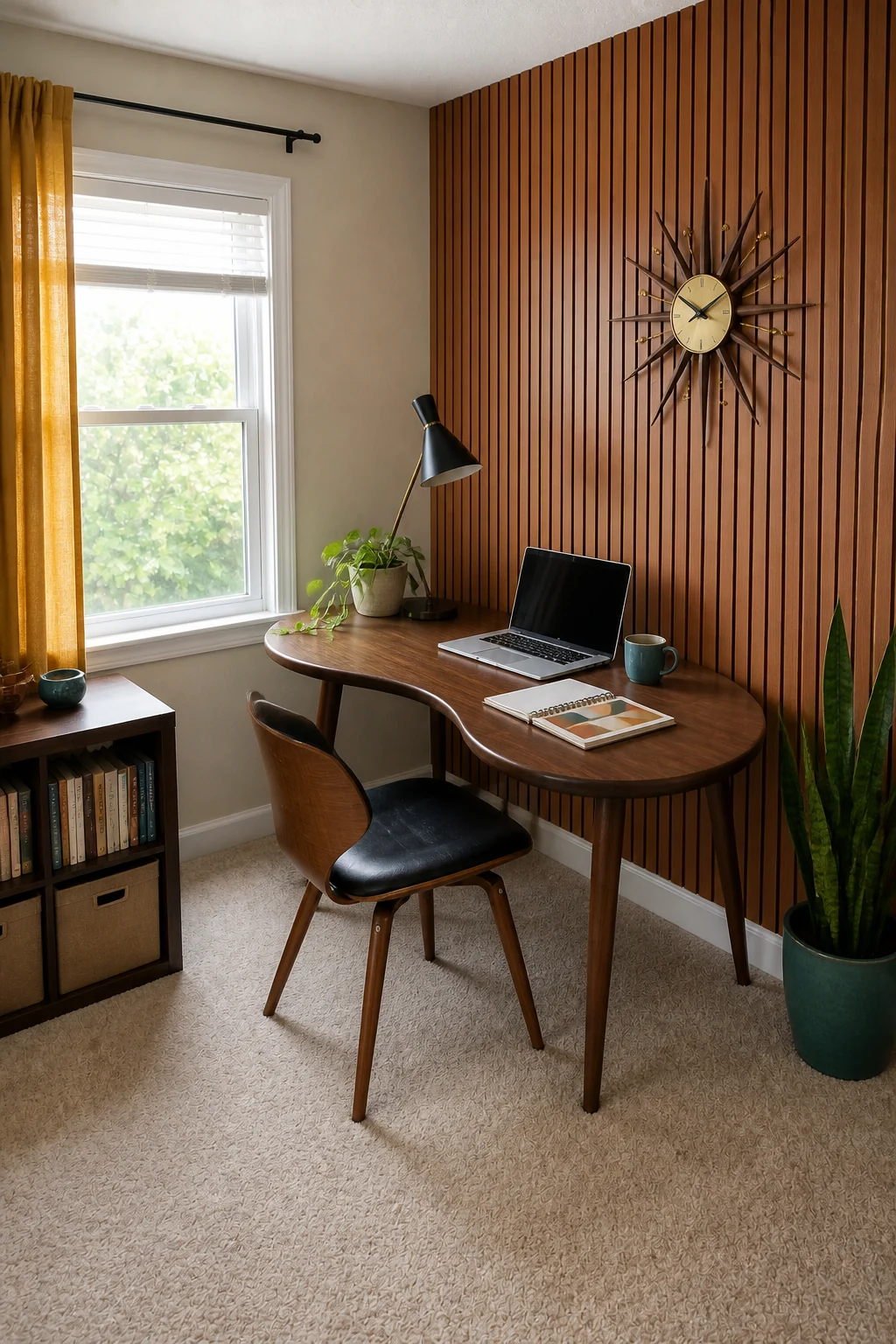
Vertical teak slats add immense architectural interest without sacrificing any usable floor space in the tight footprint. The organic kidney-shaped desk allows for easier movement when rolling your chair in and out. A teal ceramic planter on the floor introduces a lively pop of organic color.
1960s Space Age
Glossy fiberglass and translucent acrylic bounce light around the room, making the space feel vibrant and open. We painted a massive orange circle on glossy white walls and added a chrome mushroom lamp. A fluffy white shag rug introduces much-needed texture to the smooth plastic surfaces.
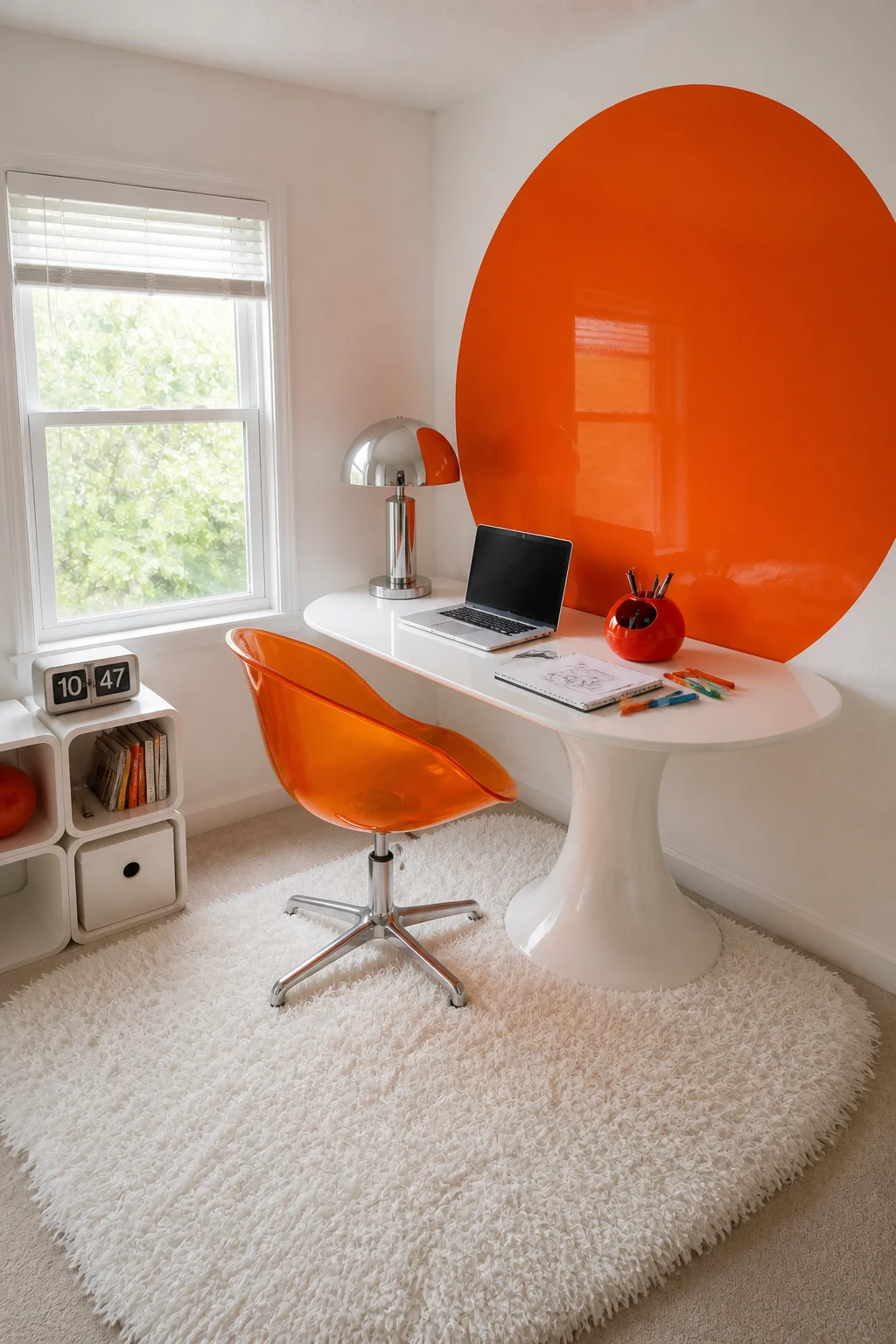
The sweeping pedestal base of the tulip desk eliminates visual clutter at floor level. The massive painted orange circle acts as an inexpensive but highly dramatic architectural anchor for creative work. White plastic modular cubes provide sleek, futuristic storage right beside the main workspace.
1970s Earthy Boho
Heavy grasscloth and natural rattan introduce incredible tactile warmth to the standard drywall box. We added a cane-back chair draped with a sheepskin and hung a macrame plant holder directly in the window. A chunky braided jute rug grounds the entire earthy arrangement.
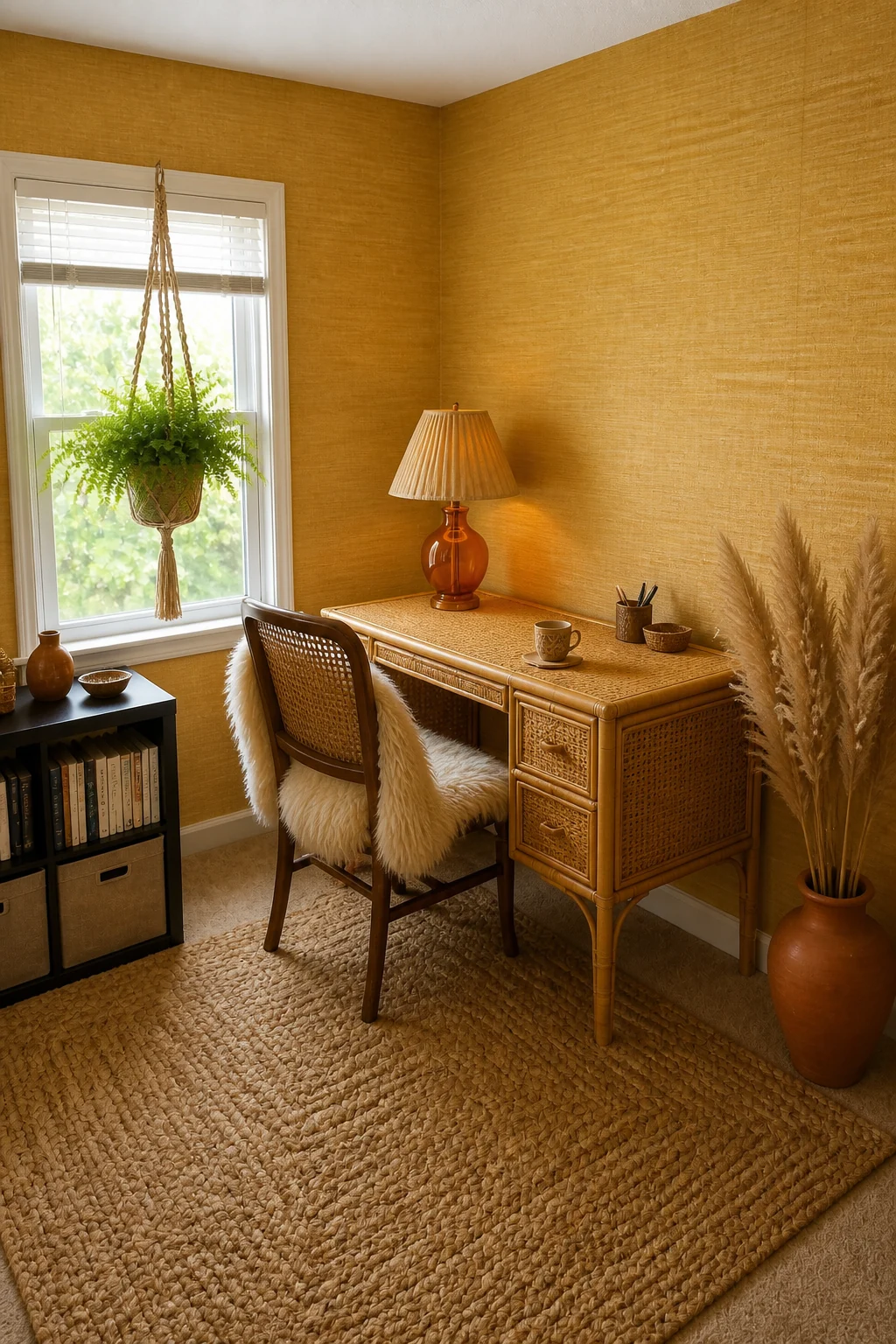
Suspending a macrame planter in the window draws the eye upward while keeping the small desk surface completely clear. These woven textures help absorb ambient sound in hard-surfaced compact rooms. The amber glass table lamp casts a relaxed, golden glow during late-night study sessions.
Tactile 70s Layers
1980s Postmodern
A subtle black grid pattern provides structure for the wild, chunky geometry of a mint green laminate desk. We brought in an asymmetrical cobalt chair and a bright yellow geometric lamp to complete the look. A speckled terrazzo pencil cup adds a playful finishing detail.
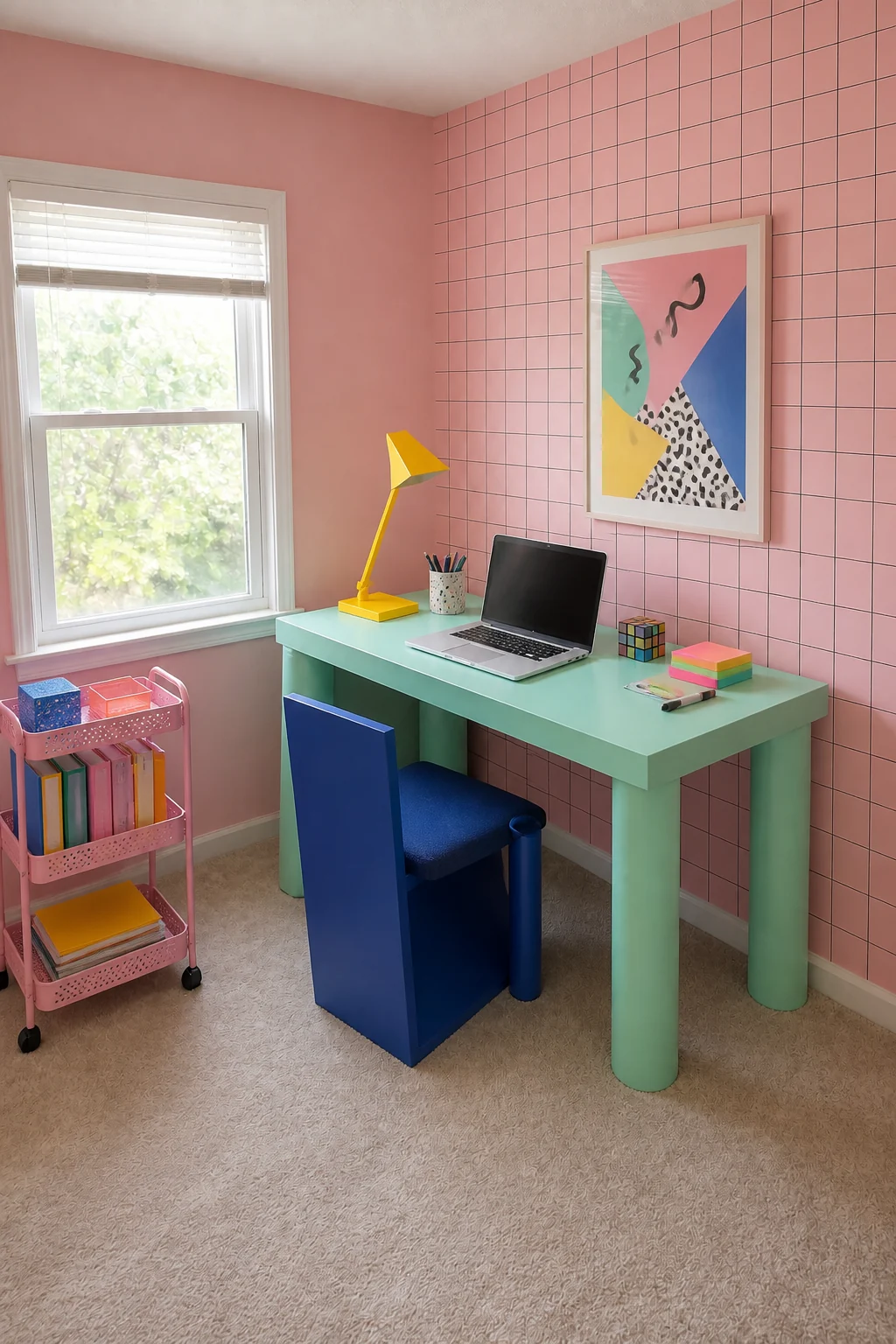
This eccentric approach proves that even a tiny nook can handle massive personality and color. The asymmetrical furniture breaks up rigid, boxy room layouts to create a highly distinct, playful retro vibe. A pastel pink rolling cart provides quirky, mobile storage that easily tucks away.
1990s Zen Minimalist
Removing all rugs and wall decor forces the eye to appreciate the negative space around a pale ash linear desk. We painted the walls flat cool beige and added a sleek frosted aluminum chair. A minimalist floating shelf provides just enough storage for daily essentials.
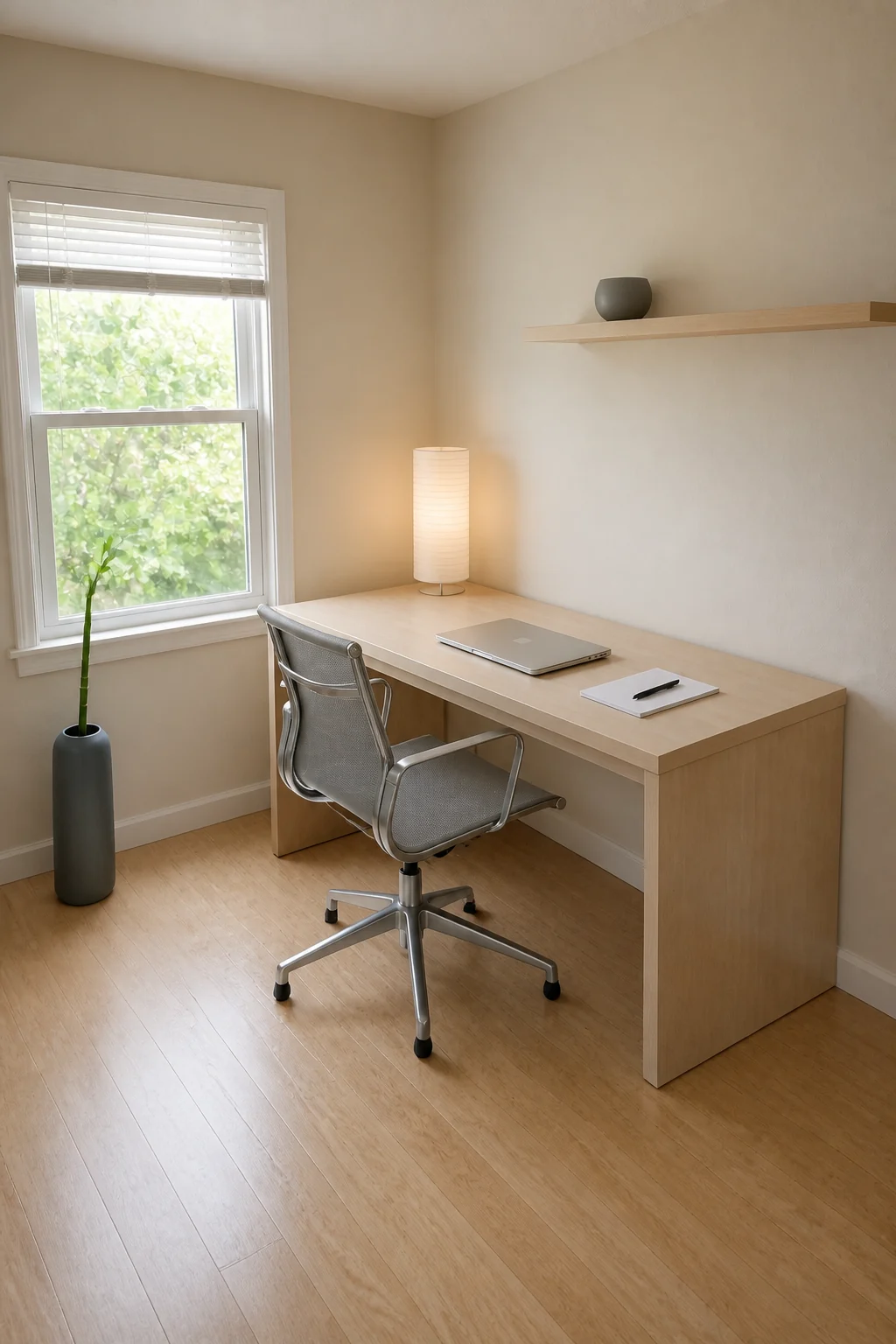
Bare floors maximize the perception of available square footage in this compact corner. The soft glow of the rice paper lamp prevents the strict stripped-back simplicity from feeling clinical. A single tall bamboo stalk in a slate vase introduces life without adding visual clutter.
2000s Loft Industrial
Faux distressed red brick wallpaper and raw steel pipes instantly transport the generic suburban corner into an urban loft aesthetic. We swapped in a reclaimed wood desk, a distressed leather drafting stool, and a caged filament lamp. A black wire wall grid keeps architectural blueprints organized.
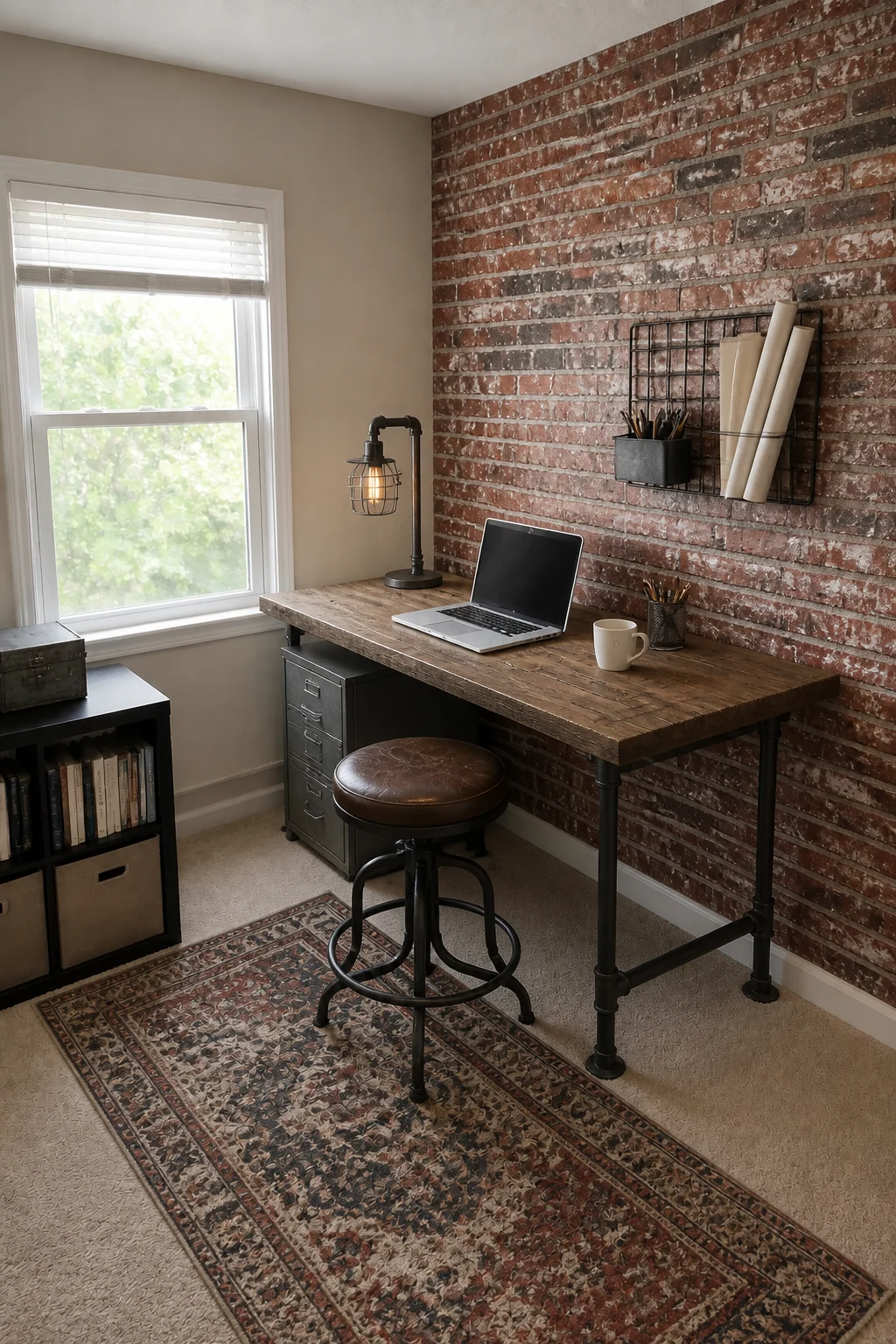
Using a backless drafting stool allows the seat to tuck completely away when not in use. The open-frame pipe desk prevents small rooms from feeling blocked while offering rugged, utilitarian durability. A faded vintage Persian runner softens the harsh metal and brick textures beautifully.
2010s Farmhouse Chic
Crisp white horizontal shiplap bounces abundant natural light from the left window throughout the entire office corner. We brought in a distressed painted desk, a galvanized metal cafe chair, and mounted wire storage baskets. A clear glass jug lamp keeps the sightlines bright and airy.
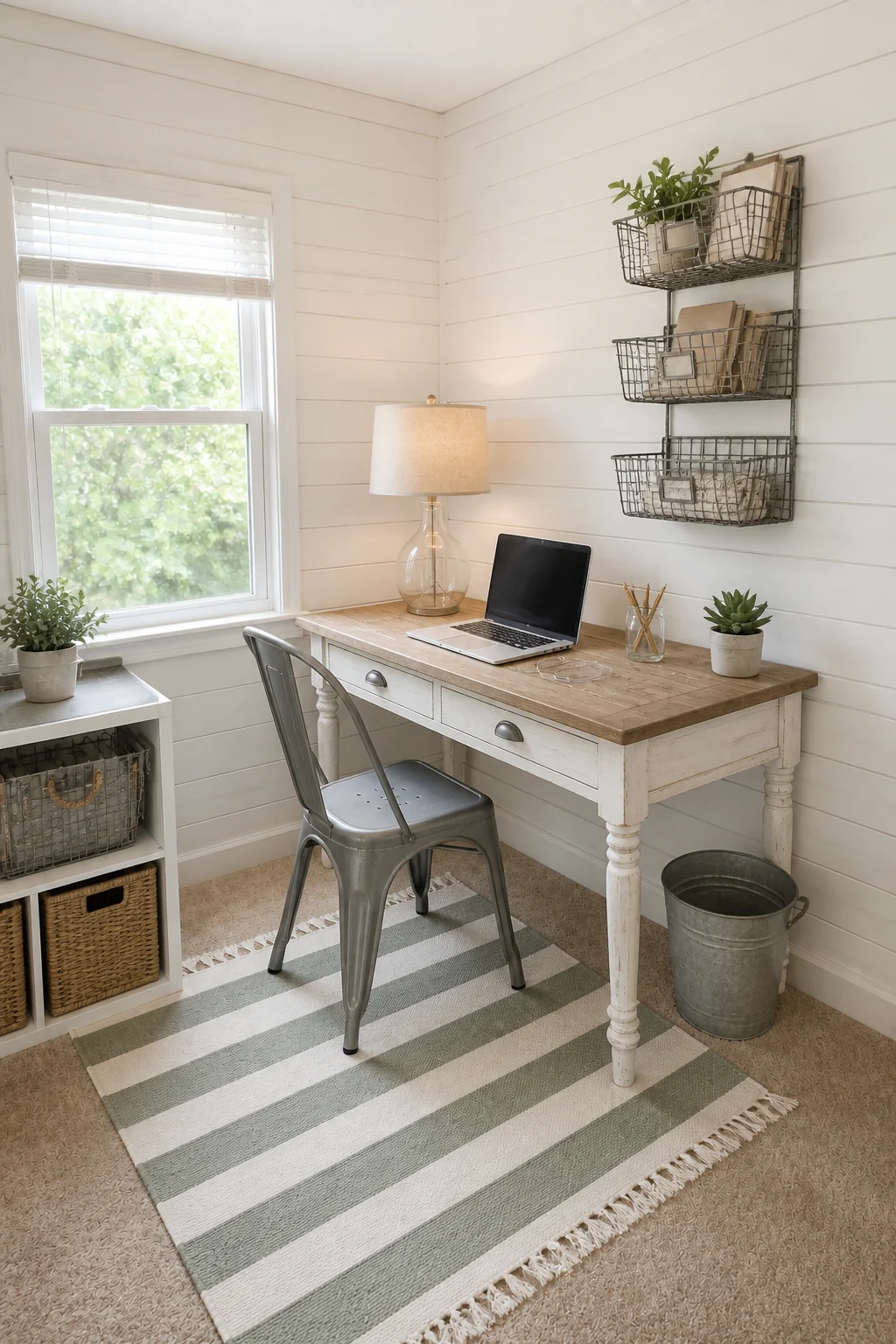
The distressed pine and galvanized metal introduce a relaxed, lived-in durability that feels effortlessly welcoming. Horizontal shiplap visually stretches the width of narrow walls, making the footprint feel brighter and much wider. A striped cotton rug adds a soft touch of sage green underfoot.
Farmhouse Spending Strategy
Invest your budget in authentic wood wall treatments like real shiplap, as cheap peel-and-stick versions often peel at the seams. Save money by sourcing vintage galvanized metal accessories from local flea markets.
2020s Organic Modern
Sweeping limewash brushstrokes and nubby bouclé fabric create a soothing, highly tactile environment. We applied beige textured clay plaster and introduced a pill-shaped light oak desk with an asymmetrical matte white ceramic lamp. A soft linen Roman shade gently diffuses the incoming daylight.
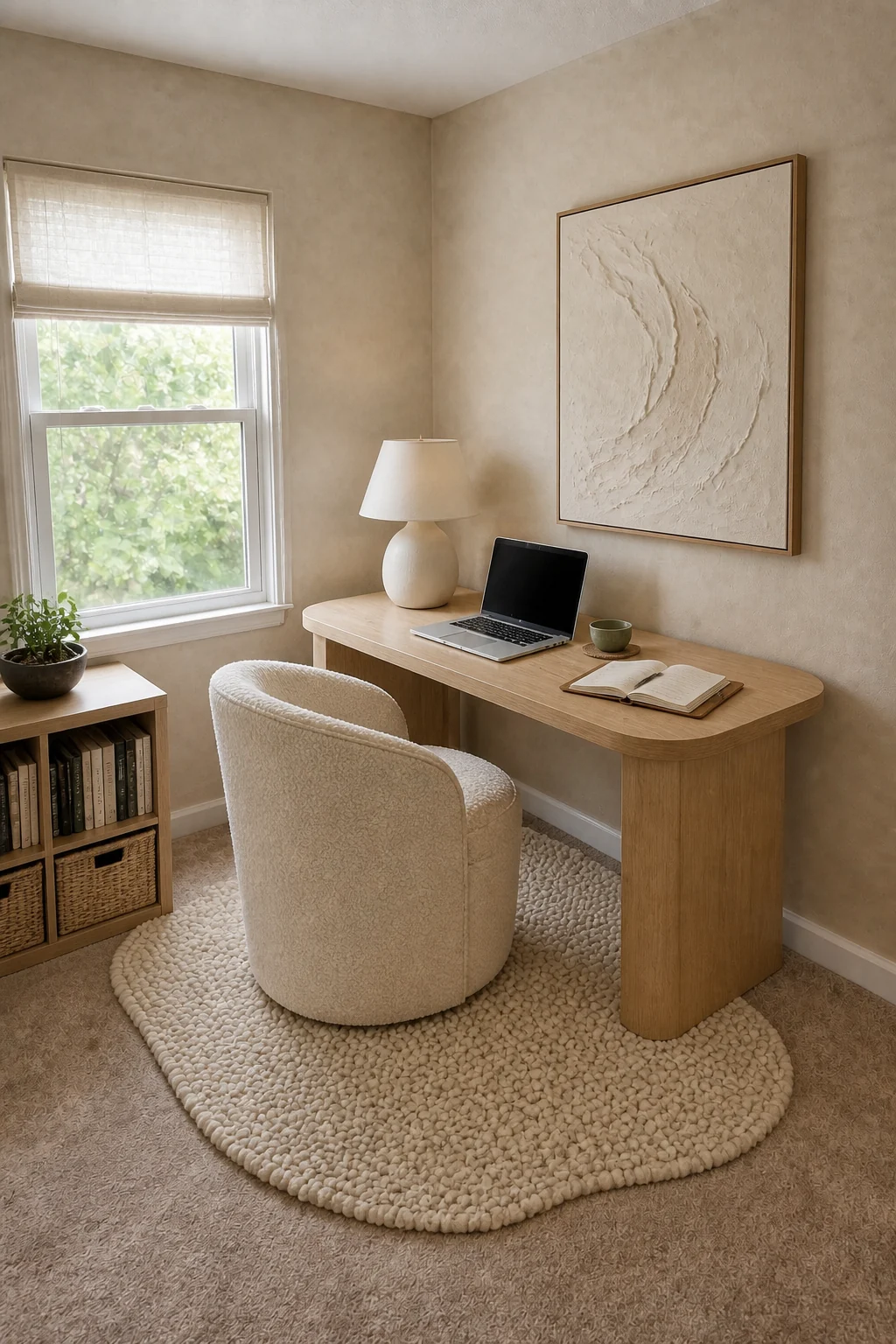
The rounded edges of the oak desk completely eliminate harsh angles, making the tight space feel gentle and fluid. Pill-shaped edges also prevent bruised hips when navigating tight corner workspaces. An irregularly shaped wool pebble rug anchors the desk with organic, natural softness.
Style Decision Guide
If you are on a strict decorating budget, the 90s Zen Minimalist style relies on negative space and bare floors, requiring fewer purchases. When you need maximum durability, the 2010s Farmhouse Chic distressed wood actually looks better with wear and daily use. Craving high energy? The Space Age Pop glossy finishes and massive orange graphic provide an instant mood boost for creative work.