
Driveway Entry Landscaping: Plant List & Spacing Guide
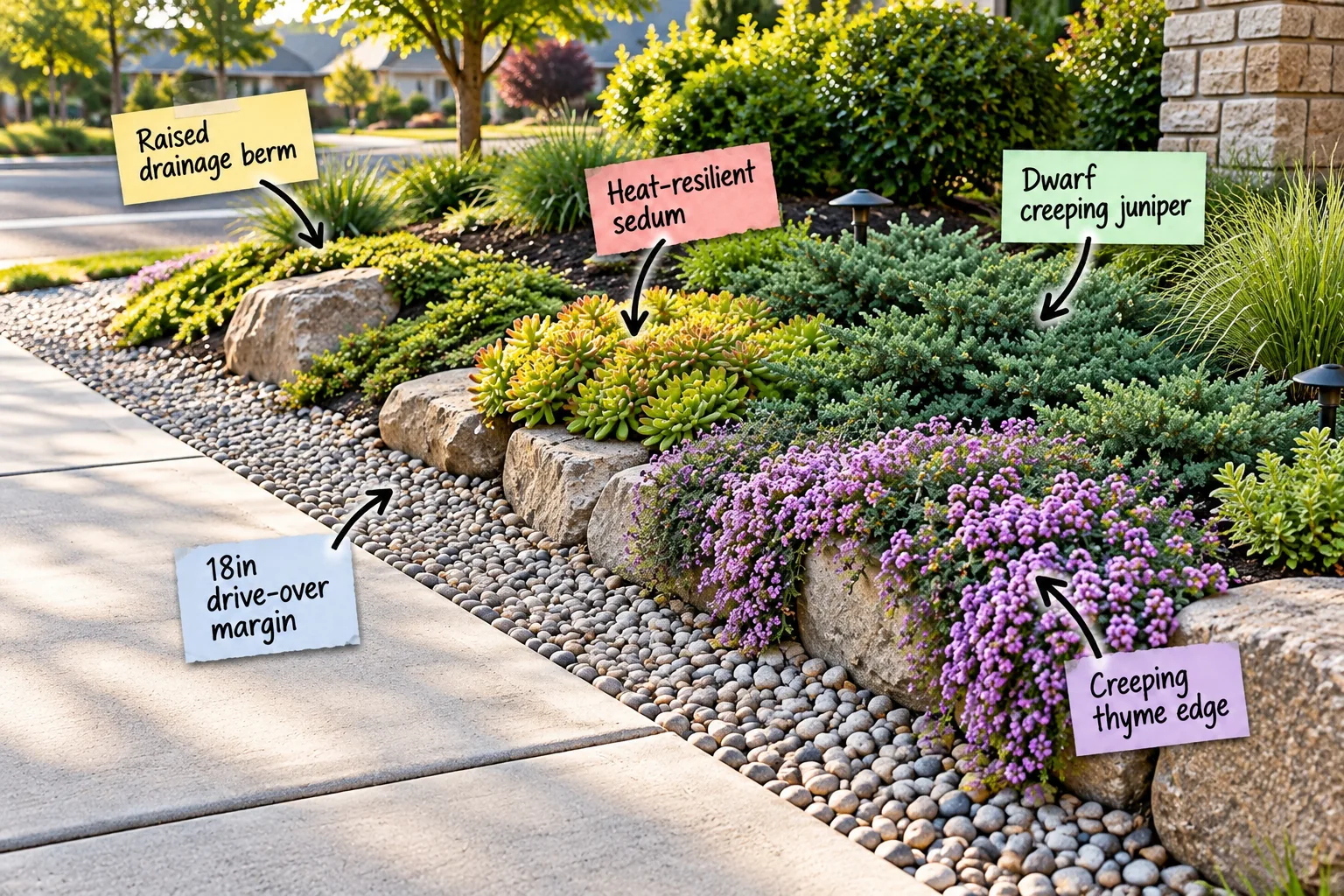
You will be able to map out and plant a durable, low-growing driveway entry using my exact driveway border plant list and spacing guide. We are moving outside-in, from the street-side gravel margin to the inner evergreen backdrop, so you can build this easily.
Creating an 18-Inch Drive-Over Margin
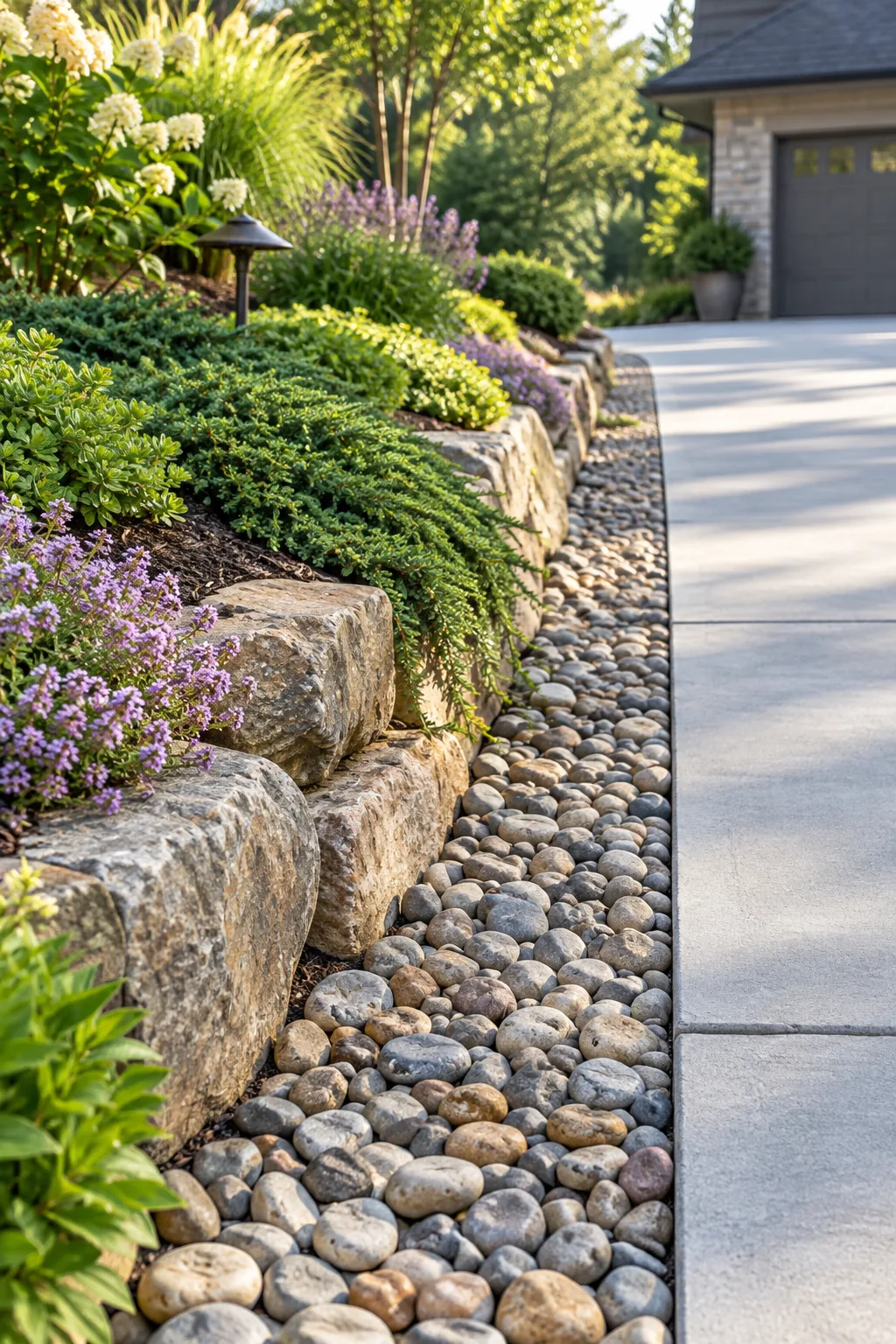
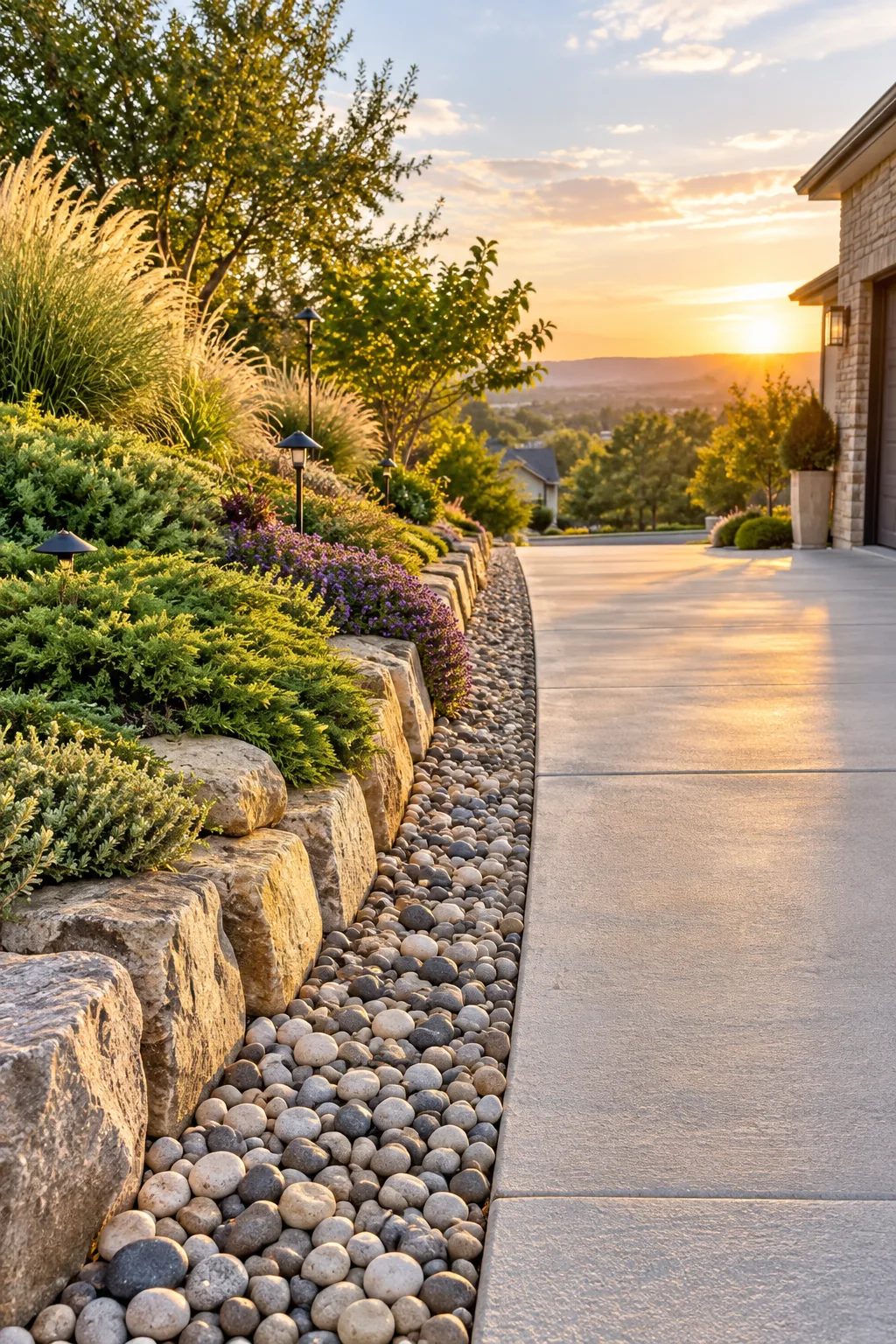
Start your design by establishing a protective buffer between the concrete driveway and your planting bed. An 18-inch wide gravel margin provides enough space for car tires to occasionally drift off the pavement safely without crushing your beautiful new landscaping.
Even the toughest groundcovers cannot survive being repeatedly crushed by a two-ton vehicle. You must avoid these common border layout errors before you start digging your trench to ensure your plants actually survive their critical first year in the ground.
Selecting the Right Margin Gravel
I always recommend using angular crushed limestone or heavy river rock for this crucial buffer zone. Round pea gravel easily scatters under tire pressure, which creates a hazardous, slippery surface on your adjacent concrete driveway that you constantly have to sweep.
Installing a Sturdy Edging Barrier
To keep that heavy stone completely contained, install a rigid steel or commercial-grade plastic edging strip exactly 18 inches from the concrete pavement. This physical barrier prevents the crushed rock from migrating into your raised soil bed during heavy spring rainstorms.
Installing a Weed Barrier Under the Gravel
Before pouring your heavy stone into the margin, lay down a layer of commercial weed fabric. Pinning this barrier securely beneath the gravel prevents deep-rooted weeds from taking hold in the buffer zone, saving you hours of tedious summer pulling.
Choosing the Right Border Stones
Selecting the right retaining stones is crucial for holding your raised berm in place. I prefer using weathered limestone or natural fieldstone blocks that are at least 8 inches thick, as they provide enough weight to hold back the saturated soil.
Setting the Retaining Stones Securely
Bury the first row of your border stones slightly below the gravel margin level to create a solid foundation. Always stagger the joints on your second row and angle the stones slightly backward into the soil to resist the outward pressure.
Shaping the Raised Drainage Berm
Drought-tolerant plants require excellent drainage, especially near streets where winter salt and runoff aggressively accumulate. Build a raised drainage berm by mounding your topsoil 6 to 8 inches above the street level before placing your decorative border stones.
Testing Your Berm Drainage
Before planting anything in this newly elevated zone, you need to verify that water actually moves through the mounded topsoil quickly. You never want heavy rain pooling near the delicate roots of your drought-loving succulents.
- Dig a small test hole 6 inches deep into the absolute center of your newly formed soil berm.
- Fill the hole completely with water and let it drain completely to saturate the surrounding dirt.
- Refill the hole immediately and measure how many inches drain per hour to confirm adequate flow.
Staying Under the 24-Inch Visibility Rule
This slight elevation prevents root rot during heavy spring rains, but remember that mounding the soil improves drainage while simultaneously pushing your plants closer to the strict 24-inch visibility rule limit for safe driveway exits.
When you elevate the planting bed, a shrub that normally stays low might suddenly block your line of sight, making it incredibly dangerous to back out of your garage into oncoming traffic during a busy morning neighborhood commute.
Measuring Height from the Street Level
Safety is always the most critical factor for driveway entry landscaping. This means you must restrict all plant choices in the first 10 feet of your driveway to species that mature at under 24 inches tall when measured directly from the street pavement.
Ensuring Unobstructed Driver Sightlines
This strict height limit ensures drivers maintain completely unobstructed sightlines of sidewalks, pedestrians, and oncoming street traffic when pulling out. You never want a tall ornamental grass or a bushy shrub blocking your view of a passing bicycle or child.
Softening the Border with Creeping Thyme
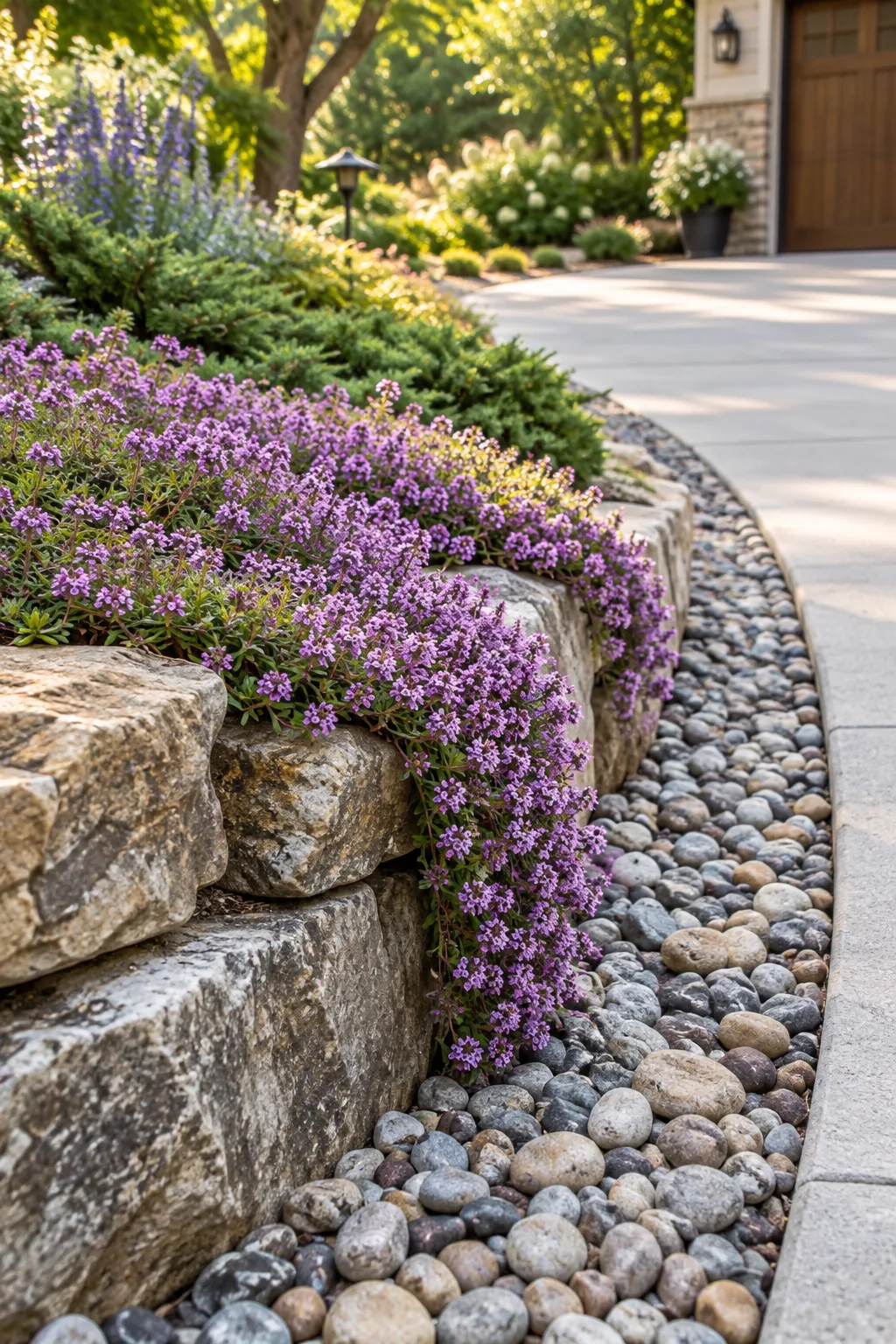
I absolutely love how creeping thyme handles the poor, rocky soil at the end of my Austin driveway while maxing out at just 3 to 4 inches tall. Plant this durable herb directly behind your retaining stones so it spills over beautifully.
Trimming Thyme for Maximum Density
This low-growing herb produces dense purple flowers in early summer and handles harsh street-side conditions effortlessly. You should plan to trim the creeping thyme back by one-third immediately after it finishes blooming to keep the foliage thick and prevent woody centers.
Adding Texture with Heat-Resilient Sedum
When you plant creeping thyme directly behind the retaining stones so it cascades over the edge, you create a beautiful tiered effect that leads perfectly into the hot mid-ground planting zone where summer temperatures rise significantly.
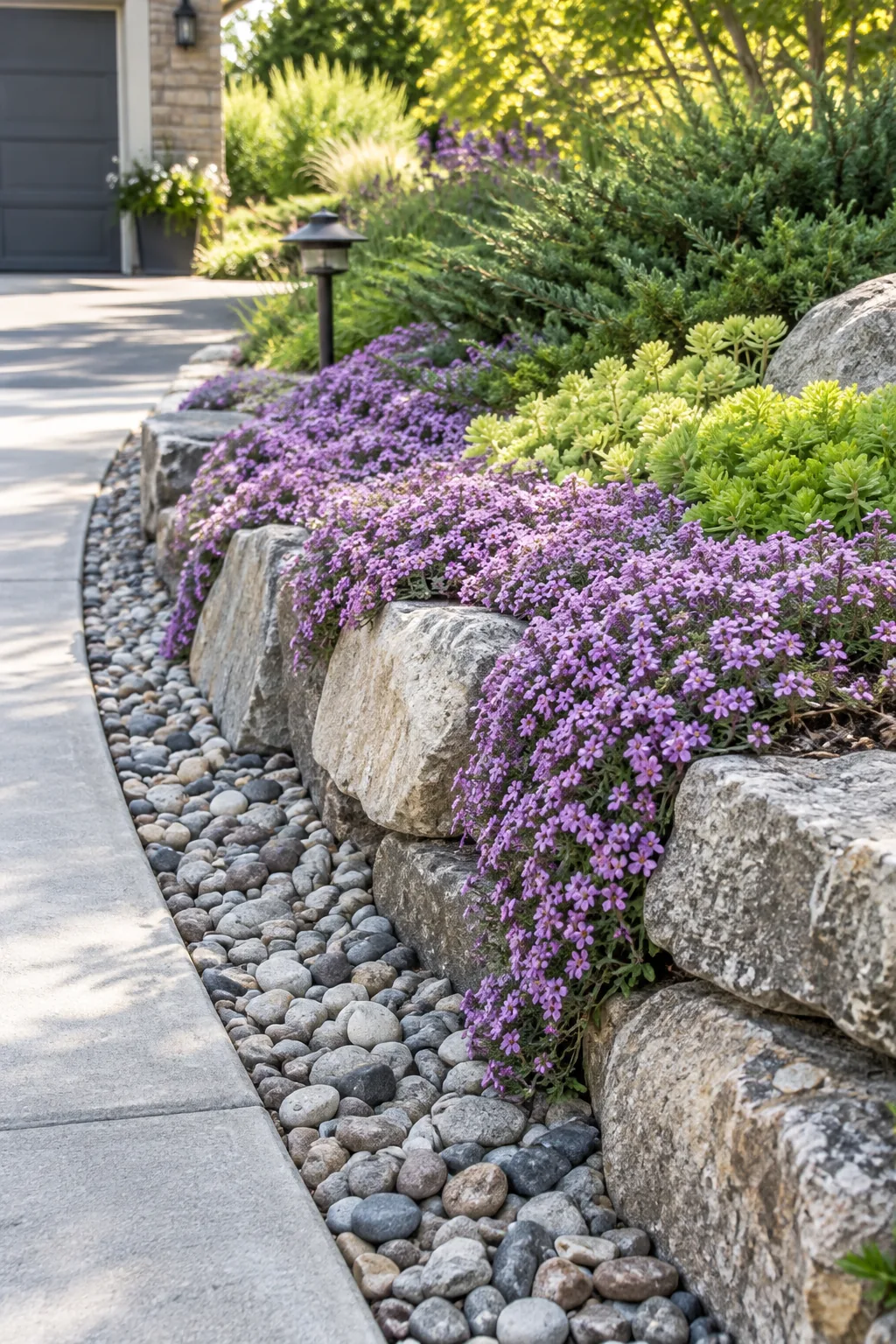
The area closest to the street bakes in reflected heat from both the asphalt and the concrete. I always rely on a cluster of heat-resilient sedum here because it easily survives our brutal Texas dry spells without wilting.
Managing Reflected Heat Zones
These tough succulents thrive in this intense microclimate because their thick, fleshy leaves store water efficiently during extended droughts. Choose a low-growing sedum variety that stays under 6 inches tall to maintain your carefully planned tiered look across the berm.
Anchoring with Dwarf Creeping Juniper
Provide crucial year-round structure by planting dwarf creeping juniper at the back of the berm. Using these tough, low-growing evergreens allows you to create a permanent, reliable backdrop for your seasonal bloomers that never loses its vibrant color.
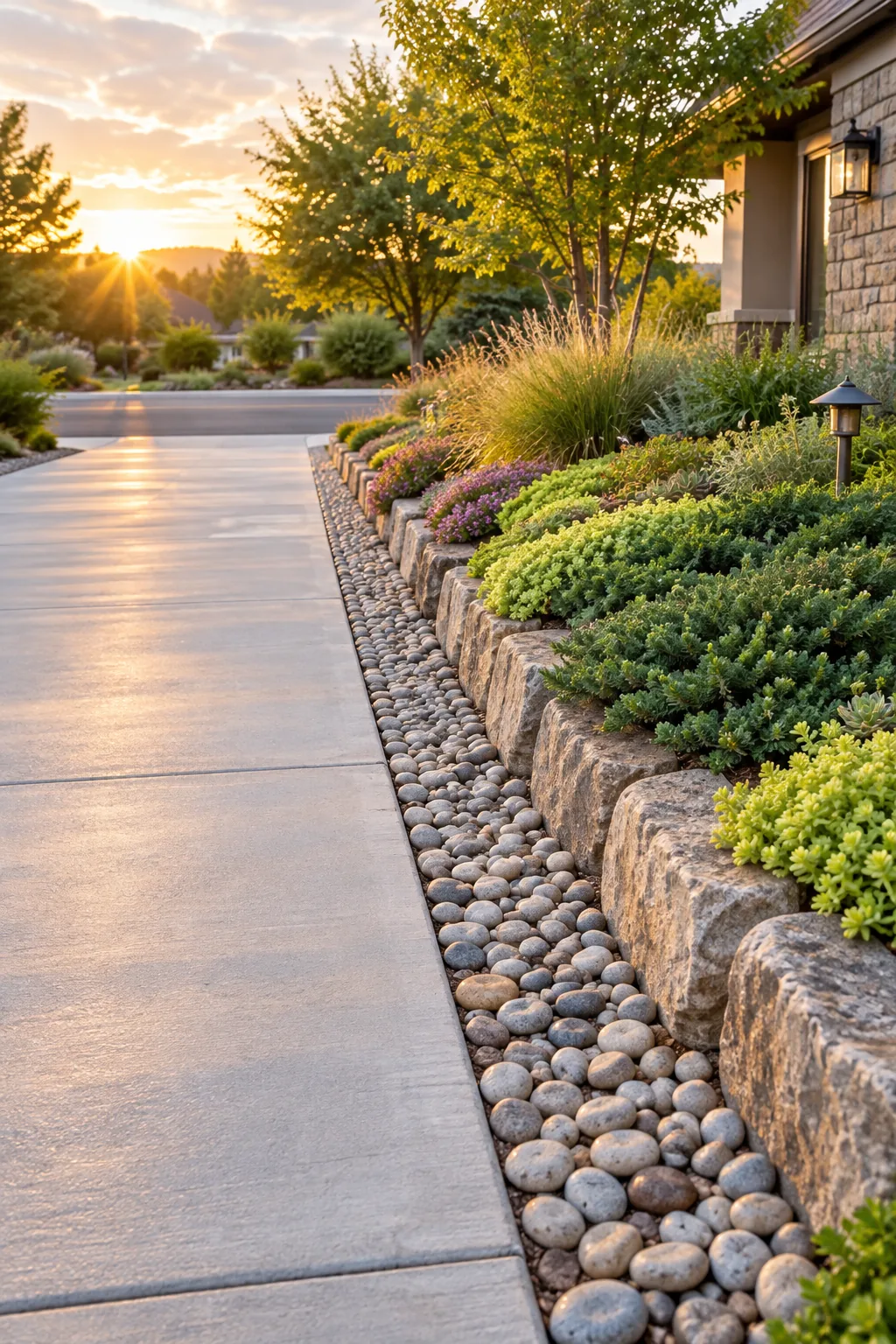
Because these evergreens naturally cascade down the slope, they beautifully hide the raw dirt of your elevated berm while tying the entire layered landscaping scheme together throughout the cold winter months when everything else goes completely dormant.
Spacing Evergreens for Winter Structure
This rugged evergreen acts as a permanent anchor that rarely exceeds 18 inches in height, meaning it stays safely below your visibility limit. It spreads horizontally over time, suppressing weeds naturally and anchoring the loose soil on your sloped berm.
Selecting Hardy Plant Varieties
When shopping for your evergreens, look specifically for dwarf varieties bred for urban tolerance. These specialized cultivars resist the harsh exhaust fumes and radiant heat that typically stunt standard nursery plants placed directly next to a busy residential street.
Driveway Border Plant List and Spacing Guide
Before I put a single plant in the ground at my own house, I always lay out the nursery pots directly on the topsoil to verify my measurements and run through a quick pre-planting check to ensure perfect spacing.
Use this exact driveway border spacing guide to position your chosen plants perfectly along the margin, ensuring each specific species has enough physical room to reach its mature size without aggressively competing for limited water and soil resources.
| Plant Name | Spacing Distance | Mature Height | Mature Width |
|---|---|---|---|
| Creeping Thyme | 12 inches | 3-4 inches | 12-18 inches |
| Low-Growing Sedum | 15 inches | 4-6 inches | 15-20 inches |
| Creeping Juniper | 36 inches | 12-18 inches | 3-4 feet |
Laying Out Nursery Pots Before Planting
Space your creeping thyme every 12 inches along the stone edge, and plant the sedum clusters 15 inches apart in the mid-ground. Finally, give your dwarf creeping junipers at least 36 inches of room at the back of the bed.
Watering During the First Summer
Even drought-tolerant plants require consistent moisture while establishing their root systems in a totally new environment. Water your new driveway border deeply twice a week during its first summer, allowing the top two inches of soil to dry out between soakings.
Avoiding Winter Salt Damage
If you live in a colder climate, street plows often push salt-laden snow directly onto your driveway borders. Protect your dormant plants by wrapping the evergreens lightly in burlap and flushing the soil heavily with fresh water during the first spring thaw.
Refreshing the Topsoil Annually
Street-side soil degrades quickly due to salt spray and intense radiant heat. You should top-dress your raised berm with a thin layer of rich compost every spring to replenish essential nutrients without burying the delicate crowns of your low-profile plants.
Fertilizing Your Driveway Border
Because these tough alpine plants naturally thrive in poor, rocky conditions, you should avoid using heavy synthetic fertilizers. A single application of a slow-release organic granular fertilizer in early spring provides all the nutrients they need to produce vibrant summer foliage.
More Driveway Entry Styles
Explore different plant palettes and materials to match your home's exterior.
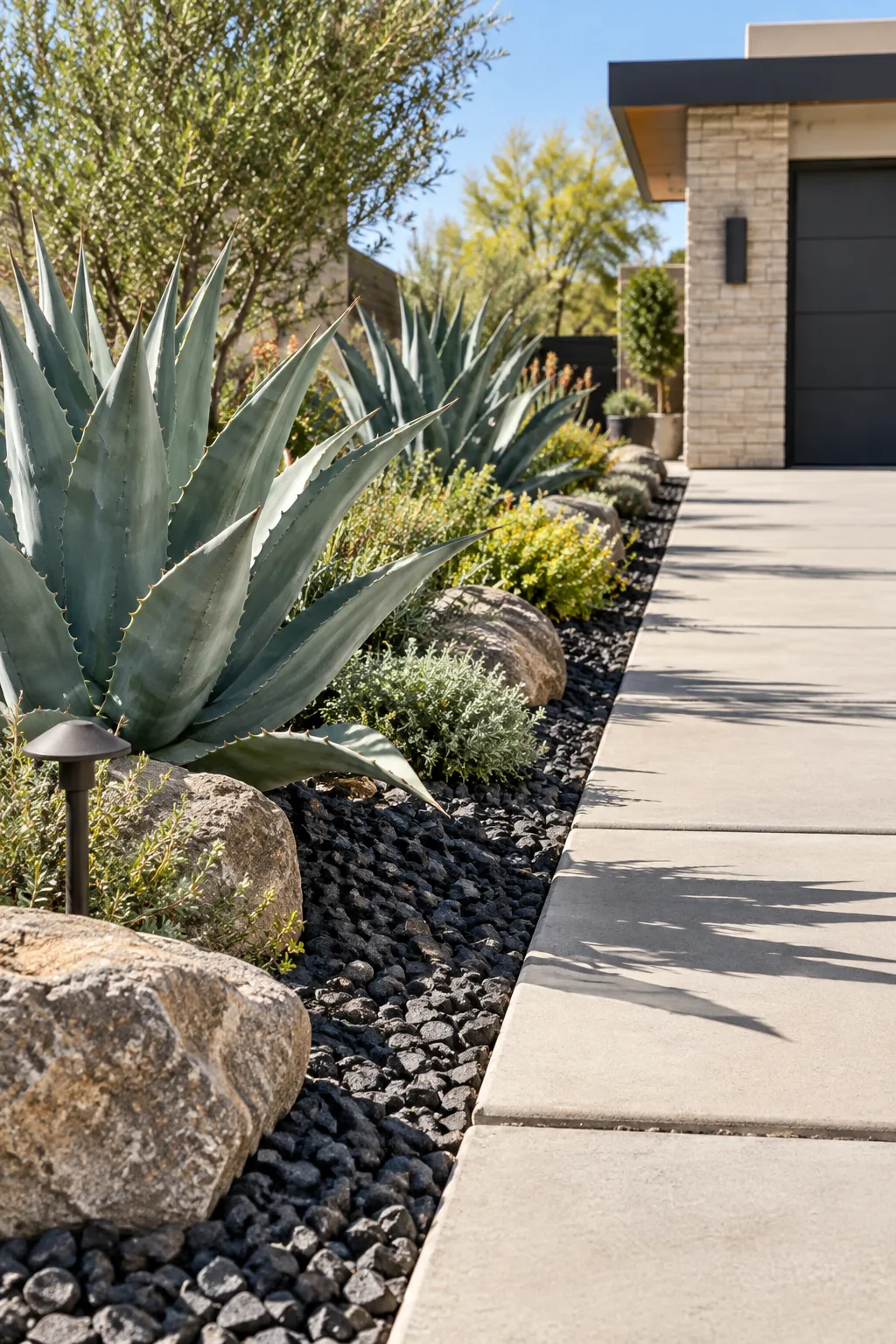
Modern Desert Succulent Border: Swap traditional stones for sleek concrete pavers and use crushed black basalt to highlight sculptural agave plants.
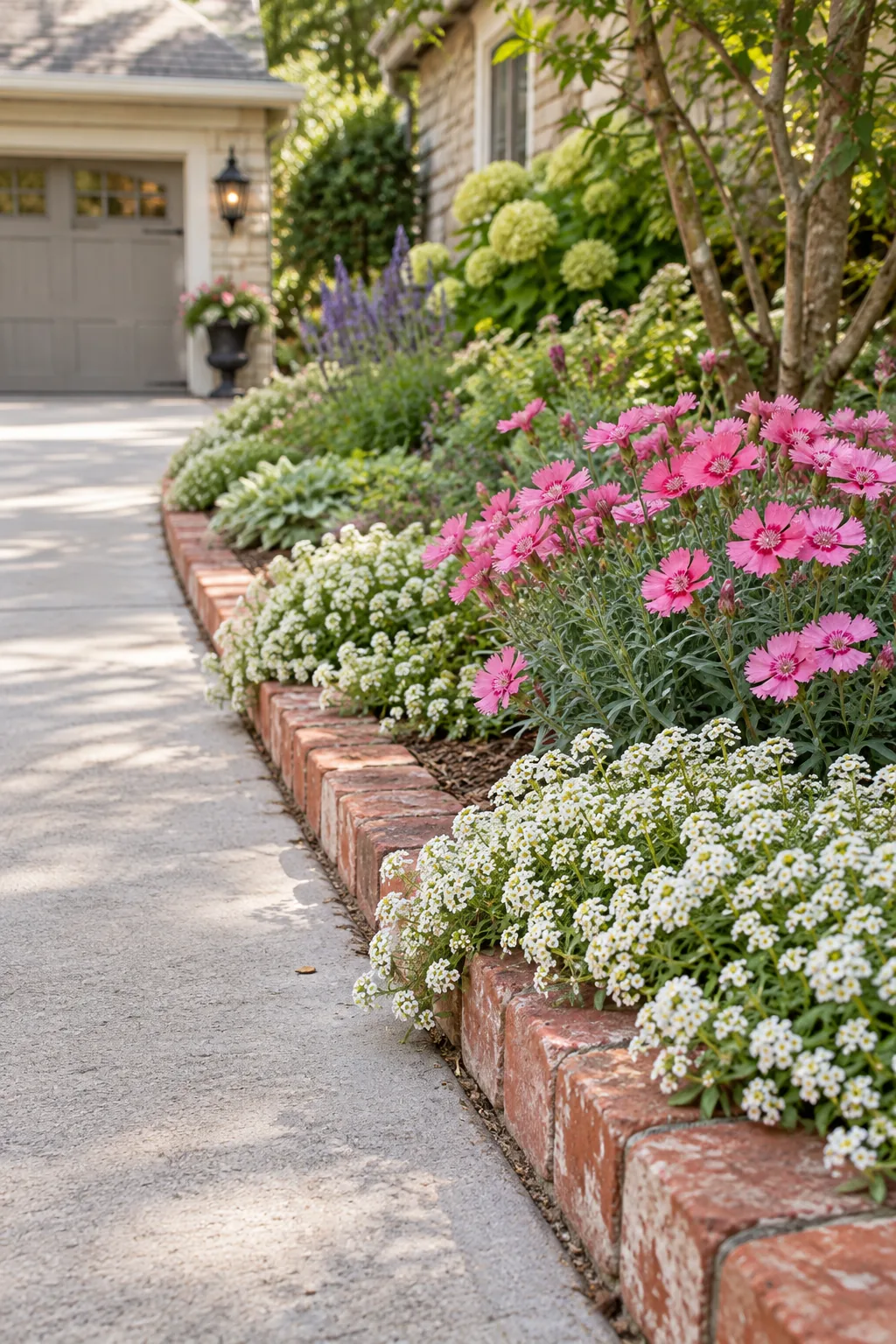
Cottage Garden Brick Edge: Create a romantic cottage feel by edging the driveway with tumbled red bricks and planting fluffy white alyssum.
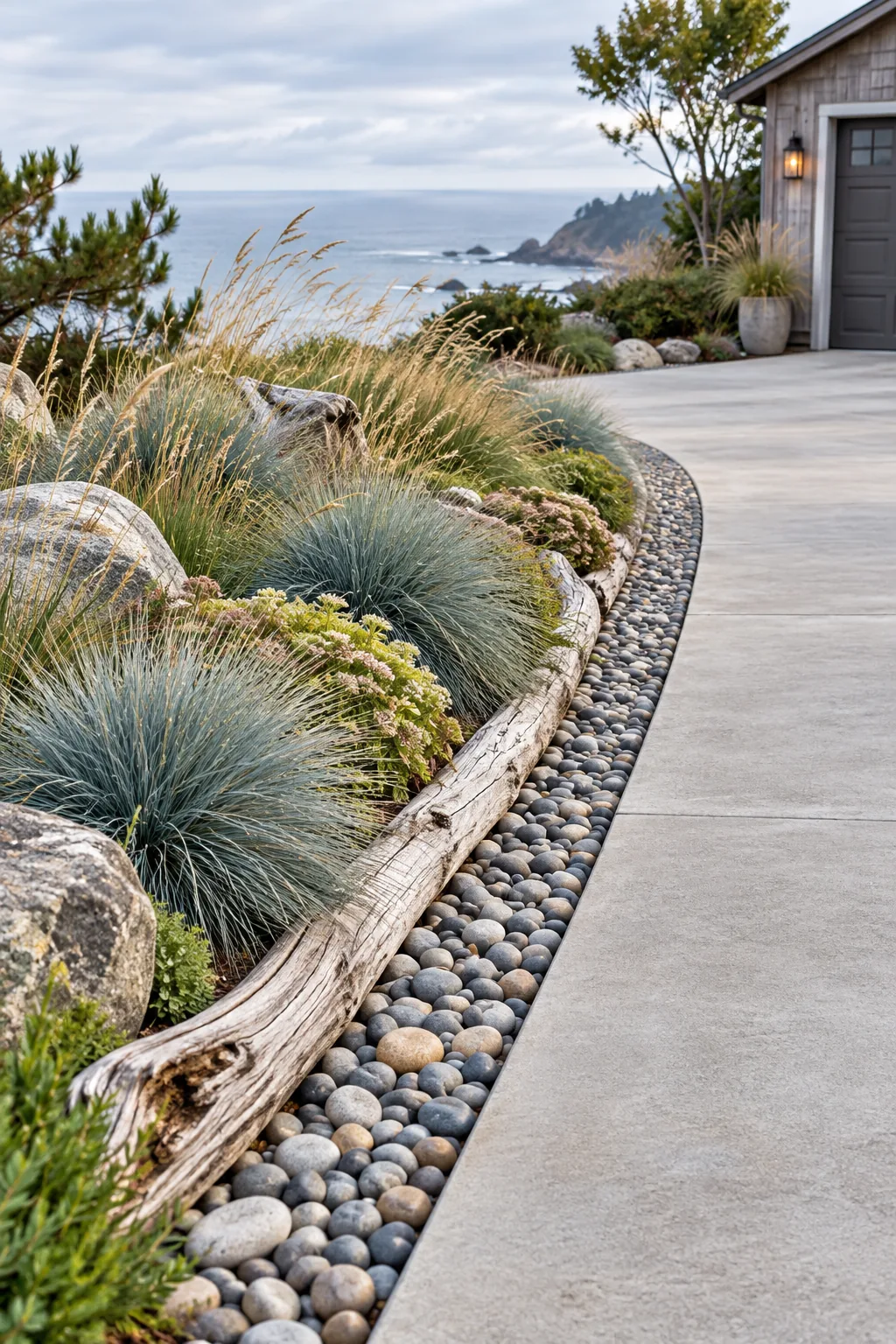
Coastal Blue Fescue Grasses: Embrace a relaxed coastal vibe with mounds of blue fescue grass planted among oversized, smooth river stones.
Maintaining Your Low-Profile Entry
A well-designed driveway entry requires minimal upkeep if you space everything correctly from the start. Just sweep the 18-inch drive-over margin regularly to keep the gravel distinct from the stones and maintain a crisp line against the concrete.
Taking just ten minutes each month to pull stray weeds and rake the displaced gravel back into place ensures your low-profile border remains a crisp, welcoming, and perfectly safe feature for your home all year long.