
The Ultimate Boho Texture and Layering Cheat Sheet
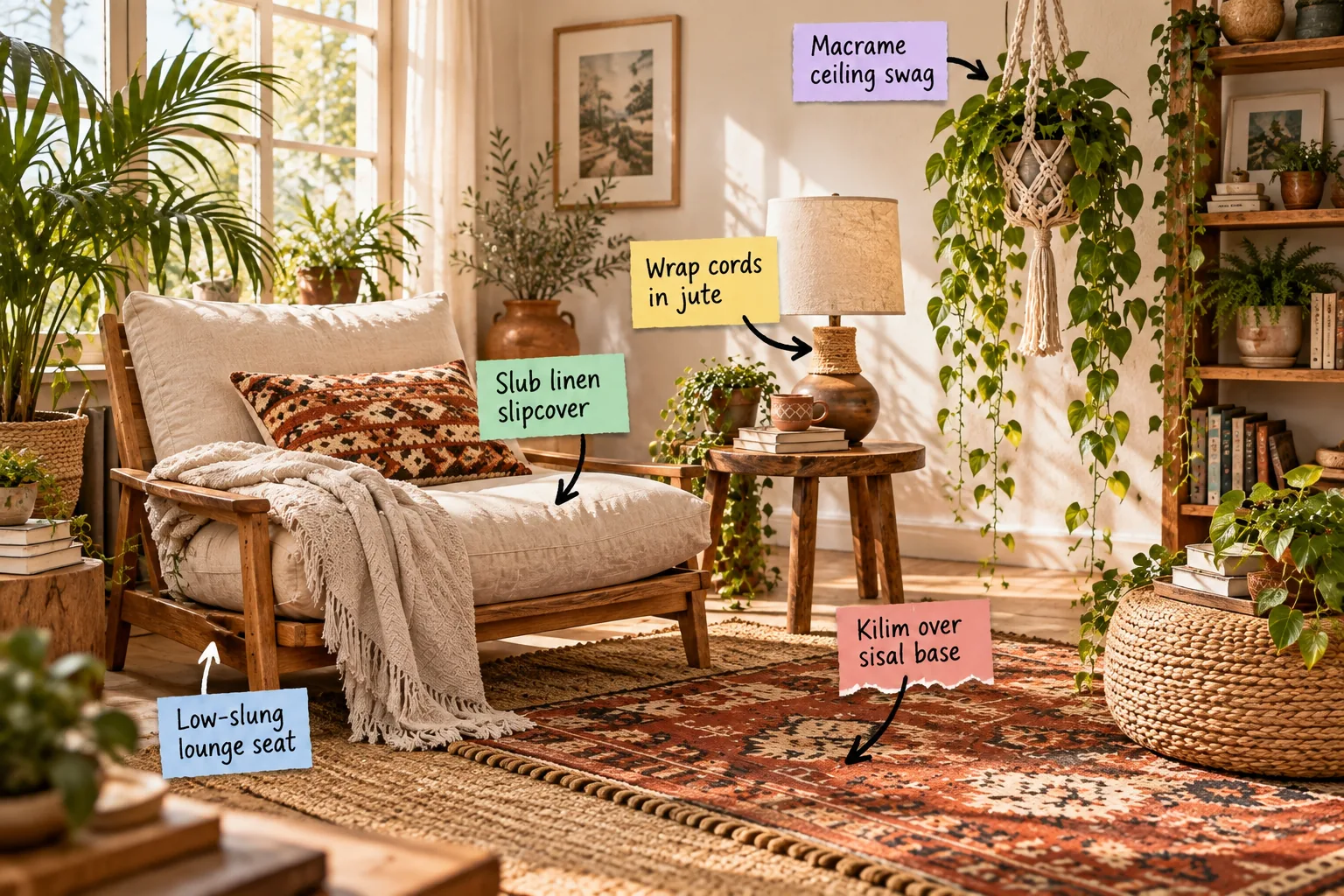
Transforming your living room into an effortlessly cozy space requires a reliable boho texture and layering cheat sheet to guide your design decisions. You will be able to confidently mix multiple textures, correctly size layered rugs, and implement natural accents to build a cohesive boho space.
Your Boho Texture and Layering Cheat Sheet
Achieving the boho aesthetic without creating visual clutter relies on a strict ratio of 60% neutral foundation, 30% textured secondary elements, and 10% patterned accents. This foolproof formula ensures your room feels intentionally curated rather than chaotic.
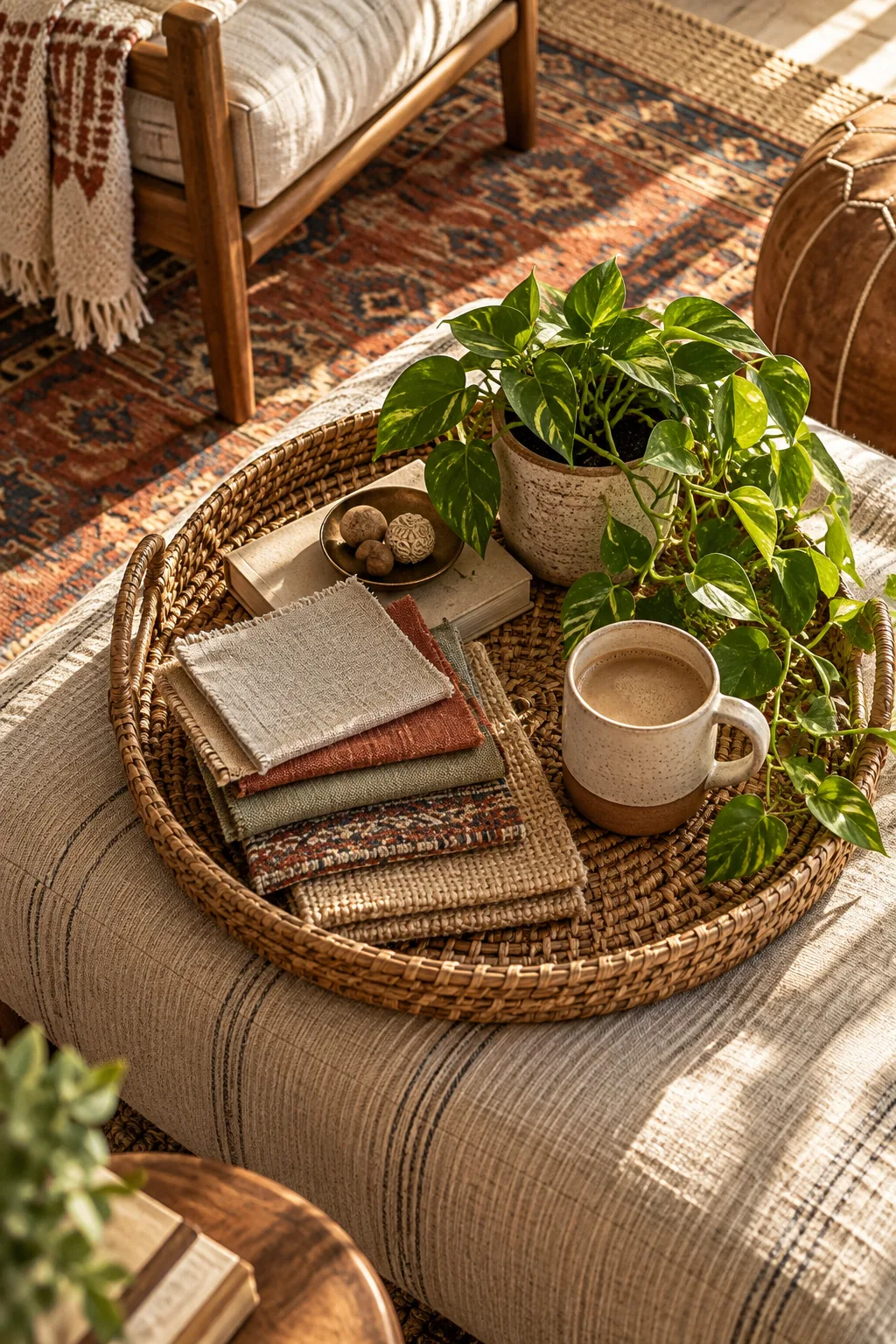
Before adding a single new item to your living room, use this quick checklist to audit your current texture balance and ensure your space has the right foundational mix of materials.
Understanding the Foundation Ratio
Your neutral base layer must anchor the entire room, which means large-scale items like walls, primary sofas, and bottom rugs should remain visually quiet. Sticking to warm whites and sandy tones allows your more intricate woven pieces to stand out beautifully.
The Importance of Uncluttered Floor Space
Before you begin laying down your foundation pieces, clear the floor completely to assess your available square footage. Maintaining a minimum of 36 inches of clear walking space around your layered rugs prevents the room from feeling cramped and preserves the airy boho vibe.
Selecting Your Base Rug Material
When building your floor layers, selecting the right foundational fiber is crucial for both durability and aesthetic appeal. I always recommend comparing the most common natural options to find the perfect balance of texture and foot traffic resilience.
| Material | Durability | Texture |
|---|---|---|
| Sisal | Very High | Stiff and coarse |
| Jute | Medium | Soft and chunky |
| Seagrass | High | Smooth and rigid |
Sisal remains my absolute top choice for the bottom layer because its exceptionally tight, durable weave creates the perfect flat stage for a decorative top rug.
Grounding the Room: Kilim Over a Sisal Base
To properly anchor your seating area, start with a bottom sisal rug that is at least 8 by 10 feet, and center a 5 by 7-foot kilim directly on top to leave a consistent 12 to 18-inch natural border visible on all sides.
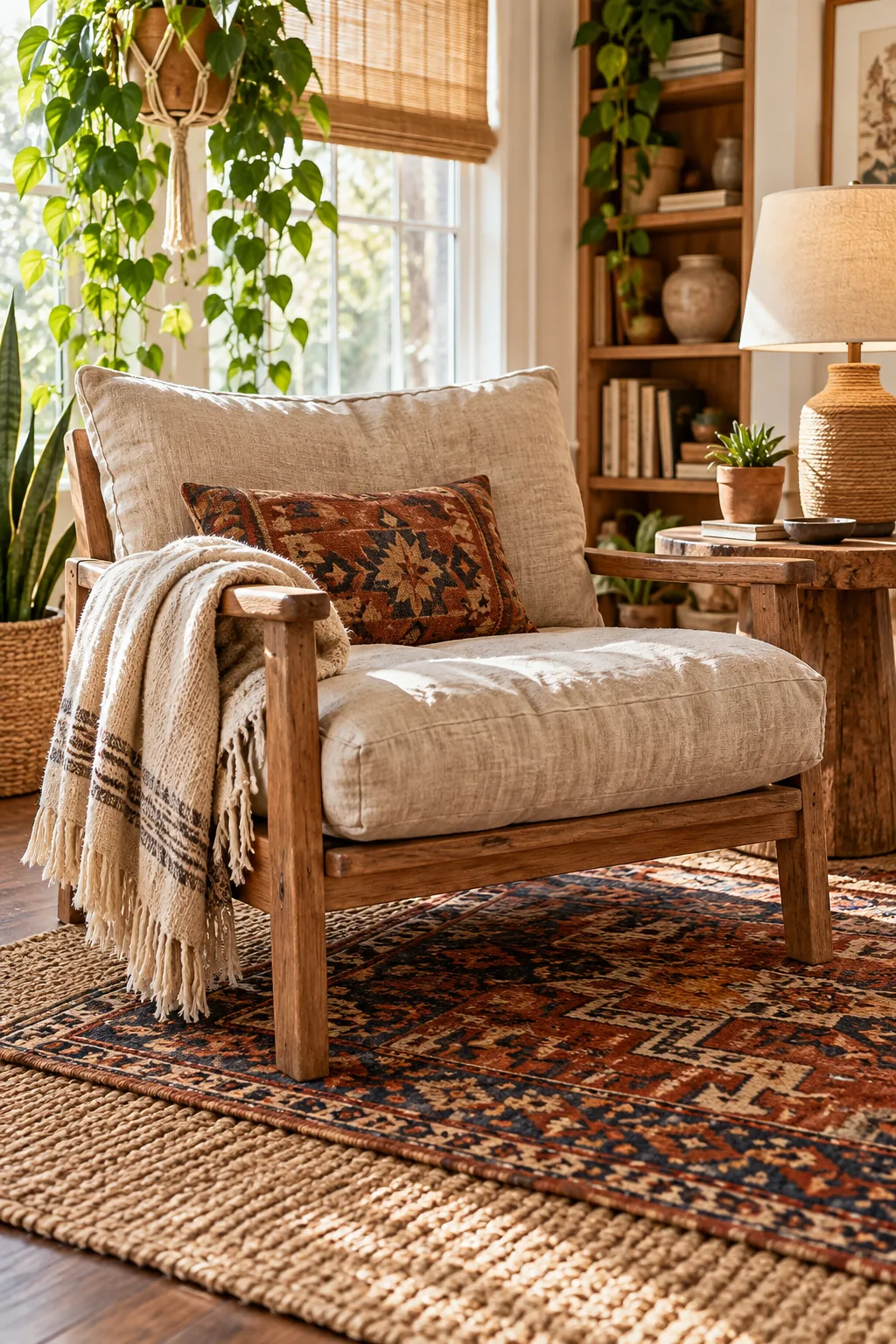
Layering rugs this way acts as a visual boundary that frames the seating area and draws the furniture arrangement together. The beautiful contrast between the rigid, neutral sisal and the soft, colorful kilim instantly establishes that signature relaxed Sunday vibe.
Preventing Rug Creep on Hardwood
A common issue with stacked floor coverings is the top layer shifting out of place during daily use. Placing a thin, non-slip felt pad between the two rugs keeps the kilim perfectly aligned while adding a touch of extra cushioning underfoot.
Setting the Vibe with a Low-Slung Lounge Seat
Furniture height directly impacts how relaxed a room feels, so I recommend choosing a lounge frame with a seat height of 14 to 16 inches from the floor. Dropping below the standard 18-inch height visually opens up your wall space and naturally encourages a lounging posture.
To maximize the visual softness of this low profile, choosing 100% linen with an oversized fit provides the perfect textural contrast against the rigid wooden frame. The natural wrinkles in the fabric invite you to sink in and stay awhile.
Balancing Wood and Upholstery
Exposed wooden frames are essential in boho design because they introduce an earthy, grounding element that prevents the room from feeling too soft. Opting for warm walnut or natural ash tones complements the sandy hues of your foundational rugs perfectly.
Softening the Edges Using Slub Linen Slipcovers
Slub linen features natural variations in the weave that provide necessary visual softness and a beautiful, relaxed drape. In my own Boston brownstone, adding a slightly oversized slipcover with an extra 2 inches of ease completely transformed a rigid vintage chair I almost donated.
Embracing Wrinkles as a Design Element
The beauty of a truly relaxed aesthetic is that it actively rejects perfection in favor of lived-in comfort. Allowing your linen slipcovers to remain naturally wrinkled rather than steaming them flat reinforces the effortlessly cozy atmosphere you are trying to build.
Creating Contrast with Throw Blankets
Once your oversized slipcover is in place, draping a heavily textured, fringed throw blanket over one arm adds an essential layer of visual interest. Choose a blanket in a deep rust or terracotta shade to subtly echo the warm tones of your kilim rug.
Transitioning to Organic Details
Once your rugs and furniture are perfectly layered, the secret to a high-end look lies in addressing the small, easily overlooked utility items. Replacing or disguising modern plastic elements preserves the illusion of a completely natural, organic environment.
Sourcing Authentic Natural Twine
When shopping for your cord-wrapping supplies, carefully check the label to ensure you are purchasing authentic, unblended natural jute. Synthetic twine blends often have a subtle plastic sheen that catches the light and completely ruins the earthy, organic illusion you want to achieve.
Hiding the Tech: Wrapping Lamp Cords in Jute
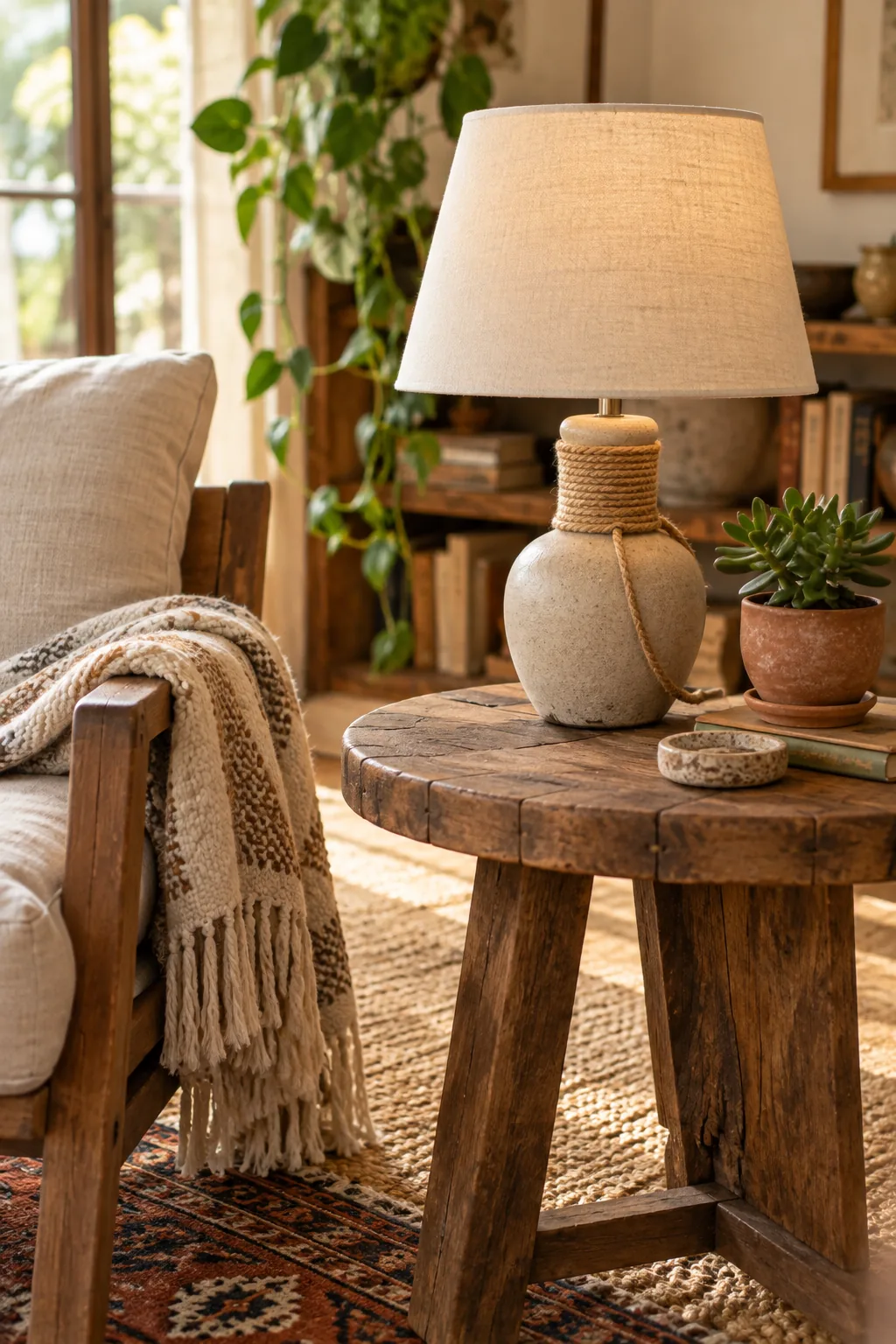
Unsightly black or white plastic lamp cords can instantly ruin an earthy vignette. I used this exact wrapping method on the reading lamp next to my sofa, tightly coiling 3-millimeter natural jute twine around the entire length of the wire to hide the plastic.
To ensure the wrapping stays perfectly tight over time, secure the twine with a tiny dot of hot glue every 4 to 5 inches. This small, inexpensive detail seamlessly blends your lighting fixtures into the surrounding natural textures.
Selecting the Right Adhesives
When securing your jute wrapping, it is critical to use a low-temperature hot glue gun rather than a standard high-heat model. Low-temperature glue provides plenty of holding power for the twine without running the risk of melting the protective plastic jacket on your electrical cord.
Safely Managing Wrapped Cords
When applying the jute, always stop wrapping at least two inches before the plug to ensure it fits safely into the wall outlet. Keeping the twine away from the actual lightbulb socket prevents any potential heat hazards while maintaining the disguised look.
Utilizing Vertical Space
A truly cohesive room draws the eye upward, preventing all the visual weight from resting heavily on the floor and furniture. Suspending elements from the ceiling balances the room’s proportions and makes standard ceiling heights feel significantly taller.
Preparing Your Ceiling Hardware
Before hanging anything heavy, you must locate a ceiling joist or use a heavy-duty toggle bolt designed specifically for drywall. A standard plastic wall anchor will eventually pull loose under the combined weight of a ceramic pot, damp soil, and thick cotton rope.
Choosing the Right Plant for Macrame
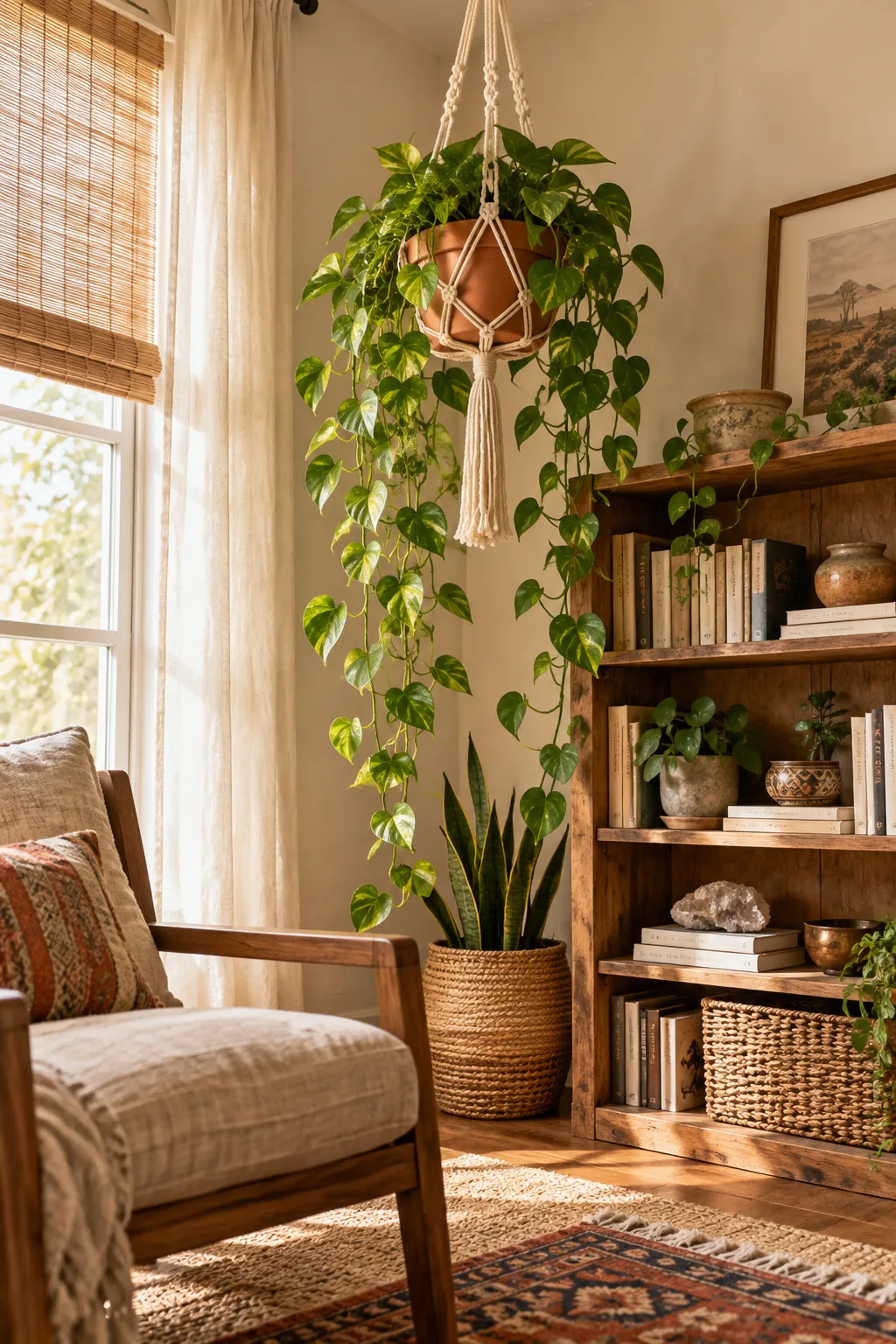
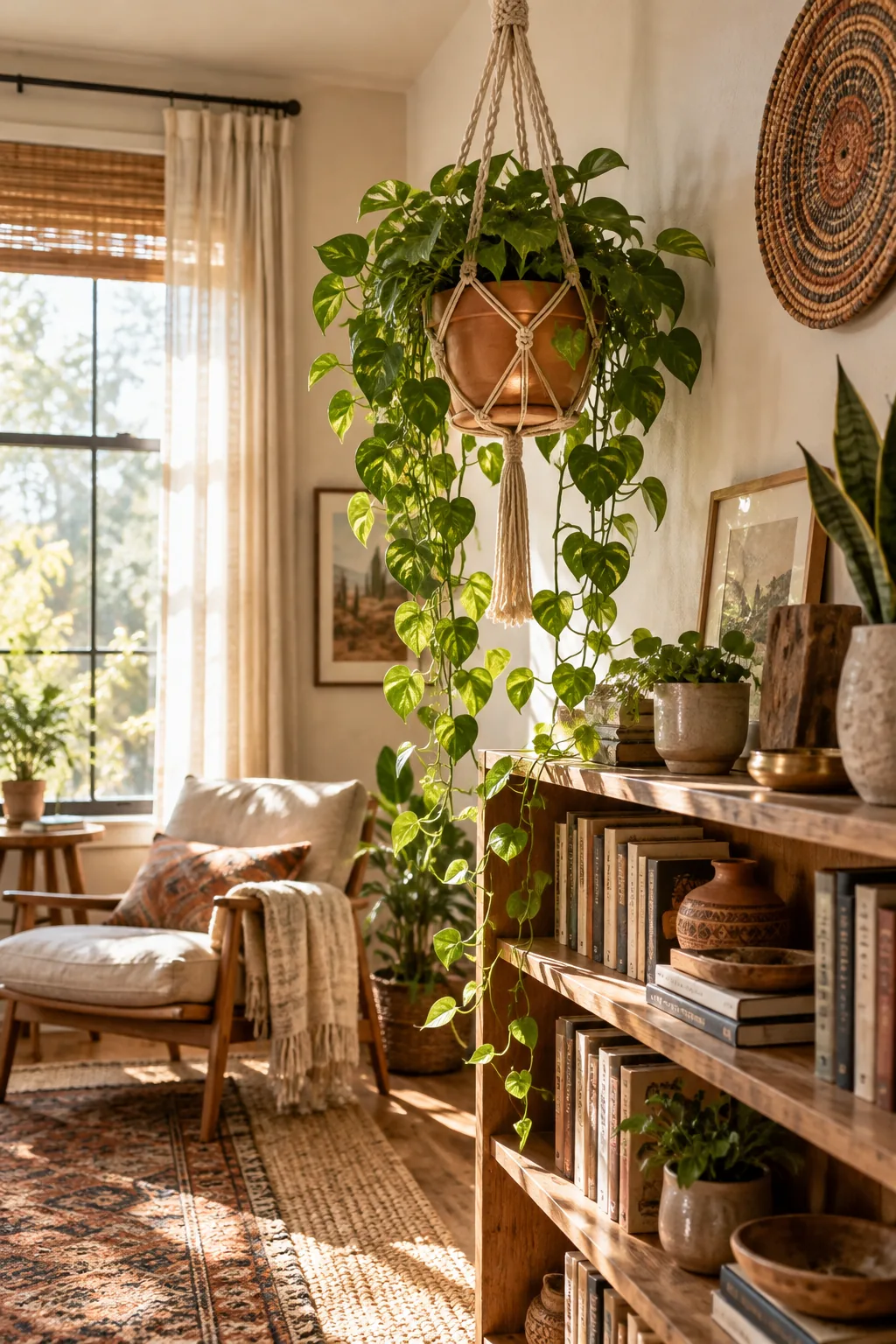
Trailing varieties like golden pothos or heartleaf philodendron are the absolute best candidates for elevated planters. Their cascading vines naturally soften the structured knots of the hanger and visually connect the ceiling fixture back down to the seating area below.
Watering Suspended Plants Safely
To keep your layered textiles safe from muddy water drips, always take your suspended plants down and water them thoroughly in the kitchen sink. Allow the pots to drain completely for at least twenty minutes before returning them to their macrame hangers.
5 Ways to Style the Boho Layered Look
Whether you love vibrant colors or quiet neutrals, explore these five distinct takes on the boho aesthetic to find your perfect match.
Desert Modern Boho: Warm terracotta tones and sleek leather furniture give this look a structured, arid elegance.
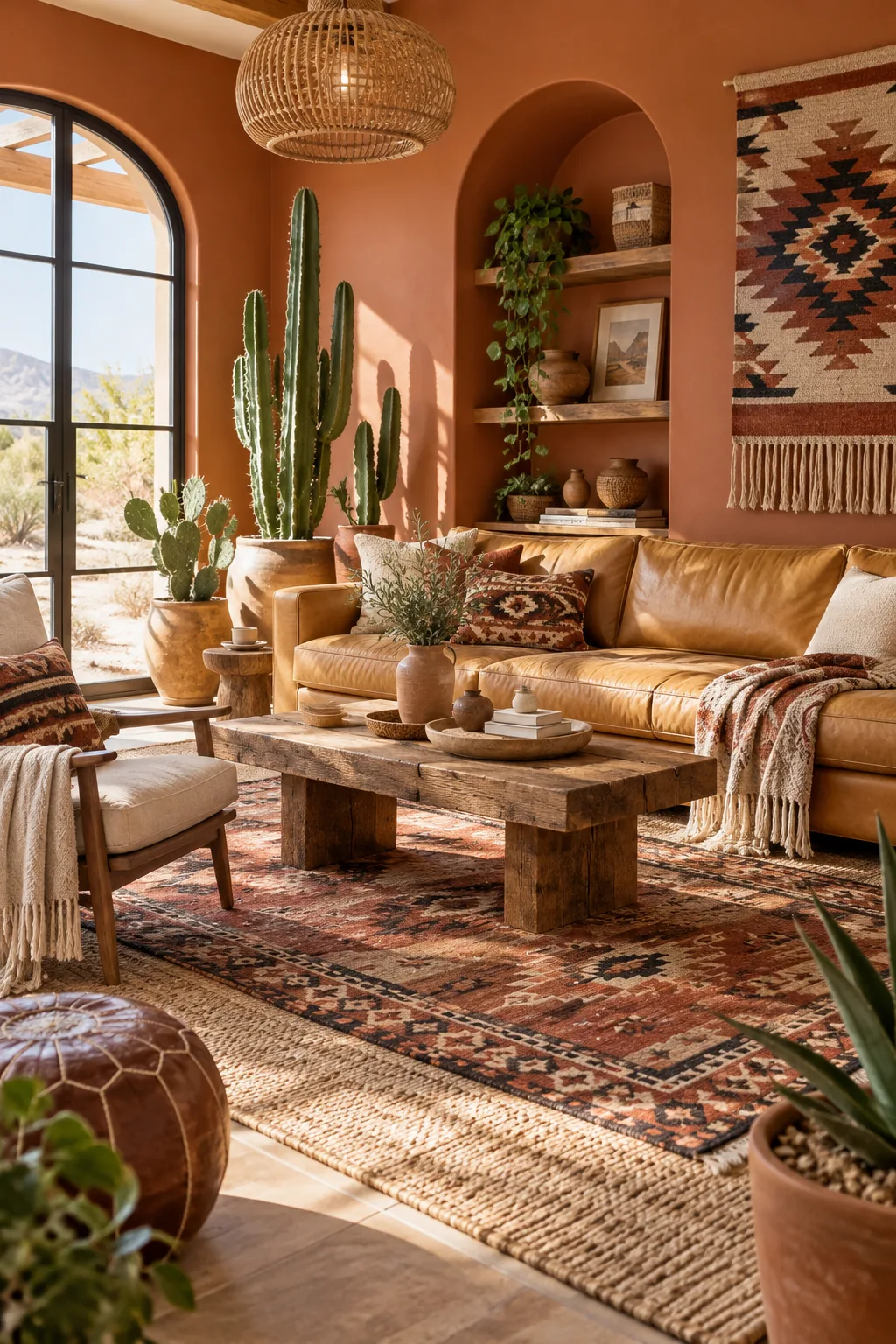
Coastal Boho Retreat: Sea glass blues and weathered driftwood seamlessly merge beachside relaxation with bohemian textures.
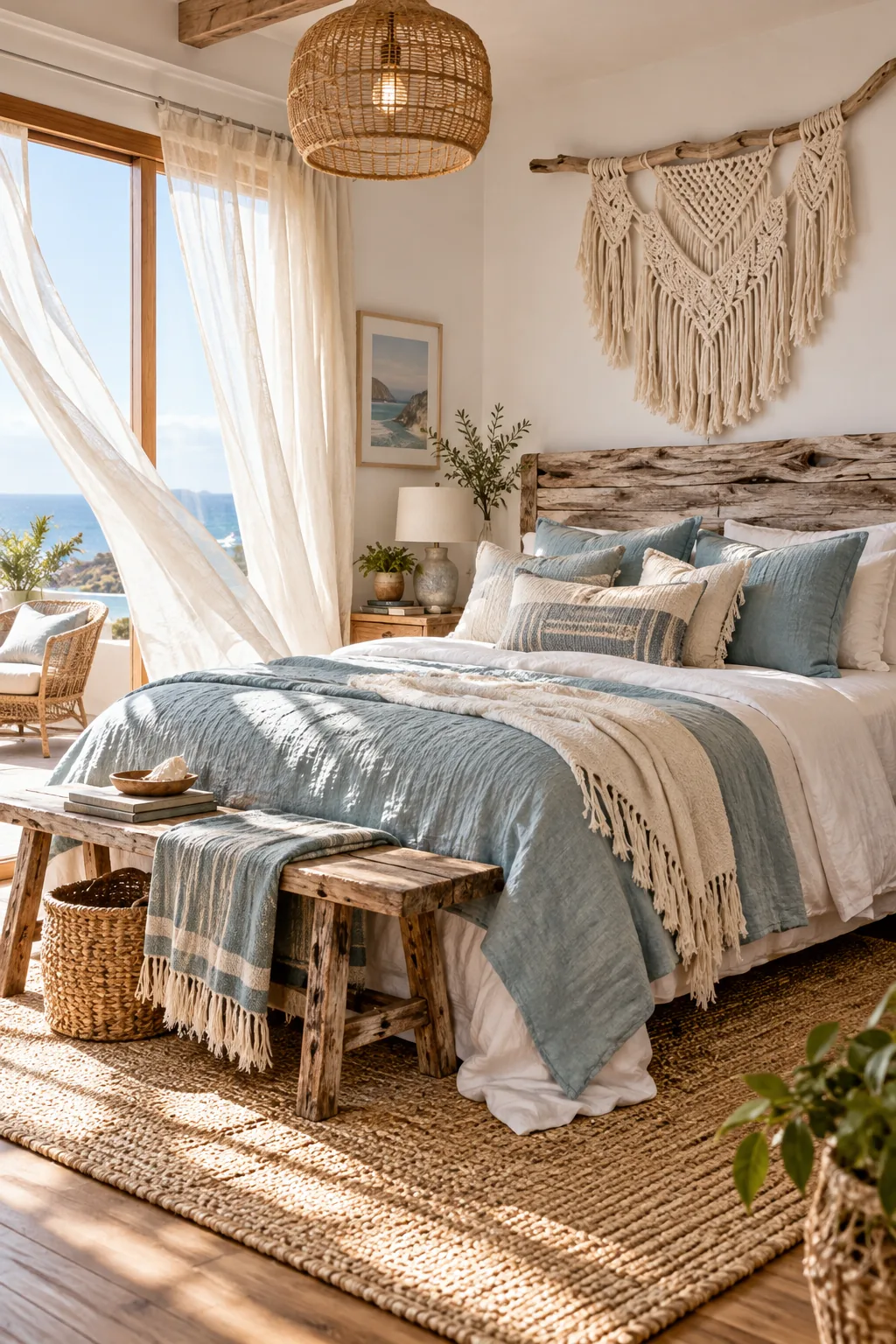
Vintage Maximalist Boho: Deep jewel tones and overlapping antique rugs create a moody, collected-over-time atmosphere.
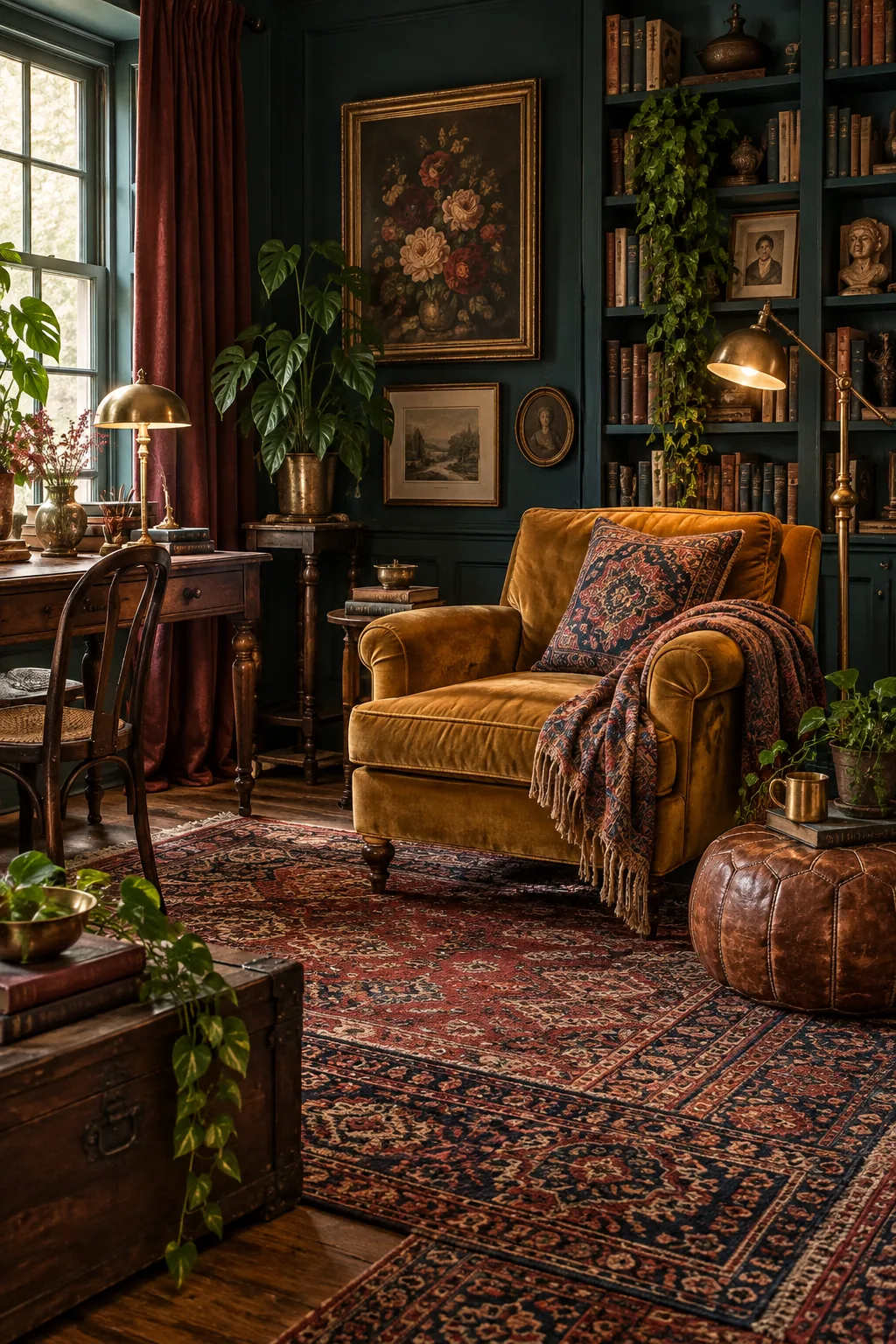
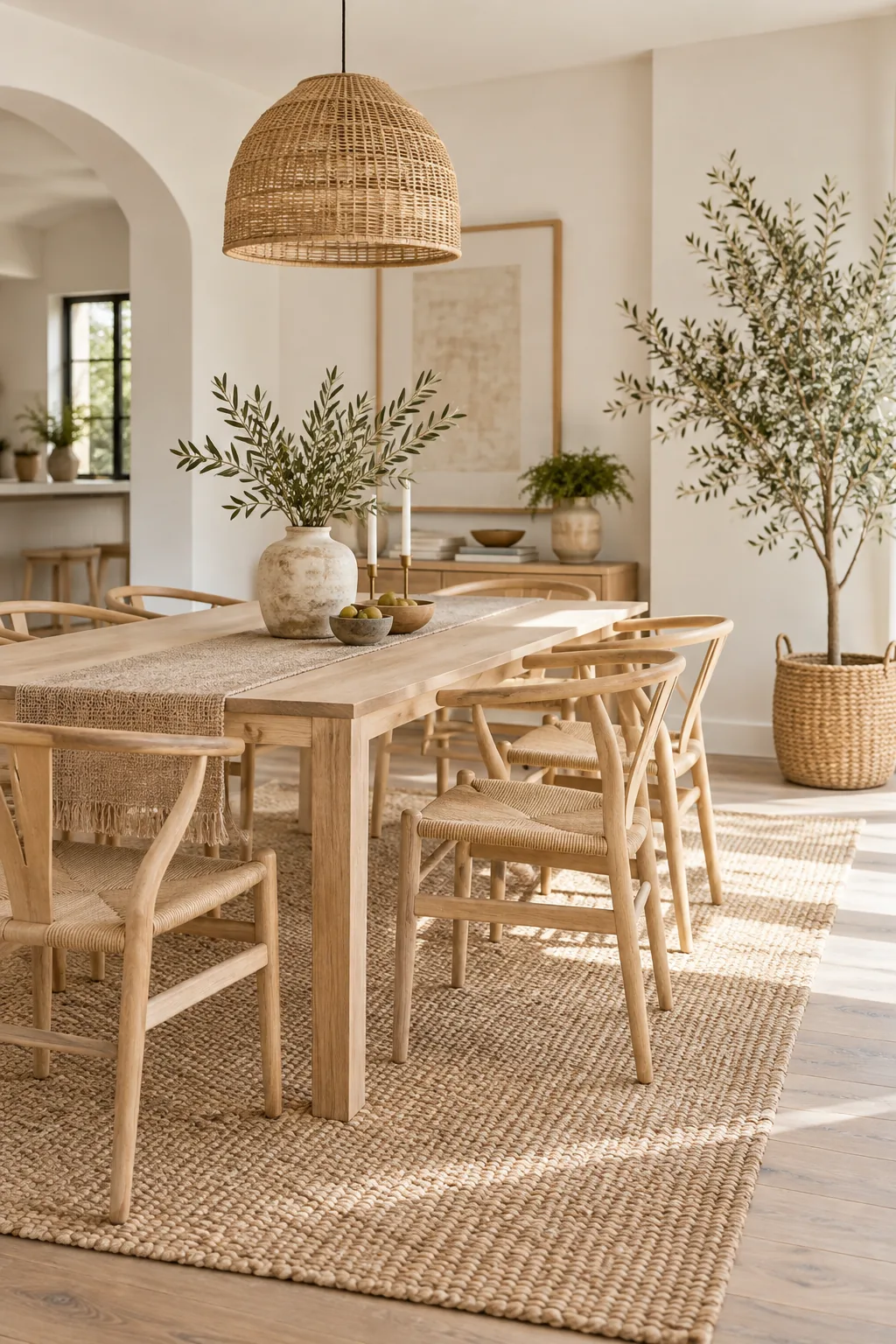
Minimalist Scandi Boho: Monochrome warm whites and light ash wood strip the aesthetic down to its peaceful essentials.
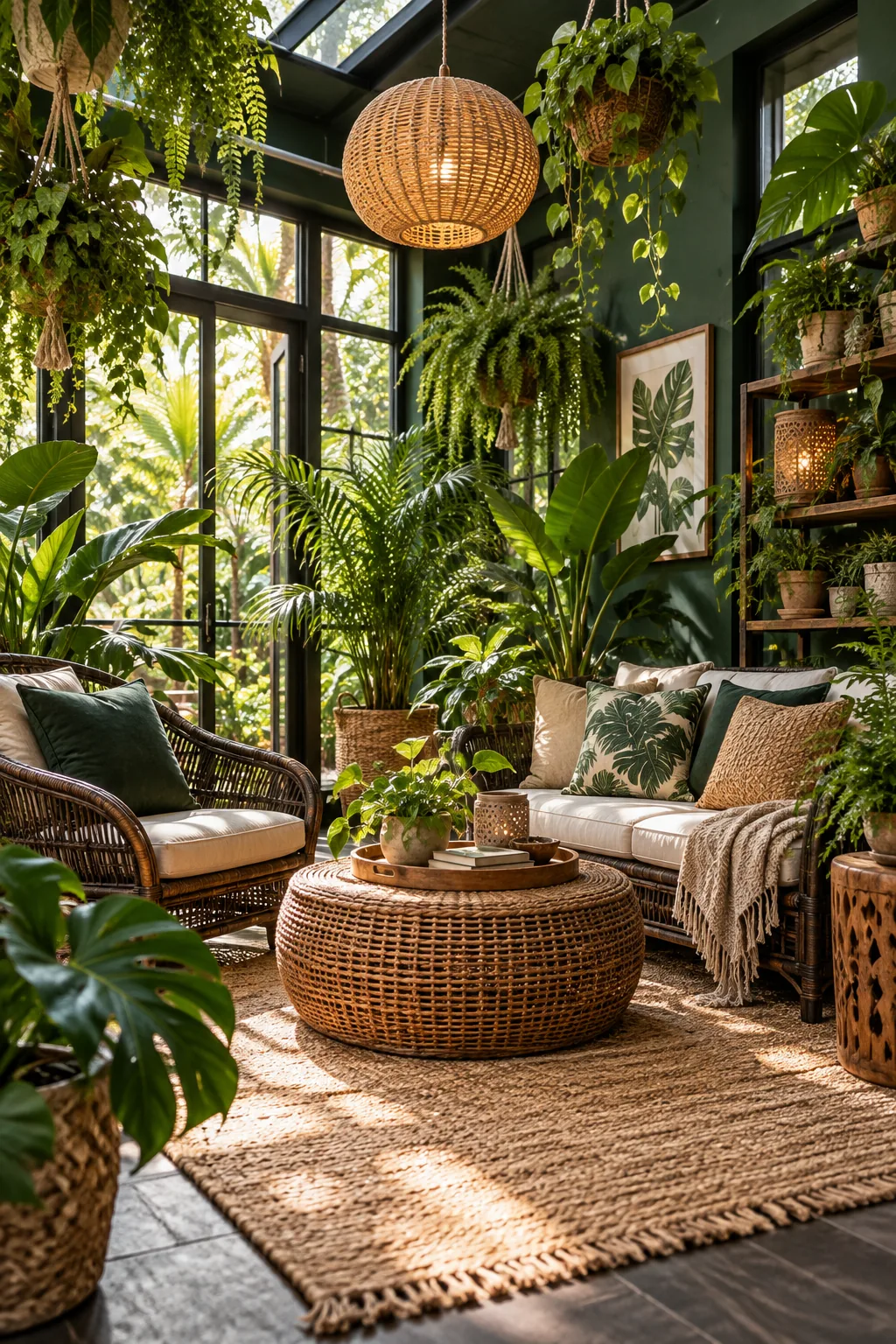
Jungle Oasis Boho: Dark rattan and an abundance of lush tropical foliage transform the space into a vibrant greenhouse.
Drawing the Eye Up with a Macrame Ceiling Swag
To keep your trailing plants out of walking paths while remaining beautifully in view, suspend the macrame planter so the base of the pot sits 65 to 70 inches from the floor. This precise height ensures the greenery stays perfectly at eye level.
Even the most beautiful macrame arrangement can turn into a disaster if installed incorrectly; avoid these common hanging mistakes to keep your plants secure and your walls pristine.