
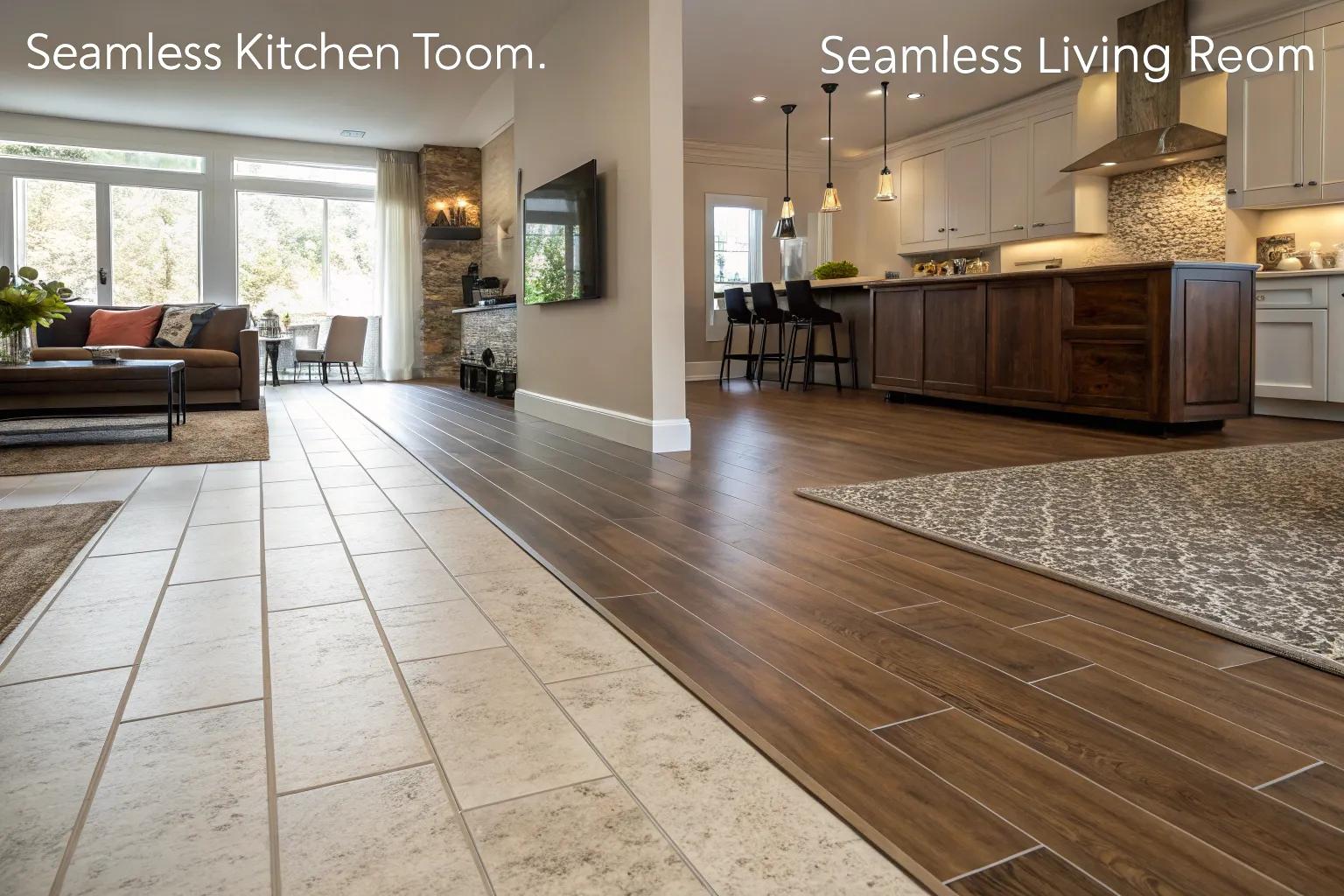
Navigating the tricky world of floor transitions can feel like solving a complex puzzle, but with the right approach, you can turn it into a design opportunity. Let’s explore some creative ways to manage those uneven floor transitions in style.
1. 1. Use Transition Strips for a Smooth Connection

A transition strip is your go-to solution for uneven floors, acting like a bridge that elegantly connects different heights. I’ve found that using wood or metal strips can not only level the floors but also add a sleek touch.
2. 2. Employ Reducers for Height Differences

Reducers are perfect for minimizing height differences between floors. They gently slope from one height to another, and I’ve used them when the difference was just too significant for a simple strip. Explore these clever carpet to tile transition ideas for more ways to handle uneven surfaces.
3. 3. Go Bold with a Marble Strip

Using a marble strip as a transition can add a touch of luxury and seamlessly guide the eye from one space to another. This is one of my favorite ways to add a bit of glam while solving a practical issue.
4. 4. Employ a Threshold Transition

Thresholds can solve the problem of uneven floors, especially when transitioning between different materials. I’ve found them particularly useful in doorways where you want a clean break. Explore these creative floor transition ideas to achieve a seamless look throughout your home.
5. 5. Create Flow with Hexagonal Tiles

Hexagonal tiles can create a visually appealing transition, especially when paired with wood. Their unique shape allows for creative designs that soften the divide between tile and wood, a trick I’ve used to add character to open spaces. Explore our top transition options to find the best way to connect these materials.
6. 6. Use Chevron Patterns for a Bold Look

Chevron patterns can create a striking transition between floors, adding a dynamic element. This is a technique I use when the design needs a bit of drama. You can find more inspiration for this look in our guide to stylish mudroom tile floor ideas.
7. 7. Blend with Mermaid Tiles

For those daring enough, mermaid tiles can create a stunning and unexpected transition. I’ve seen these work wonders in spaces where you want to make a bold statement. Explore our stylish porcelain tile bathroom ideas for more inspiration.
8. 8. Try a Two-Tone Marble Transition

Creating a transition with two-tone marble tiles can add depth and sophistication. It’s a choice that brings a high-end feel to any room.
9. 9. Install Basketweave Tiles for Texture

I adore using basketweave tiles to transition from one flooring to another, as they add texture and interest. These tiles can create a seamless look that feels intentional and artistic, much like the patterns featured in our Calacatta tile bathroom ideas.
10. 10. Opt for a Herringbone Pattern

Using a herringbone pattern is a classic way to transition between tile and wood. It creates a sense of movement and elegance, perfect for spaces that need a little extra flair. Explore more wood floor transition ideas to elevate your home design.
11. 11. Choose T-Molding for Seamless Edges

T-molding is a great choice for creating a seamless edge between two floors of the same height. I often use this when the transition needs to be subtle yet effective. For more ways to elevate your home, explore these stylish wall molding ideas.
12. 12. Incorporate a Tile Rug Effect

Creating a tile ‘rug’ effect can beautifully transition between spaces while adding visual interest. It’s a technique I love for dining areas where you want to define the space without using an actual rug. You can explore various stylish floor tile patterns to achieve this look.
13. 13. Consider Diagonal Cut Tiles

Cutting tiles diagonally can help create a smooth transition that feels less abrupt. This is an approach I recommend for spaces that need a subtle touch of elegance.
14. 14. Design with Patterned Tile Borders

Patterned tile borders can frame the transition and make it a feature rather than a flaw. I’ve used this technique to bring a cohesive look to eclectic spaces.
15. 15. Integrate Layered Inlays

Layered inlays can give a transition depth and character, especially effective in entryways. I find this technique adds a welcoming touch that greets guests with style.
16. 16. Go for a Tiled Doormat

A tiled doormat can serve as a practical and decorative transition, defining the space at an entrance. It’s a simple yet effective way to protect your floors with style. Explore more stylish front door mat ideas to find the perfect look for your home.
17. 17. Choose Soft Contrast Tiles

Using tiles with a soft contrast can create a gentle transition that feels natural. This approach is perfect for calming spaces where you want the transition to be almost invisible. Explore our fresh ideas for transitional tile to elevate your decor.