How to Make a Hand-Tied Flower Bouquet Like a Florist
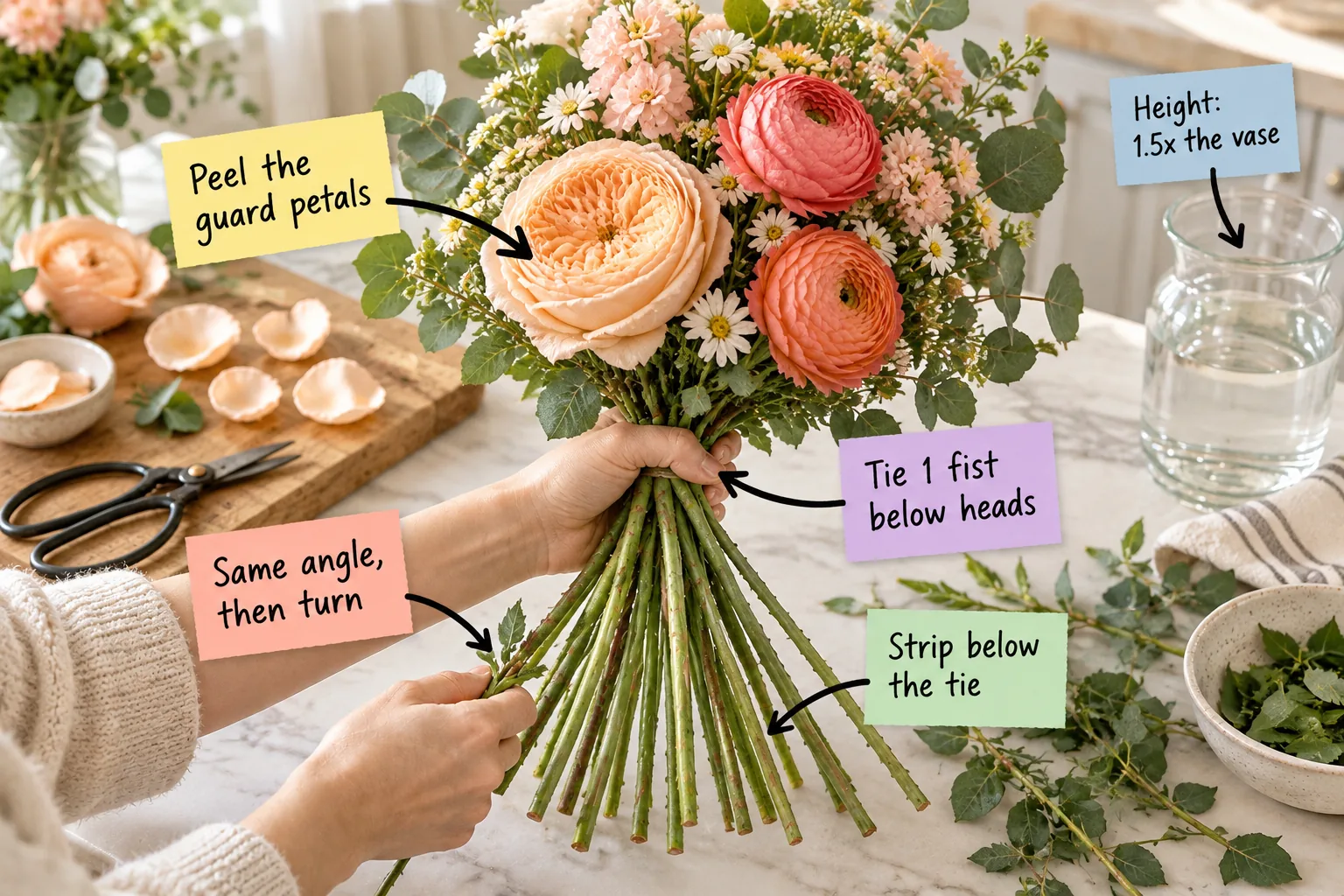
You can easily turn standard grocery store bunches into a lush, professional arrangement using my printable 8-step hand-tied bouquet recipe card. We will walk through the exact spiral technique and stem counts you need to confidently prep, tie, and trim your blooms.
The Supermarket Stem Formula
Grouping three standard grocery bunches into focal, secondary, filler, and greenery roles is the first step to building a structured arrangement. Start by laying out your ingredients in separate stacks so you can easily grab them with one hand.
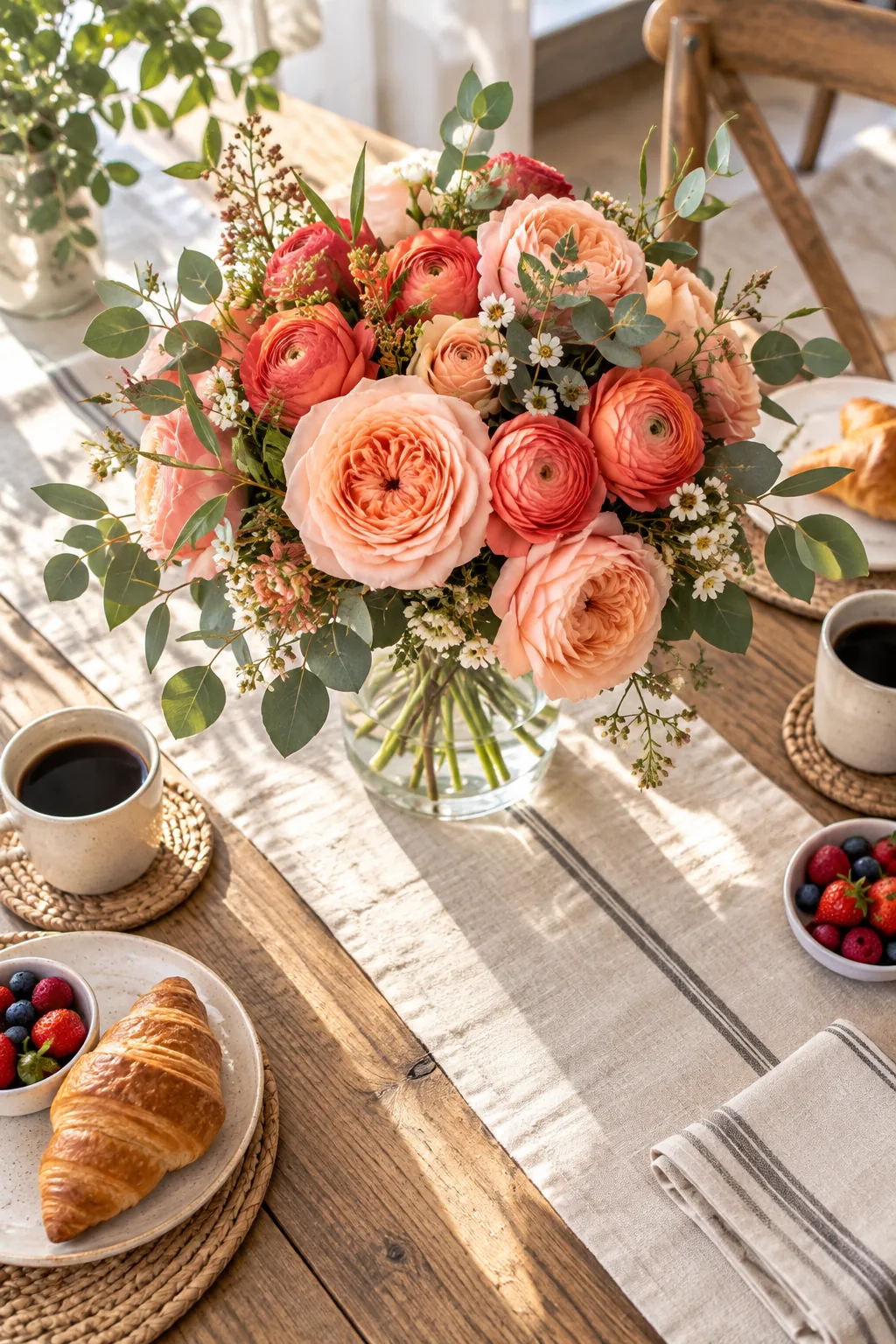
A reliable recipe uses five to seven focal blooms and generous greenery to build a supportive foundation. Having these distinct roles prepped and separated on your counter prevents you from fumbling once you start holding the stems.
Peeling the Guard Petals
Before building the arrangement, gently peel away the tough, bruised outer petals from focal flowers like roses and ranunculus. I always do this at my kitchen island right after unpacking, as it instantly makes cheap grocery roses look like premium garden varieties.
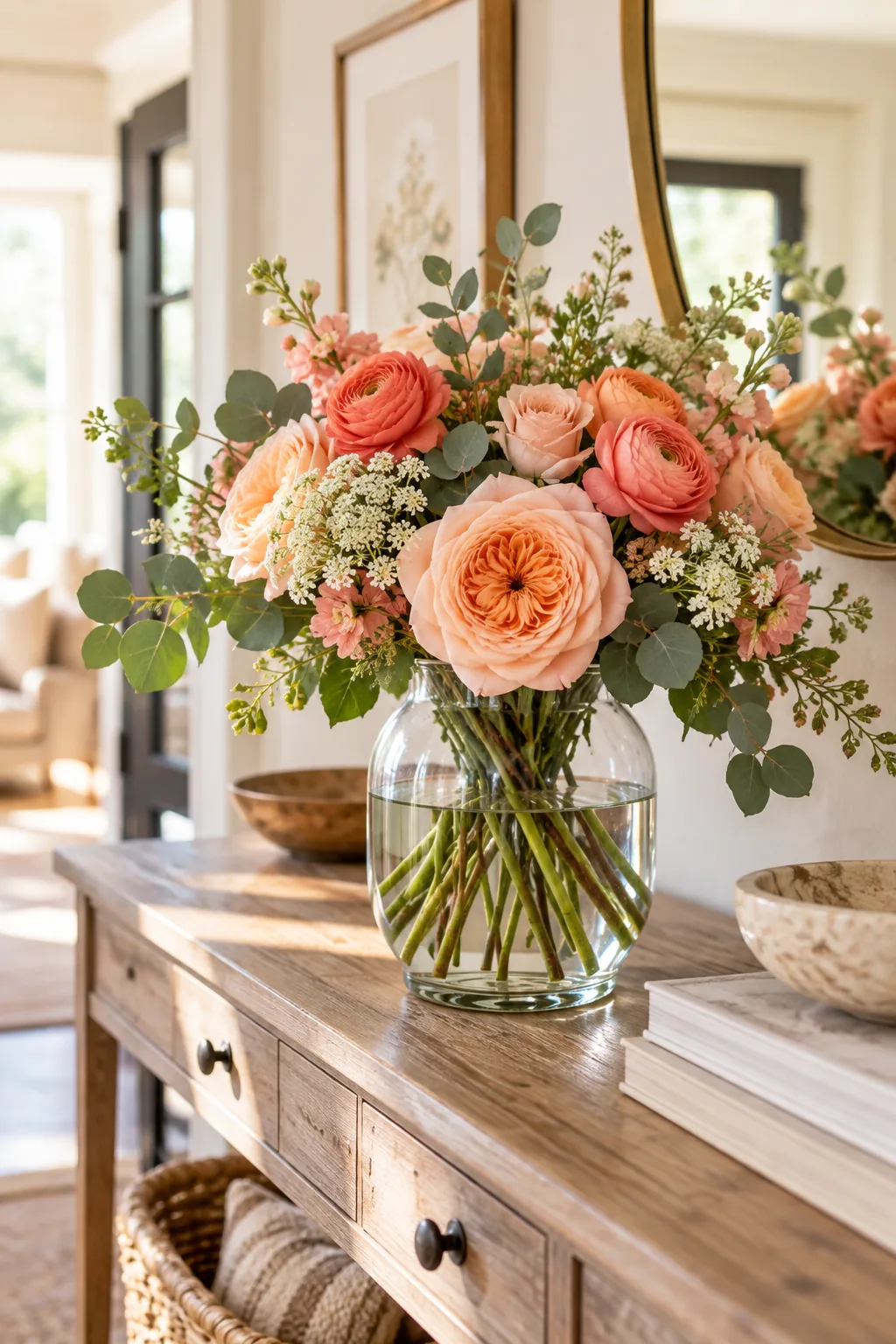
Removing these protective layers signals the flower to open fully and look its absolute best. Peel the guard petals gently from the base so you do not damage the pristine inner bloom, ensuring maximum volume for your arrangement.
| Stem Role | Ideal Count | Grocery Example | Purpose |
|---|---|---|---|
| Focal | 5 to 7 stems | Standard Roses | Anchors the visual center |
| Secondary | 7 to 9 stems | Spray Roses | Fills gaps between focals |
| Filler | 3 to 5 stems | Waxflower | Adds delicate texture |
| Greenery | 8 to 10 stems | Seeded Eucalyptus | Builds the structural frame |
Stripping Stems Below the Waterline
A beautiful arrangement can be ruined in days if the water quality deteriorates, so you must strip below the tie to ensure clean stems. Watch out for these common stem-cleaning errors before your flowers go into the vase.
Taking the time to clear every single leaf from the lower half of your stems guarantees crystal clear water. This simple conditioning step is the most effective way to extend the vase life of your supermarket flowers.
The Spiral Technique: Angle and Turn
Hold the first stems in your non-dominant hand and add every new stem at the exact same diagonal angle. Whenever I teach this technique in my Boston apartment, I remind friends to keep their grip relaxed so the stems can fan out naturally.
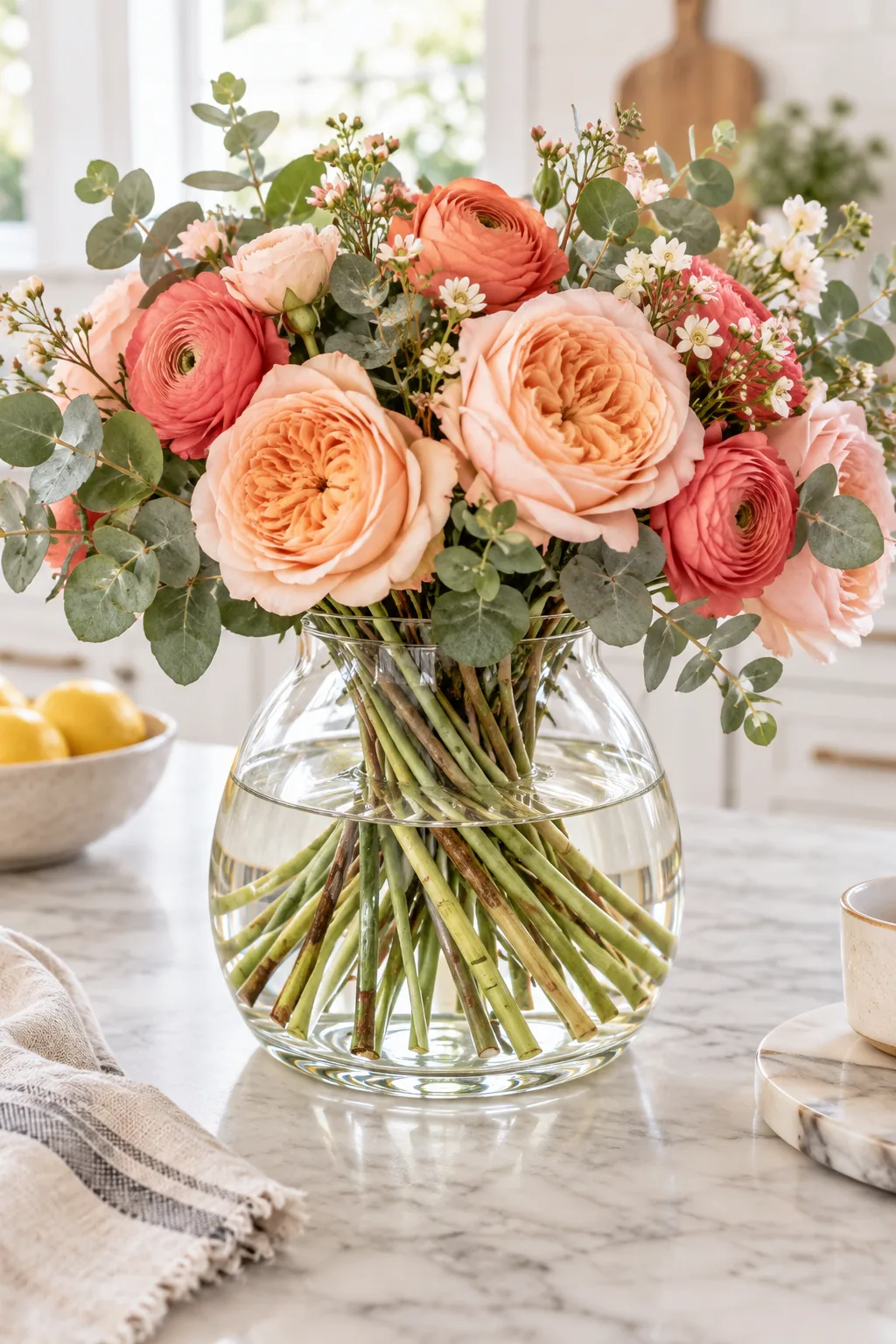
Turn the bouquet a quarter-turn after every three additions to build a self-supporting, woven structure. Remembering to use the same angle, then turn creates a professional spiral that stands up perfectly on its own.
Tying Off One Fist Below the Heads
The secret to a lush, domed shape is gripping the stems exactly one fist-width below the lowest flower heads. Finding this specific binding point keeps the structural spiral tightly woven without crushing the delicate flower necks.
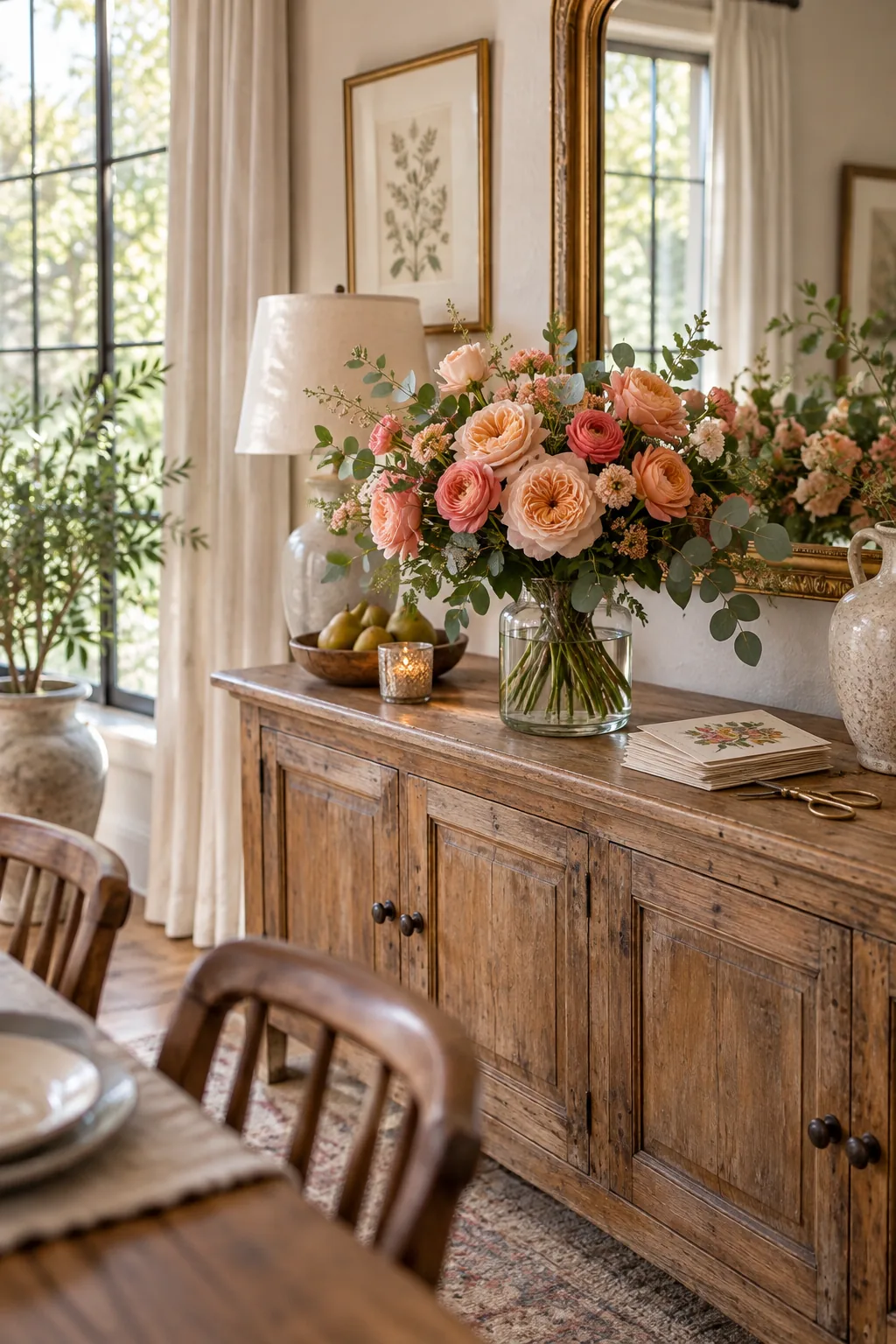
Once the spiral is complete, you need to tie 1 fist below heads to maintain the beautiful shape you just built. Securing the stems tightly is absolutely crucial before you move on to the final trimming phase.
Trimming to the 1.5x Vase Ratio
Balance the visual weight of the glass by trimming the final bouquet height to roughly 1.5 times the height of the vase. Measure the bound stems against the outside of your chosen vessel to find the perfect cut line.
- Hold the tied bouquet beside the counter edge to gauge the Height: 1.5x the vase ratio accurately.
- Trim the bottom of the spiral straight across first to establish a flat, even baseline length.
- Recut every individual stem at a sharp 45-degree angle to maximize the surface area for water absorption.
Print the 8-Step Spiral Bouquet Recipe Card
Download the complete stem-count recipe and 8-step sequence to build this exact arrangement at home. The guide includes essential prep details, such as a two-hour hydration conditioning time for supermarket blooms before you begin spiraling.
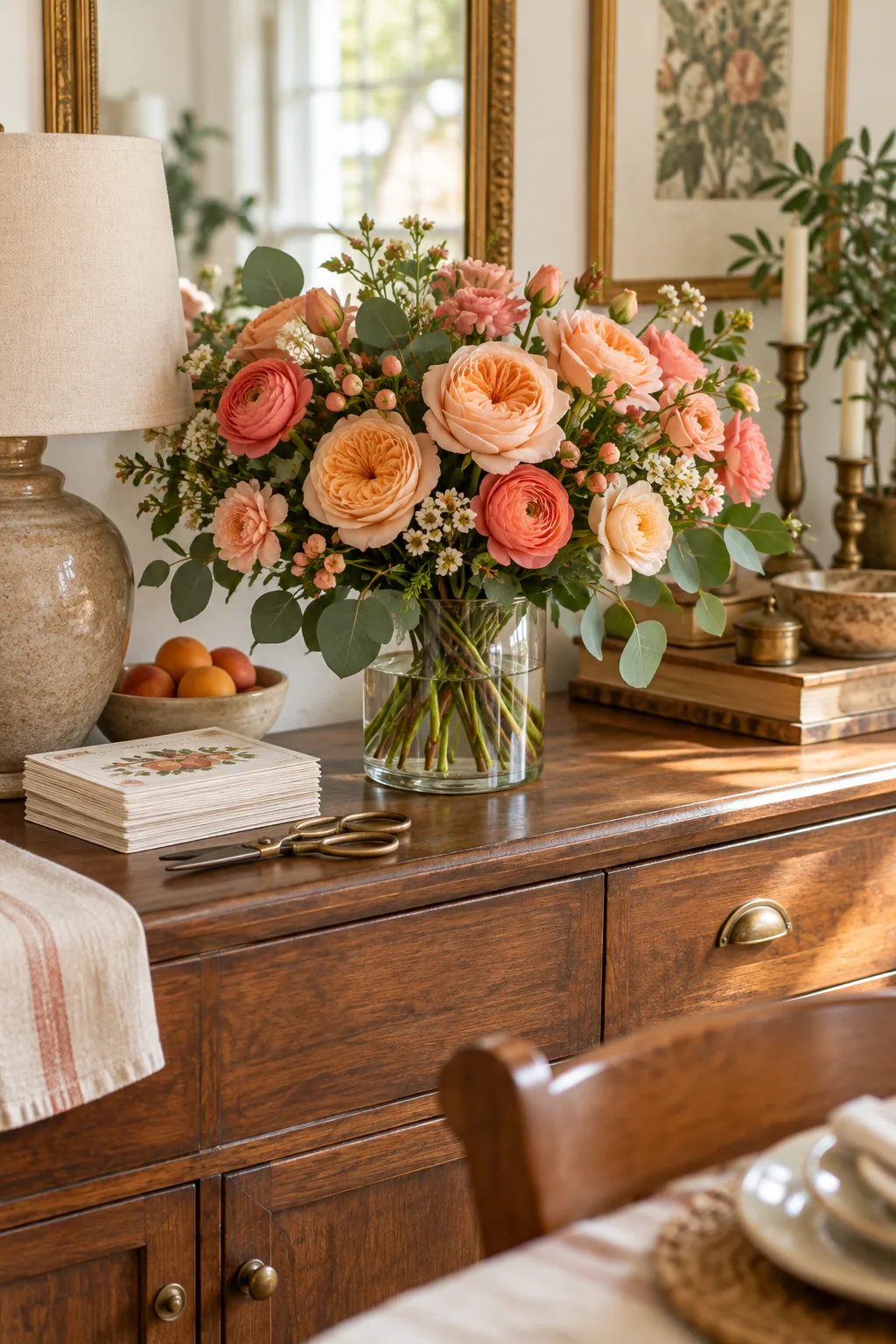
Keep this printable card tucked in your kitchen drawer for the next time you pick up weekend flowers. Having the exact focal, secondary, and filler counts on hand completely removes the guesswork from grocery store styling.
Three Ways to Style a Hand-Tied Bouquet
Once you master the spiral technique, you can adapt the recipe to suit any room or season.
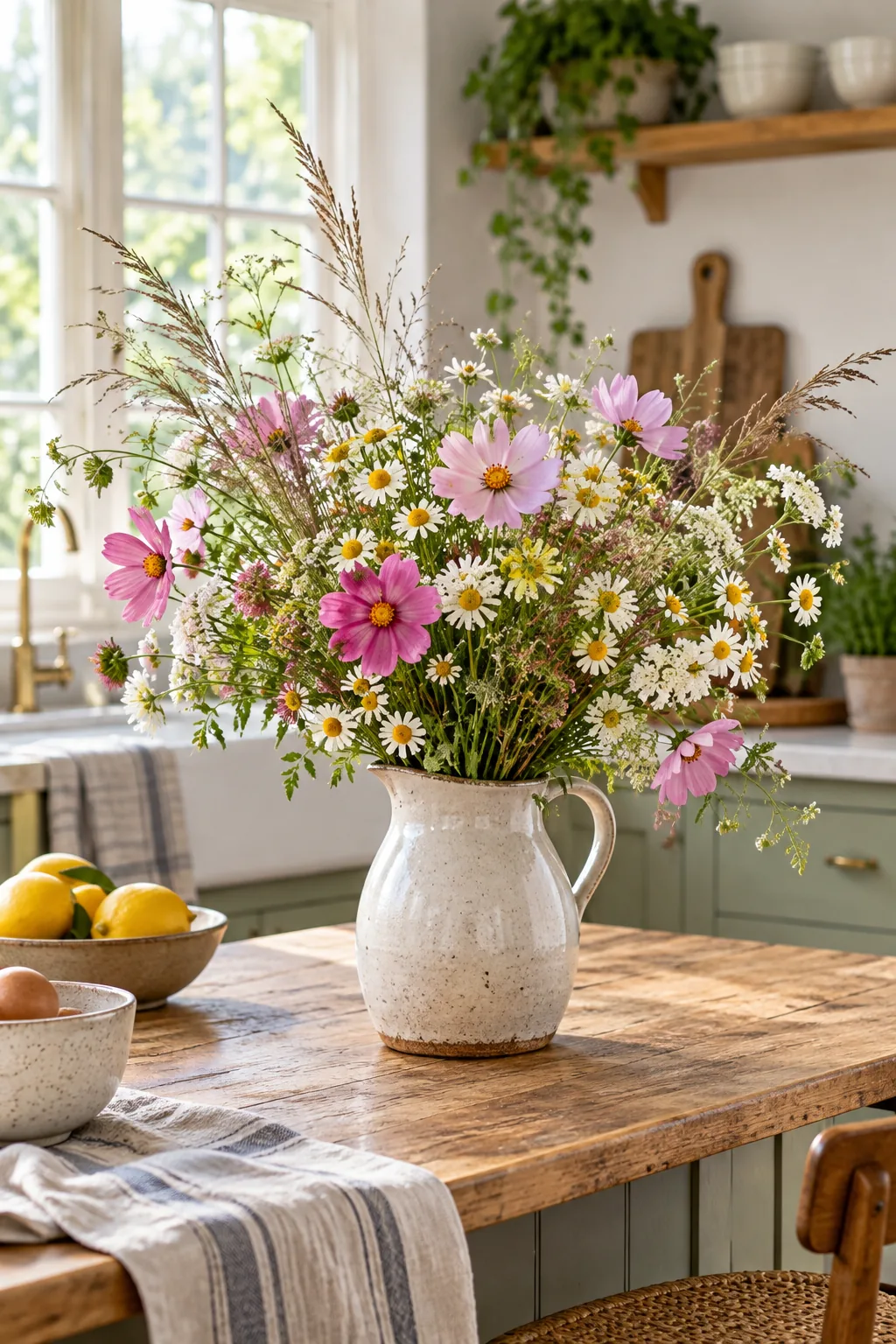
Wildflower Meadow Mix: Swap formal roses for chamomile, cosmos, and loose grasses to create an airy, unstudied arrangement perfect for a rustic kitchen island.
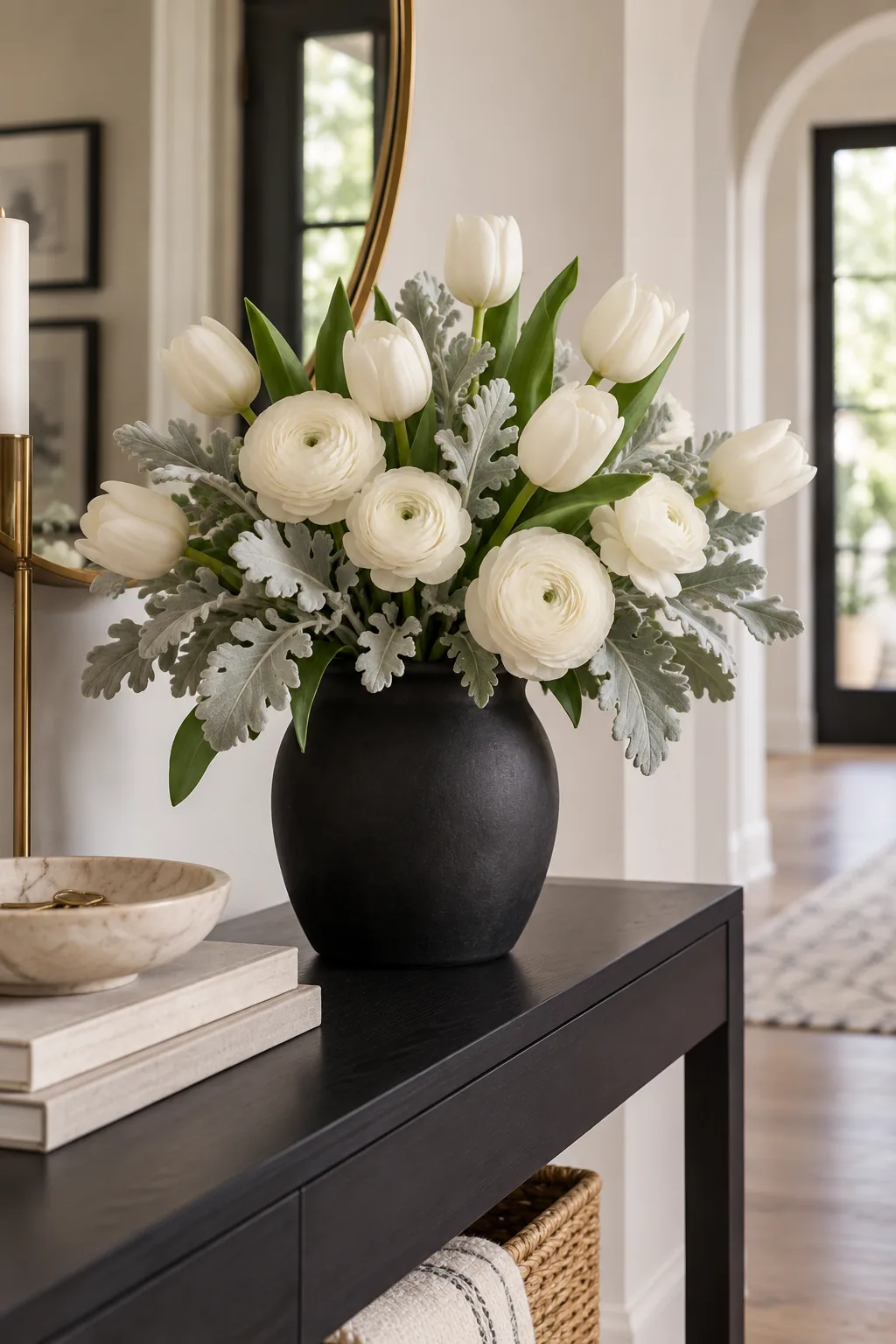
Monochromatic White Elegance: Stick to a single color palette using white tulips, ranunculus, and dusty miller for a sophisticated, sculptural look on a modern entryway console.
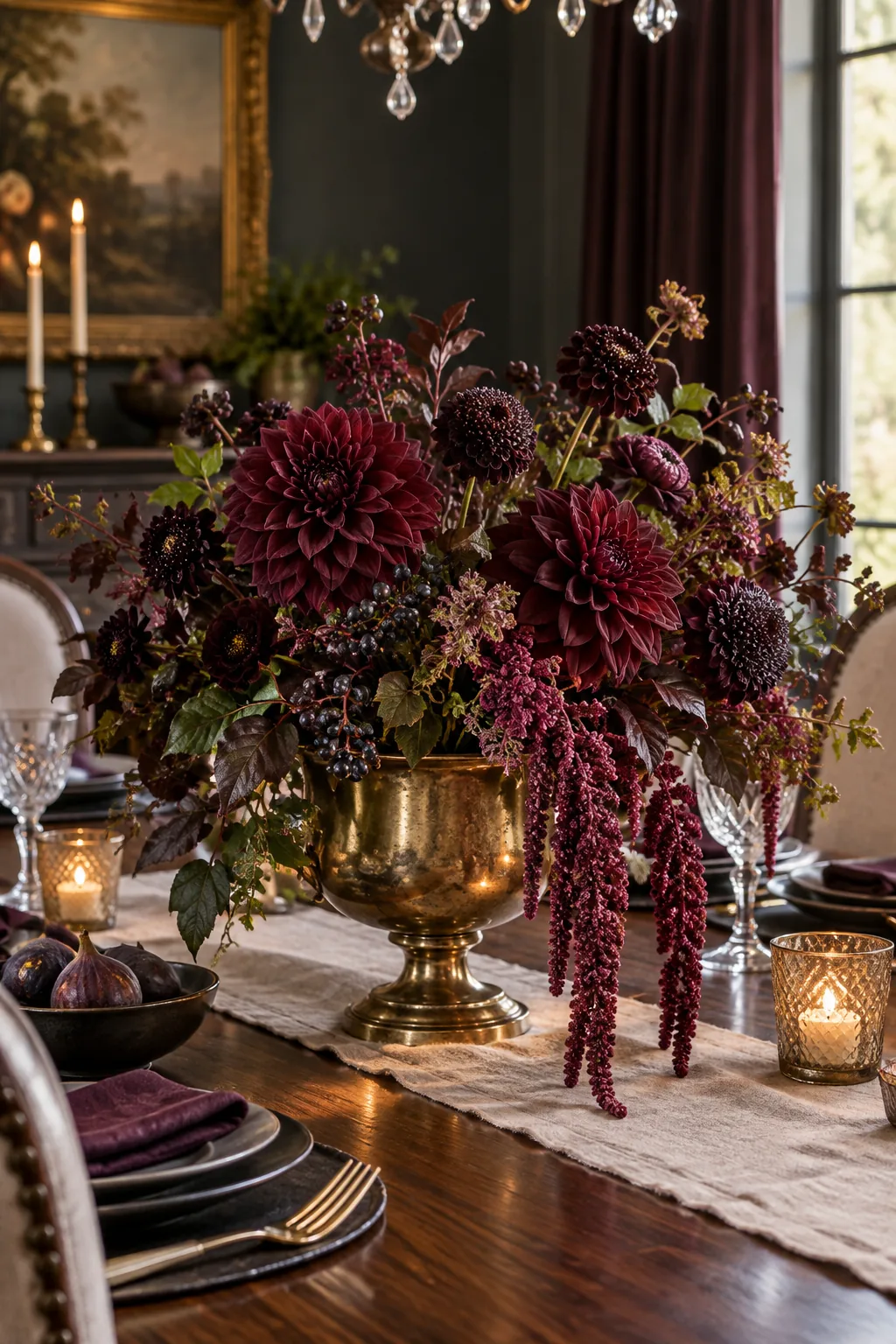
Moody Jewel Tone Drama: Combine deep burgundy dahlias, plum scabiosa, and dark trailing amaranth in a brass urn to anchor a formal dining room table.