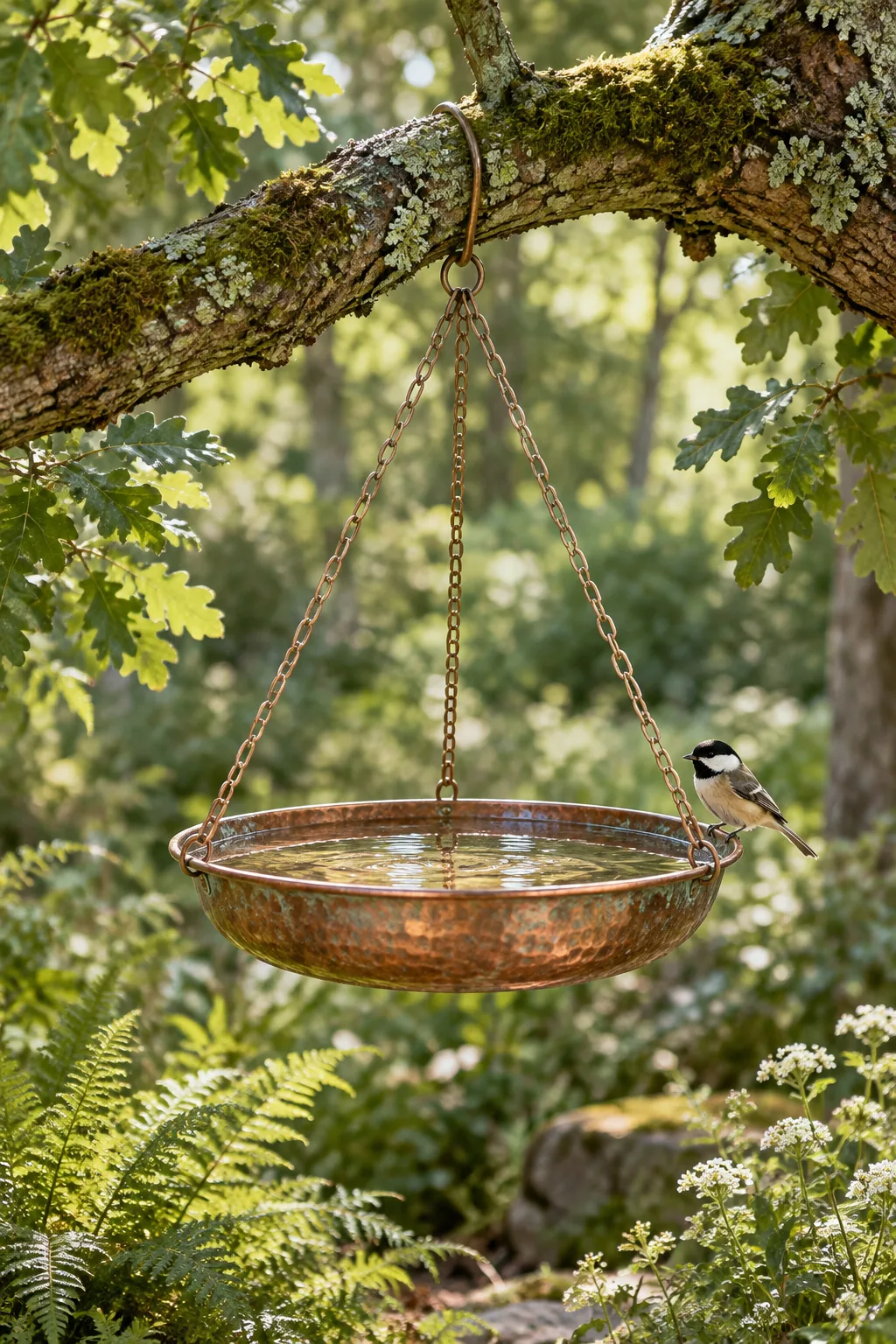
How to Set up a Bird Bath Birds Actually Use (Free Checklist)
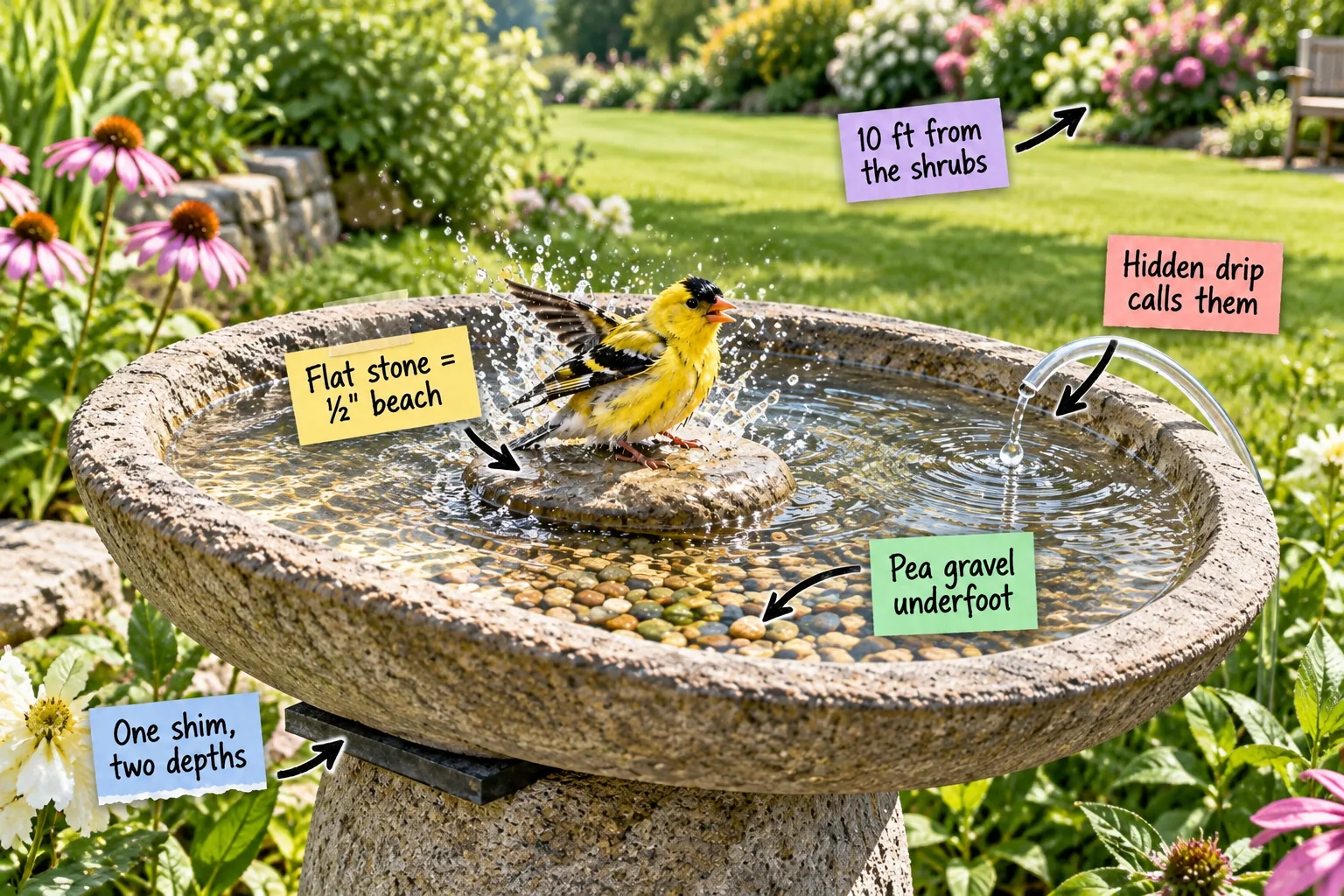
You will be able to properly place, level, and equip your garden oasis to safely attract more birds by grabbing our printable Bird Bath Setup & Refresh Checklist. Getting the perfect water depths, landing stones, and drip systems dialed in brings your backyard to life almost instantly.
Evaluating Sun and Shade Exposure
Finding the perfect microclimate prevents your water from turning into hot soup during peak summer afternoons. Placing the bath in dappled shade keeps the temperature refreshing, protects delicate fledglings from overheating, and significantly slows down rapid evaporation.
| Sun Exposure | Water Temp | Evaporation Rate | Algae Growth |
|---|---|---|---|
| Full Sun | Very Hot | High | Rapid |
| Dappled Shade | Cool | Moderate | Slow |
| Deep Shade | Cold | Low | Minimal |
A cooler basin naturally deters algae blooms while providing a consistently comfortable oasis for migrating flocks looking for a quick drink.
The 10-Foot Rule for Shrub Distance
Giving birds a clear line of sight is critical, so always place your bath exactly 10 feet from a flowering shrub border. This visual spacing provides a safe, unobstructed flight path while keeping protective cover within immediate reach.
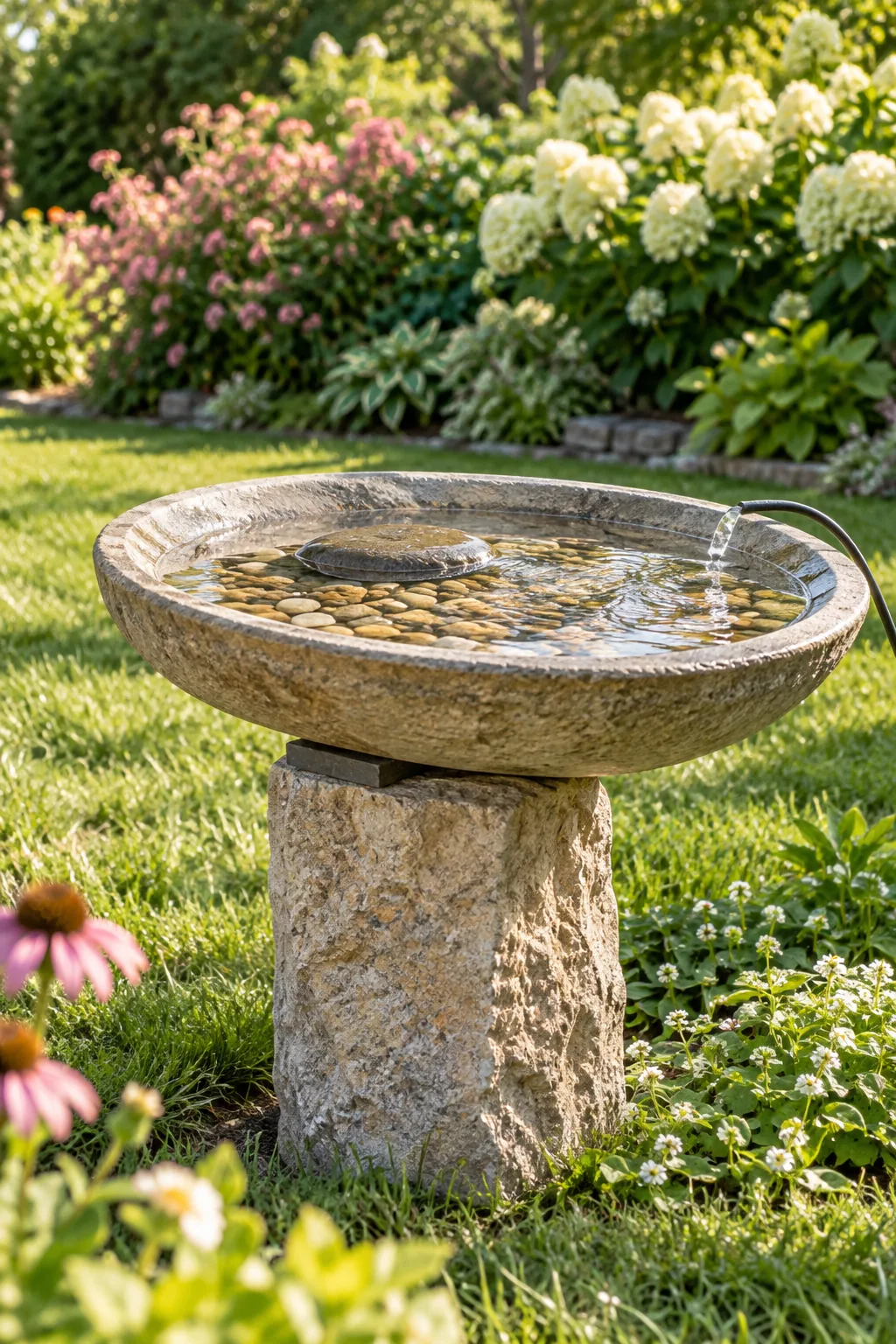
This specific distance allows them to quickly flee if a predator approaches, without giving neighborhood cats a place to hide within pouncing range.
Leveling the Pedestal Base
Before you can intentionally tilt the bowl, the main concrete pedestal must sit perfectly plumb on the bare ground. Digging out a shallow footprint and tamping down leveling sand prevents the heavy stone structure from slowly sinking over time.
Securing the Basin Foundation
Applying a thick bead of outdoor construction adhesive between the pedestal and the basin prevents accidental tipping during heavy windstorms. A securely anchored bowl protects larger visiting birds like jays or doves from accidentally shifting the heavy concrete while landing.
Tilting for Two Depths with One Shim
I used to struggle with uncomfortably deep basins until I learned how inserting a single thin slate shim alters the water line to create a zero-entry shallow end. Just tuck the slate firmly between the pedestal top and the basin to slightly tilt the bowl.
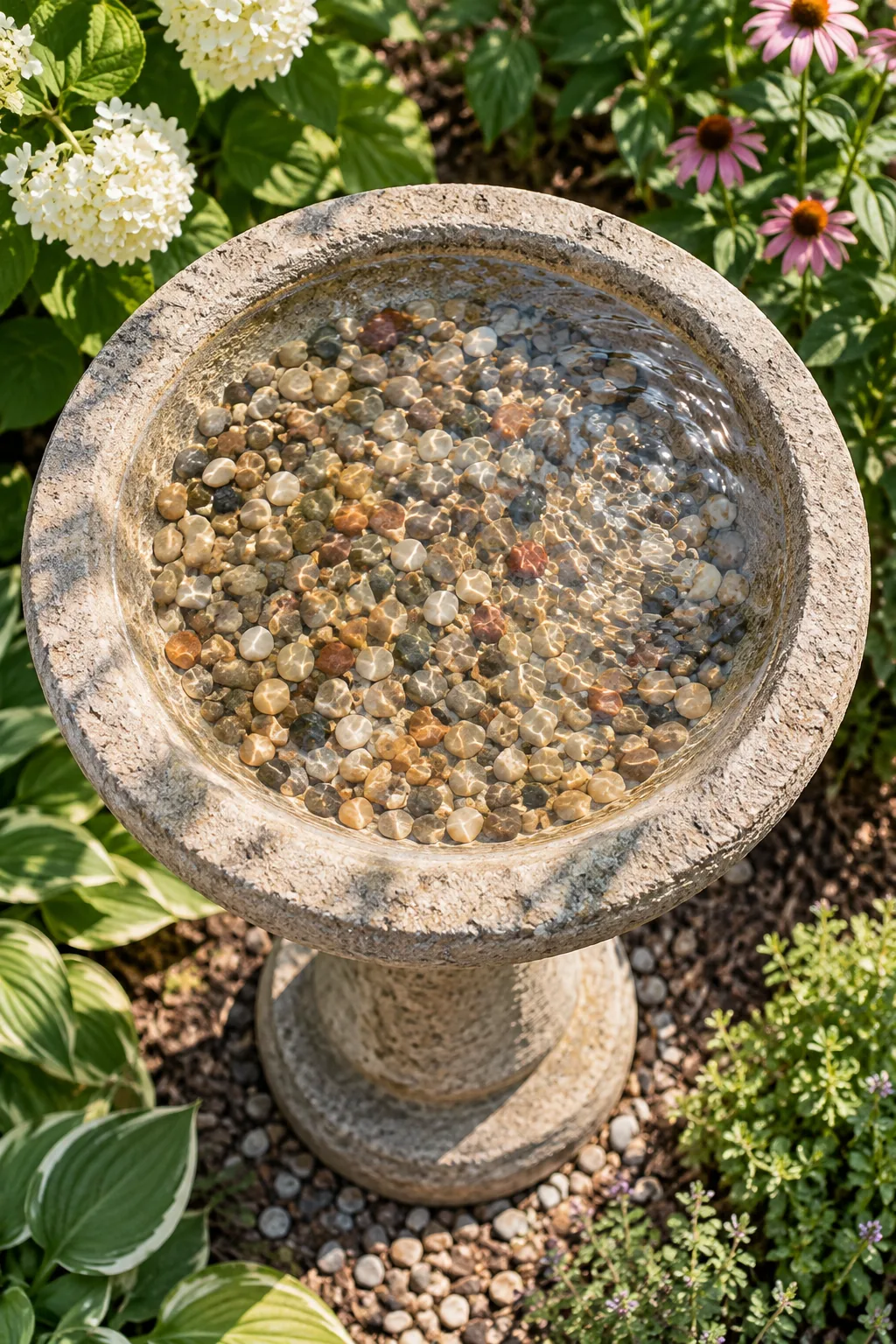
Utilizing this simple 1-shim method creates a gentle wading area for small songbirds and a deeper end for larger visitors, saving you from buying a custom sloped basin.
Creating a Zero-Entry Wading Zone
That newly elevated edge acts just like a natural beach, allowing cautious ground-feeders like robins and thrushes to approach the water gradually. Tapering the depth from absolutely dry to just an inch deep guarantees that even the smallest sparrows feel completely secure stepping in.
Selecting the Right Basin Material
While glazed ceramic looks stunning in a garden center, it quickly becomes a dangerous ice rink for wet bird feet. Opting for unsealed cast stone or rough concrete provides a naturally porous texture that helps birds grip the surface securely.
Adding Grip with a Pea Gravel Floor
When I first set up my bath, the birds just perched nervously on the rim, which taught me the necessity of adding a visible layer of small, rounded pea gravel to the basin floor. This textured layer provides secure footing so birds feel safe stepping directly into the water.
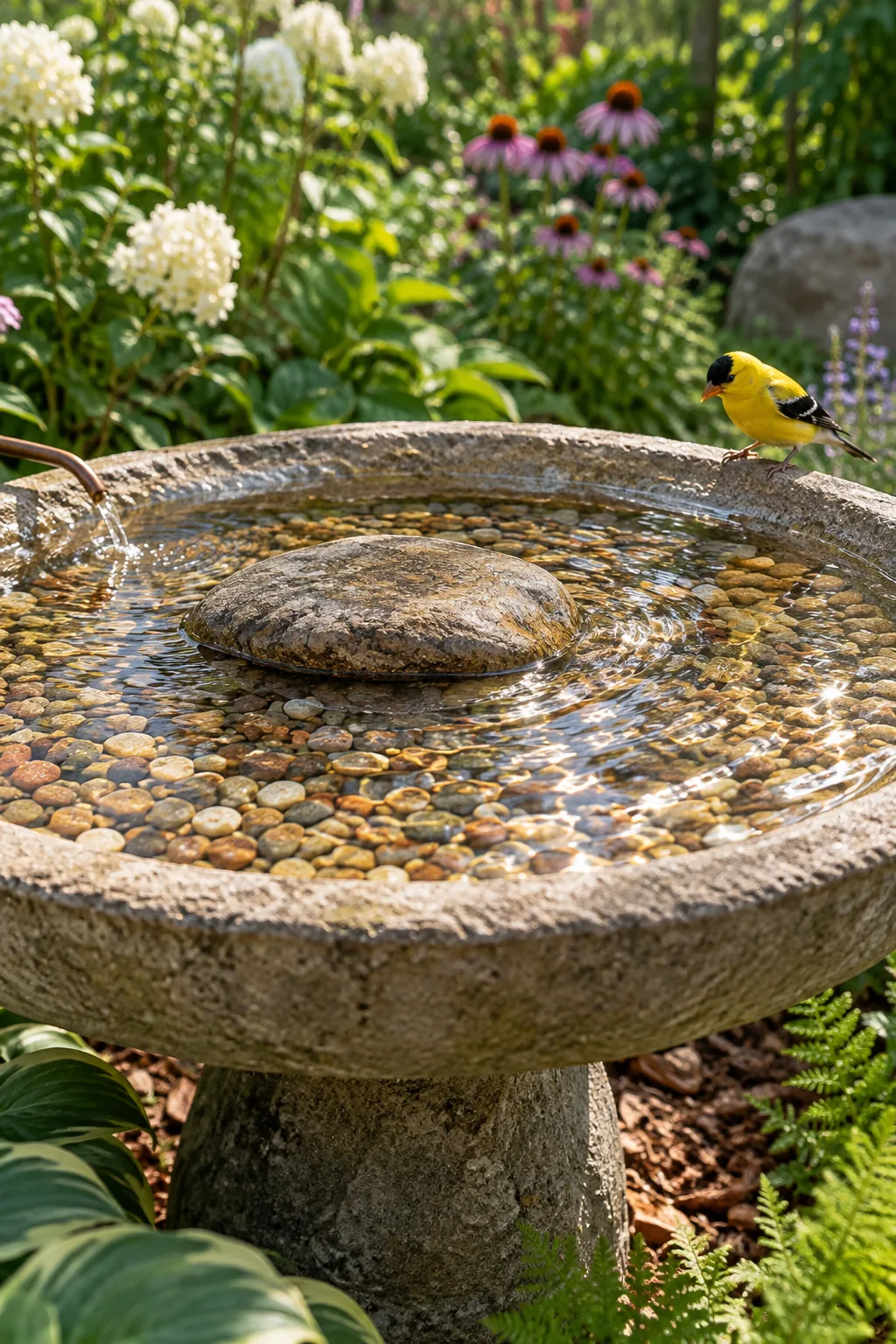
Bare stone is dangerously slippery for tiny claws, but a gravel bottom mimics natural streams, giving them the confidence to wade in and bathe thoroughly.
Washing the Gravel Before Placement
Always rinse your bagged gravel with a high-pressure hose before spreading it across the basin floor to remove harmful silica dust. Eliminating this cloudy residue ensures your water remains crystal clear and entirely safe for delicate avian respiratory systems.
Sourcing Safe River Stones
Gathering rocks directly from your yard might introduce unwanted lawn chemicals or fertilizers into the drinking water. Purchasing thoroughly washed, untreated river stones from a dedicated landscape supply yard guarantees a non-toxic environment for your feathered guests.
Creating a Half-Inch Beach with a Flat Stone
Watching fledglings try to drink inspired my favorite trick: placing a large, flat river stone in the center of the bath to create an ankle-deep landing zone. The stone should barely break the surface, providing a stable island for timid visitors.
The water flowing over this central stone must measure exactly ½ inch deep to serve as a safe beach. This extremely shallow depth is perfect for smaller birds like goldfinches to comfortably splash around without fear.
Anchoring the Landing Island
If your flat river stone wobbles when a heavy woodpecker lands on it, the sudden movement will terrify the entire flock. Wiggle the stone deeply into the pea gravel layer until it rests firmly against the concrete bottom for absolute stability.
Understanding Avian Bathing Habits
Most songbirds refuse to bathe in water that reaches above their delicate knees, preferring to violently flutter their wings in very shallow puddles. Providing these precise micro-depths caters directly to their natural instincts, transforming a quiet yard into a bustling sanctuary.
Adding a Hidden Drip to Call Them In
Birds locate water primarily by sound and movement, so a stagnant pool often goes completely unnoticed by migrating flocks flying overhead. Hooking a slim, clear drip tube over the rim creates a steady trickle and ripple rings that draw birds down from the canopy much faster.
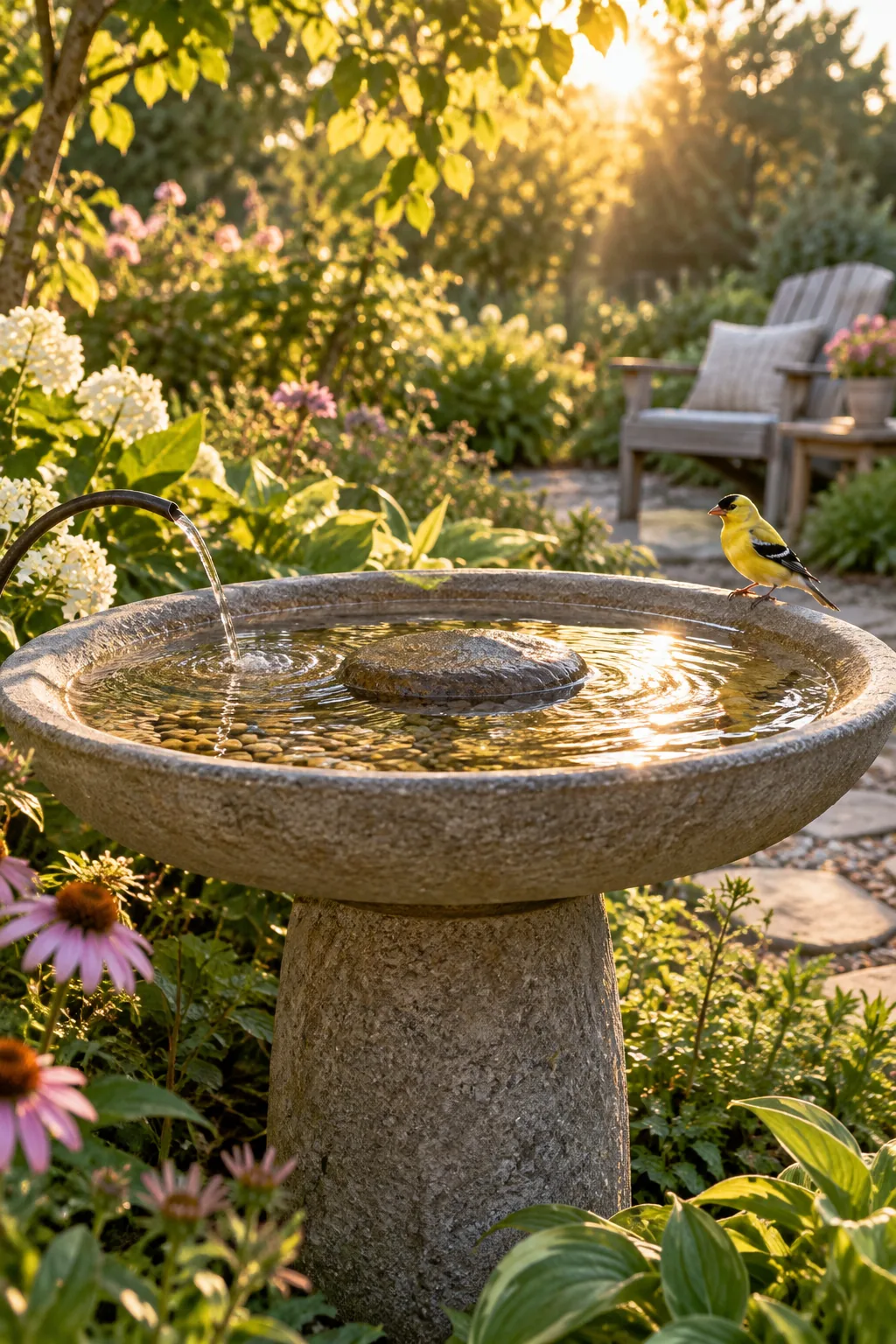
- Anchor the clear tubing securely against the back of the stone pedestal.
- Loop the copper nozzle tightly over the basin edge.
- Adjust the inline valve to restrict the municipal water pressure.
Once your drip tube is hooked over the rim, you will need to dial in the water flow to make it inviting rather than intimidating.
Camouflaging the Water Line
Exposed plastic tubing ruins the natural aesthetic of your carefully designed garden feature and can sometimes deter cautious wildlife. Wrapping the vertical line with a creeping vine or hiding it behind a tall potted fern blends the plumbing seamlessly into the landscape.
Managing Water Evaporation Rates
That slow, steady drip system serves a brilliant dual purpose by automatically replacing water lost to intense afternoon evaporation. This continuous micro-refill prevents the basin from ever running dry, ensuring a reliable hydration source even during severe summer droughts.
Preventing Mosquito Breeding
Stagnant backyard water is a notorious breeding ground for pests, but the continuous surface agitation from your drip tube solves this problem entirely. Mosquitoes require perfectly still water to lay their eggs, making your rippling bird bath an incredibly hostile environment for them.
- Check the drip nozzle weekly for mineral clogs.
- Ensure the ripple rings reach the outer edges of the basin.
- Dump the water entirely if the drip system fails.
Maintaining this constant surface movement keeps your yard comfortable for human guests while providing a safe, flowing drinking fountain for the local wildlife.
Winterizing Your Stone Bath
Freezing temperatures will quickly crack an expensive concrete or ceramic basin if standing water expands into solid ice. Installing a submersible bird bath heater in late autumn keeps the water liquid, offering a crucial lifeline to overwintering cardinals and chickadees.
Your Bird Bath Setup & Refresh Checklist
Seeing my garden buzzing with wildlife makes all this effort worthwhile, and this final, fully assembled bird bath setup requires weekly maintenance to stay hygienic. This printable checklist summarizes the depth profile, landing-stone placement, gravel layer, drip setup, and distance rules.
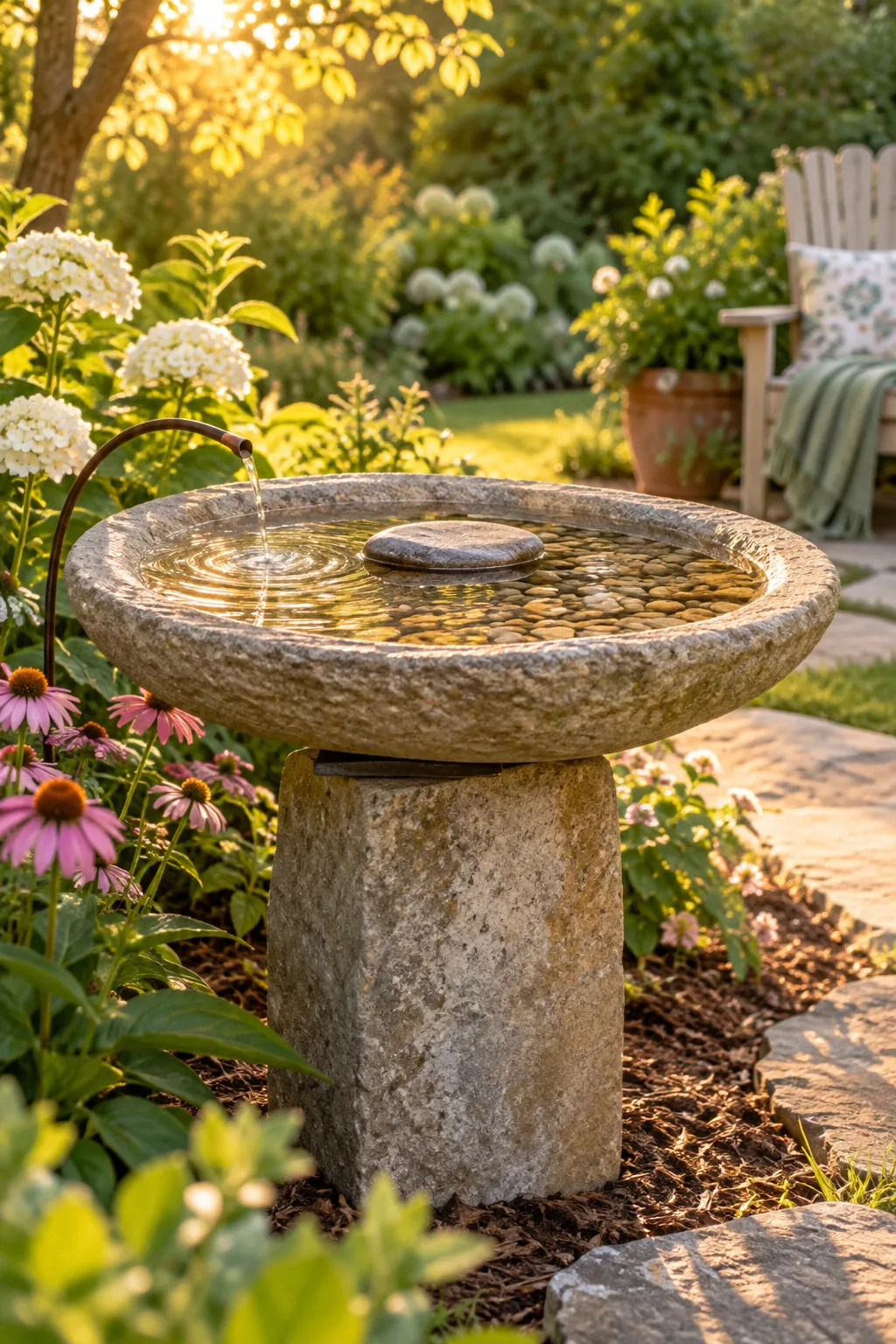
Keeping the water pristine is just as important as the initial setup, so keep this maintenance routine handy alongside your setup specs.
More Beautiful Bird Bath Styles
Find the perfect basin material and style to match your unique garden aesthetic.
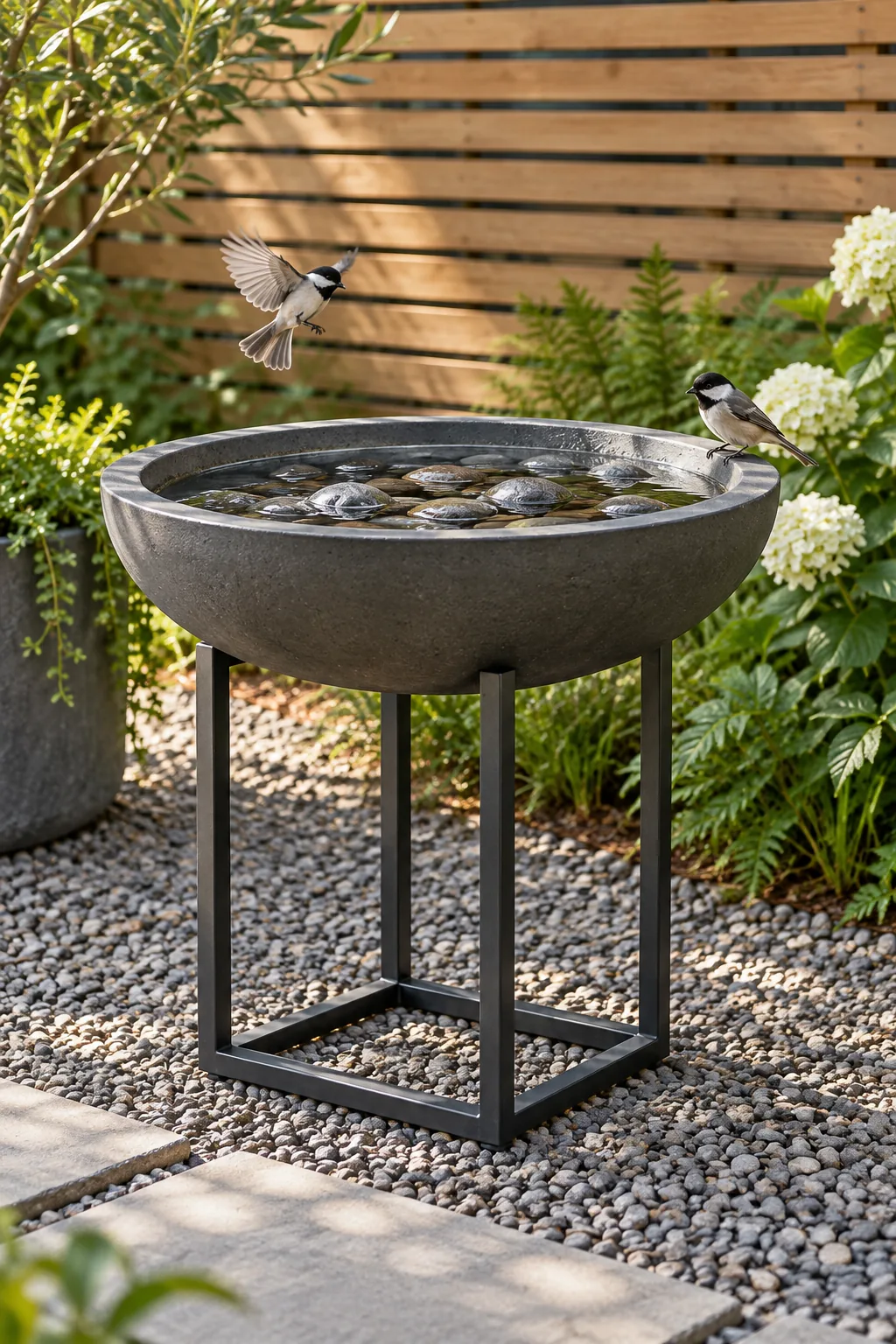
Modern Concrete Basin: A sleek concrete bowl on a minimalist stand brings contemporary architecture to your garden while dark river rocks provide natural grip.
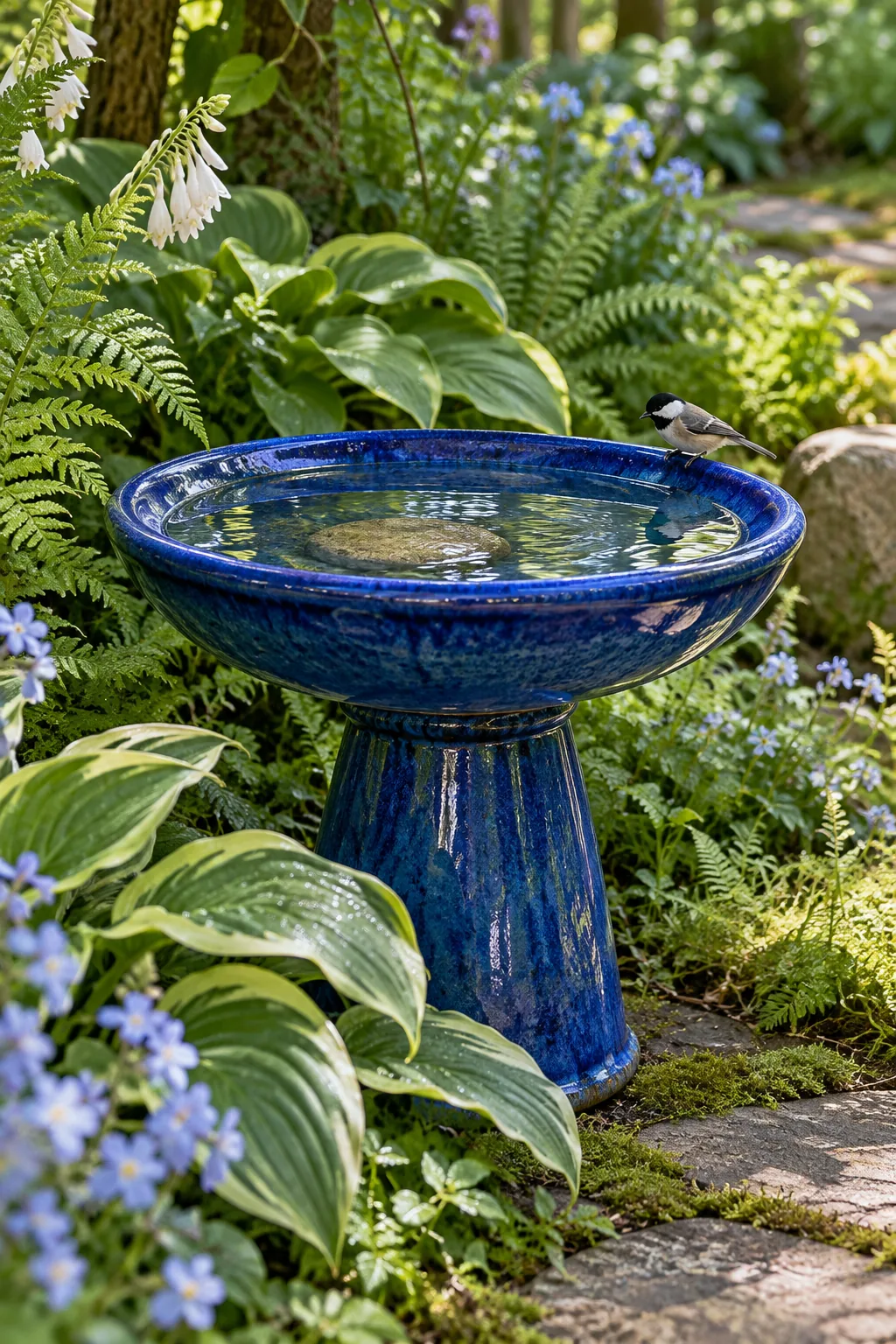
Glazed Ceramic Oasis: Bright cobalt blue ceramic adds a brilliant pop of color to shaded cottage gardens, beautifully contrasting with surrounding green ferns.
Hanging Copper Dish: A suspended hammered copper dish keeps the water safely off the ground and develops a stunning natural patina over time.