Secret Garden Designs: How to Plan What Stays Hidden
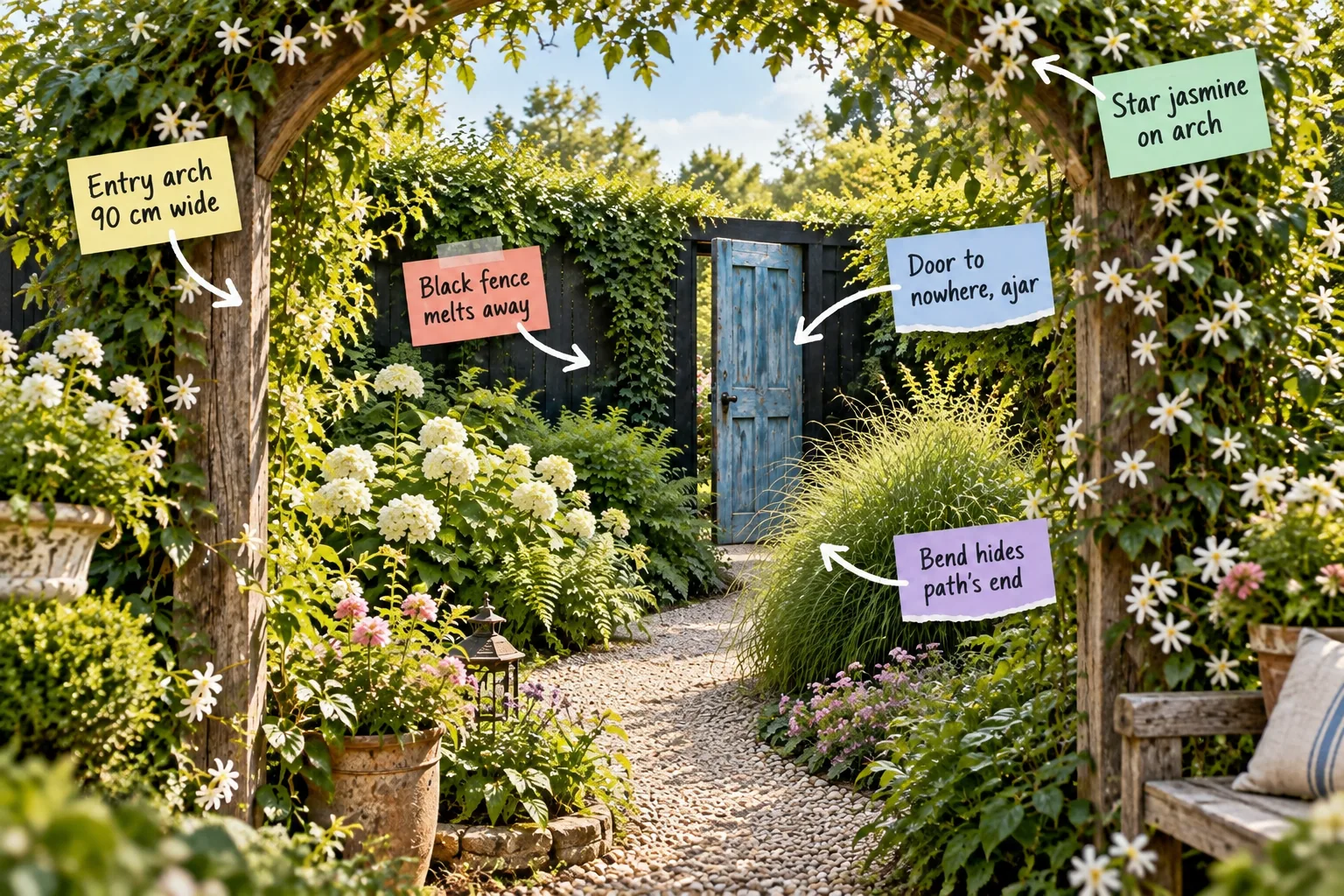
You can map out a convincing backyard escape by downloading our complete 2-page Secret Garden Hide-and-Reveal Checklist. This printable guide delivers exactly what you need to build your own private oasis, from calculating arch dimensions and selecting receding paint shades to confidently mounting a faux door.
Frame the View With a Narrow Arch
A secret garden requires a distinct sense of enclosure right from the start. Keep the entry arch exactly 90 cm wide to force a slight shoulder turn, which instantly signals that the space beyond is a hidden, deliberate room. When I built my first Austin courtyard, narrowing the entrance completely transformed how friends experienced the space.
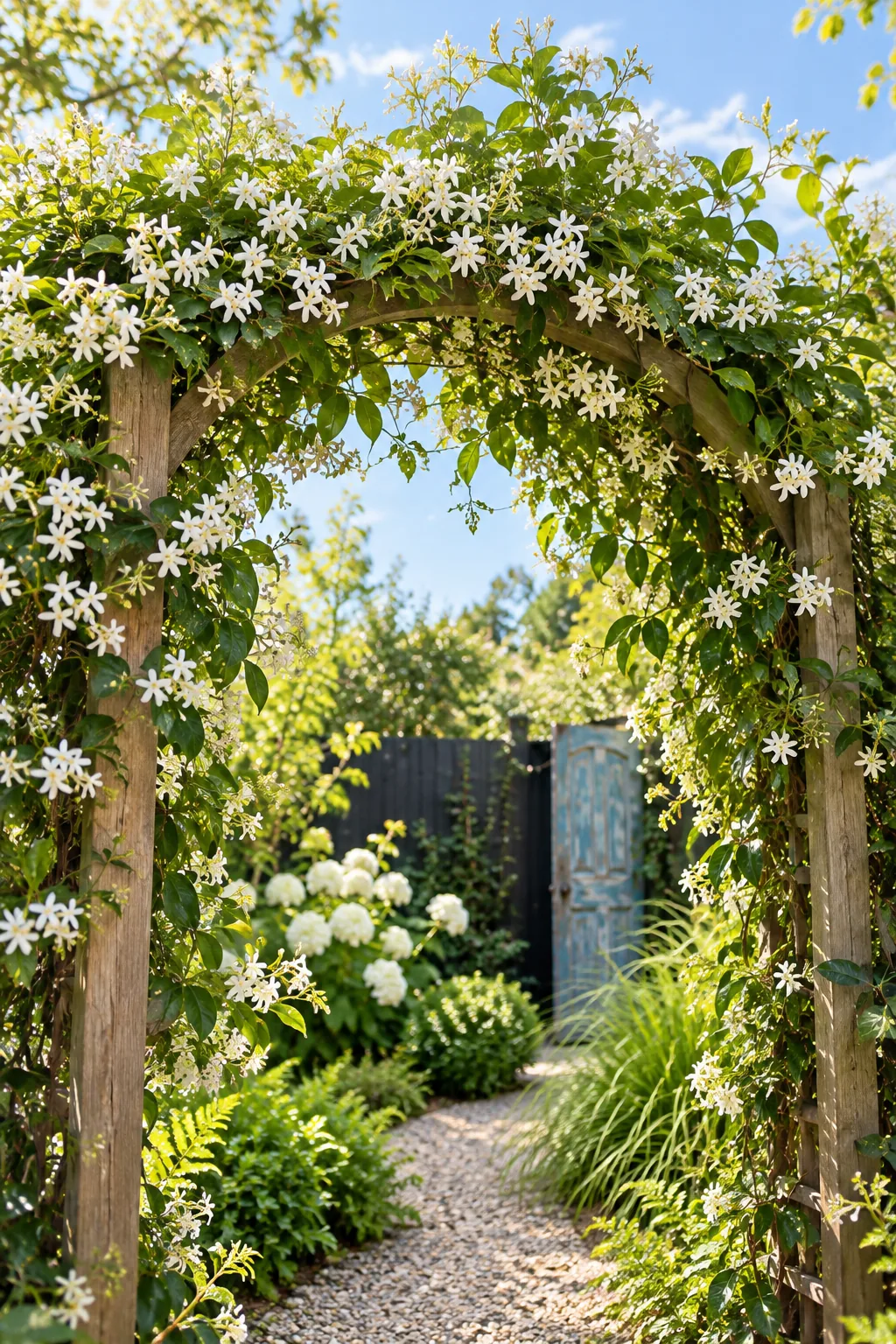
Constricting the physical walkway naturally alters how quickly guests move through the space. You want this transition to feel intentional, so maintaining a narrow physical constraint guarantees that psychological shift away from the open lawn.
Set the Right Arch Dimensions
Building a custom entrance means balancing that narrow width with an appropriate overhead clearance. Use a simple reference chart to ensure your timber structure accommodates average heights without losing that cozy, tucked-away feeling.
| Path Width | Minimum Height | Ideal Material |
|---|---|---|
| 90 cm | 210 cm | 4×4 Cedar |
| 100 cm | 220 cm | 4×4 Redwood |
Always measure the vertical clearance from the finished gravel grade, not the raw dirt. This guarantees nobody bumps their head once the walkway materials are fully installed and leveled.
Anchor the Arch Securely
A freestanding wooden structure needs deep roots to survive strong winds and the eventual weight of mature vines. Sink your primary posts at least 60 cm into concrete footings to establish a rigid, permanent frame for the entrance.
Soften the Entry With Star Jasmine
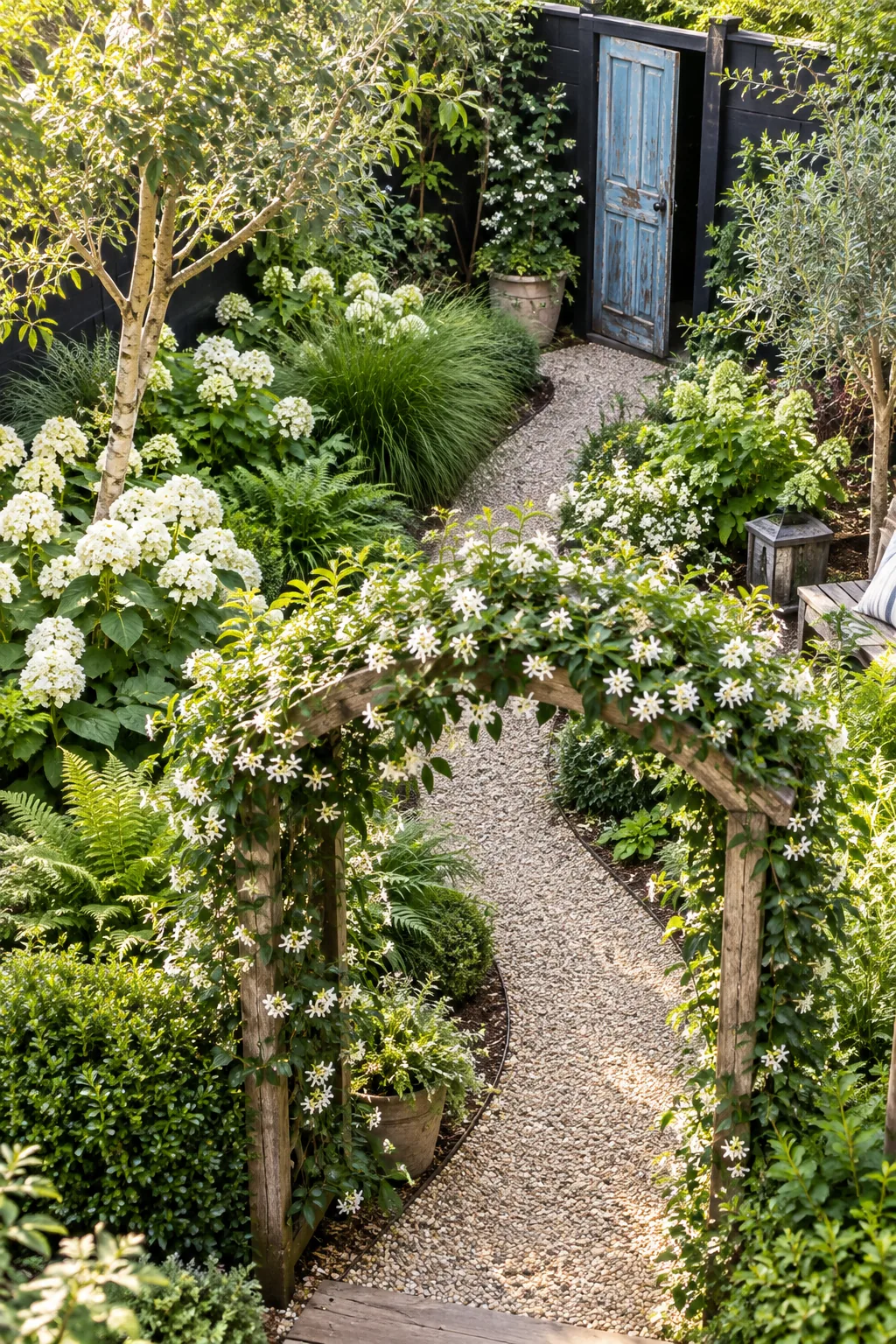
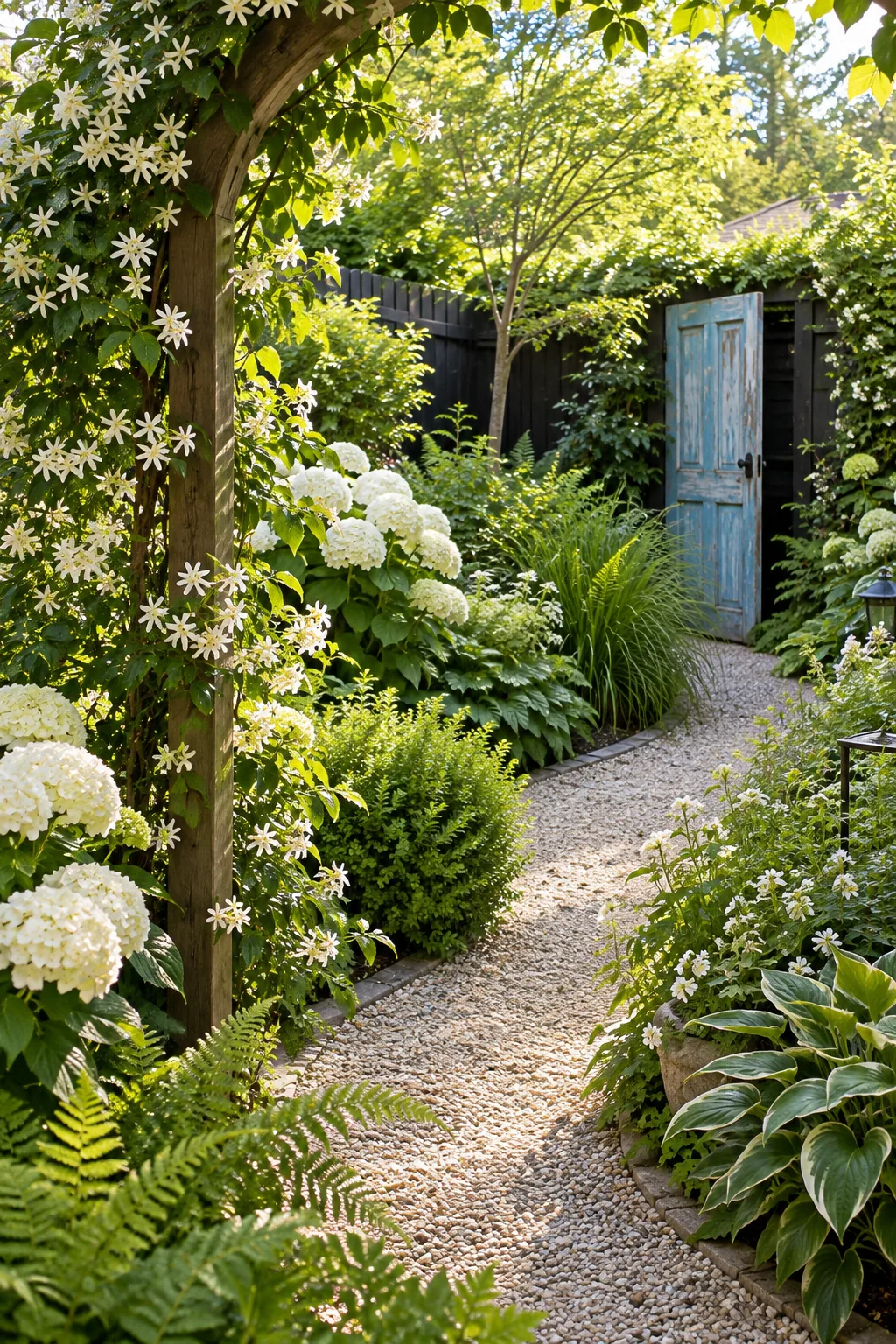
Bare timber breaks the illusion of a forgotten, overgrown space. Train star jasmine over the archway to provide a dense, evergreen frame and a heavy floral scent that hits immediately upon entry, masking the artificial wooden structure.
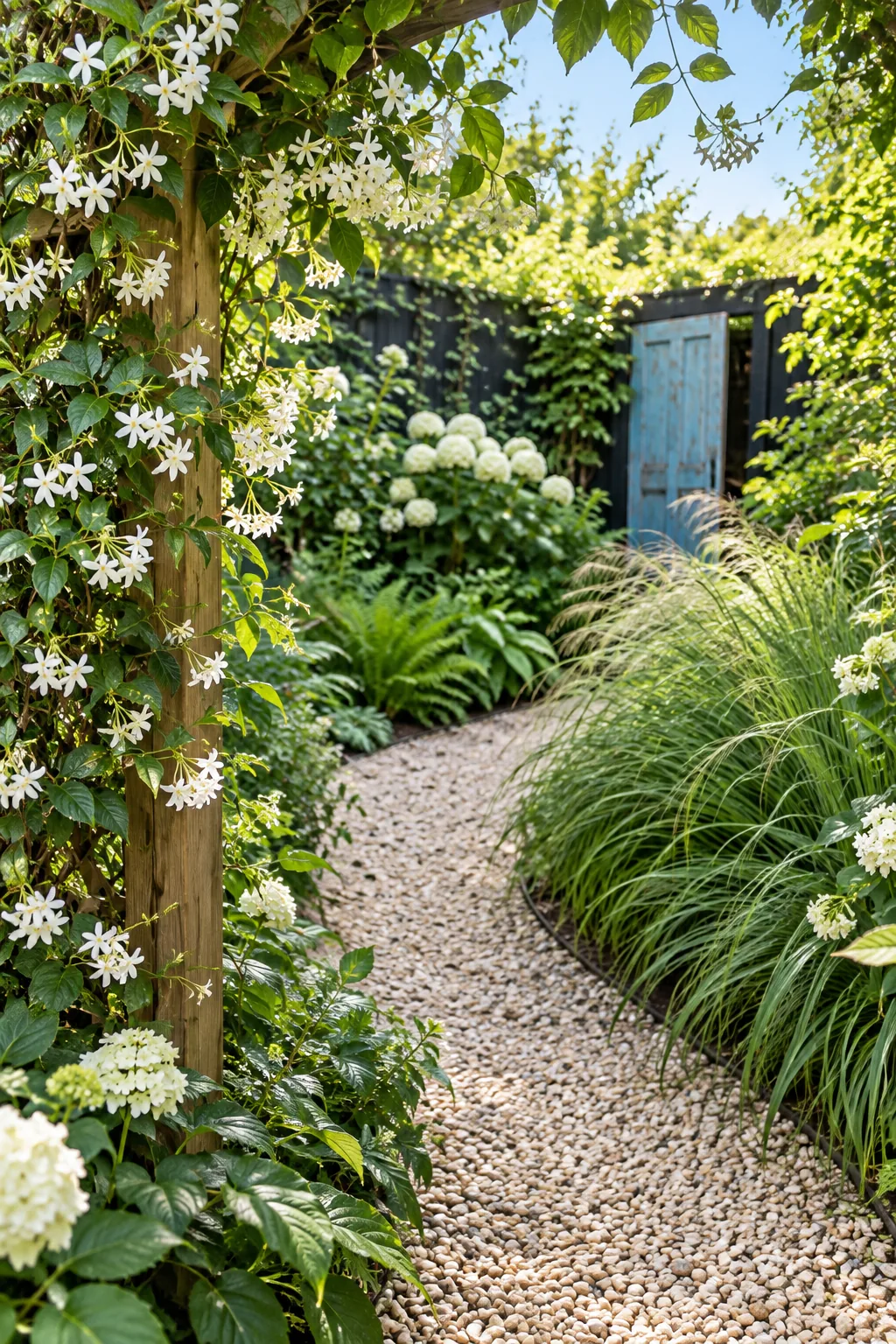
Vigorous climbing plants hold onto their dense foliage through the winter, preserving the hidden atmosphere when other plants drop their leaves. The thick canopy completely swallows the hard edges of the wood, making the gateway feel like a wild, natural opening.
Plant the Vines for Quick Coverage
Getting climbers to rapidly swallow an archway requires strategic planting and early training. Follow a strict installation sequence to encourage vigorous upward growth during their first active season.
- Dig a planting hole twice the width of the nursery pot.
- Angle the root ball slightly toward the wooden post.
- Tie the strongest leading vines to the timber with soft garden twine.
Consistently wrapping the new flexible growth around the posts every few weeks prevents the vines from sprawling outward. This active training forces the canopy to thicken directly over the walkway.
Lay a Crunching Gravel Walkway
The sound of footsteps dramatically amplifies the feeling of entering a secluded zone. Spread a thick layer of crushed pea gravel to create an auditory cue that you have left the standard concrete patio behind.
Compact the Base Layer
Loose stones will scatter and make walking difficult if you skip the foundation work. Tamp down a 5 cm layer of road base before adding the decorative gravel to ensure a firm, stable surface that drains perfectly.
Curve the Path Out of Sight
A straight walkway reveals everything at once, making the yard feel incredibly small. Force the gravel path to bend sharply behind a tall clump of ornamental grass to hide the path’s end and create a sense of mystery. I used this exact trick in my own side yard, and it easily doubled the perceived depth of the space.
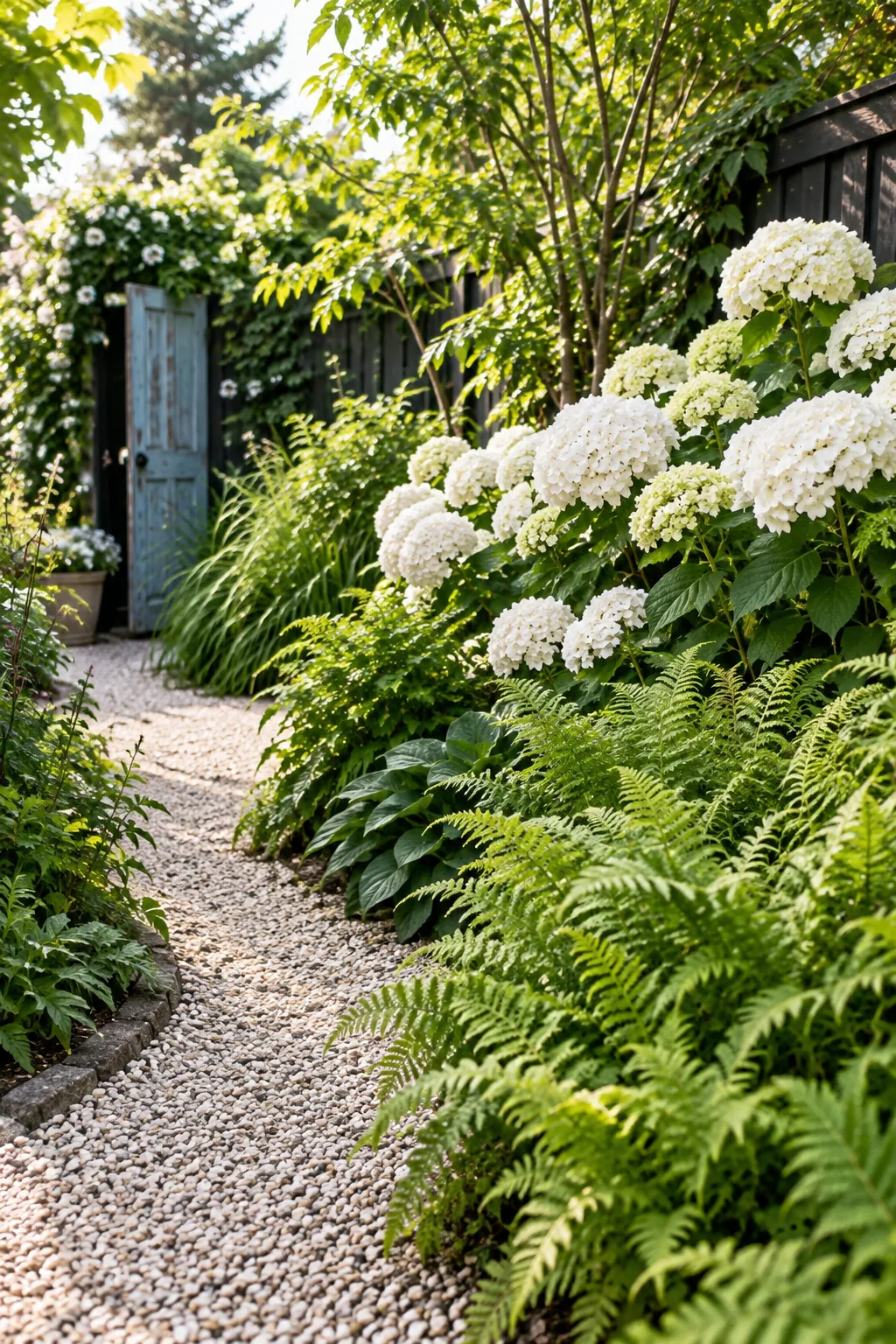
Hiding the final boundary creates a powerful optical illusion that prevents the brain from easily measuring the property limits. To maximize the illusion of depth, the path itself should manipulate perspective as it rounds the corner.
Edge the Bend Seamlessly
A wandering path needs rigid borders to maintain its sharp, clean curve. Install flexible steel edging along the inside of the bend to hold the stones perfectly in place without drawing visual attention to the barrier.
Block Weeds Under the Gravel
Nothing ruins the magic of a hidden pathway faster than aggressive weeds poking through the stones. Pin down a heavy-duty landscape fabric across the entire walkway footprint before pouring the base layer.
Layer Screen Plants by Mature Height
To make the boundaries disappear, plant in strict height tiers. Place 60 cm ferns in the front, stepping up to 1.5-meter hydrangeas to completely blur the line where the ground meets the fence.
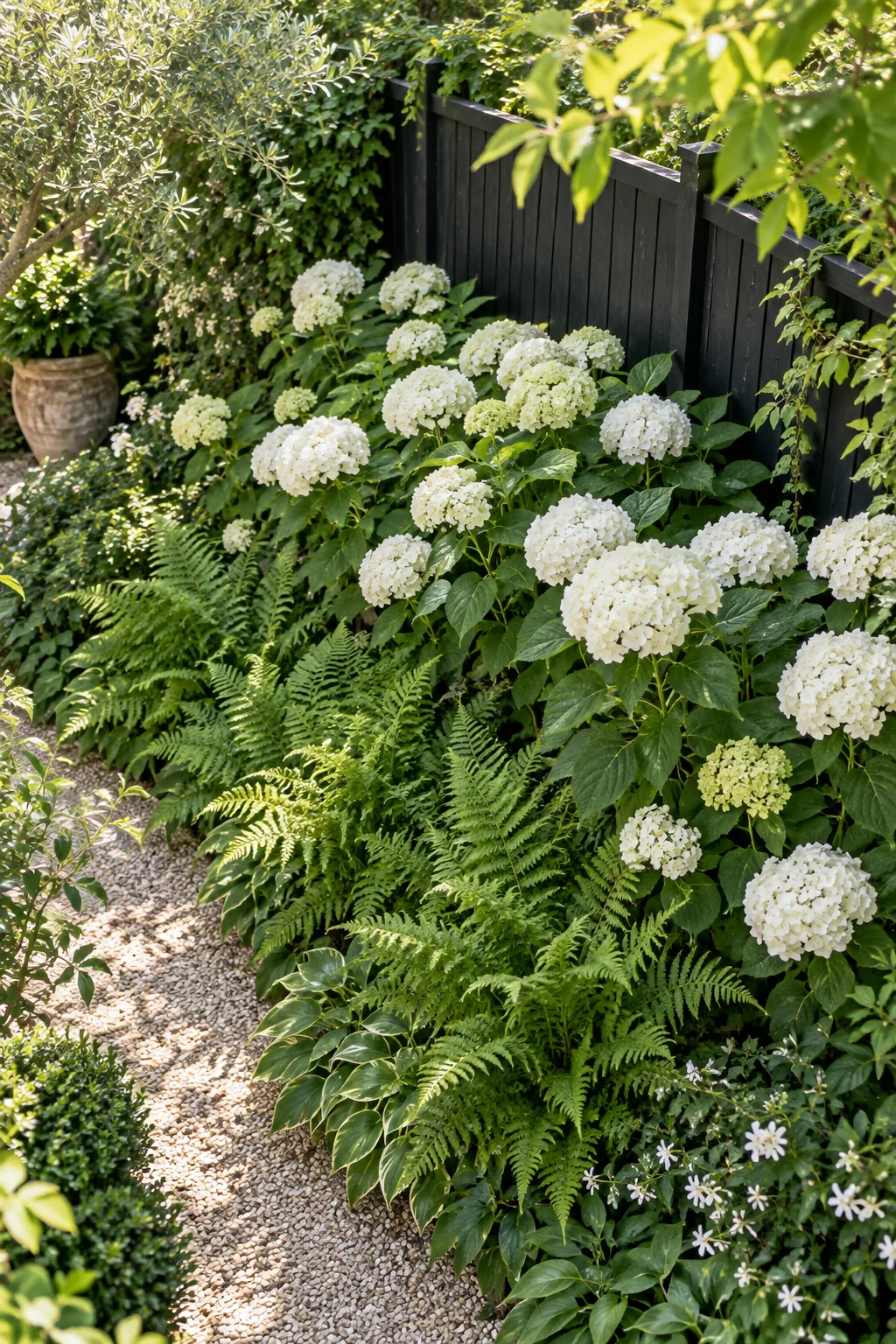
Layering different leaf textures at varying heights completely erases the flat, artificial geometry of suburban walls. The overlapping branches trick the eye into seeing a deep forest edge rather than a basic wooden perimeter.
Space the Hydrangeas for Density
Achieving a solid wall of white blooms requires planting the shrubs close enough to interlock. Space your hydrangea root balls exactly 90 cm apart so their mature branches weave together into a continuous, unbroken screen.
Tuck Low Ferns in the Shadows
The tall shrubs will naturally cast deep shade over the front edge of the planting bed. Utilize this cooler microclimate by massing shade-loving ferns directly over the bare lower stems of the hydrangeas.
Water the Dense Plant Layers
Tightly packed foliage creates fierce competition for soil moisture during the hot summer months. Run a drip irrigation grid beneath the mulch to deliver water directly to the root zones without wetting the dense leaves.
Paint the Boundary Fence Near-Black
Bright fences draw the eye and visually shrink the yard. Paint the back fence a near-black shade so it melts away into the shadows behind the layered foliage, completely removing the visual boundary. I was terrified to paint my own fence black, but it instantly made the wood vanish and the green leaves pop.
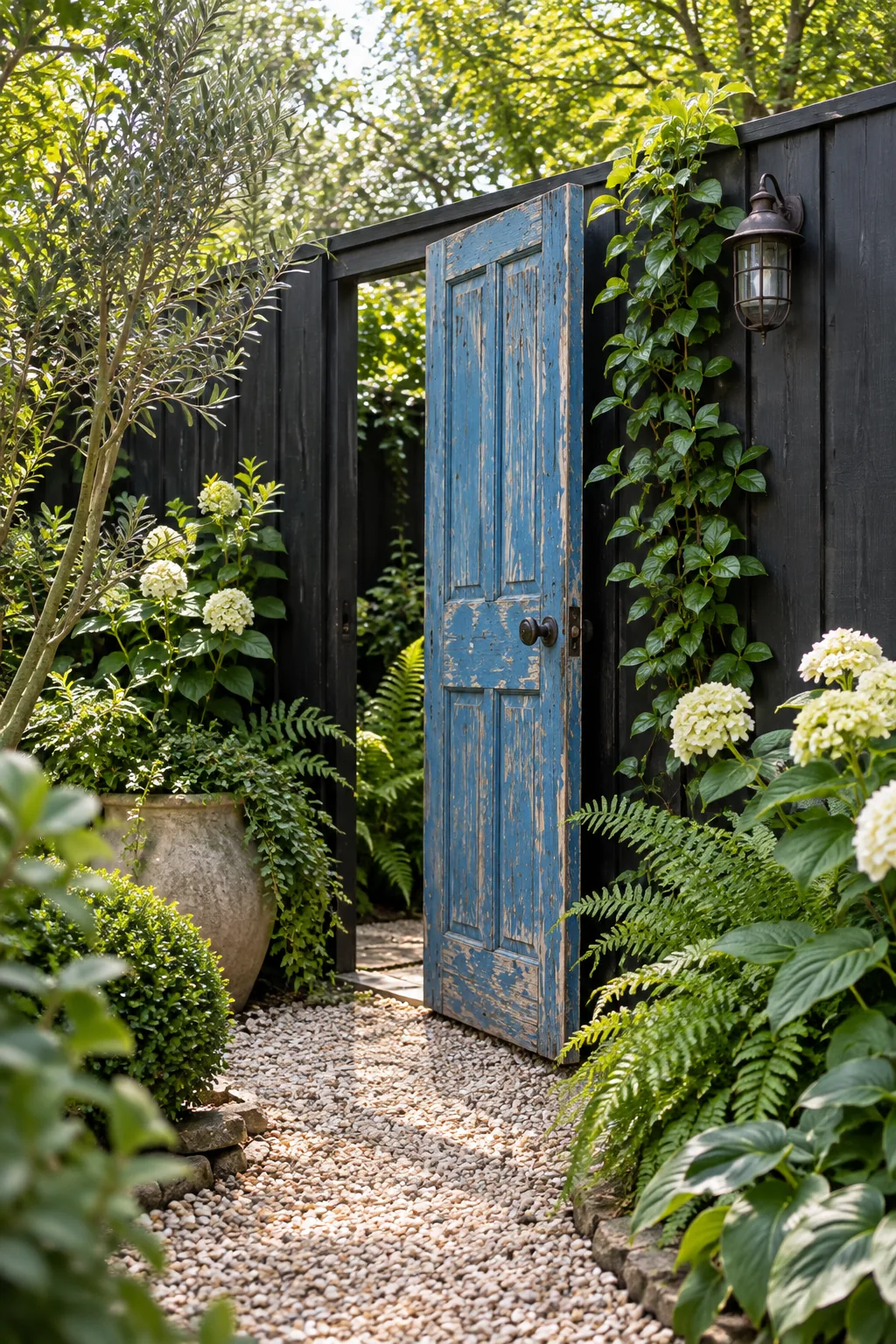
Deep, shadowy colors provide the ultimate high-contrast backdrop, making every single fern frond and hydrangea bloom pop brilliantly. You must prepare the timber properly to ensure this receding matte finish survives harsh weather without peeling.
Prep the Wood for Dark Paint
Skipping the surface preparation guarantees that your dark paint will flake and reveal the bright wood underneath. Follow a thorough cleaning process to ensure the near-black coating bonds permanently to the fence panels.
- Power wash the boards to remove all loose dirt and gray, oxidized wood fibers.
- Allow the timber to dry completely for at least three full days of sunshine.
- Apply an exterior bonding primer tinted to a deep gray base.
Taking the time to apply a tinted primer reduces the number of expensive topcoats you will need. This crucial step guarantees the deep, shadowy finish remains perfectly matte and uniform across the entire boundary.
Mount a Reclaimed Door to Nowhere
A weathered blue door fixed slightly ajar against the back fence suggests another room lies beyond. Secure it flat to the fence posts to complete the trompe l’oeil effect without needing an actual opening.
Sourcing rusty hinges and an antique brass knob grounds the illusion, making the false gateway feel genuinely historical. Hanging a heavy solid wood door on a standard garden fence requires structural reinforcement to prevent sagging or fence damage over time.
Source Authentic Vintage Hardware
Shiny modern hinges will instantly ruin the illusion of a forgotten, historic garden gate. Scour local architectural salvage yards for rusted iron hardware and heavy brass knobs that already wear a natural patina.
Seal the Reclaimed Wood
Old interior doors will quickly rot if left exposed to constant rain and ground moisture. Coat the entire slab with a clear exterior marine varnish to lock in the peeling blue paint and block out humidity.
Get the Hide-and-Reveal Checklist
Bring all these elements together with the complete 2-page printable checklist. It includes exact entry arch heights, path bend placement rules, receding paint codes, and the step-by-step faux door mounting guide. Printing this list saved me hours of second-guessing when I finally tackled my own yard makeover.
Combining these precise spatial tricks and visual layers transforms a basic backyard into a truly immersive, secluded destination. Keep this detailed guide handy as you measure, plant, and build, ensuring your secret garden feels deliberately planned.
5 Secret Garden Looks to Steal
Find the perfect style and color palette to match your own backyard escape.
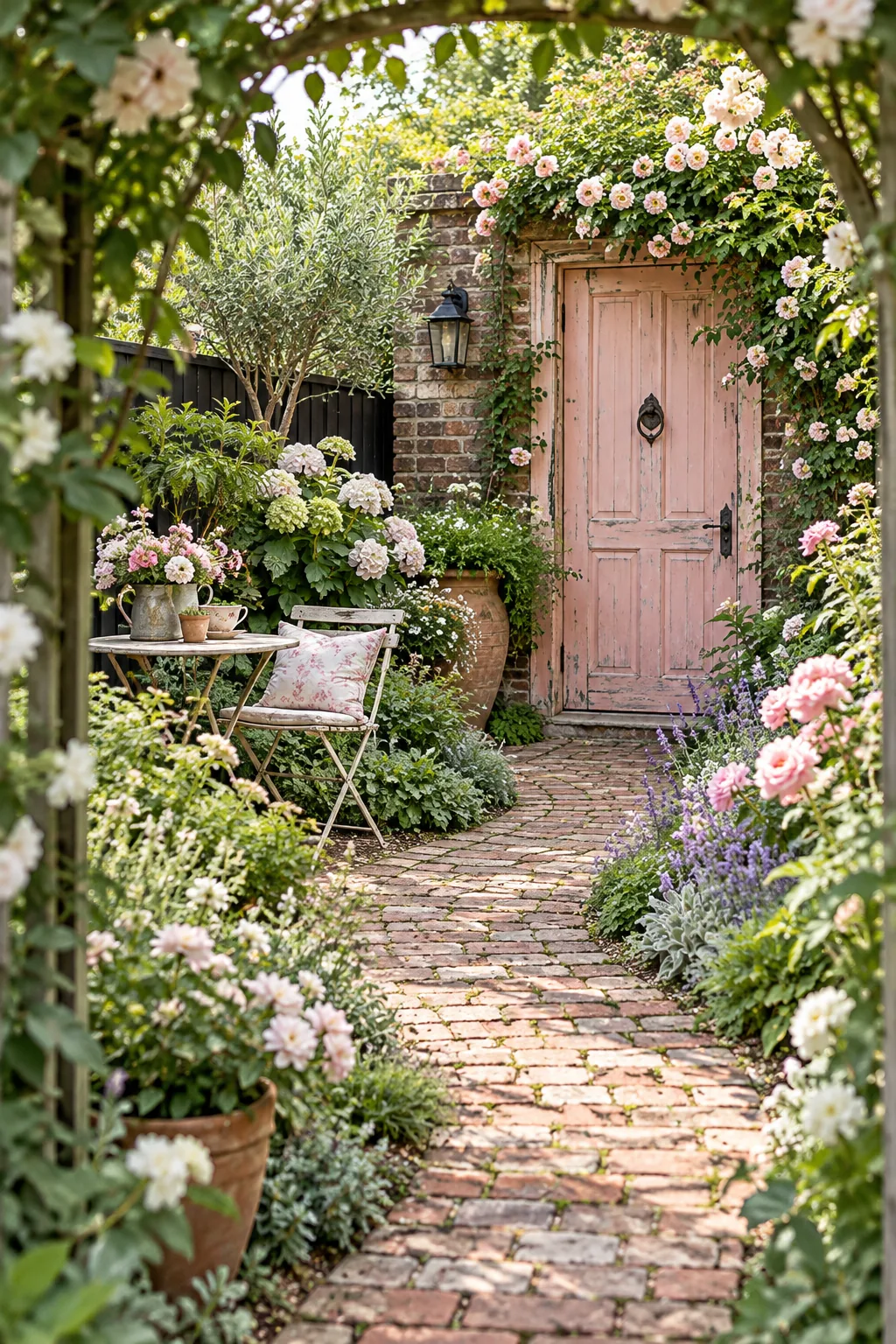
Cottage Core Escape: Pastel blooms and weathered brick create a soft, romantic atmosphere. Copy this look by painting your faux door a faded blush pink.
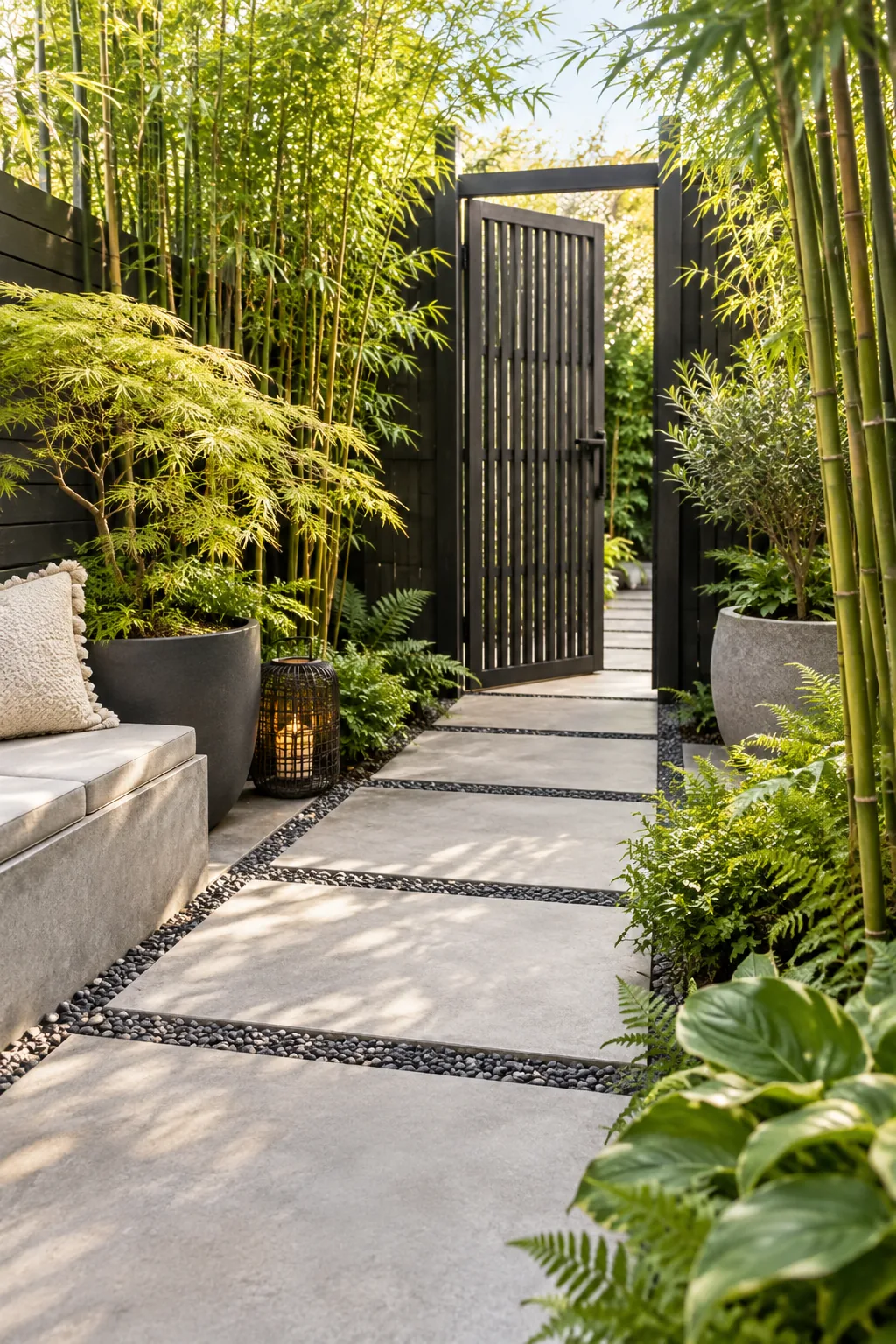
Modern Minimalist Hideaway: Sleek concrete pavers and bamboo screens offer a contemporary take. Use a matte black slatted gate instead of a traditional solid door.
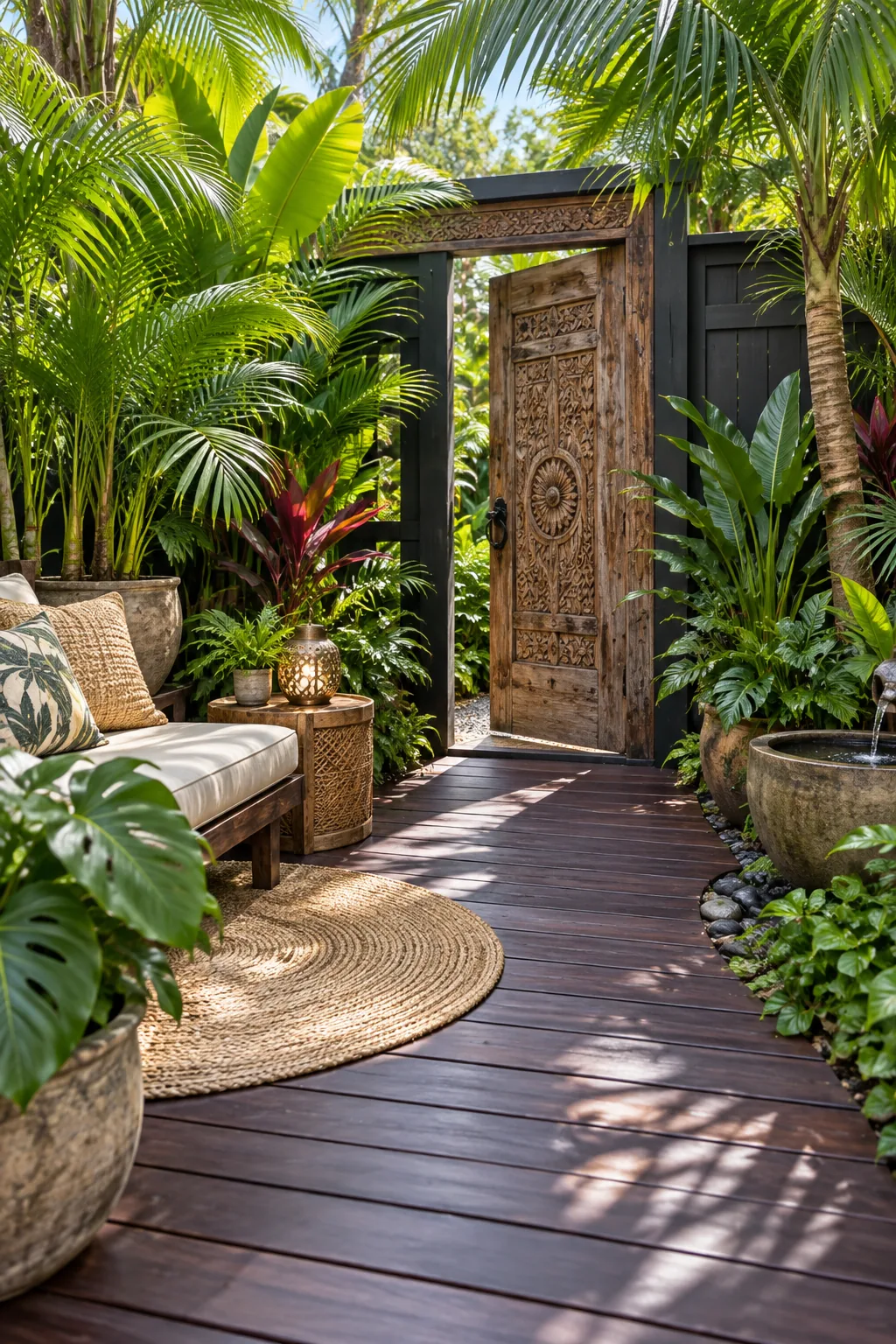
Tropical Courtyard: Lush palms and dark timber transport you to a resort. Source a heavily carved wooden door to serve as the exotic focal point.
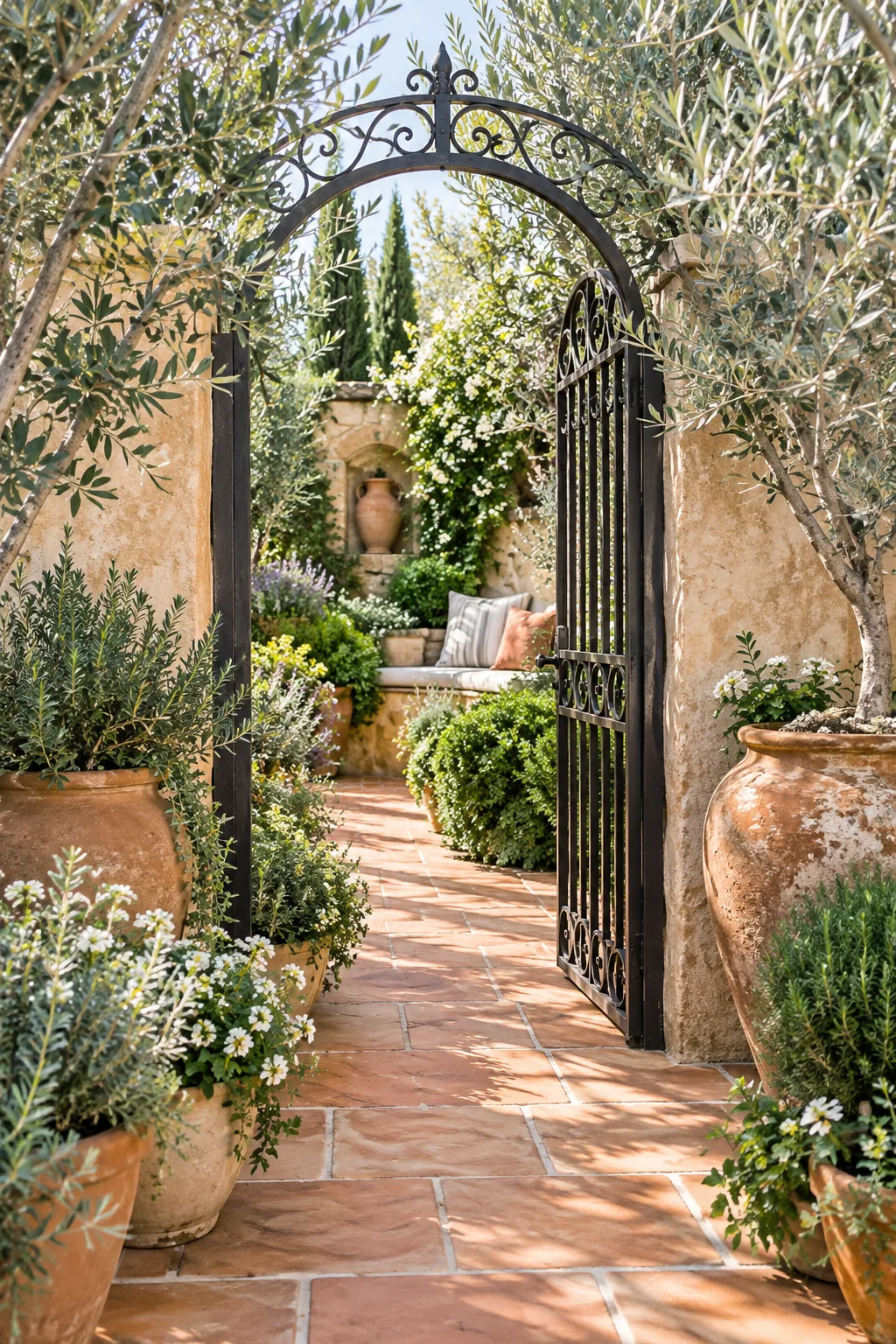
Mediterranean Secret: Terracotta paths and olive trees evoke a sun-drenched European courtyard. Install an arched wrought-iron gate to complete the Mediterranean illusion.
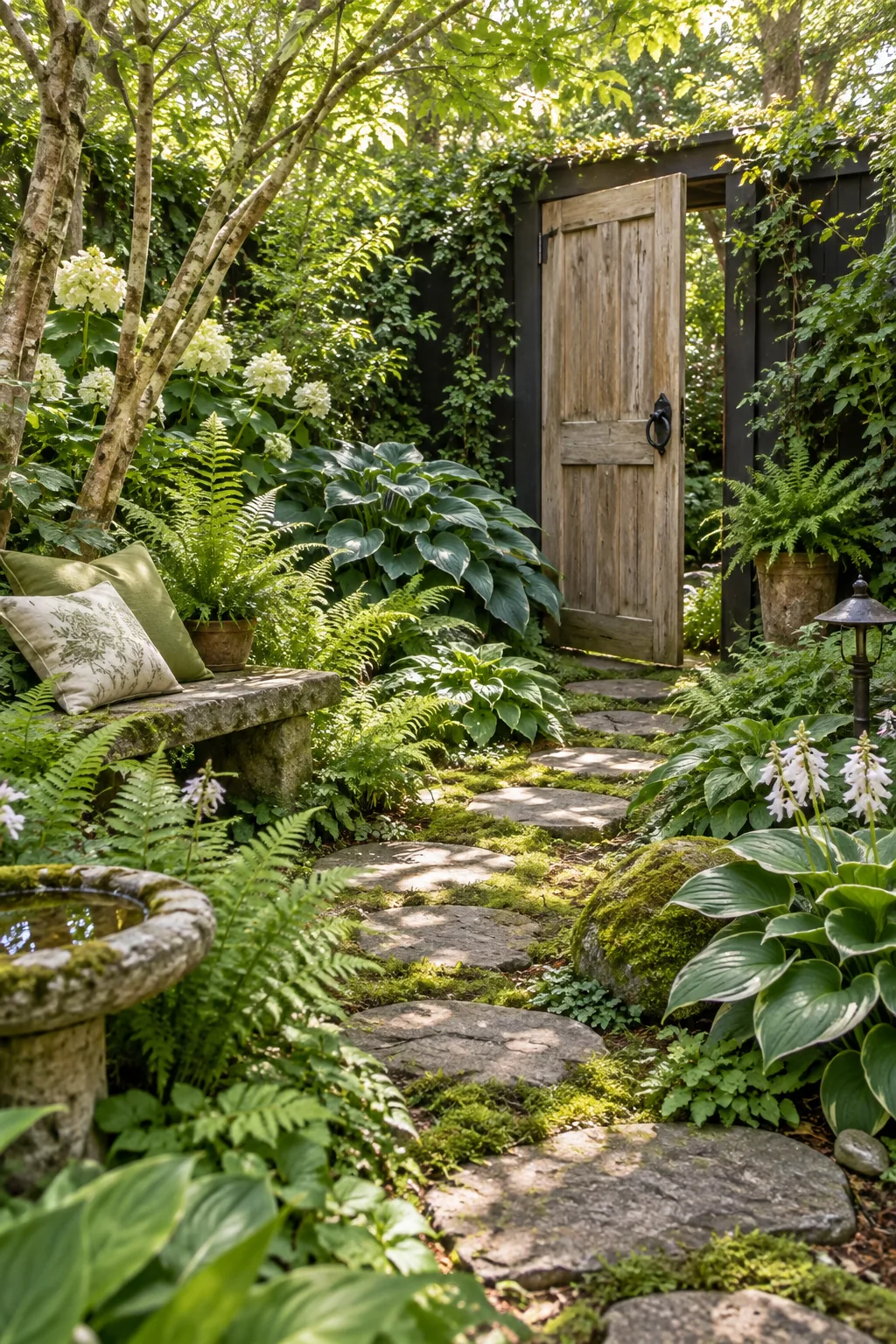
Woodland Shade Room: Mossy stepping stones and dense hostas embrace deep shade. Leave a rustic, untreated oak door slightly ajar against a natural cedar fence.