
How to Turn a Corner Bed into a Daybed Sofa
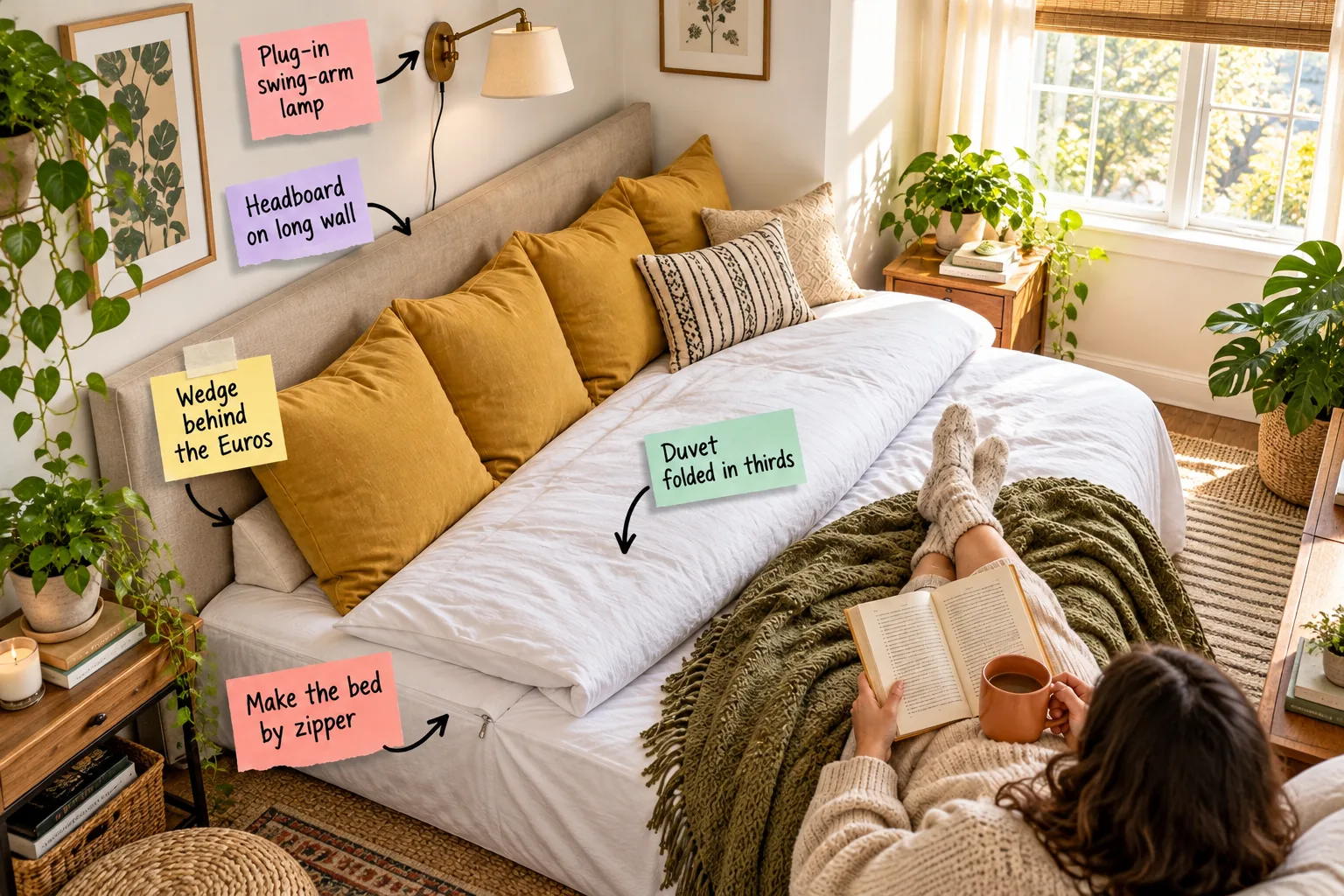
You will be able to mount your headboard, stack your pillows, and fold your bedding to create a comfortable daybed using our printable Corner Bed Daybed Sheet. This guide walks you through the exact placement and zipper tricks needed for a perfect corner sofa.
Mounting the Headboard on the Long Wall
Placing an upholstered panel along the long wall instantly shifts the visual orientation from a bed to a sofa. Mounting the headboard panel exactly two inches above the mattress allows space for thick bedding to tuck underneath without bunching.
In my own Denver guest room, anchoring the back with a beautifully textured panel made the space feel like a deliberate lounge rather than a cramped leftover sleeping corner.
Choosing Washable Fabrics for the Headboard
Because your headboard functions as a daily sofa back, selecting a highly durable performance fabric is essential. I always specify tightly woven, stain-resistant linens or commercial-grade velvets that can withstand constant friction and occasional coffee spills without showing premature wear.
Choosing a Mattress with Edge Support
A daybed requires a mattress with reinforced perimeter edge support so the front edge will not collapse under seated weight. I once used a plush all-foam mattress for a client, and we quickly realized a medium-firm hybrid is non-negotiable for true sofa comfort.
Supporting the Mattress with a Bunkie Board
Standard box springs sit too high for a natural seating position, so replacing them with a two-inch solid bunkie board keeps the proportions correct. This low-profile foundation provides rigid support while dropping the overall seat height to a comfortable eighteen inches.
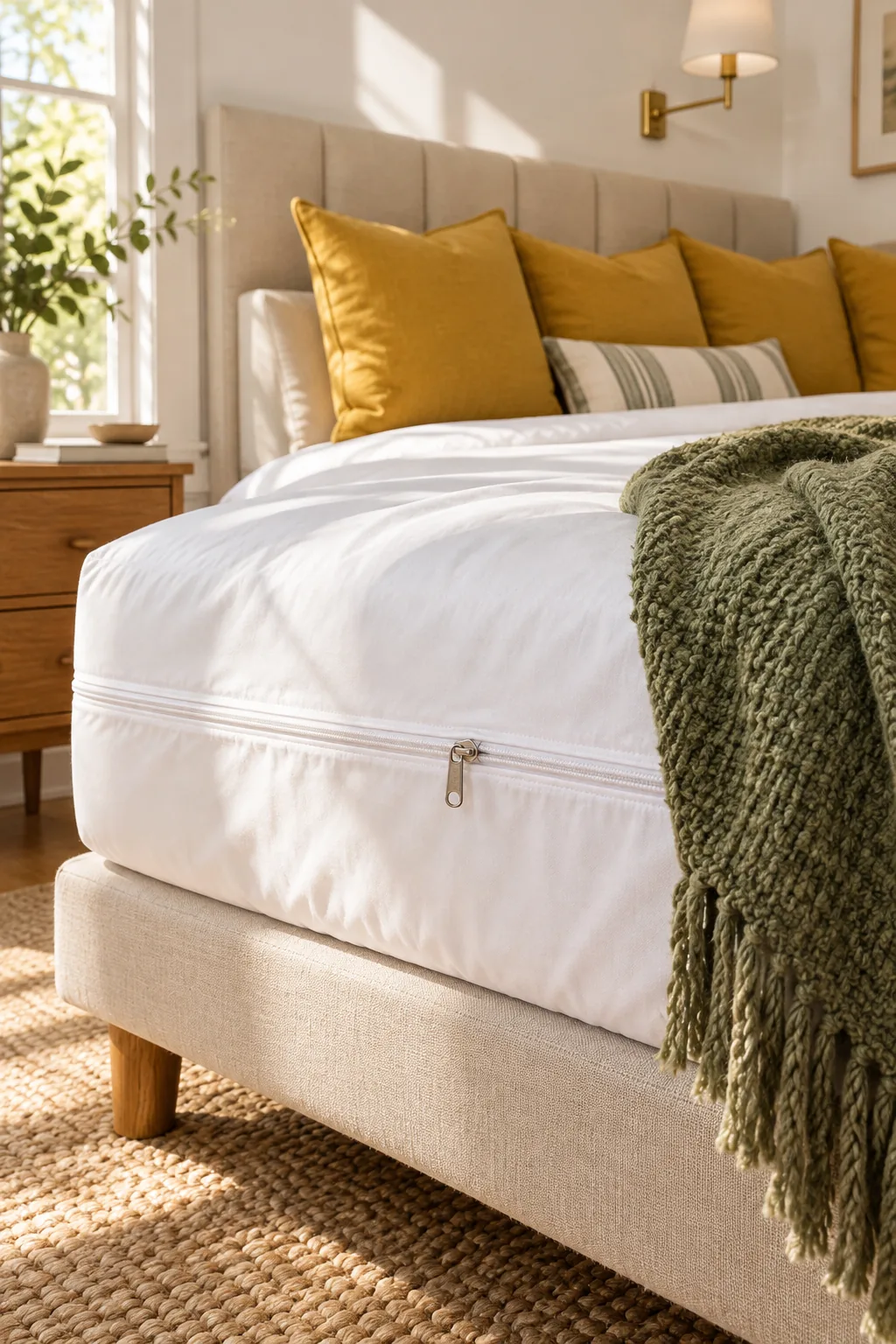
Making the Bed With Zipper Bedding
Zip-on bedding solves the nearly impossible task of tucking sheets against a wall. Because the top sheet zips directly to the fitted base, zippered bedding eliminates the need to wedge your hands between a heavy mattress and the wall.

Even with the best zippers, corner beds present unique challenges if you try to force standard bedding habits into a tight space.
Coordinating the Bedding Palette
To maintain the illusion of a living room sofa, you must select a monochromatic bedding palette that blends seamlessly with the room. Matching your zippered sheets and duvet cover to the headboard fabric prevents the arrangement from looking like a disassembled bed.
Hiding a Support Wedge Behind the Euros
The secret to a firm sofa feel is placing a 10-inch deep foam bed wedge directly against the long wall. A structural foam wedge provides the necessary angle and firmness to keep decorative pillows from collapsing when you lean back.
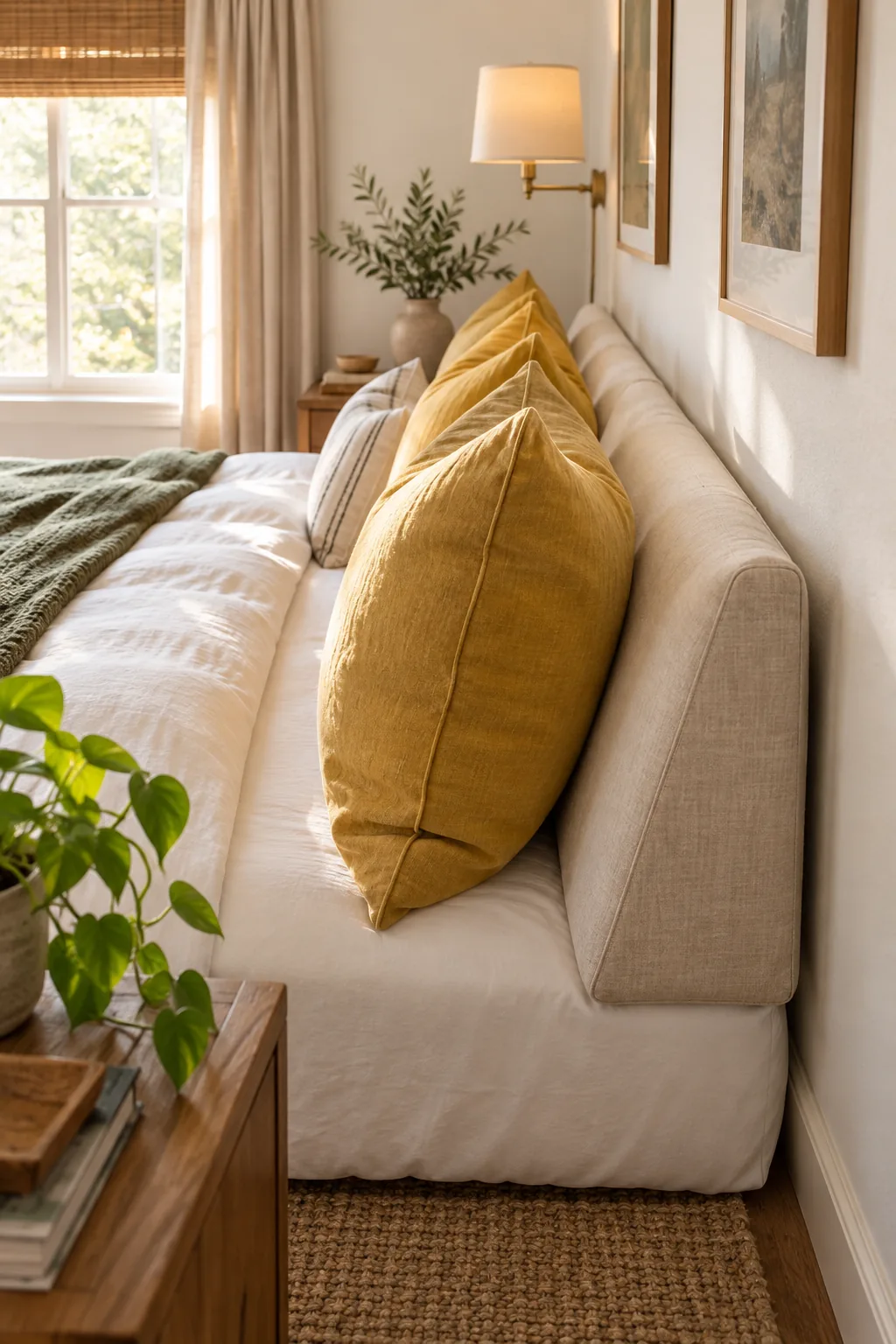
When I styled my daughter’s corner bed, sliding a firm wedge behind the cushions finally stopped her pillows from slipping backward into the wall gap.
Selecting the Right Euro Pillows
To ensure a tight, gap-free backrest, you must calculate the exact number of 26-inch Euro pillows needed to span the back of your bed.
| Mattress Size | Length | Euro Pillows Needed |
|---|---|---|
| Twin | 75 inches | 3 pillows |
| Full | 75 inches | 3 pillows |
| Queen | 80 inches | 3 to 4 pillows |
Dividing your mattress length by the pillow width dictates your count, guaranteeing the cushions fit snugly together like a continuous sofa back.
Layering Decorative Throw Pillows for Depth
Once your Euro pillows are set, placing a row of 20-inch square throw pillows in front adds necessary visual depth. Alternating textures like boucle, velvet, and heavy linen breaks up the uniform background and invites guests to settle in comfortably.
Incorporating a Lumbar Pillow for Lower Back Support
The final touch for ergonomic seating is centering a long lumbar pillow across the middle of the arrangement. A single oversized lumbar bridges the gap between the decorative squares and provides crucial lower back support for reading or watching television.
Folding the Duvet in Thirds
Folding the duvet lengthwise into thirds creates a clean, structured band that mimics a bench cushion rather than a messy bed.

This tidy triple fold ensures the duvet spans the sleeping width precisely, keeping the fabric neatly contained on the mattress rather than draping untidily onto the floor.
Tucking the Duvet Corners Neatly
Achieving a tailored cushion appearance requires folding the exposed duvet corners into a sharp 45-degree hospital tuck. Pulling the fabric taut under the mattress corners eliminates bulky overhangs and reinforces the clean, architectural lines of your new daybed.
Positioning the Plug-In Swing-Arm Lamp
A plug-in sconce provides dedicated task lighting for reading without the expense of opening up the drywall for hardwiring.
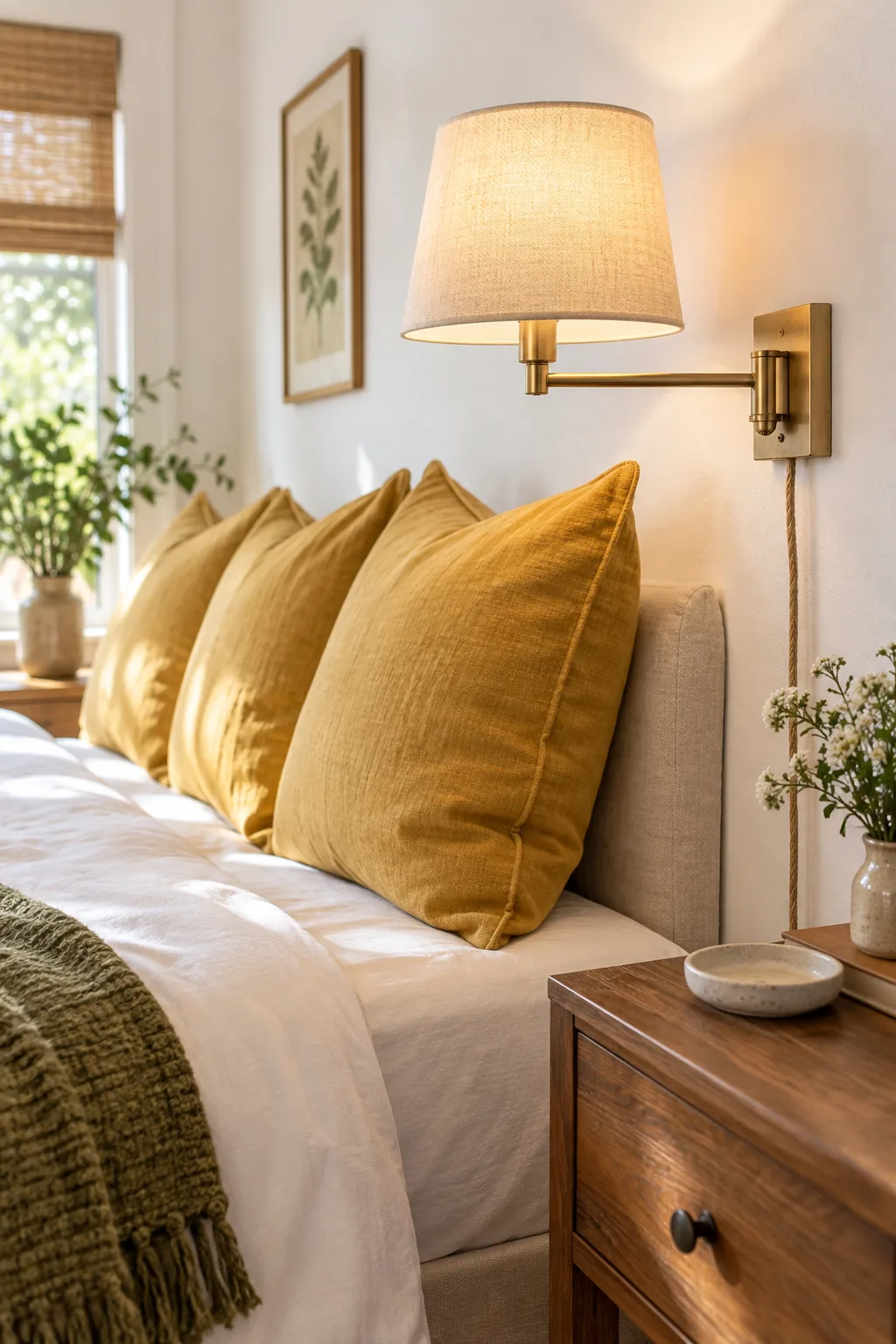
Mount the fixture 30 to 36 inches above the mattress so the light easily clears the pillows and illuminates your book perfectly.
Managing the Wall Gap for Cords and Outlets
Running the lamp cord requires leaving a precise one-inch gap between the mattress and the wall. Securing the fabric-wrapped cord to the baseboard with clear adhesive clips keeps the wiring completely invisible while still allowing easy access to the outlet.
Adding Casters for Easy Pull-Out Access
The hidden mechanical trick for corner beds is installing locking casters on the bed frame while leaving a 2-inch gap from the wall.
- Unlock the wheels: Release the front casters to free the frame completely from the corner.
- Roll outward: Pull the bed into the room for deep cleaning or zipper sheet changes.
- Lock securely: Push the bed back into position and secure the wheels before sitting.
In my first apartment, adding heavy-duty casters was the only way I could manage to change the sheets without bruising my knuckles on the baseboards.
More Corner Bed Styling Ideas
Find the perfect color palette and texture combination to match your bedroom's unique style.
Warm Boho Terracotta: Woven rattan textures and rich rust linens create an earthy, relaxed atmosphere perfect for a sunny guest room.

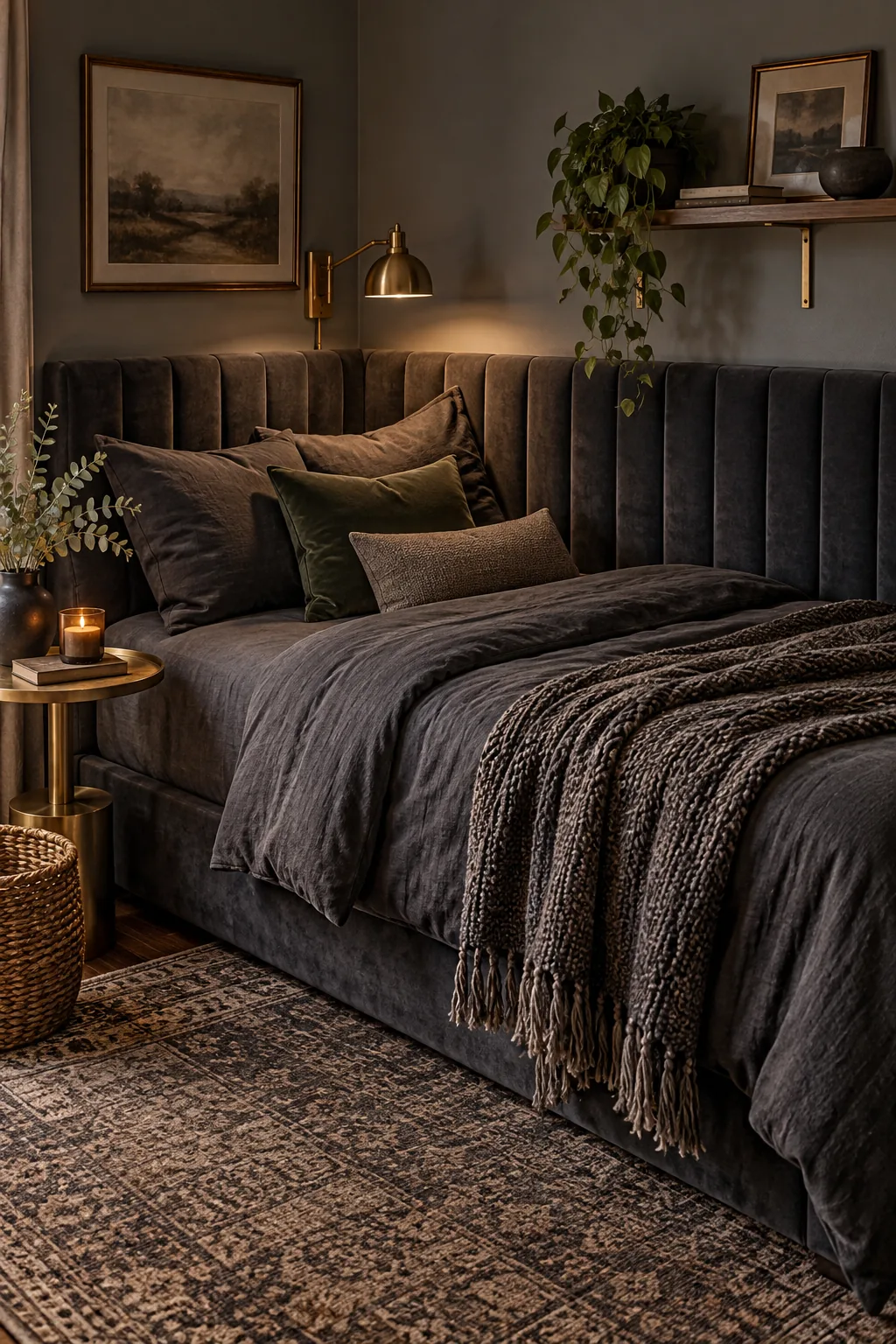
Moody Slate Velvet: Deep charcoal velvet panels and dark bedding turn a basic corner into a sophisticated, lounge-like reading nook.
Crisp Coastal Blue: Navy ticking stripes and bright white accents bring a fresh, nautical feel to a child's corner bedroom.

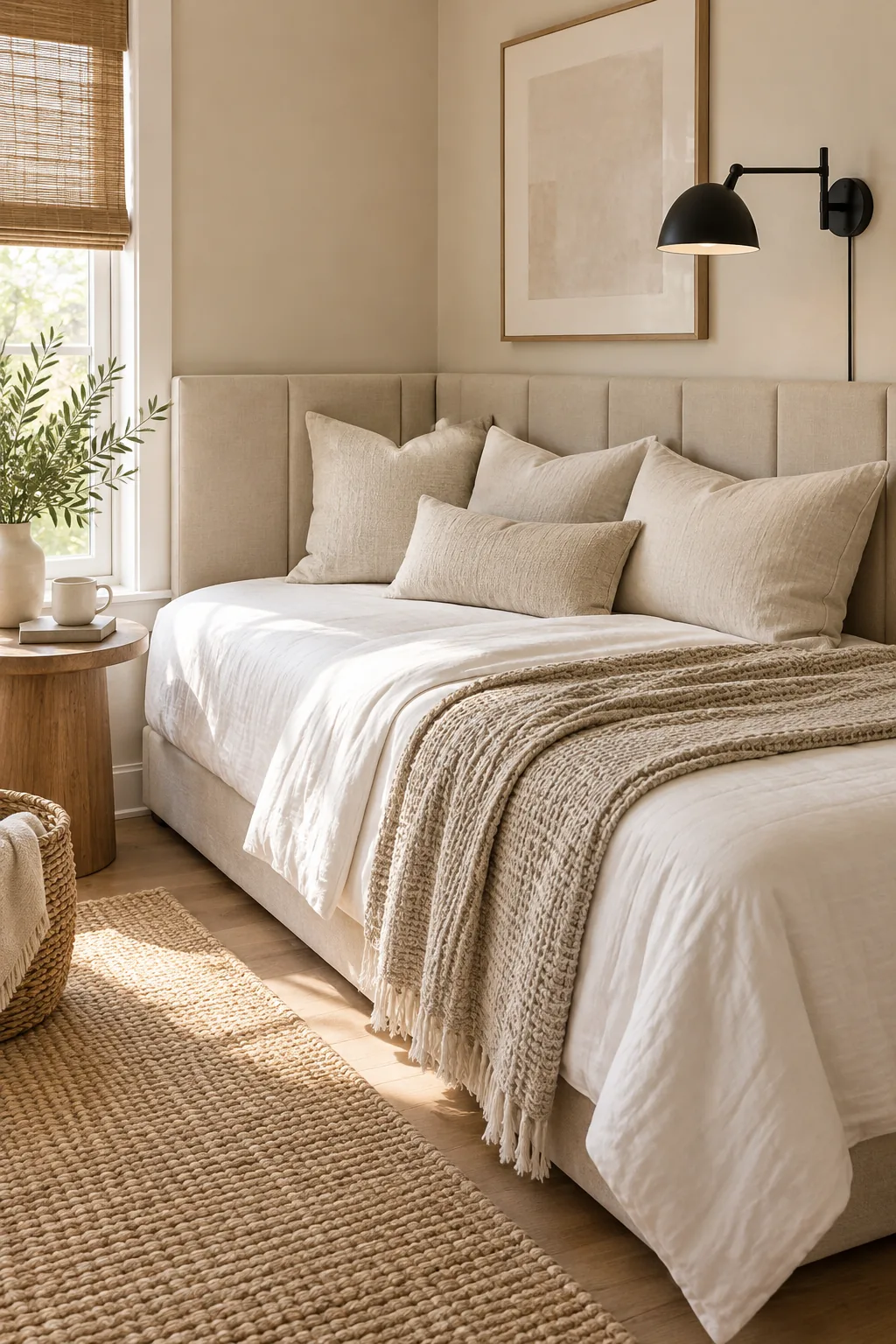
Serene Soft Minimalist: Tone-on-tone oatmeal linens and a sleek black task lamp offer a calming, uncluttered aesthetic for minimalist spaces.
Your Corner Bed Measurement and Pillow Sheet
Following a precise measurement sheet ensures your pillow stack, lighting height, and bedding folds look intentional and professionally styled.

Before you print the guide and start drilling holes for your headboard, take five minutes to verify your room’s specific dimensions.