Side Yard Without Grass: Material Checklist & Spacing Guide
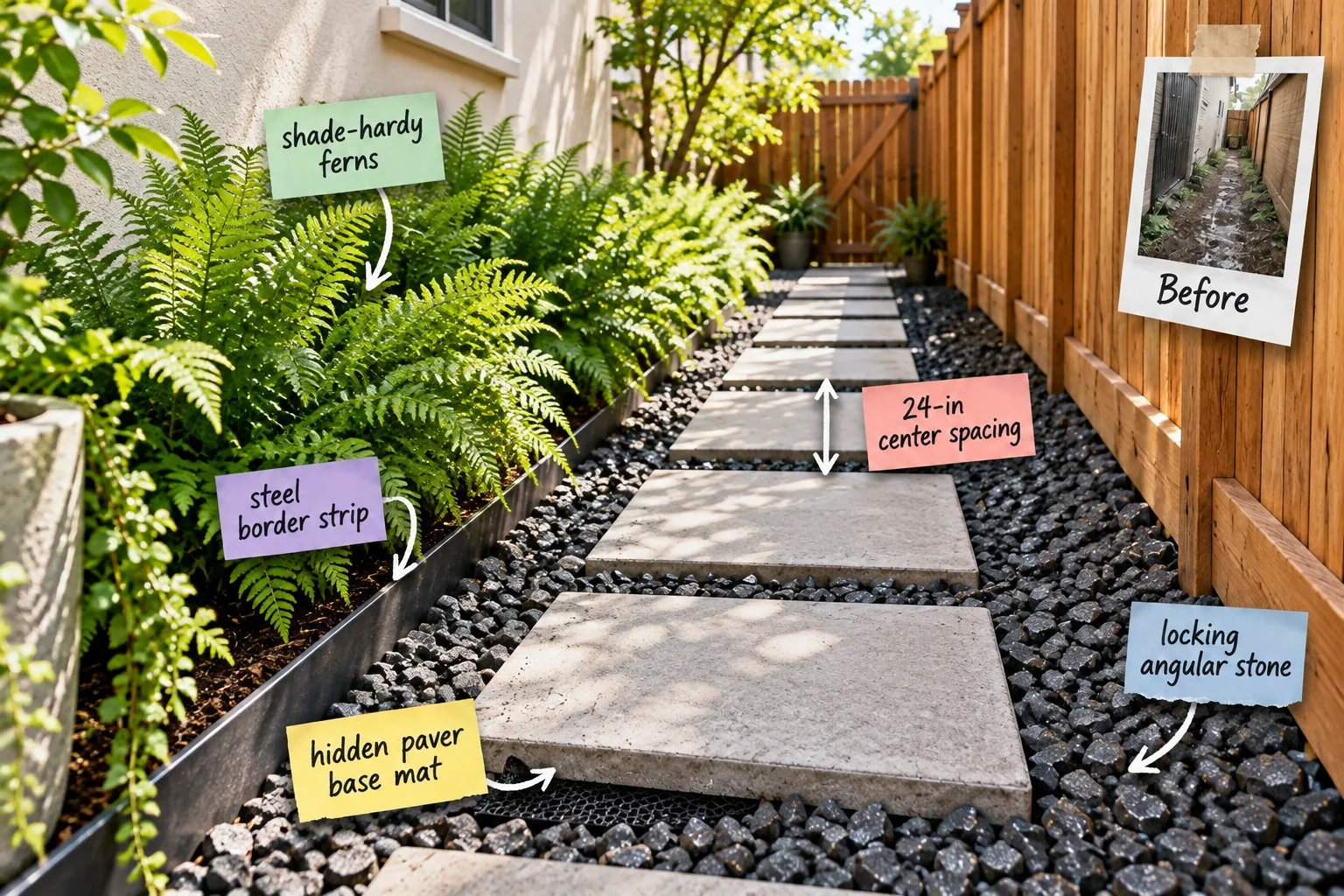
If you are tired of tip-toeing through a muddy side yard, this complete material checklist and stepper spacing guide is exactly what you need. You will be able to source the right supplies and space your stones perfectly for a comfortable, permanent grass-free walkway.
The Muddy Side Yard Problem
Narrow side yards rarely get enough sunlight to grow healthy grass, and constant foot traffic quickly turns the struggling turf into a slick, muddy mess. Clearing out that old topsoil creates a crucial blank slate for proper drainage.
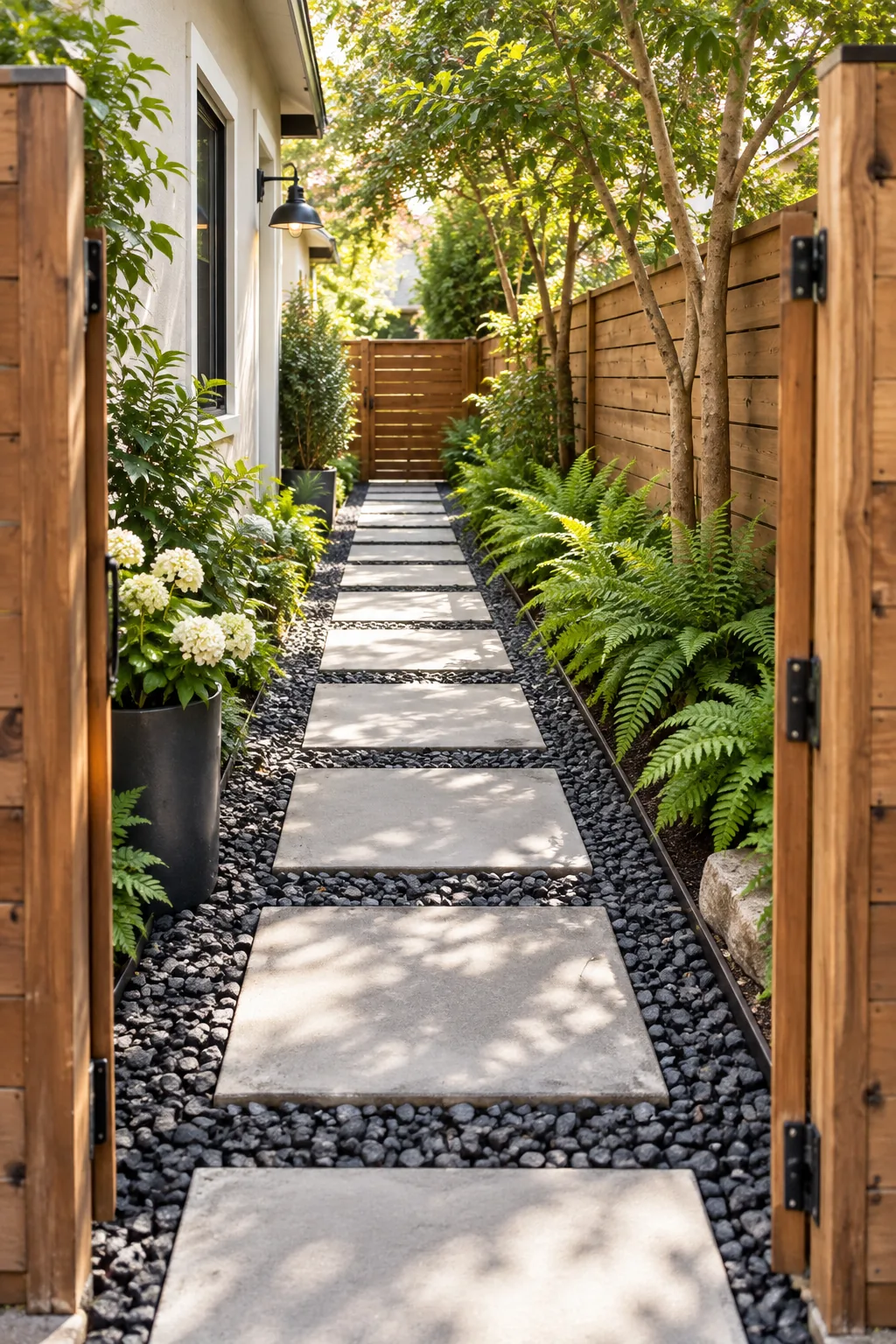
Removing the failing grass entirely allows you to install a permanent hardscape solution that naturally sheds rainwater away from your home’s foundation.
Evaluating Your Soil and Runoff
Before ordering any heavy supplies, checking how water moves through your narrow space ensures your new pathway will never flood during heavy storms.
| Soil Type | Drainage Speed | Action Required | Base Sand |
|---|---|---|---|
| Heavy Clay | Very Slow | Grade away from house | 2 inches |
| Loam | Moderate | Standard leveling | 1 inch |
| Sandy | Fast | Minimal grading | 1 inch |
Adjusting your leveling sand depth based on these basic soil types prevents water from pooling underneath your heavy concrete pavers.
Installing the Steel Border Strip
A rigid metal edge is absolutely essential for keeping your pathway materials contained so soil never washes into your clean decorative stones.
- Select a commercial-grade 4-inch steel landscape edging for maximum durability.
- Drive the metal strips securely into the excavated trench to create a crisp, permanent dividing line.
- Overlap the connecting joints by at least two inches to prevent frost heave from pushing them apart.
I learned this the hard way at my Austin home; skipping the metal edging meant I was sweeping stray rocks off the lawn every single afternoon.
Mapping the Pathway Footprint
Marking your exact borders with bright landscaping paint prevents costly mistakes when calculating and ordering your heavy stone materials.
Excavating for the New Foundation
Digging down just three inches removes soft organic matter and gives your new hardscape an incredibly solid, level starting point.
Laying the Leveling Sand Layer
Screeding a smooth, consistent layer of coarse concrete sand creates a perfectly flat bed that supports your entire synthetic foundation.
The Hidden Paver Base Mat
Using a synthetic base mat provides incredible industrial-strength load distribution without forcing you to dig a deep, messy trench.
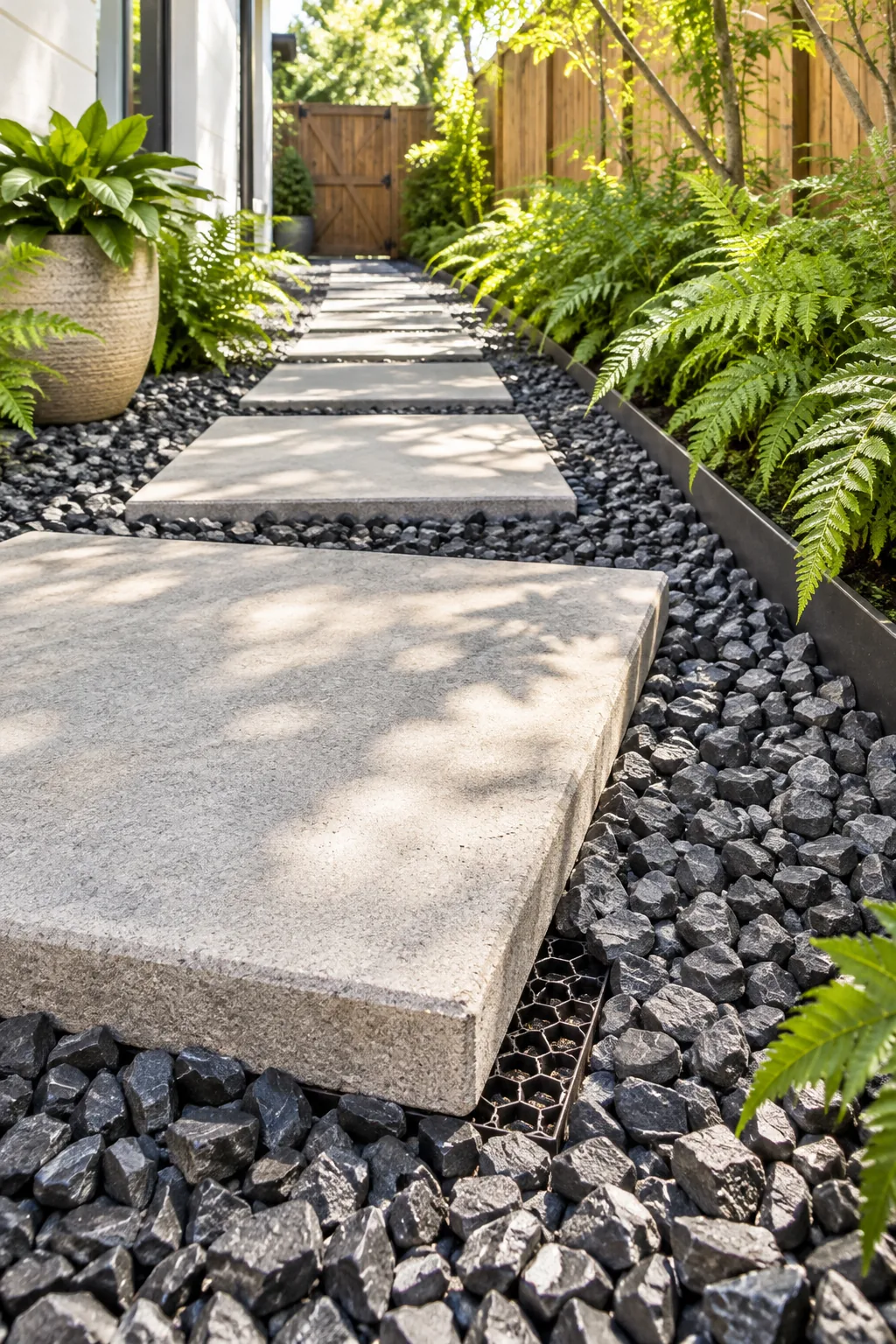
Interlocking synthetic mats replace inches of heavy, compacted gravel and save you hours of exhausting manual labor during installation.
Choosing Large Concrete Steppers
Heavy, oversized architectural concrete pavers provide a highly secure, trip-free landing pad for everyday use compared to small, irregular natural stones.
These substantial geometric squares instantly elevate the entire landscape design, turning a forgotten utility corridor into a stunning architectural feature.
Calculating Your Stepper Quantity
Dividing your total path length by your chosen spacing measurement tells you exactly how many heavy concrete stones to order from the supply yard.
The 24-Inch Center Spacing Rule
Placing stones too close or too far apart feels incredibly awkward, but measuring exactly 24 inches from center-to-center guarantees comfortable walking regardless of stone size.
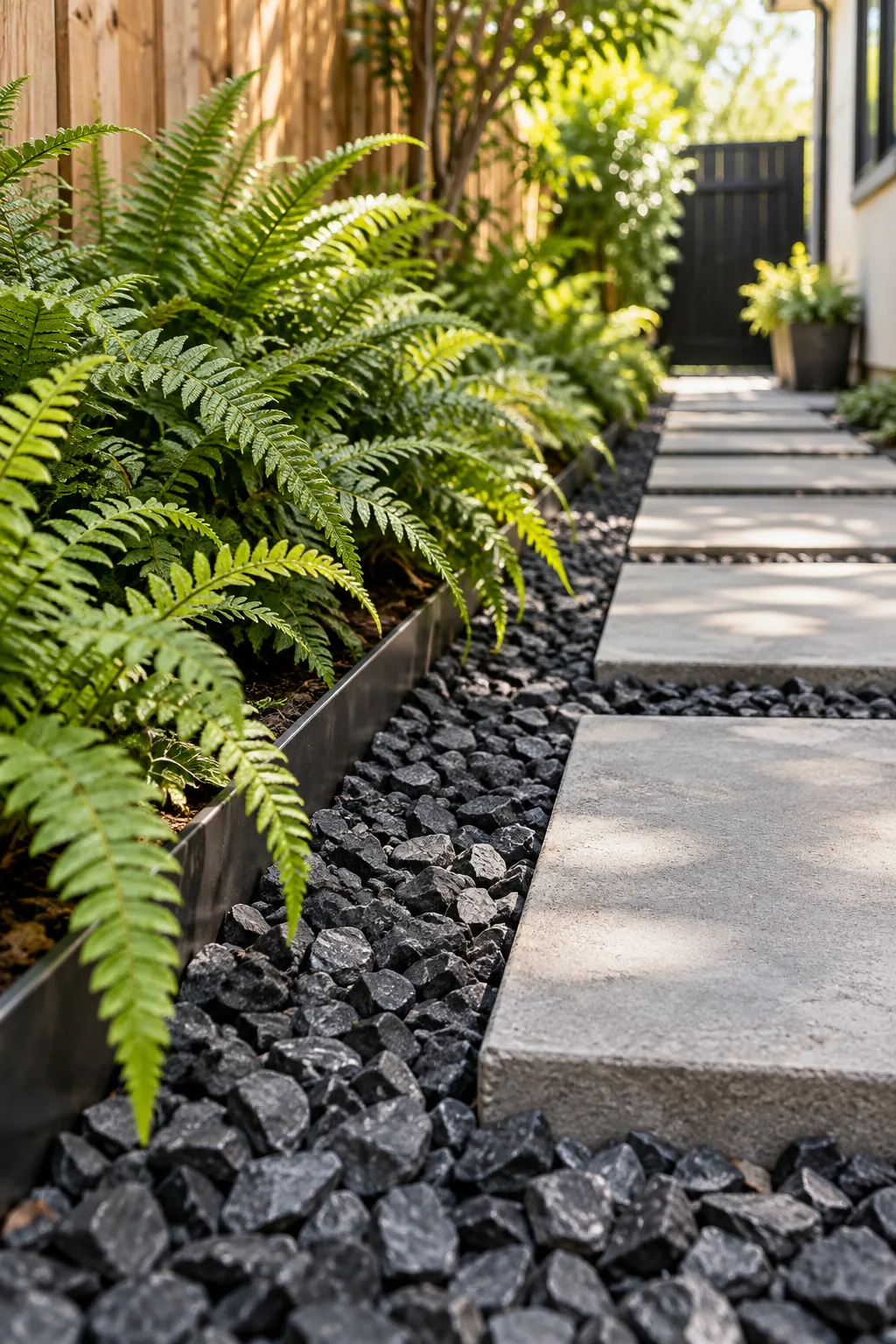
This precise measurement perfectly mimics the mechanics of a natural adult walking stride, preventing you from shuffling or stretching your legs.
Placing and Leveling the Stones
Dropping each heavy paver straight down onto the synthetic mat prevents the carefully leveled sand underneath from shifting out of place.
Complete Material Checklist & Spacing Guide
Before you head to the local landscape supply yard, gather these exact materials and follow our proven measurements to build your own mud-free walkway.
Double-check your pathway measurements using this checklist before scheduling any bulk stone deliveries to avoid expensive extra shipping fees.
Selecting the Right Gravel Size
Choosing a three-quarter-inch crushed rock ensures the individual pieces are heavy enough to stay put during intense spring rainstorms.
Filling With Locking Angular Stone
The mechanical advantage of angular crushed stone over smooth river rock is absolutely essential for creating a stable, safe walking surface.
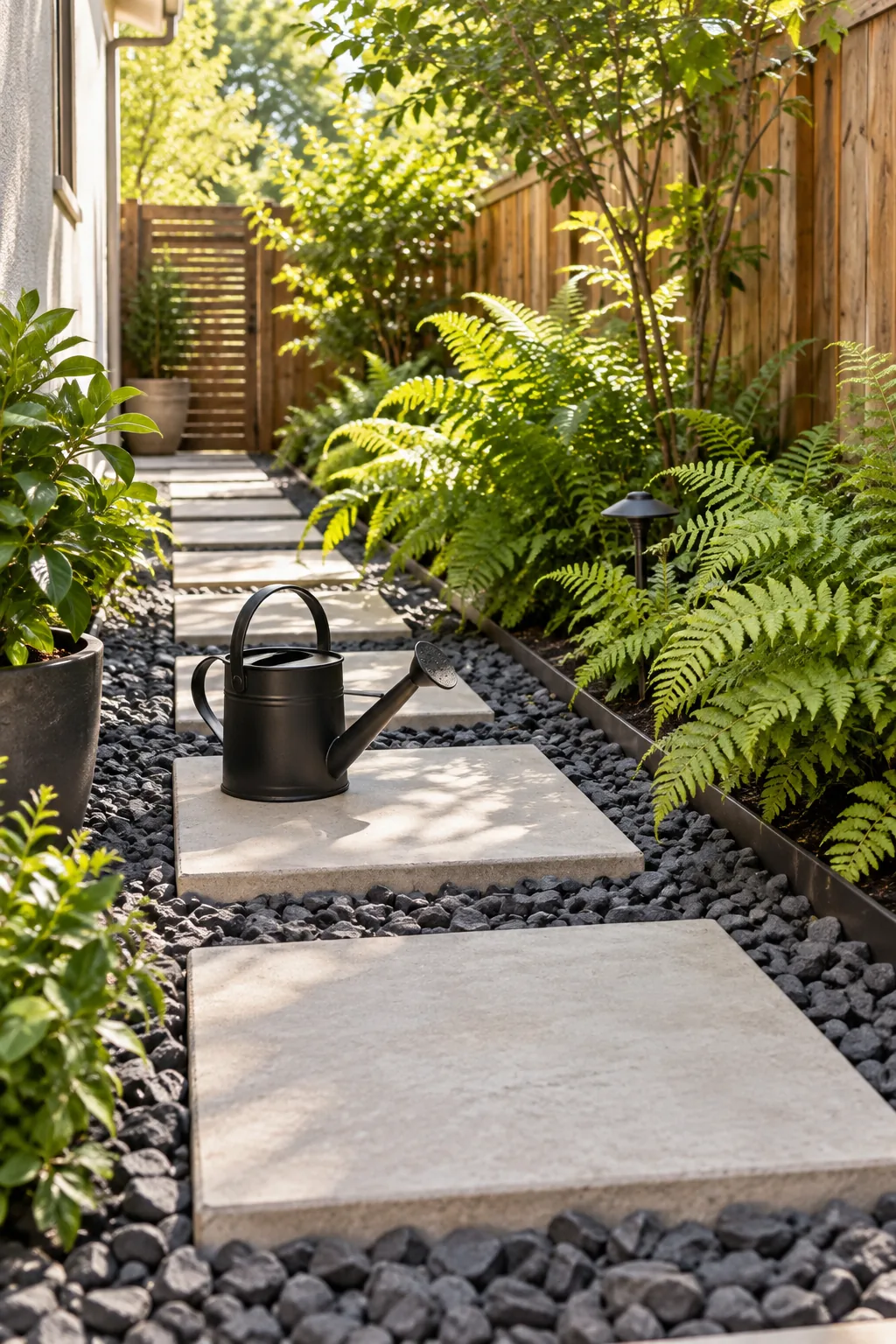
Jagged locking angular stones wedge tightly together under foot traffic, creating a crunch-free surface that stays safely inside the pathway.
Tamping the Pathway Surface
Running a heavy hand tamper over the freshly poured gravel firmly locks the jagged edges together for a completely solid, finished texture.
Planting Shade-Hardy Ferns
Softening the rigid hardscape with lush, low-maintenance greenery brings immediate life and vibrant color to heavy shade areas along the fence.
- Plant shade-tolerant varieties like Autumn or Lady ferns directly along the fence line.
- Space the root balls according to their mature width to create a continuous, flowing green ribbon.
- Add a thick layer of organic mulch around the base to retain crucial summer moisture.
I planted Autumn ferns in my own heavily shaded side yard, and they practically maintain themselves while looking incredibly lush year-round.
Watering Your New Greenery
Setting up a simple, automated drip line along the fence ensures your new shade plants establish deep, drought-resistant root systems before summer arrives.
Maintaining Your Grass-Free Path
The minimal seasonal upkeep required for this hardscape design makes it incredibly practical for busy homeowners who want to enjoy their yard.
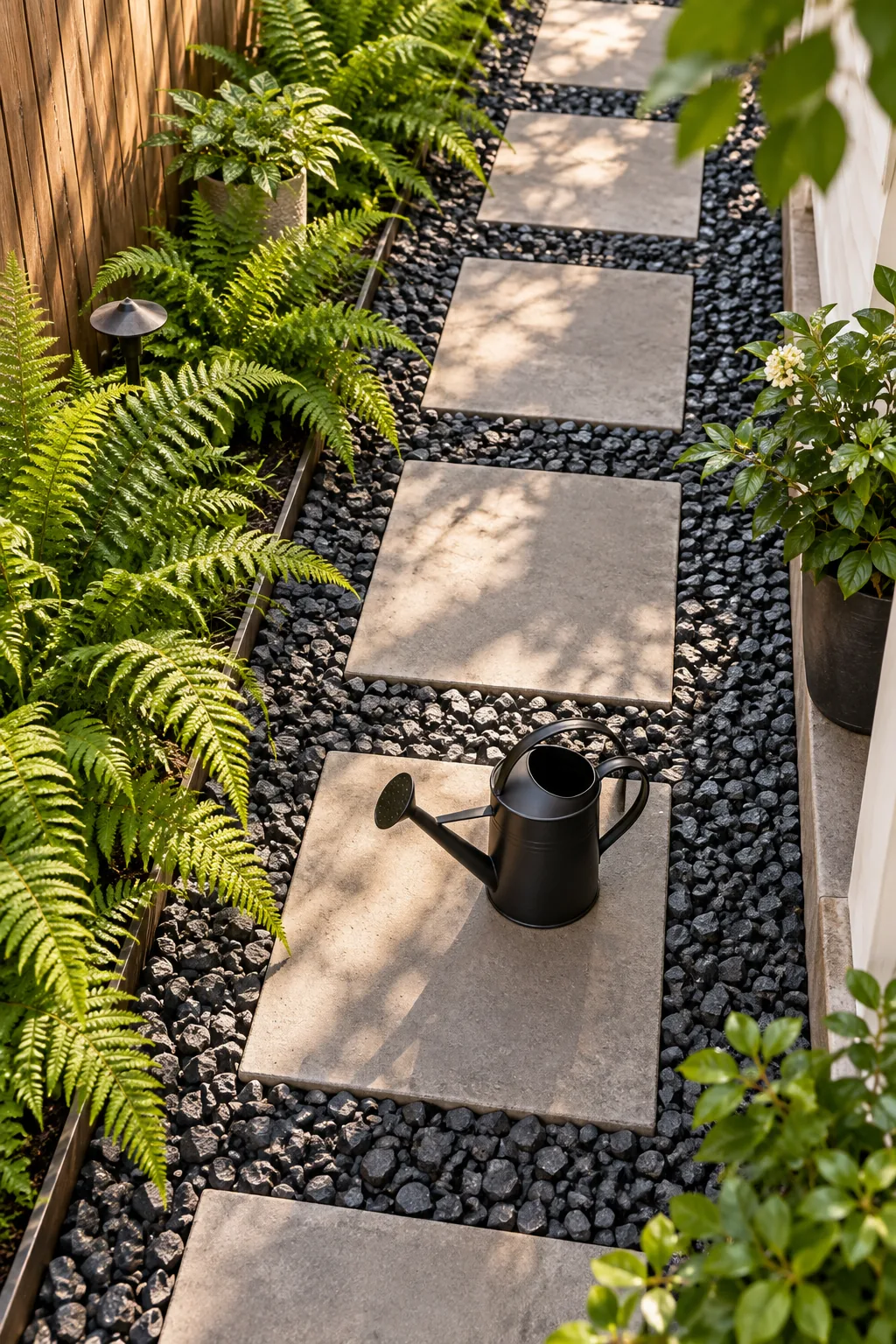
Occasional leaf blowing and spot-treating for stray weeds is all it takes to keep the dark stone and bright concrete looking pristine.
5 Grass-Free Side Yard Styles to Try
Discover how changing your stone and plant choices can completely alter the mood of your narrow walkway.
Modern Desert Minimalism: Warm decomposed granite and smooth concrete steppers create a minimalist desert vibe, perfectly accented by architectural agave plants.
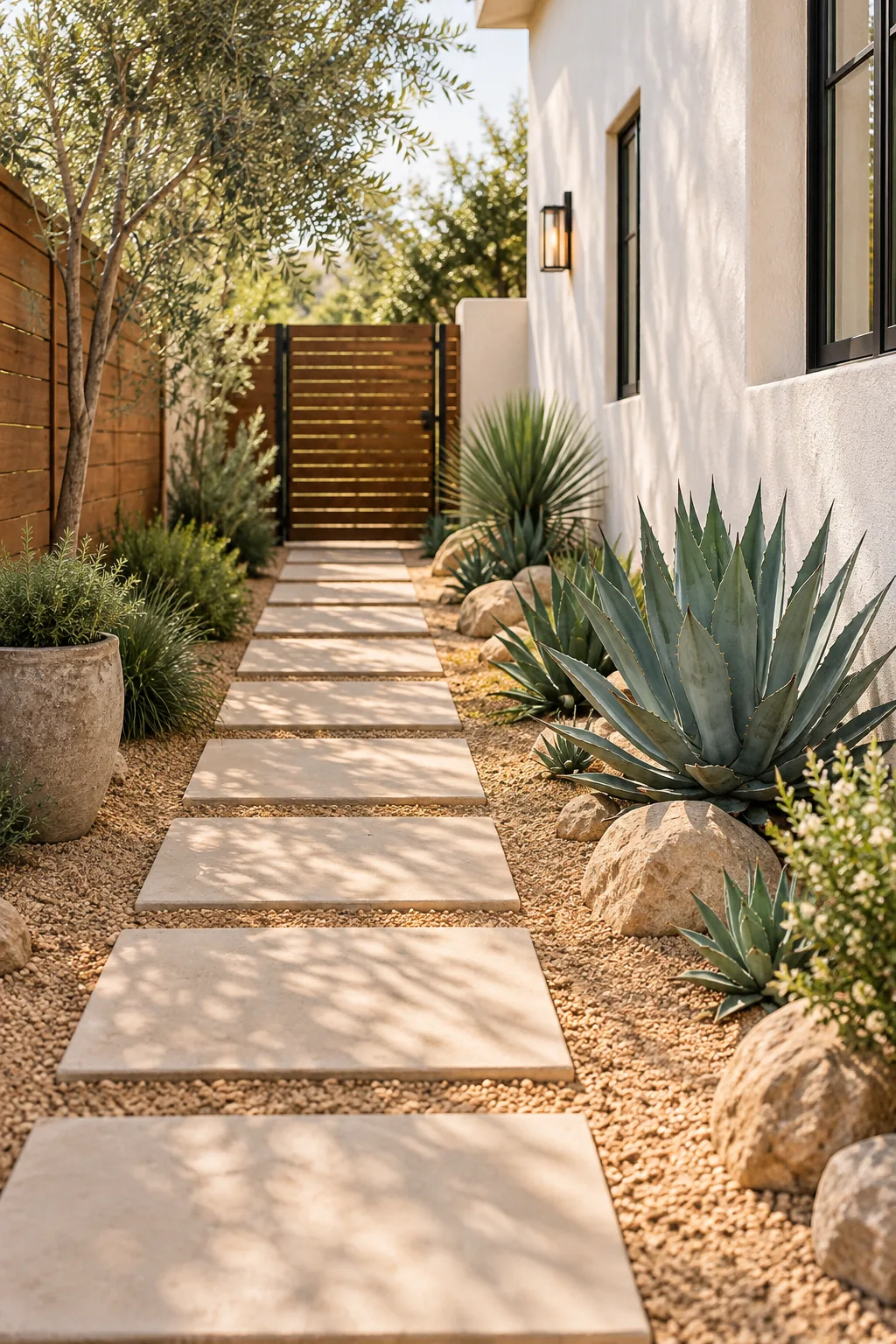
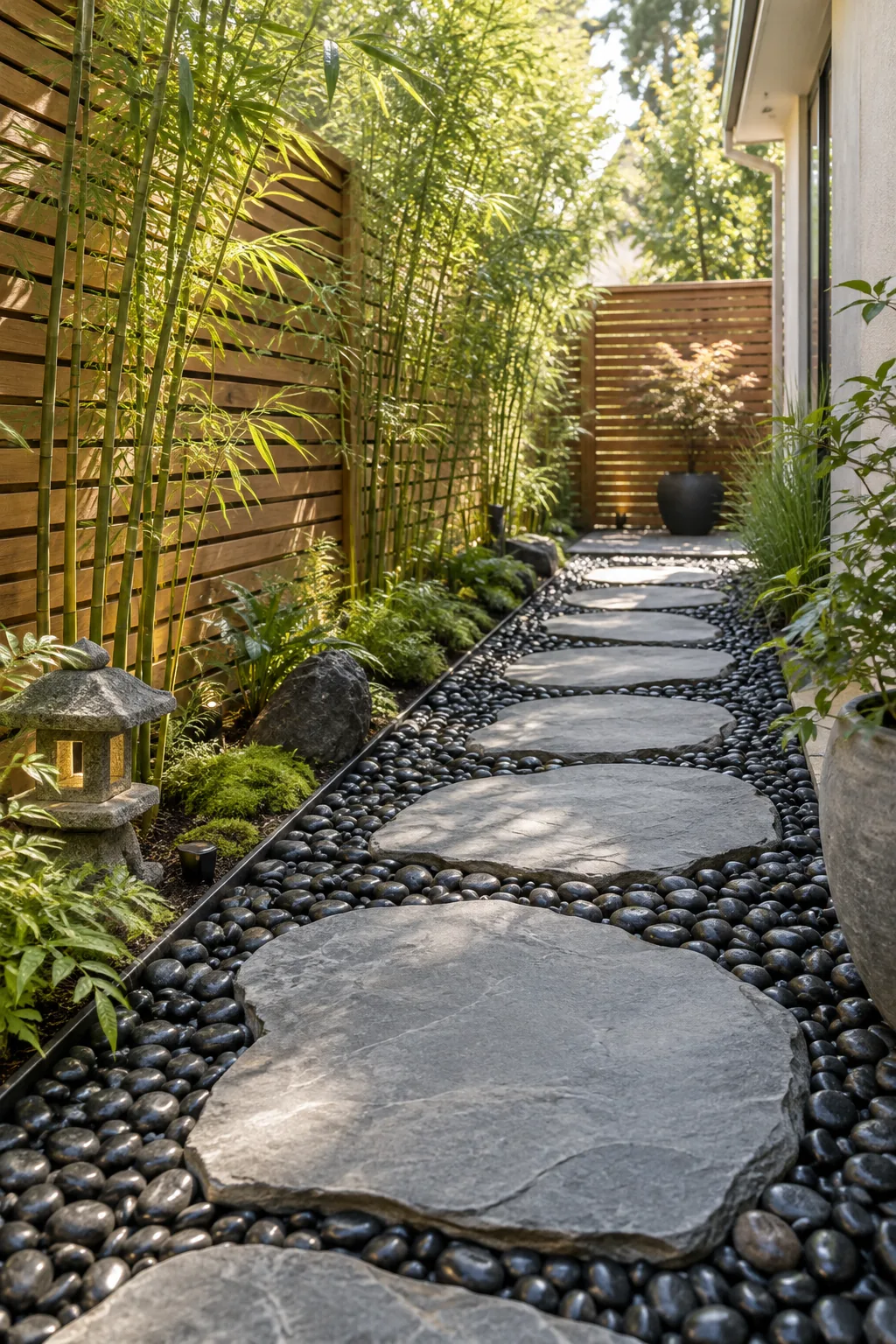
Japanese Zen Garden: Irregular bluestone steppers set into polished black river rock offer a tranquil, meditative pathway softened by delicate bamboo.
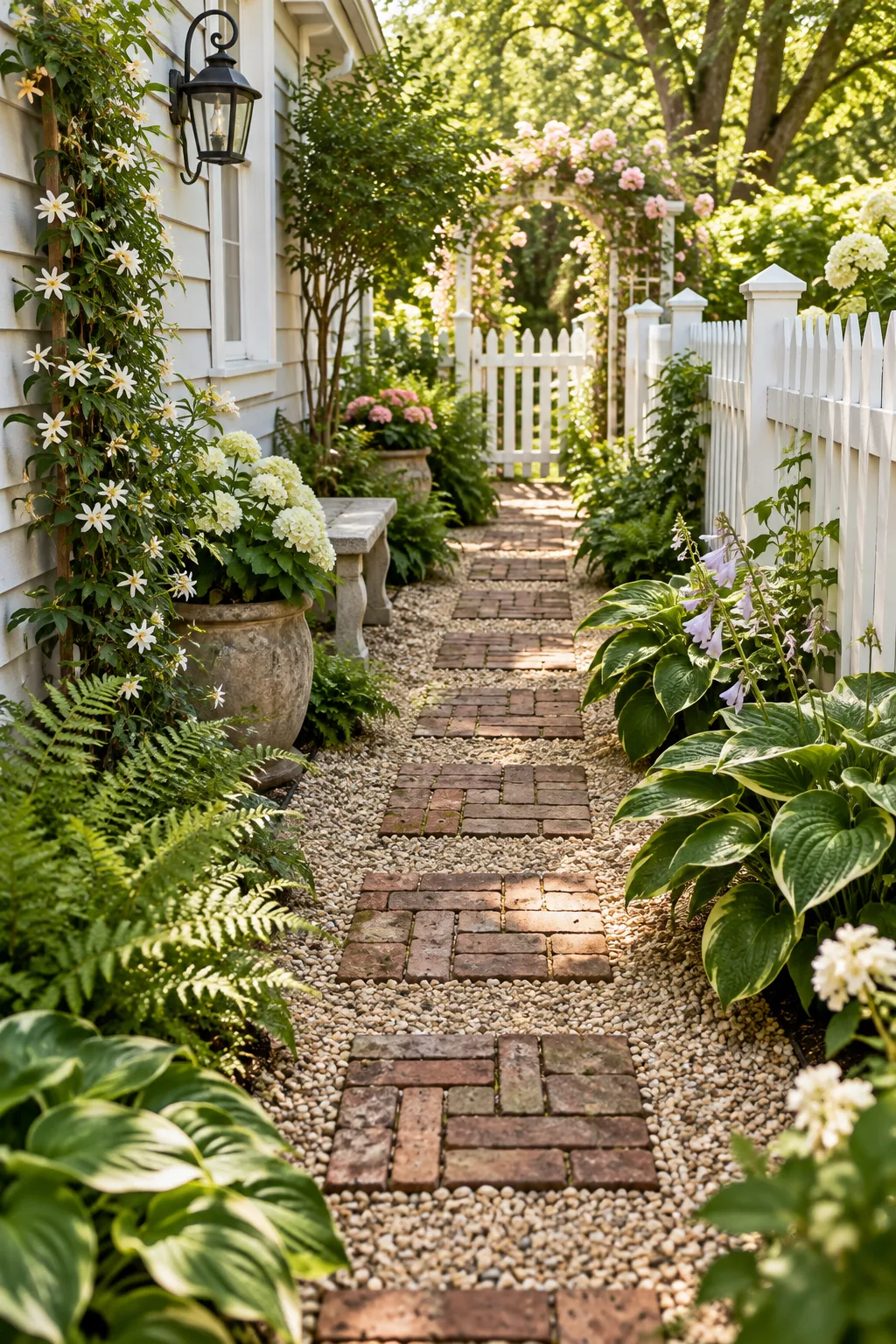
Classic Cottage Charm: Reclaimed brick steppers and light pea gravel bring instant warmth and history, beautifully framed by lush, shade-loving hostas.
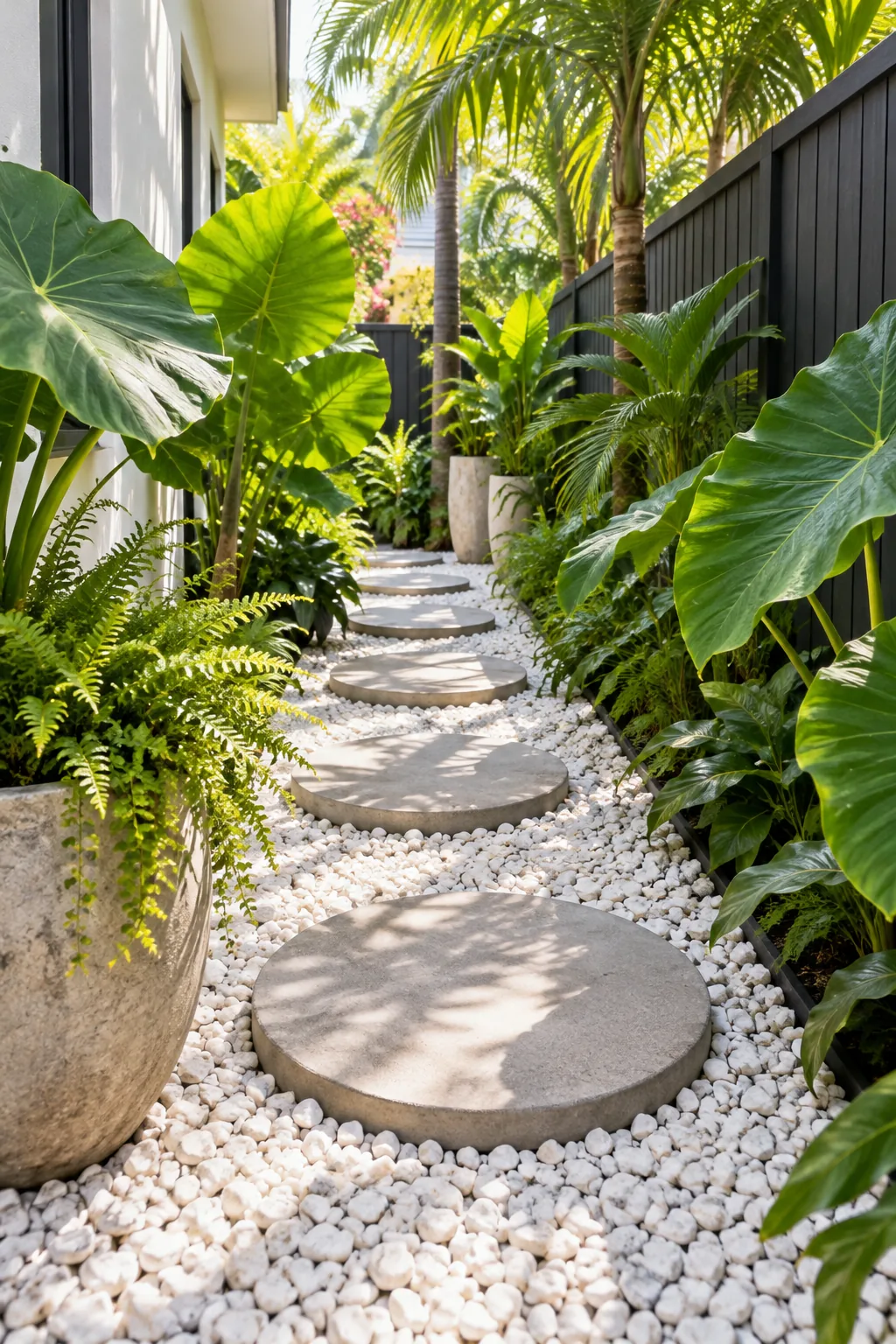
Lush Tropical Oasis: Oversized round steppers float on bright white marble chips, while massive elephant ear leaves create a dramatic, jungle-like canopy.
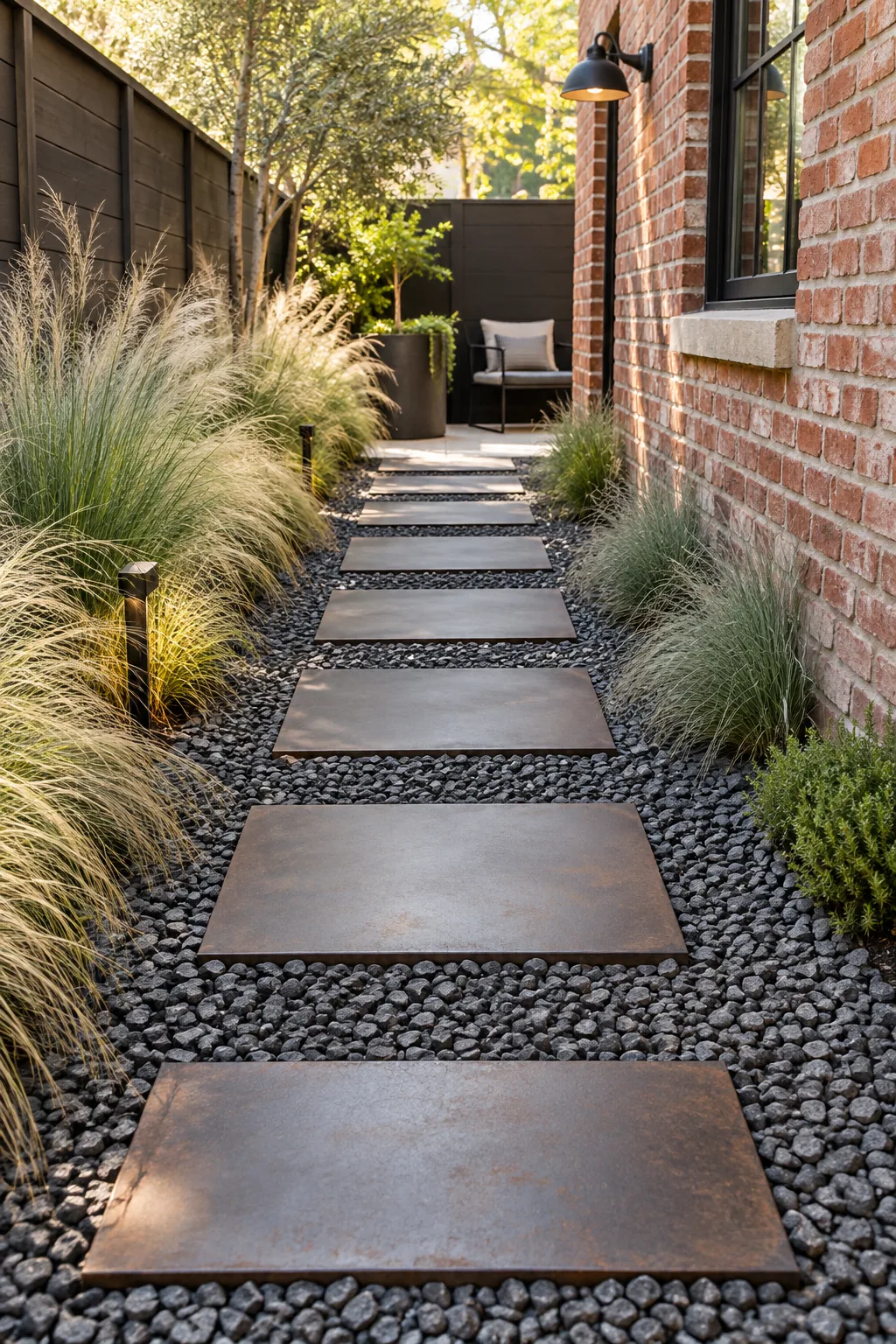
Industrial Minimalist Edge: Raw steel rectangular steppers and dark basalt gravel provide a rugged, contemporary contrast against an exposed brick exterior.