Dorm Room Set up: Hidden Storage & Space-Saving Packing List
You will be able to organize your cramped new dorm room using clever hidden storage and pack exactly what you need with our space-saving checklist. Grab this complete packing guide to maximize every inch of your college space without ever feeling cluttered.
Raising the Twin XL Bed
Begin by lofting the standard dorm bed to its maximum safe height, as most college-issued frames allow for 30 to 36 inches of clearance underneath. This elevated footprint is the most critical spatial move for creating a hidden closet in a tiny shared room.

Before lifting the heavy oak frame with your roommate, always verify your college’s specific furniture policies. Some campuses strictly prohibit third-party bed risers, meaning you must rely solely on the built-in adjustable pegs provided by the university housing department.
Verifying Safe Weight Limits
If your university permits external risers, you must calculate the total weight they will bear before installation. Combine the weight of the heavy wooden frame, the mattress, and your own body weight to ensure you stay well below the product’s maximum safety rating.
| Riser Material | Height Added | Stability Profile | Best Floor Type |
|---|---|---|---|
| Heavy-Duty Plastic | 3 to 8 inches | Moderate (Verify limits) | Carpet |
| Solid Wood | 3 to 5 inches | High (Verify limits) | Hardwood |
| Carbon Steel | Up to 10 inches | Maximum (Verify limits) | Vinyl Tile |
Selecting the correct material prevents catastrophic frame failure during the busy semester. Solid wood blocks offer incredible stability on hard floors, while wide-based plastic cones distribute heavy loads safely across plush dormitory carpets without causing permanent indentations or tearing.
Layering the 3-Inch Foam Topper
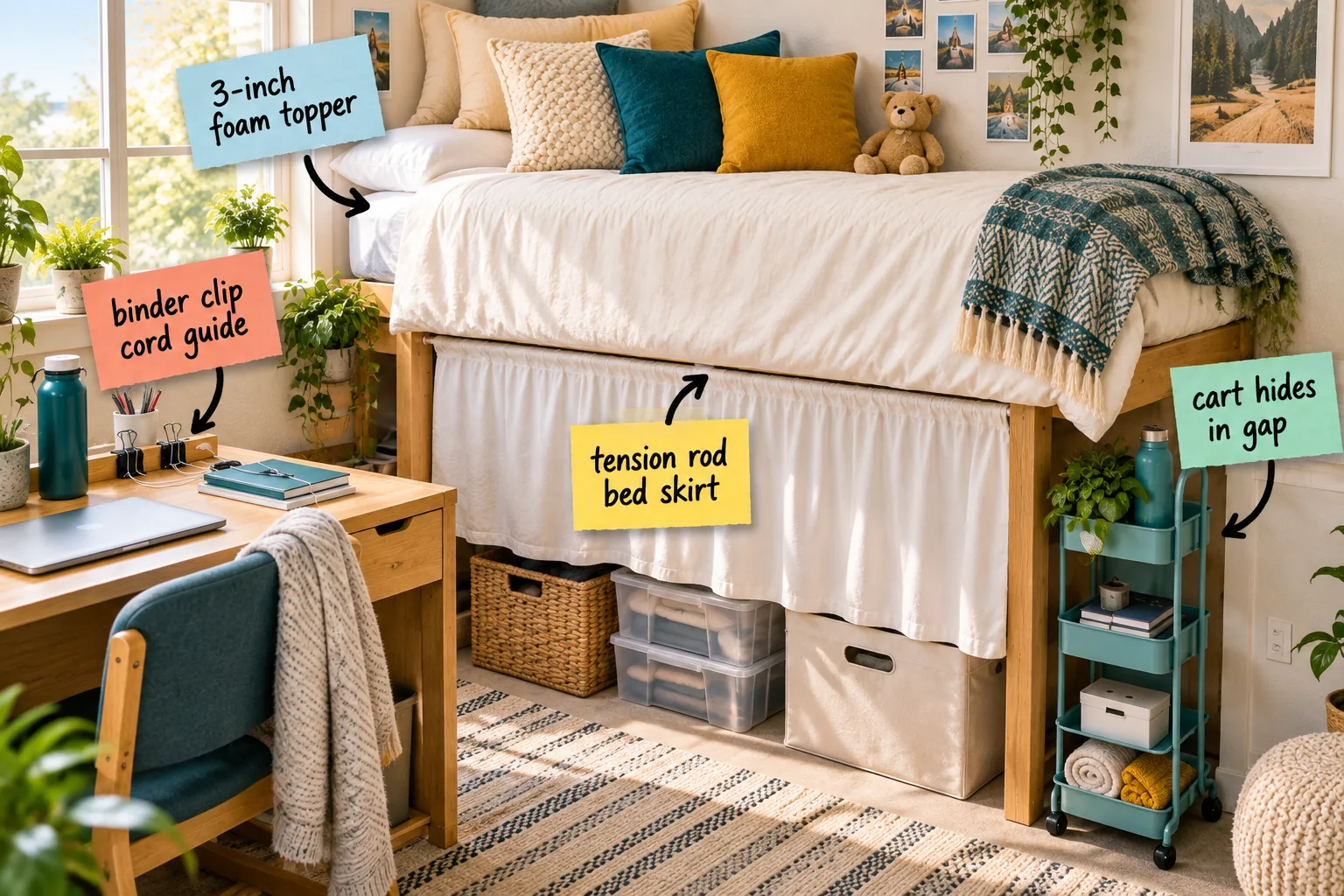
Dorm mattresses are notoriously thin and rigid, so you must add a 3-inch foam topper to build a supportive foundation. Purchase a topper measuring exactly 39 by 80 inches to perfectly match standard Twin XL dimensions without overhanging the frame.
Because foam layers easily slide off slick vinyl mattresses, you need a high-quality barrier to lock everything together. Wrap both the original mattress and your new plush layer in a breathable, deep-pocket mattress protector to keep the stack perfectly aligned.
Securing the Mattress Protector
Choose an encasement with elastic bands stretching up to 18 inches deep to easily accommodate the combined height. A waterproof, tightly fitted protector not only stops the foam from shifting but also defends against accidental coffee spills during late-night study sessions.
Rigging the Tension Rod Bed Skirt
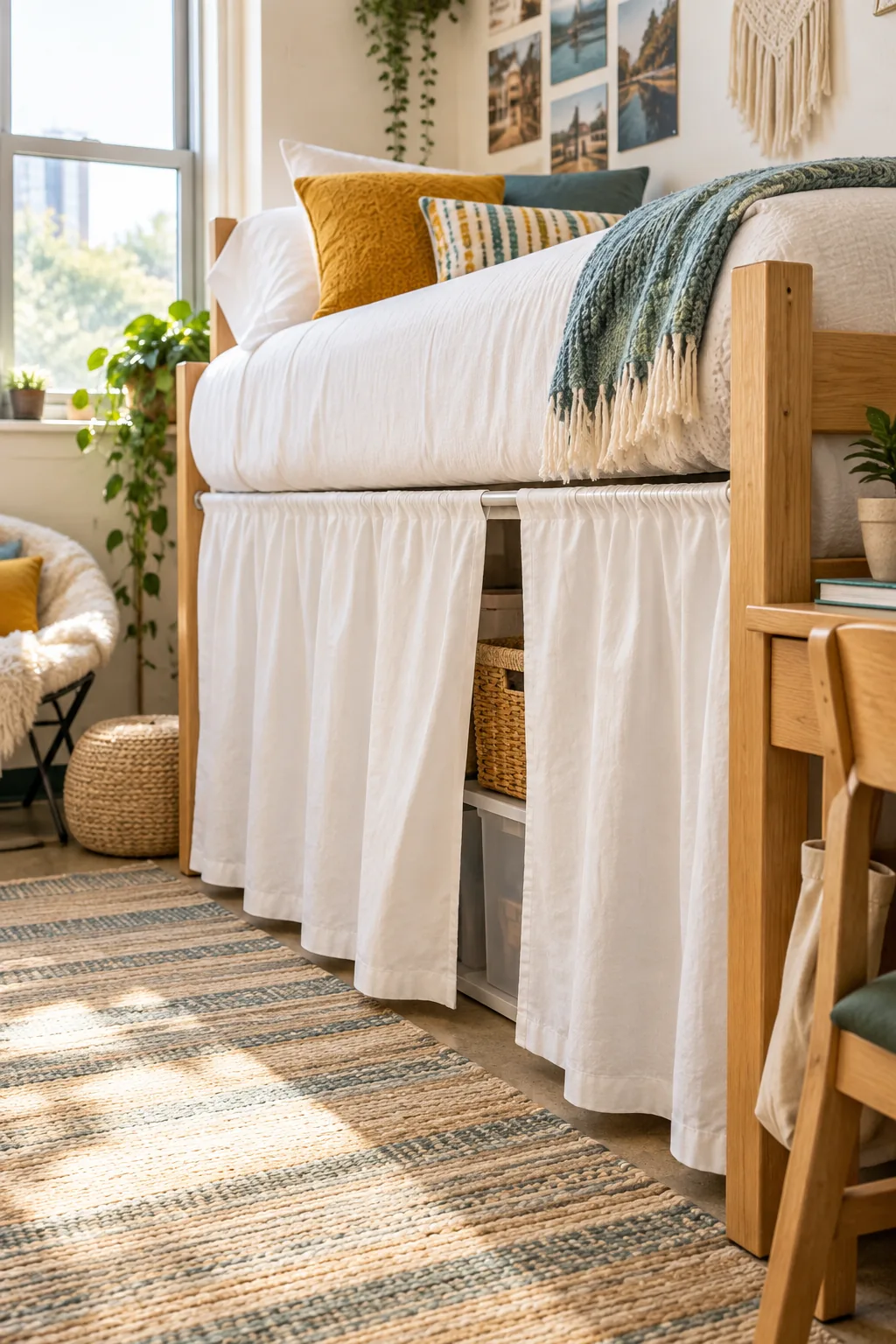
Conceal the raw under-bed storage area without drilling by wedging a heavy-duty tension rod tightly between the wooden bed posts. Choose a premium rod that expands up to 80 inches to completely span the long side of a standard college bed.
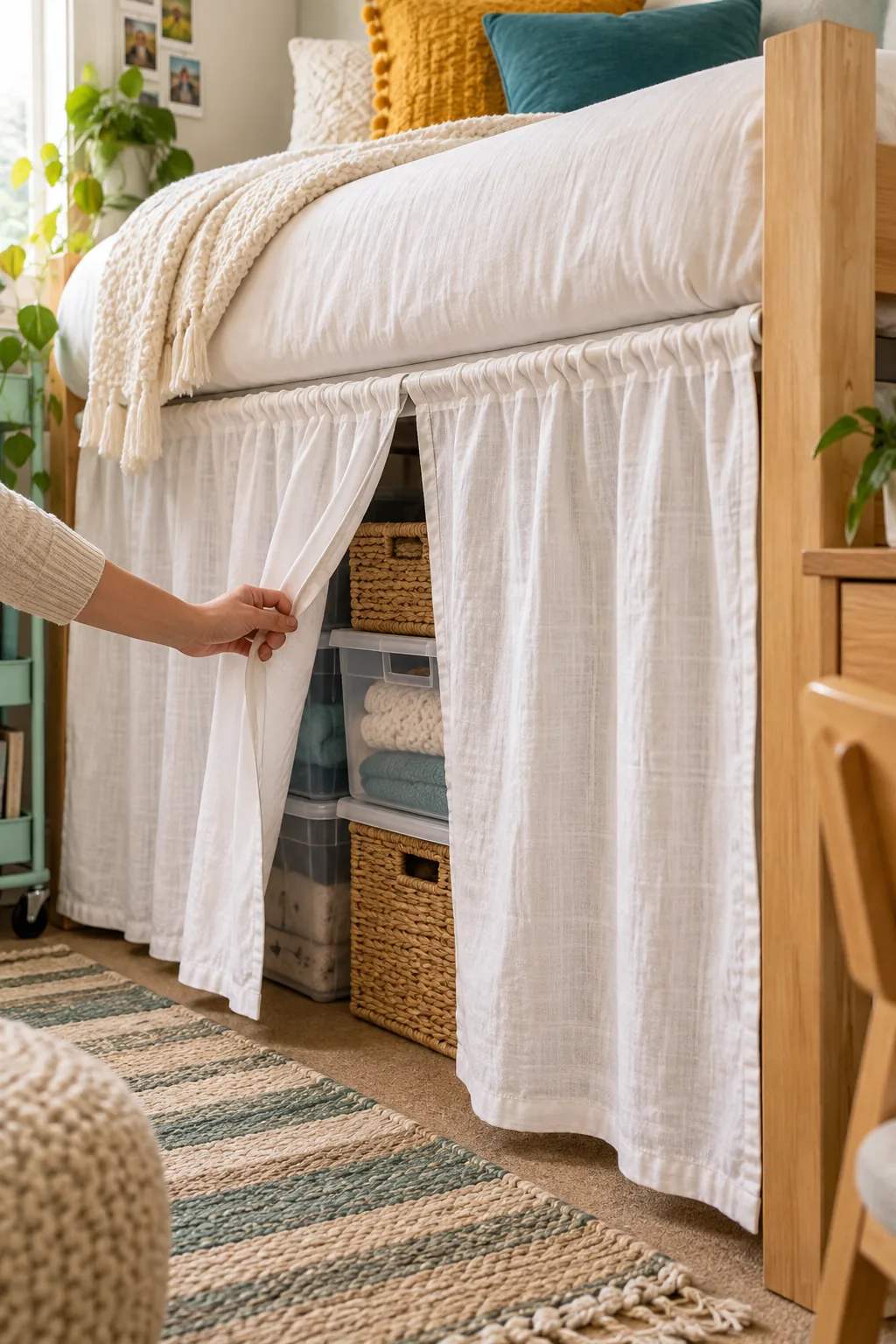
Thread a standard curtain panel onto the rod before twisting it securely into place for a seamless, tailored aesthetic. This clever tension rod bed skirt hides your plastic storage bins completely while allowing instant, slide-away access to your daily wardrobe.
Measuring the Curtain Drop
To achieve a custom look, measure the exact distance from the bottom of your mattress down to the floor. Purchase a standard 84-inch curtain panel and simply hem the bottom edge using permanent fabric tape to perfectly graze the dormitory carpet.
Zoning the Under-Bed Storage
Behind the new fabric skirt, divide the 30-inch vertical space into highly functional zones to prevent the dreaded black-hole effect. In my own Denver home, I always stack 24-inch deep modular drawers near the front edge for immediate access to folded clothes.
Reserve the darker back half of the space exclusively for bulky, out-of-season items packed flat in vacuum-sealed bags. This deliberate spatial zoning ensures you never have to dig aggressively through thick winter coats just to find a clean cotton t-shirt.
Selecting the Right Storage Bins
Clear plastic bins often look visually noisy, so prioritize opaque canvas or frosted acrylic drawers to maintain a calm aesthetic. Measure the exact clearance between your lofted bed frame legs to ensure your chosen modular units can slide out fully.
Managing Out-of-Season Clothing
Compressing your heavy winter parkas and extra blankets reduces their physical footprint by nearly seventy percent. Slide these flattened airtight bags into low-profile canvas bins, keeping them protected from dust while waiting patiently at the very back of your storage cave.
Sliding a Cart into the Gap
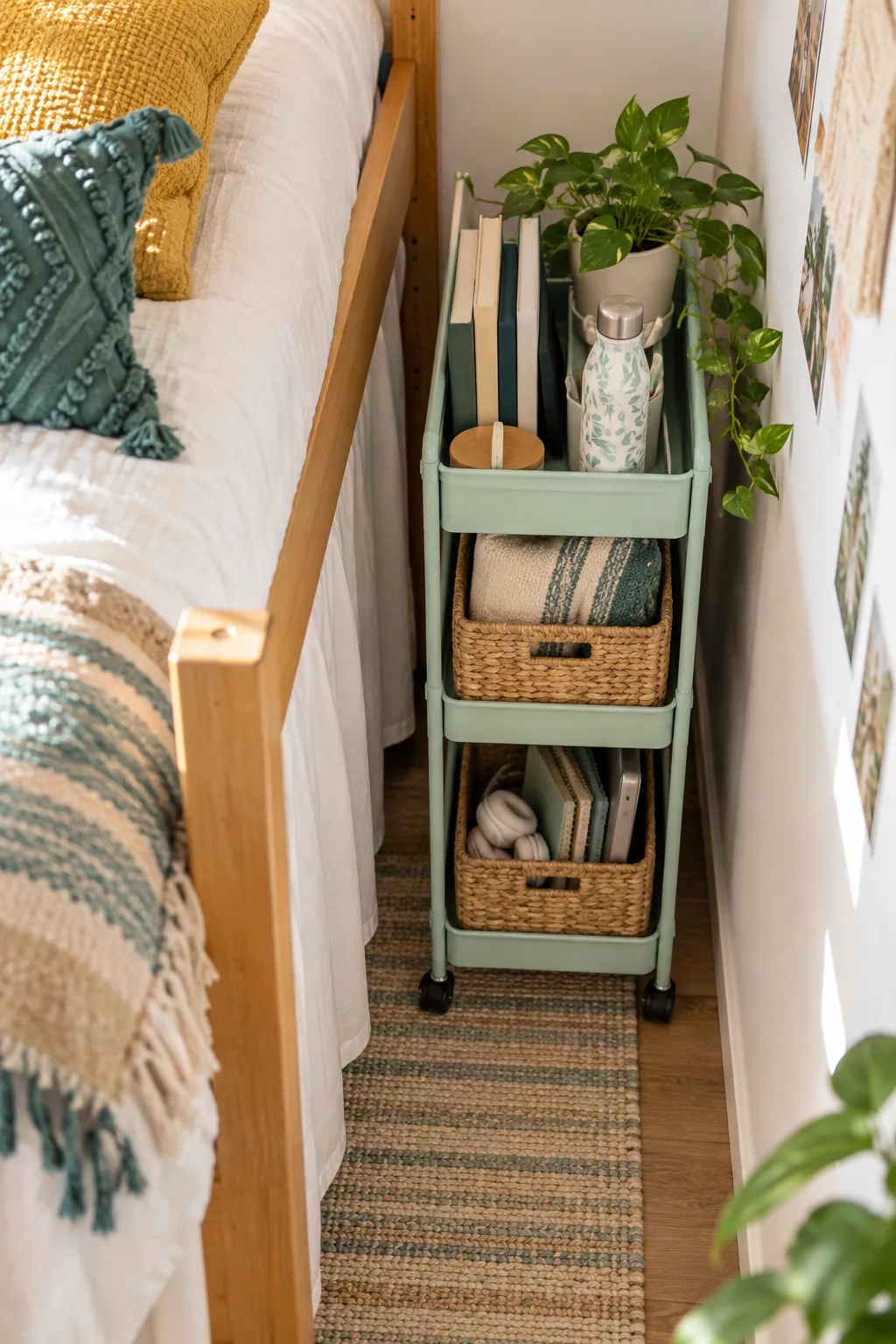
Standard dorm layouts frequently leave an awkward 6 to 10-inch gap between the bed frame and the cold cinderblock wall. Slide a slim, tiered rolling metal cart into this exact footprint to act as a highly efficient, mobile nightstand.
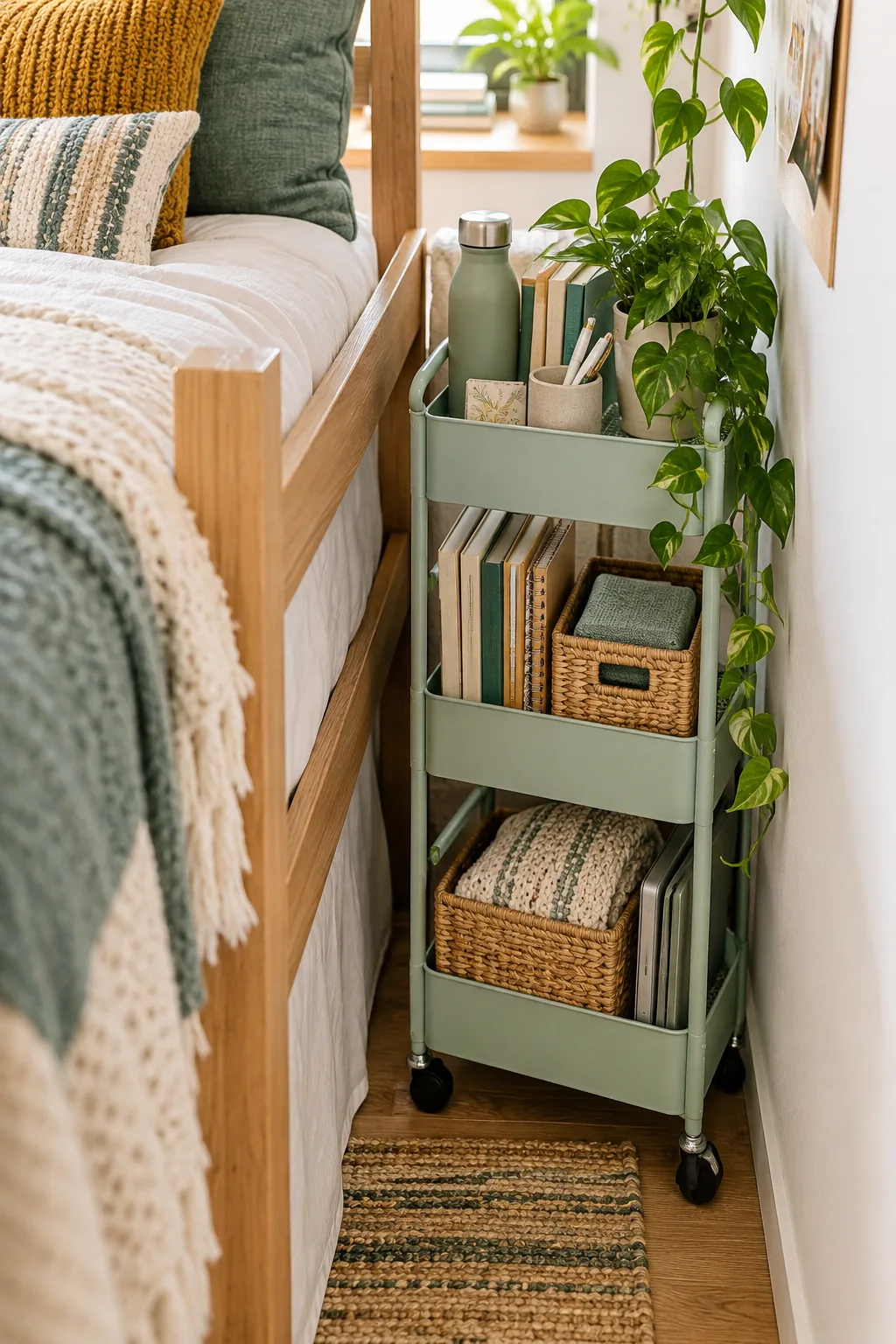
Because the narrow cart hides perfectly in the gap, it holds heavy textbooks, a water bottle, and small toiletries without consuming precious floor space. Simply roll it out when studying in bed and tuck it away entirely before leaving for class.
Maximizing the Cart Tiers
Assign a specific daily function to each of the three metal tiers to maintain absolute visual order. Keep your current reading materials on the top shelf, daily skincare products in the middle, and heavier backup supplies anchored safely in the bottom basket.
Streamlining the Compact Desk
Treat the compact dorm desk strictly as a focused workspace rather than a horizontal catch-all surface for campus flyers. Push your laptop toward the back edge and deliberately limit decorative items to a single small potted plant or a slim task lamp.
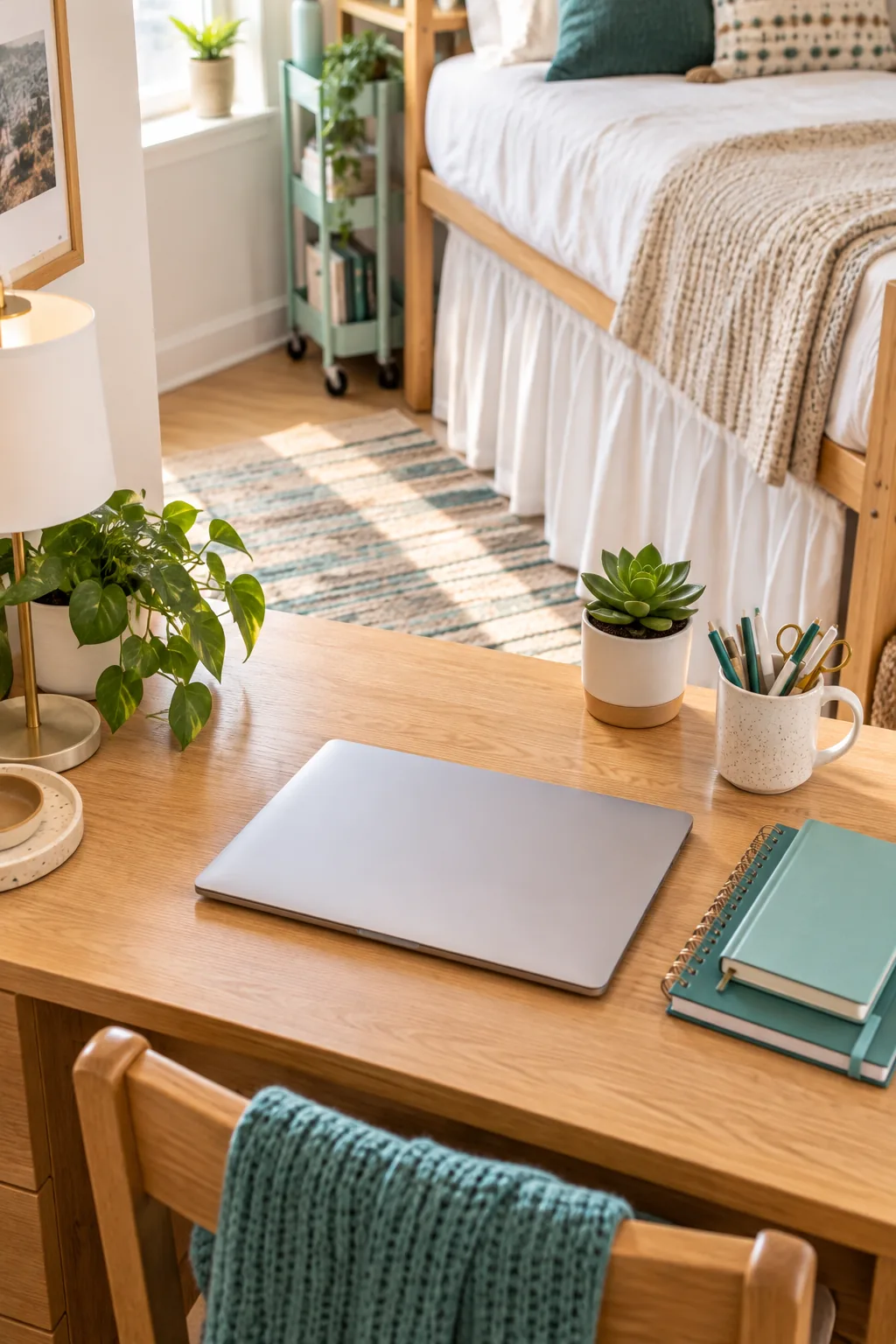
A cleared desktop significantly reduces visual anxiety and makes sitting down to study feel inviting rather than overwhelming. Store your pens, sticky notes, and highlighters inside a shallow acrylic drawer organizer rather than letting them scatter across the primary work surface.
Illuminating the Workspace
Dormitory overhead lighting is notoriously harsh and casts heavy shadows across your textbooks. Invest in a slim, adjustable LED desk lamp with a clamp base, which attaches securely to the side edge of the desk without consuming any of your primary horizontal work surface.
Utilizing Vertical Wall Space
Capture the blank vertical wall space directly above the desk by applying heavy-duty removable adhesive hooks. Hanging your monthly calendar, dry-erase board, and lightweight wire baskets keeps the desktop completely clear for spreading out complex assignments and large library books.
Clipping the Binder Cord Guide
Keep essential charging cables from slipping behind the heavy desk with an incredibly simple, zero-cost organizational hack. Clamp medium 1.25-inch binder clips directly to the back edge of the wooden desk to create a rigid, permanent anchor point for your electronics.
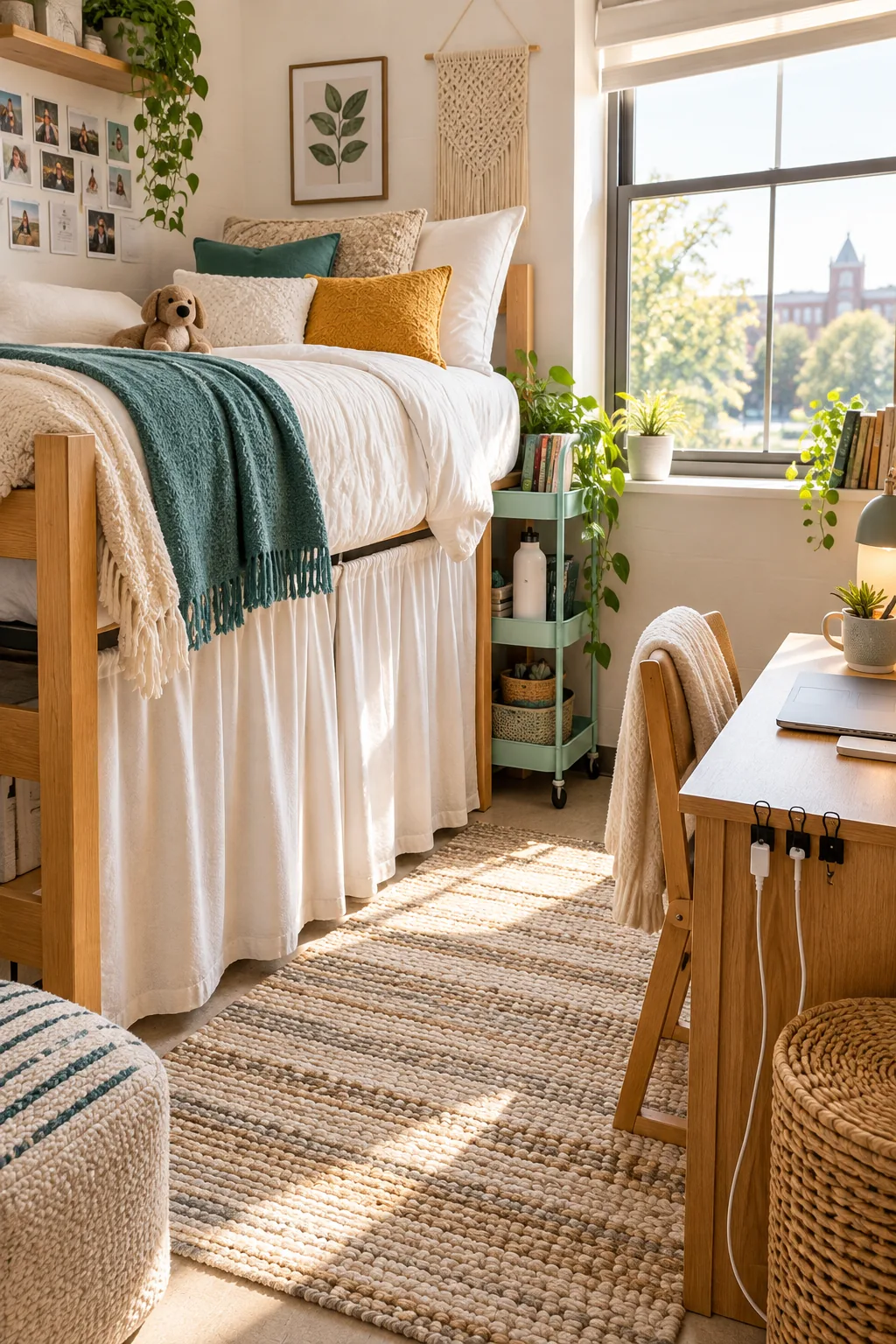
Thread the USB ends of your cables through the silver loops of the clips to form a reliable binder clip cord guide. This clever routing system keeps every phone and laptop charger perfectly accessible, completely untangled, and off the dusty floor.
Sorting Cables by Frequency
Not all cables need prime placement on your desk edge. Route only your daily phone and laptop chargers through the binder clips, while bundling printer cables or backup hard drive cords with velcro ties and hiding them neatly behind the wooden modesty panel.
Securing Heavy Power Blocks
Mount your bulky surge protector directly to the back leg of the desk using heavy-duty double-sided mounting tape. Elevating the power strip prevents accidental kicks, keeps heavy transformer blocks hidden from view, and provides a shorter, cleaner path for your charging cables.
The Space-Saving Packing Checklist
To make this hidden storage system function effortlessly, you must arrive on campus with exactly the right gear. When I help clients downsize, I insist they use a strict space-saving packing checklist to track exact quantities of slim hangers and collapsible totes.
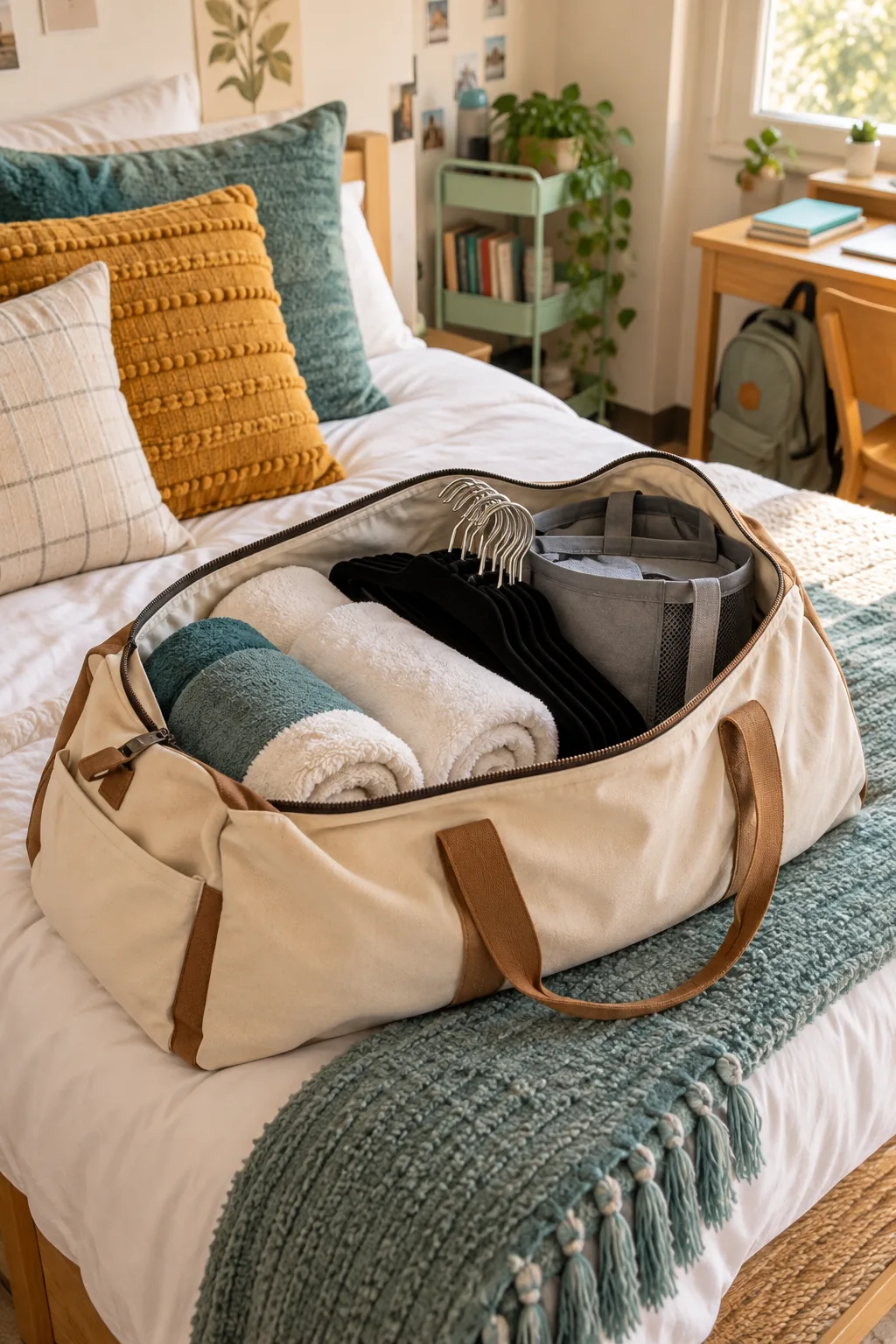
Review this streamlined packing checklist closely to ensure you only bring items that serve multiple purposes. Sticking strictly to these targeted essentials guarantees everything fits seamlessly within your newly created storage zones without overcrowding the room.
4 Ways to Style Your Dorm Space
Choose a cohesive design direction before buying your bedding and storage essentials.
Warm Boho Neutral Styling: Embrace a relaxed vibe with natural textures and warm sand tones that make a sterile dorm feel instantly cozy.

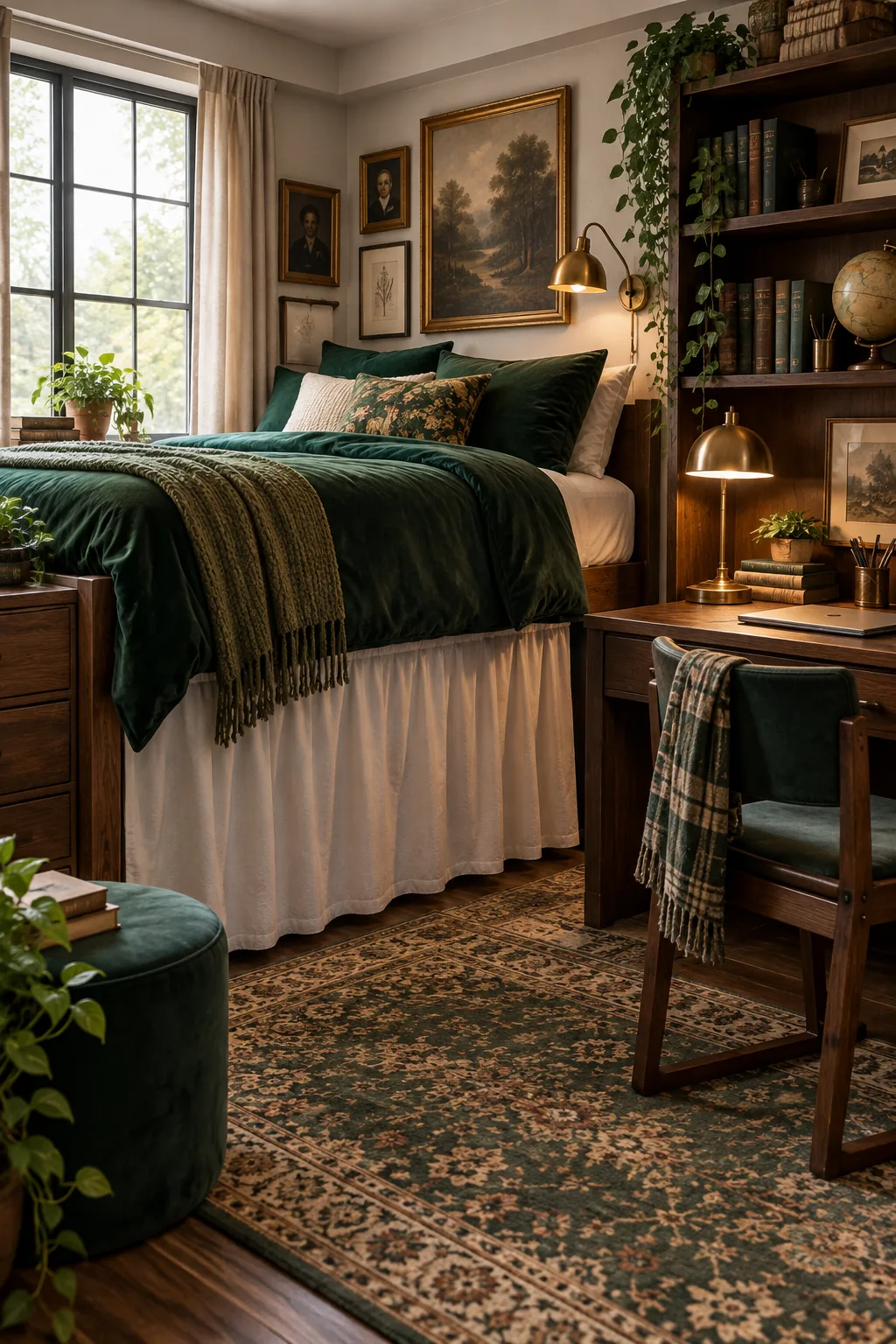
Sophisticated Moody Academic: Create a focused study haven by pairing deep emerald greens with classic brass lighting and vintage-inspired art prints.
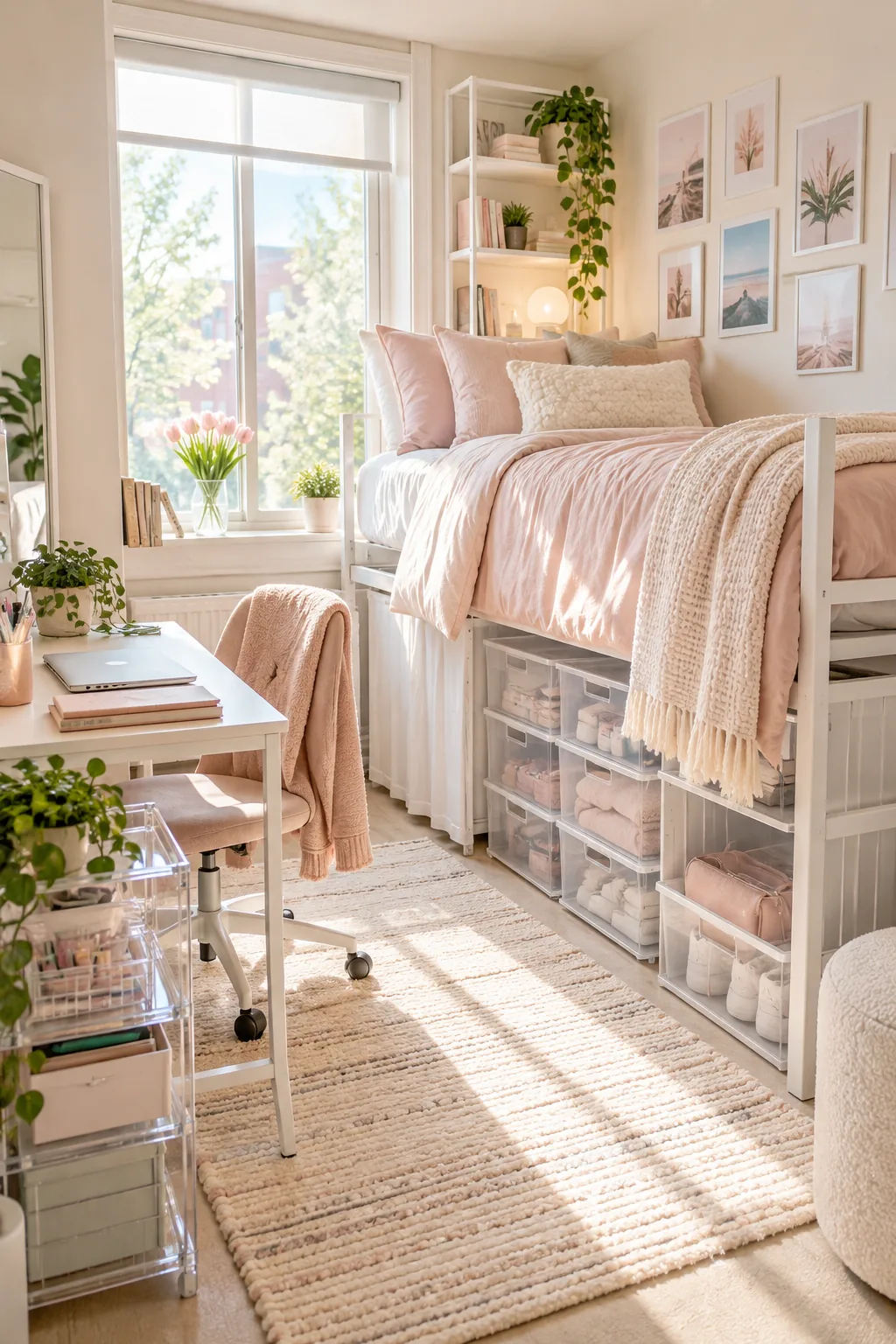
Clean Pastel Minimalist: Keep visual clutter to an absolute minimum using crisp white furniture, clear acrylic storage, and soft blush pink linens.
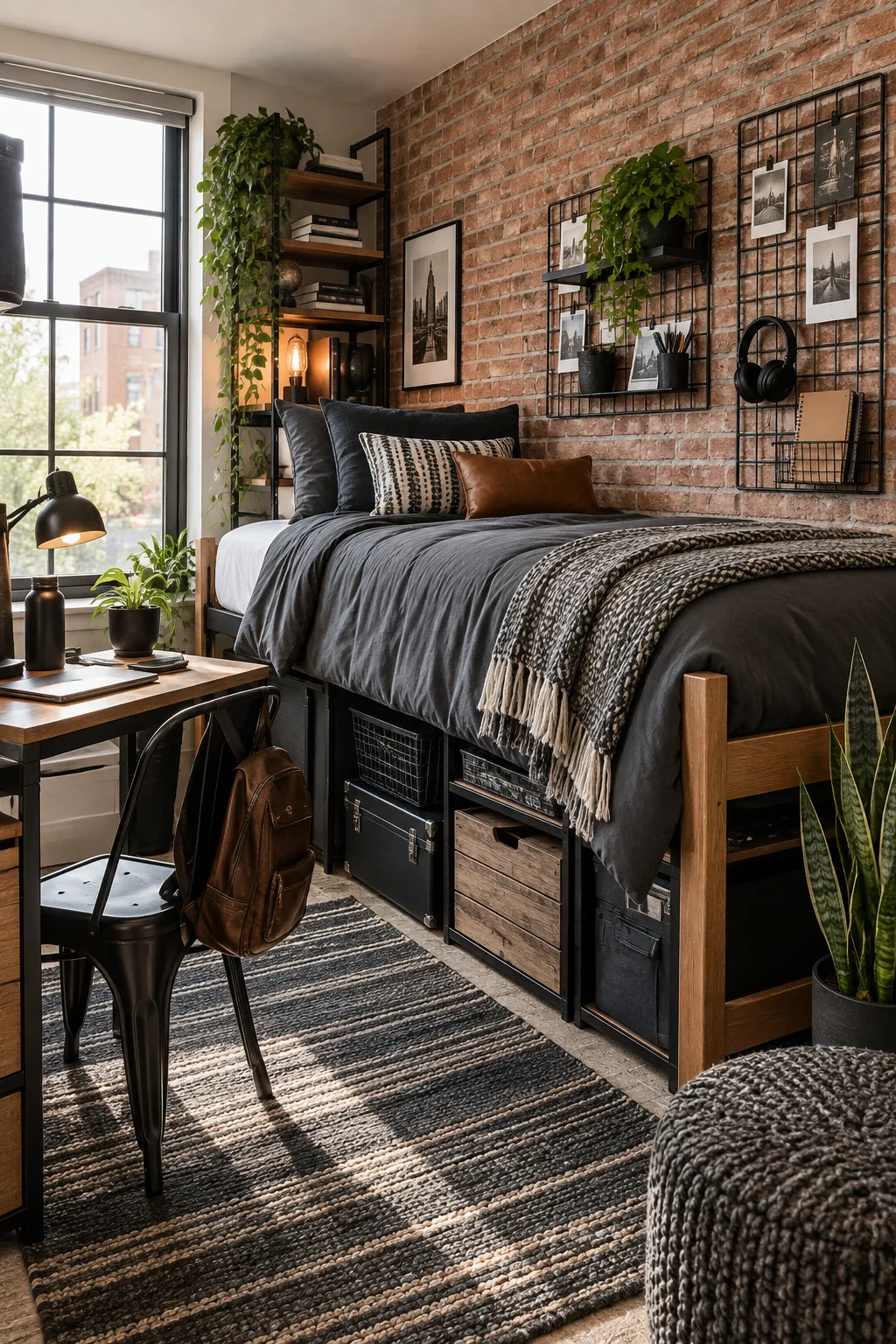
Modern Urban Industrial: Add modern edge to a basic room with matte black wire grids for wall storage and charcoal gray bedding.