
Outdoor Patio Rug Sizing Guide and Insider Design Tricks
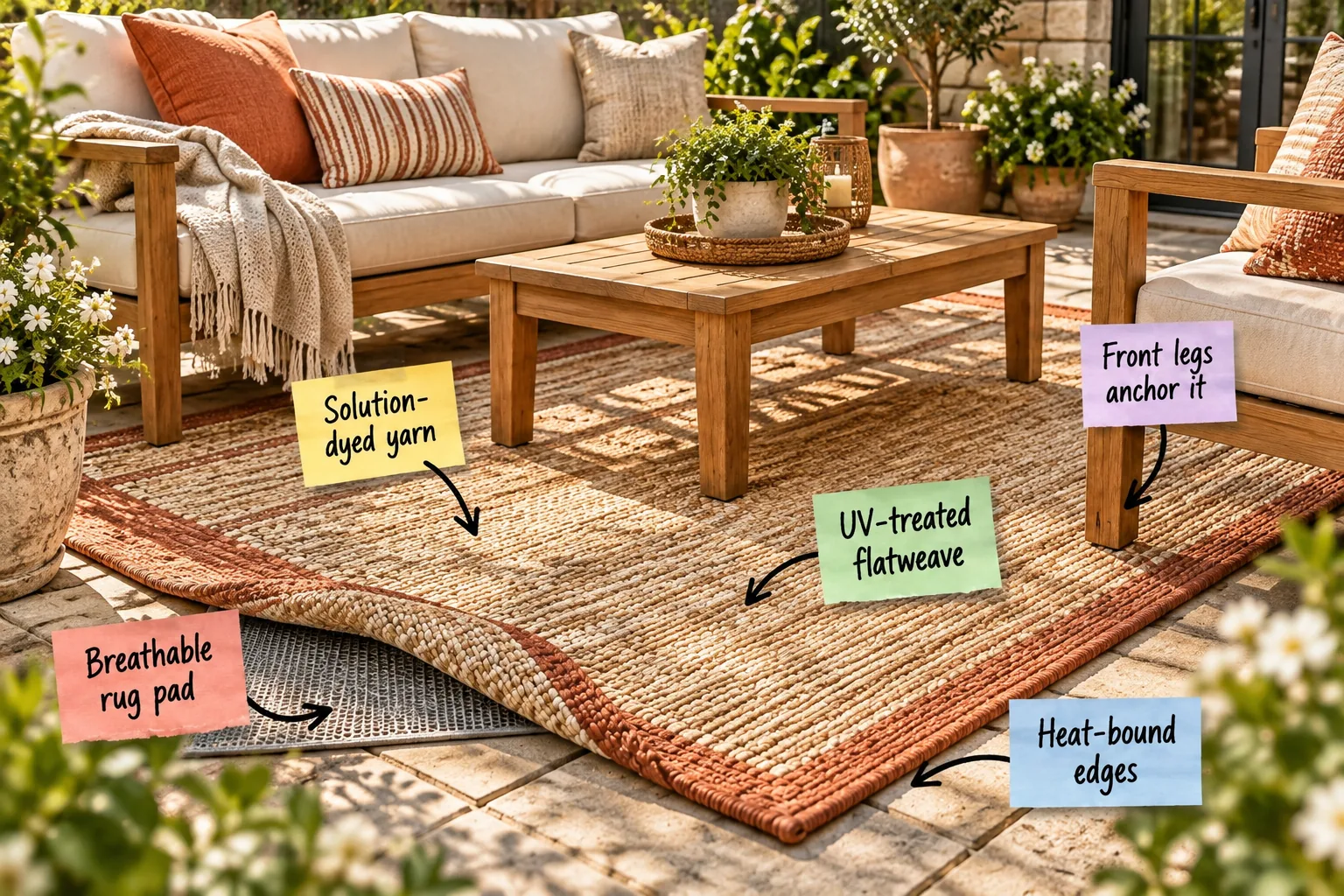
Let’s build the perfect patio setup from the ground up so you know exactly which rug materials survive the elements and how to size your layout. By the end of this guide, you will have our complete outdoor rug sizing and material cheat sheet to anchor your outdoor furniture flawlessly.
Start with a Breathable Rug Pad
Always pair your rug with a breathable mesh pad to prevent moisture buildup, mold growth, and permanent deck rot. You must leave a strict 2-inch setback from the rug edge on all sides so the underlayment remains completely invisible once installed.
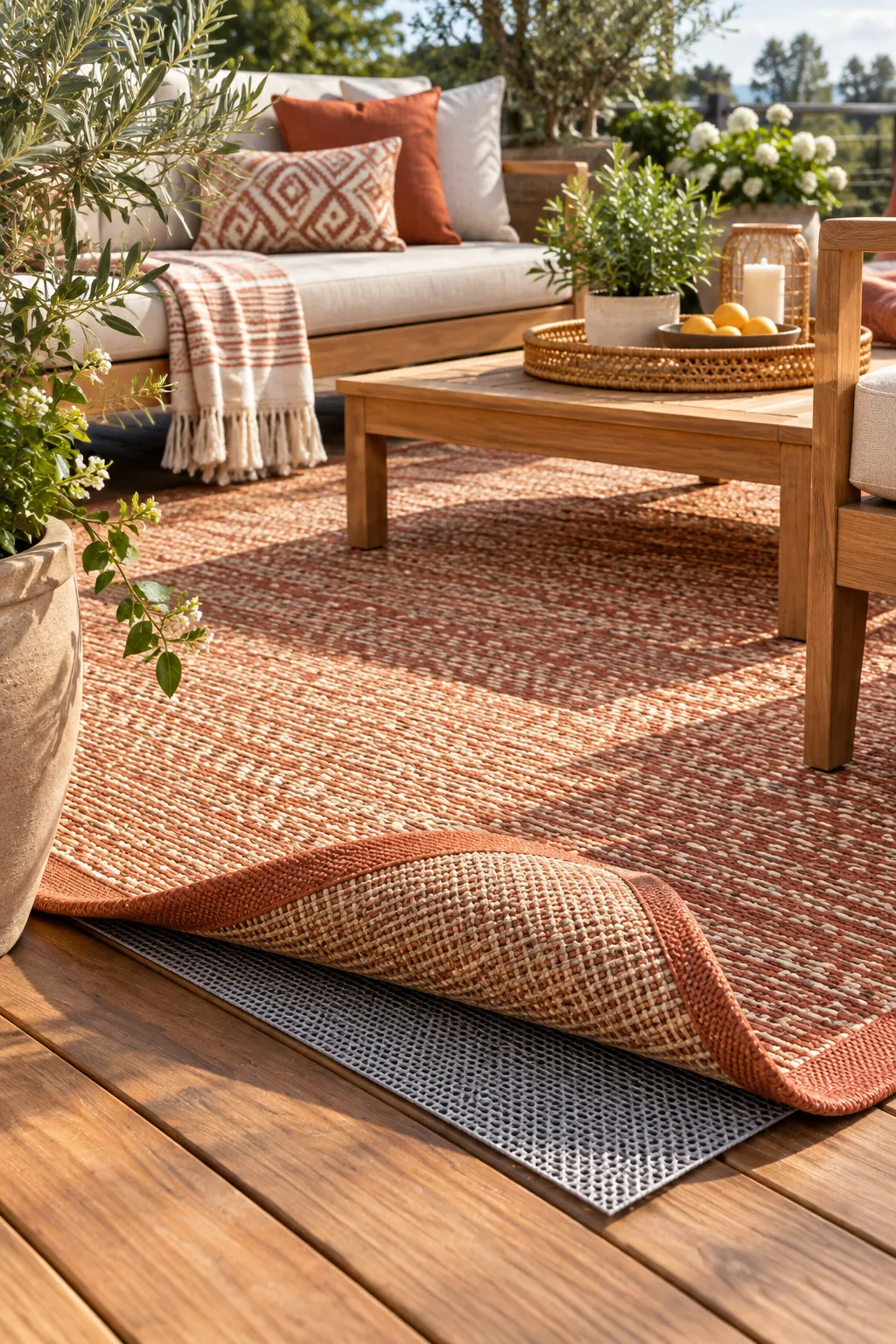
Even the most durable outdoor rug can cause hidden structural damage if you place it directly on a wooden deck without the right preparation.
Securing the Corners in High Winds
Open patios are highly susceptible to sudden crosswinds that can easily flip an unanchored rug corner. To prevent this, apply specialized outdoor double-sided acrylic tape directly to the underside of the four corners before pressing them firmly into the pavers.
Dealing with Patio Slopes
If your concrete patio features a steep drainage slope, a lightweight rug will slowly creep downhill over time. You can combat this migration by anchoring the highest edge with your heaviest seating pieces to lock the textile firmly in place.
Choose Solution-Dyed Yarn
When shopping for materials, specifically look for solution-dyed acrylics or polypropylenes where the color goes completely through the core of the fiber. This manufacturing technique ensures a minimum 1,500-hour UV resistance against the harsh, direct summer sun.
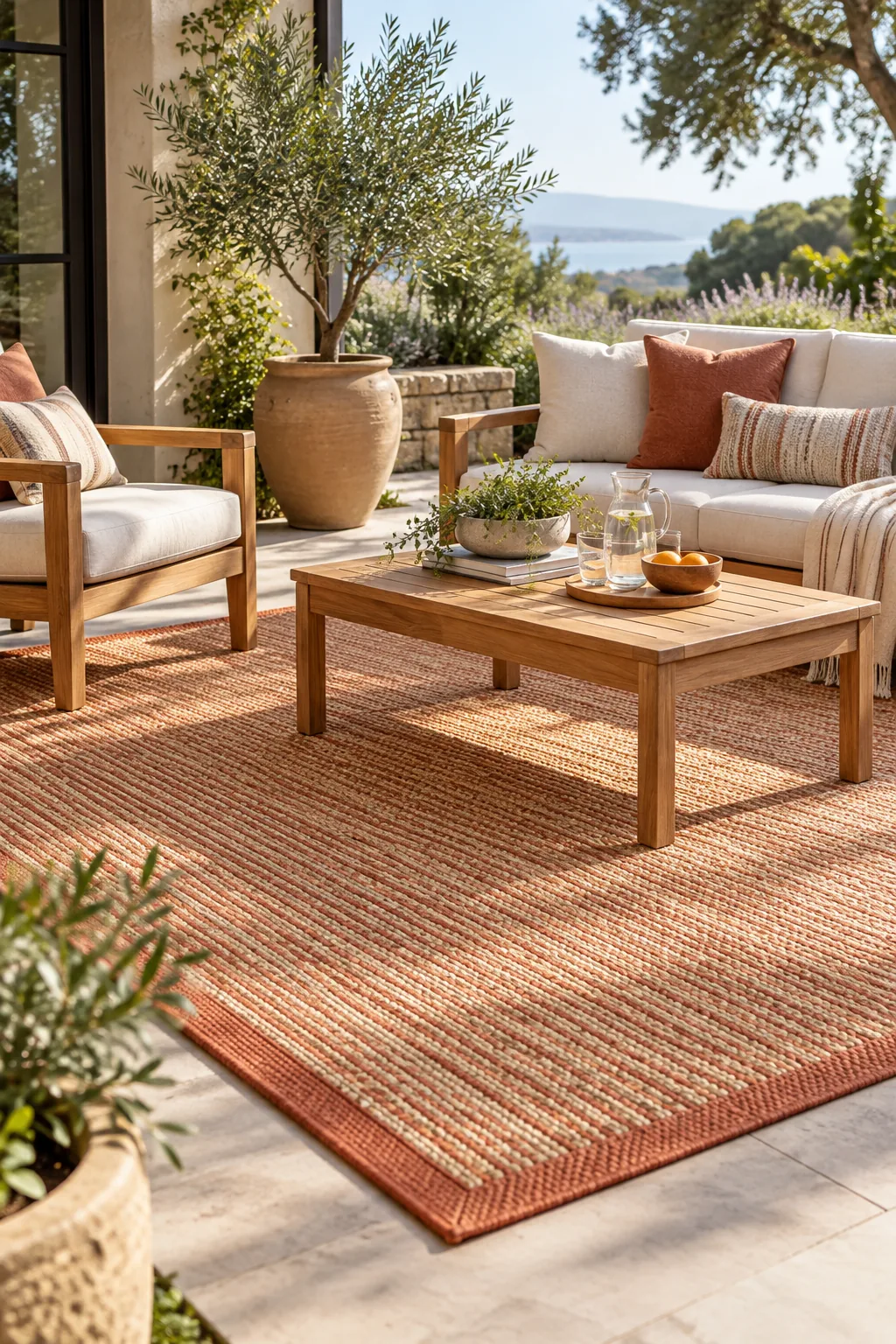
I swapped my Denver patio rug to a solution-dyed acrylic three summers ago to test its durability. The terracotta color hasn’t faded a single shade despite the intense, high-altitude sun baking the surface every afternoon.
Opt for a UV-Treated Flatweave
You should always choose a flatweave construction because the lack of pile allows it to shed rain much faster than a tufted rug. This low-profile design ensures your outdoor patio surface dries quickly after heavy summer thunderstorms.
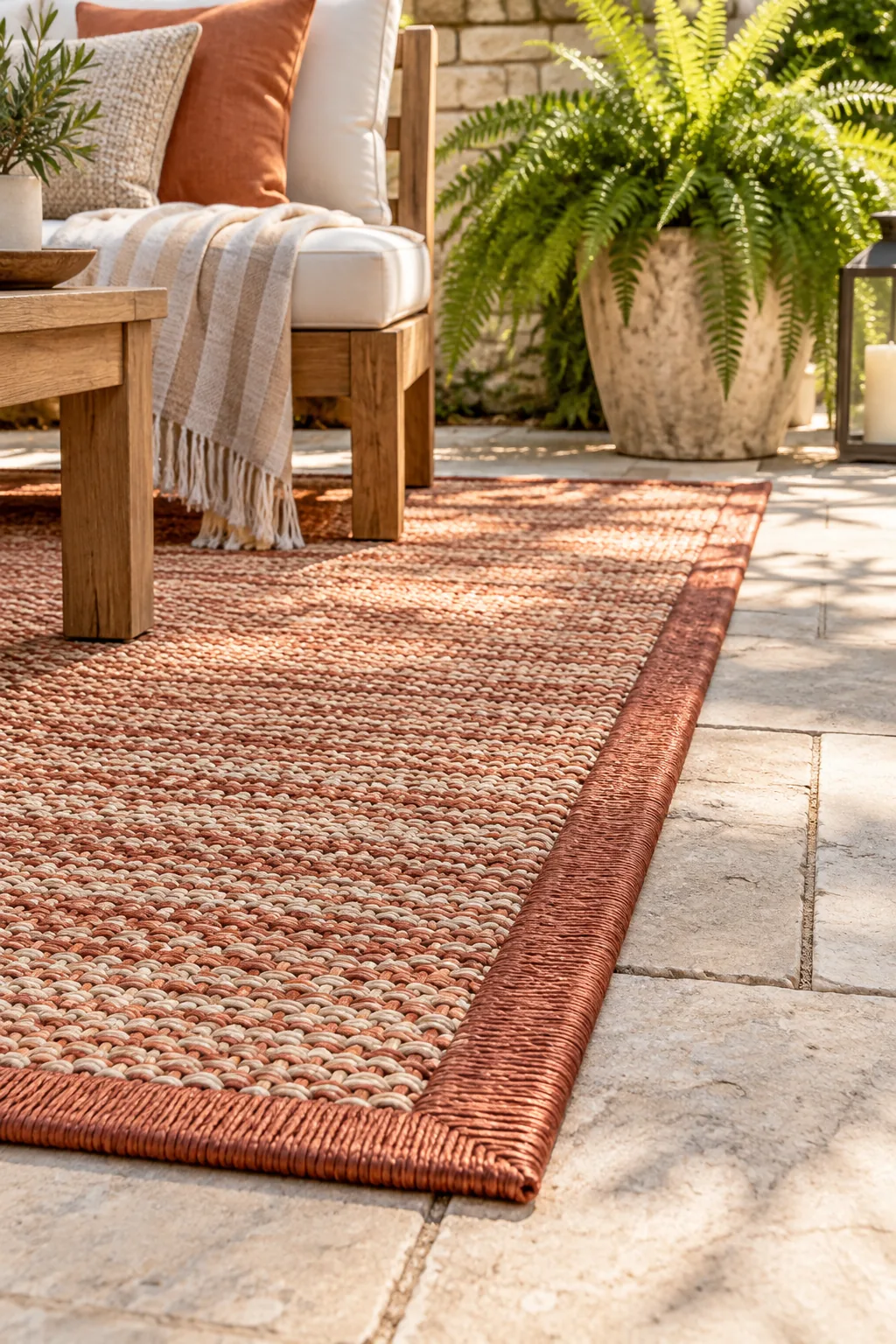
The specialized UV-treated fibers in these tight weaves prevent the synthetic material from turning brittle over time. This targeted chemical treatment stops the plastic yarns from cracking or shedding microplastics onto your patio.
Look for Heat-Bound Edges
Heavy foot traffic and dragging dining chairs require a rugged, reinforced border to survive multiple seasons. Look closely for heat-bound edges with at least a 1/2-inch thickness to prevent the woven rug from fraying at the corners.
A thick, welded perimeter keeps the rug lying perfectly flat against your stone pavers or wooden decking. This structural rigidity eliminates dangerous tripping hazards along your primary outdoor walkways while giving the piece a polished, finished look.
Matching Rug Shapes to Furniture
Always mirror the shape of your primary furniture arrangement when selecting your rug silhouette. A round dining table demands a circular rug, while a standard rectangular sofa pairs perfectly with a traditional rectangular flatweave to maintain visual harmony.
Routine Maintenance for Synthetic Fibers
While solution-dyed yarns resist fading, they still collect airborne dust, pollen, and fallen leaves that can grind into the fibers. You should aggressively sweep the surface with a stiff-bristled push broom at least once a week.
| Cleaning Task | Frequency | Method |
|---|---|---|
| Dry sweeping | Weekly | Stiff push broom |
| Spot cleaning | Immediately | Mild dish soap and water |
| Deep washing | Bi-annually | Garden hose and scrub brush |
Never use a high-pressure power washer on your flatweave textiles, as the intense water jet will instantly destroy the structural integrity of the woven synthetic yarns.
Anchor the Rug with Front Legs
For a cohesive seating area, you must place at least the front two legs of all main furniture pieces directly on the rug. Aim for a deliberate 6 to 8-inch overlap to keep the heavy pieces physically grounded.
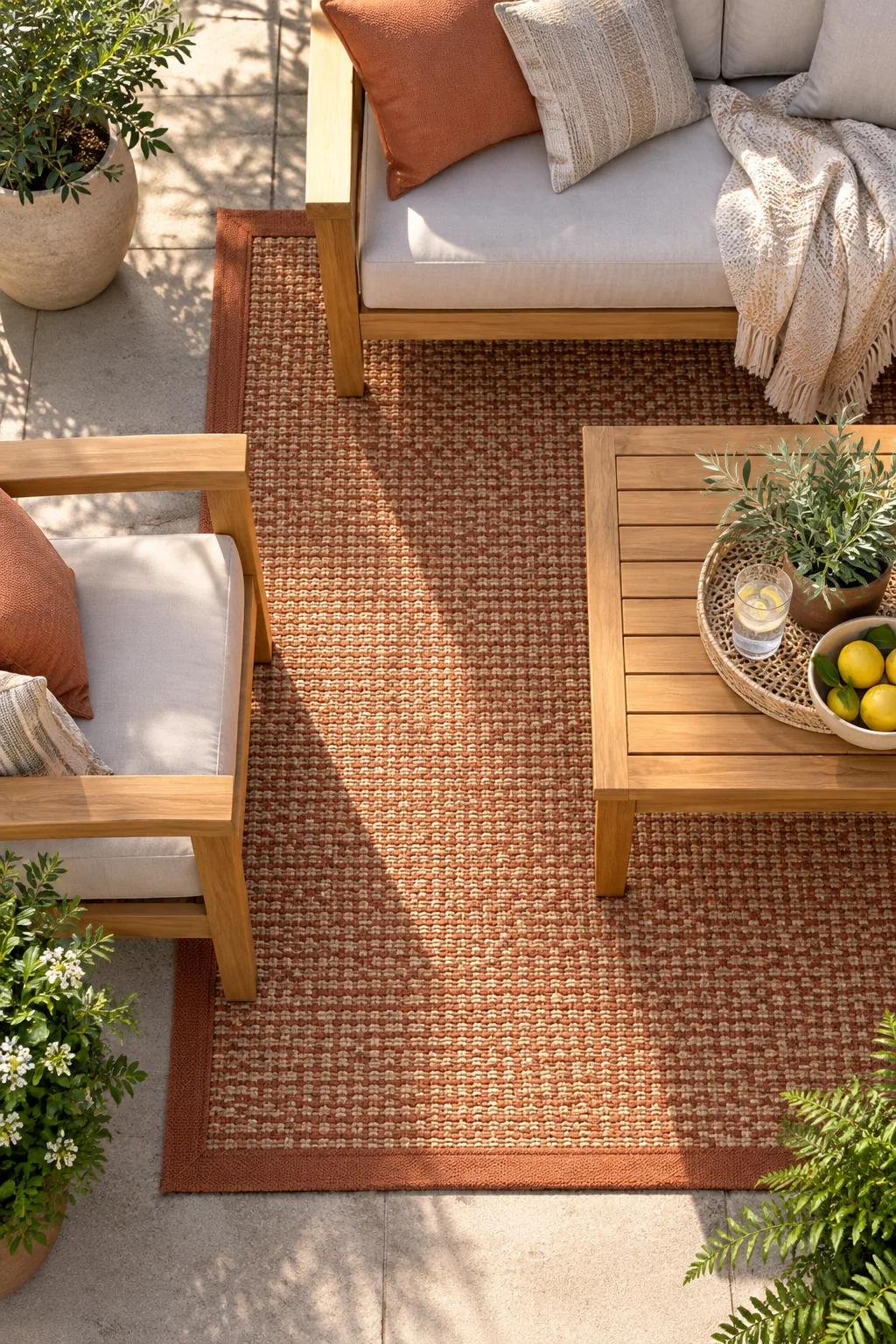
In my own backyard, grounding just the front legs of my heavy teak sofa instantly transformed a floating seating arrangement. This simple placement rule turns a scattered collection of chairs into a cozy, anchored outdoor living room.
Accommodating Heavy Fire Pits
If your seating arrangement centers around a heavy stone fire pit, you must ensure the rug sits entirely clear of the heat source. Synthetic fibers will melt instantly if exposed to direct sparks, so maintain a strict 36-inch safety clearance.
Layering Rugs for Extra Texture
For a highly curated bohemian aesthetic, you can layer a smaller, heavily patterned accent rug diagonally over a larger, neutral base rug. This technique adds incredible visual depth to a plain concrete slab while keeping the overall design grounded.
The Outdoor Rug Sizing Cheat Sheet
A dining rug must be exactly 24 inches wider than the table on all sides so chairs stay on the surface when pulled out. You can download the complete outdoor rug sizing cheat sheet right here to calculate your exact layout dimensions.
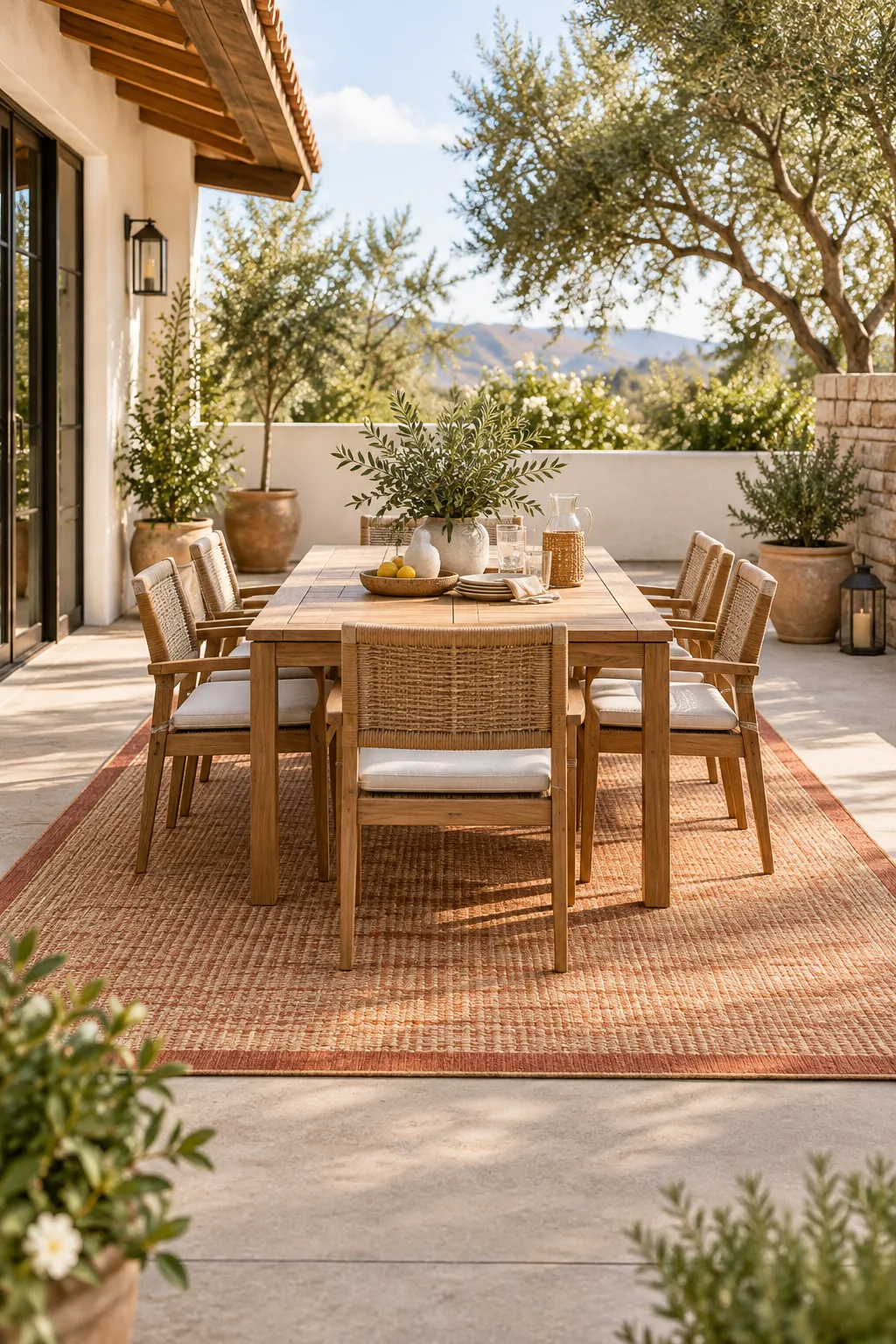
Before you order your final size, run through this quick physical check to ensure the rug won’t disrupt your patio’s natural traffic flow.
Leaving Bare Patio for Walkways
When planning your overall patio layout, you must leave at least 12 to 18 inches of bare flooring between the rug edge and any walls or railings. This critical negative space creates a natural visual walkway and prevents the space from looking cramped.
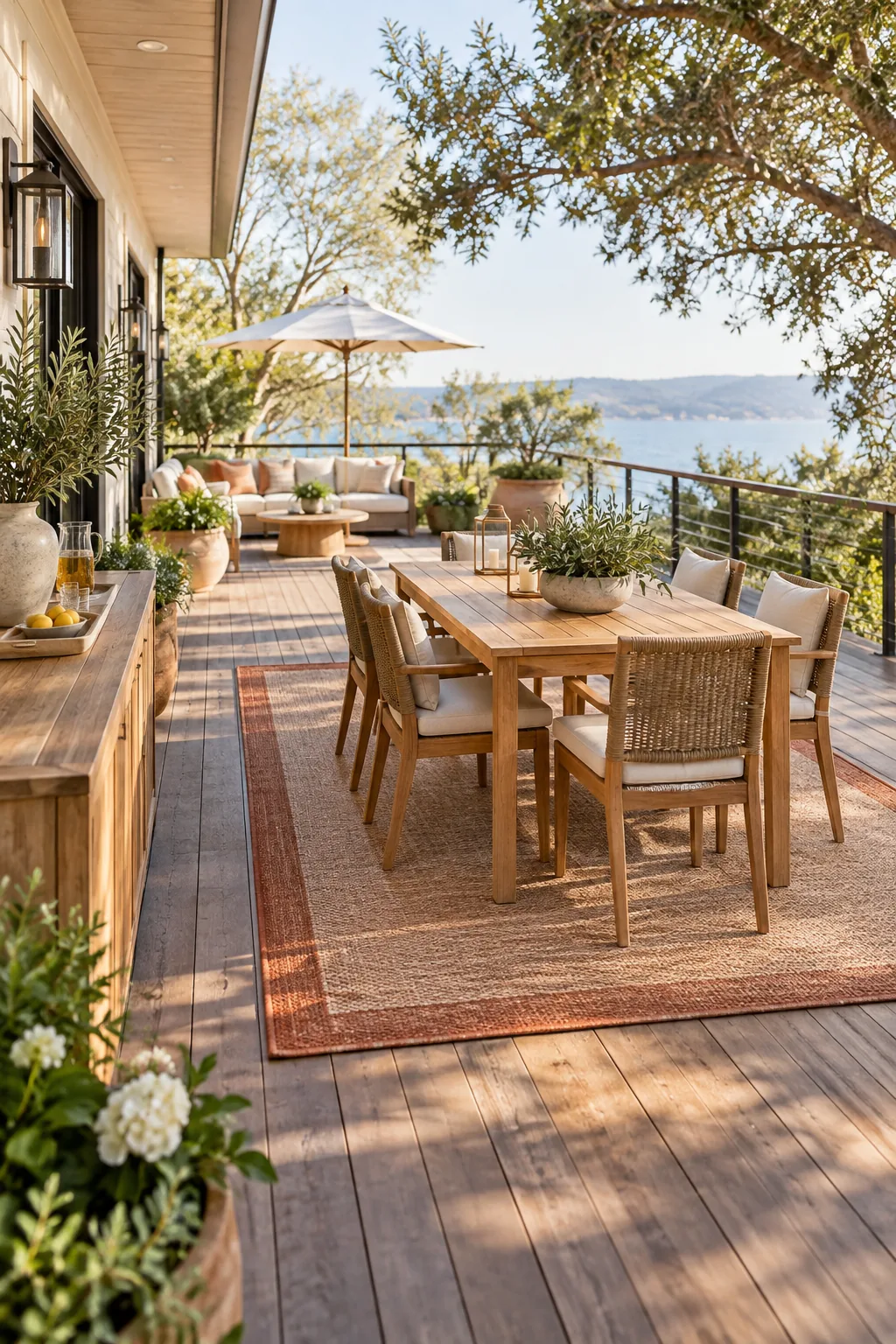
Coordinating with Outdoor Cushions
Treat your patio rug as the foundational color palette for the entire outdoor room. Pull one dominant hue from the woven textile and repeat it precisely in your throw pillows and umbrella fabric to create a professionally designed, cohesive look.
Storing Your Rug During Winter
When temperatures drop below freezing, you must roll up your synthetic rug and store it inside a dry garage or basement. Leaving plastic fibers exposed to heavy ice and snow will cause the material to warp and permanently lose its structural integrity.
4 Ways to Style an Outdoor Patio Rug
Find the perfect color and pattern combination to transform your outdoor living space.
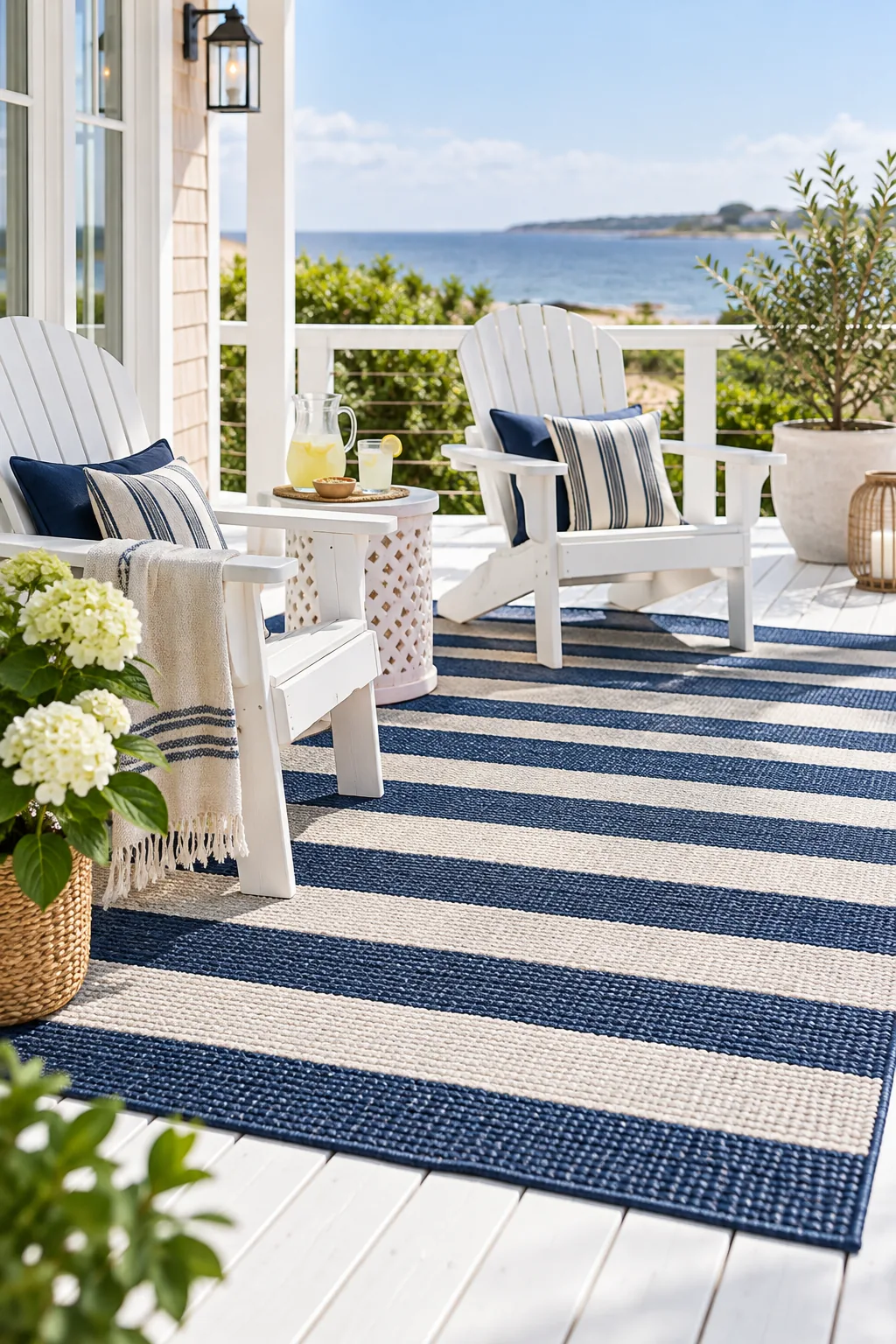
Crisp coastal blue and white: A classic striped pattern instantly brings a nautical feel to a simple painted deck.
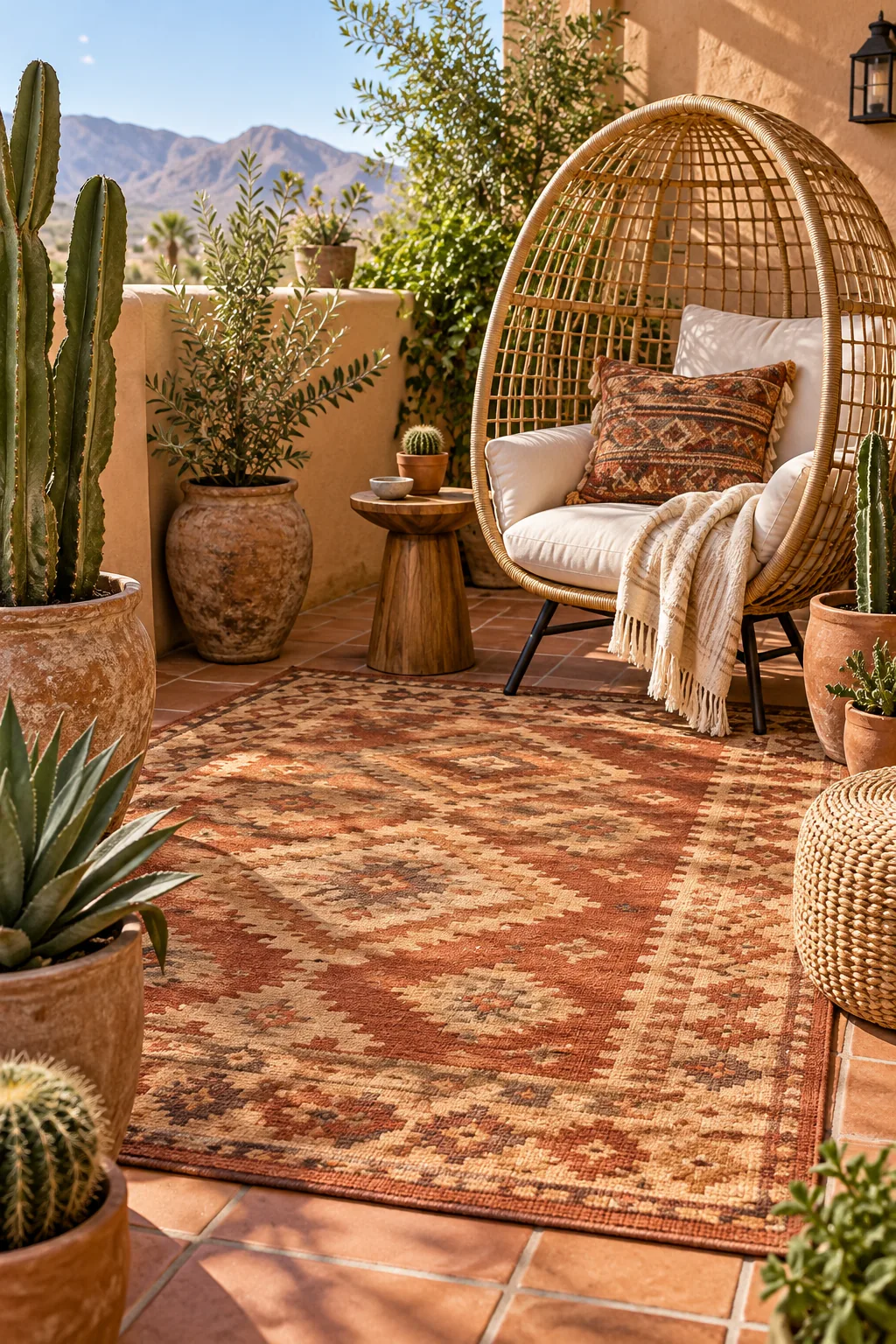
Warm desert bohemian geometric patterns: Earthy tones and layered textures create a relaxed, sun-baked atmosphere for lounging.
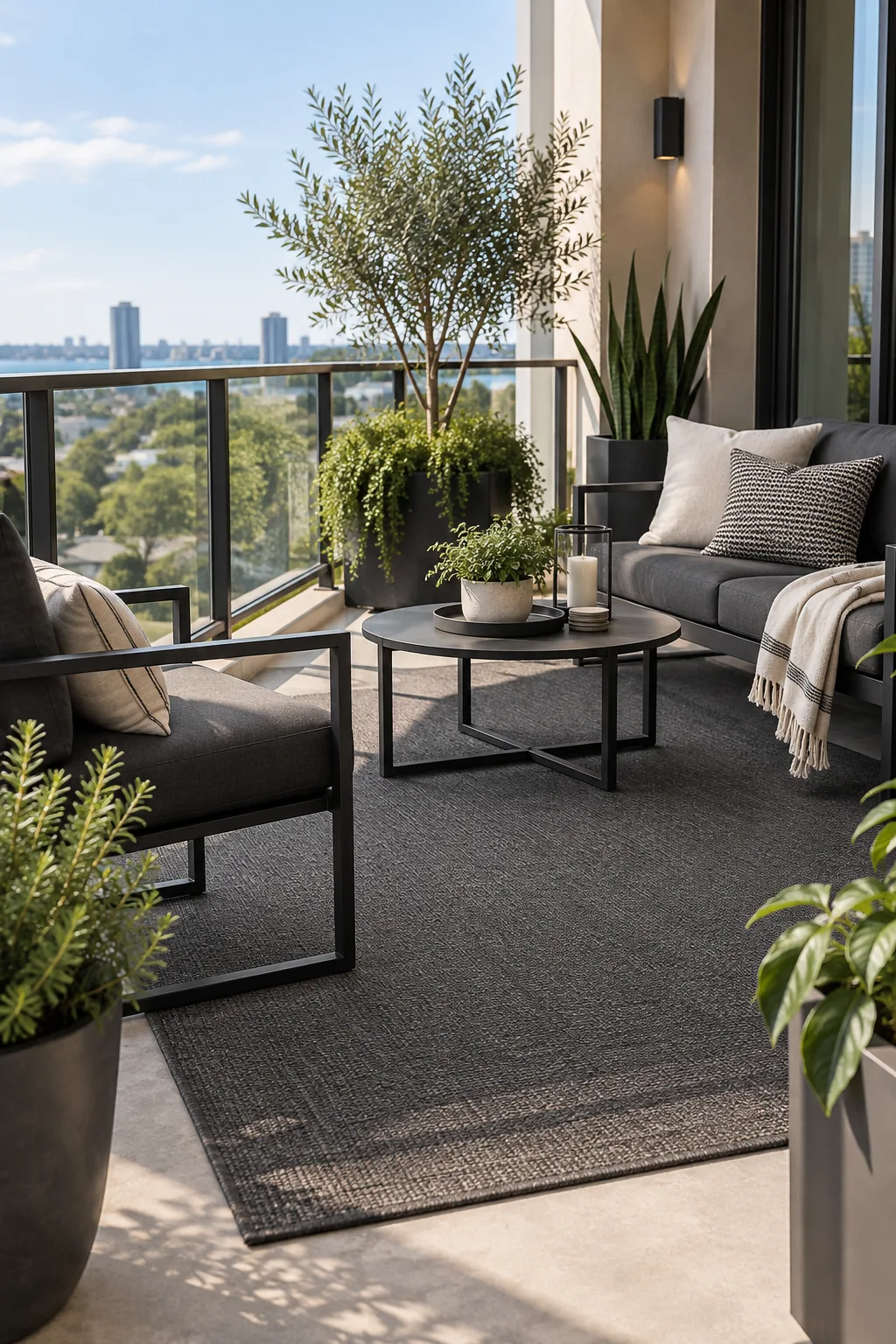
Sleek modern minimalist charcoal grey: A dark, solid rug grounds an urban balcony and makes surrounding greenery pop beautifully.
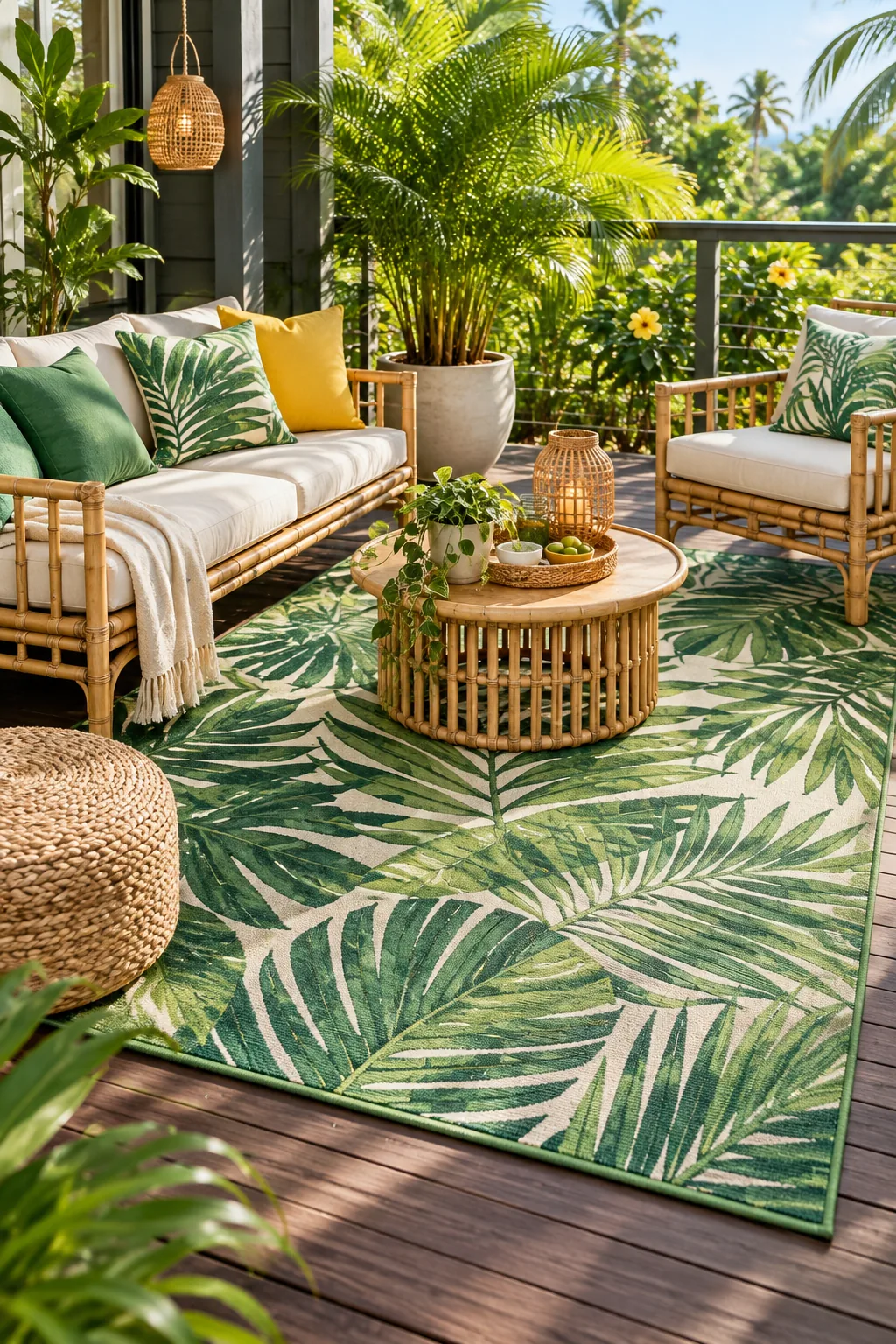
Lush tropical green botanical print: Oversized leaf motifs inject vibrant energy into a shaded backyard seating arrangement.
Defining Distinct Patio Zones
You can easily use multiple rugs to visually separate a large, expansive deck into distinct functional rooms. The secret is to match the color palette but vary the patterns to keep the dining and lounging areas cohesive without looking identical.
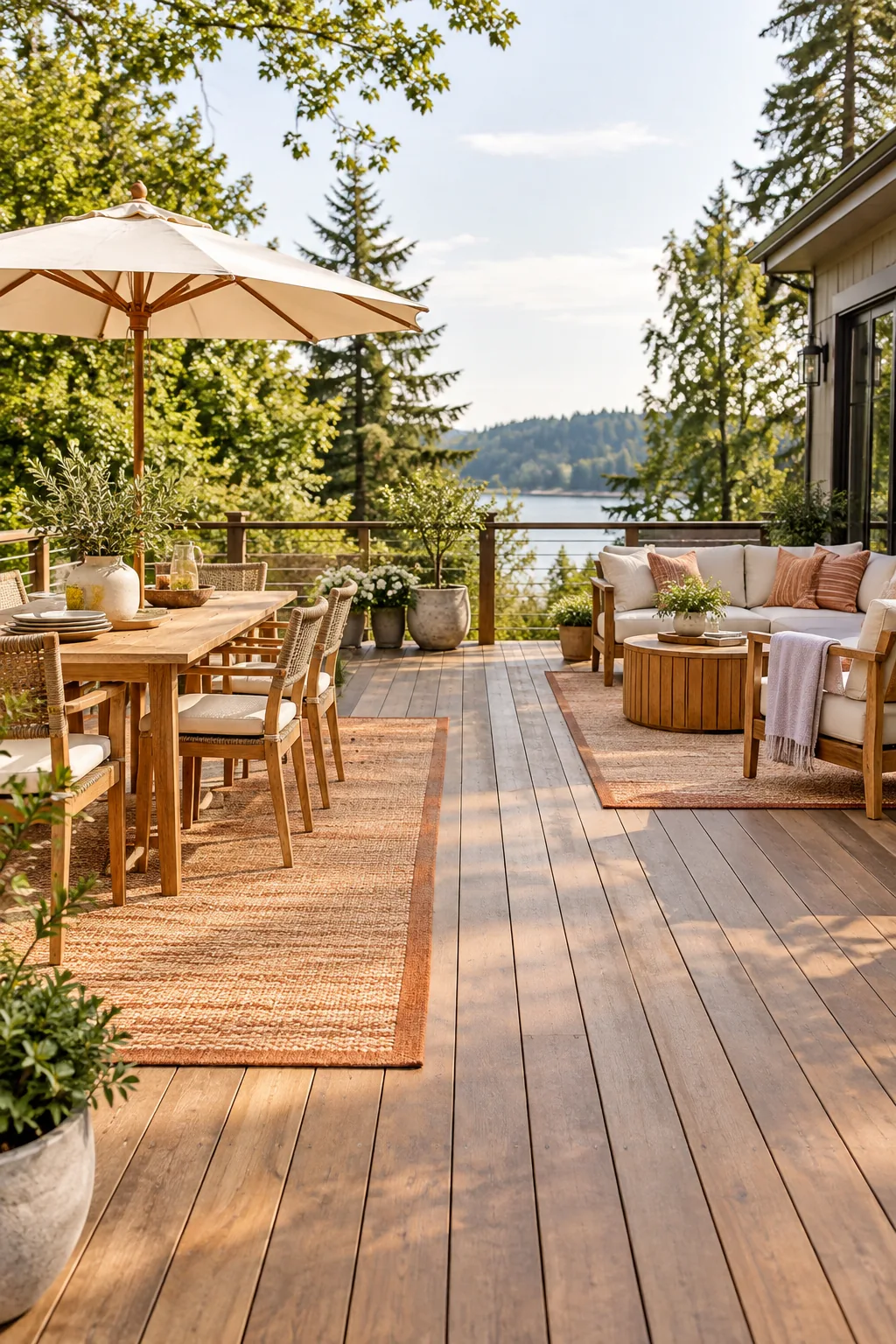
I often use a solid sand-colored flatweave under the dining table and a geometric terracotta pattern in the lounge area. This subtle contrast gives each space its own distinct personality while maintaining a unified backyard aesthetic.