
10+ Sleek Modern Shiplap Fireplace Ideas for Your Home
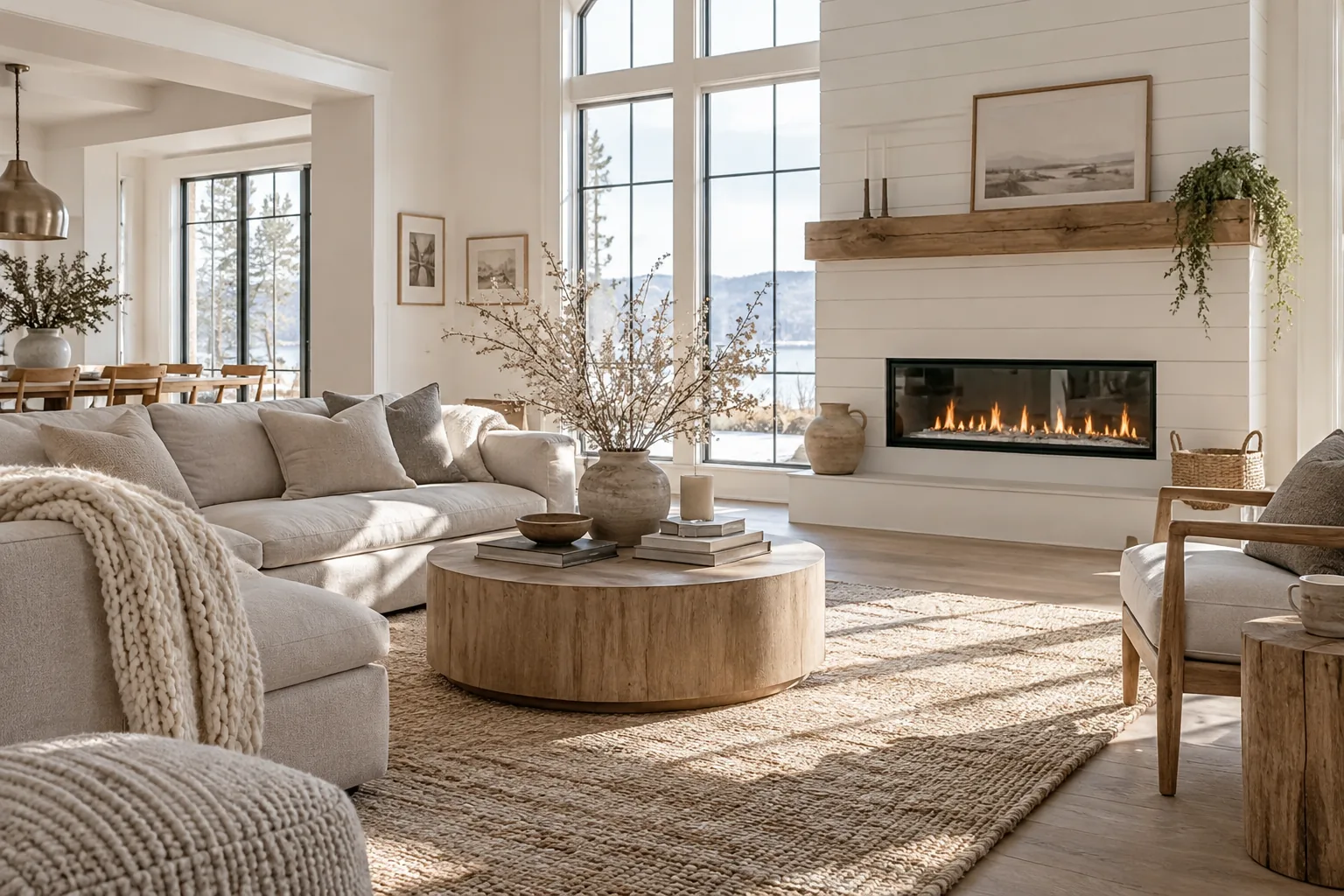
Shiplap has evolved way past the modern farmhouse phase into something incredibly sleek and versatile. I put together these modern shiplap fireplace designs to help you nail those clean lines and custom built-in looks without overthinking it.
1. Black Vertical Shiplap
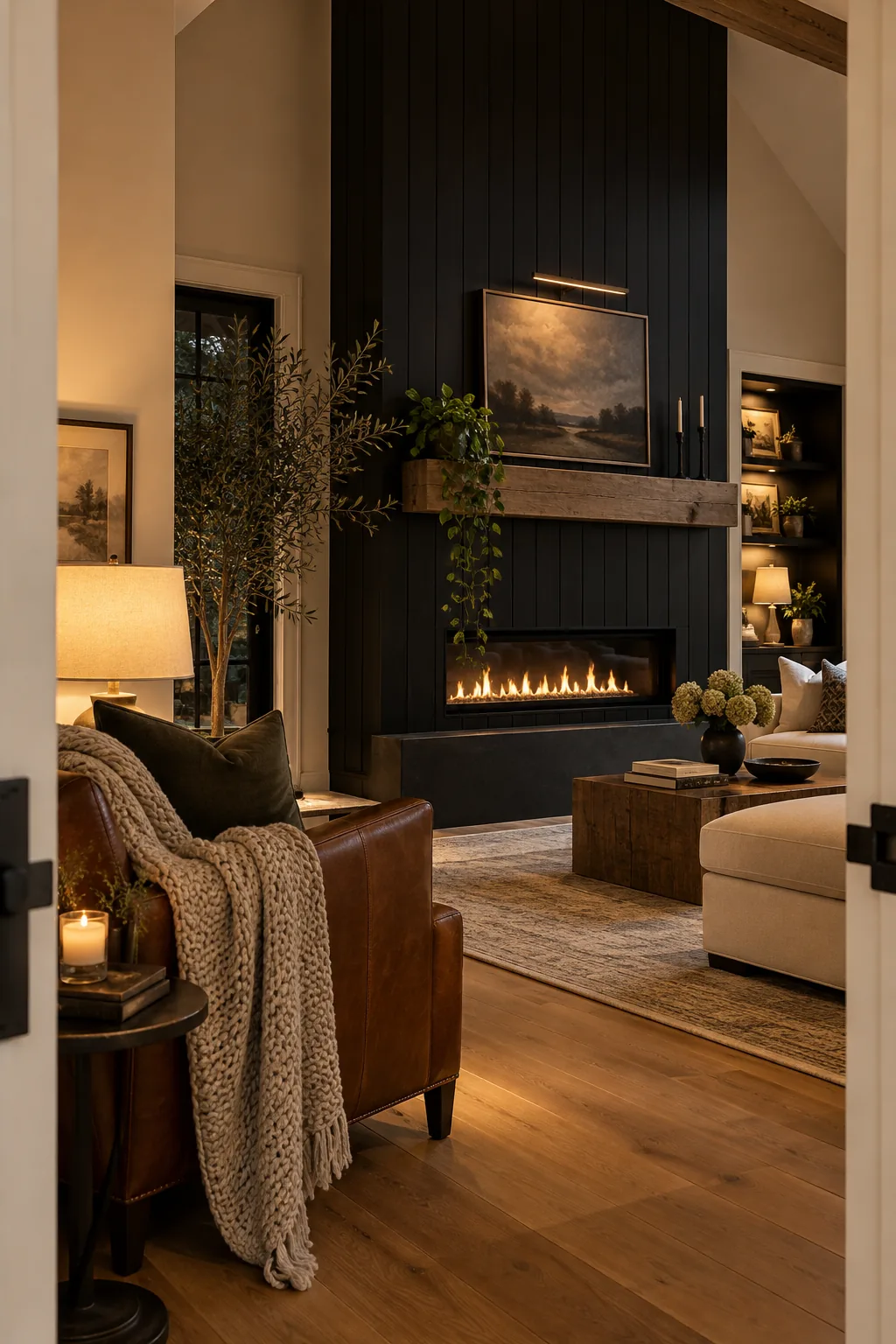
A standard six-inch shiplap board looks completely different when you run it vertically and paint it pitch black. This draws the eye straight up to the ceiling, making your living room feel massive. To pull this off, you need a few key elements:
It is the easiest way to add drama without overwhelming the space.
- Matte black paint
- A light wood mantel
- A minimalist hearth
2. Thin Slat Shiplap
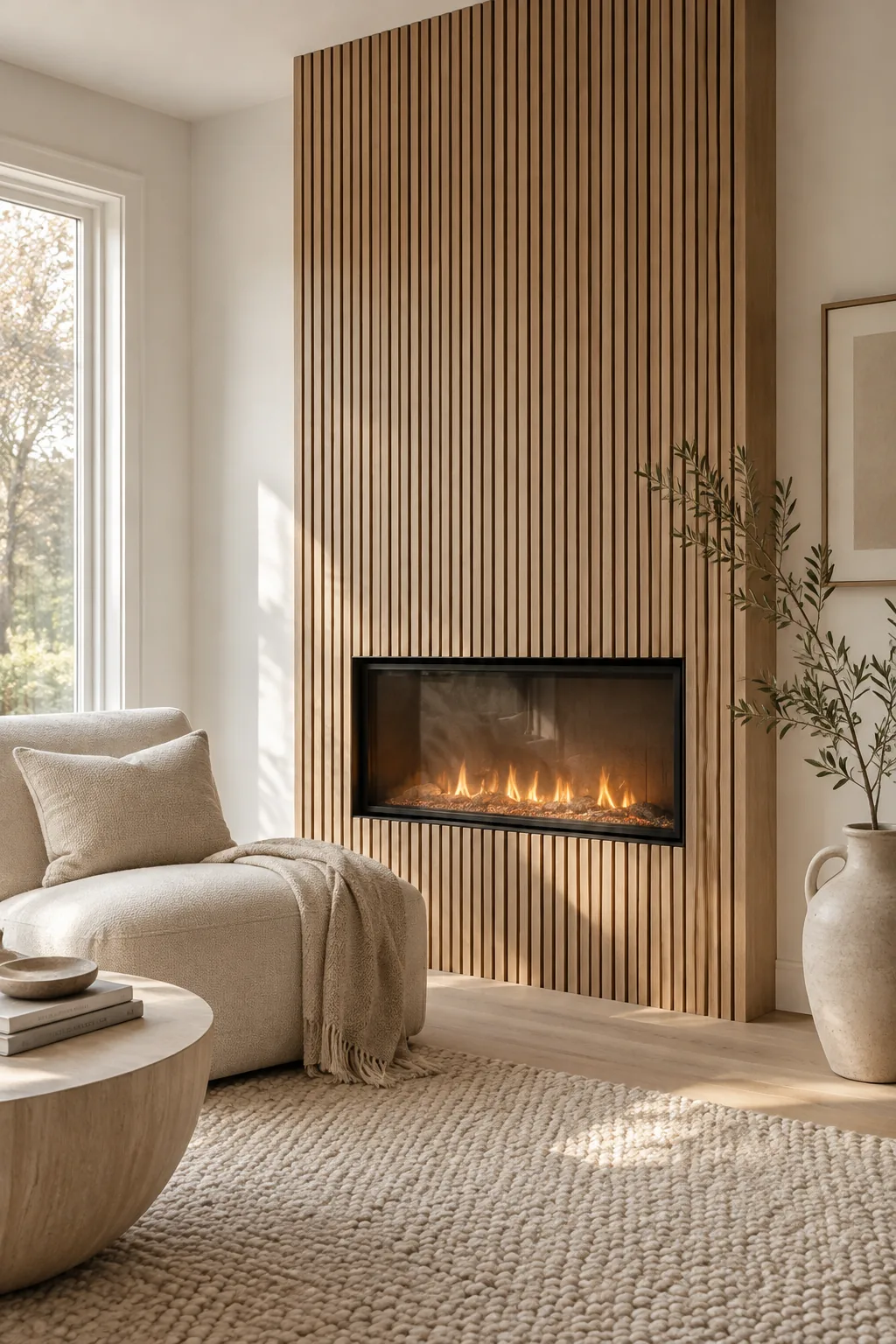
Trading traditional wide planks for skinny wood slats gives the fireplace a highly textured, ribbed appearance. This micro-shiplap style pairs beautifully with a sleek electric fireplace insert. You can wrap the entire chimney breast in natural oak to warm up a stark white room. Keeping the mantel completely hidden keeps the silhouette perfectly streamlined.
Why it works: The tight spacing of the slats creates a rich visual texture that feels incredibly high-end.
3. Asymmetrical Layout
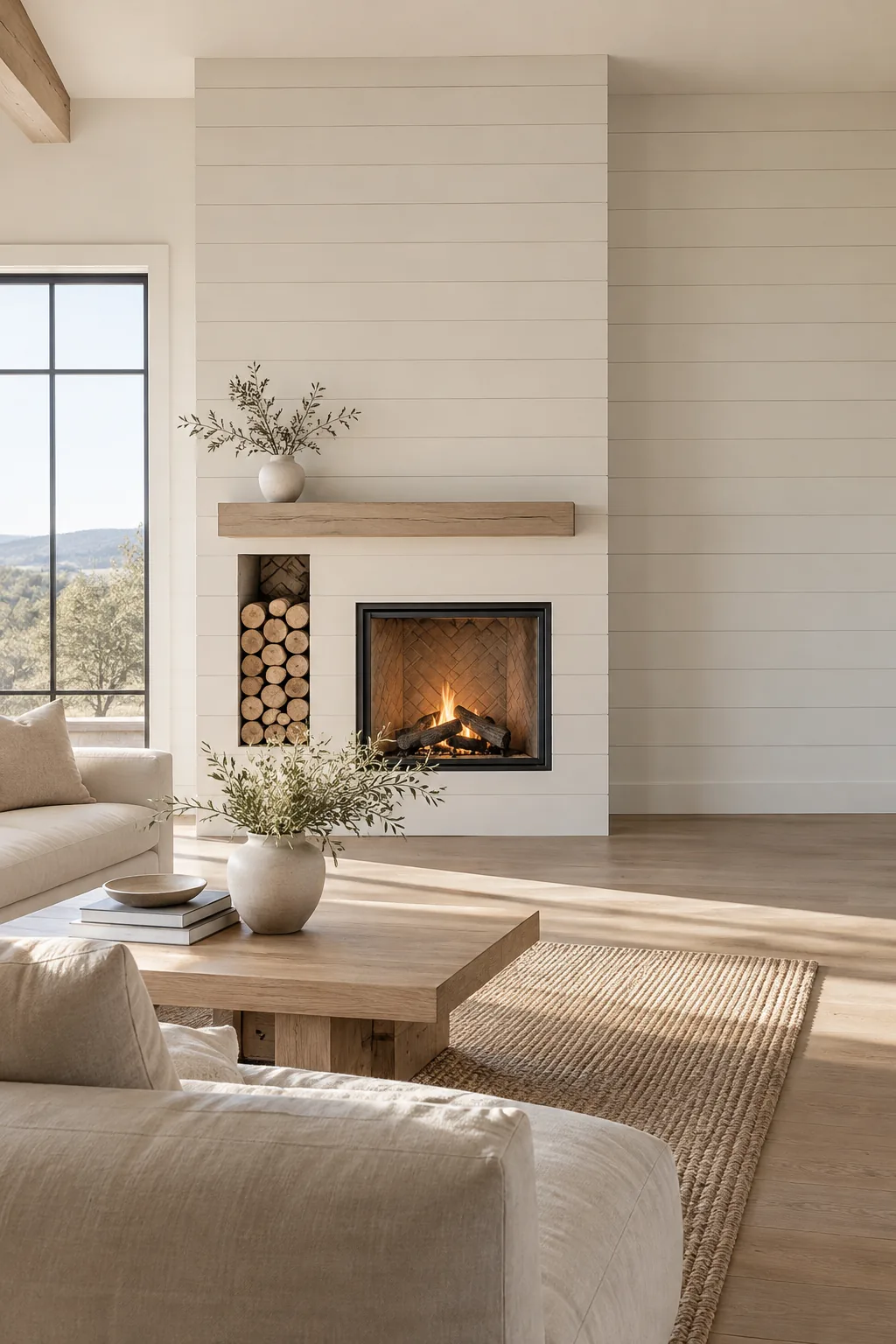
I always try to convince my clients to embrace asymmetry.
Off-centering the firebox within a wide shiplap accent wall leaves room for a built-in log storage niche on one side. You get this beautiful balance of negative space and functional storage. It completely modernizes the traditional fireplace layout.
4. Plaster and Shiplap Combo
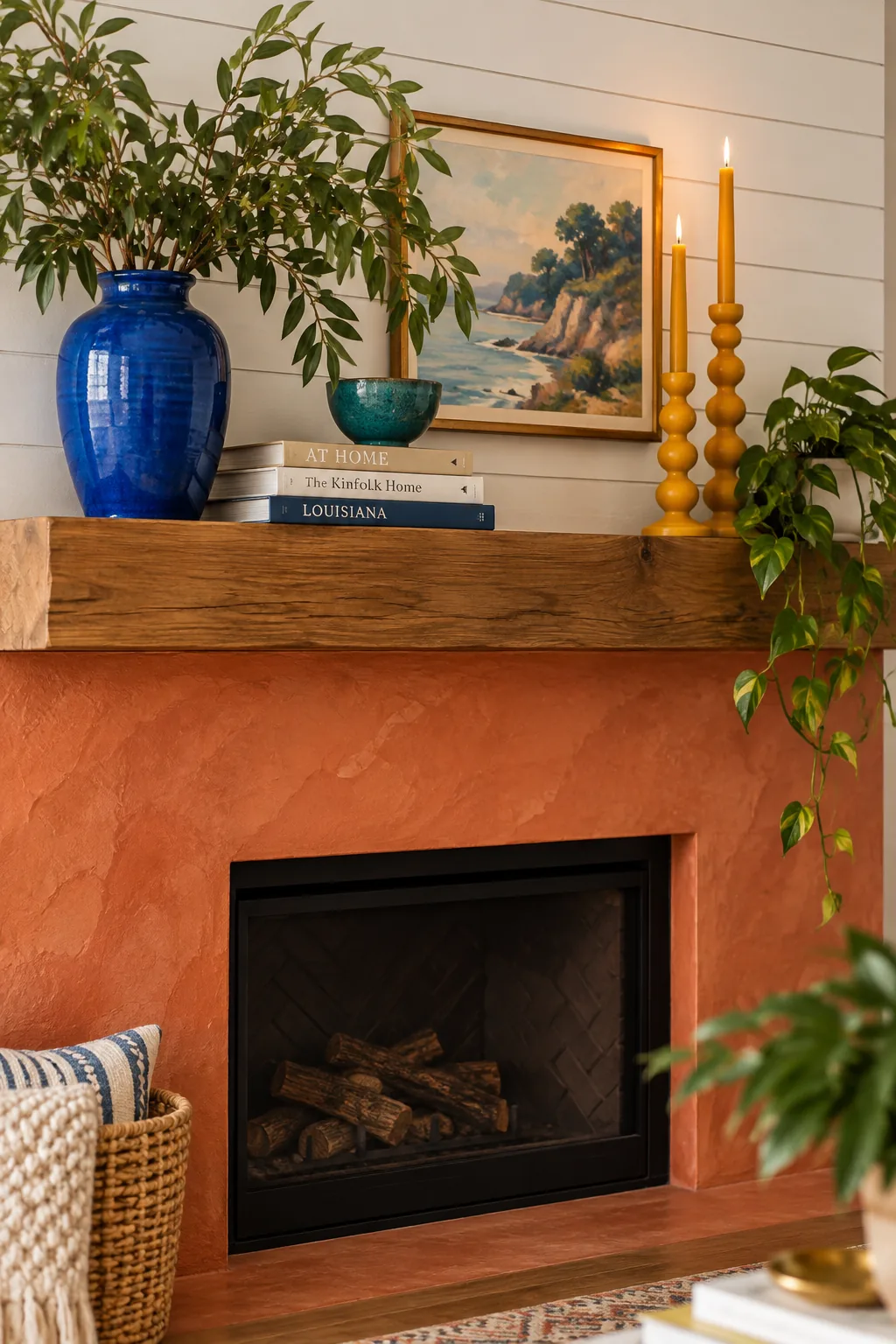
Splitting the materials halfway up the wall grounds the design while keeping it light. You can run white painted shiplap on the top half and use a smooth concrete or plaster finish on the bottom around the firebox. The contrast between the crisp lines of the wood and the organic texture of the plaster is stunning.
Just make sure your mantel sits right on the transition line to hide the seam.
5. Monochromatic Paint Drenching
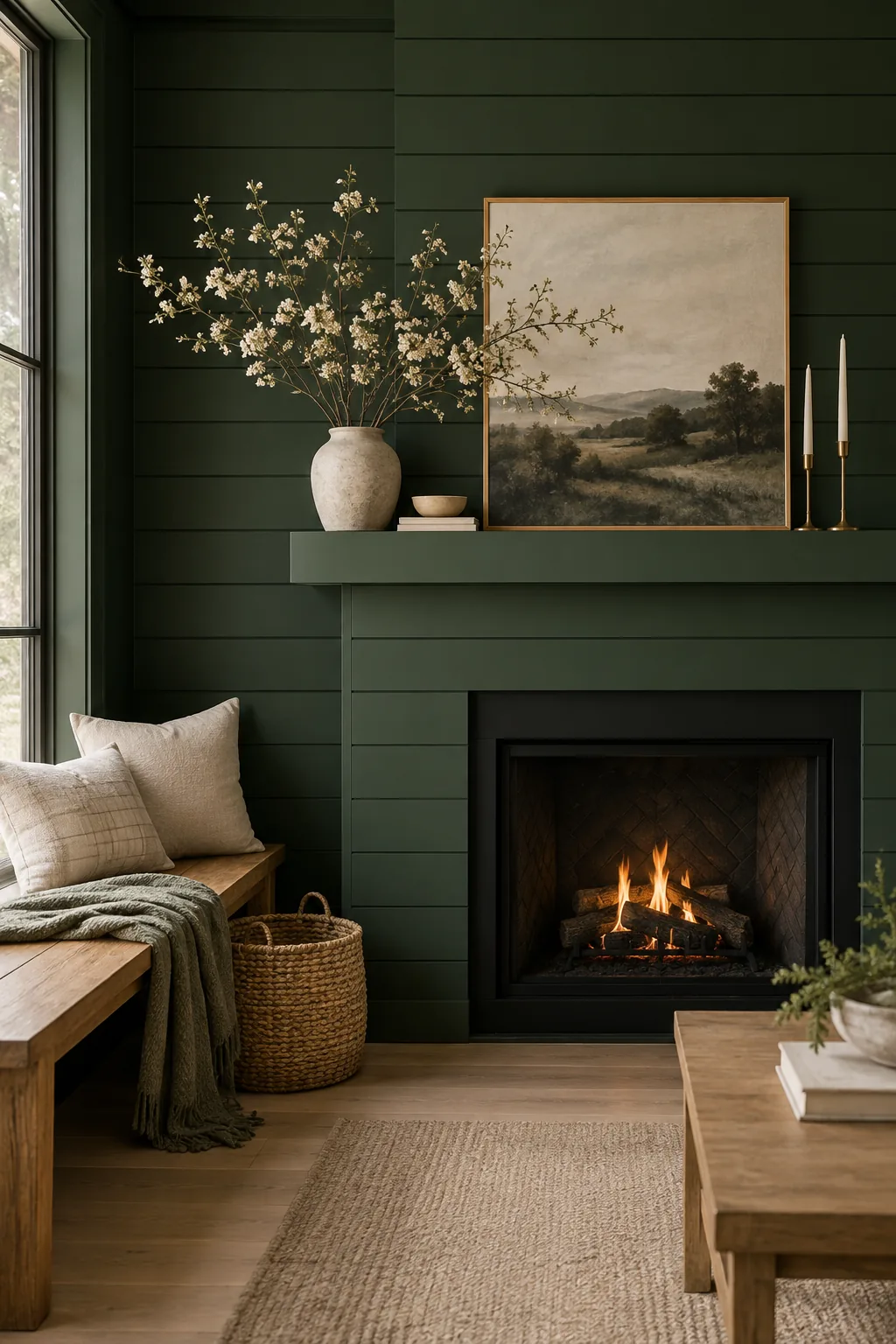
A seamless, color-drenched wall makes the fireplace look like a custom architectural feature rather than an add-on. You simply paint the shiplap boards, the mantel, and the surrounding walls the exact same dark, moody shade. Deep forest green or navy blue works perfectly for this. The shadows in the shiplap gaps provide all the contrast you need. It turns a basic builder-grade living room into a cozy, sophisticated lounge.
6. Floating Hearth
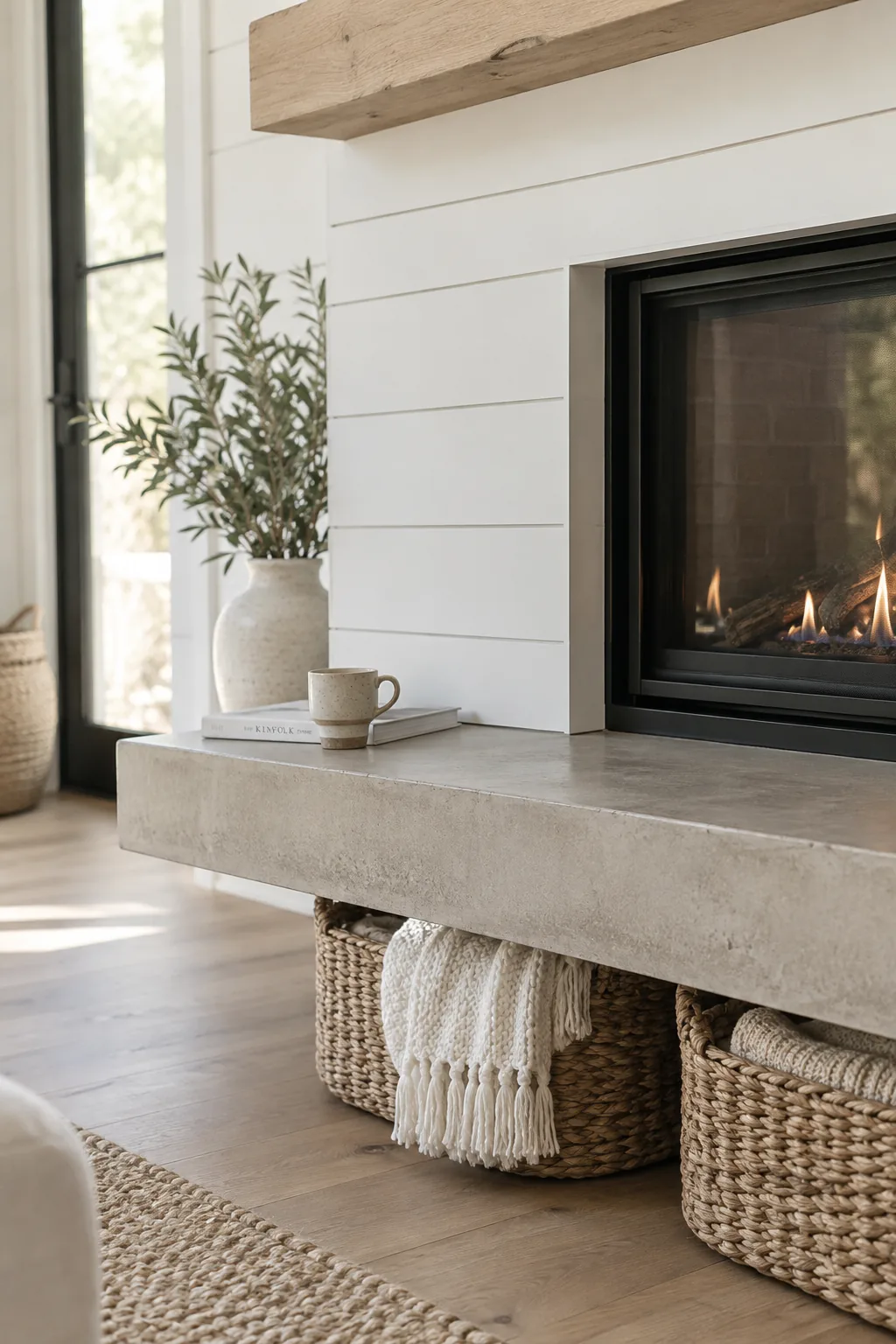
My favorite trick for small spaces is lifting the hearth right off the floor. Running horizontal shiplap all the way down to a floating concrete bench creates an illusion of more floor space. You can tuck woven baskets underneath for extra blanket storage. It keeps the whole fireplace wall feeling incredibly airy and light.
7. Hidden Television Frame
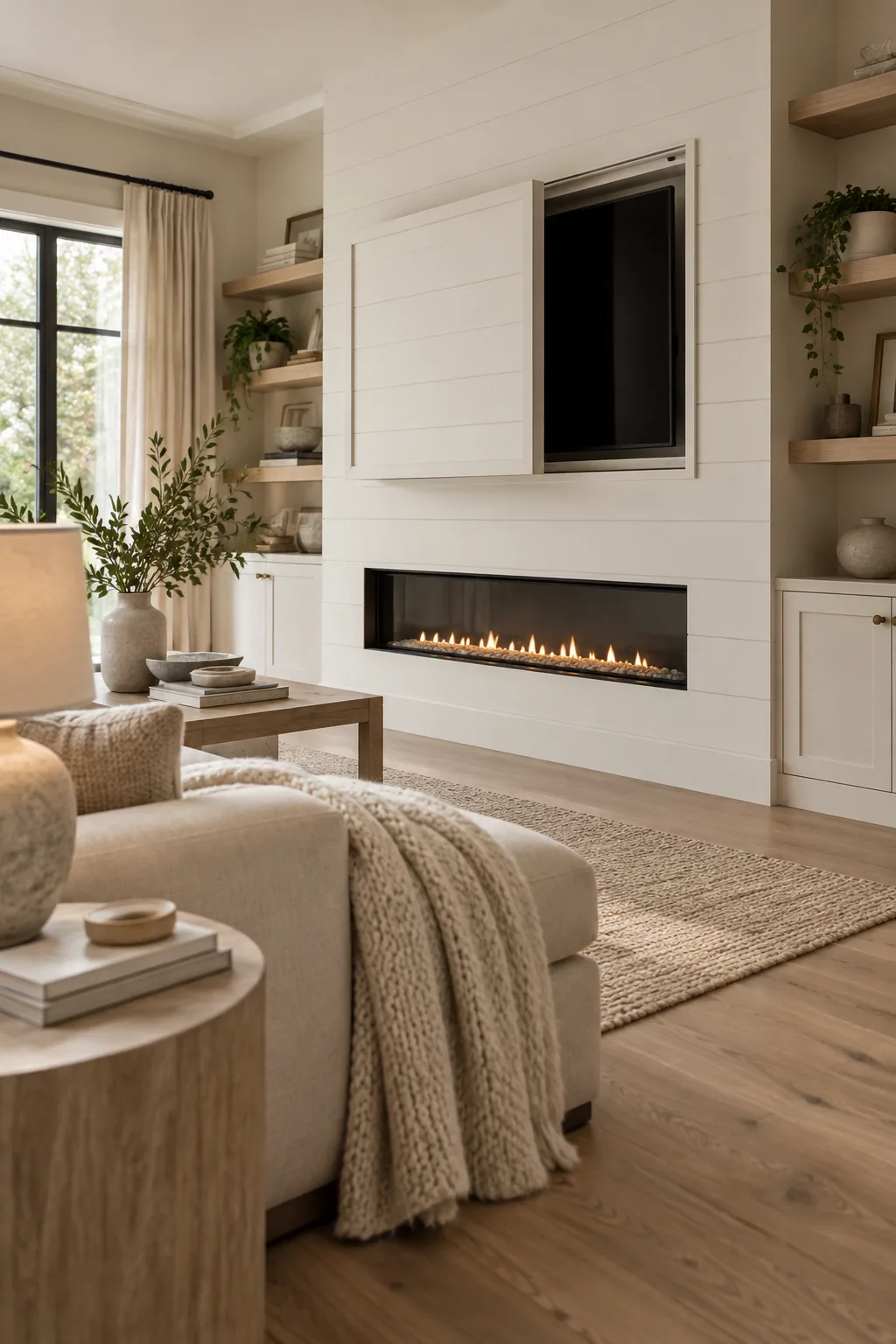
A flush, minimalist facade instantly elevates the room by hiding bulky electronics. You can recess a slim television directly into the shiplap chimney breast so it sits perfectly flush with the wood paneling.
8. Wrap-Around Corner Fireplace
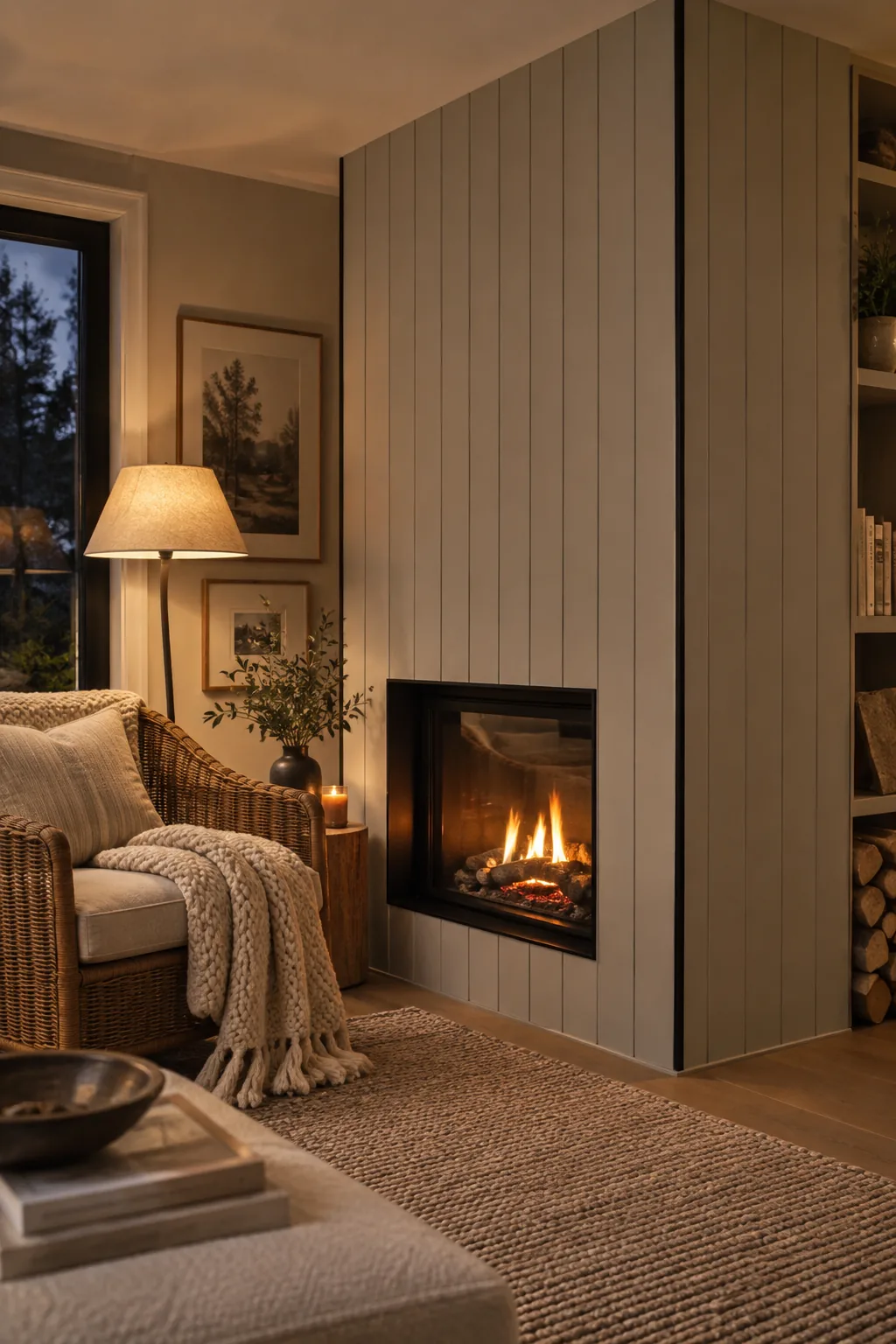
Corner fireplaces often look clunky until you unify them with a single material. Wrapping vertical shiplap continuously around both exposed sides of the bump-out smooths out awkward angles. You can finish the outside corners with a simple metal edge trim for a sharp, clean finish.
It completely transforms a weird architectural quirk into a deliberate design statement.
Why it works: Continuous vertical lines draw the eye upward and disguise the bulky footprint of a corner unit.
9. Stained Walnut Shiplap
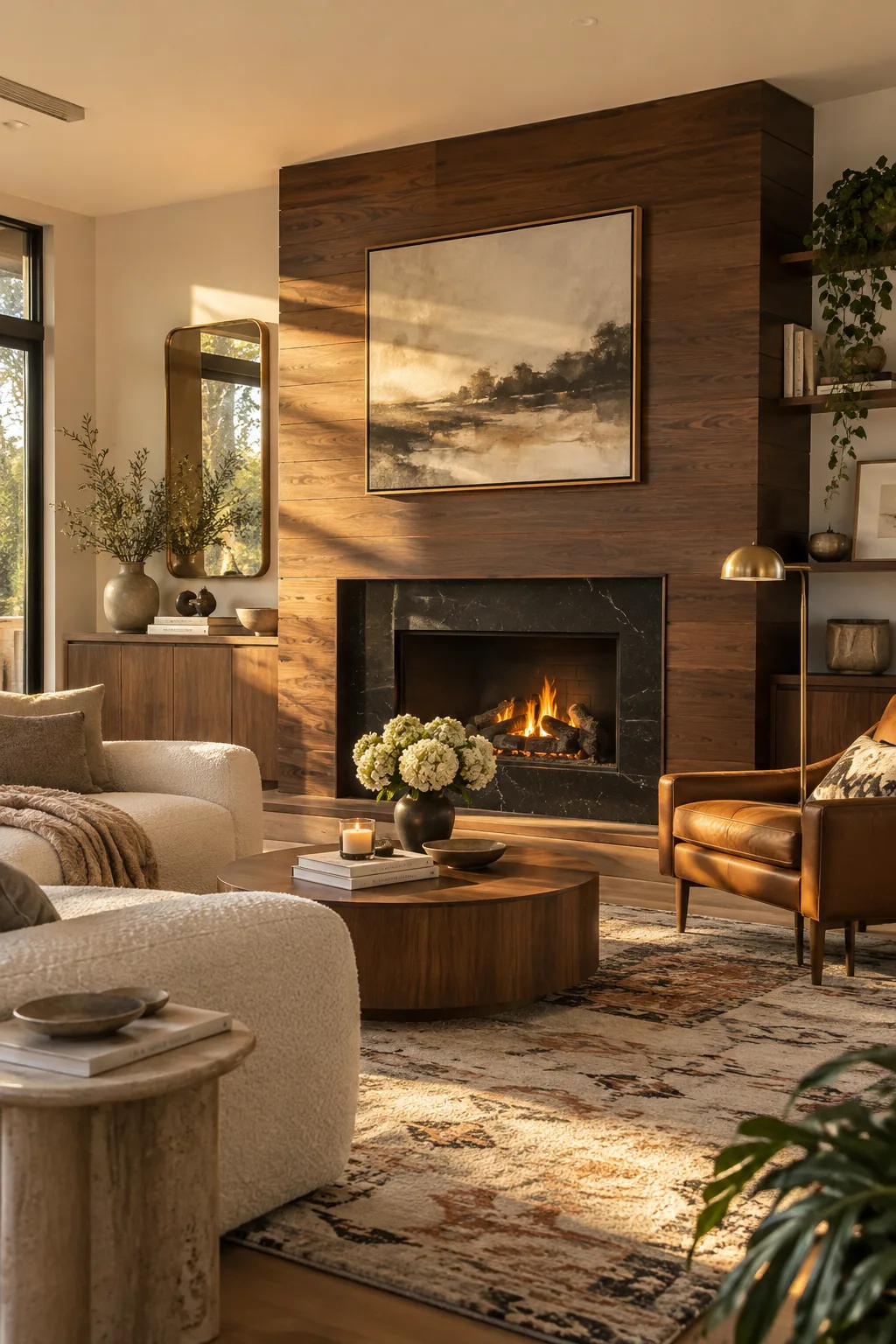
I recently used rich wood tones in a mid-century project and fell in love with the result. Swapping out white paint for stained walnut shiplap brings immense warmth to a sterile room. You just pair it with a black marble surround to keep it feeling contemporary.
The natural wood grain adds a layer of luxury that paint just cannot replicate.
Why it works: Dark wood tones mixed with sleek linear grooves bridge the gap between retro warmth and modern geometry.
10. Floor-to-Ceiling White
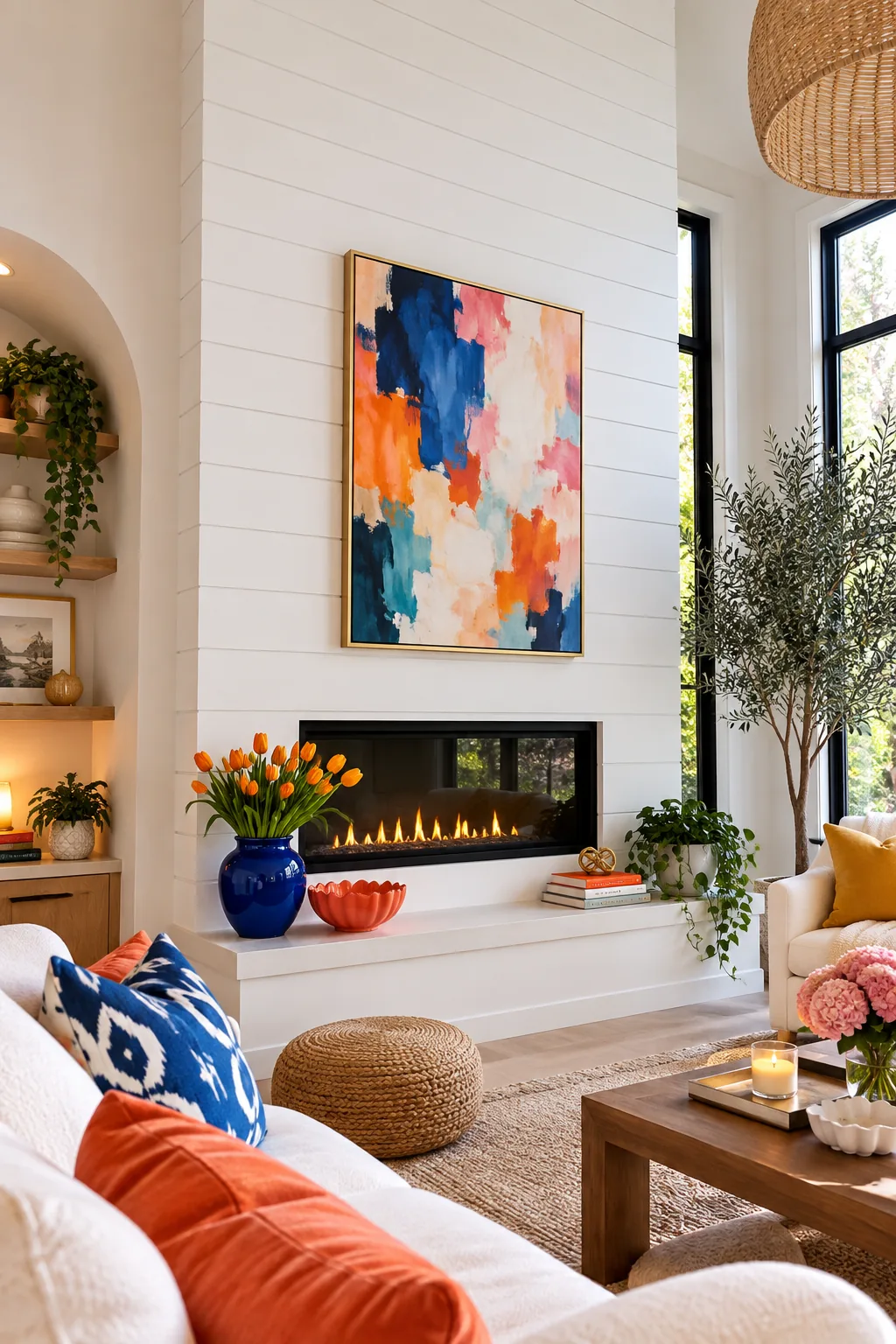
A towering white fireplace draws immediate attention to the height of your ceilings. Stacking wide shiplap planks from the floor straight up to the ceiling without any crown molding keeps the look incredibly sharp.
Why it works: Eliminating traditional trim allows the clean, horizontal lines of the wood to stand out without visual clutter.
11. Shiplap and Stone Mix
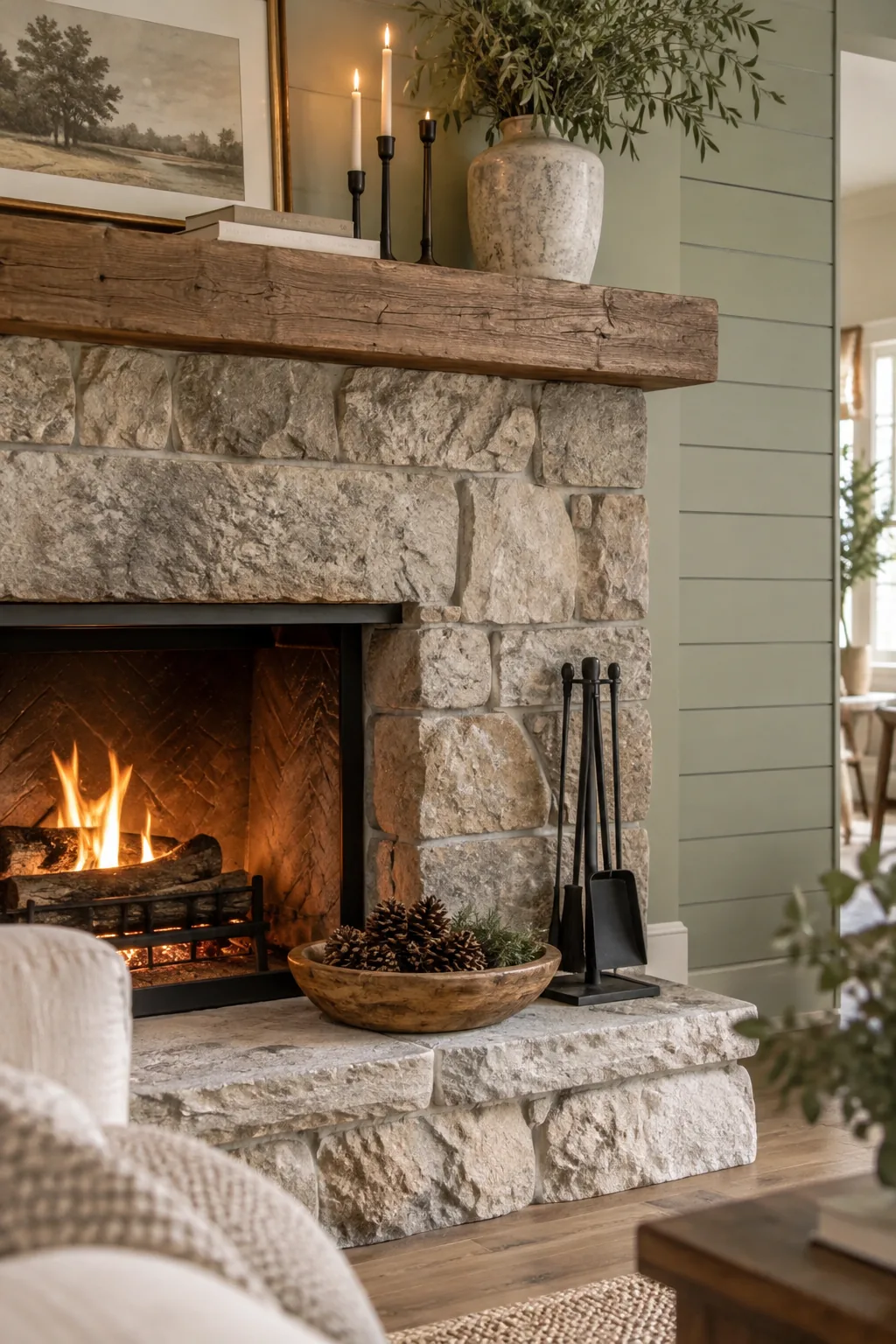
I love pairing rustic materials with super tailored finishes to keep a room from feeling one-note. Flanking a heavy natural stone firebox with crisp painted shiplap softens the ruggedness of the rock.
Why it works: The precise, manufactured lines of the paneling balance the unpredictable, organic shapes of the stone.