
Low Maintenance Florida Front Yard Plant Swaps & Shopping List
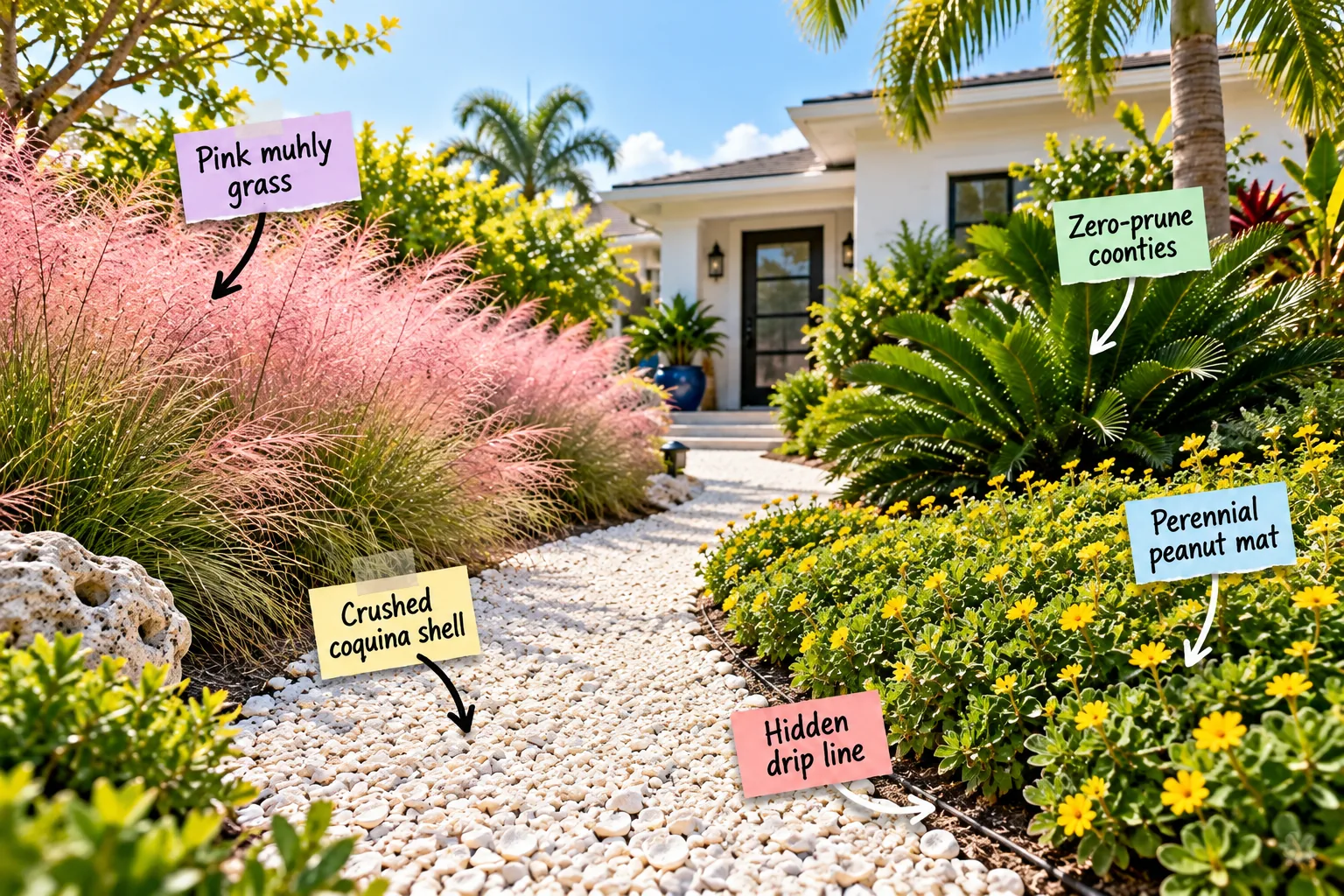
Grab our exact Florida-friendly plant shopping list below to finally replace your thirsty, high-maintenance turf with a gorgeous, drought-tolerant landscape. You will be able to take this precise breakdown straight to the nursery to build a stunning yard using crushed coquina, native grasses, and zero-prune palms.
Swapping Turf for Crushed Coquina
Replace traditional mulch and thirsty grass with a 2- to 3-inch layer of crushed coquina shell to establish a durable, modern foundation. This natural Florida material locks together tightly to form a stable walking surface that drains instantly during heavy summer downpours.
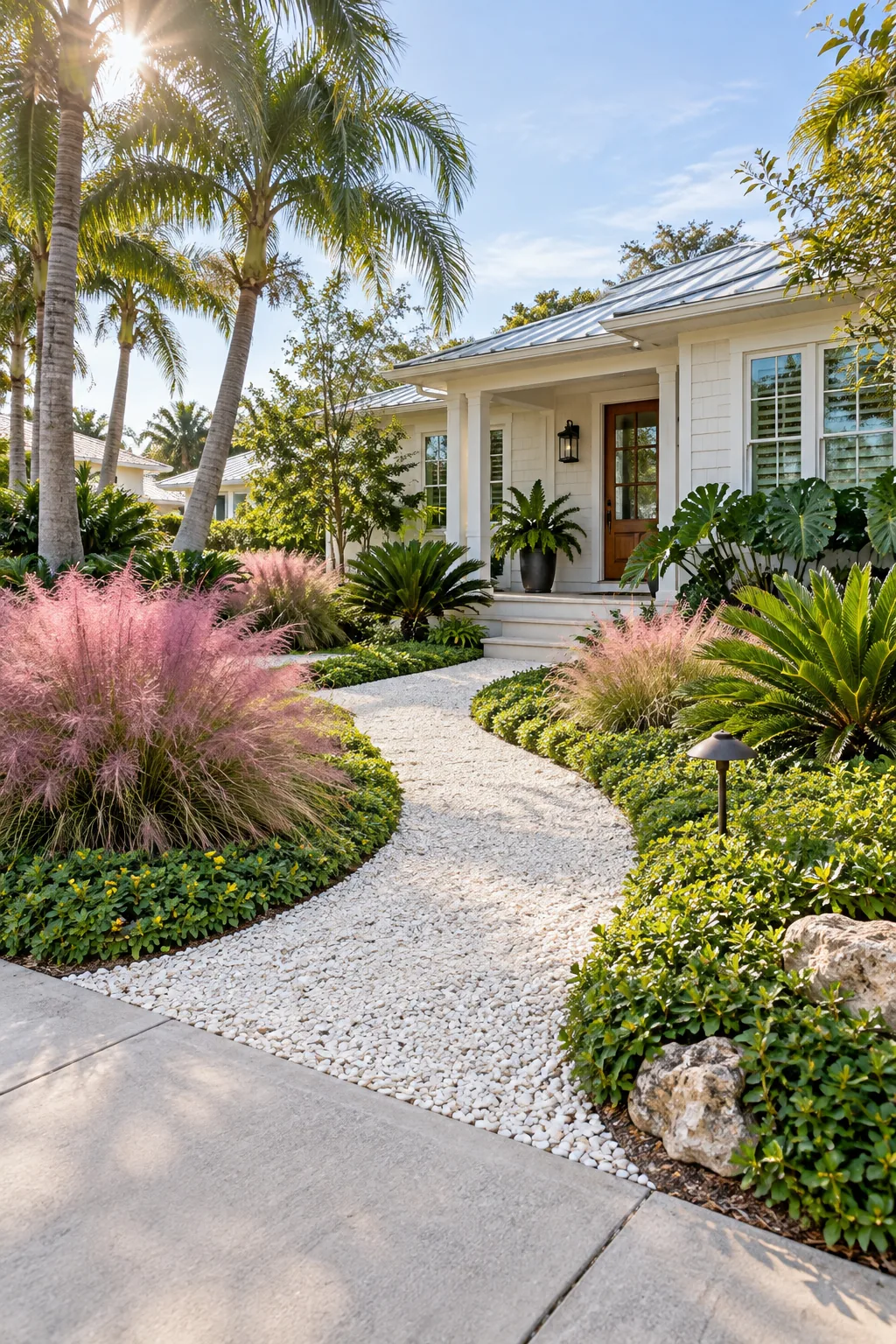
Ditching organic mulch for this locally sourced shell eliminates the frustrating chore of buying and spreading new bark mulch every single spring. You get a bright, clean hardscape that immediately elevates your home’s curb appeal while significantly lowering your weekend maintenance.
Calculating Your Shell Pathway Volume
Before ordering materials, measure your planned pathway length and width in feet to determine exactly how much coquina you need. Multiply those two numbers together to find your total square footage, which dictates your bulk delivery requirements for the project.
Refreshing the Shell Pathway Annually
Maintain the bright white appearance of your coquina path by raking it firmly every spring to bring clean, unweathered shells back to the surface. This simple five-minute task breaks up minor winter compaction and instantly restores the crisp, modern look of the entire front yard without buying new material.
Installing the Hidden Drip Line
Run a 1/2-inch poly drip tubing exactly along the border where the shell path meets the planting beds before laying your final green groundcover. This targeted approach delivers water directly to the root zones while keeping the walking path completely dry.
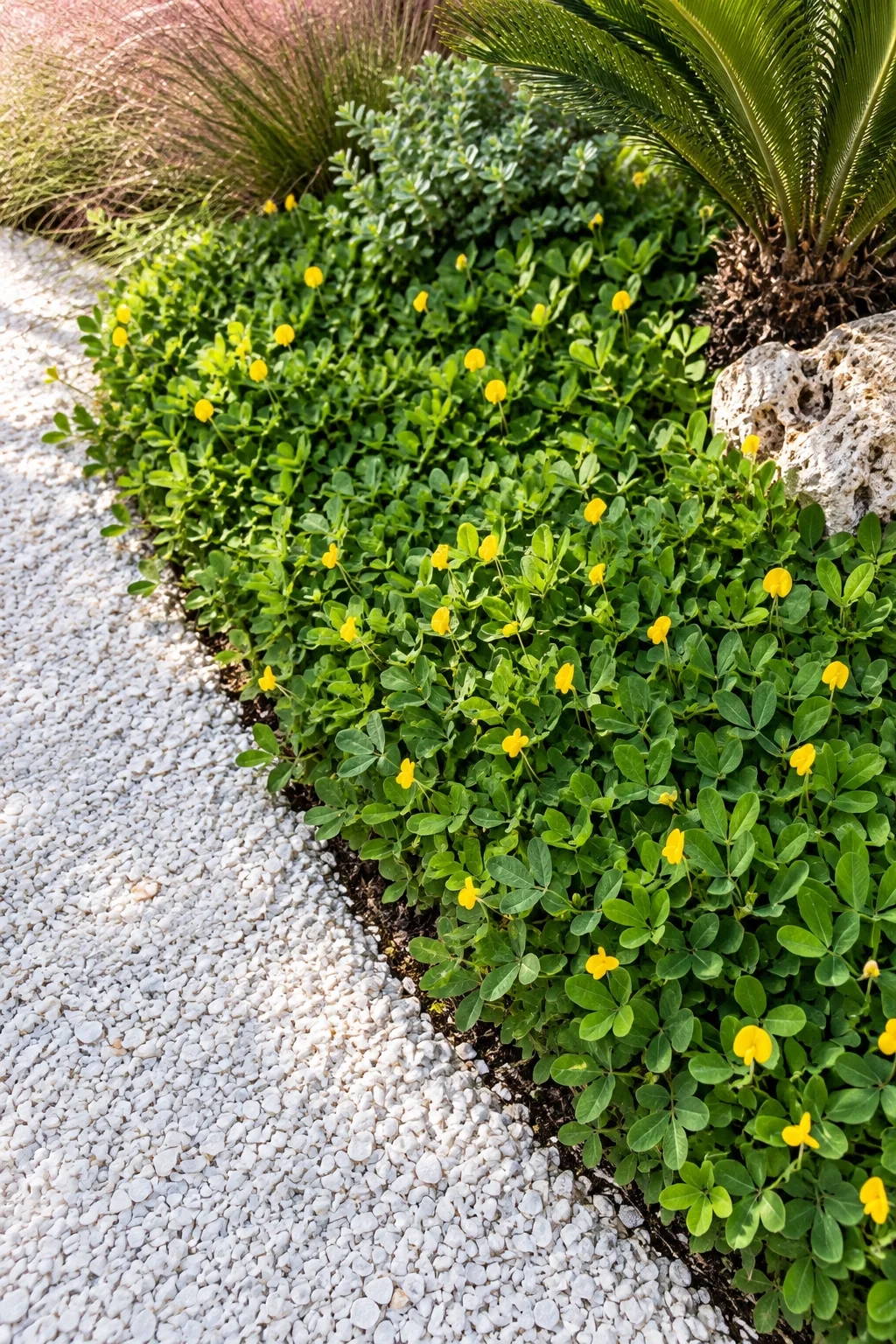
Burying the irrigation line just beneath the soil surface prevents expensive water waste from rapid evaporation in the intense southern heat. The subtle edge creates a seamless transition that hides the hard-working watering system completely out of sight.
Selecting the Right Emitter Spacing
Match your drip emitter spacing to your specific soil type to ensure moisture spreads evenly across the entire planting bed. Sandy Florida soils require closer spacing because water tends to pull straight down rather than wicking horizontally through the dirt.
| Soil Type | Spacing | Flow Rate | Run Time |
|---|---|---|---|
| Pure Sand | 12 inches | 1.0 GPH | 30 mins |
| Sandy Loam | 18 inches | 0.9 GPH | 45 mins |
| Clay Mix | 24 inches | 0.6 GPH | 60 mins |
Installing emitters every 12 inches at 1.0 gallon per hour guarantees your new native landscape receives adequate hydration during the crucial establishment phase. This precise setup encourages deep, resilient root growth without oversaturating the surrounding hardscape.
Managing Weed Control Without Mulch
Keep the white coquina shell pristine by installing a heavy-duty, permeable weed barrier directly over the leveled soil before pouring the pathway. You must overlap all fabric seams by a minimum of 6 inches to block aggressive tropical weeds from pushing through.
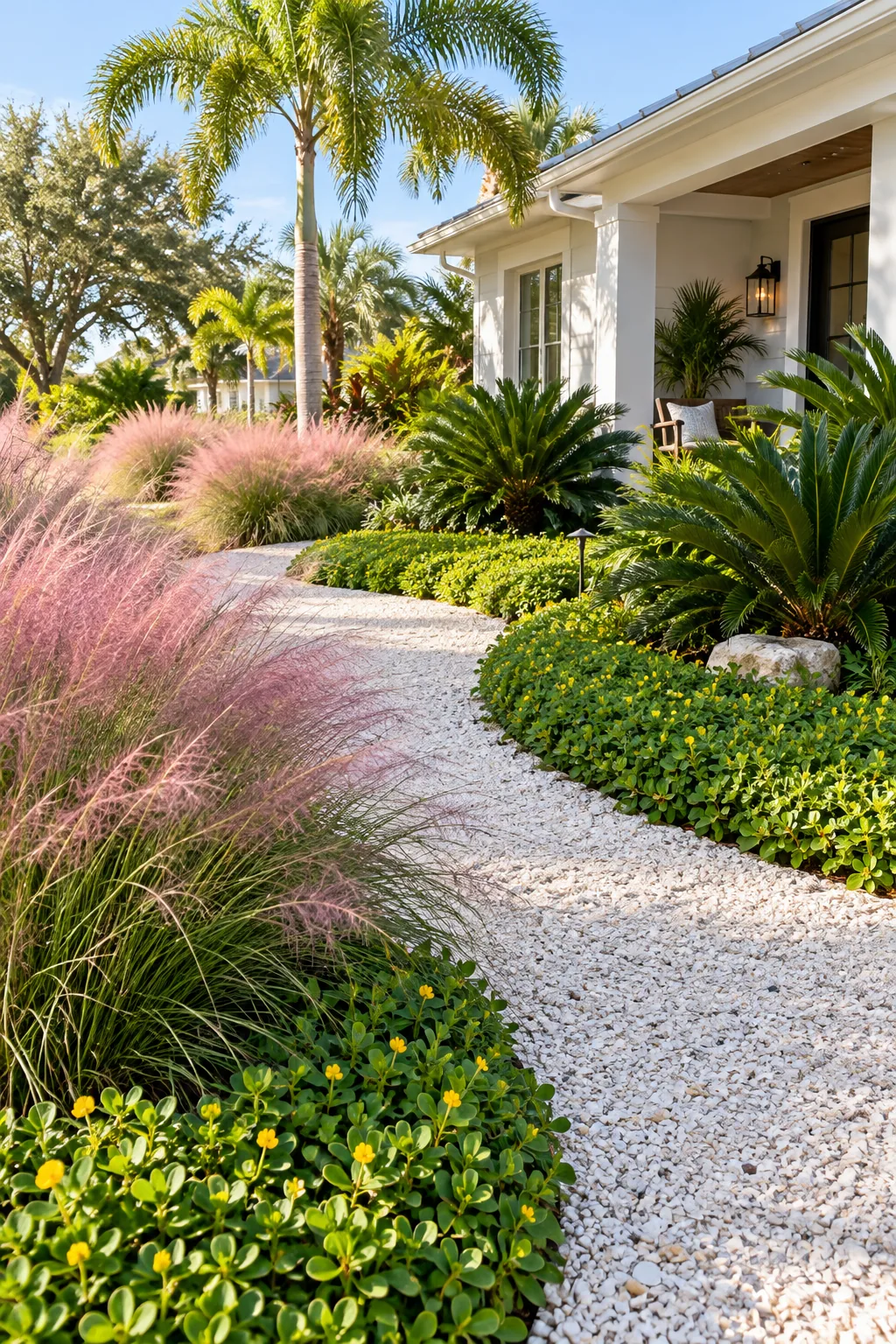
Even with a thick layer of shell on top, tropical weeds will eventually find a way through if the foundation remains weak. Laying the groundwork correctly with a commercial-grade barrier prevents hours of future pulling and keeps the yard looking sharp.
Securing the Permeable Fabric Borders
Anchor the edges of your landscape fabric using galvanized steel landscape staples driven deep into the soil every 24 inches. Focus heavily on the perimeter where the shell meets the planting beds, as this transition zone experiences the most shifting.
- Trench the outer edges slightly so the fabric folds downward into the soil.
- Hammer a 6-inch steel staple through the folded fabric directly into the trench.
- Backfill the trench with native soil to lock the barrier completely in place.
Taking the extra time to pin the fabric securely prevents the edges from curling up and exposing the bare dirt underneath. A tight, unmoving barrier ensures your bright white coquina pathway stays sharply defined against the lush green beds.
Planting a Perennial Peanut Mat
Fill your bare dirt zones with perennial peanut plugs spaced 12 to 18 inches apart to create a dense, impenetrable green mat. When I swapped my own struggling front lawn for these tiny yellow flowers, my weekend mowing chores completely vanished.
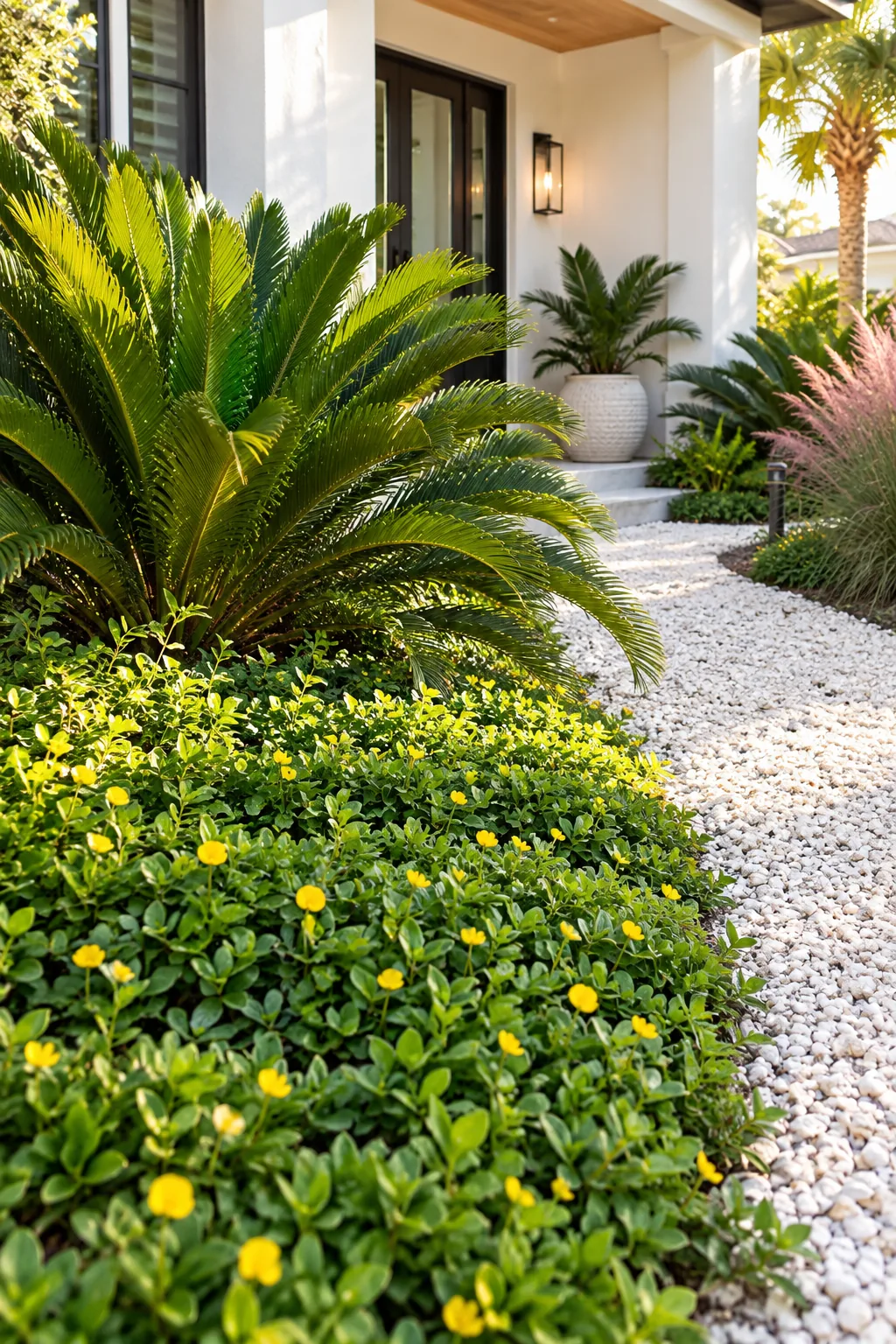
Once established, this fantastic nitrogen-fixing groundcover naturally chokes out aggressive weeds and naturally shades the dirt to retain vital moisture. The bright green foliage thrives in harsh conditions and stays incredibly low to the ground without any supplemental trimming or chemical fertilizers.
Training Groundcover Along the Pathway
Guide the perennial peanut runners away from the crushed coquina during the first few months of active growth to establish a clean border. Simply sweep the trailing vines back into the planting bed by hand whenever they cross the hidden drip line.
Adding Structure with Zero-Prune Coonties
Anchor the front entryway and corners with native coontie palms to add lush, tropical structure that never requires tedious pruning. These slow-growing, evergreen cycads max out at about 3 feet tall and wide, making them the perfect scale for foundation beds.
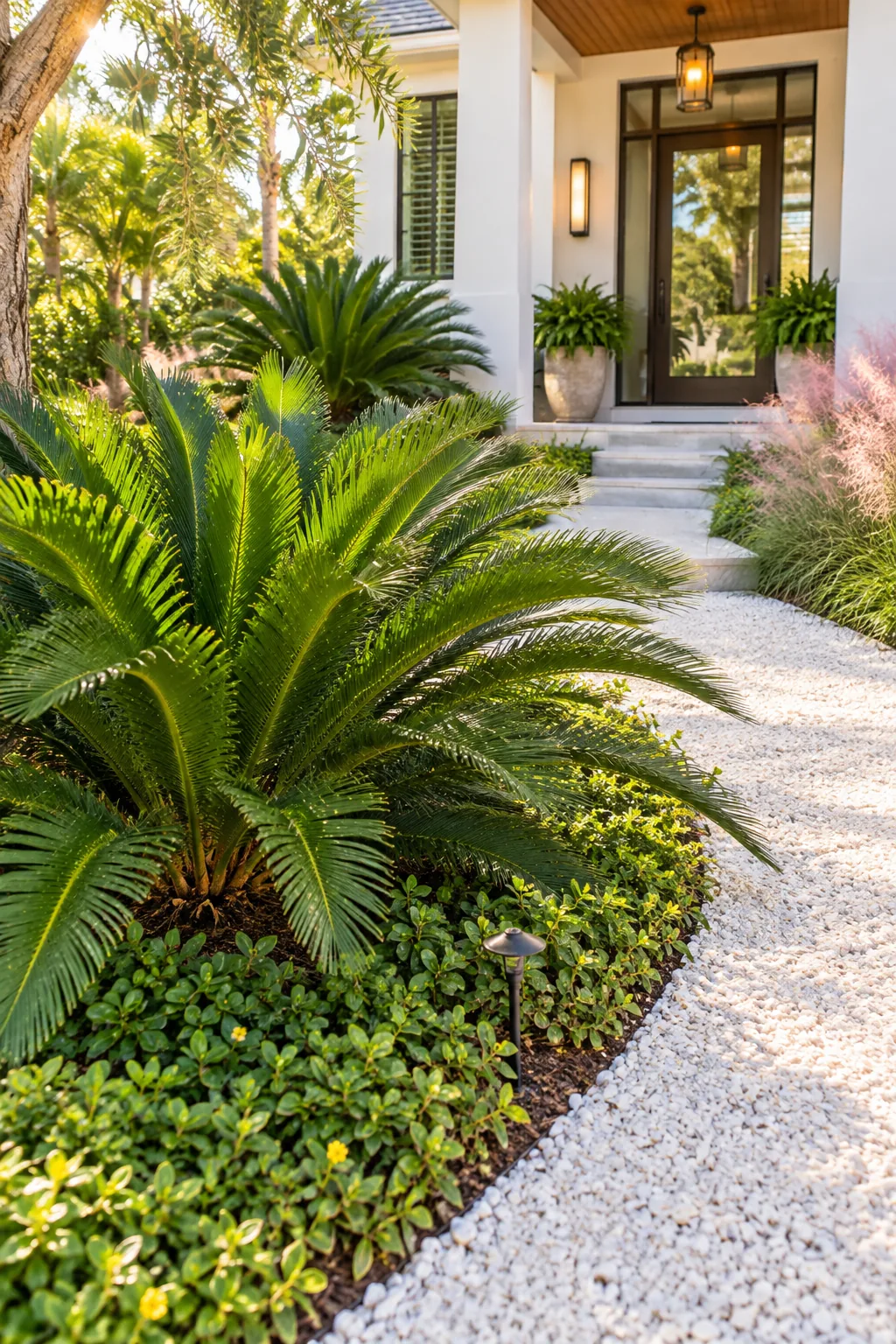
Unlike larger palm species that constantly drop heavy fronds, these resilient beauties keep their tidy, compact shape year-round. They provide a deep green, highly textured contrast against the bright white shell pathways with absolutely zero ongoing maintenance.
Positioning Foundation Palms for Airflow
Plant your coontie palms at least 3 feet away from the exterior walls of your house to guarantee adequate air circulation around the dense foliage. Pushing them too close to the foundation traps humid air against the stucco and prevents the back fronds from developing symmetrically as they grow.
Creating Color Bursts with Pink Muhly Grass
Plant pink muhly grass in clusters to create a dramatic, low-water focal point that catches the warm afternoon sunlight beautifully. Space the individual clumps at least 3 feet apart on center so their vibrant, feathery autumn plumes have plenty of room.
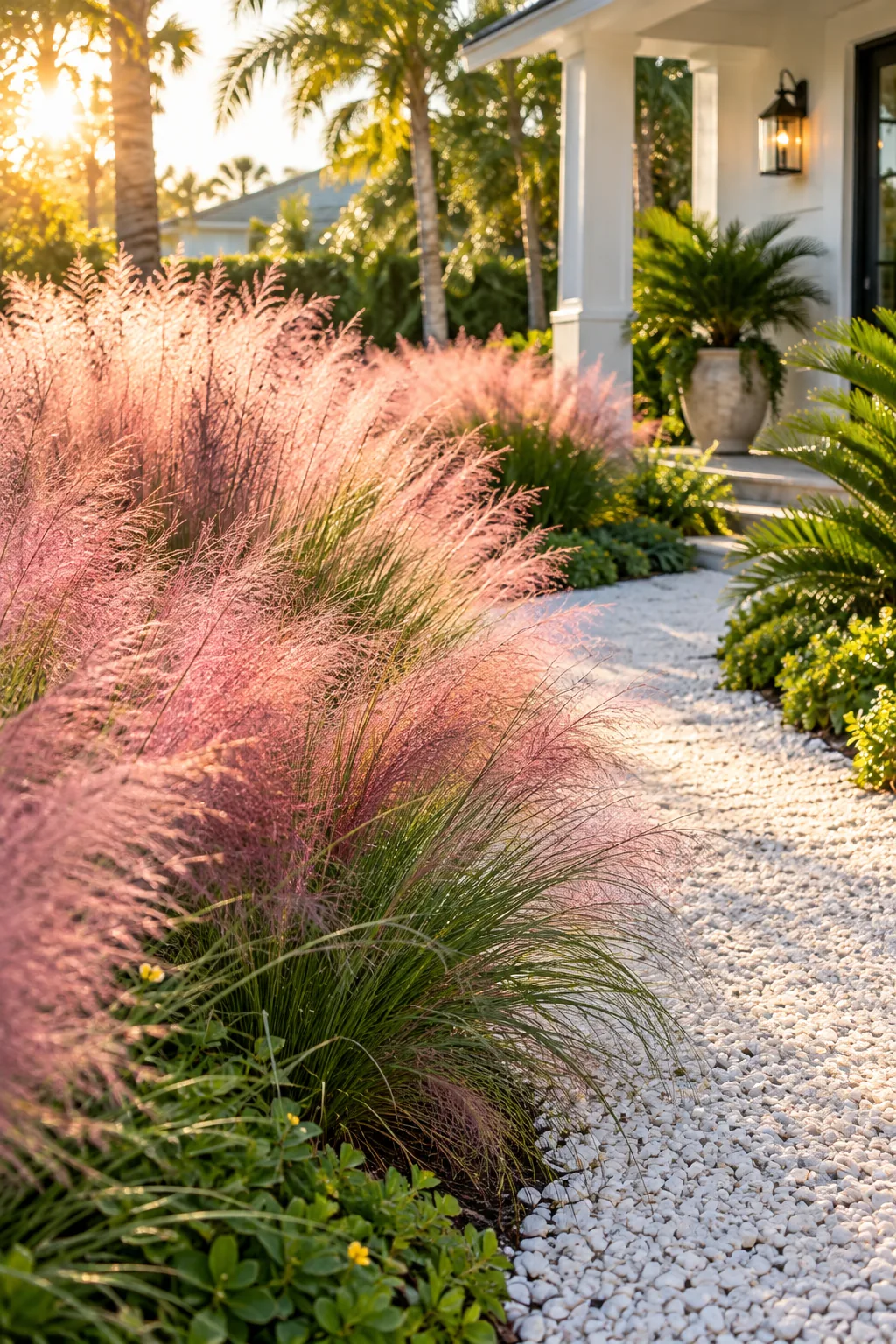
Giving these native grasses adequate breathing room ensures the root systems do not overcrowd the bed as they rapidly mature. The sweeping pink texture adds incredible movement to the yard while surviving entirely on natural rainfall after the first season.
Scheduling the Annual Grass Cutback
Rejuvenate your muhly grass every February by trimming the entire clump down to a tight dome about 6 inches above the soil line using sharp hedge shears. Removing the faded brown foliage just before spring pushes the plant to flush out fresh, bright green growth for the new season.
Zoning Plants by Sun and Water Needs
Group your new landscape additions hydrozonally to ensure their long-term survival in the intense southern climate. I learned the hard way that mixing thirsty plants with drought-tolerant natives usually results in half the bed rotting while the other half crisps up.
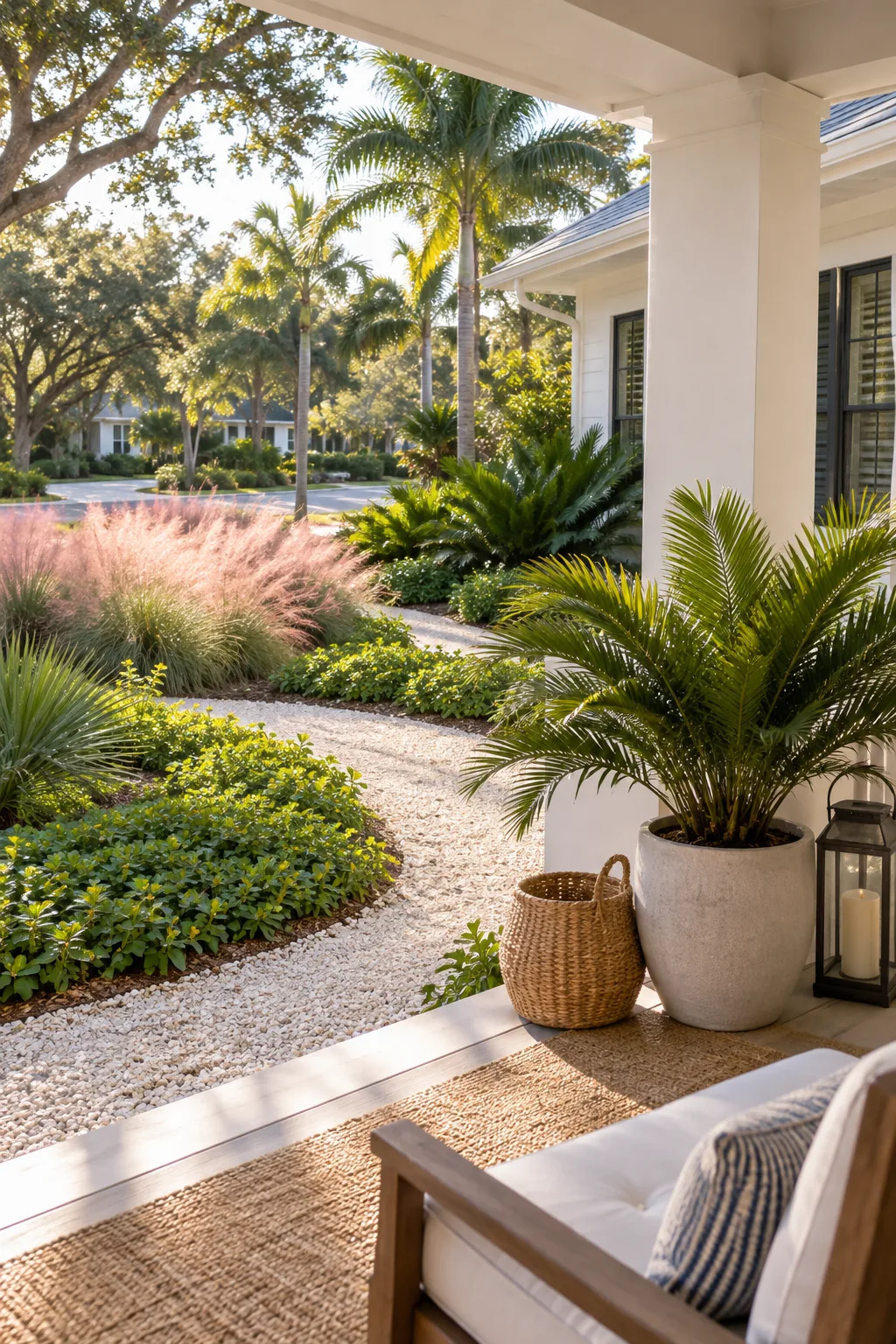
Keep the highly drought-tolerant coonties and muhly grass in zones receiving at least 6 hours of full sun daily. Position the peanut mat exactly where it can directly benefit from the hidden drip line moisture during the hottest summer months.
Adapting the Layout for Partial Shade
Shift your groundcover strategy slightly if mature oak trees cast dense afternoon shade over portions of your front yard. Replace the sun-loving perennial peanut with shade-tolerant native ferns in those specific pockets while keeping the crushed coquina pathway continuous to visually tie the different light zones together seamlessly.
Fertilizing the Native Landscape
Skip the heavy synthetic fertilizers entirely, as these tough native Florida species have naturally adapted to thrive in nutrient-poor sandy soils. Applying a light topdressing of organic compost once a year provides all the gentle, slow-release nourishment your new drought-tolerant plants will ever need to stay vibrant.
More Florida-Friendly Front Yard Ideas
Explore how these low-maintenance native swaps adapt to completely different architectural styles.
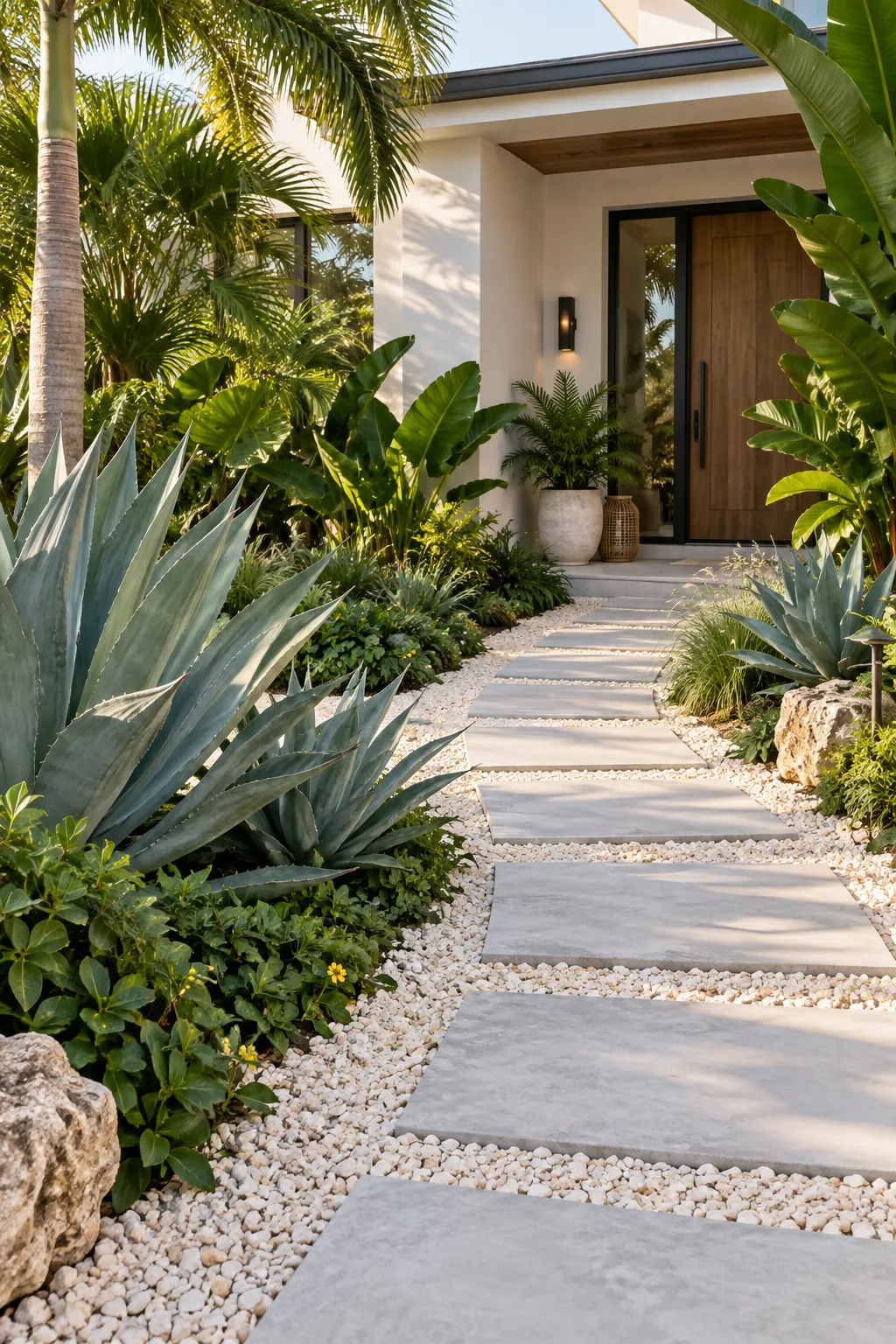
Tropical Modern Walkway: Pair crushed coquina with oversized concrete pavers and architectural agave for a sleek, contemporary entrance.
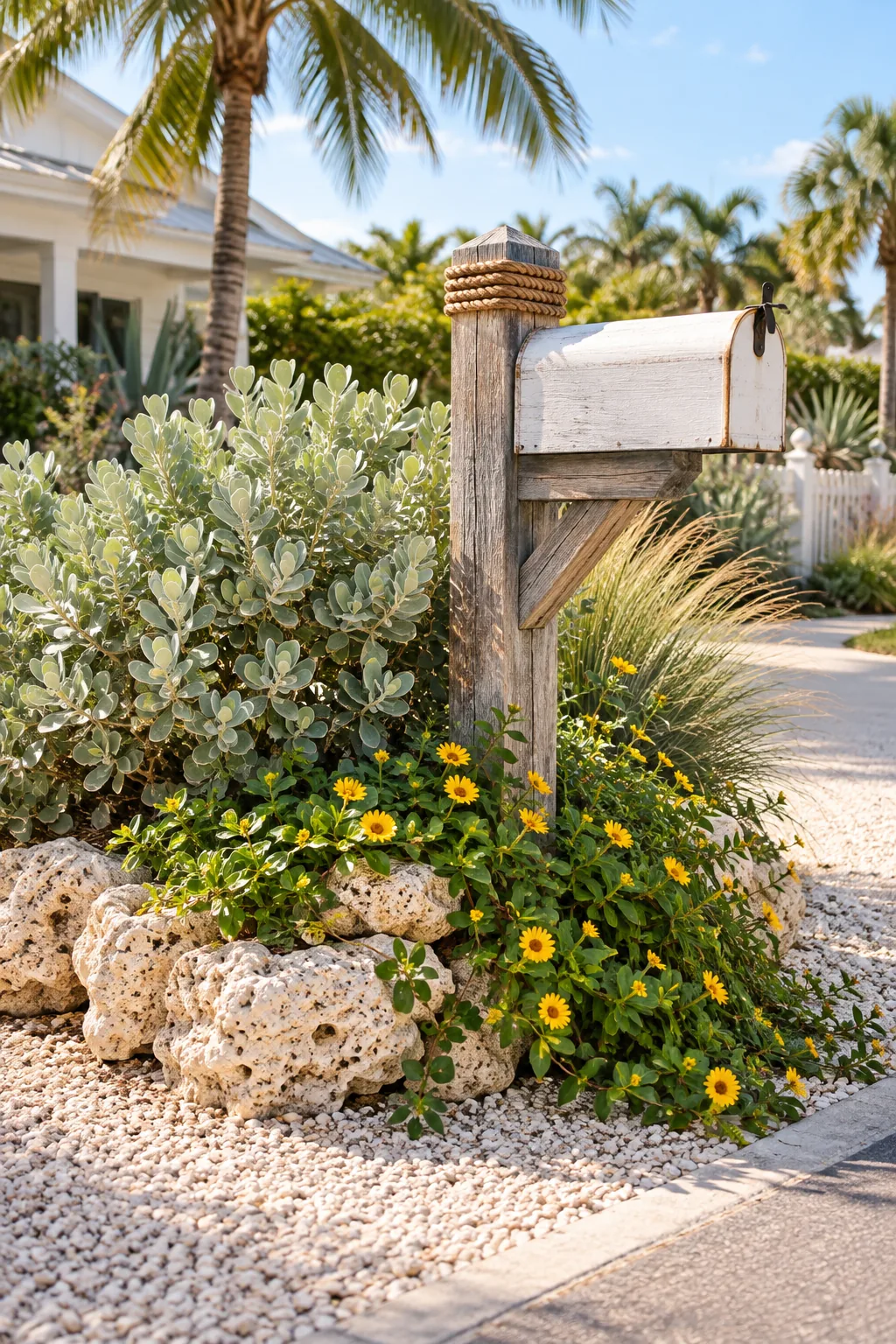
Coastal Cottage Mailbox Garden: Surround a weathered wood mailbox post with silver buttonwood and trailing dune sunflower for a breezy coastal vibe.
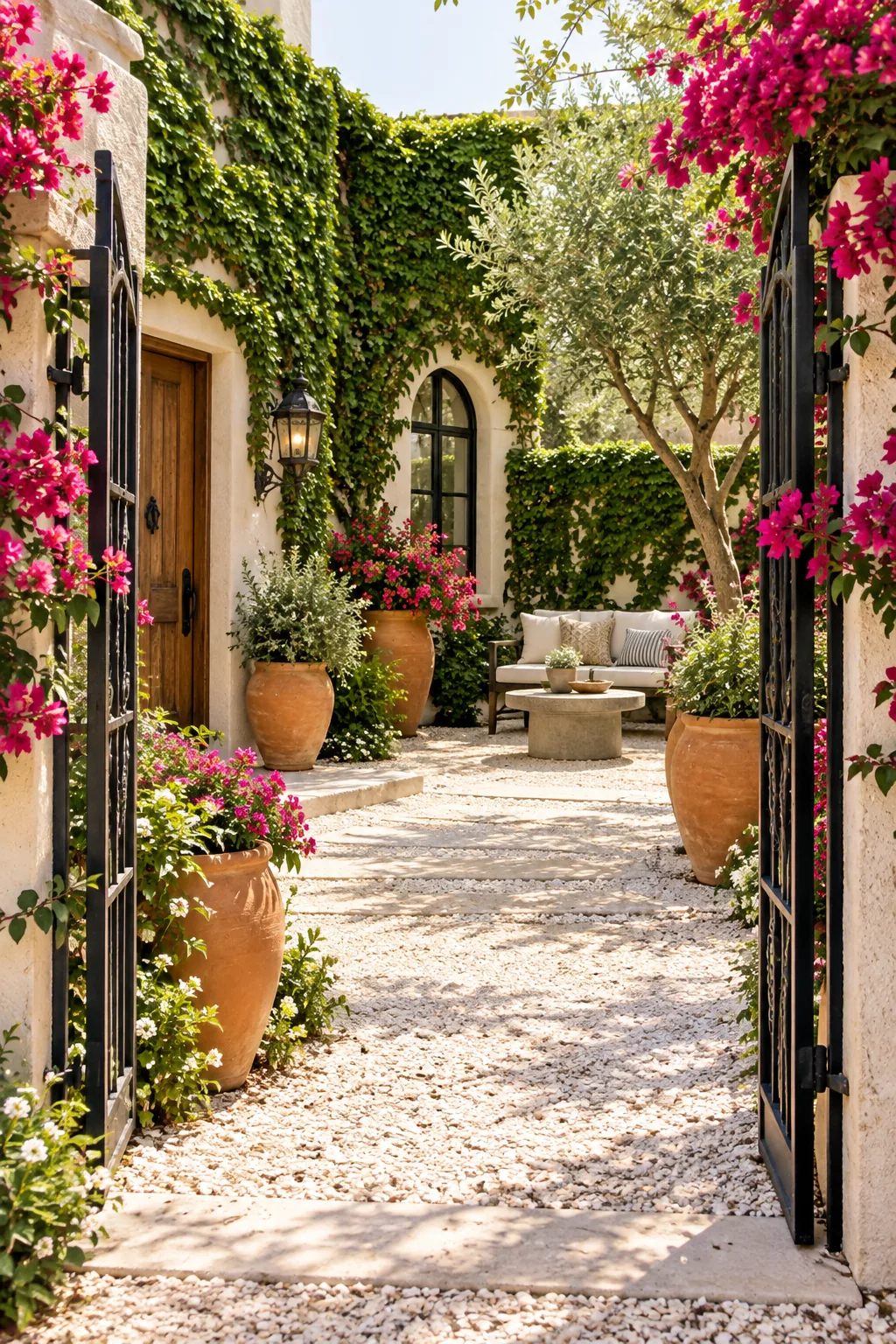
Mediterranean Front Courtyard: Warm up the white shell pathways with terracotta planters filled with drought-tolerant bougainvillea and creeping fig.
Your Florida-Friendly Plant Shopping List
Gather the specific container sizes that balance immediate visual impact with a reasonable landscaping budget. Opt for 3-gallon pots for structural plants like coonties and 1-gallon pots for fast-growing grasses to stretch your dollars further.
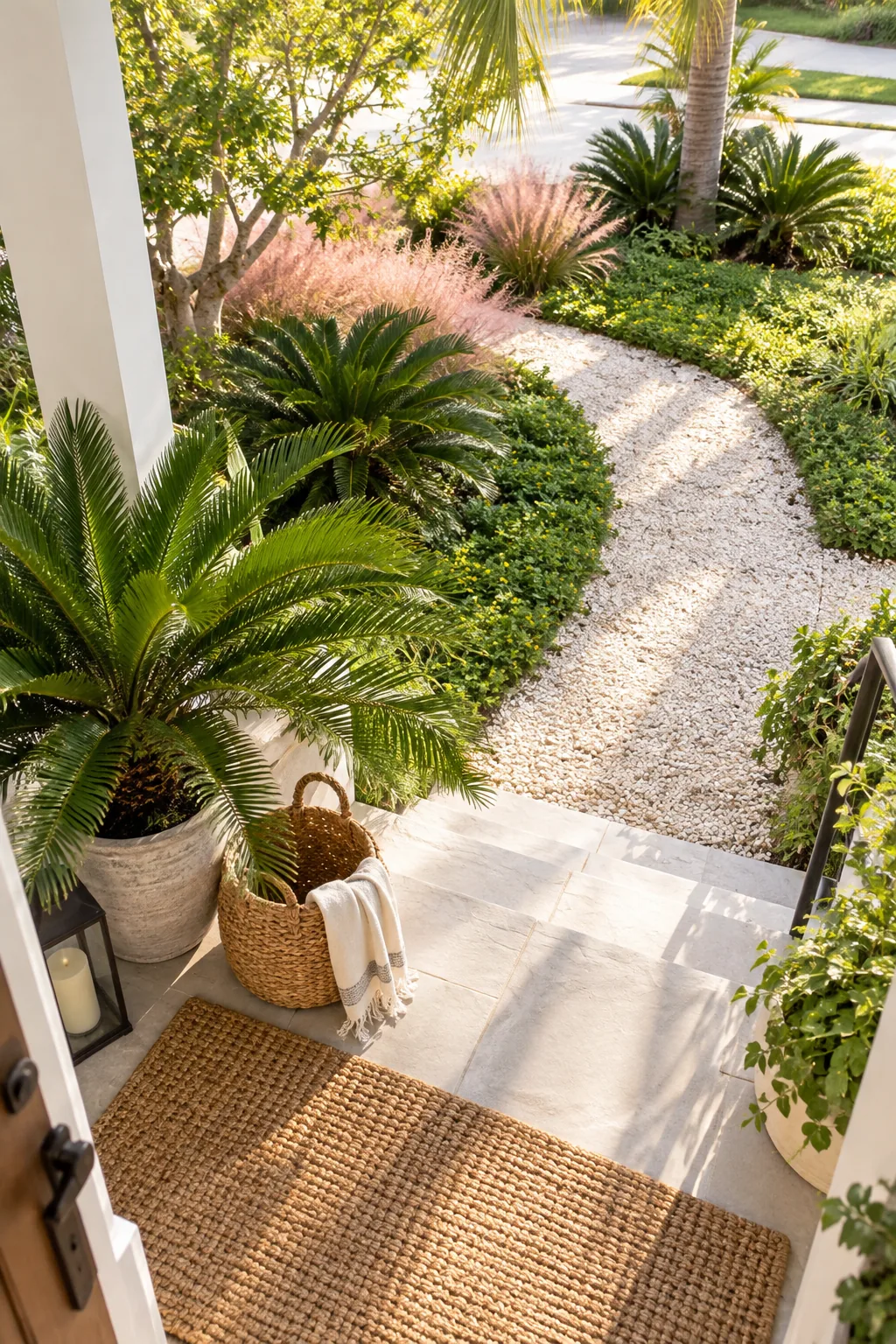
Take this exact breakdown to your local native nursery to gather your supplies. Buying the right starter sizes ensures your landscape fills in quickly without overspending on mature, heavy specimens that often struggle to adapt to new soil.