Living Room Picture Window: Framing & Measurement Guide
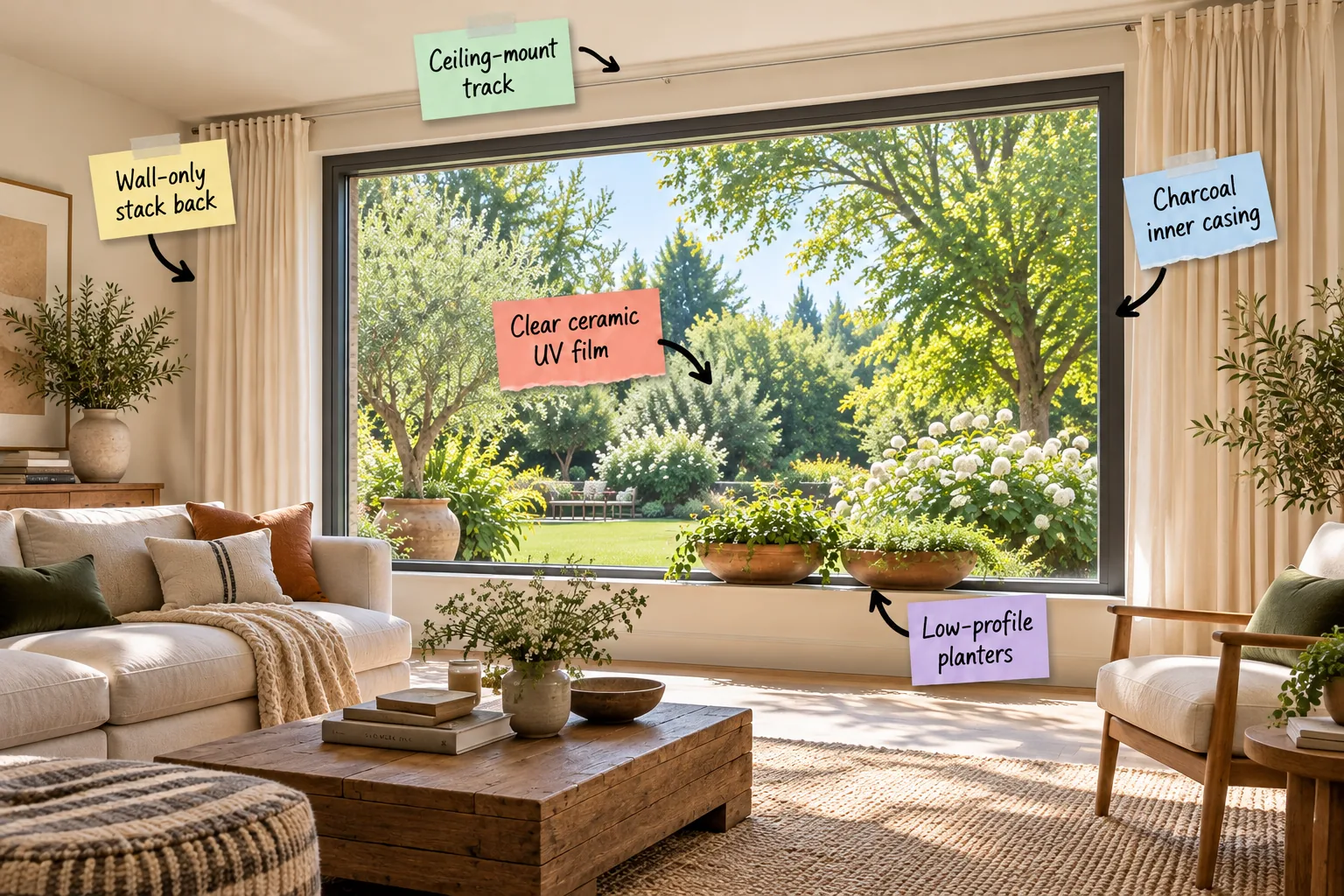
Master your living room picture window with these designer framing tricks, complete with the exact drapery measurement and material guide you need. You will be able to calculate your perfect track length, fabric fullness, and stack back to frame your view like a professional.
Protecting the Room with Clear UV Film
Large expanses of glass require a clear ceramic UV film to prevent upholstery fading without sacrificing natural light. In my own Denver home, installing a 99-percent UV blocking film finally let me keep my vintage rugs in the sunniest room without fear of sun damage.
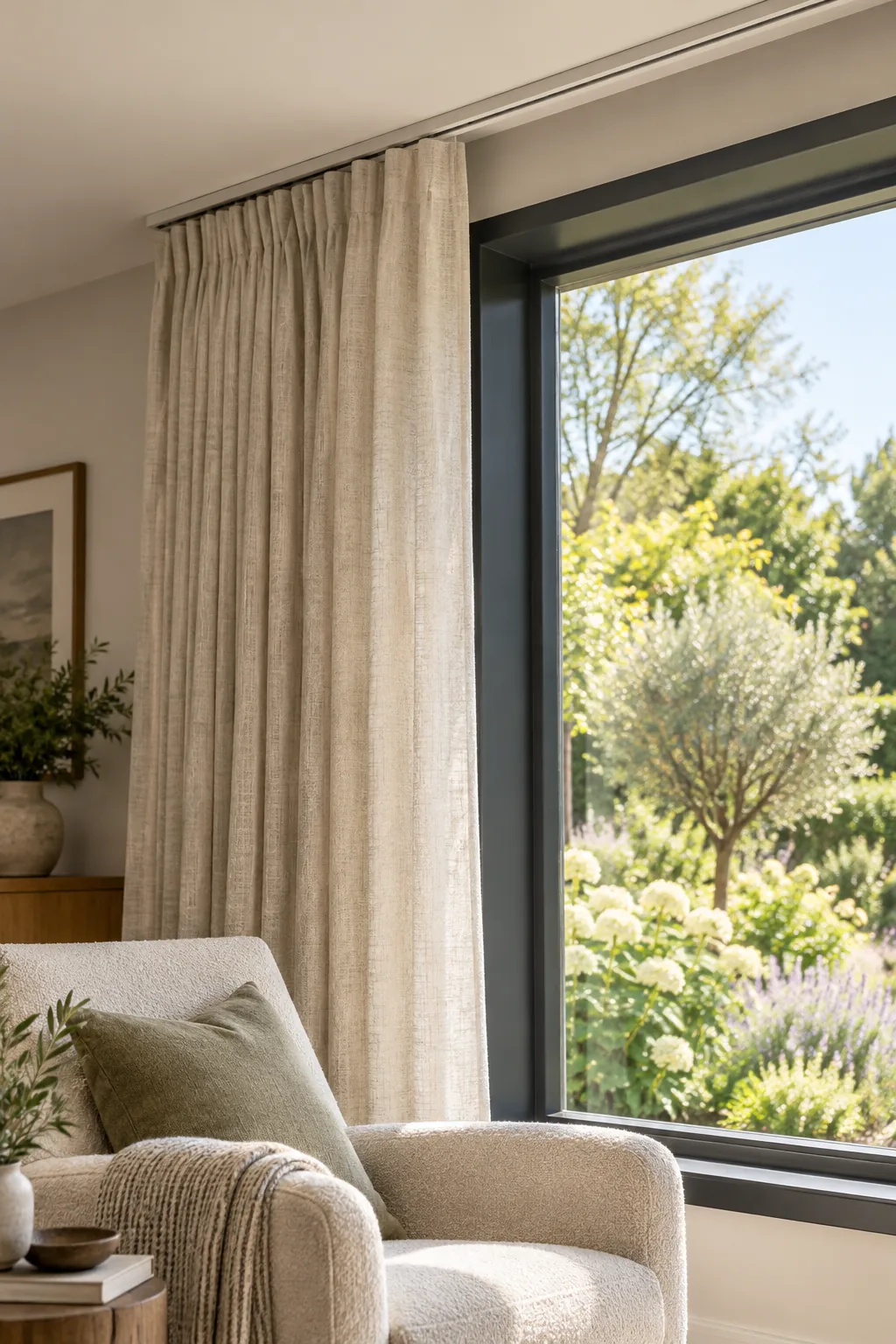
These high-quality films maintain a completely transparent, glare-free sightline to your garden. The invisible barrier ensures your interior palette stays vibrant while allowing the landscape’s natural colors to shine through.
Painting a Charcoal Inner Casing
Painting the inner window casing a dark charcoal or soft black creates a subtle shadow box effect that instantly draws the eye outward. This sharp, contrasting border acts like a picture frame, making the lush green tones of your outdoor landscape pop beautifully against the dark paint.
Installing a Ceiling-Mount Track
A ceiling-mount track visually raises your ceiling height and provides a seamless, architectural glide for heavy drapery panels. This eliminates the visual clutter of traditional rods and rings, keeping the focus entirely on the view and the fabric itself.
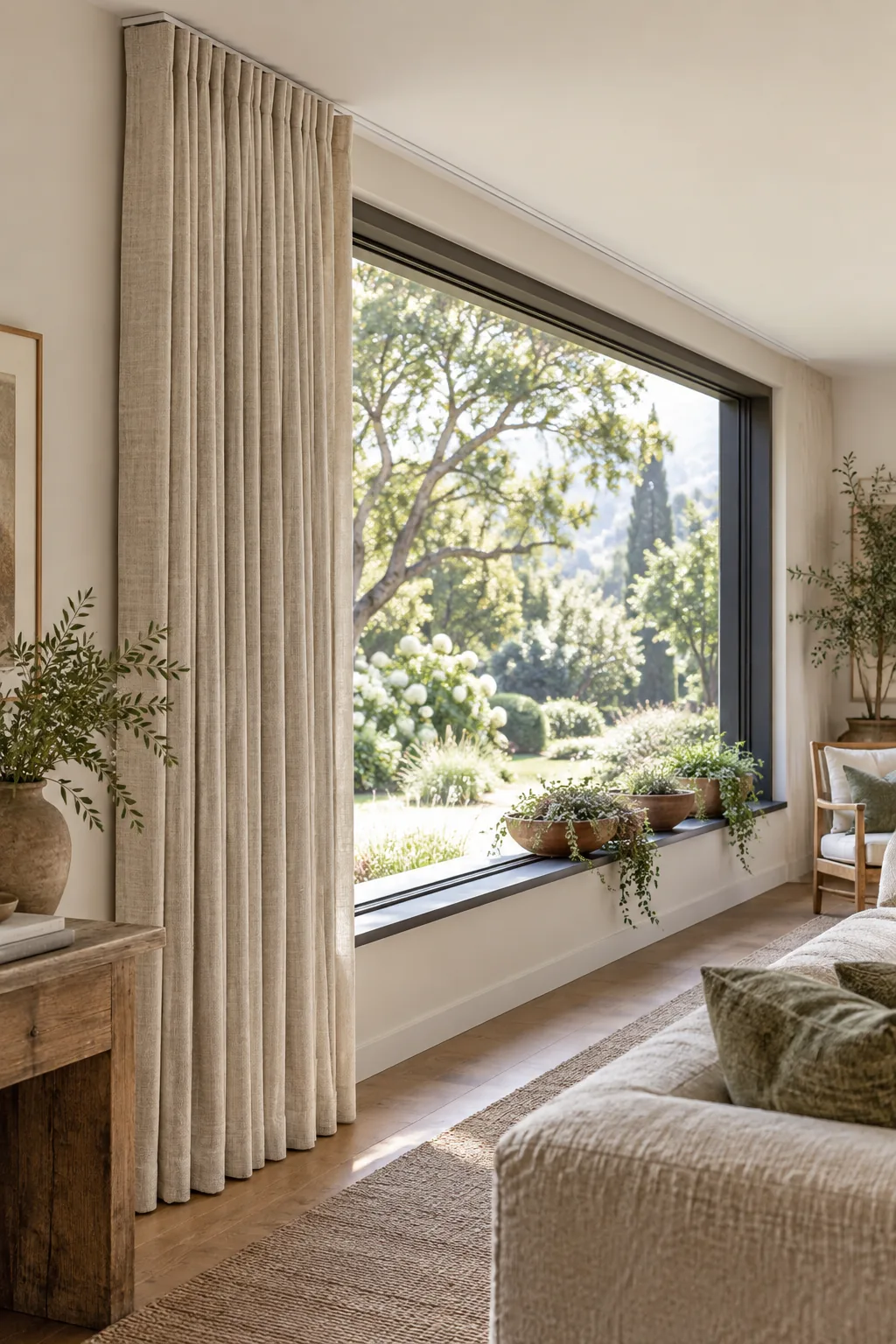
Mounting heavy drapery requires structural support and careful planning to ensure the fabric glides effortlessly without damaging your ceiling.
Planning a Wall-Only Stack Back
A wall-only stack back means your open curtains rest entirely on the drywall beside the window. This essential placement ensures the gathered fabric never obstructs the glass, maximizing your natural light and preserving the clean architectural shape of the picture window.
The Window Treatment Measurement Guide
To achieve that professional look, your total track length must extend 15 to 20 inches beyond the glass on each side for the stack back. You must also calculate your fabric fullness ratio at exactly 2.5x to 3x the total track length to ensure rich, luxurious pleats.
Before ordering custom panels or cutting your track, follow this precise sequence to guarantee your drapes frame the glass perfectly.
Selecting the Right Drapery Material
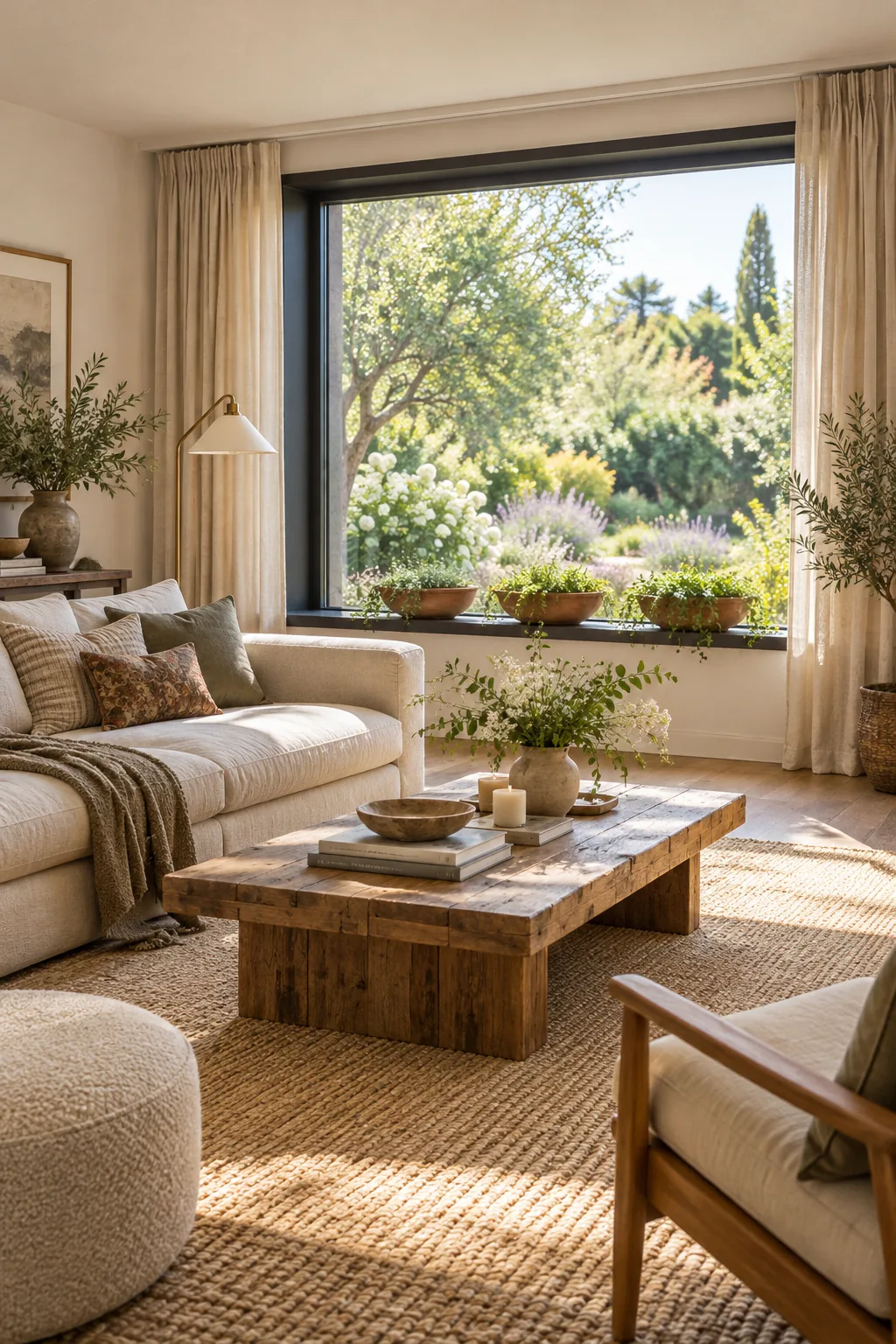
Choose medium-weight linens or lined cotton blends that drape beautifully from a ceiling track and hold a crisp pleat. These natural textiles provide a necessary softness that balances the hard edges of the glass without looking excessively heavy when stacked back against the wall.
Avoid stiff, synthetic blackout fabrics that resist folding, as they will fight the track and balloon outward into your room.
Styling the Sill with Low-Profile Planters
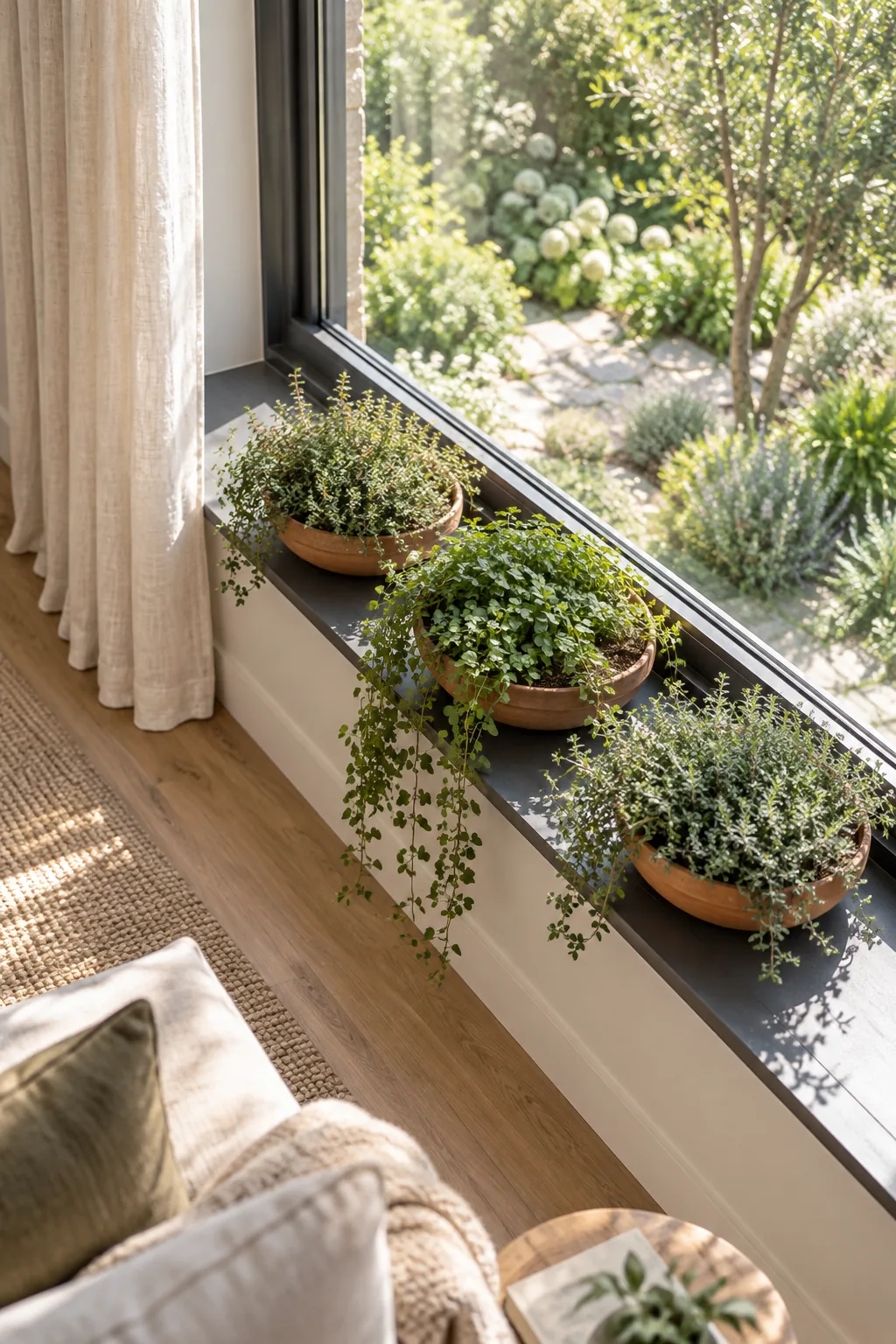
Decorate the window ledge with low-profile planters or wide terracotta bowls filled with trailing greens to bridge the indoor-outdoor gap. I love using shallow, textured vessels in my projects because they introduce organic shapes without ever blocking the sightline to the garden.
Arranging Furniture Around the View
Keep low-profile sofas or benches at least 18 inches away from the glass and drapery panels. This essential breathing room allows the curtains to operate smoothly and maintains a spacious illusion of depth in the living room.
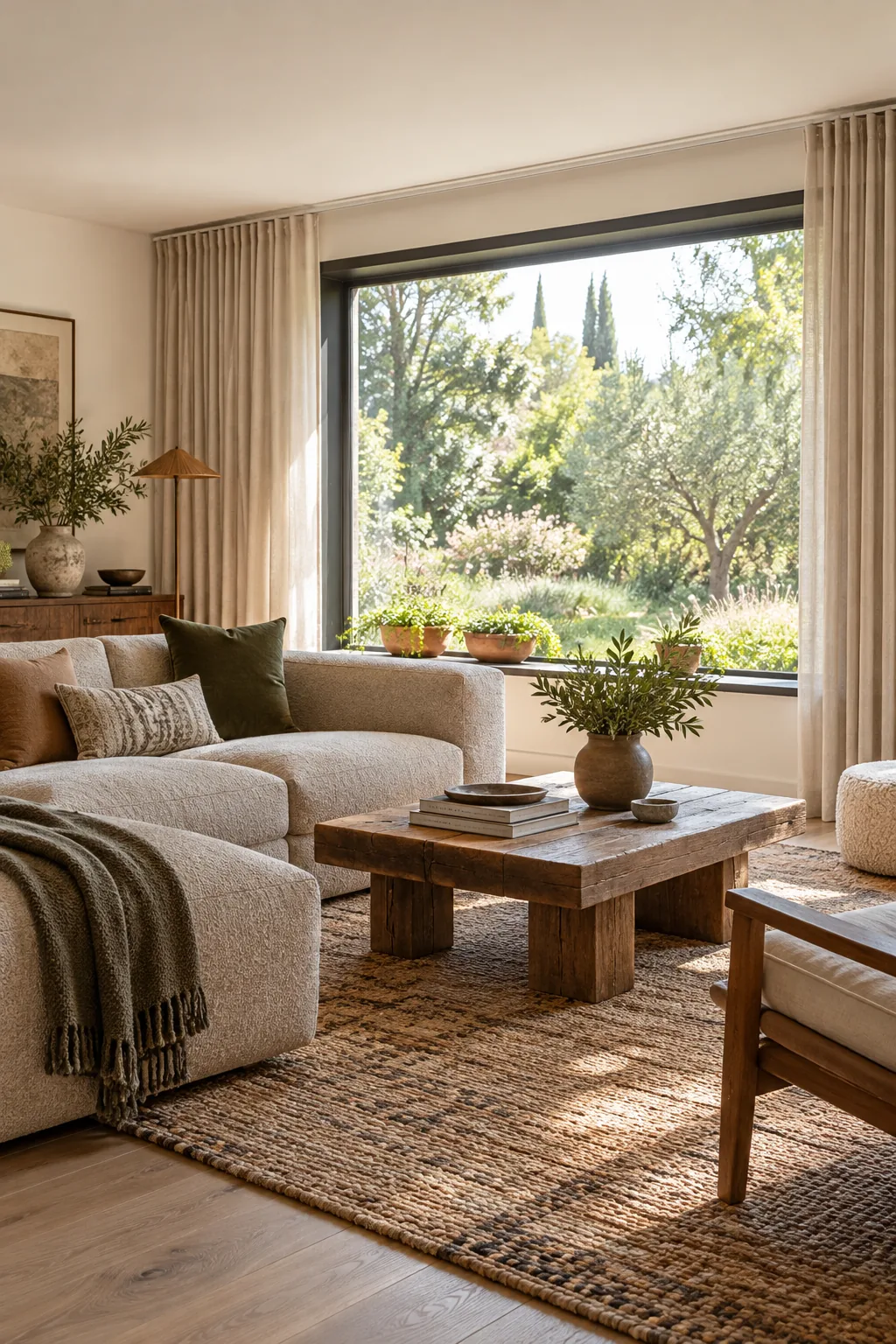
Grounding your seating arrangement with a textured rug just outside this perimeter ensures the view remains the focal point while keeping the room feeling balanced and inviting.
Picture Window Styling Ideas
Explore these distinct approaches to framing and styling a massive living room view.
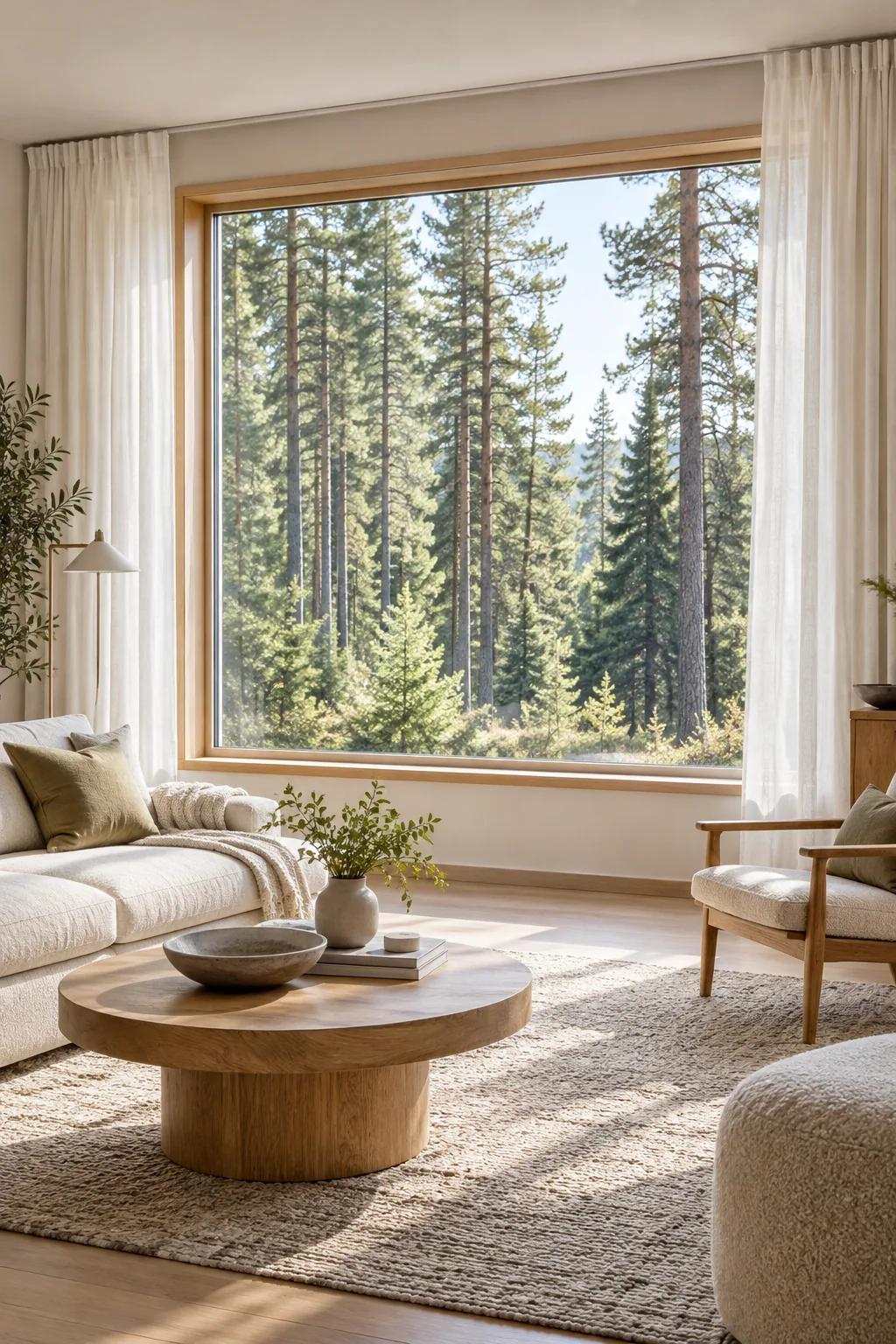
Minimalist Scandi Forest View: Light oak casing and unlined white linen create a serene, minimalist frame that lets a dramatic pine forest view take center stage.
Moody Maximalist City Skyline: Dark plum walls and heavy mustard velvet drapes add incredible warmth and drama to a modern city skyline view.

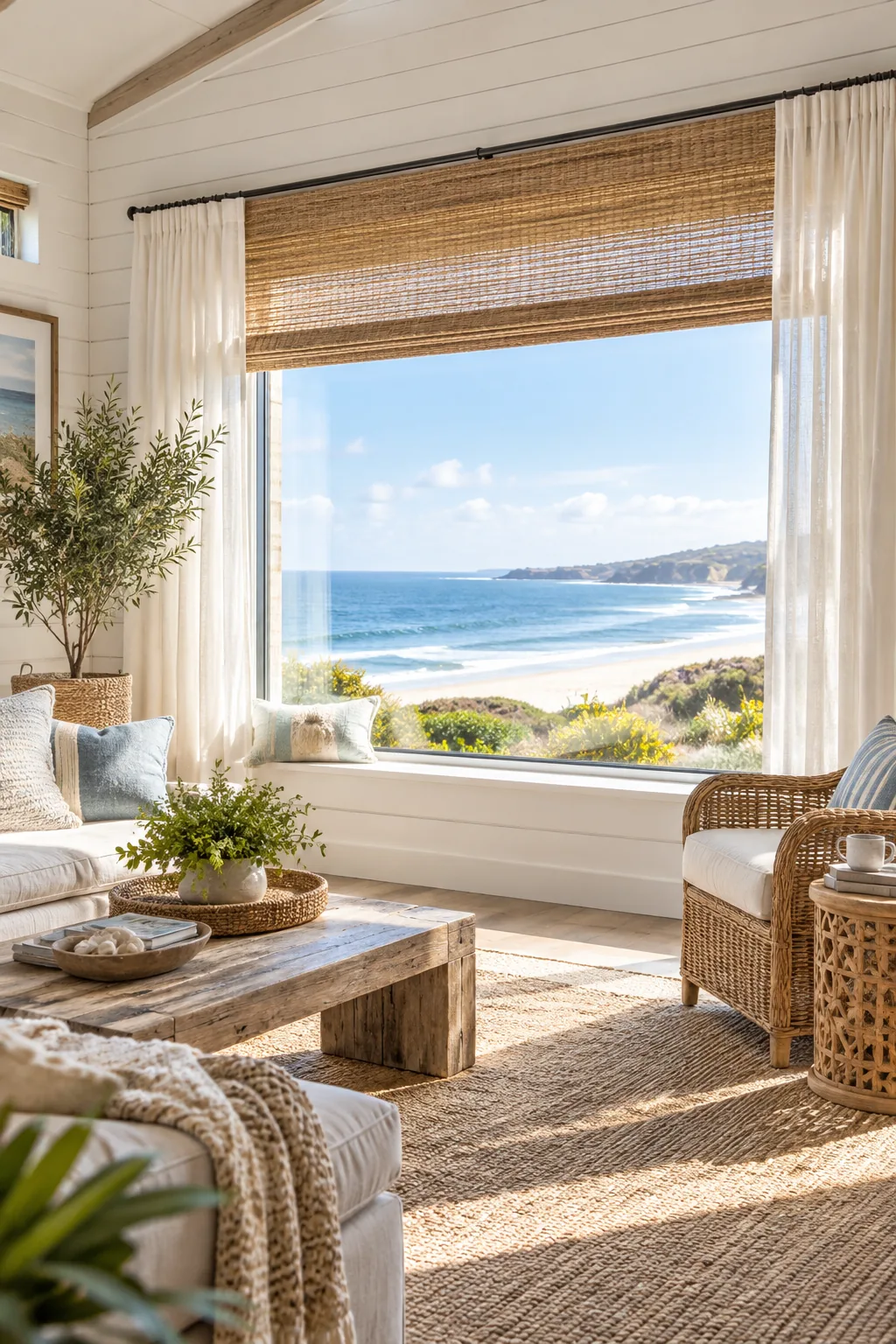
Coastal Casual Ocean View: Layering woven wood shades under sheer cotton panels adds beautiful natural texture while softening the bright coastal sunlight.