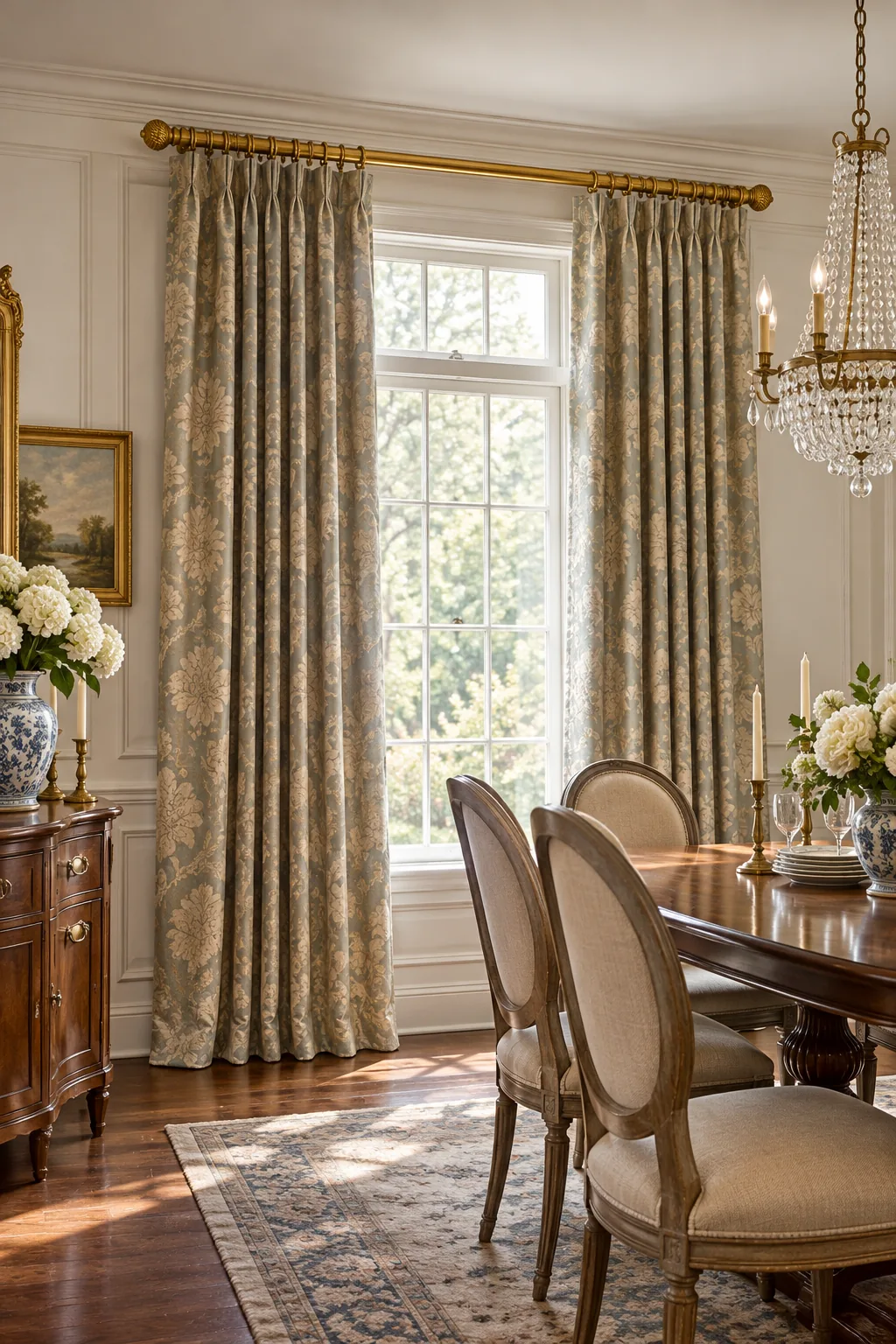
Living Room Curtain Measurements: The Designer Math Worksheet
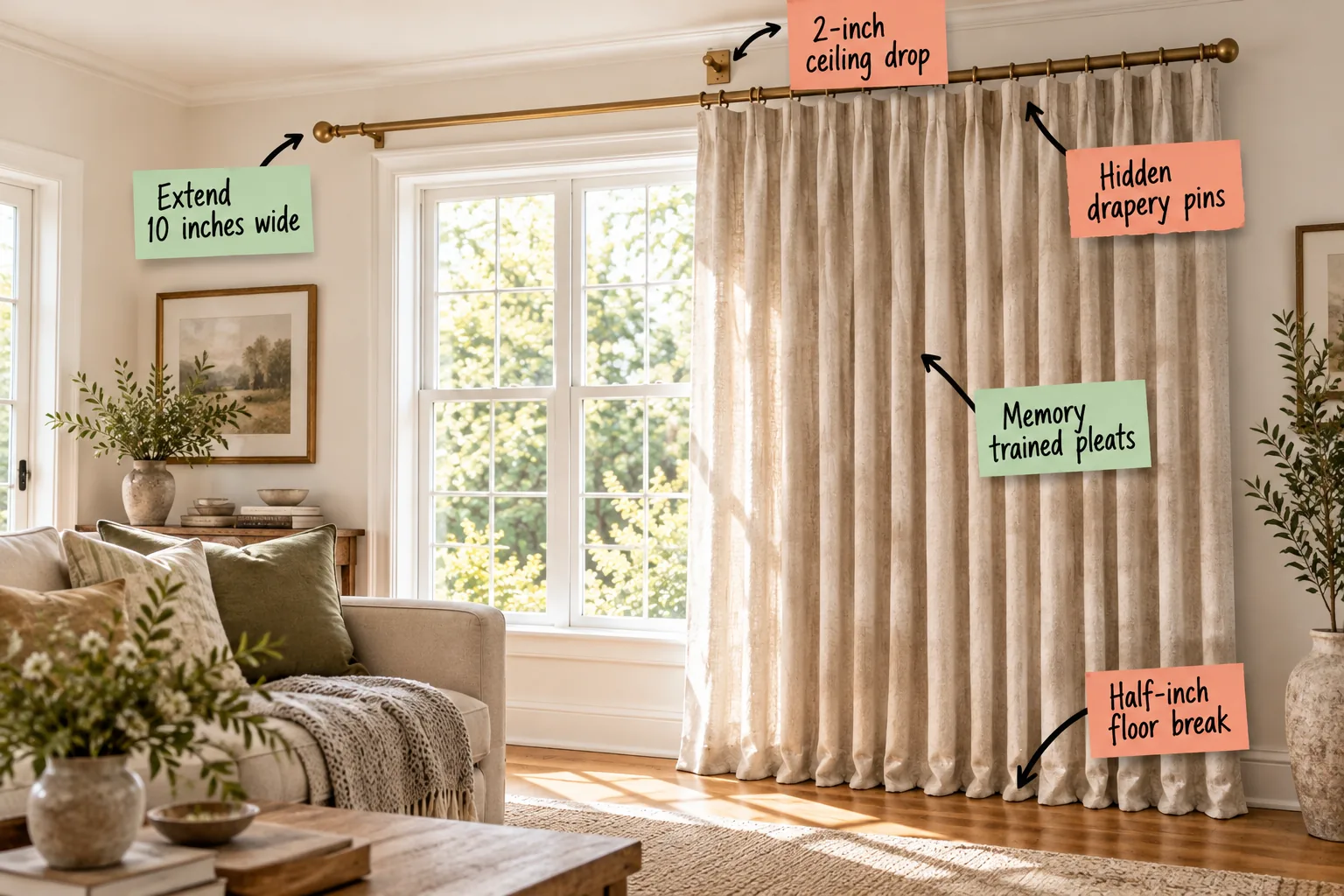
Achieving professionally tailored living room curtains comes down to precise formulas, which is why I created this exact drapery measurement and ring-count worksheet for you to use. You will be able to calculate your exact rod placement, ring count, and panel dimensions using our designer math formulas to get that perfect custom look.
The 2-Inch Ceiling Drop Rule
To maximize vertical space and achieve visual balance, always mount your bracket exactly two inches below the ceiling line or crown molding. This precise placement draws the eye upward, making your ceilings feel significantly taller while keeping the rod perfectly level across slight architectural variations.
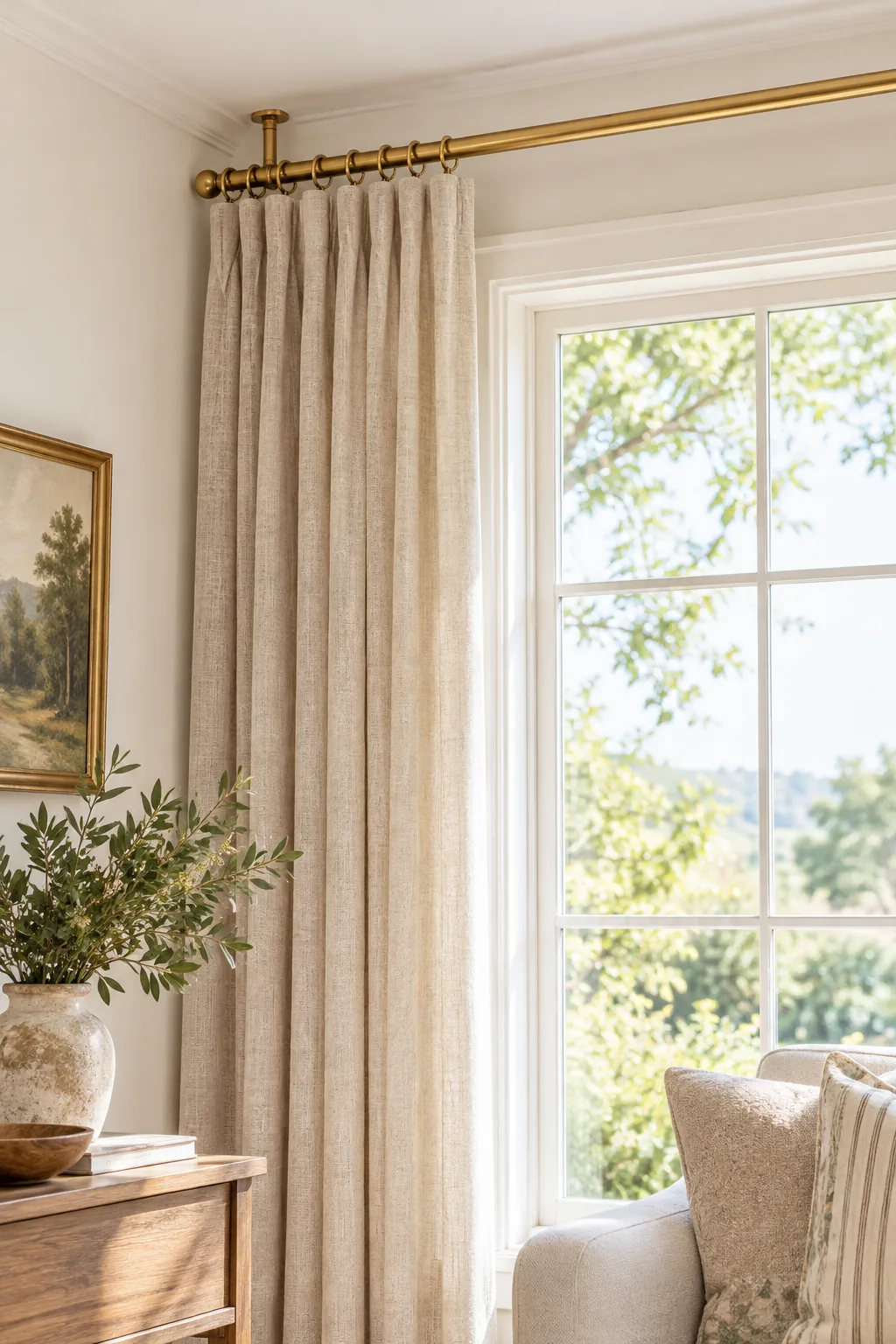
Mounting your hardware in the wrong spot is the fastest way to make a room feel small. Avoid these common placement errors before drilling any holes.
Extending the Rod 10 Inches Wide
For a truly expansive feel, your rod must extend 10 to 12 inches past the window frame on each side. This crucial extension allows the open curtains to stack entirely over the blank wall, exposing the full glass to make the window appear significantly larger.
| Window Width | Rod Extension (Per Side) | Total Rod Length |
|---|---|---|
| Up to 40 inches | 10 inches | Window + 20 inches |
| 41 to 72 inches | 12 inches | Window + 24 inches |
| Over 72 inches | 14 inches | Window + 28 inches |
Giving the heavy fabric ample space to rest against the drywall ensures your room benefits from maximum daylight and maintains a harmonious flow.
Choosing the Right Curtain Ring Size
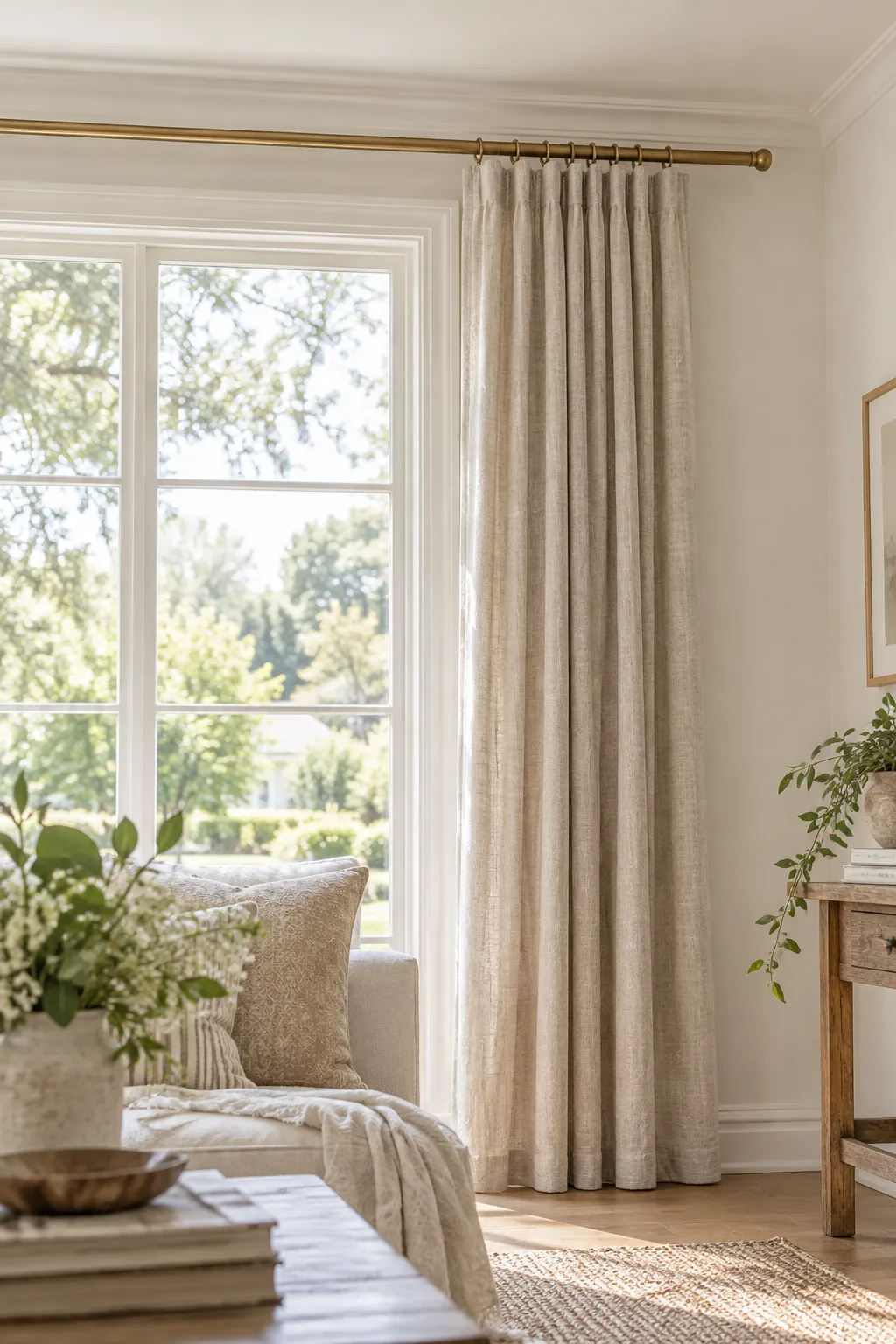
Selecting the correct brass rings ensures your heavy linen panels slide smoothly without catching or scratching the metal. The golden rule is to choose rings with an inside diameter at least 1/2 inch larger than the rod thickness to guarantee effortless daily operation.
Hanging with Hidden Drapery Pins
For a pristine, tailored finish, insert hidden drapery pins directly into the reinforced back of the curtain header. Hooking these sharp pins through the small eyelets of your brass rings completely conceals the hardware connection, forcing the header to stand crisp and tall.
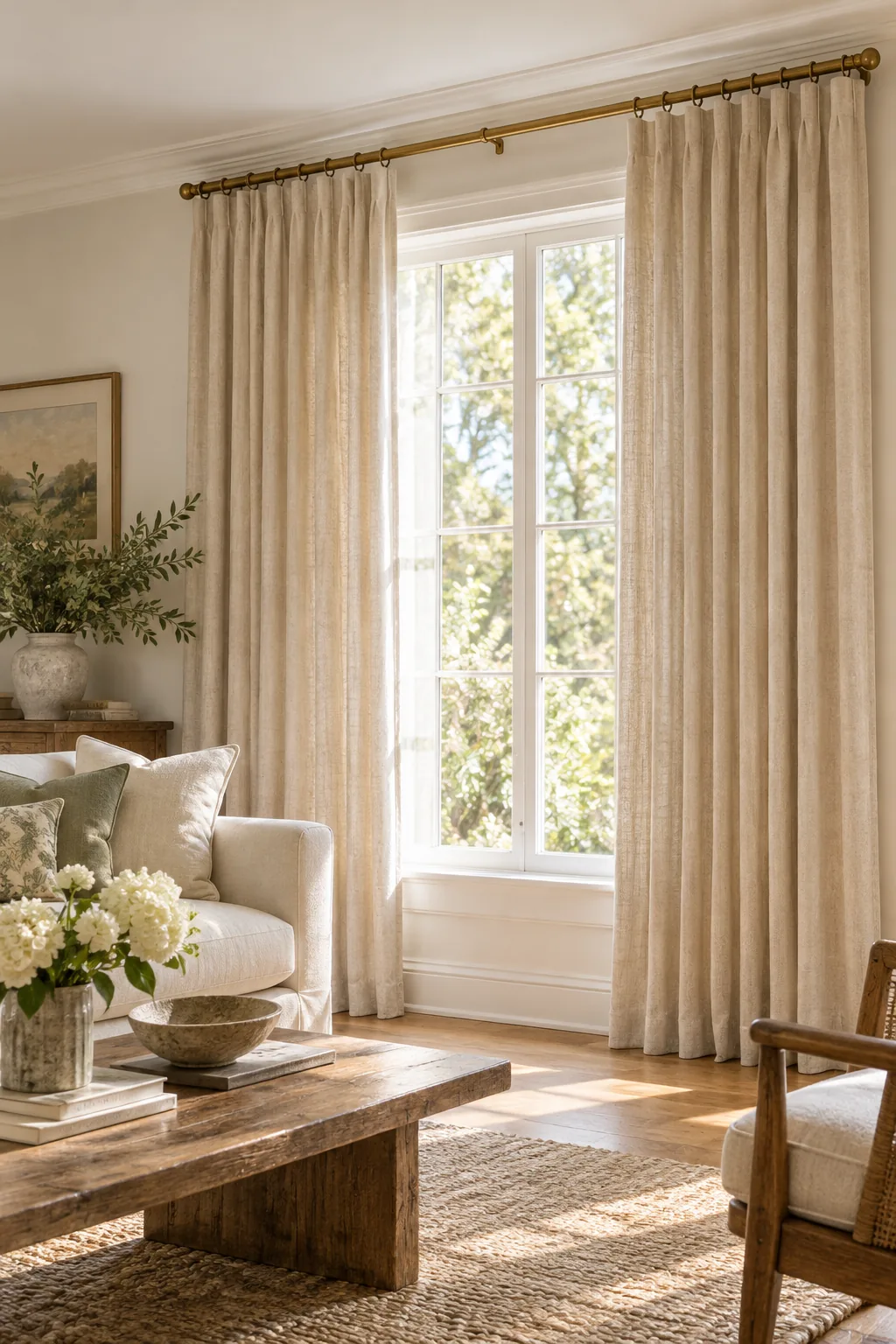
Creating Memory Trained Pleats
Training your fabric ensures the linen always falls back into perfect, crisp folds when opened. In my own Denver living room, I spent a weekend meticulously folding and tying my new panels, and they still hold their structural memory three years later.
- Fold the pleats: Gather the hanging fabric into uniform vertical folds, following the natural pinch at the header.
- Steam the length: Run a hot garment steamer down the entire length of each fold to relax the fibers.
- Tie with ribbon: Loosely bind the panels with soft fabric ribbons at the top, middle, and bottom for 48 hours.
Releasing the ribbons after two days reveals beautifully structured columns that resist flaring at the bottom hem, bringing a grounded symmetry to the space.
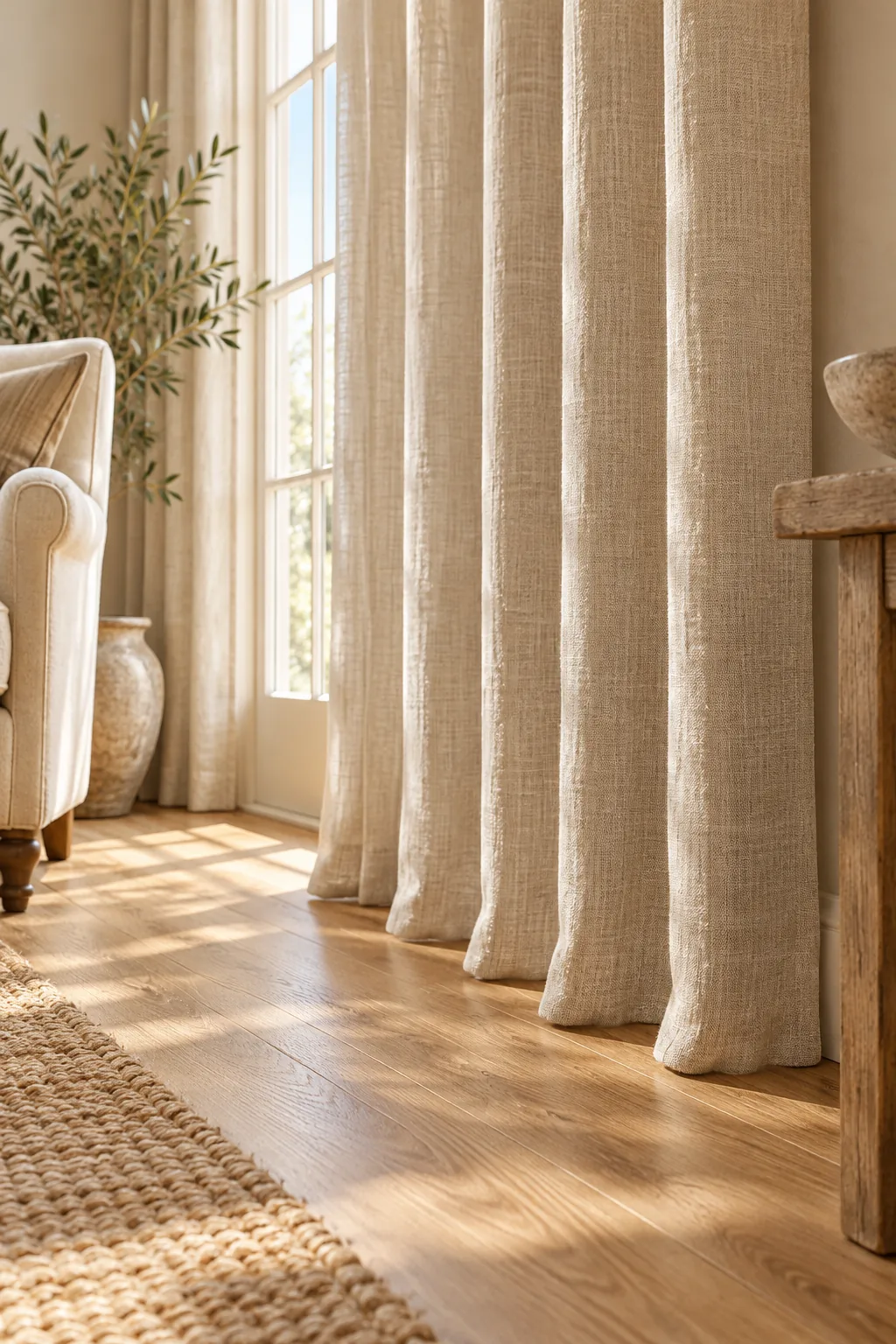
Fabric Weight and Lining Choices
Achieving those crisp pleats and a tailored hang requires a medium-weight fabric like linen paired with a substantial privacy or blackout lining. The added lining provides the necessary bulk and structural integrity to hold the trained shape over time, preventing the face fabric from looking flimsy.
Nailing the Half-Inch Floor Break
A tailored half-inch floor break means the bottom hem just barely touches the floor, creating a slight, elegant bend without sloppy pooling. When I install drapery in historic homes with uneven floorboards, this tiny break perfectly disguises the inconsistencies while maintaining a clean, custom aesthetic.
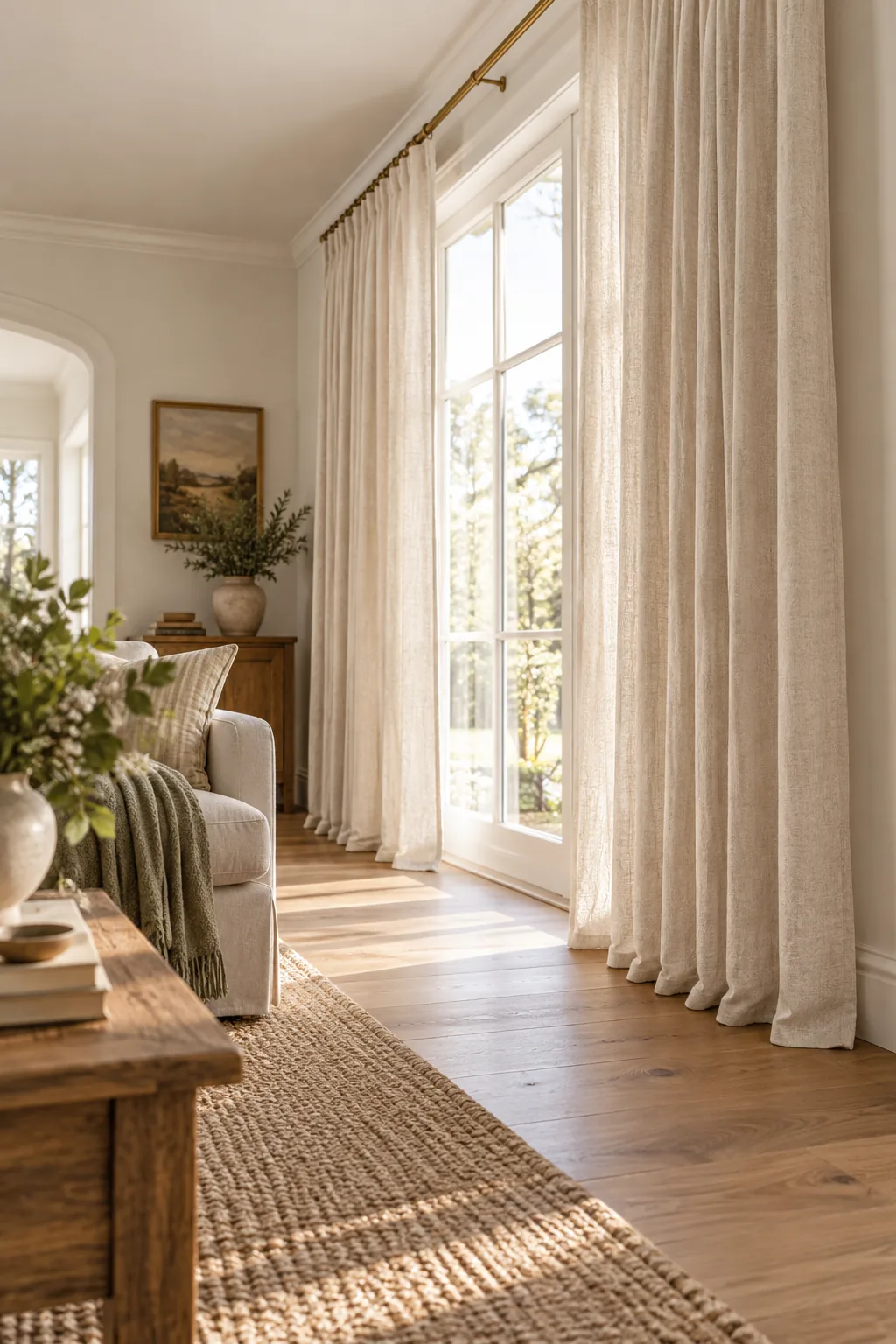
The Drapery Measurement and Ring-Count Worksheet
To calculate your total panel width, multiply your rod width by 1.5 to 2 for proper fullness, then plan for one ring every 4 to 5 inches of flat panel width. I rely on this exact math for every single client project to guarantee the fabric looks lush rather than stretched.
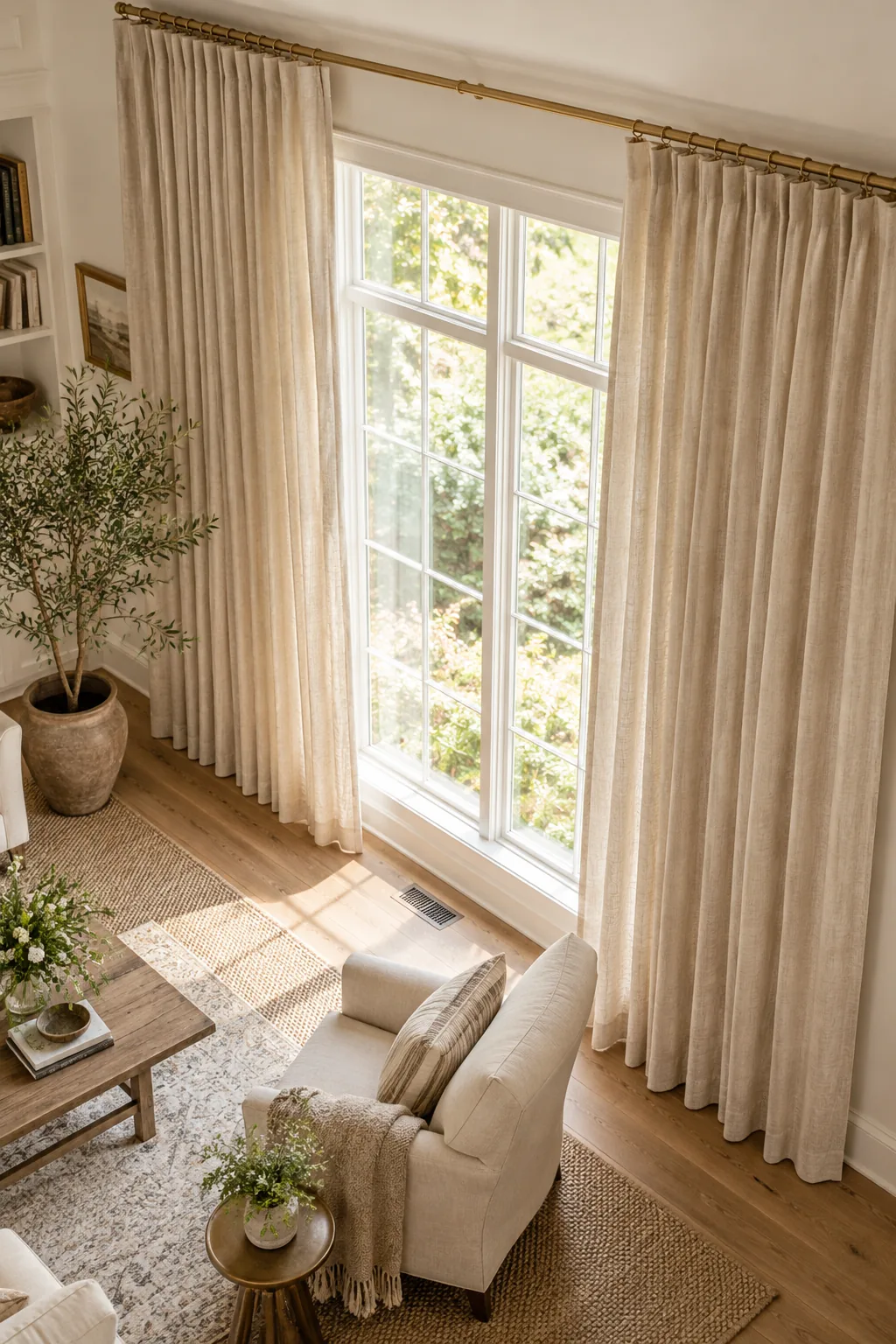
Before you purchase your fabric or hardware, run your numbers through this final verification check to ensure a perfect fit.
Curtain Styling Ideas for Every Room
Explore how different fabrics, hardware, and pleat styles can completely transform your windows.
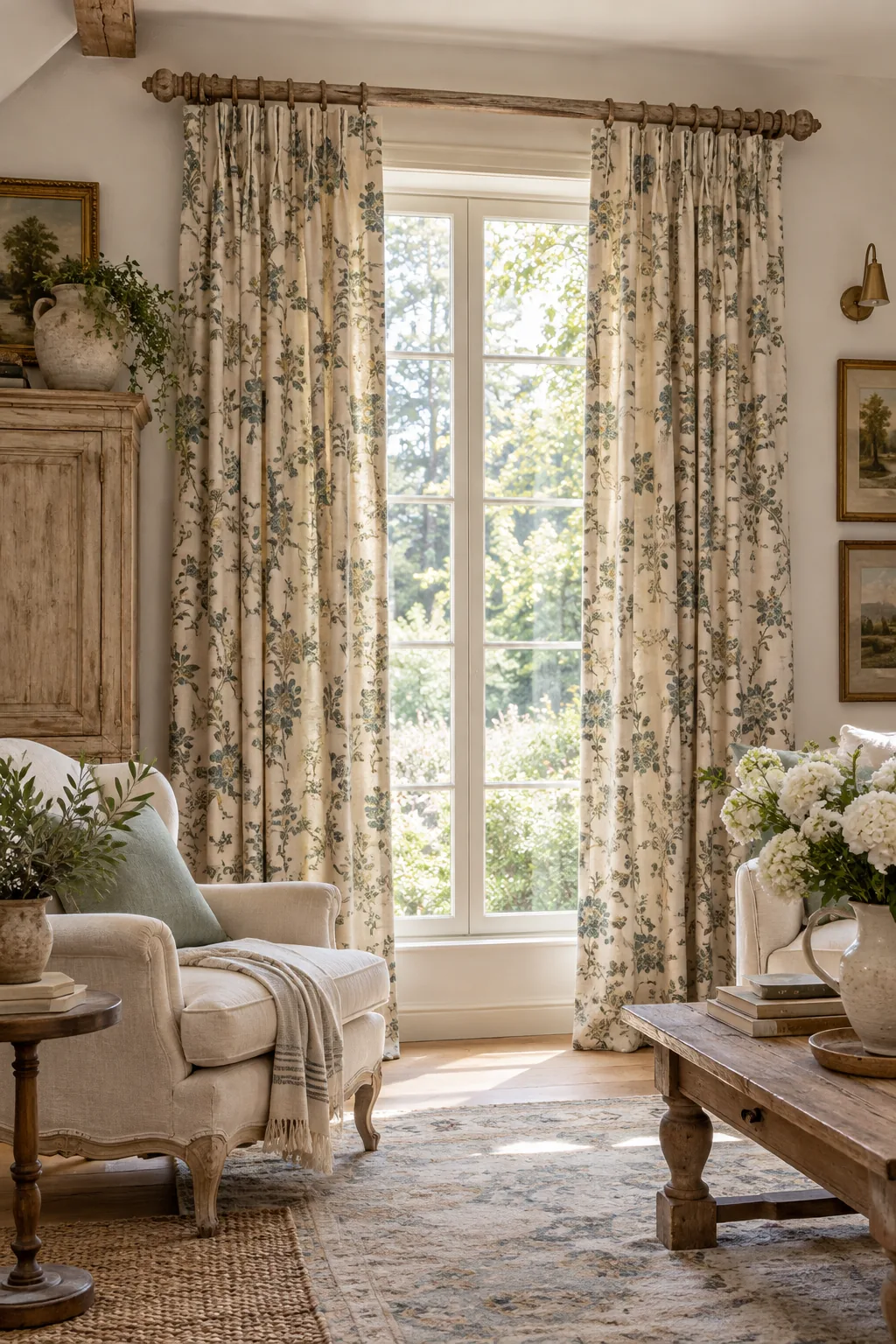
French Country Floral Linen: A distressed wood rod and delicate floral patterns bring warmth and vintage charm to this relaxed living space.
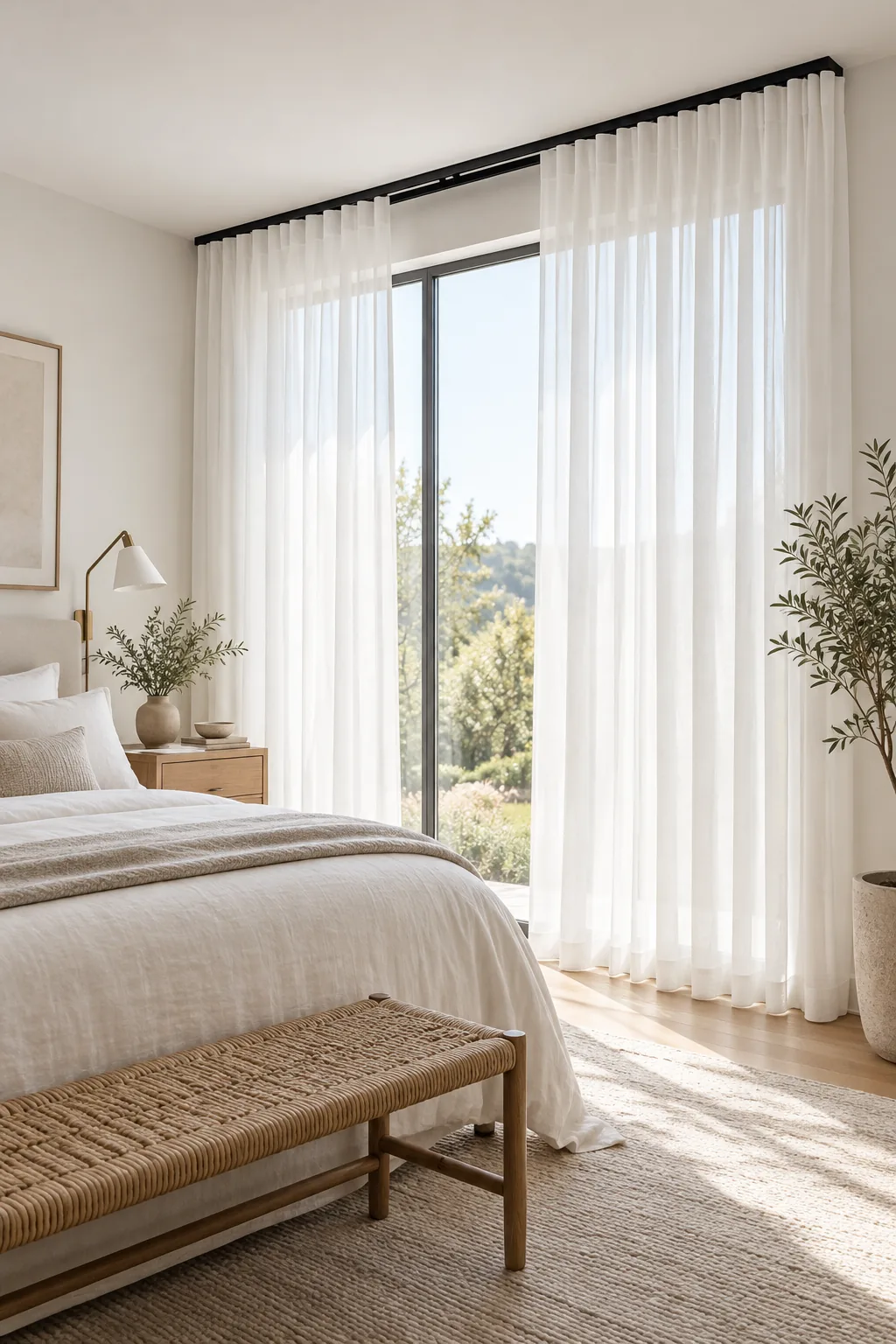
Modern Minimalist Ceiling Track: Ceiling-mounted matte black tracks paired with sheer white panels create a seamless, architectural look that maximizes height.
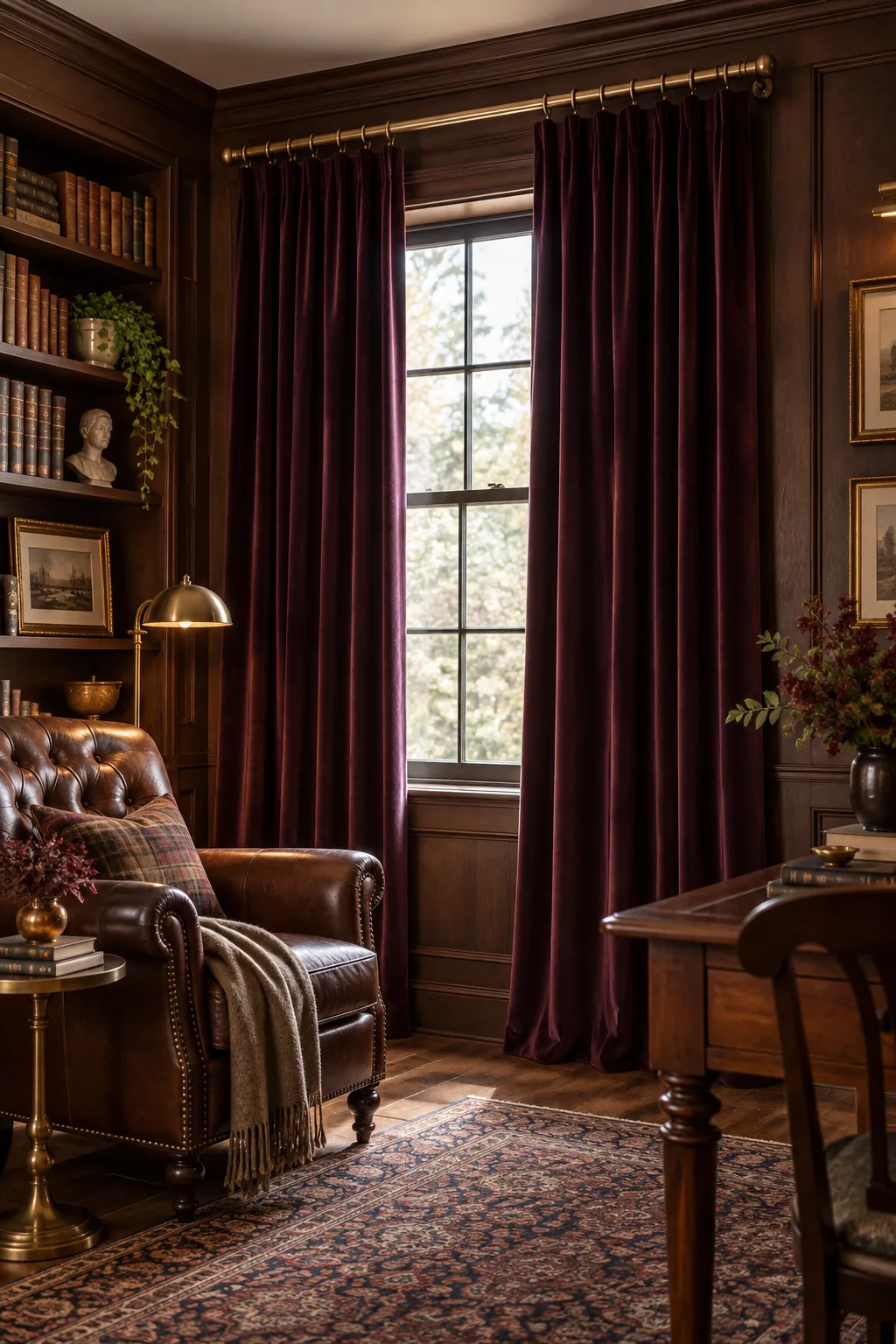
Moody Library Velvet Panels: Heavy plum velvet panels on unlacquered brass hardware absorb sound and add incredible drama to a dark, cozy study.
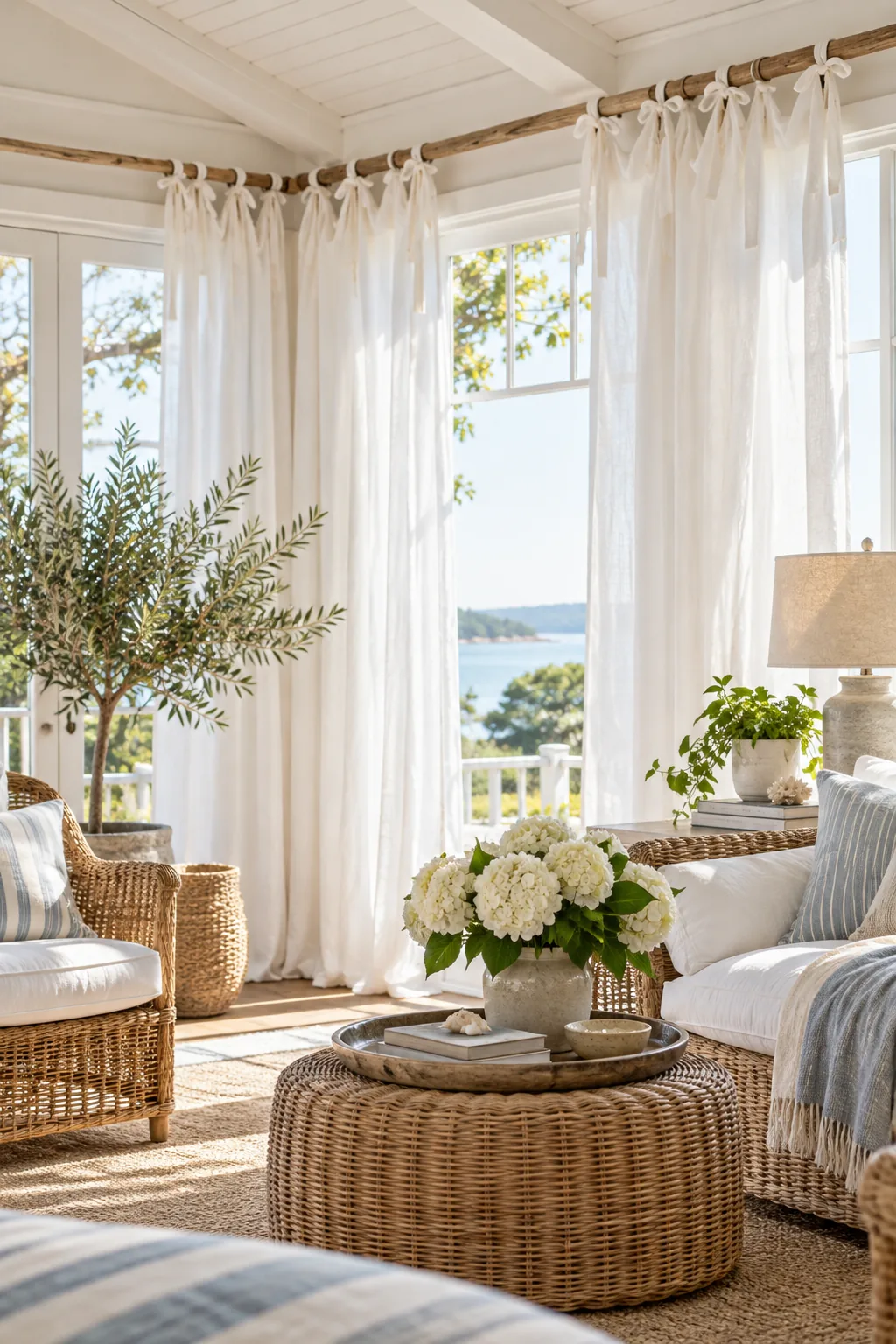
Coastal Casual Cotton Tie-Tops: Loose tie-top headers on a natural driftwood rod offer an effortless, breezy aesthetic perfect for a relaxed sunroom.
Traditional Elegance Silk Damask: Structured silk damask panels on a gilded fluted rod provide the formal structure required for a traditional dining room.