
Basement Theater Ideas: The Low-Ceiling Layout Guide
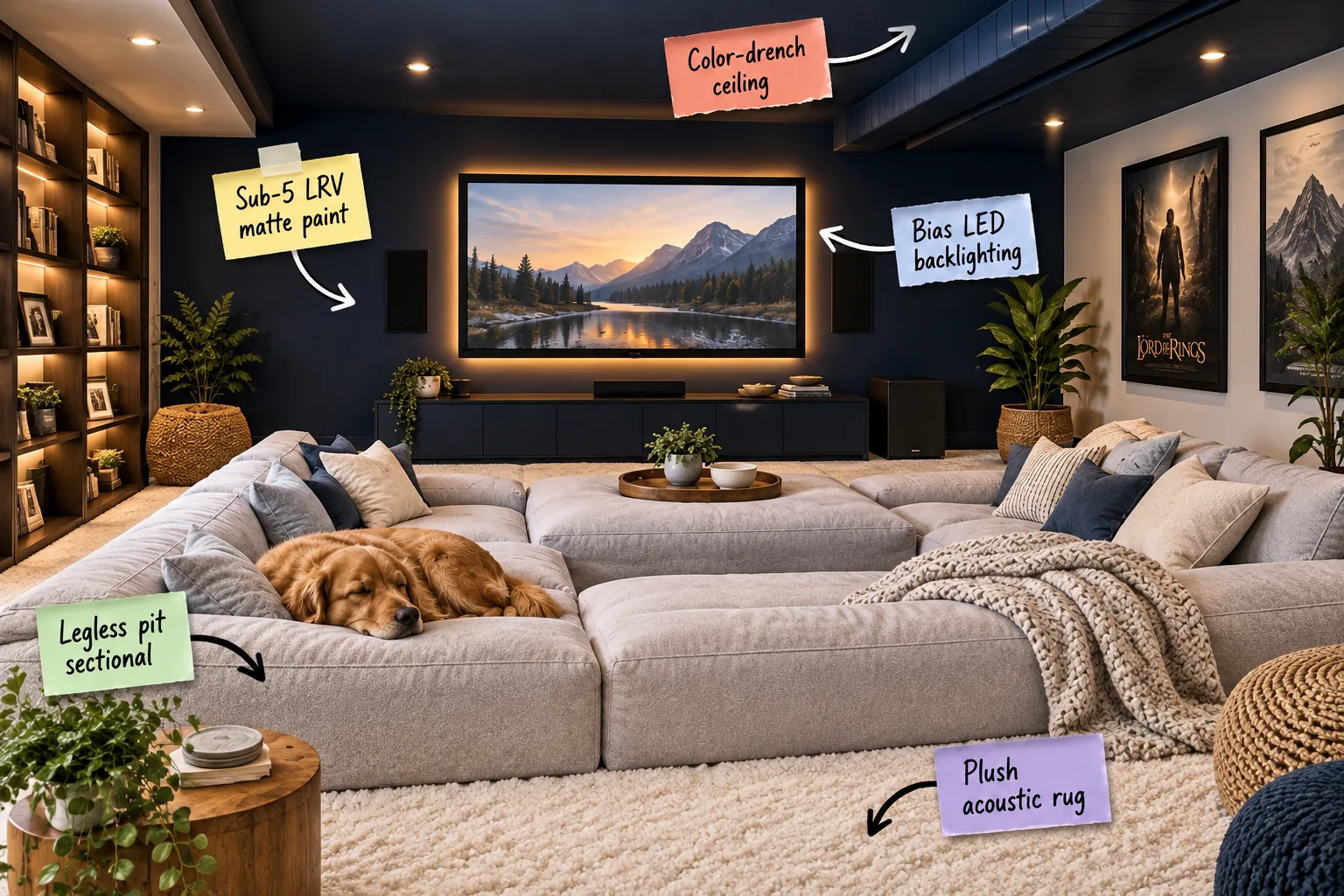
Transform your cramped basement into a cinematic escape with our complete layout and measurement guide for low-ceiling theaters. You will be able to measure your space, choose the right low-profile seating, and apply dark paint tricks to build a comfortable basement theater regardless of ceiling height.
Camouflaging Ductwork with a Color-Drenched Ceiling
Painting the ceiling and exposed ductwork the same dark color eliminates visual clutter and makes low ceilings recede visually. This monochromatic approach tricks the eye into perceiving an expansive void rather than a cramped subterranean structure.
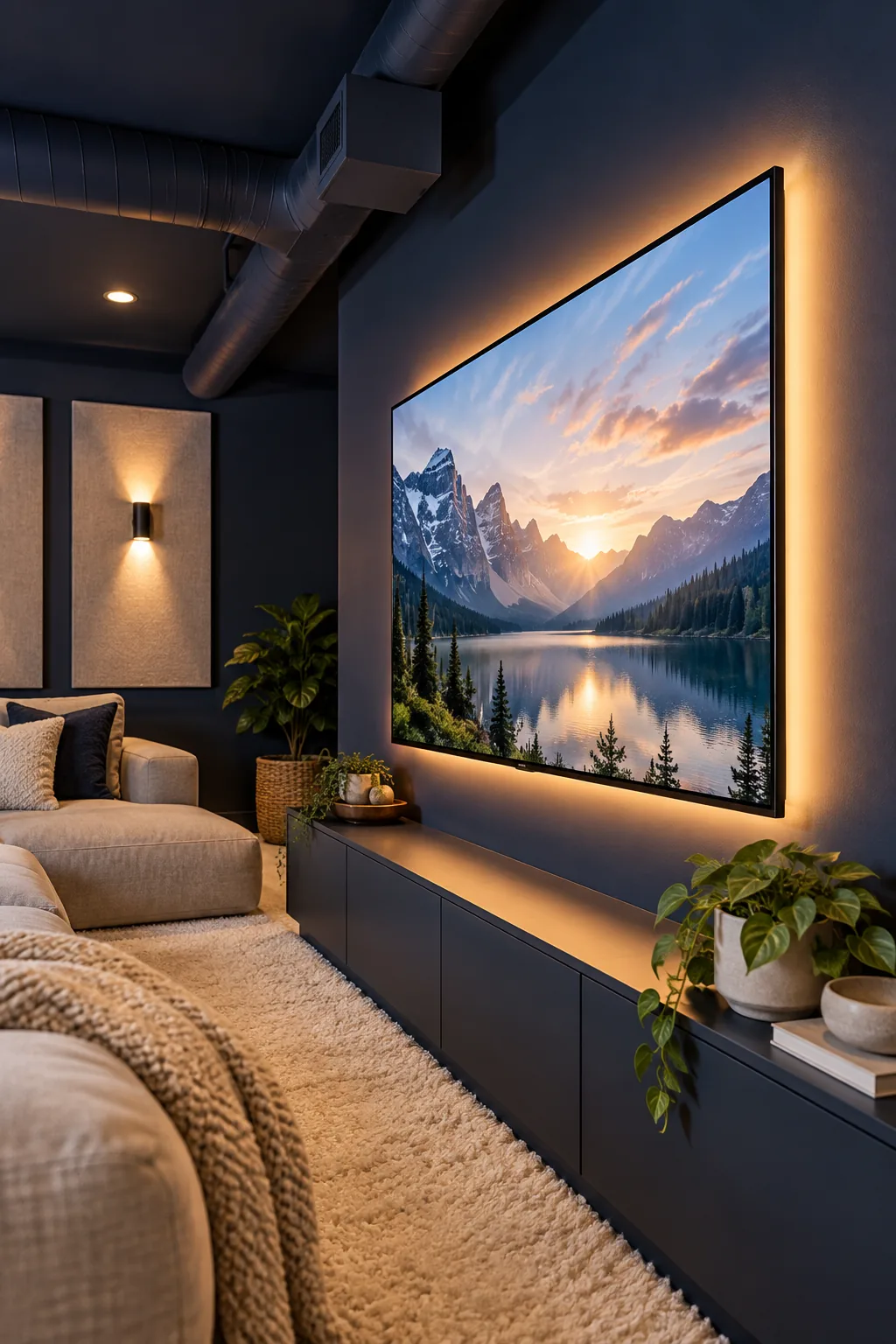
In my own 1920s Denver bungalow, spraying the exposed joists and low-hanging HVAC lines a unified flat finish completely erased the oppressive basement feel. The overhead mechanical elements simply vanished into the shadows during movie nights.
Selecting the Optimal Sheen for Overhead Surfaces
Achieving that seamless void effect requires selecting a paint formulation that actively absorbs light rather than reflecting the bright on-screen action. A glossy ceiling will mirror the television, creating a highly distracting secondary image above your head.
- True flat acrylic: Absorbs maximum light and hides surface imperfections on rough, unfinished basement joists seamlessly.
- Matte enamel: Offers slightly more durability for lower bulkheads while maintaining a strictly non-reflective surface profile.
- Dryfall paint: Ideal for exposed ceilings because the overspray dries to a sweepable dust before hitting the floor.
Preparing Exposed Basement Joists for Paint
Before applying any dark color, thoroughly cleaning the exposed wood and metal surfaces with a degreasing solution ensures the primer adheres properly. Skipping this critical preparation step often leads to flaking paint directly over your expensive seating.
Choosing Sub-5 LRV Matte Paint for the Screen Wall
A Light Reflectance Value (LRV) under 5 ensures the wall absorbs ambient light rather than bouncing it back into your eyes. This critical metric determines how much illumination the painted surface reflects back into the viewing area.
Using a deeply saturated matte finish anchors the screen and prevents distracting glare from washing out the projected cinematic image. The television effectively floats against the dark background, dramatically improving the perceived contrast ratio.
Extending the Dark Palette to Side Walls
Wrapping the dark color onto the adjacent side walls creates a cohesive viewing envelope that pulls your focus entirely forward toward the screen. This localized dark zone mimics a commercial theater environment without requiring a pitch-black room.
- Measure the light throw: Determine exactly how far the screen’s ambient light reaches along the side walls.
- Mark the transition: Tape off a vertical line at least four feet past the screen edge.
- Apply matte coverage: Roll two solid coats of the sub-5 LRV paint to ensure total opacity.
Testing Paint Samples Under Artificial Basement Light
Because subterranean rooms lack natural sunlight, always evaluate your dark paint swatches using the exact LED lighting fixtures planned for the finished space. Colors shift dramatically depending on the specific color temperature of your basement bulbs.
Enhancing Contrast with Bias LED Backlighting
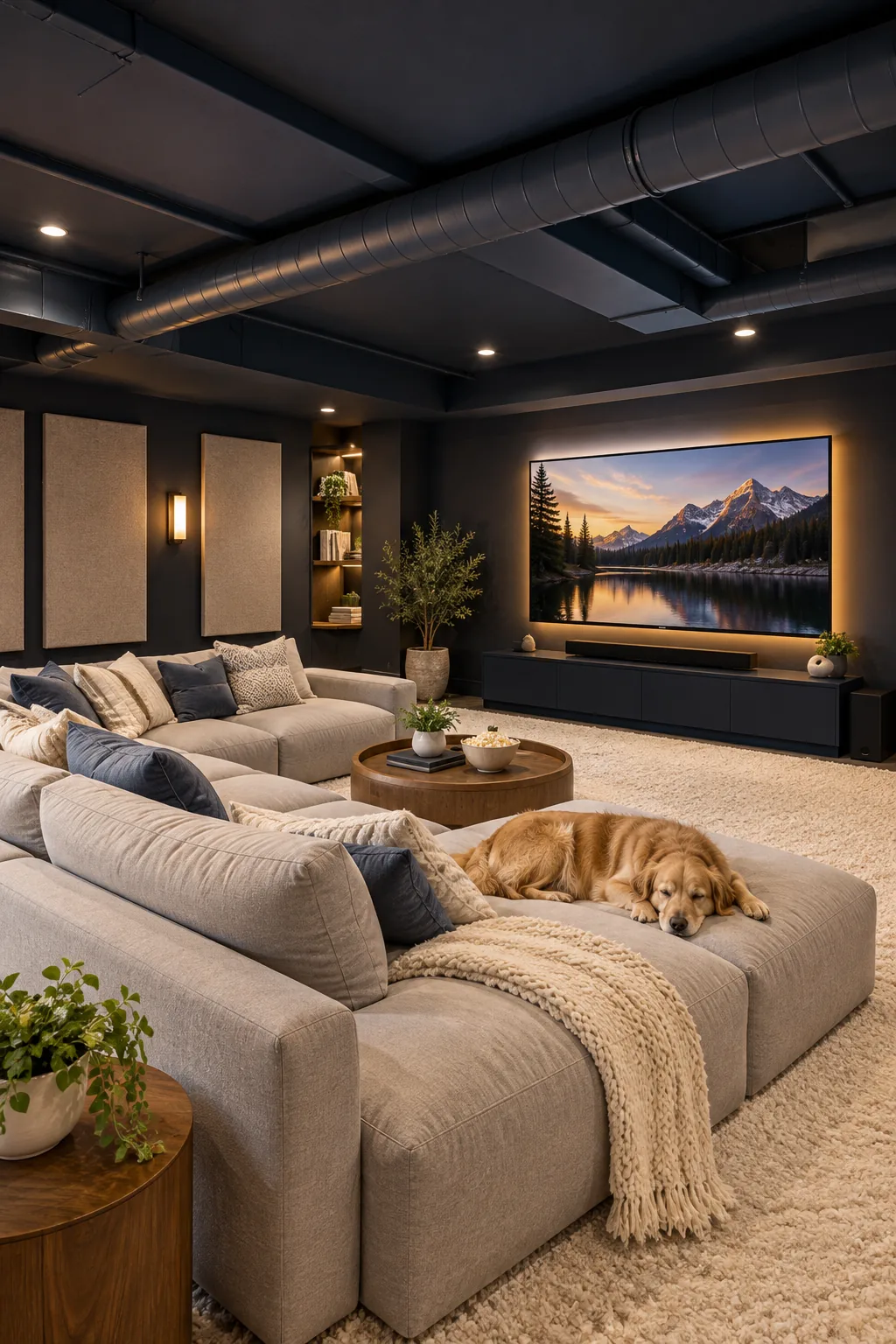
Placing an LED strip behind the television creates a soft, even halo that significantly reduces eye strain in a completely dark room. This ambient glow smooths the harsh transition between the blinding screen and the black wall.
| Screen Size | LED Strip Length | Distance from Edge | Color Temp |
|---|---|---|---|
| 55 inches | 10 feet | 2 inches | 6500K |
| 65 inches | 13 feet | 2.5 inches | 6500K |
| 75 inches | 16 feet | 3 inches | 6500K |
| 85 inches | 18 feet | 3 inches | 6500K |
Selecting the Correct Color Temperature for Bias Lights
Positioning the lights exactly 2 to 3 inches from the screen edge ensures the glow diffuses smoothly across the dark matte wall. Placing them too close to the edge creates harsh hotspots that distract from the film.
Routing Cables Behind a Flush-Mounted Screen
A clean, distraction-free screen wall requires hiding power cords and HDMI cables inside the drywall to maintain the illusion of a floating image. Surface-mounted cord covers inevitably catch the bias lighting and cast unwanted vertical shadows.
The Low-Ceiling Layout and Measurement Guide
For cramped basements, keep seating at least 36 inches from side walls to maintain comfortable walkways around structural supports. Mapping these clearances early prevents you from ordering an oversized sectional that blocks access to the utility room.
Mapping Walkways Around Structural Pillars
Basement support columns often dictate your floor plan, forcing you to align the primary seating zone squarely between the load-bearing posts. Wrapping these structural pillars in dark acoustic fabric helps them blend into the cinematic background seamlessly.
Establishing the Centerline for Symmetrical Layouts
Finding the exact midpoint between your side walls allows you to center the screen and seating for perfectly balanced stereo audio distribution. Asymmetrical layouts often result in uneven sound waves bouncing unpredictably off the nearest hard boundary.
Maximizing Headroom with a Legless Pit Sectional
Traditional theater seating feels oppressive under a low ceiling, but a legless pit sectional sits directly on the floor. This grounded profile completely transforms the spatial dynamics of a restrictive basement environment.
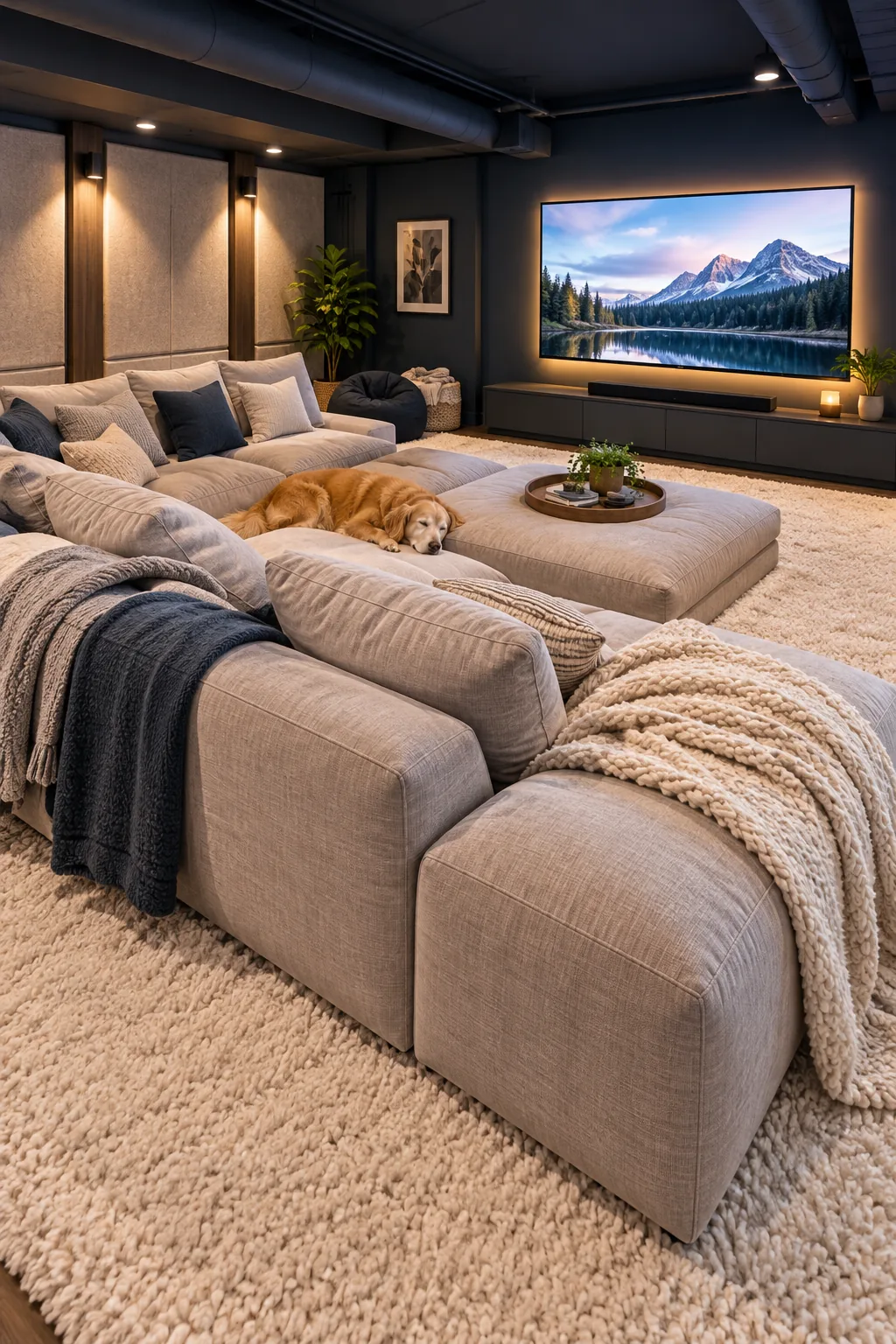
Dropping the seat height to around 15 inches instantly creates the illusion of a taller room by increasing the negative space above you. Your guests will never notice the low joists when lounging comfortably at floor level.
Designing Modular Seating for Narrow Staircases
Getting massive theater furniture down a tight basement stairwell requires selecting modular pieces that ship in individual, easily manageable boxes. Trying to maneuver a monolithic sofa around a narrow landing usually damages both the upholstery and the drywall.
Selecting Upholstery Fabrics for Basement Environments
Performance velvet or tightly woven chenille resists the dampness often found in subterranean rooms while remaining exceptionally soft against the skin. These durable textiles also provide a secondary layer of sound absorption near the primary listening position.
Optimizing Viewing Distance for Large Screens
For a 4K screen, the ideal viewing distance is roughly 1 to 1.5 times the diagonal measurement of the television. Sitting too close exposes individual pixels, while sitting too far diminishes the immersive cinematic impact.
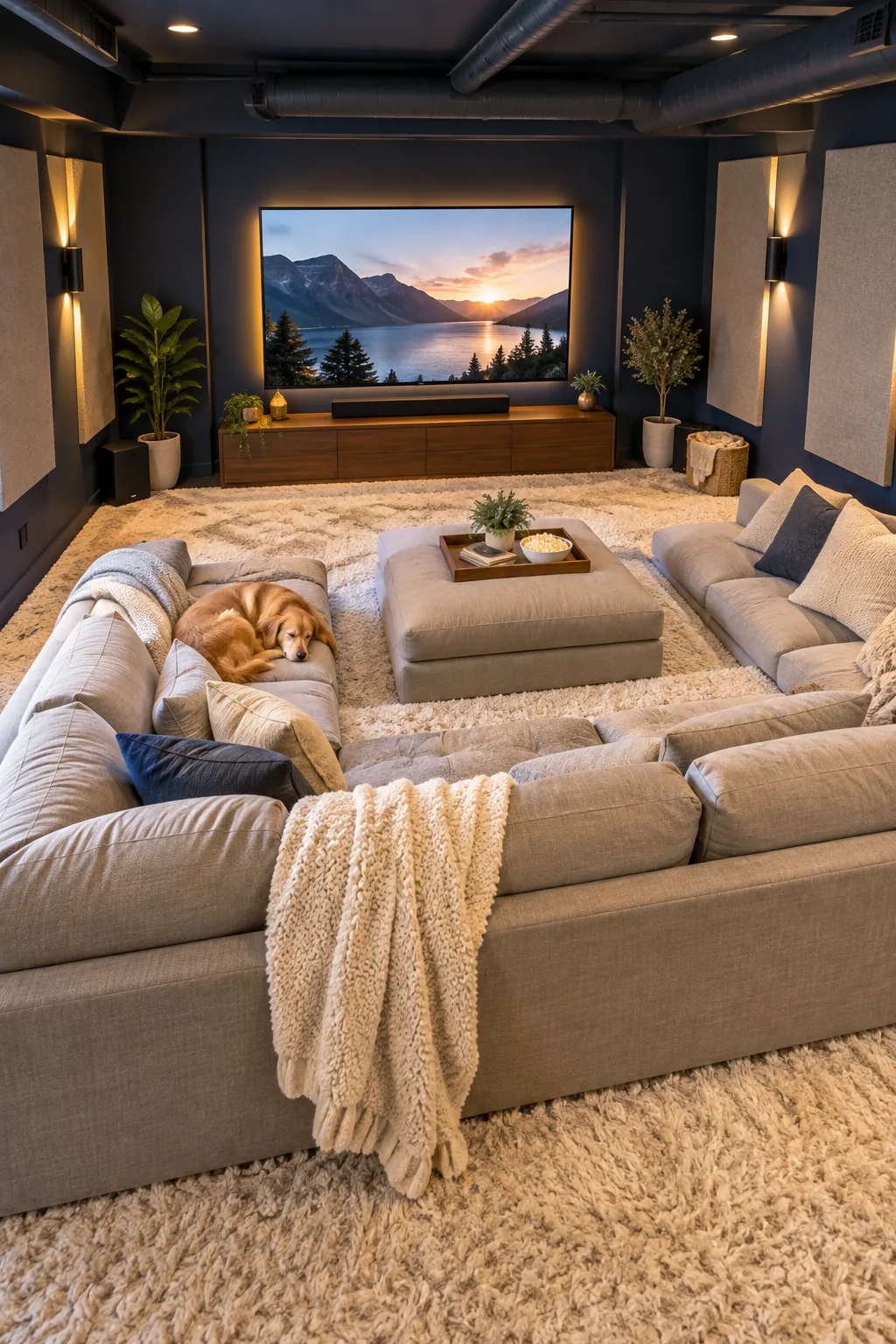
In my recent basement remodel, placing the front edge of the pit sectional between 7 and 10.5 feet from the 85-inch screen provided perfect immersion. This precise spacing ensured everyone enjoyed an uncompromised view of the action.
Adjusting Screen Height for Reclined Viewing Angles
When lounging in a deep pit sectional, your natural sightline shifts upward, requiring a slight downward tilt if the screen sits higher on the wall. An adjustable mounting bracket allows you to fine-tune this angle for optimal comfort.
Calculating the Vertical Viewing Angle for Comfort
Keeping the center of the screen within a 15-degree vertical viewing angle prevents severe neck strain during extended movie marathons. Measure this angle from your seated eye level to guarantee a relaxed posture for the entire family.
Grounding the Space with a Plush Acoustic Rug
A thick, high-pile rug visually anchors the massive sectional while effectively hiding uneven or extremely cold basement concrete floors. The heavy textile acts as a crucial acoustic dampener in a room dominated by hard structural surfaces.
Layering Rug Pads for Thermal Insulation
Adding a dense felt rug pad beneath the high-pile carpet blocks the structural chill radiating upward from the uninsulated concrete slab. This hidden thermal barrier dramatically increases the overall comfort of your floor-level seating arrangement.
Sizing the Rug to Anchor an Oversized Sectional
Ensuring the rug extends at least two feet beyond the perimeter of the pit sectional scales the seating zone appropriately for the room. A disproportionately small rug will make the massive modular furniture look awkward and unbalanced.
Balancing Soft Acoustic Panels with Hard Architecture
Strategically placing sound-absorbing panels at the primary reflection points ensures crystal-clear dialogue without completely deadening the room’s natural acoustic energy. You can locate these points by having a friend slide a mirror along the adjacent side walls.
Managing Bass Frequencies in Small Rectangular Rooms
Installing dense foam bass traps in the front corners prevents low-frequency rumbles from muddying the overall soundtrack during intense action sequences. These unobtrusive cylindrical wedges capture the longest sound waves before they bounce back into the seating area.
More Low-Ceiling Theater Styles
Explore these different aesthetic approaches to maximize your basement media room.
Charcoal and Walnut Modern: Warm wood tones balance the moody charcoal paint, creating a sophisticated mid-century screening room.
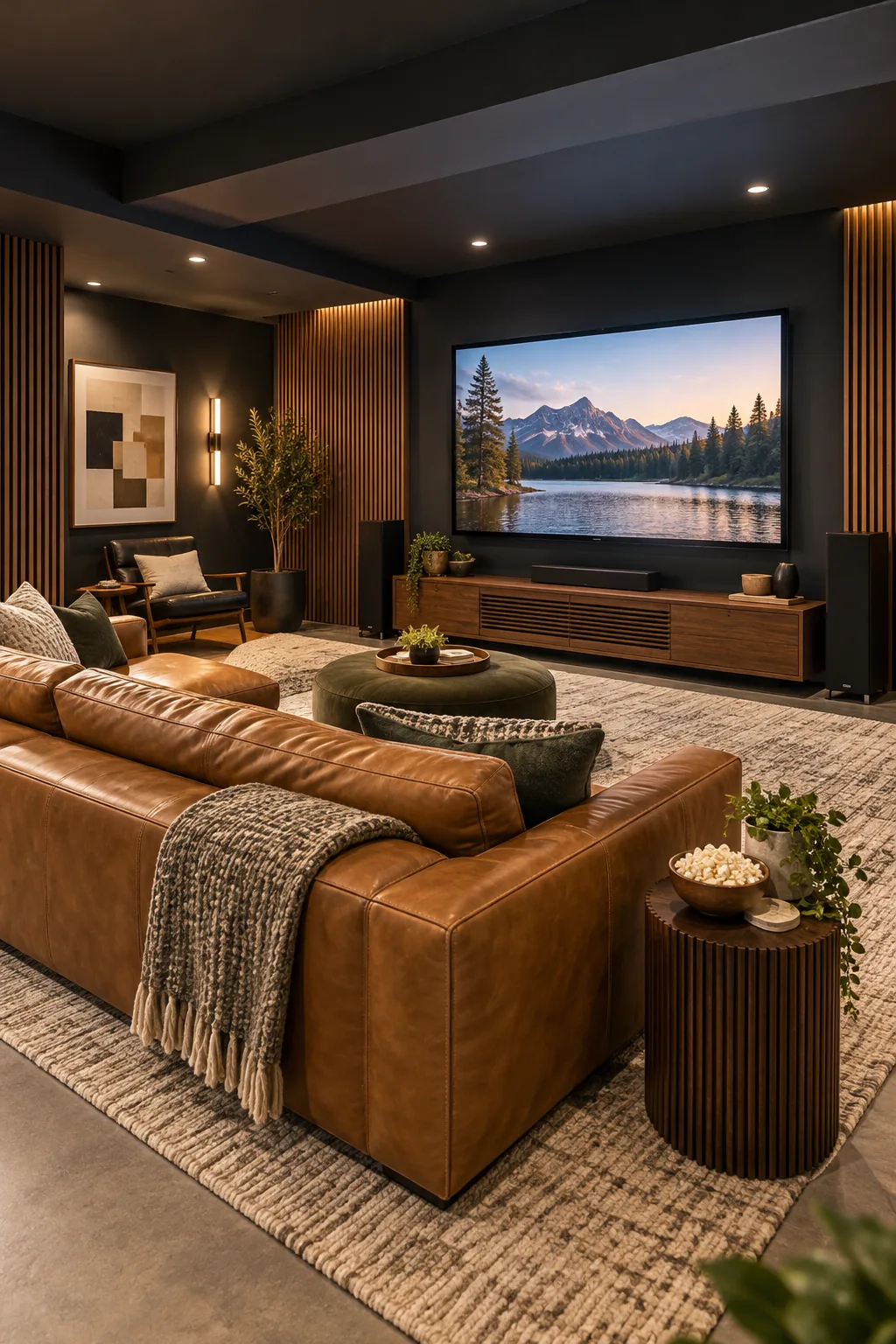
Warm Terracotta Boho Theater: Earthy terracotta walls and layered vintage rugs offer a relaxed, bohemian alternative to traditional dark cinemas.
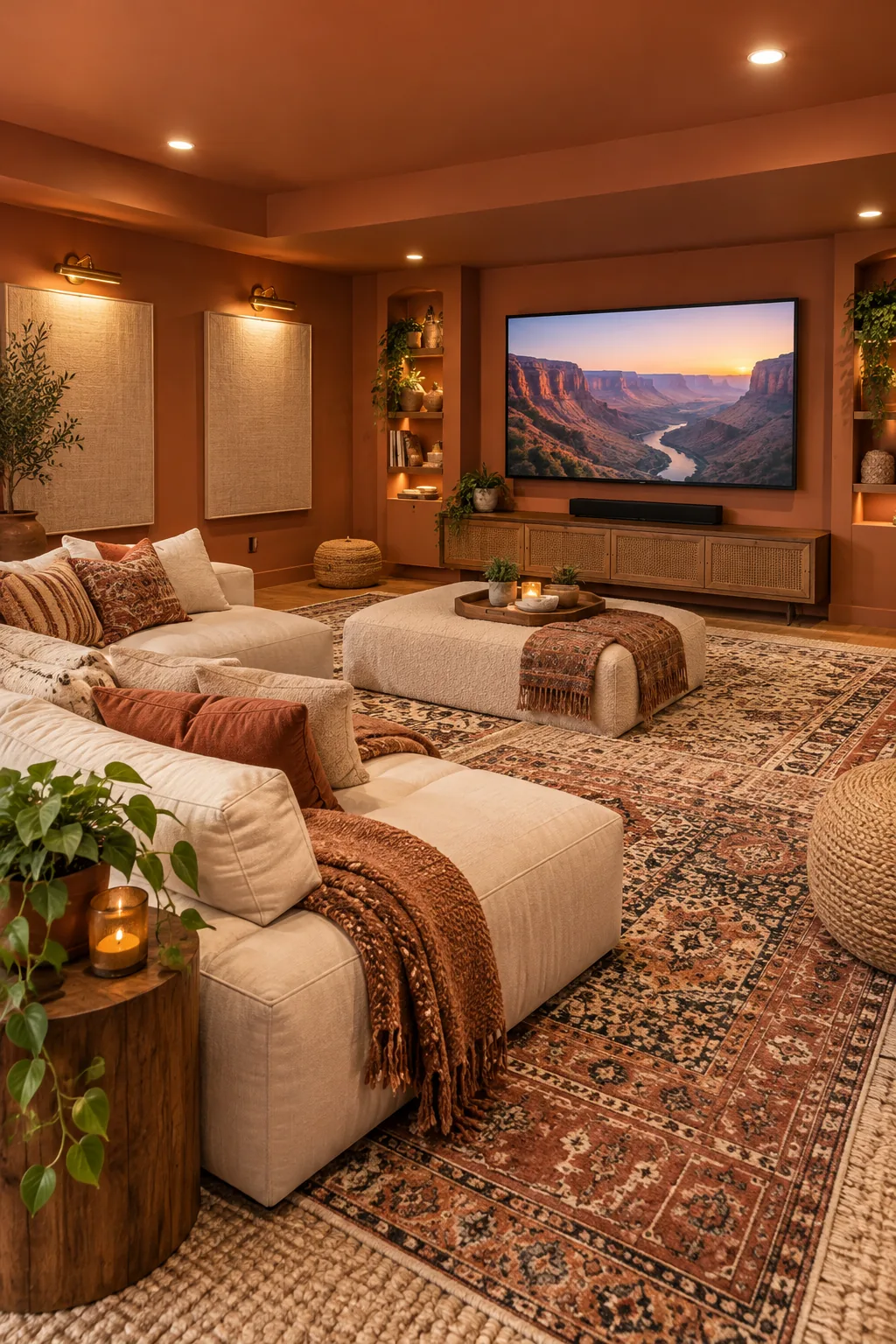
Forest Green Library Cinema: Built-in bookcases framing the screen turn a standard media room into an elegant cinematic library.
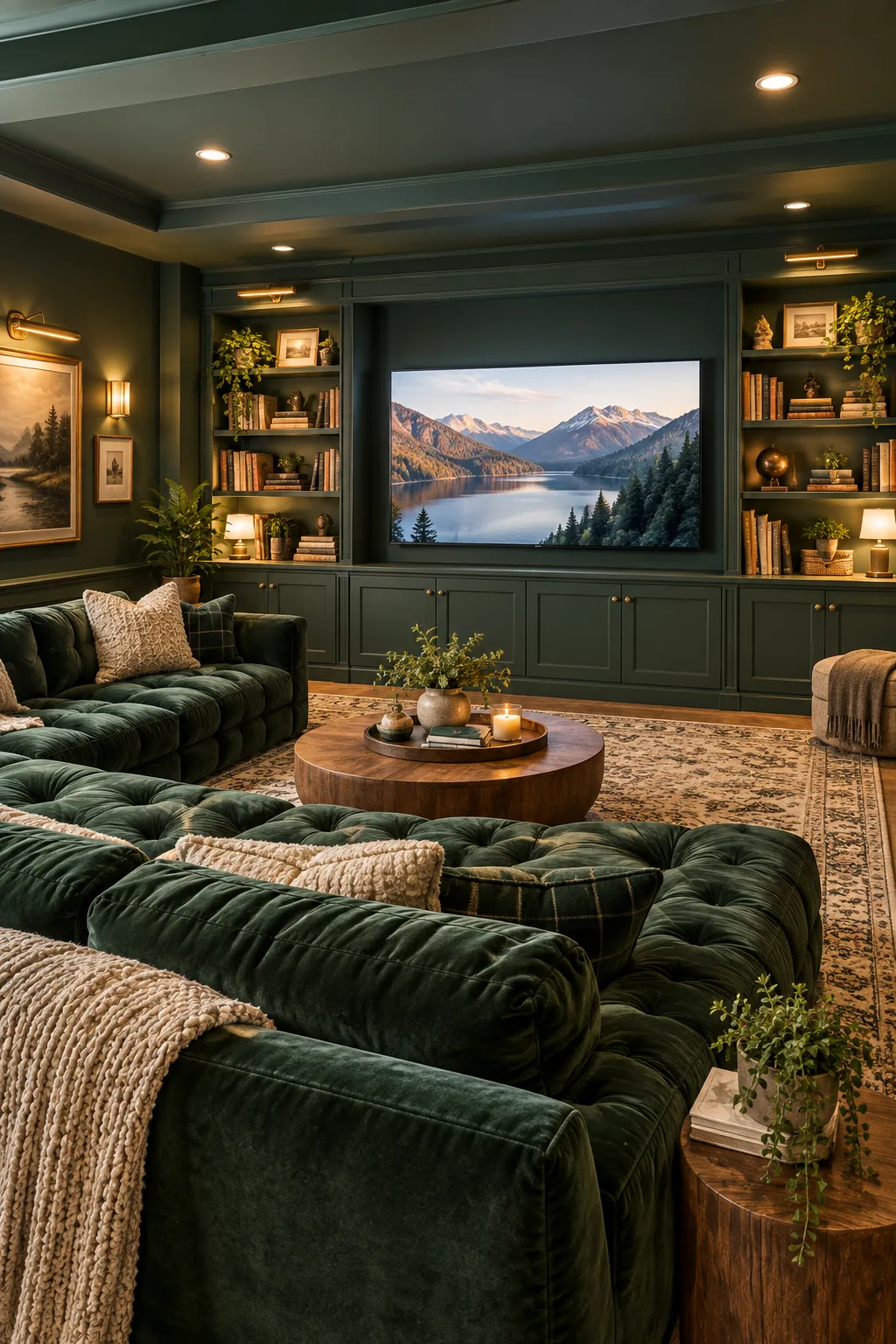
Minimalist Greige Media Room: A monochromatic greige palette keeps the space feeling open and airy despite the low ceiling.
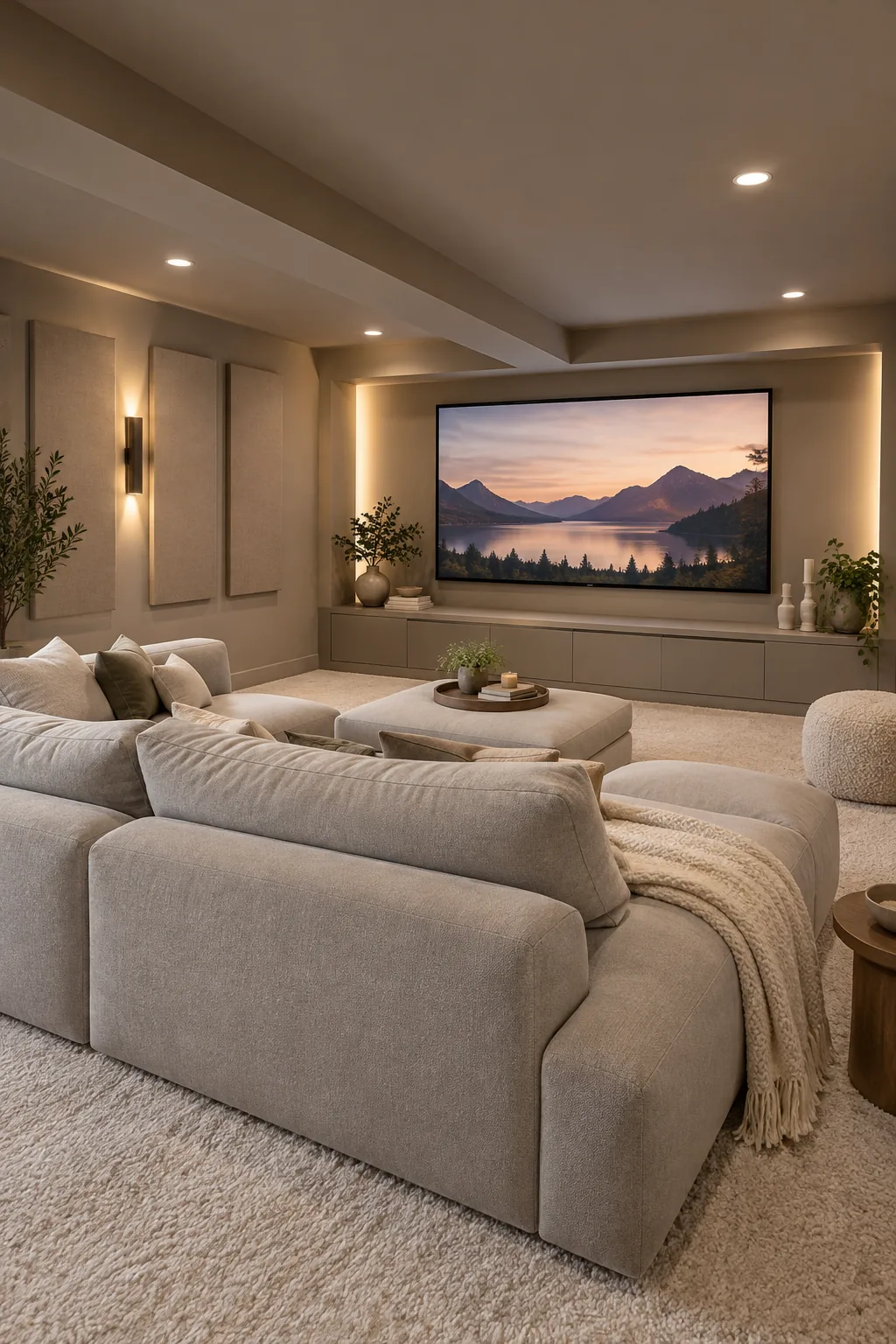
Controlling Sound Reflections in a Hard Basement
Concrete floors and low drywall ceilings create harsh audio echoes that easily ruin the immersive experience of a premium surround sound system. Hard parallel surfaces cause sound waves to bounce endlessly, creating a chaotic and fatiguing listening environment.
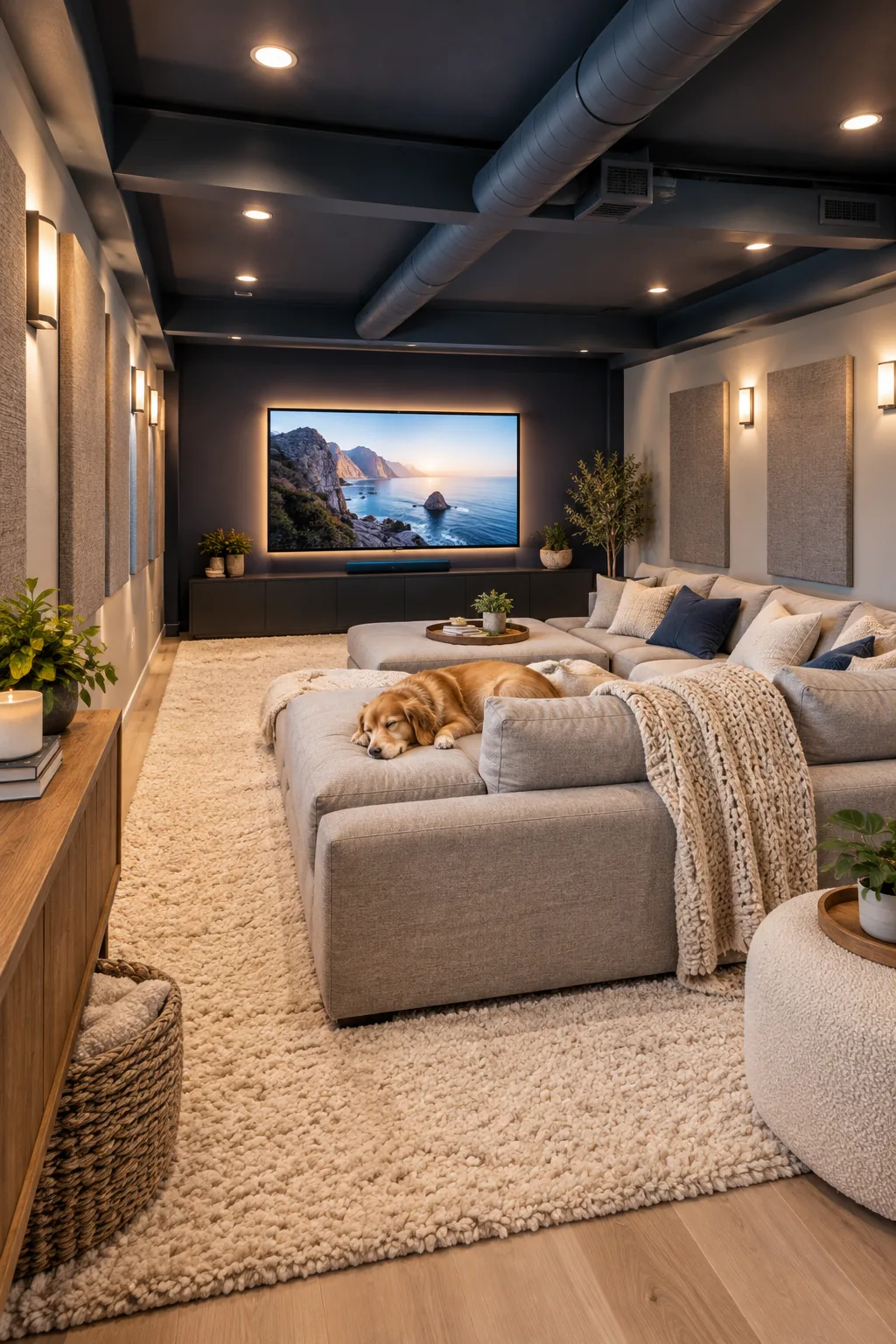
When treating the harsh acoustics in my own concrete basement, I combined a plush rug with fabric-wrapped panels to absorb high-frequency echoes. This balanced approach transformed a noisy reverberant cavern into a beautifully controlled acoustic envelope.