
Brilliant Low-Maintenance Landscaping Around a Raised Deck
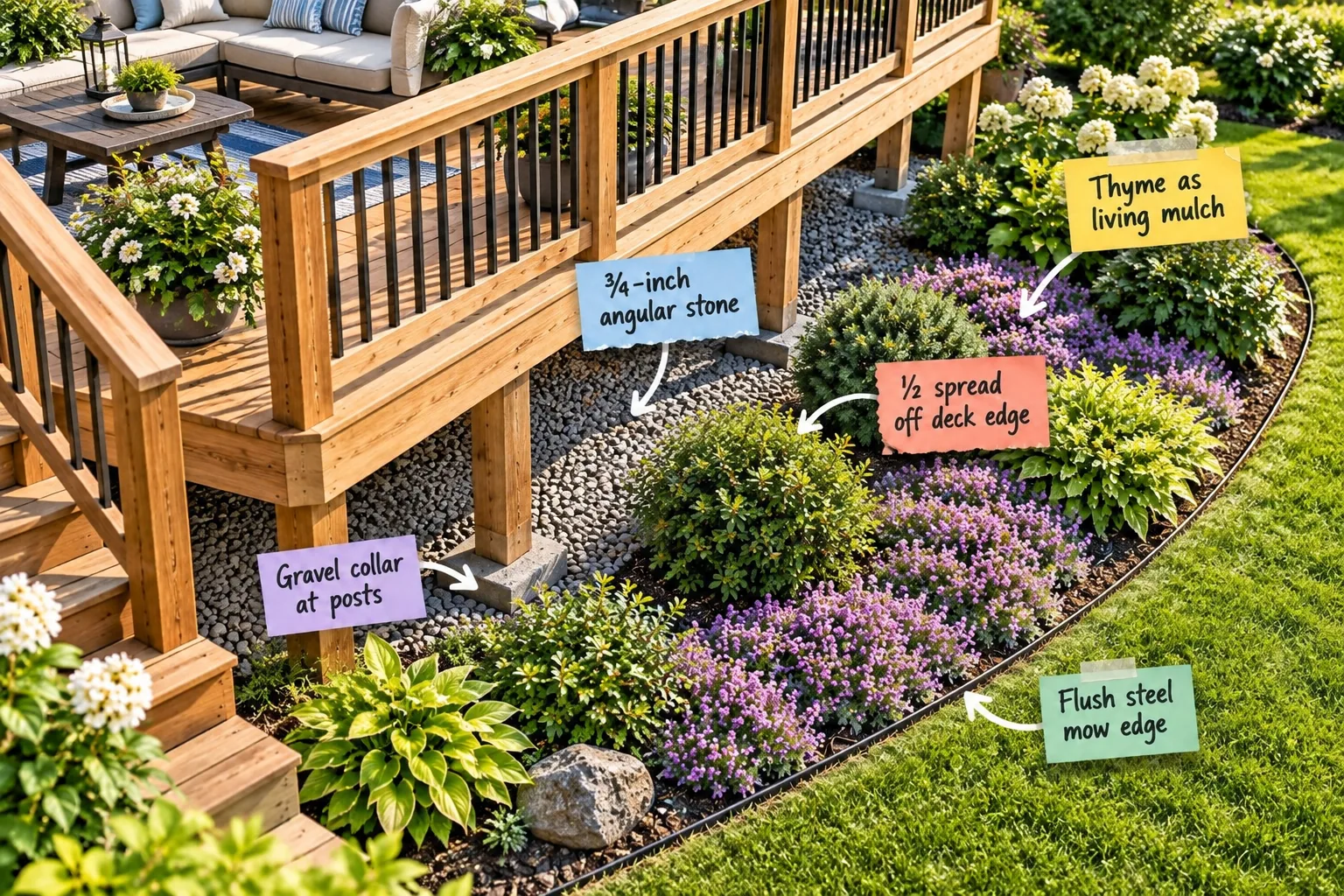
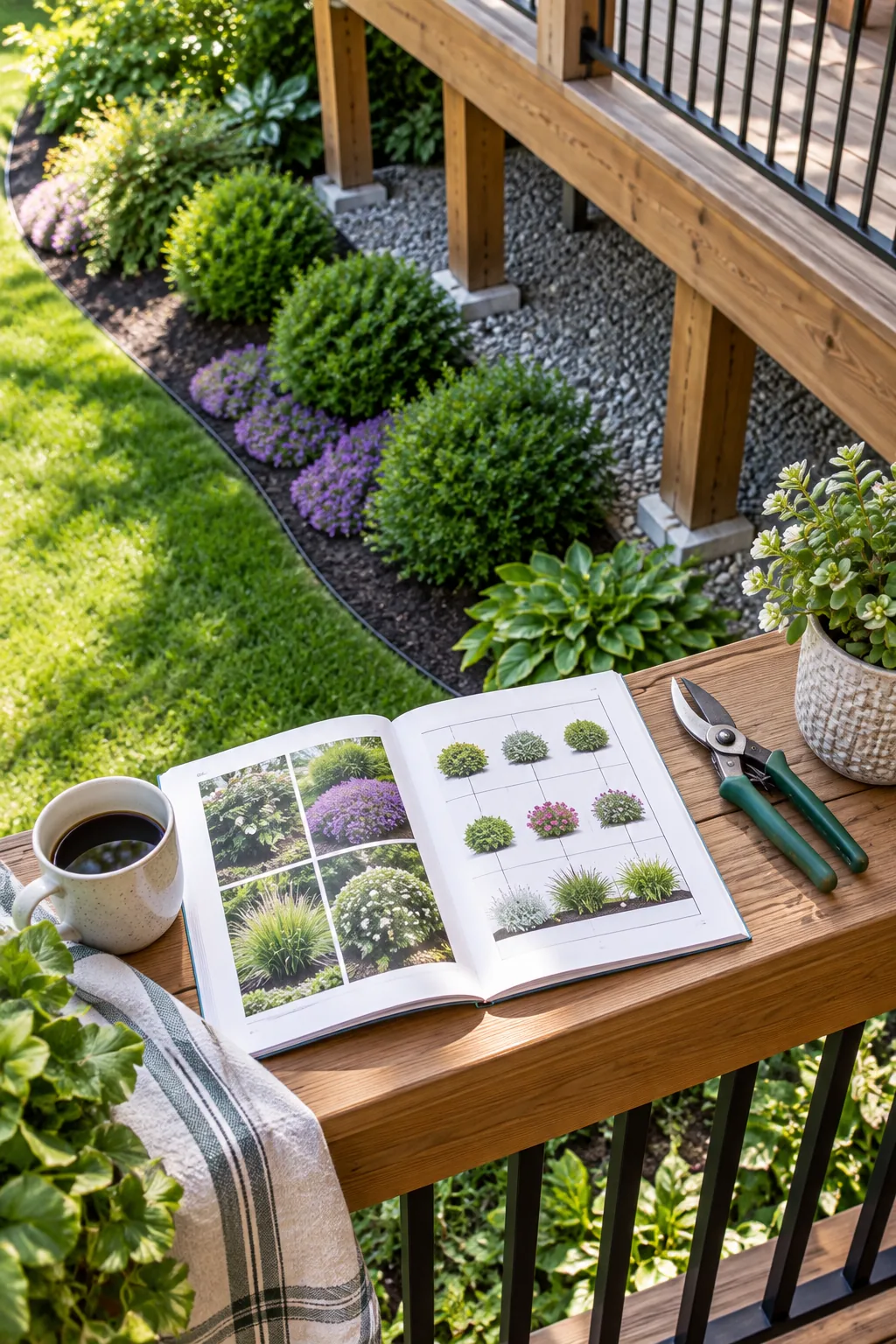
You can finally transform that awkward, weedy space under your railing by grabbing our printable raised-deck planting sheet to build a self-mulching border you will actually enjoy looking down on.
Laying the Under-Deck Gravel Bed
Start by covering the shaded ground directly beneath your deck with a 3-inch deep layer of ¾-inch angular stone to lock weeds out permanently.
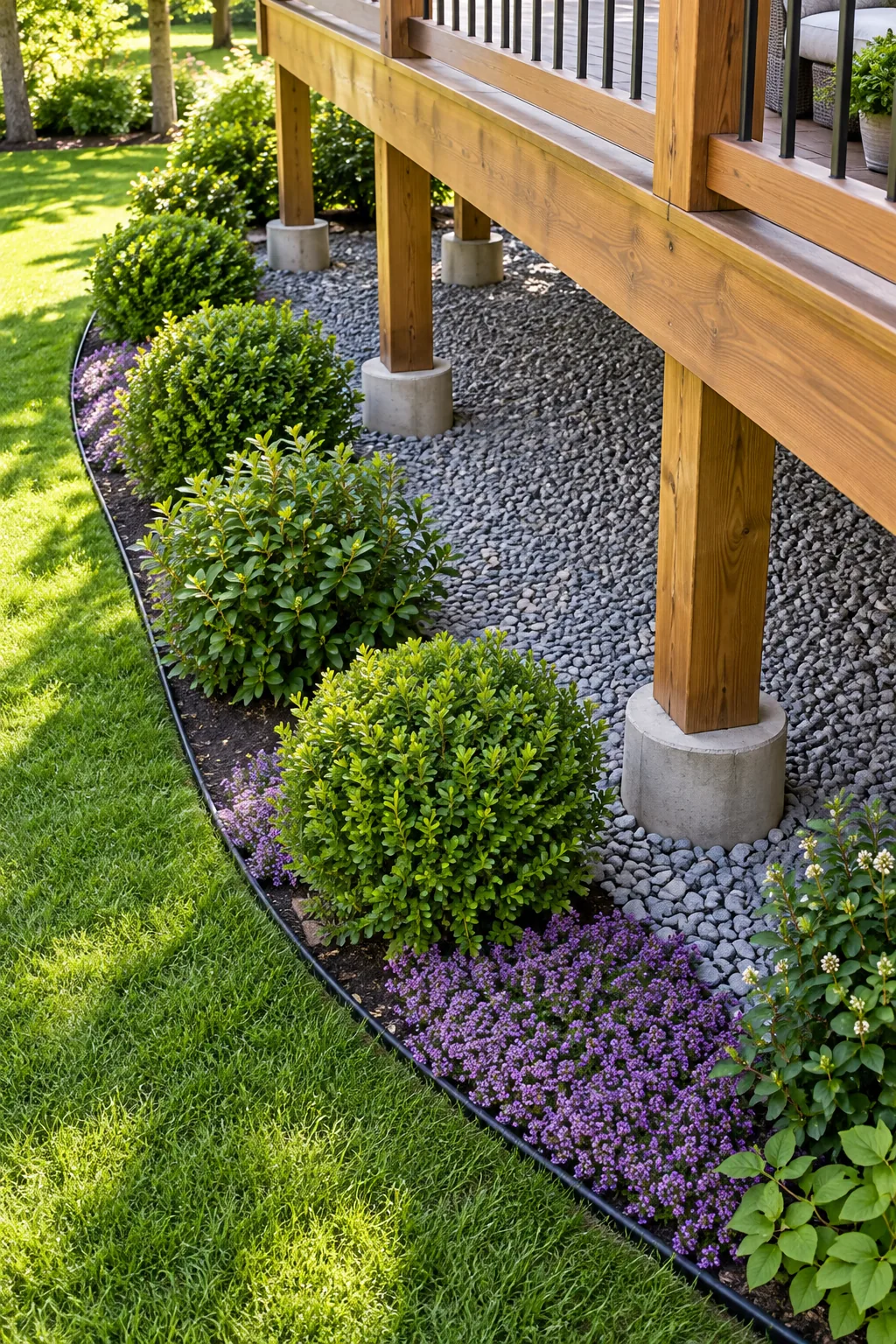
Before ordering your stone delivery, ensure the bare ground beneath the deck is properly prepared to prevent future drainage nightmares.
Calculating Your Stone Volume
Figuring out exactly how much bulk gravel to order prevents mid-project delays and expensive extra delivery fees.
| Deck Dimensions | Square Footage | Stone Depth | Required Volume |
|---|---|---|---|
| 10 x 10 feet | 100 sq ft | 3 inches | 1 cubic yard |
| 10 x 20 feet | 200 sq ft | 3 inches | 2 cubic yards |
| 15 x 20 feet | 300 sq ft | 3 inches | 3 cubic yards |
| 20 x 20 feet | 400 sq ft | 3 inches | 4 cubic yards |
Always round up slightly when ordering bulk materials, as the stone settles naturally into the uneven ground over the first few weeks.
Securing the Post Footings
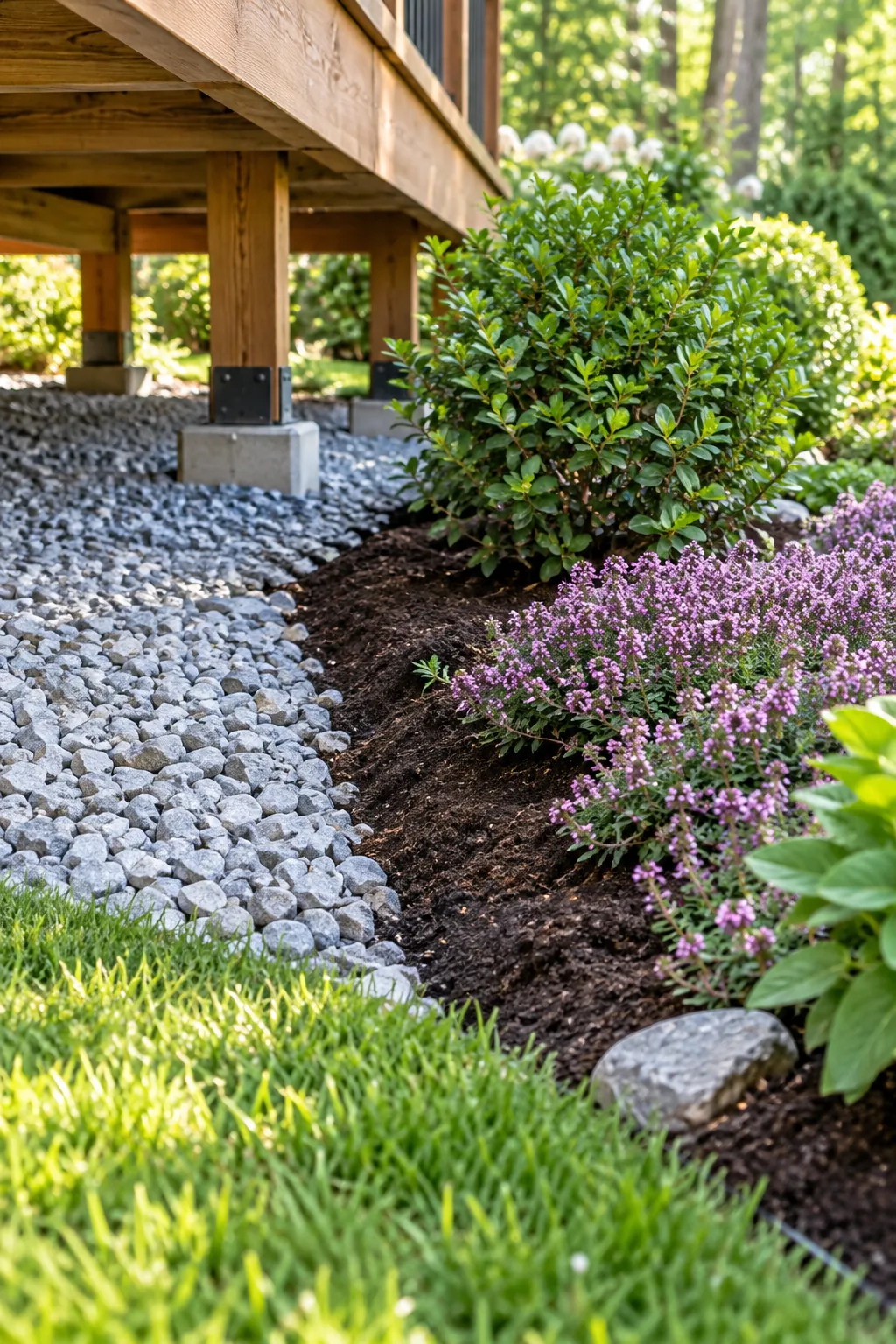
You must keep organic soil and moisture-retaining mulch completely away from your structural wood by creating a 6-inch wide gravel collar around every concrete footing.
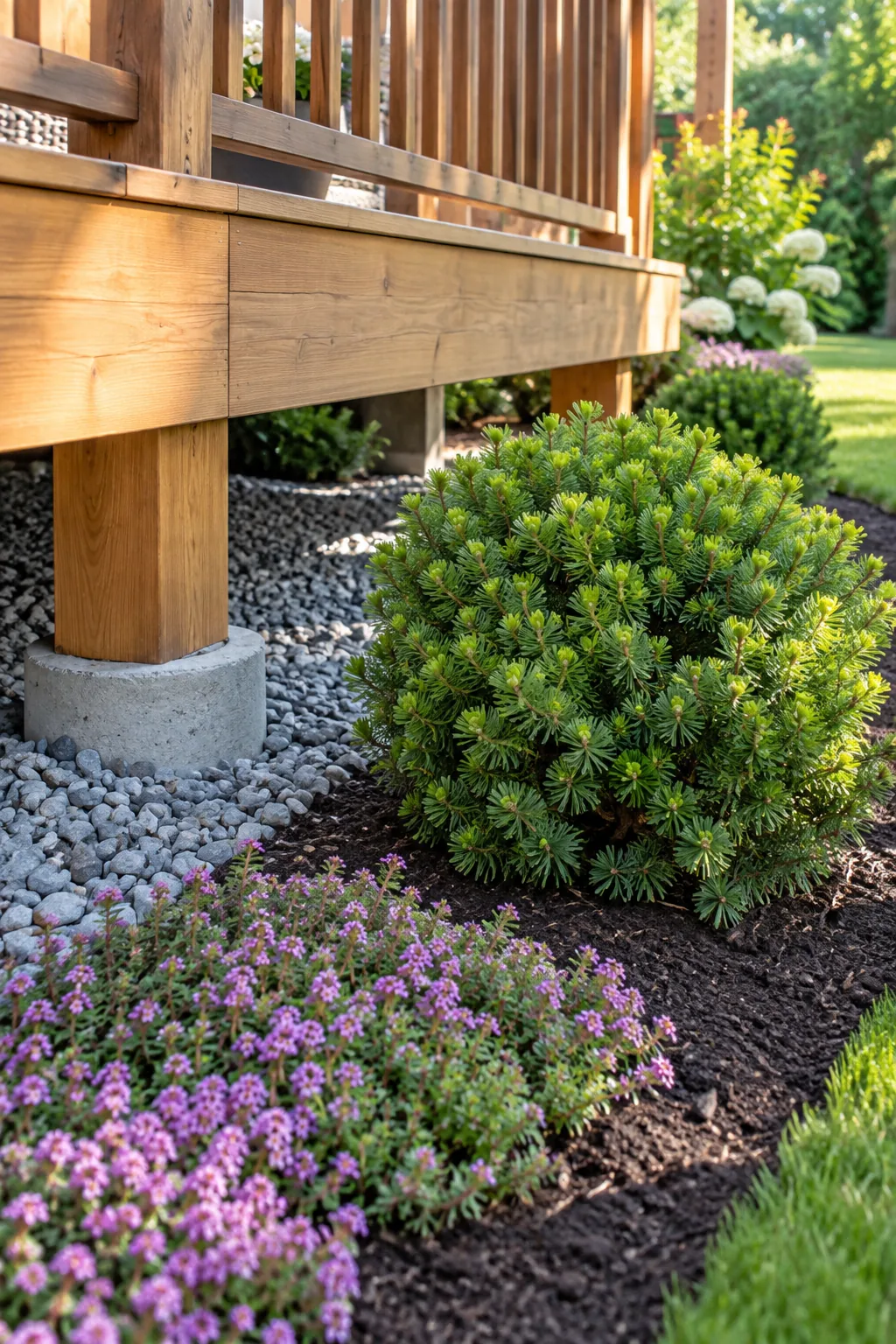
This simple rock boundary ensures rapid drainage around the base and prevents hidden rot from destroying your deck supports over time.
Selecting the Right Weed Barrier
Before pouring any gravel around your deck supports, you need a commercial-grade landscape fabric to separate the soil from the stone.
Calculating the Drip Line Setback
I ruined my first deck railing by planting hydrangeas too close, so now I always plant the root ball exactly ½ the mature spread away from the deck edge.
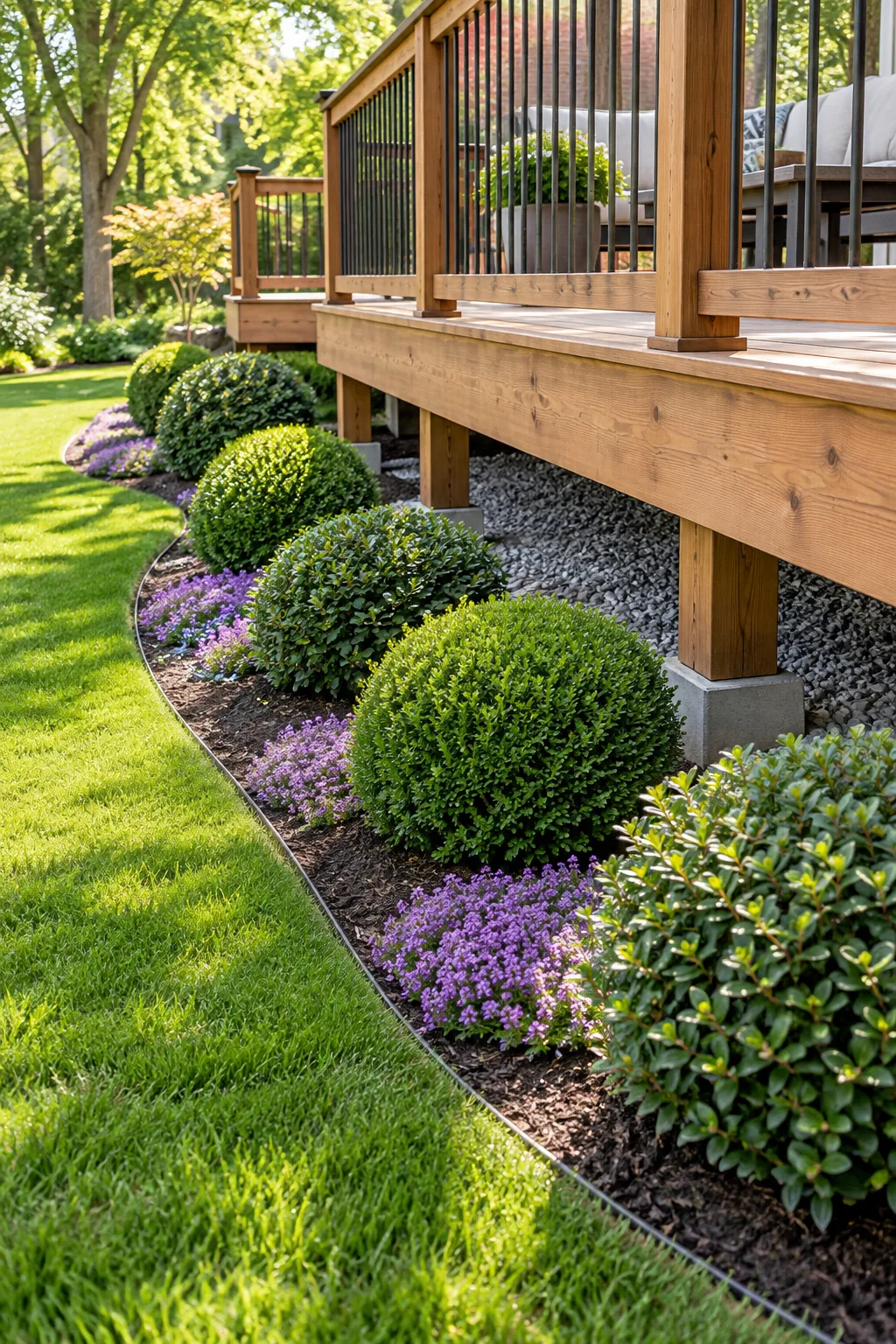
It is tempting to tuck small nursery pots directly under the railing, but ignoring mature plant sizes will quickly damage your deck.
Measuring the Deck Overhang
You must measure the exact distance from your structural posts to the outer edge of the decking boards before marking your garden bed boundaries.
Choosing Mounding Foundation Plants
A raised deck completely changes your viewing angle, making rounded, compact evergreens far more attractive than leggy, upright shrubs.
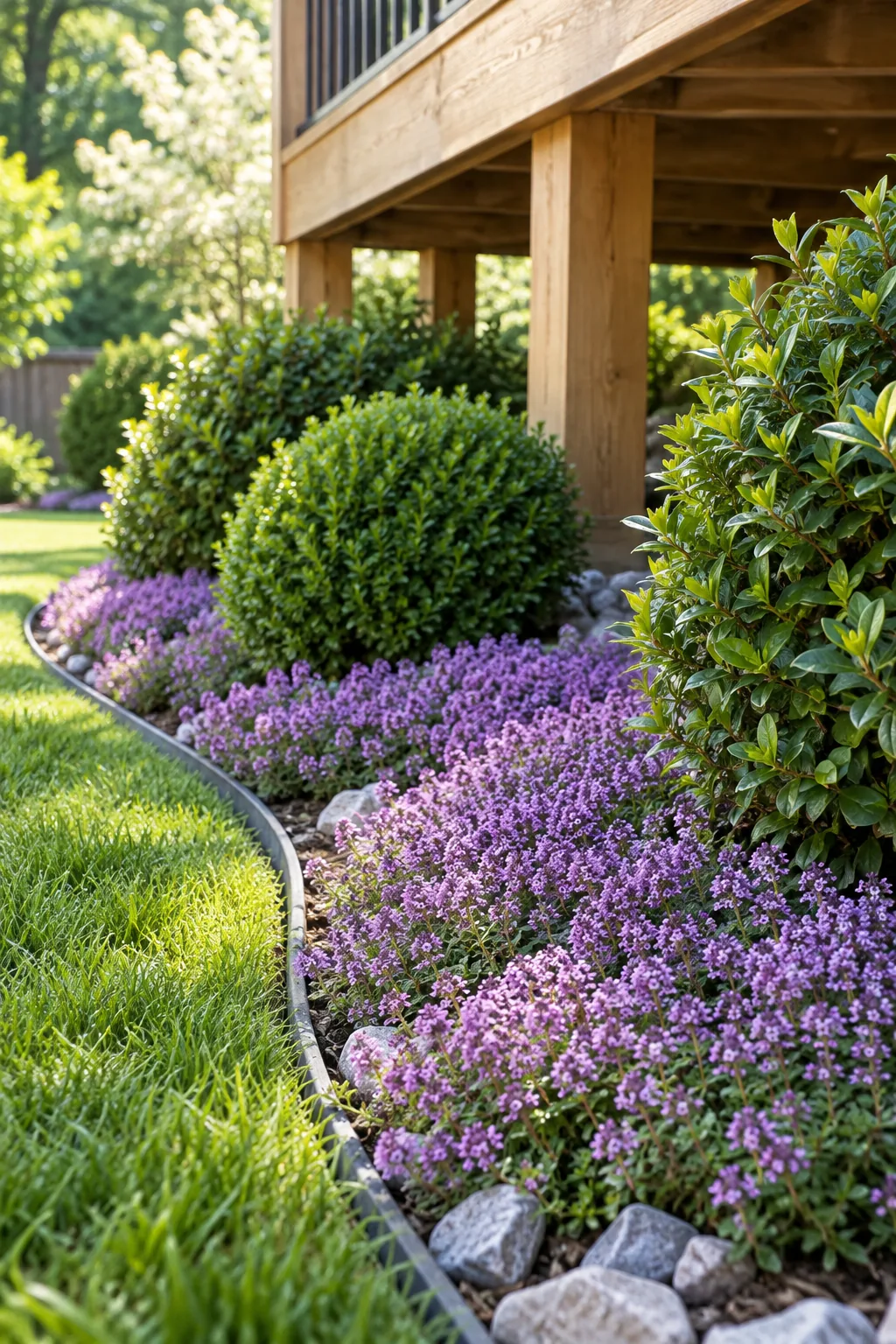
Selecting plants with a natural mounding habit ensures your border looks lush and intentionally structured when viewed from the seating area above.
Spacing Your Foundation Shrubs
Give your dwarf evergreens plenty of breathing room by checking their ten-year growth estimates on the nursery tags before digging any holes.
Planting Thyme as Living Mulch
You can skip the exhausting annual chore of spreading wood chips by establishing creeping thyme as a living mulch between your foundation shrubs.
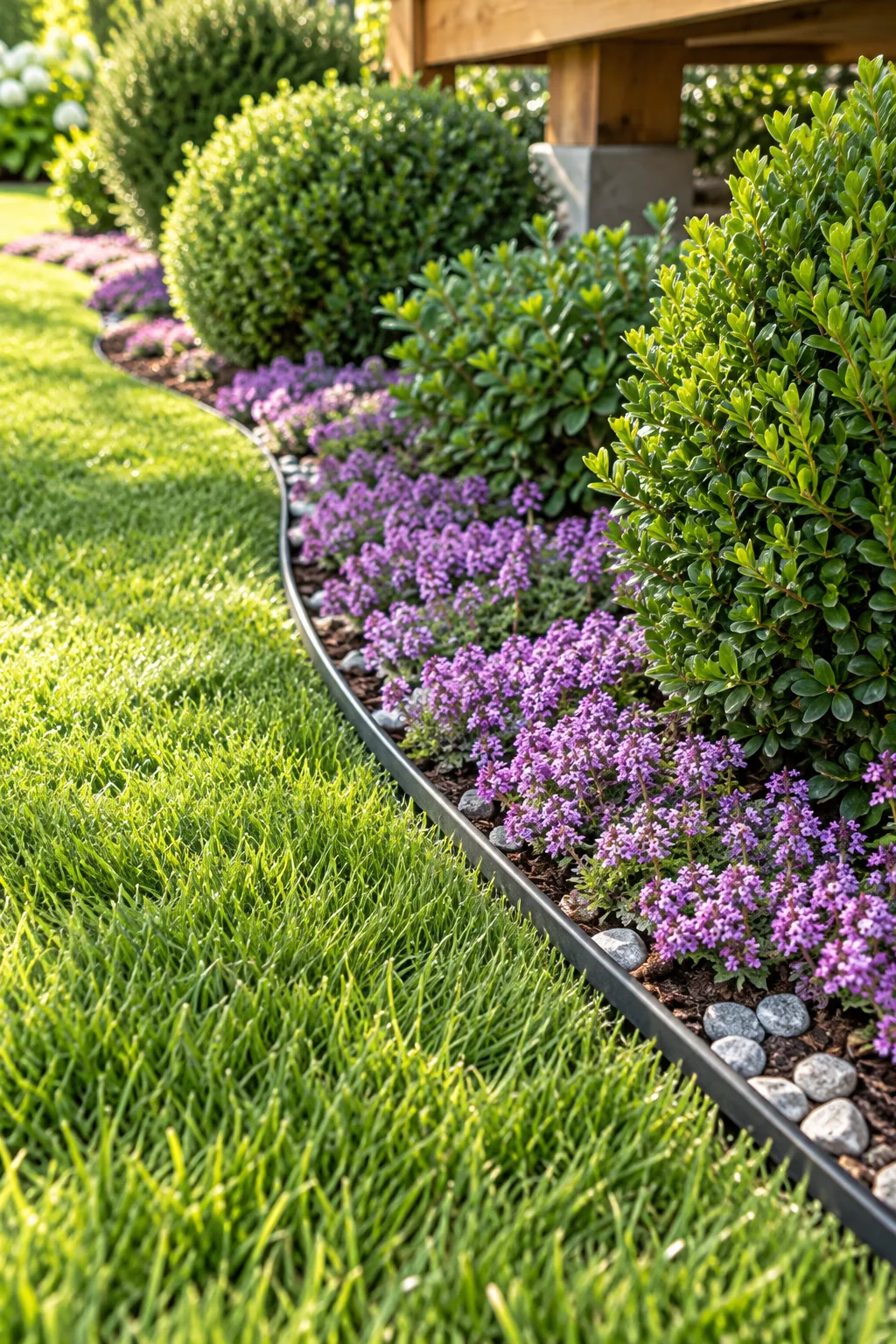
This low, flowering carpet spreads quickly to suppress stubborn weeds while locking crucial moisture into the soil during hot summer months.
Watering Your Living Mulch
Creeping thyme is incredibly drought-tolerant once established, but you must water the new plugs deeply twice a week during their first summer.
Installing the Flush Steel Mow Edge
I used to hate string-trimming around my garden beds until I installed a flush steel mow edge perfectly level with the lawn.
This thin, dark boundary cleanly separates the grass from the planting bed, allowing you to run your lawnmower wheels directly over the steel.
Managing the Soil Transition
After dealing with a muddy mess following a Texas downpour, I learned to keep the rich planting soil slightly lower than the gravel bed.
Grading the soil away from the stone boundary prevents dirty runoff from migrating into your clean gravel during heavy summer storms.
Preparing for Spring Growth
Clear away any dead leaves that blow under the deck during winter to keep your gravel bed pristine before the spring rains arrive.
5 Deck Landscaping Styles to Steal
Find the perfect material and plant combination to match your home's exterior architecture.
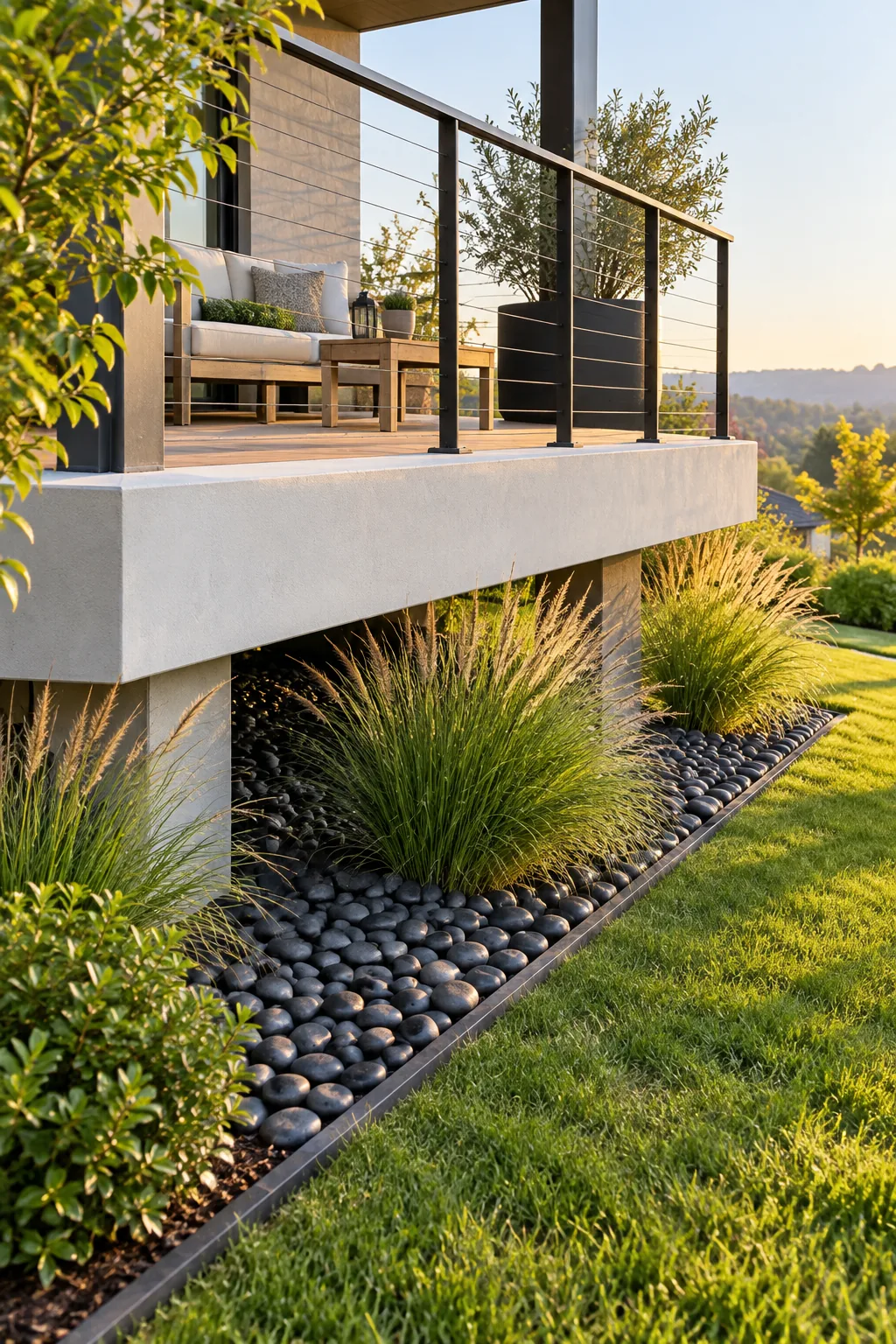
Modern Minimalist Black and White: High-contrast black river rock pairs perfectly with white concrete for a sleek, contemporary finish.
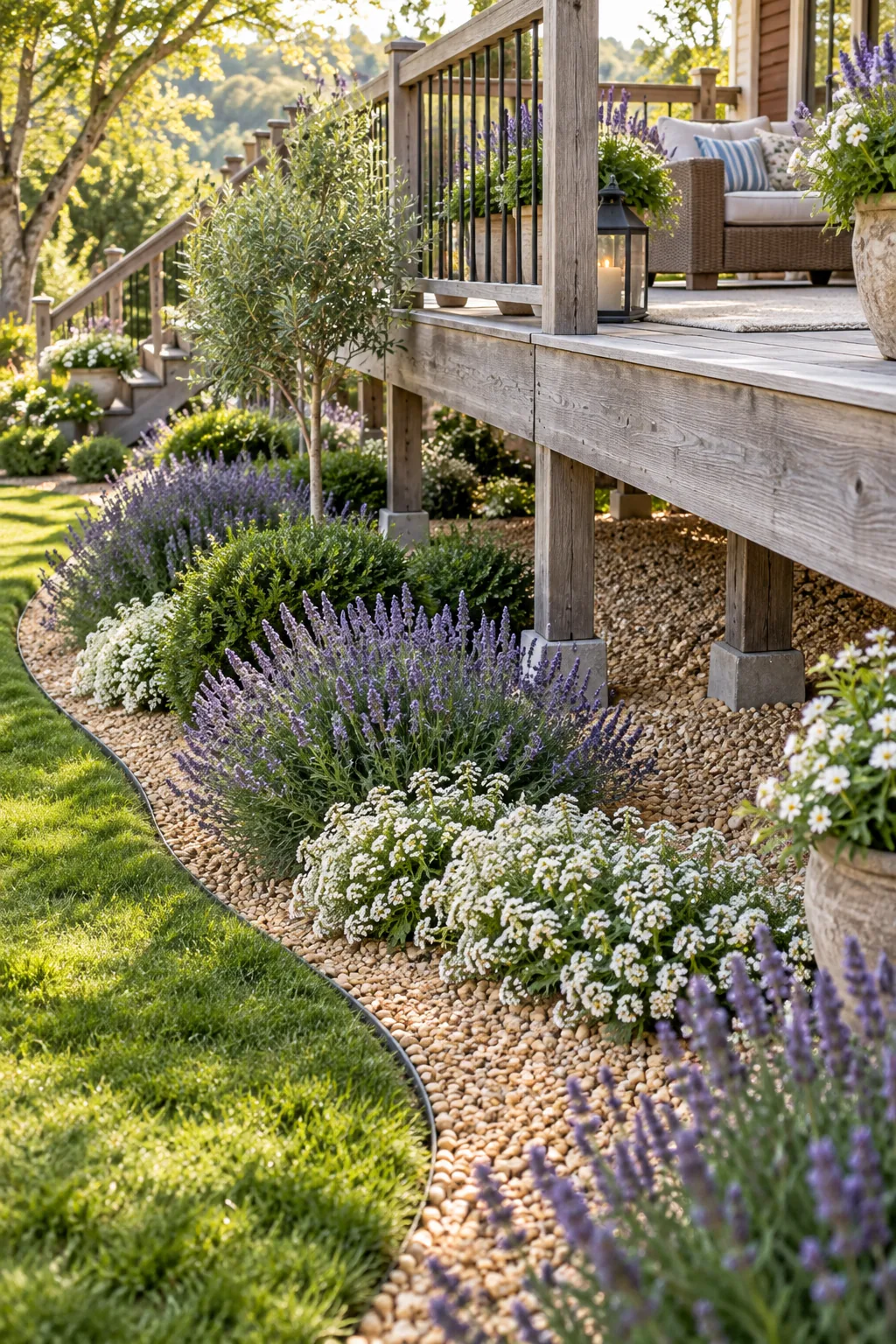
Romantic English Cottage Garden: Soften weathered wood with warm pea gravel and overflowing borders of fragrant lavender.
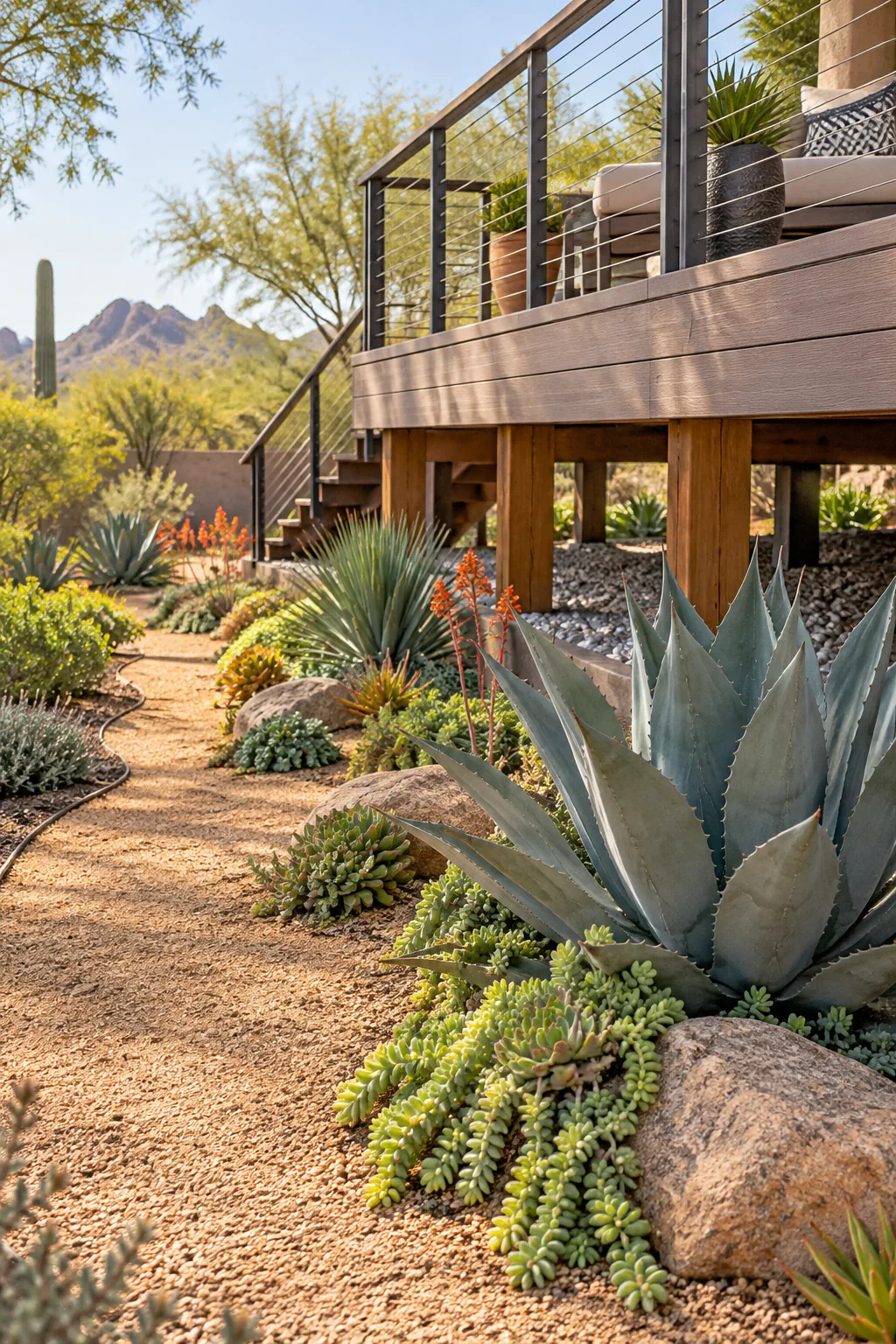
Drought-Tolerant Desert Oasis: Swap thirsty plants for structural agave and decomposed granite in hot, sun-drenched yards.
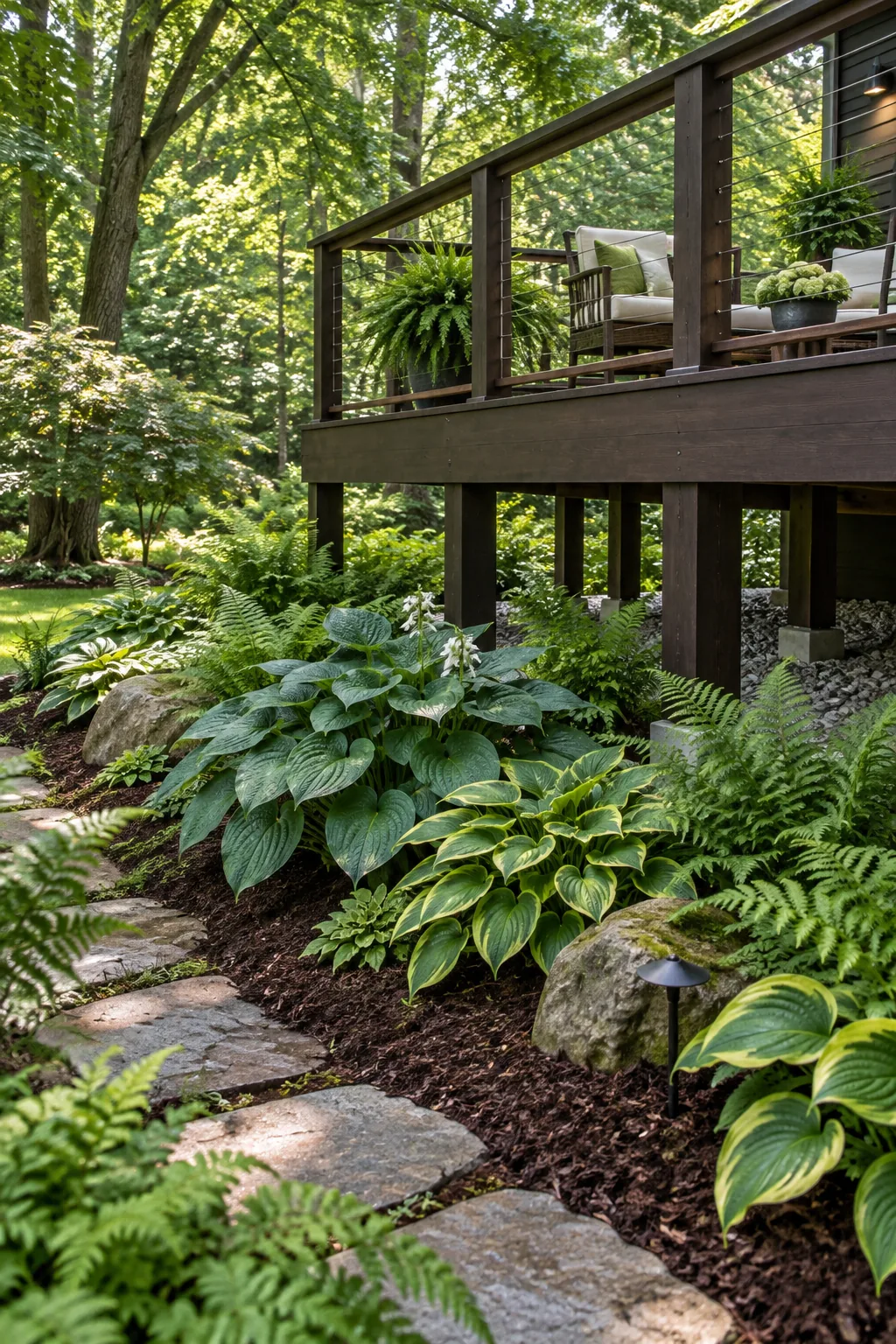
Lush Woodland Shade Garden: Embrace heavy shade with dark pine bark mulch and a layered mix of textural ferns.
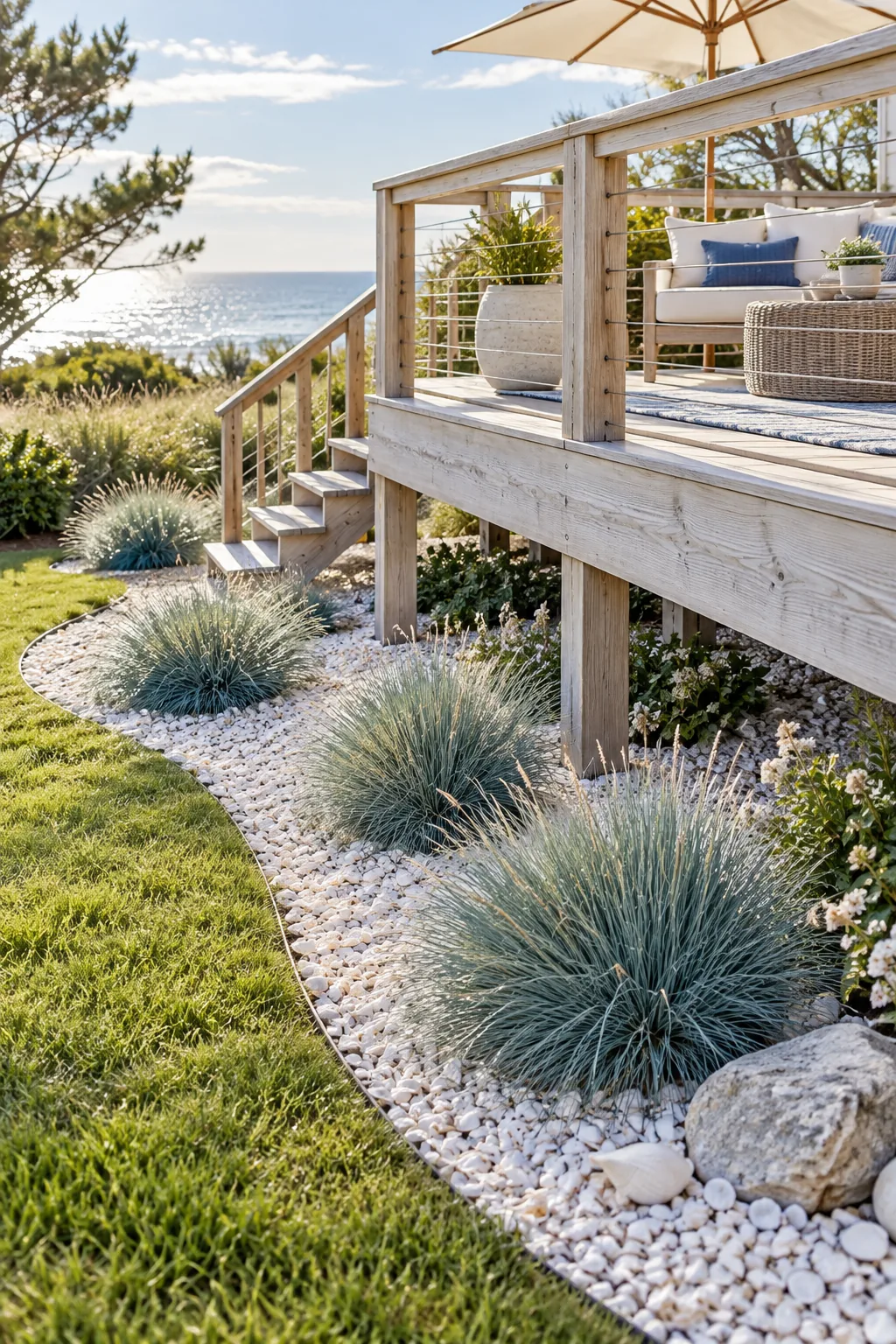
Breezy Coastal Shell Retreat: Use crushed oyster shells instead of gravel to bring a bright, beach-inspired feel inland.
Your Raised-Deck Planting Sheet
I designed this printable two-page planting guide so you can easily take the guesswork out of your next garden center trip.
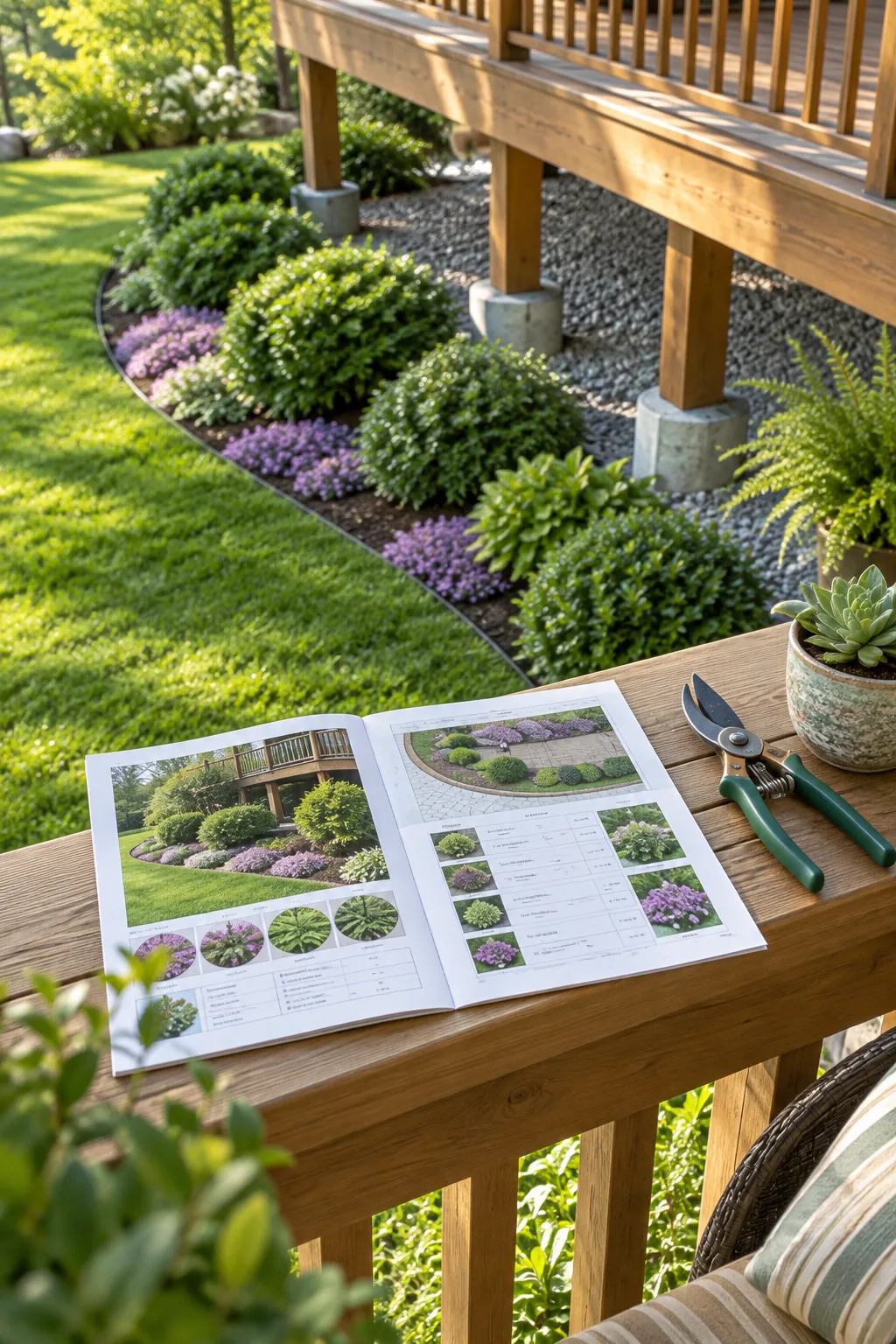
Keep it handy to reference the exact shrub setbacks, calculate your gravel depths, and shop from a foolproof 20-plant shortlist categorized by sun and shade.