
Front Porch Christmas Decor: The Printable Urn Stem Recipe
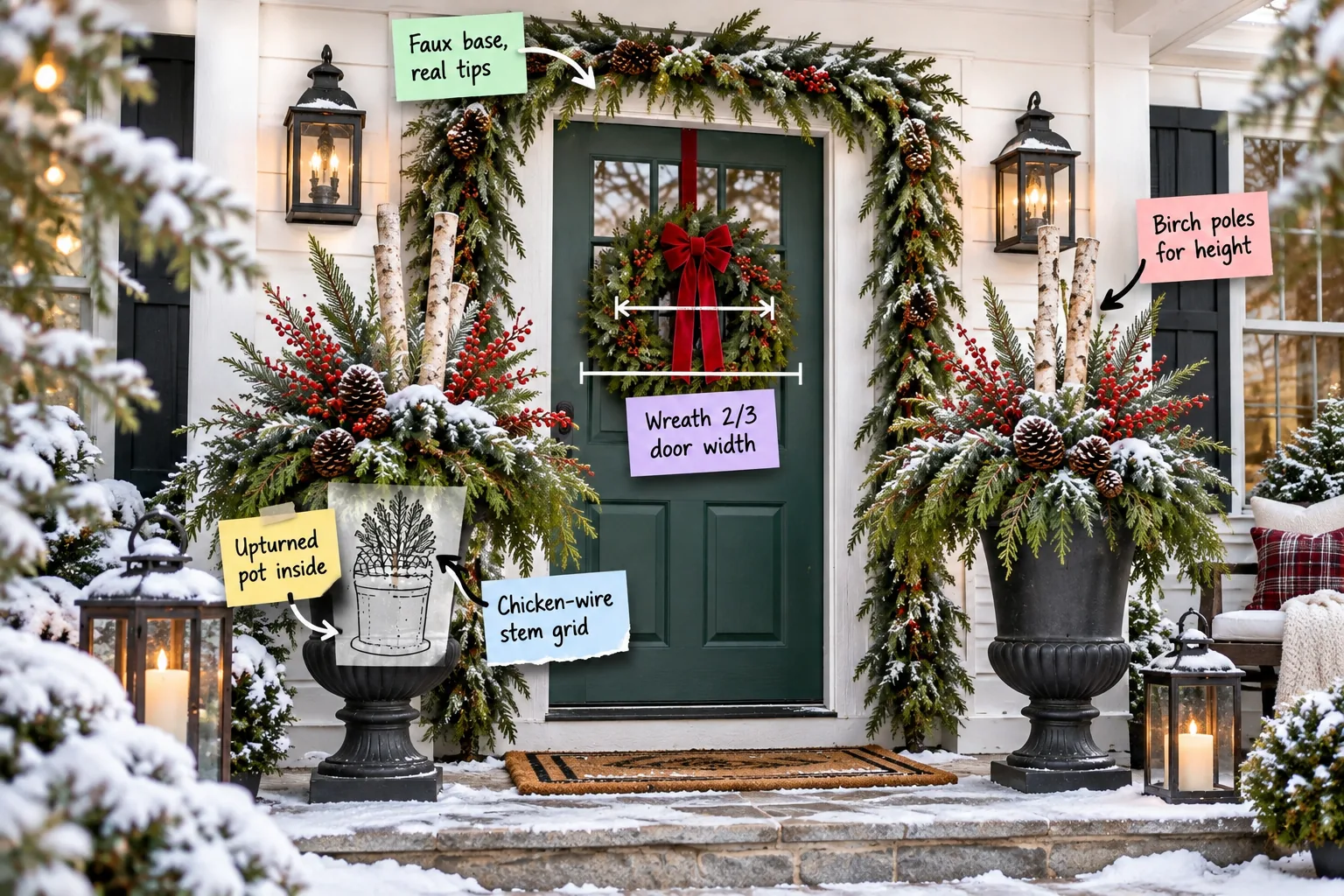
You are going to build a weather-proof, overflowing holiday display this year using my printable urn stem-count recipe to seamlessly blend fresh and faux greenery around your front door. This complete guide gives you the exact numbers and hidden structural tricks to scale everything perfectly, from the bottom of your planters to the top of your wreath.
Creating a False Bottom with an Upturned Pot
When I first decorated my Boston brownstone, I wasted bags of expensive soil filling deep planters just to hold seasonal stems. Now, I always place a plastic nursery pot upside down inside the tall urn before adding dirt, requiring me to fill only the top 10 to 12 inches with actual earth.
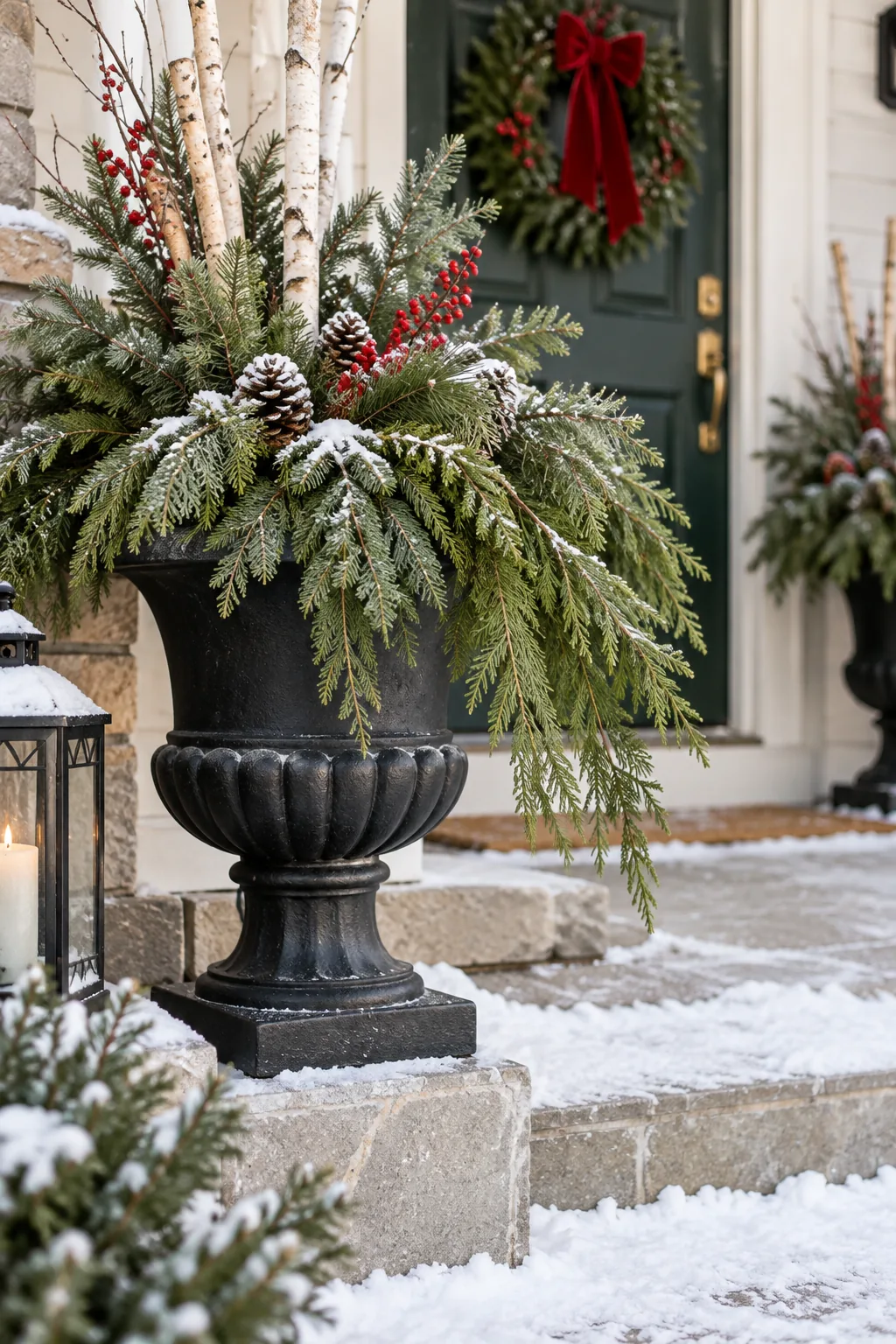
If you are working with extra-deep planters and do not have spare nursery pots, you can use other lightweight, weather-proof materials to fill that empty base space. This hidden trick saves money on potting soil and keeps the arrangement lightweight enough to adjust.
Securing Stems with a Chicken-Wire Grid
You need to crumple a piece of chicken wire and press it firmly across the top of the soil. This hidden grid acts as a structural anchor, holding heavy evergreen boughs at their intended angles so they do not shift or blow out during harsh winter winds.
Installing this structural layer properly ensures your arrangement survives the season intact. Following a specific sequence when handling the wire prevents the grid from pulling loose once the heavy branches are levered into place.
- Cut a square of chicken wire slightly wider than the opening of your urn using heavy-duty snips.
- Fold the sharp edges inward to create a double-layered dome that resists crushing under pressure.
- Press the domed wire firmly into the top three inches of the soil until it feels completely stable.
- Test the tension by tugging gently; the grid should not lift away from the dirt easily.
- Tuck any remaining sharp wire tails deeply into the earth to protect your hands during assembly.
Anchoring Birch Poles for Vertical Impact
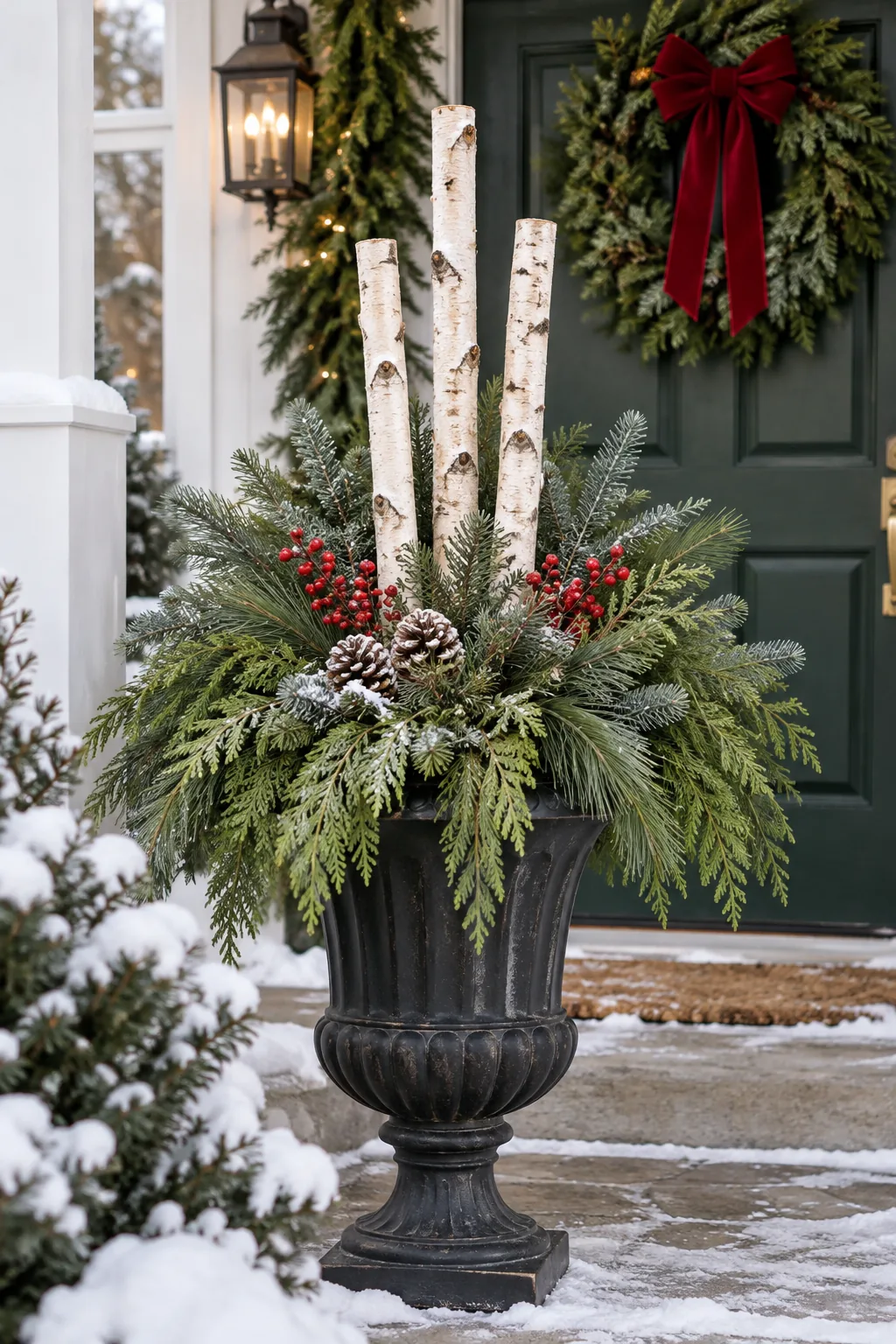
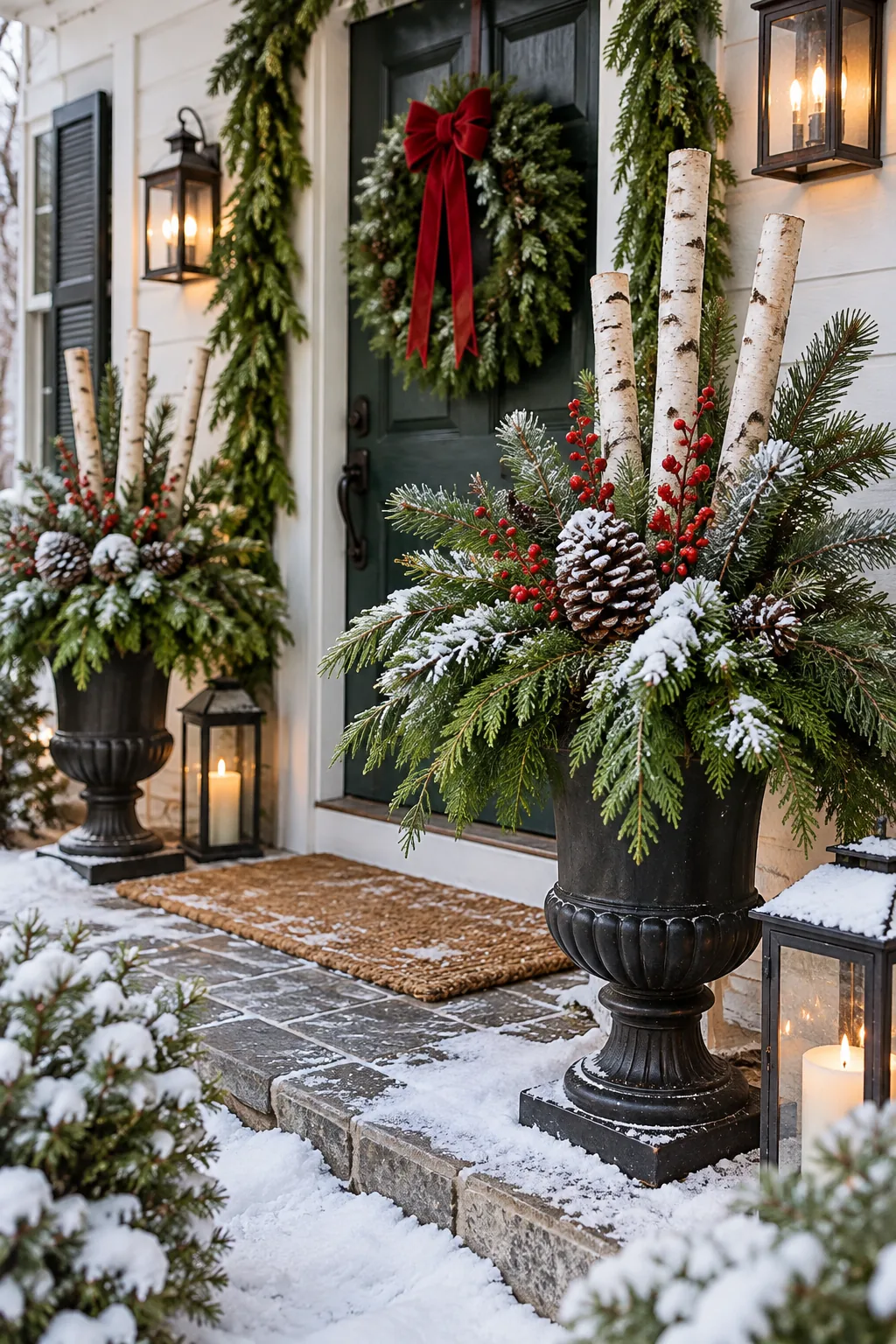
Insert three white birch poles into the center of the urn first, pushing them straight through the wire grid and deep into the soil. Using 3-foot to 4-foot poles establishes the arrangement’s maximum height and creates immediate symmetry before any greens are added.
Placing your tallest elements first prevents you from having to force thick wooden stakes through an already crowded bed of delicate evergreen stems. This rigid center tripod also provides a sturdy backing that you can use to support the highest sweeping boughs.
- Select the thickest birch pole to serve as the absolute center point of your arrangement.
- Angle the two slightly thinner poles outward at a 15-degree tilt to create a fan shape.
- Drive each pole at least eight inches down into the soil so they withstand heavy snow loads.
- Stagger the heights slightly by pushing the outer poles one inch deeper than the center stake.
The Complete Porch Urn Stem Recipe
Download the printable one-page guide detailing the exact build order from pot to soil to wire to stem tips. It includes precise stem counts for spruce, cedar, pine, and berry sprays, accurately scaled so you can shop efficiently for small, medium, and large front porch urns.
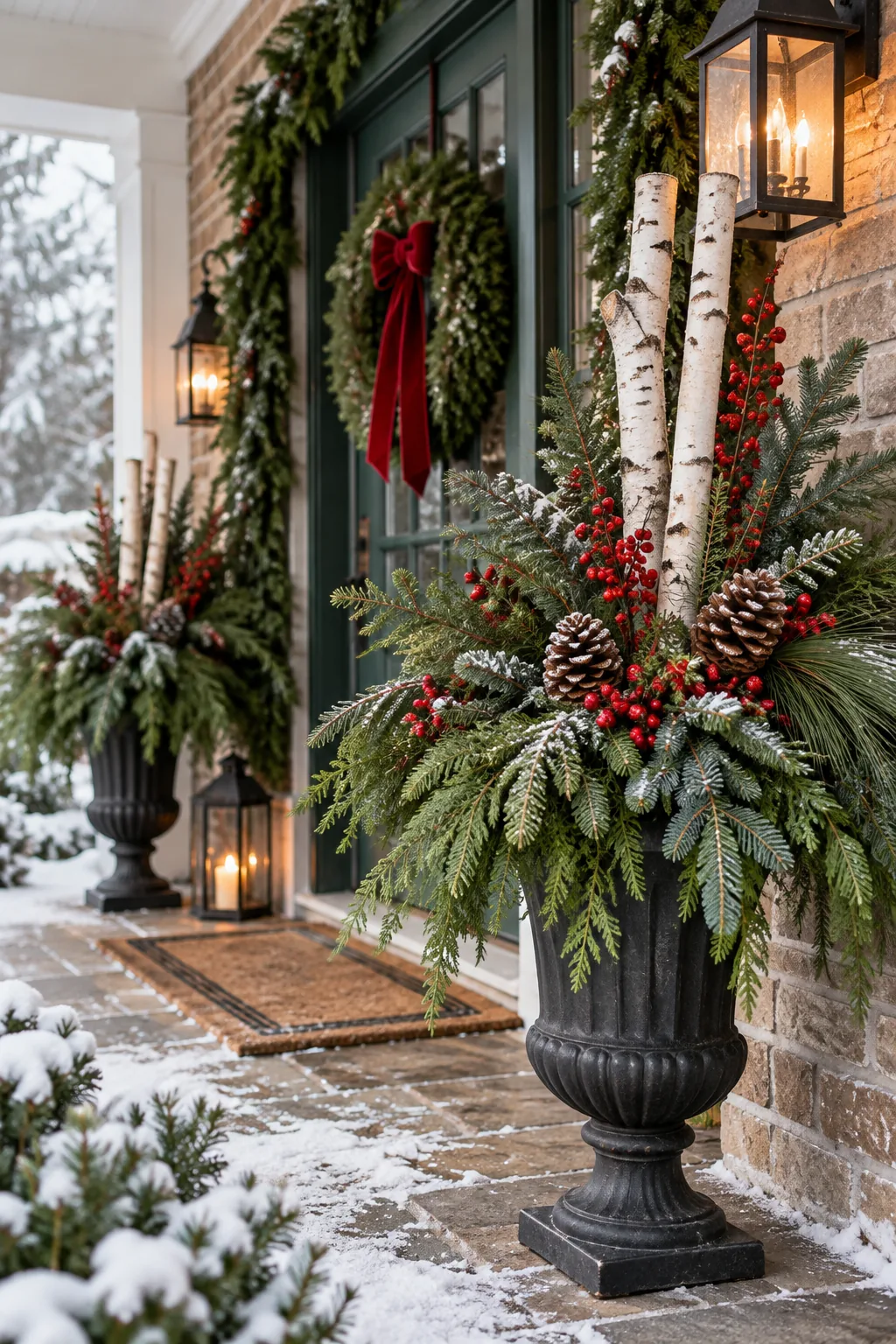
While the printable guide covers all sizes in complete detail, here is the baseline stem count required to fill one standard medium-sized porch urn. Using these exact quantities guarantees a lush, professional profile without overspending at the garden center.
Mixing Fresh Tips into a Faux Garland Base
Use a thick, high-quality faux evergreen garland as the structural base draped over the door frame. Tuck fresh cedar and spruce tips directly into the artificial branches to provide the lush volume, authentic texture, and scent of a fresh garland without the massive expense.
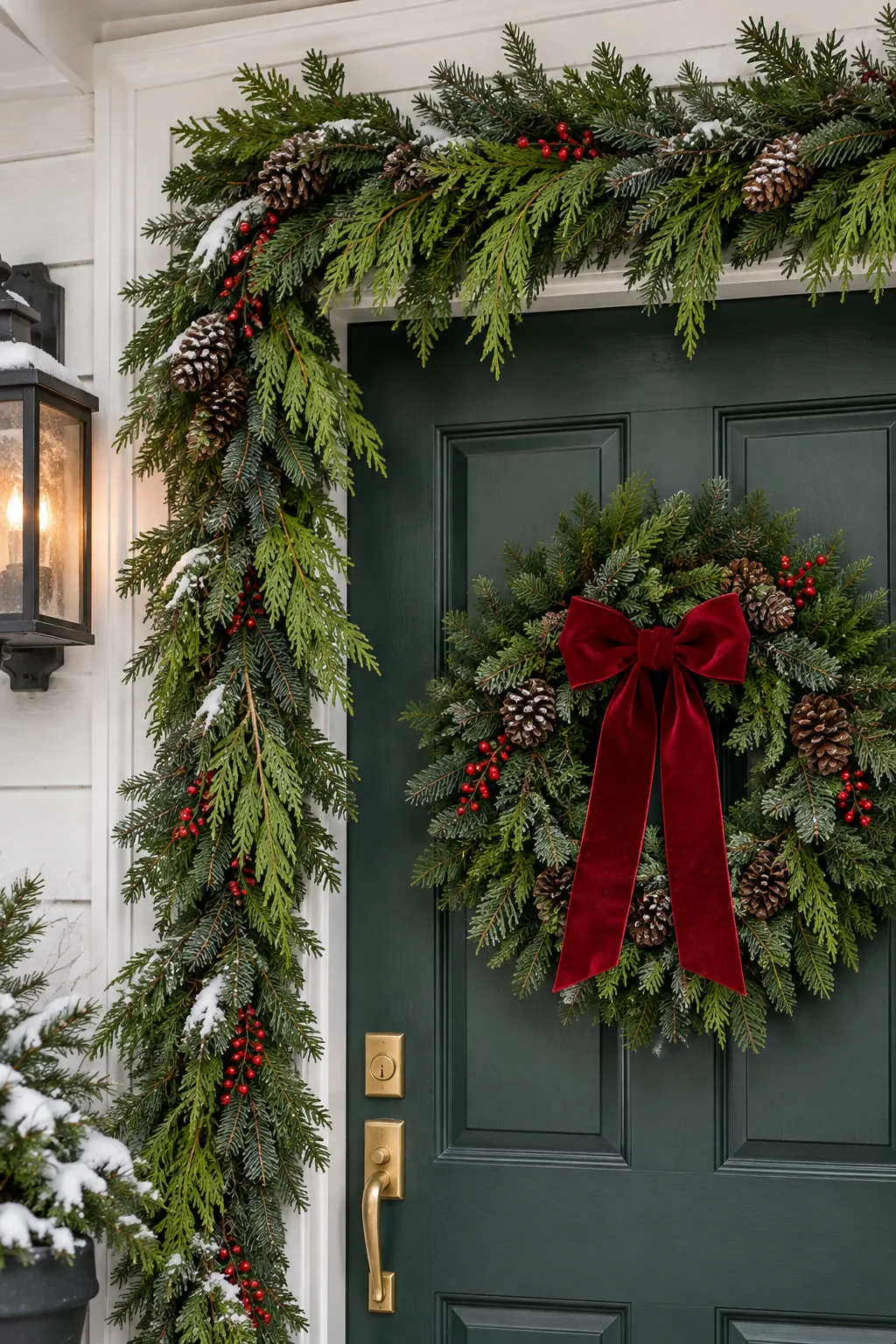
Blending artificial and living materials requires balancing the ratios correctly to maintain the illusion of a fully fresh installation. Distributing the real stems evenly throughout the faux base ensures the eye catches genuine needle textures at every level.
| Garland Length | Faux Base Roping | Fresh Cedar Tips | Fresh Spruce Tips |
|---|---|---|---|
| Standard Door Top | 1 (9-foot strand) | 12 stems | 8 stems |
| Full Door Surround | 3 (9-foot strands) | 36 stems | 24 stems |
| Double Door Surround | 4 (9-foot strands) | 48 stems | 32 stems |
| Porch Railing (10 ft) | 2 (9-foot strands) | 24 stems | 16 stems |
| Window Frame (Standard) | 1 (9-foot strand) | 10 stems | 6 stems |
| Large Archway | 5 (9-foot strands) | 60 stems | 40 stems |
Sizing the Wreath to Two-Thirds the Door Width
Choose a wreath that measures exactly two-thirds the width of your front door. For a standard 36-inch wide exterior door, a 24-inch wreath provides the perfect scale, looking substantial from the street while leaving enough clearance around the doorknob and hinges.
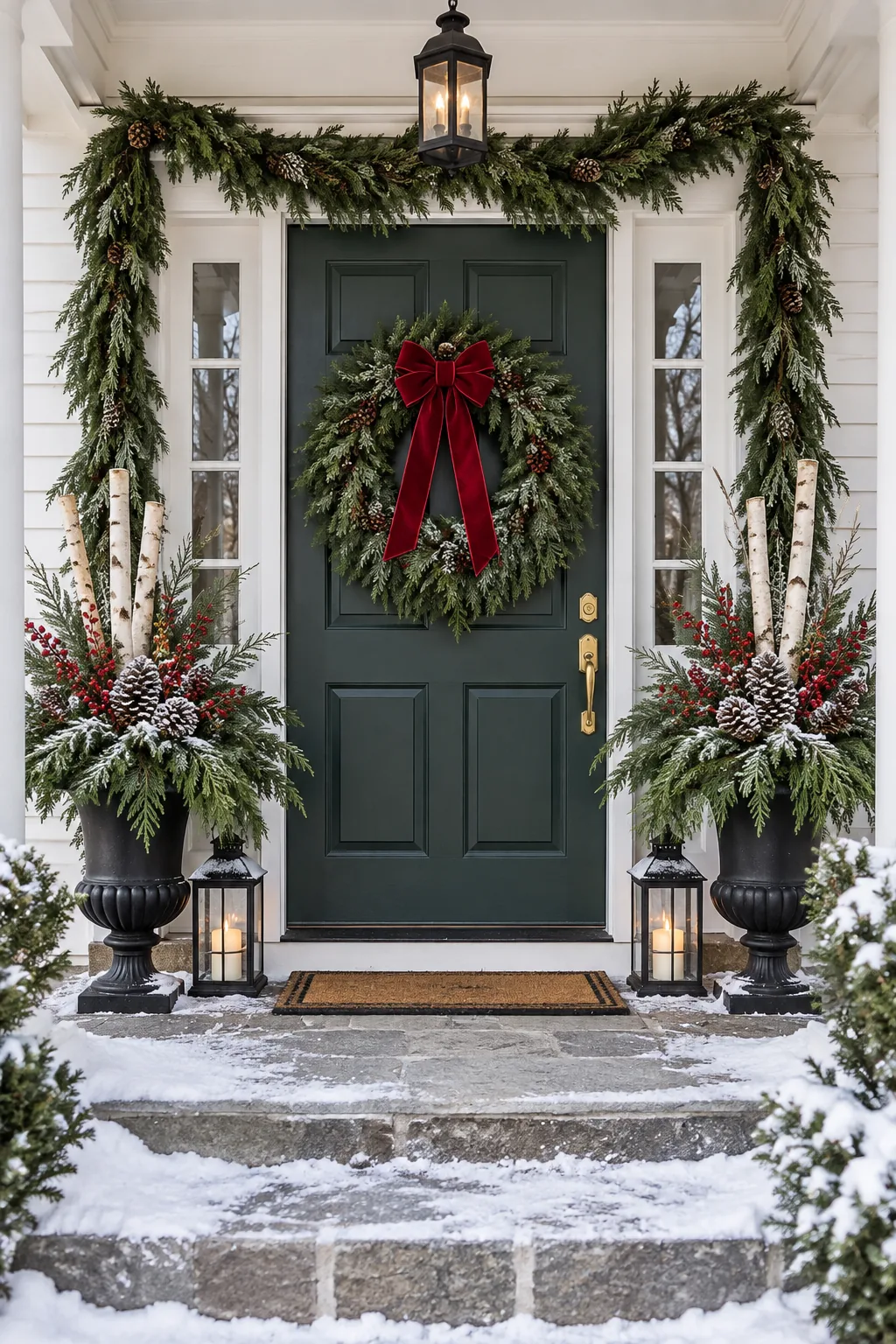
Hanging your wreath at the correct height is just as critical as selecting the proper diameter. Position the center of the wreath exactly at eye level, typically 57 to 60 inches from the porch floor, using a sturdy over-the-door metal hanger painted to match your door.
Layering Pinecones and Berry Sprays
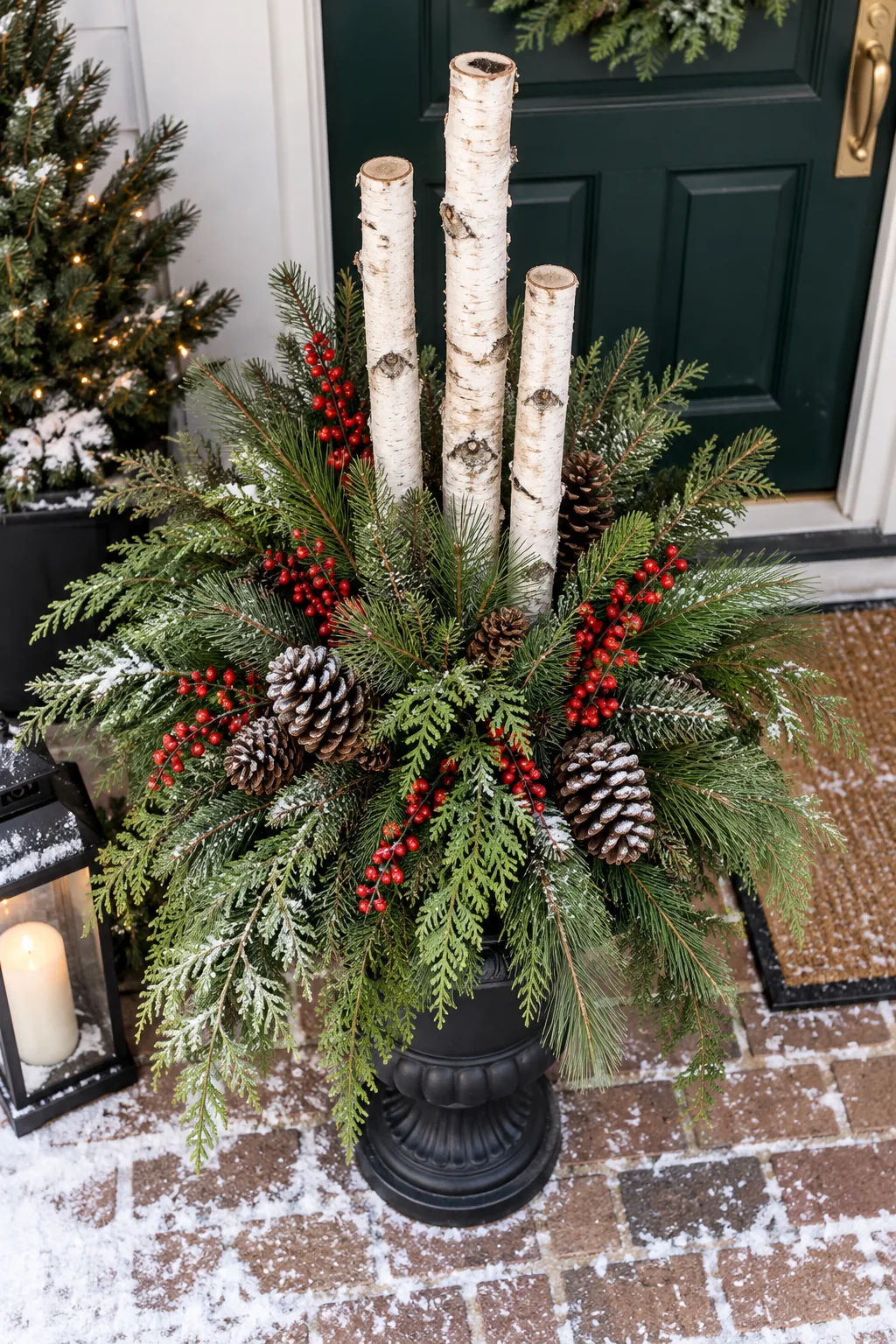
Once the foundational greenery is set, fill the remaining visual gaps with oversized sugar pinecones and bright red berry sprays. In my own holiday installations, I always group these colorful accents in tight clusters of three rather than scattering them evenly.
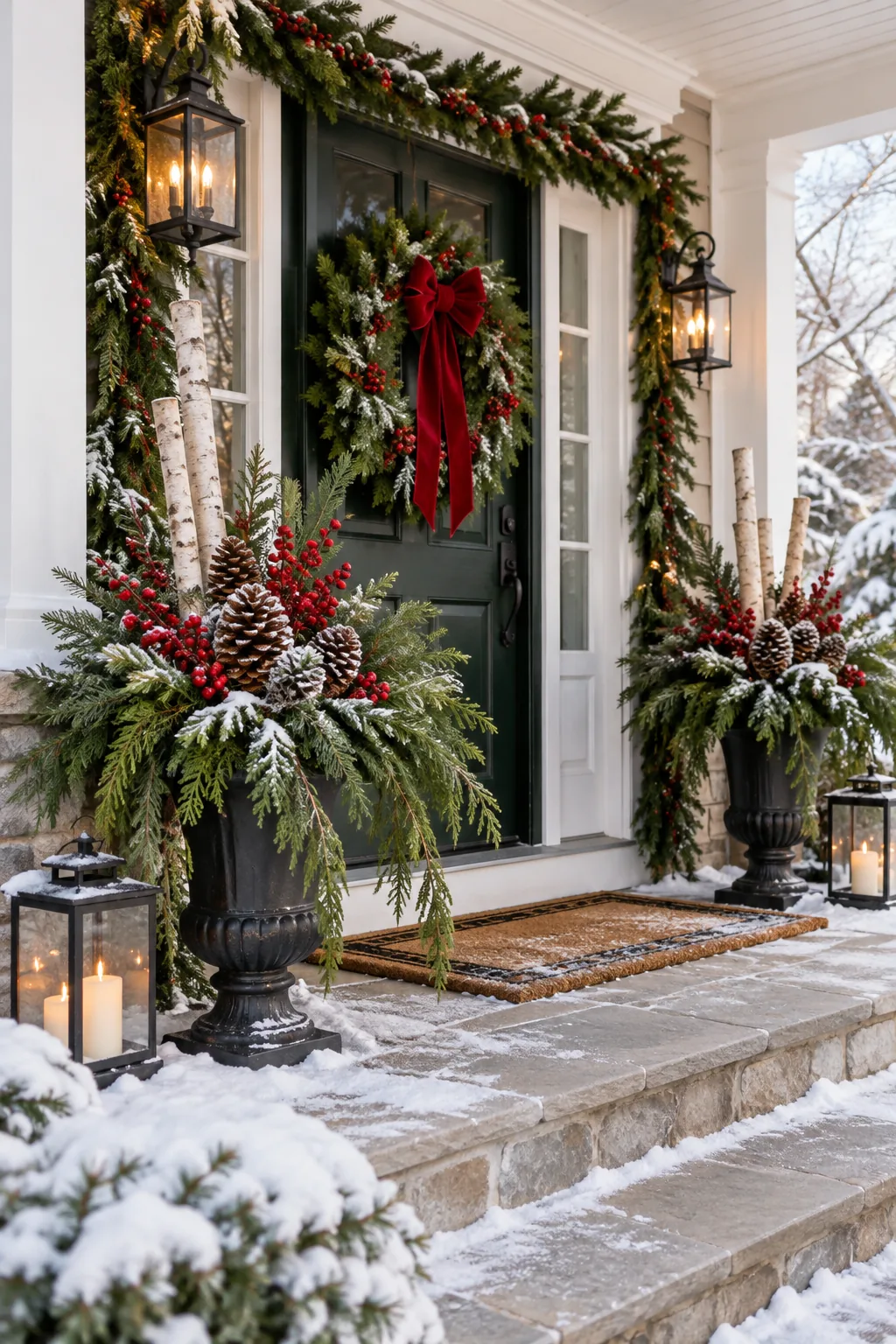
This clustering technique creates a more natural, professional finish that mimics how pinecones actually grow on trees in the wild. Wiring the clusters tightly to wooden floral picks before inserting them guarantees they will not blow away during a heavy snowstorm.
5 Ways to Style Your Holiday Urns
Explore these distinct seasonal palettes to find the perfect match for your home's exterior.
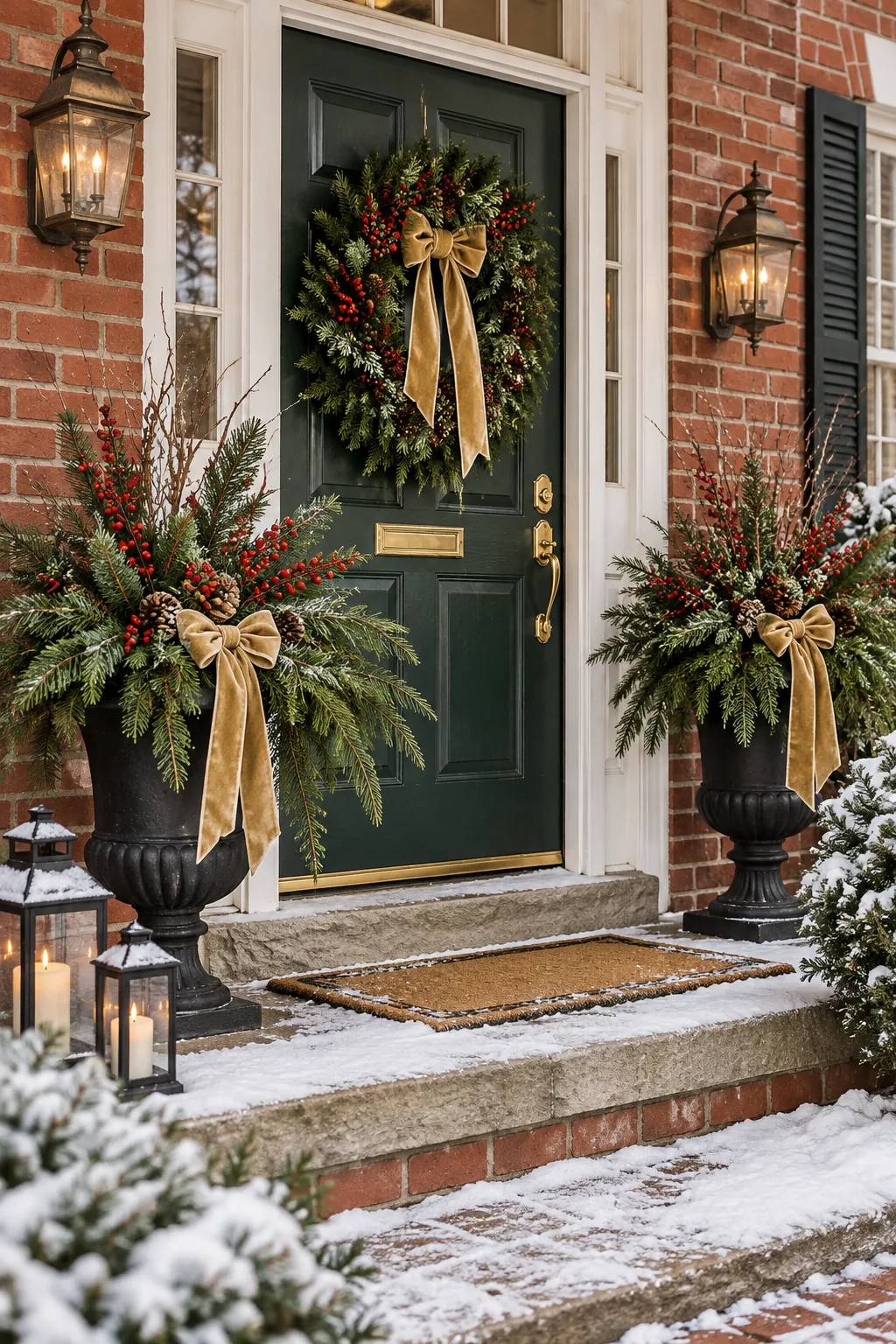
Classic Red and Gold: Traditional red berries and gold velvet ribbons pop against a classic brick exterior. Copy this look by adding oversized sugar pinecones to your evergreen mix.
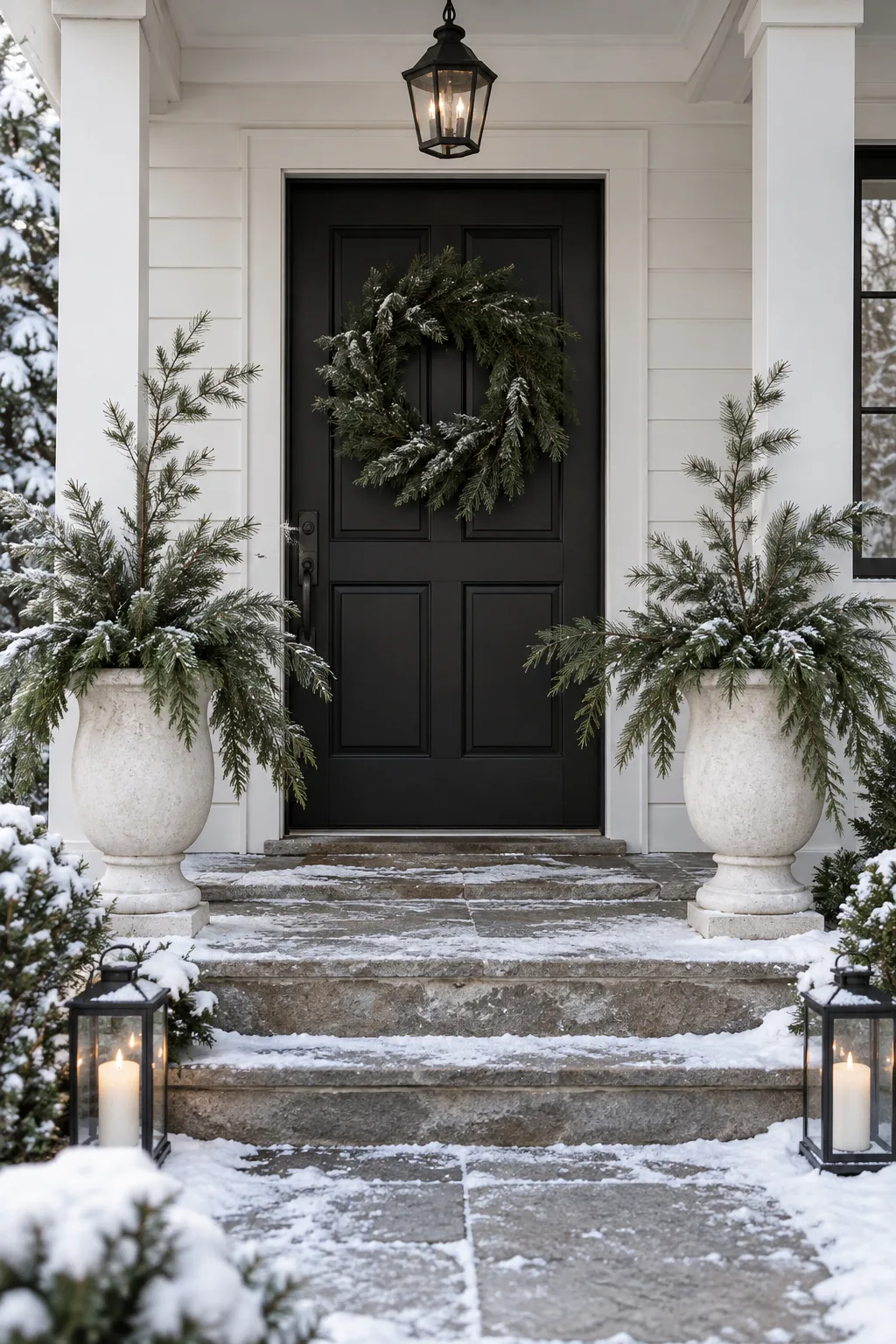
Minimalist Scandi Winter: A stark black door paired with asymmetrical, sparse pine branches creates a modern winter mood. Skip the berries and focus entirely on structural green textures.
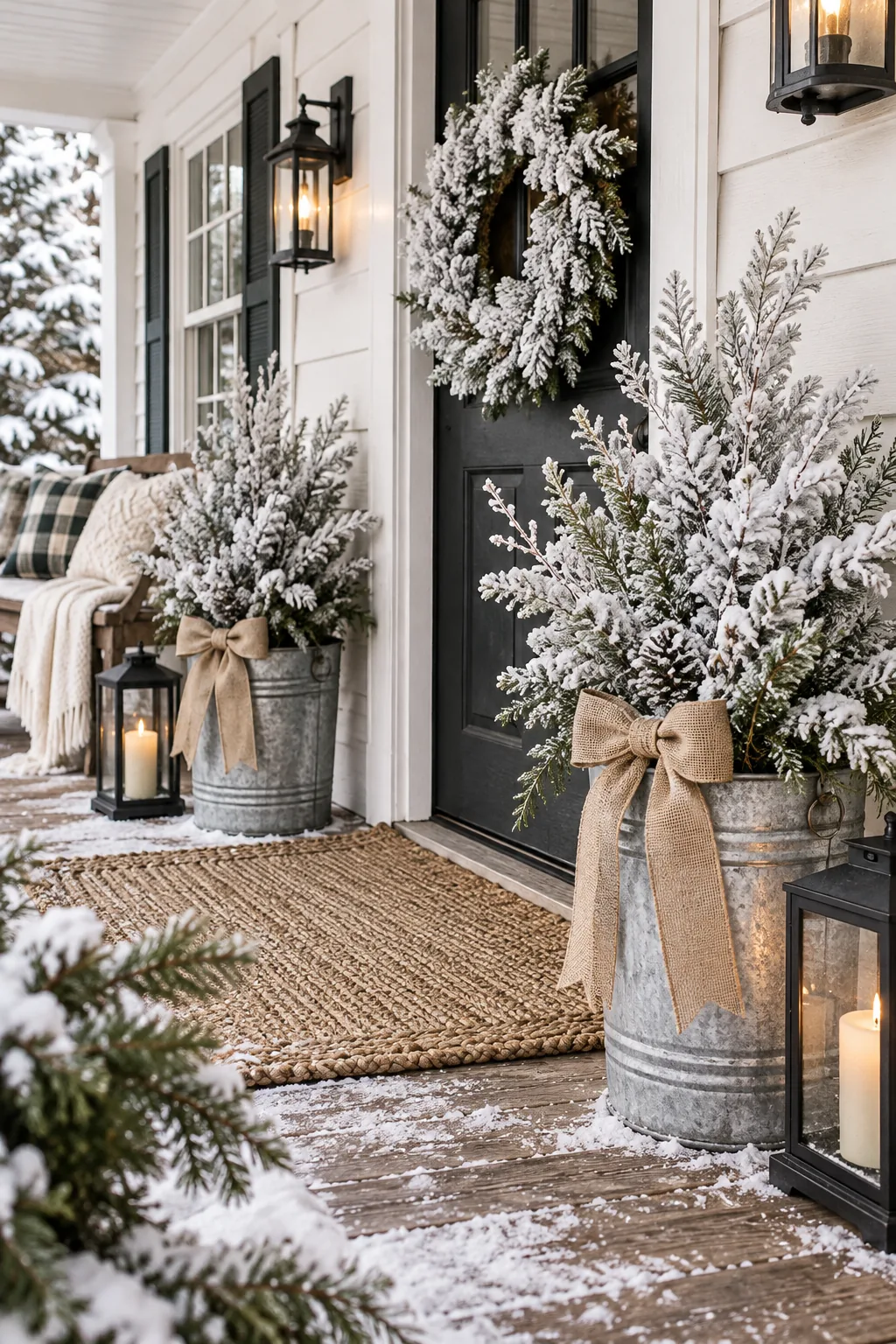
Rustic Farmhouse Frost: Galvanized olive buckets replace traditional cast-iron urns for a relaxed farmhouse feel. Heavily flocked branches and neutral burlap ribbons complete this snowy, muted aesthetic.
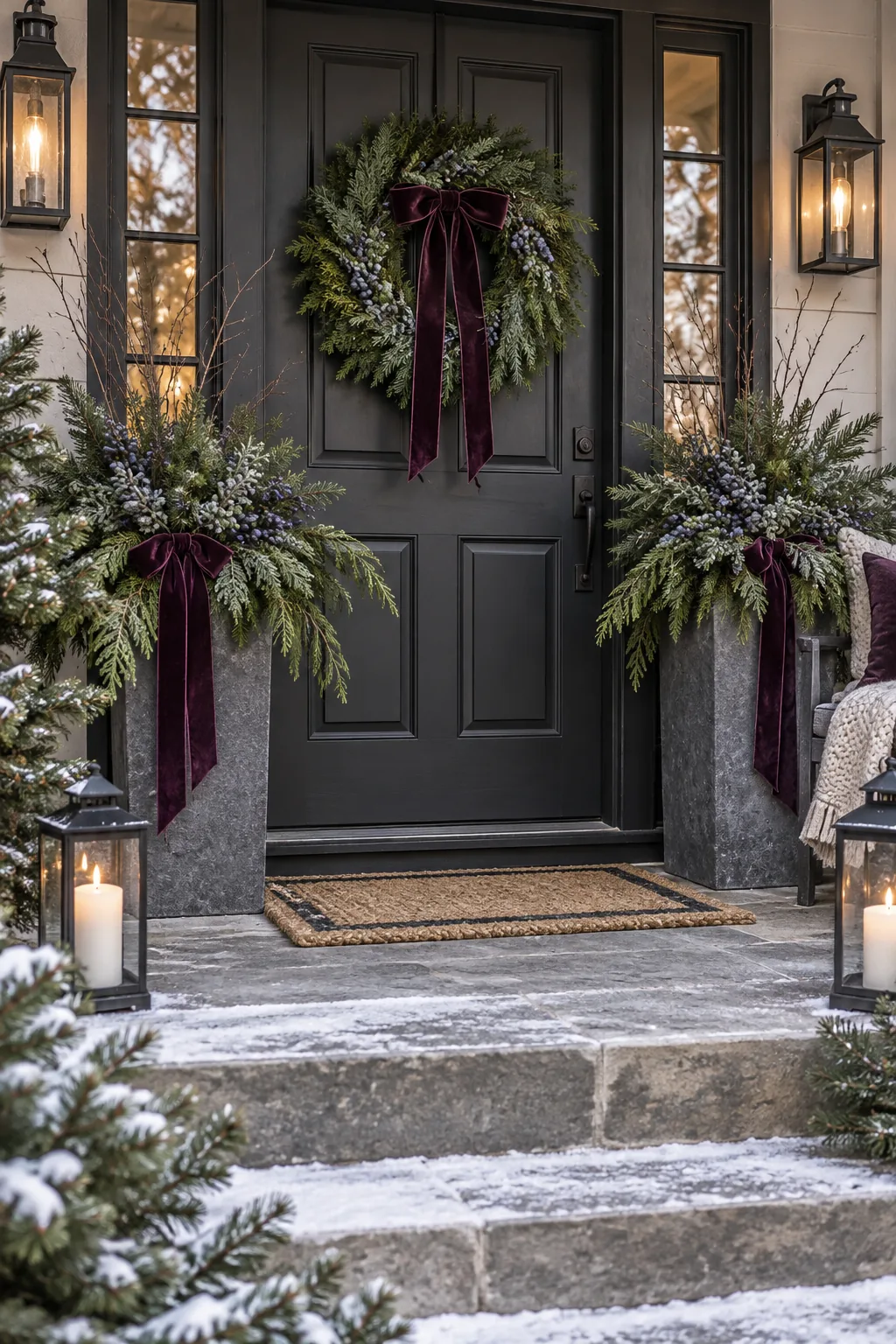
Moody Plum and Juniper: Deep plum ribbons and blue juniper berries offer a sophisticated alternative to standard holiday red. Pair these cool tones with a charcoal or slate door.
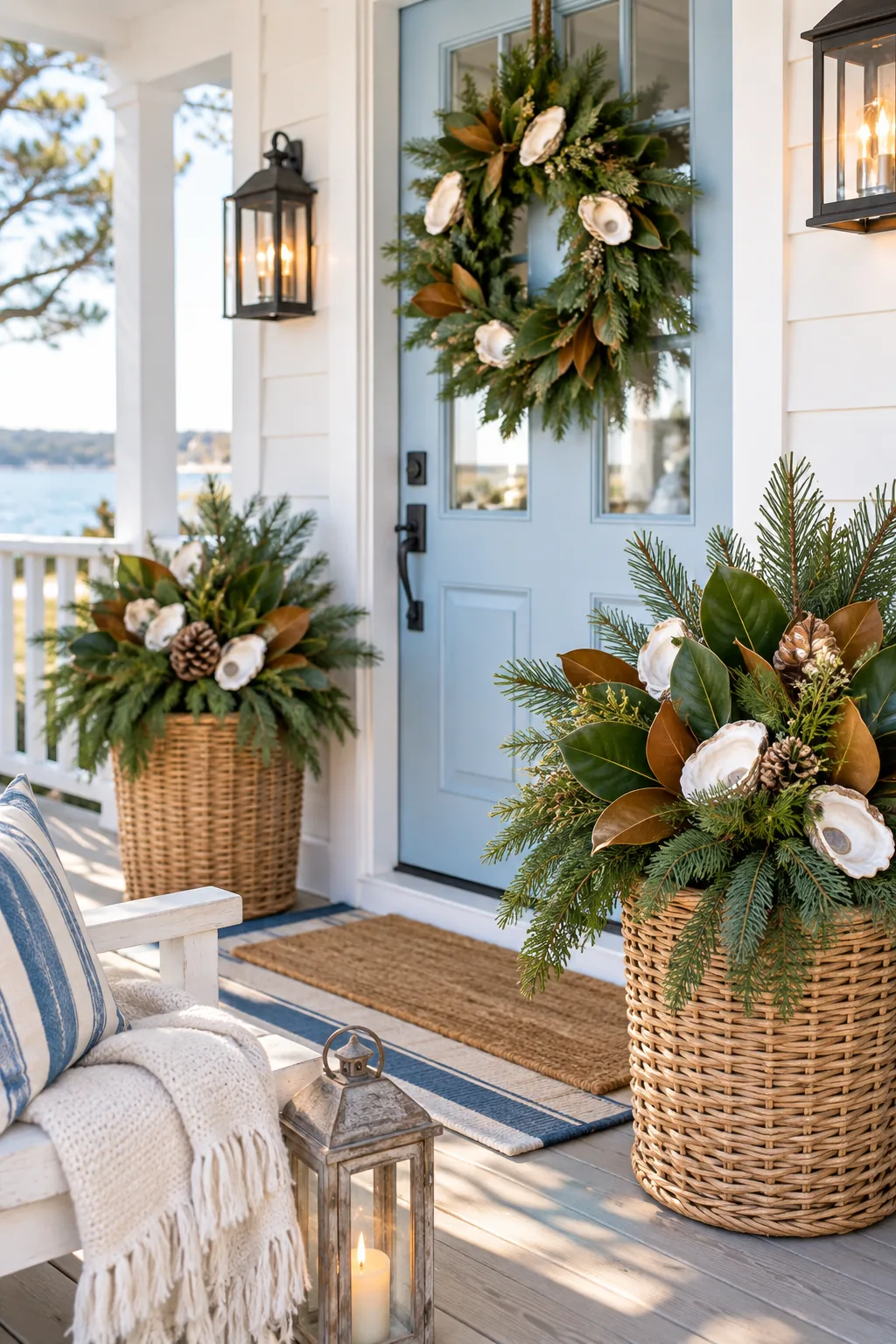
Coastal Holiday Greens: Magnolia leaves mixed with standard pine bring a softer, coastal touch to the front porch. Woven rattan planters keep the arrangement feeling light and airy.
Keeping Cut Evergreens Fresh on a Covered Porch
Generously water the soil inside the urns until the first hard freeze hits. I learned the hard way that dry winter winds will quickly turn unwatered evergreens brown, but the frozen soil acts as a natural cooler that locks the stems firmly in place.
Maintaining that initial moisture barrier prevents the needles from drying out and dropping too quickly under a covered porch. You can mist the exposed branches lightly with an anti-desiccant spray to seal in the hydration for a display that lasts well into January.