9+ Stunning Shower Wall Ideas for Your Home
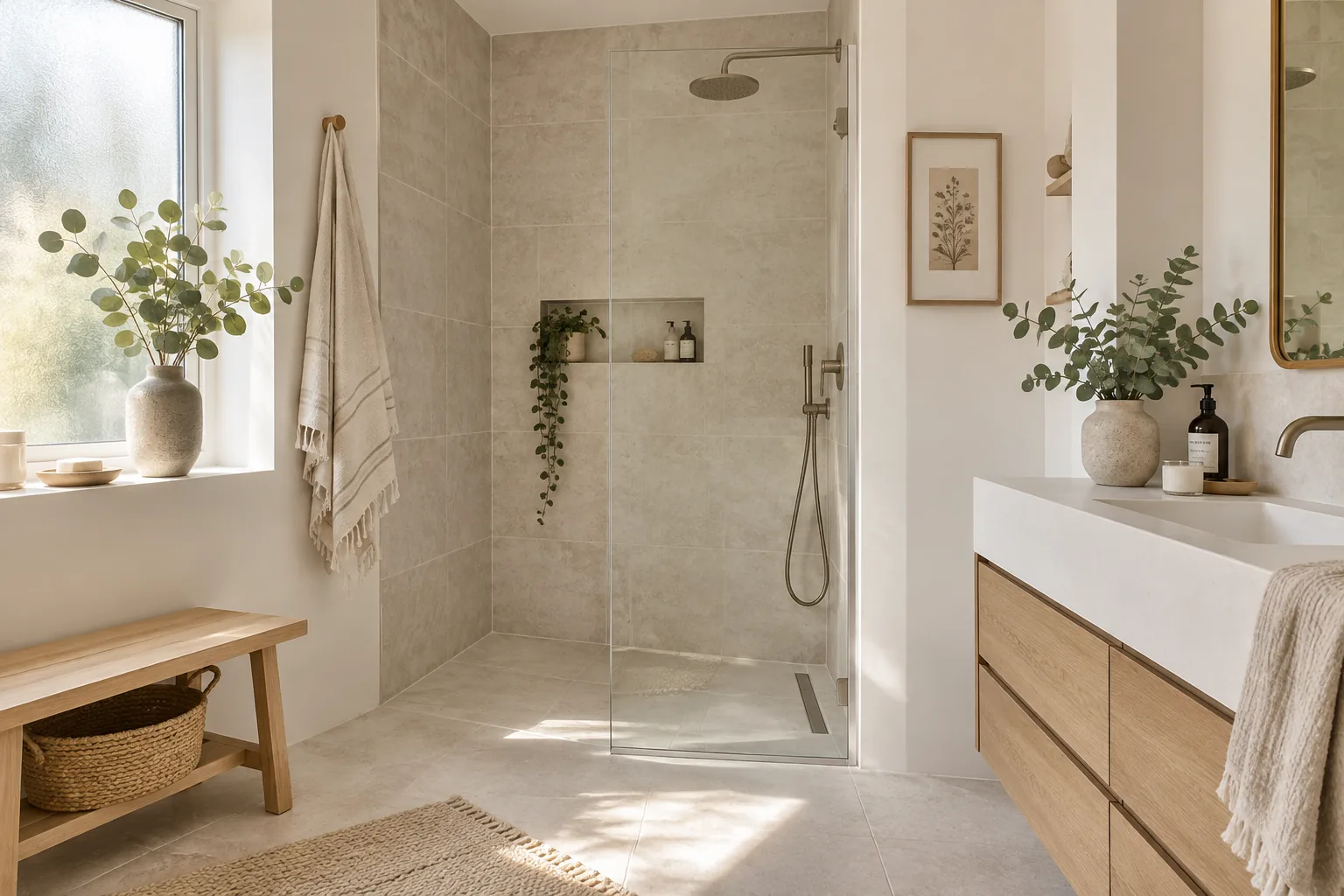
Your shower takes up a massive amount of visual real estate in the bathroom, making it the perfect place to make a design statement. Upgrading this single area completely shifts the feel of the room without needing a full gut renovation.
1. Large-Format Tile
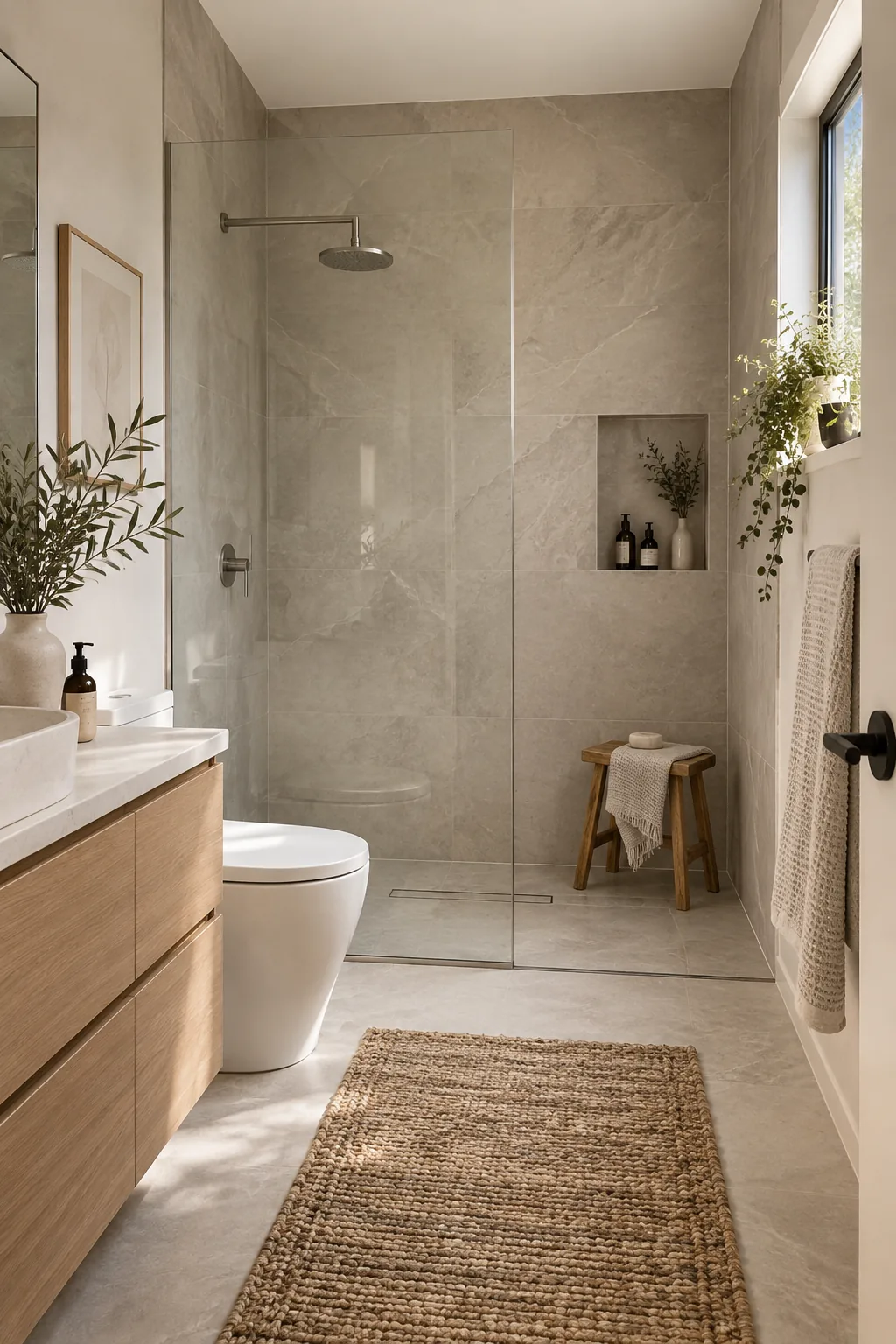
A standard large-format tile measures 24 by 48 inches, which drastically cuts down on the amount of grout you have to scrub. This creates a seamless, high-end look that visually expands a tight bathroom. You get the elegance of a solid stone slab for a fraction of the cost. To pull this off flawlessly, keep your grout lines as tight as possible and match the color exactly to the tile.
- Use a minimal 1/16-inch grout joint
- Match grout color to the tile face
- Ensure your wall substrate is perfectly plumb
2. Vertical Stacked Subway
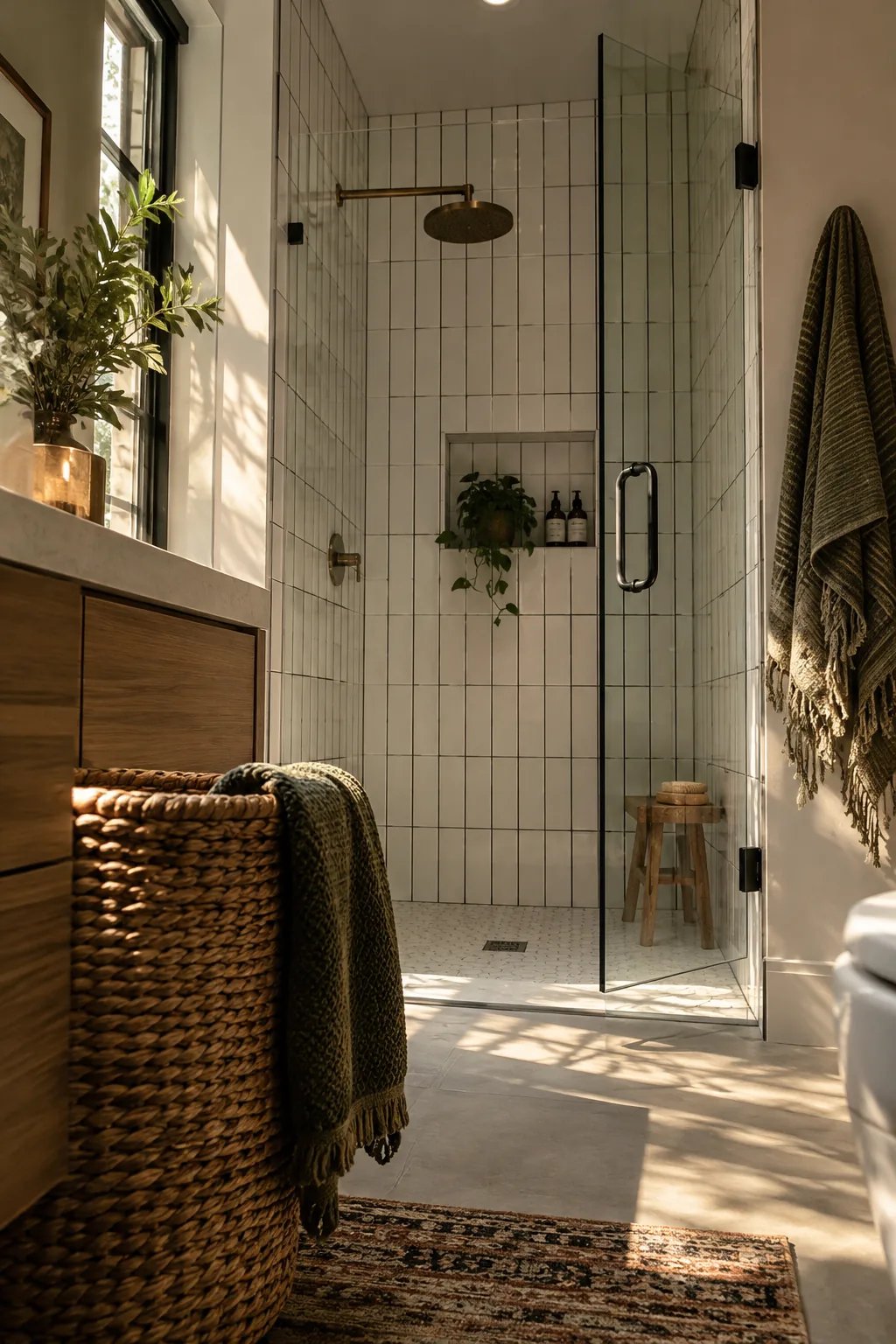
Stacking subway tile vertically immediately draws the eye upward to the ceiling. It is a simple twist on a classic layout that makes a standard eight-foot room feel much taller. I love using a matte finish here to keep the design feeling modern and understated. You can even use a contrasting dark grout to highlight the sharp, clean lines of the vertical stack.
3. Built-In Recessed Niche
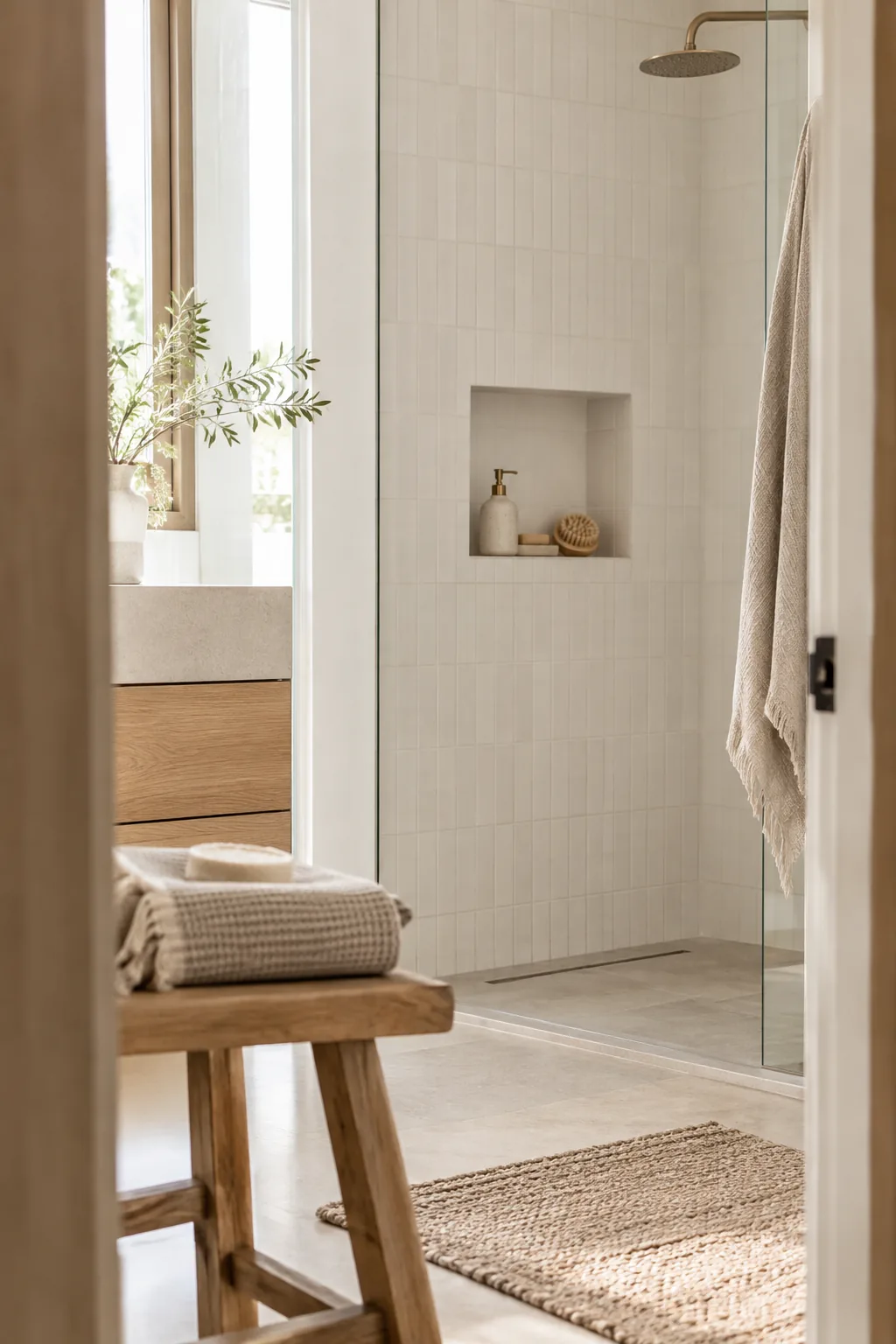
Frame out a recessed shower niche between your wall studs before you start waterproofing. It keeps your shampoo bottles off the floor and gives the shower a custom, intentional finish. I always recommend making the niche at least 14 inches tall to accommodate modern pump bottles. You can wrap the inside with the same wall tile for a hidden look or use a bold mosaic to create a focal point. Pitch the bottom sill slightly so water drains properly.
- Pitch the bottom shelf slightly forward
- Use a solid piece of stone for the sill
- Plan the height around your tallest bottles
4. Authentic Zellige Texture
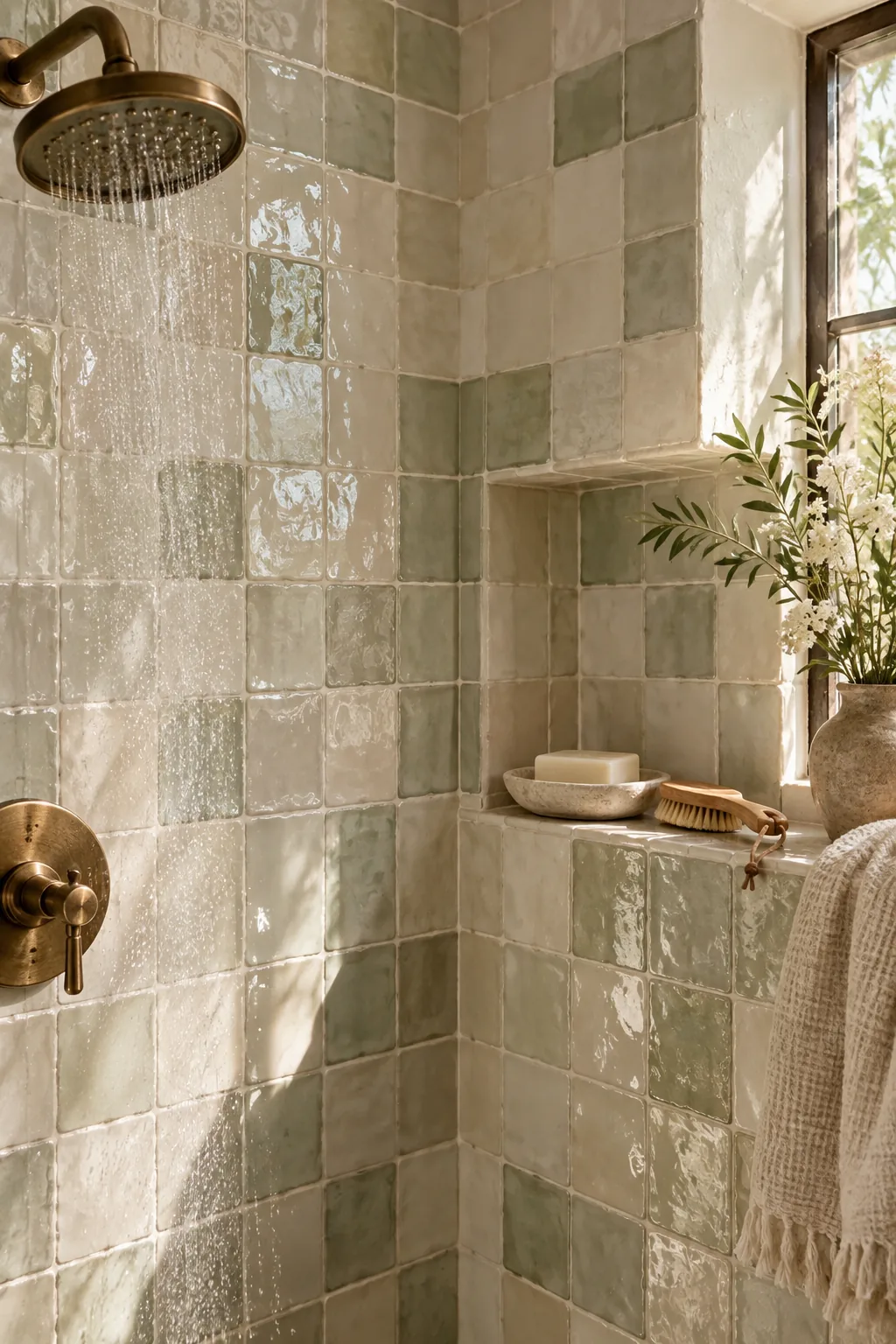
Authentic Zellige tiles are fired in wood kilns, which gives every single piece a slightly different thickness and color variation. This uneven texture bounces light around the shower stall and adds incredible warmth to a stark bathroom.
5. Solid Quartz Slabs
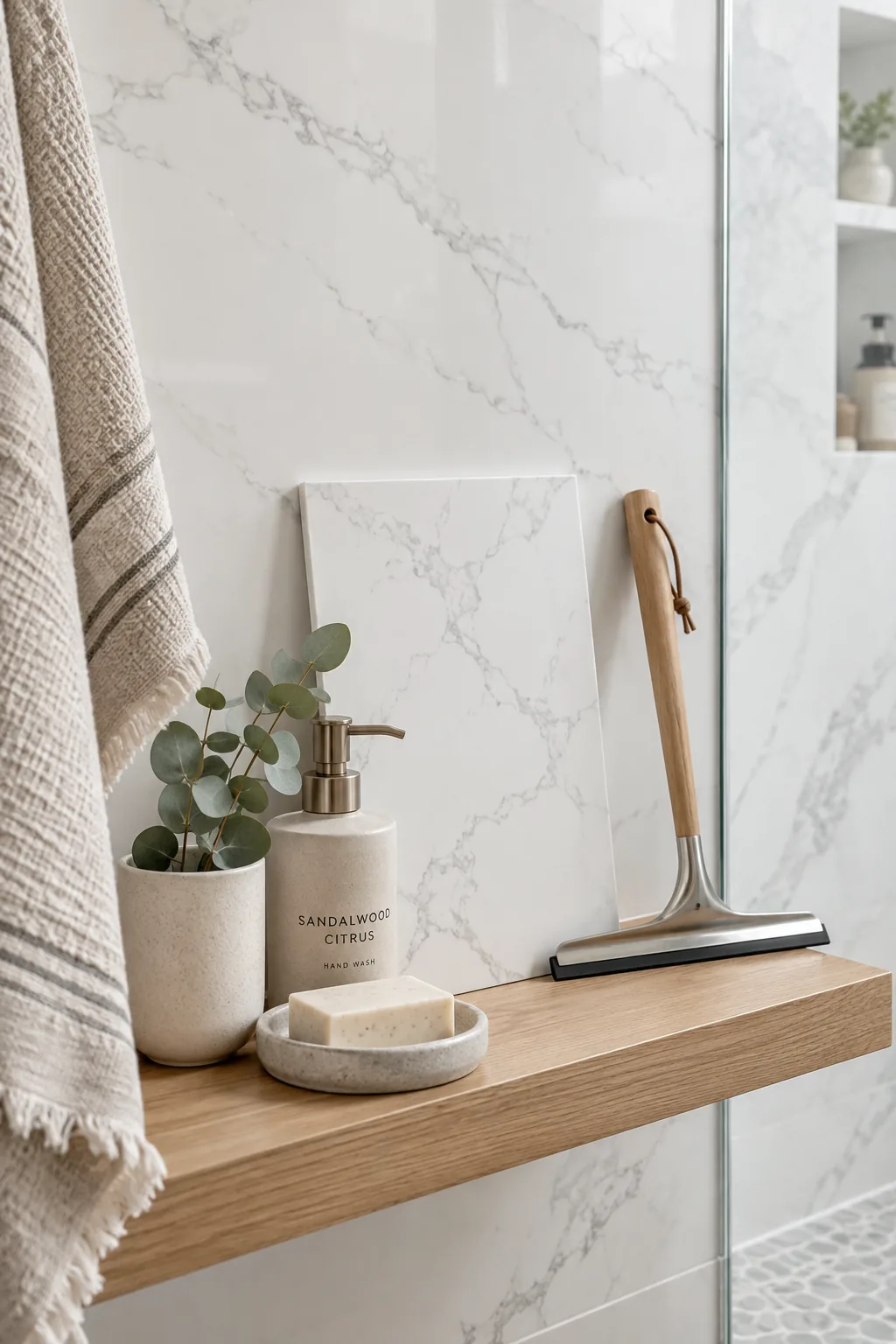
The complete lack of grout lines is exactly what makes a solid quartz slab so appealing for a shower enclosure. You get a completely smooth, waterproof surface that wipes clean with just a squeegee. It instantly mimics the luxurious atmosphere of an upscale hotel spa.
It costs more upfront but saves you hours of heavy maintenance down the road.
6. Fluted Wall Tiles
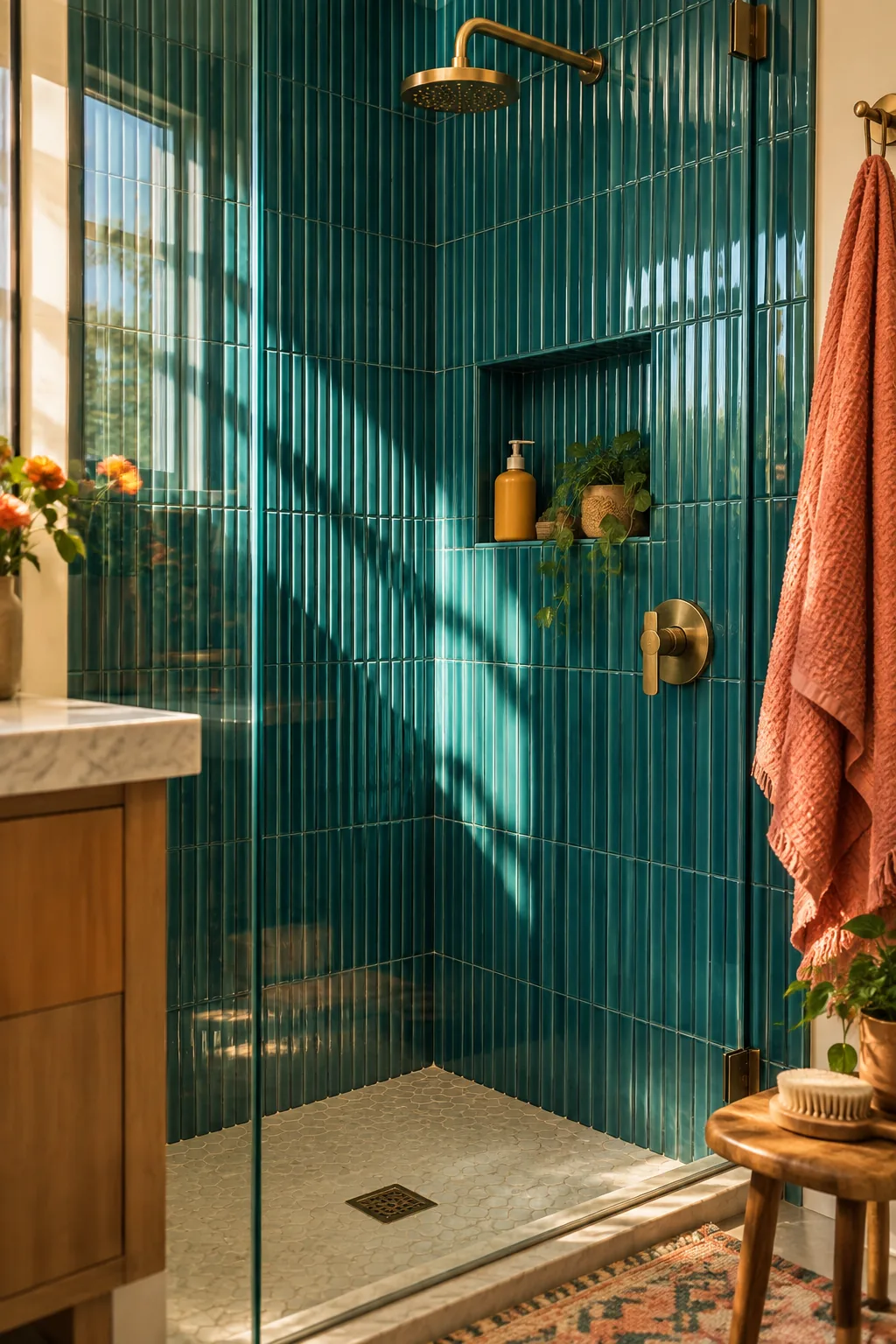
I am currently obsessed with using fluted wall tiles to add a tactile, ribbed texture to otherwise flat bathrooms. The 3D ridges catch the morning light beautifully and give a simple glass-enclosed shower a deeply architectural feel.
7. Dark and Moody Colors
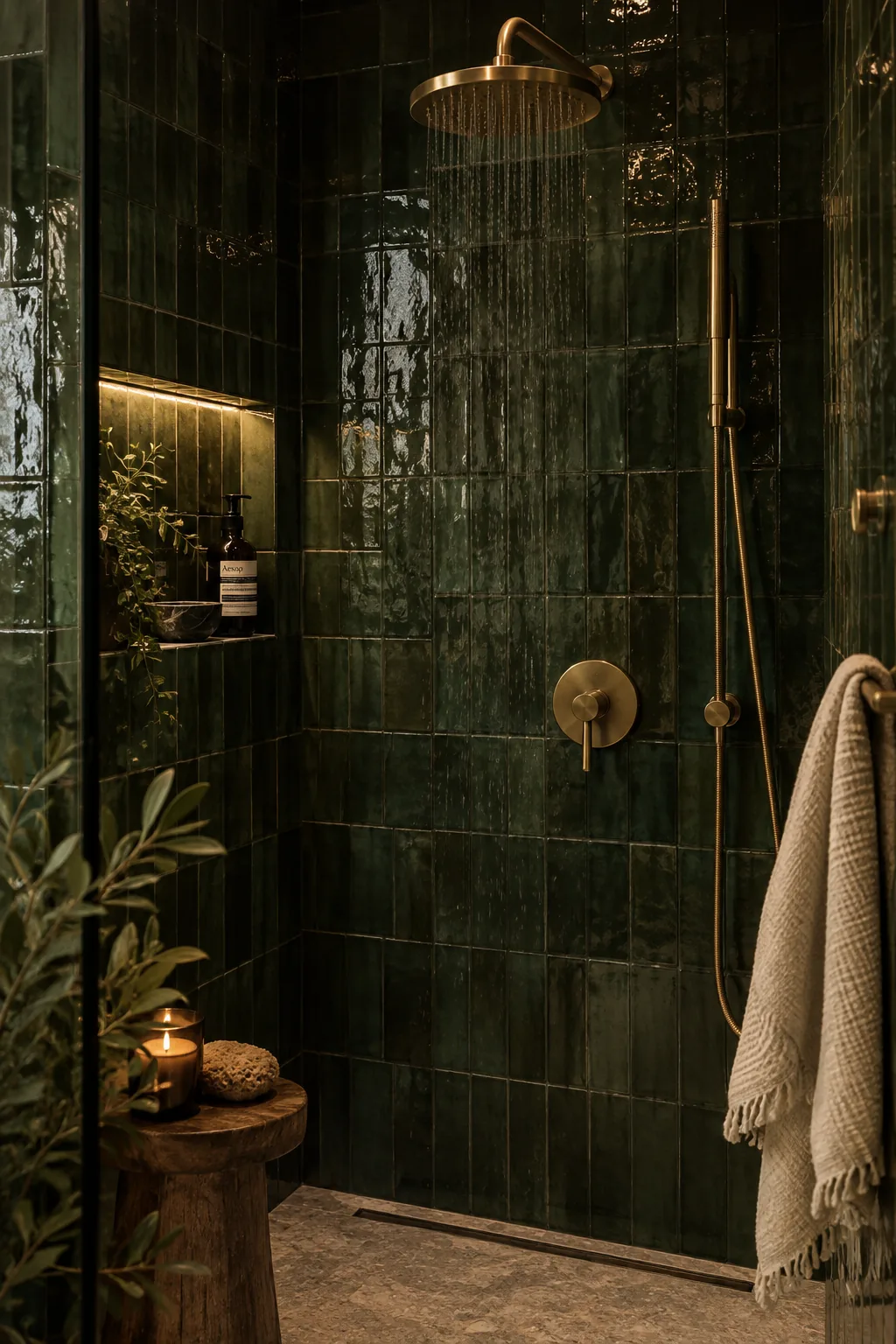
Deep green or charcoal black tiles absorb light to create a moody, cave-like retreat. Pairing these rich colors with warm brass plumbing fixtures instantly elevates the entire space.
8. Tadelakt Plaster Finish
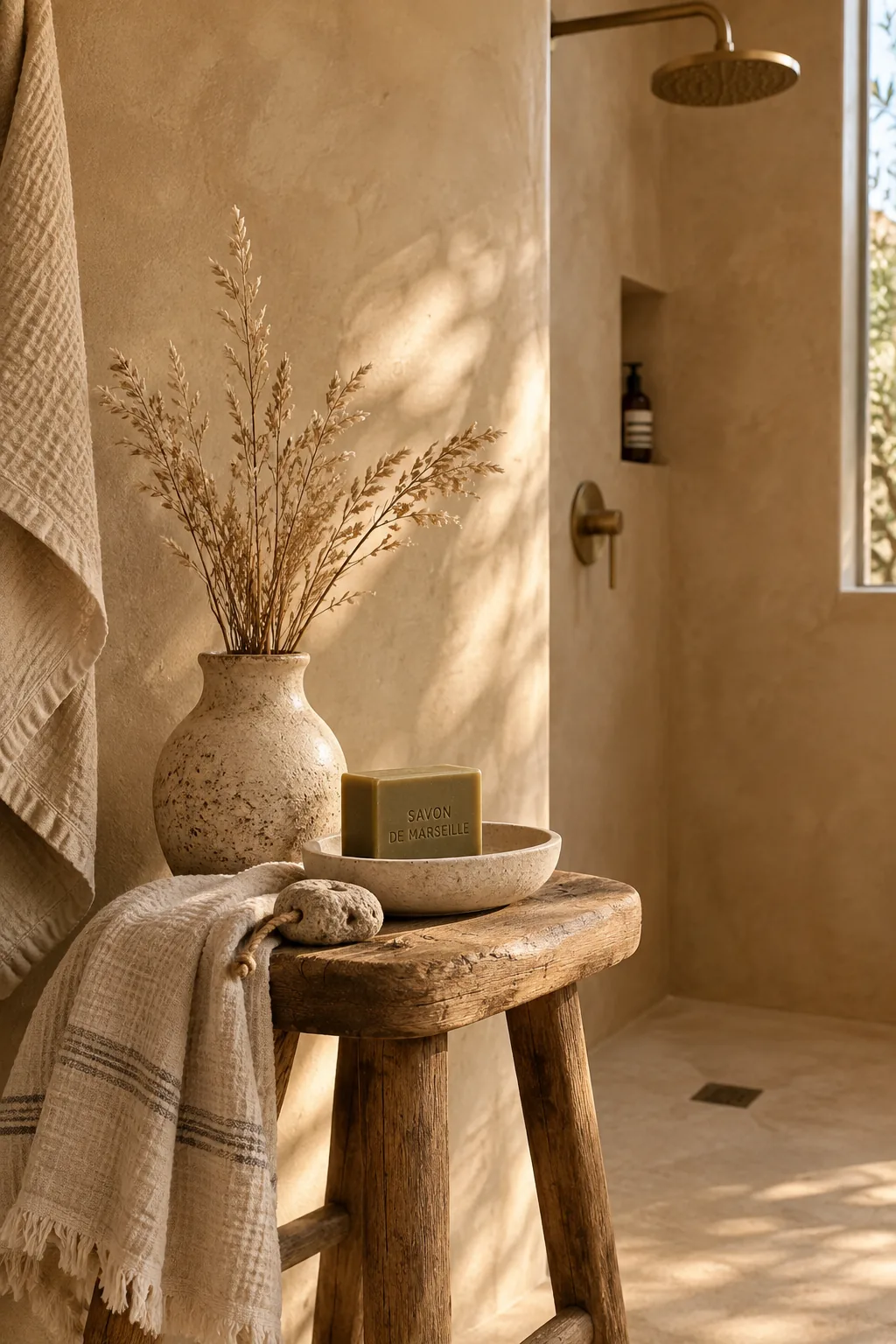
A seamless, earthy aesthetic is the hallmark of a Tadelakt plaster finish in the bathroom. This traditional Moroccan technique uses lime plaster treated with olive soap to create a naturally waterproof, velvety surface. The organic texture feels incredibly grounding and pairs perfectly with minimalist fixtures.
Just remember to reapply the soap sealant yearly to keep it fully water-resistant.
9. Oversized Terrazzo
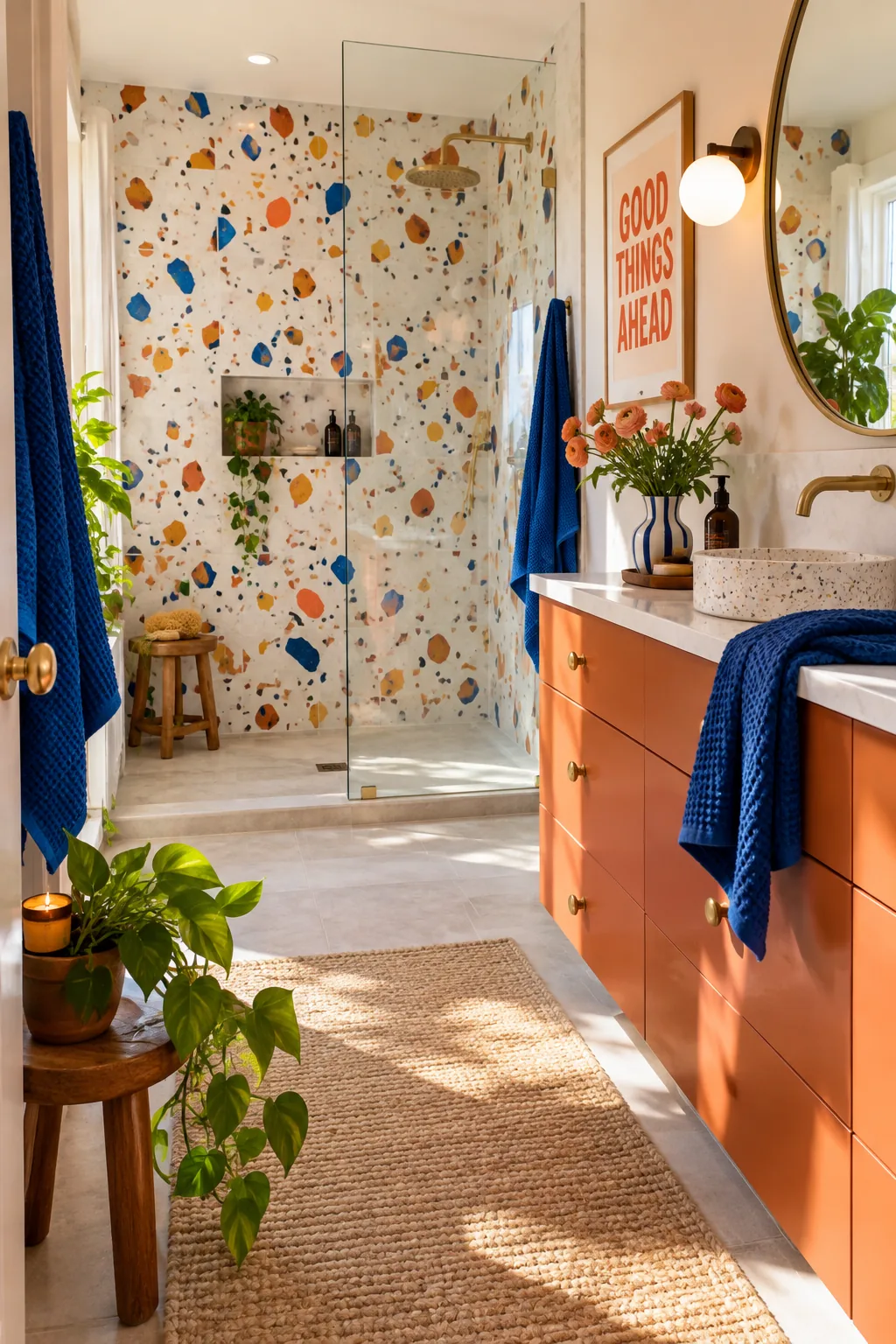
My favorite way to inject personality into a sterile bathroom is by installing oversized terrazzo tiles on the back wall. The crushed marble and glass aggregates bring in subtle flecks of color without overwhelming the eye. You can pull one of those secondary chip colors out and match your towels or vanity to it. It is a playful nod to mid-century design that still feels incredibly fresh.
10. Herringbone Layout
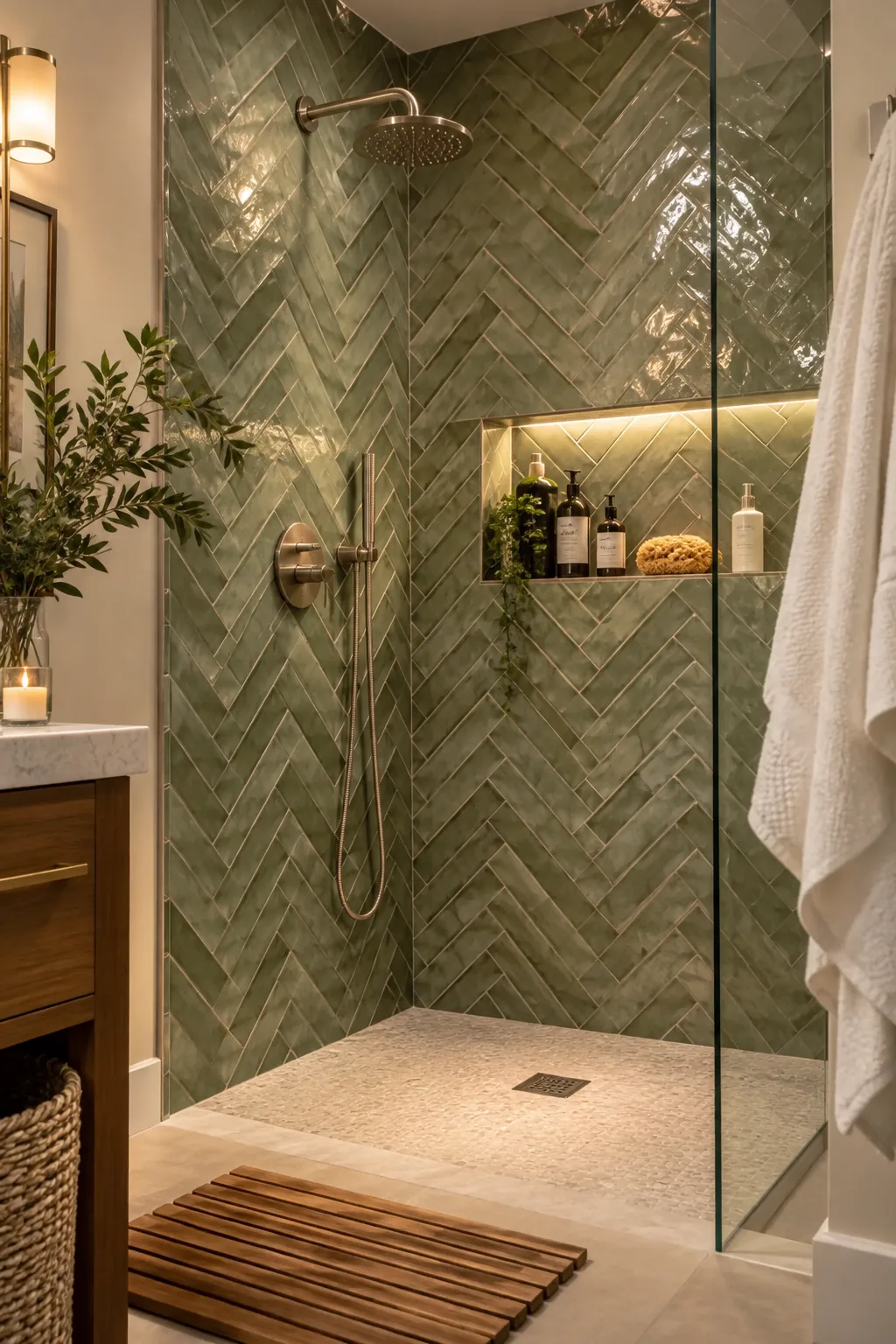
The dynamic, zigzag energy of a herringbone tile layout breaks up the rigid boxiness of a standard shower stall. It takes inexpensive rectangular tiles and transforms them into a high-impact feature wall. I like to run the pattern all the way from the floor up to the ceiling to maximize the visual impact. This layout requires about fifteen percent more overage for cuts, so order your materials accordingly. It is a labor-intensive installation that pays off with massive visual interest.