Low-Maintenance Front Yard Landscaping & Plant Spacing Chart
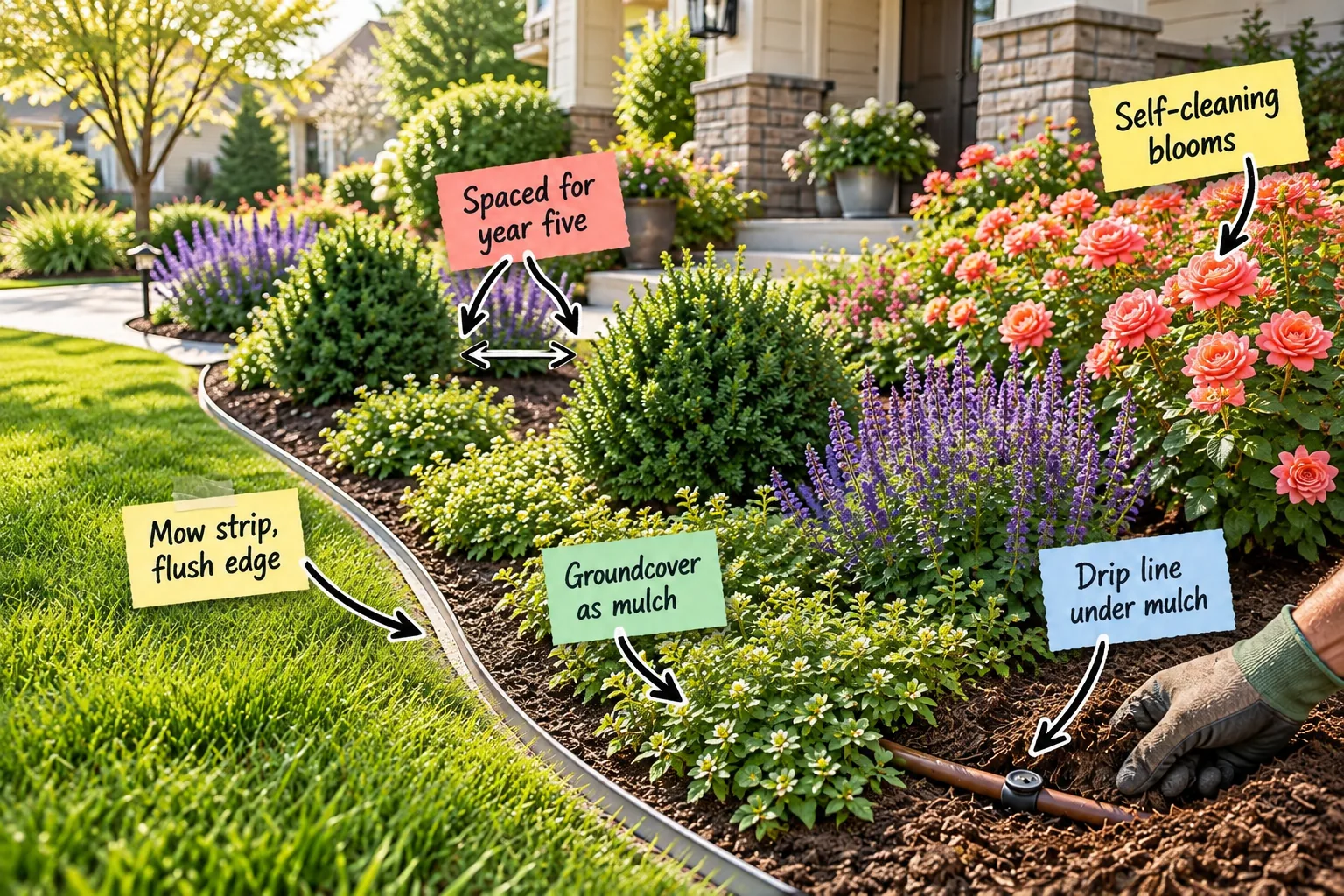
You can absolutely design a self-sustaining front bed and use our spacing chart to plant shrubs and perennials perfectly for their mature size. Download our mature-width spacing chart below to plant a front yard that looks polished on autopilot, saving you countless hours of weekend yard work.
The Flush Steel Mow Strip
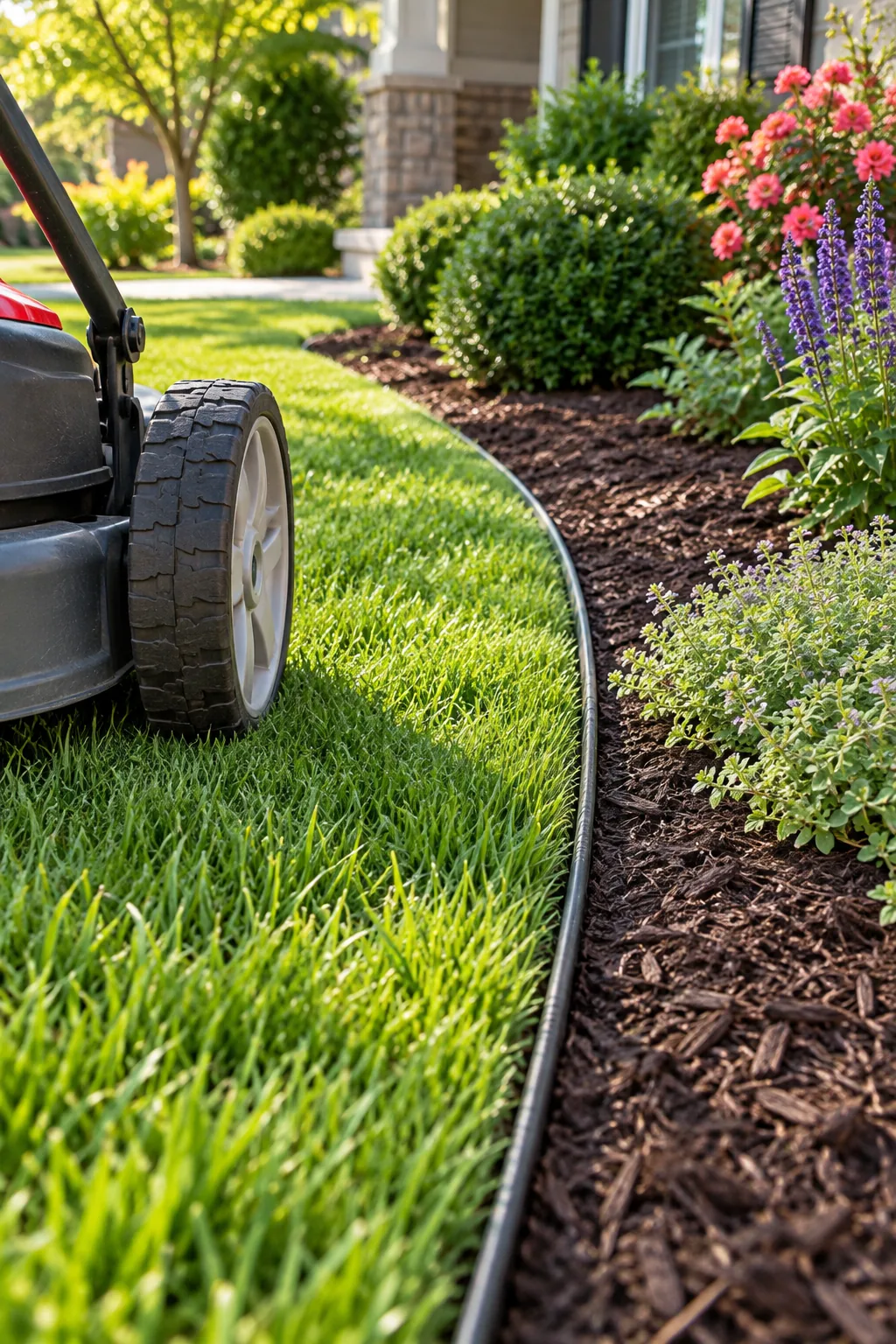
Setting a 4-inch deep steel edging perfectly level with the soil grade completely eliminates the frustrating need for weekly string trimming around your foundation beds. One lawnmower wheel runs directly over the steel edge, cutting the grass cleanly against the garden to save you hours of manual maintenance.
Calculating Your Mow Strip Width
To guarantee your mower wheel won’t slip into the mulch, measure your specific mower’s wheel base before purchasing any edging materials. You need a flush boundary that is at least three inches wide to fully support the wheel’s weight without compressing the surrounding garden soil.
- Measure the wheel track: Push your lawnmower onto a paved driveway and measure the exact width of the outermost plastic or rubber tire tread.
- Trench the border: Dig a narrow perimeter trench that matches your wheel width, ensuring the bottom is completely flat and firmly tamped down.
- Set the steel flush: Install the steel barrier so the top edge sits entirely flush with the natural soil grade, preventing mower blade strikes.
Installing this solid barrier correctly the first time prevents aggressive, creeping lawn grasses from invading your freshly mulched beds during the peak spring growing season.
Spacing for Year Five
The absolute most critical rule for a self-sustaining yard is spacing your new plants based strictly on their mature width rather than their nursery pot size. Plant your dwarf evergreen shrubs 3 to 4 feet on center to guarantee proper air circulation and prevent severe overcrowding by year five.
Resisting the Urge to Overplant
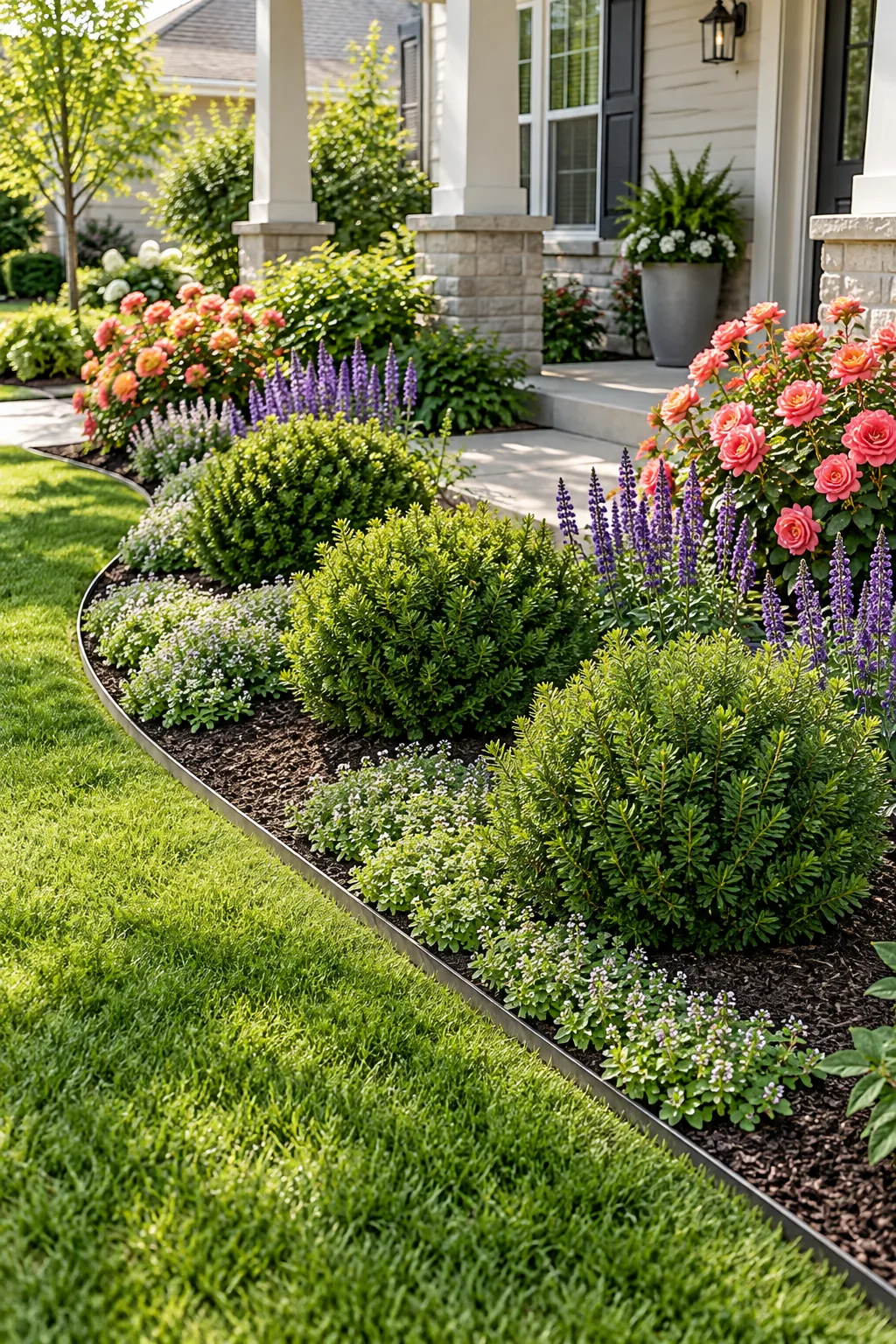
It is incredibly tempting to pack young nursery plants tightly together to create an immediate, lush visual impact during your very first season. Leaving visible gaps between your young shrubs ensures their root systems can expand naturally without fiercely competing for limited soil moisture and essential nutrients.
The Mature-Width Spacing Chart
I used to guess at plant spacing until my foundation beds turned into an overgrown jungle, which is why I created this printable spacing chart for 24 low-care front-yard shrubs, perennials, and groundcovers. You can use these exact on-center planting distances to calculate the precise number of plants you need per 10 square feet.
| Plant Category | Mature Width | On-Center Spacing | Plants per 10 Sq Ft |
|---|---|---|---|
| Dwarf Boxwood | 36 inches | 36 inches | 1 plant |
| Creeping Thyme | 18 inches | 12 inches | 10 plants |
| Shrub Roses | 48 inches | 48 inches | 1 plant |
| Purple Salvia | 24 inches | 18 inches | 4 plants |
| Spreading Juniper | 60 inches | 48 inches | 1 plant |
| Dwarf Spruce | 30 inches | 36 inches | 1 plant |
Before you take the spacing chart to the local nursery, confirm these three crucial site conditions to ensure your new plants will actually reach their predicted mature widths.
Calculating Plants Per Square Foot
Once you know your target bed area, you can use the spacing chart to determine exactly how many plants will fill the space without future overcrowding. Multiplying your total bed square footage by the plants per 10 square feet ratio gives you a precise, budget-friendly shopping list.
Groundcover as Living Mulch
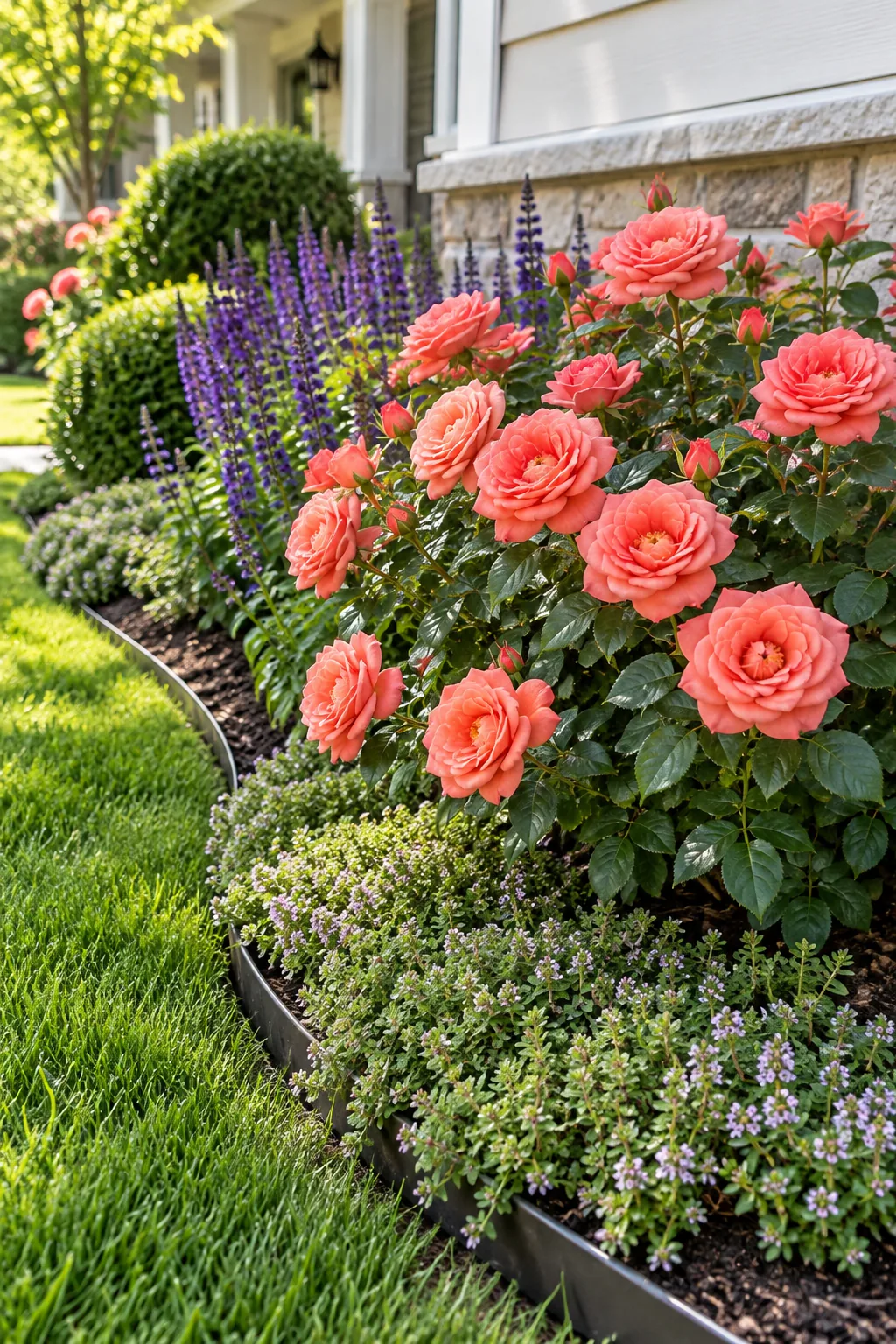
Planting a creeping groundcover at the front of the bed knits the soil together and naturally suppresses stubborn weed seeds from germinating. Space your 4-inch groundcover plugs about 12 inches apart so they form a solid, weed-blocking living mat within two quick growing seasons.
Reducing Annual Bark Mulch
Establishing this dense living layer significantly reduces the expensive need to buy, haul, and spread fresh bark mulch every single spring. As the groundcover spreads, it completely shades the soil, locking in vital moisture during hot summer months and protecting the delicate root zones of neighboring perennials.
Establishing Deep Roots Early
Deep, infrequent watering during the first summer encourages your newly planted groundcover plugs to send their roots far below the hot surface. This early establishment phase is absolutely crucial for creating a drought-tolerant living mulch that won’t require supplemental irrigation during intense future heat waves.
Self-Cleaning Shrub Roses
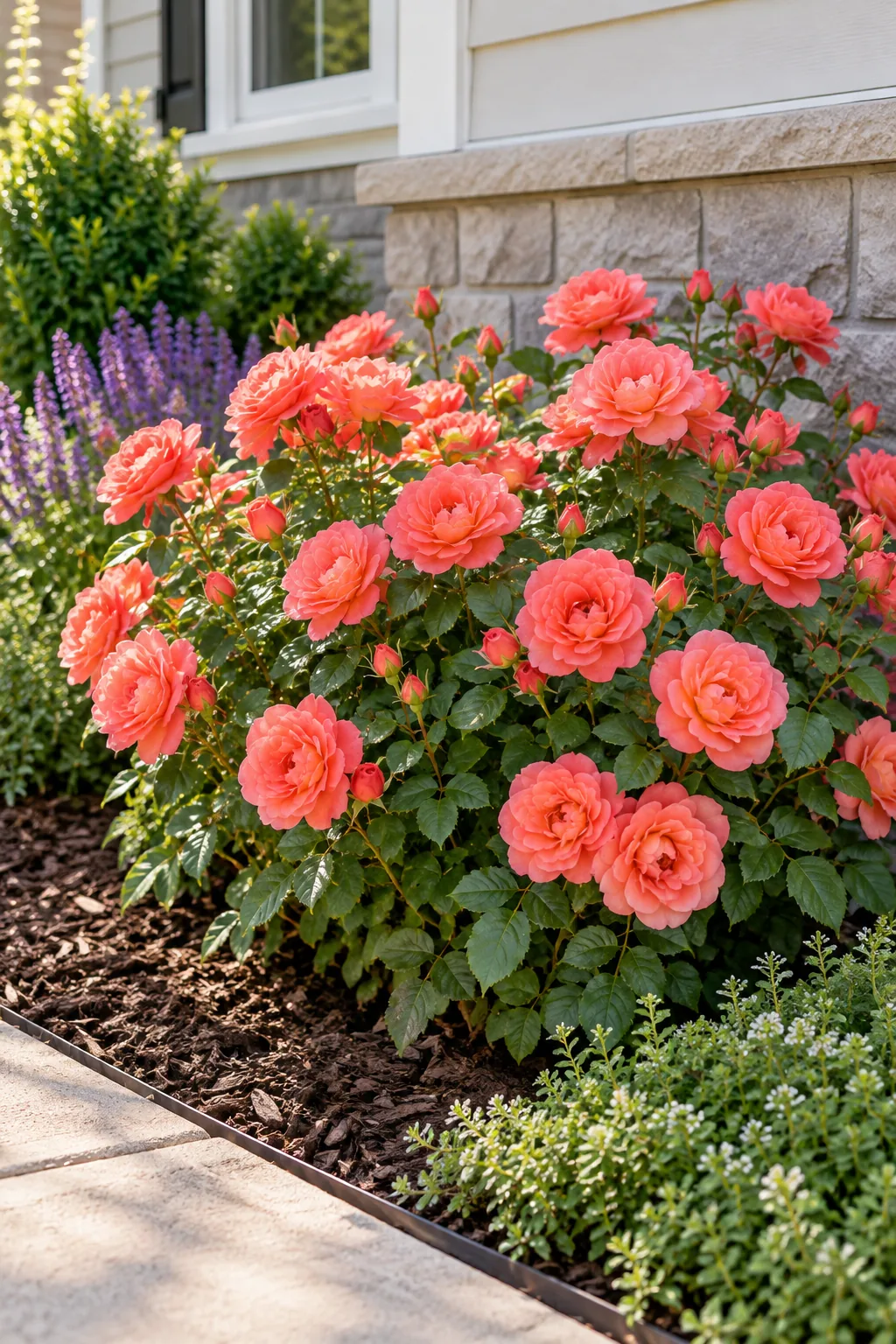
Choosing modern, self-cleaning blooming shrubs over fussy traditional perennials means you get constant, vibrant color with zero manual deadheading required. These reblooming shrub roses drop their spent petals automatically to trigger the next flush of flowers, looking utterly amazing when planted in high-impact clusters of three.
Matching Sun Needs to Yard Exposure
Matching the exact sun needs listed on the spacing chart to your yard’s actual daily exposure prevents leggy, weak growth in your expensive blooming shrubs. Monitor your front bed for a full weekend to verify it reliably receives the six hours of direct sunlight required to maximize bloom production.
Pruning for Shape, Not Blooms
While you never need to deadhead these modern cultivars to keep them blooming, you can still perform a light structural pruning in early spring. Removing any crossing branches before the new foliage emerges ensures the center of the shrub receives adequate sunlight and healthy air circulation.
Drip Irrigation Under the Mulch
Running 1/2-inch drip tubing with built-in emitters directly over the root zones before applying mulch delivers water slowly and prevents wasteful surface runoff.
Hiding the Irrigation Line
I finally hid my own drip lines under a thick layer of mulch last spring, which completely protected the plastic from harsh UV degradation. Keeping the foliage entirely dry by watering directly at the soil level is the easiest way to avoid common fungal diseases on your favorite roses.
Automating Your Watering Schedule
Connecting your newly laid drip irrigation system to a battery-operated hose timer truly puts your front yard maintenance on complete autopilot. Set the smart timer to run for 45 minutes twice a week during the early morning hours to encourage deep, resilient, and highly drought-tolerant root growth.
Choosing Dwarf Evergreen Anchors
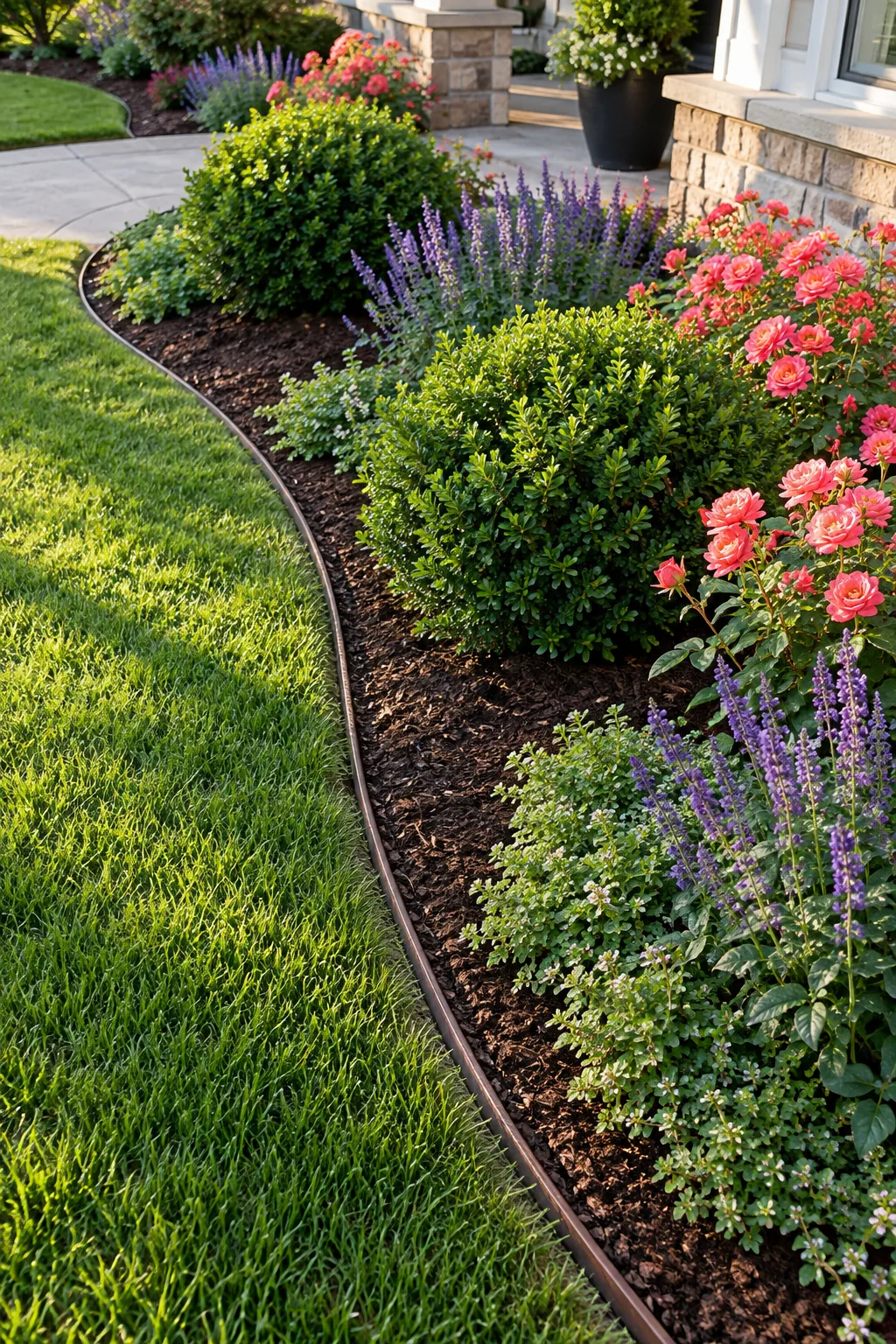
Evergreen shrubs provide essential winter structure when your perennials go dormant, especially when you weave your 1/2-inch drip tubing with 12-inch emitter spacing directly over their root zones before mulching. I always select dwarf varieties that max out at 3 feet tall so they never block my front windows or require annual shearing.
Mixing Architectural Plant Forms
Incorporating a thoughtful mix of rounded and pyramidal dwarf forms adds instant architectural interest to your foundation beds without requiring any extra maintenance. Contrasting a low, mounding evergreen against an upright, structured shrub creates a professionally designed look that lasts all twelve months of the year.
Maintaining Winter Curb Appeal
Selecting evergreens with varying shades of blue, gold, and deep green ensures your front bed remains visually engaging even when covered in a light frost. These subtle color shifts become the true focal point of your curb appeal when the surrounding perennial foliage finally dies back for winter.
Preventing Soil Compaction
Keeping heavy foot traffic strictly on the lawn or designated stone pathways prevents the soil around your foundation plants from becoming heavily compacted. Loose, well-aerated soil allows vital oxygen to reach the root zones and helps your drip irrigation system penetrate deeply without pooling on the surface.
Keeping the Bed Edge Weed-Free
The final layer of defense for a truly low-maintenance bed is maintaining a consistent 2-inch layer of organic mulch to block stubborn weeds without suffocating shallow perennial roots.
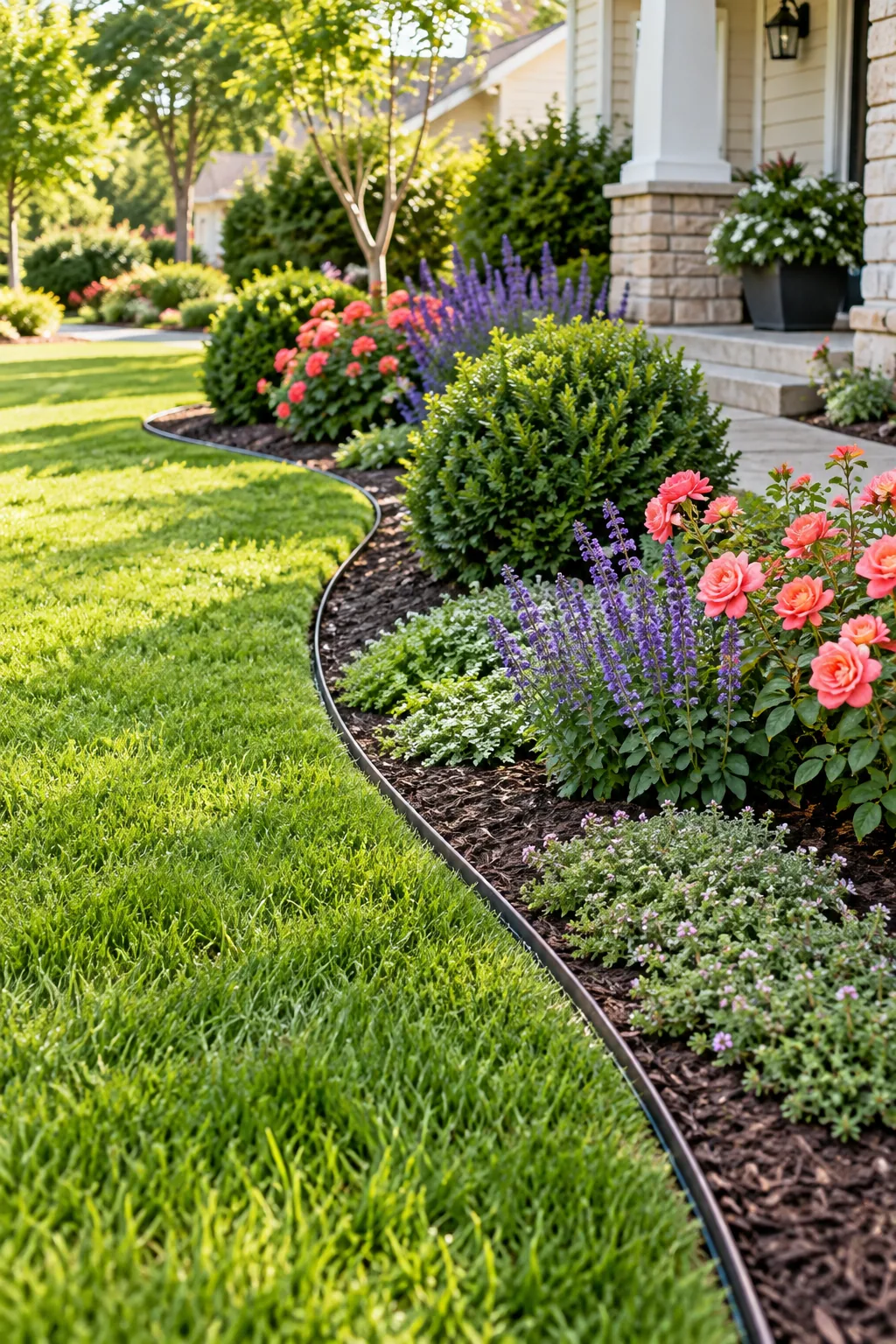
Even the most carefully spaced front yard can suffer if the final finishing touches are applied incorrectly around the base of your plants. Avoid these common top-dressing habits that create long-term rot problems for your expensive foundation plantings.
Low-Maintenance Front Yard Styles
Explore how these exact same low-care principles adapt beautifully to completely different architectural styles.
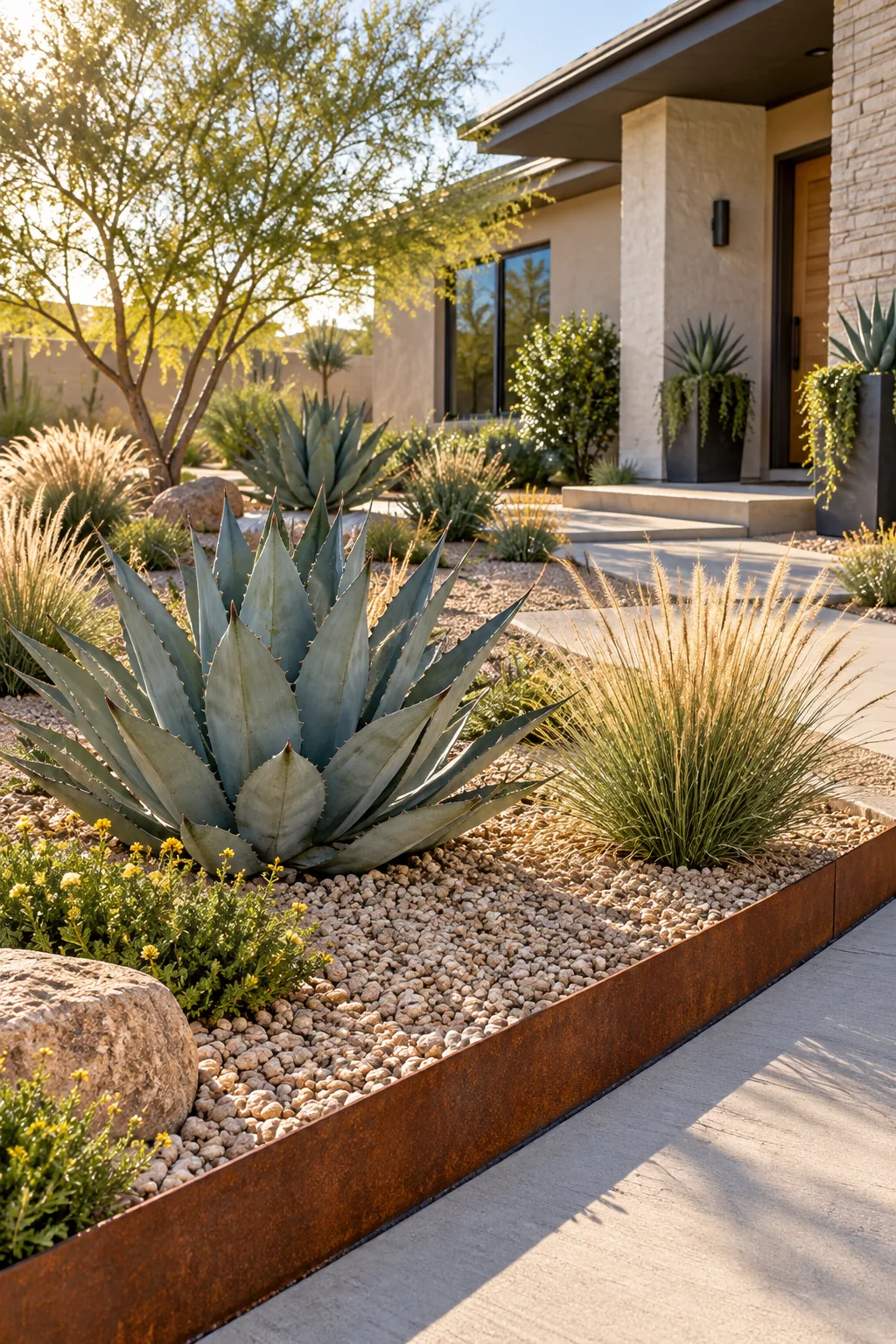
Modern Desert Gravel Garden: Swap bark for crushed gravel and use structural agaves with corten steel edging for a striking, drought-tolerant entry.
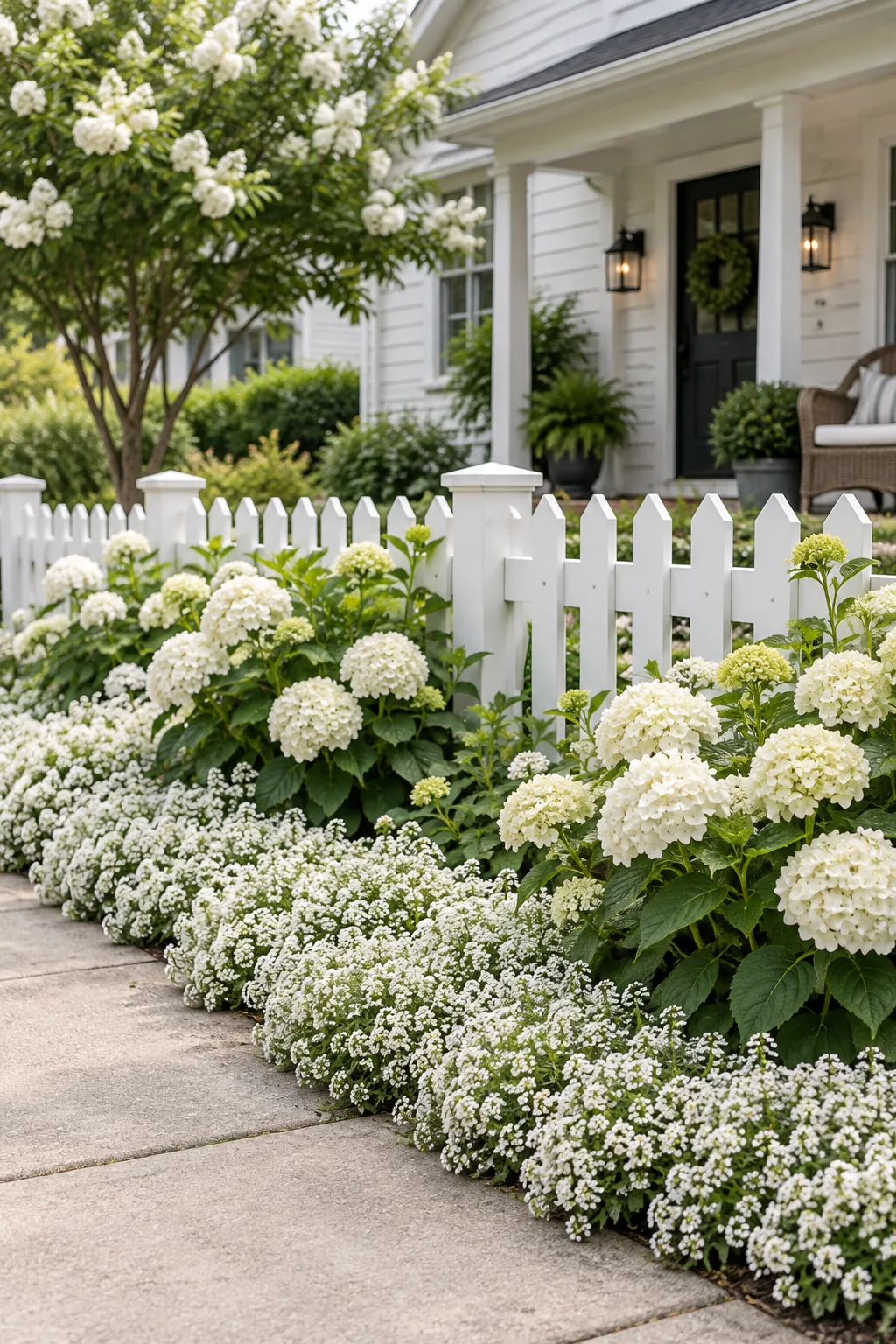
Classic White Cottage Border: Pair compact white hydrangeas with a dense carpet of sweet alyssum to get that lush cottage feel without the fuss.
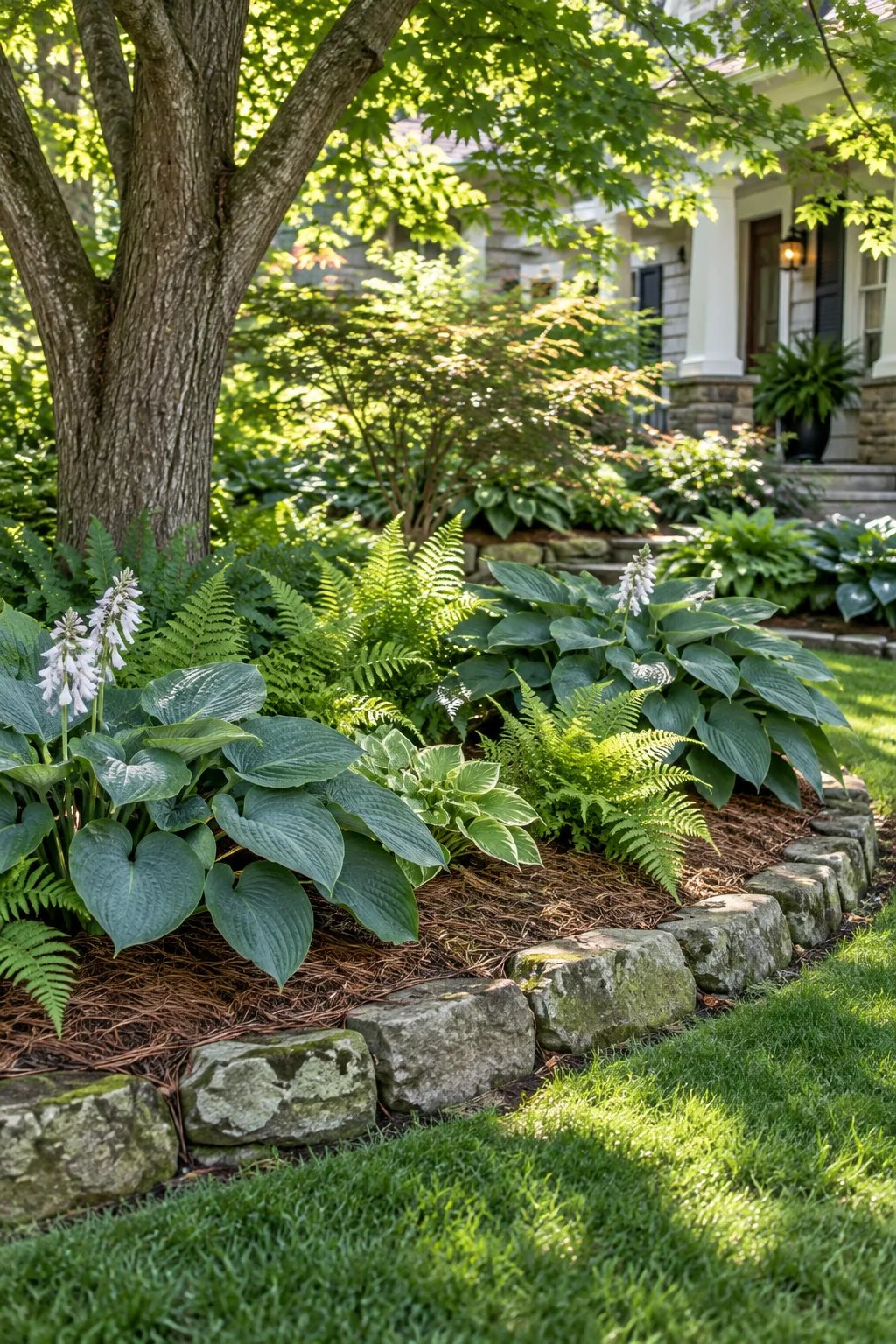
Shaded Woodland Stone Edge: Embrace a mature tree canopy by using natural stone edging, sweeping hostas, and pine needle mulch for a serene woodland vibe.