
14+ Smart Companion Planting 4×8 Raised Bed Vegetable Garden Layouts
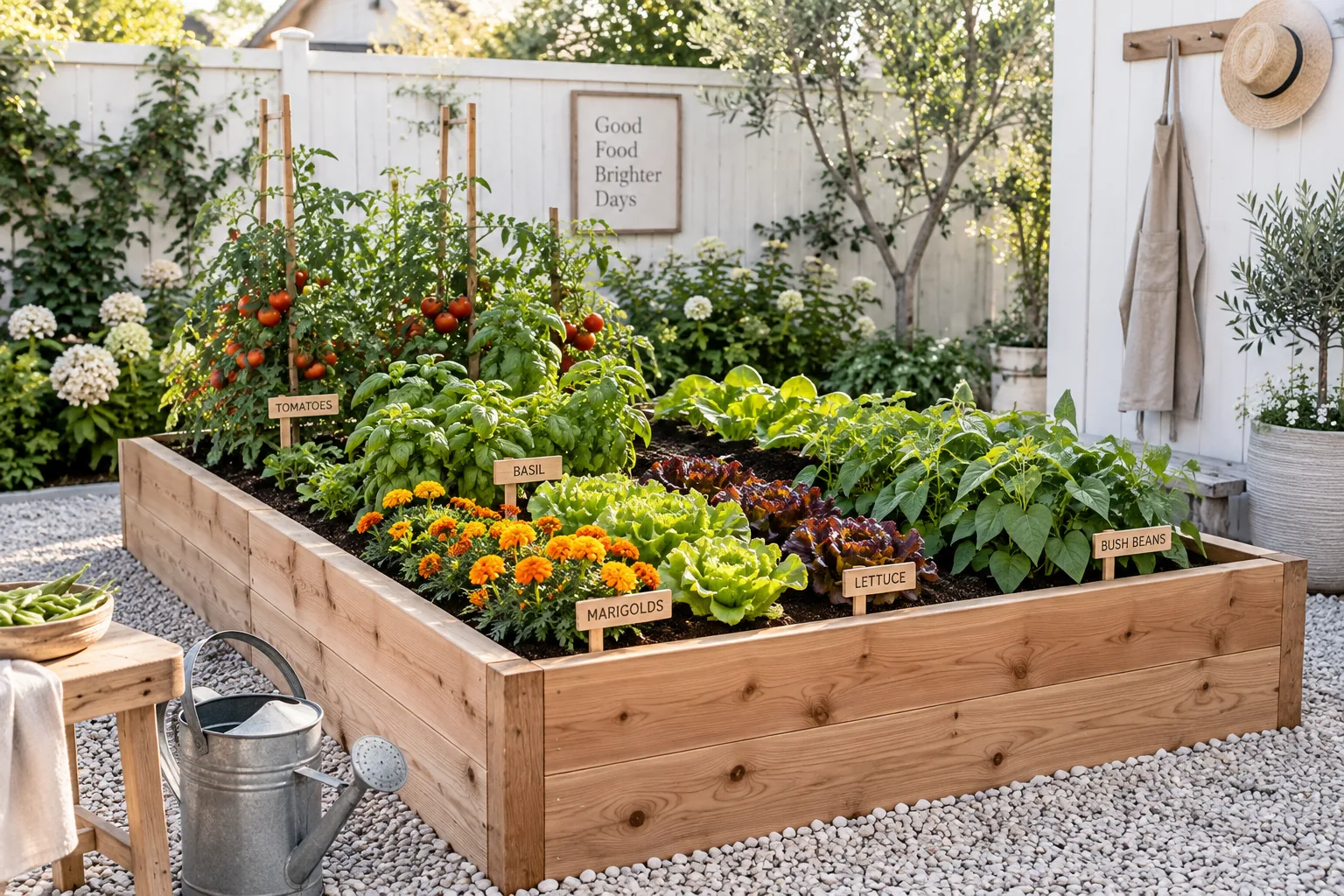
Getting the most out of a standard 4×8 raised bed comes down to putting the right plants next to each other. I've put together my go-to companion planting layouts that naturally keep pests away while packing in a massive harvest.
1. Tomatoes and Sweet Basil
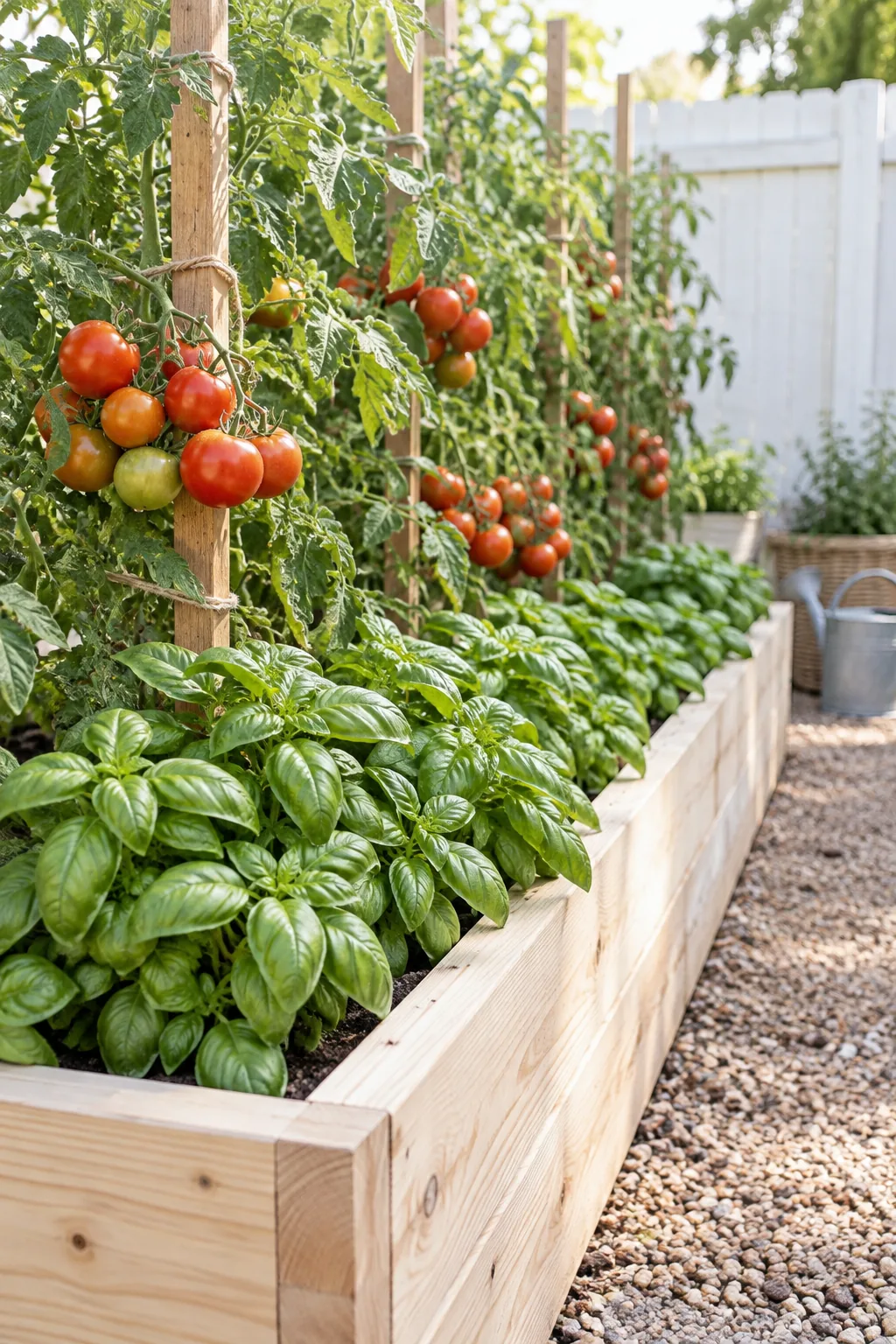
Tall tomato plants cast a lot of shade in a 4×8 bed.
That shady footprint is the perfect spot to tuck in sweet basil. The basil acts as a living mulch to keep the soil moist while masking the scent of the tomatoes from hungry hornworms. You get a classic culinary pairing that thrives in the same watering schedule.
2. Marigold Borders
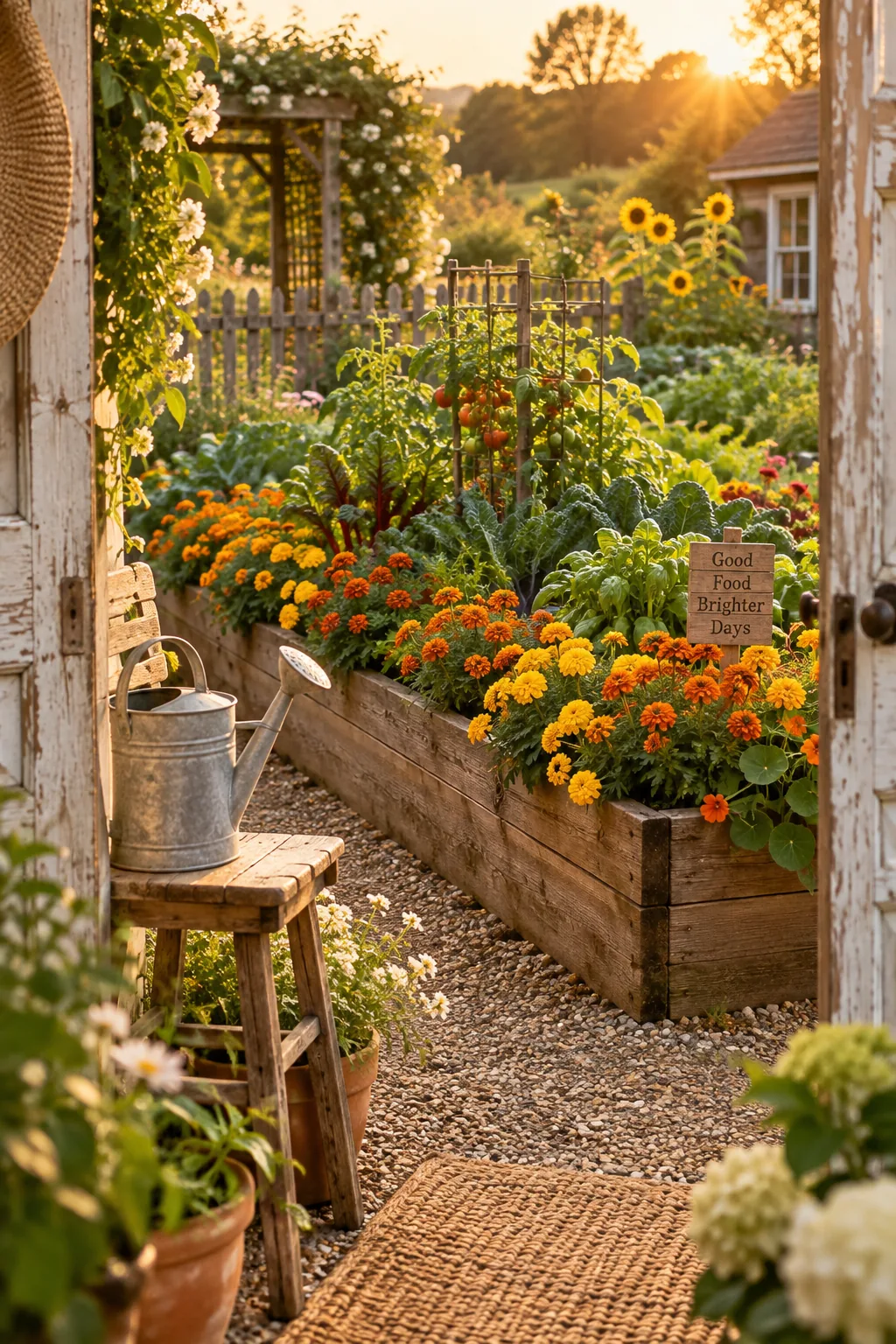
A solid border of French marigolds creates a bright, dense wall of orange and yellow around your vegetables.
These flowers pull double duty by attracting pollinators and confusing nematodes in the soil.
Plant them right along the wooden edges where they can spill over slightly.
Why it works: The strong scent of marigolds naturally deters root-knot nematodes and common beetles.
3. Compact Three Sisters
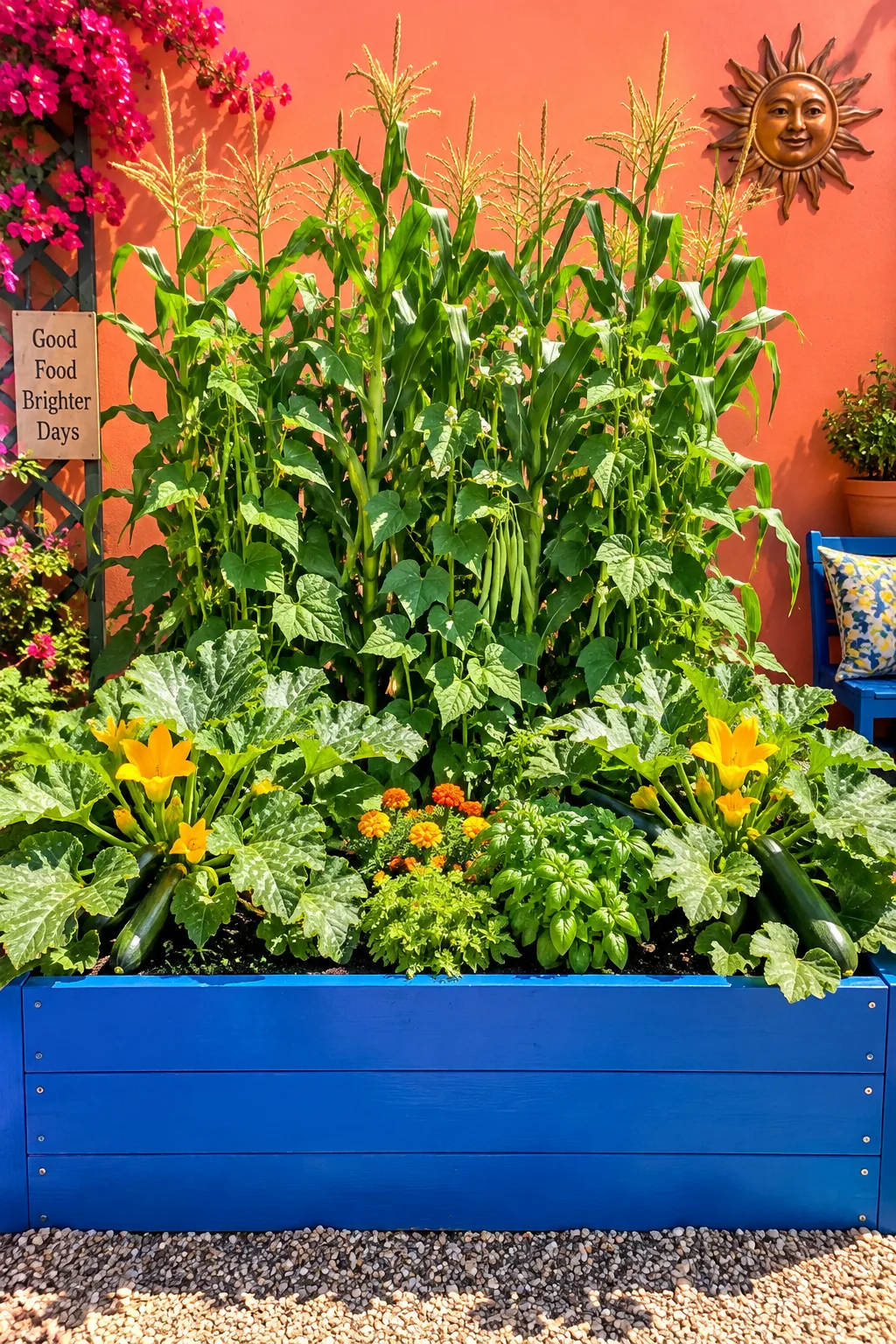
Group your sweet corn in a tight block at the northern end of your bed so it doesn't shade out everything else. Once the stalks hit about six inches tall, plant pole beans right at their base to climb the stalks. Add a few zucchini plants around the outer edges of this block. The broad squash leaves will shade the soil to prevent weeds and hold in moisture. This compact version of the classic Three Sisters method maximizes vertical space perfectly.
4. Carrots and Radishes
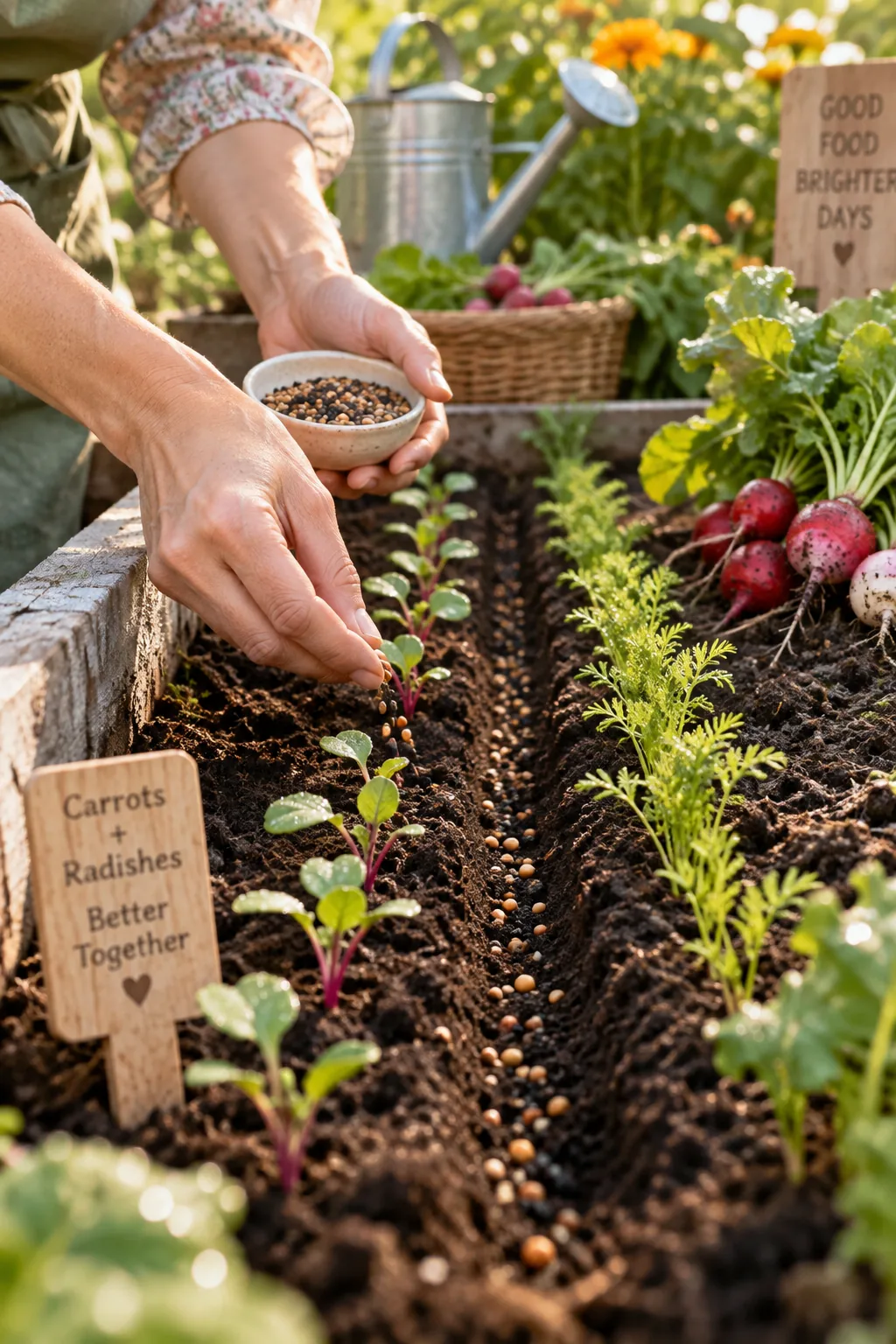
Carrot seeds are notoriously slow to germinate and leave bare patches of dirt for weeks. Mixing fast-growing radish seeds into the same row breaks up the soil crust as they sprout. The radishes are ready to pull in a month, naturally thinning the row just as the carrots need room to expand.
Just make sure your soil is loose enough for both root crops to push down.
- French Breakfast radishes
- Danvers carrots
- Cherry Belle radishes
5. Potatoes and Bush Beans
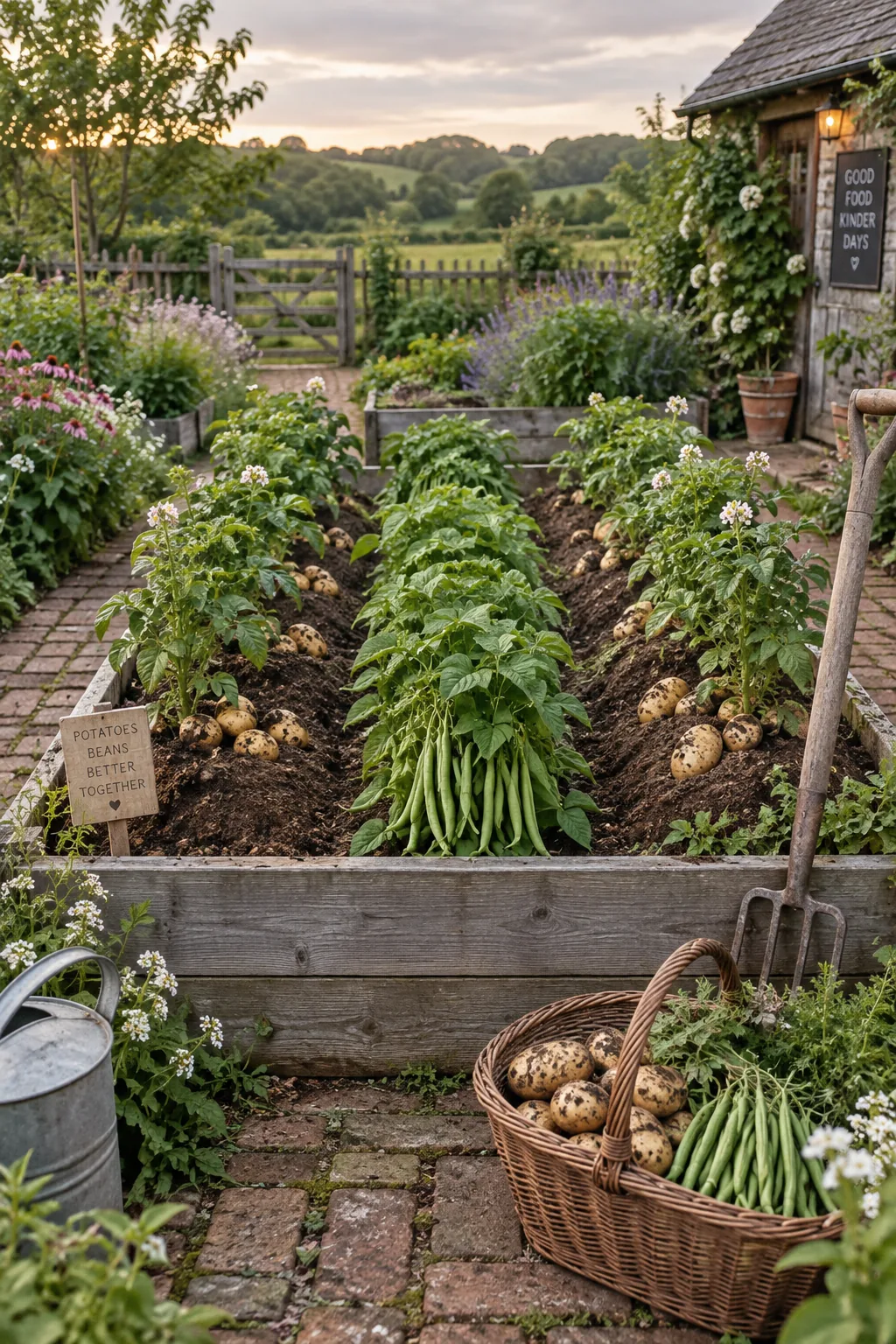
A 4×8 bed holds exactly two rows of seed potatoes with enough room left for a companion crop down the middle.
Planting a row of bush beans between the potatoes naturally repels the Colorado potato beetle. In return, the potatoes keep Mexican bean beetles away from your harvest.
They both finish at roughly the same time for one big mid-summer harvest.
6. Cucumbers and Nasturtiums
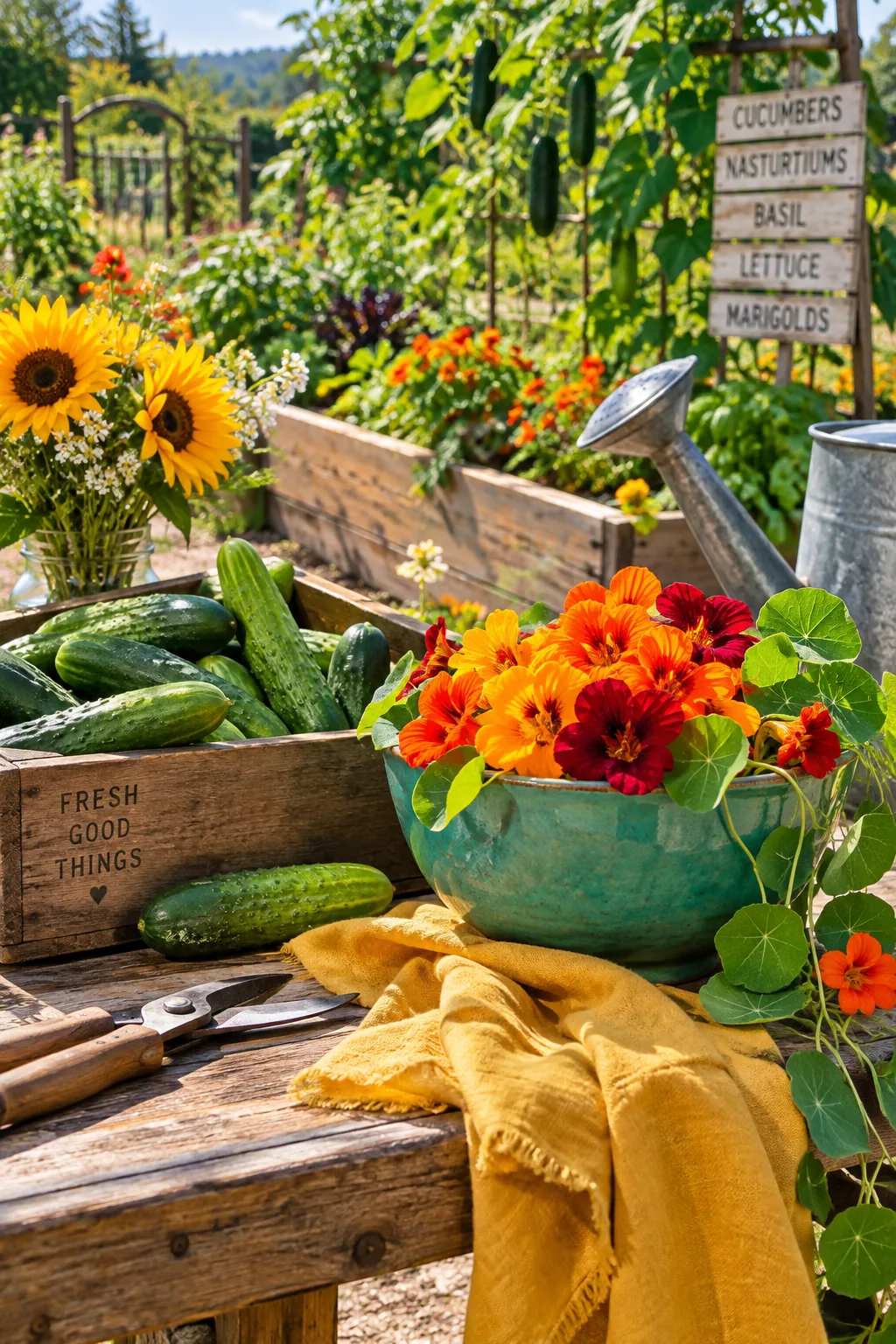
The sprawling vines of cucumbers pair perfectly with trailing flowers because they share the same need for consistent watering and good airflow. Training your cucumbers up a trellis at the back of the bed leaves the ground open for nasturtiums. These peppery flowers act as a trap crop, drawing aphids away from your developing cucumbers.
You can even eat the nasturtium flowers in your summer salads.
7. Garlic and Leaf Lettuce
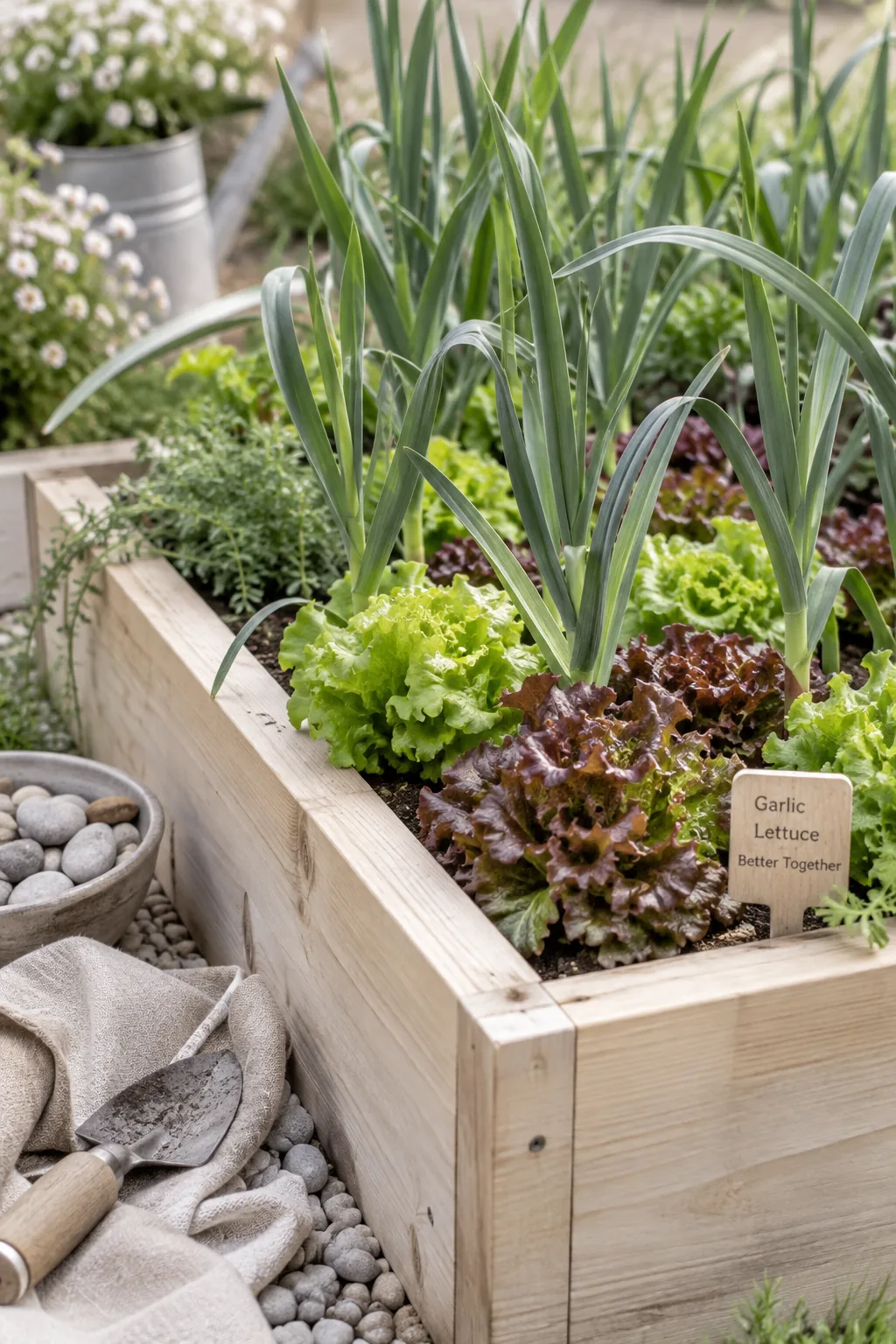
Garlic takes up to nine months to grow but requires very little above-ground space.
You can easily pack heads of leaf lettuce between the garlic stalks throughout the spring. The pungent smell of the alliums creates an invisible barrier against rabbits and slugs.
The lettuce has shallow roots, so it won't compete with the garlic bulbs forming below.
8. Cabbage and Thyme
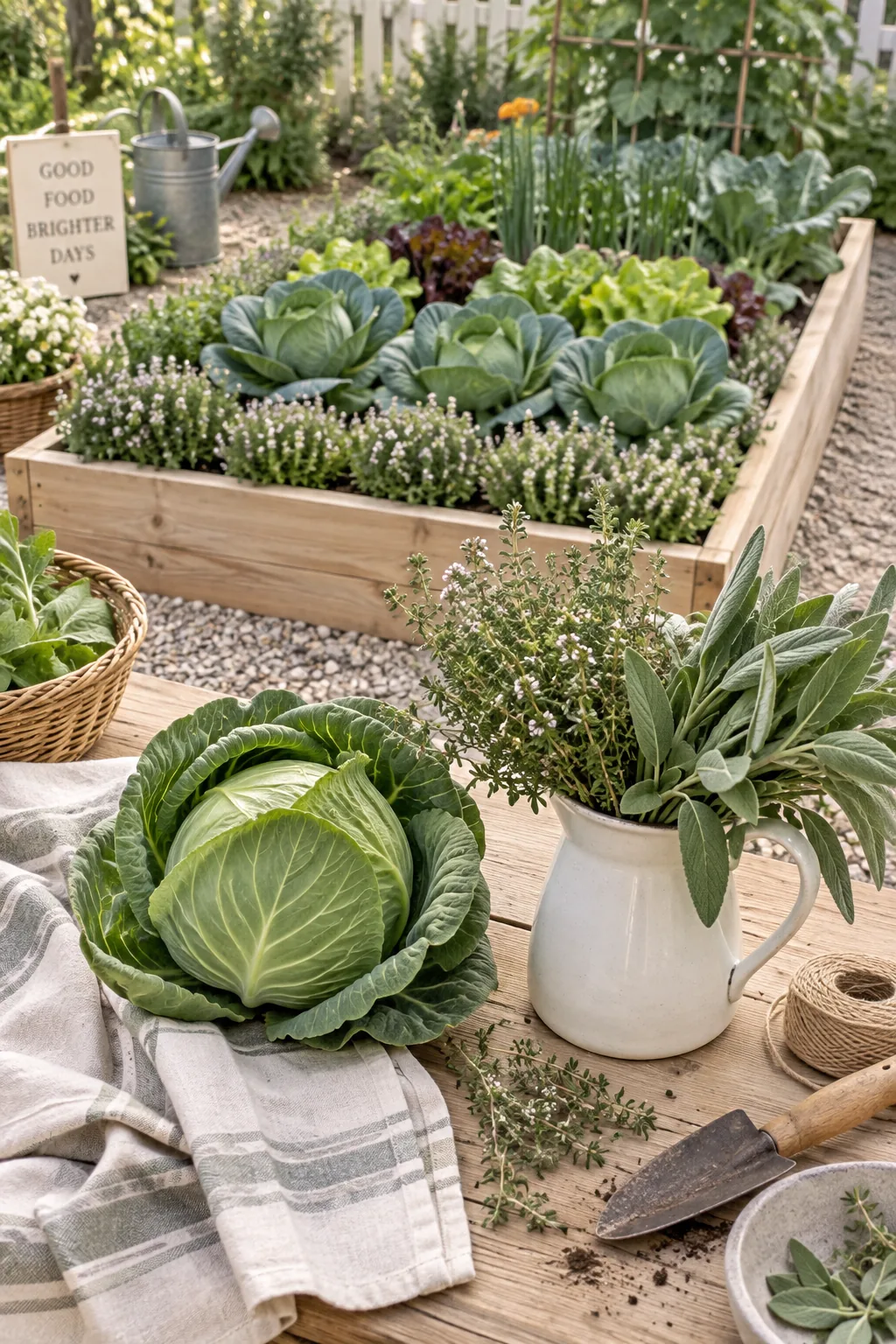
Brassicas like cabbage are magnets for destructive white moths the second you plant them outside. Surrounding them with strongly scented herbs like thyme and sage effectively masks their smell. The low-growing herbs form a dense mat over the soil that also prevents weeds from choking out your young cabbage heads. Since herbs prefer slightly drier soil, plant them on the outer edges of the bed where drainage is fastest. This layout keeps your greens pristine without resorting to chemical sprays.
9. Bell Peppers and Scallions
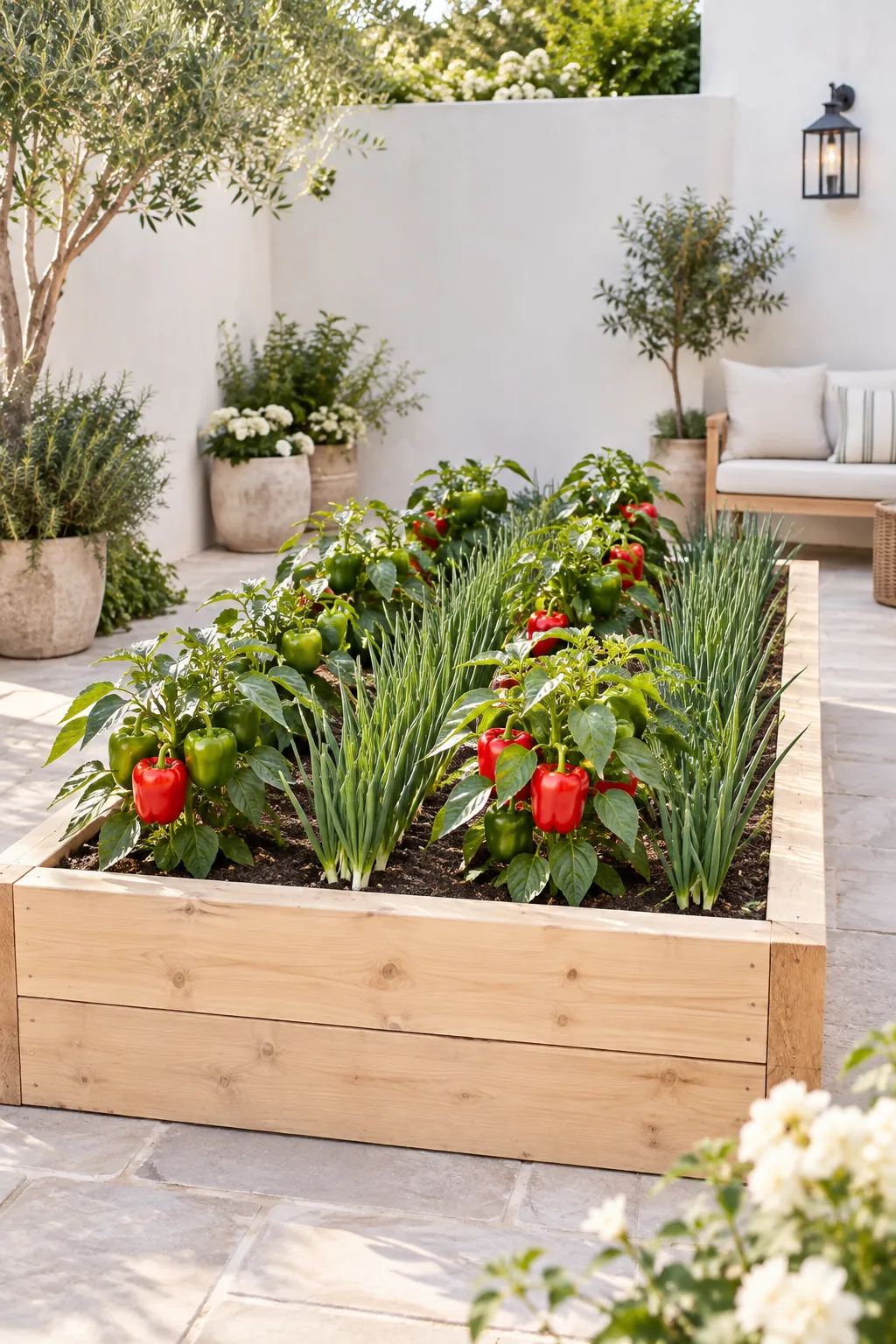
Alternating rows of bell peppers and spiky green scallions creates a beautifully textured, modern grid in your raised bed. The tall, straight lines of the onions contrast perfectly with the bushy pepper plants. More importantly, the onions deter aphids and other pests that love to feast on tender pepper leaves. You can fit three rows of this combination across a standard 4-foot width. It makes harvesting incredibly efficient since everything stays neatly in its lane.
10. Strawberries and Spinach
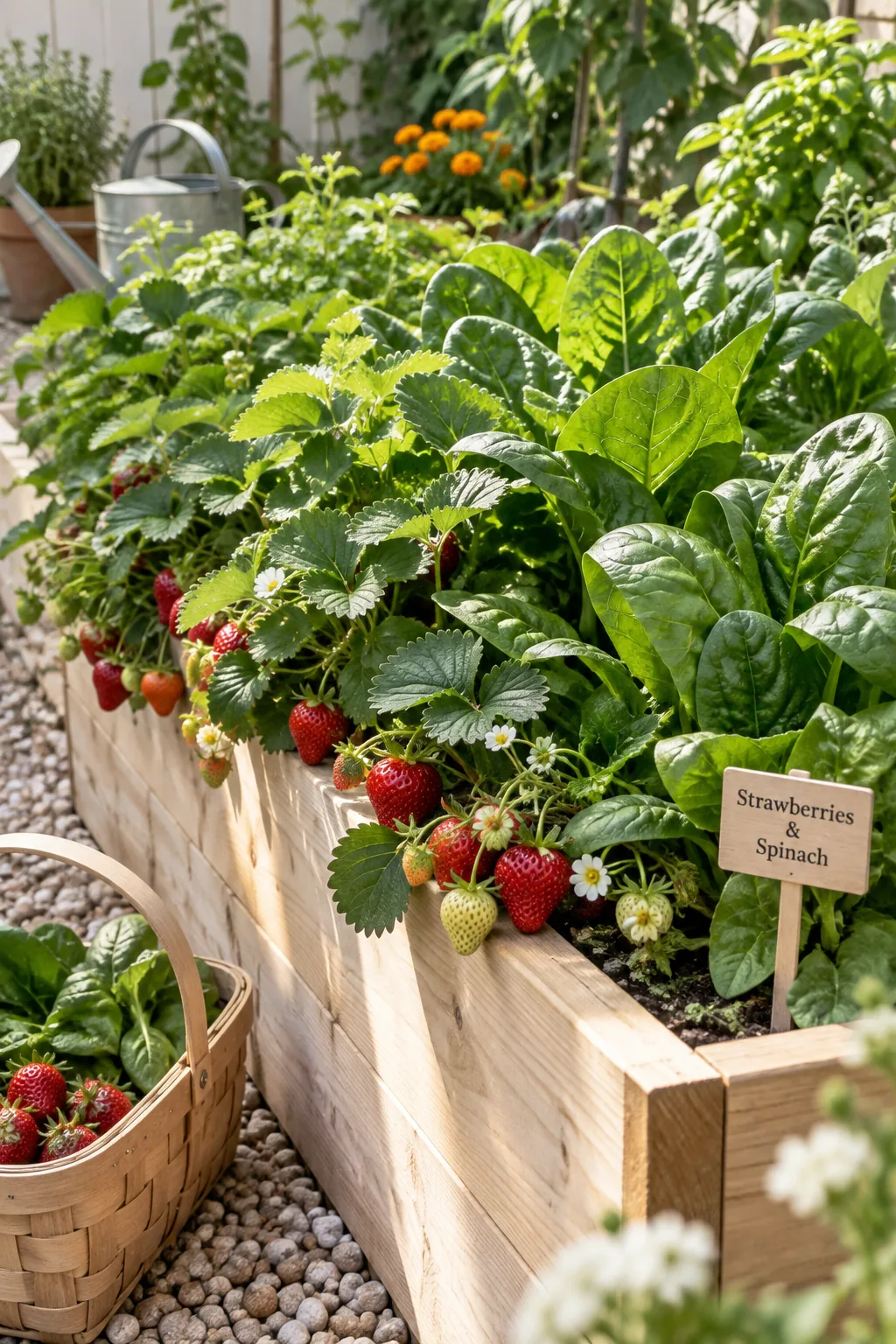
Shallow root systems make strawberries and spinach ideal bedfellows.
They pull nutrients from different levels of the soil so they never compete for food. The large spinach leaves offer a bit of dappled shade to the berries during the hottest part of the afternoon. When the spinach bolts in the heat, the strawberries are just hitting their peak production.
11. Eggplant and Bush Beans
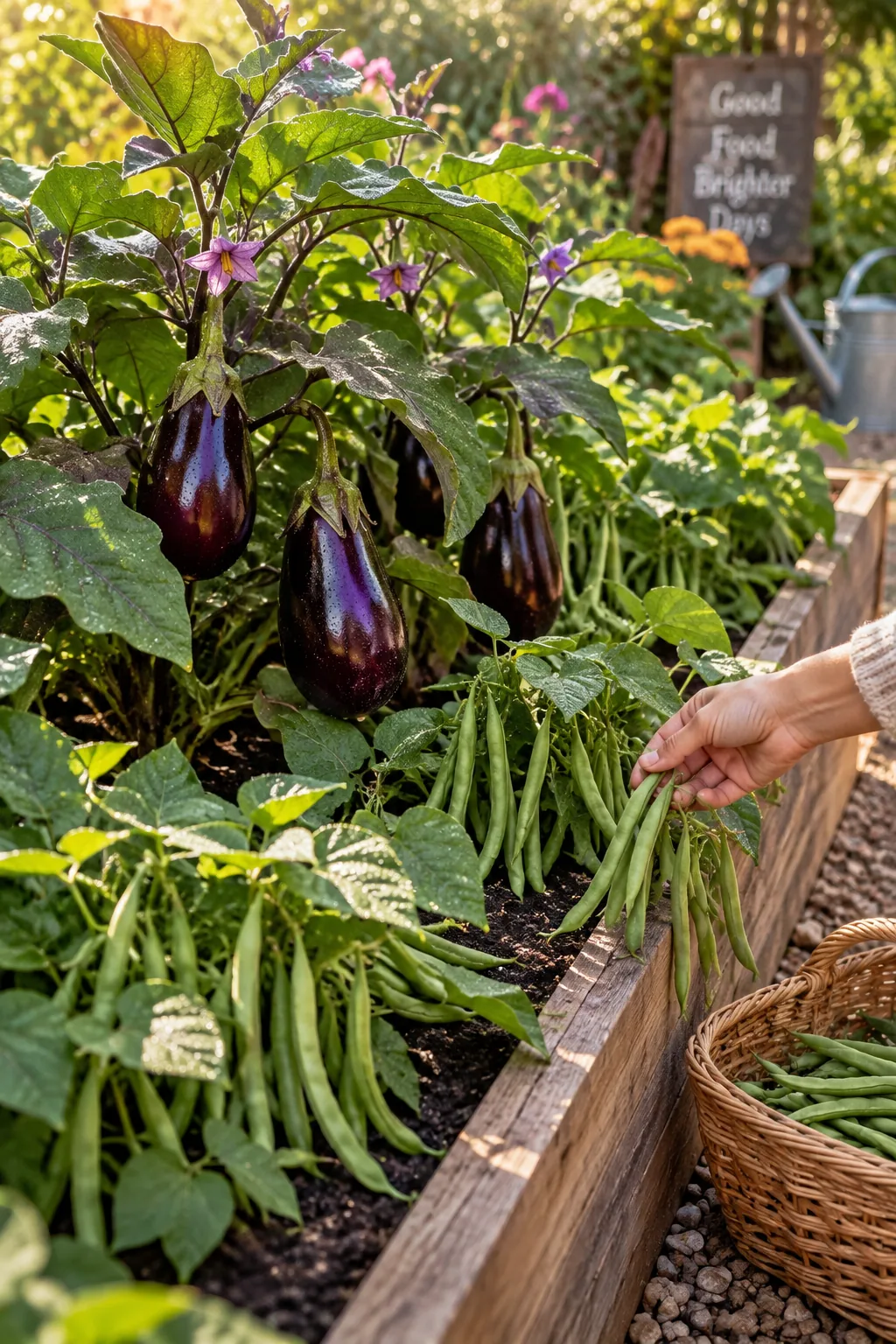
Eggplant leaves are incredibly susceptible to flea beetle damage early in the season. Planting a thick border of bush beans around them creates a physical barrier that slows the beetles down. The beans also fix nitrogen in the soil, which feeds the heavy-feeding eggplants as they start setting fruit.
Just be ready to pick beans every other day once they start producing.
12. Zucchini and Borage
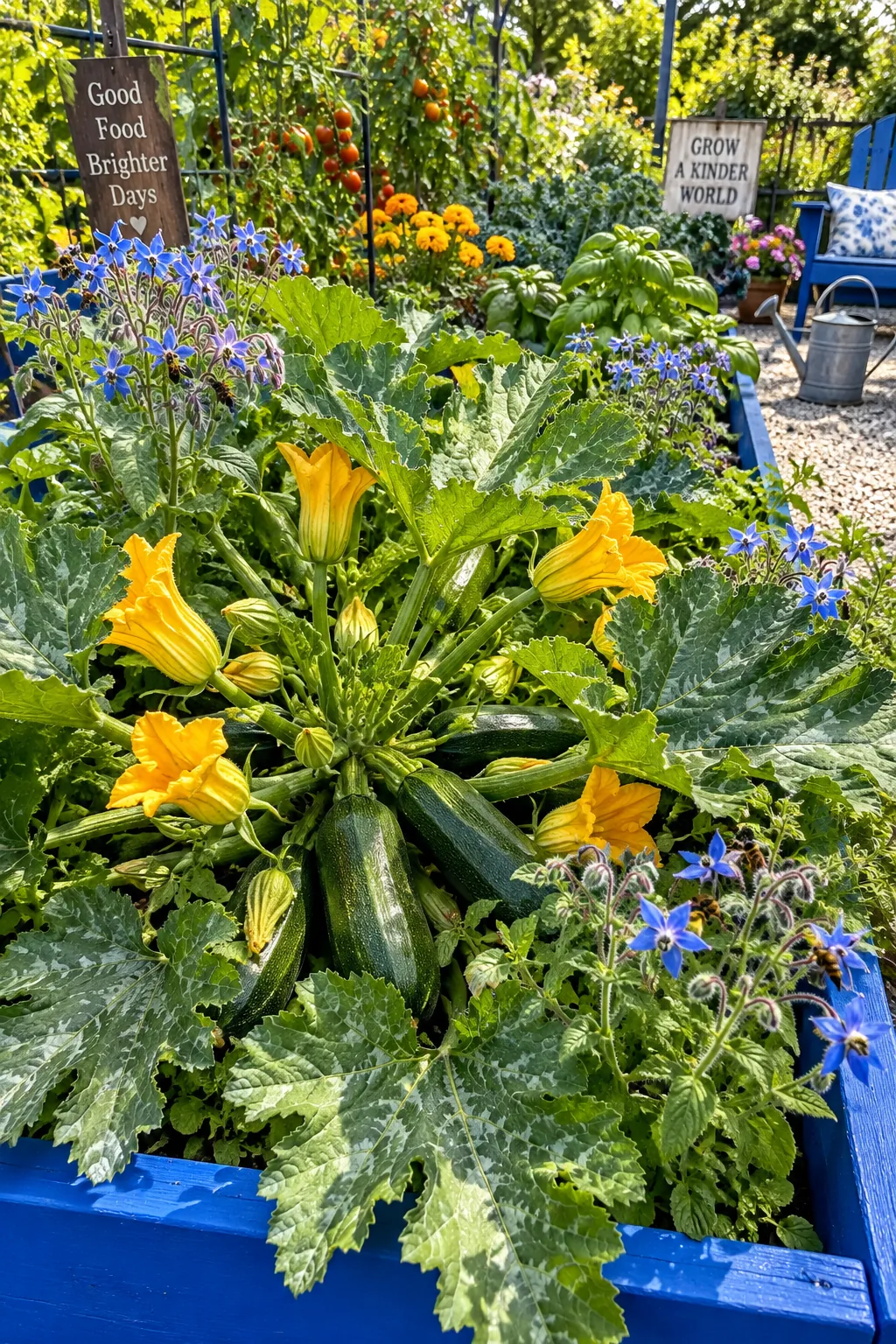
A massive, sprawling zucchini plant dotted with the tiny, star-shaped blue flowers of borage looks like a wild cottage garden. The borage brings in massive amounts of bees, ensuring every single squash blossom gets pollinated. It also naturally deters tomato hornworms if you have tomatoes planted in the adjacent bed.
13. Melons and Summer Radishes
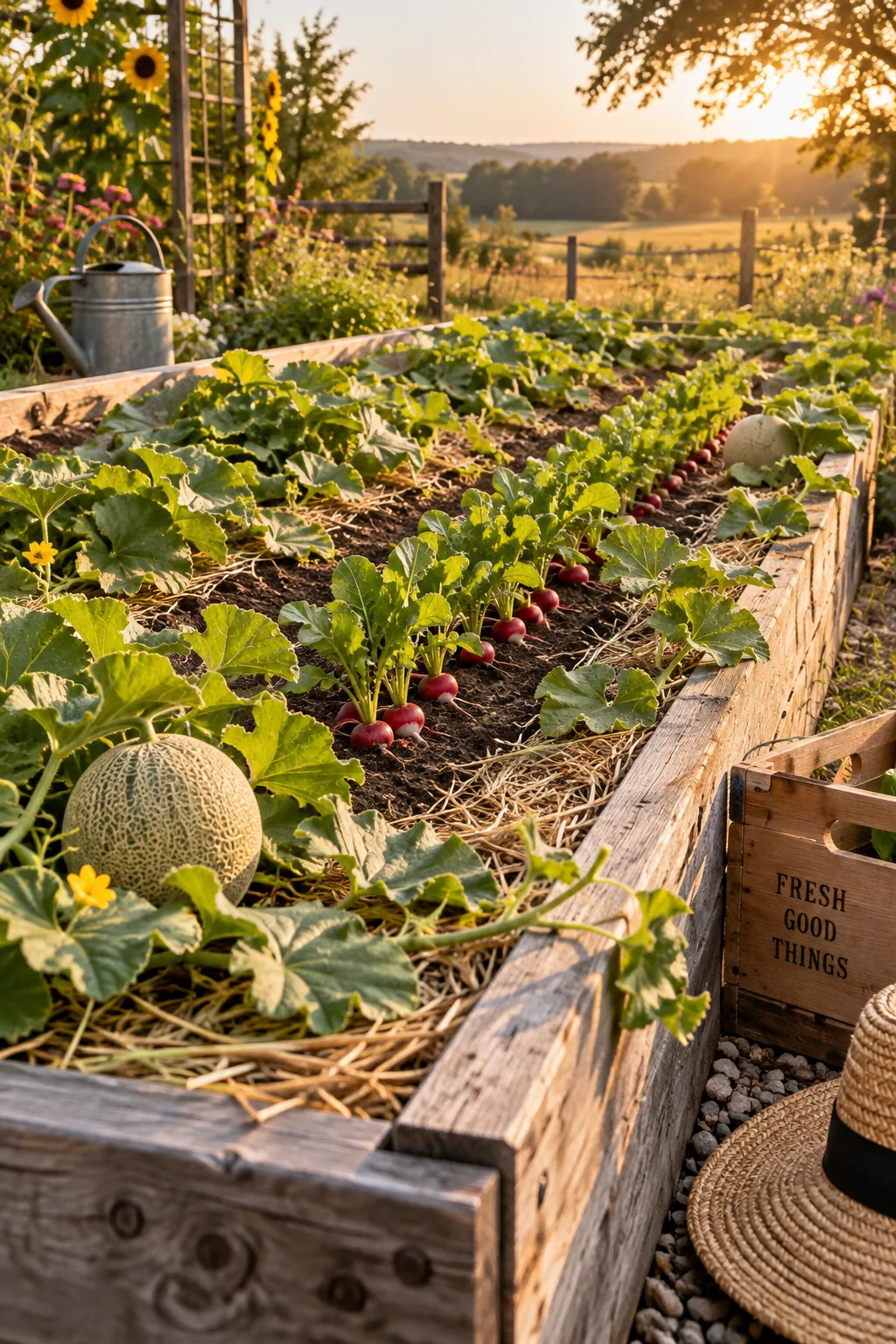
Using space efficiently is the secret to growing vining cantaloupe in a confined 4×8 box. While the melon vines are still small, you can sow a quick crop of summer radishes in the empty dirt around them. The radishes act as a trap crop for cucumber beetles that would otherwise decimate your melon vines. By the time the melons really start to run and need the space, the radishes are already harvested. It is the perfect succession planting strategy for small gardens.
14. Dinosaur Kale and Chamomile
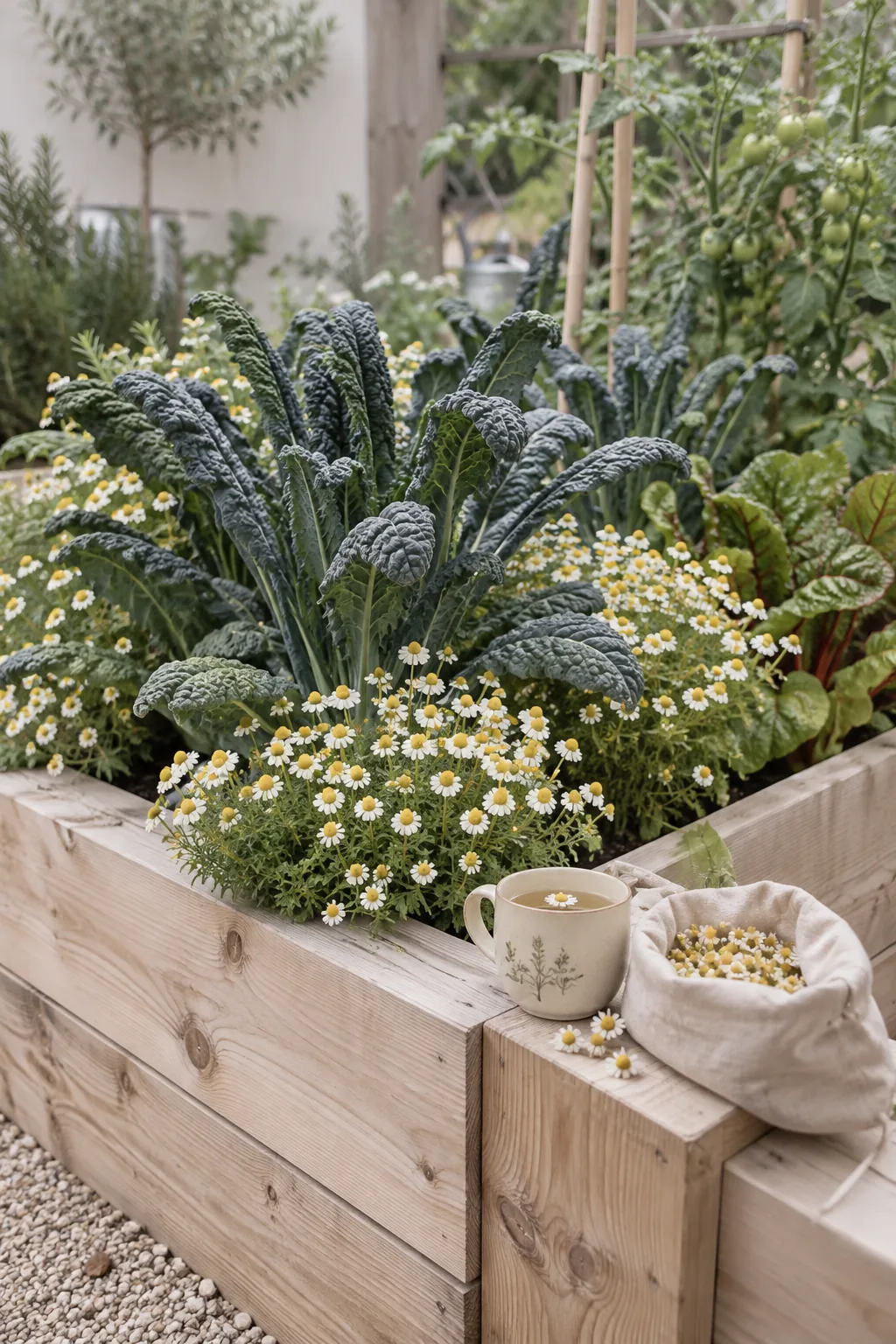
Fluffy mounds of chamomile softening the rigid, prehistoric stalks of dinosaur kale offer incredible visual contrast.
The sweet-smelling herb covers the bare soil and actually improves the flavor of the kale grown next to it. It also attracts hoverflies, which are voracious predators of cabbage worms.
You get healthier greens and a steady supply of flowers for evening tea.
15. Sugar Snap Peas and Sweet Alyssum
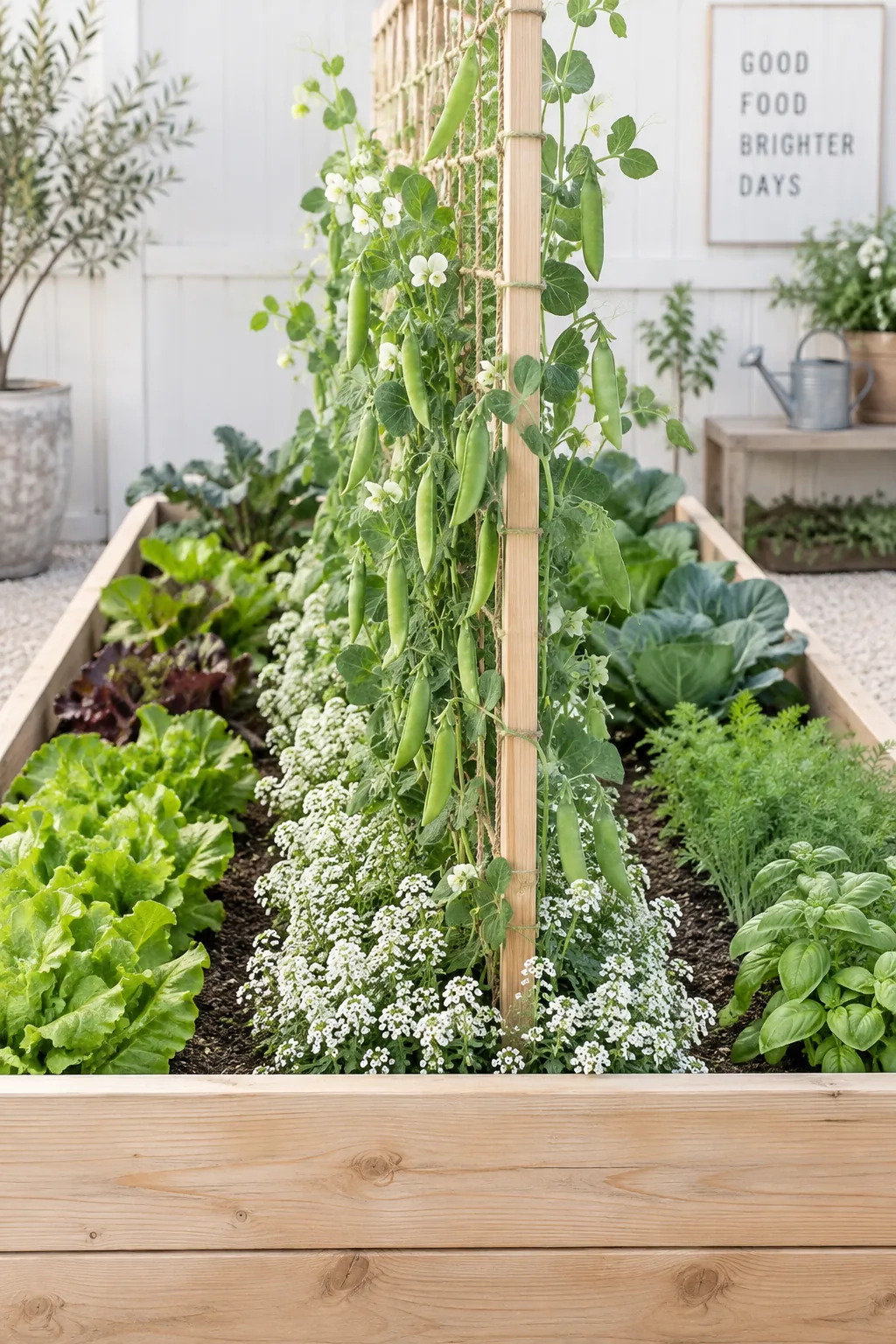
A standard 8-foot trellis running down the center of your bed can support dozens of sugar snap peas. Planting a carpet of sweet alyssum at the base of the trellis draws in beneficial wasps to control aphids. The low flowers keep the pea roots cool and shaded as the spring temperatures start to rise. This combination maximizes vertical growing while keeping the soil ecosystem perfectly balanced.