
11+ Gorgeous Rustic Split Rail Fence Landscaping Ideas
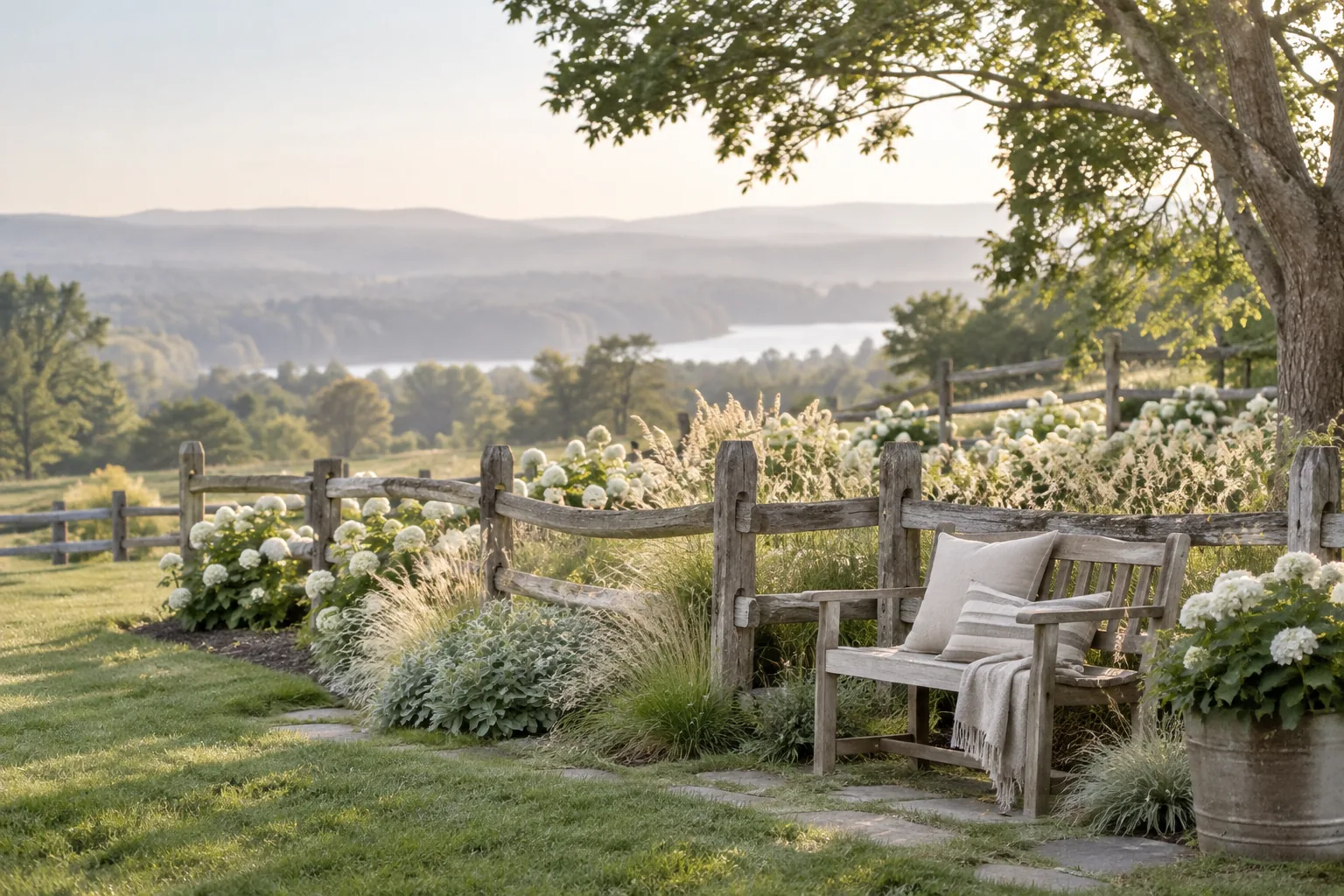
A bare fence line is just a missed opportunity for a great garden bed. These rustic split rail fence landscaping ideas will help you blend those rough-hewn posts right into your yard.
1. Train Climbing Roses on the Rails
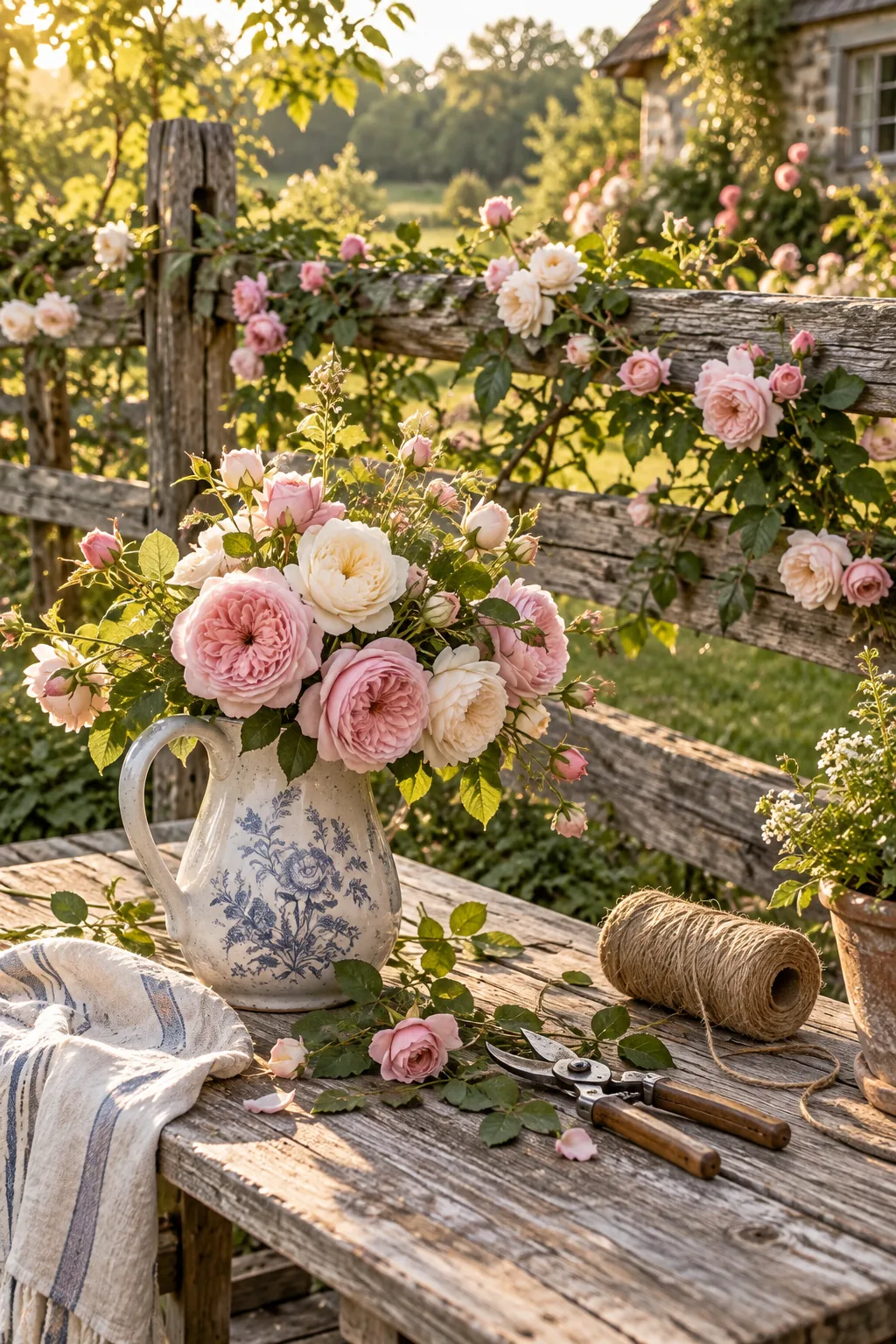
A standard two-rail fence leaves about three feet of open vertical space that practically begs for climbing roses. You can plant them about two feet away from the posts to give the roots room to establish without rotting the wood. Train the main canes horizontally along the bottom rail first. This encourages lateral shoots to grow upward and cover the entire structure in a dense wall of blooms. It takes patience, but the payoff is incredible.
2. Sow Native Wildflowers at the Base
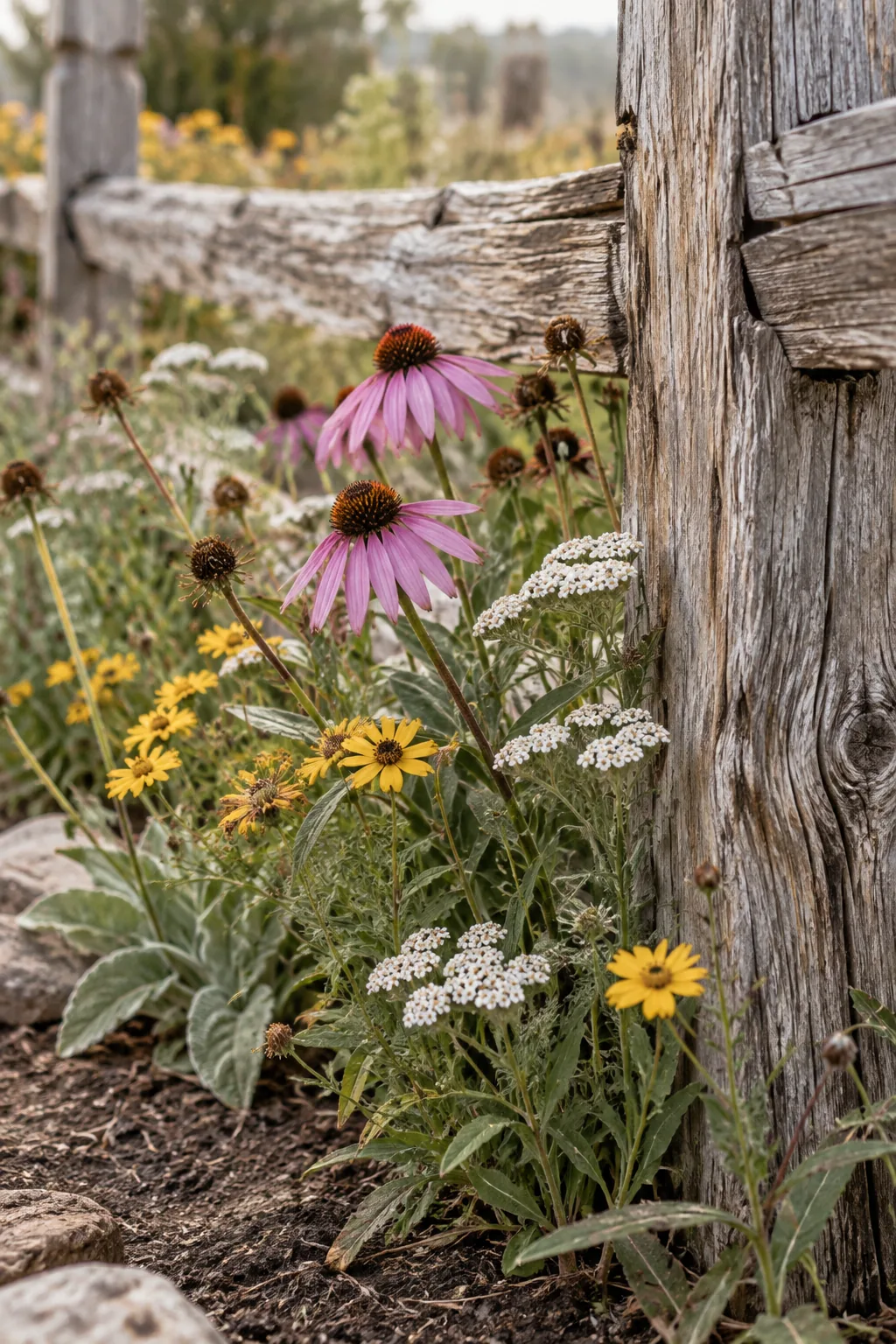
Wildflowers thrive in the undisturbed soil right at the base of a weathered cedar fence.
You just need to strip the sod back about two feet and scatter a regional seed mix. I usually look for blends that include these tough varieties:
They will reseed themselves year after year. The tall stems look completely at home leaning against the rough wood rails.
- Black-eyed Susans
- Purple coneflower
- Wild bergamot
3. Layer Evergreen Shrubs for Structure
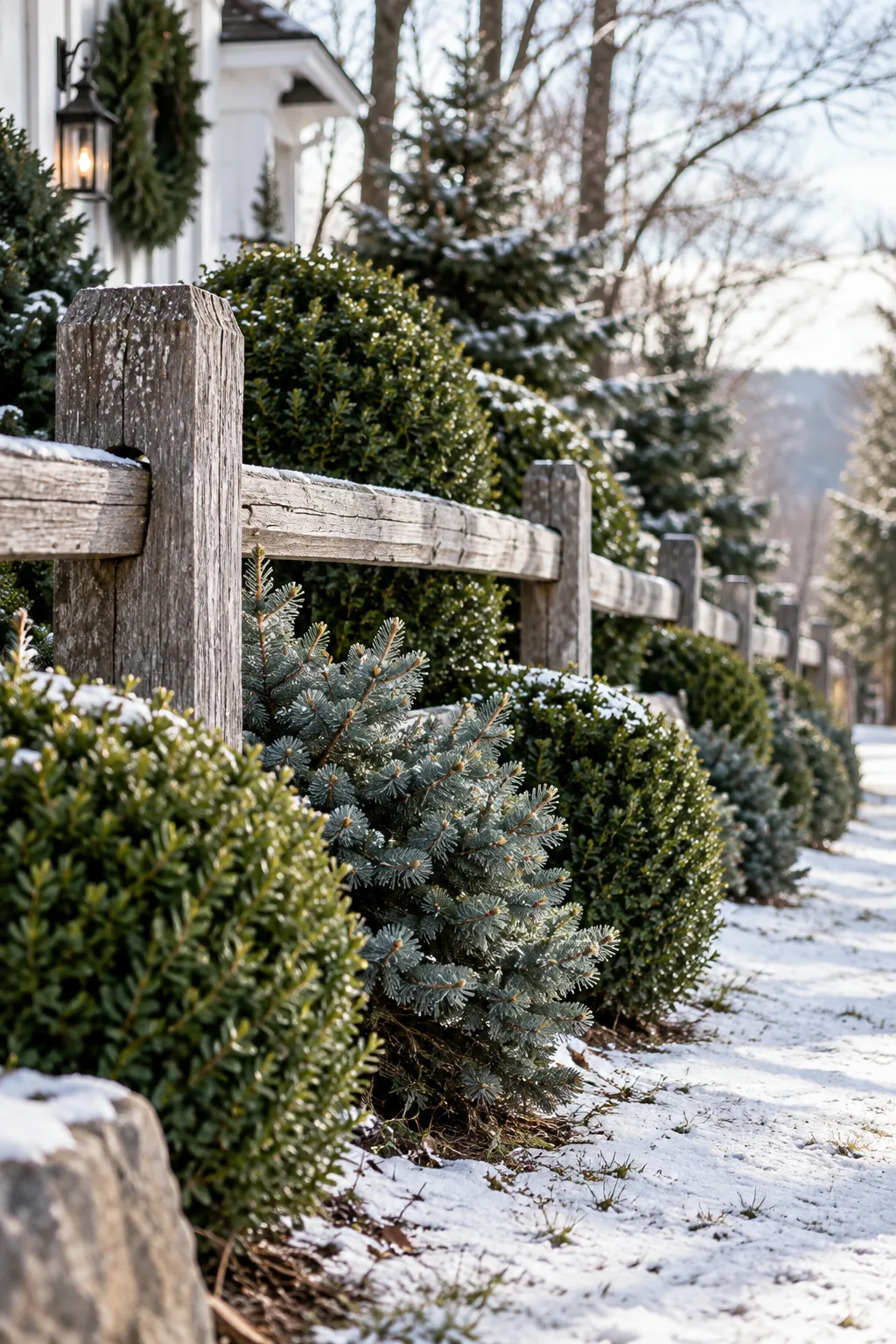
Layering evergreen shrubs behind your fence creates a structured, year-round backdrop that highlights the rustic wood texture. Boxwoods or dwarf spruce work perfectly to fill the visual gaps between the rails. During the winter, the dark green foliage makes the gray, weathered wood pop against the snow. You can keep the shrubs tightly clipped for a formal contrast, or let them grow slightly wild for a more relaxed estate vibe. Either way, it anchors the fence line to the landscape beautifully.
4. Support Sprawling Vegetable Vines
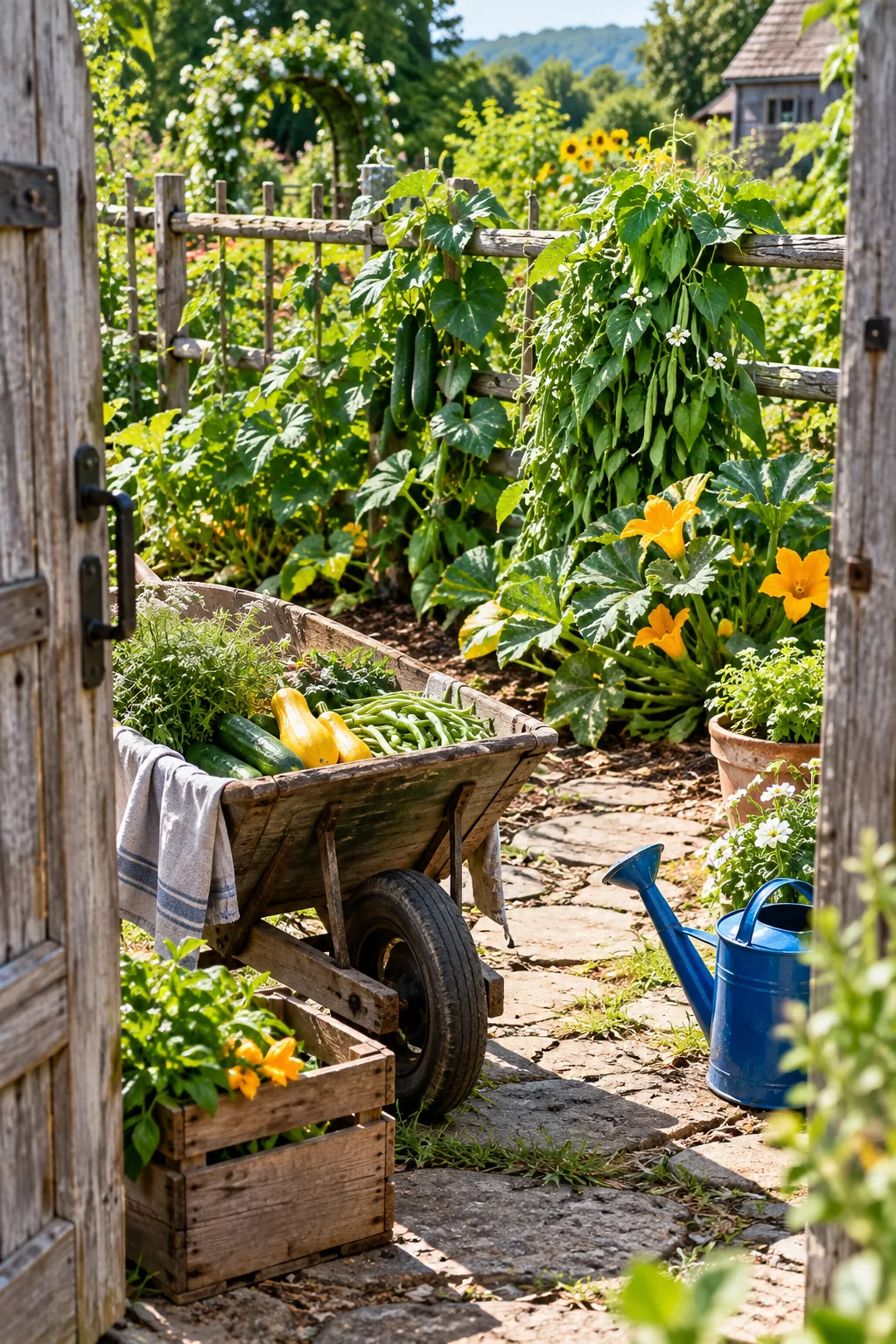
Most fence lines sit in full sun, making them the perfect support system for a sprawling vegetable garden. You can tie heavy-producing vines directly to the top rail using soft garden twine. I always use this vertical method for space-hogging crops to keep the fruit off the damp ground. It saves a ton of space in your raised beds and makes harvesting these staples incredibly easy:
- Indeterminate tomatoes
- Sugar snap peas
- Pole beans
5. Hang Heavy-Duty Window Boxes
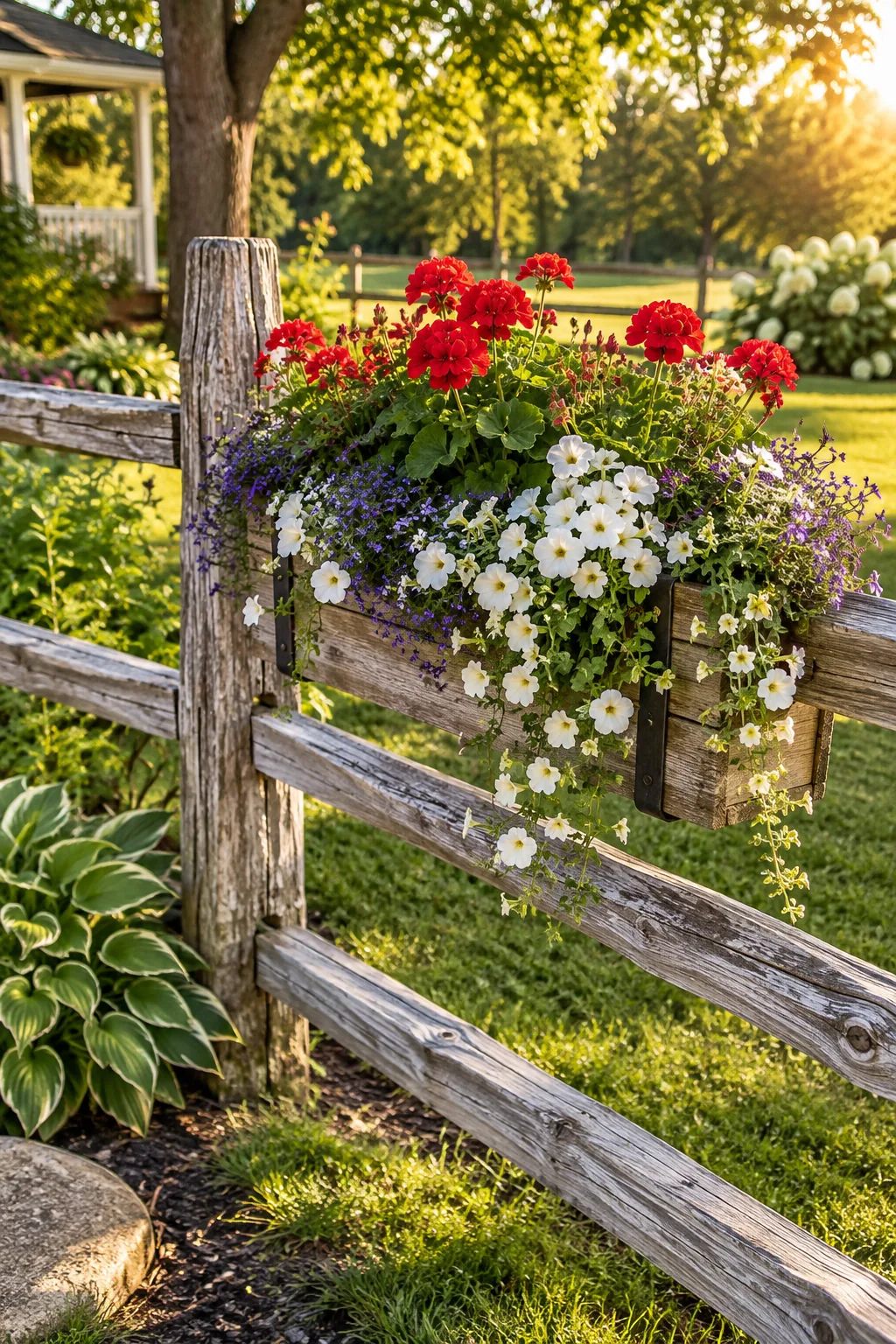
A three-rail fence provides enough structural support to hold heavy window boxes right on the middle rail. You can secure them with heavy-duty metal brackets wrapped over the wood. This brings bright annuals up to eye level and breaks up a long, monotonous stretch of timber.
Just remember to drill extra drainage holes so the runoff does not rot your posts.
6. Tuck Hydrangeas into Shady Corners
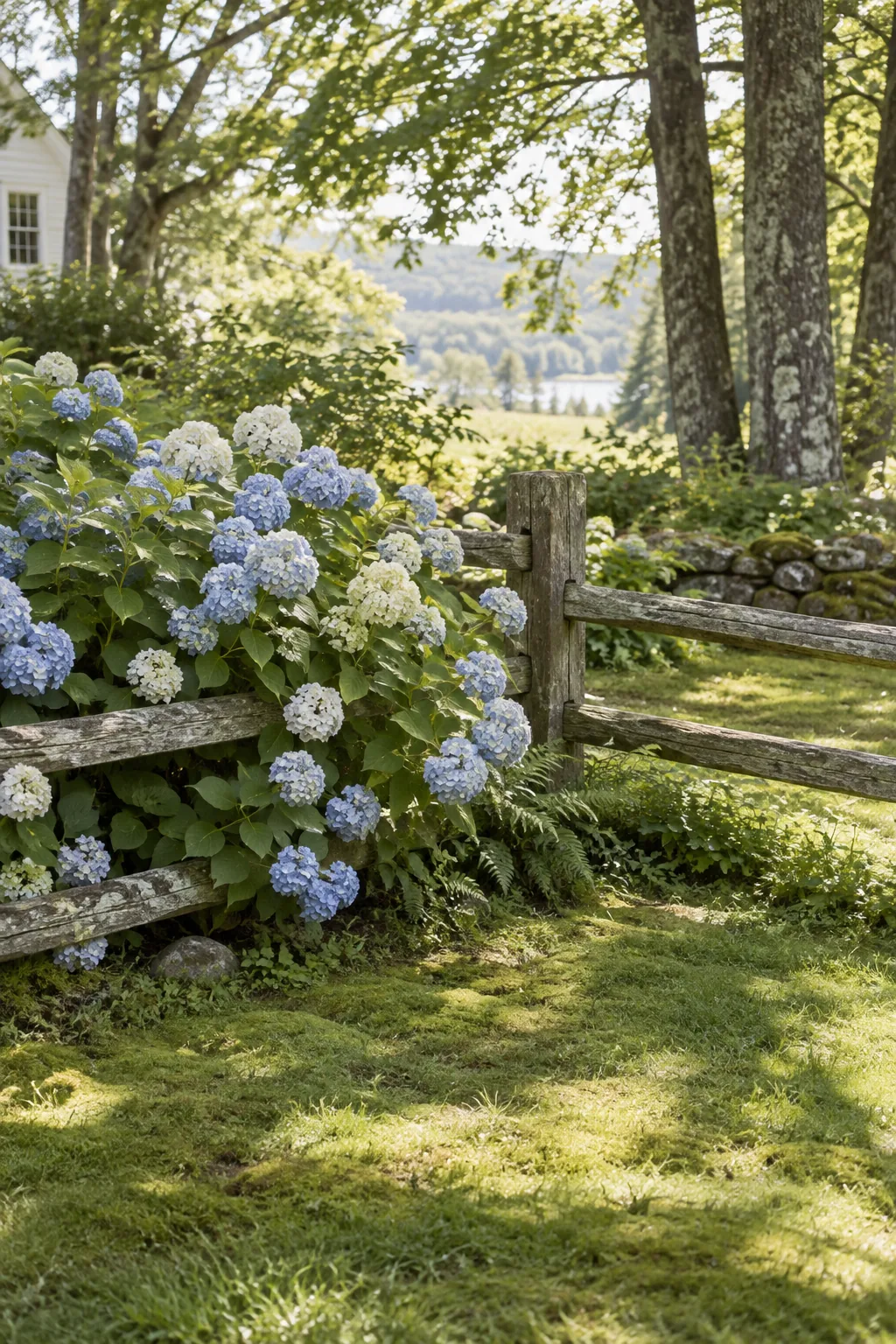
Hydrangeas naturally spill forward when planted in the dappled shade of a corner fence post. The heavy flower heads rest perfectly on the lower rails after a hard summer rain. I like to plant them about three feet out from the corner to give those massive root balls plenty of breathing room.
7. Contrast with Delicate Ornamental Grasses
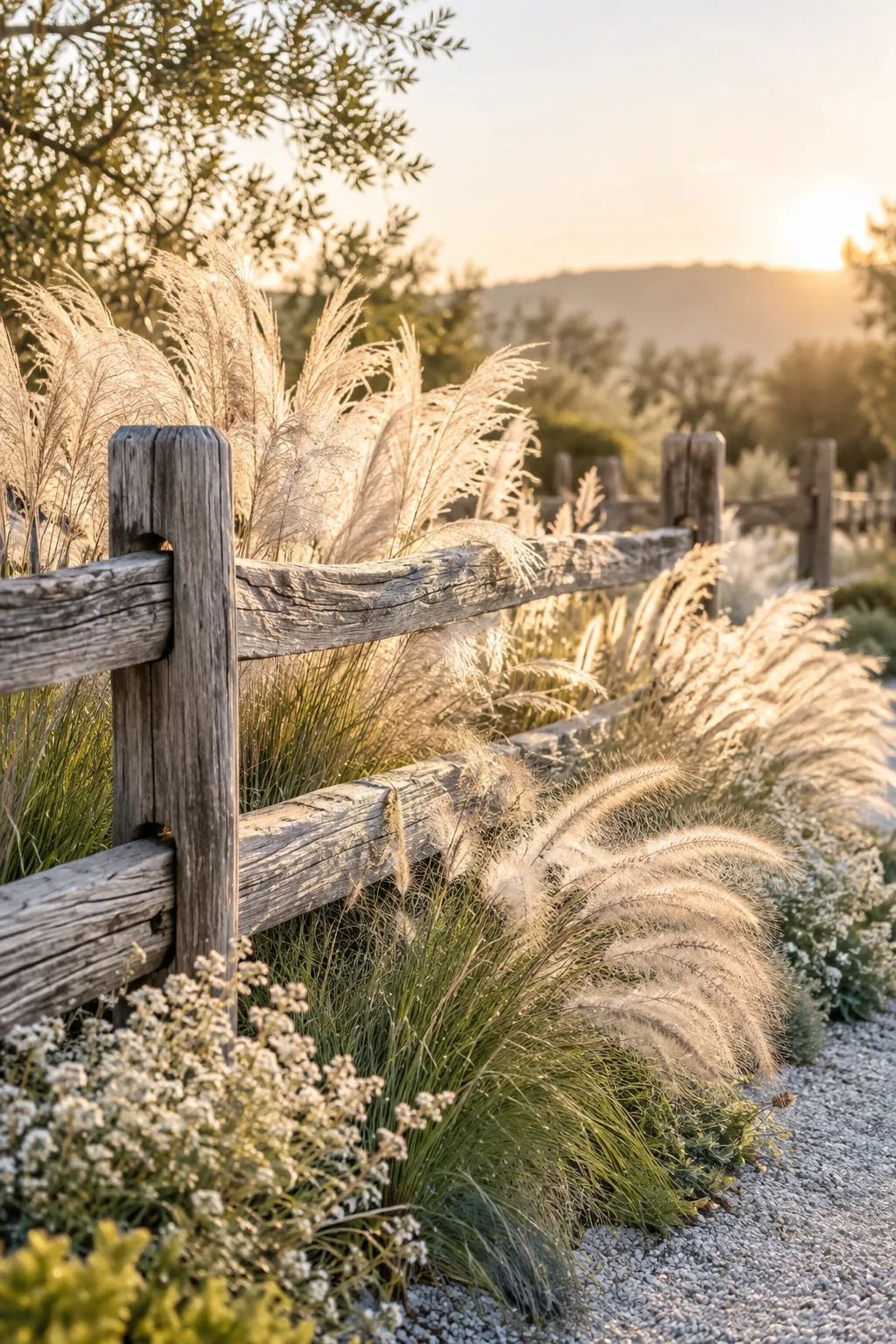
The stark contrast between delicate ornamental grasses and chunky split rails is exactly what makes this pairing so striking. Varieties like maiden grass or fountain grass soften the harsh horizontal lines of the wood. When the wind blows, the movement of the grass brings the whole perimeter to life.
Why it works: The stark contrast between delicate ornamental grasses and chunky split rails is exactly what makes this pairing so striking.
8. Lay a River Rock Buffer
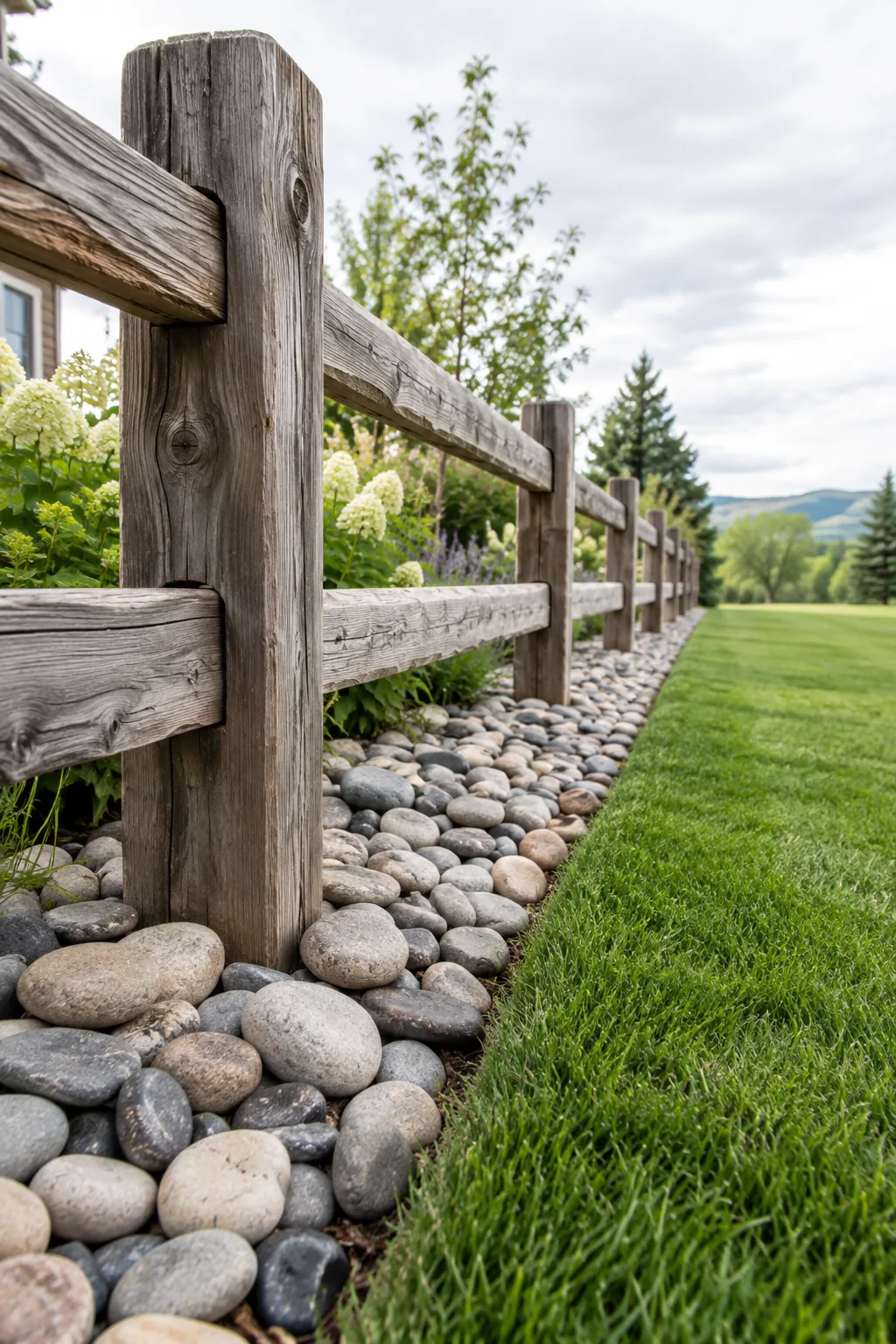
River rock creates a clean, weed-free buffer zone directly under the bottom rail. This simple hardscaping trick means you never have to carefully maneuver a string trimmer around your wooden posts again. You just lay down commercial-grade weed barrier and spread a thick layer of smooth stones. It looks incredibly tidy and extends the life of your fence.
9. Fill Zigzag Corners with Hostas
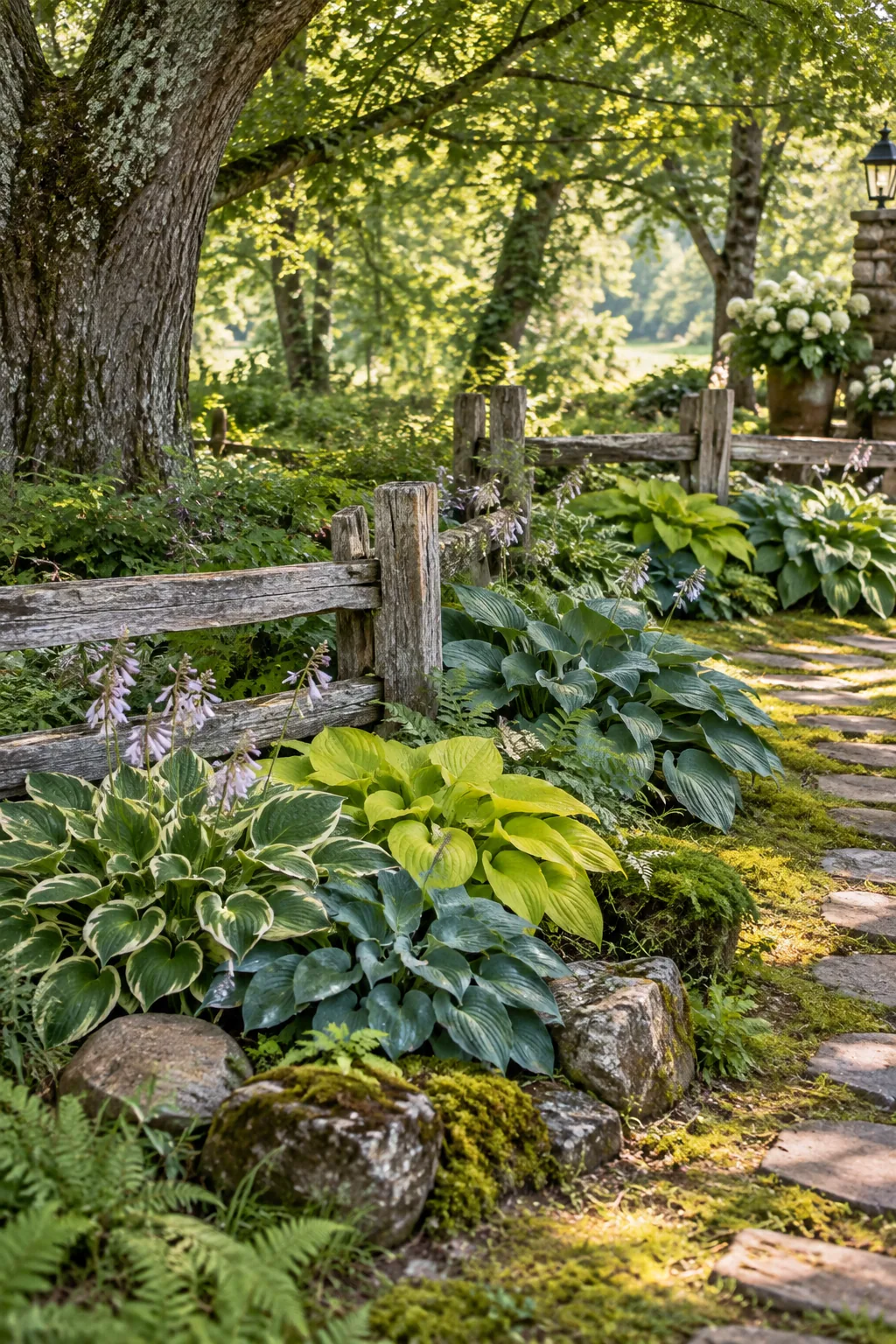
I always struggle with bare spots under large shade trees, but a zigzag fence layout filled with hostas completely solved the problem for me. The angled corners create protected little pockets where shade-loving plants can spread out without getting trampled.
10. Mound Soil for Creeping Phlox
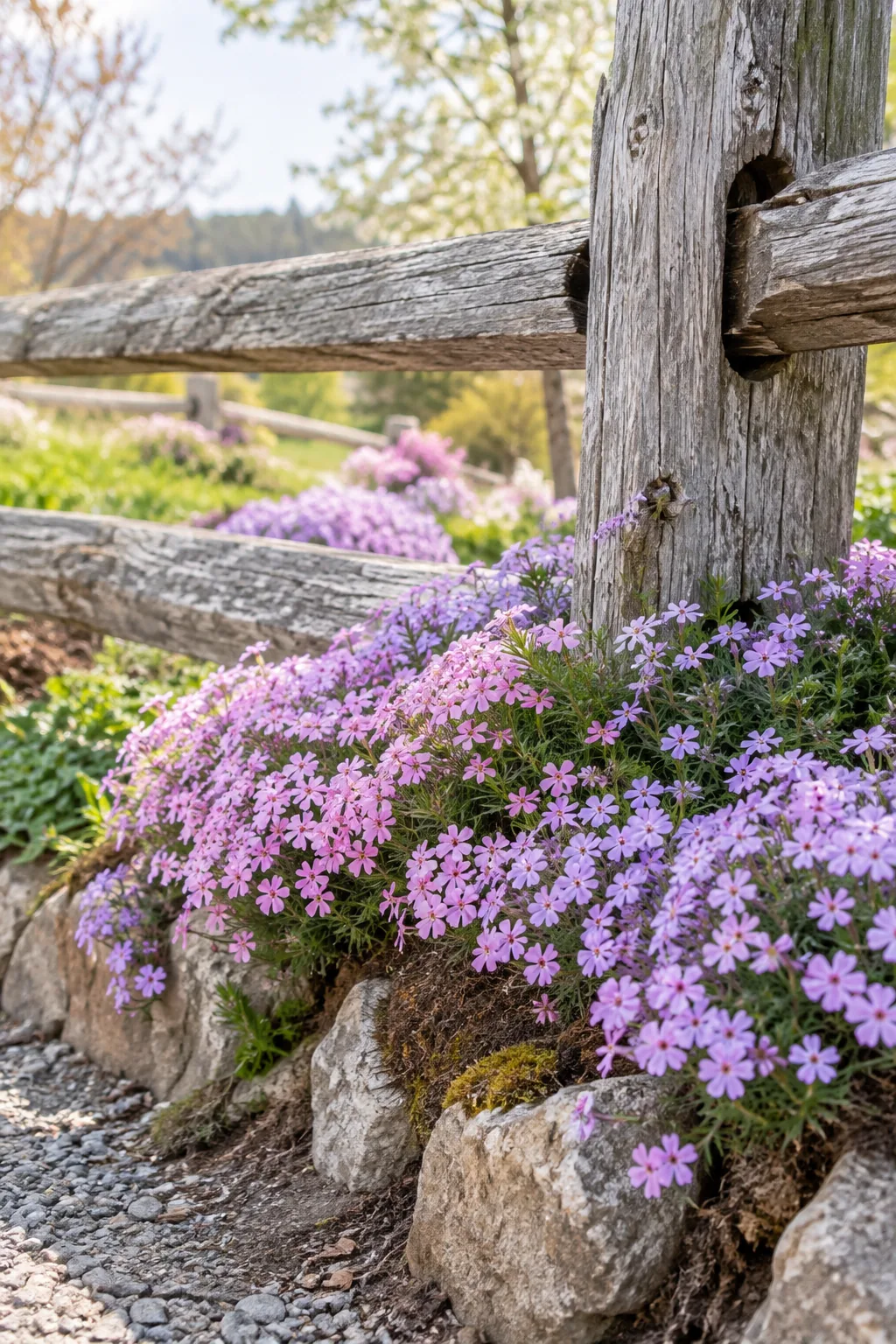
Plant your creeping phlox on a slight mound right in front of the posts.
The elevated soil helps the roots drain properly during wet spring weather. As the phlox grows, it cascades down the mound and creates a vibrant carpet of pink or purple right at the base of the wood. It is a foolproof way to add early spring color.
11. Lean Vintage Accents Against the Wood
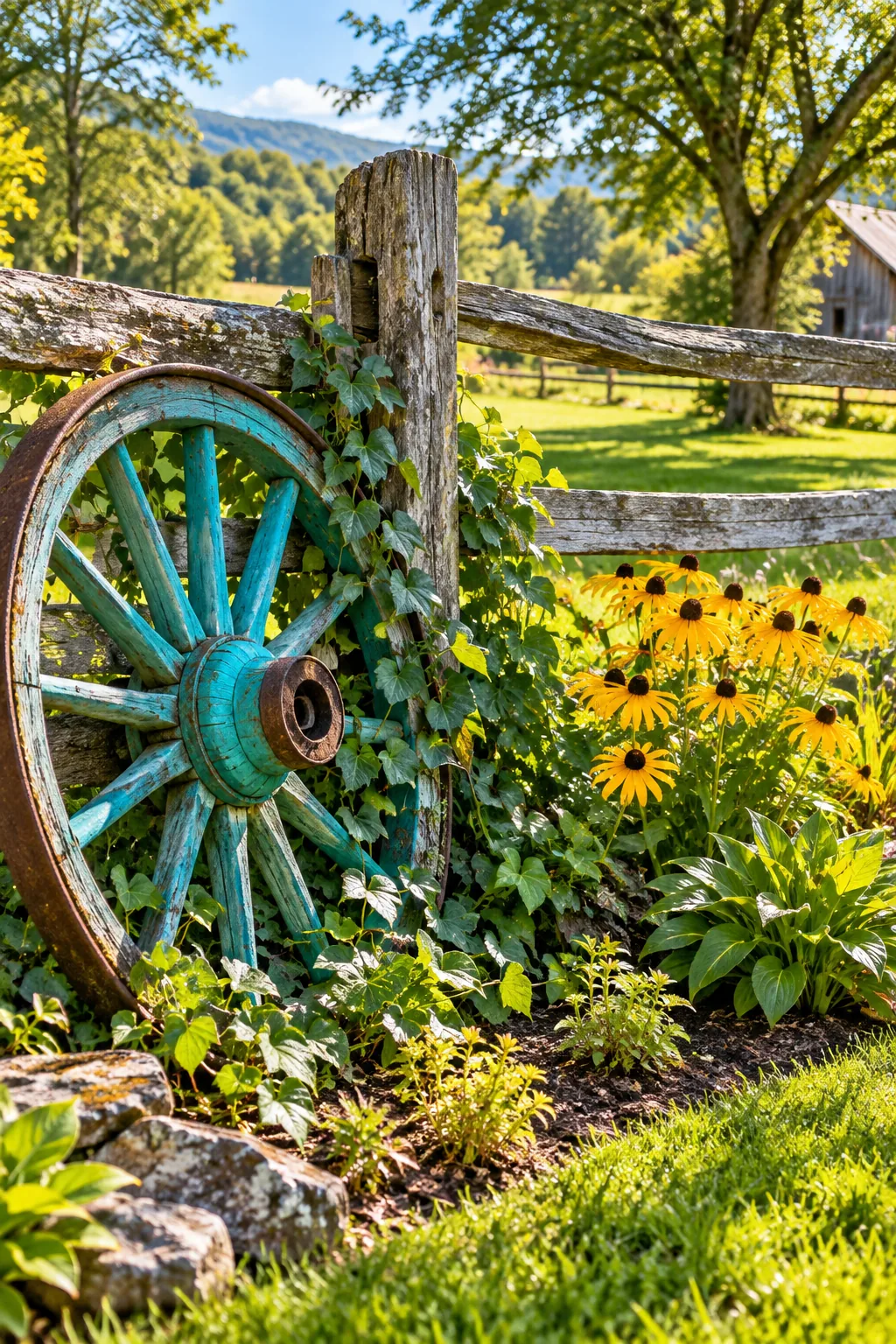
Old wagon wheels look completely natural leaning against a rustic boundary line.
They add instant architectural interest to a plain stretch of yard before your new perennials have time to fill in. You can half-bury the wheel to keep it stable and plant some trailing ivy at the base to tie it all together.
12. Mount Solar Lights on the Posts
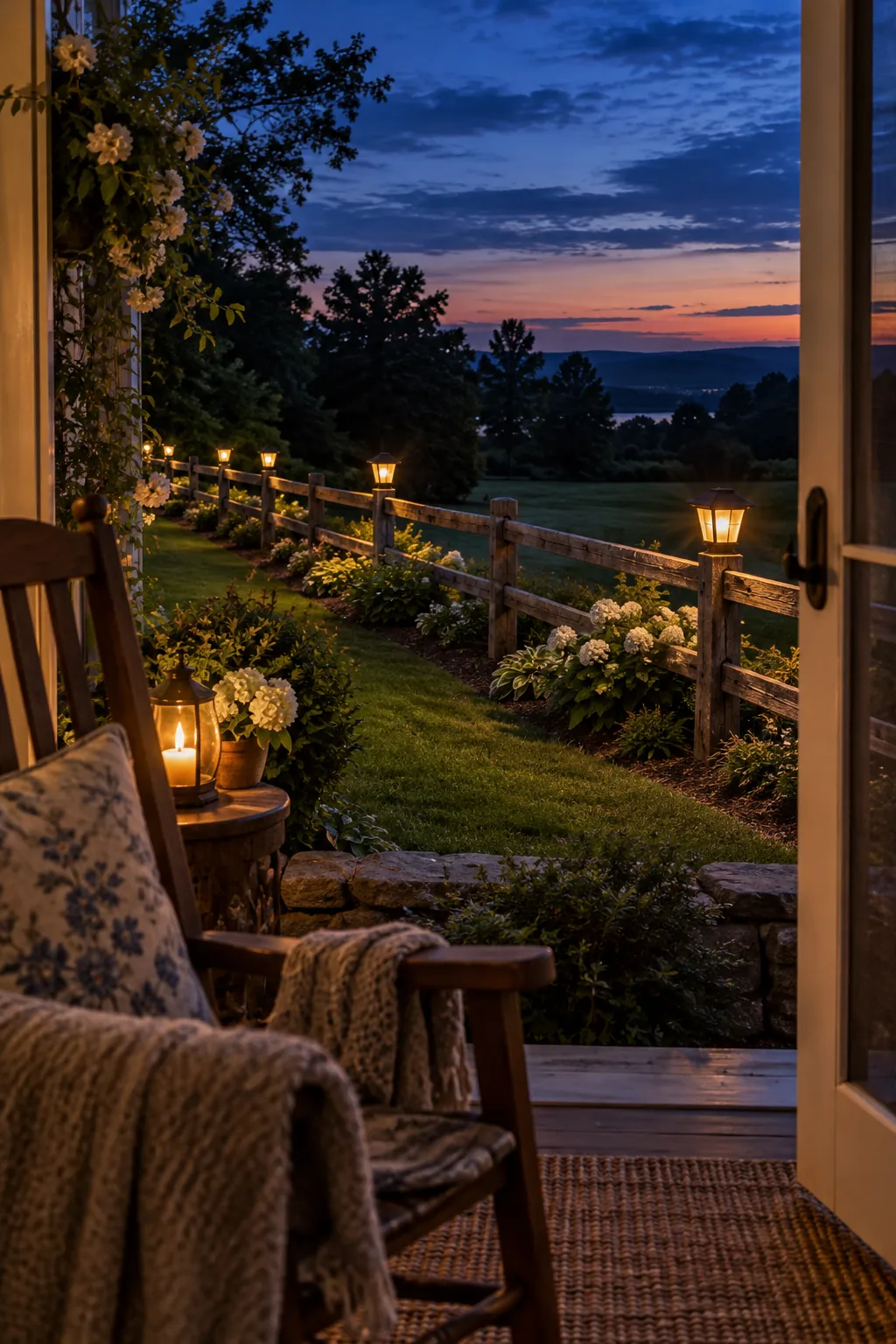
I finally figured out that the best way to light a long, dark property line is by mounting solar path lights directly to the fence posts. It keeps the fixtures off the ground where they usually get kicked or hit by the mower. You just need a drill and some exterior wood screws to get them perfectly level. I specifically look for outdoor fixtures that include these reliable features:
- Warm white LED bulbs
- Flush-mount brackets
- Minimum eight-hour battery life