Low Table Centerpieces: The Complete Stem Count Formula
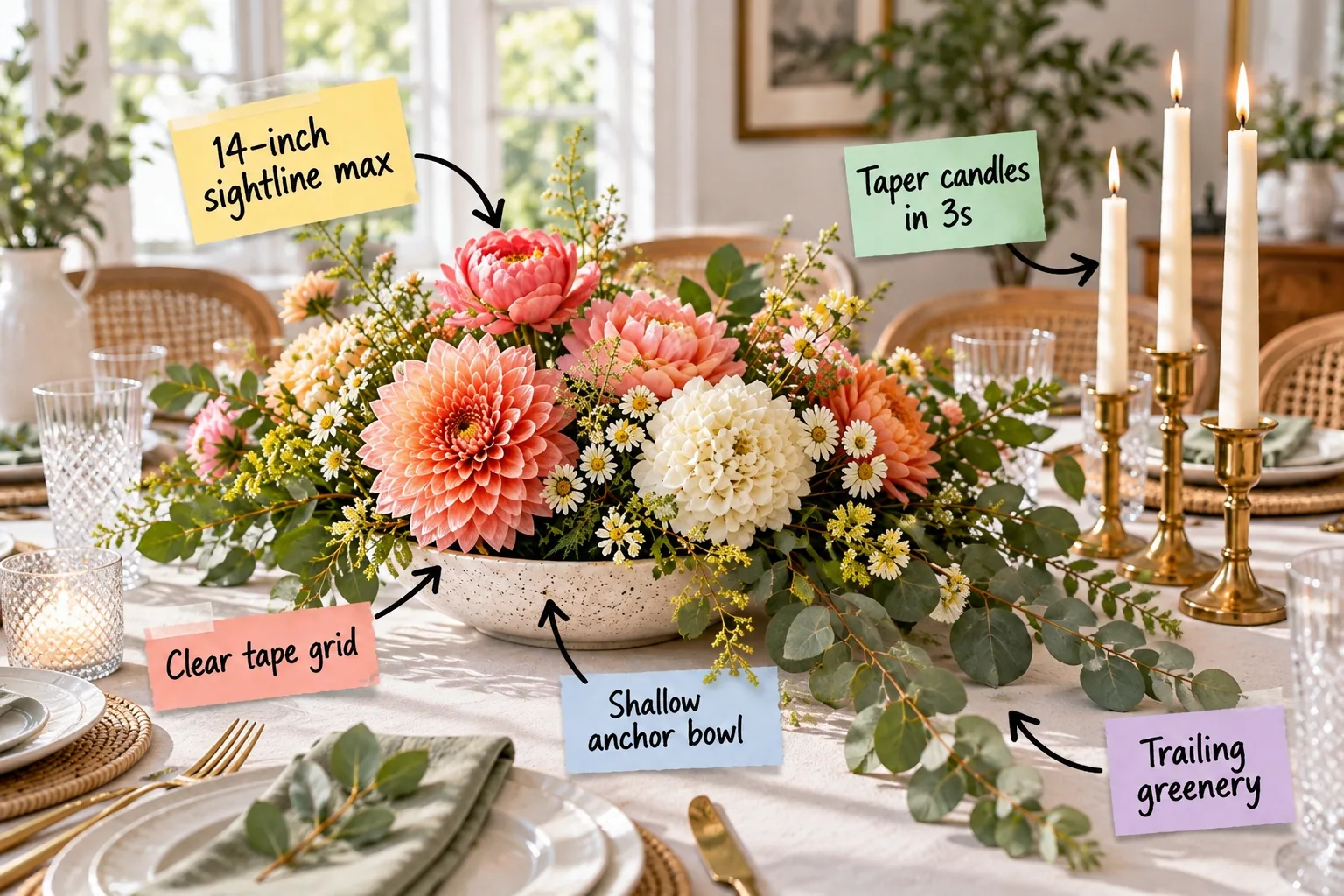
Mastering the art of conversation-friendly florals is simple when you use our exact stem count formula and tape grid tutorial to construct a perfectly proportioned, lush low centerpiece.
The Foundation: Choosing a Shallow Anchor Bowl
Starting with a low, wide ceramic vessel is essential because it keeps the entire arrangement grounded and physically stable on a busy dining surface.
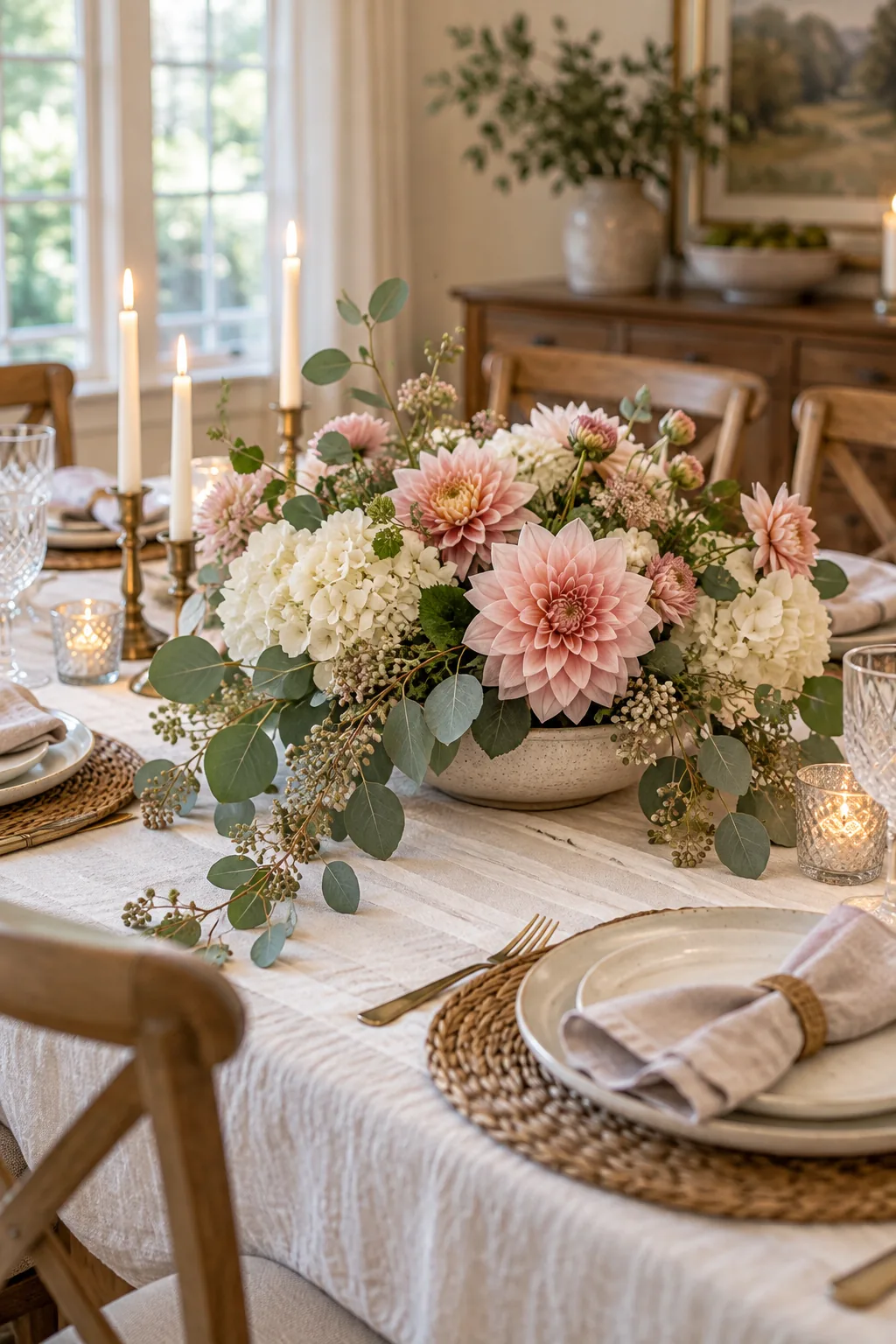
An ideal anchor bowl measures 8 to 10 inches in diameter but sits no more than 3 inches deep, ensuring the final floral height remains completely manageable.
Vessel Preparation: Cleaning for Longevity
Before applying any mechanics, thoroughly wash your ceramic anchor bowl with hot soapy water and dry it completely to remove dust that could degrade the tape adhesive.
The Mechanics: Creating a Clear Tape Grid
I once had a foam-based arrangement completely crumble during a Boston dinner party, so now I exclusively build a structural foundation using 1/4-inch waterproof clear floral tape across the inner rim.
Creating a tight checkerboard pattern with half-inch squares holds every single stem securely in place without ever needing toxic floral foam.
Water Management: Filling the Tape Grid
Adding water before you start arranging prevents delicate stems from drying out while you finalize your perfectly balanced table design.
Leaving a quarter-inch of space at the top prevents messy overflows when the thick floral stems eventually displace the water.
The Base Layer: Spilling Trailing Greenery
When styling my own brownstone dining room, I always insert 5 to 7 stems of seeded eucalyptus around the perimeter first to soften the hard edge of the ceramic bowl.
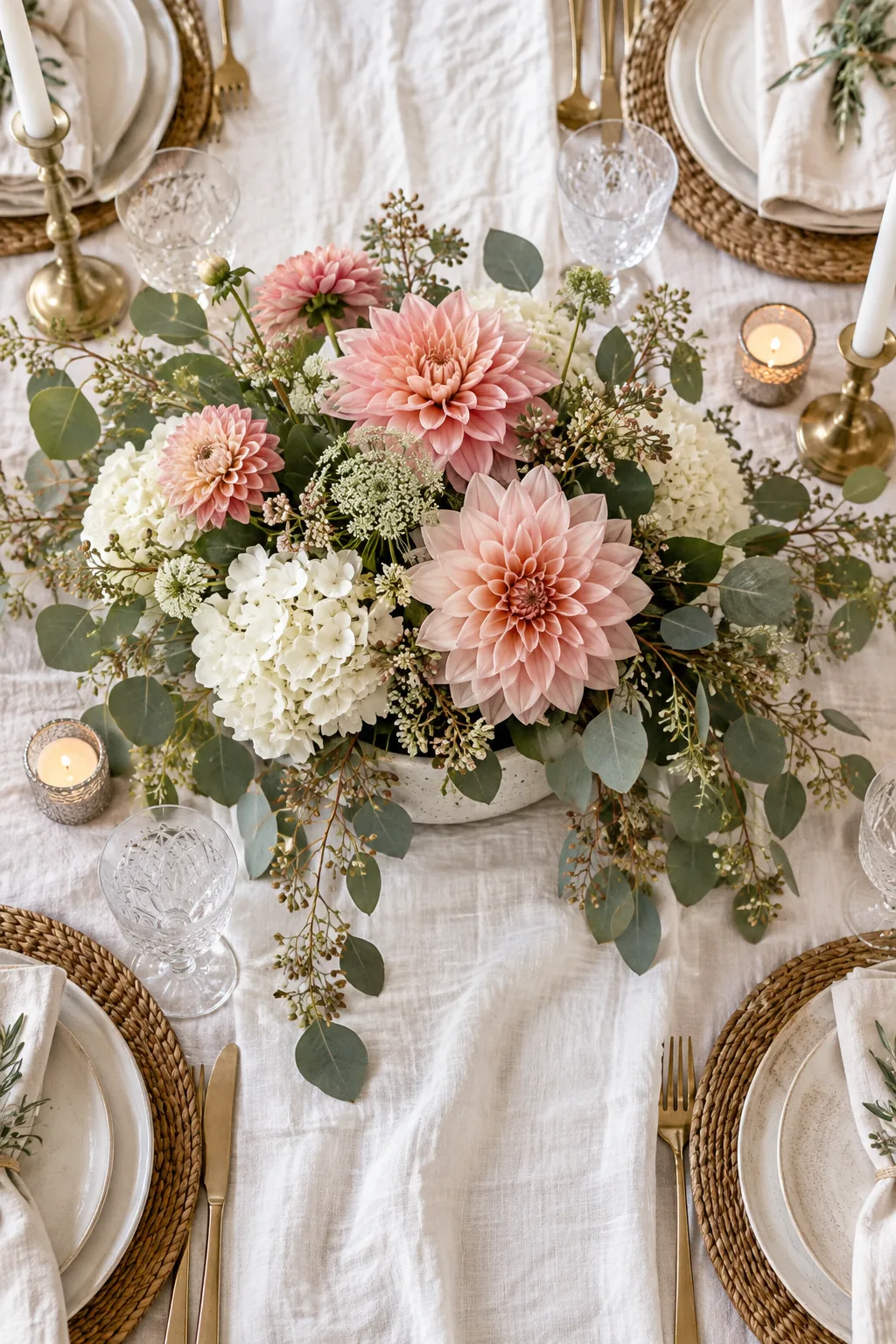
Angle these foundational stems sharply downward so the leaves spill naturally onto the linen, visually grounding the arrangement to the table surface.
Structural Greenery: Building the Inner Dome
Crisscross shorter, sturdy greenery stems through the center of your tape grid to establish a supportive inner framework for the heavier flowers to rest upon.
The Golden Rule: Keeping a 14-Inch Sightline Max
Keeping blooms below the eye-level threshold is non-negotiable; I learned early on that guests will simply move a tall vase to the floor if it blocks their view.
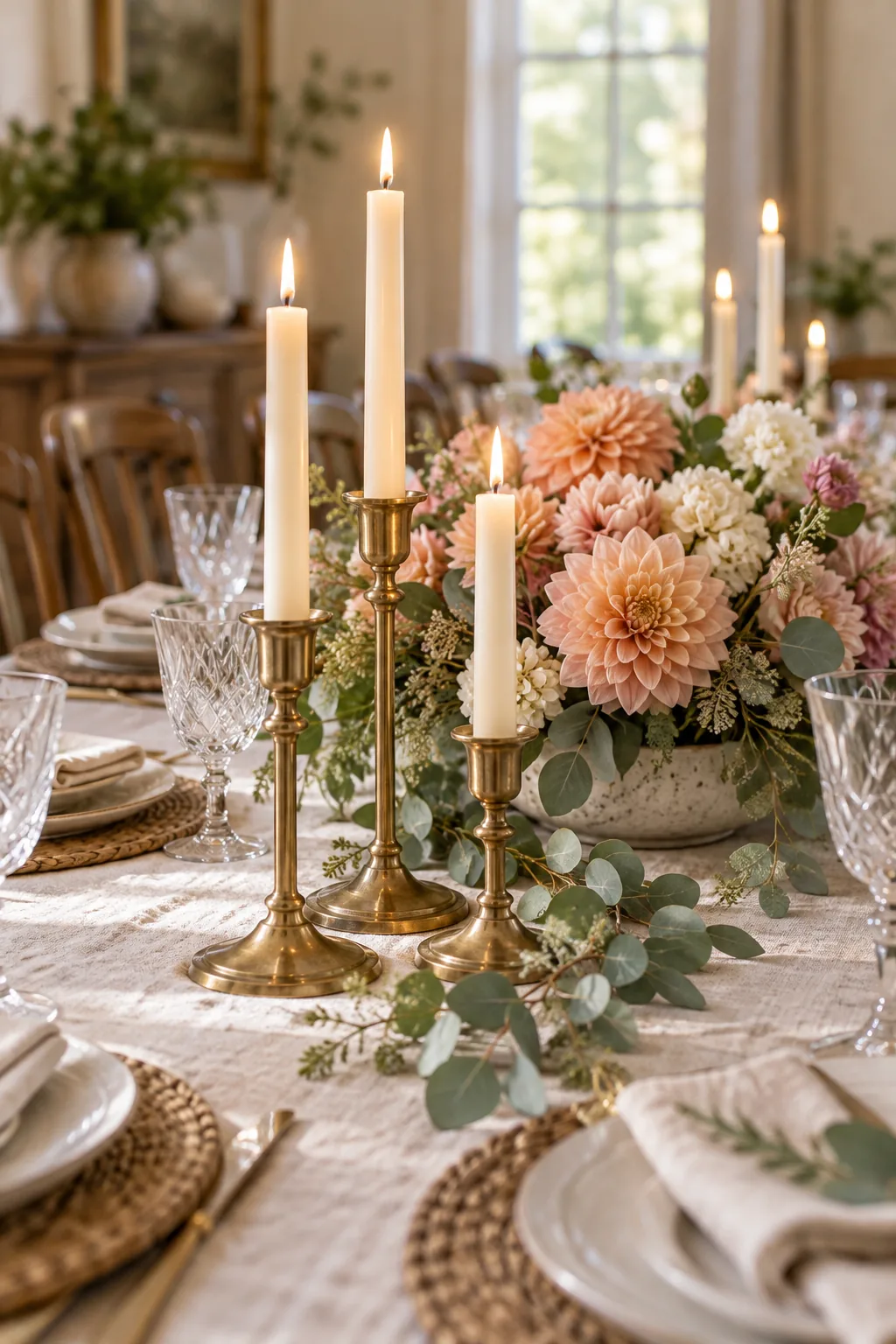
Measure directly from the tabletop to the top of your highest flower bloom, ensuring it never exceeds 14 inches.
Color and Texture: Selecting Your Focal Blooms
Tuck 3 to 5 large focal blooms, such as heavy dahlias or garden peonies, low into the tape grid near the outer rim.
- Cut the thickest focal stems at a sharp 45-degree angle to maximize water absorption.
- Place the heaviest blooms near the base to maintain a low center of gravity.
- Rotate the bowl constantly to ensure a lush, perfectly domed shape from every angle.
Distributing these primary blooms evenly across the grid hides the tape mechanics and establishes the core color palette for the entire tablescape.
Texture Integration: Adding Delicate Wisps
Fill the remaining gaps with smaller, textured secondary flowers like chamomile or waxflower to create a seamless transition between the focal flowers and trailing greenery.
The Ambiance: Grouping Taper Candles in 3s
Flank the central floral bowl with a cluster of three brass candlesticks on either side to enhance the table’s mood with unstructured ambient lighting.
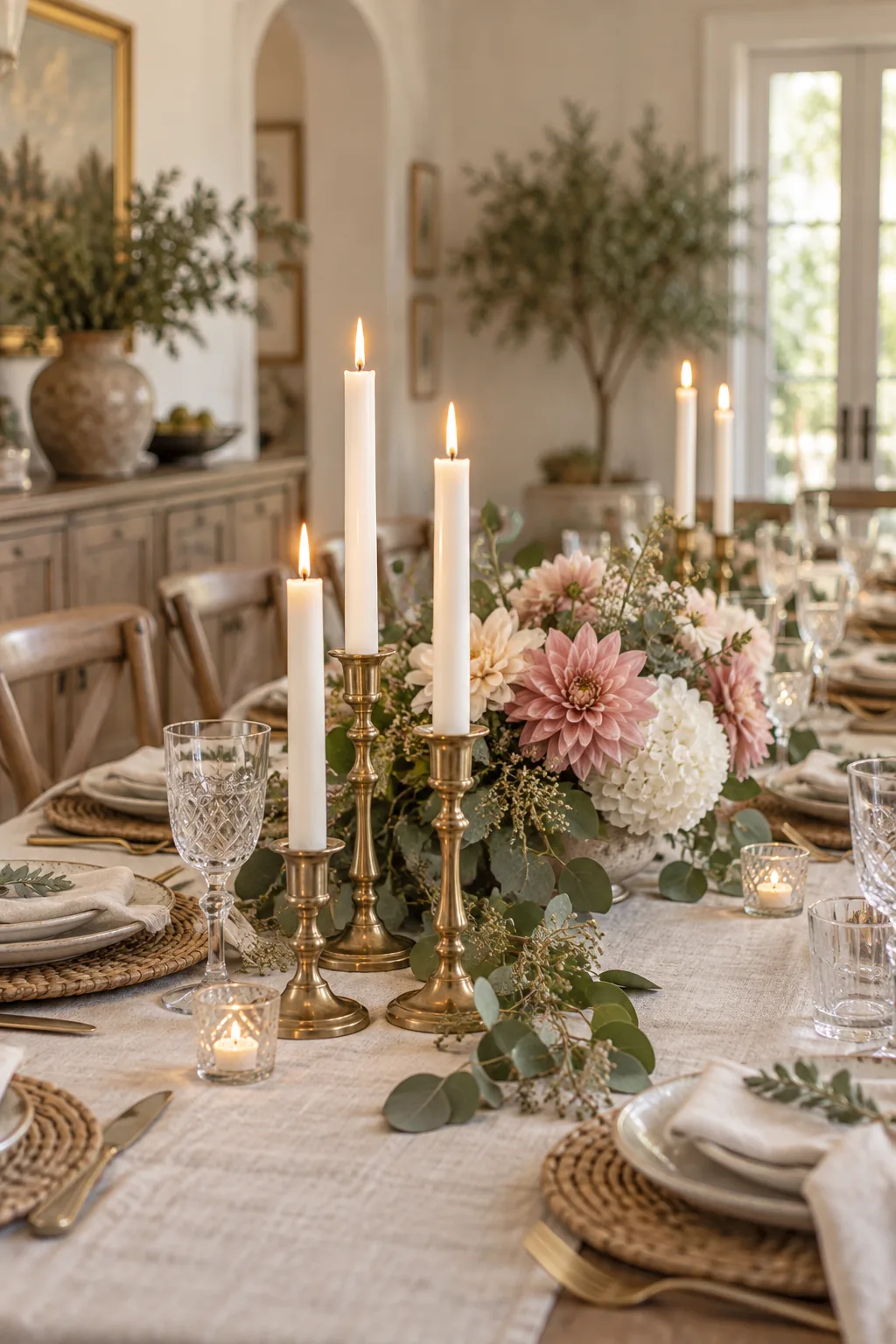
Use varying heights, such as 6, 8, and 10 inches, to create asymmetrical balance and cast a warm glow across the dining space.
Scent Considerations: Choosing Unscented Tapers
Always select pure beeswax or completely unscented taper candles for the dining room so artificial fragrances never compete with the delicate aroma of your meal.
Table Setting Integration: Balancing the Place Settings
Keep the surrounding table grounded with neutral linens and low-profile glassware so the centerpiece remains the undeniable focal point of the room.
Giving your guests enough physical space to eat comfortably and set down wine glasses is just as important as preserving their visual sightlines.
Maintenance: Keeping Blooms Fresh
Top off the shallow anchor bowl with fresh water every morning if you plan to leave the centerpiece on your dining table for several days.
The Blueprint: Your Stem Count & Styling Guide
This completed formula guarantees a full, perfectly balanced look on a set table without requiring a professional florist’s budget.
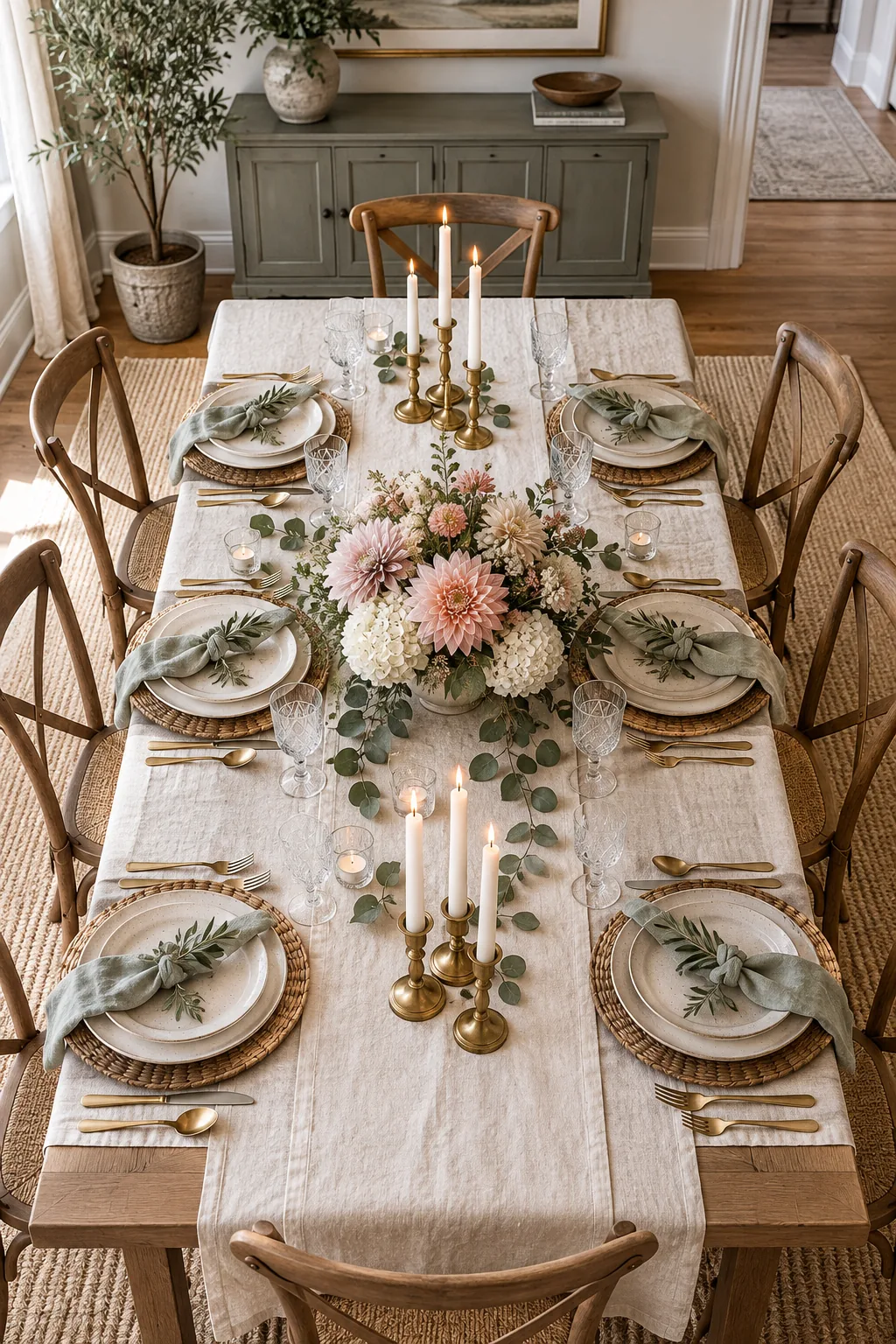
For a standard 6-foot rectangular table, gather these exact proportions to execute the design flawlessly.
| Component | Exact Quantity | Placement Goal |
|---|---|---|
| Shallow Anchor Bowl | 1 vessel | Center of the table |
| Clear Floral Tape | 1 roll | Half-inch grid on rim |
| Trailing Greenery | 6 stems | Spilling over the bowl edge |
| Large Focal Blooms | 5 stems | Tucked low into the grid |
| Secondary Filler | 9 stems | Domed across the top |
| Taper Candles | 6 candles | Two clusters of three |
4 Ways to Style a Low Centerpiece
Adapt the core stem count formula to fit any dining room aesthetic.
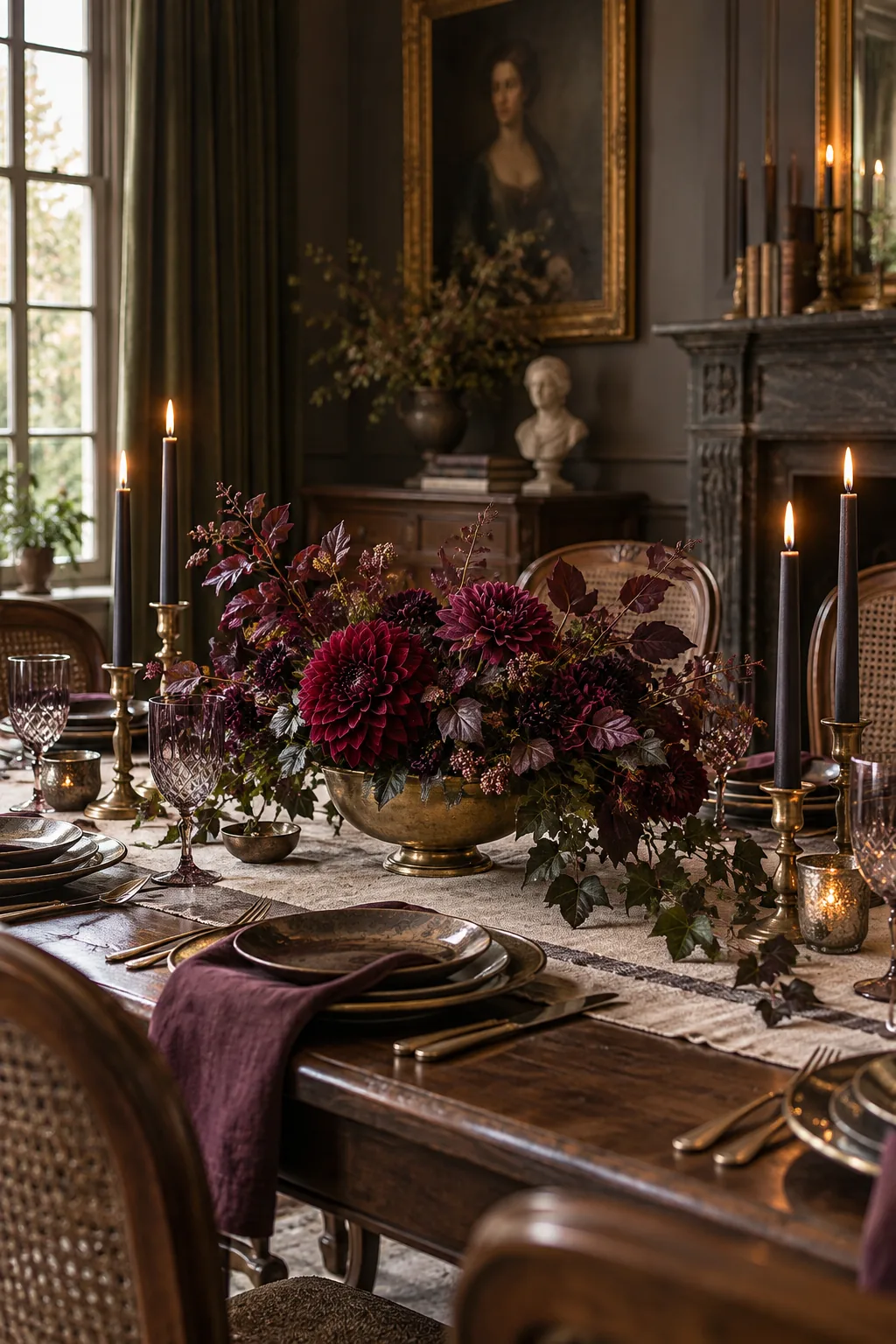
Moody jewel tones: Deep burgundy blooms and black tapers bring dramatic elegance to a formal dining room setting.
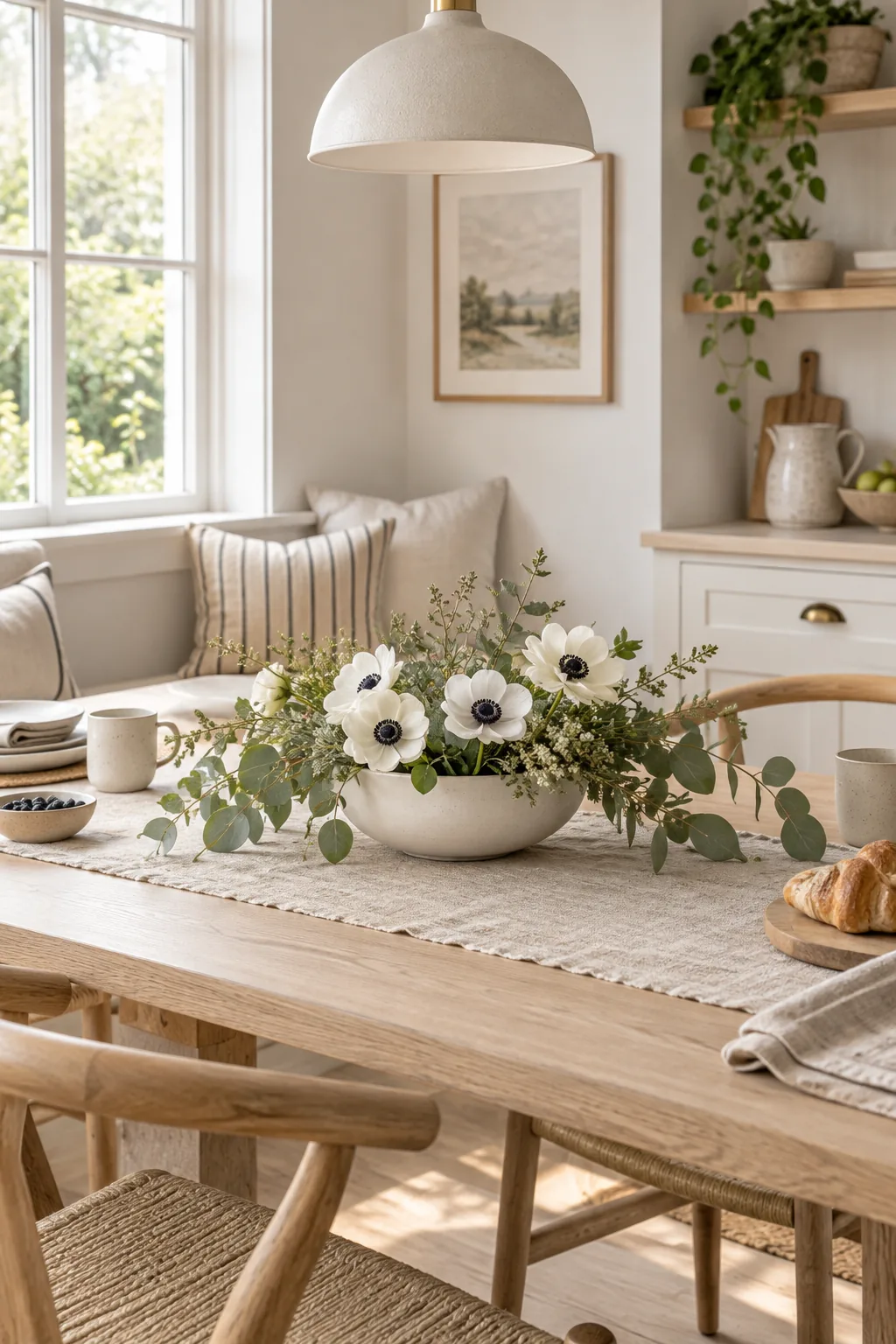
Minimalist Scandi simplicity: Sparse white blooms in a matte ceramic vessel keep the look clean and effortlessly modern.
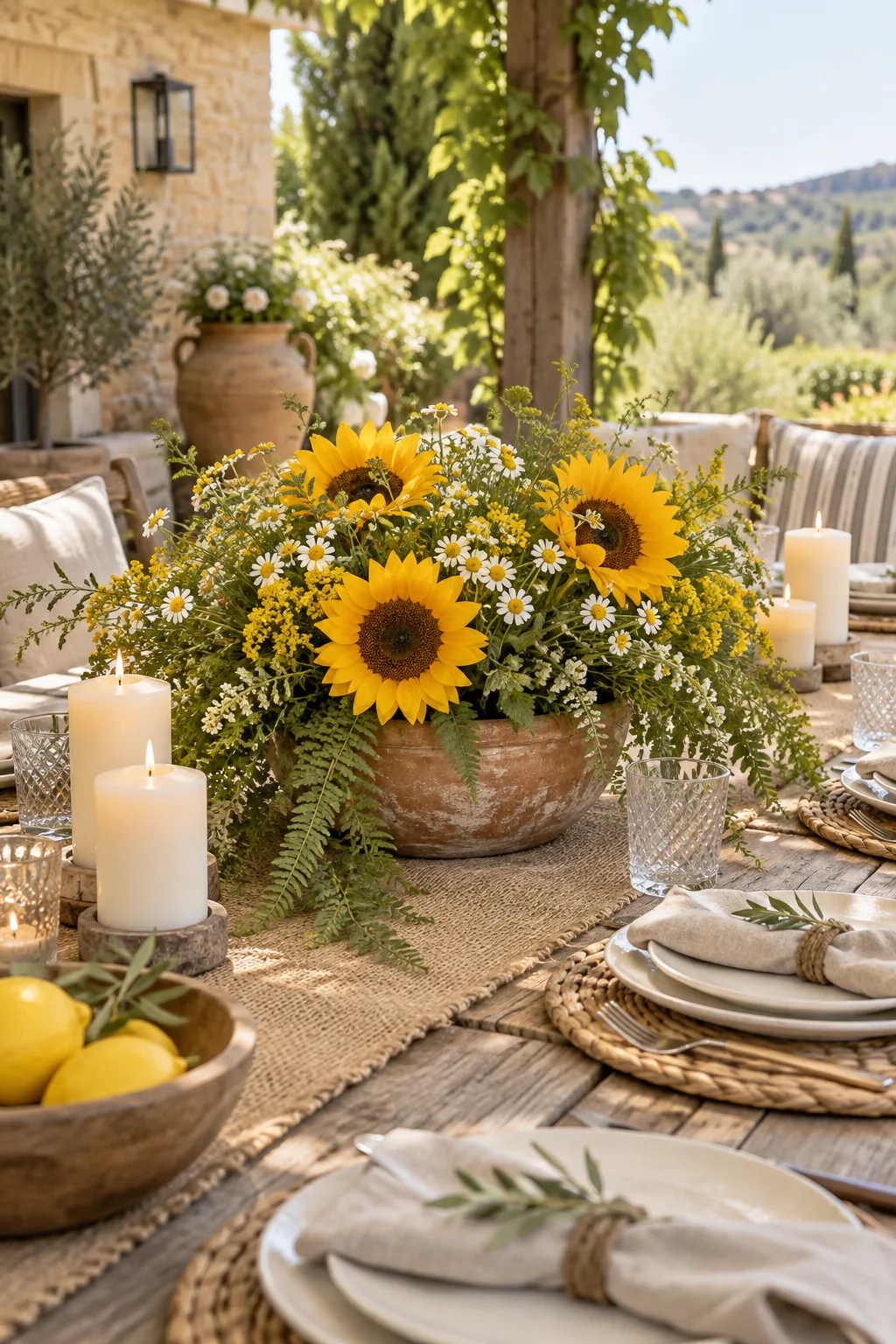
Rustic farmhouse charm: Weathered terracotta and bright sunflowers create a relaxed, welcoming atmosphere for outdoor patio dining.
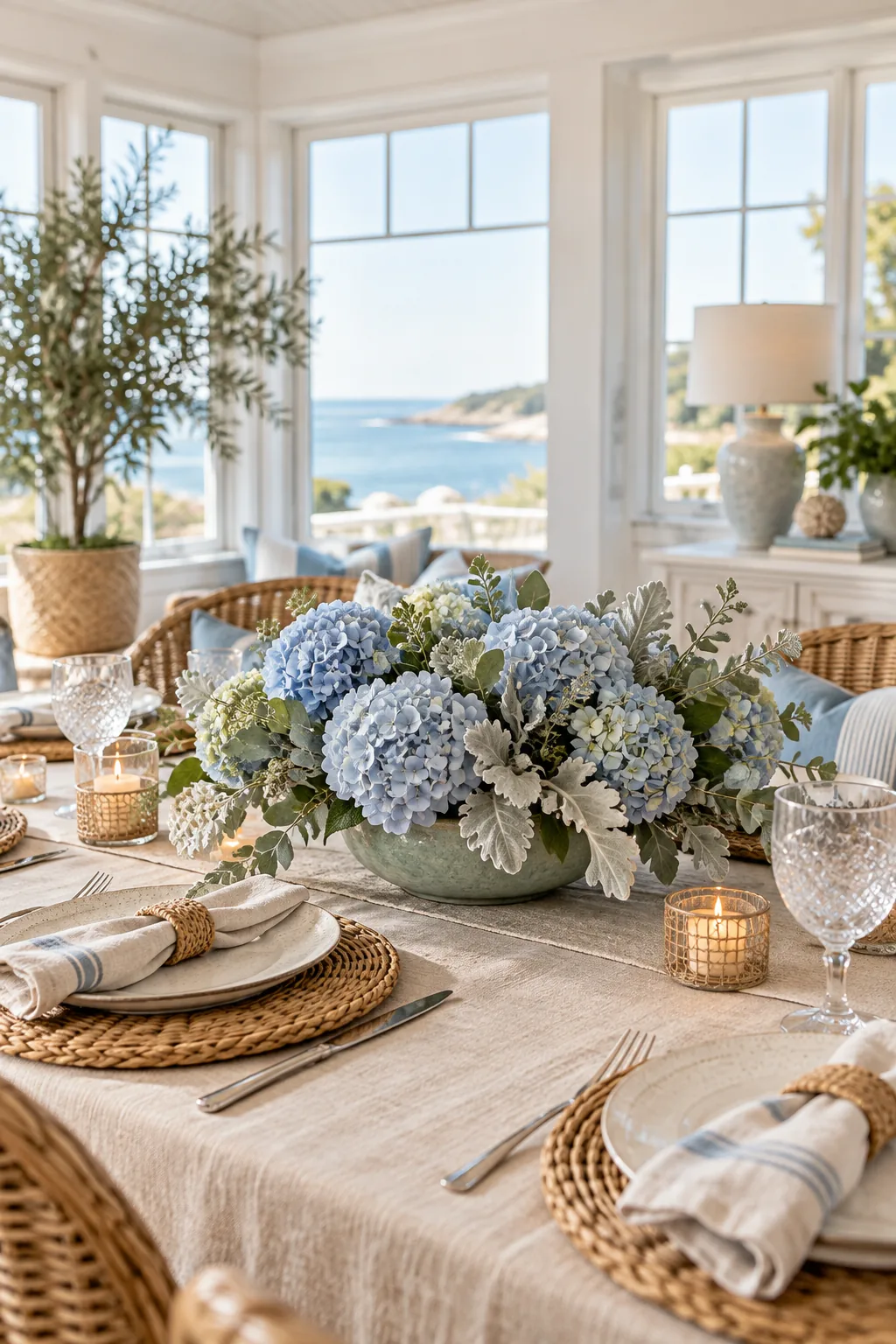
Breezy coastal chic: Voluminous blue hydrangeas paired with a sea-glass vessel instantly evoke a relaxed, beachside dining experience.