Napkin Folding: Set 8 Seats in 10 Minutes
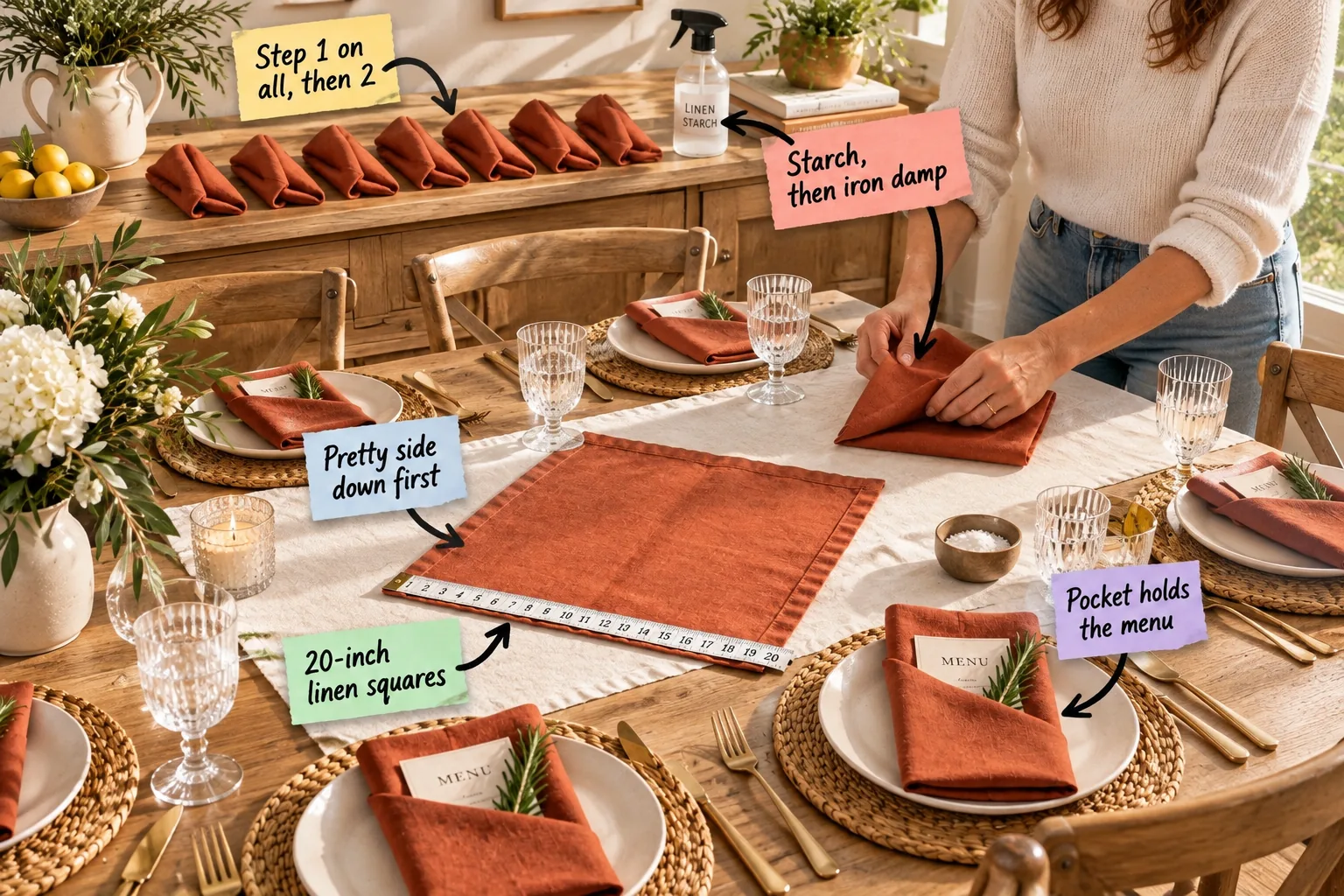
You will be able to prep, fold, and beautifully style crisp linen napkins for an eight-person table in under ten minutes using a streamlined batch-processing method. Grab our printable 10-Minute Batch-Folding Sheet to master the pocket, bistro, and envelope folds for your next dinner party.
Selecting the Right Napkins
For structural folds that hold their shape, 20-inch linen squares are the absolute gold standard in table styling. Heavyweight natural fibers provide the necessary friction to grip themselves, ensuring your hard work stays intact from the buffet to the dining table.
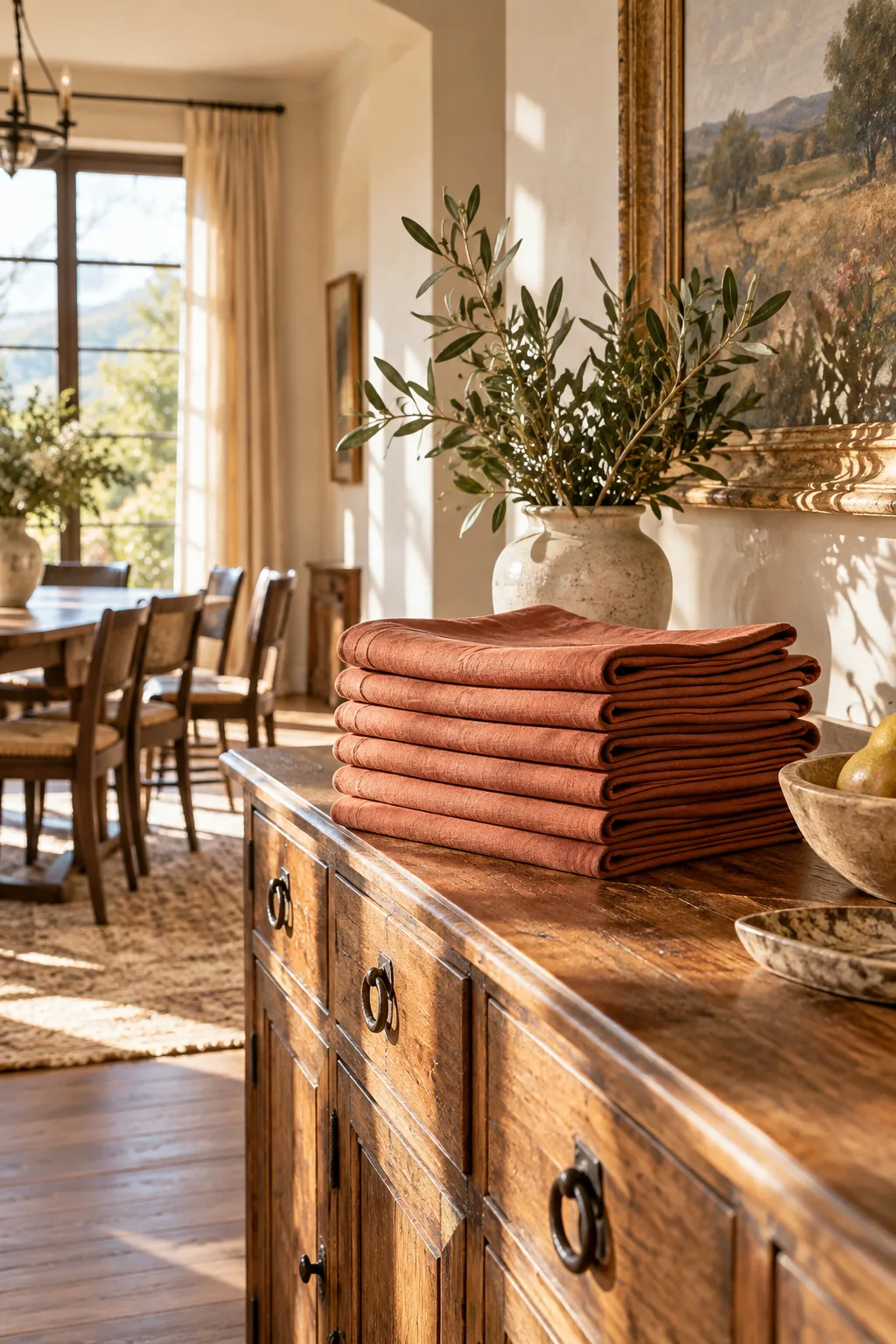
Smaller sizes or slippery synthetic blends simply will not hold the pocket depth needed to support menus without unfolding. Investing in high-quality natural textiles guarantees that your finished presentation looks intentional and tailored.
Why Synthetics Fail
Polyester and rayon blends lack the natural memory required to hold a sharp crease, causing them to spring open prematurely. Sticking strictly to 100 percent natural linen ensures your folds remain flat and secure throughout the entire evening.
Evaluating Fabric Weight
Beyond fiber content, the sheer weight of your textiles dictates how well they perform under tension. A heavyweight linen weighing at least seven ounces per yard provides the necessary stiffness to support intricate origami-style folds without collapsing.
Prepping for Crisp Folds
The secret to a professional finish is to thoroughly starch, then iron damp before you even think about folding. Applying heat while the fabric retains slight moisture from the starch spray locks in the razor-sharp creases required for a tailored look.
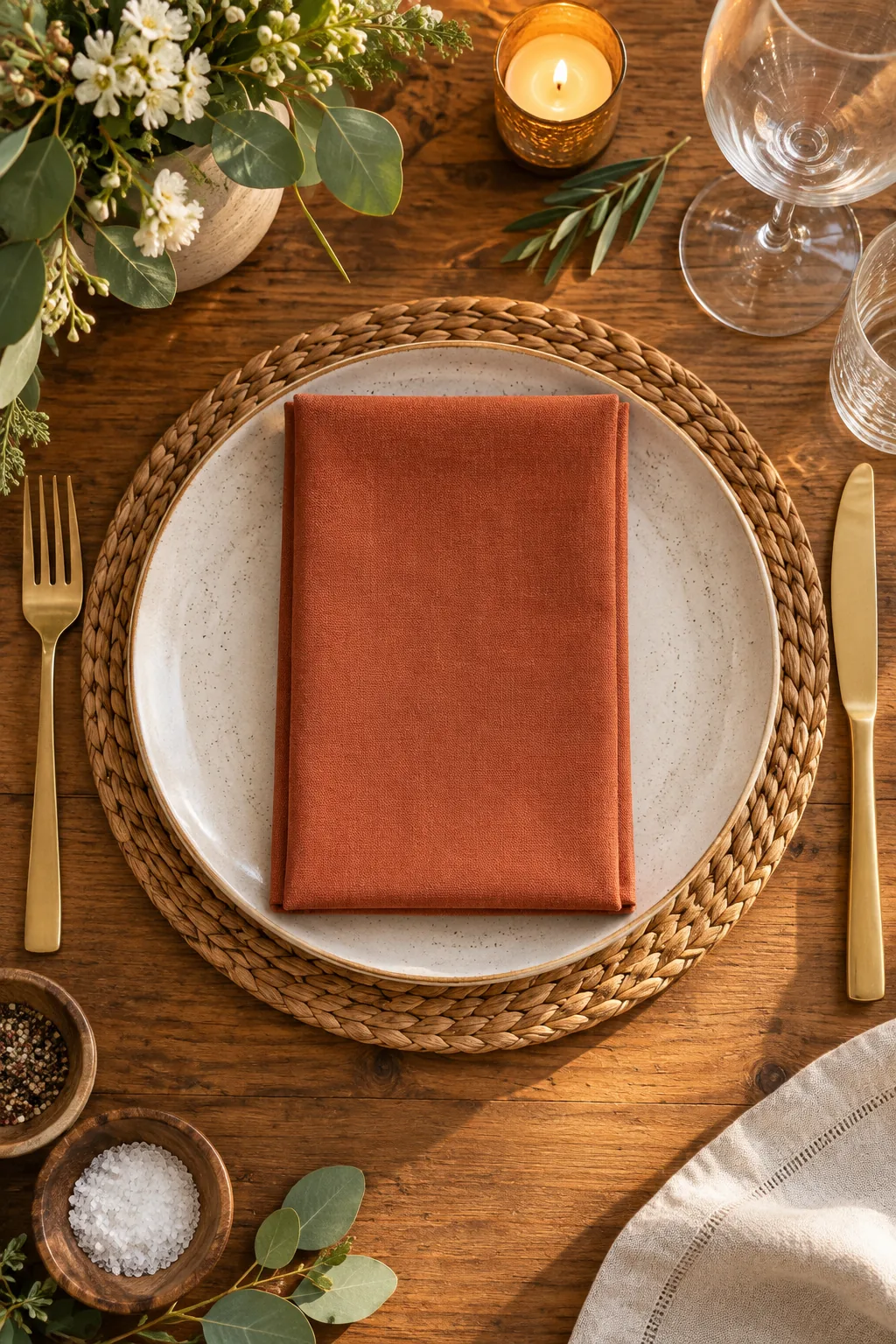
Before you begin folding, ensure your ironing station is fully equipped for crisp, repeatable results across all eight napkins.
Choosing Your Pressing Surface
A standard ironing board often tapers too narrowly to support a large dinner napkin without constant shifting. Laying a heat-resistant pressing mat over your dining table provides the expansive, flat area needed to iron multiple napkins side by side.
The Role of Steam
While the starch provides the hold, active steam from your iron relaxes the stubborn natural fibers just enough to bend them sharply. Always press the steam button exactly as you glide over the newly formed crease to set it permanently.
The Starting Position
Always begin your sequence by placing the freshly pressed fabric with the pretty side down first on your flat surface. Orienting the napkin this way is the foundational rule for achieving a clean, seamless front face.
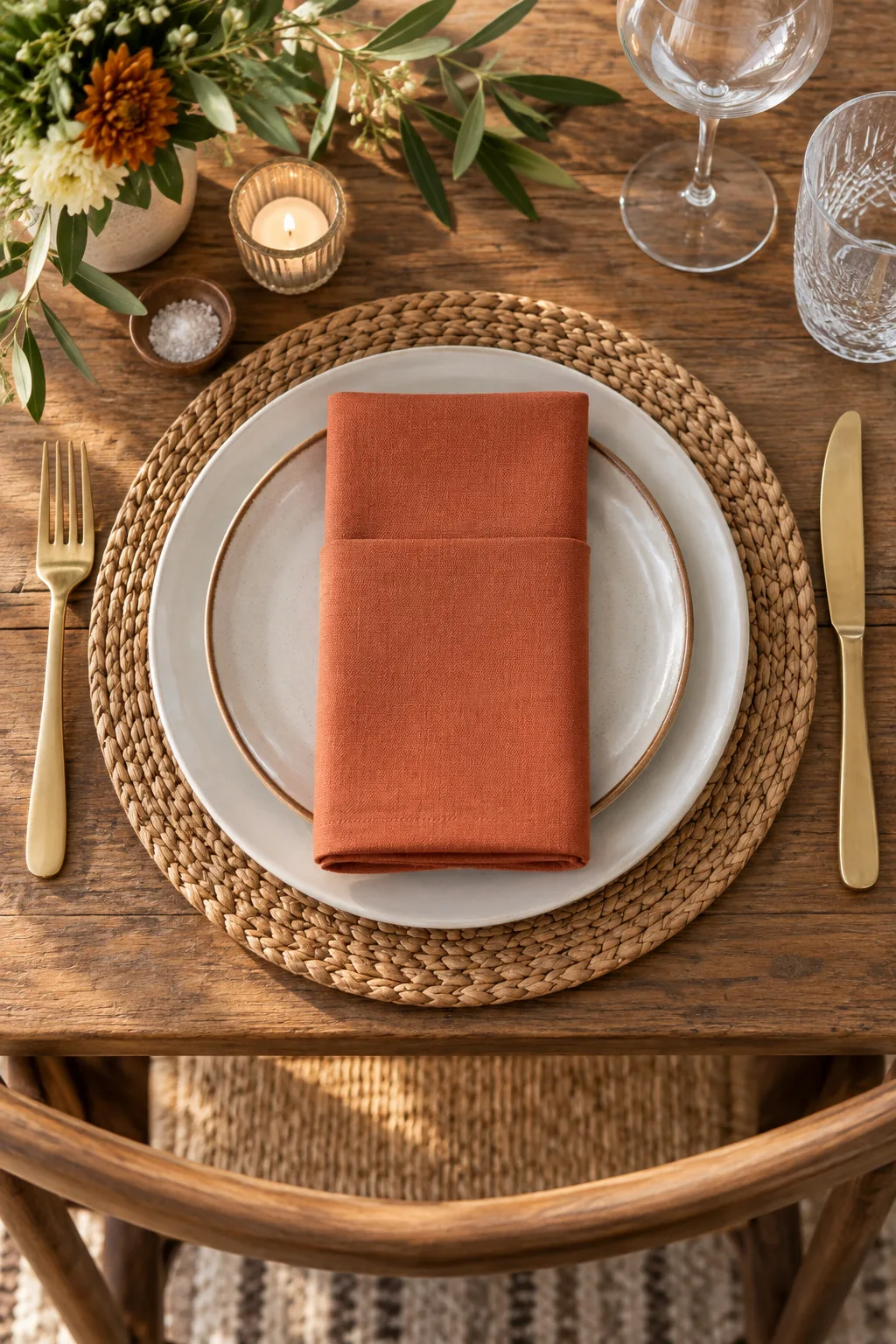
This reverse orientation ensures that all bulky, hemmed edges end up completely hidden inside the final pocket structure. Keeping the rough seams concealed elevates the entire table setting from amateur to professional.
Defining the Top and Bottom Edges
Once your napkin is face down, physically square the corners to your torso so you pull the fabric straight up and down. Working at a slight angle introduces skewed lines that compound into crooked, messy folds by the final step.
Smoothing Wrinkles by Hand
Before you make a single fold, sweep your palms firmly across the pretty side of the fabric to push out any trapped air. This rapid physical smoothing ensures that your starting 20-inch square is perfectly flat and free of hidden creases.
The Batch-Folding Method
The most efficient way to process an entire table is to perform Step 1 on all, then 2. In my own dining room, I used to fold each napkin completely before starting the next, which always left me rushing before guests arrived.
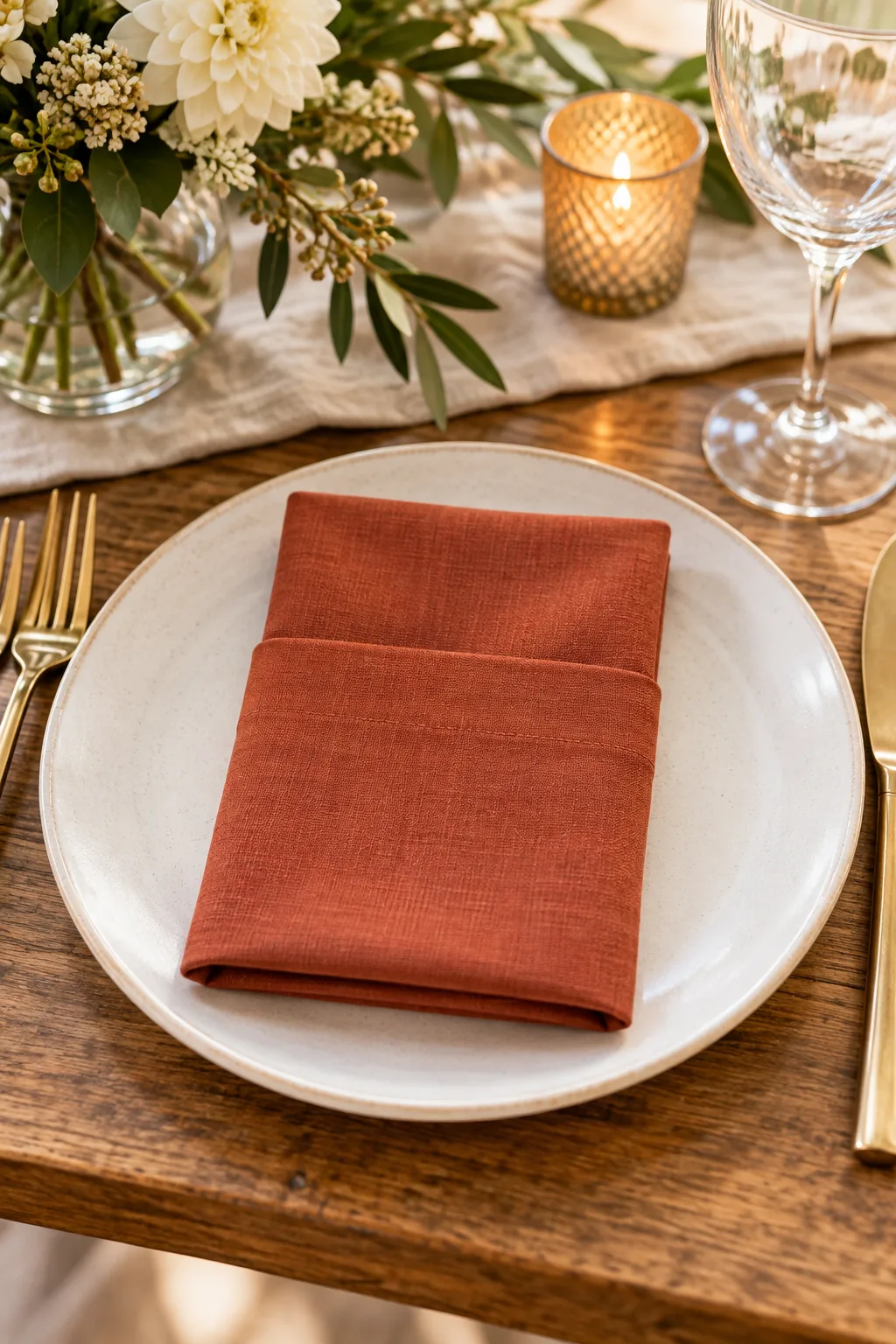
Transitioning to an assembly-line approach dramatically reduces your prep time while improving the overall consistency of your table.
- Fold the bottom edge up on all eight napkins first to build rapid muscle memory.
- Eliminate the wasted time of constantly context-switching between different folding maneuvers.
- Compare the heights immediately to ensure uniform sizing across the entire batch.
Maintaining Consistent Tension
As you move down the assembly line, use the flat of your hand to smooth the fabric firmly from the center outward. Applying equal pressure across every napkin guarantees that your finished widths match perfectly when displayed together on the sideboard.
Checking for Symmetry
When working in a batch, visually scan the entire row of eight napkins after completing the first upward fold. If one edge sits even a quarter-inch higher than the rest, correct the rogue hemline immediately before moving to the next step.
Creating the Deep Pocket
A successful pocket fold requires precise vertical proportions so your inserted items do not awkwardly flop out onto the plate. You must fold the bottom edge up by exactly two-thirds of the napkin’s height to establish a solid foundation.
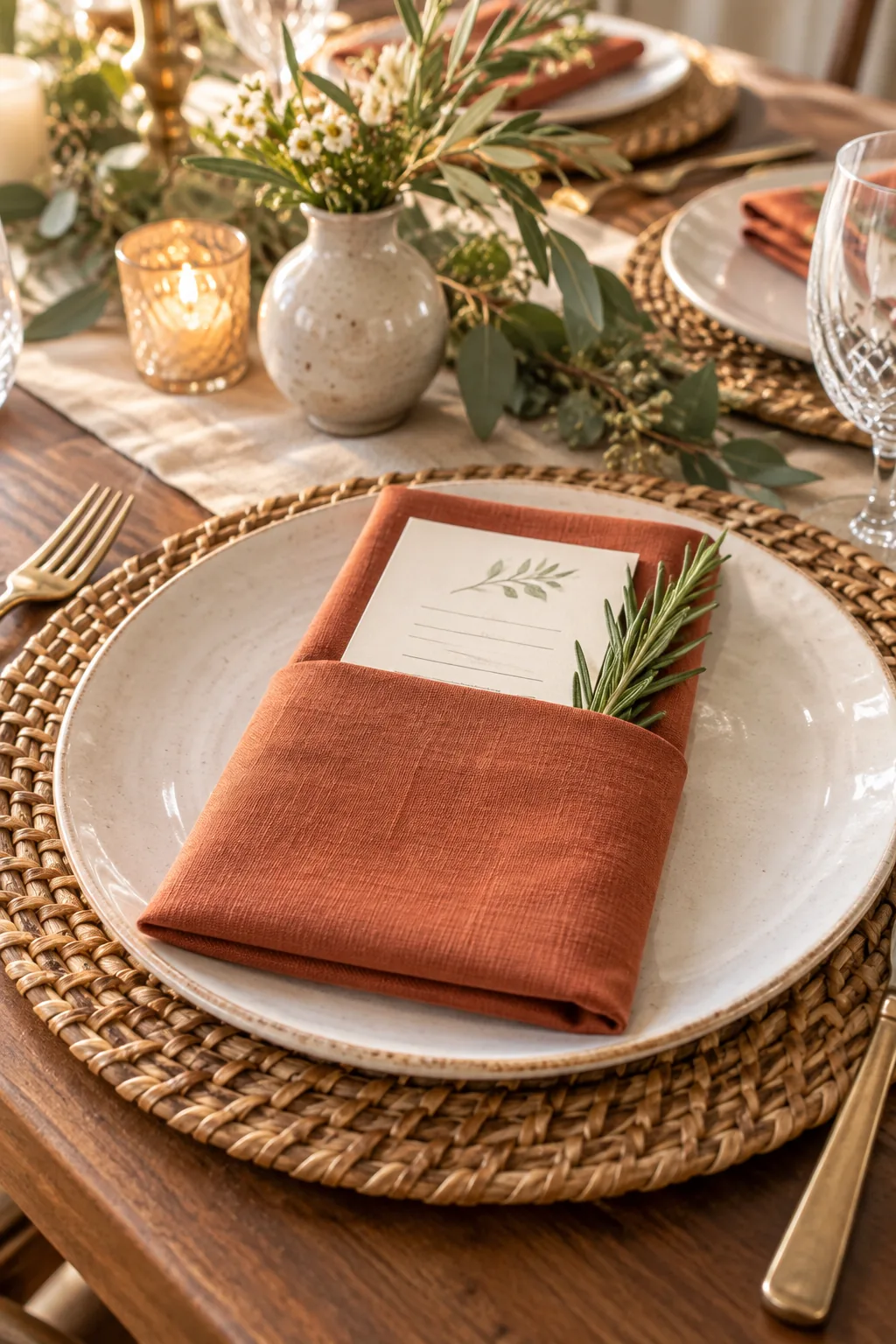
This deep lower fold creates a secure, tensioned band across the front that easily supports heavy cardstock. If you fold too shallow, the fabric lacks the necessary weight to grip your decorative elements.
Locking the Side Creases
After establishing the pocket depth, fold the left and right thirds tightly behind the center panel to lock the structure. Pressing down firmly on these vertical seams prevents the napkin from springing open when transferred to the dining table.
Flipping the Napkin
Once the side panels are securely locked behind the center, carefully flip the entire structure over to reveal the clean front face. Handle the folded linen strictly by the outer edges to avoid crushing the newly formed pocket tension.
Styling the Finished Pocket
The true beauty of this technique is how effortlessly the finished pocket holds the menu, place cards, or seasonal foliage. Adding a fresh sprig of rosemary introduces a natural, aromatic element that beautifully complements the earthy terracotta linen.
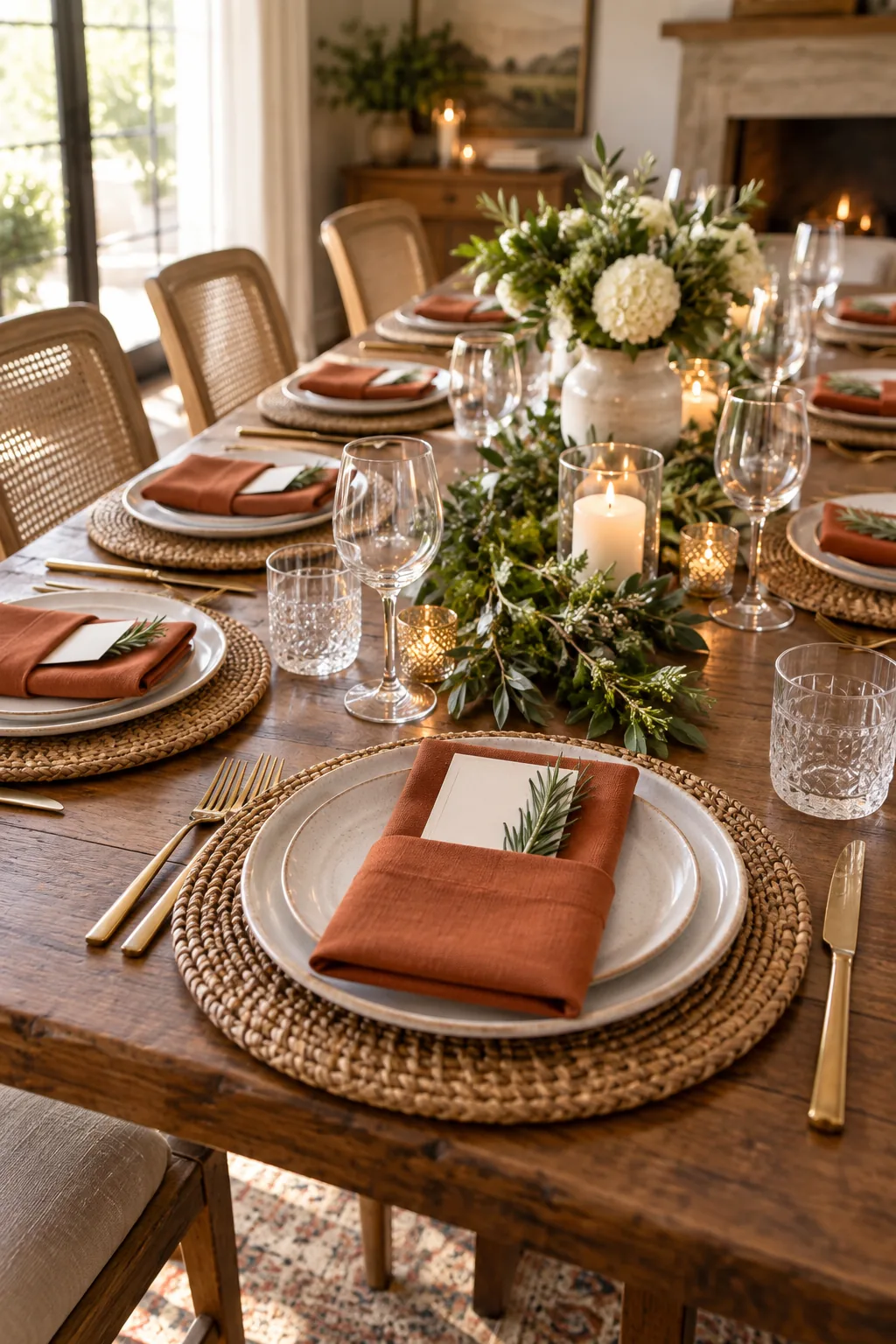
To ensure your paper goods do not overwhelm the folded fabric, pay close attention to your sizing proportions before printing.
Selecting Aromatic Herbs
Woody herbs like rosemary, thyme, or lavender hold up beautifully without wilting during a long dinner party. Avoid delicate leafy greens like basil or cilantro, which quickly bruise and look tired when pressed against the stiff linen pocket.
Positioning on the Plate
A tailored pocket fold looks most striking when centered directly over a wide, flat dinner plate or woven charger. Align the straight bottom edge of the napkin parallel to the table edge to maintain a crisp, geometric presentation across all eight seats.
Timing Your Table Prep
Setting an eight-person table should never consume your entire afternoon if you follow a strict, segmented schedule. Breaking the process into distinct phases keeps you moving efficiently from the ironing station to the final place settings.
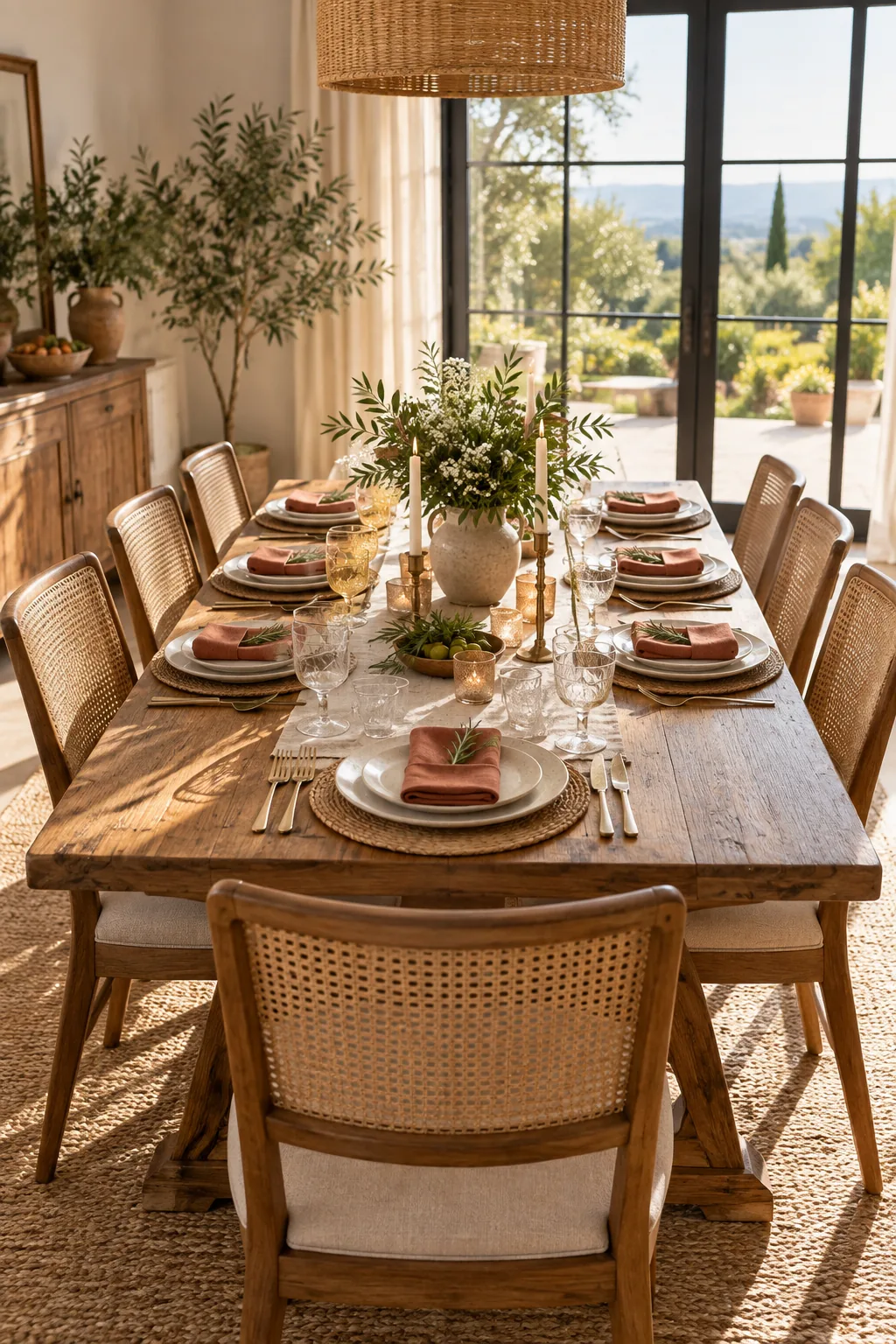
Allocating specific minute counts to each task prevents the common trap of endlessly adjusting a single stubborn crease.
| Preparation Phase | Time Allocated |
|---|---|
| Starch and damp ironing | 3 minutes |
| Batch-folding sequence | 5 minutes |
| Inserting menus and herbs | 2 minutes |
Adding Name Cards
If you are assigning seats, tuck a heavyweight cotton name card just behind the menu inside the fabric pocket. Staggering the heights so the guest’s name peeks out above the menu creates a beautifully layered, dimensional look at each setting.
Transporting to the Table
When it is time to set the table, carry the finished napkins stacked flat on a wide tray rather than pinching them in your hands. This gentle transportation method preserves the sharp structural creases you worked so hard to iron in.
The 10-Minute Folding Cheat Sheet
To make your next dinner party completely stress-free, grab our printable two-page guide covering the starch prep and batch sequence. I keep a laminated copy of this exact 10-Minute Batch-Folding Sheet in my buffet drawer so I never have to rethink the steps.
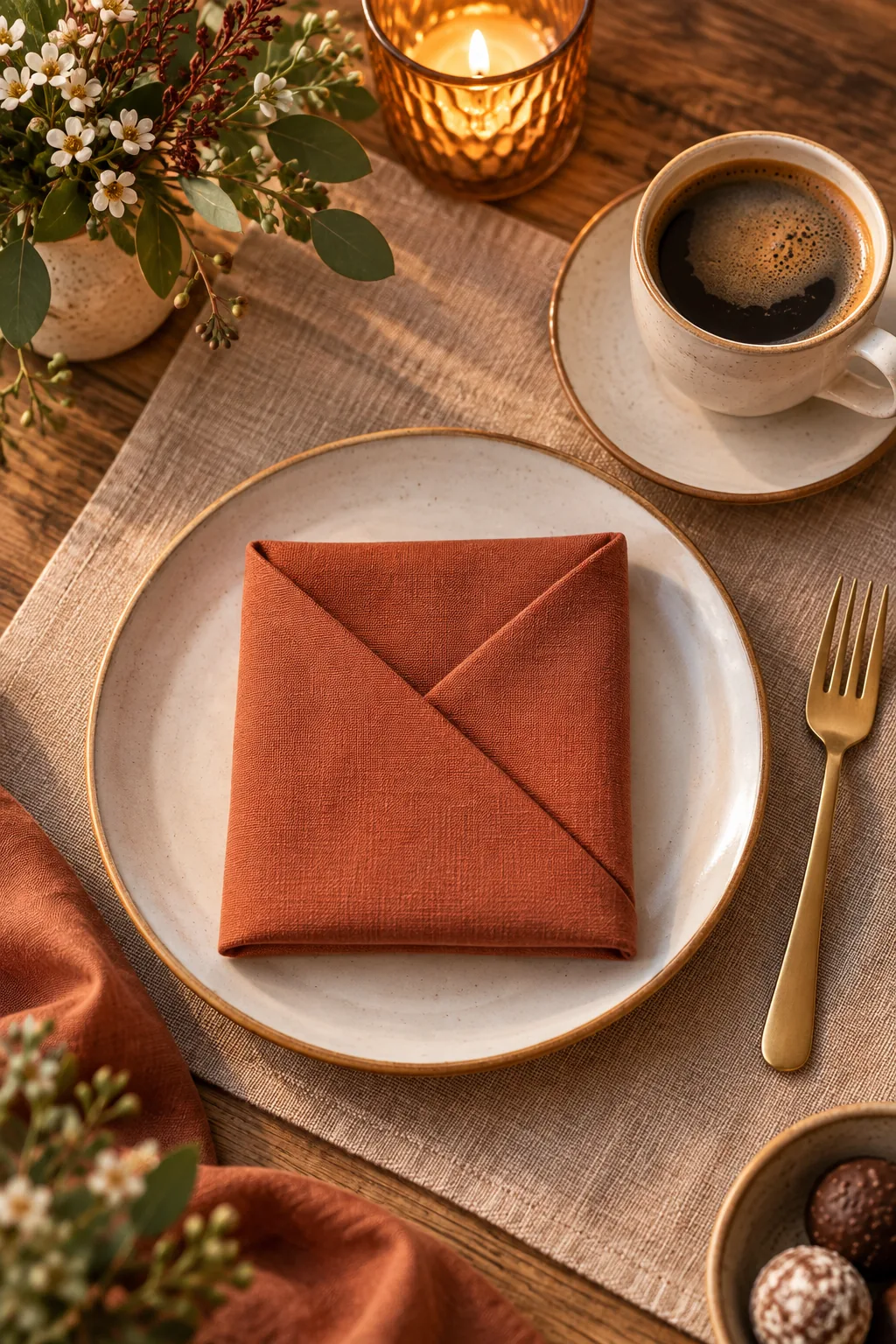
The guide includes step-by-step visuals for the pocket, bistro, and envelope folds broken into numbered steps with a minute-by-minute timing column.
4 Ways to Style the Pocket Fold
Discover how changing your linen color and inserts can completely transform the mood of your table.
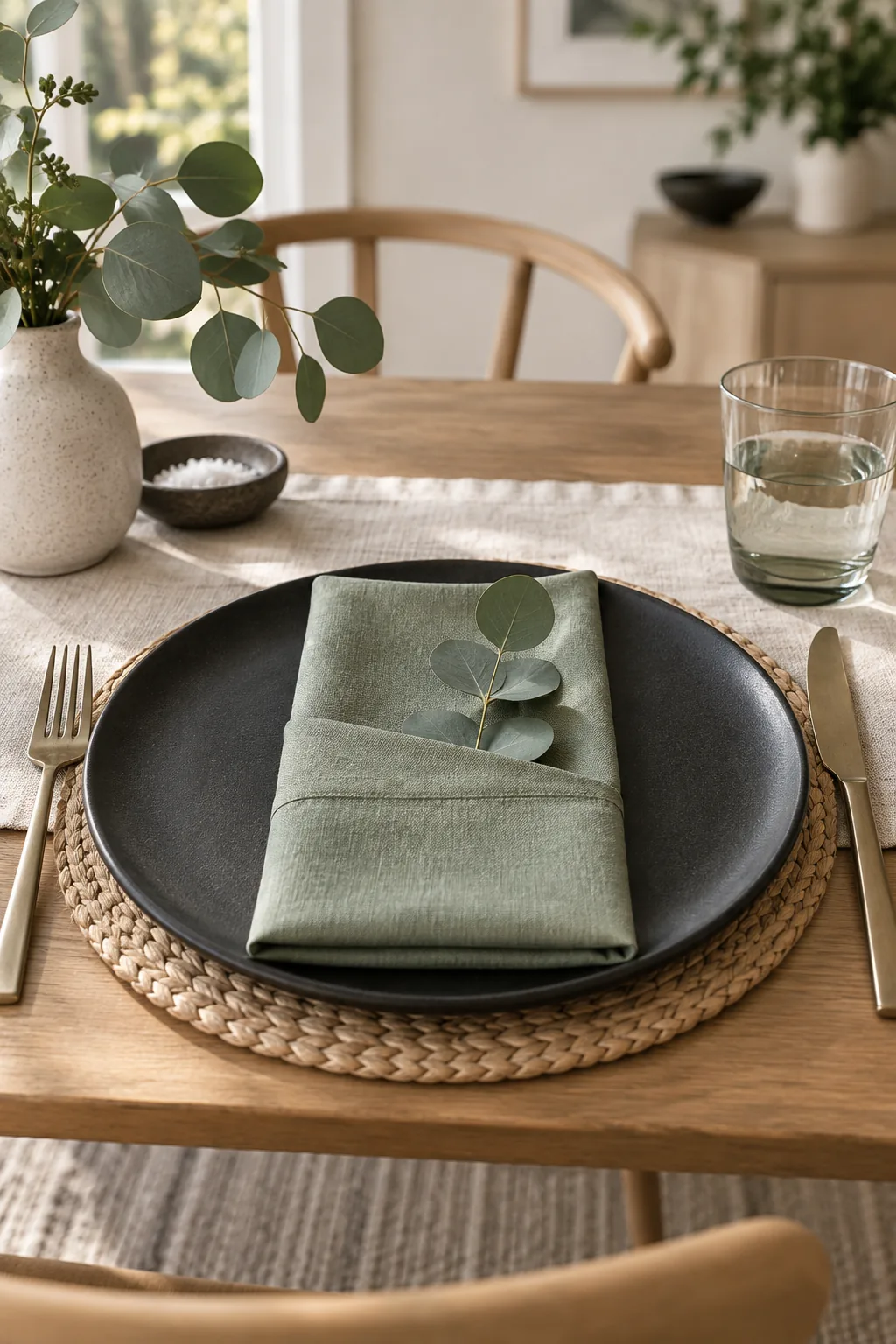
Minimalist Scandinavian: Sage green linen pairs beautifully with matte black ceramics for a modern Scandinavian feel. Tuck a single eucalyptus leaf into the pocket for effortless natural texture.
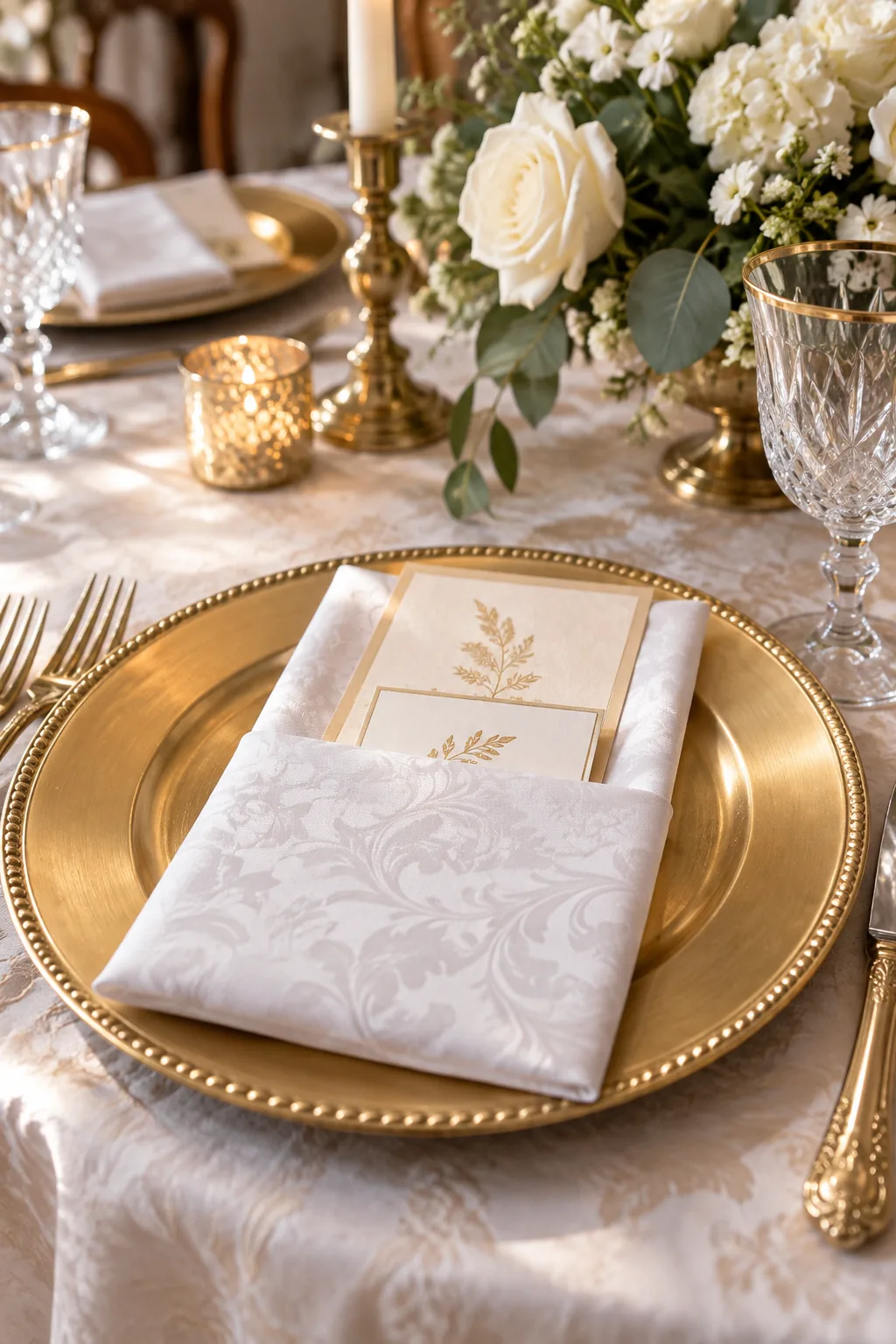
Classic Formal: Crisp white damask folded into a sharp pocket elevates formal dining. Slip a gold-foiled menu and a calligraphed place card inside for a classic, sophisticated finish.
Rustic Farmhouse: Mustard yellow cotton brings warmth to a rustic farmhouse table setting. Pair it with a woven rattan charger and a sprig of dried wheat for seasonal charm.
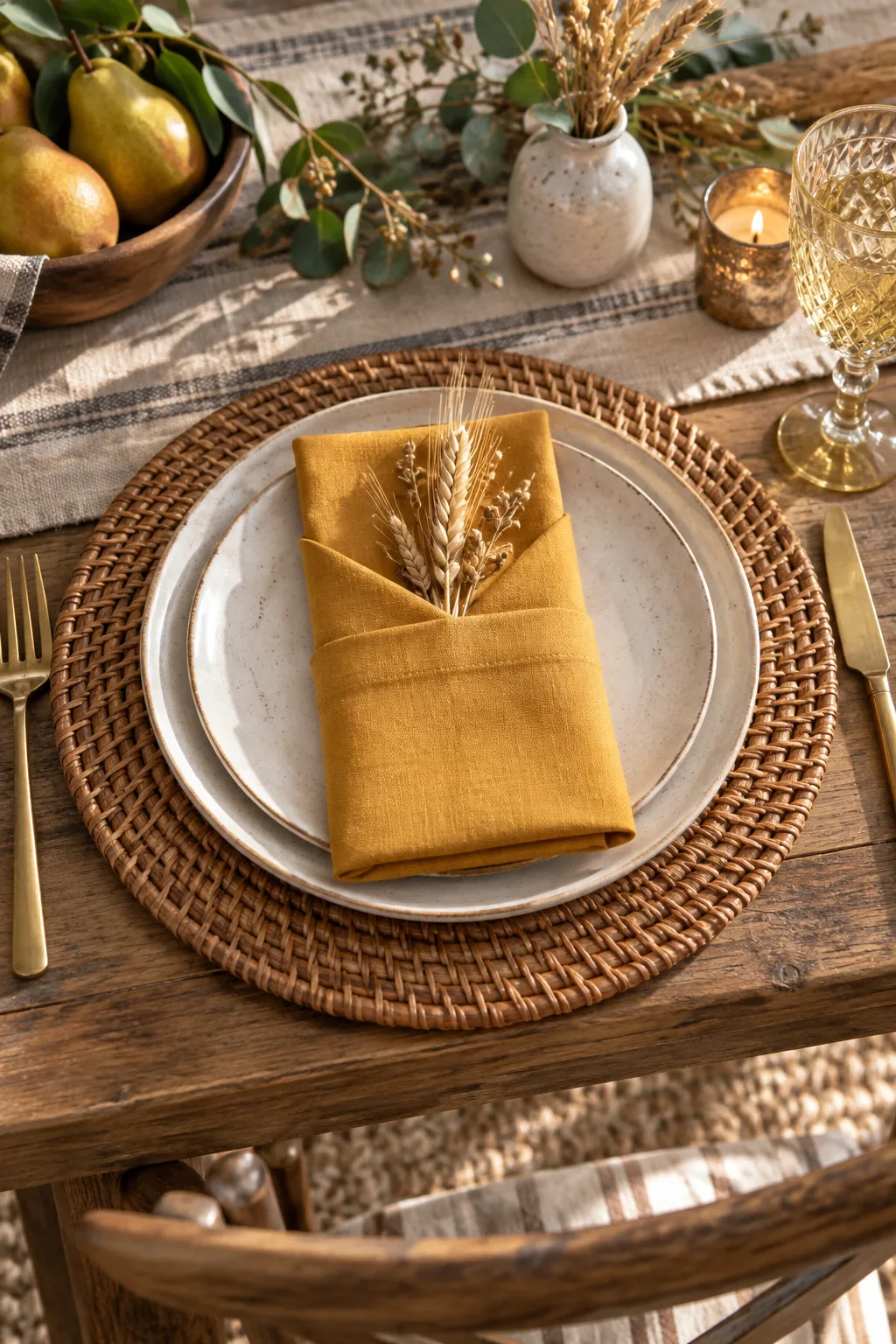
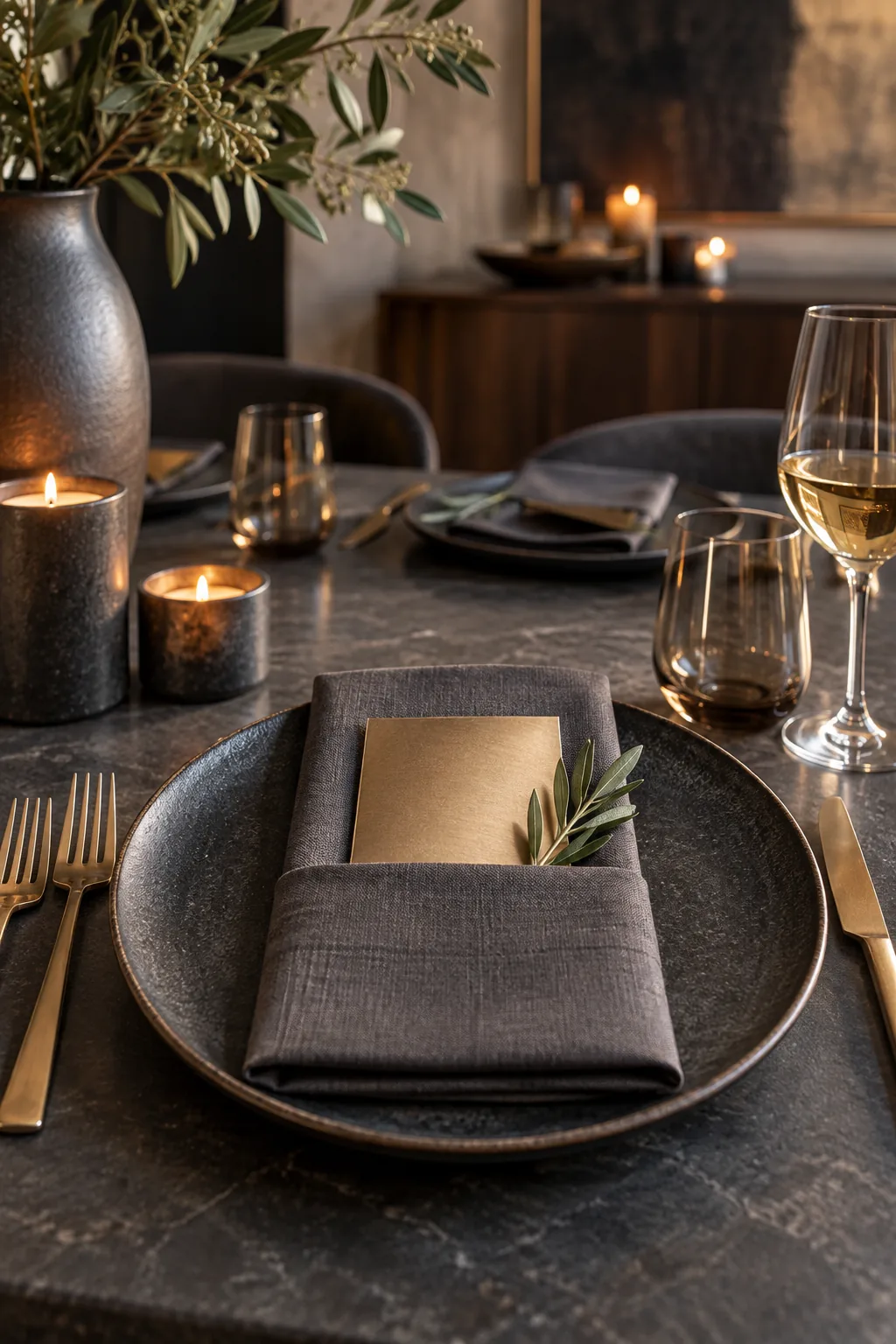
Moody Modern: Charcoal gray linen creates a moody, contemporary atmosphere against dark stoneware plates. Use a minimalist metallic menu card to add a subtle, elegant contrast to the table.