
17+ Brilliant Vegetable Garden Layout Ideas
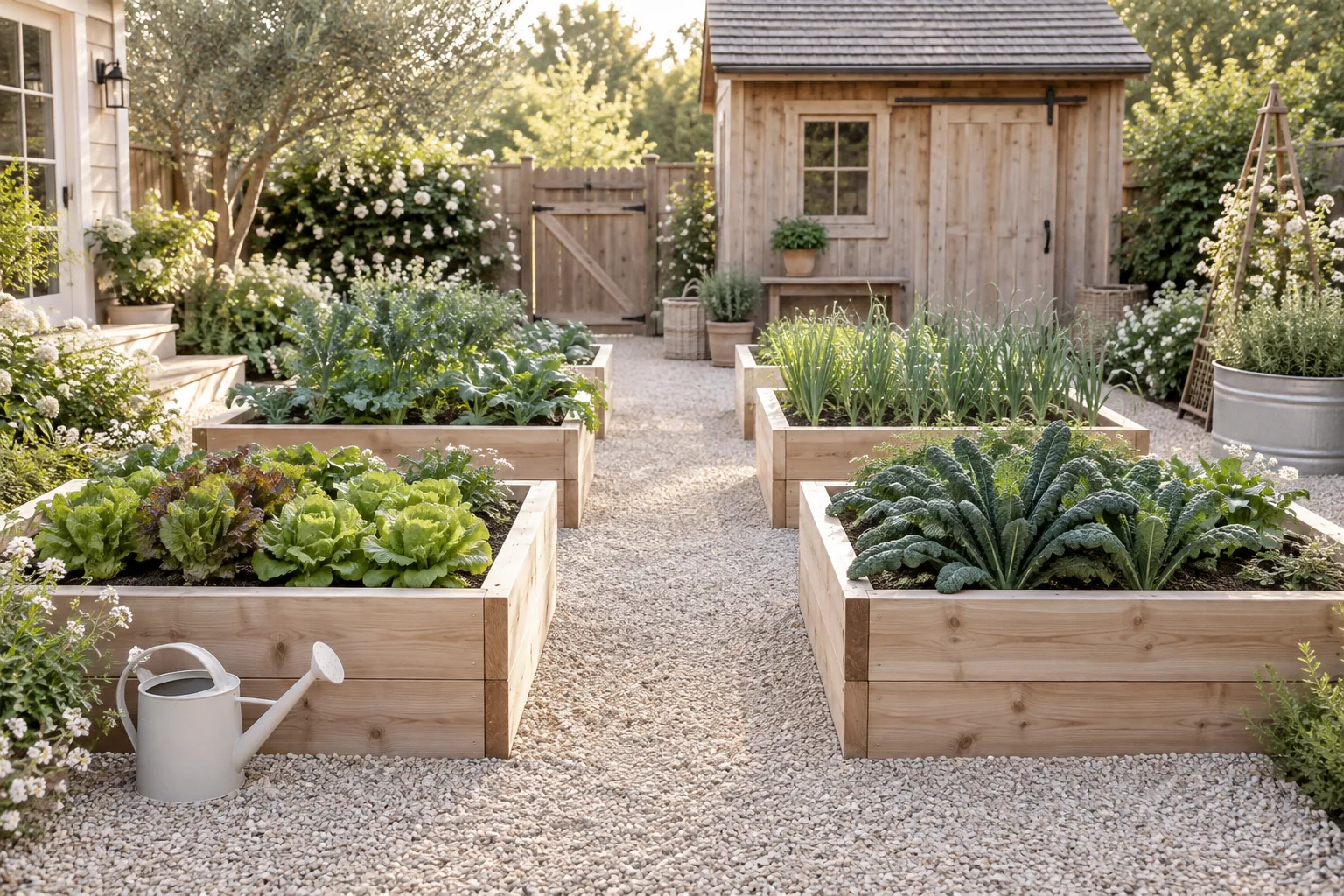
Planning your vegetable garden layout doesn't have to be overwhelming. I've gathered my favorite practical designs that actually work in real backyards.
1. U-Shaped Raised Beds
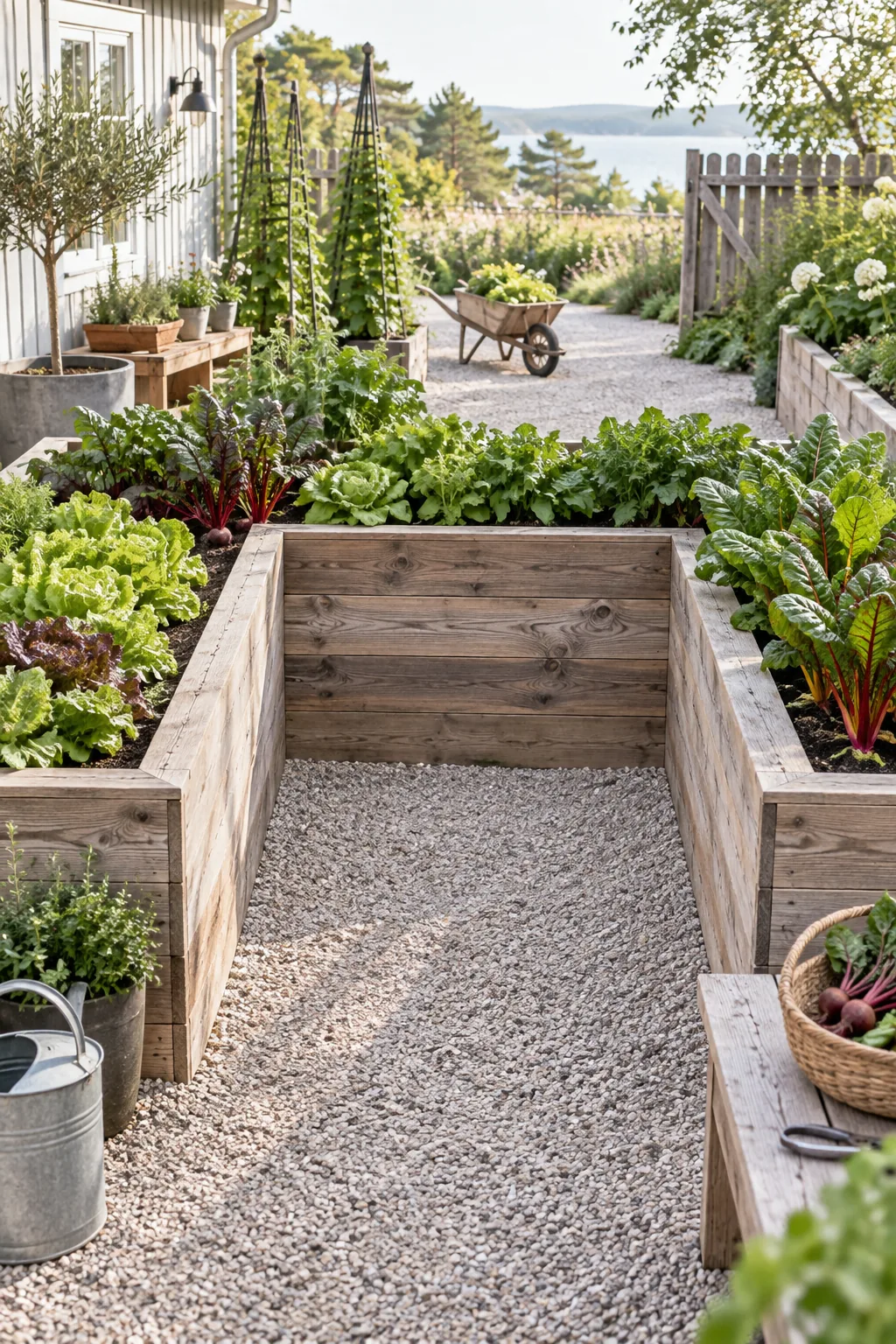
Build your raised beds in a U-shape to maximize your planting area. This setup gives you a central spot to stand while tending to your crops.
You can easily reach every single plant without stepping on the soil. It keeps the dirt loose and healthy for root growth.
I love using cedar boards for this because they resist rot naturally. Just make sure the walking path is at least three feet wide for your wheelbarrow.
2. The Potager Grid
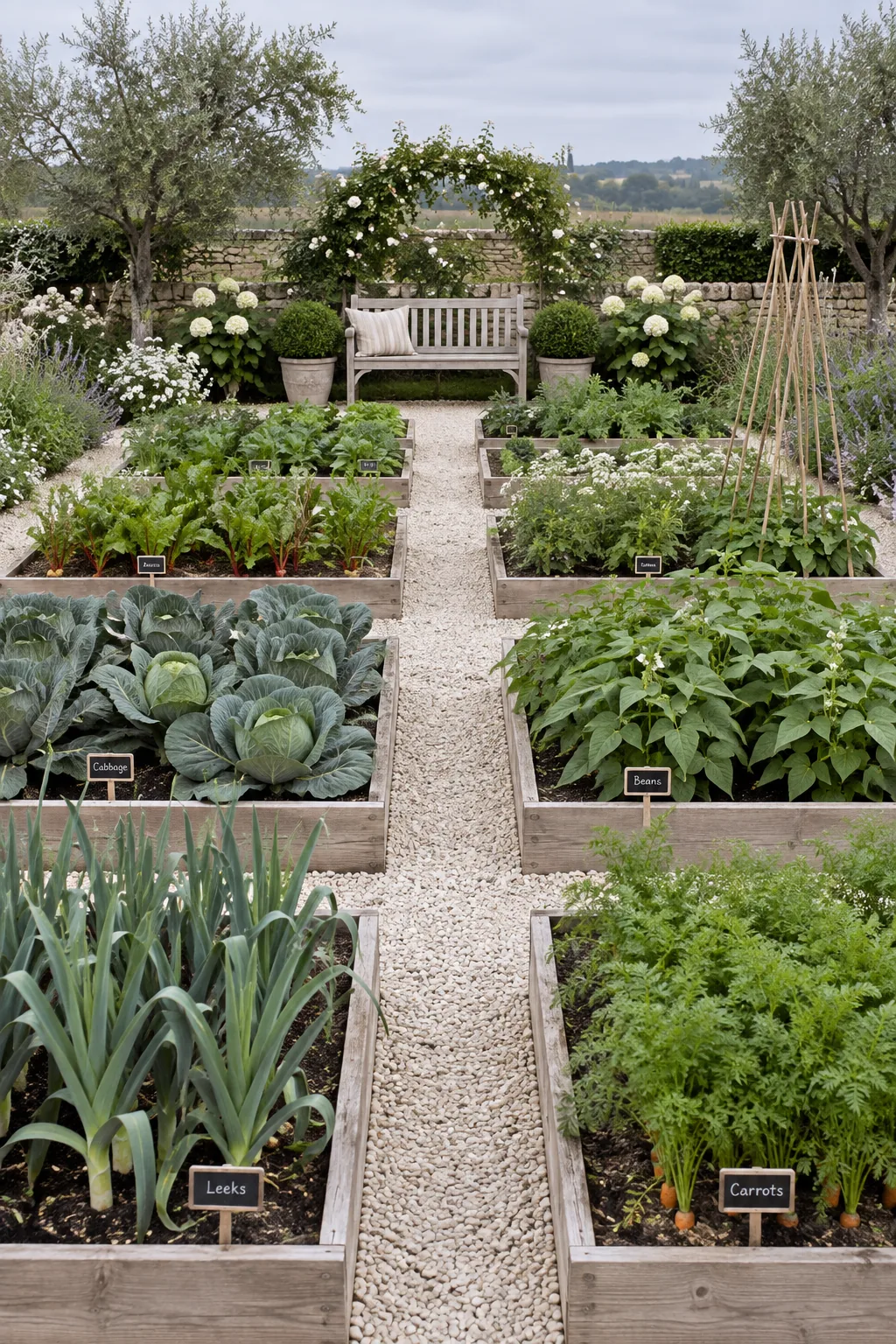
A classic grid pattern creates a structured, formal look in the backyard.
Symmetrical square beds are separated by clean gravel paths. You can dedicate each square to a specific crop family to make crop rotation a breeze next season.
Why it works: It works because the strict geometry keeps wild-growing vegetables from looking messy.
3. Four-Foot Width Rule
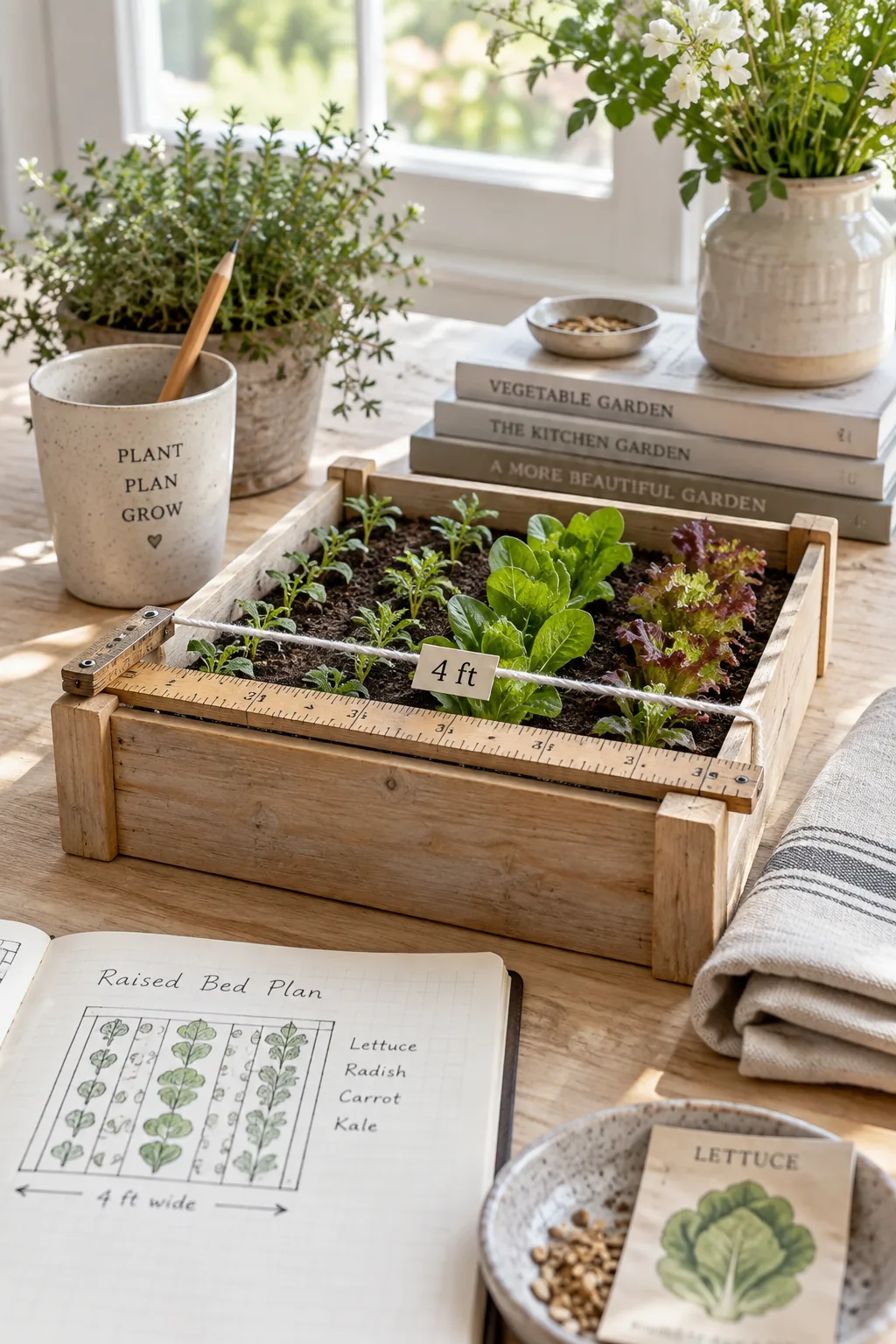
Most human arms can only reach about two feet comfortably. Building your garden beds exactly four feet wide means you can access the center from either side without ever stepping into the planting zone.
It is the absolute golden rule of garden carpentry.
Why it works: It works because uncompacted soil allows vegetable roots to grow deeper and absorb more nutrients.
4. Archway Trellis Connectors
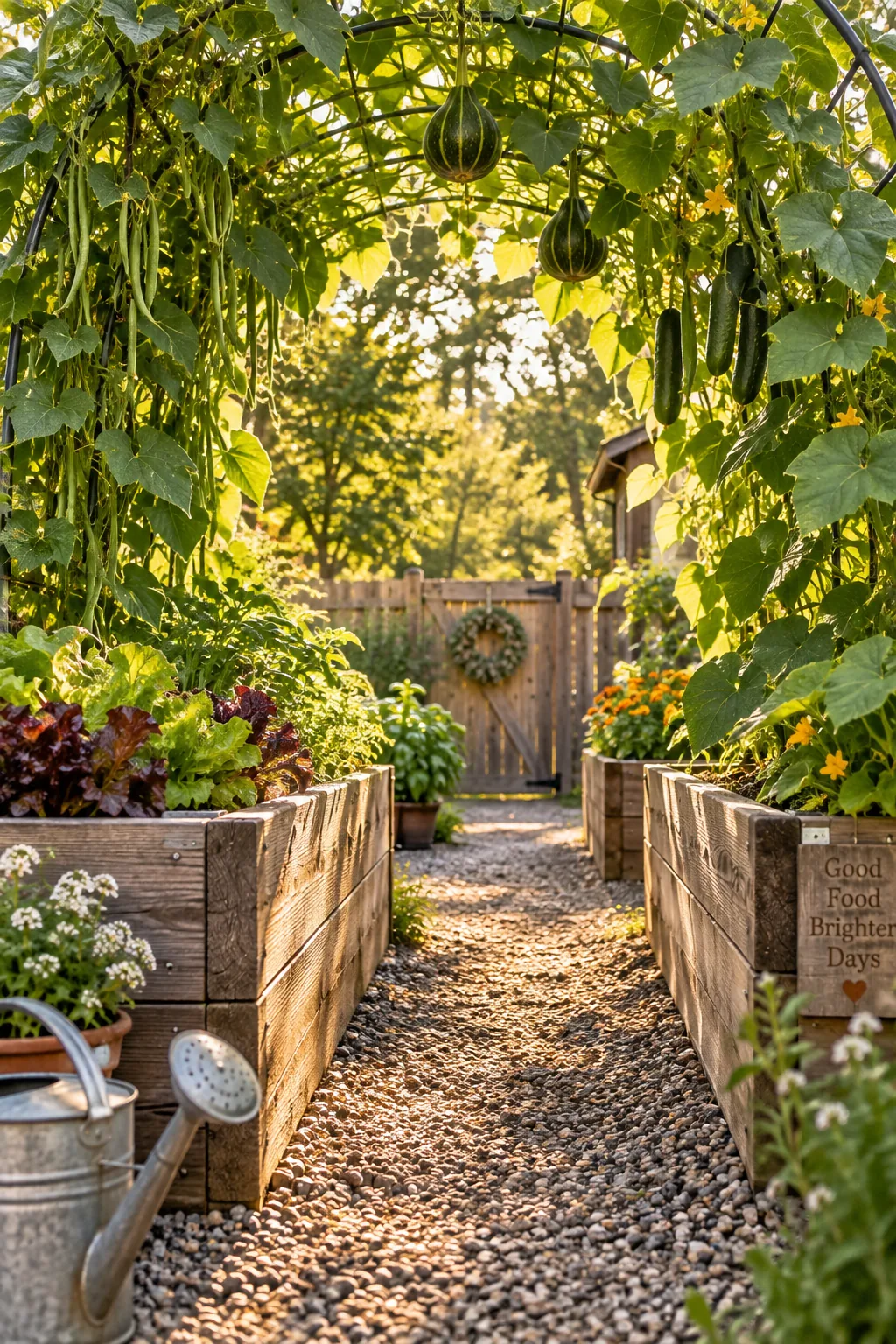
I always dreamed of walking under a canopy of green beans. Adding a cattle panel arch between two raised beds turns a basic path into a vertical growing space.
Cucumbers, pole beans, and small squash love climbing these sturdy structures. The shade underneath is perfect for growing delicate lettuce in the heat of summer.
The panels are incredibly cheap at farm supply stores. They bend easily into shape and secure right to the inside of your wooden frames.
5. Keyhole Garden Design
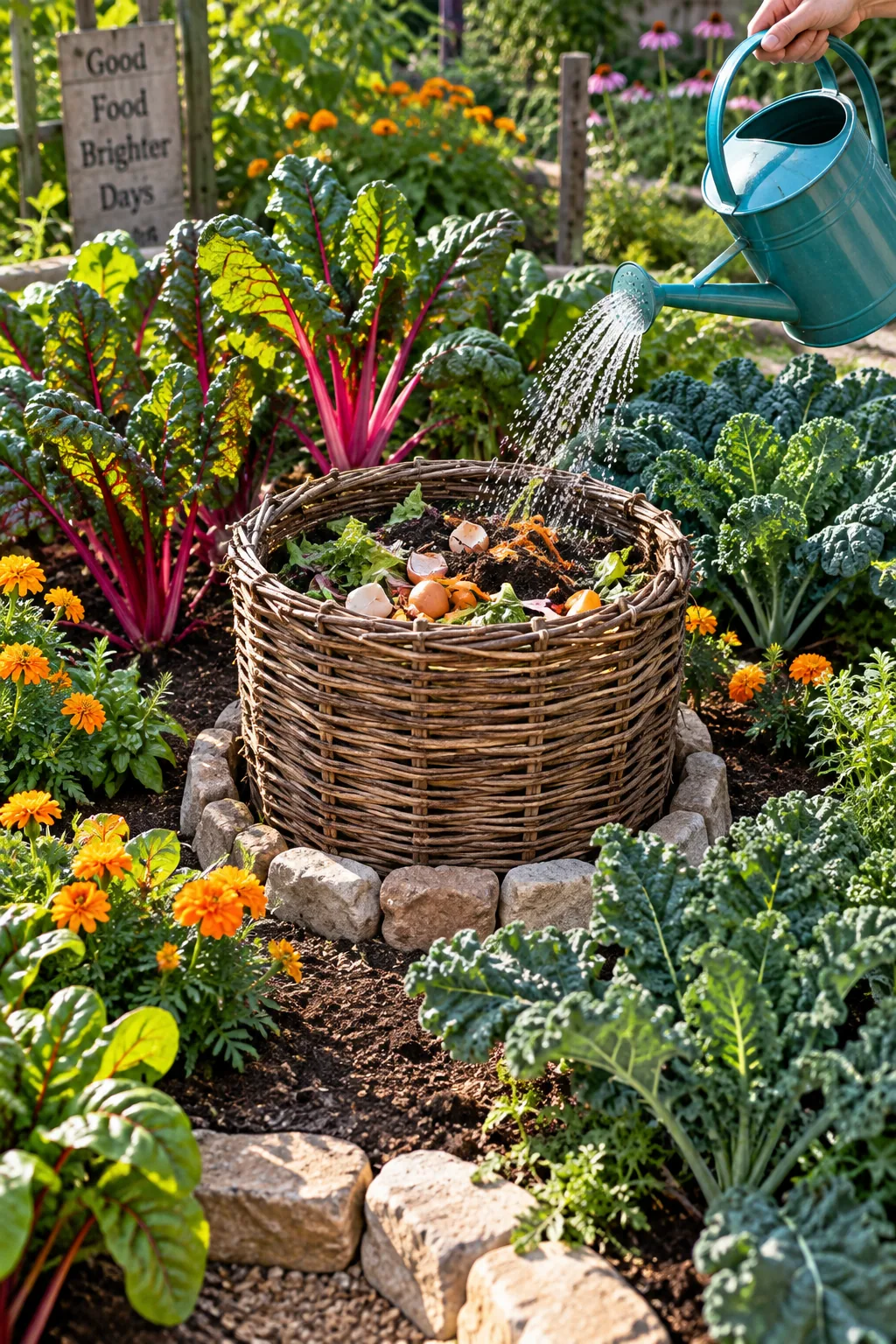
A traditional keyhole bed spans about six feet in diameter with a notch cut into the center.
This circular layout includes an active compost basket right in the middle. You water the center basket, and the nutrients seep directly into the surrounding soil to feed your heavy feeders.
- Central compost basket
- Circular retaining wall
- Wedge-shaped access path
6. Companion Planting Blocks
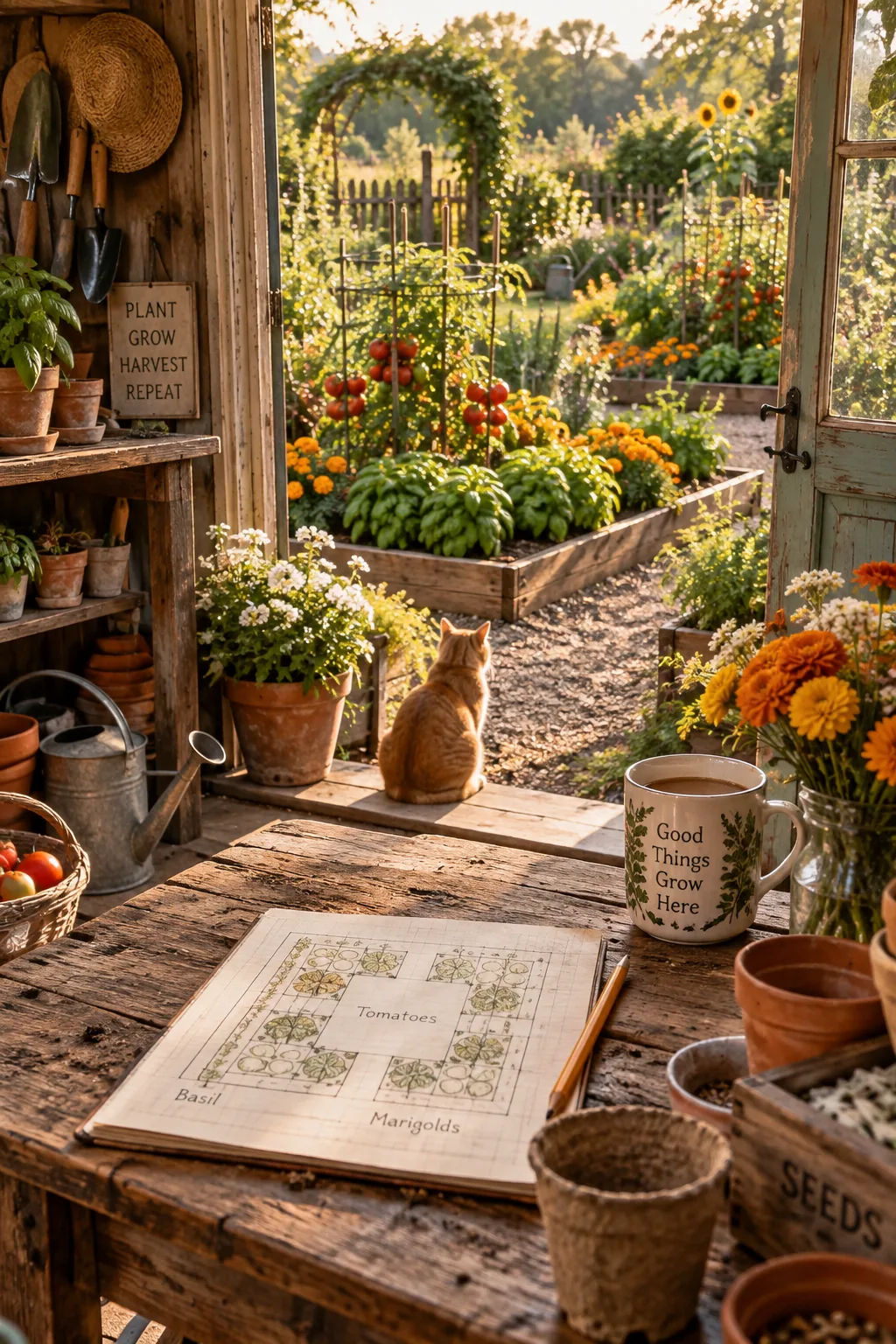
My early gardens failed because I planted everything in single, lonely rows. Grouping mutually beneficial plants together in blocks saves space and fights off pests naturally.
Tomatoes thrive when surrounded by basil and marigolds. The flowers attract pollinators while the herbs mask the scent of the tomato plants from hungry bugs.
You can map out these blocks on grid paper before the season starts. It makes seed ordering much more efficient.
- Tomatoes with basil
- Carrots with onions
- Corn with climbing beans
7. Border Herb Gardens
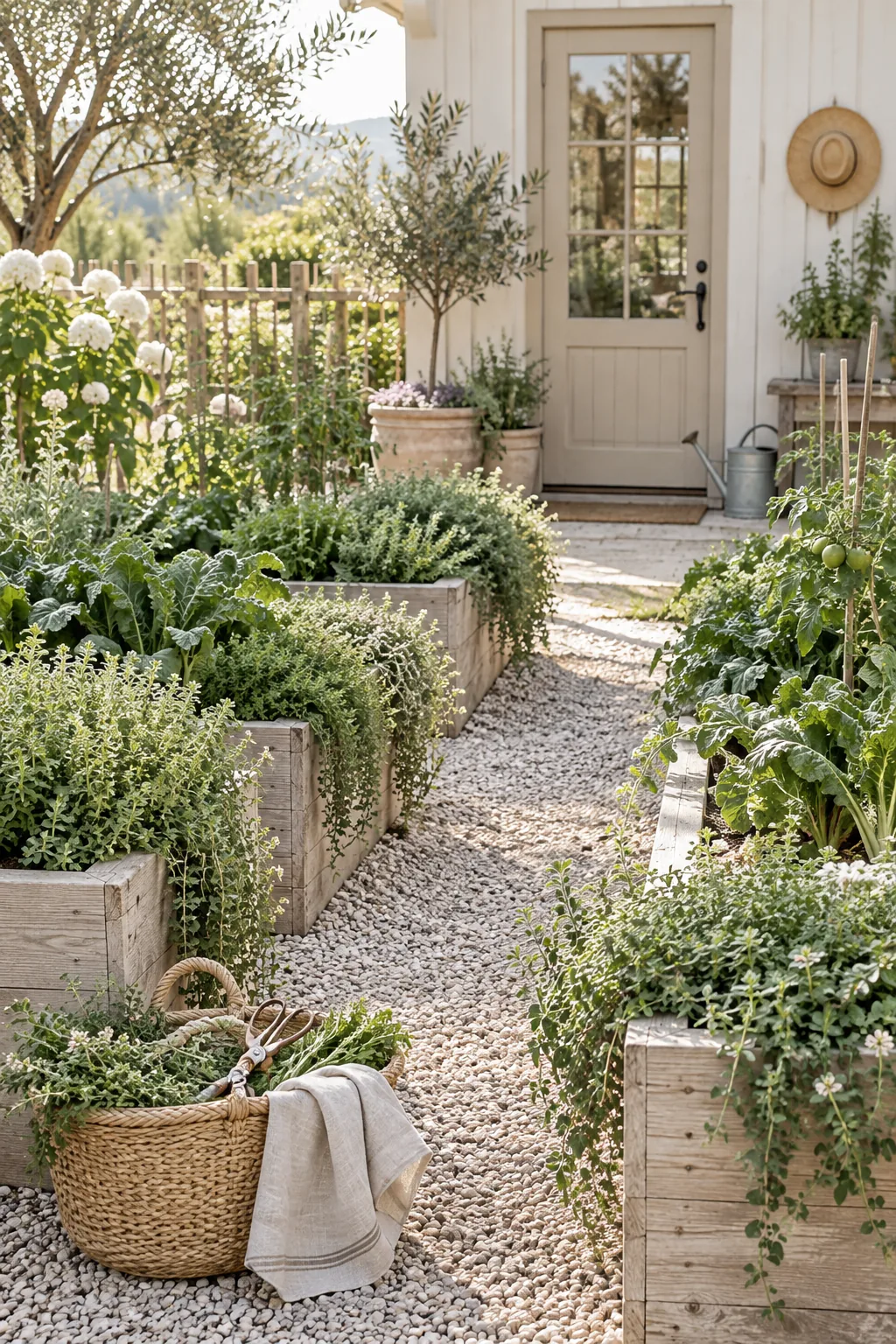
Low-growing herbs naturally spill over the harsh wooden edges of raised garden beds. Planting a perimeter of thyme and oregano softens the visual lines while keeping your kitchen stocked.
Why it works: It works because perennial herbs establish deep roots that prevent soil erosion along the edges of your beds.
8. North-to-South Rows
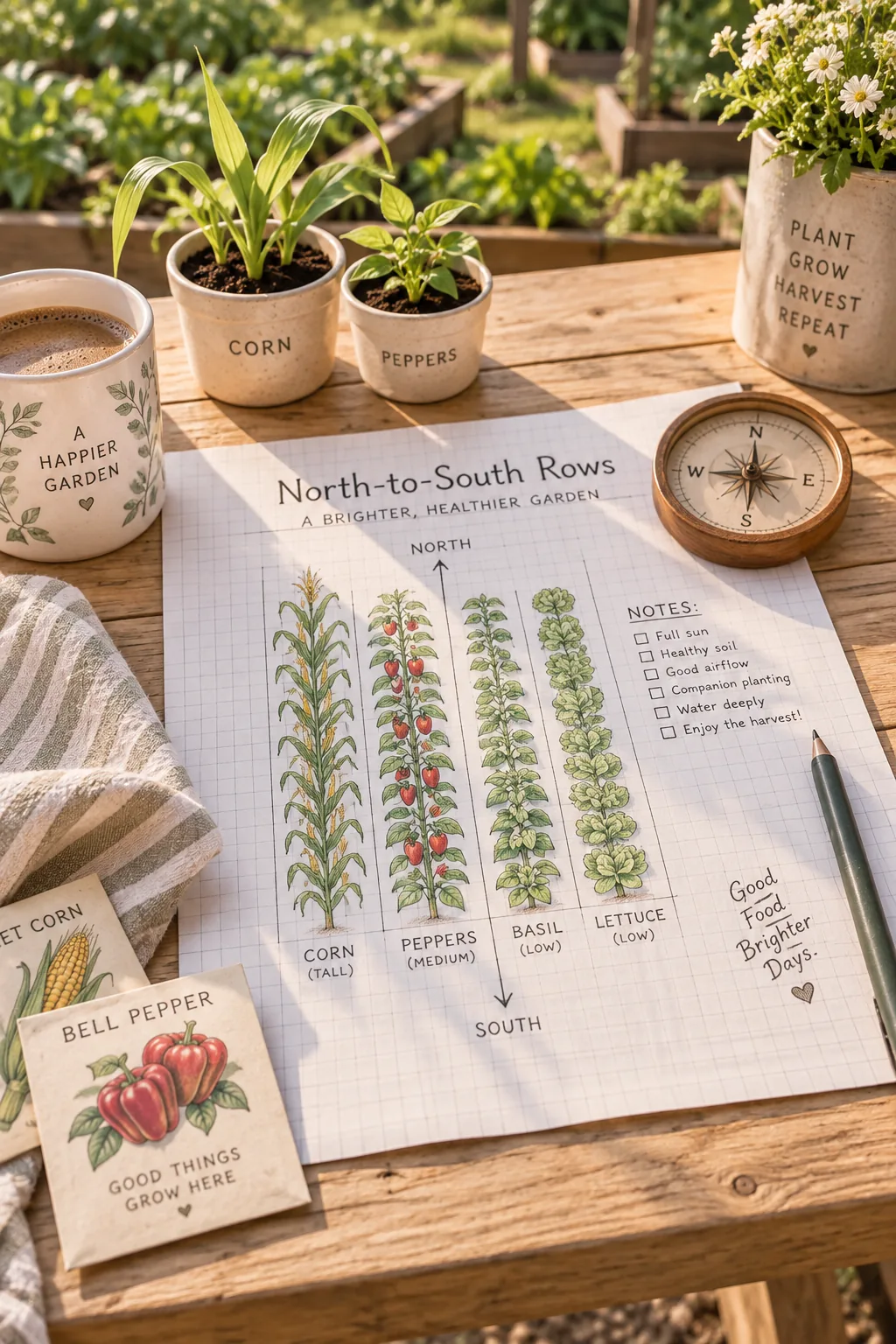
The sun moves from east to west across your backyard every single day. Orienting your garden rows from north to south ensures that crops get even sunlight on both sides. Tall corn stalks won't cast permanent shadows on your shorter pepper plants.
This simple alignment trick completely changed my harvest yields.
9. Gravel and Paver Pathways
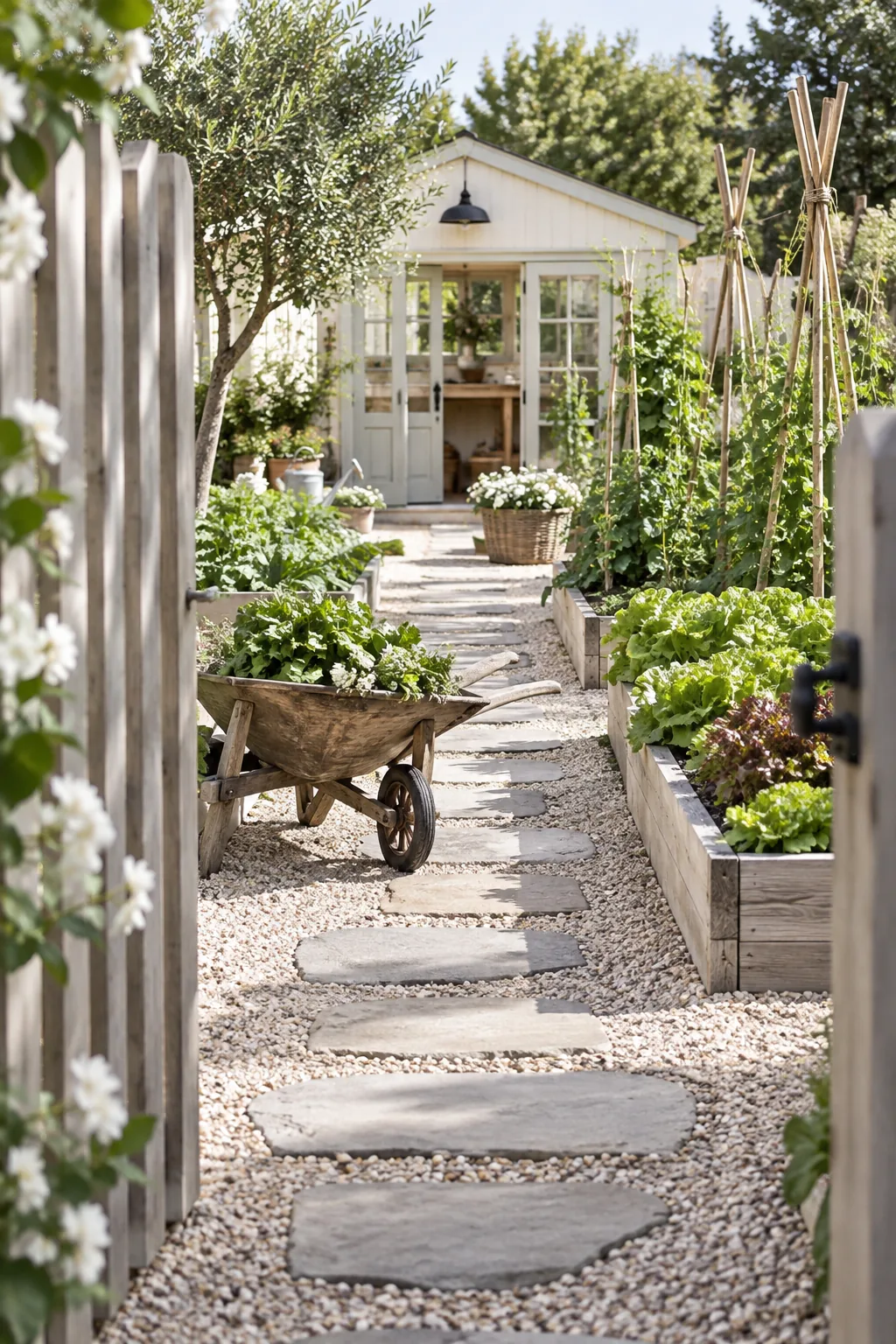
A thick layer of pea gravel over landscape fabric creates a clean, English-cottage aesthetic. It instantly makes the vegetable garden look like a permanent, intentional part of your landscaping. The crunch underfoot is incredibly satisfying when you go out to harvest morning greens. Adding large stone pavers down the center gives your wheelbarrow a smooth track to roll on. You will never have to weed a muddy dirt path again.
10. The Three Sisters Layout
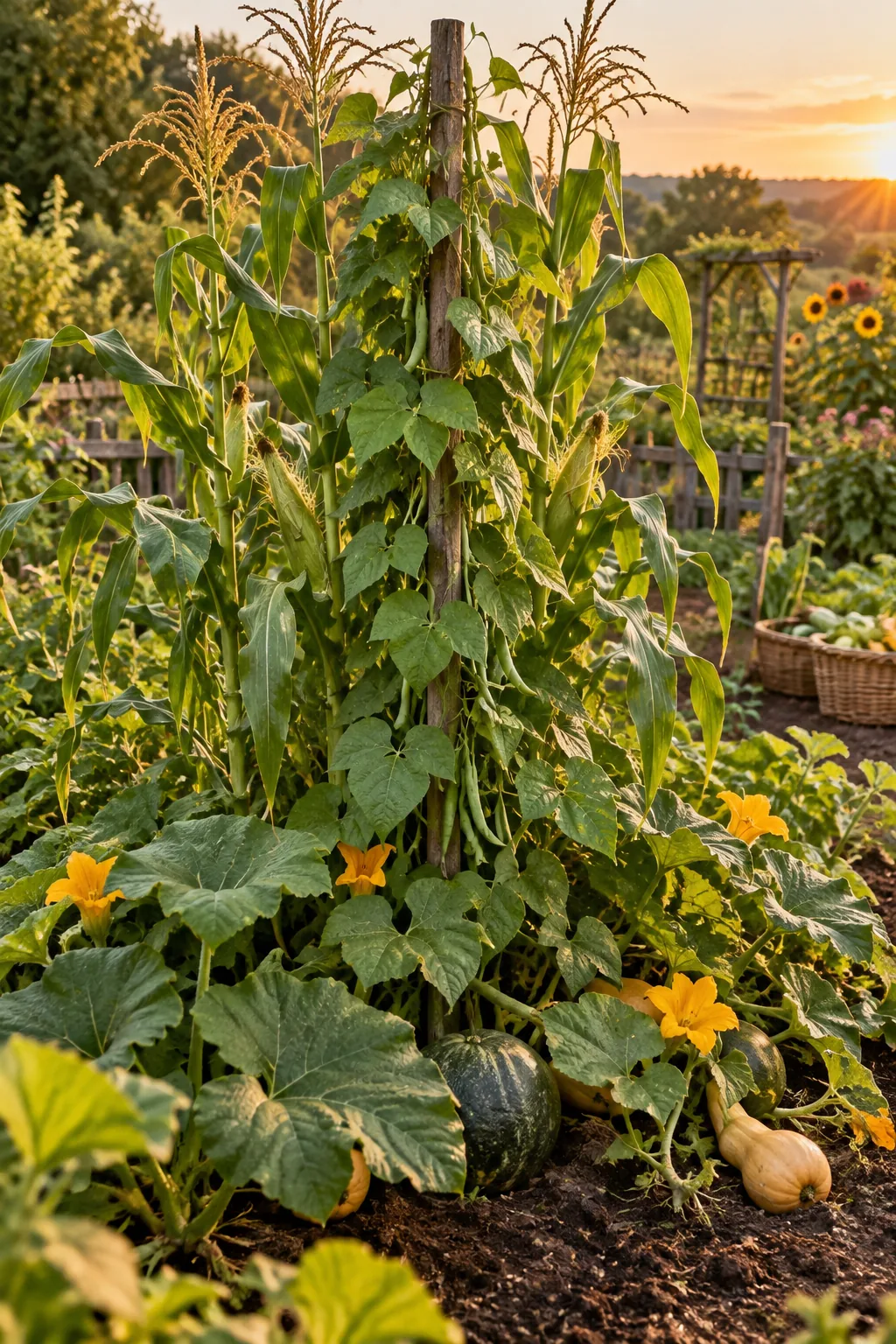
Stacking plants with different growth habits maximizes every square inch of soil. Corn provides a tall stalk for beans to climb, while squash leaves cover the ground to trap moisture. This indigenous farming technique creates a self-sustaining microclimate.
It completely eliminates the need for artificial trellises and chemical weed killers.
- Tall supportive corn
- Nitrogen-fixing beans
- Ground-covering squash
11. Tiered Retaining Walls
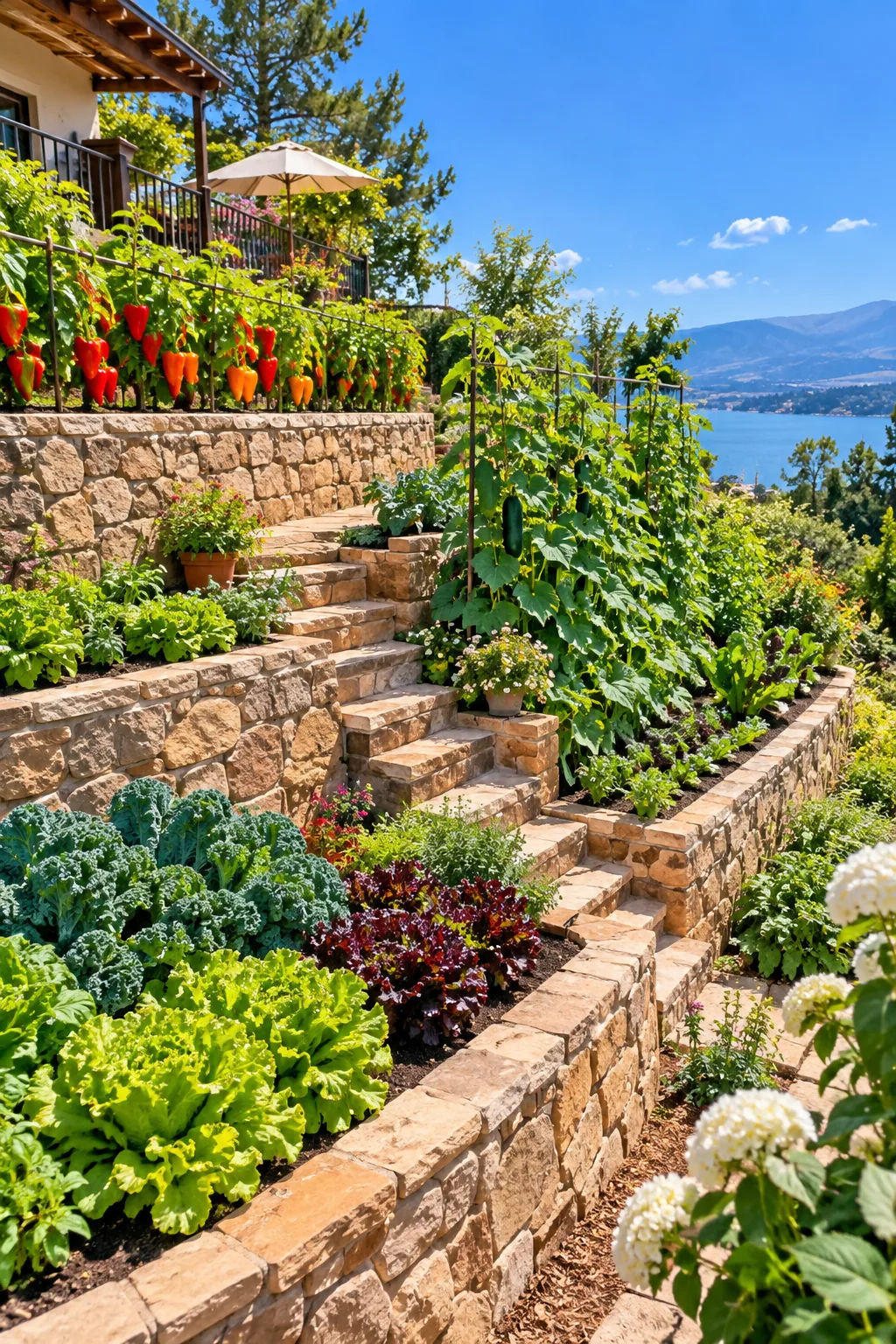
Sloped backyards often suffer from severe water runoff during spring storms. Carving the hill into flat, stepped terraces stops the erosion dead in its tracks. The retaining walls absorb heat during the day and keep the soil warm overnight. You can plant your heat-loving peppers on the top tier and moisture-loving cucumbers at the bottom. It turns an unusable hill into the most productive spot on your property.
12. Perimeter Fencing as Trellis
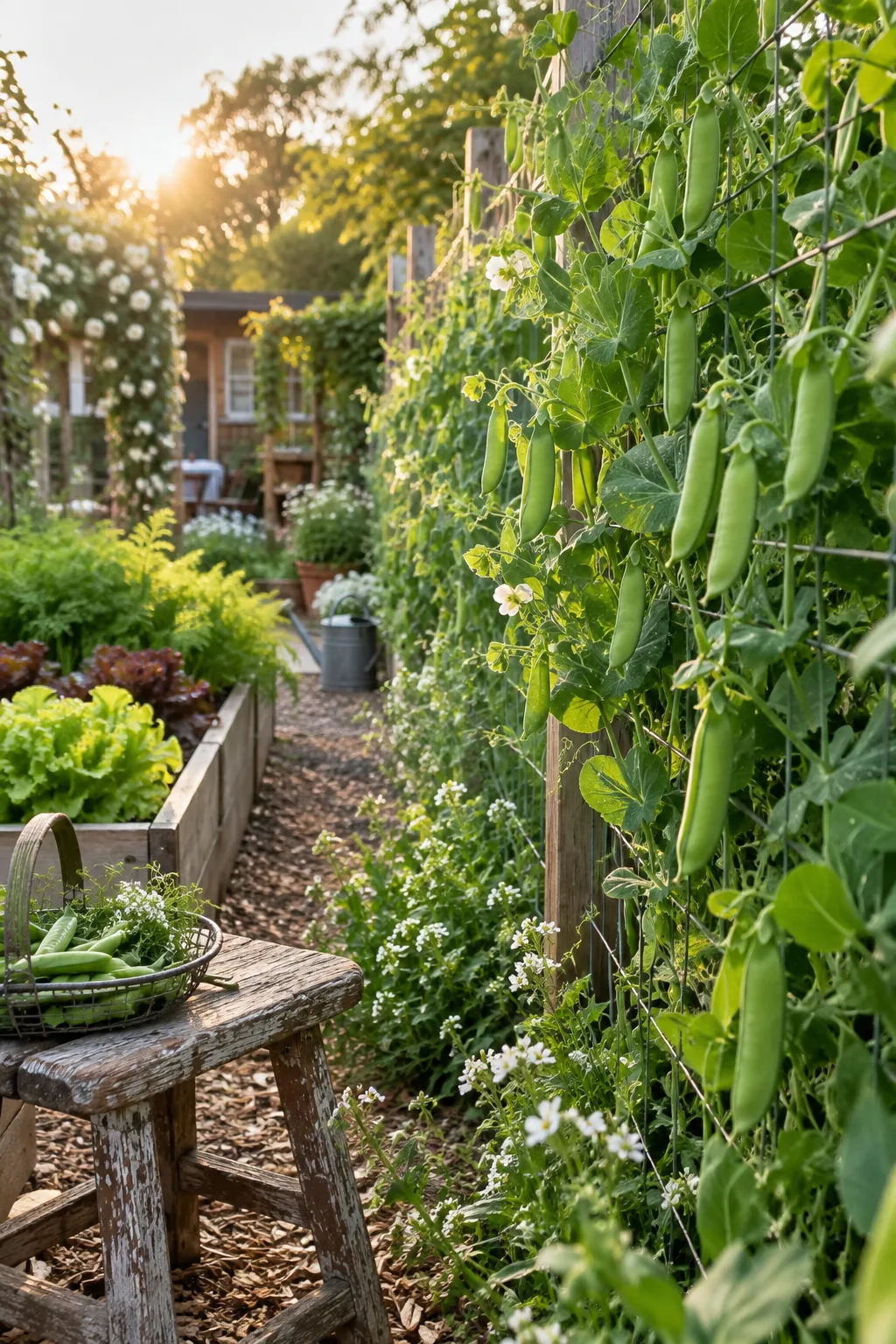
I used to hate the ugly wire fence keeping the rabbits out of my yard. Then I realized it was the perfect built-in support system for vining crops.
Planting sugar snap peas along the inside perimeter hides the metal mesh completely. The vines weave through the wire and create a solid wall of greenery.
It frees up so much valuable space in the center beds. Harvesting is also incredibly fast when the pods are hanging right at eye level.
13. Cinder Block Borders
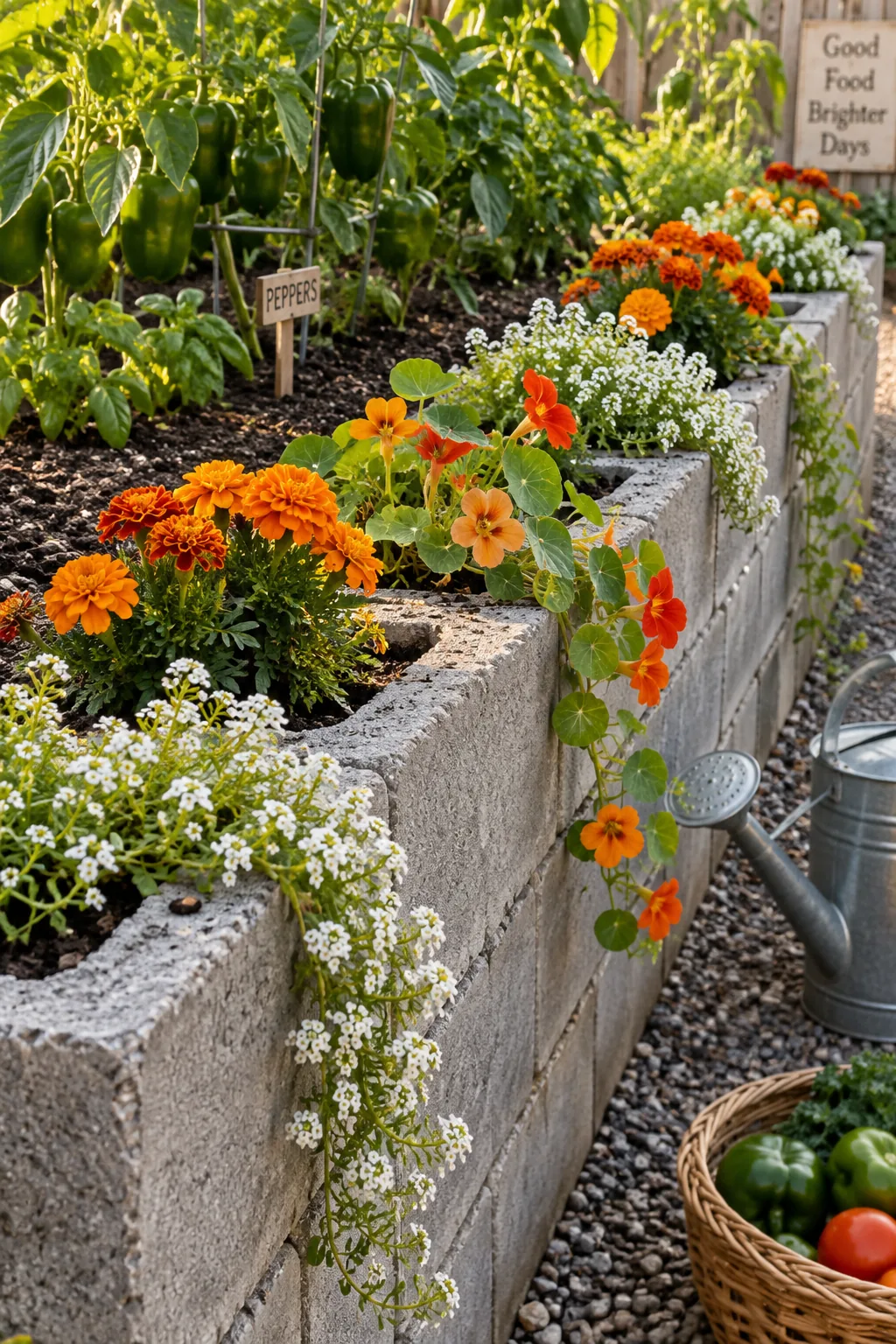
The hollow cores of standard cinder blocks provide individual planting pockets for small companion flowers. Stacking them creates a cheap, indestructible barrier that won't rot like traditional lumber.
14. Galvanized Trough Planters
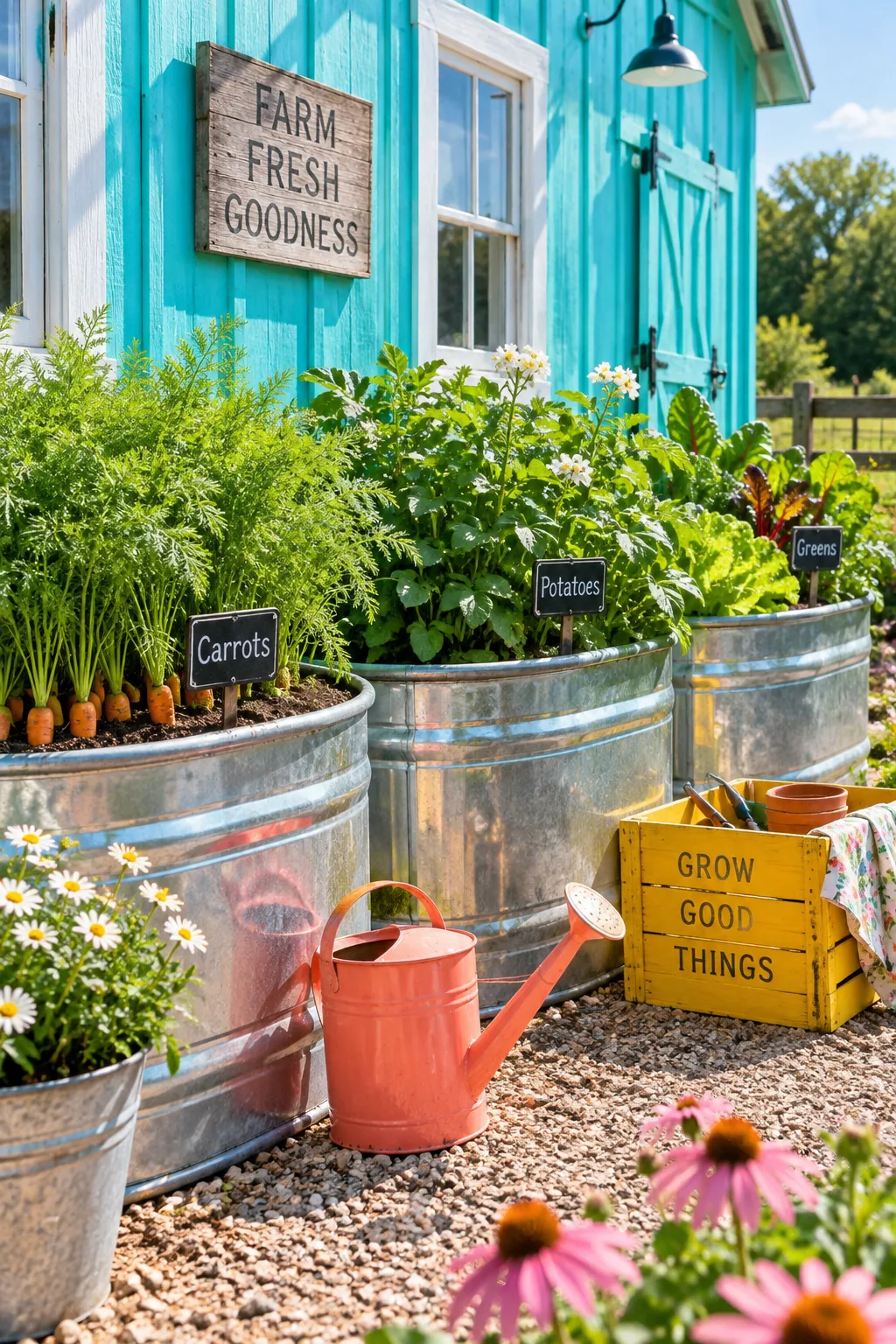
Metal livestock troughs bring an instant farmhouse vibe to any outdoor space.
They are deep enough to grow massive root vegetables like carrots and potatoes. You just need to drill several drainage holes in the bottom before adding your potting soil. The metal sides warm up quickly in early spring to give your seeds a head start.
15. One-Foot Gardening Grid
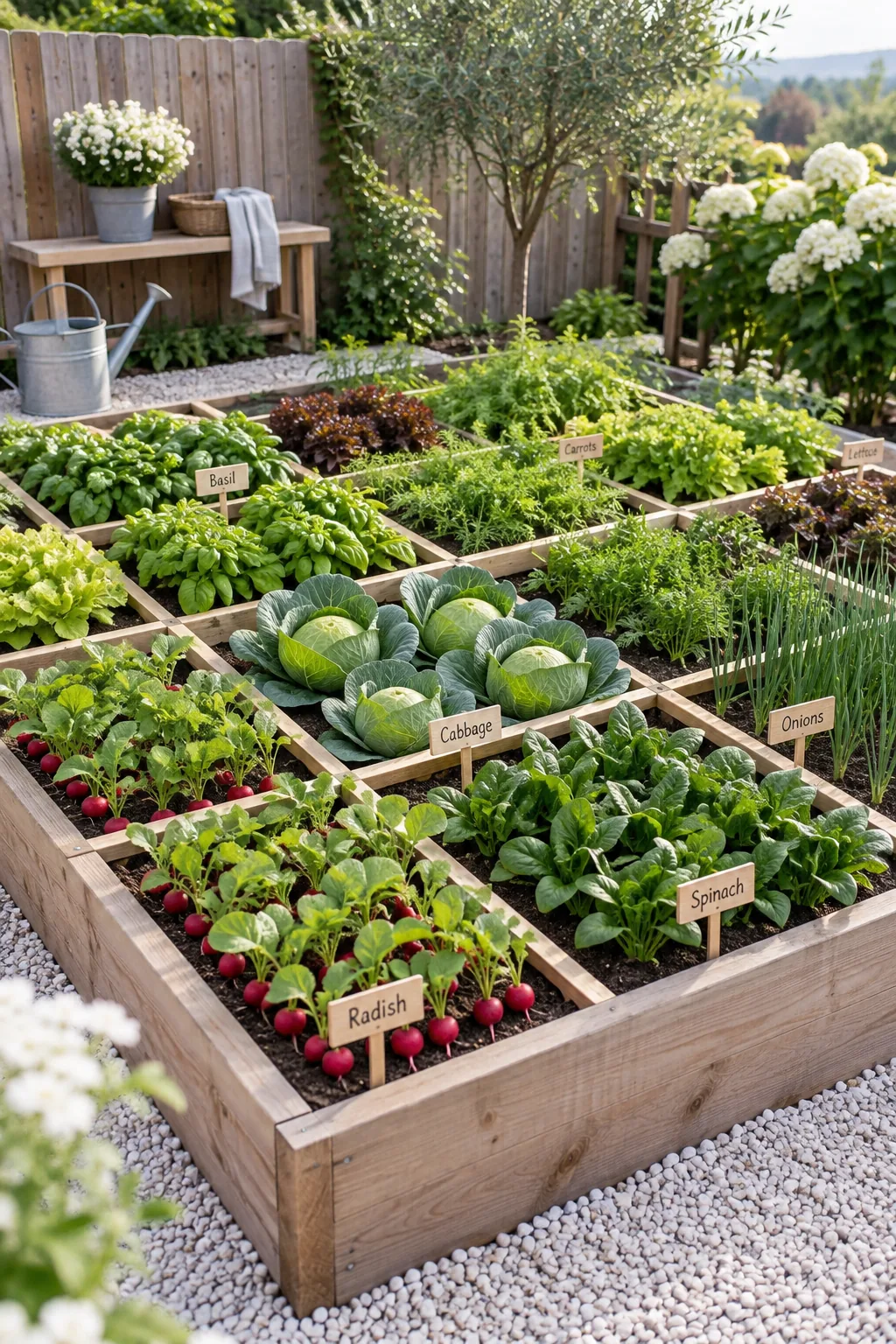
Dividing a large bed into one-foot visual squares prevents you from overplanting tiny seeds. You can plant exactly sixteen radishes or one cabbage head per square based on their mature size. Laying down a physical grid made of thin wooden lath strips keeps the layout perfectly organized. It is the easiest way to estimate exactly how much food you will yield. Beginners love this method because it takes all the guesswork out of spacing.
16. Dedicated Pollinator Strips
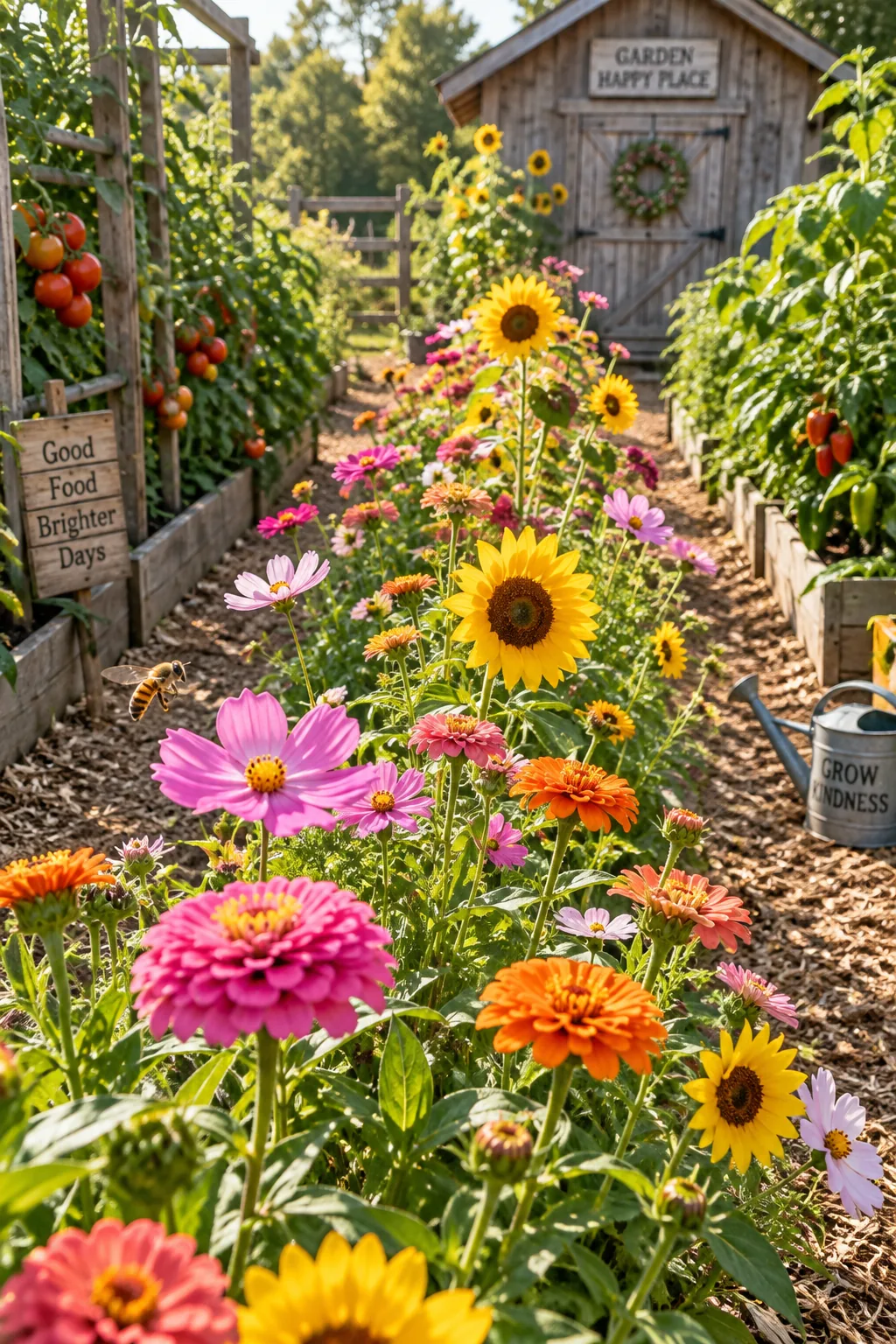
Nearly eighty percent of your summer vegetables require bees to produce fruit. Leaving a three-foot strip of native wildflowers right down the middle of your garden guarantees a massive harvest.
Zinnias, sunflowers, and cosmos draw in the exact insects you need for pollination. They also attract predatory wasps that eat destructive tomato hornworms.
The burst of bright color breaks up the endless sea of green foliage. It makes the whole layout feel like a professional botanical garden.
17. Integrated Seating Areas
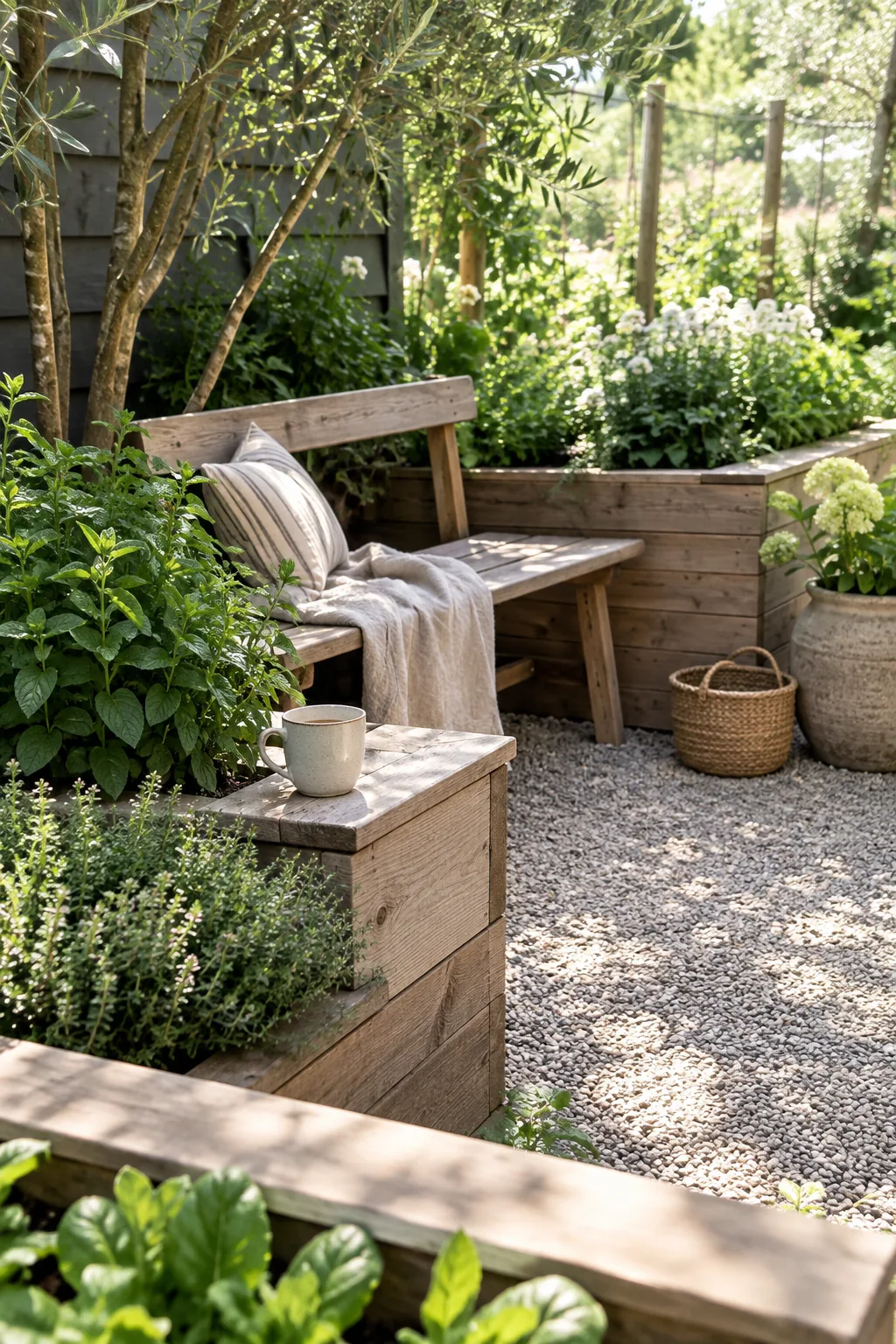
Gardening is hard physical labor that requires frequent water breaks. Leaving a small gravel cutout for a wooden bench gives you a place to rest in the shade.
You can cap the corners of your raised beds with wide, flat boards to create built-in stools. It makes pruning and harvesting low-hanging fruit much easier on your knees.
I like to place my seating right next to the fragrant herbs. The smell of crushed mint on a hot afternoon is absolutely heavenly.
18. The T-Shaped Walkway
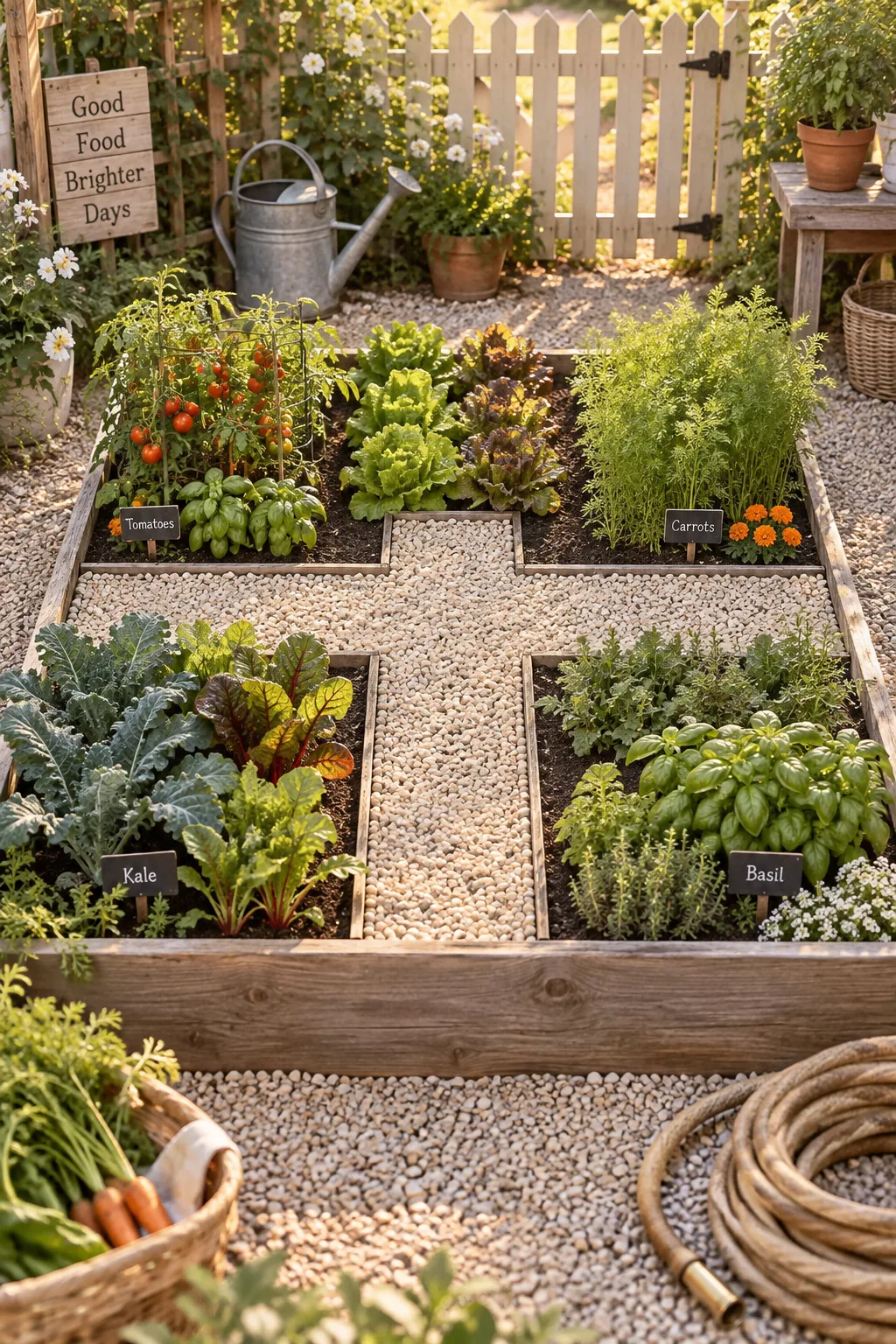
I finally stopped tripping over the hose when I installed a wide T-shaped main path.
A central artery runs straight from the garden gate to the back fence. Smaller secondary paths branch off at sharp right angles to separate the individual planting zones. You can drag a heavy hose straight down the middle without snagging the corners of your beds.
Why it works: It works because it mimics natural foot traffic patterns while giving you the fastest route to the water spigot.