
Mid-Century Footstool Makeover with Textured Oatmeal Boucle
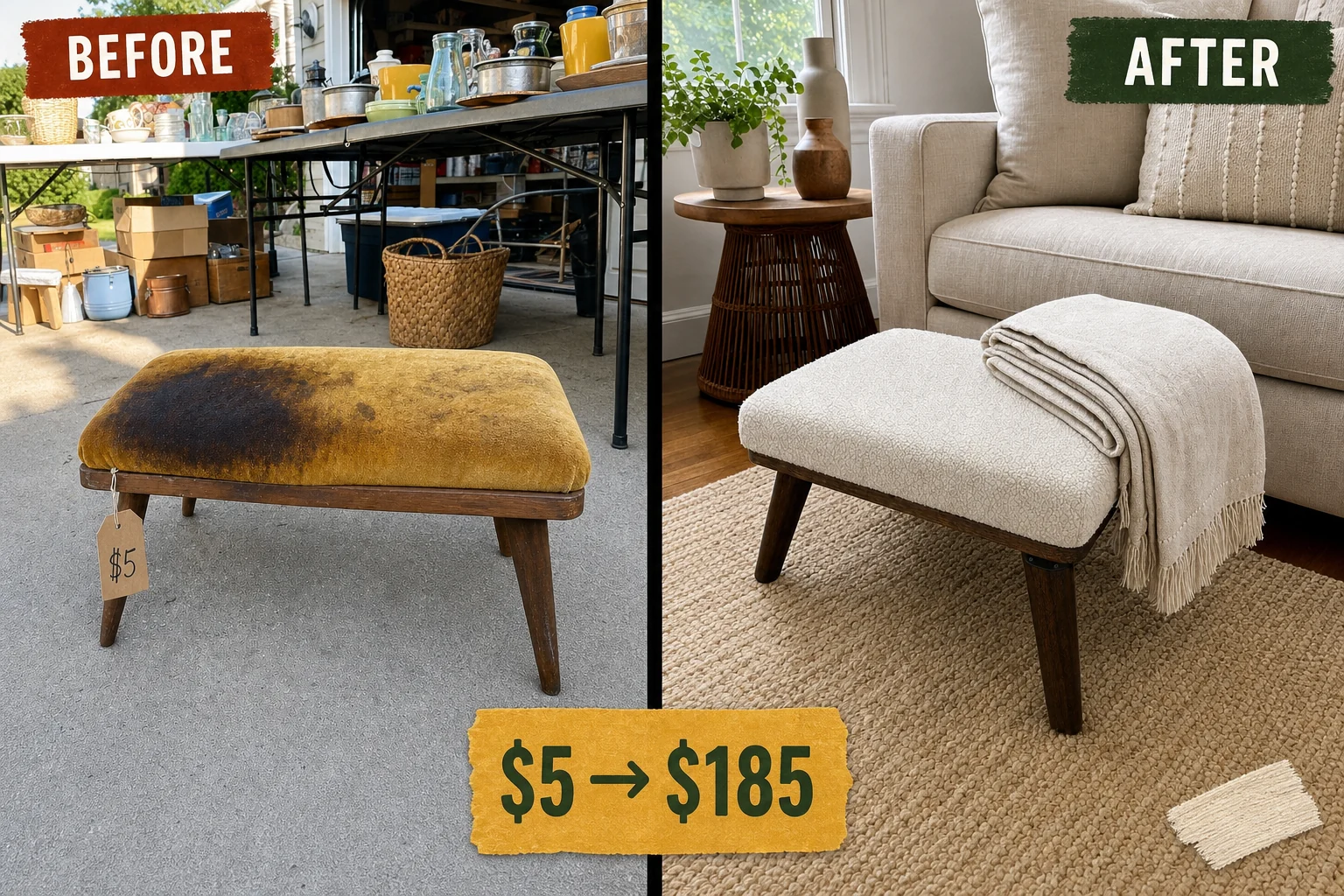
Tucked under a garage sale folding table, this mid-century footstool was priced to move due to a massive stain. We stripped the ruined velvet, restored the walnut legs, and reupholstered it in chunky oatmeal boucle for a high-end transitional look.
Evaluating the Damaged Original Condition
The found object presented significant challenges during the initial condition audit. The original upholstery fabric featured large dark liquid rings and crushed, bald patches across the mustard velvet surface. Furthermore, the degraded cushion foam compressed completely flat to the hard plywood board when pressed, necessitating a complete removal of the original fabric covering.
Wood Finish Degradation
Below the ruined cushion, the mid-century base showed its age. The dry and scuffed wood finish displayed pale scratches and a dull, chalky appearance on the tapered legs. This damage required light sanding and a fresh application of penetrating oil to nourish the grain and restore the bare walnut legs.
Step 1: Assess the Frame and Joints
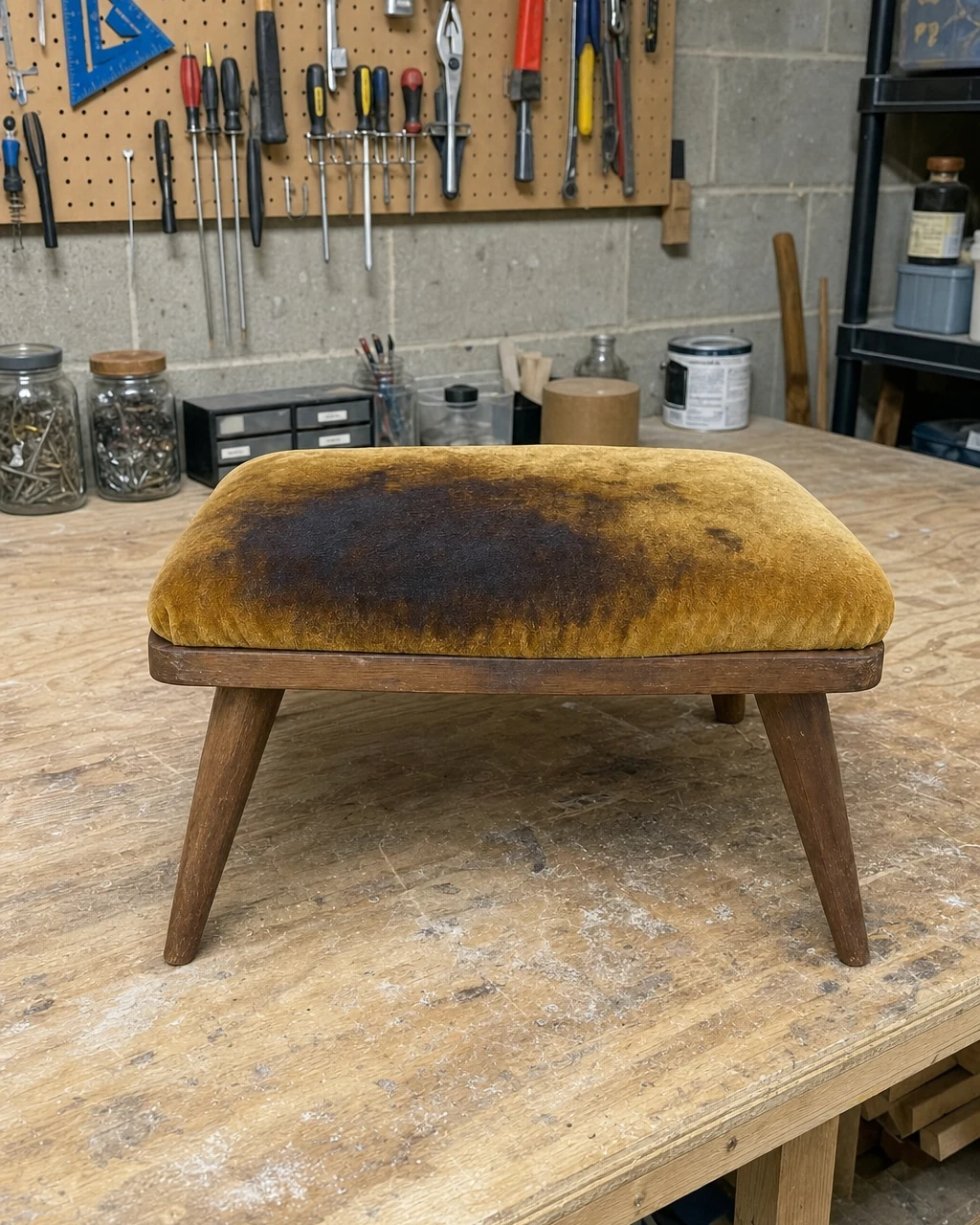
Evaluate the structural integrity of the base and the leg mounting plates before committing to the reupholstery project. The found footstool sits untouched on the workbench while you inspect the metal joint where the leg meets the base. Checking the bones first prevents wasting money on broken frames.
| Item | Cost |
|---|---|
| Footstool purchase | $5 |
| Upholstery foam | $12 |
| Dacron batting | $6 |
| Boucle upholstery fabric | $18 |
| Danish oil | $14 |
| Heavy-duty staples | $4 |
| Materials total | $54 |
| Total investment | $59 |
| Estimated resale value | $185 |
| Value gain | $126 |
Confirming the piece is structurally sound ensures it is ready for a complete teardown. The metal joints where the legs meet the base must be tight and secure. Always wear work gloves when handling secondhand furniture with unknown stains to protect your skin from potential hazards.
Step 2: Strip the Ruined Upholstery
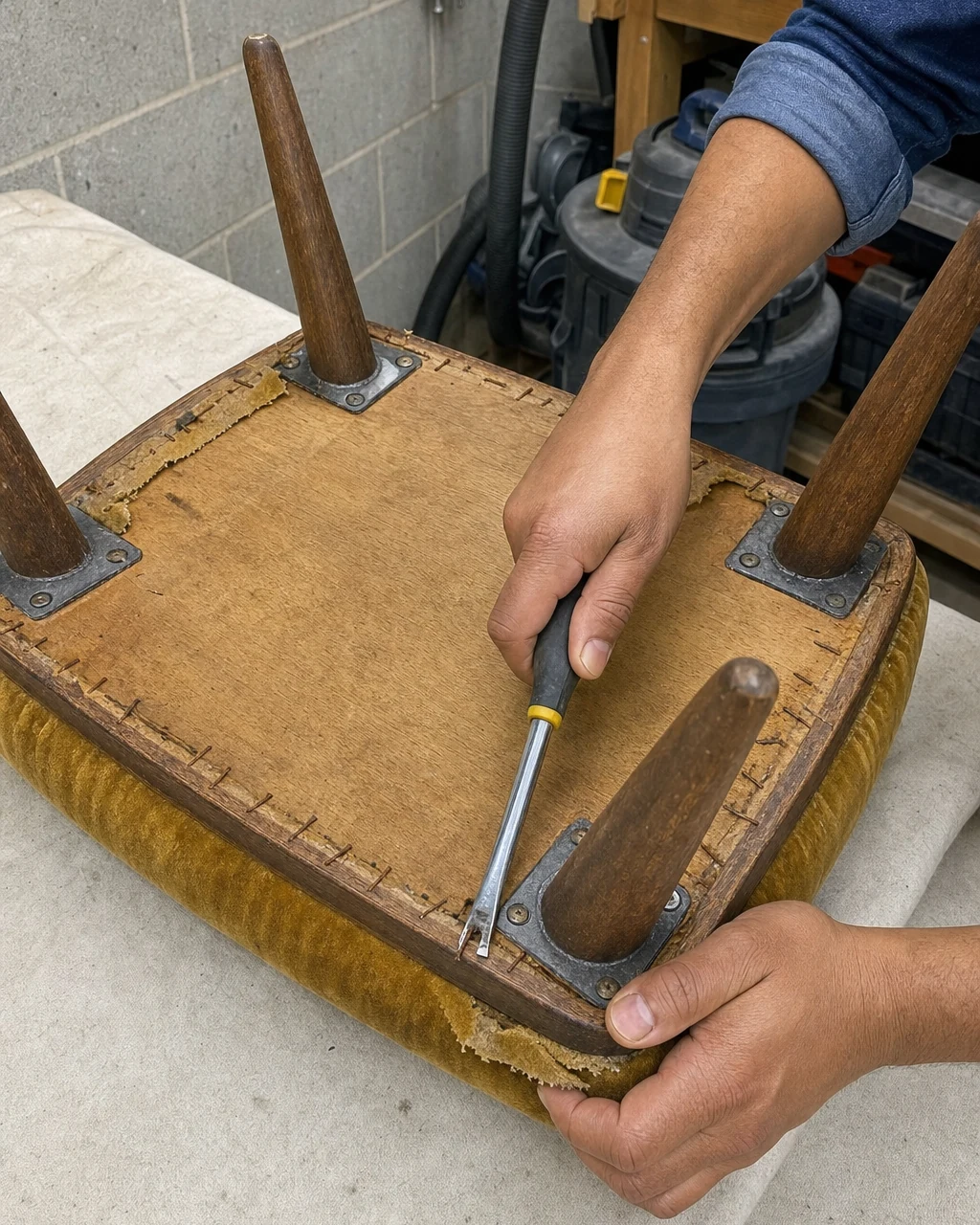
Remove the original fabric, degraded foam, and hundreds of old staples to expose the bare plywood base. Taking the piece down to its bones provides a clean slate for the new upholstery. Wear safety glasses to protect your eyes from flying staples during extraction.
Pry every rusted staple out of the wooden base using a metal tack lifter tool and pliers. The plywood base must be completely bare and free of old fasteners before moving forward. This meticulous preparation guarantees that the new materials will sit perfectly flush against the wood.
Step 3: Restore the Walnut Legs
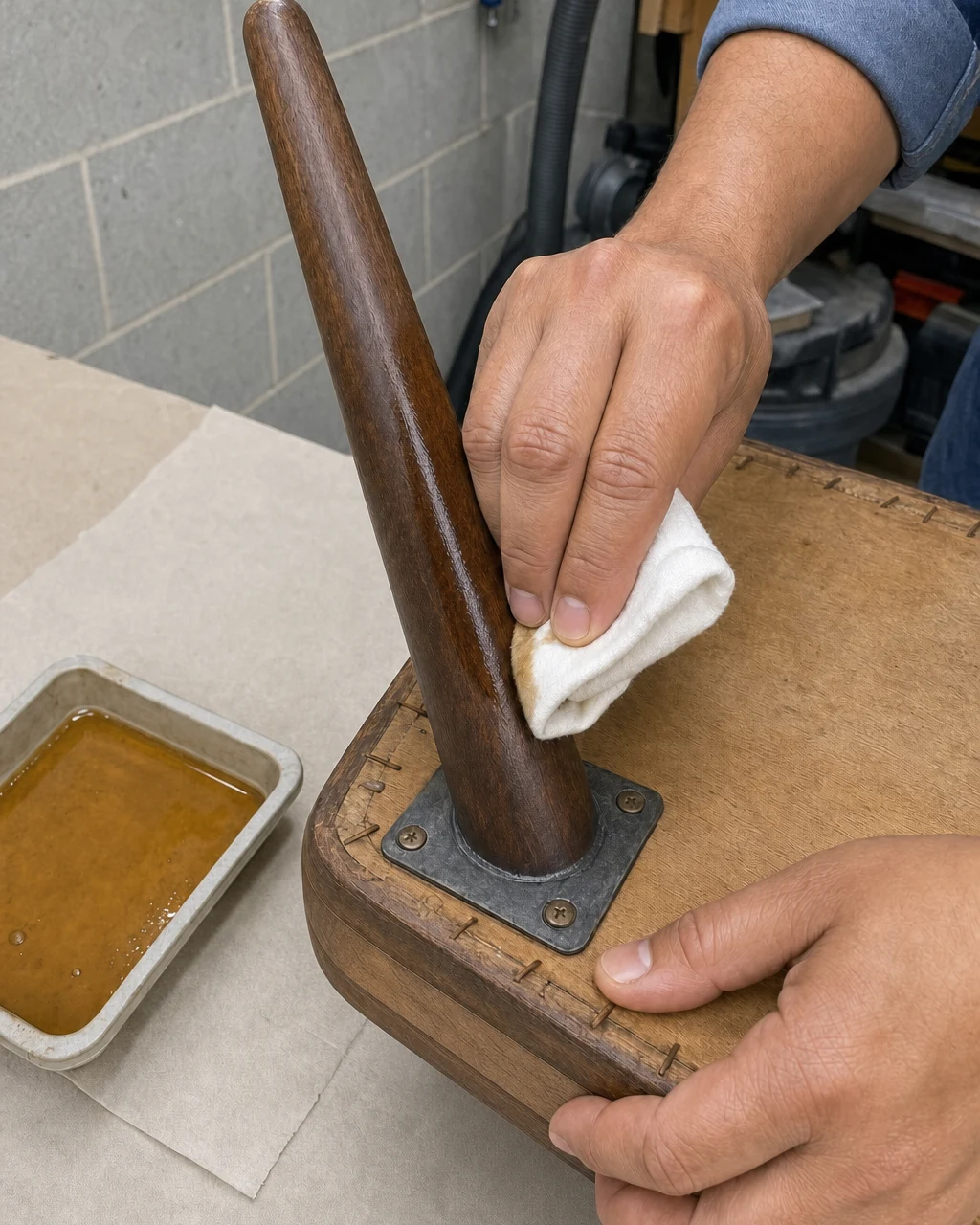
Lightly sand the original tapered legs with a sanding sponge to remove scuffs, preparing the surface for a fresh finish. This removes the dull, chalky appearance without altering the immutable angled stance and tapered profile of the four mid-century wooden legs.
Materials checklist
Apply a penetrating oil to nourish the dry walnut, wiping it on with a clean cotton rag. This simple application restores the rich, dark, hydrated wood grain for better daily durability. Lay oil-soaked rags flat outside to dry completely to prevent spontaneous combustion.
Step 4: Attach the New Padding
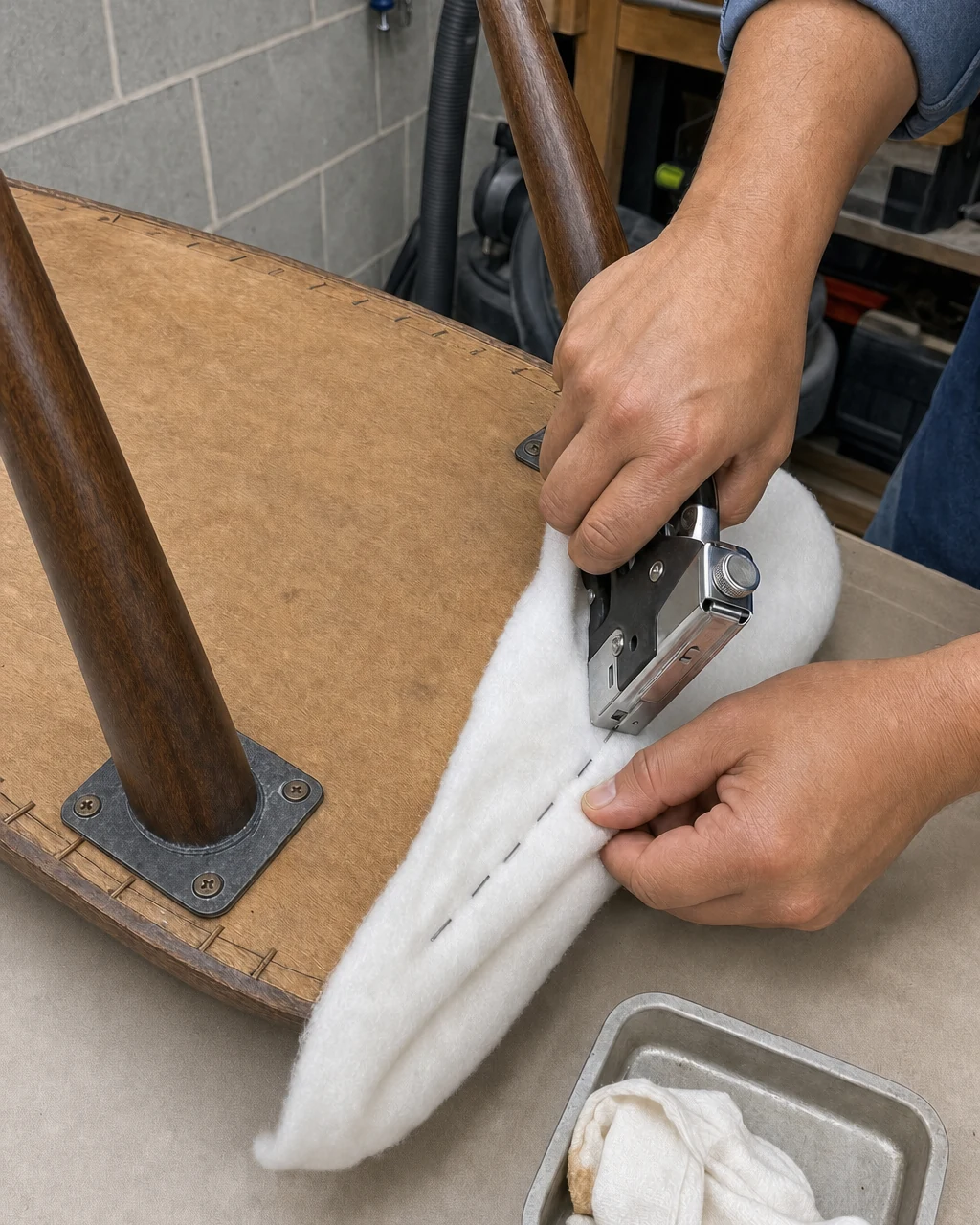
Cut high-density foam to size and layer it with Dacron batting to soften the sharp foam edges. This creates a professional profile, provides the new structural cushion layer, and prevents fabric friction over time. Keep fingers clear of the staple gun discharge area during assembly.
Secure the batting tightly to the underside of the plywood base using a staple gun and fabric scissors. The base should be wrapped in a smooth, domed layer of white batting, creating a soft foundation for the final upholstery layer.
Step 5: Secure the Boucle Fabric
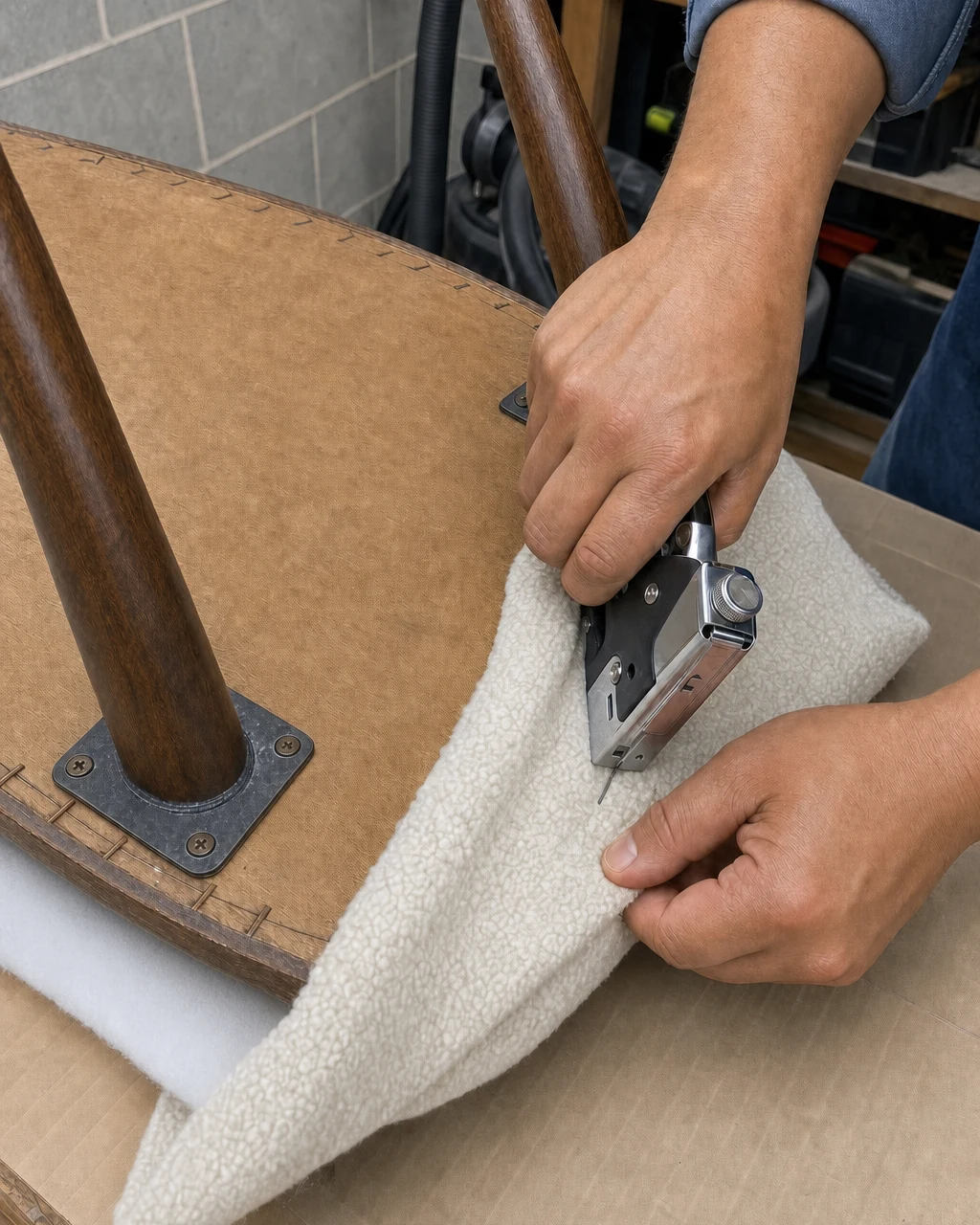
Stretch the heavy boucle fabric evenly over the padded base, working from the centers to the corners to prevent wrinkles. Heavy upholstery fabrics require a pneumatic or electric staple gun for secure attachment. Pull fabric evenly to avoid stressing your wrists.
- Pull the textured oatmeal fabric taut over each corner of the base.
- Drive heavy-duty staples into the wood to secure the batting and fabric.
- Check the tension constantly to ensure a tightly tailored, wrinkle-free cushion.
The result is a tightly tailored, wrinkle-free cushion that completely transforms the piece. The footstool is fully covered in tight boucle, marking a dramatic shift from the crushed, stained velvet to a crisp, high-texture finish.
Step 6: Review the Finished Piece
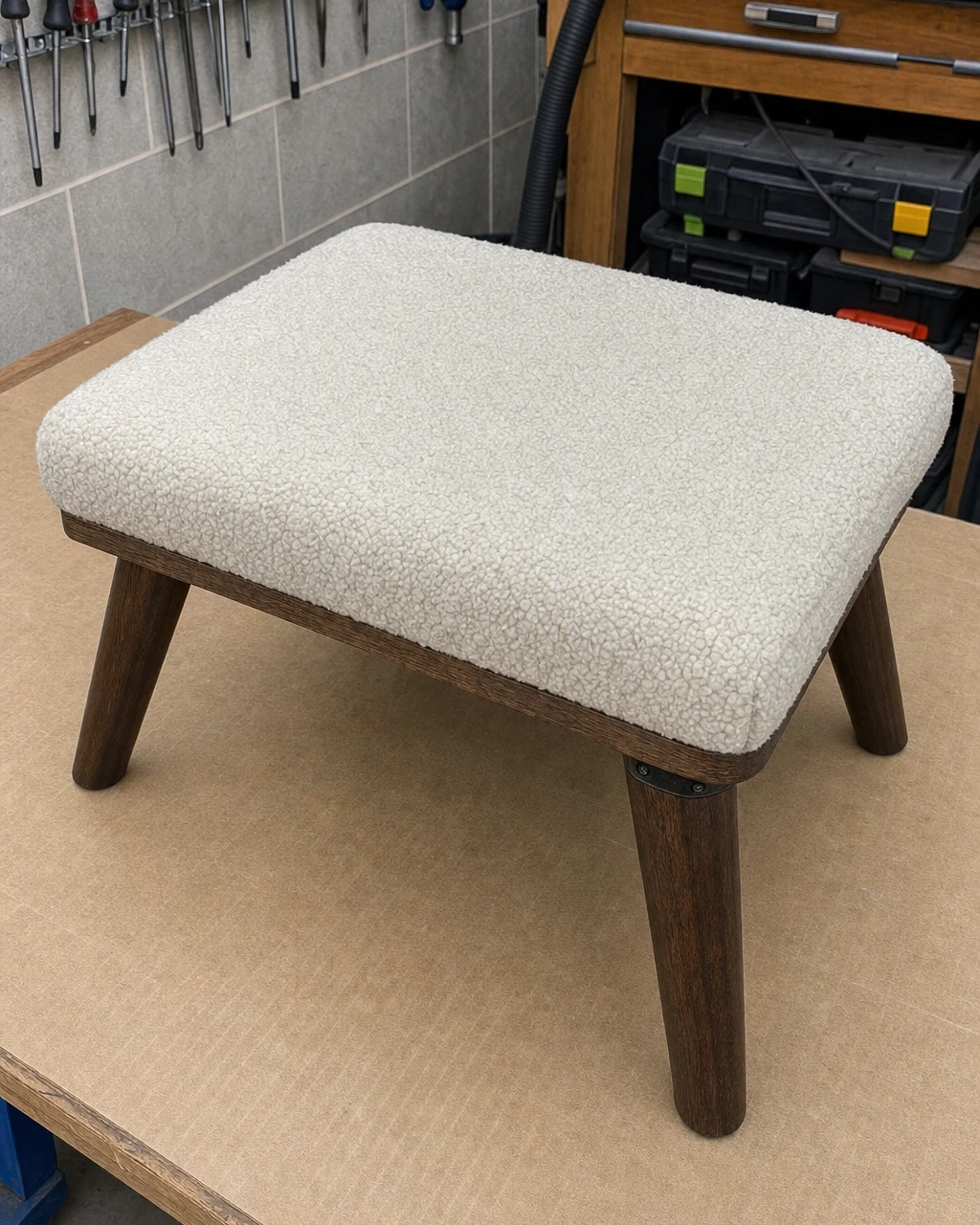
Clear the workbench of tools and debris to inspect the completed footstool under bright workshop lighting. This final check ensures the piece sits cleanly and all details are perfect. Ensure no loose staples remain on the work surface before running your hands over the piece.
Valuation and Resale Potential
High-texture boucle fabrics and restored mid-century walnut legs command premium prices in current transitional interior design markets. Neutral textured fabrics increase the potential resale value significantly, turning a five-dollar garage sale find into a piece worth nearly two hundred dollars. This resale value remains an editorial estimate.
Step 7: Style the Transitional Footstool
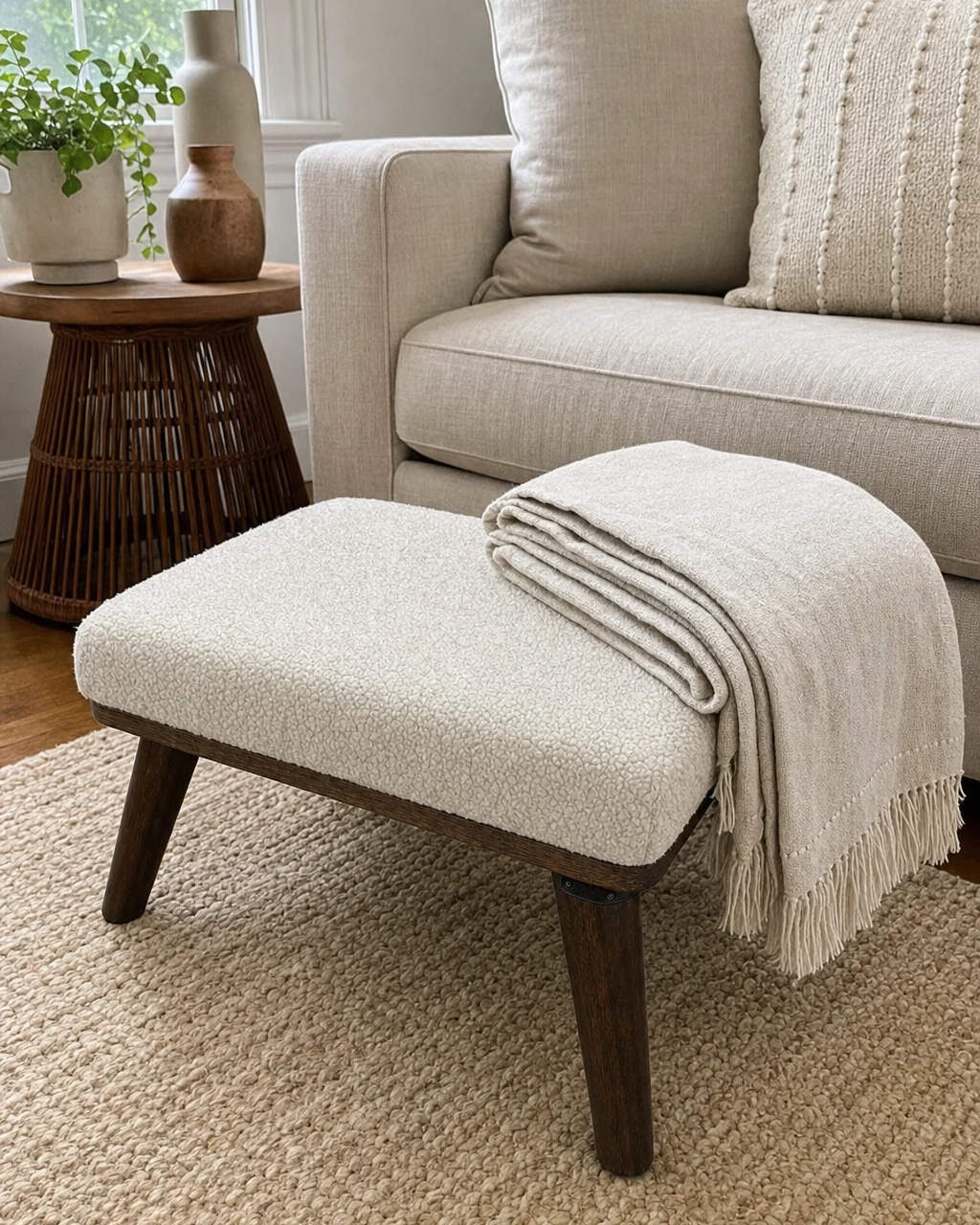
Place the restored footstool in a transitional living room setting to highlight its updated, sophisticated profile. The chunky oatmeal boucle contrasts beautifully with the sleek oiled walnut legs. Lift with your legs when moving furniture into the house to avoid injury.
A Highly Textured Accent
Rest a folded linen throw blanket across the corner of the footstool next to a neutral sofa. It now functions beautifully as a highly textured accent piece in a modern living space, proving that solid bones can always be revived with the right transitional materials.