
Zen Modern Meets Parisian: Library
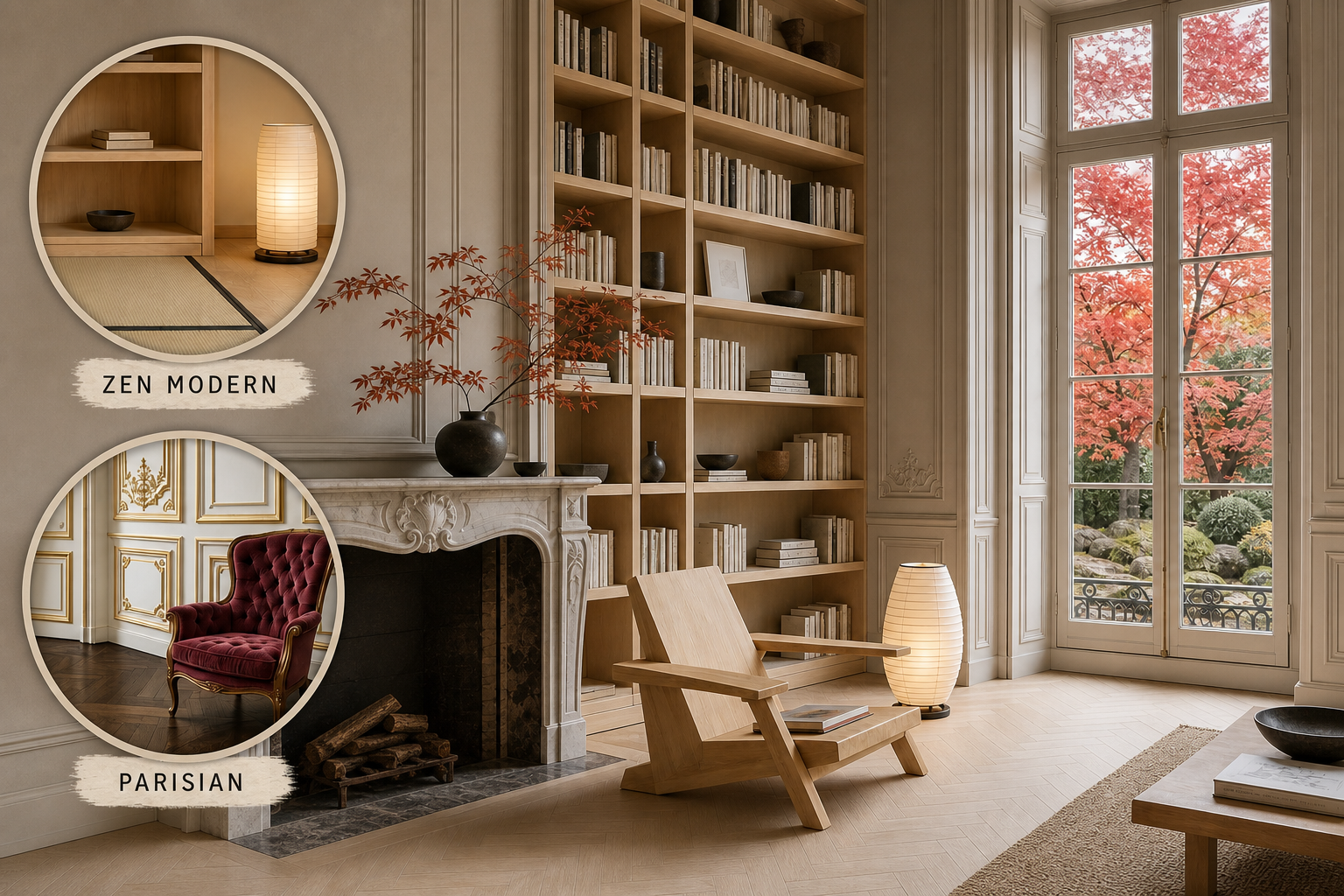
Classical French architecture’s heavy verticality directly contradicts the empty, horizontal focus of Japanese modernism. We resolve this by neutralizing tall parisian proportions with matte plaster, allowing zen modern low-slung furniture and raw timber to dictate the space.
Grounding the Space with zen modern
Japanese modernism demands a rigorous connection to the floor, prioritizing empty space and horizontal planes over towering furniture. By anchoring the room with low-profile pieces, we establish a deeply serene foundation beneath the grand, historically heavy architectural shell.
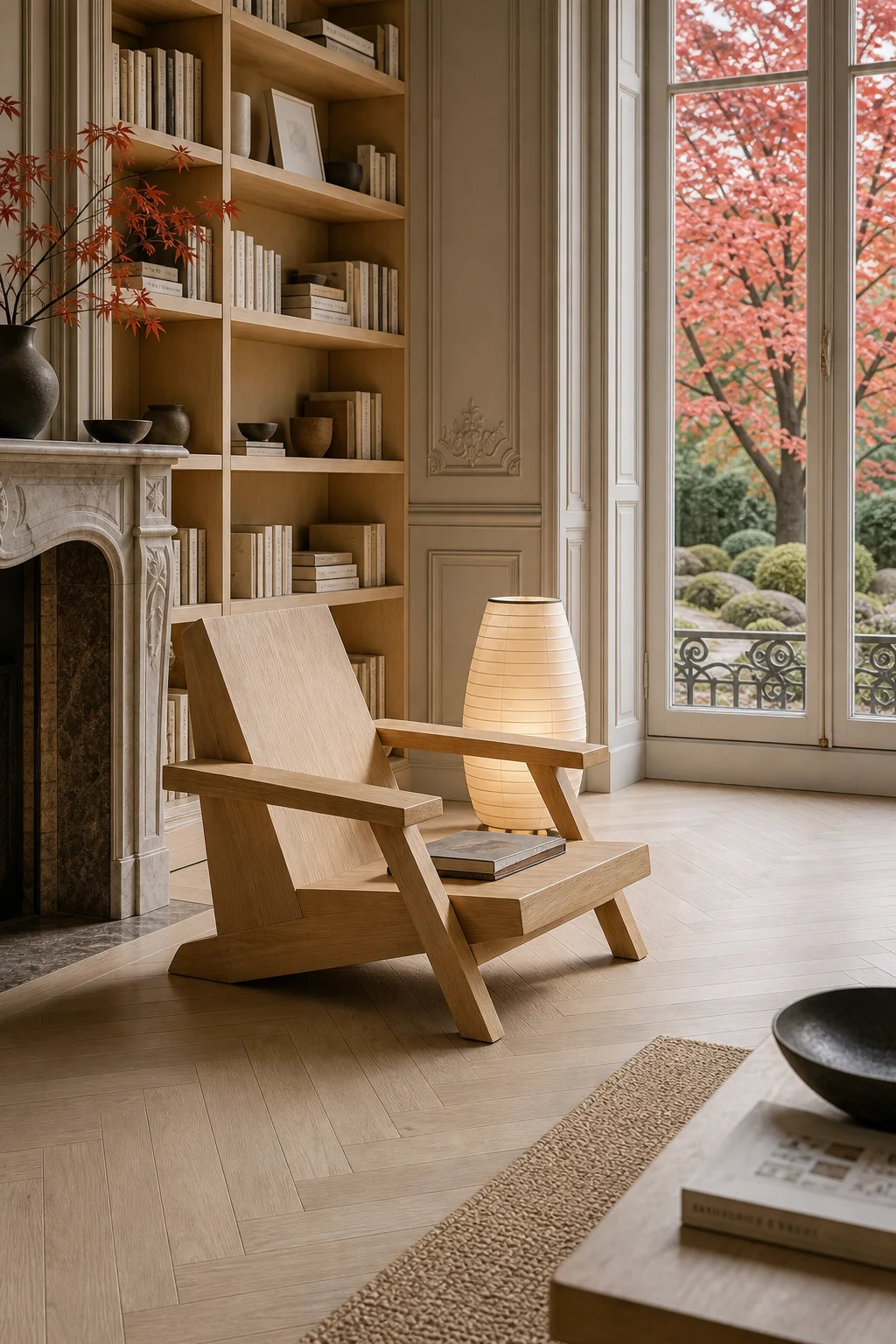
Placing a solid hinoki reading chair against towering walls allows the room to breathe beautifully. This intentional contrast keeps sightlines perfectly clear, deeply grounding the library while simultaneously drawing the eye upward toward the historic molding.
To successfully implement this style, you must fully commit to raw materials and unadorned surfaces. The furniture should always feel monastic yet inviting, relying entirely on tactile warmth rather than complex upholstery to provide everyday comfort.
- Select low-profile solid wood lounge chairs to firmly anchor the visual sightlines near the floor.
- Prioritize raw hinoki or pale ash over glossy, dark timber finishes to maintain a serene atmosphere.
- Maintain strict geometric lines by completely eliminating decorative throw pillows and unnecessary textile layering.
Elevating the Shell with parisian Architecture
Classical French interiors rely heavily on tall, elegant proportions and ornate architectural details to communicate grandeur and history. This historical weight provides a magnificent vertical shell that anchors the room without overwhelming the minimalist furniture placed below.
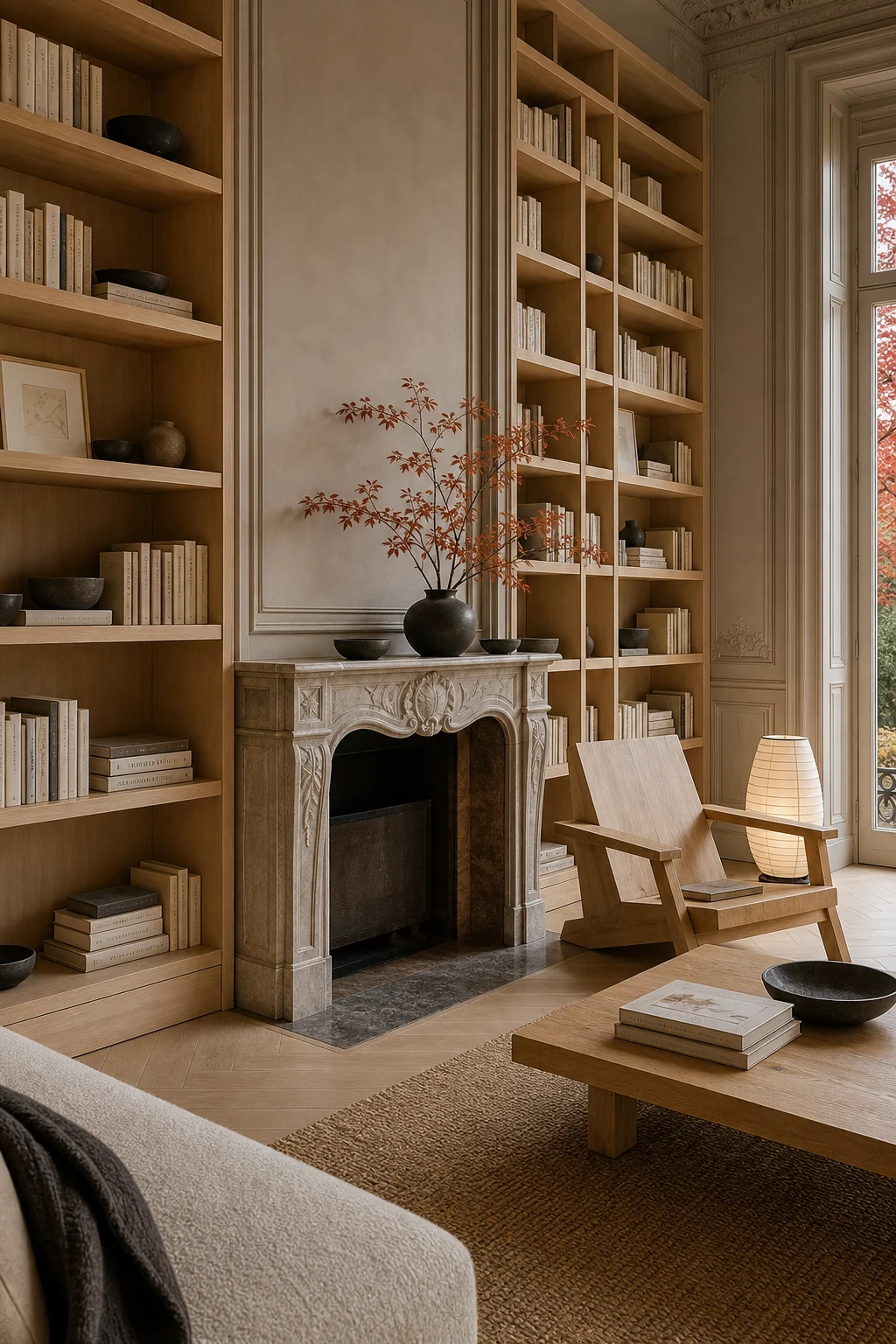
A carved marble fireplace mantel and Haussmannian boiserie introduce essential verticality to the room. However, these ornate moldings must be carefully managed and subdued to prevent them from overpowering the quiet, horizontal planes of the carefully selected seating.
By retaining the grand scale but ruthlessly stripping away the traditional shine, the architecture becomes a quiet textural backdrop. This deliberate move allows the intricate carvings to read as subtle shadows rather than demanding immediate focal attention.
Bridging the Gap with Matte Finishes
Bridging these two distinct worlds requires a ruthless editing of texture and color to prevent visual chaos. Every surface must be carefully considered to ensure neither the ornate parisian history nor the minimalist zen modern serenity dominates.
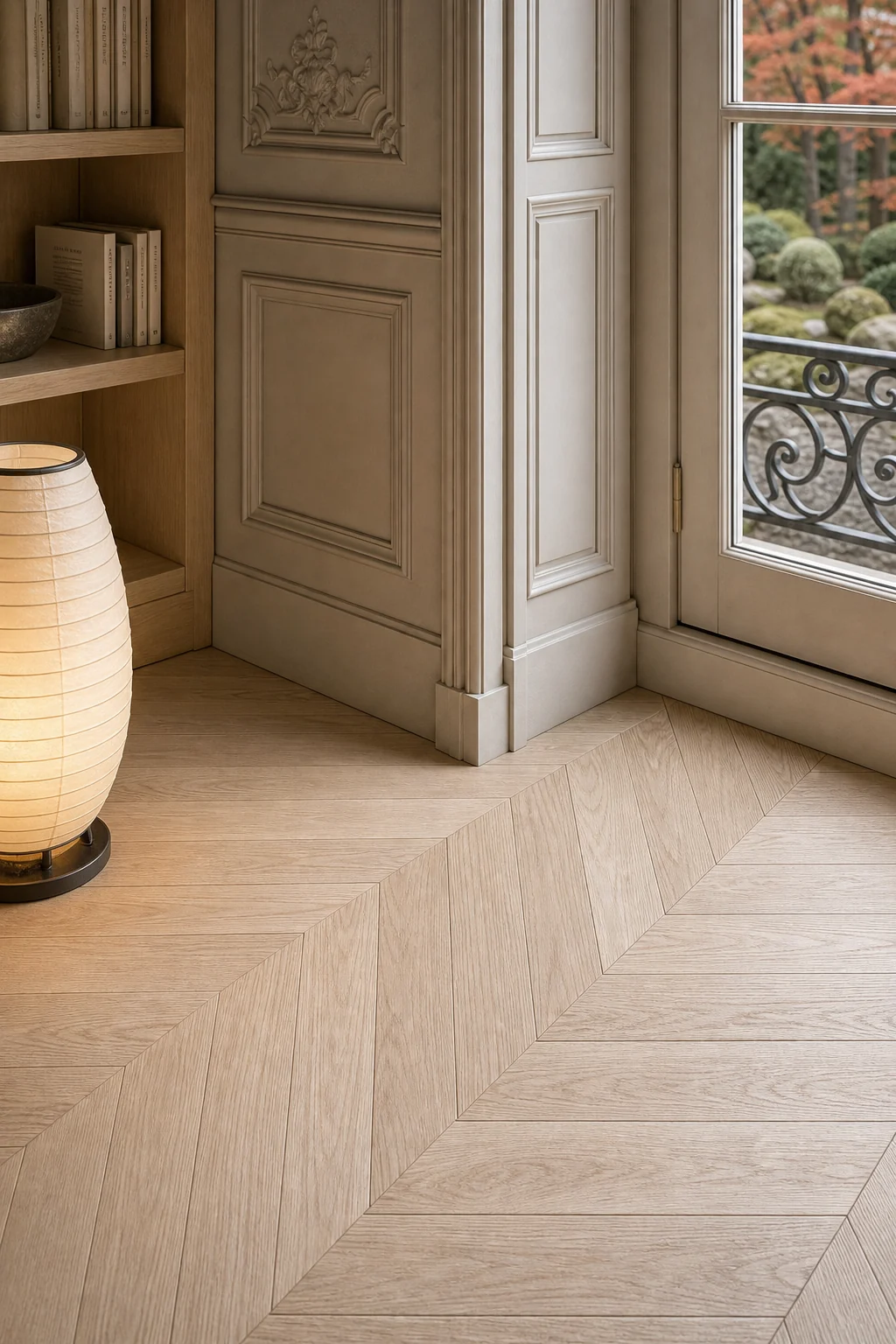
We executed the classic herringbone parquet in pale Japanese ash instead of glossy dark oak. Simultaneously, a monochromatic wash of matte greige plaster neutralizes the ornate wall paneling, creating a seamless, unified envelope that connects both aesthetics.
- Use a monochromatic matte plaster wash to significantly soften the impact of ornate historical wall carvings.
- Install classic herringbone flooring using pale, unfinished ash wood to brighten and modernize the traditional pattern.
- Avoid heavily veined marbles or polished brass that will immediately pull the room back into traditional territory.
Building the Hybrid Library Layout
A successful hybrid seating area must physically layer the contrasting elements without letting one aesthetic dictate the entire layout. The furniture arrangement should encourage quiet contemplation while fully respecting the grand, sweeping scale of the surrounding walls.
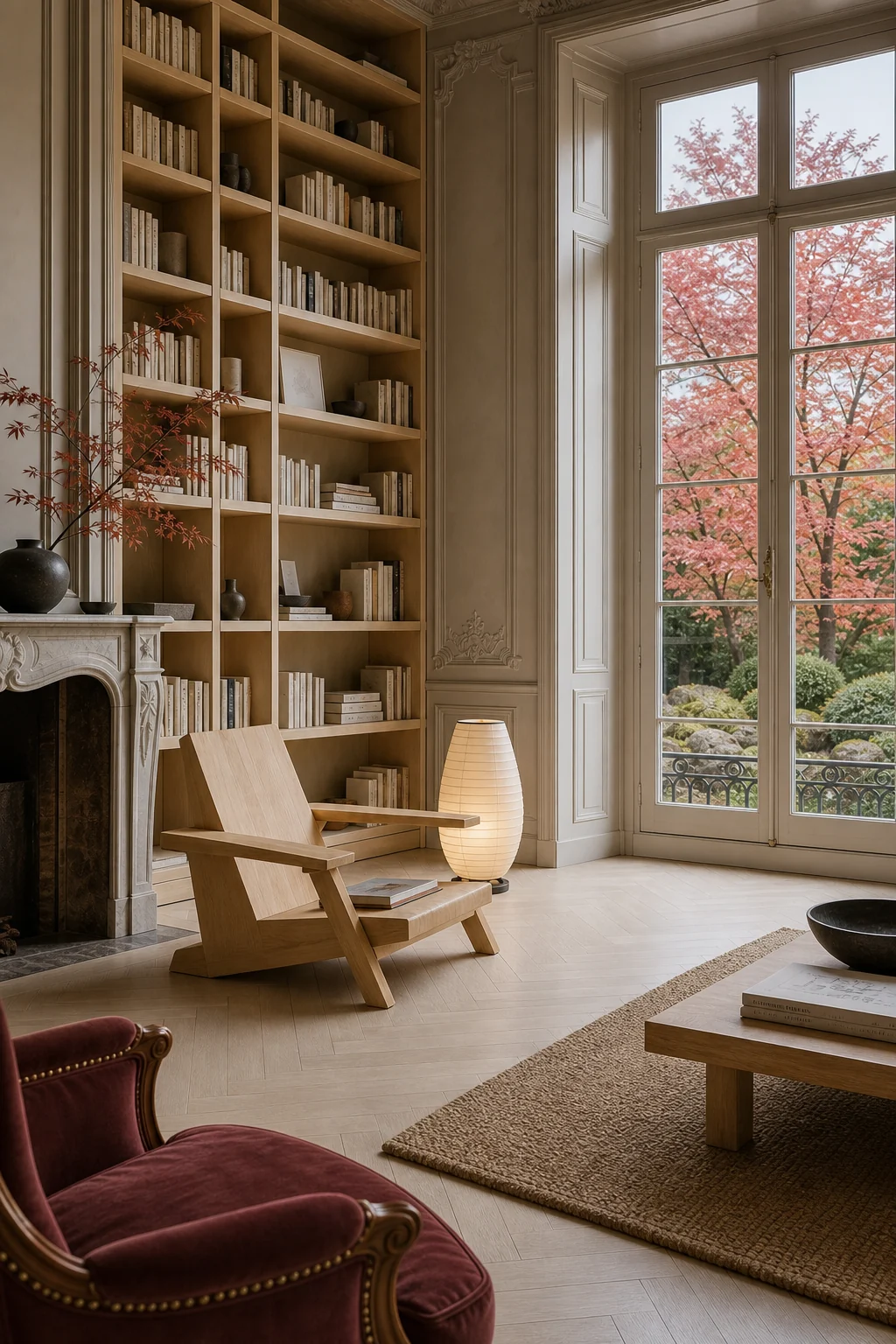
Pairing a glowing washi paper floor lamp with a classical window casing creates immediate visual harmony. A raw timber coffee table centers the layout, bridging the gap between the soft flooring and the towering ceiling above.
| Design Layer | zen modern Role | parisian Role | Bridge Decision |
|---|---|---|---|
| Shell | Matte, empty wall space prioritizing absolute void | Tall Haussmannian boiserie and carved marble mantels | Monochromatic wash of matte greige plaster to neutralize carvings |
| Furniture | Low-slung, raw hinoki wood seating grounding the floor | Classical, upright vertical proportions demanding attention | Minimalist timber shelving stretched vertically to parisian ceiling heights |
| Textiles | Woven tatami textures and unadorned raw natural linen | Rich, heavy historical drapery and complex upholstery | Unadorned windows and simple flat-weave natural fiber area rugs |
| Lighting | Diffused washi paper floor lamps casting soft glows | Ornate polished brass chandeliers dominating the ceiling | Oxidized bronze fixtures providing soft, paper-filtered ambient luminescence |
| Accents | Rigorously edited, sparse ceramic bowls and empty space | Dense, layered historical collections and gilded mirrors | A few carefully curated oxidized bronze and raw wood objects |
By strictly following this detailed translation table, you ensure that every layer of the room serves a specific unifying purpose. The resulting layout feels deeply intentional, balancing the opposing forces through careful placement and rigorous material selection.
Harnessing Light and Architectural Scale
Lighting dictates exactly how we perceive texture, making it the ultimate tool for unifying disparate architectural styles. Proper illumination highlights the tactile qualities of both the matte plaster walls and the raw wood grains with equal importance.
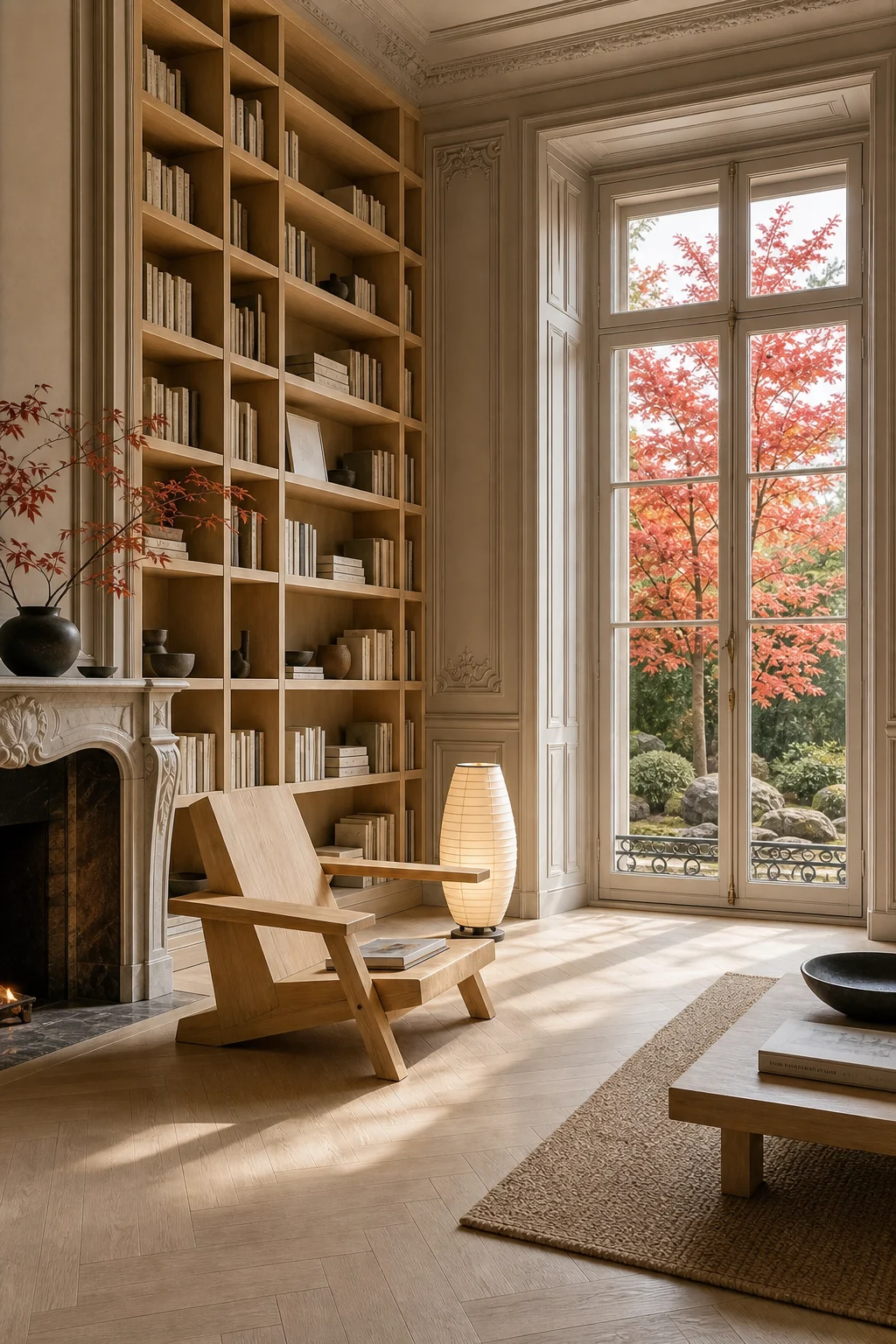
Tall French casement windows flood the space with highly diffused afternoon daylight. This soft illumination washes over the empty, rigorous horizontal floor space, seamlessly connecting the interior library with the shifting, colorful seasons of the outside world.
Relying primarily on natural daylight and low-level ambient fixtures prevents the harsh shadows that traditional chandeliers often cast. This deliberate lighting strategy maintains the serene, monastic atmosphere that is absolutely essential to the minimalist side of the equation.
Styling with Rigorous Editing
Library shelving requires precise, intentional styling to maintain the monastic serenity of minimalism within a grand historical shell. Every single object must justify its placement, contributing to the overall balance without adding unnecessary visual clutter or noise.
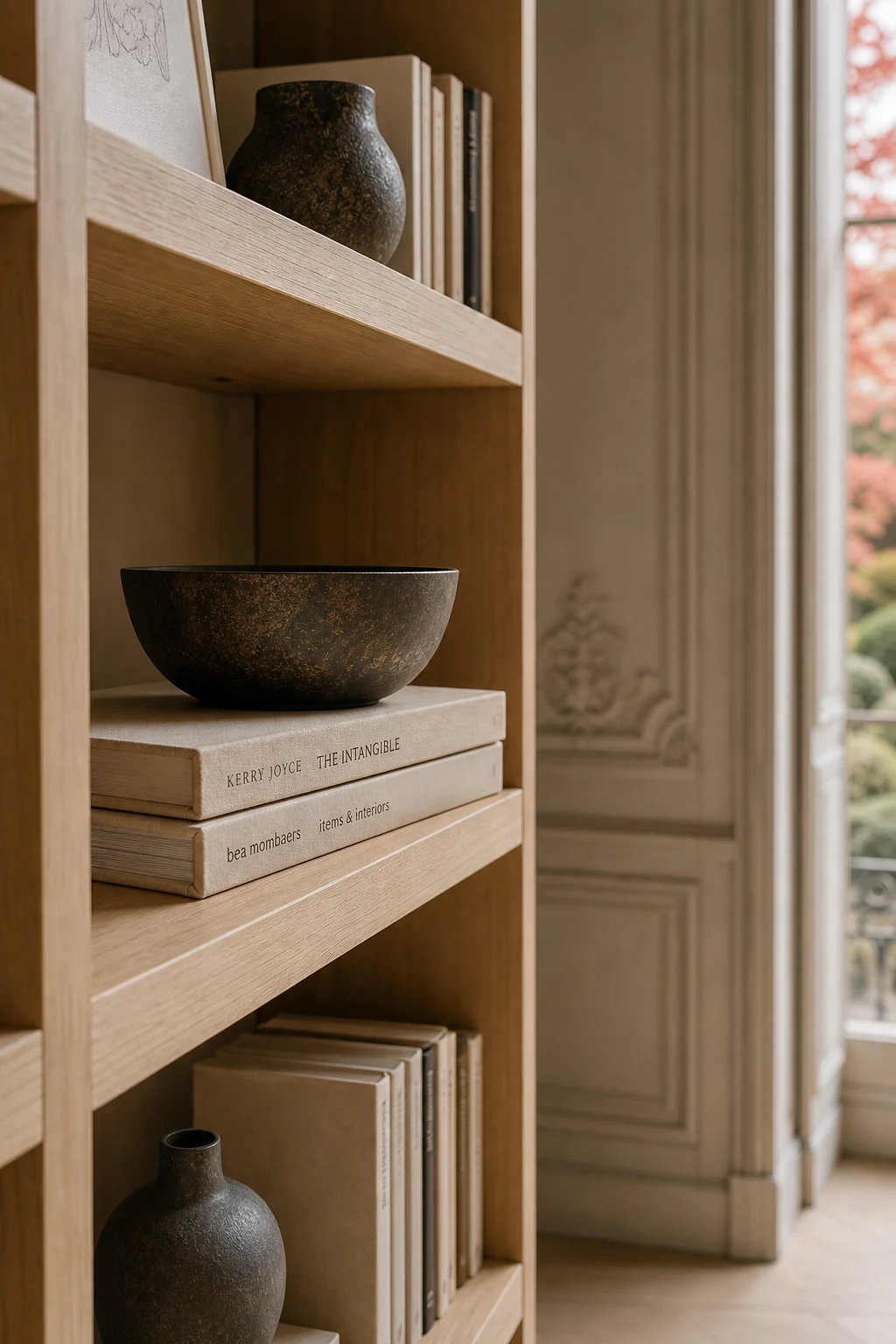
Using thin, highly precise Japanese joinery for the shelves introduces necessary rigorous geometry. By stretching these raw timber grids to the tall ceiling, you honor the grand architectural scale while keeping the display strictly curated and sparse.
- Source raw timber shelving units featuring exposed, highly precise joinery to emphasize minimalist craftsmanship.
- Incorporate oxidized bronze vessels to add subtle, grounded visual weight without introducing high-gloss shine.
- Place glowing washi paper floor lamps nearby to provide atmospheric, diffused evening illumination for reading.
Adapting the Look for Smaller Spaces
You absolutely do not need a grand marble fireplace or towering ceilings to successfully translate this logic into narrow hallways, entryways, or smaller reading nooks. The core principles of strict material contrast and horizontal grounding apply universally across any standard residential footprint.
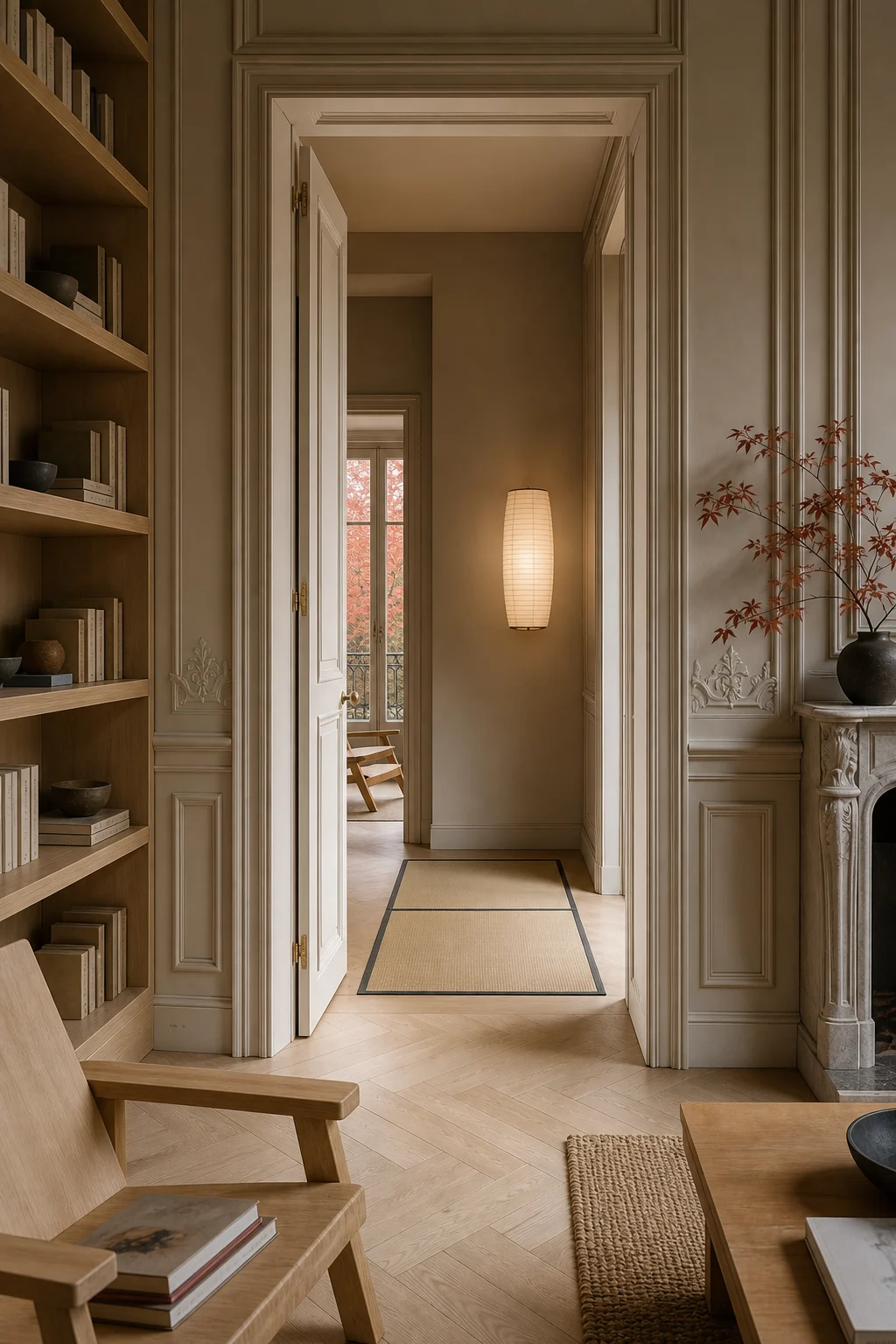
Carry the pale ash flooring directly into adjacent spaces while significantly simplifying the traditional wall trim. A single washi sconce mounted against matte greige walls sustains the hybrid atmosphere, proving that the overarching architectural concept scales down beautifully and effortlessly for everyday living.
Avoiding the Theatrical Costume
A truly successful hybrid feels like a carefully curated home, not a theatrical set built from competing cultural clichés. The inherent tension between ornate history and serene minimalism must ultimately resolve into a timeless, highly livable, and deeply calming library environment.
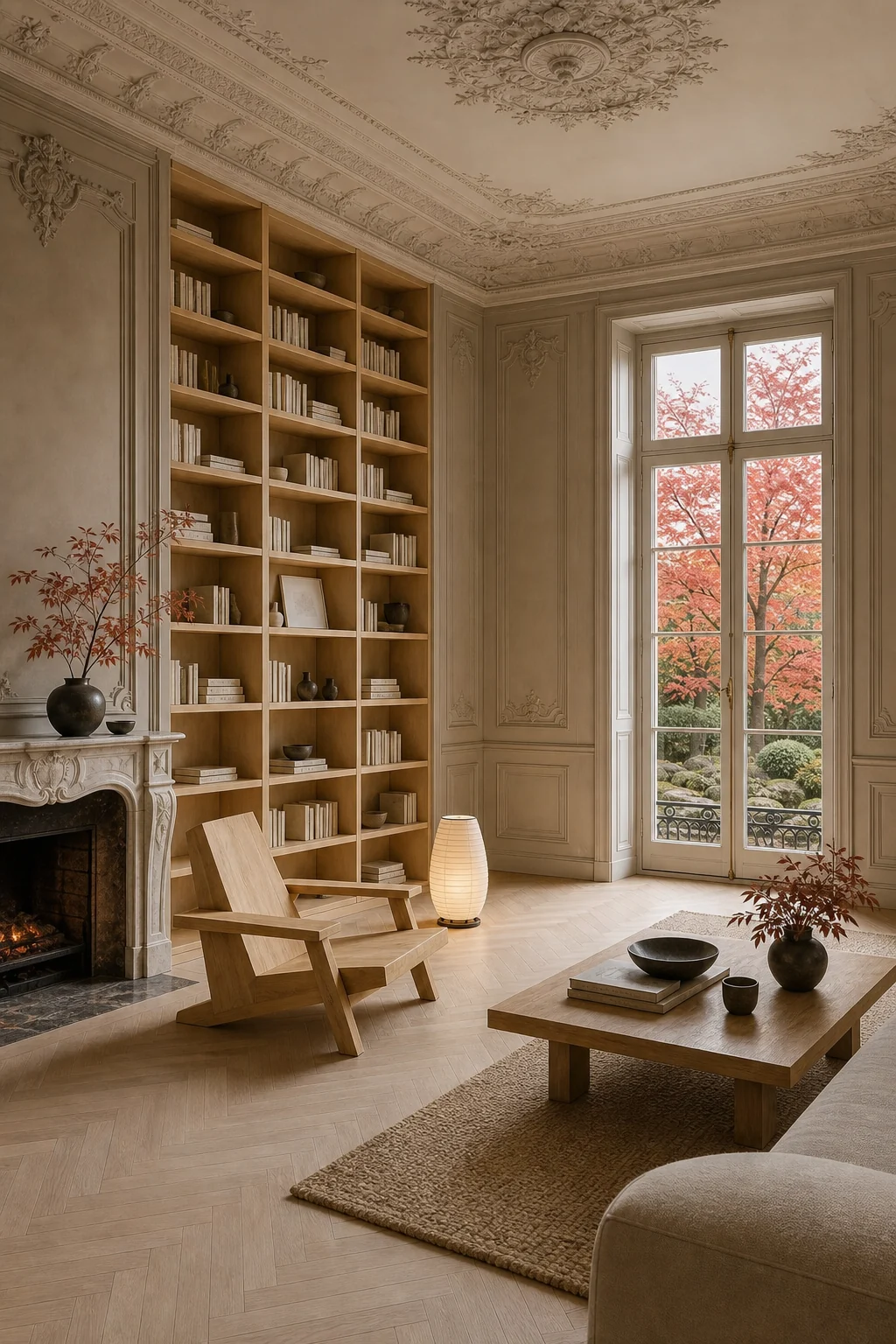
By strictly controlling the color palette and completely removing high-gloss finishes, the two distinct styles finally merge. The heavy verticality of the French architecture is permanently tamed by the quiet, deeply grounded presence of the Japanese modern furniture and lighting.
- Avoid the theatrical costume effect by strictly refusing to overload the room with gilded French antiques.
- Prevent a split personality by physically layering both styles together rather than separating them across the room.
- Evade the generic beige compromise by maintaining extreme textural contrasts between the raw wood and matte plaster.