
Saltbox Meets English Country House: Living Room
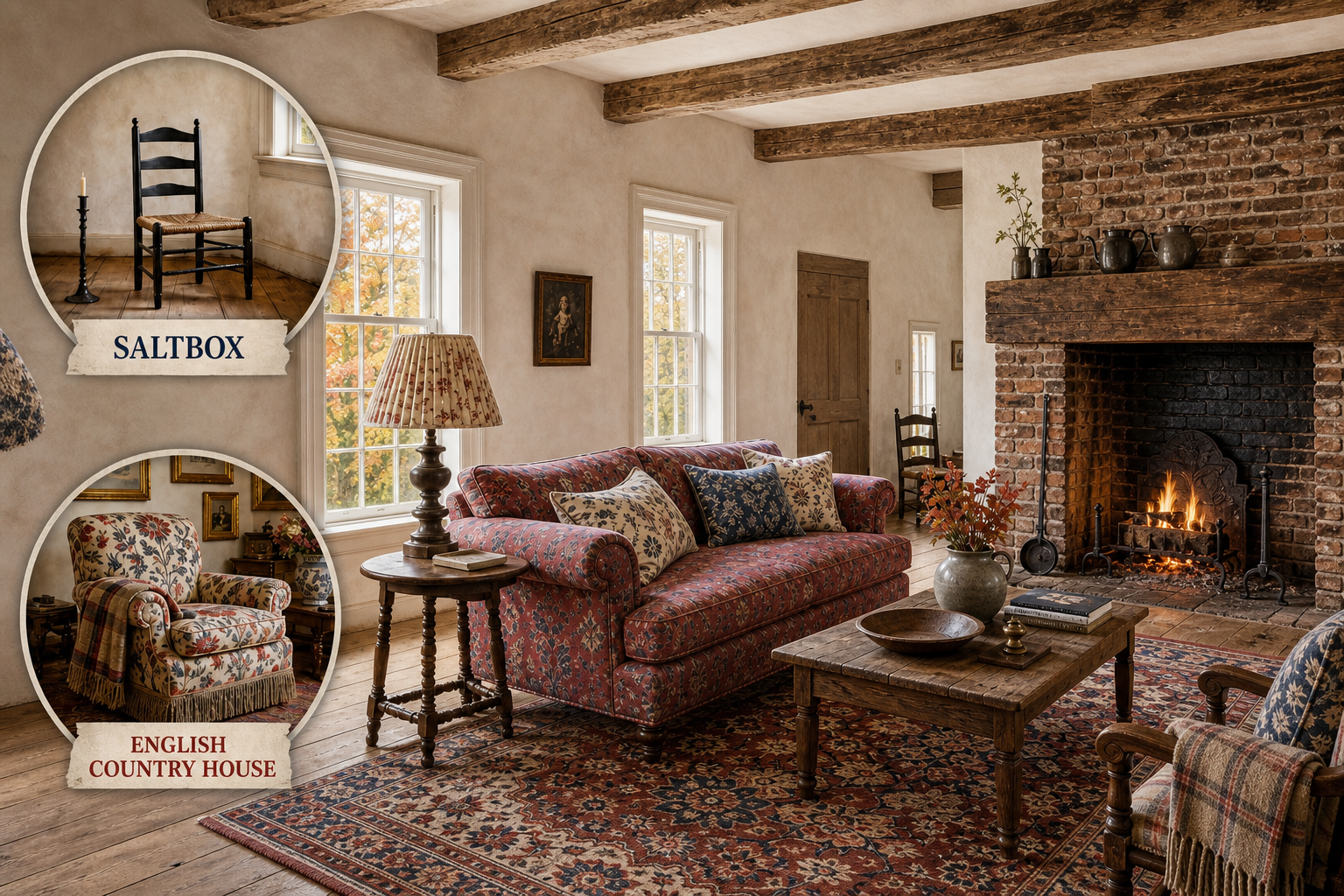
Early American colonial architecture demands rigorous, austere restraint, while an english country house thrives on pattern-heavy indulgence. You can resolve this clash by letting the unadorned saltbox shell frame overstuffed textiles, united by centuries-old wood patina and muted botanical dyes.
The saltbox Shell
Early American architecture demands rigorous utility over mere decoration, establishing a strict baseline for this living room. We honor this historical austerity by keeping the aged plaster walls completely unpainted and leaving the massive, structural hand-hewn oak ceiling beams entirely exposed.
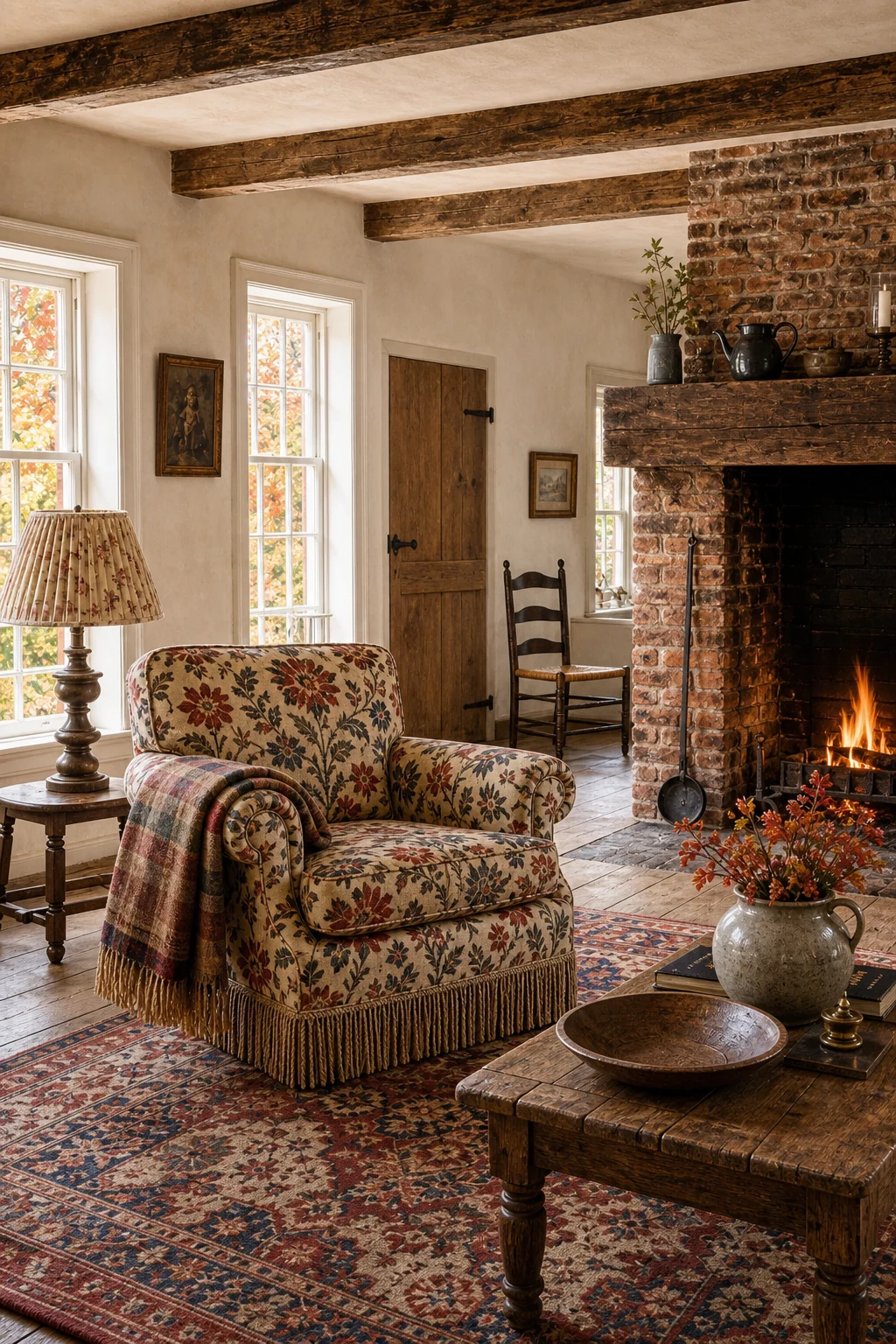
Against this raw, unyielding architectural backdrop, an overstuffed armchair introduces necessary tactile softness to the space. This immediate visual contrast actively prevents the historic shell from feeling like a rigid museum exhibit, inviting daily use while respecting the original structural footprint perfectly.
english country house Comfort
The english country house style thrives on deep, inviting upholstery that naturally encourages leisurely lingering. We introduce this tactile indulgence through a classic Howard-style roll-arm sofa, heavily layered with fringed wool throws and dense, block-printed linen pillows in faded botanical shades.
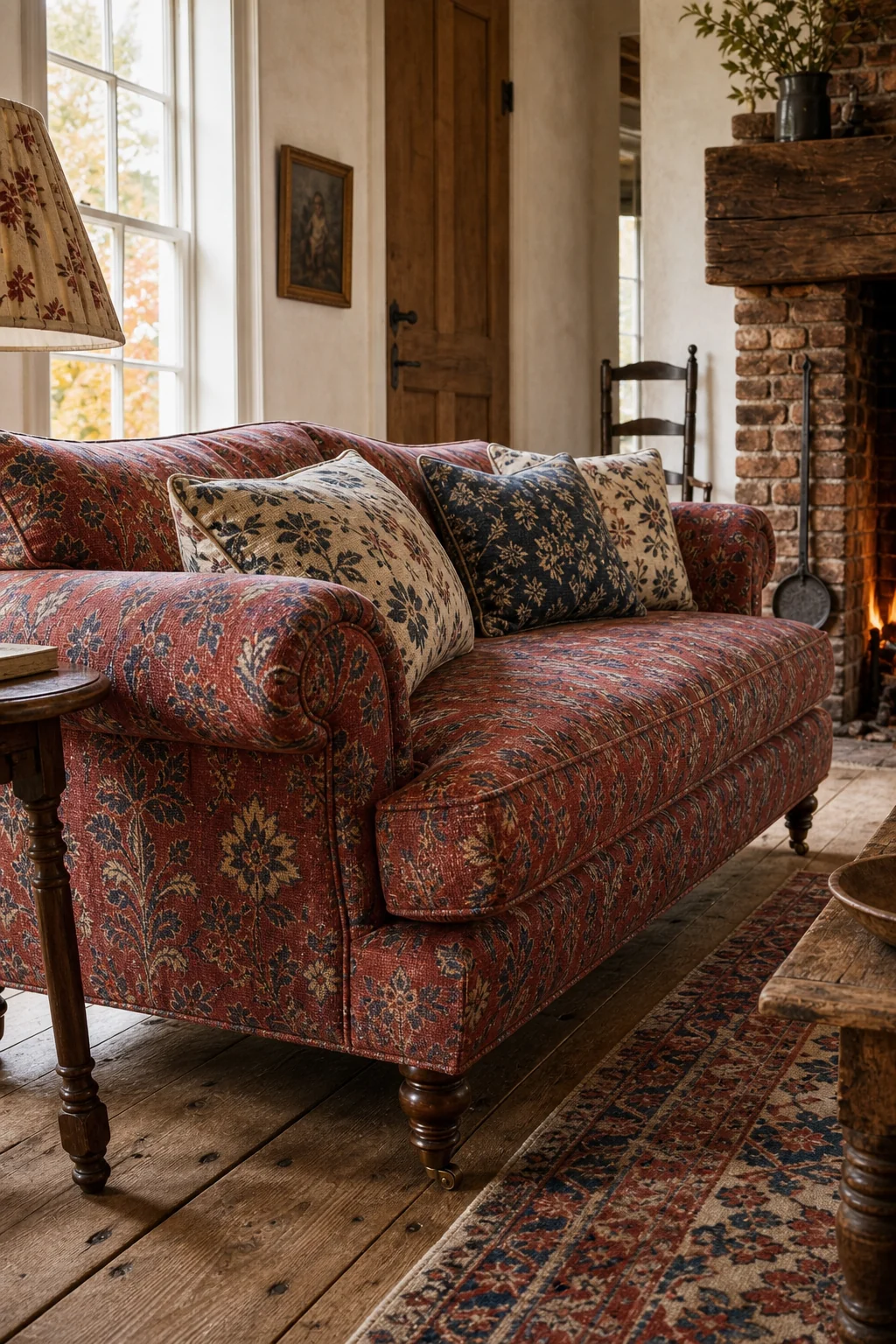
To keep these heavy, traditional fabrics from overwhelming the modest room, we rely heavily on the sparse saltbox layout. Leaving generous empty floor space allows the dense floral patterns to breathe naturally without feeling cluttered or visually suffocating the historic architectural shell.
- Prioritize deep, overstuffed seating with classic rolled arms to anchor the primary relaxation zones effectively.
- Choose authentic block-print linens over shiny silks to maintain a grounded, historically accurate atmosphere safely.
- Let the plush furniture float freely away from the bare walls to emphasize spatial volume.
- Layer fringed wool throws casually over armrests to visually soften the rigid wooden furniture frames.
- Select faded, timeworn fabrics that look lovingly inherited rather than newly purchased from a modern showroom.
Bridging the Centuries
A shared palette of muted natural dyes successfully unites these fundamentally opposing aesthetics. Madder red and indigo perfectly bridge delicate floral chintz with the rustic, chalky tones of traditional saltbox milk paint, creating a highly cohesive, visually engaging dialogue between both distinct styles.
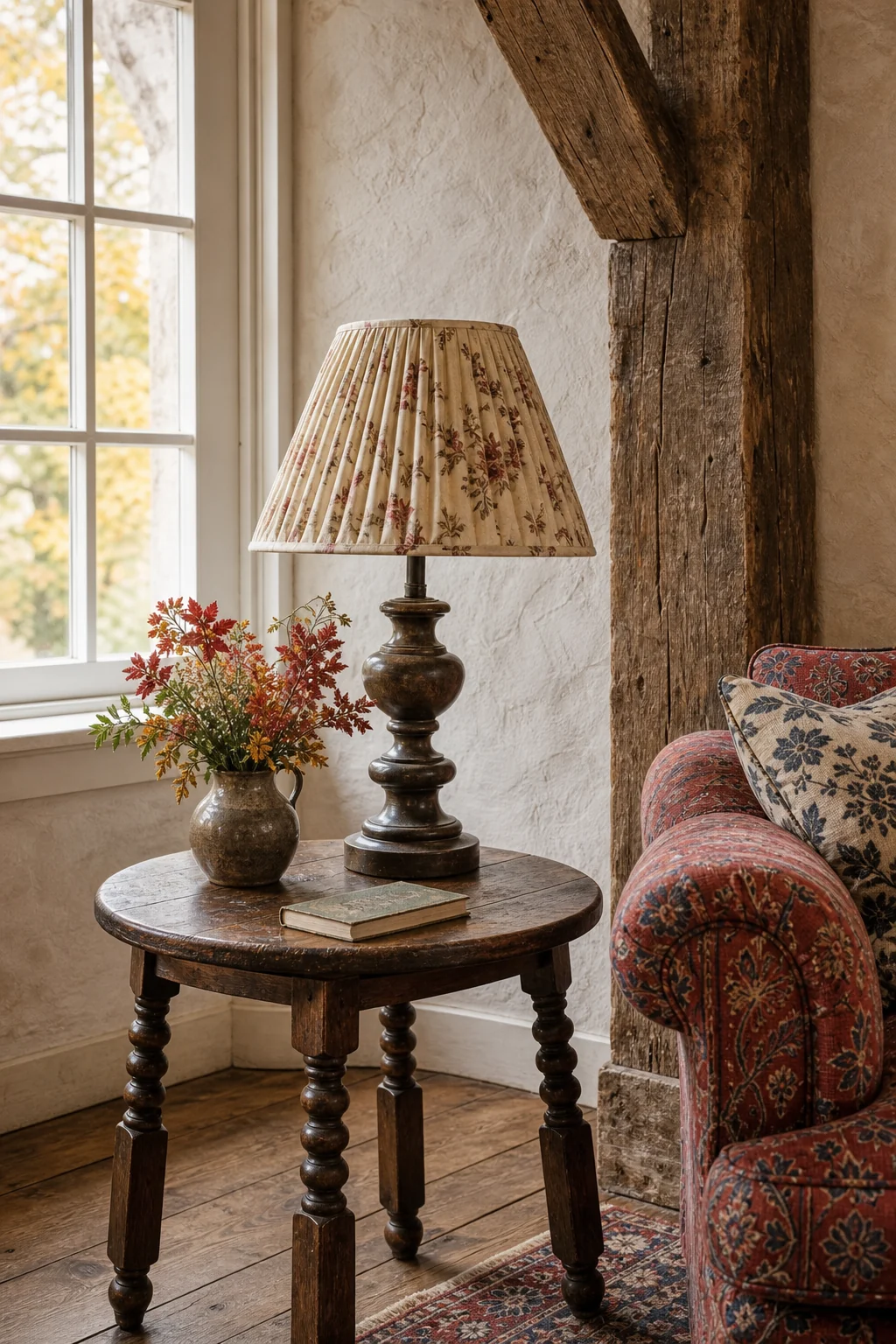
Heavily patinated, unpolished antique wood serves as the ultimate neutral ground between the two distinct worlds. This shared reverence for honest age and daily wear makes the unexpected combination of an elegant estate and a hardworking farmhouse feel entirely natural and inevitable.
Assembling the Living Room
Balancing sparse saltbox architecture with heavily layered textiles requires highly deliberate, thoughtful furniture placement. The seating arrangement must feel inherently cozy and welcoming without ever cluttering the historic footprint or obscuring the defining architectural features of the austere, rigorously unadorned structural shell.
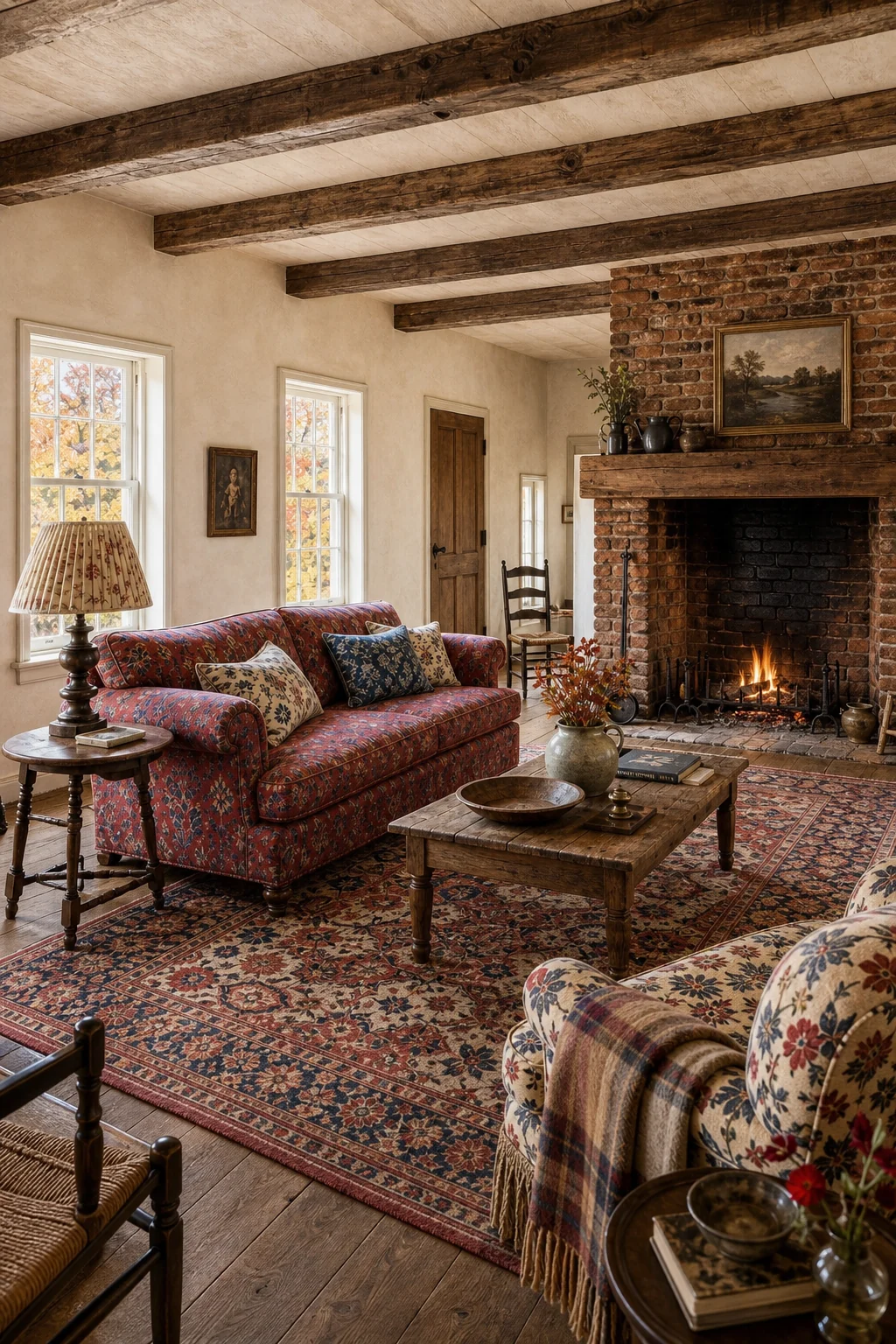
Translating this conceptual tension into a functional floor plan means assigning strict, uncompromising aesthetic roles. The bare architecture provides the necessary visual discipline, while the plush, patterned english country house furniture delivers the essential physical comfort required for a modern, inviting living space.
| Design Layer | saltbox Role | english country house Role | Bridge Decision |
|---|---|---|---|
| Shell | Unpainted rough plaster walls and exposed hand-hewn oak ceiling beams | Framed oil landscapes and warm, layered ambient lighting | Matte, non-reflective finishes |
| Furniture | Sparse, breathable layout and simple ladder-back wooden chairs | Plush, overstuffed Howard-style roll-arm sofa | Patinated antique wood |
| Textiles | Bare sash windows and raw, unrefined architectural textures | Faded floral block-print linen pillows and antique Persian rugs | Muted botanical dyes |
| Lighting | Utilitarian forged iron candlesticks | Delicate pleated fabric lampshades | Warm, low-level illumination |
| Accents | Utilitarian iron hearth tools | Refined blue-and-white ceramics | Handcrafted imperfections |
Illuminating the Contrast
Crisp autumn daylight streams through multi-pane sash windows, instantly highlighting the profound tactile differences across the room. This bright, directional exposure actively prevents the dark antique woods and heavy traditional textiles from turning gloomy, muddy, or feeling overly oppressive to the eye.
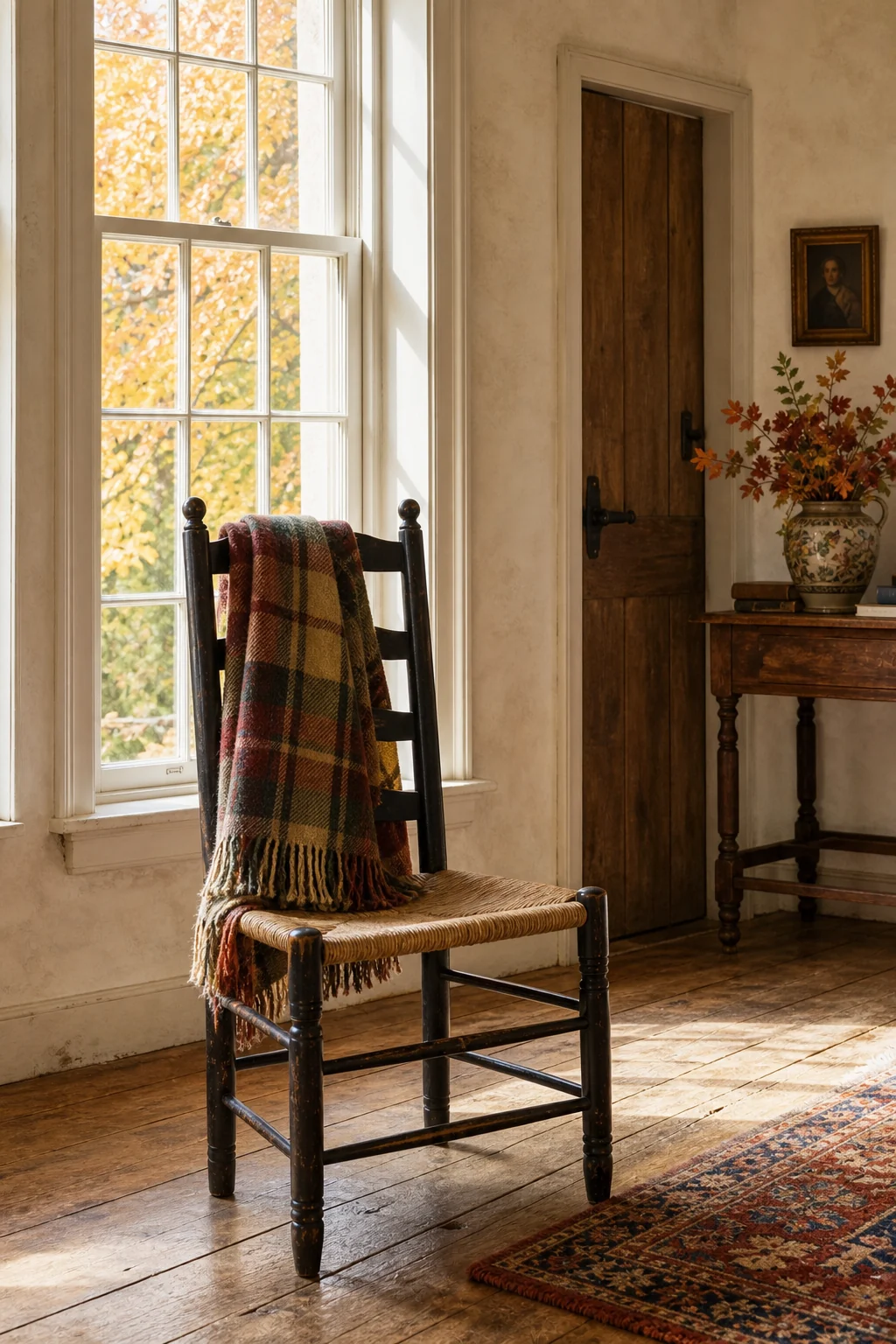
Lifted midtones and open shadows keep the overall atmosphere bright and inviting throughout the day. This carefully balanced lighting ensures the heavy architectural elements feel warm and grounding rather than puritanical, stark, or completely unwelcoming to the home’s modern, daily inhabitants.
Curating the Accents
Small styling moments require careful, continuous negotiation between pure saltbox utility and leisurely estate decoration. A rustic pine console table provides the perfect, unassuming stage for displaying refined ceramic accents without ever letting either distinct style completely dominate the carefully curated vignette.
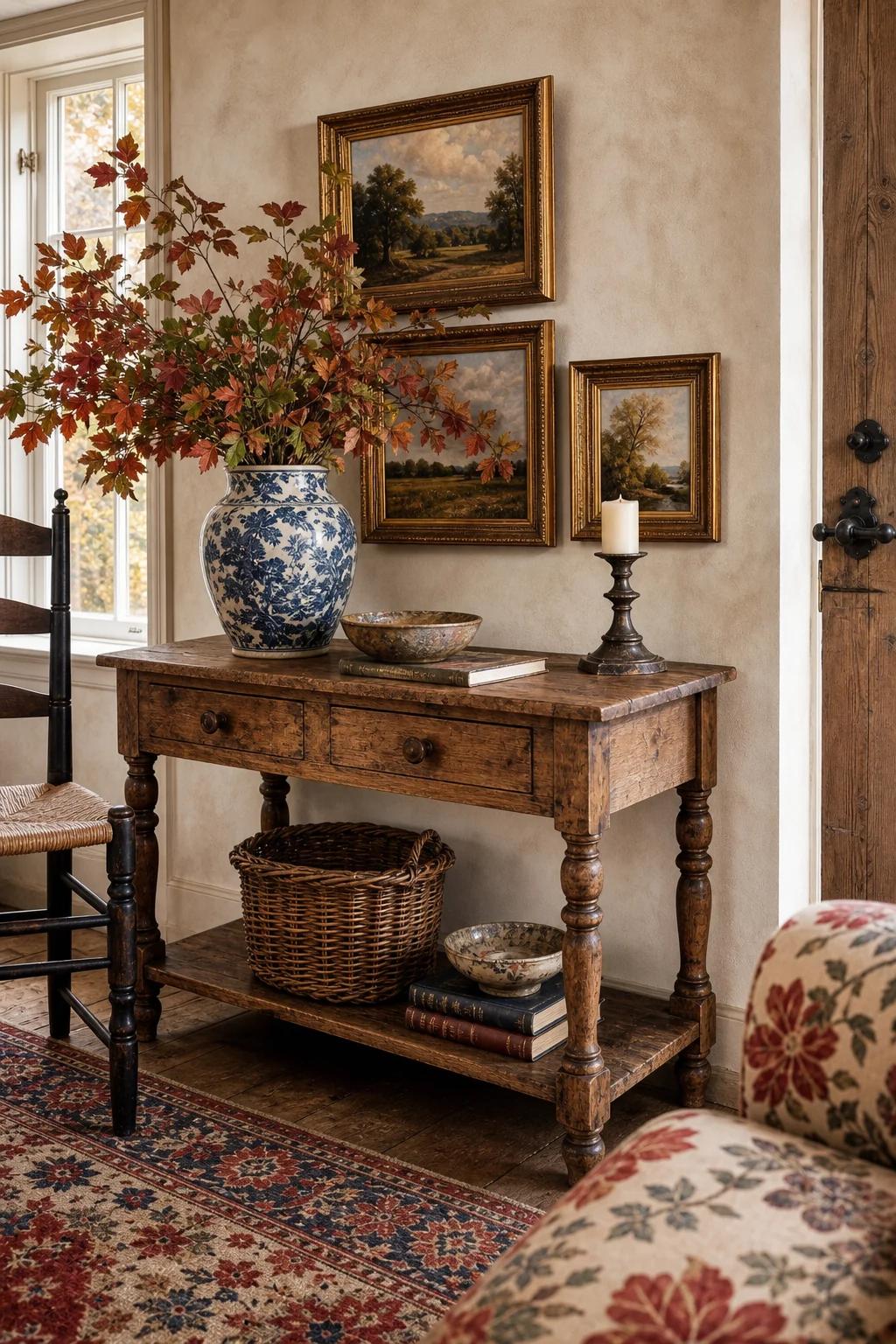
By mixing utilitarian forged iron candlesticks with delicate, pleated fabric lampshades, the room maintains its essential structural tension. Every curated surface should simultaneously reflect both the hardworking, practical farmhouse heritage and the leisurely, pattern-filled grace of the traditional english country house.
- Source a faded antique Persian rug to beautifully anchor the primary conversation area with rich texture.
- Layer block-print linen throw pillows generously across the main overstuffed seating arrangement for added comfort.
- Place weighty forged iron candle holders directly on the massive central brick hearth for historical utility.
- Top turned-wood side tables with softly pleated fabric lampshades for essential, warm evening ambient illumination.
- Display small oil landscapes in tarnished gilt frames directly against the bare, unpainted plaster walls.
Beyond the Hearth
This compelling aesthetic tension easily translates to transitional spaces like narrow hallways and modest entryways. The core foundational rules of keeping walls rigorously bare while introducing rich, layered textiles apply effectively and beautifully regardless of the specific room’s overall square footage limitations.
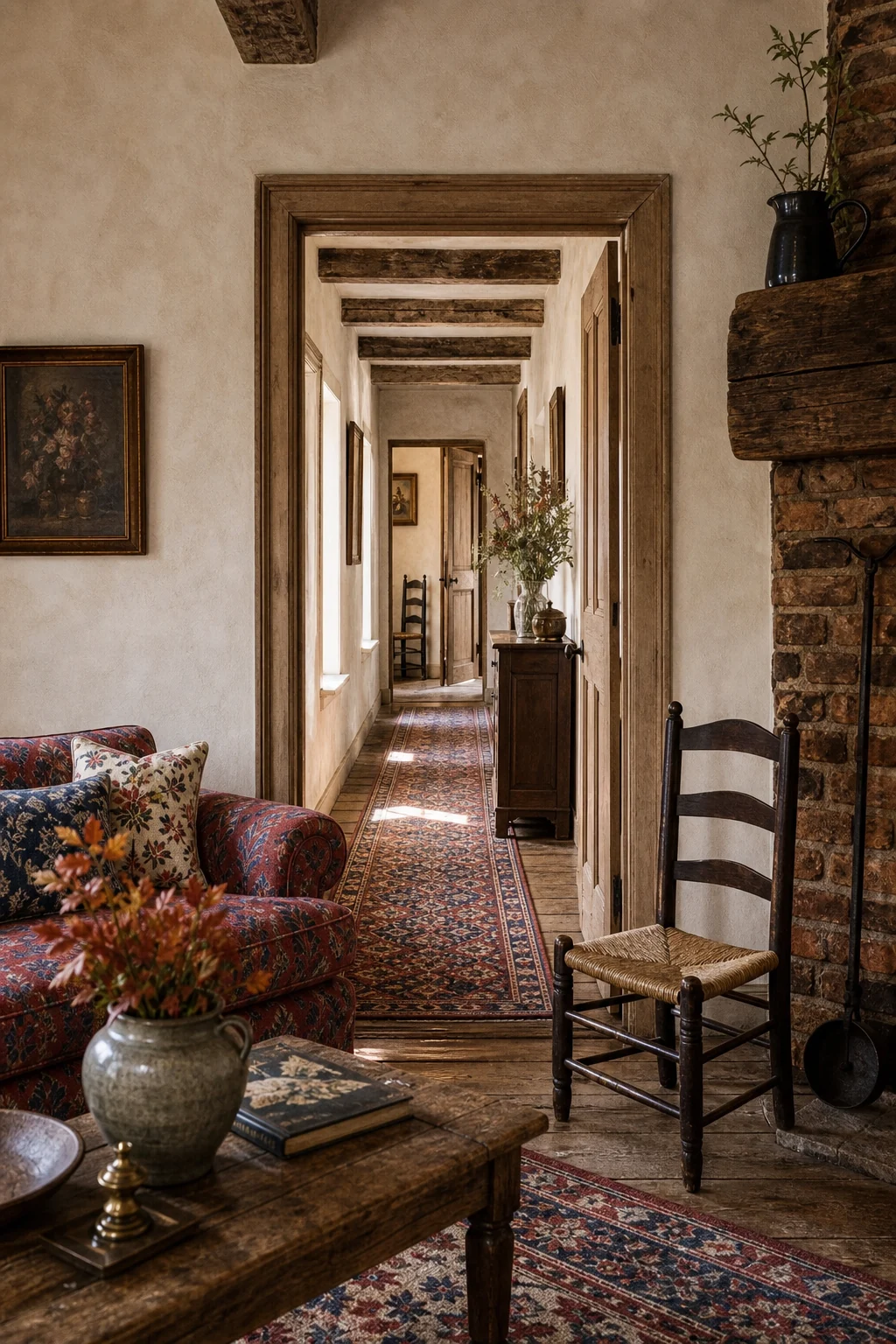
A densely patterned runner rug instantly warms up a stark, wooden corridor without requiring permanent structural changes. The transition between rooms feels completely seamless when the underlying core materials remain rigorously consistent throughout the entire historic, beam-heavy home from front to back.
- Keep hallway walls entirely free of ornate wainscoting or decorative crown molding additions to preserve austerity.
- Use long Persian runners to introduce vibrant color and much-needed tactile softness underfoot in narrow spaces.
- Install simple iron wall sconces to maintain the utilitarian architectural lighting scheme perfectly across every room.
- Place a single, plush accent chair in an empty corner to soften the stark, wooden corridor immediately.
- Allow the wide-plank eastern white pine floors to remain mostly exposed at the outer edges for contrast.
Resolving the Room
Success in this hybrid space relies entirely on maintaining strict architectural restraint. If you overstuff the room with excess furniture, the saltbox austerity immediately vanishes, leaving behind a cluttered, confused layout that completely loses its unique historical integrity and visual breathing room.
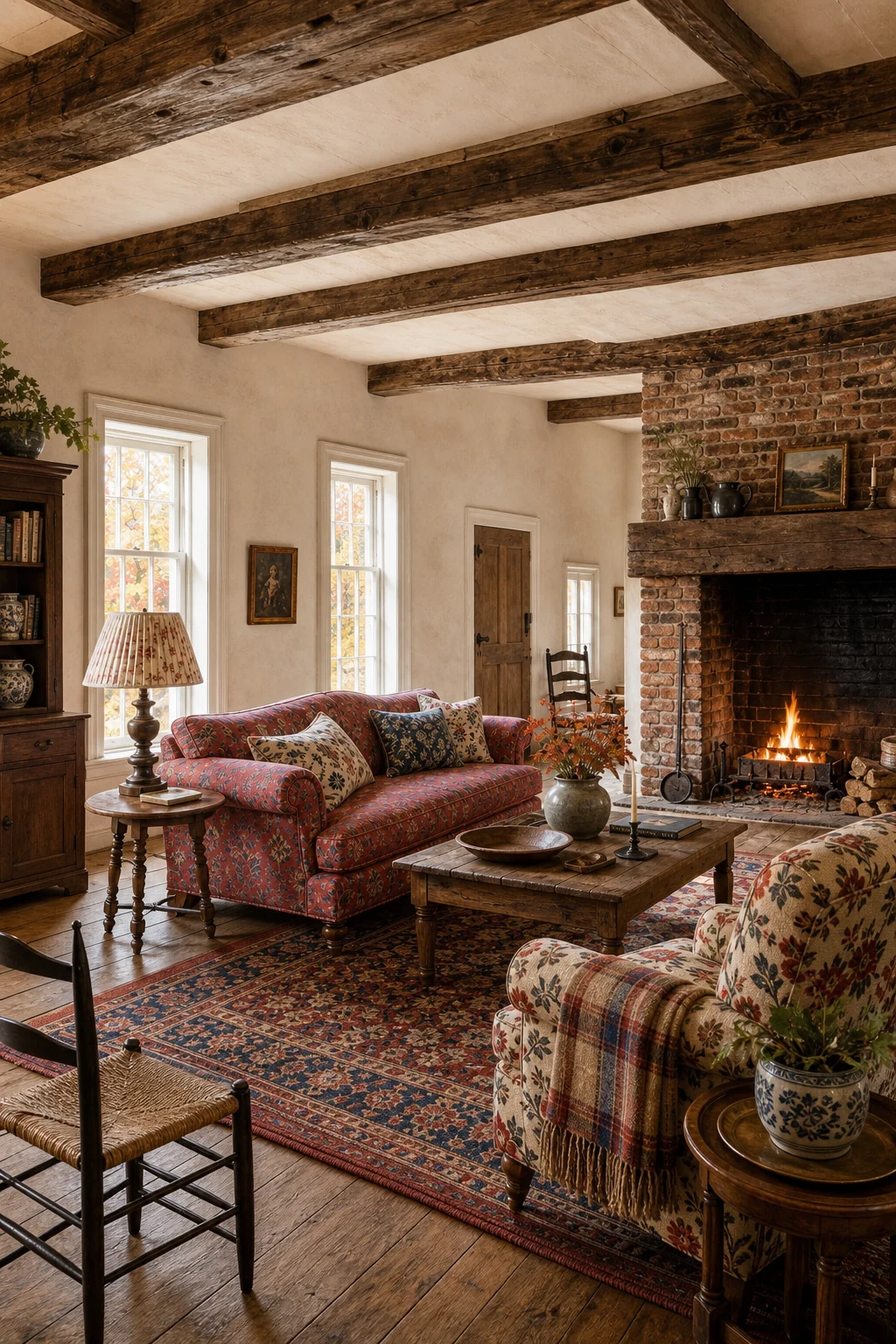
The finished living room definitively proves that historic architectural rigor and plush modern comfort can beautifully coexist. The initial contradiction is successfully resolved through careful editing, spatial restraint, and a shared commitment to uncompromising, highly tactile material honesty across every single layer.
- Avoid using fake, distressed ceiling beams instead of authentic, load-bearing structural oak wood for the ceiling.
- Never cover too much floor space with oversized rugs that completely hide the wide pine boards.
- Stop keeping the two styles isolated in completely different, disconnected corners of the living room layout.
- Resist the urge to paint the plaster walls simply to add more contemporary color to the space.
- Ensure every textile added serves a genuine, practical purpose of physical comfort or essential seasonal warmth.