
This Iron Cauldron Became a Living Room
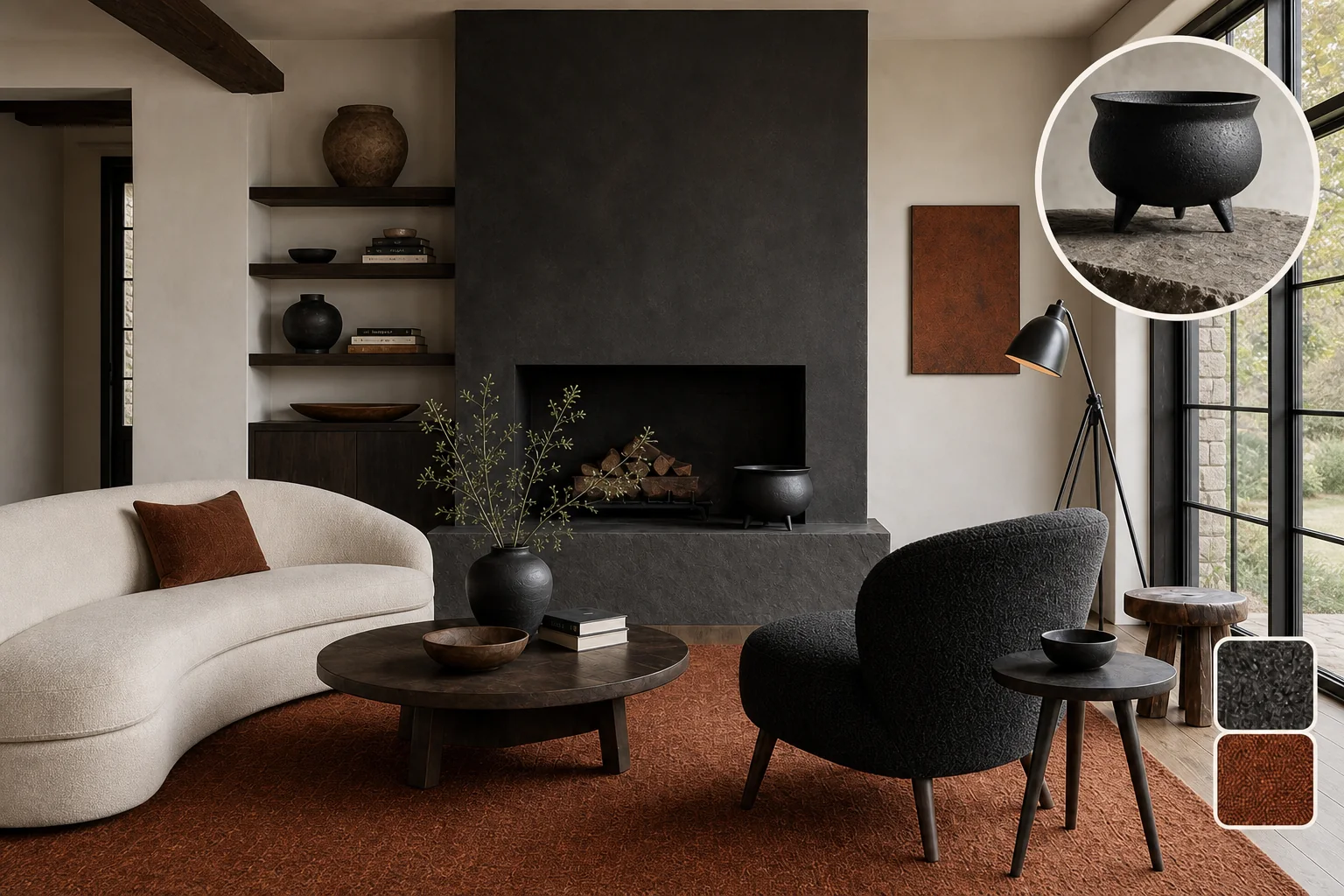
A heavy cast iron cauldron offers more than seasonal decor—it provides a masterclass in grounding a modern rustic living room. By translating this dense object into elemental materials, heavy base elements are balanced by slender supports to prevent an oppressive atmosphere.
Anchoring the room with monolithic weight
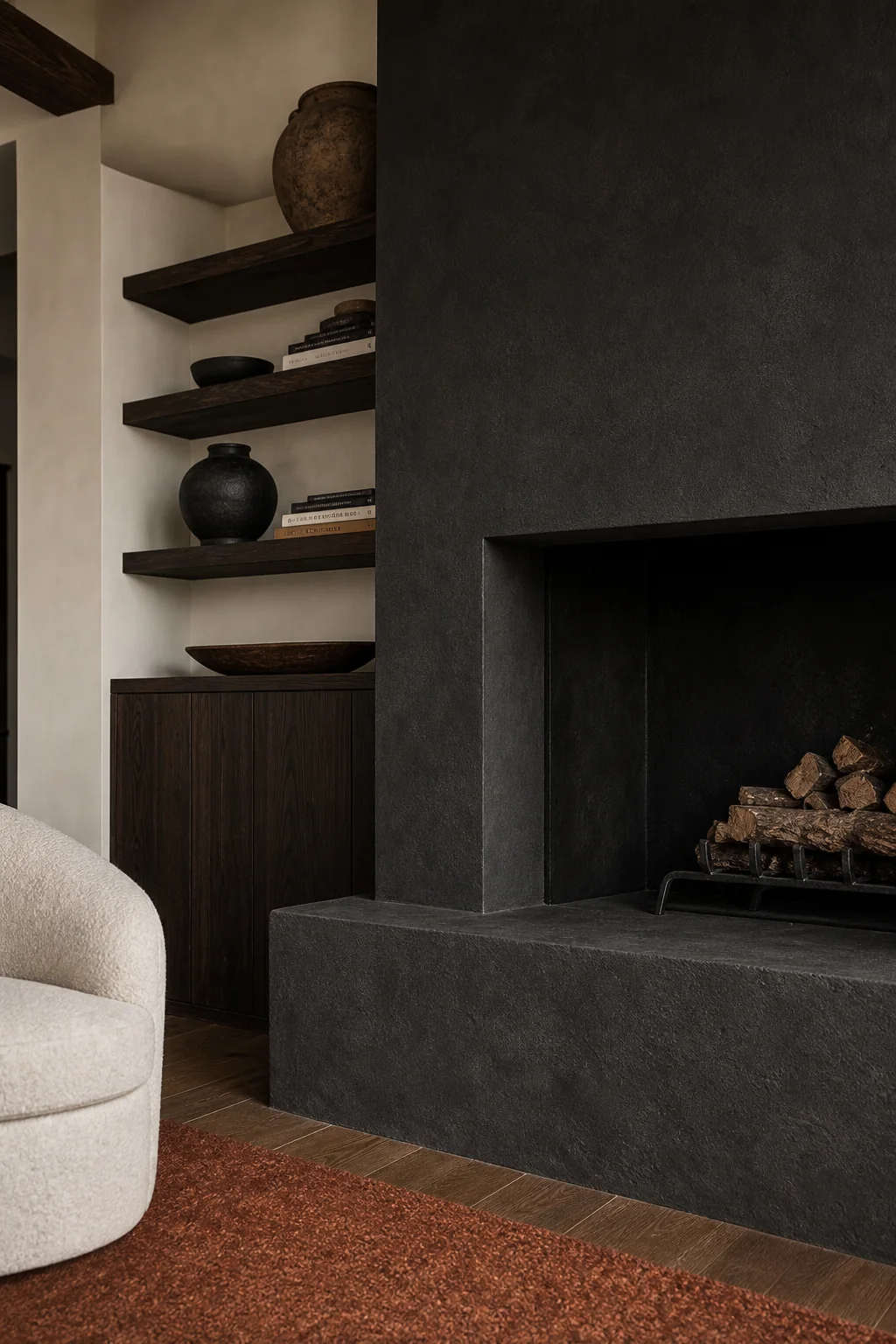
Translating the cauldron’s sheer density into architecture gives the living room an immediate sense of permanence and structural integrity. A charcoal plaster fireplace anchors the space just like the heavy iron mass, focusing visual weight on a single architectural feature rather than scattering it across the room. By keeping the surrounding walls light, you emphasize this central mass and establish a grounded foundation before bringing in any furniture. To execute this structural anchor effectively and ensure the proportions feel intentional, follow a precise sequence of foundational design steps.
- Apply matte charcoal plaster to the central fireplace surround so it reads as a heavy, monolithic anchor in the room.
- Paint the surrounding walls in a quiet ash-white finish to provide stark contrast to the dark central chimney.
- Install wide plank smoked oak flooring throughout the space to ensure the warm wood tones soften the stark black and white architecture.
- Position the main seating arrangement directly around the hearth to reinforce the fireplace as the room’s primary focus.
Balancing soot and ember tones
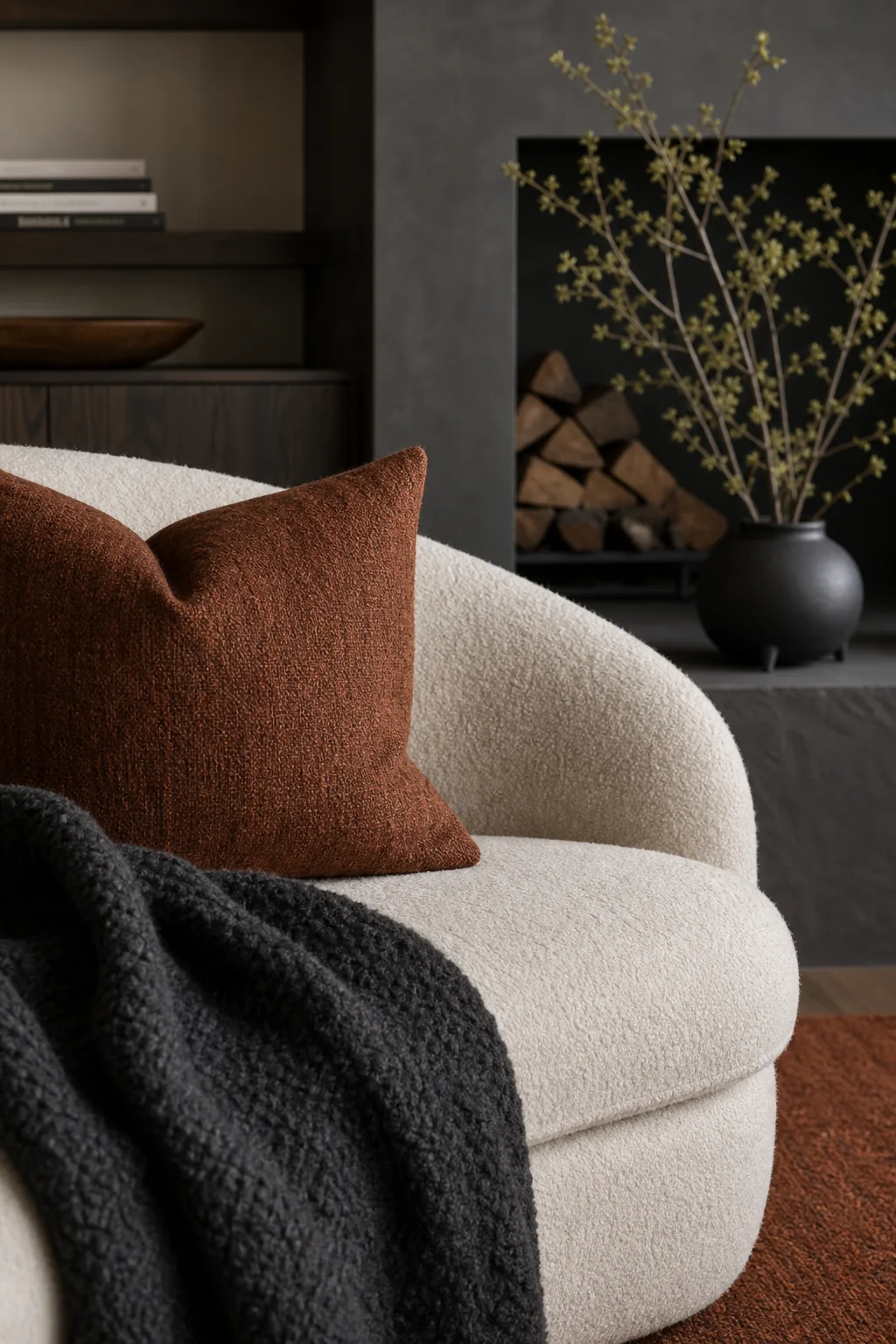
The high-contrast palette mimics the relationship between cold iron and a glowing hearth, turning matte charcoal into a grounding neutral rather than a mere accent. Charcoal upholstery and blackened steel fixtures balance against a warm rust-toned wool rug, echoing the dynamic between soot and embers. This interplay prevents the dark elements from feeling flat or overwhelming, ensuring the room retains a cozy, inviting atmosphere despite the heavy industrial tones. The visual mapping table below demonstrates exactly how these elemental traits translate from the original iron vessel into specific room moves.
| Source trait | Visible evidence | Room move |
|---|---|---|
| Monolithic weight | The dense, heavy mass of the iron vessel | A charcoal plaster fireplace anchors like the heavy iron mass. |
| Soot and ember | The matte black iron and its inherent association with fire | Charcoal upholstery and a rust rug echo soot and embers. |
| Pitted cast iron | The raw, slightly porous and textured surface of the cast metal | Nubby bouclé fabric absorbs light exactly like pitted cast iron. |
| Tripod stance | The three tapered legs supporting the bulbous cauldron | Slender three-legged bases repeat the cauldron’s tapered tripod stance. |
Warming the floor with ember tones
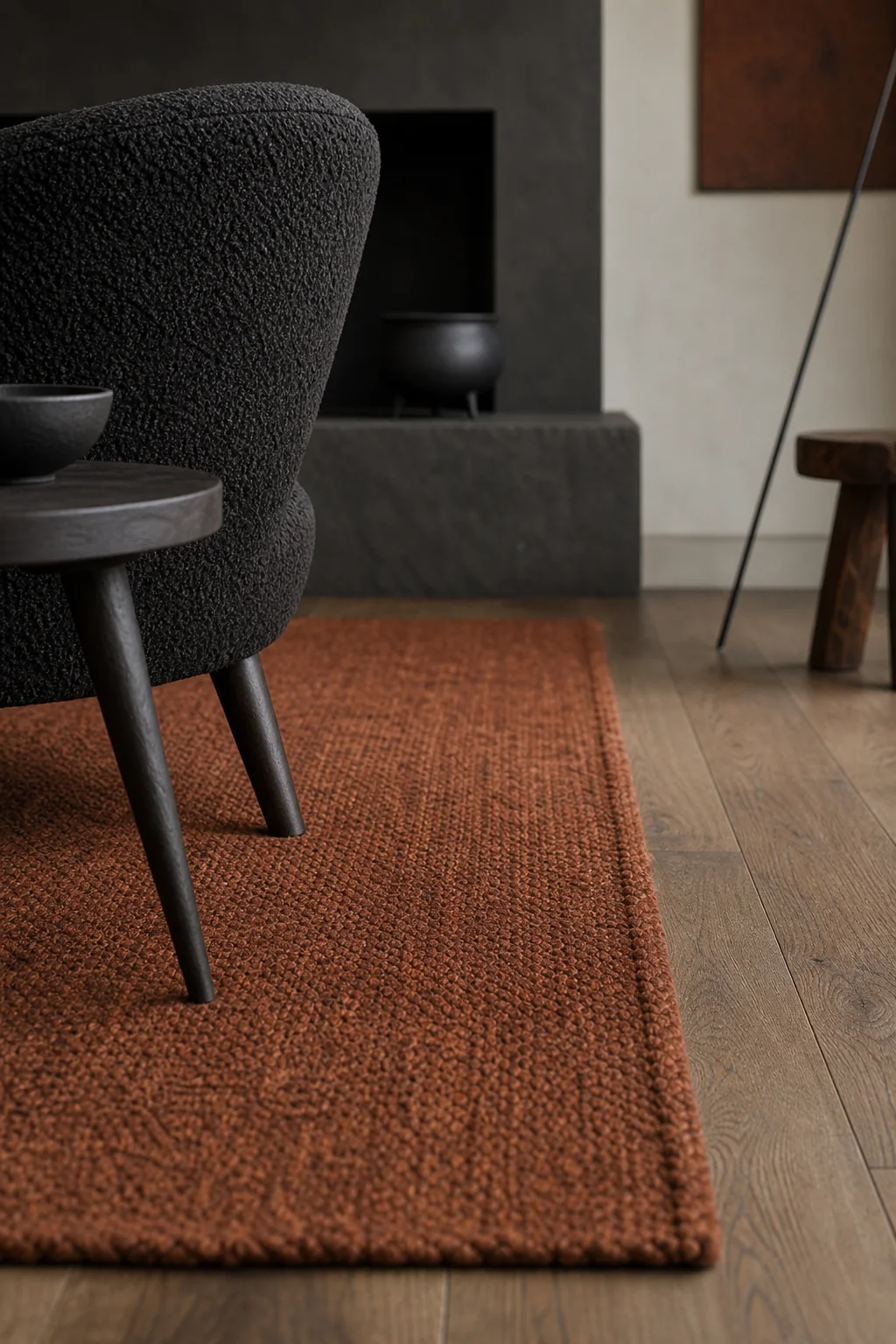
A rust-toned wool rug mimics the warmth of glowing embers, introducing essential heat to the floor plane and breaking up the expansive oak boards. By placing this vibrant textile beneath the central seating arrangement, you create a fiery visual base that contrasts beautifully with the matte blackened steel legs of the surrounding furniture. This deliberate layering of warm and cool tones ensures the living room feels inviting rather than stark, proving that dark, heavy materials require a counterbalance of rich, saturated color to truly thrive in a residential setting.
Embracing pitted and porous textures
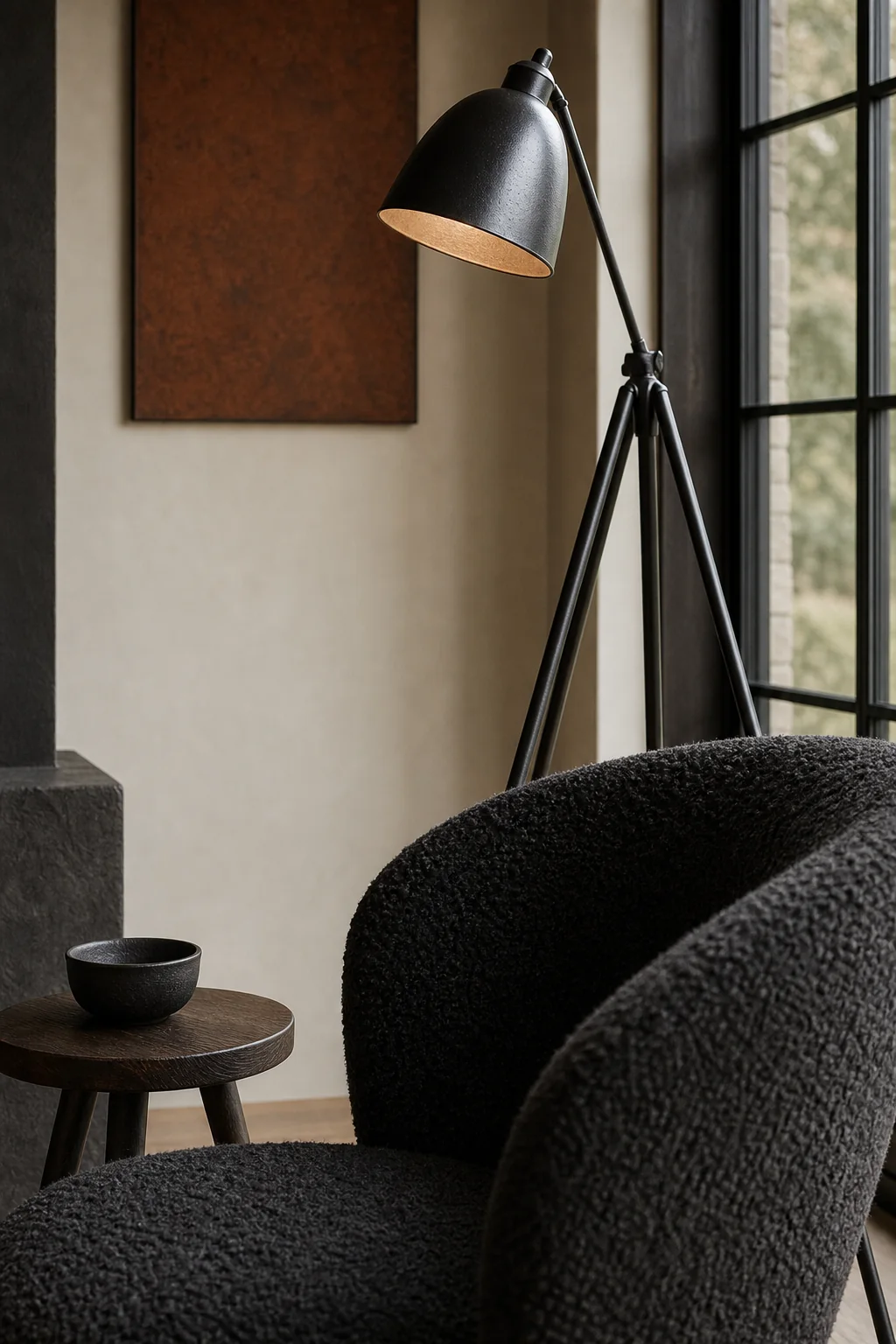
Replicating the light-absorbing quality of raw iron through textiles prevents dark colors from feeling lifeless or one-dimensional. Heavy, nubby charcoal bouclé fabric on the main lounge chair absorbs light exactly like pitted cast iron, avoiding the harsh reflections of high-gloss finishes that would disrupt the moody atmosphere. Layering these heavily textured fabrics against smooth, warm oak surfaces creates a tactile richness that defines the space, grounding the seating area with undeniable physical weight. You can easily replicate this sensory experience by sourcing items from this curated material checklist.
Lifting heavy volumes with tripod stances
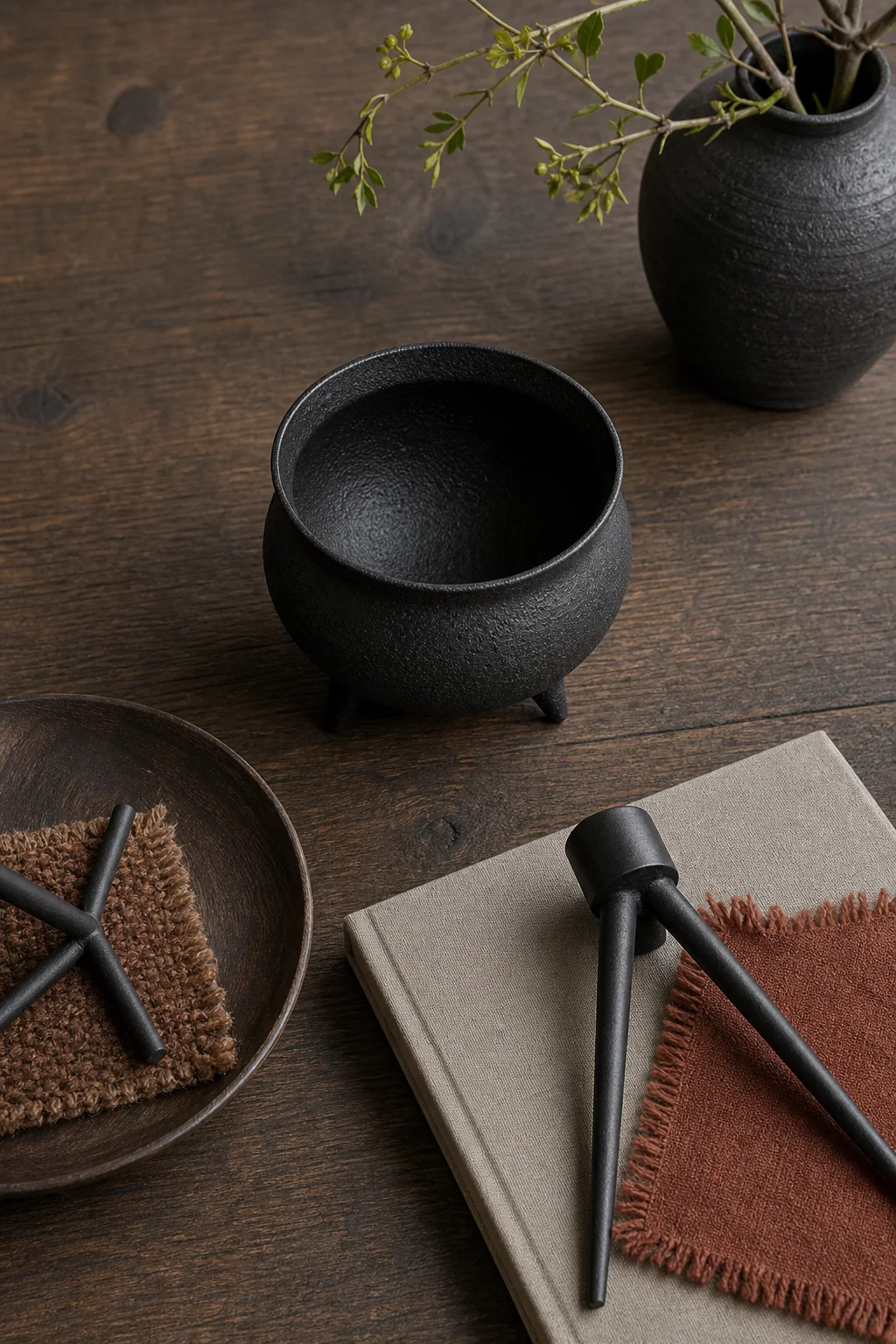
Introducing slender, angled supports provides necessary visual relief from the room’s heavy foundational elements, ensuring the dense materials never feel suffocating. A set of nesting side tables and a blackened steel floor lamp repeat the cauldron’s tapered tripod stance, ensuring the delicate supports contrast sharply with the heavier seating. Selecting accent furniture with tapered, angled legs lifts the bulbous, low-center-of-gravity volumes off the floor, preventing the dark palette from weighing down the room. This rhythmic interplay between heavy mass and delicate elevation is crucial for a balanced modern rustic aesthetic.
Three-legged furniture naturally adapts to uneven rustic floors while providing a lighter visual footprint than solid block bases, perfectly balancing the room’s heavier architectural elements.
Echoing the tapered iron feet
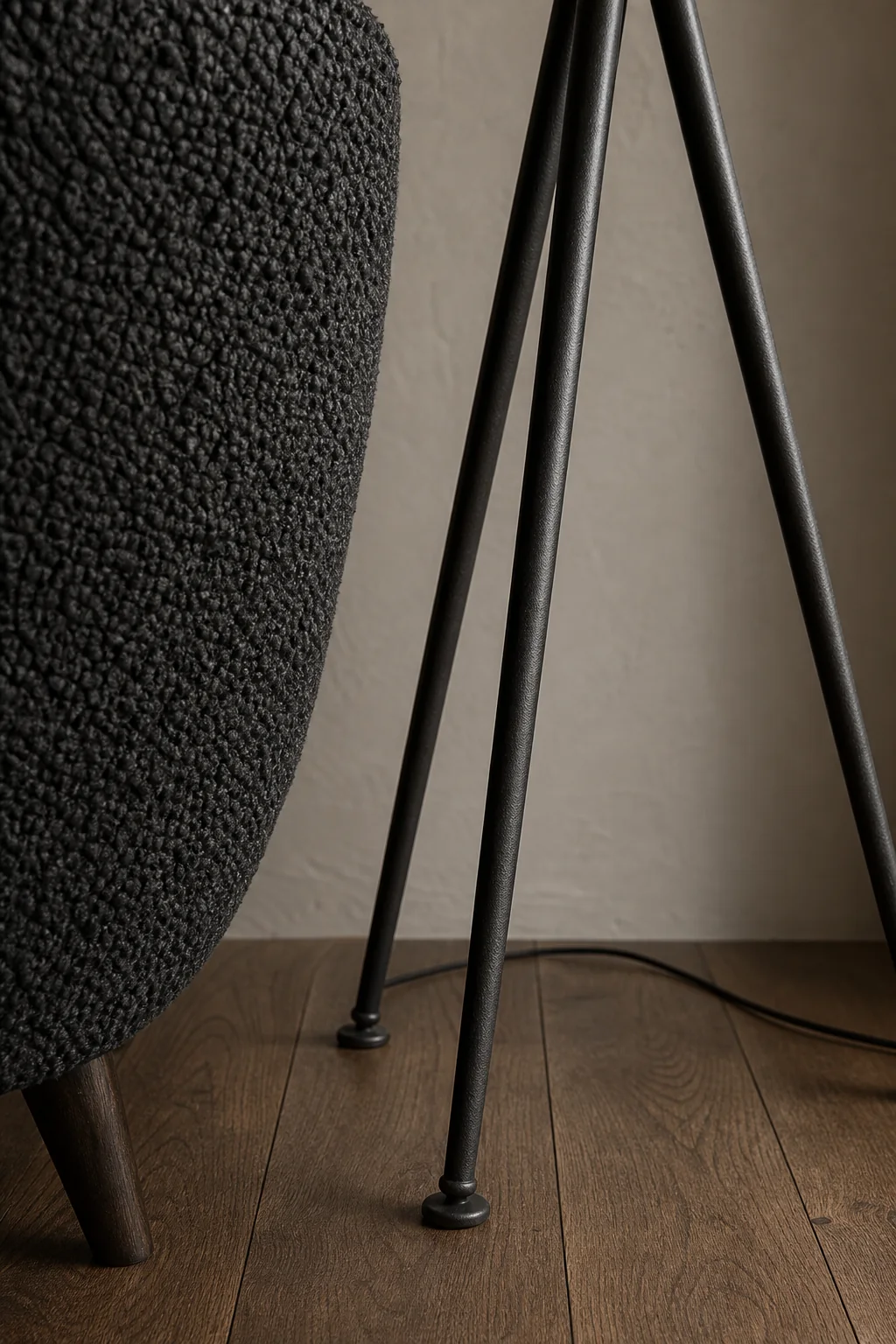
A steel floor lamp echoes the iron vessel’s tripod feet, completing the room’s rhythmic balance between mass and elevation while providing functional task lighting. You can scale this aesthetic to fit your comfort level: keep it subtle by using matte black exclusively on slender lighting fixtures, achieve a balanced rustic look by pairing a monolithic fireplace with warm oak floors, or go bold by extending the charcoal plaster across the entire focal wall alongside deeply textured bouclé seating. Whichever intensity you choose, the underlying geometry of the iron vessel remains intact.