
One Reading Nook, 12 Era Styles
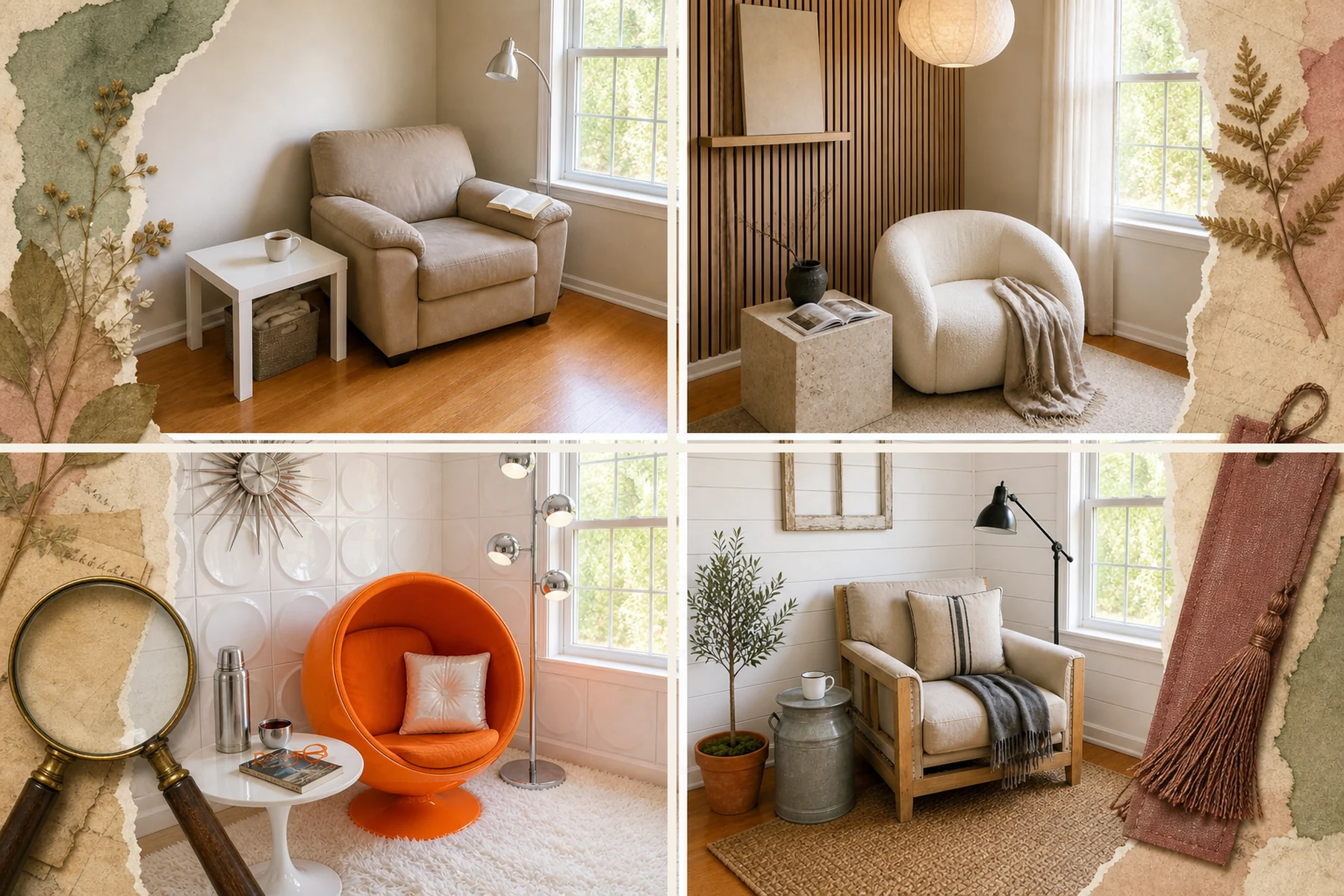
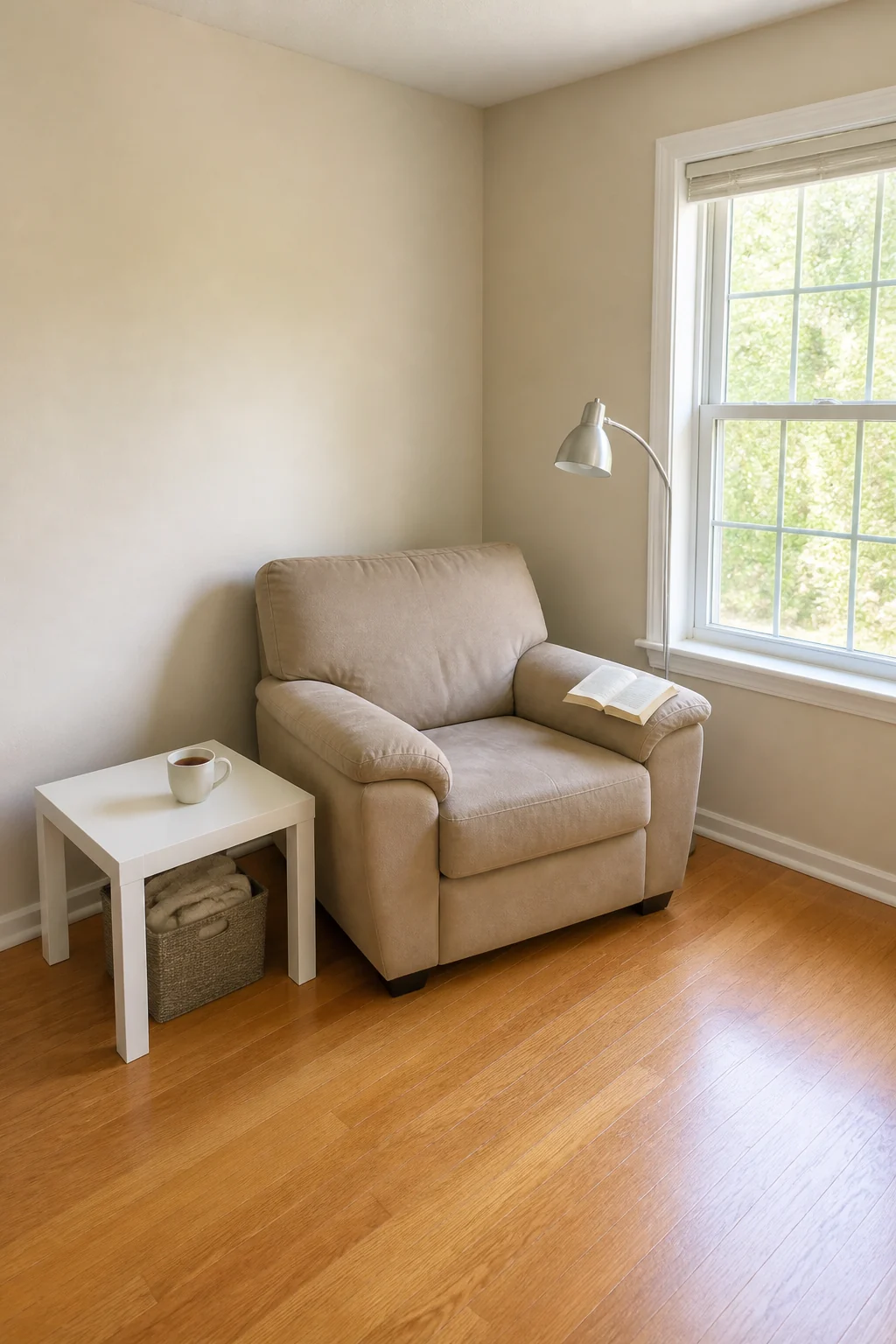
Watch one identical corner travel through 130 years of design history without moving its walls or windows. Use this decade-by-decade shopping checklist detailing the signature materials, furniture silhouettes, and color palettes needed to recreate each historical era.
1890s Victorian
Step back in time to an era where moody, ornate parlors defined domestic luxury. This style relies heavily on rich moody color palettes and dark carved woods to create a dense, romantic atmosphere. Deep plum walls and antique gold accents immediately transform the basic corner into a dramatic retreat.
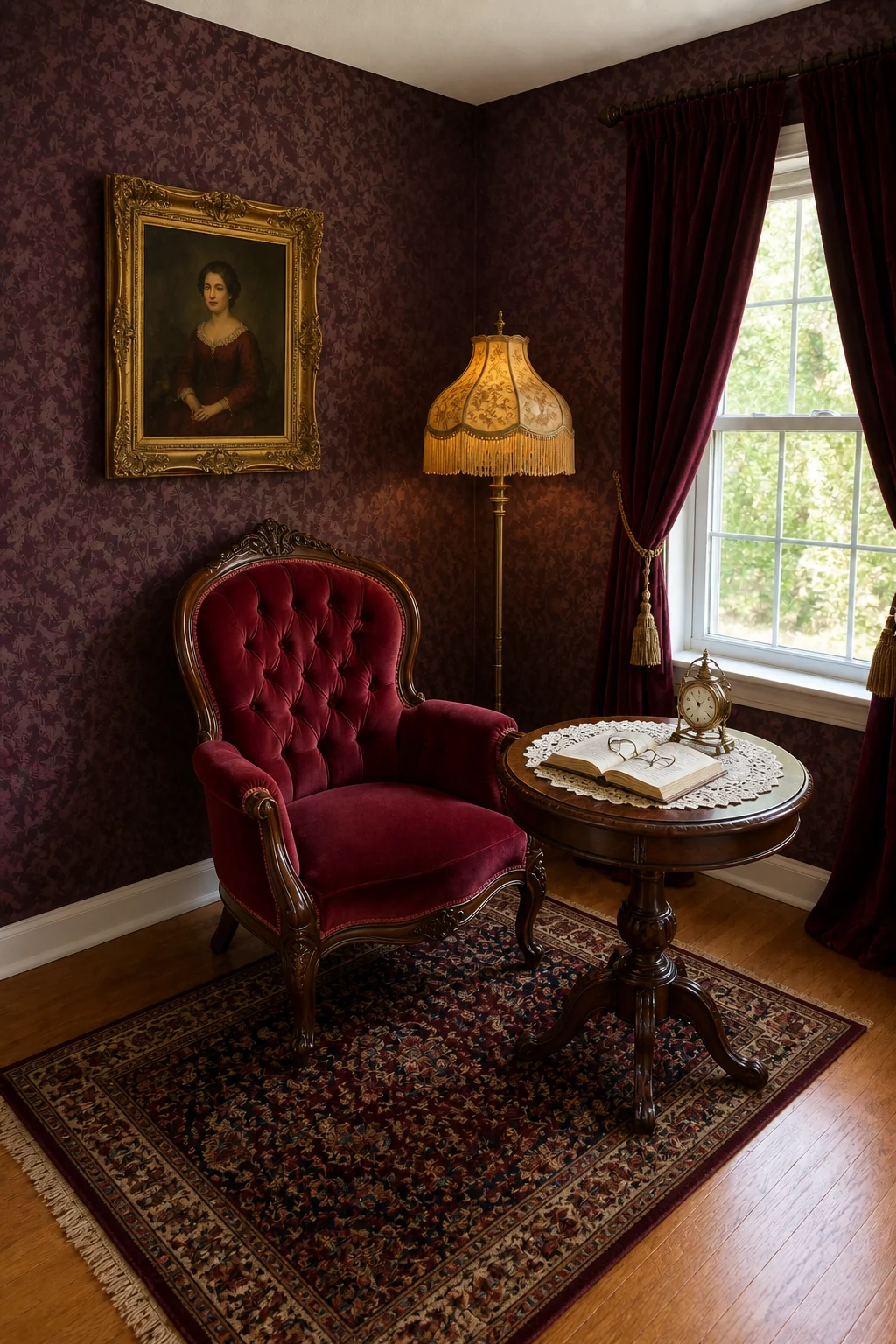
The dense floral damask and rich velvet textiles absorb light, creating an intentionally intimate parlor atmosphere. By angling the tufted chair into the corner, the layout maximizes the feeling of a private retreat while keeping the window completely unobstructed. Using dark mahogany wood accents and amber silk lamp fringe completes this highly textured, historical aesthetic. Darker walls require layered ambient lighting to prevent visual fatigue during long reading sessions.
1910s Craftsman
Move forward a few decades to discover a grounded, artisanal nook emphasizing natural wood grain. This look celebrates sturdy rectilinear forms and earthy tones over delicate, ornate decoration. High oak wainscoting and matte olive green paint instantly lower the ceiling for a cozier, more enclosed feel.
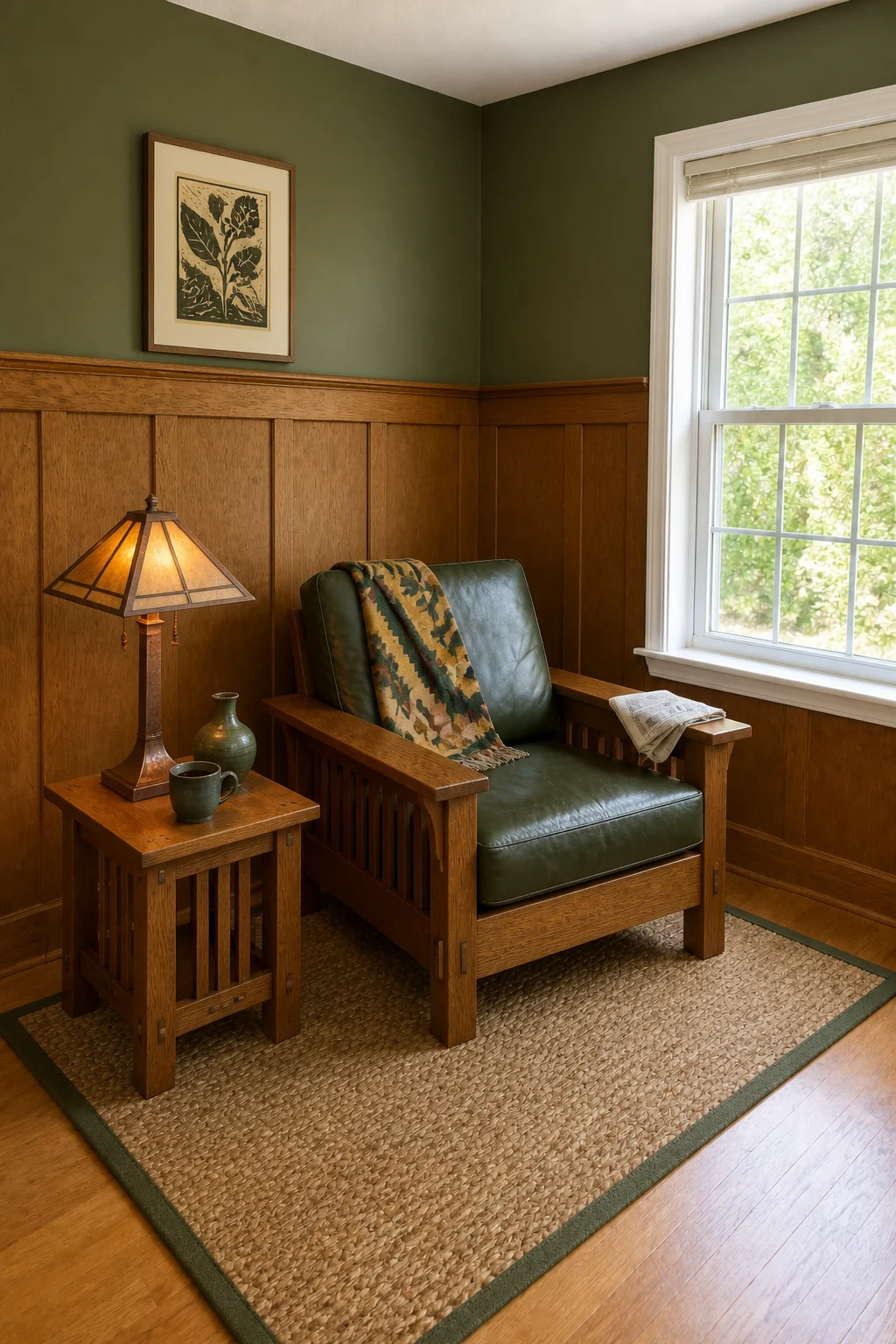
Strong architectural lines ground the space and highlight artisanal construction techniques rather than mass-produced flair. The warm amber glow from the stained mica glass lamp reflects off the quartersawn oak, enhancing the earthy palette without feeling heavy or oppressive. Adding a dark green leather mission chair provides a durable, lived-in comfort perfect for everyday reading. This woodwork-heavy approach is ideal for lovers of cozy, historic homes who appreciate honest materials.
1920s Art Deco
Embrace the roaring twenties with a glamorous, geometric space characterized by sleek metallic finishes. This era introduces luxurious curves and high-contrast patterns to the otherwise plain corner. A scalloped dusty rose velvet chair pops beautifully against the striking black-and-gold fan wallpaper.
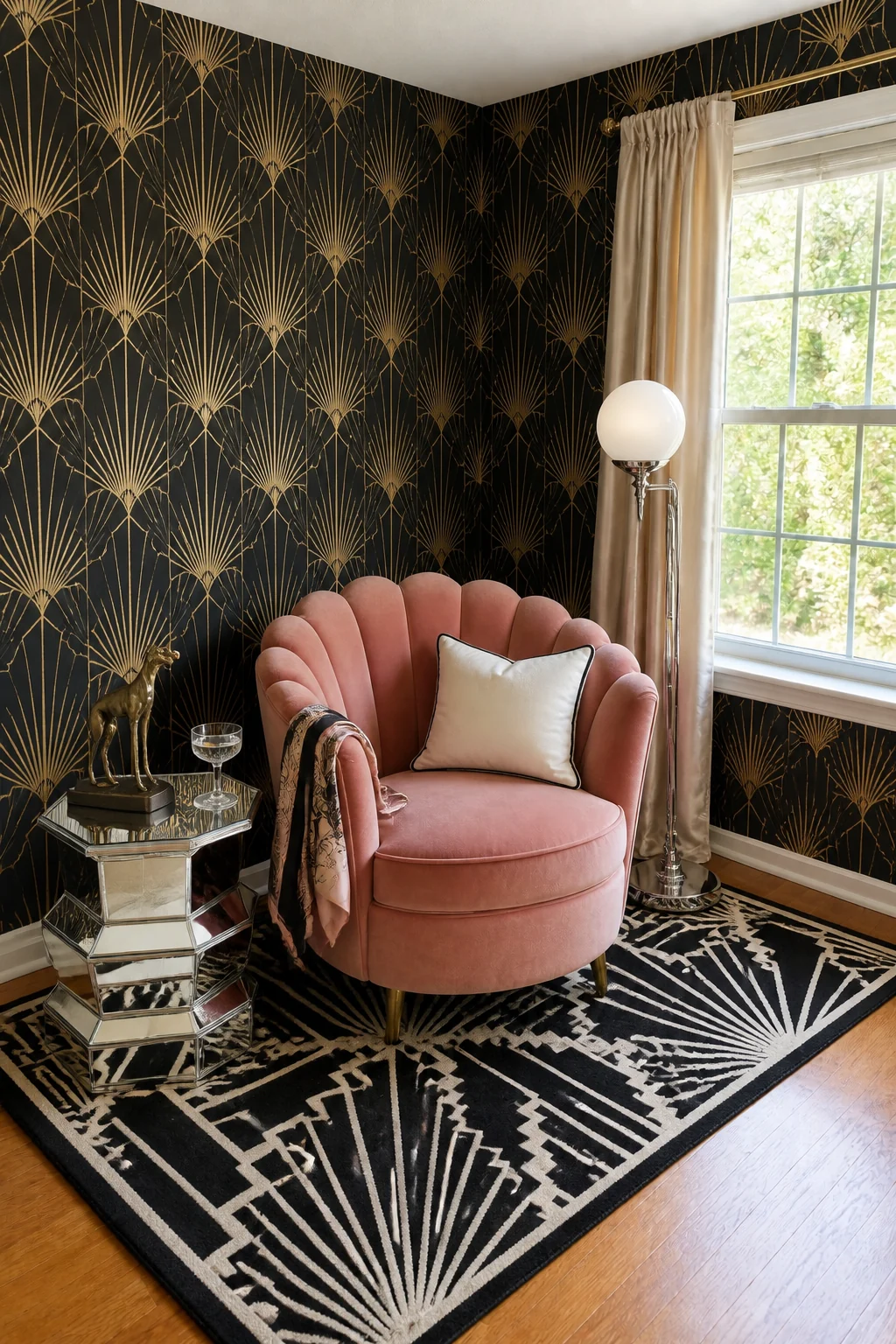
High-contrast walls provide a dramatic backdrop that elevates the soft, rounded seating and makes the dusty rose upholstery shine. The introduction of polished chrome and a mirrored tiered side table adds a layer of glamorous reflection that keeps bold patterns from overwhelming the small footprint. These reflective surfaces cleverly bounce window light into dark corners, maintaining a bright and airy mood. It is the perfect setup for lovers of vintage glamour and bold geometry.
1950s Mid-Century
Transition into the atomic age with a sleek, optimistic corner featuring iconic organic curves. This style strips away heavy ornamentation in favor of warm woods and clean, functional silhouettes. Vertical flat-profile walnut paneling provides a rich, textured backdrop for the streamlined furniture.
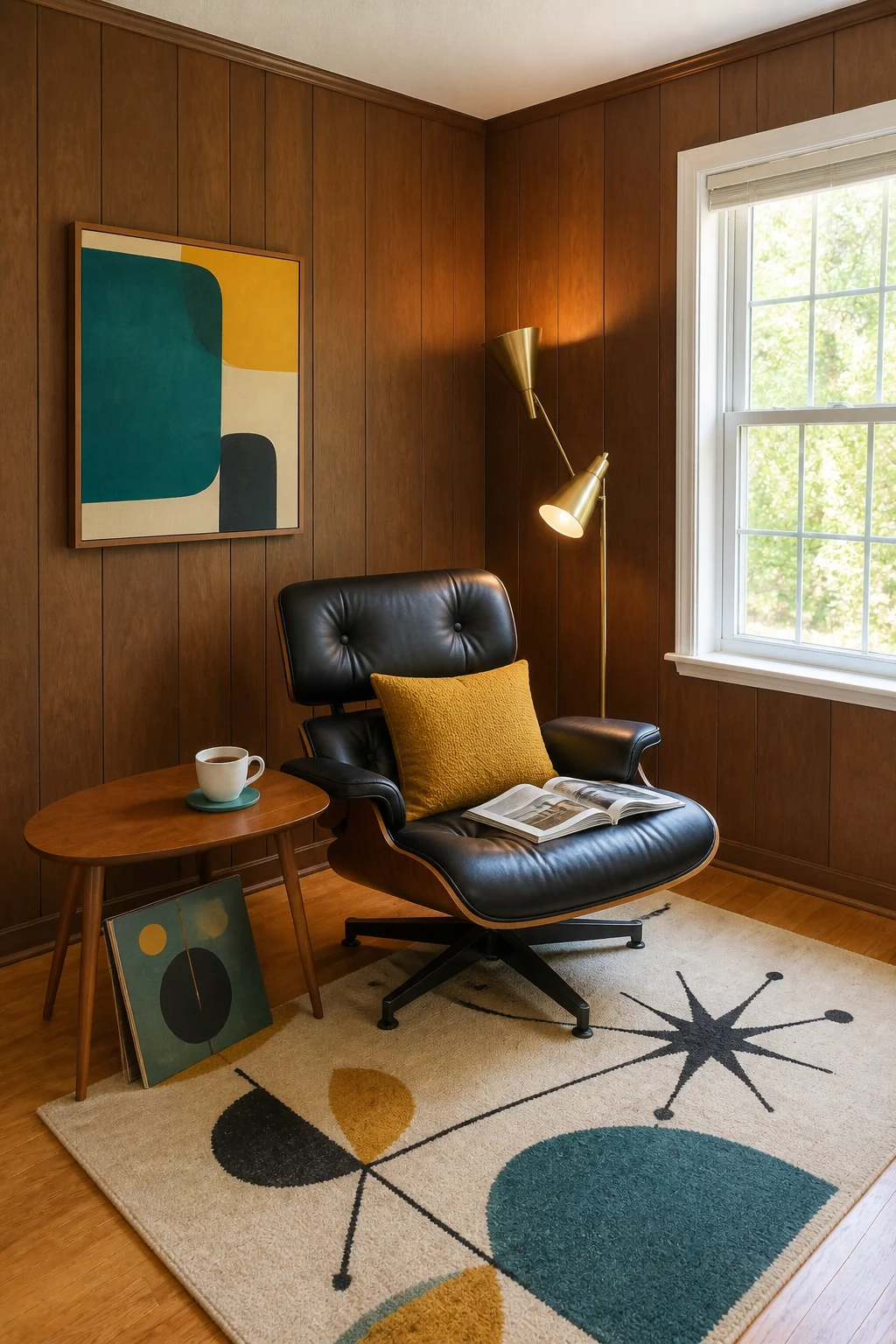
The organic curves of the molded plywood lounge chair soften the rigid vertical lines of the walnut walls. Warm woods dominate the palette, but stark black leather and spun brass accents keep the corner feeling sharp, deliberate, and highly optimistic. Tapered peg legs on the kidney-shaped teak table create visual breathing room underneath the heavy furniture. Design purists and fans of retro minimalism will appreciate how easily these evergreen silhouettes anchor a room.
1960s Space Age
Step into a playful, futuristic retro space dominated by glossy molded plastics. Bold primary colors and fluid shapes completely disguise the room’s traditional architecture. A bright orange fiberglass pod chair acts as a cinematic focal point against the stark white walls.
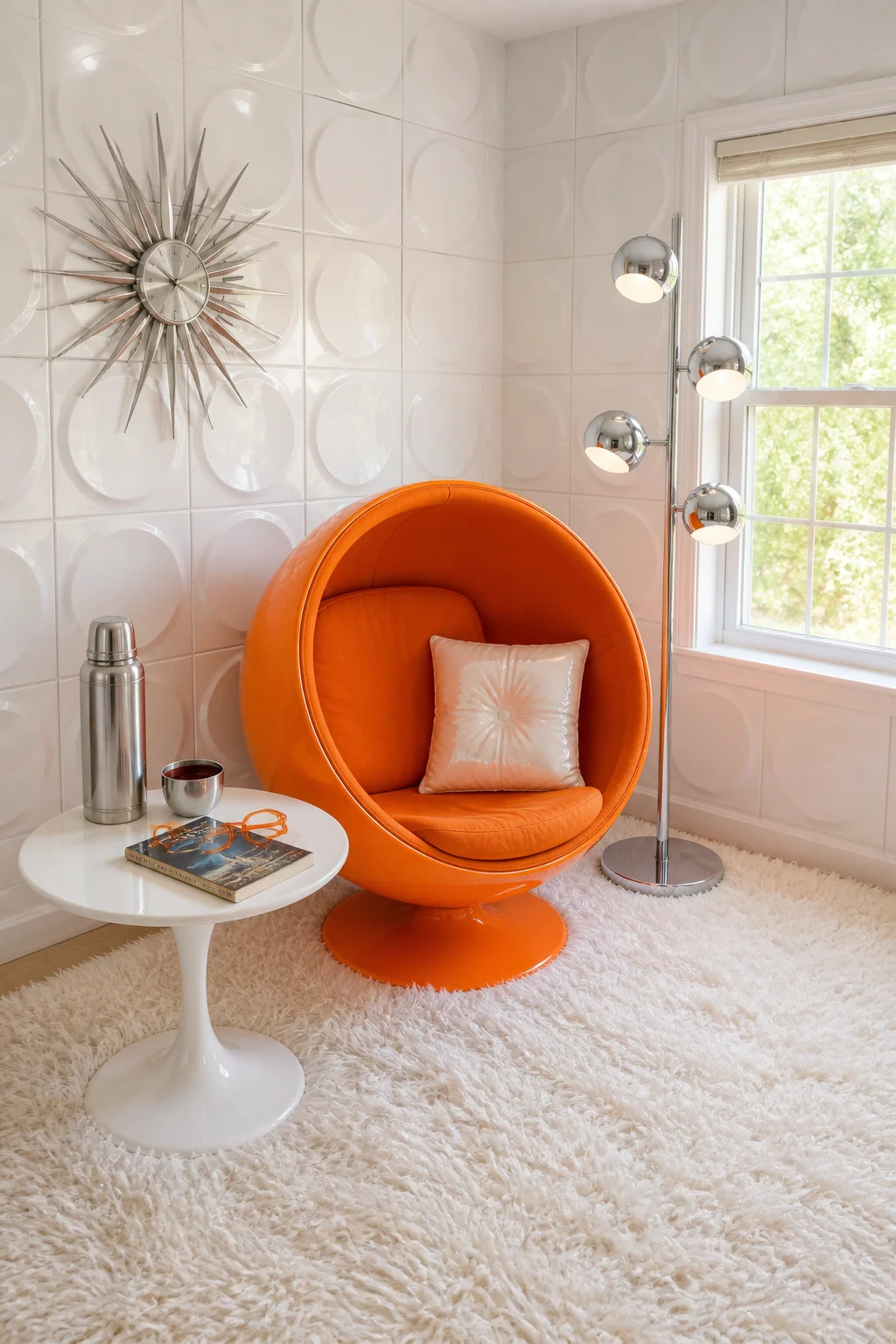
Using highly textured but monochromatic 3D wall panels adds immense visual interest without clashing with the vibrant seating. The glossy white reliefs bounce ambient light around the room to brighten the tight space and enhance the futuristic vibe. Finishing the look with a chrome eyeball lamp and a fluffy shag rug delivers pure retro-futuristic fun. Bold decorators will love how this cinematic look pops instantly, even in a small corner.
1970s Bohemian
Relax into a nature-inspired corner filled with woven rattan textures and trailing plants. This decade shifts away from synthetic plastics toward earthy colors and organic materials. Natural woven grasscloth wallpaper adds necessary warmth to the plain white baseboards.
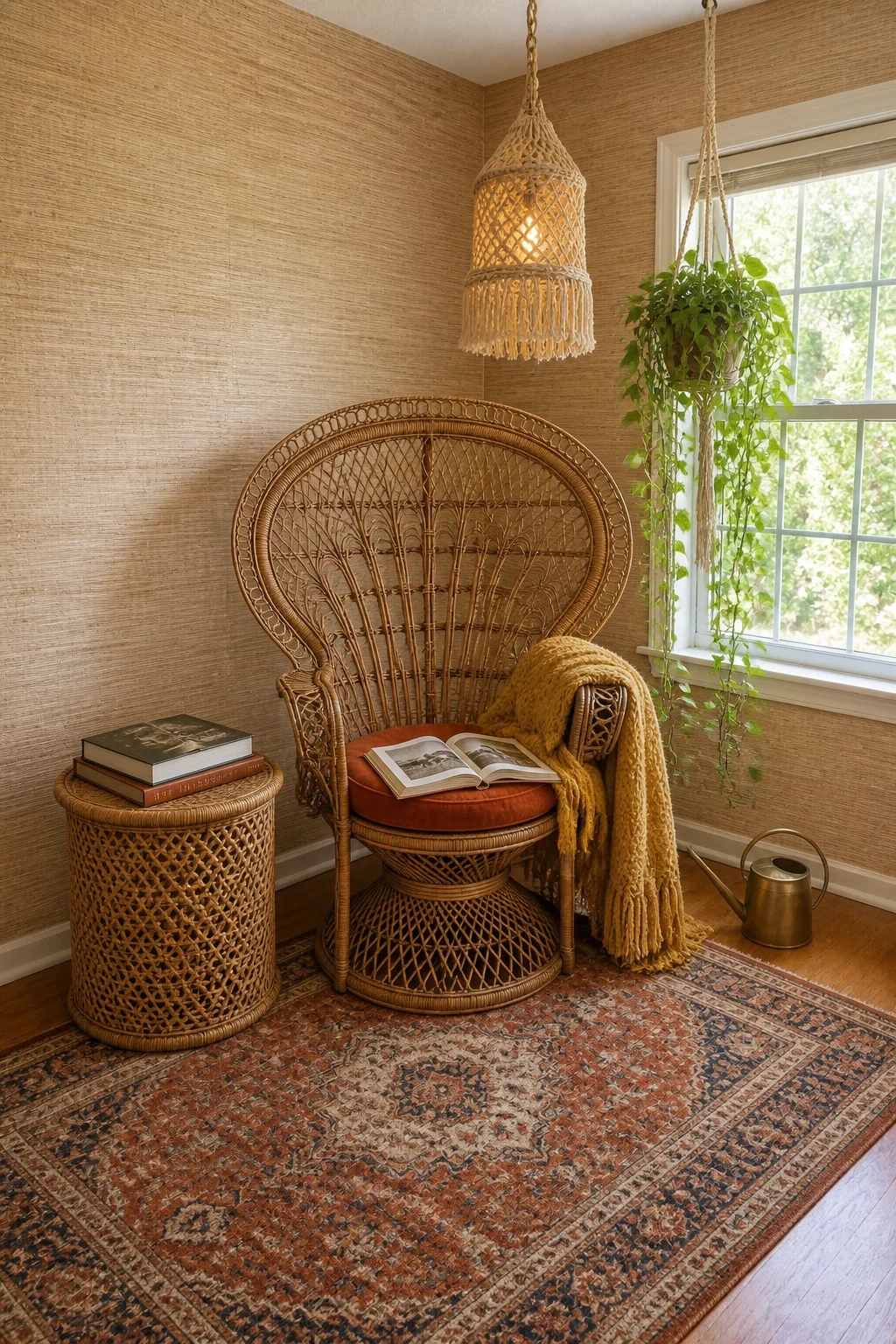
The oversized peacock chair provides dramatic scale while its open weave prevents the corner from feeling visually blocked or heavy. Layering grasscloth, wicker, and macrame introduces immense tactile variety, perfectly complementing the relaxed energy of the indoor greenery. A rust-colored velvet seat cushion ties the earthy terracotta palette together effortlessly. Plant lovers and free-spirited decorators will find this highly textured, relaxed vibe incredibly easy to maintain.
1980s Postmodern
Inject nostalgic energy with an irreverent, graphic space featuring pastel pink backgrounds. Chunky geometric furniture and neon accents defy traditional color rules. A tubular steel and cobalt armchair anchors this Memphis-inspired corner.
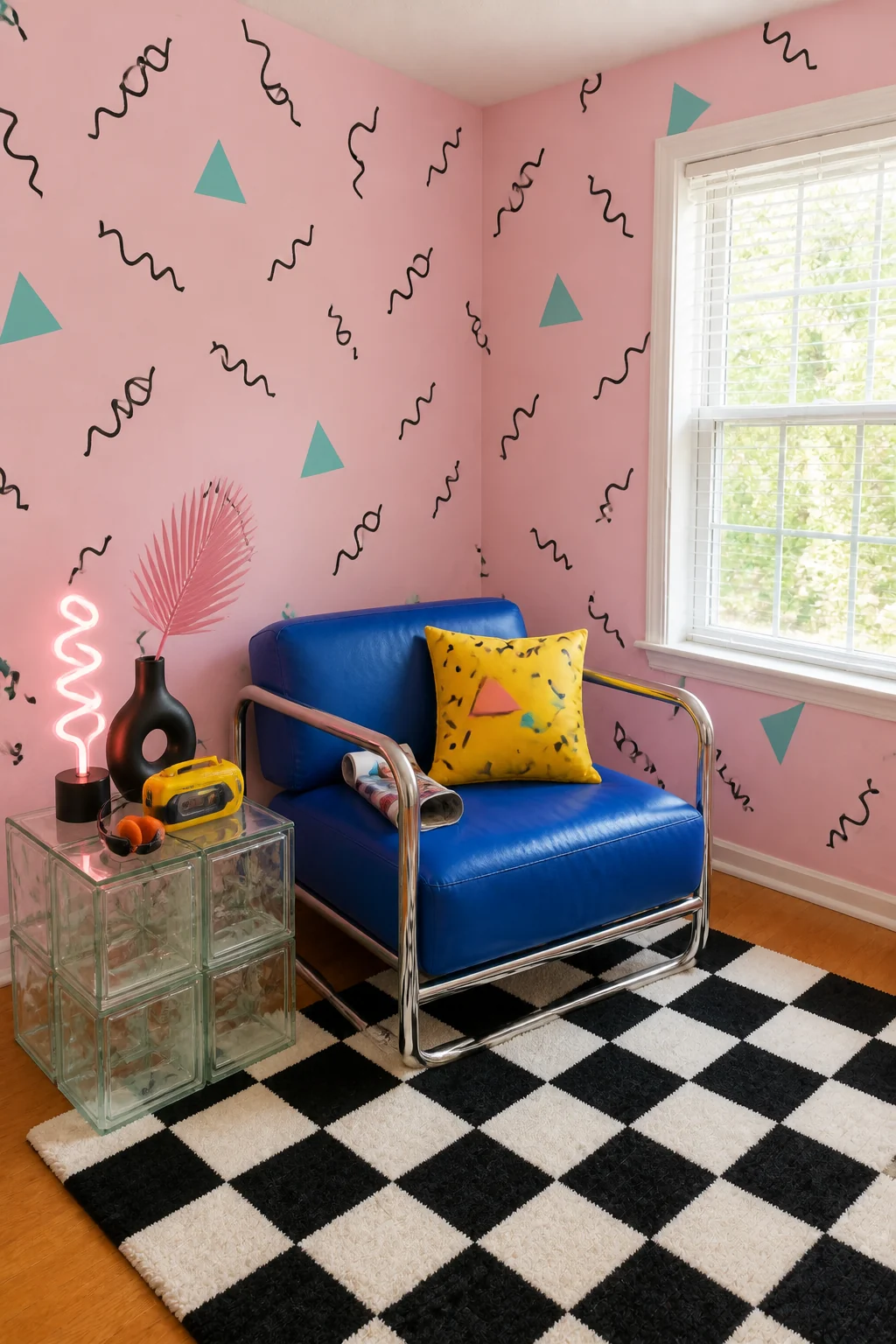
The unexpected mix of pastel pink and bright cobalt creates a highly energetic impact. Chunky proportions pair perfectly with the squiggly neon lamp to deliver a playful atmosphere. Glass block furniture maintains utility without adding visual weight. Retro trendsetters can easily recreate this look by embracing bold geometric shapes.
Where to Spend on 80s Style
Invest in authentic-looking tubular steel seating and custom neon lighting to anchor the postmodern aesthetic, but save money by hand-painting your own Memphis-style squiggles over an inexpensive pastel base coat.
1990s Shabby Chic
Embrace a soft, romanticized vintage look relying on distressed white finishes. This aesthetic prioritizes comfort and nostalgia through oversized slipcovers and faded floral prints. Faded cabbage rose wallpaper sets a welcoming, cottage-inspired tone for the entire room.
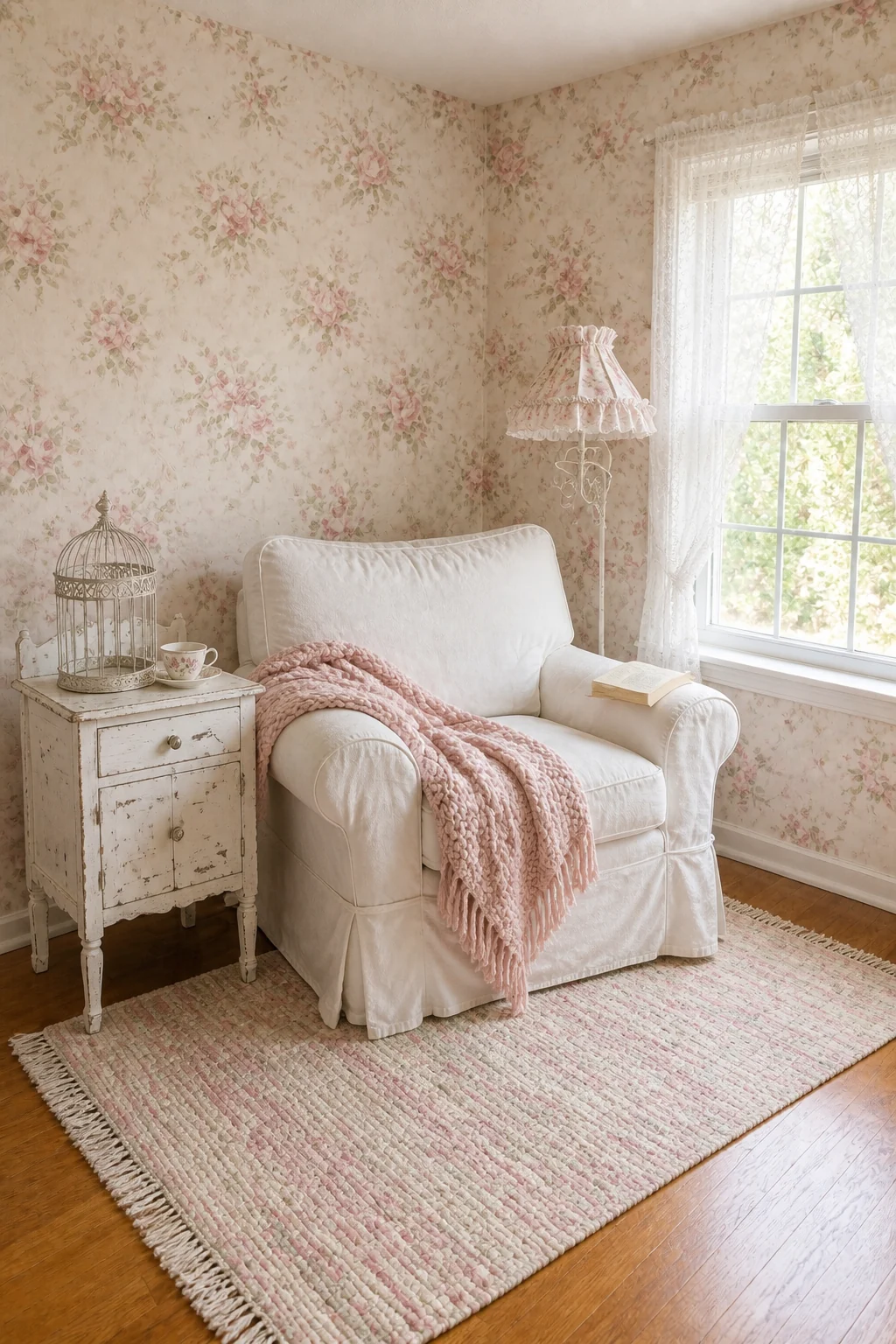
The relaxed, rumpled texture of the white denim slipcover instantly communicates unpretentious comfort while easily hiding mismatched seating frames. Pairing faded watercolor florals with a heavily distressed, chipped-paint washstand creates a soft, lived-in aesthetic that feels incredibly welcoming. Finishing the corner with a ruffled-shade wrought iron lamp enhances the delicate, romantic atmosphere. Cottagecore fans will appreciate how this ultra-soft styling turns a basic corner into a cozy retreat.
2000s Y2K Zen
Clear your mind with a minimalist, spa-like retreat defined by dark espresso woods. This era strips away the floral clutter in favor of frosted glass and strict square geometry. Smooth matte sage green walls provide a calming, uncluttered backdrop for the low-profile furniture.
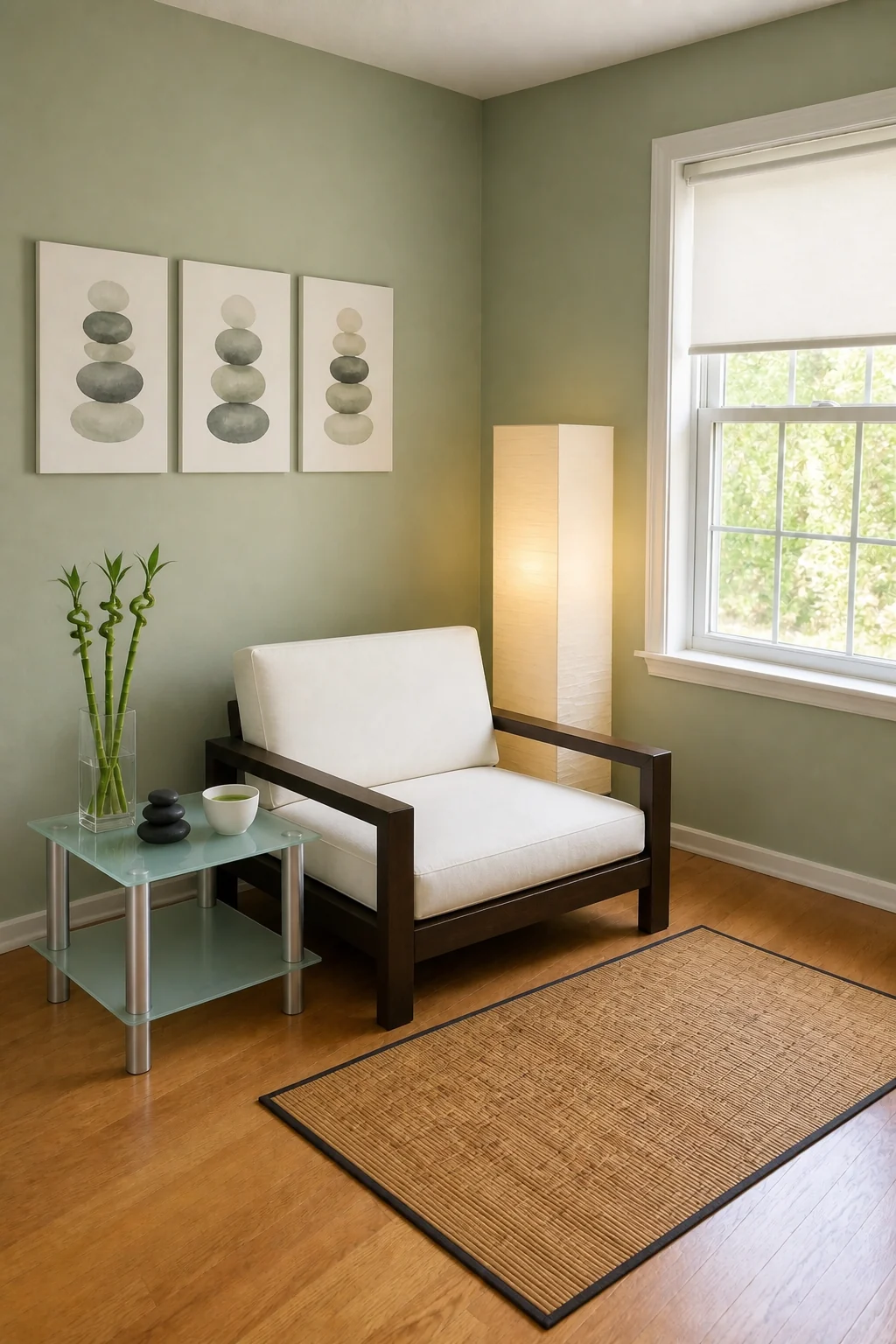
The stark contrast between the dark wood frame and crisp white canvas perfectly captures the era’s spa-minimalism trend. By removing all complex patterns and relying on frosted sea glass and rice paper, the corner becomes a highly disciplined sanctuary. Because strict square geometry can feel rigid, soft ambient lighting is essential to keep the space inviting. Minimalists seeking a calm, uncluttered retreat will love the soothing simplicity of this layout.
2010s Farmhouse
Blend rustic charm with industrial edges in this cozy, family-friendly space featuring crisp white shiplap. This massively popular style relies on deconstructed upholstery and matte black metals for a highly textured look. A galvanized metal milk can table adds immediate repurposed character to the bright corner.
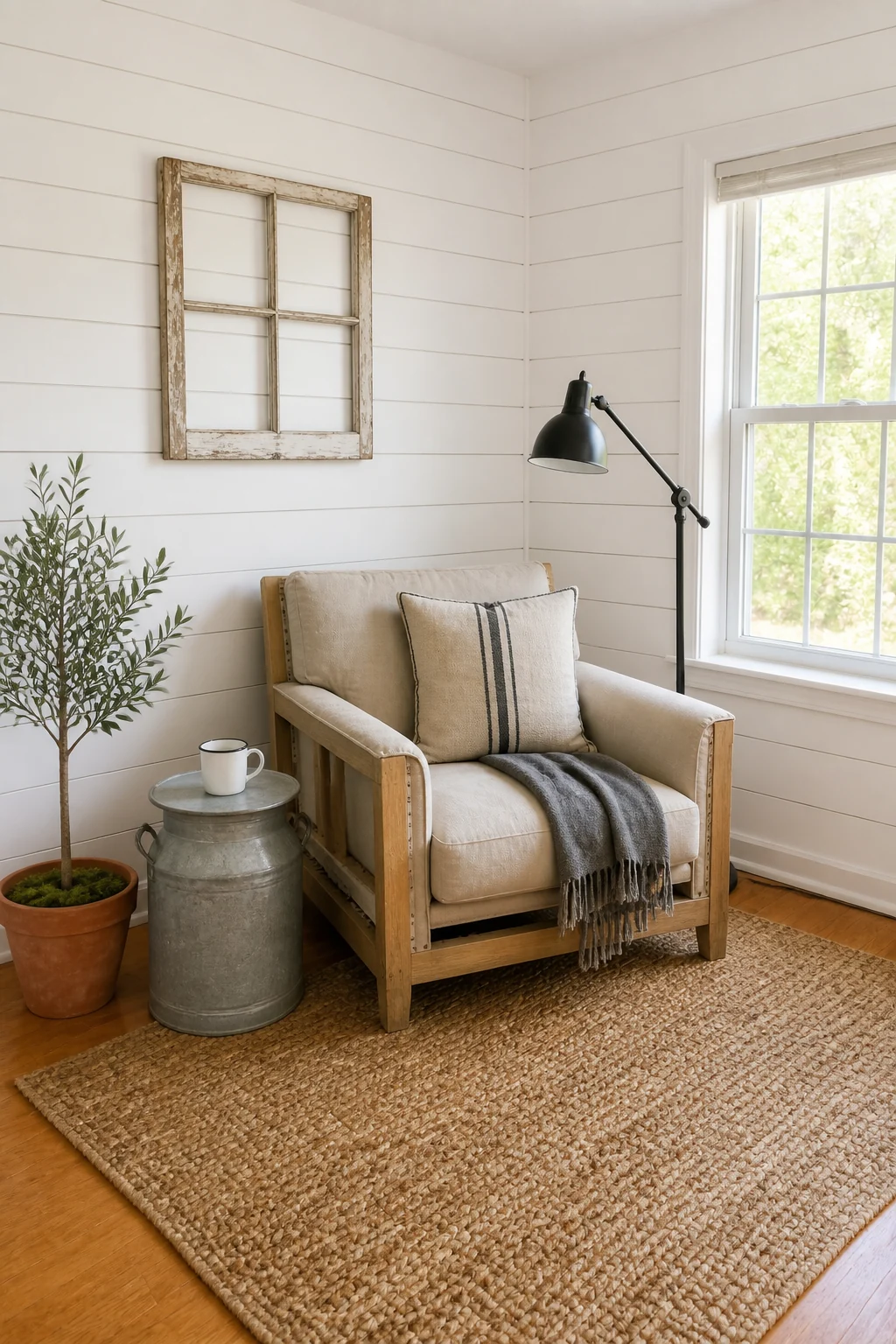
The horizontal lines of the wooden shiplap visually widen the narrow corner while bouncing natural light around the room. Deconstructed linen upholstery and exposed burlap introduce rugged textures that prevent the all-white palette from feeling sterile or overly precious. Exposed chair frames and matte black iron fixtures add much-needed architectural interest to the plain walls. Fans of rustic charm will appreciate how easily this accessible, bright aesthetic hides everyday wear.
2020s Japandi
Experience a warm, tactile contemporary space blending Scandinavian coziness with Japanese wabi-sabi minimalism. This current trend combines high texture with soothing, uncluttered silhouettes. Vertical light oak acoustic slats draw the eye upward while adding immense architectural depth.
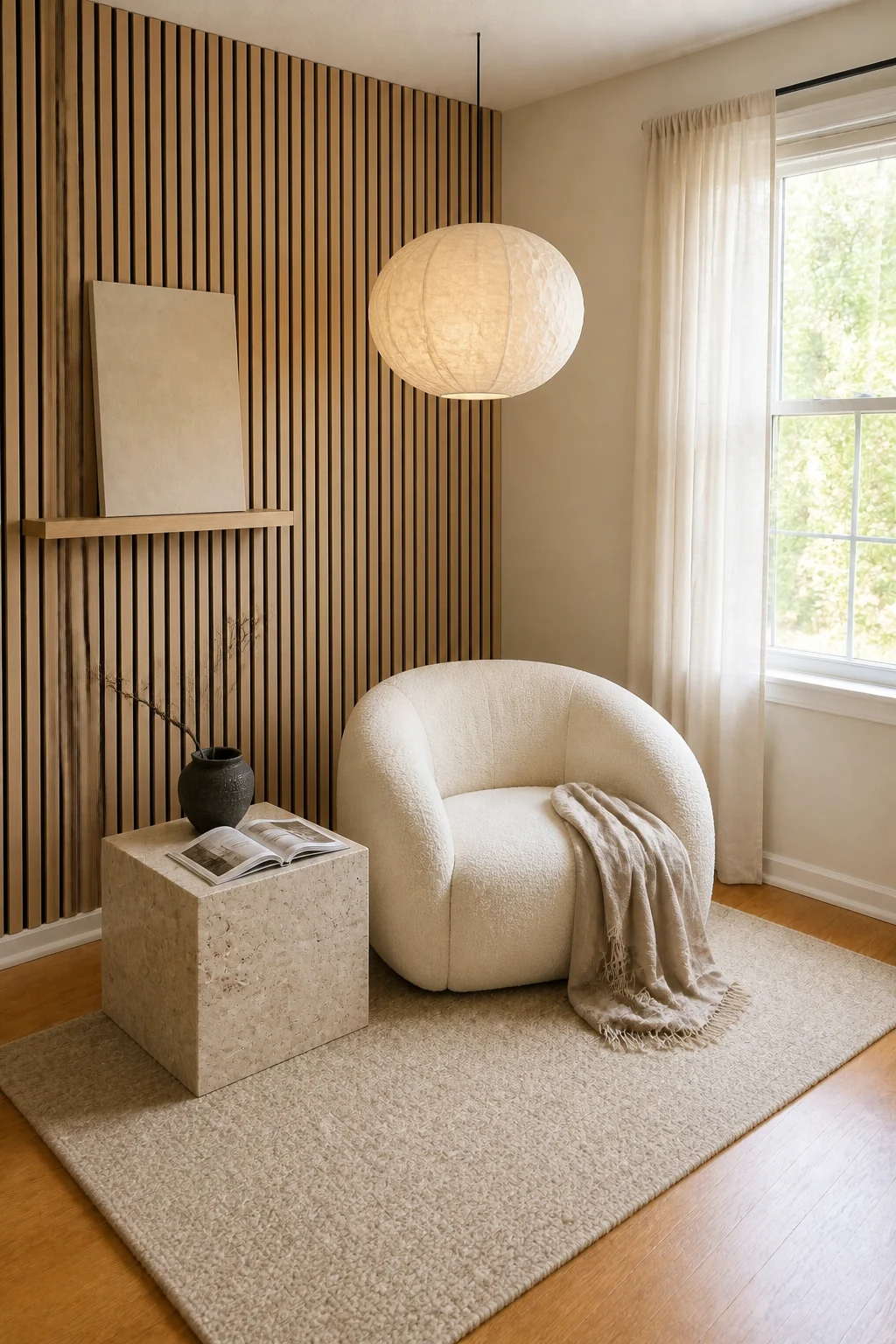
The tactile combination of a nubby cream boucle armchair and a raw travertine stone block brings immense warmth to the minimalist layout. Acoustic wood slats subtly dampen sound for a quieter, more focused reading experience. Hanging an oversized crushed paper pendant creates a cozy, lowered canopy over the seating area without adding visual weight. Trend-conscious minimalists will love how this style provides a deeply soothing, highly textured escape.
2030s Biophilic Future
Look ahead to a speculative, nature-integrated space featuring seamless organic curves. This futuristic design blurs the line between technology and ecology with sustainable materials and living walls. A translucent 3D-printed bio-resin lattice chair offers a highly unusual, visually arresting focal point.
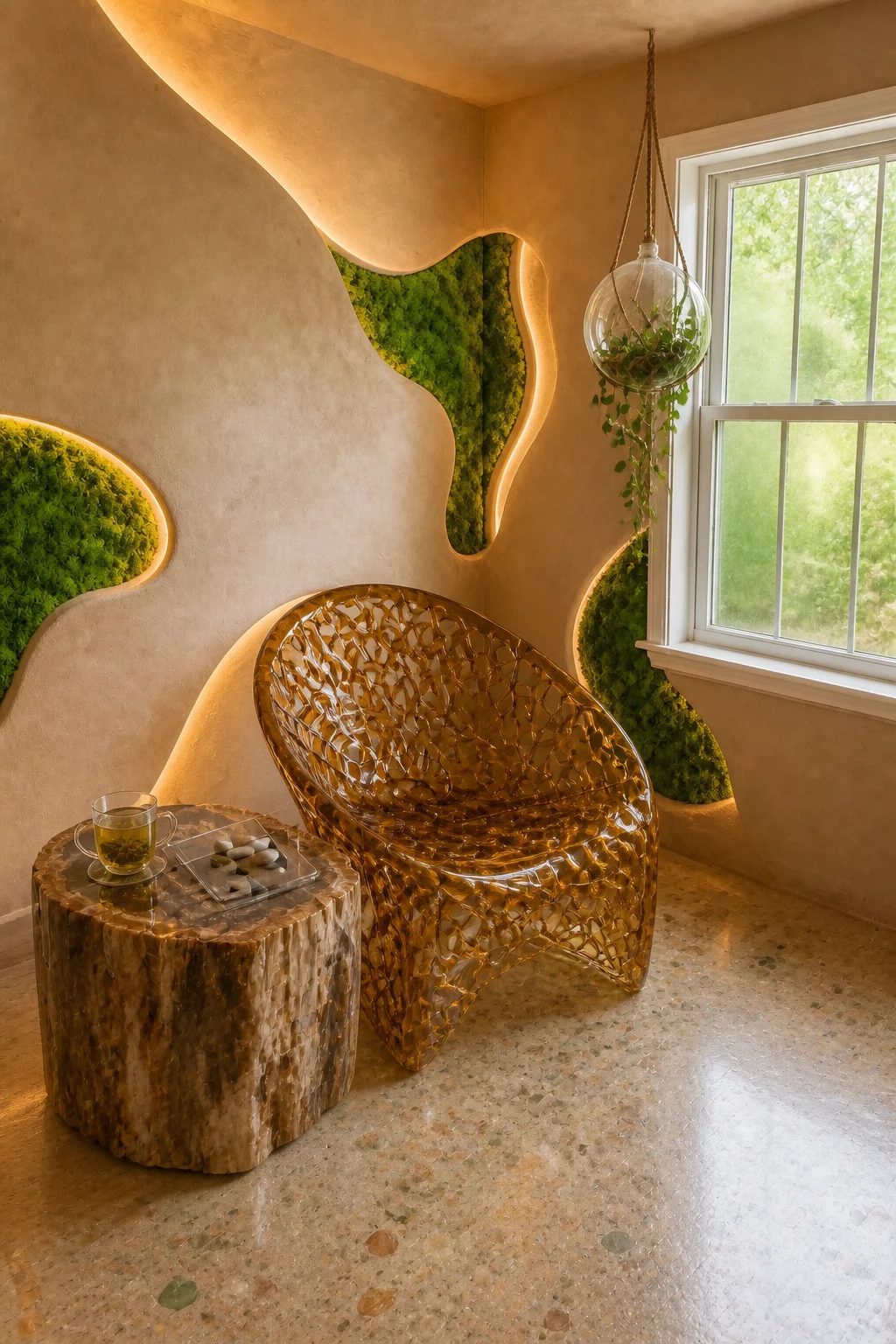
Smoothing the harsh 90-degree corner into a gentle clay plaster curve completely transforms the standard room geometry into an organic pod. Recessed pockets of vibrant living moss provide a highly tactile, natural escape right inside the living room. Integrated warm LED wall lighting eliminates the need for bulky floor lamp bases, keeping the footprint entirely unobstructed. Forward-thinking decorators and nature lovers will be captivated by this seamless blend of biology and modern engineering.
How to Choose Your Era
Renters unable to alter walls should choose the 1970s Bohemian style. Its oversized peacock chair and plants create massive impact without permanent changes. If you want to upcycle existing furniture on a budget, the 1990s Shabby Chic look thrives on imperfection, easily hiding old chairs under slipcovers. Finally, to get a highly textured space that remains minimalist, the 2020s Japandi aesthetic uses rich boucle and raw travertine to provide warmth.