
This Fern Frame Became a Sunroom Plant Nook
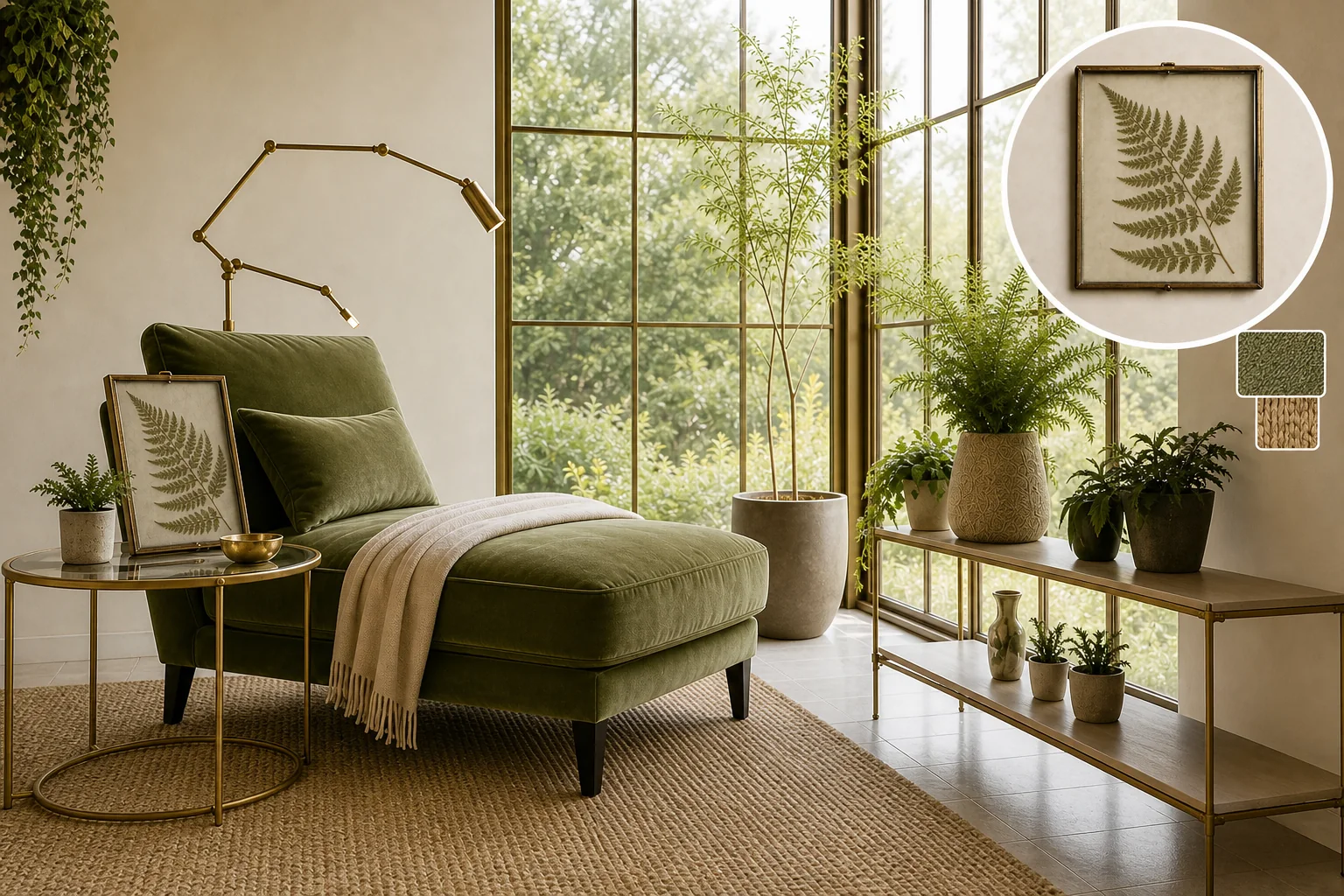
Discover how a century-old botanical specimen provides the perfect blueprint for a bright, structured sanctuary designed for reading and living plants. By maintaining a strict architectural framework that allows organic forms to shine, you can keep the foundational grid sharp and metallic so the organic elements feel intentional rather than overgrown.
Establishing the Glass Grid
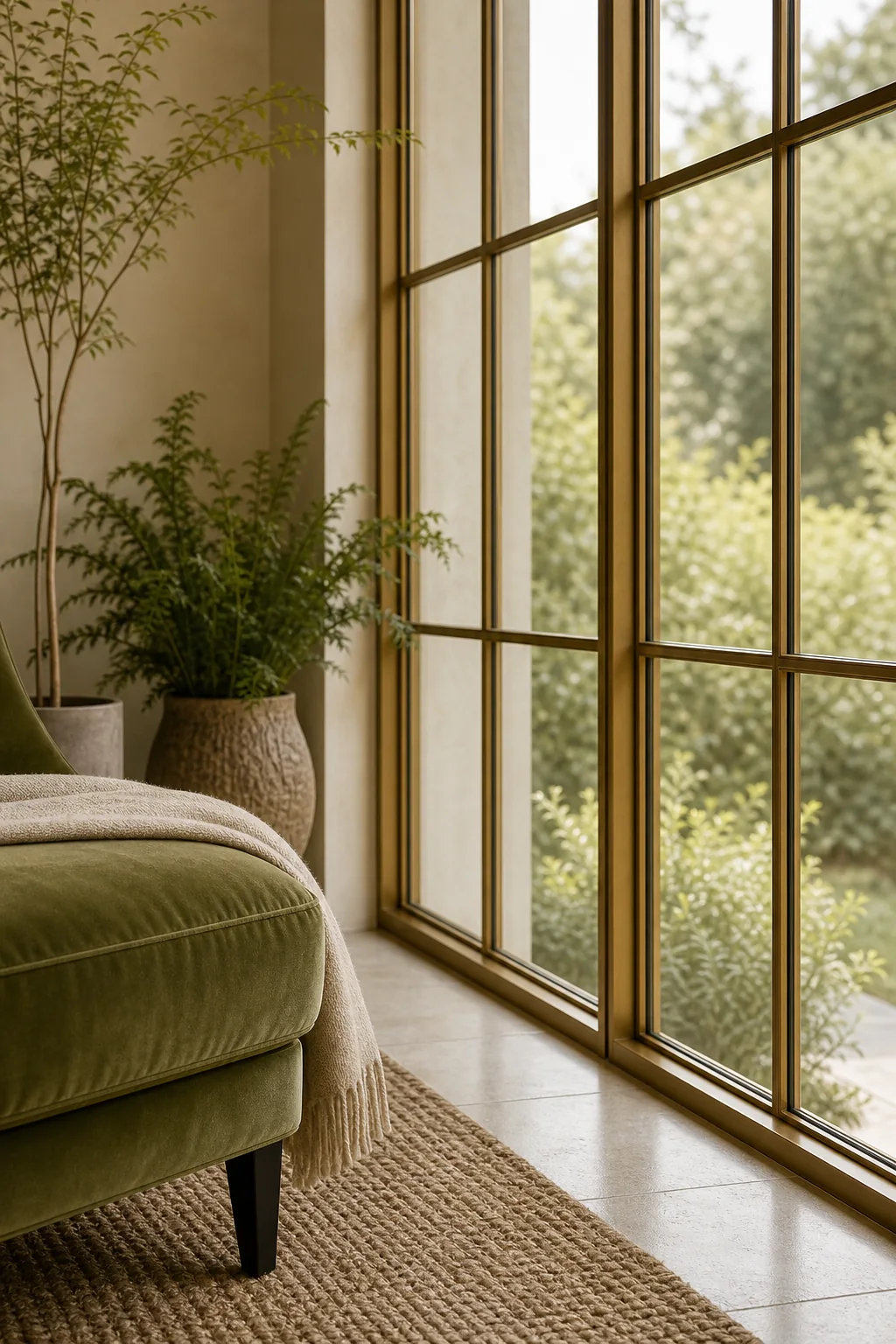
Translating the antique frame into architectural mullions creates a crisp, rigid perimeter that safely contains the room’s organic life. By echoing the thin metal binding with brass-finished window mullions, you establish a strict geometric boundary against the outdoors that warms the incoming light while maximizing natural daylight. This architectural choice transforms a simple corner into a curated exhibition space for your living plants, ensuring the structural shell remains as precise as the original Victorian glass casing. To successfully execute this foundation, follow a specific sequence of structural and decorative actions.
- Install slim brass-finished window mullions to establish a strict geometric boundary against the outdoors.
- Paint the walls a warm parchment white to provide a soft, neutral backdrop for the plants.
- Lay smooth glazed ceramic floor tiles to offer a cool, reflective base layer.
- Layer a dry-woven sisal rug over the tiles so the seating area feels grounded with a brittle, organic texture.
- Position the velvet reading chaise in the corner, allowing the muted green seating to anchor the bright, sunlit space.
Grounding with Faded Olive
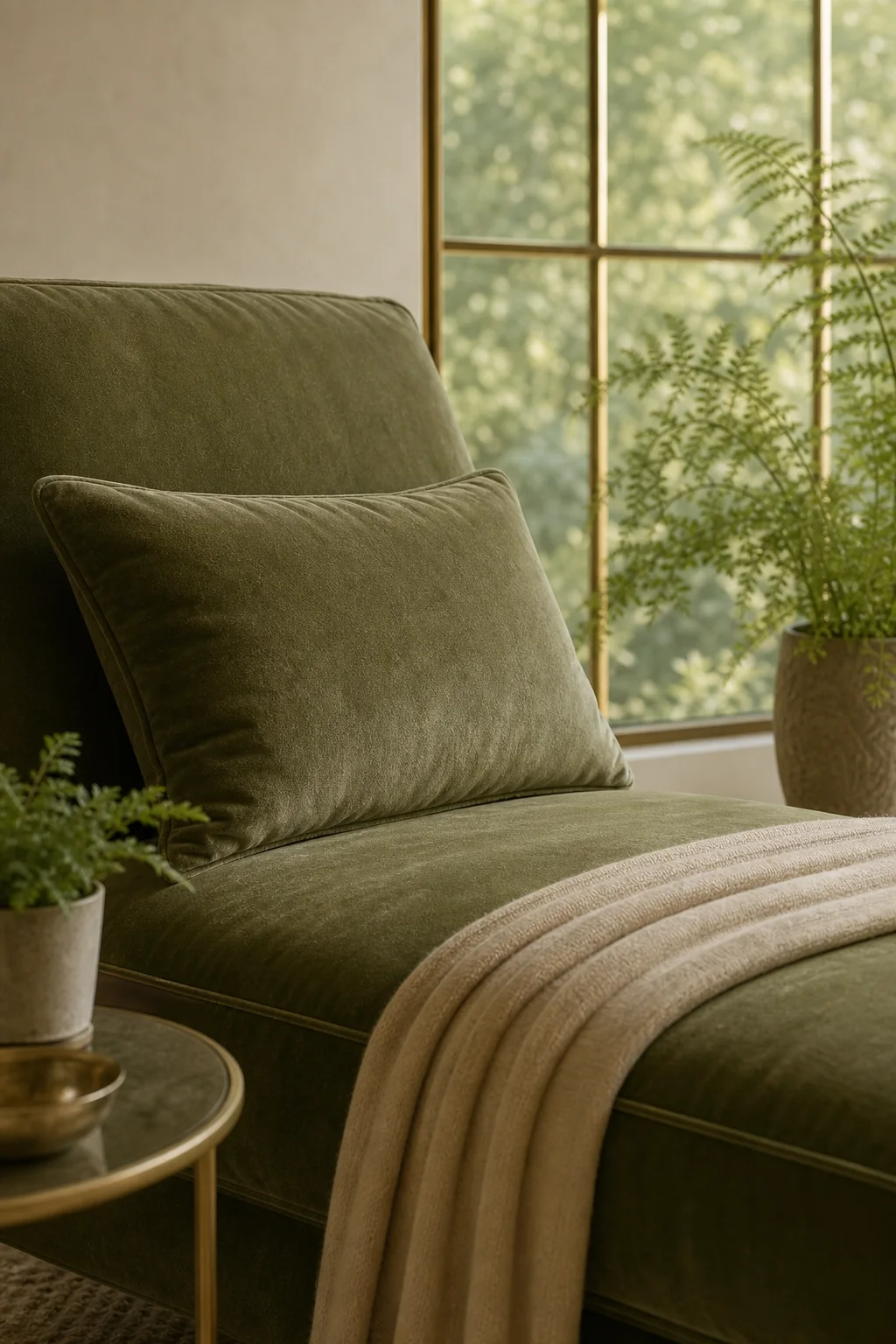
Applying the fern’s muted green to the primary seating anchors the space without competing with the vibrant living plants that will eventually fill the room. A tailored velvet reading chaise in a dusty dried-moss green mirrors the faded botanical specimen, grounding the seating area gracefully while avoiding bright or synthetic greens that might clash with natural foliage. This careful color translation ensures the room feels like a cohesive extension of the original antique object. The visual-DNA mapping table below illustrates exactly how these antique traits translate into modern room moves.
| Source trait | Visible evidence | Room move |
|---|---|---|
| Rigid transparent boundary | The thin brass-bound glass frame that strictly contains the botanical specimen | A grid of slim, brass-finished window mullions enclosing the sunroom, providing a strict geometric boundary against the outdoors |
| Desaturated botanical | The faded, aged olive-green hue of the century-old pressed frond | A tailored velvet reading chaise in a muted, dusty dried-moss green, grounding the seating area without overwhelming the neutral space |
| Brittle meets smooth | The tactile contrast between the dry, brittle pressed leaves and the cold, smooth glass casing | A highly textural, dry-woven sisal rug layered directly over smooth, cool glazed ceramic floor tiles |
| Fractal articulation | The delicate, repeating branching structure of the fern’s pinnate leaves | A minimalist, articulated brass reading lamp with multiple slender, branching arms that reach organically over the chaise |
Balancing the Green Palette
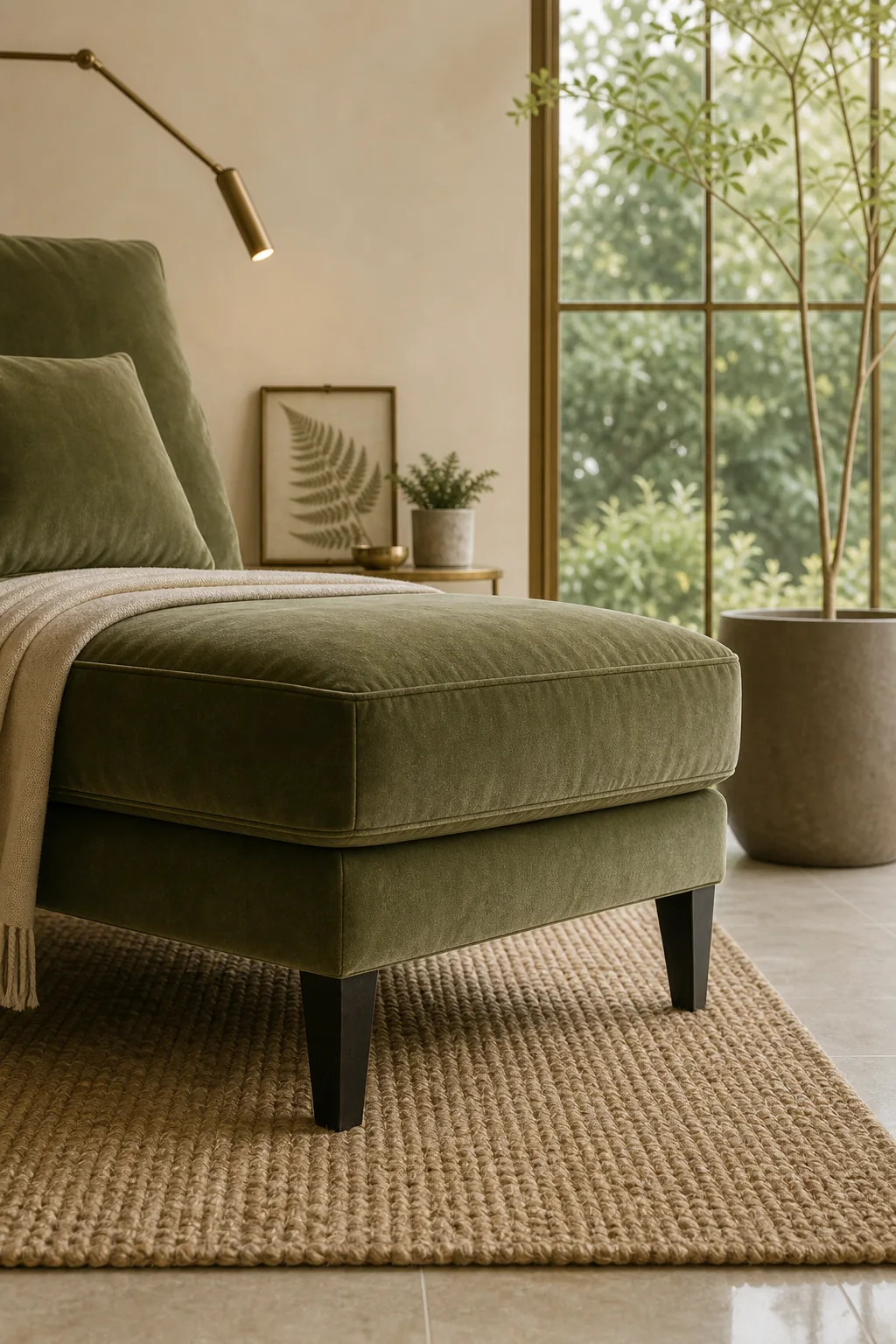
Parchment walls provide a quiet backdrop for the green velvet, allowing you to dial the room’s intensity up or down. For a subtle approach, keep the brass elements minimal and focus heavily on the parchment white backdrop with only a single olive accent pillow. A balanced execution pairs the dusty olive chaise with a branching brass lamp and a highly textural sisal rug against neutral walls. Conversely, a bold design introduces darker patinated brass across all window mullions and adds multiple articulated lamps to emphasize the rigid geometry, transforming the nook into a striking architectural statement.
Layering Dry and Reflective Surfaces
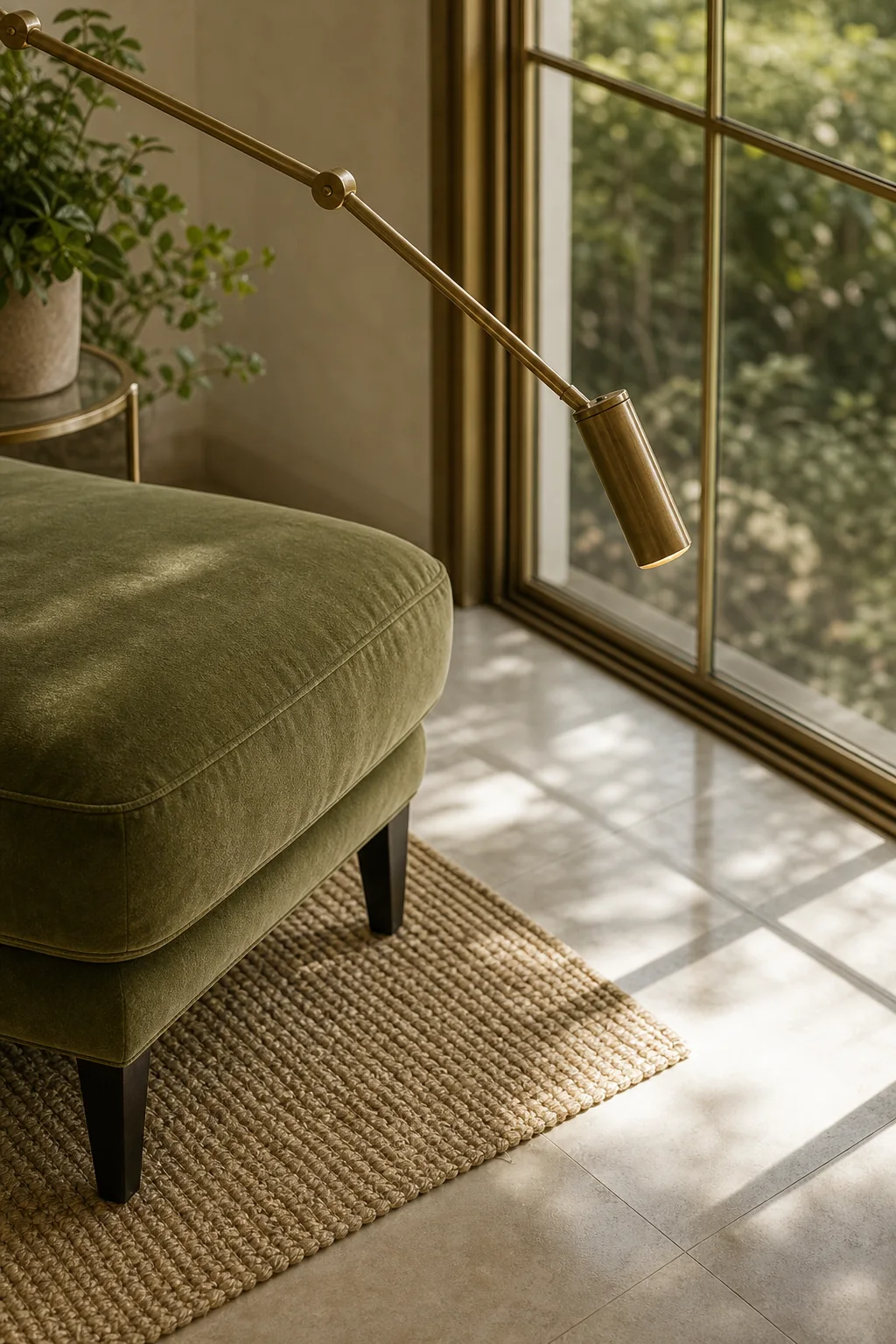
Contrasting a highly textural rug against sleek flooring recreates the tactile tension between the preserved leaf and its glass casing. By pairing dry woven sisal with smooth glazed ceramic tiles, you bring the brittle texture of dried leaves into direct contact with a cool, reflective base layer. Choosing a tight sisal weave ensures the rug withstands heavy foot traffic, while large-format ceramic tiles minimize distracting grout lines that might interrupt the room’s visual flow. Secure the following essential items to complete this tactile material edit and anchor the reading corner.
Introducing Branching Geometry
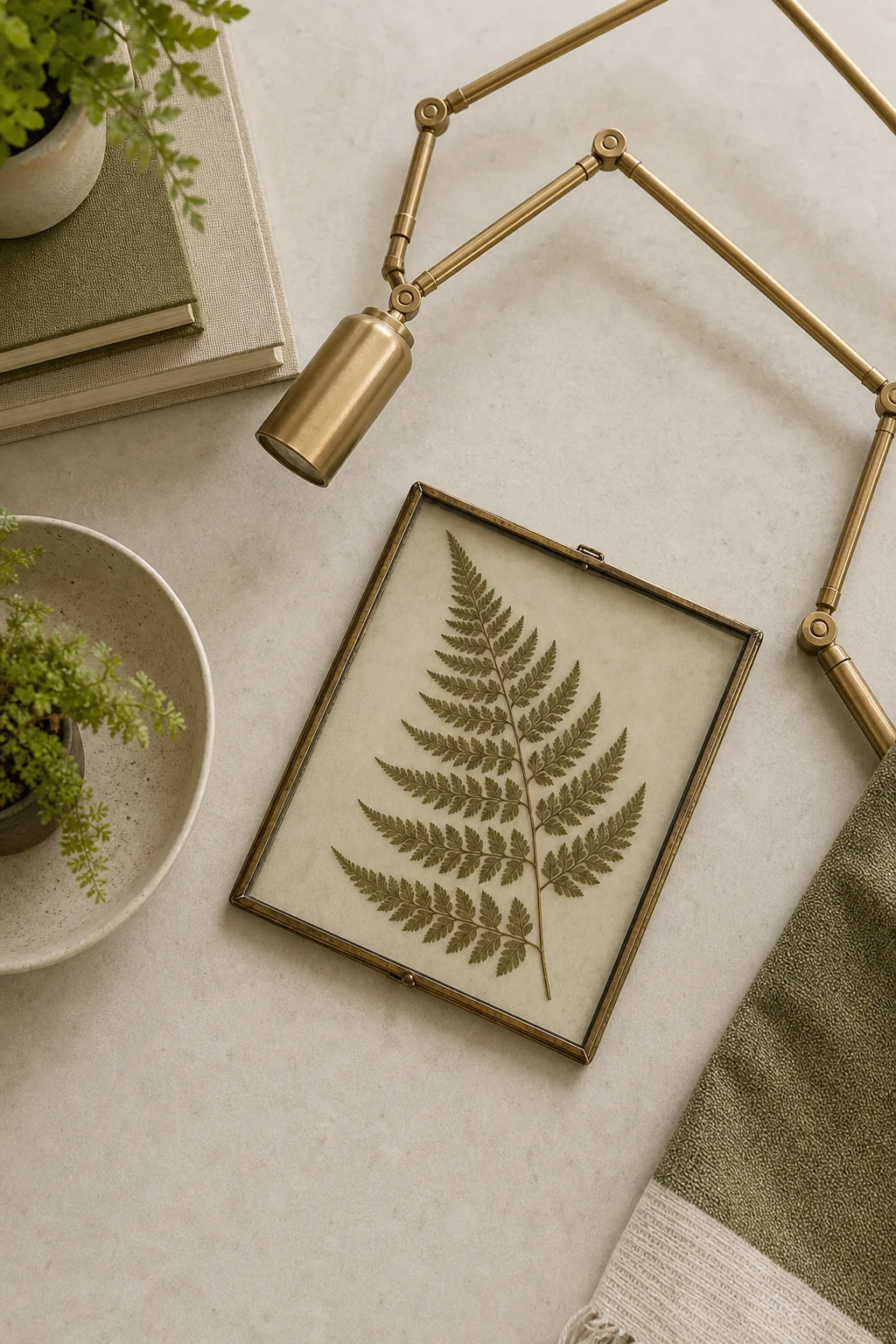
A multi-armed reading lamp introduces an organic, asymmetrical offshoot that breaks up the room’s strict rectilinear boundaries. Mimicking the delicate, repeating branching structure of the fern’s pinnate leaves, this articulated fixture reaches organically over the reading chaise to provide targeted task lighting. Positioning the lamp so it arcs gracefully over the seating area ensures the mechanical joints remain visible, highlighting the fractal concept that defines the space. This metallic addition acts as a sculptural focal point that bridges the gap between rigid architecture and wild nature.
Choose lighting with slender profiles. Thick or bulky fixtures will break the illusion of delicate, fractal branching inspired by the pressed fern.
Articulated Metallic Details
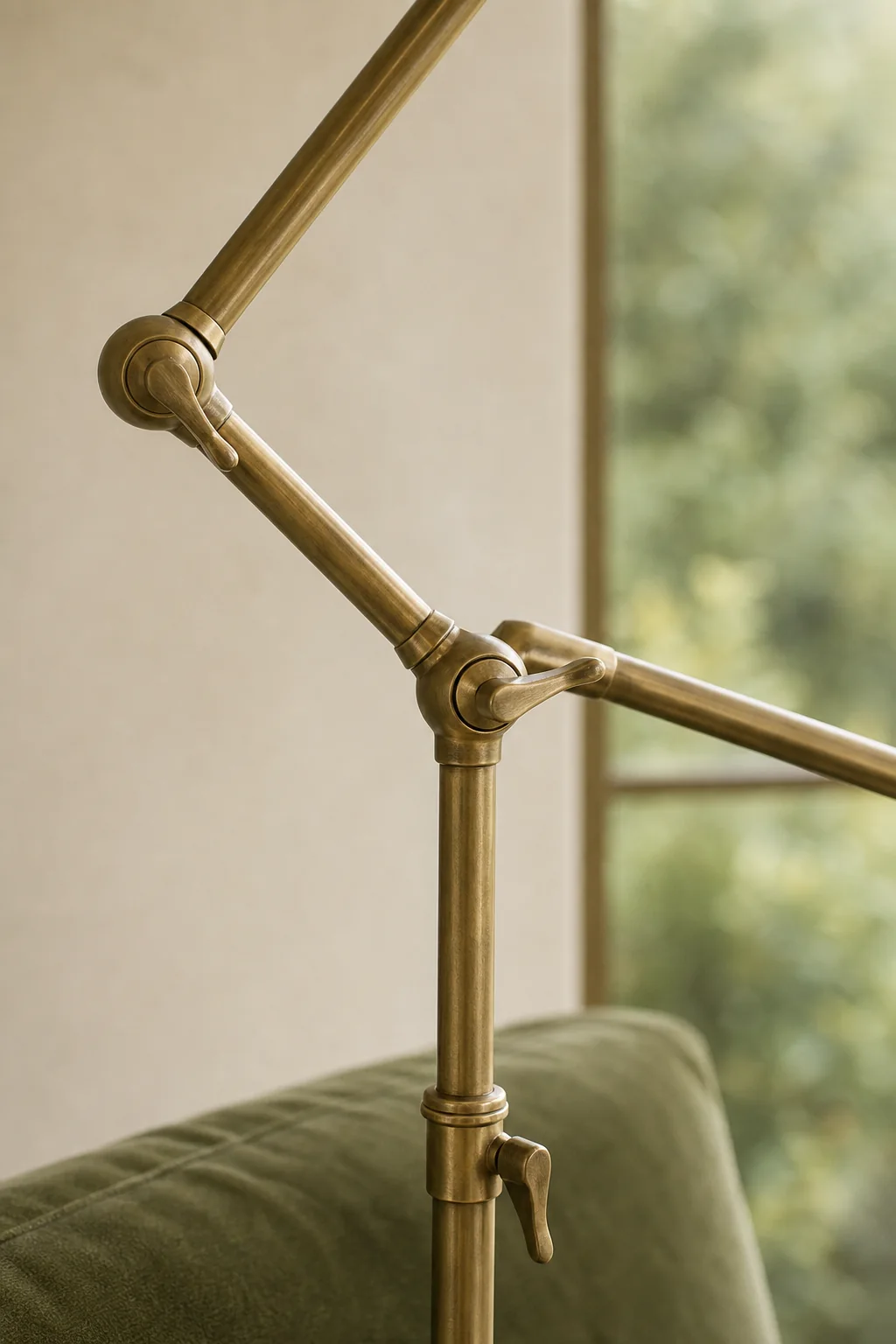
Slender brass joints repeat the rigid geometry of the frame while maintaining the delicate fractal branching of the plant itself. Ensuring these mechanical joints remain visible highlights the conceptual link between the antique botanical specimen and this serene, light-filled reading corner. By treating the lighting fixture as a piece of functional art, you reinforce the room’s overarching narrative. The interplay between the structured metallic arms and the soft, organic velvet upholstery perfectly encapsulates the delicate balance required to turn a simple framed fern into a fully realized interior sanctuary.