
This Brass Mobile Became an Artist Easel Nook
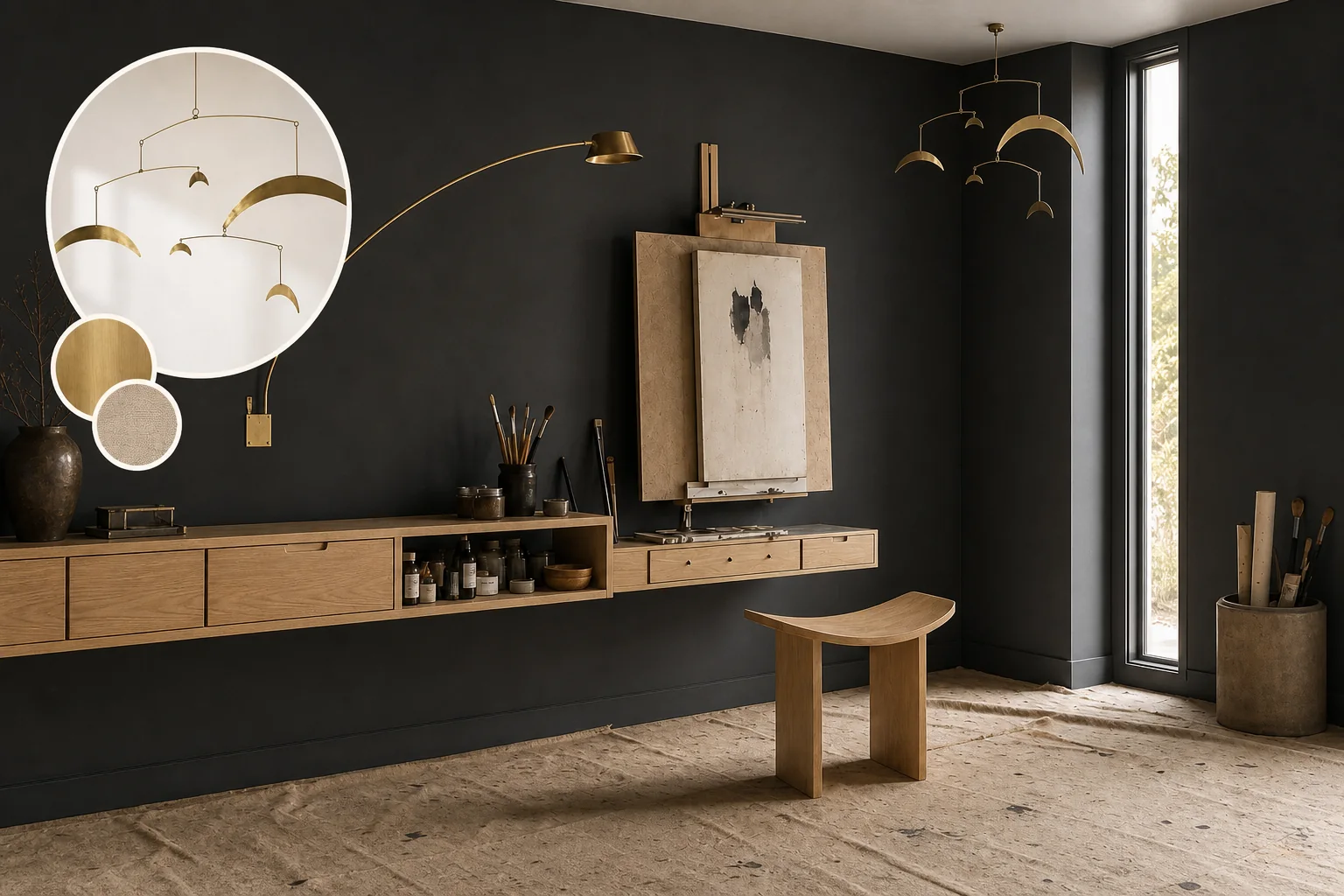
Translating a delicate midcentury brass mobile into a focused artist easel nook requires mastering the tension between weight and air. This asymmetrical balance maximizes negative space and directional light, grounding airy, floating metallic elements with heavy, light-absorbing matte surfaces to prevent visual chaos.
Clearing the Floor for Suspended Balance
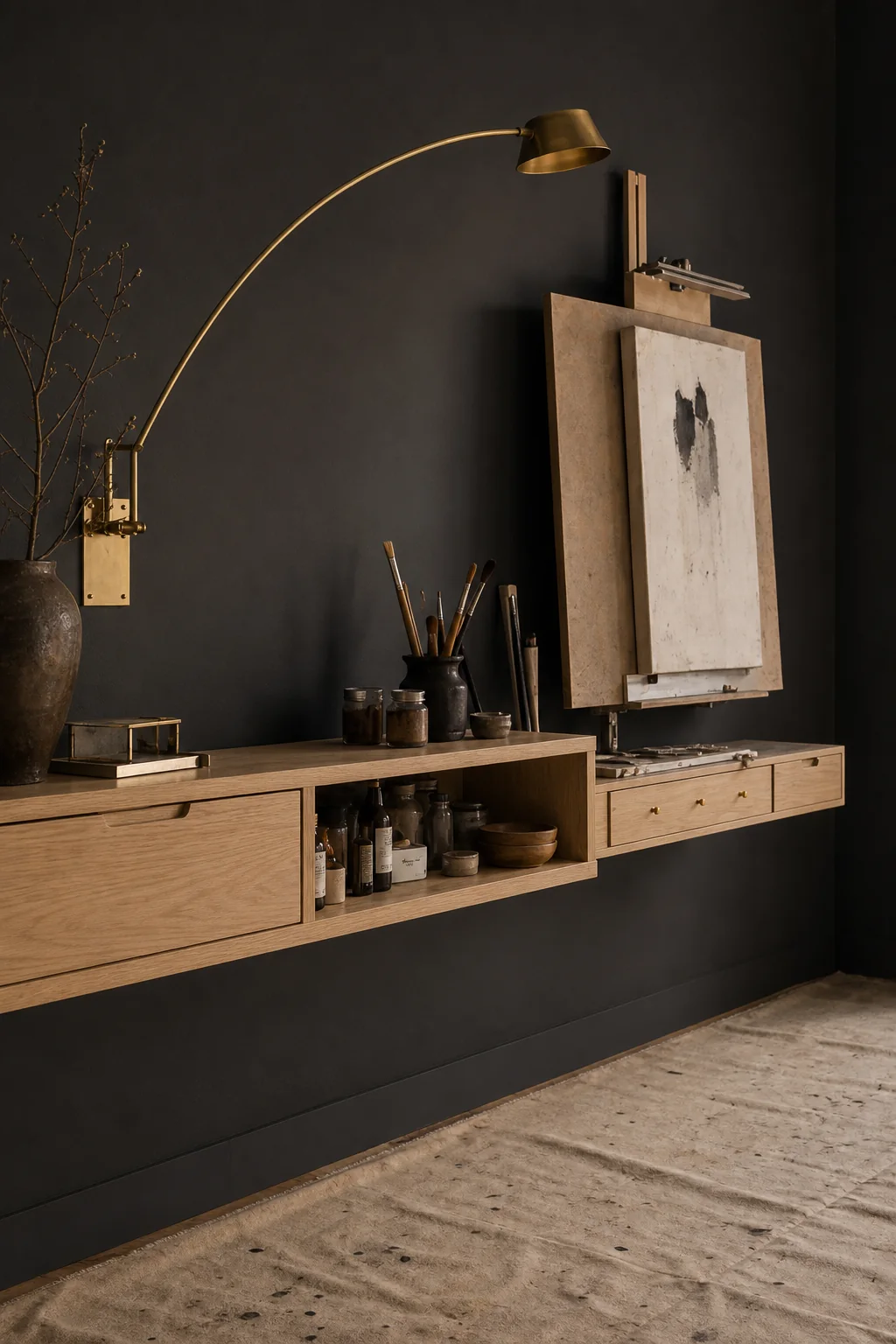
By lifting heavy functional pieces off the ground, the workspace adopts the mobile’s gravity-defying structure, which originally hung from a single point with clear space beneath. A cantilevered white oak storage console and floating wall-mounted easel leave the floor entirely clear, mimicking this weightless architecture. Keep the space beneath the floating elements completely unobstructed to emphasize the cantilevered effect and maintain the illusion of a weightless artist environment by following these foundational installation steps.
- Locate and mark the wall studs in the designated corner workspace.
- Install the heavy-duty steel cantilever brackets into the studs.
- Mount the white oak storage console onto the cantilever brackets.
- Attach the vertical wall-mounted easel tracks beside the console.
Engineering the Floating Easel
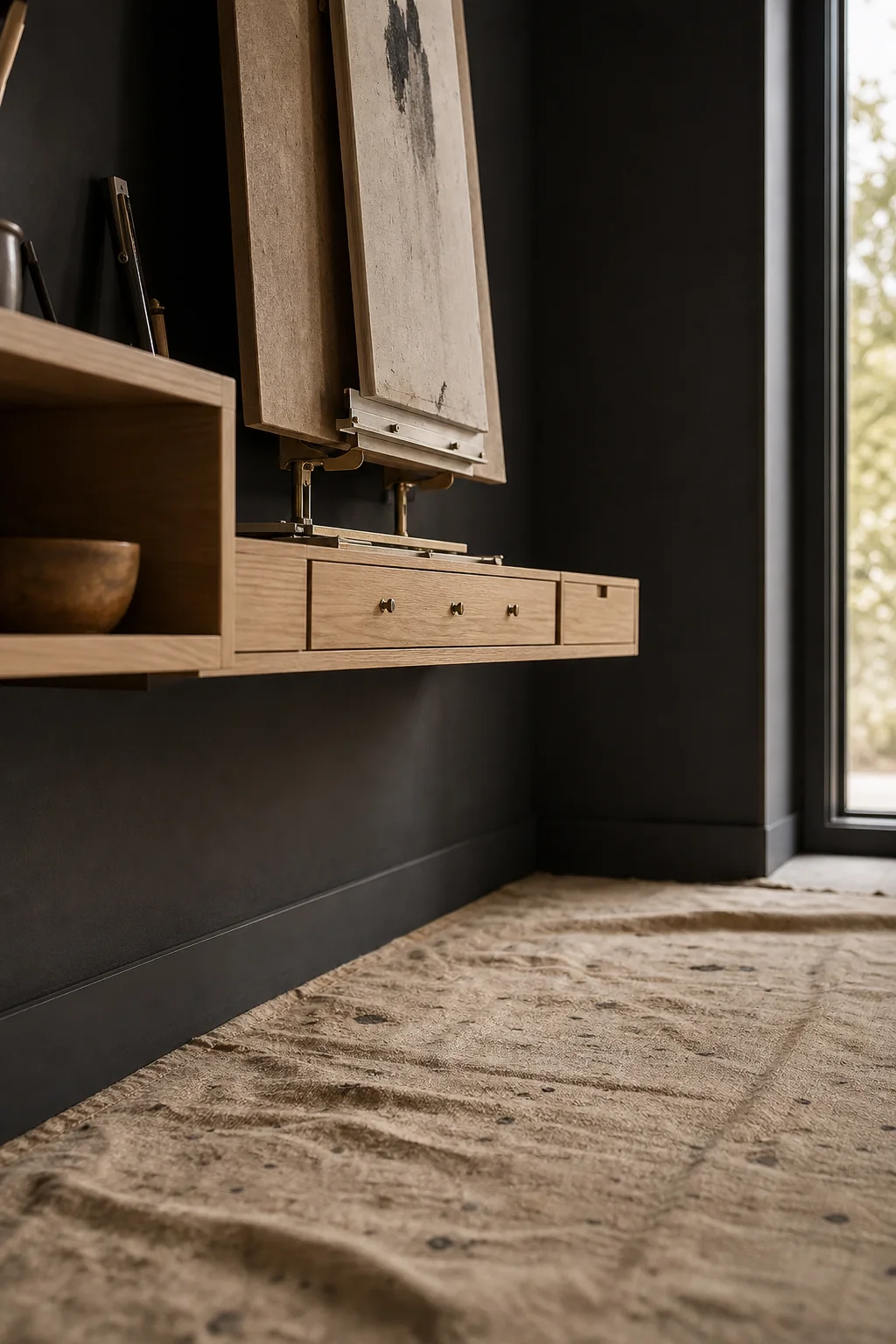
Hidden hardware suspends the oak easel above the floor, ensuring the wood appears to hover seamlessly without visual interruption. This close-up detail of the wall-mounted track system reveals how a clean gap is maintained between the wood and the floor, reinforcing the illusion of a floating workspace that defies gravity. By eliminating traditional easel legs, the corner nook retains its airy, minimalist appeal while providing a highly stable, upright surface for painting or drawing.
Silhouetted Warmth Against Matte Charcoal
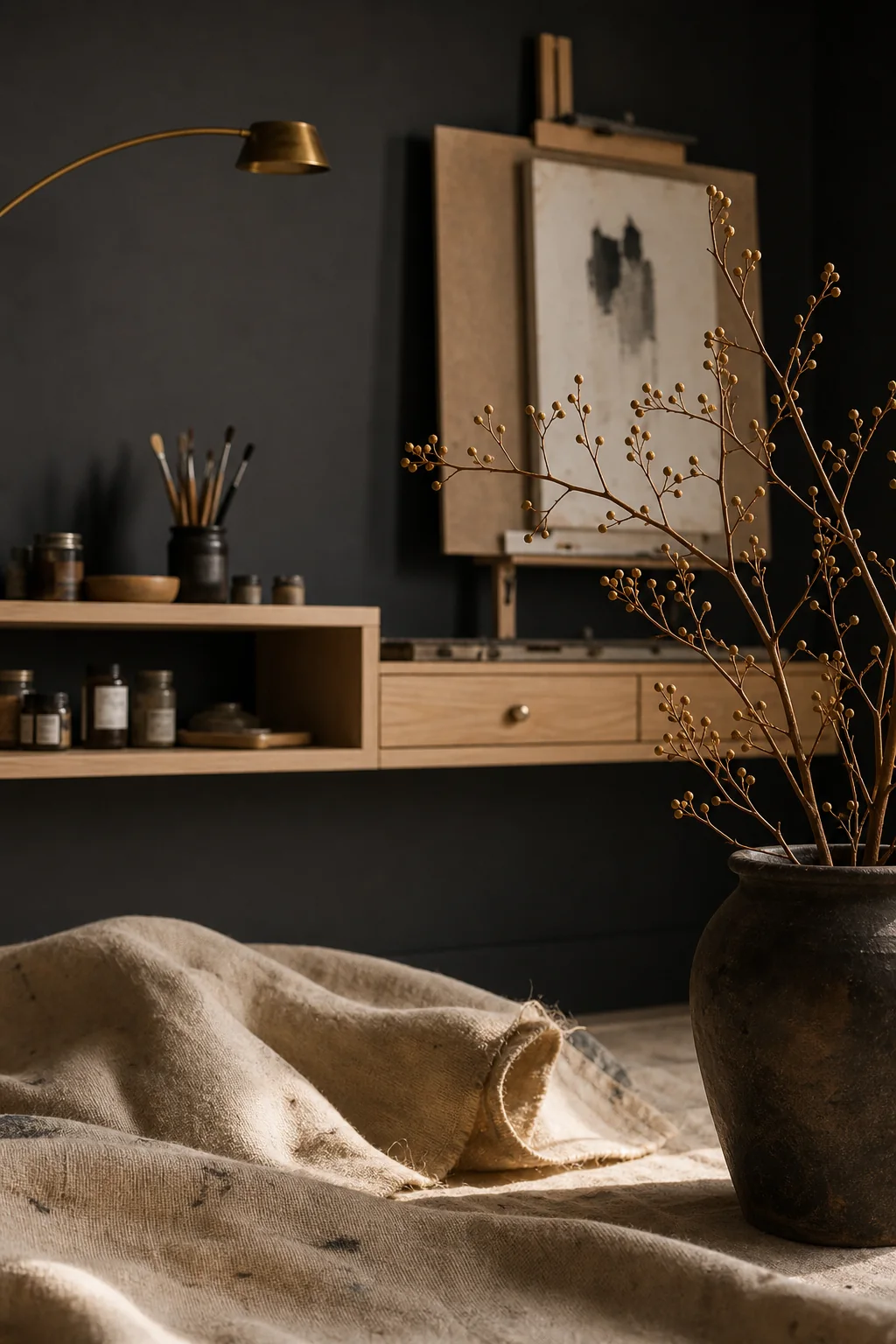
Deep, light-absorbing walls act as the negative space, allowing the metallic and wood tones to catch the light just as the brass arcs do in mid-air. Matte charcoal walls silhouette the warm brass and oak accents, translating the gleaming brass catching light against the surrounding negative space. Use an ultra-matte charcoal paint to minimize reflections and recede visually, creating an architectural void. Concentrate your warm metallic accents and raw canvas tones exactly where the directional northern light hits them directly, maximizing the silhouetted warmth of the space.
| Source trait | Visible evidence | Room move |
|---|---|---|
| Suspended Balance | The mobile’s gravity-defying structure hanging from a single point with clear space beneath | A cantilevered white oak storage console and floating wall-mounted easel that leave the floor entirely clear |
| Silhouetted Warmth | The gleaming brass catching light against the surrounding negative space | Warm metallic accents and raw canvas tones set against a deep, light-absorbing matte charcoal wall |
| Rigid and Woven | The interplay of hard, polished metal and the invisible air it moves through | Thin, rigid brass tension rods and hardware contrasting with a heavy, tactile raw canvas drop cloth on the floor |
| Floating Arcs | The sweeping, curved counterweights at the ends of the mobile’s delicate arms | An articulated, long-reach brass task lamp with a sweeping curved arm, paired with a half-moon shaped oak stool |
Contrasting Rigid Brass with Woven Canvas
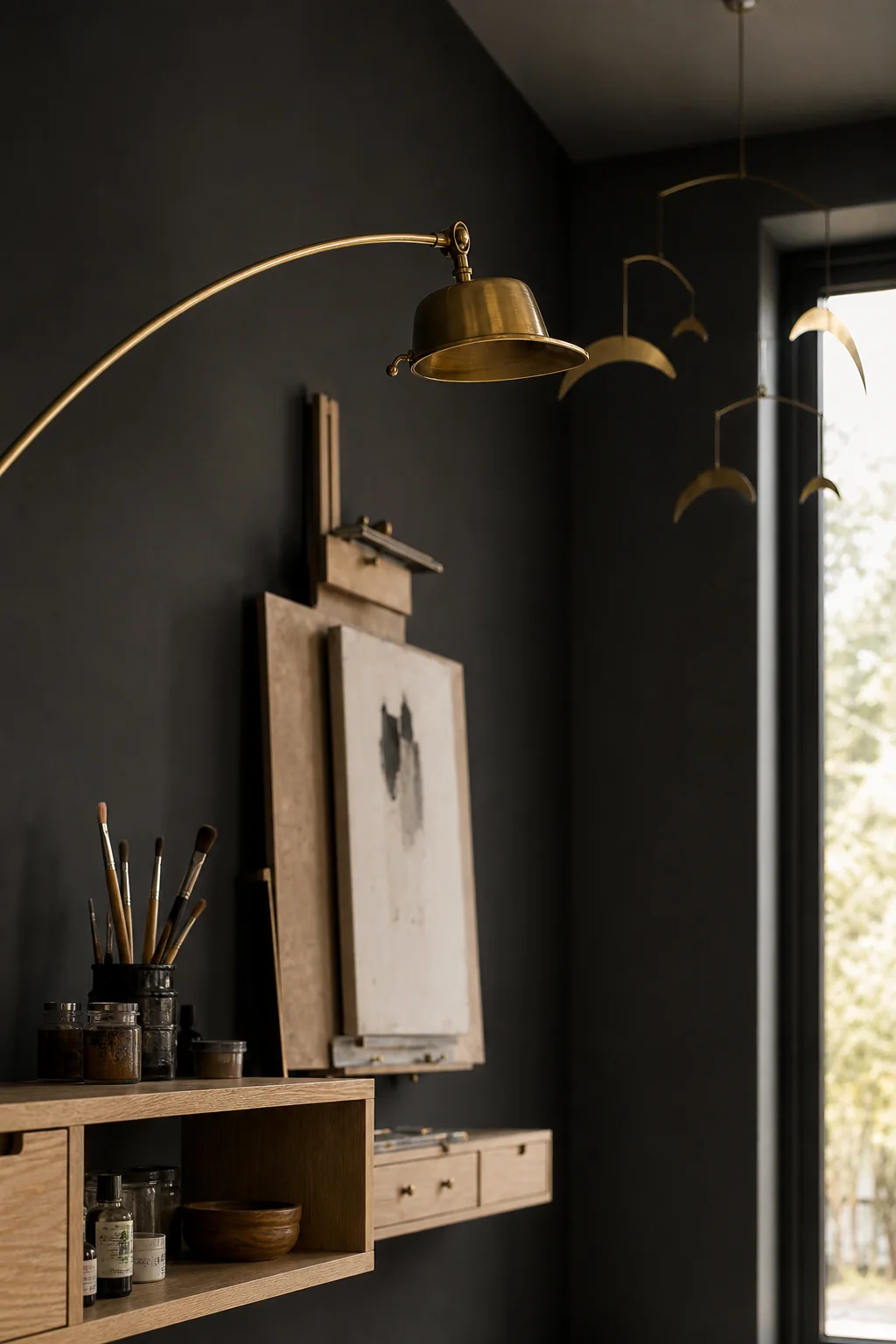
The tension between delicate, rigid metals and heavy, tactile textiles grounds the room’s airy geometry, interpreting the interplay of hard metal and invisible air. Rigid brass hardware contrasts with a heavy raw canvas drop-cloth, providing necessary visual weight to the lower half of the room. Ensure all brass touchpoints remain unlacquered so they develop a natural patina over time, anchoring the delicate elements above with heavyweight unbleached cotton canvas and this essential material edit.
Grounding the Room with Canvas
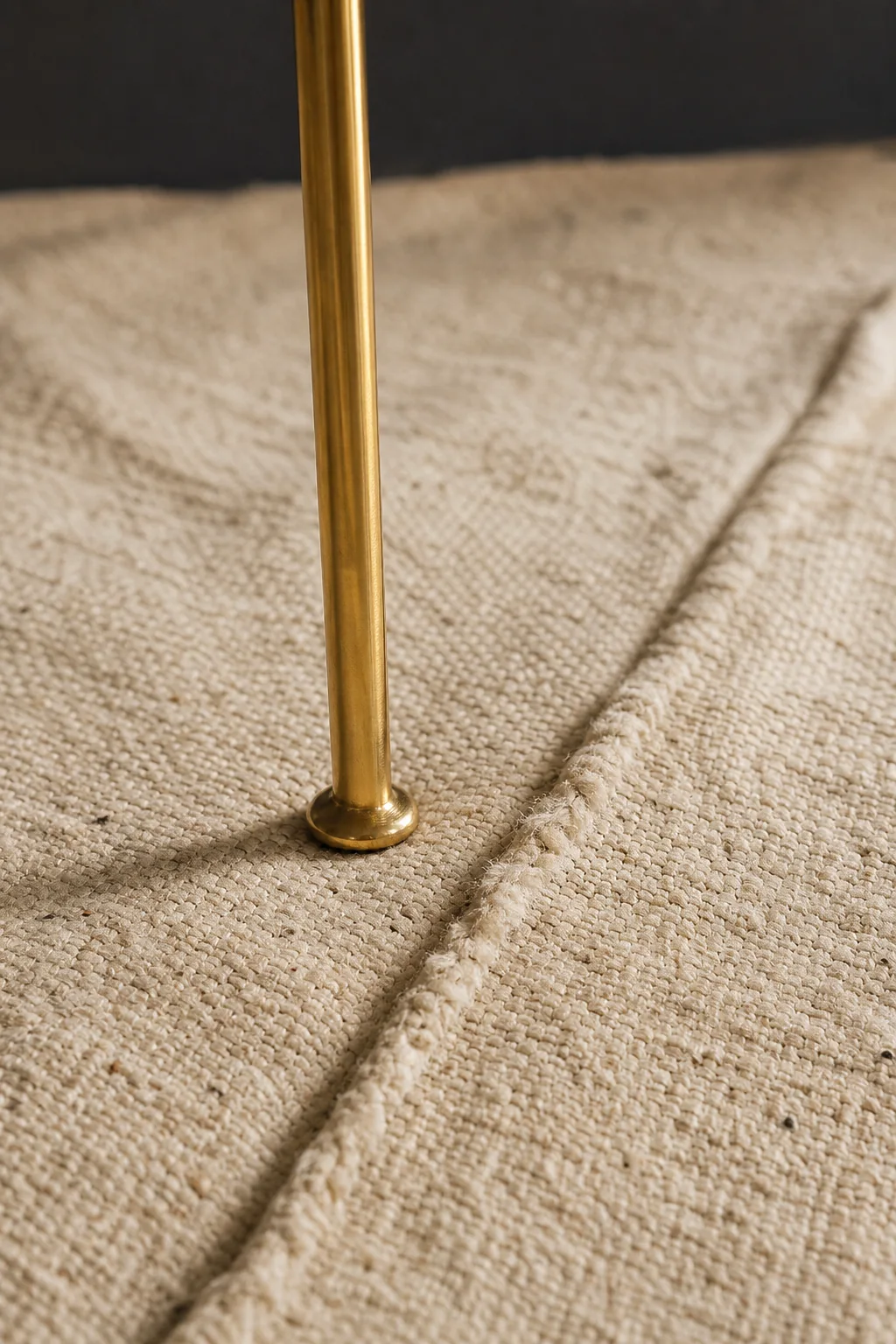
Heavy woven canvas anchors the delicate polished brass touchpoints, preventing the room from feeling overly sterile or untethered from the ground. A macro view where the thin, polished brass leg of a side table meets the thick, textured weave of the unbleached raw canvas drop rug highlights this essential tactile grounding. This deliberate material clash balances the hard metallic shine with organic, fibrous warmth, ensuring the floor remains protected from spills and pigments while contributing to the overall aesthetic.
Sweeping Arcs and Asymmetrical Visual Weights
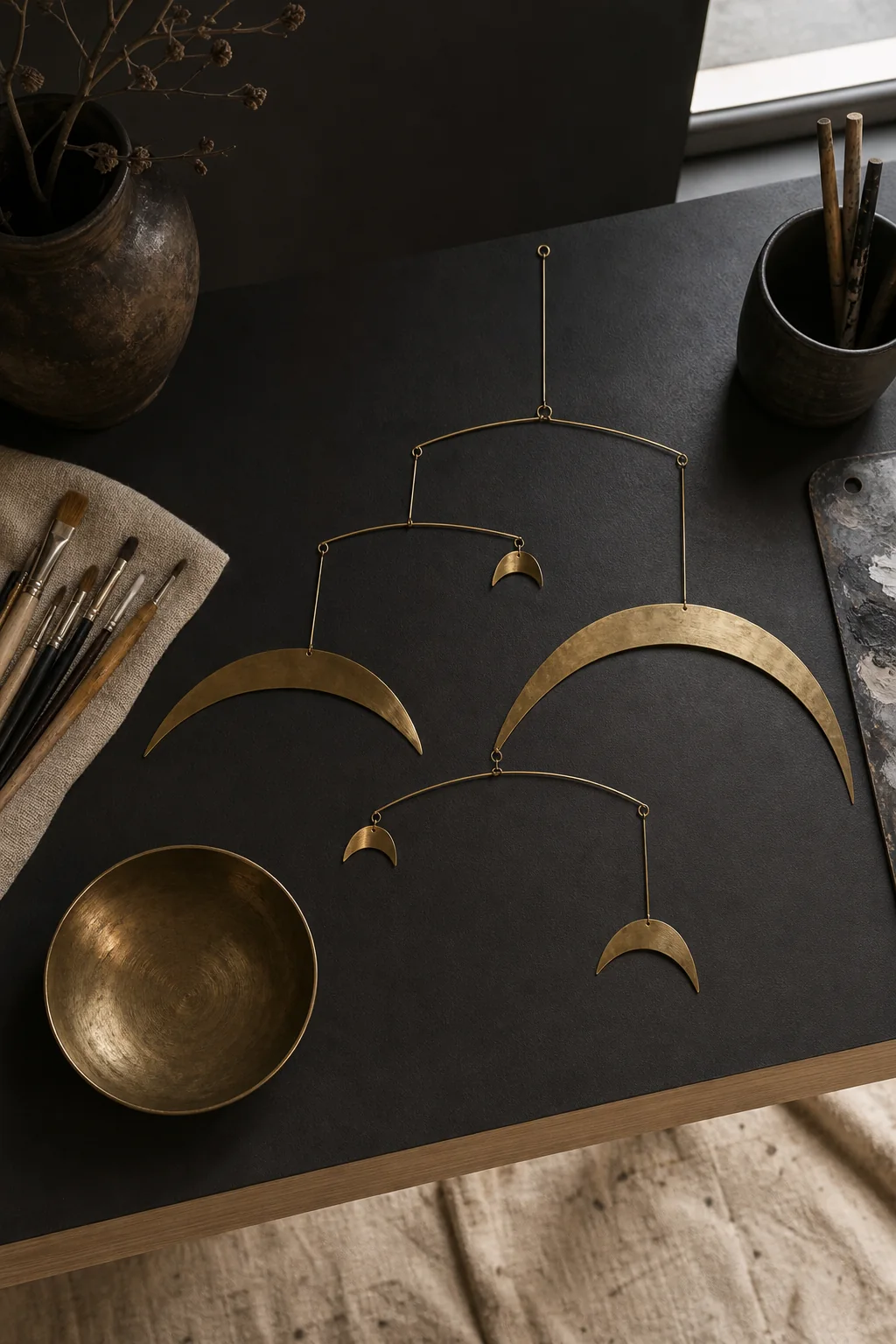
Sudden metallic curves punctuate the quiet horizontal spans, creating an asymmetrical balance inspired by the mobile’s sweeping counterweights. A curved brass task lamp echoes these arcs, paired with a half-moon stool. Position the articulated task lamp off-center to embrace this kinetic energy. To scale this look, a subtle approach introduces a single brass lamp against soft gray walls. A balanced execution commits to matte charcoal walls and floating oak surfaces. For a bold statement, extend the charcoal to the ceiling, use exclusively high-shine brass hardware, and install a massive cantilevered oak desk.
Resist the urge to center your easel or lighting. Off-center placements create the kinetic, balanced tension that makes this design work.