
Egyptian Revival Meets Contemporary: Home Office
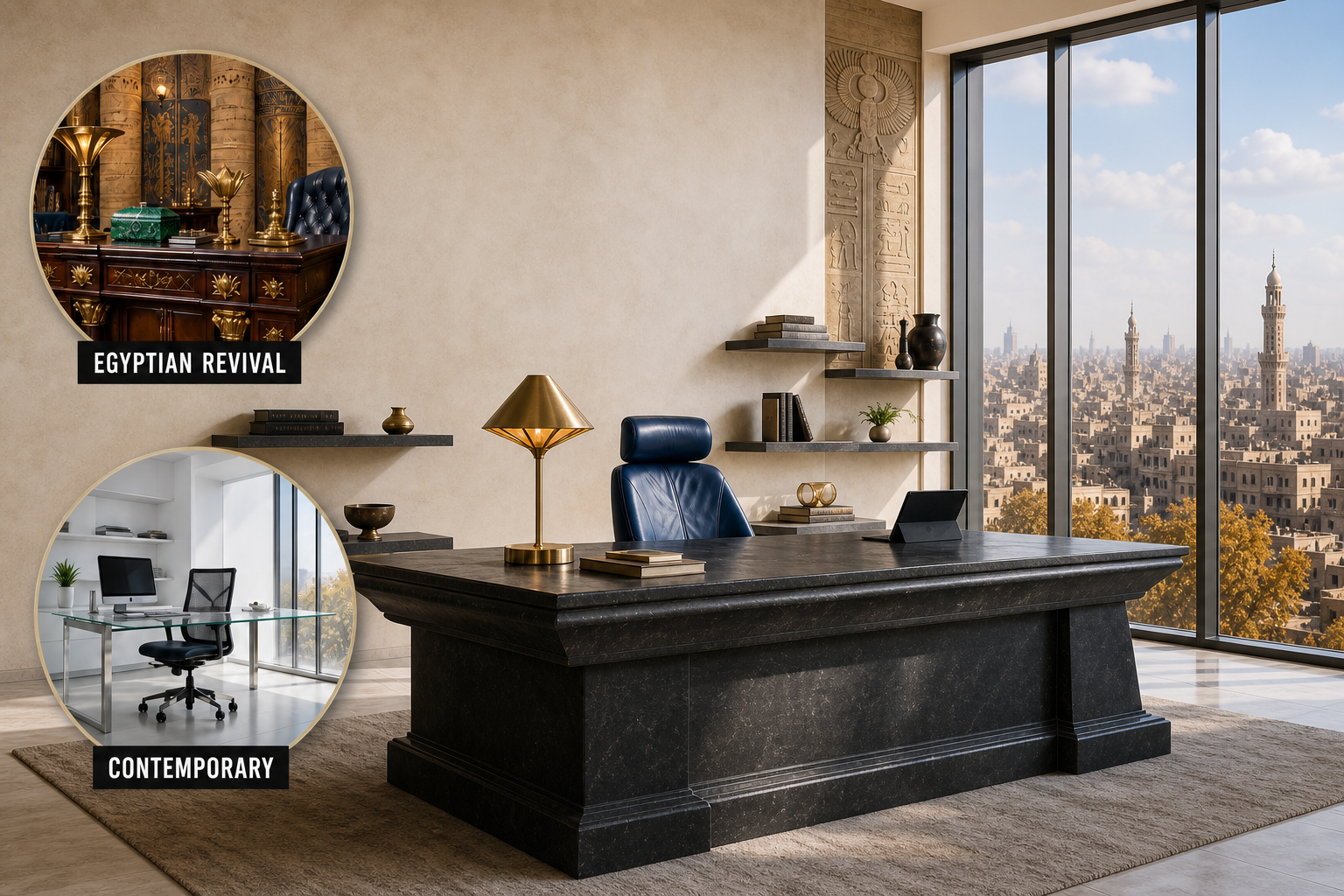
The heavy monumentality of ancient motifs often clashes with the sleek lightness required for a modern workspace. We resolve this contradiction by letting Contemporary design dictate the airy architectural shell while grounding the room with monumental, historic stone forms.
Anchoring with Egyptian Revival
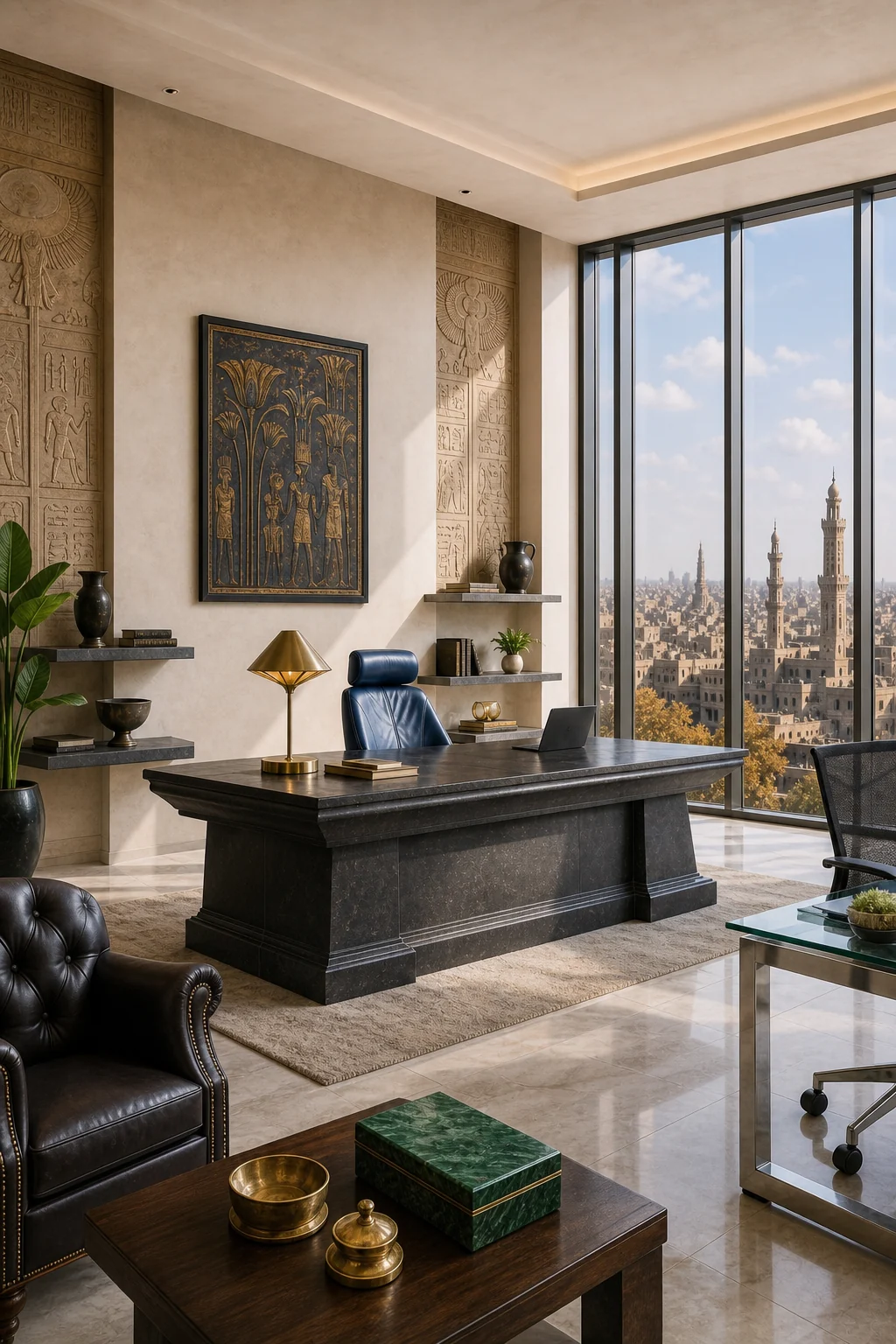
Egyptian Revival demands absolute gravity and permanence. We establish this historical authority immediately through a massive, sculptural desk carved from honed black basalt. Its subtle cavetto cornice edge effortlessly commands the entire room without feeling overly ornate or visually cluttered.
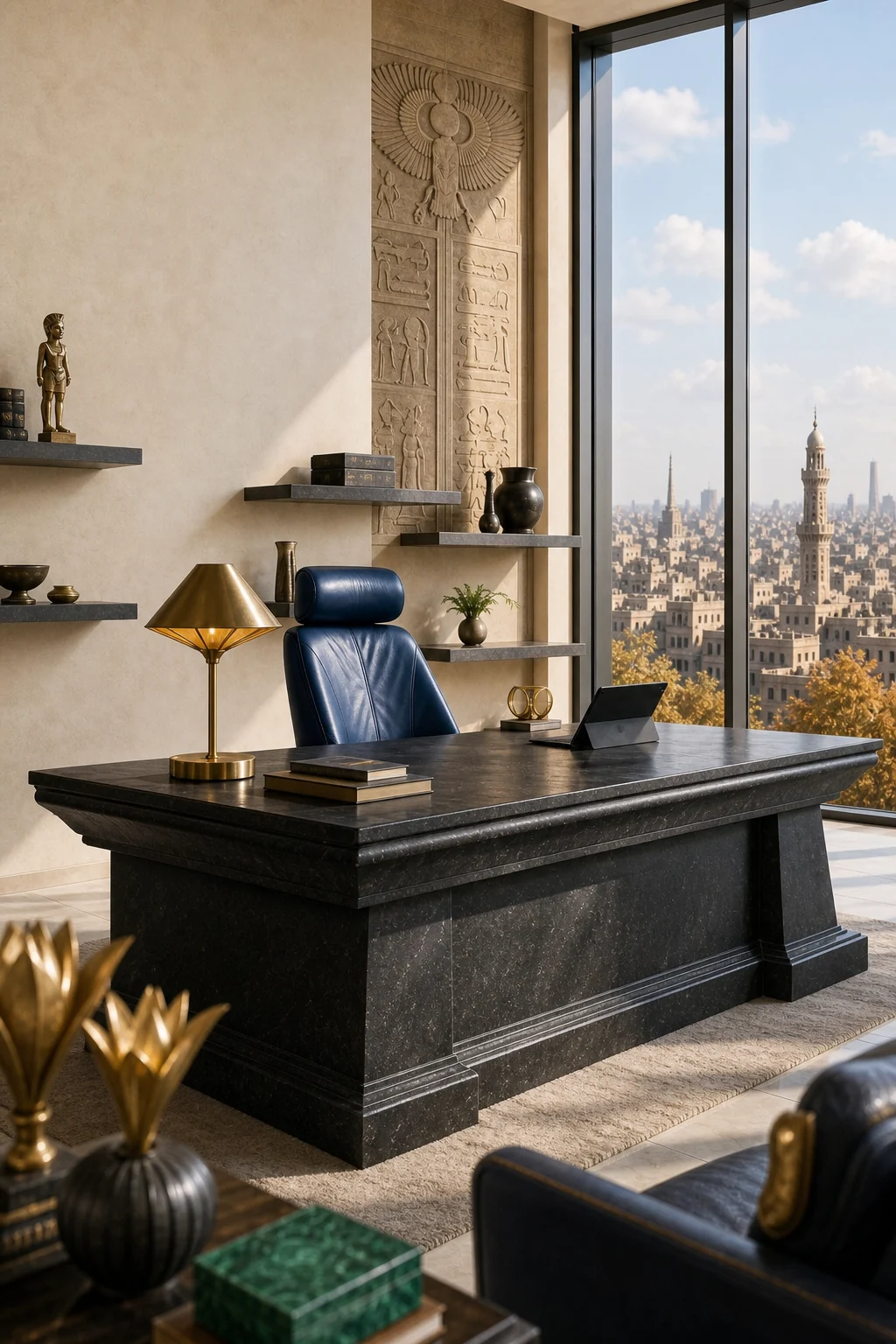
This immense mass requires generous breathing room to avoid feeling oppressive. Leaving the surrounding floor plan completely open allows the monumental stone to anchor the space naturally, preserving the ergonomic flow required for daily work in a highly productive office.
Maintaining this generous spatial buffer around the desk transforms the imposing basalt into a standalone architectural feature. The empty floor space highlights the desk’s monumental silhouette, ensuring the workspace feels intentionally curated rather than accidentally overcrowded by heavy historical furniture.
The Contemporary Shell
Contemporary design provides the necessary functional lightness to balance that historical weight perfectly. Floor-to-ceiling glass windows flood the space with natural light, ensuring the dark stone never feels gloomy, cavernous, or visually heavy during long hours of deep professional work.
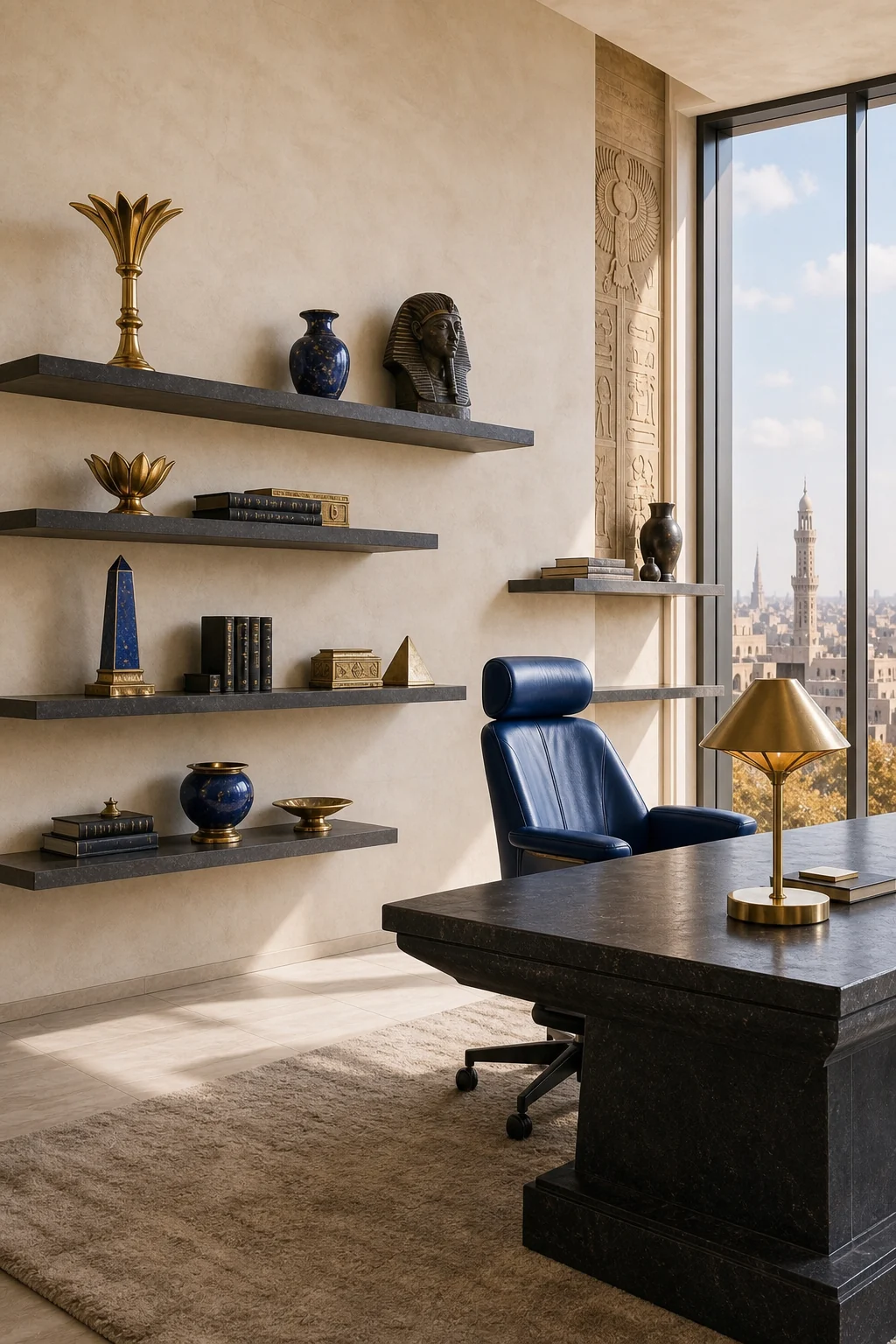
The vertical planes must remain pristine to support the desk’s immense gravity. Floating minimalist wall shelving replaces heavy traditional bookcases, maintaining strict visual order while keeping the walls feeling weightless, uncluttered, and highly functional for your daily organizational needs.
- Install floating shelves with concealed brackets to eliminate visual clutter entirely from the modern walls.
- Align shelf edges precisely with window mullions for strict grid-based minimalism and architectural harmony.
- Leave at least half of every shelf completely empty for necessary breathing room and focus.
- Paint wooden shelving to perfectly match the warm alabaster plaster walls for seamless visual integration.
Bridging the Eras
The transition between eras relies on translating ancient materials into sleek, unornamented slab forms. A shared palette of warm desert neutrals bridges the gap between stark modernism and historical richness without creating unnecessary visual friction or jarring stylistic contrasts.
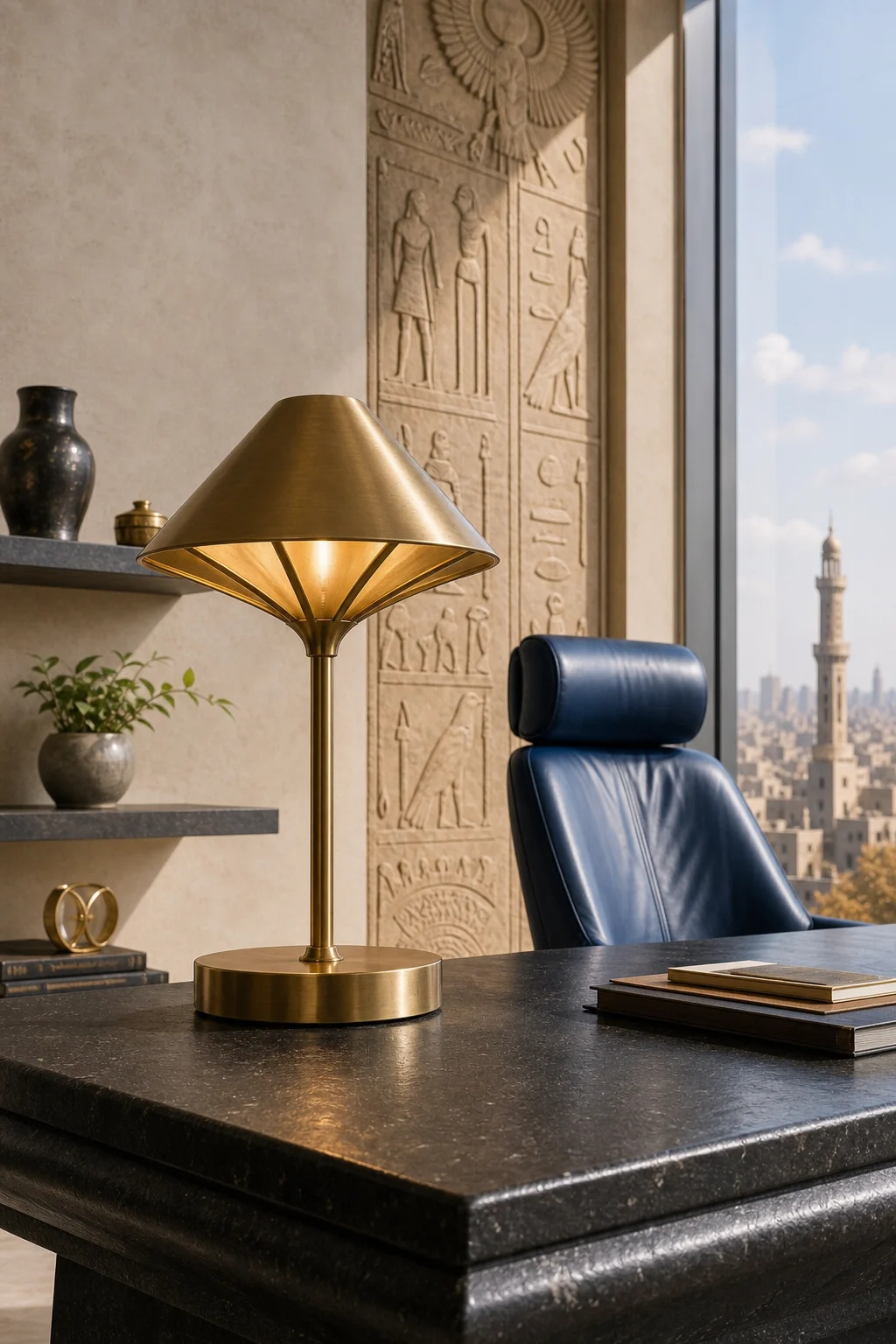
Material finishes dictate the overall success of this delicate hybrid. Softening stark walls and avoiding high-gloss stone ensures the historical references remain grounded, tactile, and perfectly suited to a serene contemporary work environment that prioritizes calm, sustained daily productivity.
- Hone black basalt to a matte finish rather than polishing the surface for an ancient appearance.
- Apply warm alabaster plaster to soften stark contemporary white walls and diffuse natural sunlight beautifully.
- Select matte brass fixtures featuring abstracted, geometric lotus cone profiles exclusively to maintain contemporary silhouettes.
- Upholster sleek seating in solid jewel tones to avoid distracting patterns while retaining deep colors.
Building the Room
Building the primary workspace requires marrying ergonomic reality with monumental aesthetics. The seating vignette must support hours of modern productivity while visually holding its own against the massive stone desk anchoring the exact center of the integrated home office.
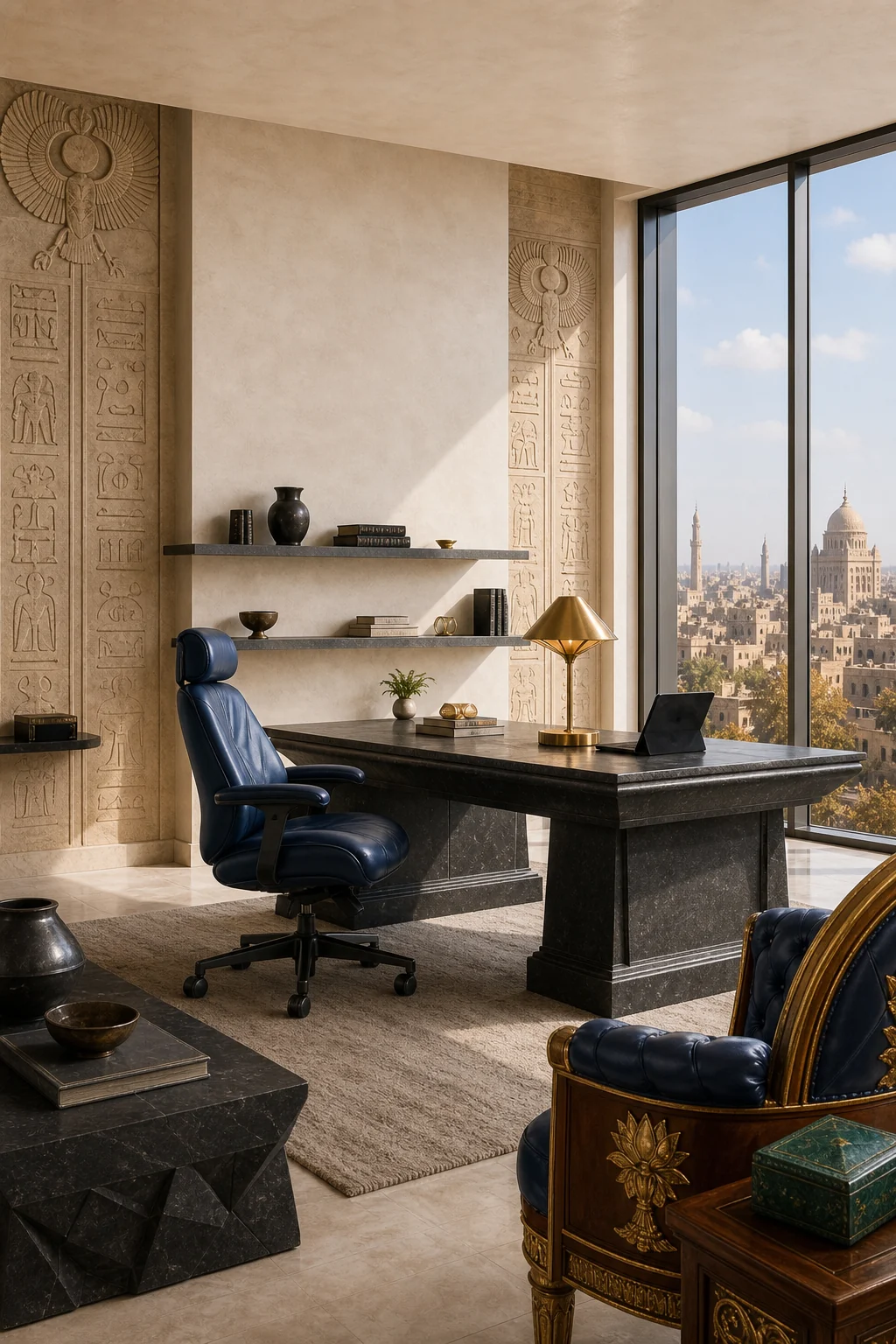
A translation table clarifies how each design layer functions. Assigning specific roles prevents the styles from competing for dominance, ensuring the sleek ergonomic swivel seating integrates flawlessly with the ancient material palette and the commanding stone architecture without sacrificing comfort.
| Design Layer | Egyptian Revival Role | Contemporary Role | Bridge Decision |
|---|---|---|---|
| Shell | Warm plaster textures and strict formal symmetrical layouts | Floor-to-ceiling glass windows and floating minimalist wall shelves | Grid-based minimalism rendered smoothly in warm desert neutrals |
| Large Furniture | Monumental black basalt forms carrying immense historical weight | Sleek, unornamented slab construction prioritizing daily utility | Ancient stone materials translated directly into minimalist geometric shapes |
| Textiles | Rich jewel tones featuring deep lapis lazuli hues | Uncluttered, tailored leather upholstery focused on ergonomic support | Solid, highly controlled color blocking without any distracting patterns |
| Lighting | Abstracted lotus-cone motifs referencing ancient botanical geometry | Integrated task lighting and ultra-slim profile fixtures | Matte brushed brass executed in sharp geometric shapes |
| Accents | Tactile historical ornamentation conveying absolute permanence | Functional, seamless technology integration hiding modern cords | Curated, purposeful desktop objects maintaining zero visual clutter |
Following this strict translation framework guarantees that neither aesthetic overwhelms the other. The resulting seating vignette bridges the gap between eras, providing the functional agility demanded by modern professionals while retaining the profound visual gravity of ancient architectural design principles.
Light and Architecture
Generous soft daylight is crucial to lift the midtones of the dark basalt. The warm alabaster plaster walls absorb and diffuse this light, creating an inviting atmosphere that enhances focus while preventing the heavy stone from feeling overly cavernous.
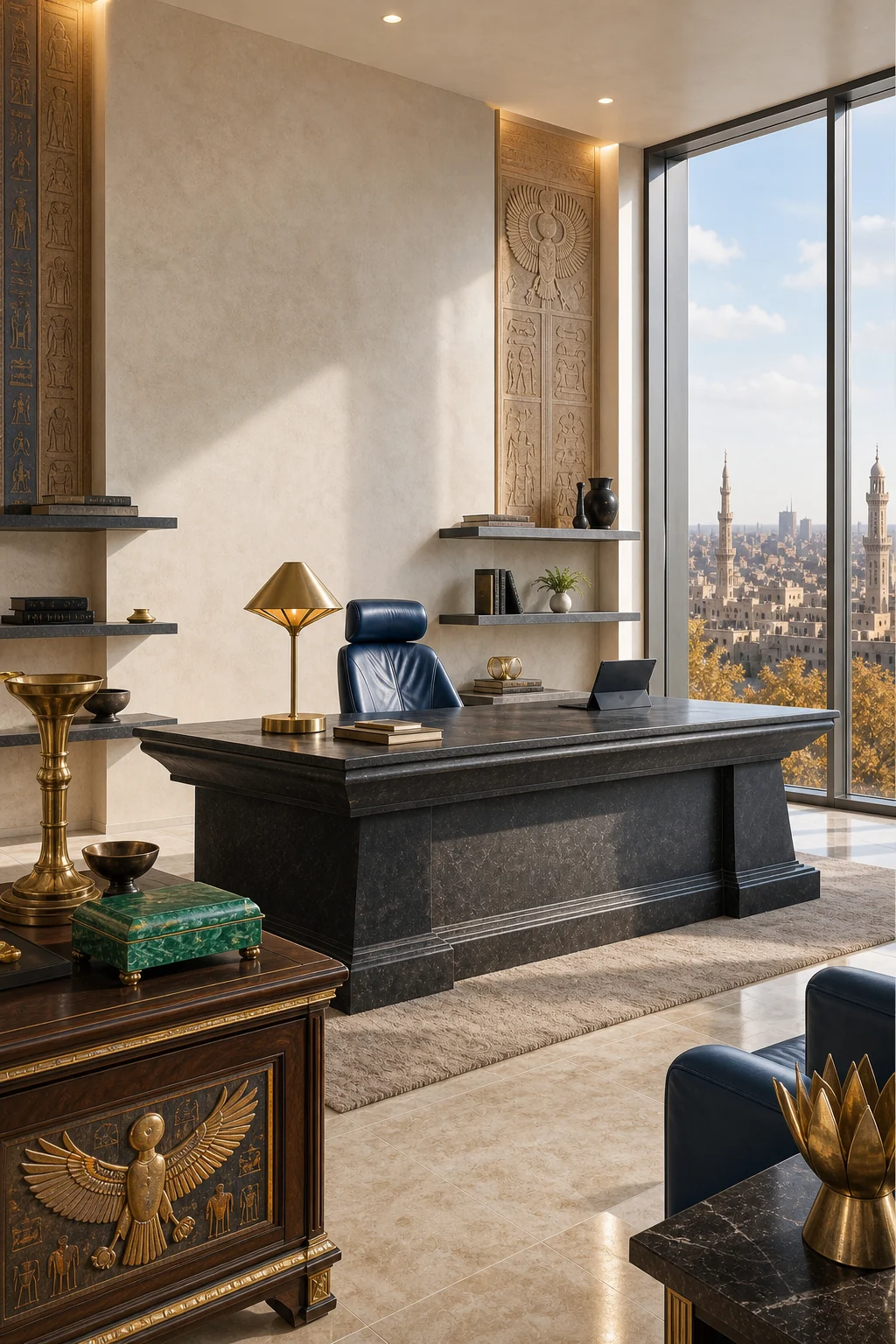
Directional lighting can easily ruin the monumental effect by casting harsh shadows. Bouncing warm illumination off textured surfaces softens the room’s heavy edges and highlights the organic grain of the desert sand travertine flooring without creating visual fatigue during shifts.
Careful illumination completely transforms how the heavy basalt and travertine surfaces are perceived. By prioritizing soft, diffused daylight and indirect evening fixtures, the room maintains a welcoming, energetic atmosphere that perfectly supports sustained concentration without feeling dark, heavy, or visually oppressive.
Styling the Details
Styling must remain highly controlled to prevent the space from feeling like a museum. Limit accessories to functional items rendered in premium materials to maintain the necessary grid-based minimalism that defines the contemporary shell and keeps the professional mind clear.
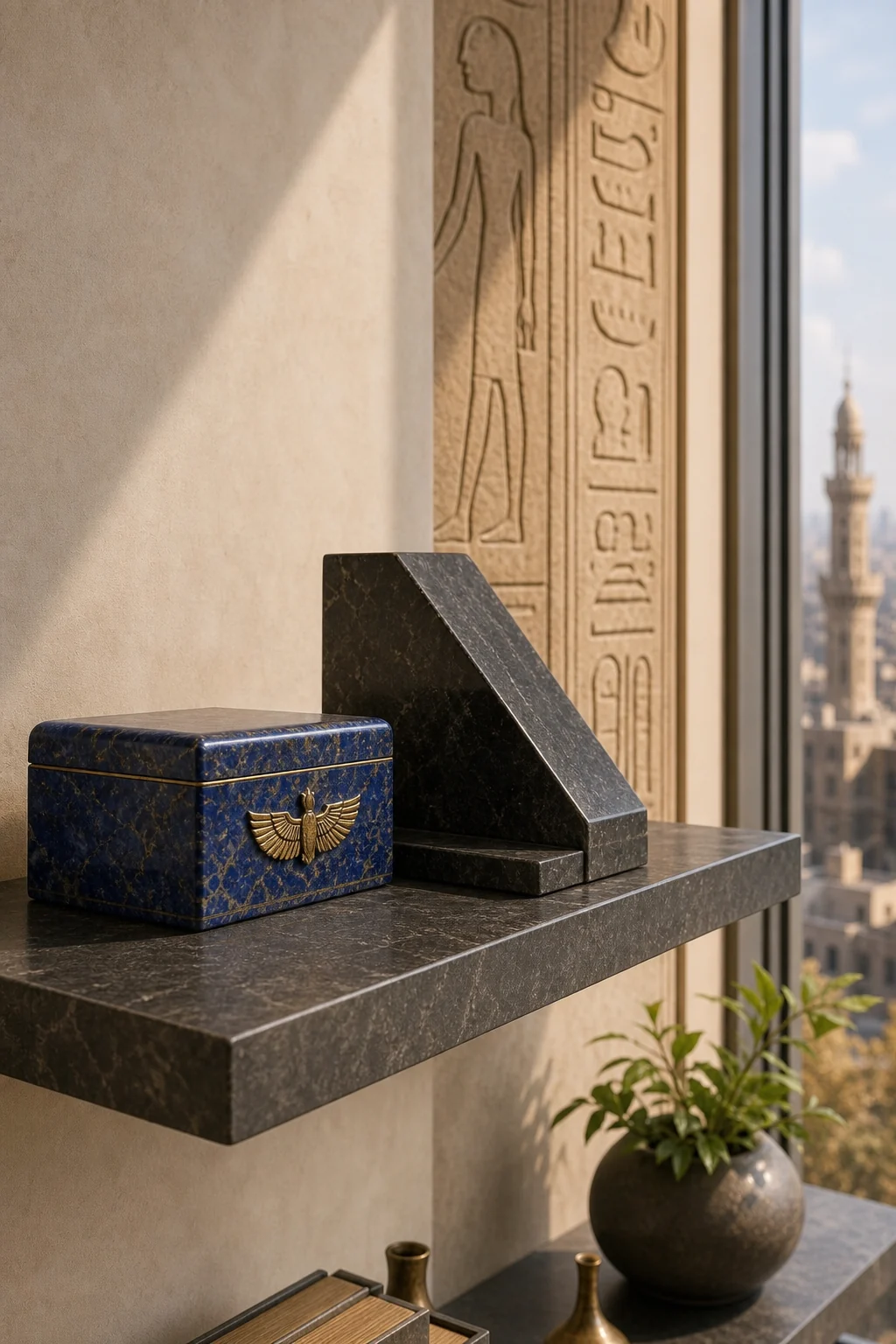
Curating the desktop requires absolute discipline. Every object must serve a practical purpose while echoing the abstracted geometry of antiquity, ensuring the workspace remains a highly efficient tool rather than a static display case for unnecessary decorative visual clutter.
- Source matte brushed brass geometric task lamps featuring heavy, stable architectural bases for reliable daily illumination.
- Select lapis lazuli blue leather desk accessories for precise, vibrant color blocking against the dark stone.
- Use honed black stone architectural bookends to anchor lightweight contemporary floating shelves with visual gravity.
- Invest in ergonomic swivel chairs upholstered tightly in solid, rich jewel tones to ensure comfort.
Adapting the Logic
To adapt this logic beyond the primary desk zone, focus on secondary functional areas. A reading corner or threshold can capture the exact same tension using smaller-scale stone and sleek seating without requiring a massive footprint or overwhelming the room.
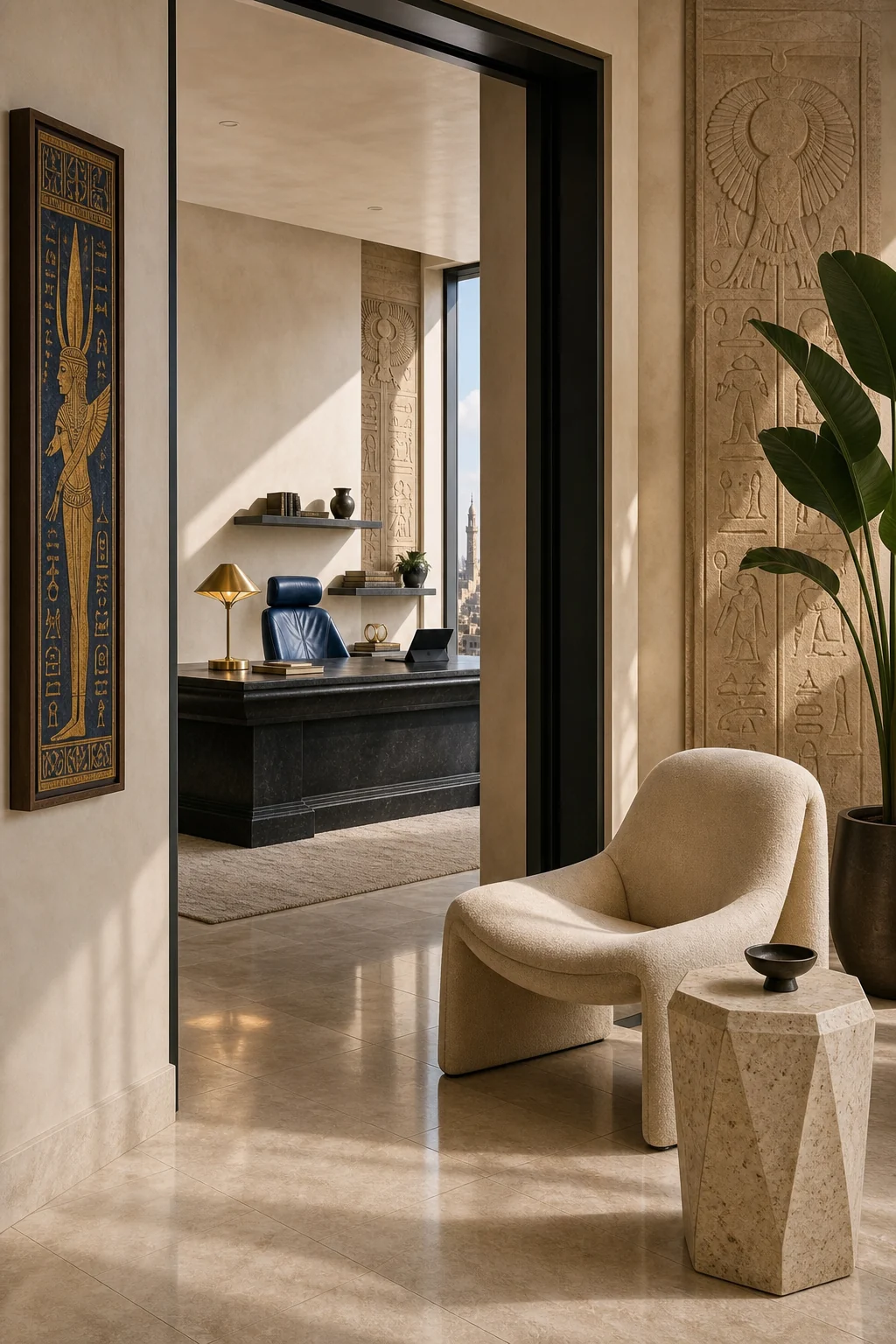
Scaling down requires lighter materials and slimmer overall profiles. Swapping a massive desk for a travertine console maintains the historical weight without overwhelming a modest footprint, making the aesthetic highly adaptable to strict budgets and smaller, constrained interior residential rooms.
Applying this scaled-down approach allows the hybrid aesthetic to thrive in standard residential layouts. By carefully selecting lighter stone variations and prioritizing minimalist seating silhouettes, you can evoke the grandeur of antiquity without sacrificing the airy, uncluttered feel of modernism.
Avoiding the Costume
The greatest risk is creating a thematic stage set. Success relies on absolute restraint, ensuring every historical reference is abstracted into pure geometry rather than literal reproduction that cheapens the monumental impact of the authentic stone and brass materials.
Contemporary function demands empty negative space to foster concentration. Cluttering surfaces with ornate gold leaf or literal hieroglyphics instantly destroys the delicate balance, turning a sophisticated workspace into a chaotic historical pastiche that distracts from deep, focused daily work.
- Avoid literal hieroglyphics or figurative statues that read as cheap theatrical costumes rather than sophisticated design.
- Never use ornate gold leaf finishes; stick strictly to matte brushed brass for all metallic accents.
- Do not clutter surfaces; contemporary function requires expansive, empty negative space always to maintain mental clarity.
- Ensure all historical references remain entirely geometric rather than literal or illustrative to preserve modern tones.