
Modern Victorian Meets Shaker: Dining Room
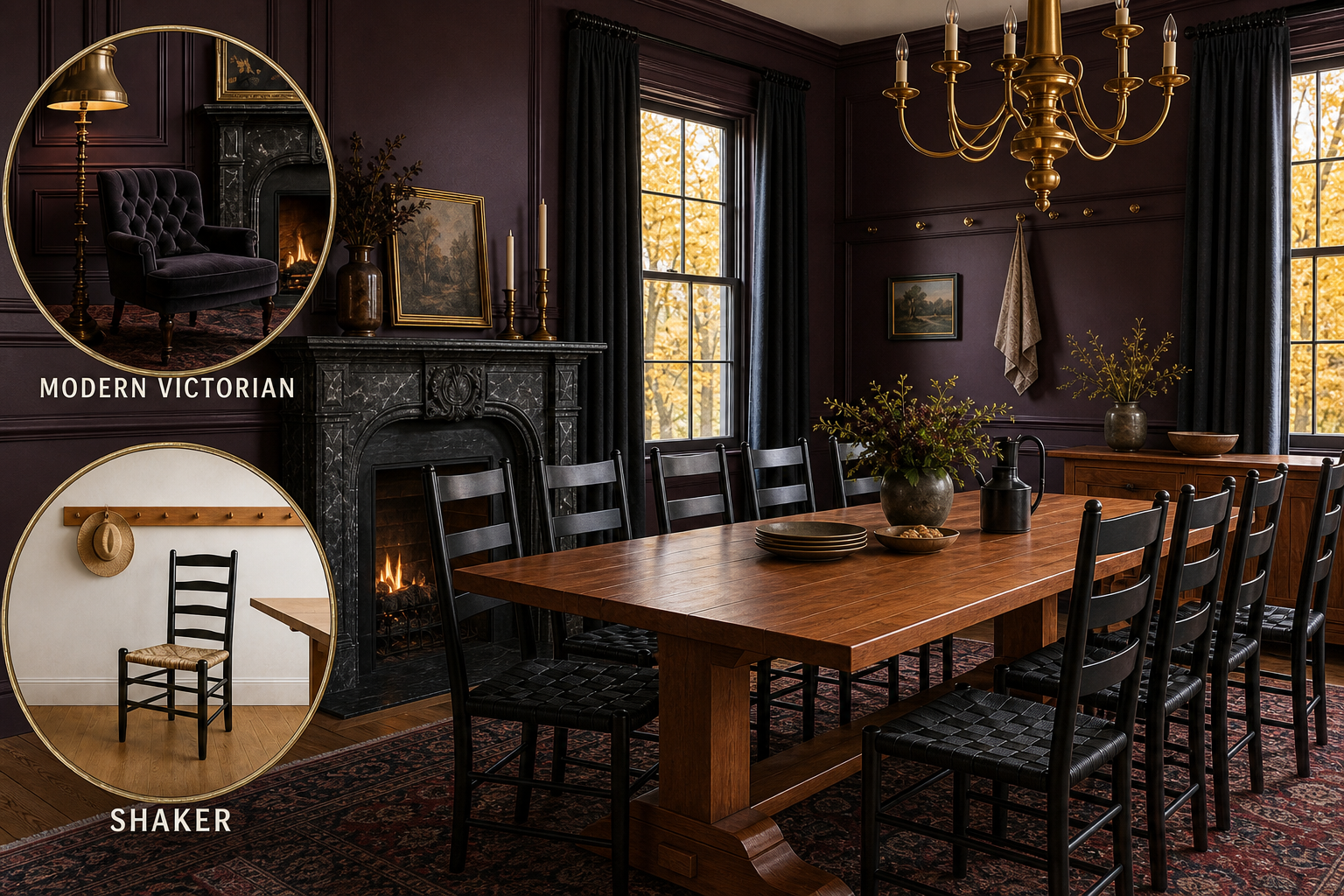
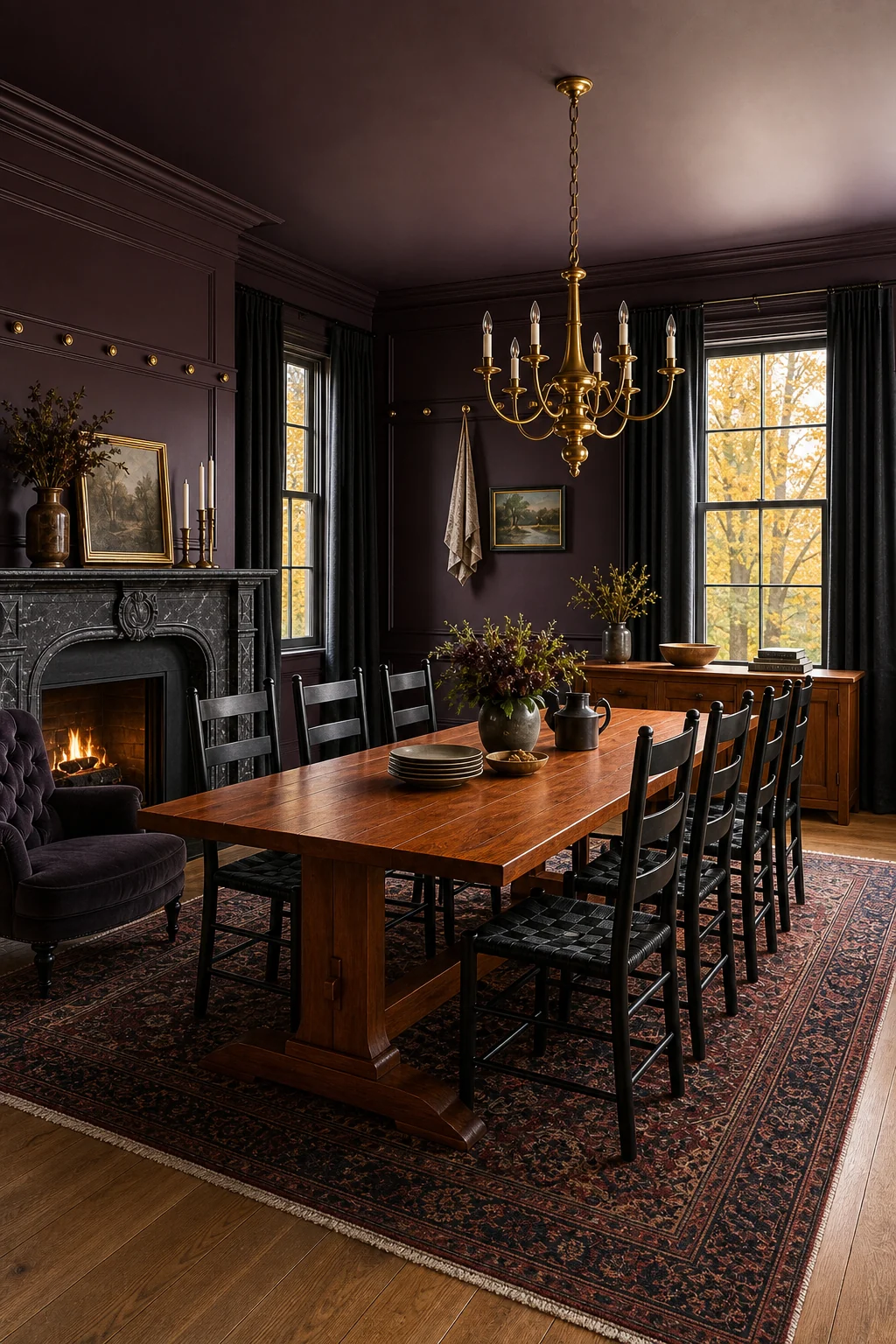
The theatrical, ornamental excess of Modern Victorian design fundamentally opposes the ascetic, hyper-functional restraint of traditional Shaker craft. Yet, by letting Victorian mood dictate the architectural shell while Shaker logic governs the utilitarian furniture, this dining room achieves perfect balance.
Theatrical architecture
Modern Victorian design thrives on enveloping atmosphere and heavy architectural weight. Deep aubergine walls establish a moody, theatrical stage for the quieter elements to follow. This dramatic shell demands absolute commitment to deep color and historic scale to function properly within the home.
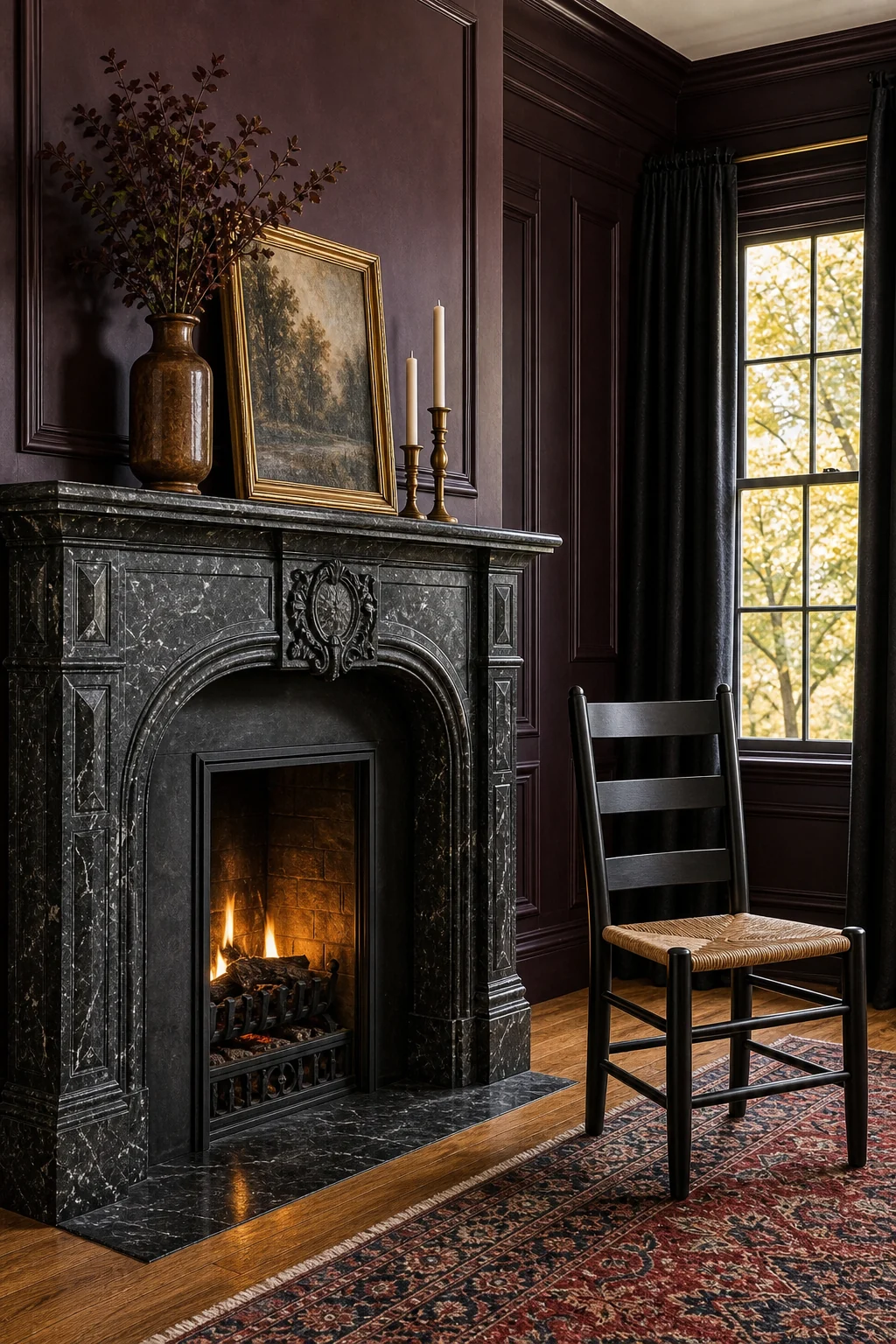
Notice how the carved dark marble fireplace commands the space without overwhelming it. This imposing architectural shell requires a deliberate counterweight to prevent the room from feeling suffocating, overly historical, or uncomfortably formal for your daily, modern dining routines and casual gatherings.
Establishing this heavy perimeter first is absolutely crucial. If the walls lack sufficient visual depth, the subsequent introduction of minimalist wooden furniture will feel accidental rather than intentional, ruining the delicate tension required for this specific aesthetic resolution to succeed.
Utilitarian counterpoint
Traditional Shaker craft demands hyper-functional restraint and honest, unadorned materials. Introducing this ascetic geometry immediately grounds the room’s opulence, creating a necessary structural tension against the moody, color-drenched Victorian architecture that surrounds the central dining zone on all sides.
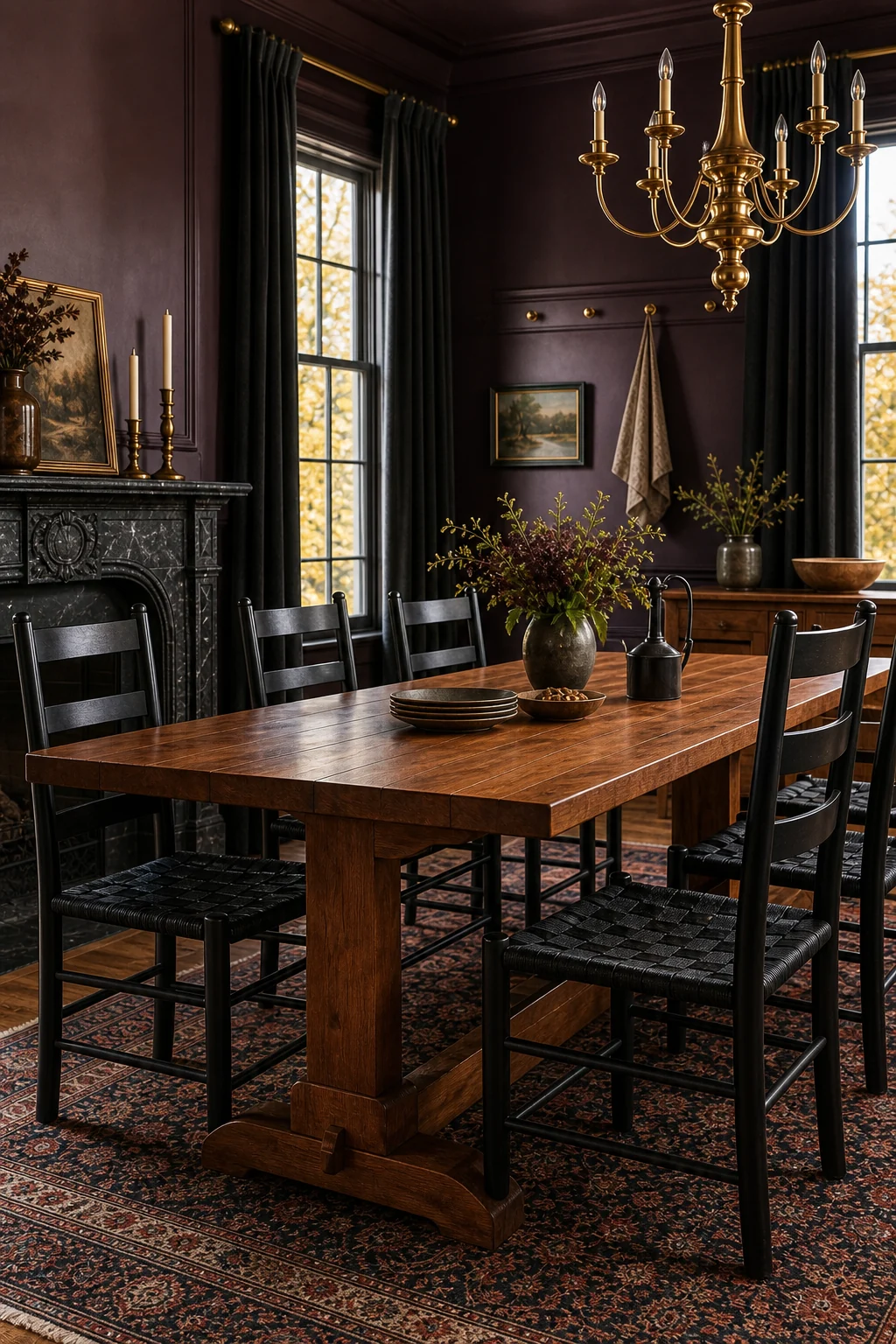
A solid cherry wood trestle table and woven-tape ladder-back chairs provide essential visual relief. Their clean lines and honest joinery cut through the heavy atmosphere beautifully, establishing a functional core that refuses to compete with the highly ornate walls and dramatic fireplace.
| Design Layer | Modern Victorian Role | Shaker Role | Bridge Decision |
|---|---|---|---|
| Shell | Color-drenched aubergine walls | Continuous utilitarian peg rail | Paint rail to match walls |
| Large Furniture | Dark marble fireplace surround | Cherry wood trestle table | Ebonized finish on seating |
| Textiles | Heavy charcoal velvet drapery | Woven cotton tape seats | Shared dark charcoal palette |
| Lighting | Ornate multi-arm chandelier | Unobstructed natural daylight | Unlacquered brass finish |
| Accents | Moody floral arrangements | Stark turned-wood bowls | Display on shared cherry surfaces |
This exact distribution of responsibilities prevents visual chaos. The interior architecture remains entirely focused on atmosphere and theatricality, while the furniture remains strictly dedicated to practical utility, ergonomic comfort, and enduring, high-quality material craftsmanship that will last for generations.
The material bridge
Bridging these opposing aesthetics requires deliberate material translation. You cannot simply drop austere wooden furniture into a dark, ornate room without a unifying visual thread to connect the historic excesses with the hyper-functional, utilitarian restraint of the seating arrangement.
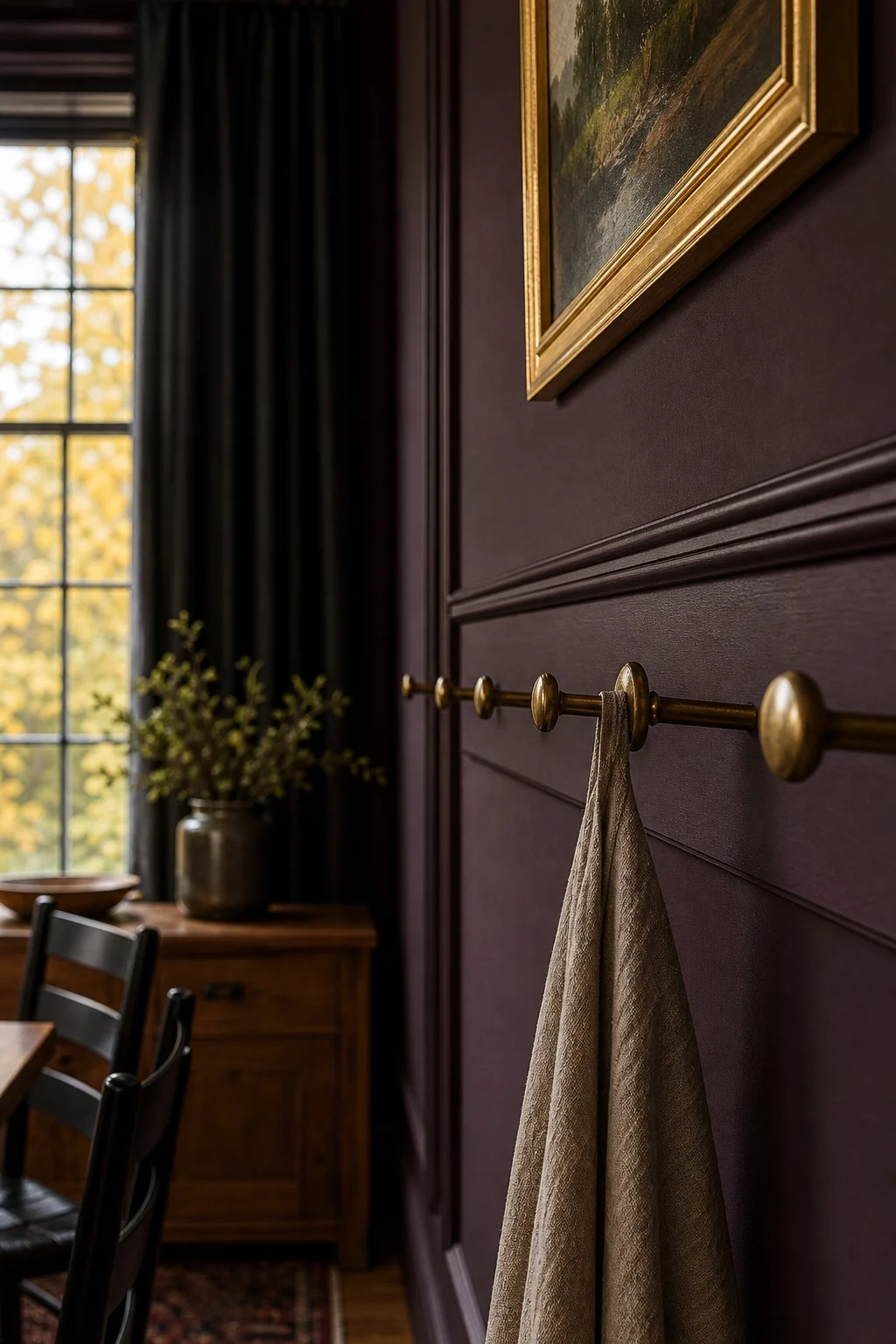
Painting the continuous Shaker peg rail to match the deep aubergine walls integrates it seamlessly into the architecture. Swapping traditional wooden pegs for unlacquered brass pegs echoes the ornate Victorian lighting hanging directly in the center of the room.
This subtle metallic repetition pulls the entire room together. Without these small moments of material crossover, the space would fracture into two isolated design schemes rather than functioning as a single, beautifully unified dining experience for you and your guests.
Coherent composition
A successful seating arrangement balances heavy atmosphere with light, highly legible forms. The dining set must hold its own against the imposing marble fireplace without resorting to applied Victorian ornamentation or unnecessary decorative carving on the wooden frames.
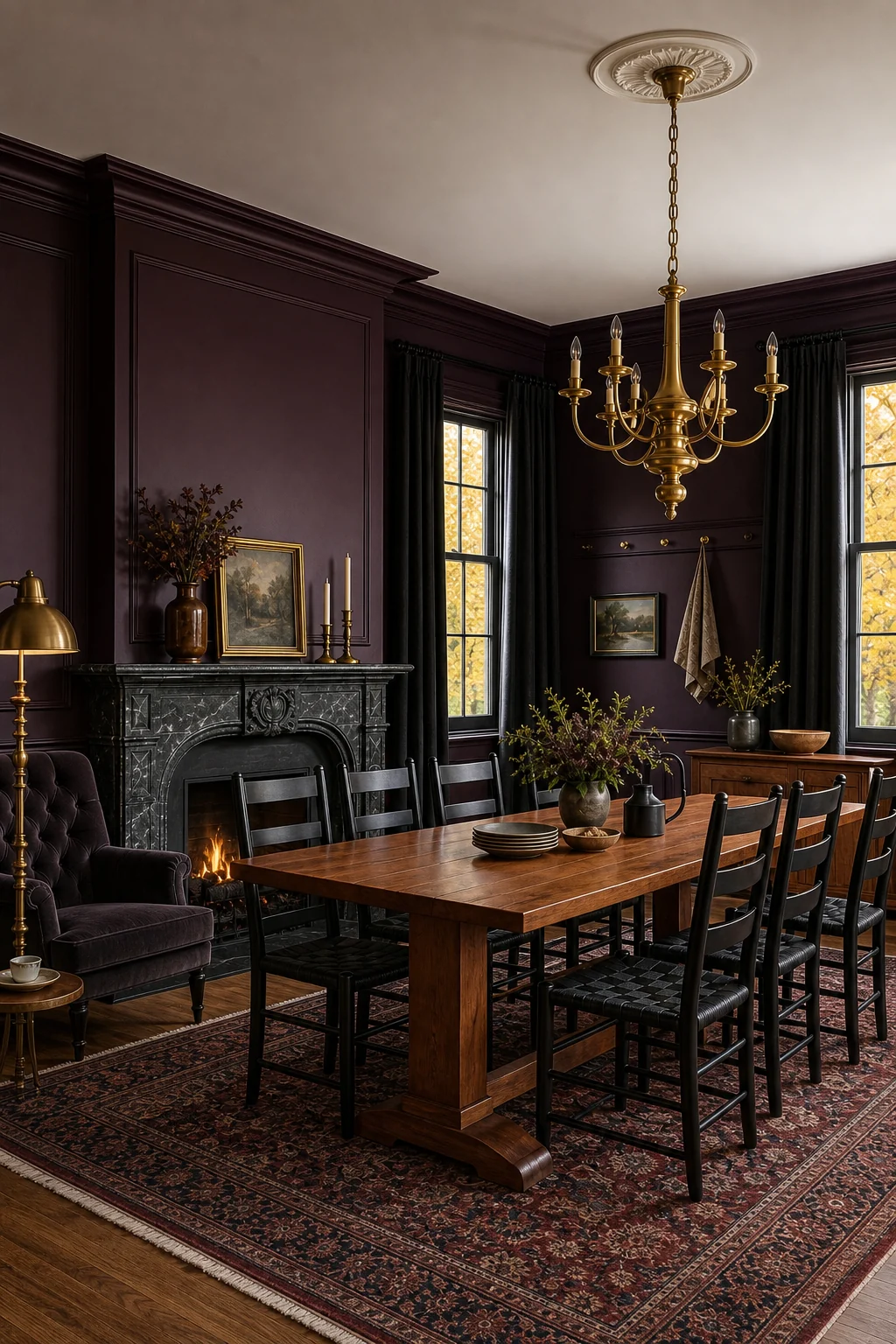
Ebonizing the Shaker chairs gives them enough visual density to anchor the center of the room. This shared charcoal palette directly connects the austere seating to the heavy velvet window treatments framing the expansive historic sash windows against the walls.
- Select a substantial cherry trestle table to provide necessary visual warmth and grounding weight.
- Surround the table with ebonized ladder-back chairs for stark graphic contrast against the walls.
- Suspend a dramatic brass chandelier directly above the center dining axis for theatrical impact.
- Align the seating arrangement perfectly with the dominant architectural fireplace surround to ensure symmetry.
Generous illumination
Moody color palettes require generous, strategic lighting to avoid feeling cavernous. Crisp daylight from tall historic sash windows highlights the continuous architectural lines of the room, keeping the dark surfaces feeling expansive rather than oppressive during the daytime hours.
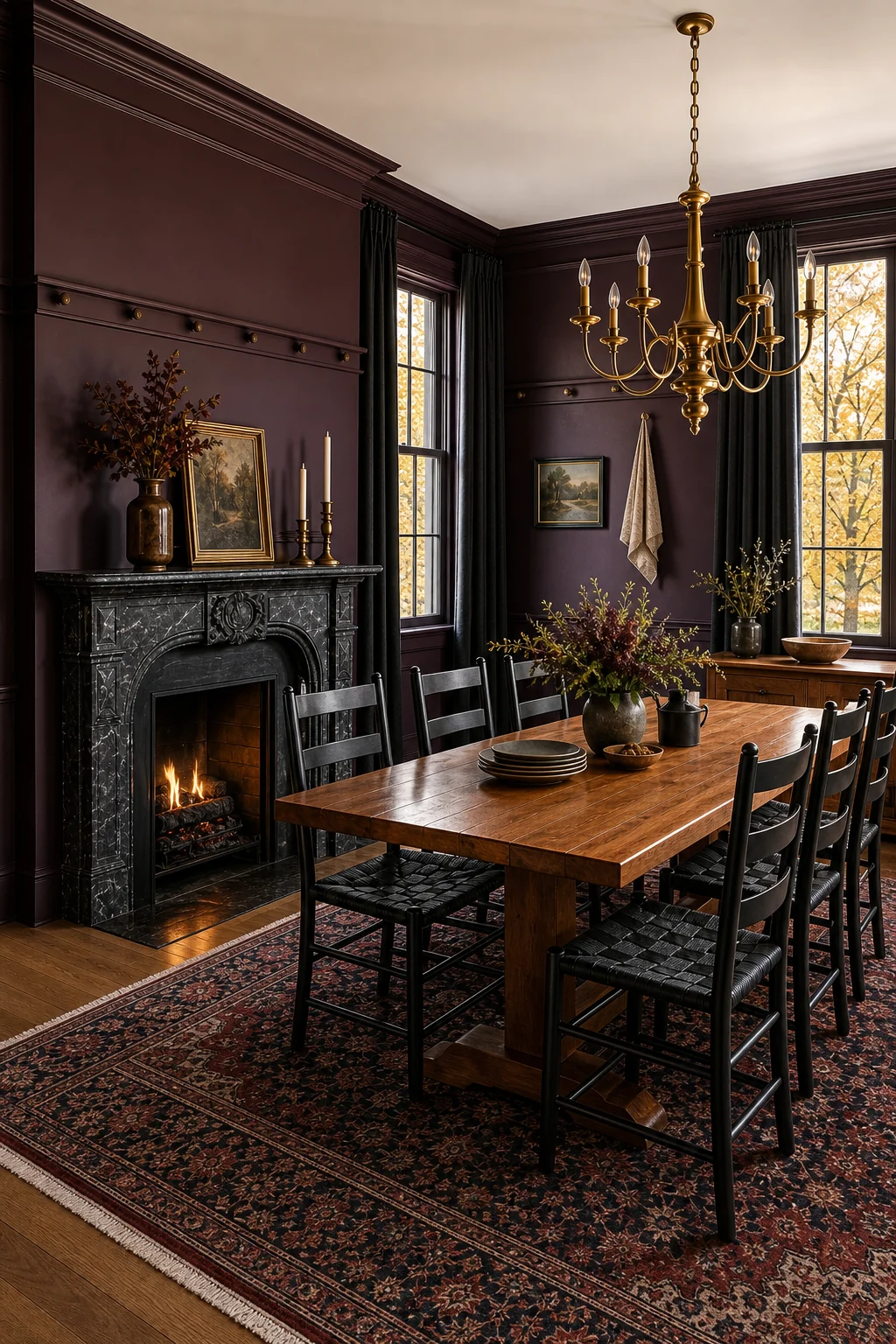
The natural light prevents the deep aubergine paint from reading flat or gloomy. To achieve this delicate balance, you must prioritize light sources in a specific hierarchy to maintain the resolved aesthetic contradiction throughout the changing seasons and times.
Managing this daylight ensures the room transitions gracefully from morning to evening. The interplay between bright natural sunshine and the moody, color-drenched walls creates a dynamic environment that changes character as the hours pass, keeping the atmosphere inviting and warm.
Curated surfaces
Surface styling must honor both the ornamental and the ascetic. Every accessory should distinctly belong to either the Modern Victorian or the Shaker camp to maintain the tension, avoiding generic transitional decor entirely to preserve the sharp visual contrast.
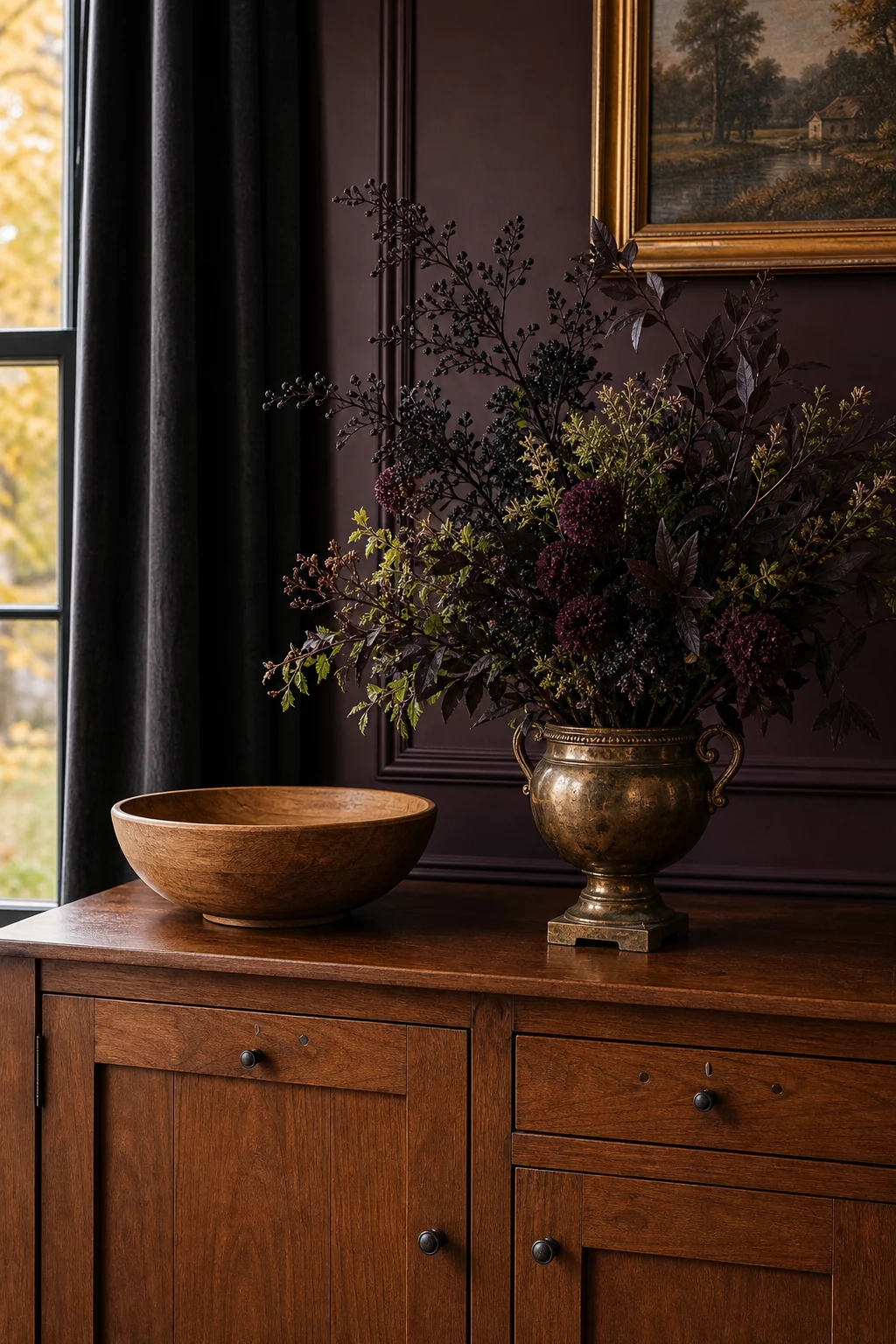
A stark wooden bowl paired with a loose, moody floral arrangement captures this exact dynamic perfectly. When sourcing pieces for this space, seek out specific category anchors that reinforce the fundamental design contradiction without muddying the visual waters with compromises.
- Solid cherry trestle dining tables featuring clean, unadorned traditional joinery and a matte finish.
- Ebonized ladder-back dining chairs with classic woven cotton tape seats for tactile, utilitarian comfort.
- Unlacquered brass multi-arm chandeliers showcasing ornate, historic Victorian detailing that will age gracefully.
- Heavyweight charcoal velvet drapery panels designed specifically for framing large, historic architectural windows.
Transitional boundaries
You can translate this logic beyond the main dining space by manipulating the color boundaries. Connecting rooms require a deliberate shift in visual weight to maintain the impact of the primary color-drenched architecture when moving through the home daily.
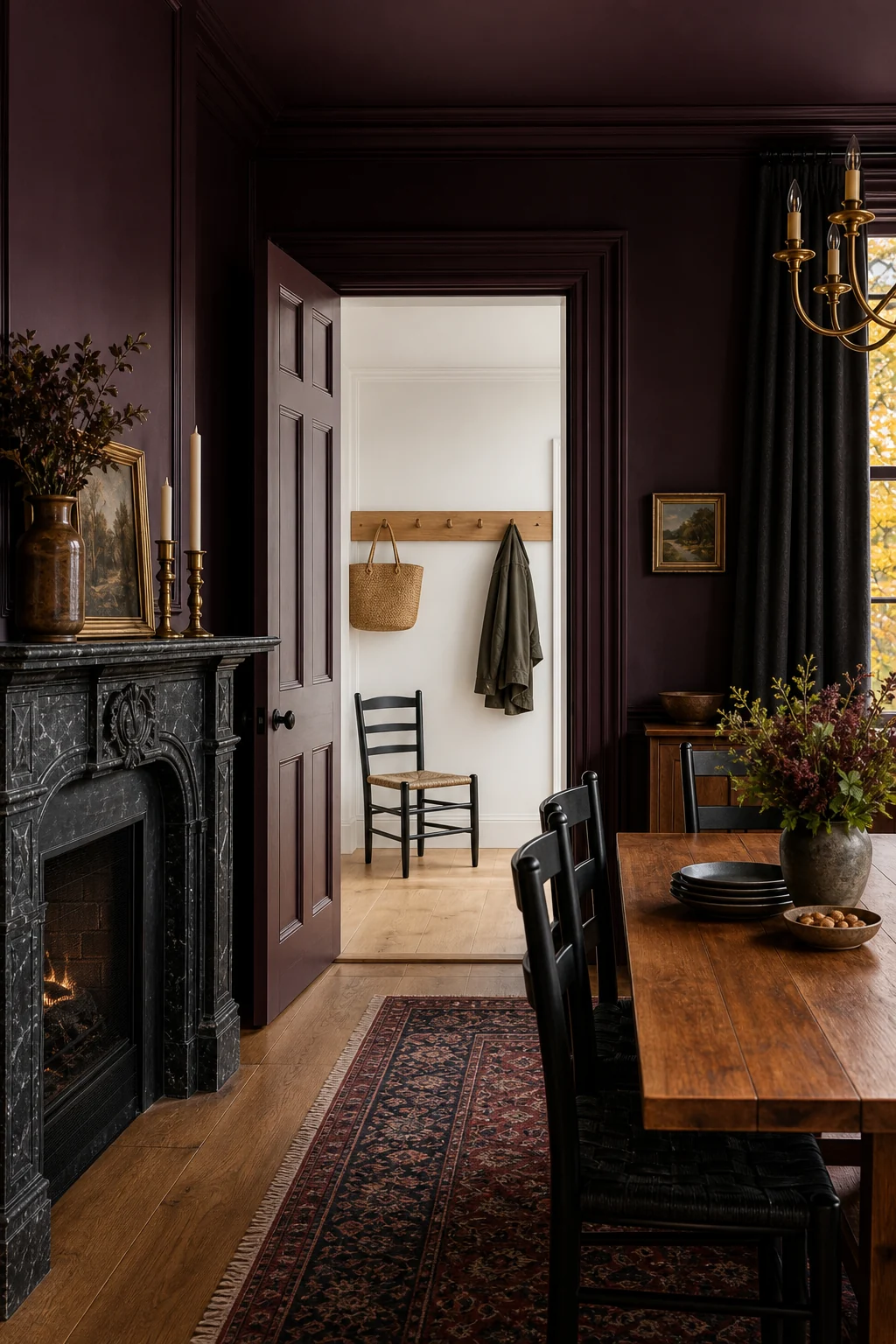
A stark white hallway provides a necessary visual palate cleanser before entering the dark dining room. This sharp, bright contrast immediately amplifies the enveloping, theatrical mood of the deep aubergine walls upon entry, making the transition feel deeply intentional.
- Keep adjacent hallways painted a crisp, bright ceiling white to maximize the architectural contrast.
- Install natural pine peg rails in connecting spaces to maintain utilitarian continuity between rooms.
- Leave wide-plank maple floors bare to emphasize Shaker architectural austerity in the transitional zones.
- Remove ornate moldings in transitional areas to heighten the dining room’s dramatic visual impact.
The final resolution
The greatest risk is creating a space that feels like a split-personality museum exhibit. True resolution happens when neither the ornate architecture nor the austere furniture overpowers the other, achieving a state of perfect visual equilibrium every time.
If the room feels too heavy, you need more warm cherry wood to ground it. If the space feels too sparse, increase the volume of the heavy charcoal velvet drapery to restore the necessary architectural balance and theatrical mood immediately.
- Verify the continuous peg rail matches the deep aubergine wall color exactly for seamless integration.
- Ensure the brass chandelier is completely unlacquered so it will age naturally over time.
- Check that the ebonized chairs share the exact charcoal tone of the heavy velvet drapery.
- Confirm the cherry trestle table remains entirely free of any decorative carvings or ornamentation.