
This Dragonfly Lamp Became a Bedroom Vanity Nook
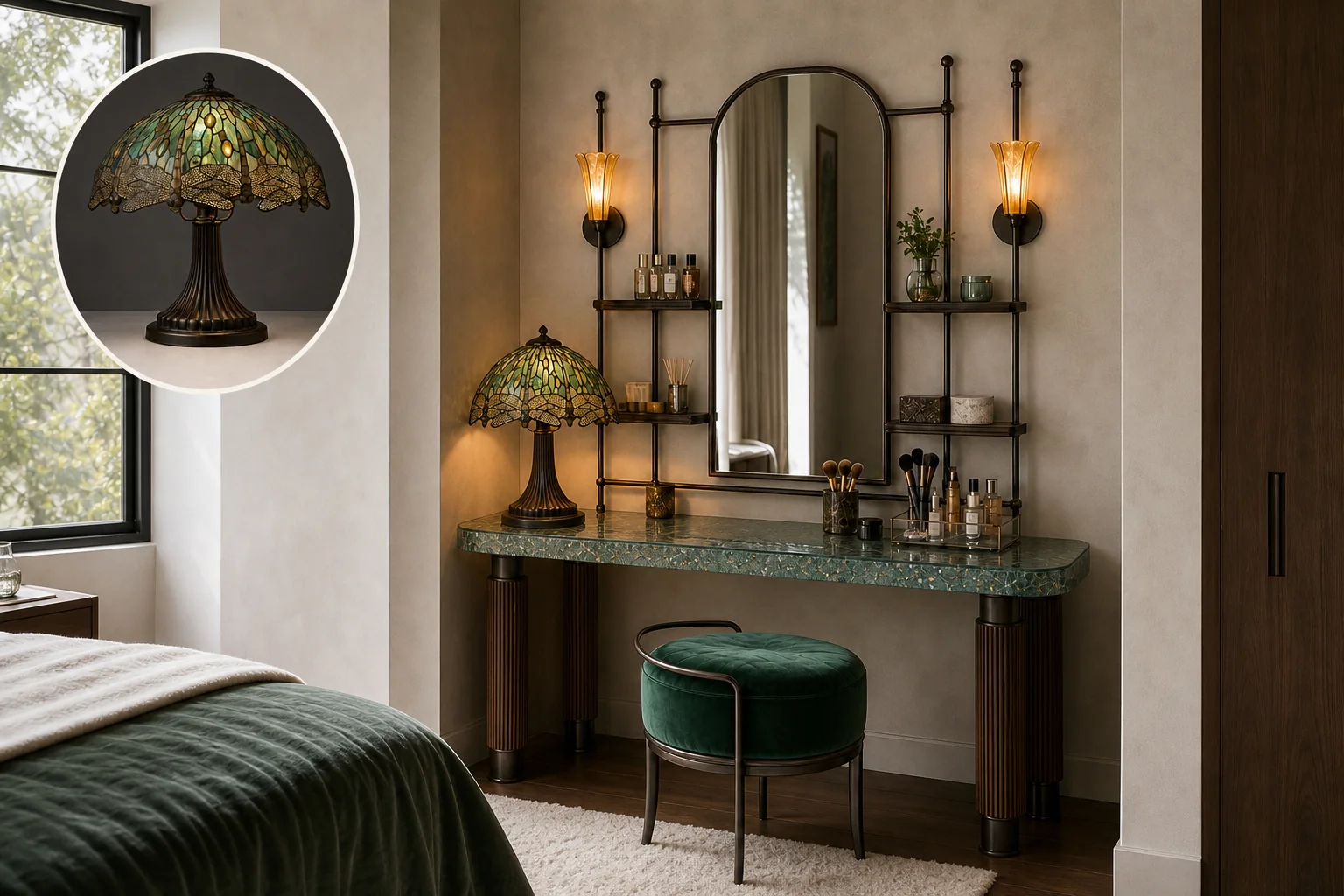
Transforming a classic art nouveau dragonfly lamp into a bedroom vanity nook requires looking past literal insect motifs. Capturing the delicate suspension of light-diffusing textures within a rigid, dark structural framework creates a serene, highly functional grooming space.
Framing the Alcove with Slender Bronze
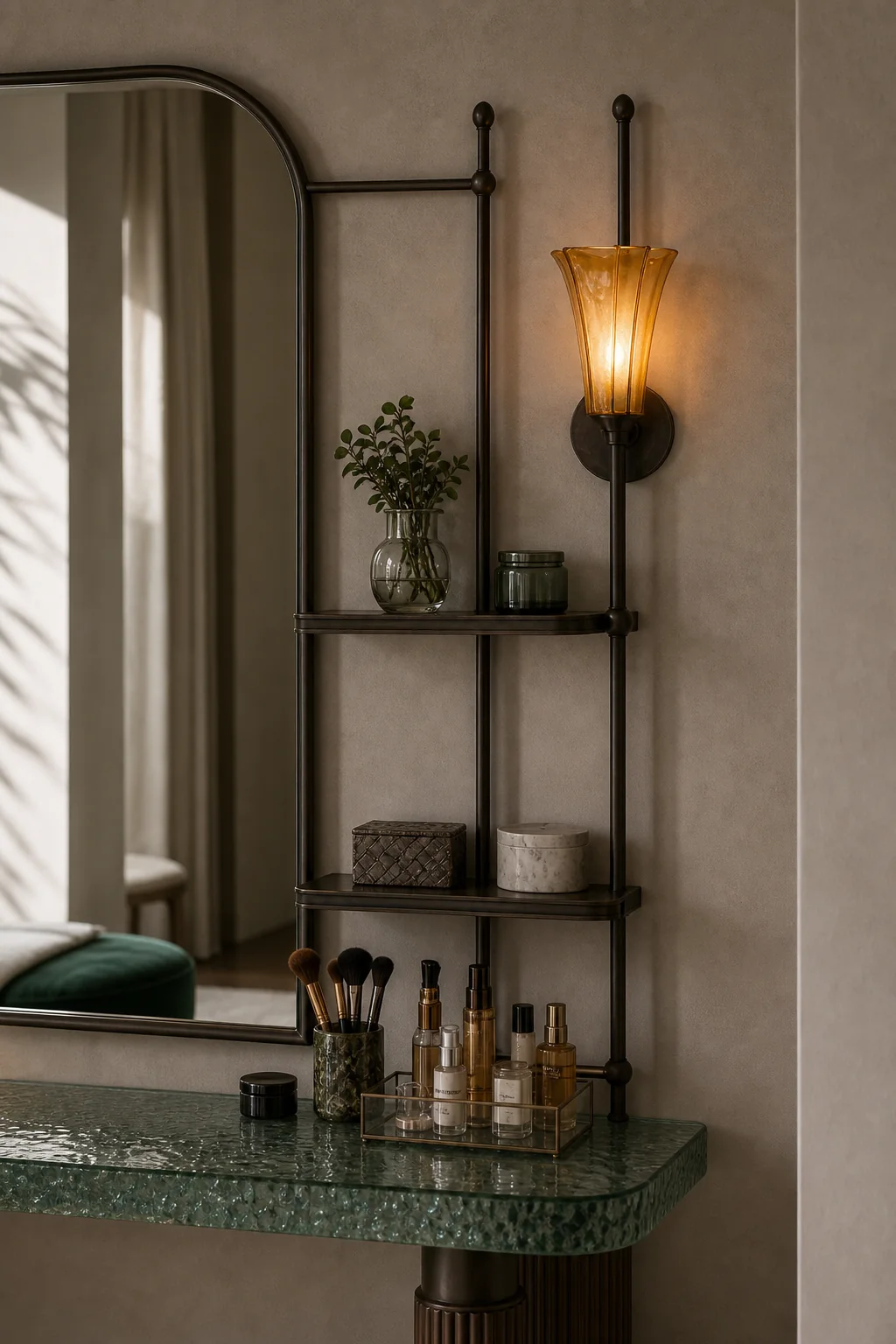
By treating the alcove walls as negative space, dark metal framing introduces essential architectural structure without adding visual heaviness. Slender bronze framing mimics the shade’s dark soldered lead lines, establishing a delicate yet rigid boundary that firmly grips the fragile elements of the room. To successfully translate this structural filigree into a highly functional grooming space, follow this precise installation sequence to ensure the framework perfectly supports your daily routine while maintaining the elegant, weightless illusion of the original art nouveau design.
- Measure and map the alcove dimensions to ensure the floating desk and mirror fit perfectly centered.
- Install the dark bronze mirror frame to establish the central vertical axis of the vanity nook.
- Mount the floating cosmetic shelves to provide secure, off-the-counter storage for daily items.
- Secure the textured glass desktop to create a luminous, easy-to-clean surface for makeup.
- Position the layered task lighting to eliminate harsh shadows across the face during close-up work.
Translating Iridescent Glass into Jewel Tones
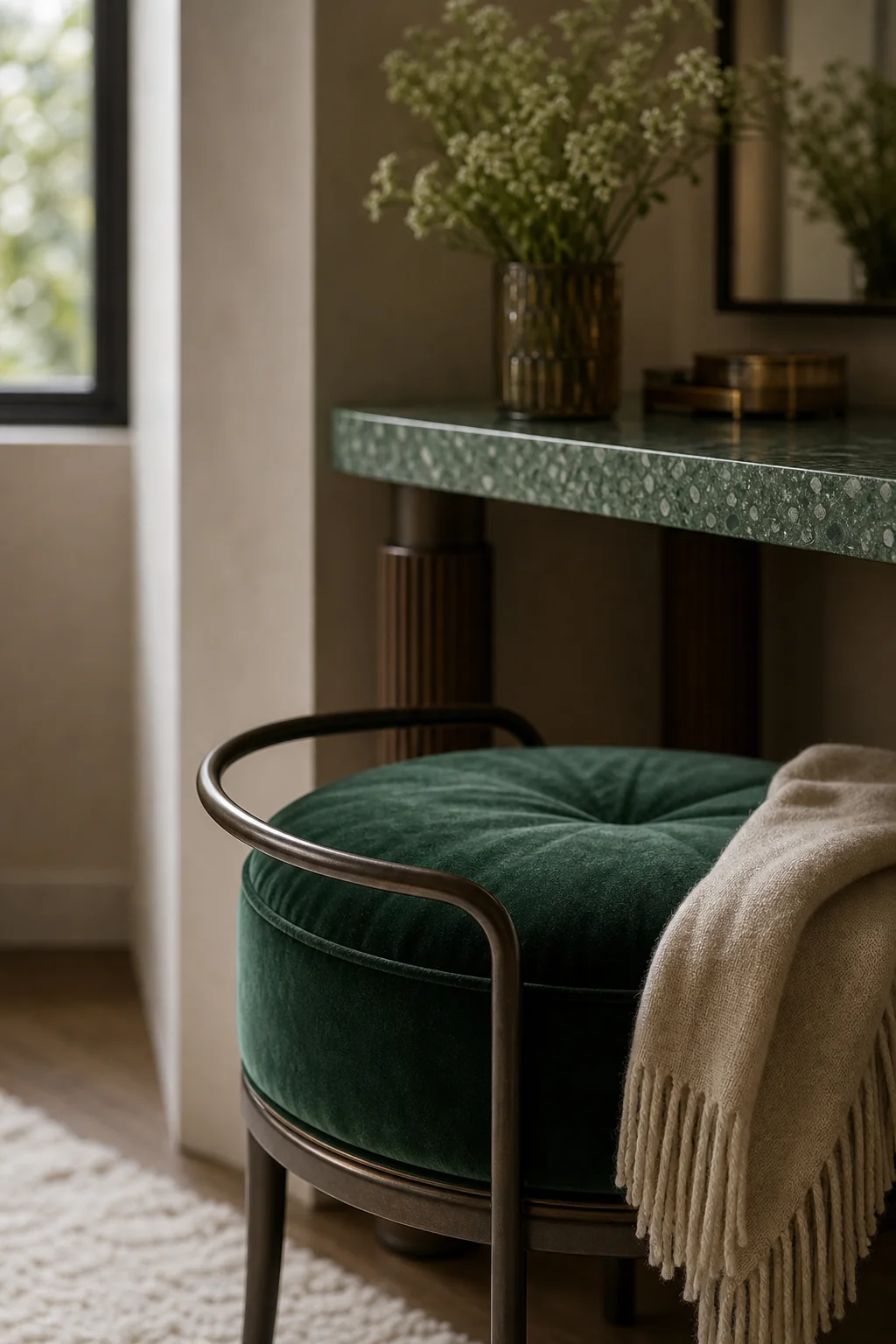
Isolating the lamp’s vibrant wing colors into specific, tactile accents prevents the small grooming space from feeling overwhelming. Emerald velvet and amber glass echo the luminous stained wings, popping brilliantly against the quiet, neutral plaster alcove. Keep the architectural shell strictly neutral and matte to let these jewel-toned accents shine without competing for attention. This careful distribution of color ensures the nook remains a serene environment for close-up work, translating the shifting, iridescent greens and ambers into a sophisticated, modern palette.
| Source trait | Visible evidence | Room move |
|---|---|---|
| Structural Filigree | The dark soldered lead lines that firmly grip and frame the fragile stained glass pieces | A slender, dark bronze-finished metal framework that mounts directly to the plaster wall, framing the large vanity mirror and holding two floating cosmetic shelves |
| Iridescent Depth | The shifting, luminous greens and ambers of the glass wings when lit from behind | An emerald-toned silk velvet upholstered vanity stool and a muted amber glass wall sconce, both popping against the quiet, neutral plaster alcove |
| Translucent Texture | The mottled, light-diffusing quality of the art glass panels | A thick, kiln-cast textured glass slab used as the primary vanity desktop, which softly catches and diffuses the natural light from the adjacent window |
| Tapered Verticality | The heavy, ribbed bronze lamp base that tapers upward to support the delicate shade | Slender, reeded dark walnut legs supporting the vanity counter, grounding the delicate glass desktop and metal framework above with visual weight |
Diffusing Light Through Textured Glass
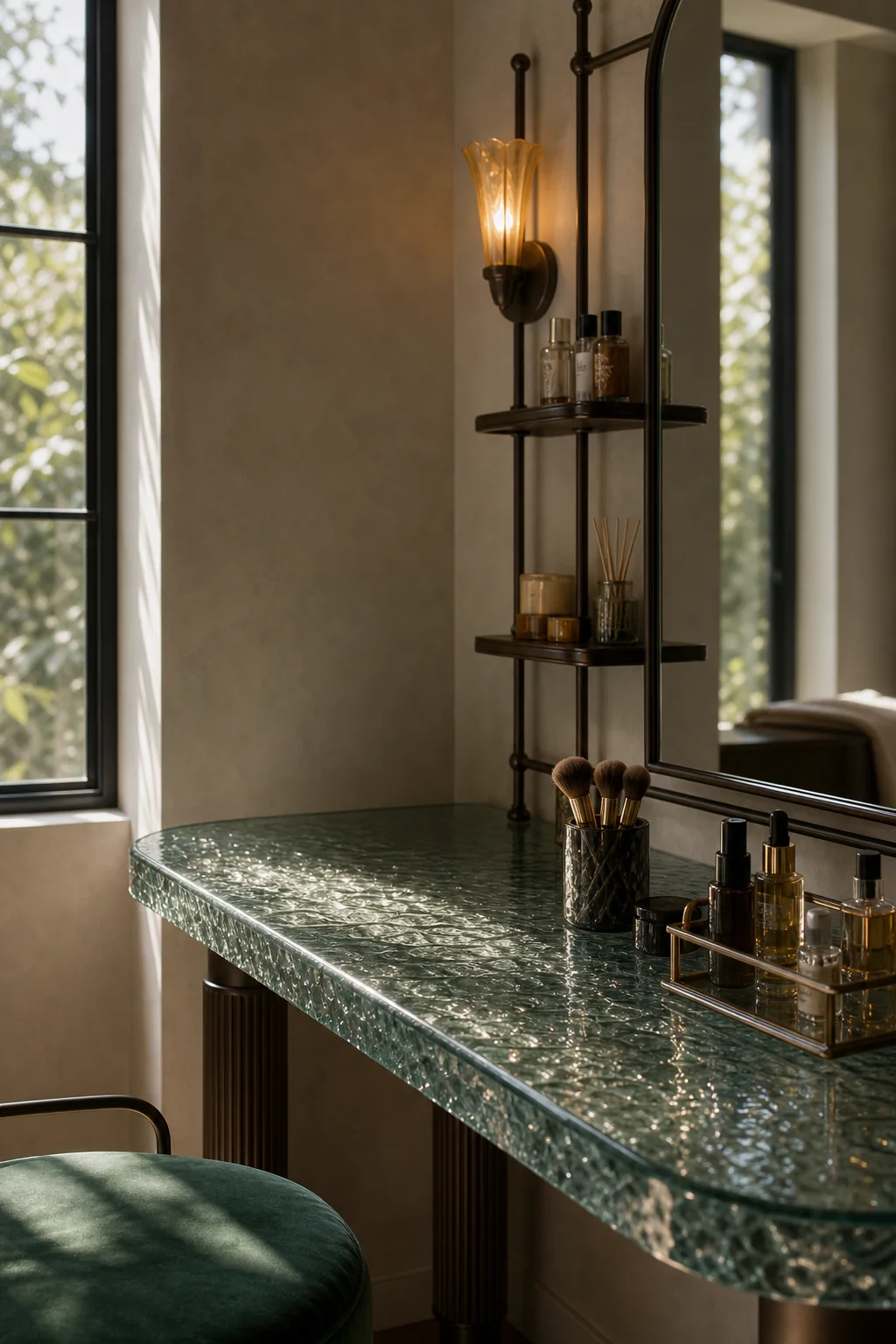
Swapping standard vanity materials for thick, textured glass captures the lamp’s defining translucence while providing a durable cosmetic surface. A cast glass slab translates the shade’s mottled texture, especially when positioned near a natural light source to activate its luminous qualities. Selecting the right tactile components ensures this delicate balance of light diffusion through varied opacities is maintained throughout the alcove. Sourcing these specific room materials will help you recreate the interplay of heavy, dark metals and fragile surfaces.
The Floating Luminous Surface
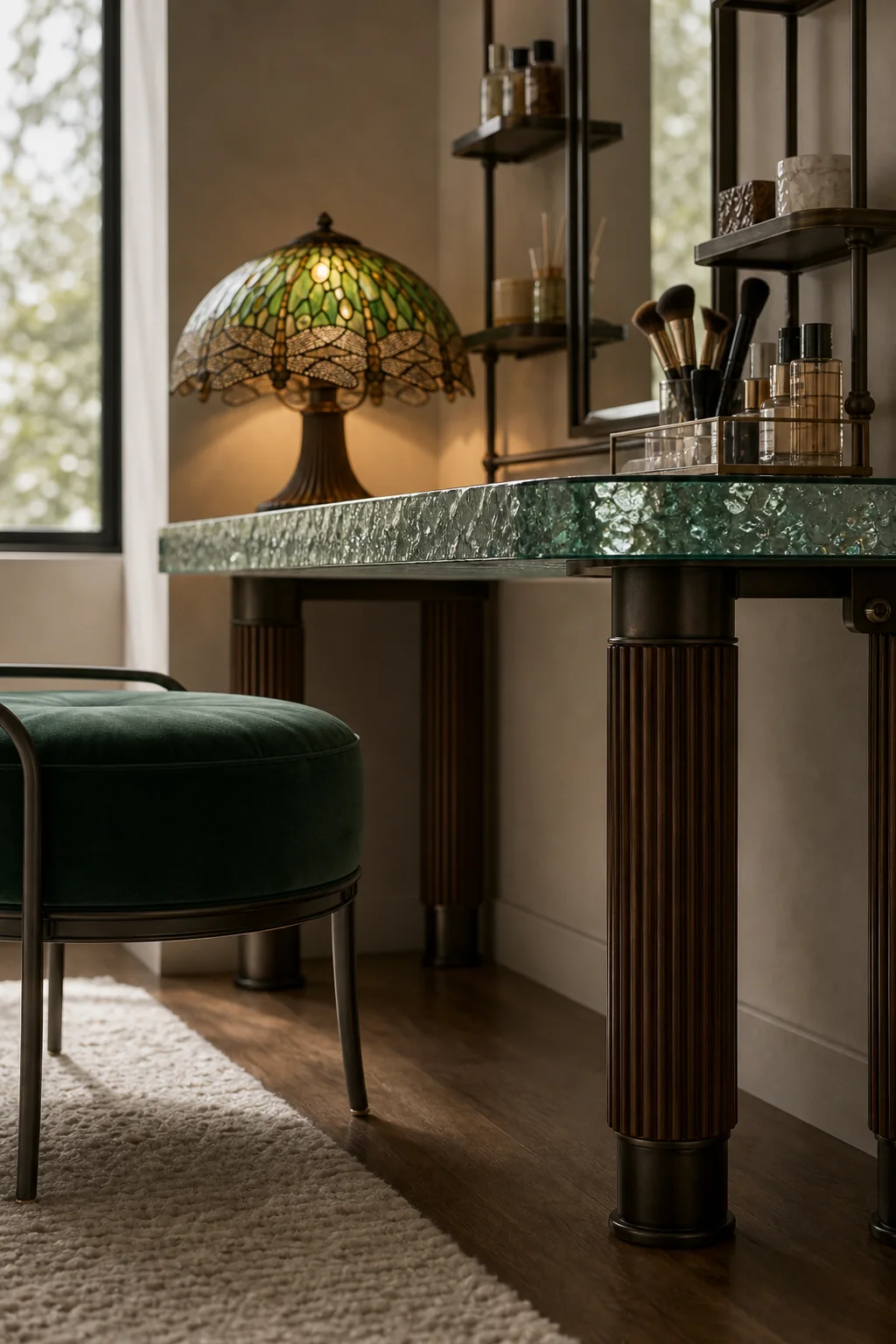
The thick glass desktop mimics the art glass shade panels, creating a glowing work surface that feels simultaneously fragile and permanent. By utilizing a smooth top with a heavily rippled underside, the desk remains highly practical for daily cosmetics while visually echoing the kiln-cast textured glass of the original art nouveau piece. This clever material choice softly catches and diffuses the natural light from the adjacent tall, narrow window, ensuring flattering, layered task lighting that is essential for a dedicated grooming surface.
Grounding the Delicacy with Tapered Wood
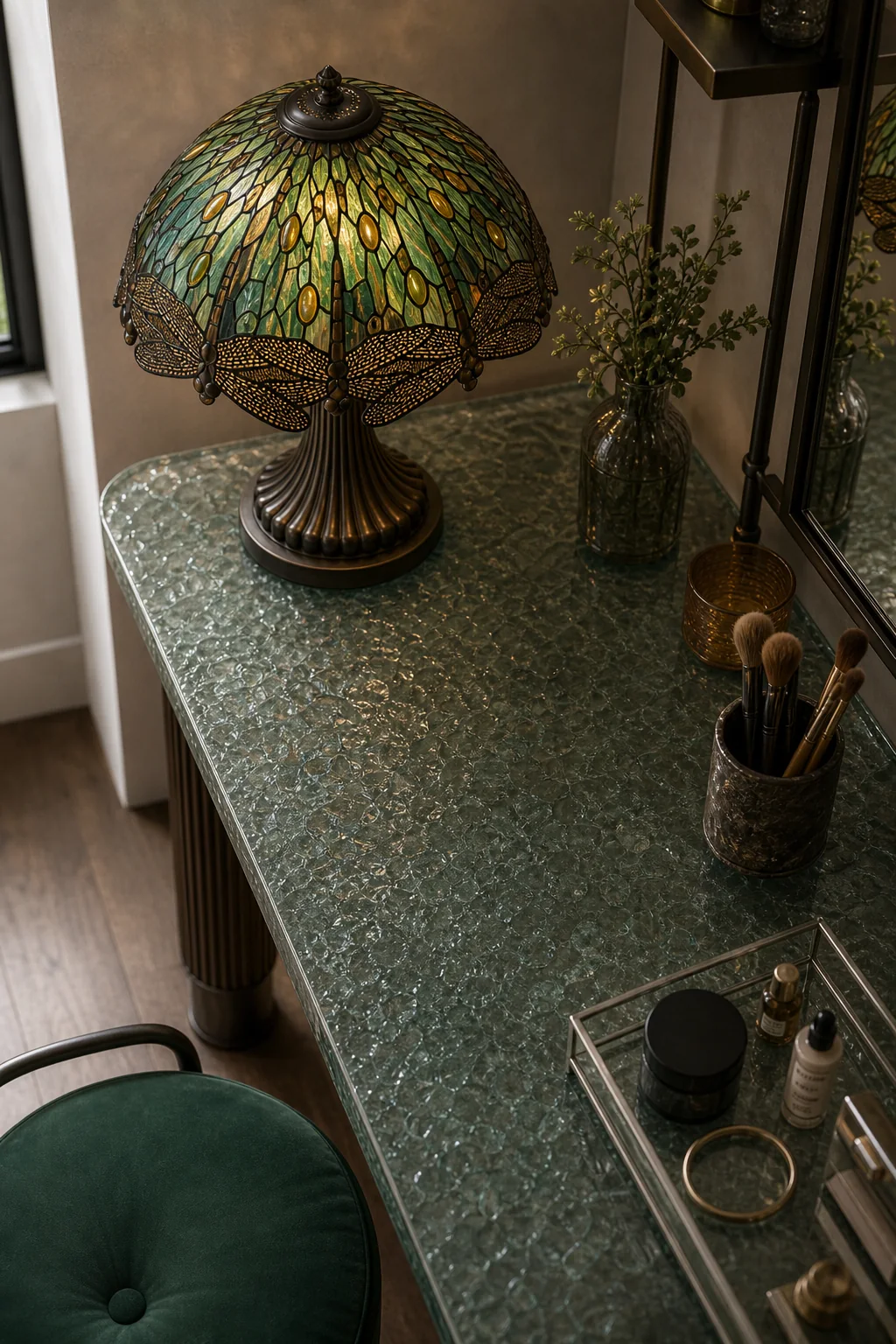
Introducing solid, vertically grooved wood anchors the floating, translucent elements above just as the bronze base anchors the shade. Reeded walnut legs ground the room like the ribbed base, providing necessary visual weight to the foundation of the vanity. Tapering these legs toward the floor maintains an elegant, lifted posture that complements the slender intersecting lines of the metal framework. This rhythm of a heavy, grounded base giving way to delicate upper structures is the key to the entire spatial translation.
Keep the vanity legs visually slender but texturally rich. The reeded detail adds necessary visual weight without cluttering the limited legroom beneath the delicate glass desk.
Ribbed Textures in Dark Walnut
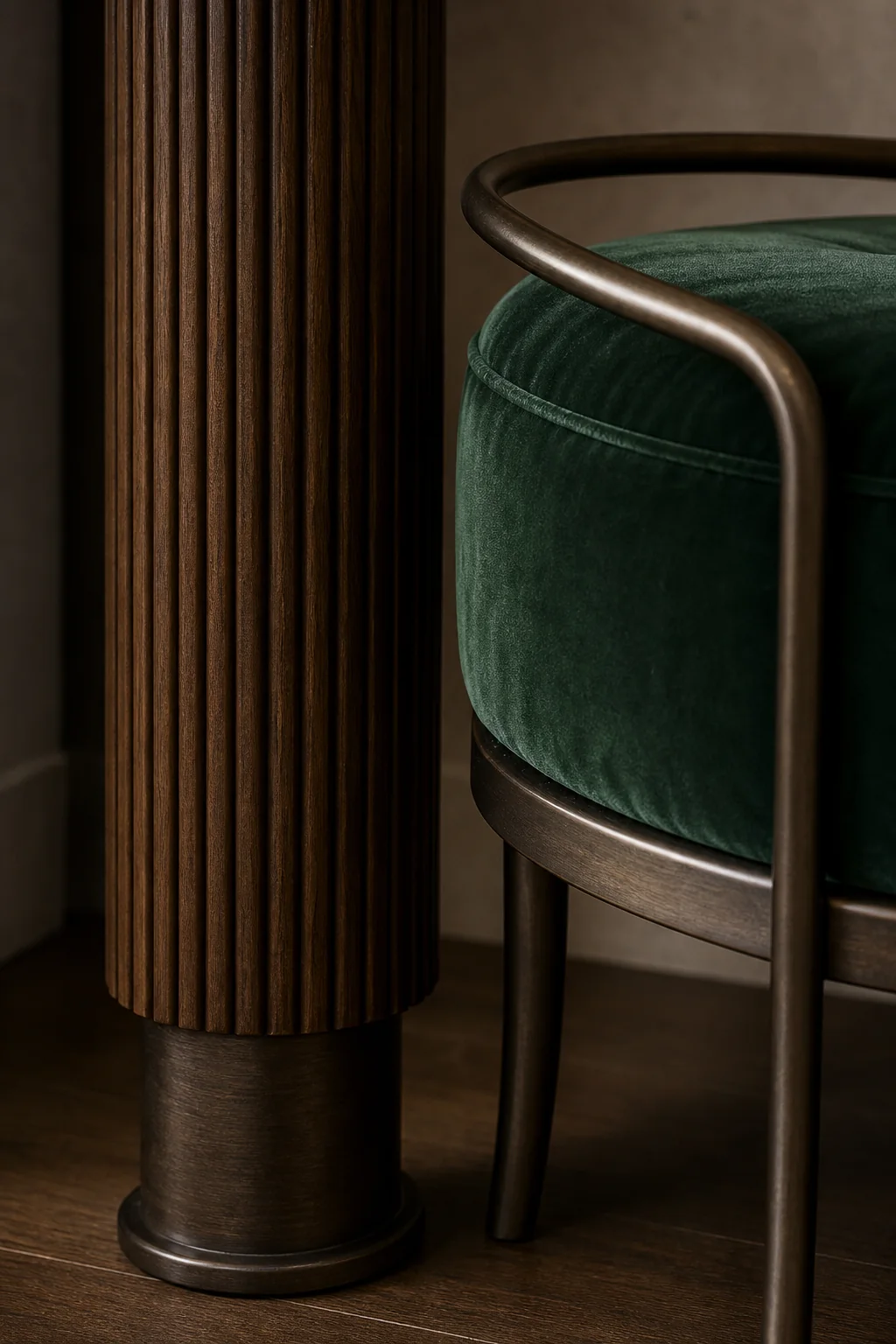
Reeded walnut legs echo the heavy, ribbed bronze lamp base, seamlessly transitioning into the emerald velvet stool. You can easily adjust this room’s intensity: a subtle approach limits the connection to a single amber glass sconce against entirely neutral finishes. A balanced execution pairs the textured glass desktop with emerald velvet and dark oil-rubbed bronze framing against a quiet plaster backdrop. For a truly bold statement, upholster the entire alcove interior in emerald velvet and use heavily rippled amber glass for the vanity surface itself.