
Japanese Meets Renaissance: Library
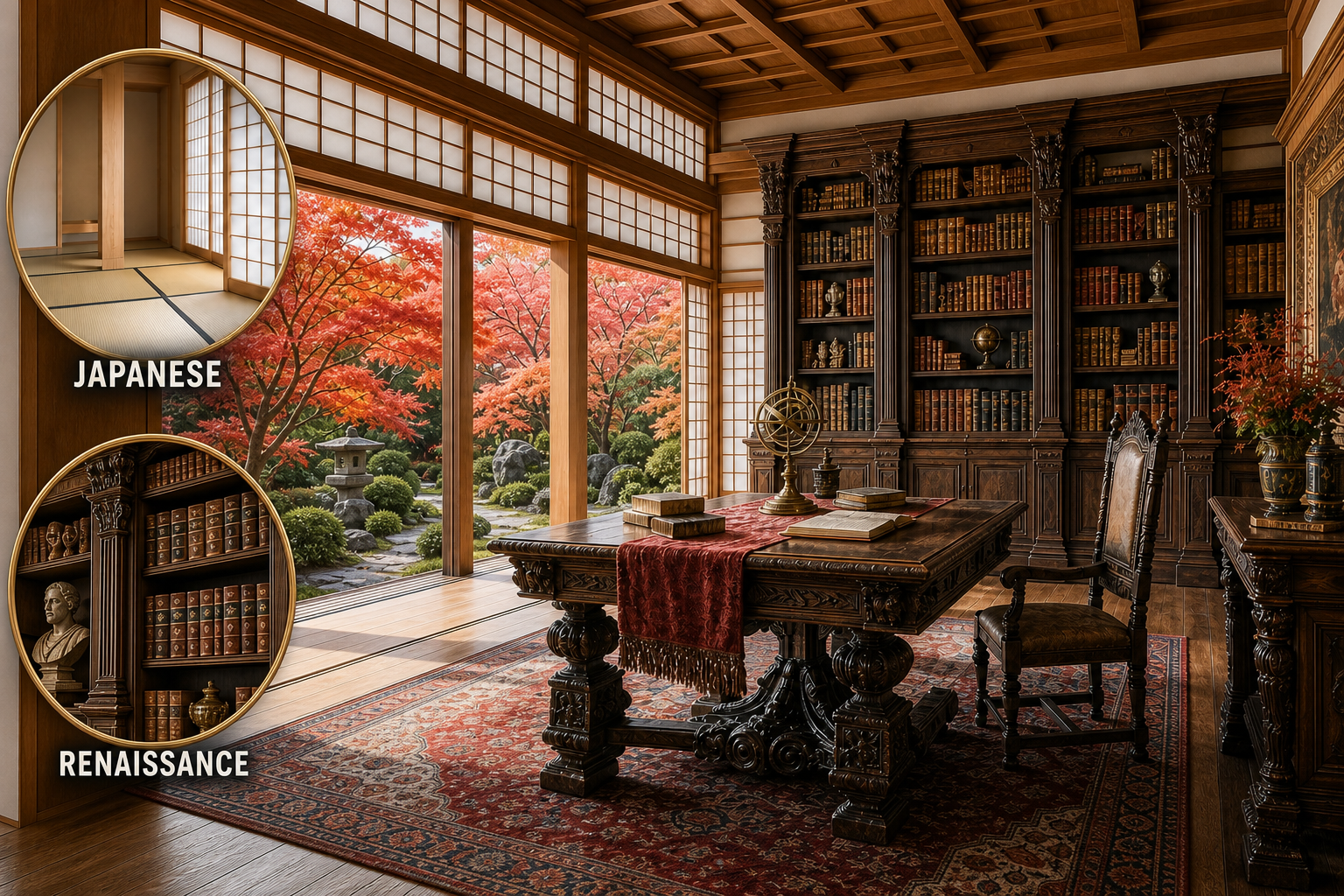
The structural lightness and void-centric restraint of traditional Japanese architecture naturally clashes with the heavy, ornamental mass of the European Renaissance. We resolve this by letting Japanese design control the architectural shell while Renaissance elements populate the interior furnishings.
The Japanese Envelope
A successful library requires a serene, disciplined foundation before introducing any heavy historical weight. We begin by establishing an airy, rectilinear perimeter using clean hinoki wood framing, which immediately sets a definitive tone of quiet, structural honesty and profound architectural calm.
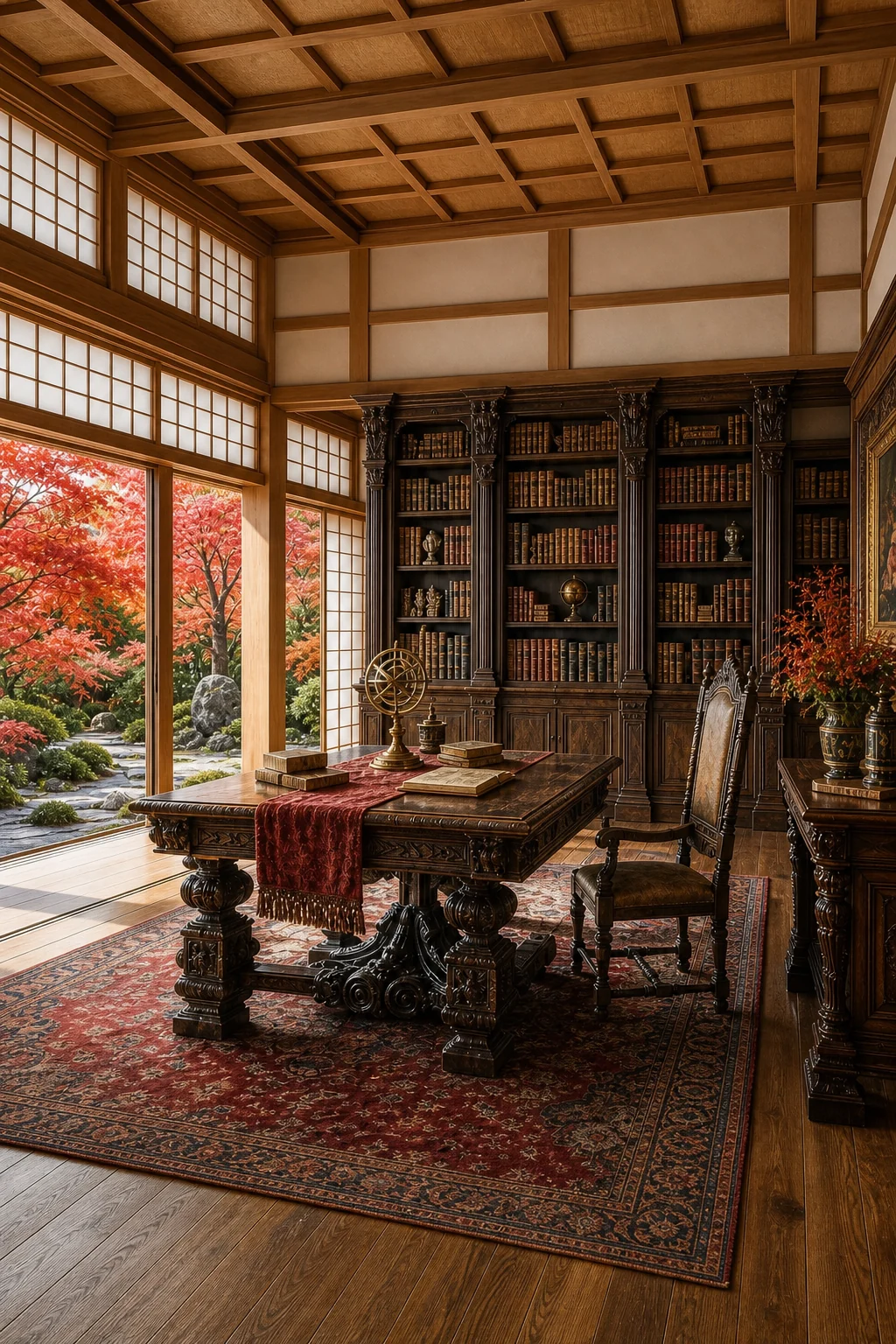
Expansive shoji screens slide open to reveal a vibrant autumn garden, turning the solid walls into glowing, translucent voids rather than heavy barriers. This deliberate architectural restraint creates the necessary breathing room, perfectly preparing the envelope for the dense collections to come.
- Prioritize low-profile architectural proportions to maintain a sense of grounded, horizontal serenity across the entire reading room.
- Leave the wooden floors completely bare to emphasize the structural honesty of the traditional Japanese timber framing.
- Install translucent sliding partitions to control spatial flow without building permanent, heavy visual barriers in the space.
- Utilize unvarnished blonde cedar to establish a bright, natural baseline before adding any dark historical furniture.
The Renaissance Weight
With the minimalist architectural shell firmly established, we anchor the room using massive, classical elements. Dark, oiled walnut bookcases introduce necessary gravitas, providing a profound sense of historical permanence that beautifully grounds the otherwise floating, ethereal timber structure of the pavilion.
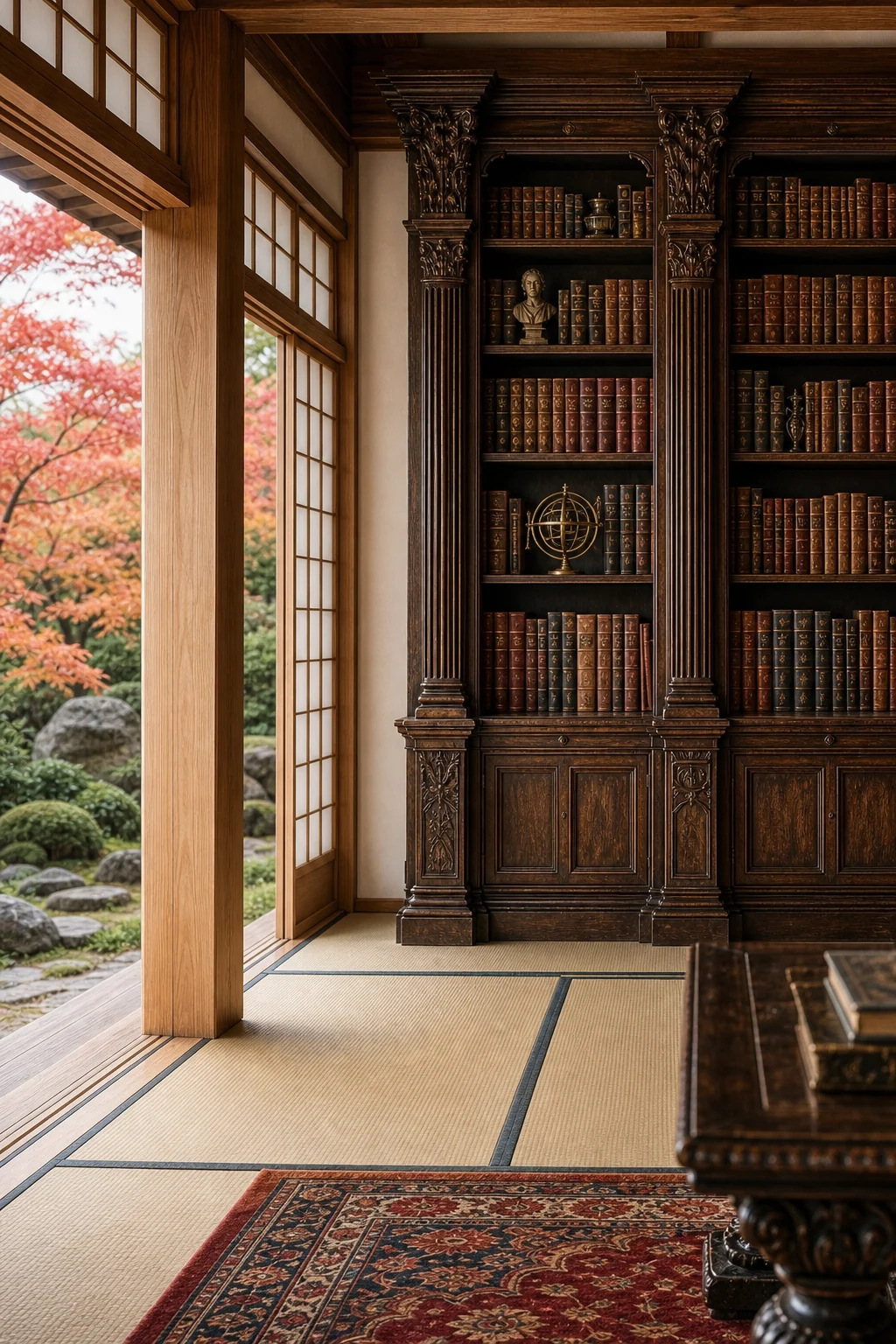
Symmetrical carved pilasters frame dense, imposing rows of antique leather-bound folios. These heavy, ornate collections anchor the airy space, transforming a simple, garden-facing room into a serious, dedicated study filled with rich textures and centuries of quiet, meticulously accumulated knowledge.
- Position the heaviest classical bookcases first to establish the primary visual anchors of the entire reading room.
- Fill the wooden shelves densely with gilded leather spines to maximize the historical visual weight and texture.
- Introduce heavy carved reading tables centrally to create a functional, grounded core within the open architectural space.
- Flank the primary reading zones with ornate classical busts to reinforce the European historical atmosphere and scale.
Bridging the Grid
Connecting these contrasting worlds requires strict geometric discipline to prevent visual chaos. The classical proportions of the European shelving must acknowledge the surrounding architecture, ensuring the heavy historical inserts feel deliberately placed rather than accidentally dropped into the serene room.
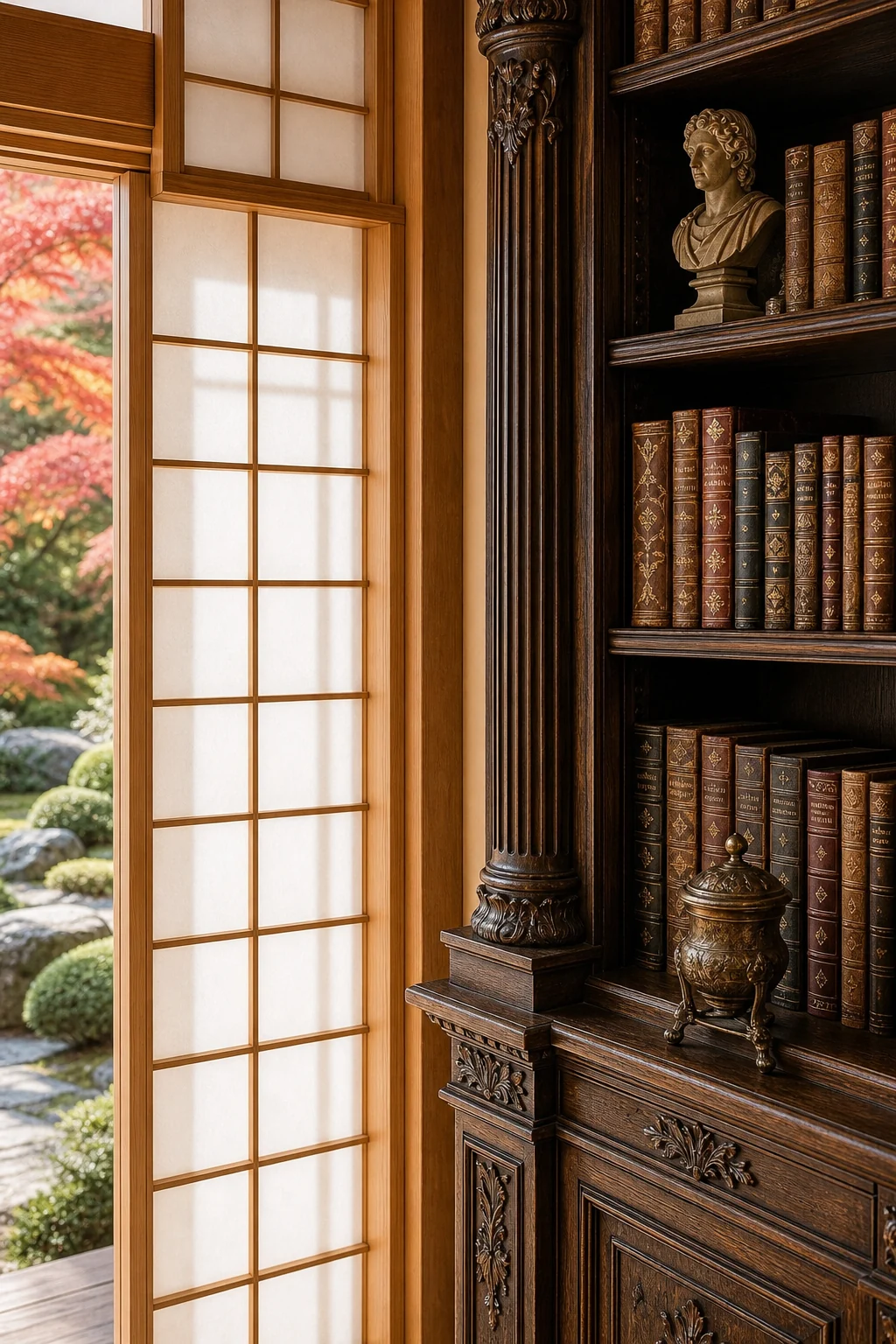
We align the strict grid of the shoji screens directly with the horizontal shelving and vertical pilasters. A shared reverence for rich, tactile woods further bridges the gap, seamlessly harmonizing the bright blonde cedar with the deeply aged European walnut.
Building the Library
The central reading zone serves as the functional heart of the room, requiring a careful balance of both aesthetics. A massive carved table anchors the minimalist floorplan, providing a necessary center of gravity without overwhelming the delicate, light-filled architectural perimeter.
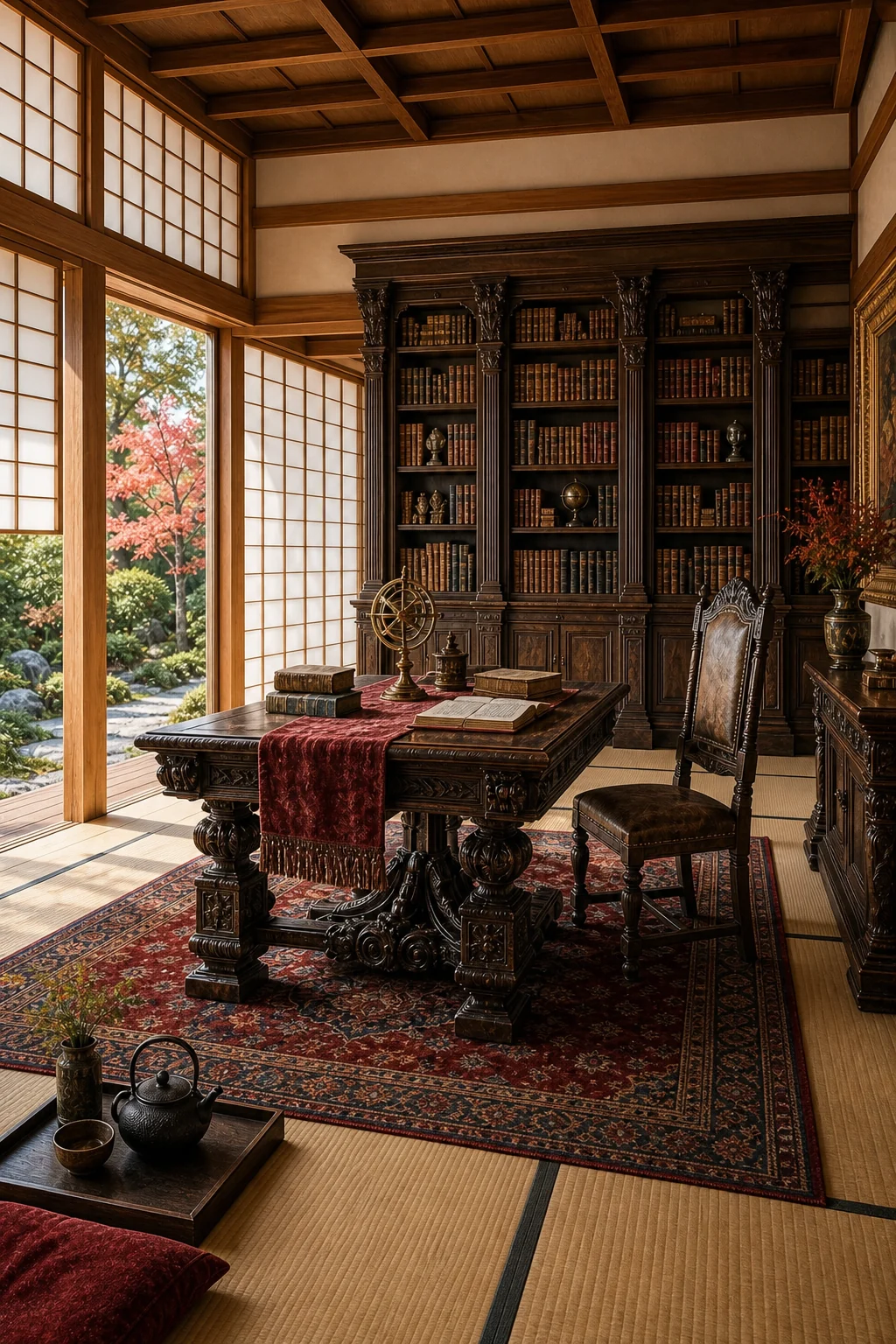
We drape this heavy table in a faded crimson velvet runner to introduce luxurious, tactile texture. This rich, historical textile softens the dark walnut while perfectly echoing the fiery red Kyoto maples visible just outside the open sliding paper doors.
| Layer | Japanese Role | Renaissance Role | Bridge Decision |
|---|---|---|---|
| Shell | Clean rectilinear hinoki wood timber framing and expansive translucent shoji screens. | Classical symmetrical walnut bookcases featuring ornate carved pilasters and deep shelves. | Strict geometric grid alignment across both the delicate paper screens and the classical shelving. |
| Large Furniture | Low-profile architectural integration, bare structural columns, and built-in minimalist wooden benches. | Heavy carved reading tables, dense storage units, and massive historical display cabinets. | A shared, uncompromising reverence for rich, tactile, unpainted natural woods across all major pieces. |
| Textiles | Pristine, natural woven tatami mats grounding the floor with subtle organic texture. | Faded crimson velvet runners, heavy draped reading chairs, and rich, historic tapestries. | Crimson and gold accent tones that perfectly echo the fiery autumn maples outside. |
| Lighting | Generous, soft daylight diffused evenly through traditional translucent paper sliding screens. | Warm, localized brass reading lamps resting on heavy, dark wooden study tables. | Balanced editorial exposure that lifts midtones and reveals clear detail in all dark surfaces. |
| Accents | Serene, empty structural voids and simple, unglazed organic ceramic display vessels. | Antique leather-bound folios, intricate gold-leaf tooling, and traditional classical marble busts. | Restrained, deliberate placement of heavy historical objects within the intentionally empty architectural space. |
Illuminating the Contrast
Heavy historical decor demands careful, deliberate lighting to avoid feeling oppressive or gloomy. Generous natural daylight is absolutely crucial to maintaining the room’s welcoming atmosphere, ensuring the dense book collections feel inviting rather than intimidating or excessively dark and heavy.
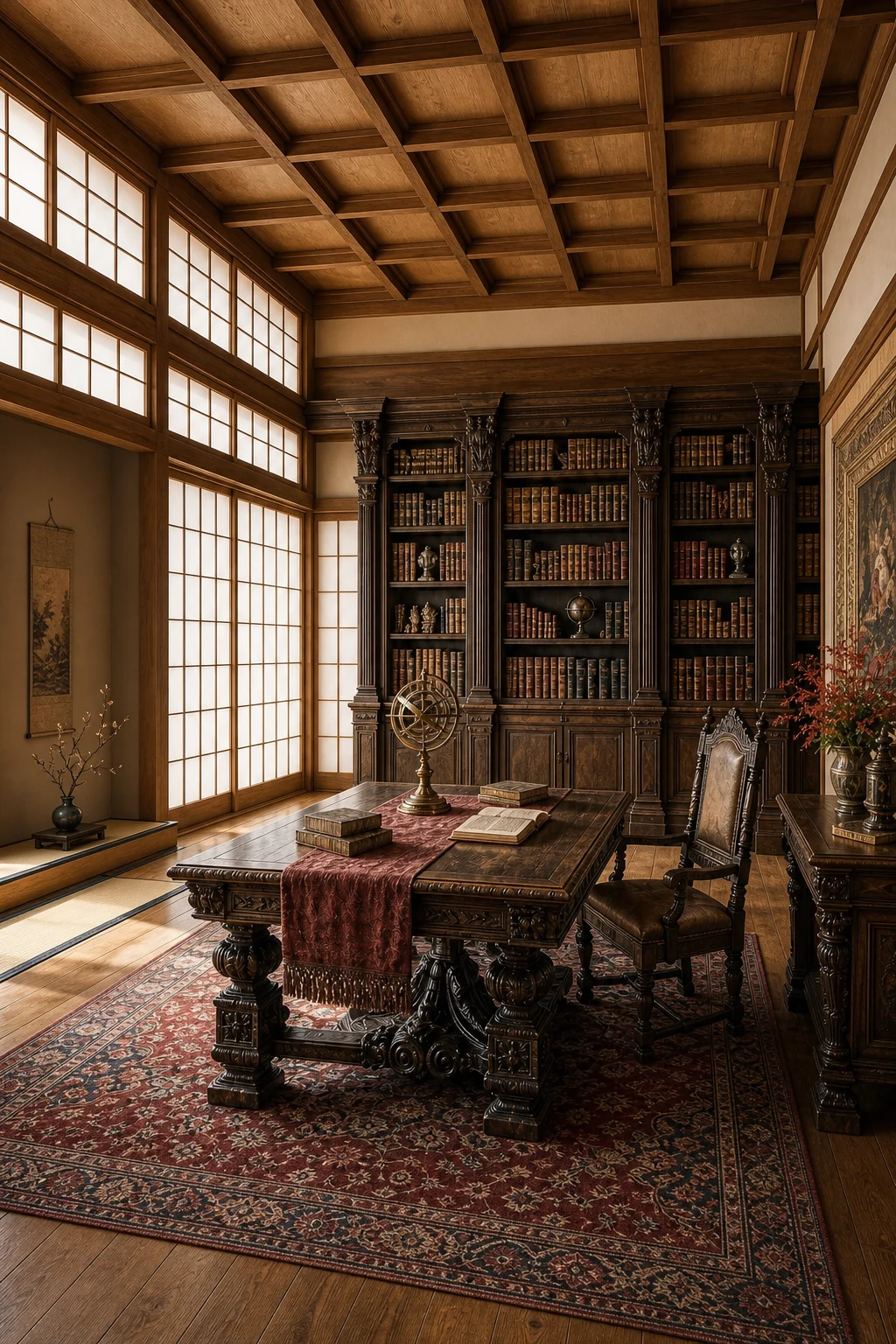
The translucent paper screens diffuse the harsh sunlight evenly across the entire room. This soft, glowing illumination lifts the midtones of the dark walnut, revealing incredibly clear detail in the intricate classical carvings without creating sharp, distracting shadows on the shelves.
Styling the Details
Tabletop styling must constantly negotiate the inherent tension between ornate history and serene emptiness. We successfully blend elaborate historical objects with restrained, simple forms to ensure neither aesthetic dominates the delicate, carefully calibrated balance of the peaceful reading room.
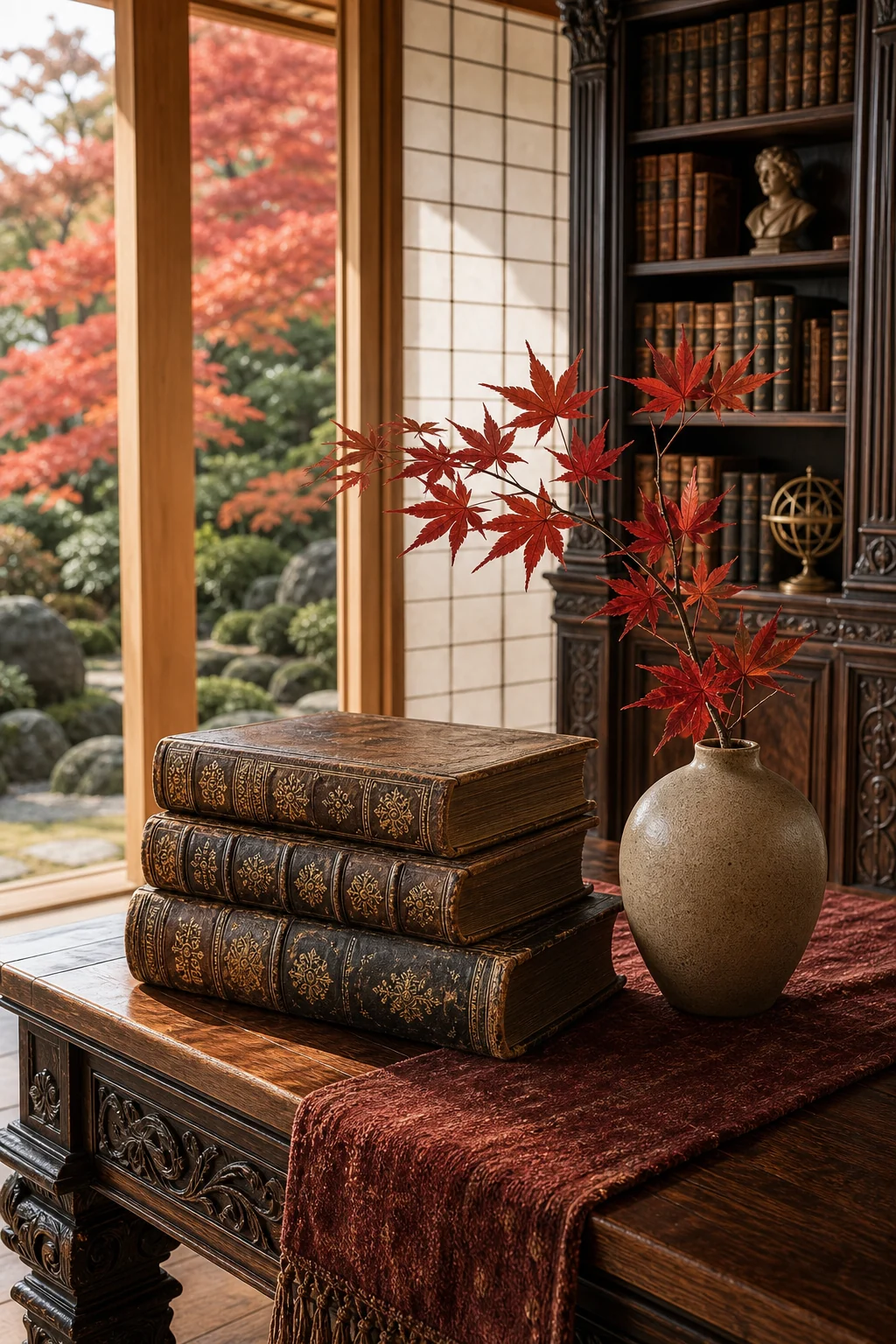
A stack of thickly gilded folios sits beside a simple, unglazed Japanese ceramic vase. This deliberate placement of heavy historical objects within pristine empty space preserves the room’s quiet dignity while celebrating the rich, tactile nature of the antiquities.
- Source classical carved walnut bookcases to establish the primary historical storage framework for the entire reading room.
- Collect antique leather-bound folios featuring intricate gold-leaf tooling to densely fill the heavy, dark wooden shelves.
- Procure faded crimson velvet runners to drape over the central reading tables for immediate luxurious textural contrast.
- Install translucent shoji-style room dividers to expertly control the natural light and beautifully frame the garden views.
- Select minimalist hinoki wood side tables to provide functional surfaces without adding any unnecessary visual weight.
Adapting the Passageways
This dual-style approach extends naturally into thresholds and adjoining architectural spaces. The deliberate transition from a sparse, minimalist hallway into the dense, rich library dramatically heightens the visual impact of the heavy classical furnishings waiting just inside the room.
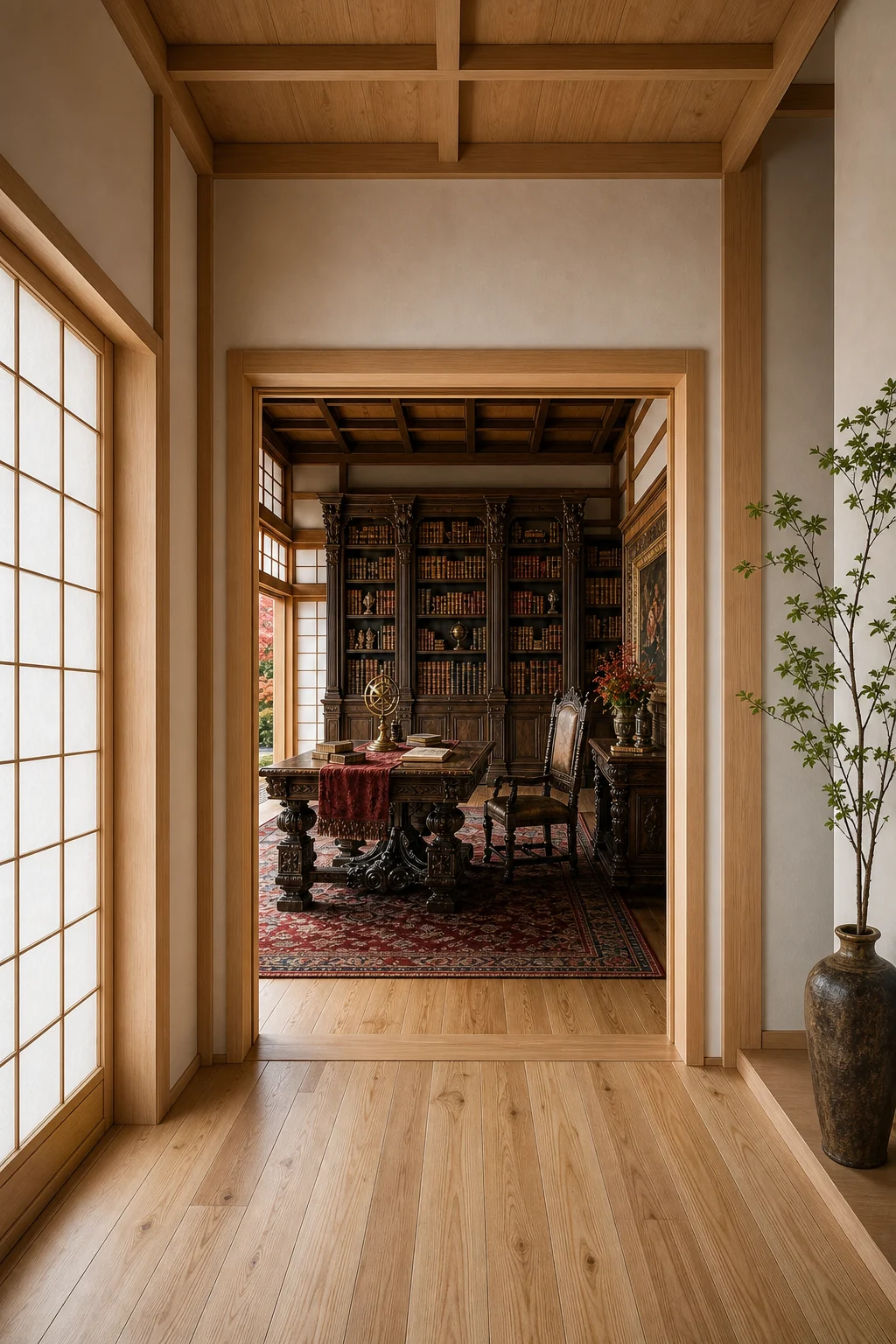
Maintain bare hinoki wood floors in the adjoining corridors to cleanse the visual palate. Framing the rich, dark library through a strict rectilinear timber doorway emphasizes the deliberate stylistic boundary, turning the threshold into a beautifully composed architectural picture frame.
Avoiding the Costume
The greatest risk in this stylistic pairing is allowing the classical ornamentation to consume the serene architecture. Visual clutter instantly destroys the carefully calibrated tension, turning a sophisticated, disciplined library into a chaotic, overwhelming antique shop lacking spatial breathing room.
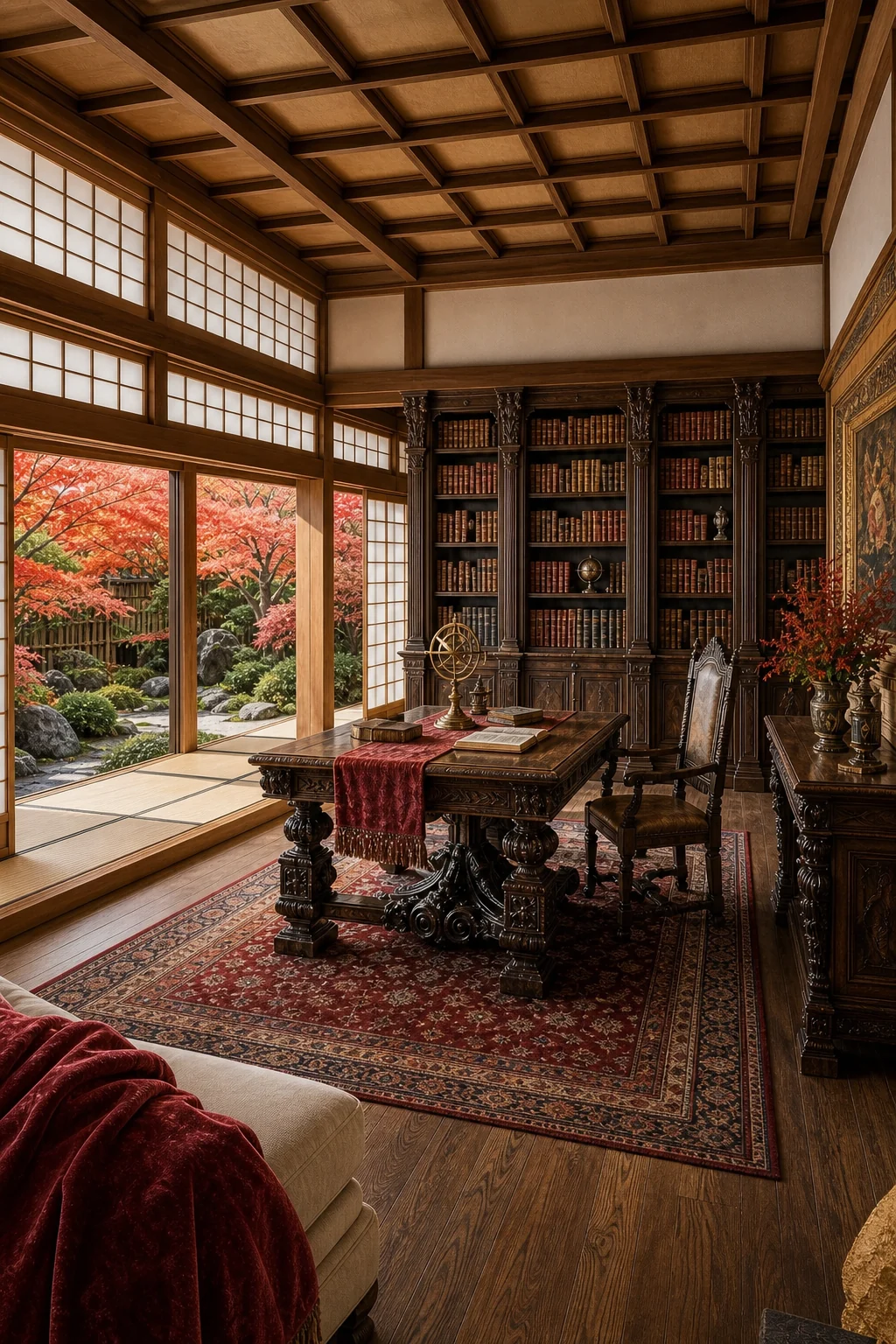
Maintaining generous architectural voids prevents the Renaissance decor from feeling like a theatrical museum set. The sliding shoji screens and woven tatami must remain highly visible at all times to enforce the structural lightness and preserve the essential aesthetic contradiction.
- Never over-accessorize the empty architectural voids that are meant to provide essential visual breathing room and calm.
- Do not attempt to match the contrasting wood stains of the bright cedar and the dark walnut.
- Never block the natural daylight from the paper screens with oversized, heavy European seating arrangements or statues.
- Avoid introducing highly patterned Renaissance wallpapers that would immediately destroy the serene, minimalist Japanese architectural envelope completely.