
This Steamer Trunk Became a Study
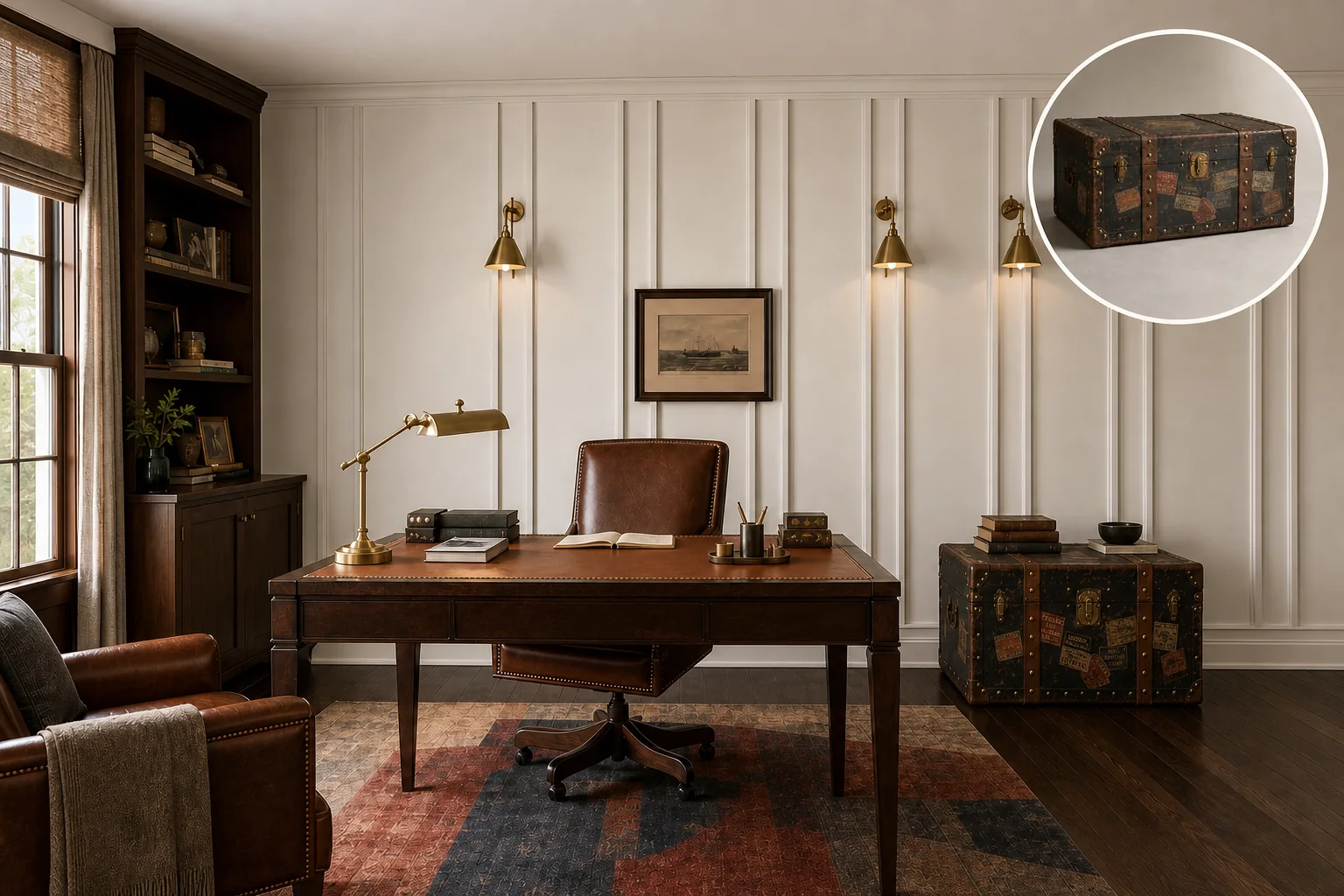
Vintage luggage carries an inherent promise of adventure and structured durability. By extracting its core visual traits, you can build a sophisticated, focused workspace that feels timeless and grounded, keeping the architectural shell crisp and matte to prevent the aged leather and brass accents from feeling heavy or thematic.
Building the Banded Shell
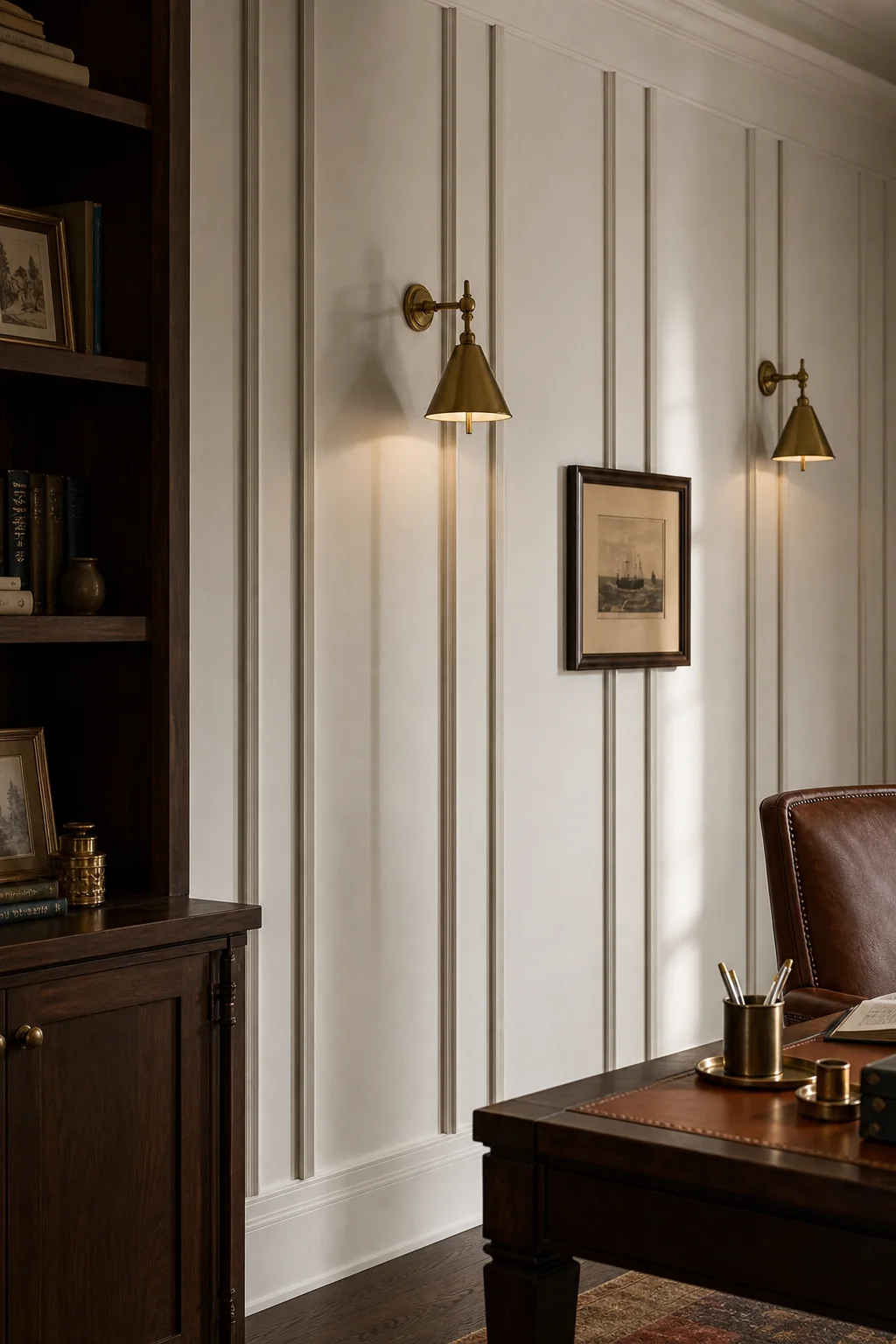
Translating the trunk’s sturdy canvas and strapping into architectural wainscoting establishes a disciplined perimeter for the room. Vertical wood paneling mimics the trunk’s parallel leather straps, transforming a functional reinforcement into an elegant interior shell. By deciding to install pronounced vertical battens over flat wood panels, you recreate the rhythmic spacing of luggage straps. Paint the entire millwork assembly in a matte canvas-white to keep the room feeling expansive rather than heavy. This banded structure creates a tailored envelope that feels protective, setting a rigorous geometric foundation that allows organic textures to shine without overwhelming the eye.
- Install flat wood paneling along the lower two-thirds of the walls to create a smooth, continuous wainscoting base ready for detailing.
- Attach pronounced vertical battens at equal intervals so that raised parallel lines create a structured, rhythmic architectural shell.
- Paint the entire millwork assembly in a matte canvas-white finish, ensuring the walls appear unified, crisp, and slightly textured like canvas.
- Lay dark walnut flooring planks parallel to the primary light source to provide a rich, dark base that grounds the bright architectural walls above.
Defining the Vertical Battens
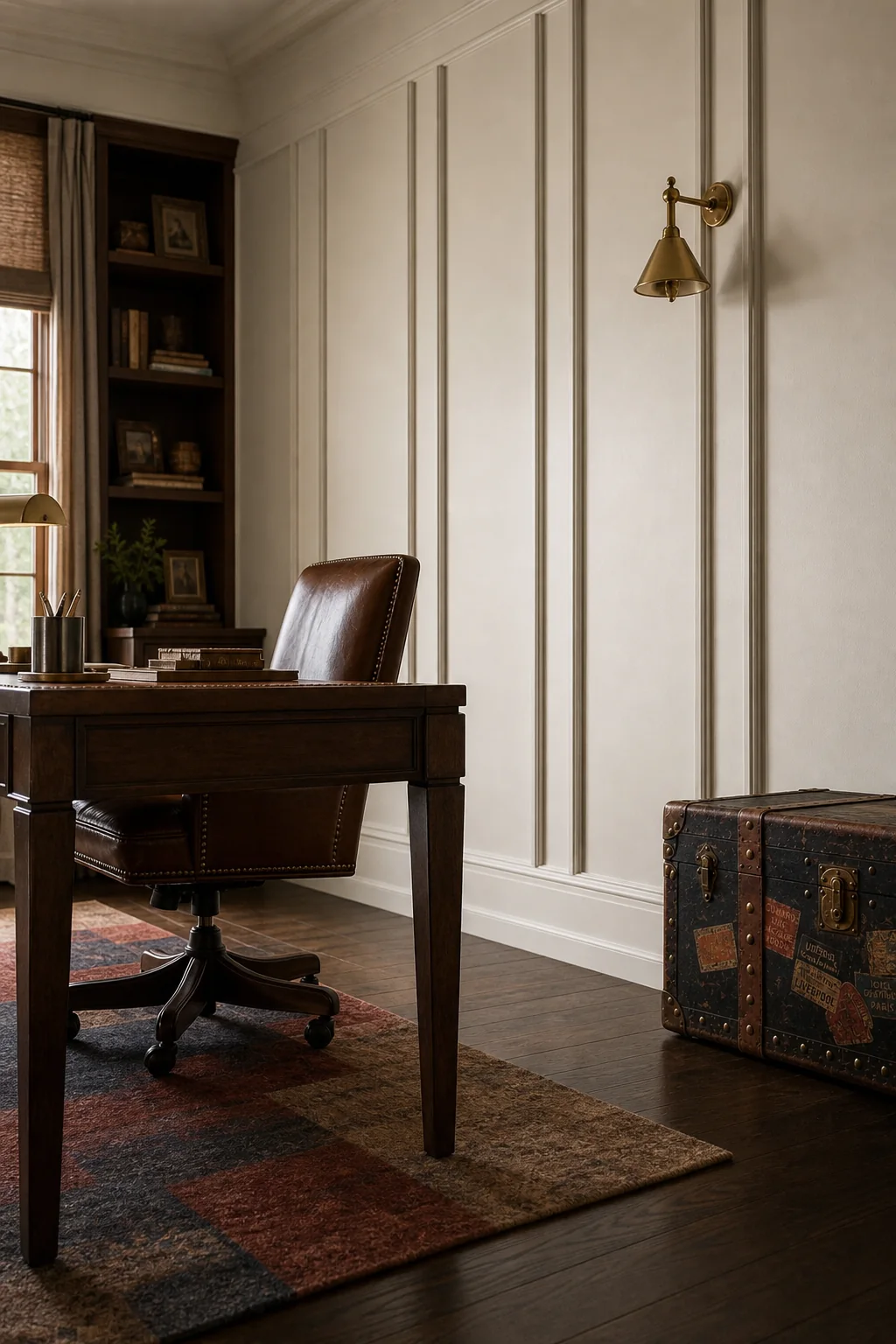
Crisp shadow lines emphasize the wall’s structured vertical banding, bringing essential depth to the matte architectural shell. This precise detailing ensures the room’s foundation remains visually engaging without overwhelming the space. The interplay of natural light and shadow across the canvas-white surface mimics the subtle tension of tightly pulled canvas on vintage luggage, proving you do not need literal travel motifs to capture a sense of structured durability. Keeping these rectilinear volumes strictly parallel prevents the design from feeling overly thematic, establishing a quiet, rhythmic backdrop for focused work that honors the original inspiration.
Mapping the Faded Labels
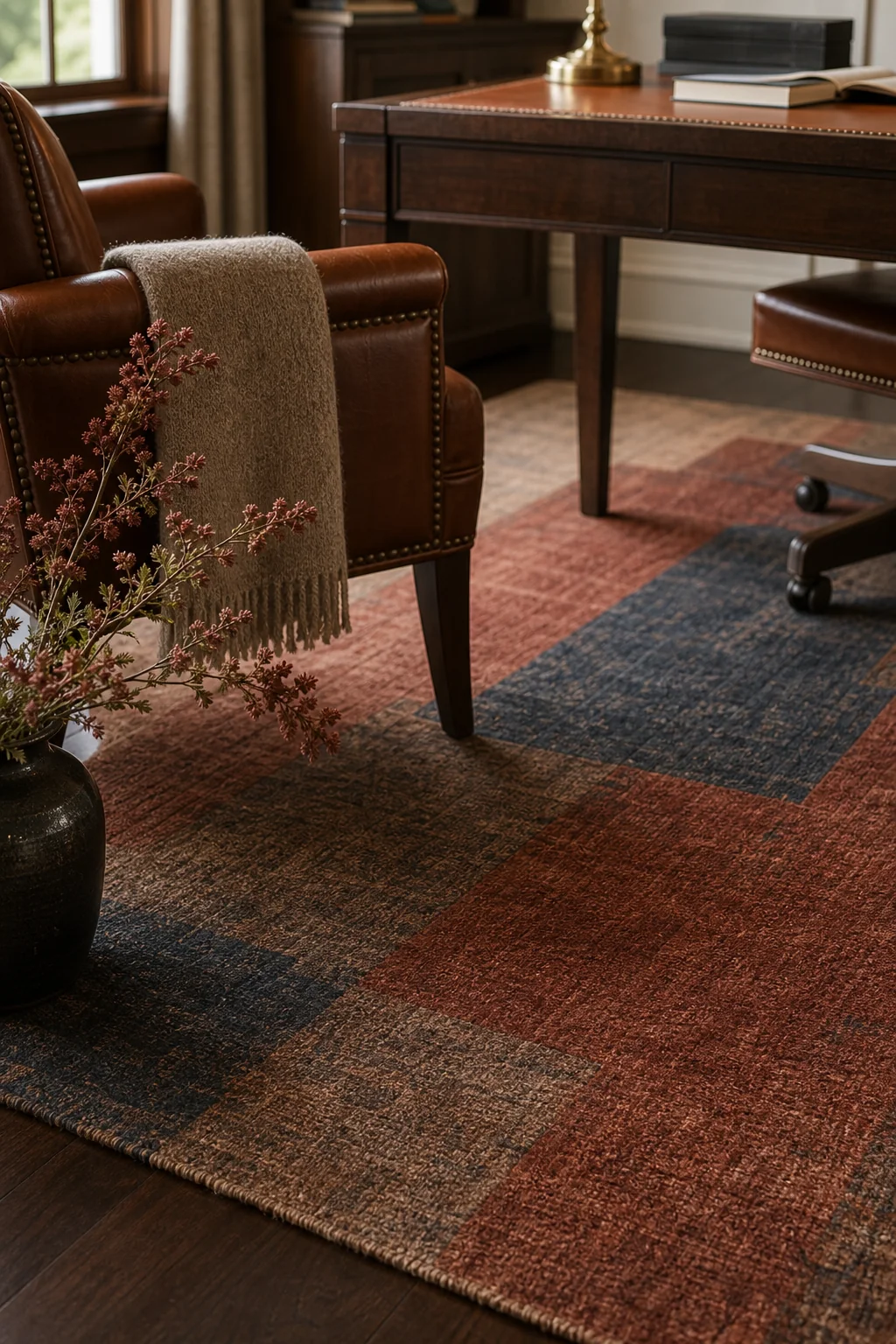
Introducing muted, overlapping hues against a neutral backdrop captures the spontaneous color of travel labels without cluttering the walls. A wool rug echoes the overlapping vintage travel labels, providing a soft counterpoint to the room’s rigid millwork. It is crucial to anchor the room with a dark walnut floor to provide a rich, grounding contrast to the canvas-white walls. Introduce faded brick red and slate blue exclusively through a large area rug, keeping the vertical planes quiet and focused. This strategy isolates the organic, clustered shapes to the floor, honoring the source inspiration through sophisticated abstraction.
| Source trait | Visible evidence | Room move |
|---|---|---|
| Banded structure | Parallel leather straps reinforcing the trunk’s canvas body | Vertical wood paneling mimics the trunk’s parallel leather straps. |
| Faded overlapping accents | Overlapping, muted red and blue vintage travel labels | A wool rug echoes the overlapping vintage travel labels. |
| Tactile warmth | Aged cognac leather secured by metal | A cognac leather desk surface reflects the aged straps. |
| Studded repetition | Evenly spaced brass studs along the leather straps | Brass library sconces repeat the rhythm of the studs. |
Grounding with Geometric Color
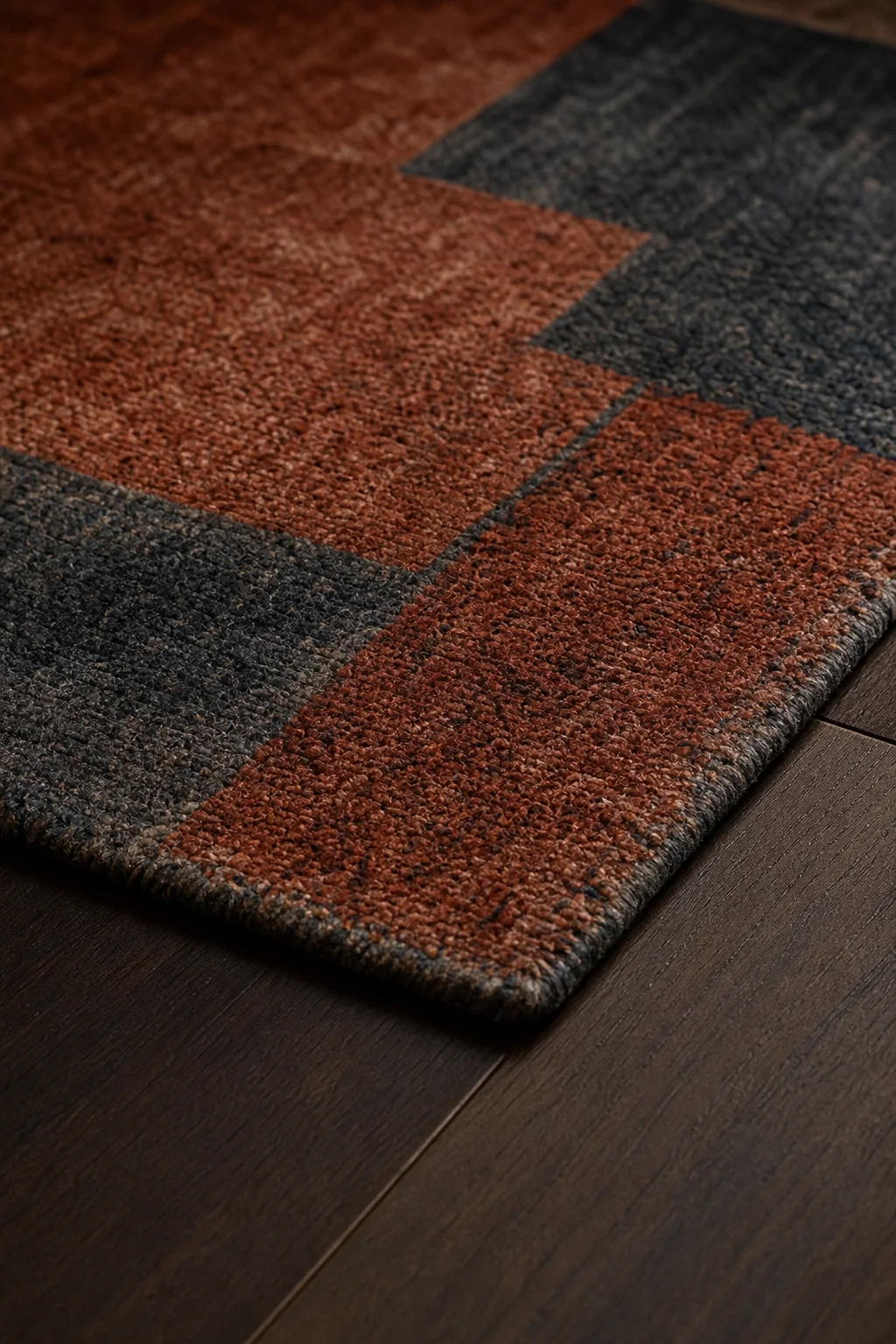
Overlapping rug geometries translate the collage of travel labels into a sophisticated, highly functional textile. The blocky patterns in muted brick and slate blue offer a subtle nod to aged paper ephemera, softening the rigid architectural lines of the wainscoting while defining the primary workspace. By clustering these color accents against the neutral field of the floor, the design maintains a matte architectural shell that feels both curated and effortlessly assembled. This careful placement avoids the chaotic look of actual pasted labels, ensuring the study remains a serene, uncluttered environment perfectly suited for reading and writing.
Layering Leather and Wood
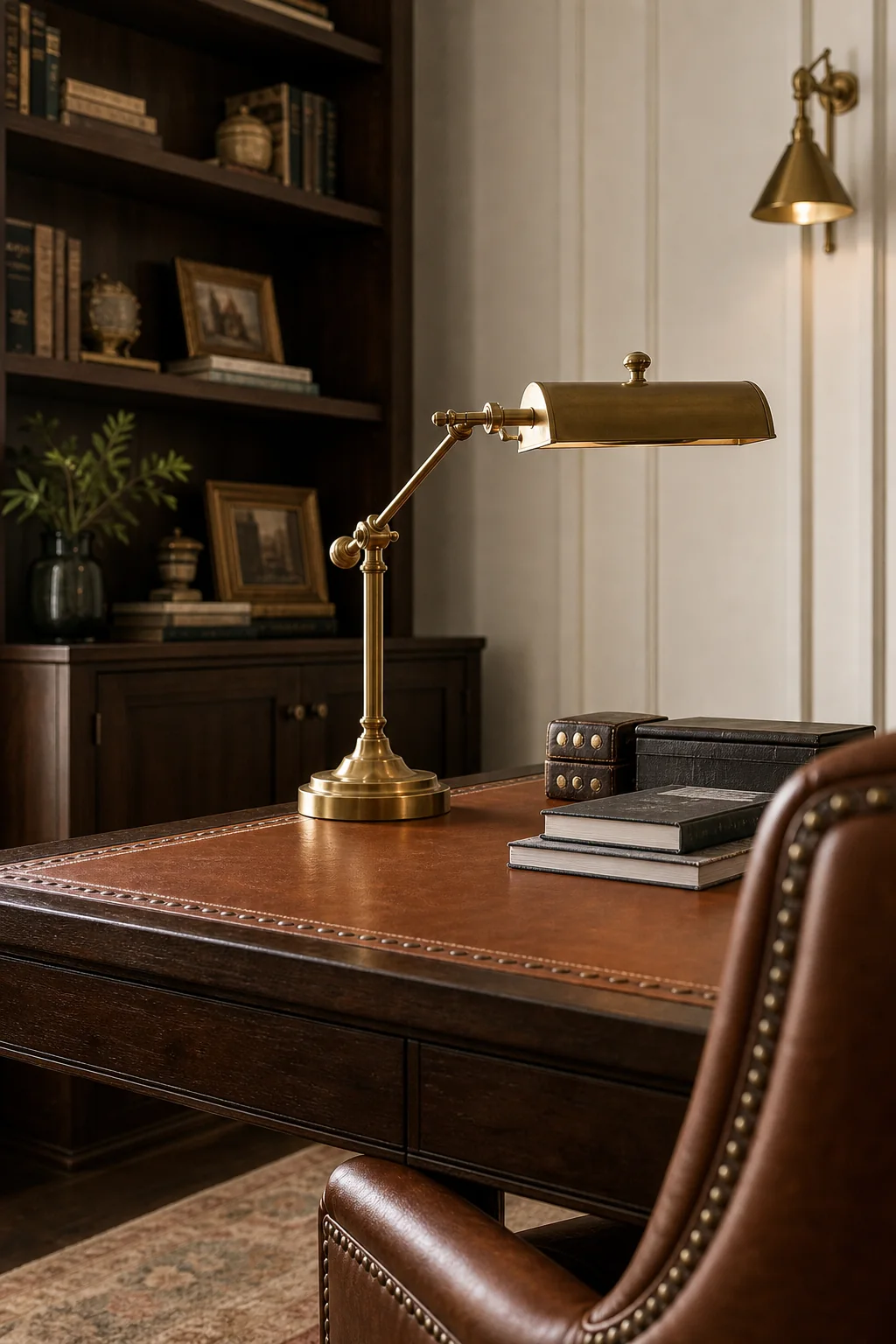
Bringing full-grain leather and rich walnut into the center of the room grounds the airy architectural shell with tactile warmth. A cognac leather desk surface reflects the aged straps, translating the rugged exterior of the trunk into a refined touchpoint for daily work. Select a writing desk with a leather-wrapped top to directly reference the trunk’s primary tactile material. Pair the desk with an executive chair in a matching cognac tone to unify the room’s central functional zone. This interplay between dark walnut and supple, aged leather creates a luxurious focal point that invites deep concentration.
Placing the Brass Accents
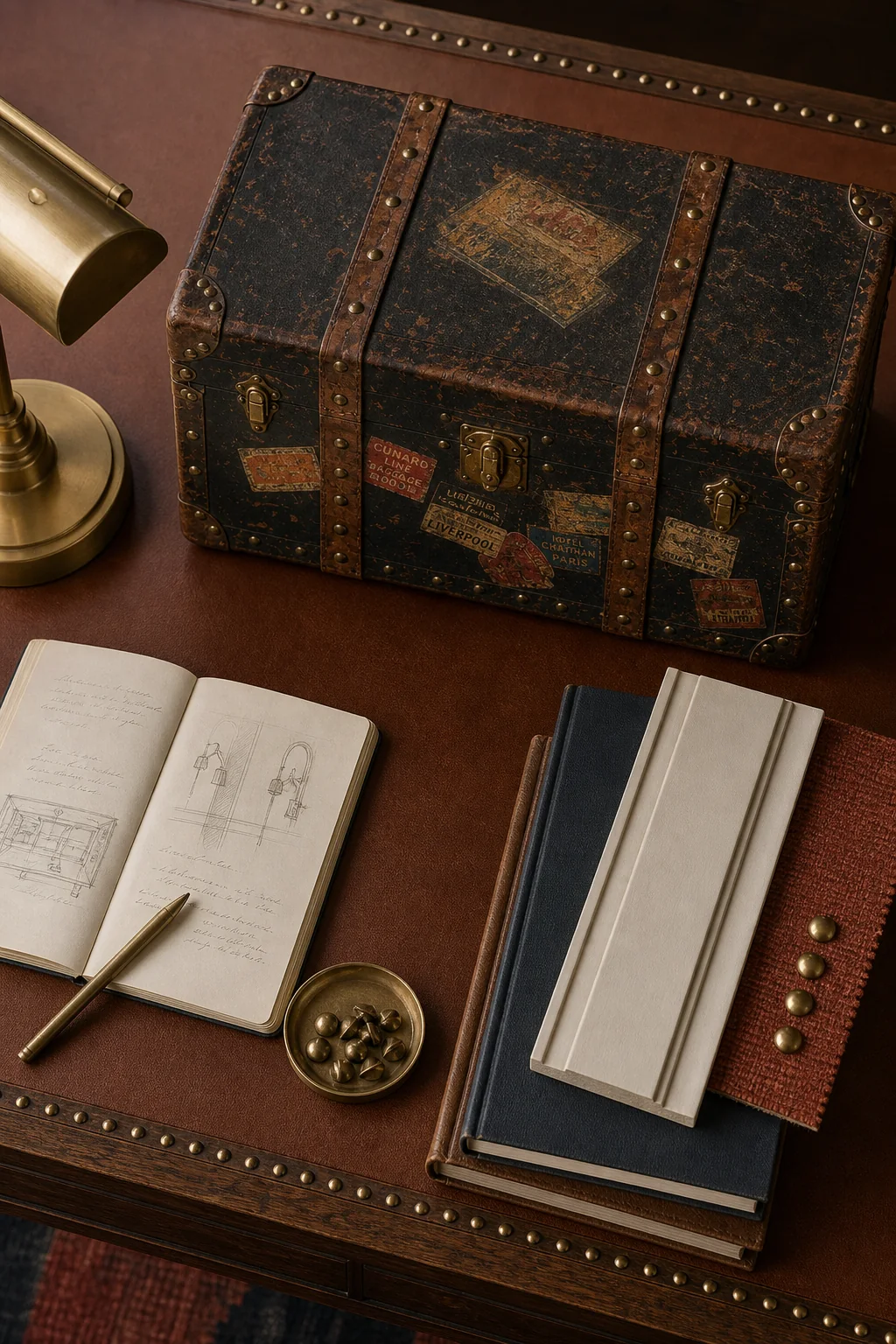
Punctuating the vertical wall battens with unlacquered brass sconces recreates the precise, rhythmic glint of the trunk’s hardware. To master this aesthetic, carefully calibrate the room’s intensity. A subtle approach limits leather to just the desk chair, keeping the desk entirely walnut, and uses a solid slate-blue rug instead of a multi-colored geometric pattern. A balanced execution pairs a leather-topped desk with a matching chair, installs rhythmic brass sconces on the battens, and anchors the space with a faded geometric rug. For a bold statement, paint the wainscoting in a deeper canvas-tan, increase the density of the vertical battens, and introduce a second leather reading chair.
Always choose unlacquered brass for your lighting fixtures. It develops a natural patina over time, perfectly matching the authentic aging of vintage luggage hardware.