
Steampunk Meets Urban Jungle: Home Office
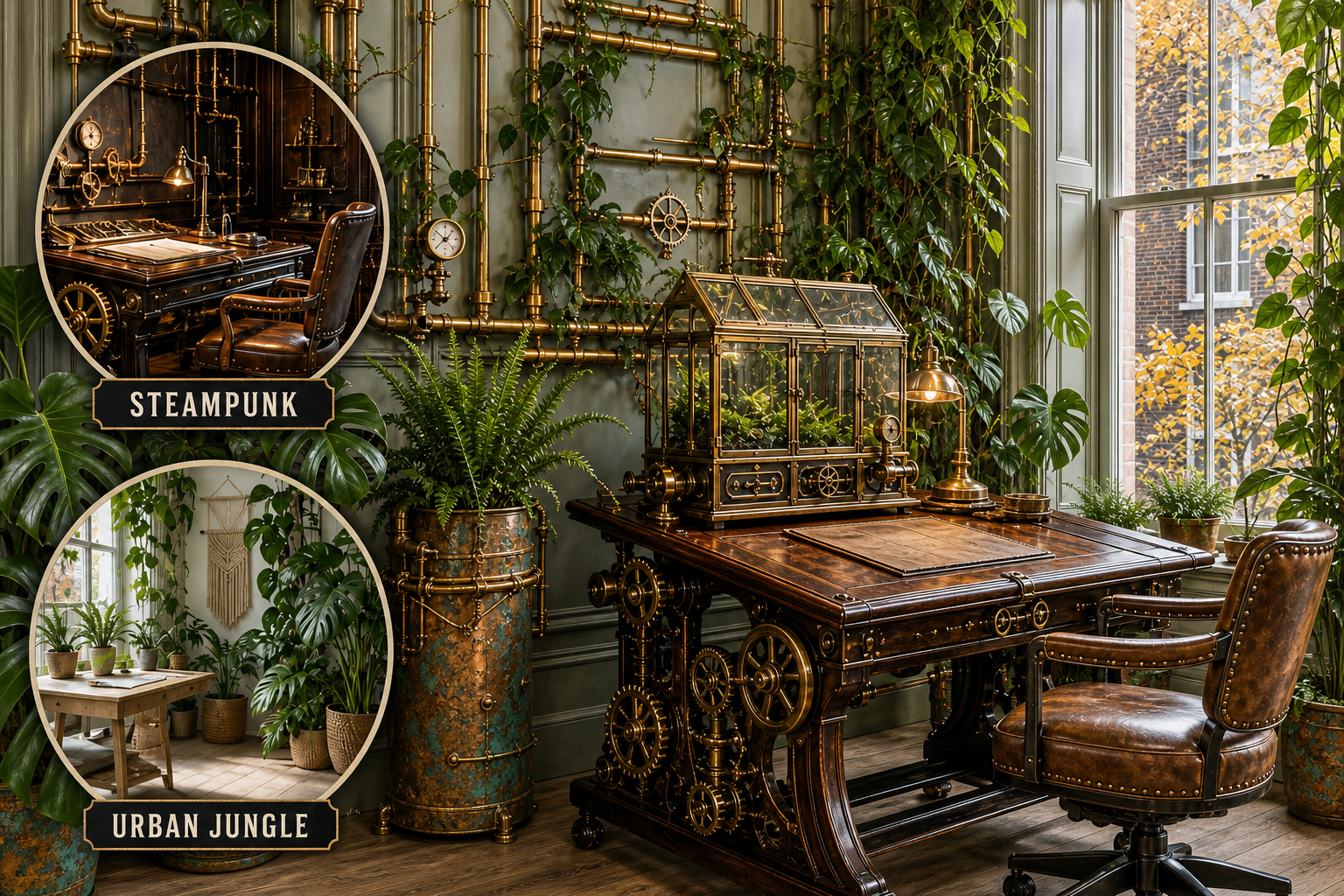
The rigid artifice of Victorian mechanical engineering naturally clashes with the sprawling chaos of untamed plant life. We resolve this tension by using steampunk as a structural skeleton to nurture a thriving, overgrown urban jungle ecosystem.
Engineering the Skeleton
Steampunk demands heavy, deliberate mechanics to ground a space. Rather than relying on purely decorative gears, we use exposed brass conduit piping as functional architecture. This metallic framework actively supports the room’s life, creating a rigid boundary for organic growth.
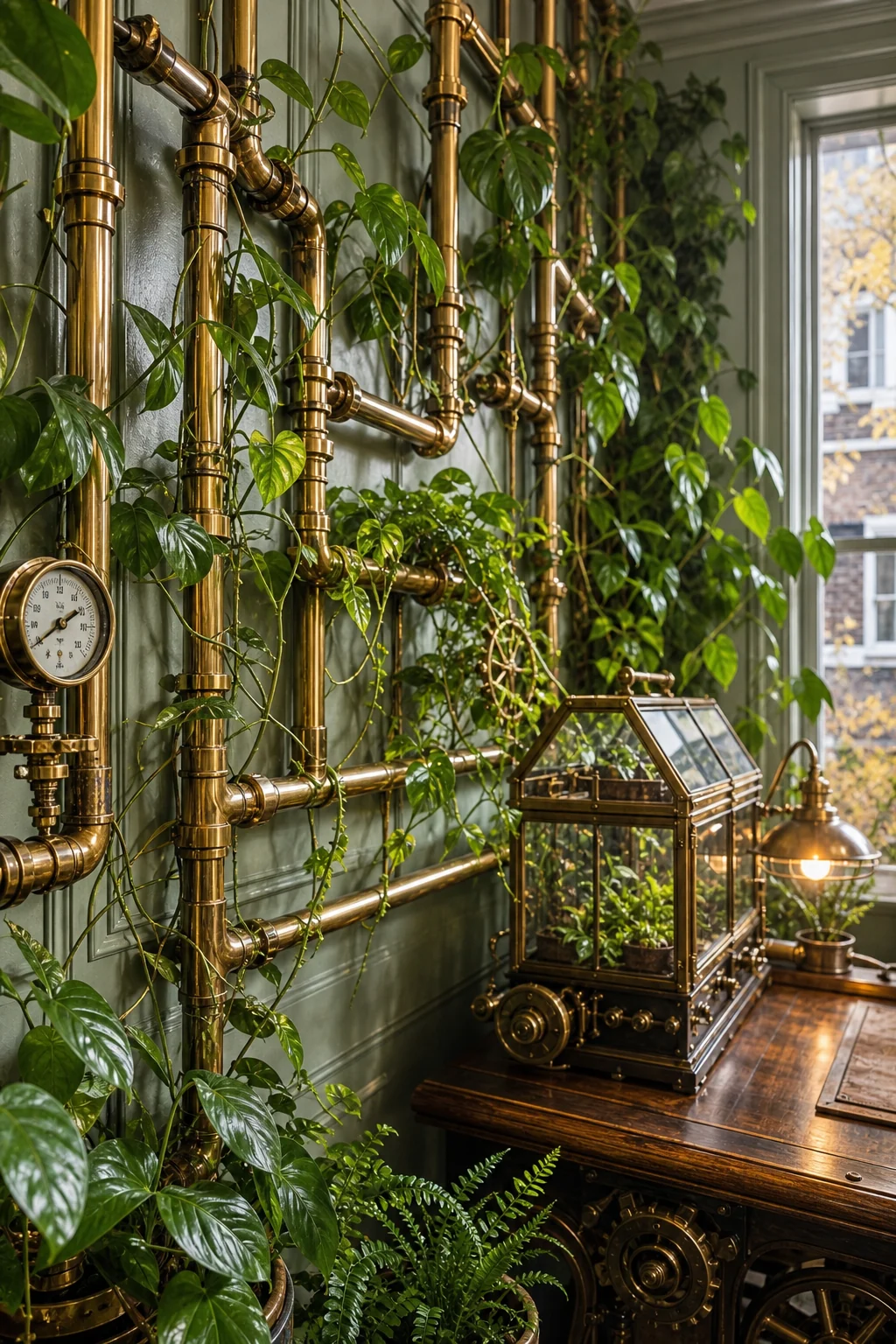
Notice how the polished metal provides a necessary framework for the sprawling green foliage. This functional brass architecture ensures the mechanical elements feel earned rather than applied as a costume. The rigid piping dictates where the vines can travel.
By forcing the hardware to carry weight or route cables, the workspace gains authenticity. The metallic skeleton transforms from a vintage novelty into a necessary piece of infrastructure, setting the stage for the encroaching botanical layers to take root.
Cultivating the Canopy
The urban jungle aesthetic thrives on untamed, sprawling energy that softens rigid boundaries. We anchor this wild foliage inside heavy industrial vessels to keep the organic chaos firmly grounded within the room’s underlying mechanical logic and structured Victorian footprint.
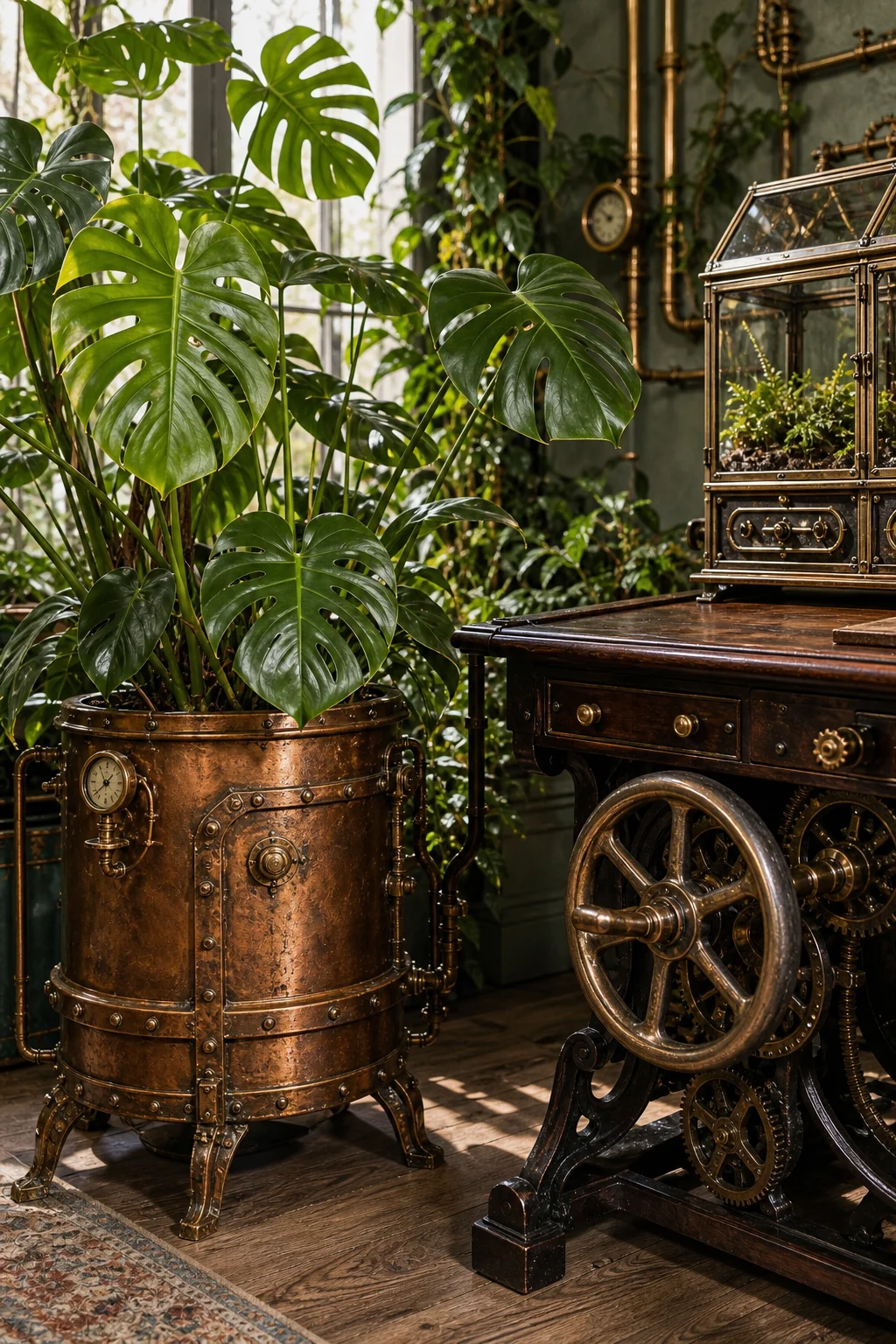
By housing a massive Monstera in a heavy copper boiler, the wildness remains contained. This deliberate tension between unyielding metal and vibrant leaves creates a beautifully balanced, breathing botanical workspace that feels both highly engineered and wonderfully alive.
- Choose massive large-leaf plants to match the visual weight of the heavy machinery.
- Let trailing vines drape naturally over rigid structural elements to soften harsh angles.
- Avoid delicate or overly manicured floral arrangements that look too fragile for a workshop.
- Cluster varied terracotta pots together to create dense thickets of foliage near seating.
- Select robust species like rubber plants that evoke a humid Victorian botanical conservatory.
- Position the tallest indoor trees in the corners to visually support the vertical volume.
The Verdigris Connection
The transition between polished industrial metal and vibrant living leaves requires a deliberate material bridge. Oxidized copper introduces a natural verdigris patina that perfectly echoes the surrounding foliage, blending the manufactured elements into the organic biome.
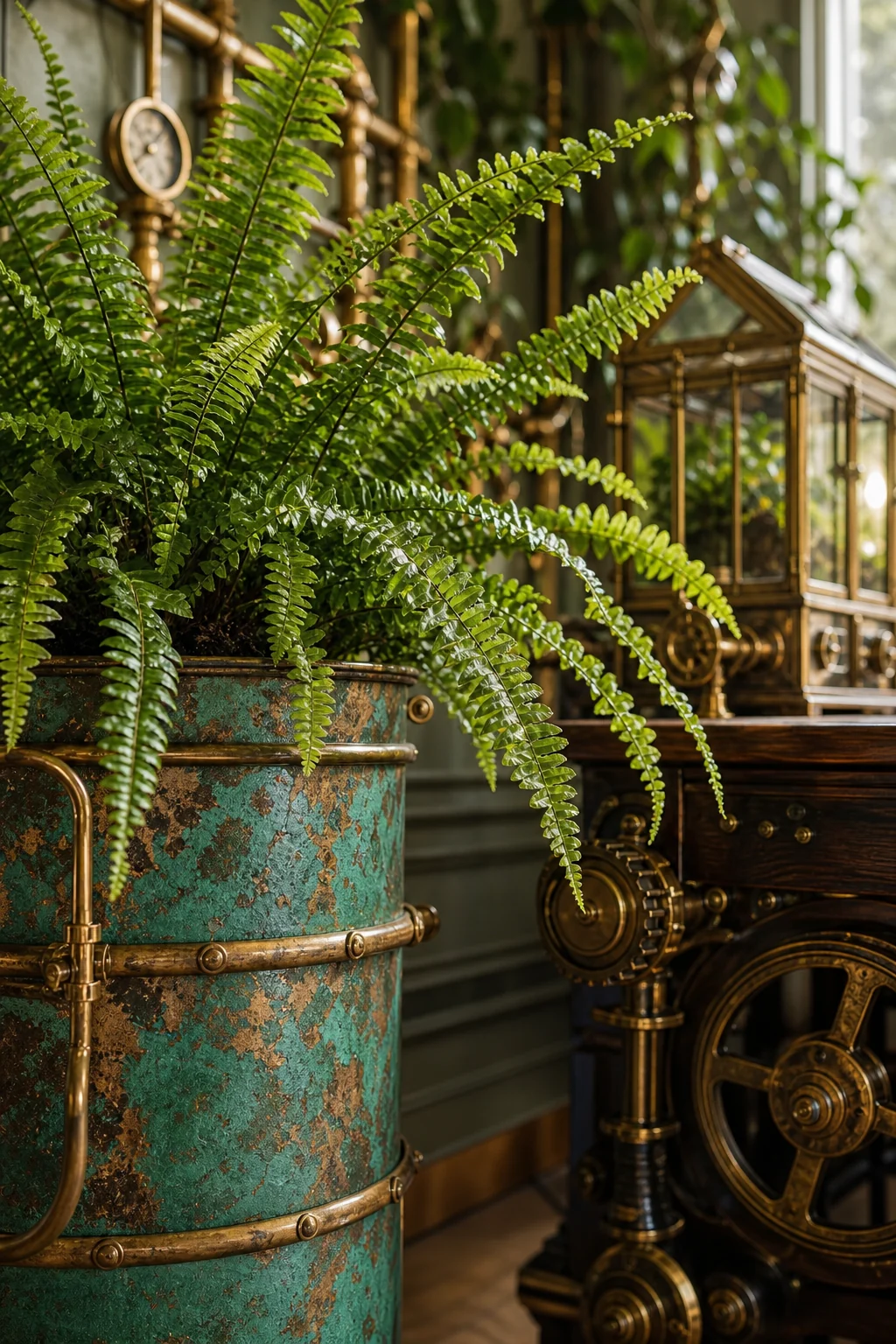
This chemical reaction visually merges the two distinct styles. The oxidized verdigris patina softens the harsh metallic edges, making the heavy planters feel like a living, breathing part of the indoor ecosystem rather than cold, sterile factory equipment.
Embracing this weathered degradation allows the room to feel established and deeply rooted. The shared green tones between the tarnished copper and the lush fern fronds create a seamless visual gradient from the rigid architecture to the wild canopy.
Anchoring the Workspace
A functional home office requires a commanding center to prevent the encroaching greenery from taking over completely. The heavy mechanical drafting desk provides the necessary visual weight to securely anchor the surrounding botanical canopy and establish a clear hierarchy.
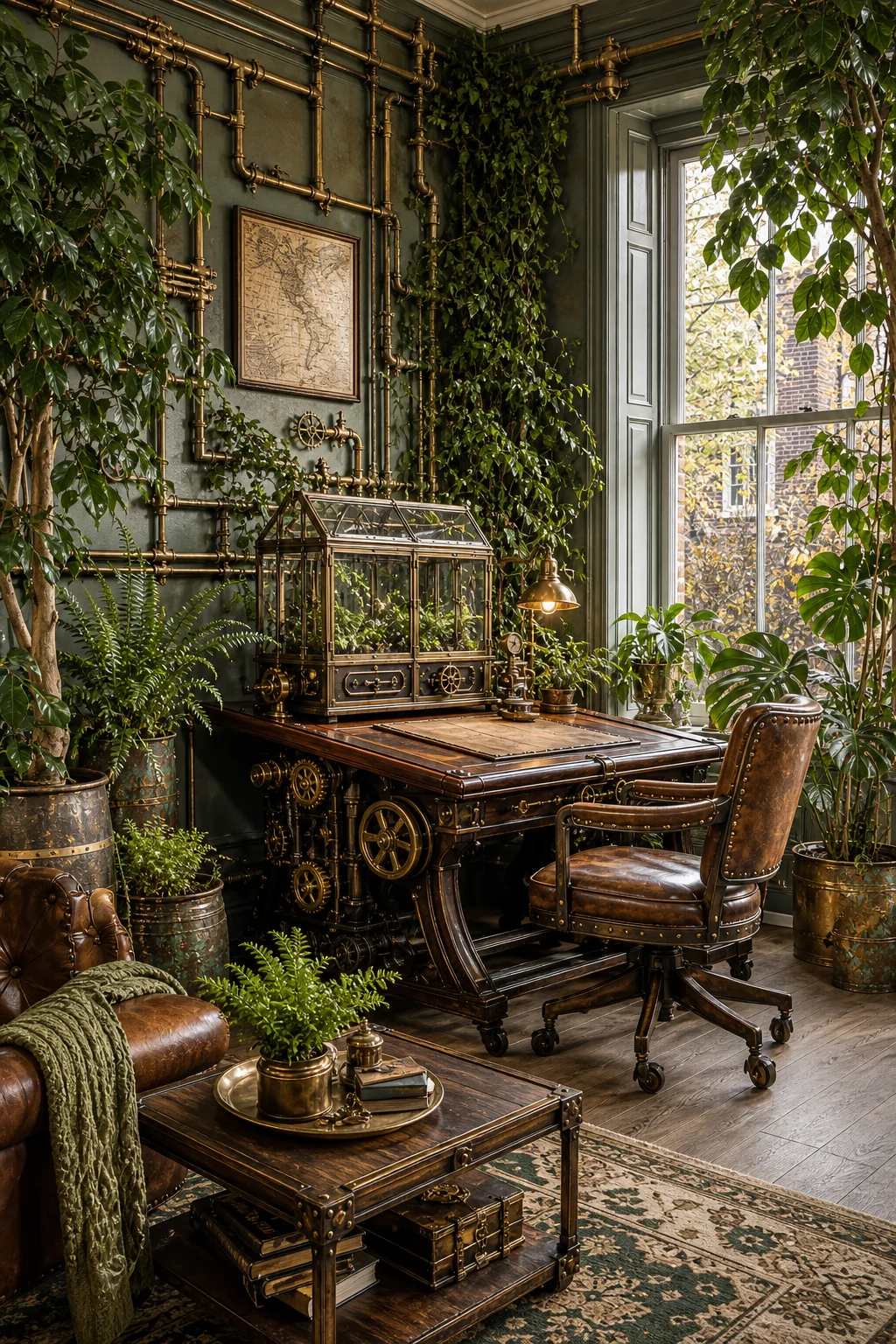
This central vignette proves the concept works in daily practice. The deep mahogany and riveted leather seating establish a serious, productive workspace, while the dense surrounding plants naturally soften the room’s acoustic profile and filter the incoming daylight.
| Design Layer | steampunk Role | urban jungle Role | The Bridge |
|---|---|---|---|
| Shell | Exposed brass conduit piping | Trailing pothos vines | Soft sage-green wall paneling |
| Large Furniture | Mahogany mechanical drafting desk | Woven rattan storage baskets | Heavy cast-iron bases |
| Textiles | Riveted tan leather | Natural linen curtains | Earthy brown tones |
| Lighting | Articulated brass task lamps | Diffused natural daylight | Amber glass shades |
| Accents | Cast-iron crank wheels | Lush large-leaf ferns | Oxidized copper planters |
By assigning each layer a specific task, the translation table prevents the two aesthetics from competing. The bridge materials act as a neutral diplomatic zone, ensuring the heavy Victorian engineering and the wild biophilia enhance rather than destroy each other.
Illuminating the Conservatory
Generous, diffused daylight is absolutely essential to prevent the heavy dark woods and metals from feeling oppressive. Tall sash windows mimic a classic Victorian glasshouse, actively nurturing the indoor ecosystem while lifting the shadows across the intricate mechanical gears.
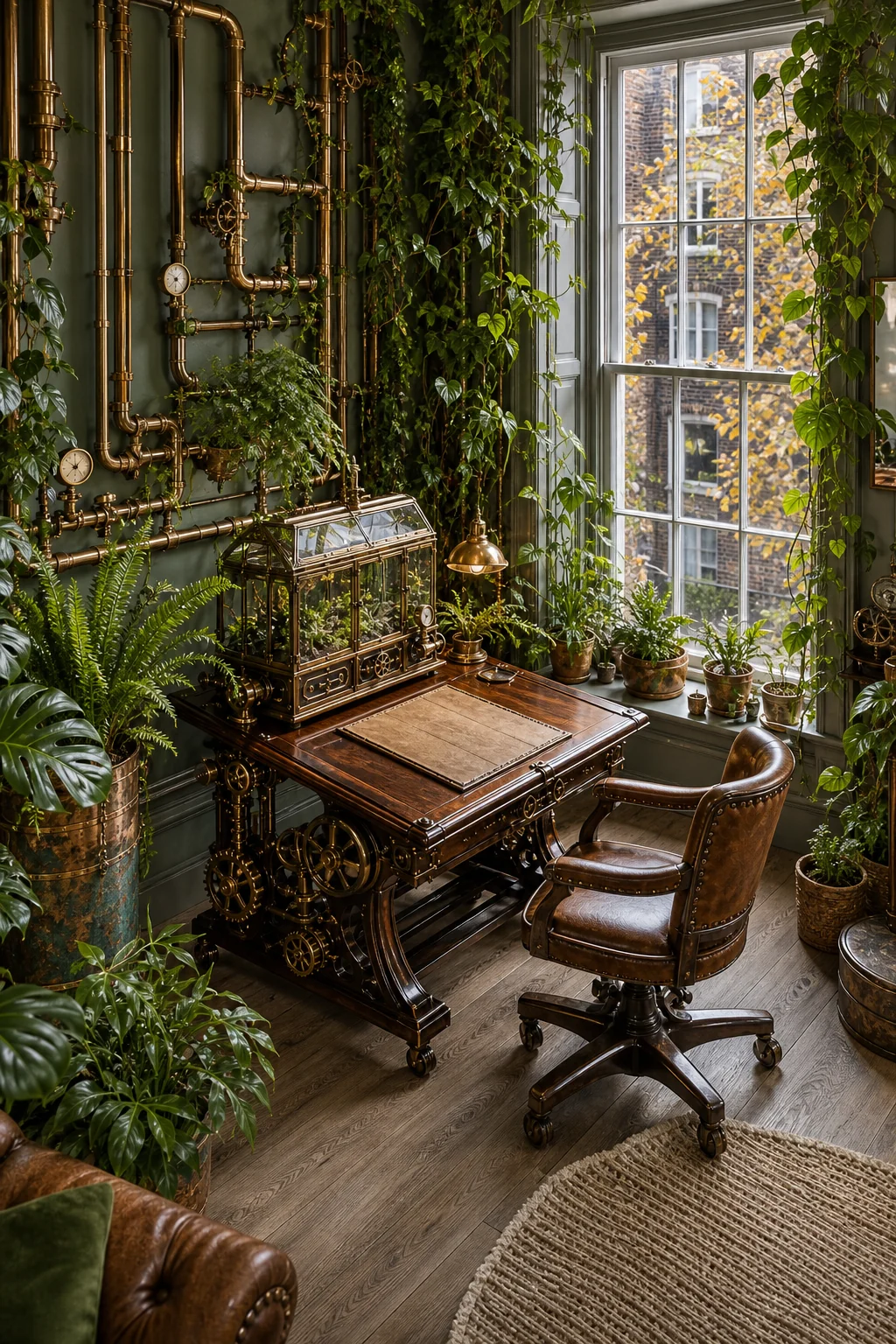
Proper illumination highlights the beautiful tactile contrast between polished brass and matte green leaves. Without ample natural light, the dark industrial materials will quickly turn the room into a gloomy cave, suffocating both the plants and the workspace atmosphere.
- Maximize natural daylight exposure to ensure long-term plant health and highlight wood grains.
- Install warm amber bulbs in articulated brass task lamps to create a cozy atmosphere.
- Keep window treatments incredibly minimal to preserve the authentic Victorian glasshouse architectural effect.
- Position reflective copper elements near the windows to bounce silvery light into dark corners.
- Avoid harsh overhead fluorescent lighting that flattens the intricate textures of mechanical components.
- Use directed spotlights to cast dramatic, leafy shadows against the soft wall paneling.
Curating the Botanist’s Desk
Small accessories must serve both aesthetics simultaneously to maintain the illusion. A brass-geared Wardian case functions as a working terrarium, perfectly encapsulating the room’s core narrative of mechanical engineering nurturing organic life on a highly detailed miniature scale.
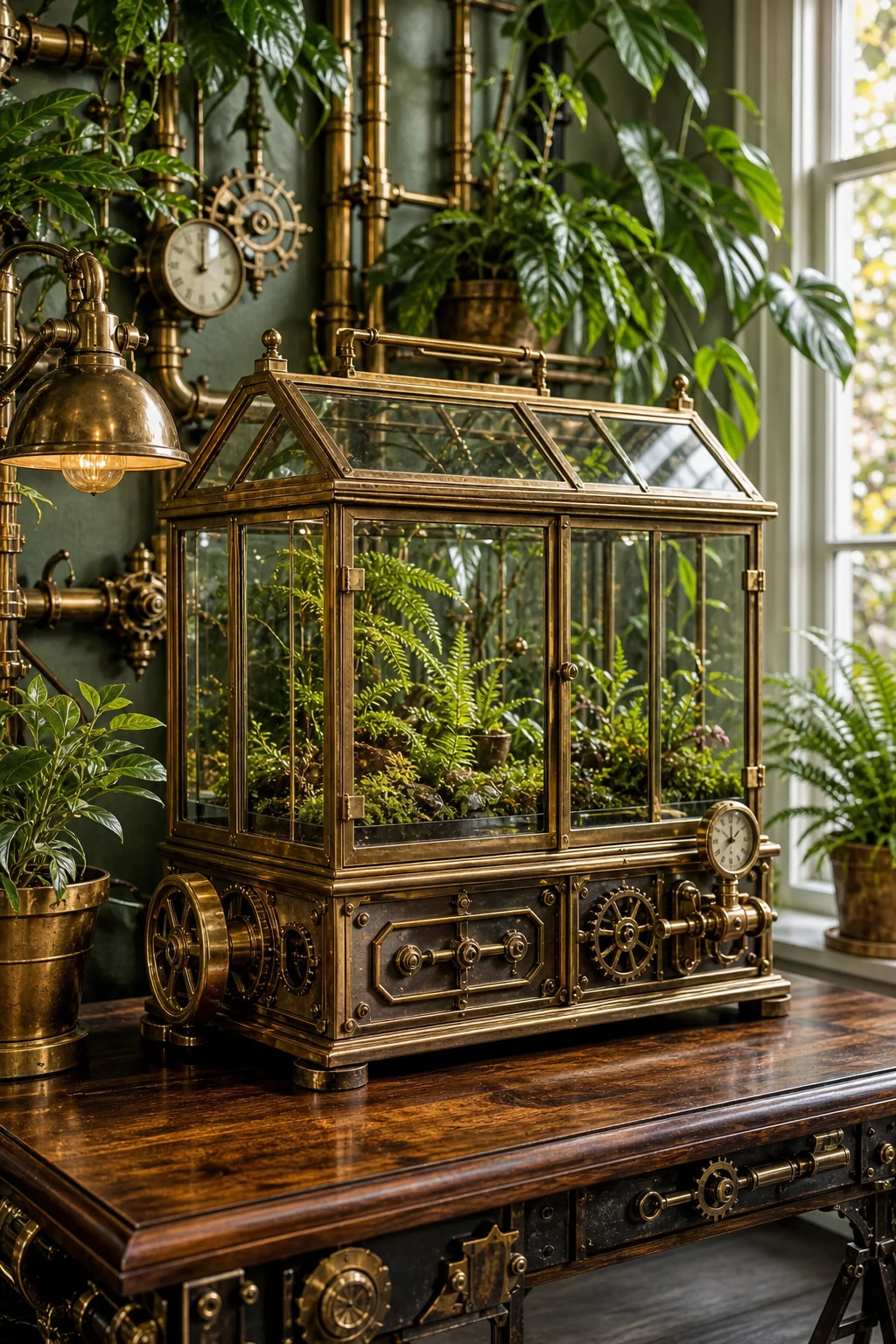
These carefully curated details reinforce the underlying narrative of a working Victorian scientist. Sourcing vintage industrial objects that actively support organic life creates a highly focused botanical styling checklist that keeps the desk free from useless decorative clutter.
- Source brass-framed geometric terrariums to house delicate moss ecosystems directly on the desktop.
- Repurpose aged copper and brass industrial vessels as robust planters for smaller ferns.
- Select articulated mechanical task lighting with exposed joints to provide precise illumination for reading.
- Invest in riveted leather desk accessories to bring tactile warmth to the cold metal.
- Display vintage botanical illustrations in heavy cast-iron frames to bridge the visual languages.
- Utilize antique glass apothecary bottles to propagate new pothos cuttings along the wooden shelves.
Expanding the Ecosystem
This hybrid aesthetic easily translates beyond the primary desk area into secondary functional zones. A dedicated reading corner relies on the exact same careful balance of heavy distressed leather seating and enveloping, lush greenery to maintain the immersive atmosphere.
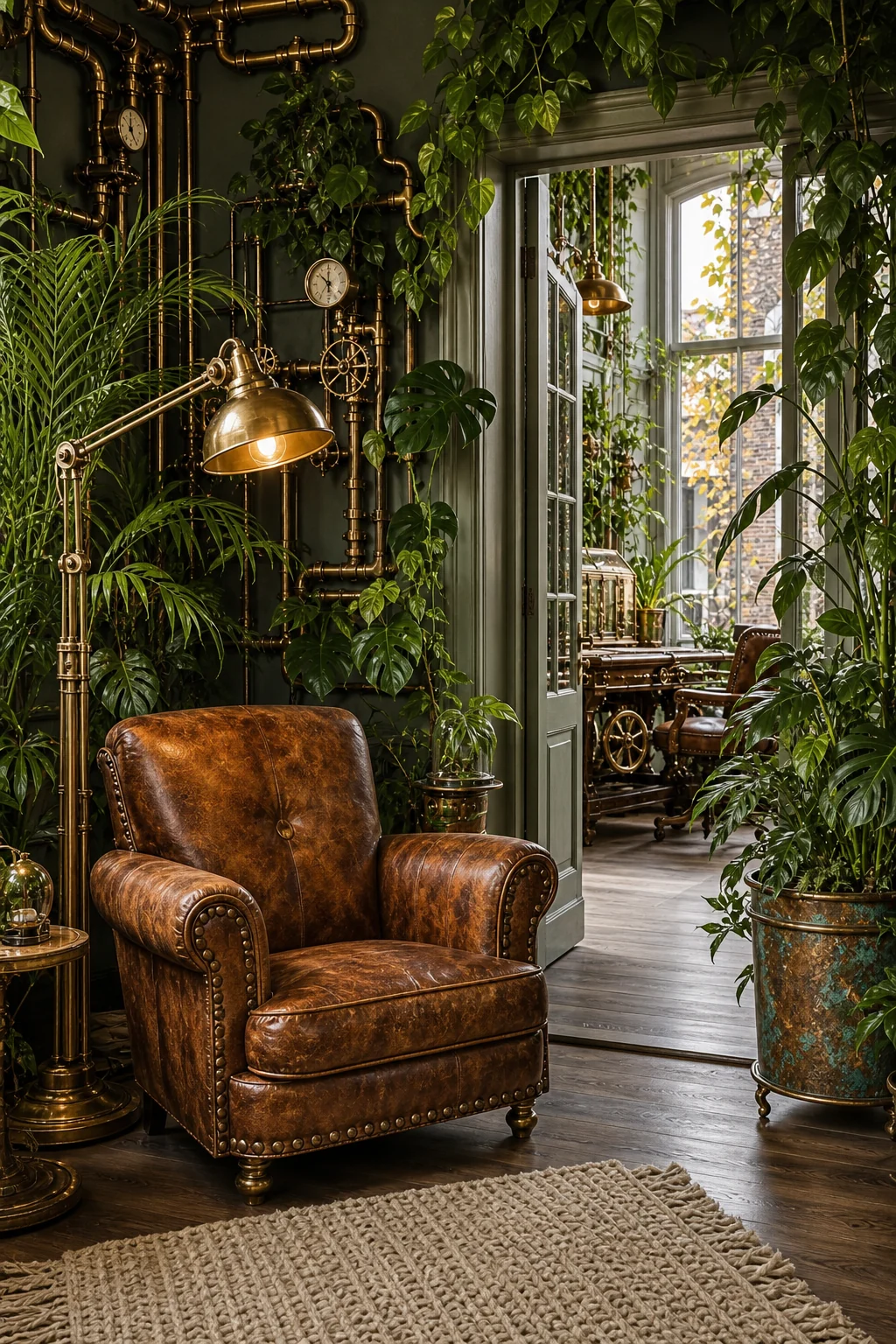
Extending the logic to a lounge zone proves the style’s inherent versatility. The sage wall paneling continues here, providing a soft, continuous backdrop that effortlessly bridges the dark metallic floor lamps and the bright, vibrant leaves of the palms.
Consistency is the key to expanding the footprint without losing the narrative thread. By repeating the same structural materials and botanical families, the entire room feels like a single, cohesive conservatory rather than a disjointed collection of separate themes.
Grounding the Fantasy
The greatest risk in this design is creating a chaotic theatrical set rather than a functional workspace. Long-term success relies on strict restraint, ensuring every mechanical element serves a practical purpose while the greenery remains healthy and well-managed.
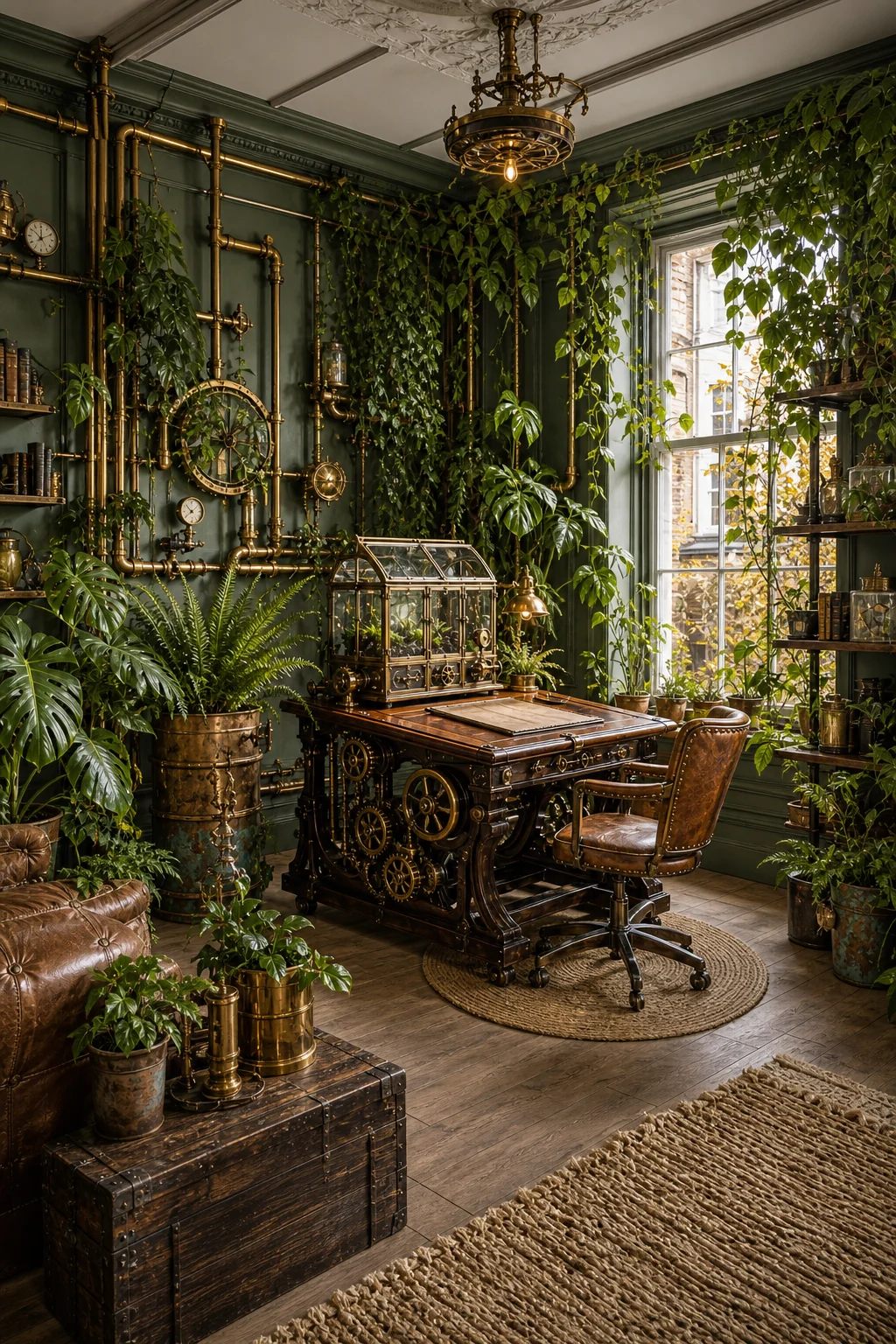
When balanced correctly, the room feels like an aspirational, breathing sanctuary. The heavy cast-iron bases and the lush canopy coexist peacefully, proving that these seemingly contradictory styles can forge a unified, highly functional home office when thoughtfully engineered.
- Never glue non-functional gears or cogs to flat surfaces as superficial decoration.
- Do not let trailing plants completely obscure the beautiful structural architecture of the pipes.
- Ensure the primary desk surface remains entirely clear of soil and moisture for work.
- Regularly prune the fastest-growing vines to maintain a deliberate balance between order and chaos.
- Avoid mixing modern plastics with the vintage industrial metals to preserve the historical illusion.