
11+ Minimalist Zen Space Ideas for Your Home
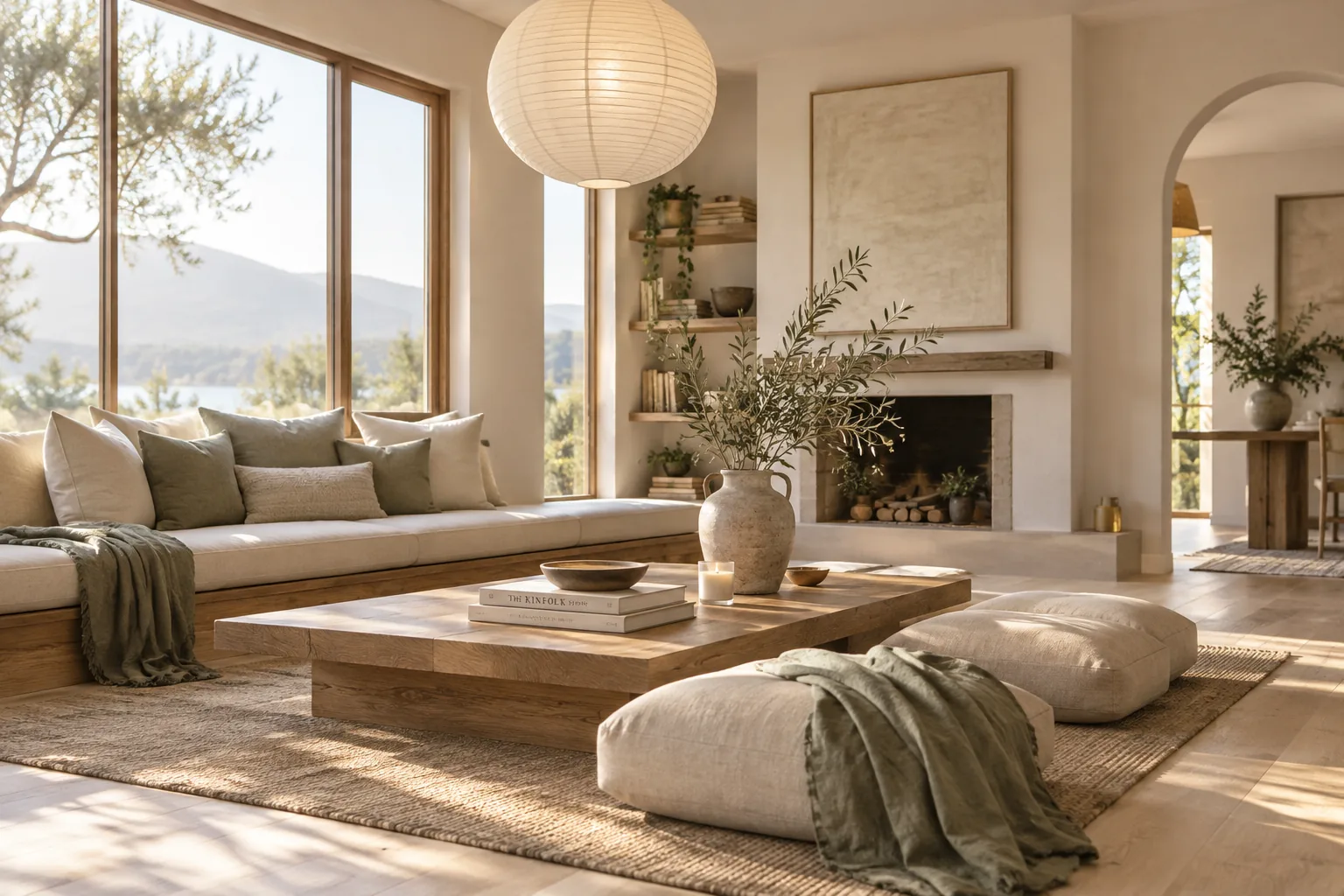
Creating a zen space at home is all about stripping away the visual noise so your mind can actually rest. You do not need an entire empty room to pull this off, just a dedicated corner where the materials and layout do the heavy lifting.
1. Floor Cushions Over Chairs
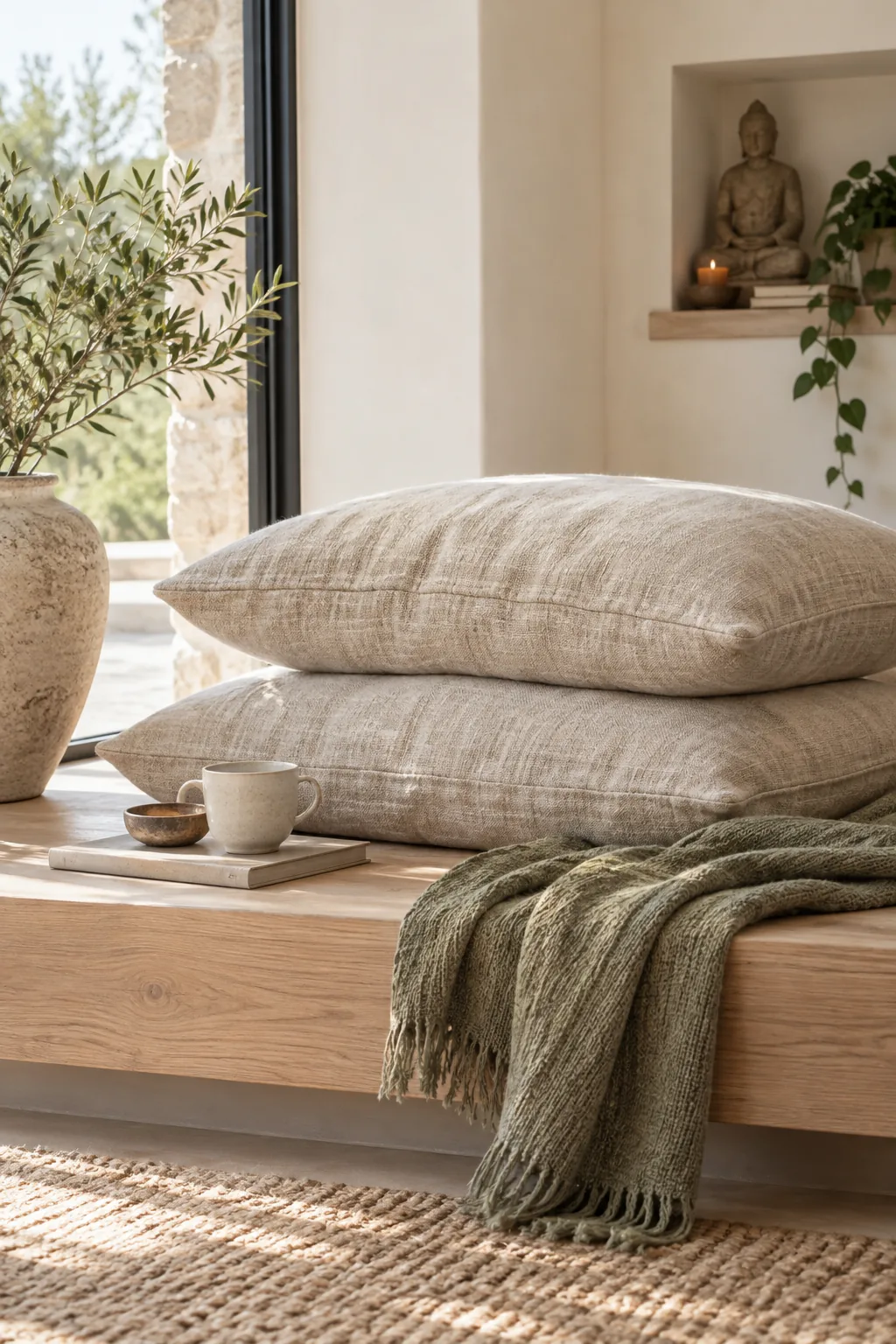
Keeping your furniture close to the ground instantly shifts the energy of a room and forces you to physically ground yourself. A pair of oversized linen floor cushions creates an inviting meditation spot that feels intentionally low-profile.
2. Raw Wood Elements
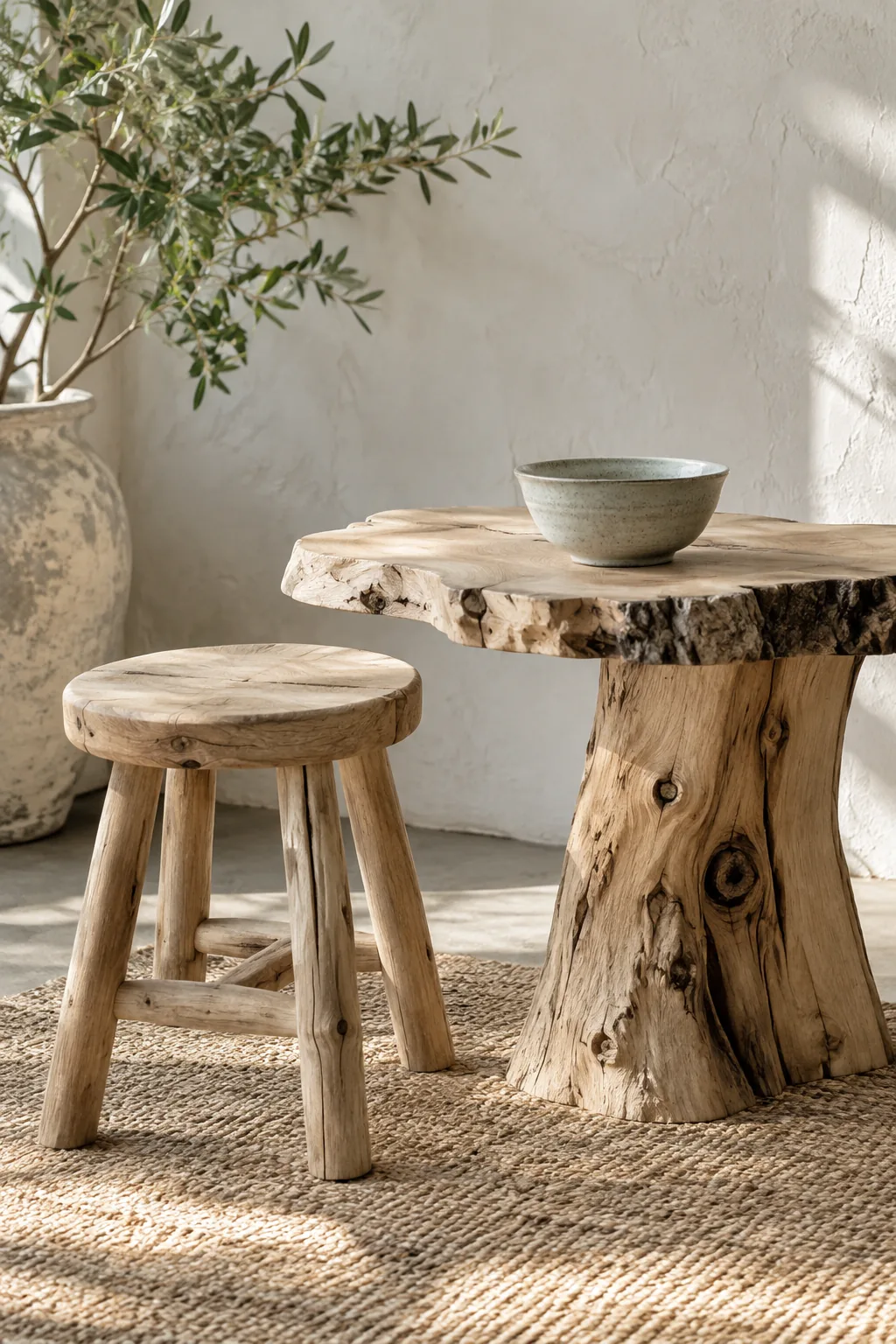
Smooth, mass-produced furniture often feels too sterile for a true zen space. Bringing in a raw wood stool or an unfinished live-edge side table adds a necessary tactile element that connects the indoors to nature.
3. The Sensory Tray
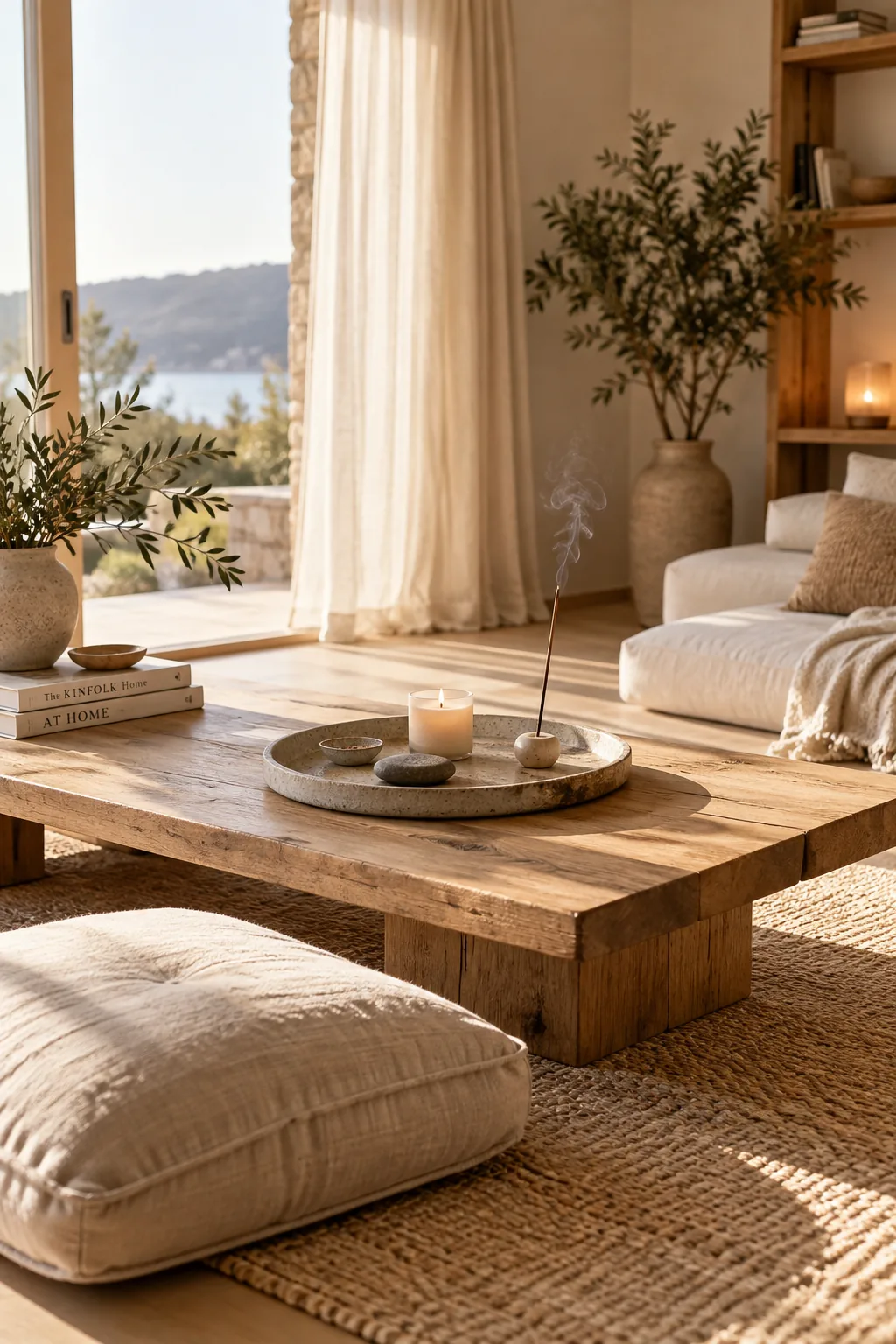
Containing your smaller calming objects on a single tray prevents visual clutter while keeping your essentials within arm's reach. I always stock a stone tray with a few basics:
- A ceramic incense holder
- A smooth river rock
- A small brass bell
4. Filtered Natural Light
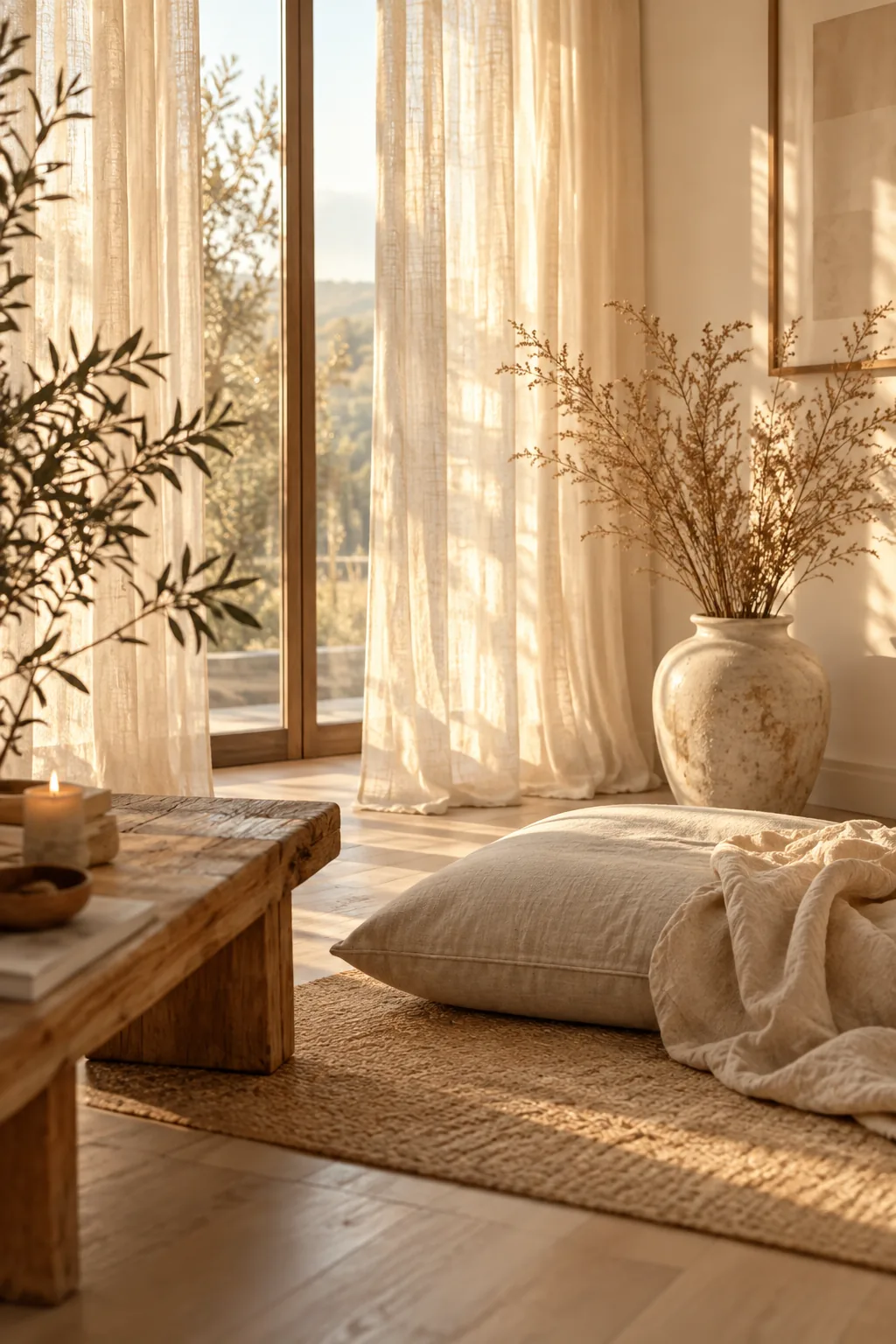
I always tell my clients to avoid harsh overhead lighting when designing a corner meant for unwinding. Hanging sheer linen curtains over your window diffuses the afternoon sunlight into a soft, glowing ambiance that feels incredibly soothing.
5. The Asymmetrical Plant Display
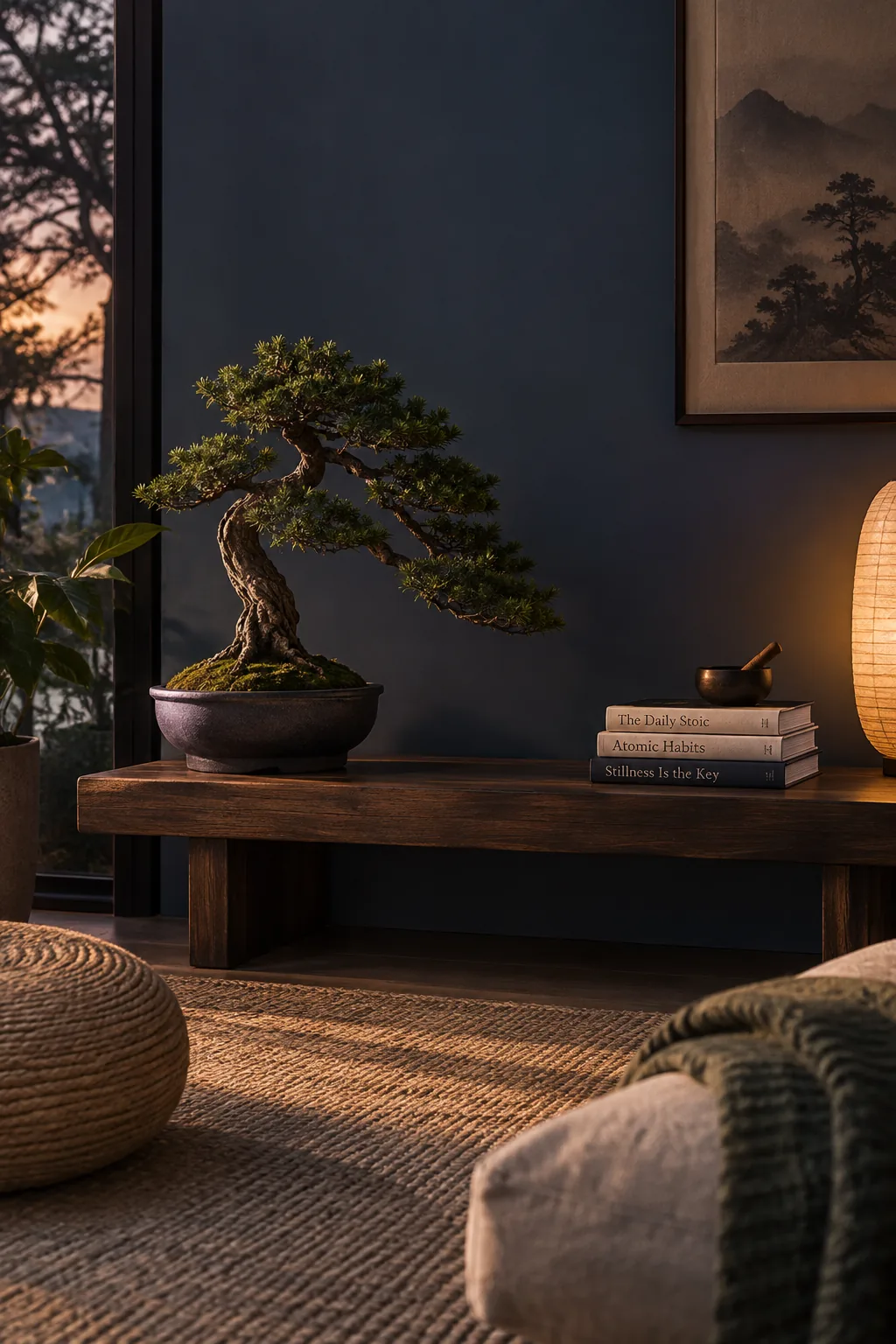
Embracing asymmetry mimics the natural world and breaks up the rigid lines of standard room layouts. Placing a single, sweeping bonsai tree or a tall olive branch off-center on a low bench creates perfect visual tension. You can balance the empty space beside it with a simple stack of meditation books.
It is the ultimate exercise in restraint.
Why it works: Asymmetrical design draws the eye slowly across the space, encouraging a slower, more mindful observation of the room.
6. Neutral Monochromatic Layers
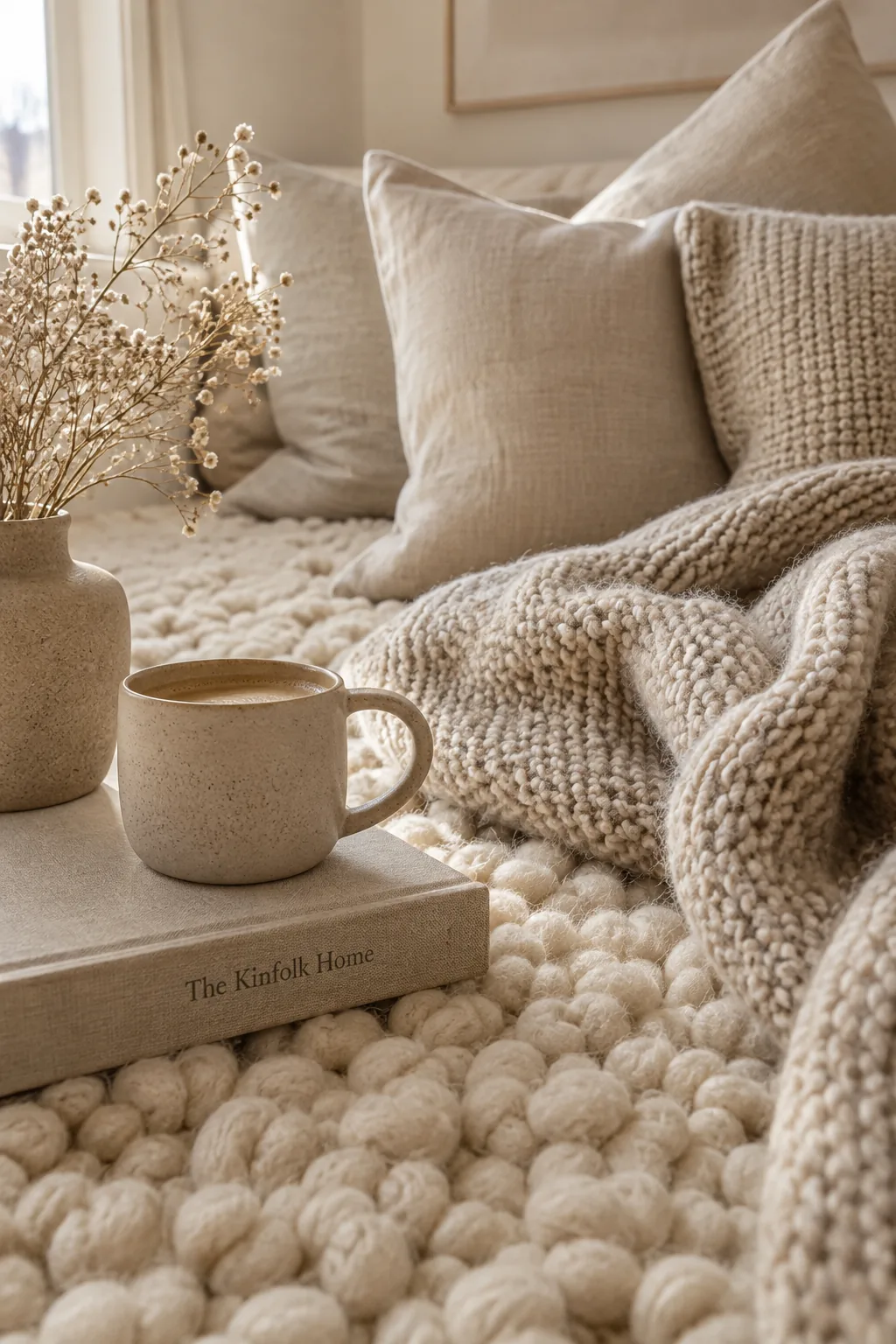
Layering tone-on-tone creams and warm beiges creates a seamless, cloud-like environment that feels completely detached from the chaotic outside world. You can mix a chunky wool rug with smooth cotton canvas pillows to keep the single color palette from falling flat. The varied textures provide enough depth to keep the eye interested.
Just make sure to avoid stark whites, which can feel clinical.
7. A Dedicated Tea Station
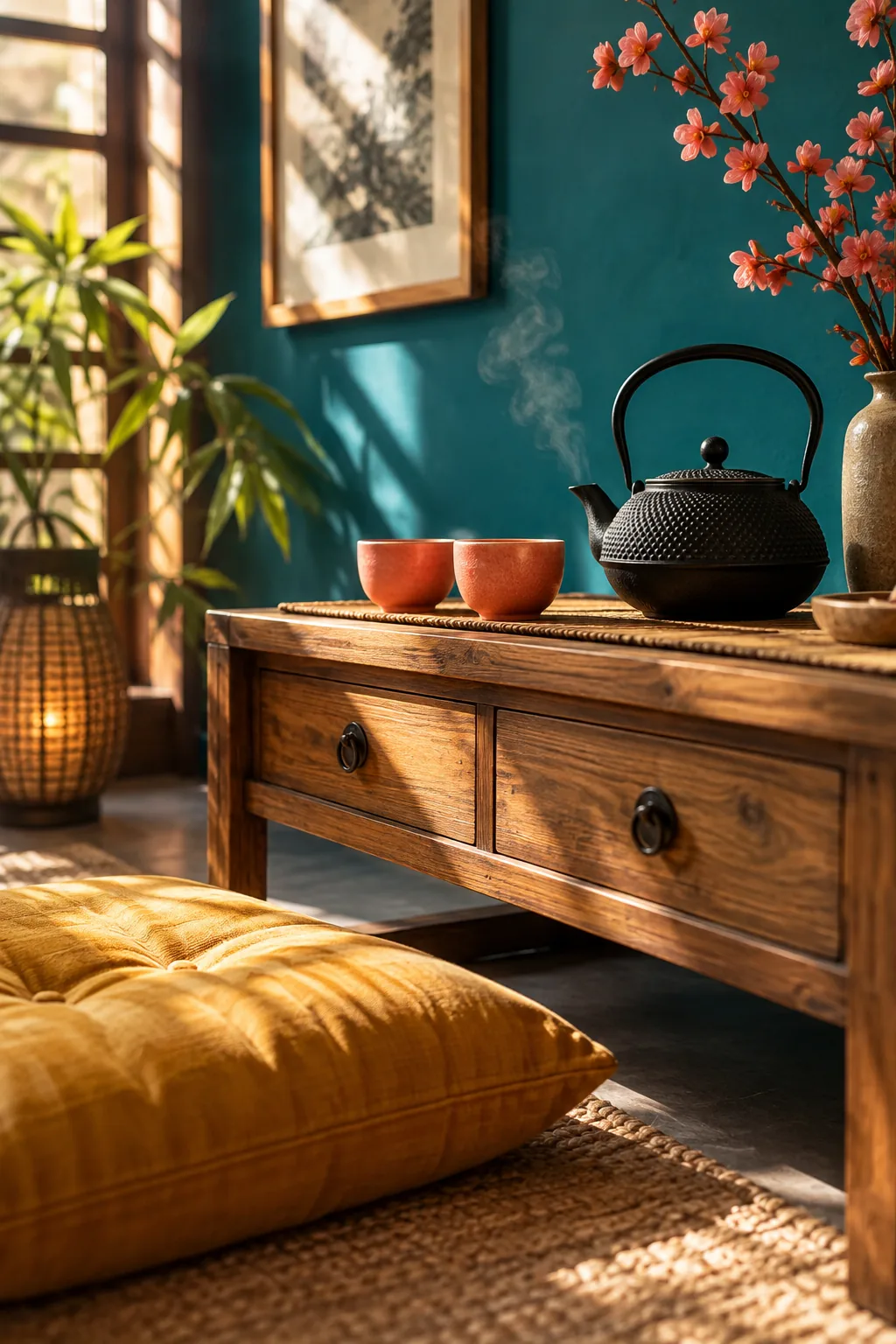
Turning a daily habit into a ritual grounds your zen space in actual functionality rather than just aesthetics. A small wooden console table dedicated entirely to preparing tea gives the room a clear, calming purpose. Keep your setup minimal with a cast iron teapot and two handleless ceramic cups resting on a bamboo mat. Everything else should be tucked away inside closed drawers to maintain that clean surface. This setup invites you to sit down and focus entirely on the simple act of pouring water.
8. Shoji-Style Room Dividers
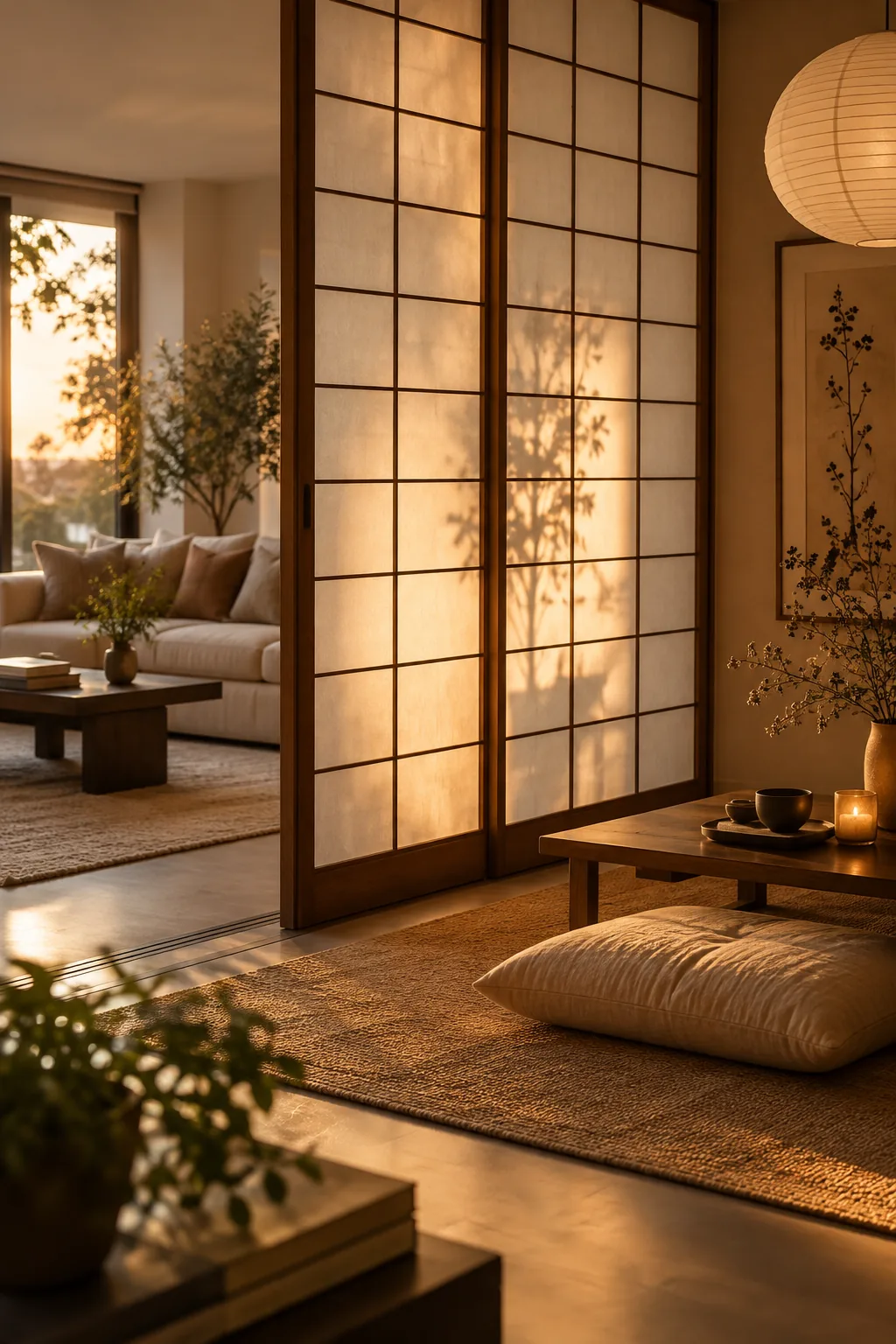
A translucent paper screen creates a distinct boundary that separates your relaxation zone from the rest of your home without blocking the light. It immediately establishes a sense of privacy and quiet, even in a shared living room. You can fold it away when you need more floor space, but leaving it up acts as a permanent visual cue to slow down.
Why it works: Physical boundaries help compartmentalize the brain, signaling that the area behind the screen is strictly reserved for rest.
9. The Three-Object Rule
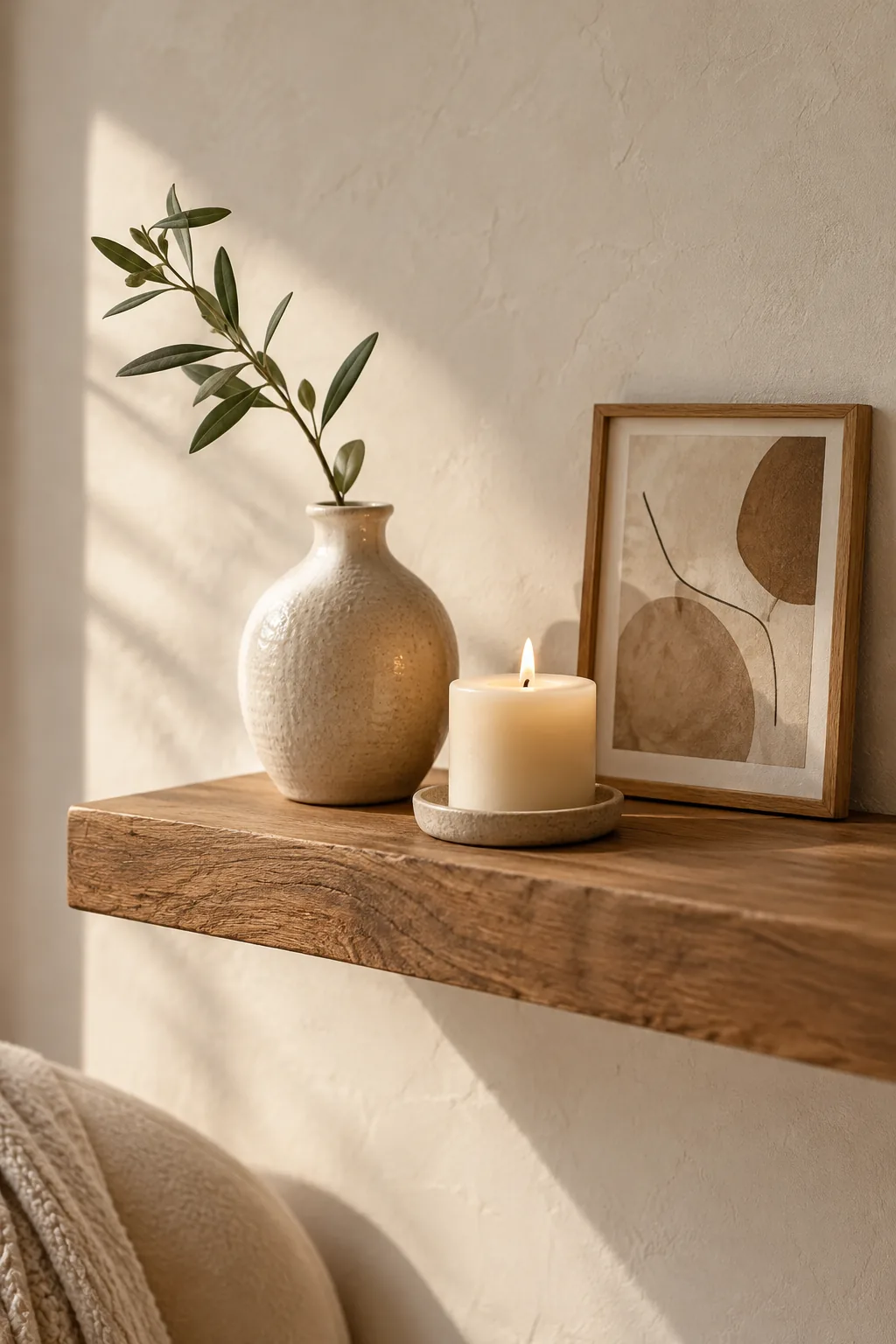
Restricting your decor to exactly three items per surface forces you to be brutally selective about what you look at every day. A single ceramic vase, one candle, and a small framed art piece are all you need on a floating shelf. This exact number creates a balanced triangle that feels satisfying and complete.
Anything more than three items quickly turns into clutter.
10. Indoor Water Features
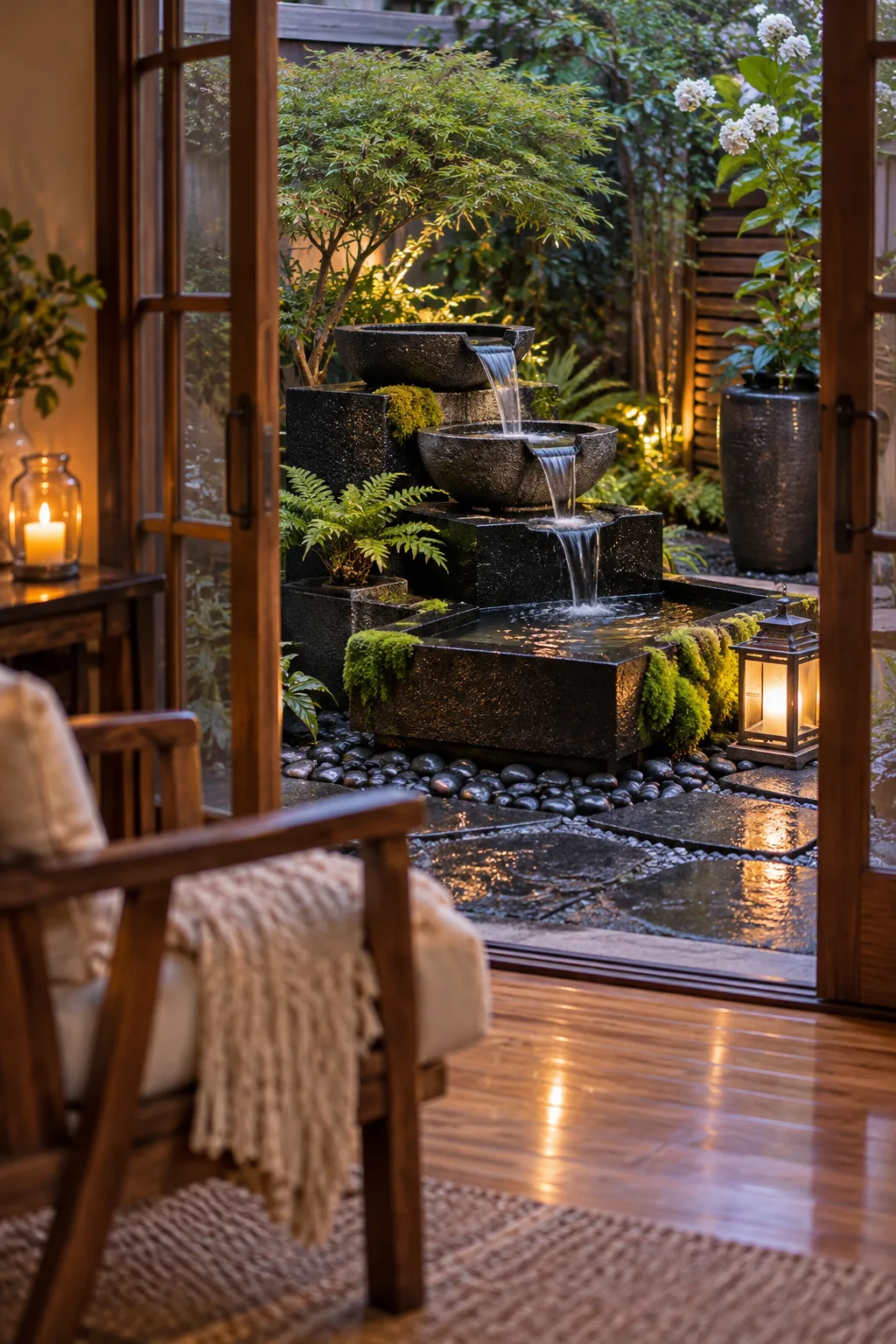
Introducing a gentle, continuous sound masks distracting household noises and acts as an anchor for your attention. A compact stone fountain placed on a low pedestal brings that essential auditory layer to your daily meditation. Choose a design where the water glides over smooth surfaces rather than splashing aggressively to keep the volume soft. The constant movement of water also adds a subtle, dynamic energy to an otherwise completely still room. It is a simple addition that completely transforms the atmosphere of the space.
11. Wabi-Sabi Wall Art
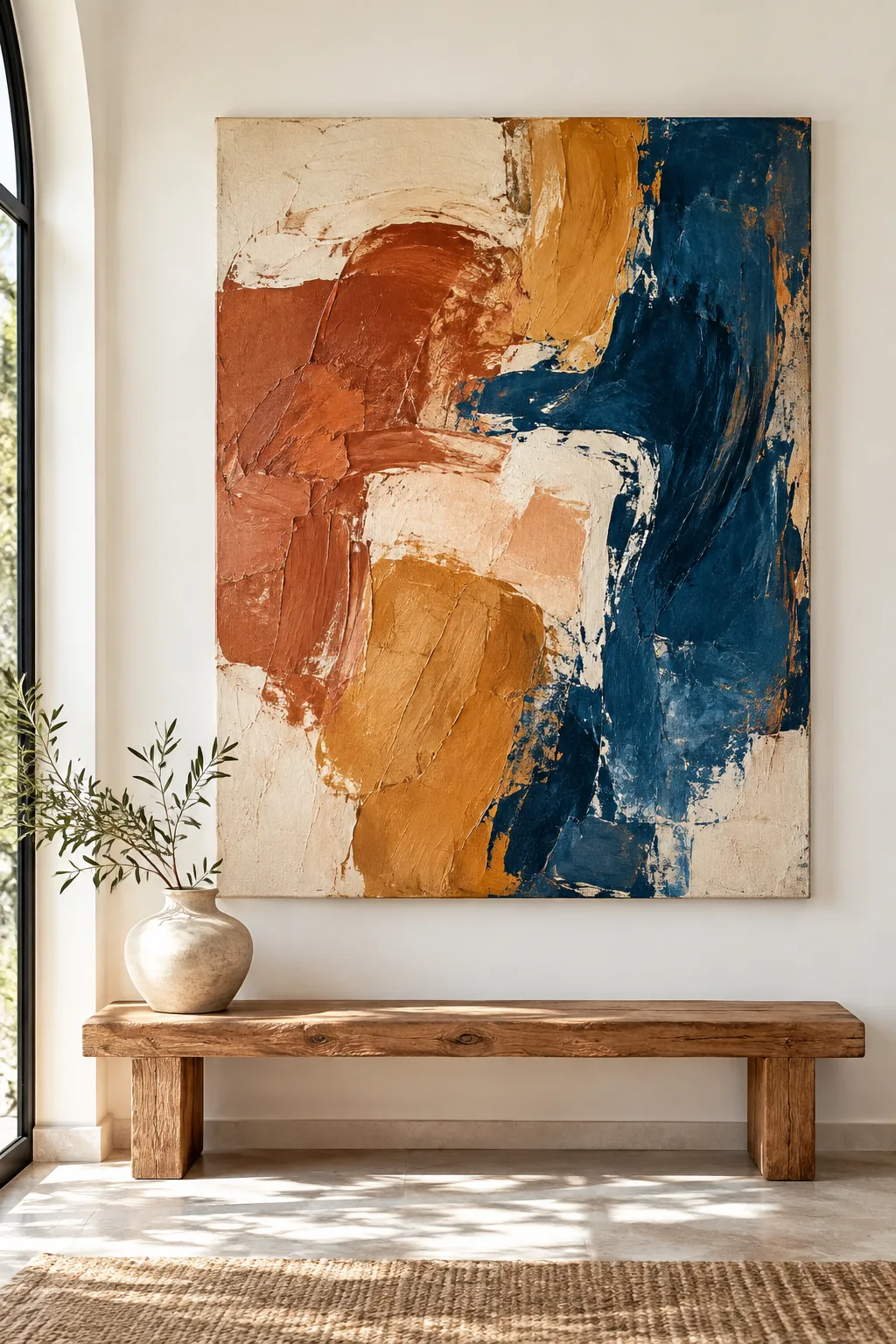
I have completely stopped hanging gallery walls in spaces meant for relaxation because they demand too much attention.
Instead, I hang one large piece of textured canvas art featuring imperfect, sweeping brushstrokes. It gives the room a focal point that does not feel overly engineered.
Let the negative space on the wall breathe around it.
Why it works: Celebrating imperfection and empty space aligns with the wabi-sabi philosophy, removing the pressure for your home to look flawless.
12. Woven Tatami Mats
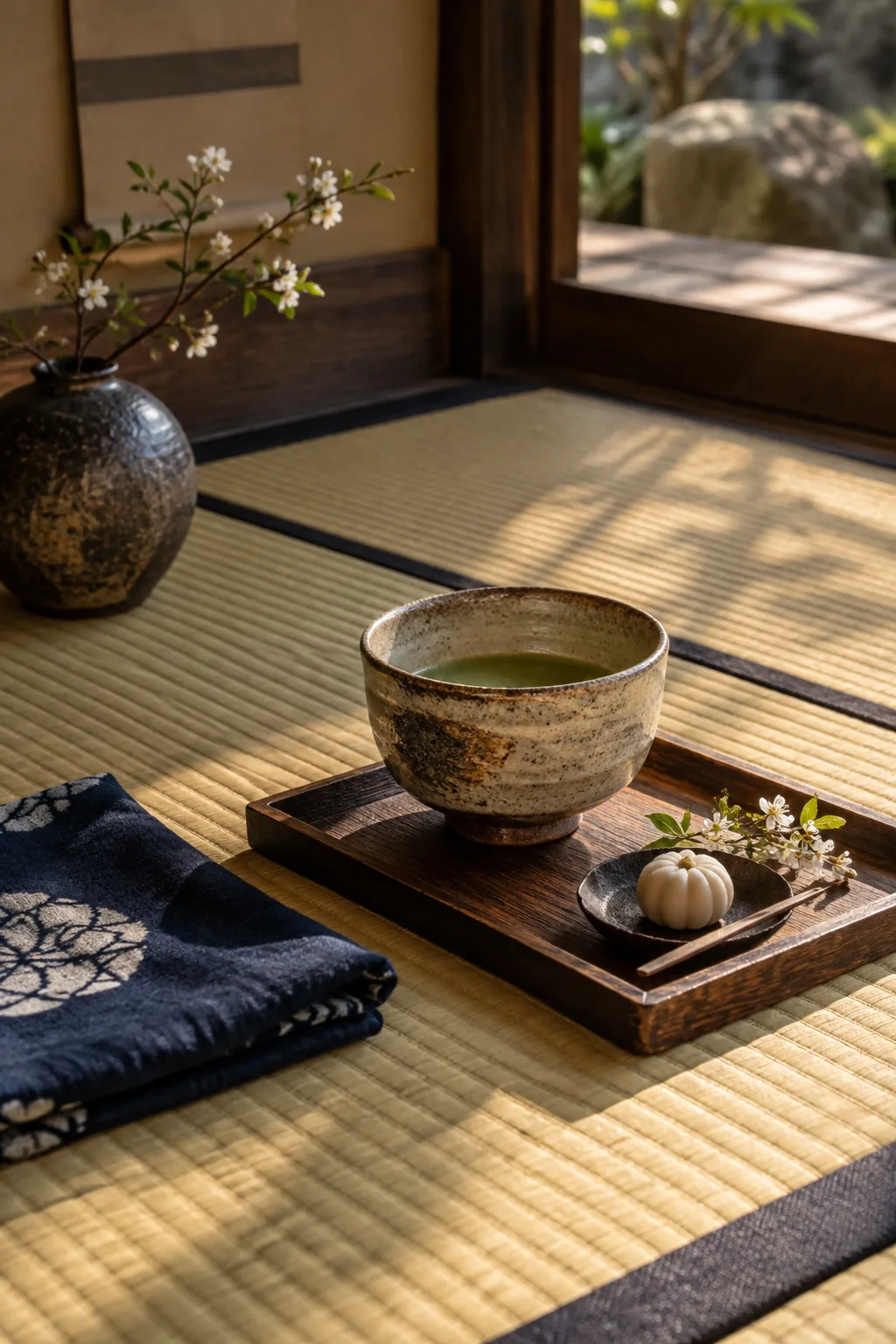
Laying down a traditional tatami mat creates a beautifully structured, grid-like foundation that instantly defines the boundaries of your retreat. The subtle scent of woven rush grass adds an earthy, grounding element that hits your senses the moment you step into the room.