
Fretwork Wall Panel Before and After: Modern Tambour Art
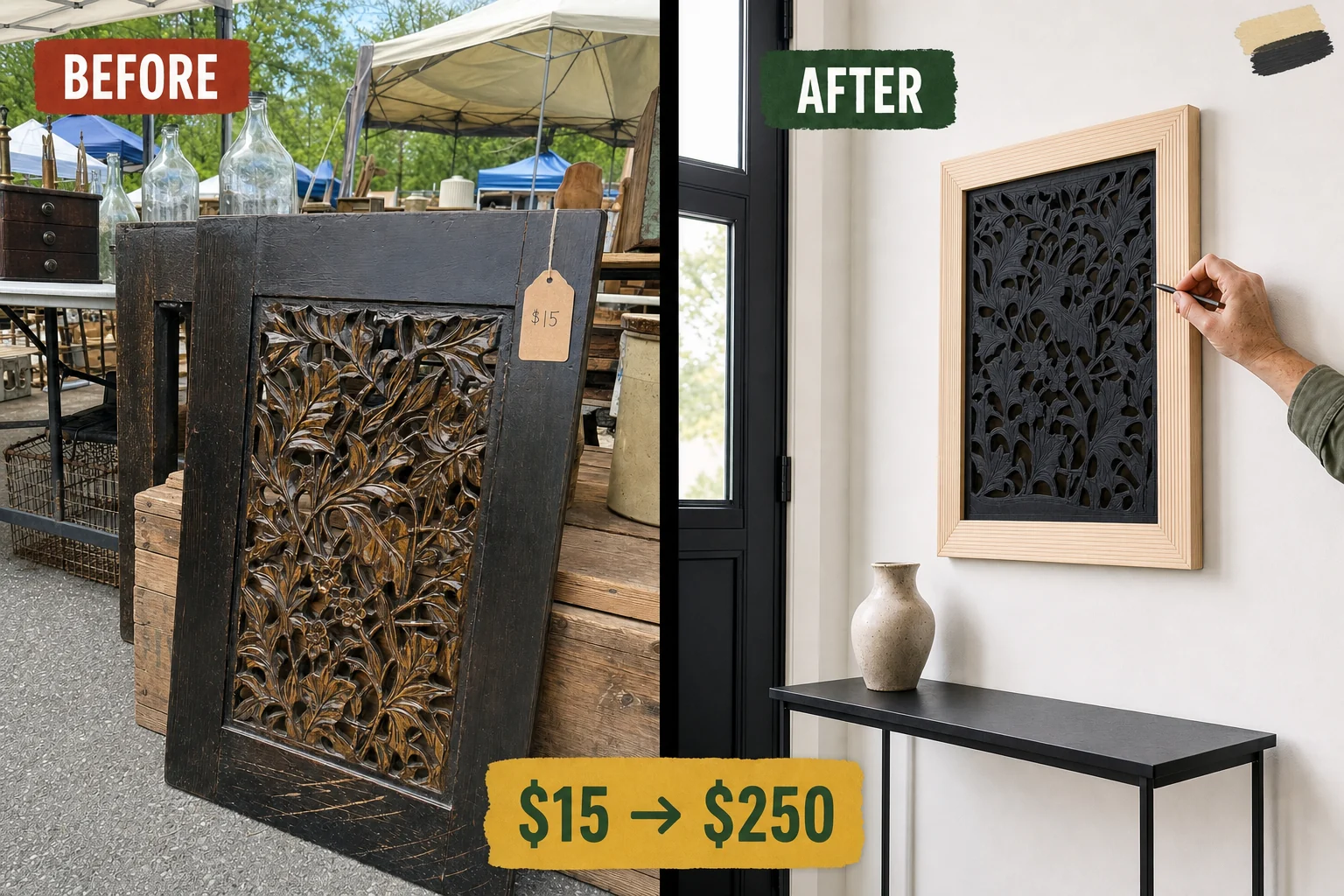
Buried under old picture frames at a flea market, this scratched 1970s carved panel needed help. We clad the damaged border in half-round pine tambour and painted the fretwork matte charcoal for a striking modern-organic contrast.
Assessing the Flea Market Find
This 24-by-36-inch mass-produced solid pine piece featured a wide flat border framing an intricate pierced botanical center. Discovered under mismatched canvas canopies at an outdoor weekend flea market, the dark stained panel showed severe wear. Deep diagonal gouges cut through the dark glossy polyurethane varnish into raw wood along the outer edges, completely ruining the frame.
- Deep diagonal gouges along the flat border required a textured overlay to hide the damage without extensive filling.
- Sticky, yellowed varnish pooled in the carved fretwork crevices, obscuring details and preventing new paint adhesion.
Materials and Investment
Transforming this scratched monolith into a highly textured, two-tone architectural art piece required a few specific supplies. The high-contrast pairing of chunky, raw ribbed wood against delicate, dark matte fretwork relies on half-round pine molding.
Materials checklist
Reviewing the total budget helps justify the effort required for this upcycle. The fluted, pale pine tambour border framing the dark center adds significant value compared to the minimal material costs.
| Item | Cost |
|---|---|
| Purchase Price | $15 |
| Liquid Deglosser | $9 |
| Half-Round Pine Molding | $24 |
| Wood Glue | $6 |
| Painter’s Tape | $5 |
| Matte Charcoal Spray Paint | $8 |
| Clear Matte Polyurethane | $12 |
| Total Investment | $79 |
| Estimated Resale Value | $250 |
| Value Gain | $171 |
Step 1: Strip Sticky Varnish Easily
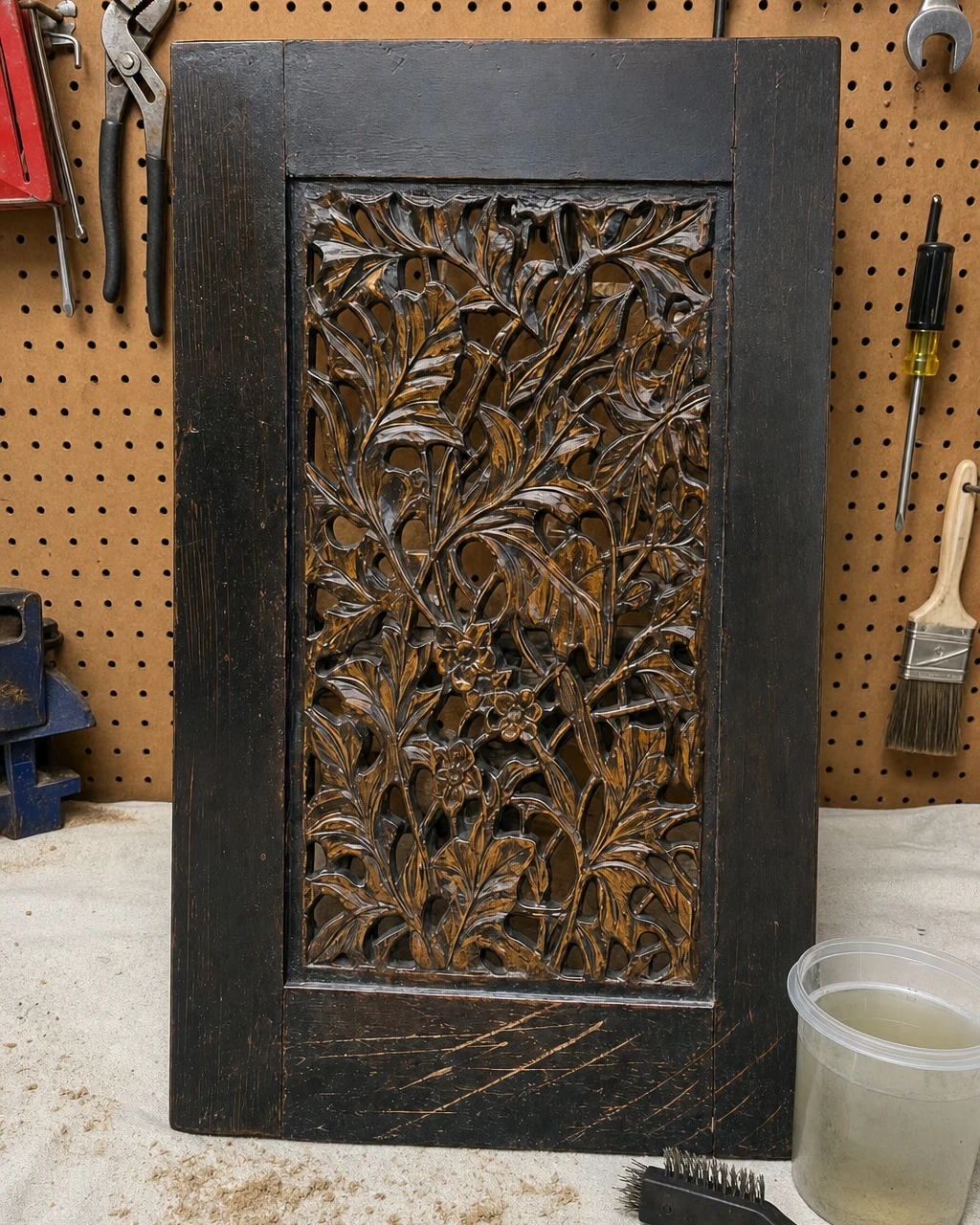
Resting the scratched, glossy panel on a drop cloth across the workbench, begin by scrubbing the intricate fretwork with a wire brush and liquid deglosser. This chemical application breaks down the sticky, yellowed varnish without damaging the delicate solid wood carvings. Wear chemical-resistant gloves and work in a ventilated area during this stage.
Preparing for Adhesion
Thoroughly wipe the treated surface clean to remove all dissolved grime and chemical residue. This crucial preparation reveals a dulled, clean finish that is completely ready for strong paint adhesion, ensuring the upcoming matte charcoal layer bonds permanently to the intricate pierced botanical pattern.
Step 2: Hide Scratches With Tambour
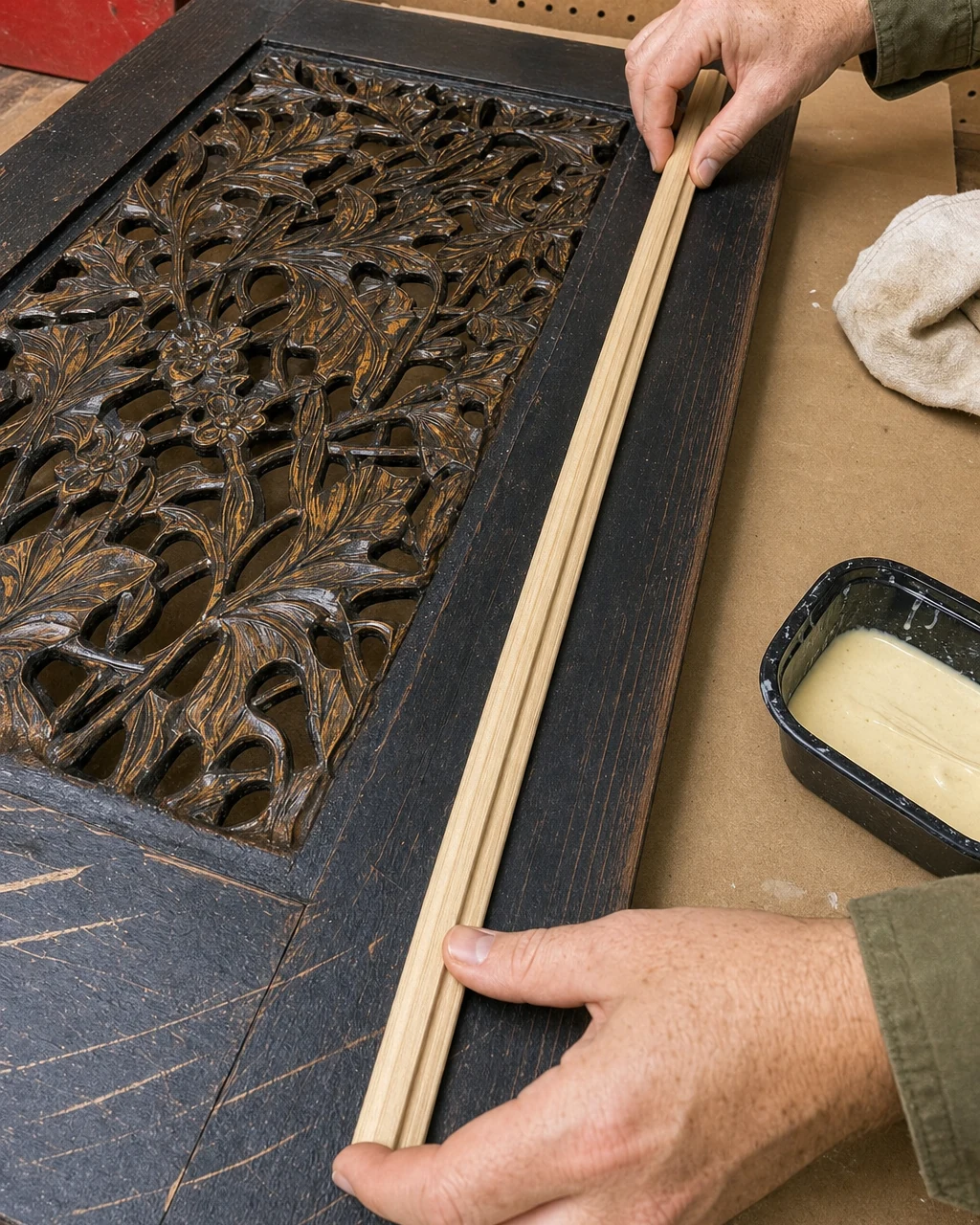
With the center dulled, focus on the scratched flat borders by cutting half-round pine strips to length using miter shears. Apply a steady bead of wood glue to the damaged flat border, keeping fingers clear of the miter shear blade when snipping the molding.
Press the pine strips tightly side-by-side onto the border to create a fluted texture, completely hiding the deep gouges under the new wood. Allow the adhesive to cure fully for two hours until one side of the frame is completely clad in ribbed raw wood.
Step 3: Protect Raw Wood Perfectly
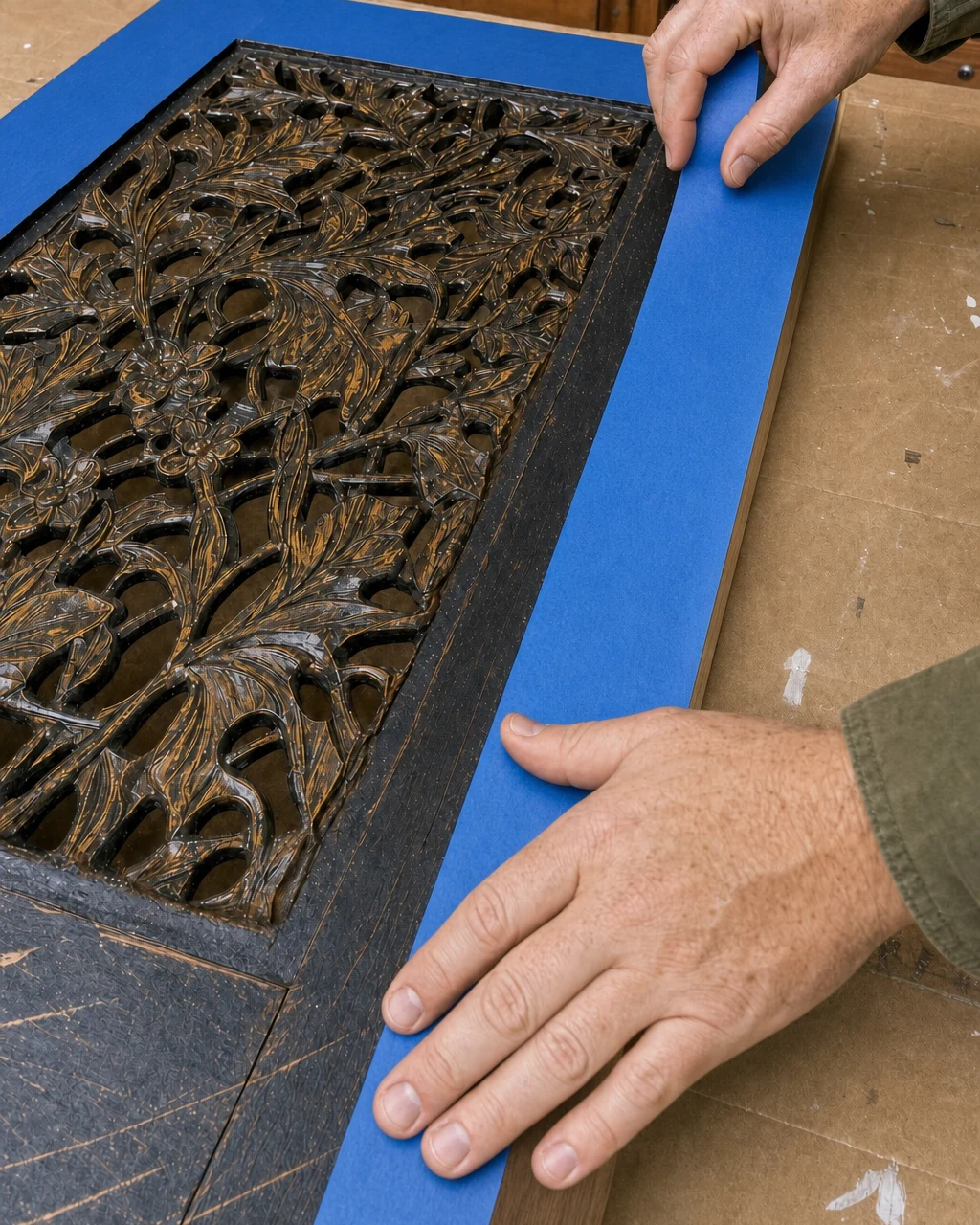
Once the tambour border is securely attached, press painter’s tape firmly over the newly installed half-round pine molding. Ensuring the tape is perfectly aligned along the inner edge where the raw pine meets the dark fretwork is essential to protect the new wood from paint overspray.
Securing the Masking
Smooth down the edges of the blue painter’s tape with a brush handle to seal any tiny gaps along the ribbed texture. This meticulous masking leaves the central pierced fretwork fully exposed while guaranteeing the pale pine remains completely pristine during the upcoming color transformation.
Step 4: Modernize With Matte Charcoal
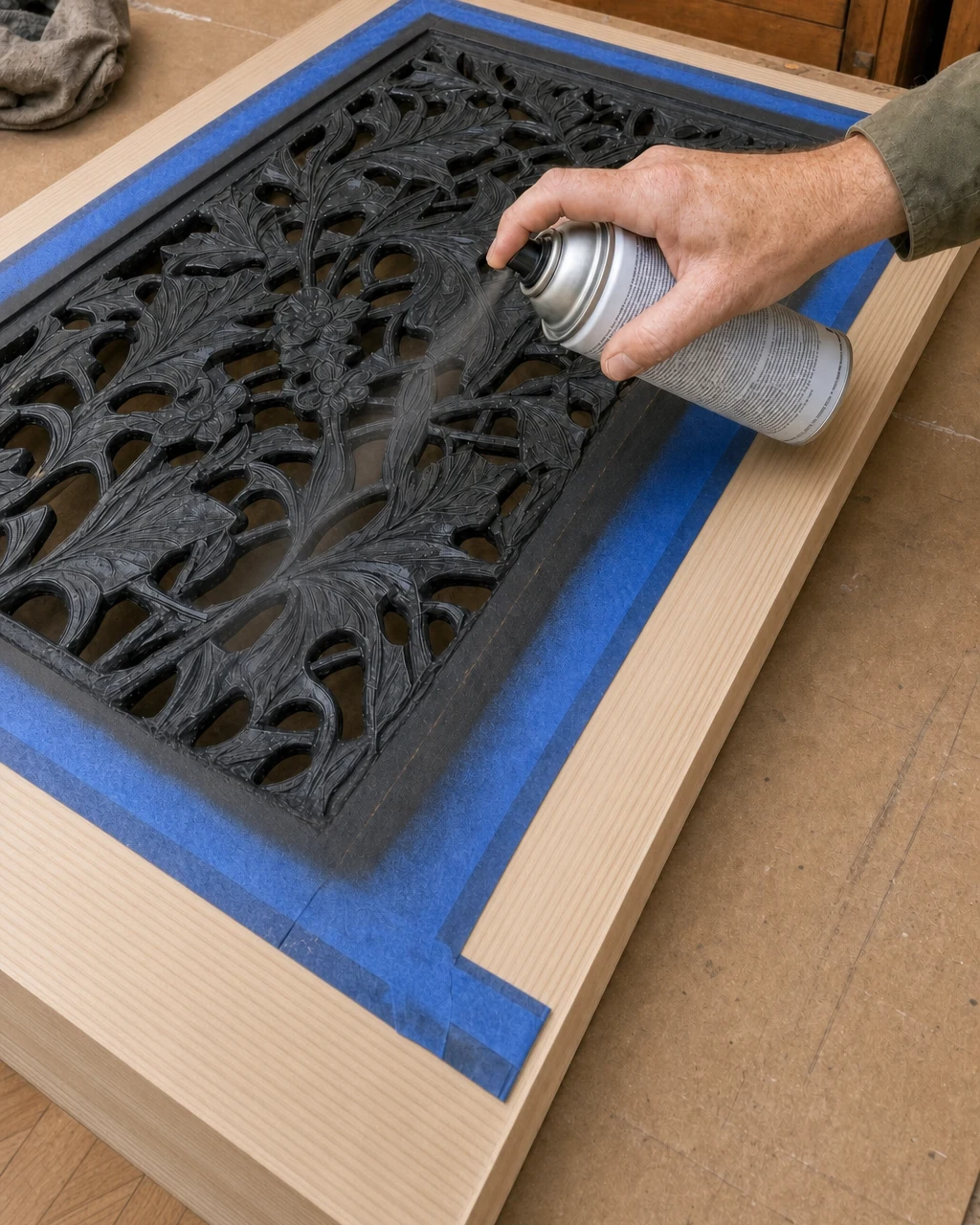
With the border masked, spray matte charcoal paint in light, even coats directly over the exposed central pierced fretwork. Always wear a respirator mask and spray outdoors or in a well-ventilated garage to safely apply the dark, modernizing color over the intricate botanical cutouts.
Continue building the color gradually until achieving an opaque, deep matte charcoal center. Allow the fresh paint to dry undisturbed for one hour, ensuring all deep crevices are fully coated and the intricate details are completely modernized before handling the piece further.
Step 5: Seal Without Yellowing Wood
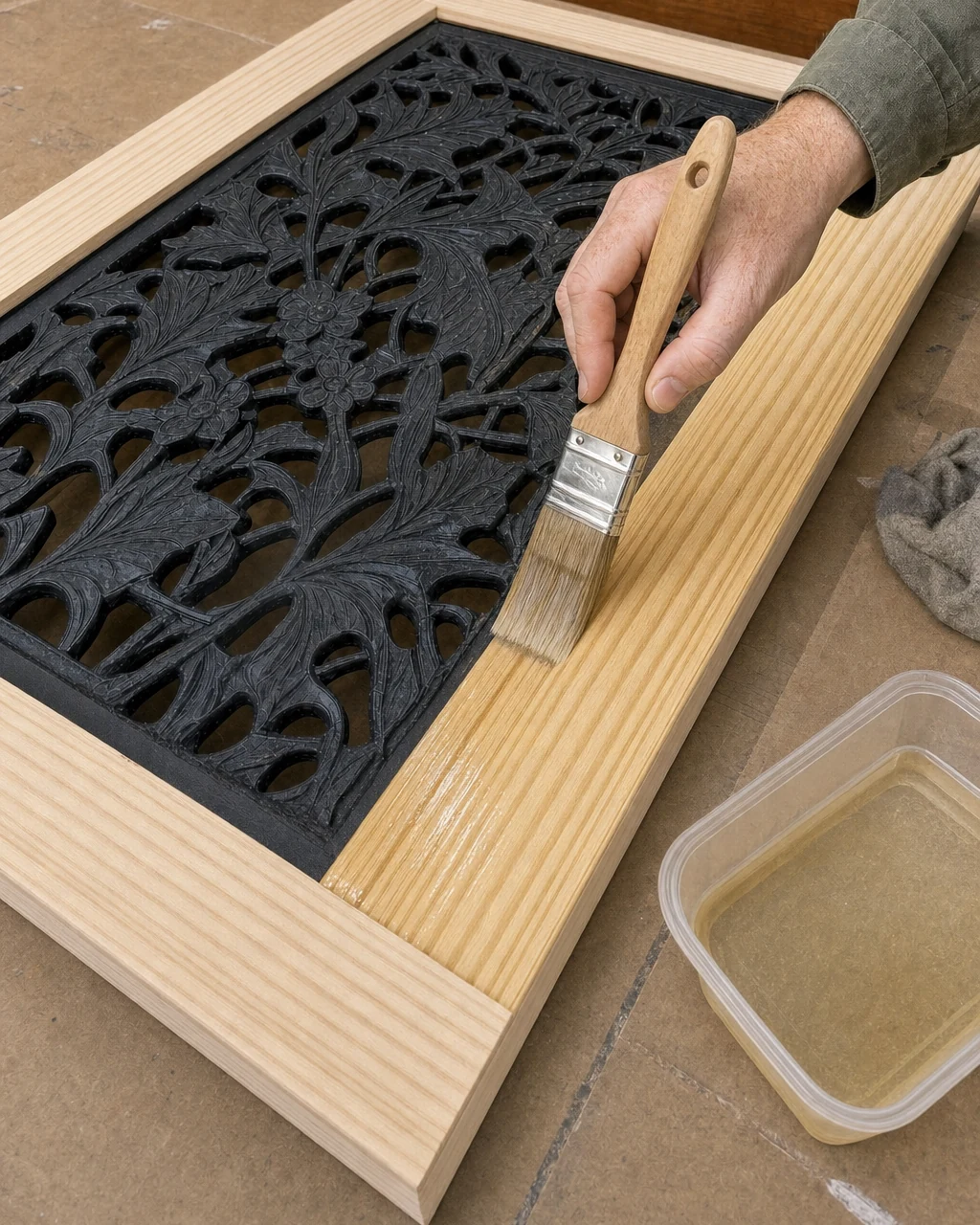
Carefully peel away the masking tape to reveal the crisp line between the freshly painted dark center and the raw border. Next, brush a clear water-based matte polyurethane over the ribbed raw pine tambour to protect the wood without altering its pale natural color or leaving a glossy sheen.
Applying the Topcoat
Ensure good ventilation when applying the clear polyurethane with a synthetic bristle brush. This specific water-based sealer slightly enriches the natural wood grain while providing a durable, non-yellowing protective layer over the fluted tambour border, ensuring the pale pine remains a striking contrast against the dark fretwork.
Step 6: Check the Final Contrast
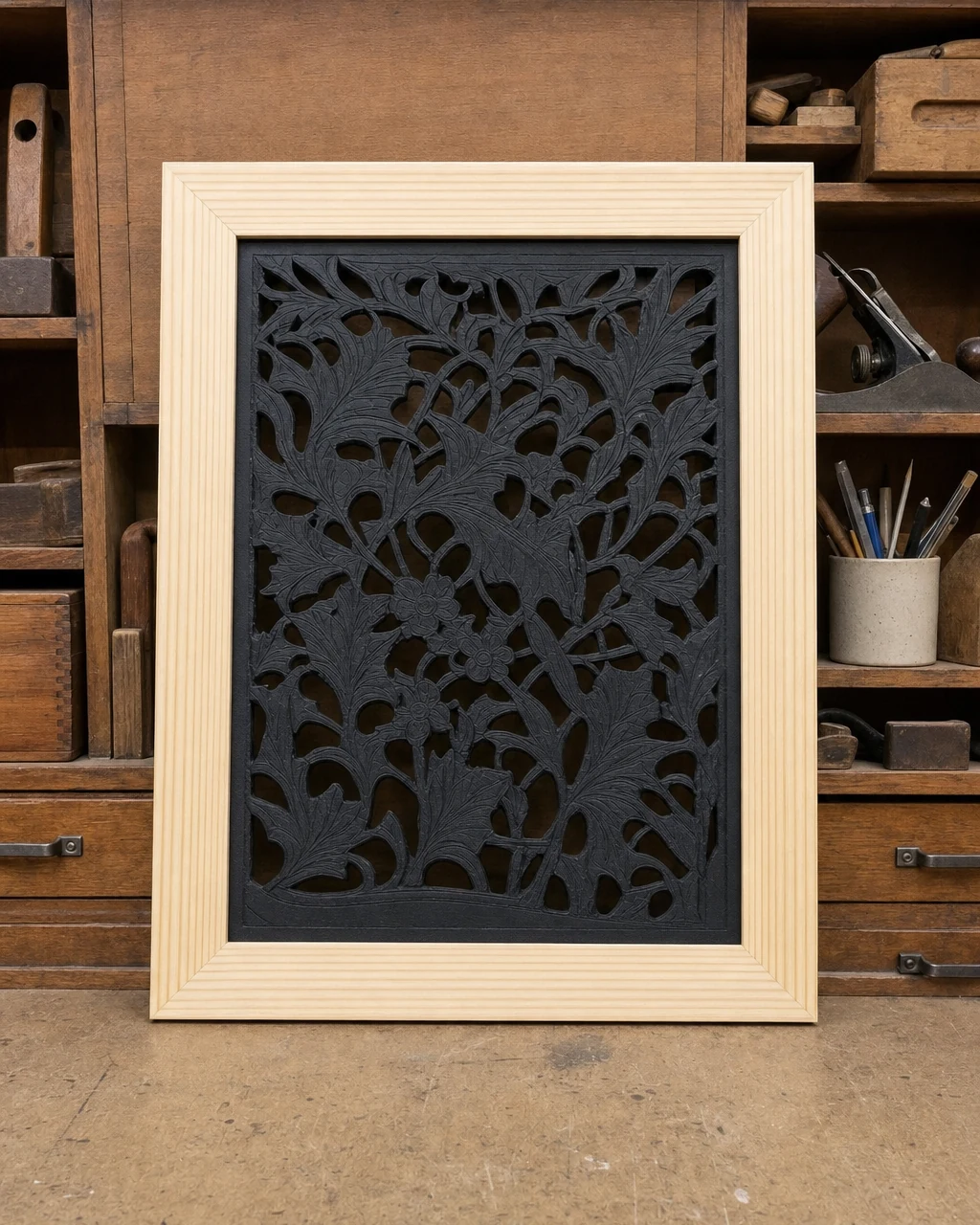
Once the sealer is fully dry, rest the completed panel upright against the workbench wall to evaluate the overall transformation. Inspecting the crisp paint lines against the sealed natural pine tambour confirms the successful creation of a striking, modern-organic wall art piece.
Evaluating the Texture
The high-contrast pairing of chunky, raw ribbed wood against the delicate, dark matte fretwork completely erases the scratched, glossy monolith of the past. This visual check ensures the fluted tambour border frames the dark center flawlessly, resembling high-end architectural wall art.
Step 7: Style Your New Art
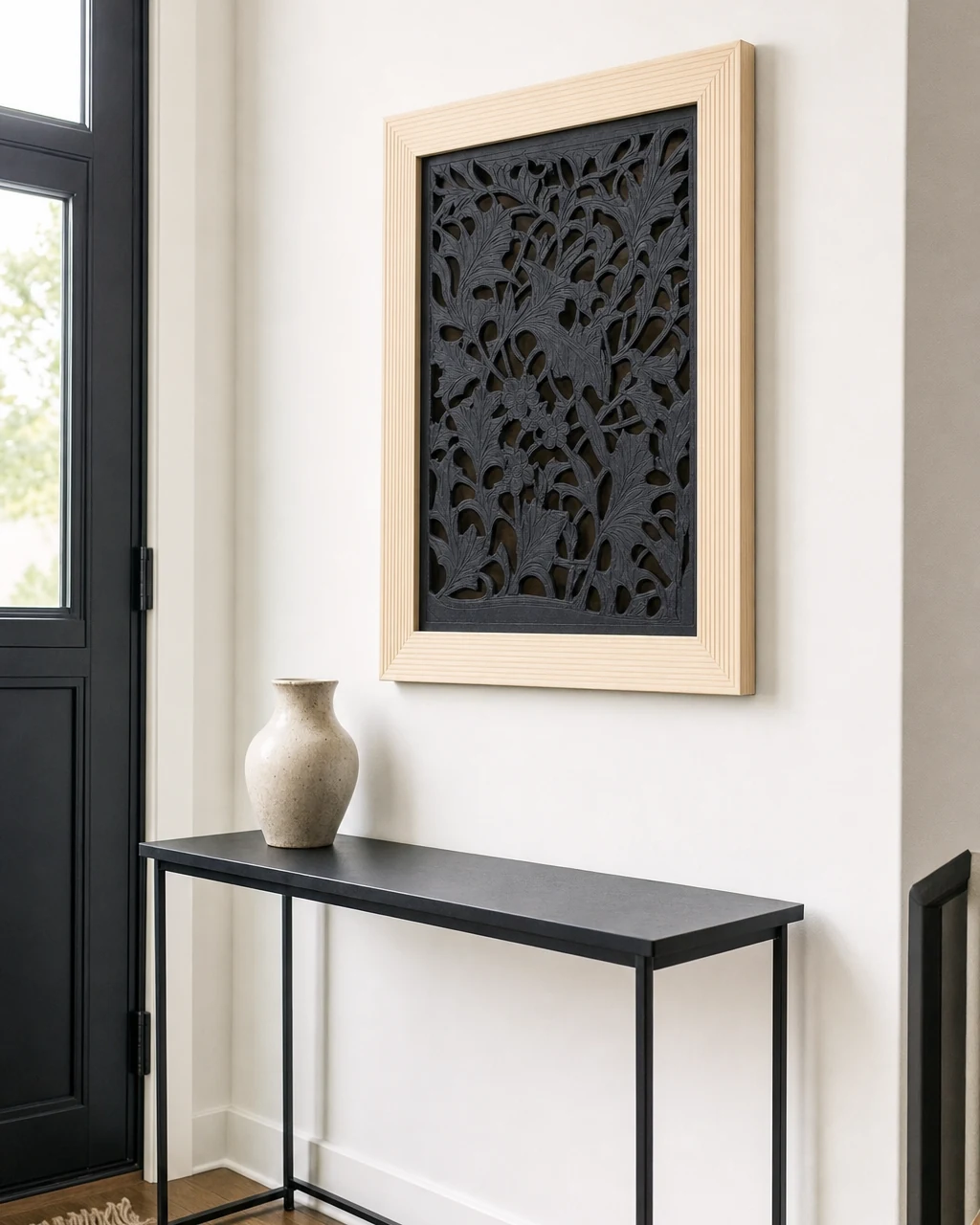
Mount the finished panel vertically on a white wall to emphasize its new architectural texture. Hanging it above a sleek black metal console table in a modern entryway creates a high-end, textured focal point, provided you use appropriate wall anchors for the weight of the solid wood panel.
Valuation and Resale Potential
The addition of trendy fluted tambour and a modern matte finish elevates this dated mass-produced panel significantly. This transformation yields an estimated resale value of $250, though this figure remains an editorial estimate based on comparable modern art pieces rather than a guaranteed actual sale.