
How to Style a Warm Neutral Living Room for Slow Mornings
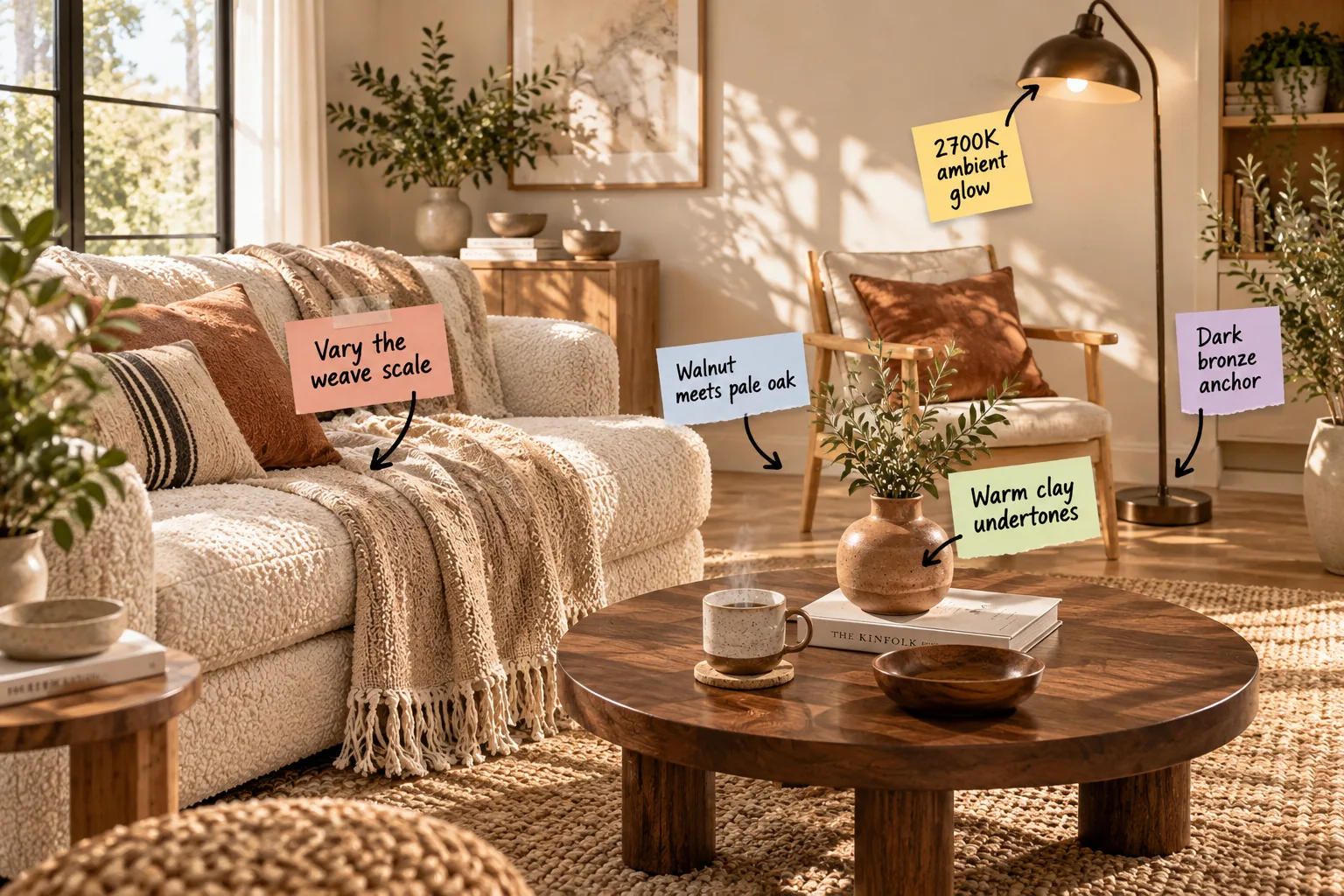
Master the art of mixing textures and wood tones to create a cozy, warm neutral living room perfect for slow mornings. By following this foundational guide, you will be able to confidently layer your space and apply our foolproof neutral layering checklist to achieve total visual cohesion.
Defining the Warm Neutral Palette
Establish your base colors using creamy whites, soft beiges, and warm greiges to create an expansive, airy foundation. Keeping the walls and large upholstery light allows the room to beautifully reflect early morning sun and sets a remarkably calm baseline for the rest of your design.
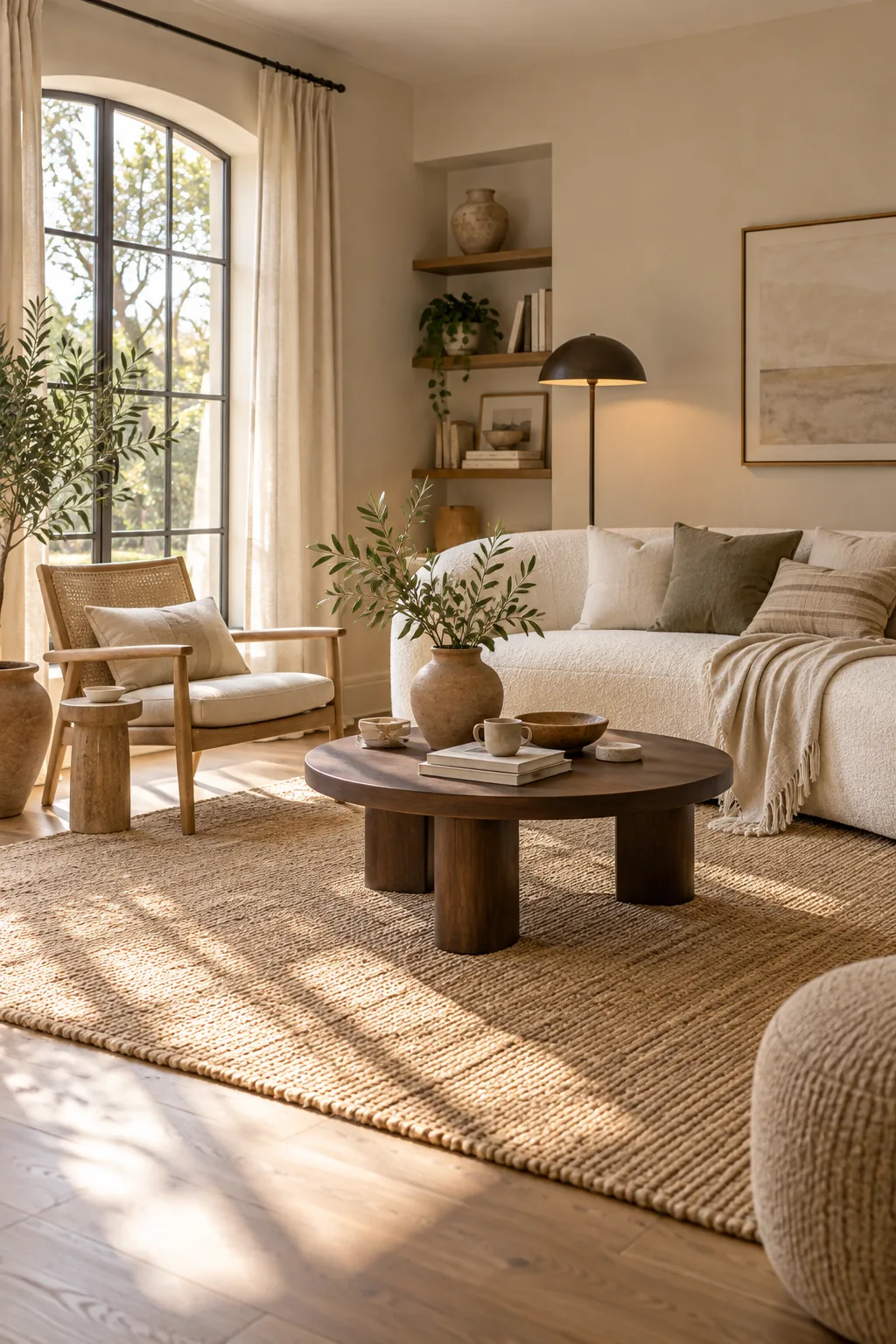
Once your primary upholstery is securely in place, you must carefully evaluate how those creamy foundational tones interact with the natural shadows cast in your specific room.
Selecting the Right Paint Finish
Paint finish dramatically alters how a neutral room absorbs morning sunlight, so choosing the correct sheen is just as critical as selecting the color itself.
- Flat or matte: Absorbs light entirely, hiding drywall imperfections while creating a velvety, soft appearance.
- Eggshell: Offers a slight, washable sheen that gently bounces morning light into darker corners without glaring.
- Satin: Provides too much reflection for a calming space, so avoid it on primary living room walls.
Testing these finishes on different walls ensures your foundational colors remain soft and inviting rather than harsh or sterile.
Maximizing Natural Morning Light
Position your largest, lightest upholstery pieces directly opposite your eastern-facing windows to catch the earliest rays. This strategic placement naturally amplifies the brightness of your creamy fabrics without requiring artificial overhead lighting, creating a serene environment for your slow morning routine.
Mixing Wood Tones
Contrast is essential; a room where walnut meets pale oak prevents the neutral palette from feeling flat or uninspired. Use a strict 70/30 ratio, letting the lighter oak dominate the structural frames while a dark walnut coffee table grounds the absolute center.
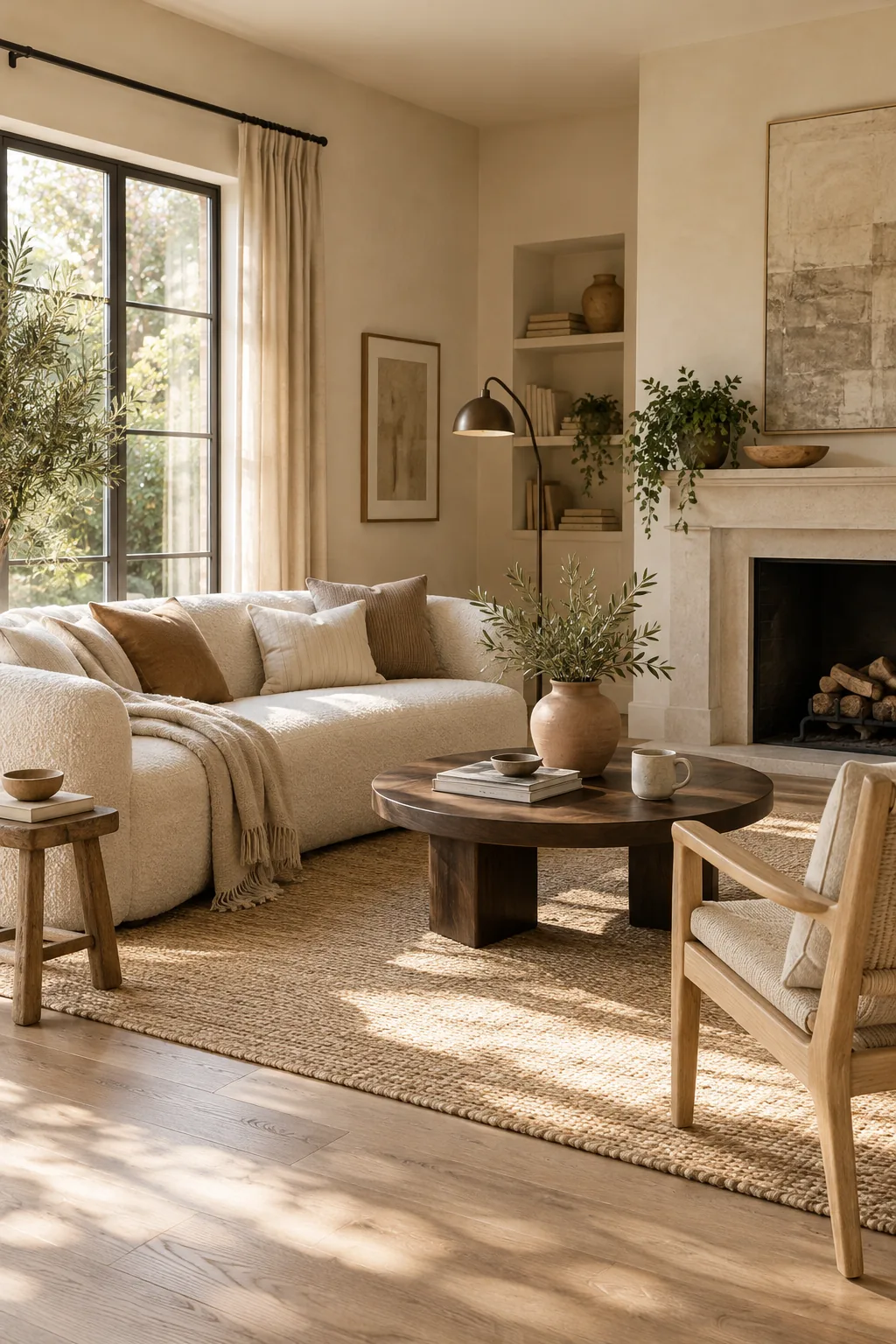
Maintaining this specific ratio ensures the darker wood acts as an intentional, heavy anchor rather than overwhelming the airy atmosphere you worked so hard to build.
Balancing Wood Grain Patterns
Pairing a tight, subtle grain like maple with a sweeping, open grain like oak adds necessary visual friction to the space. This subtle tension between wood species brings a tactile richness to the room without ever relying on loud, disruptive accent colors.
Sizing the Coffee Table
Your central grounding table must be scaled correctly to maintain the room’s relaxed, open flow and prevent awkward traffic patterns.
| Room Size | Table Length | Clearance | Wood Tone |
|---|---|---|---|
| Under 150 sq ft | 36 inches | 16 inches | Pale Oak |
| 150 to 250 sq ft | 48 inches | 18 inches | Mixed |
| Over 250 sq ft | 60 inches | 24 inches | Dark Walnut |
Following these structural clearances guarantees you can move effortlessly around the room with your morning coffee without bumping into heavy furniture.
Layering Textile Textures
In my own Denver living room, I learned that pairing chunky bouclé upholstery with lightweight linen throws is the absolute secret to tactile comfort. You must vary the weave scale to add visual weight without introducing busy, chaotic patterns to your peaceful space.
It is incredibly easy to accidentally make a neutral room feel flat if you rely heavily on a single fabric type. Watch out for these common texture pitfalls when selecting your upholstery and accent pieces.
Choosing the Right Rug Foundation
A hand-knotted wool or thick jute rug absorbs ambient sound and significantly softens the acoustic profile of the room. This textural foundation dictates the coziness of the space long before you place a single piece of seating.
Sizing the Area Rug
Ensure your rug extends at least eight inches beyond the sides of your sofa to properly frame the primary seating zone. Resting the front legs of every chair on the rug visually connects the disparate wood tones into one cohesive, grounded unit.
Selecting Throw Pillow Inserts
Always purchase high-quality down-alternative inserts that are exactly two inches larger than your decorative pillow covers. This simple overstuffing technique provides a luxurious, structured plumpness that holds its shape beautifully through countless slow mornings.
Anchoring with Dark Metals
I always introduce a dark bronze anchor, like a slender floor lamp base, to give the eye a distinct resting place. In my recent projects, this high-contrast metallic element consistently prevents the soft neutrals from floating away into a hazy blur.
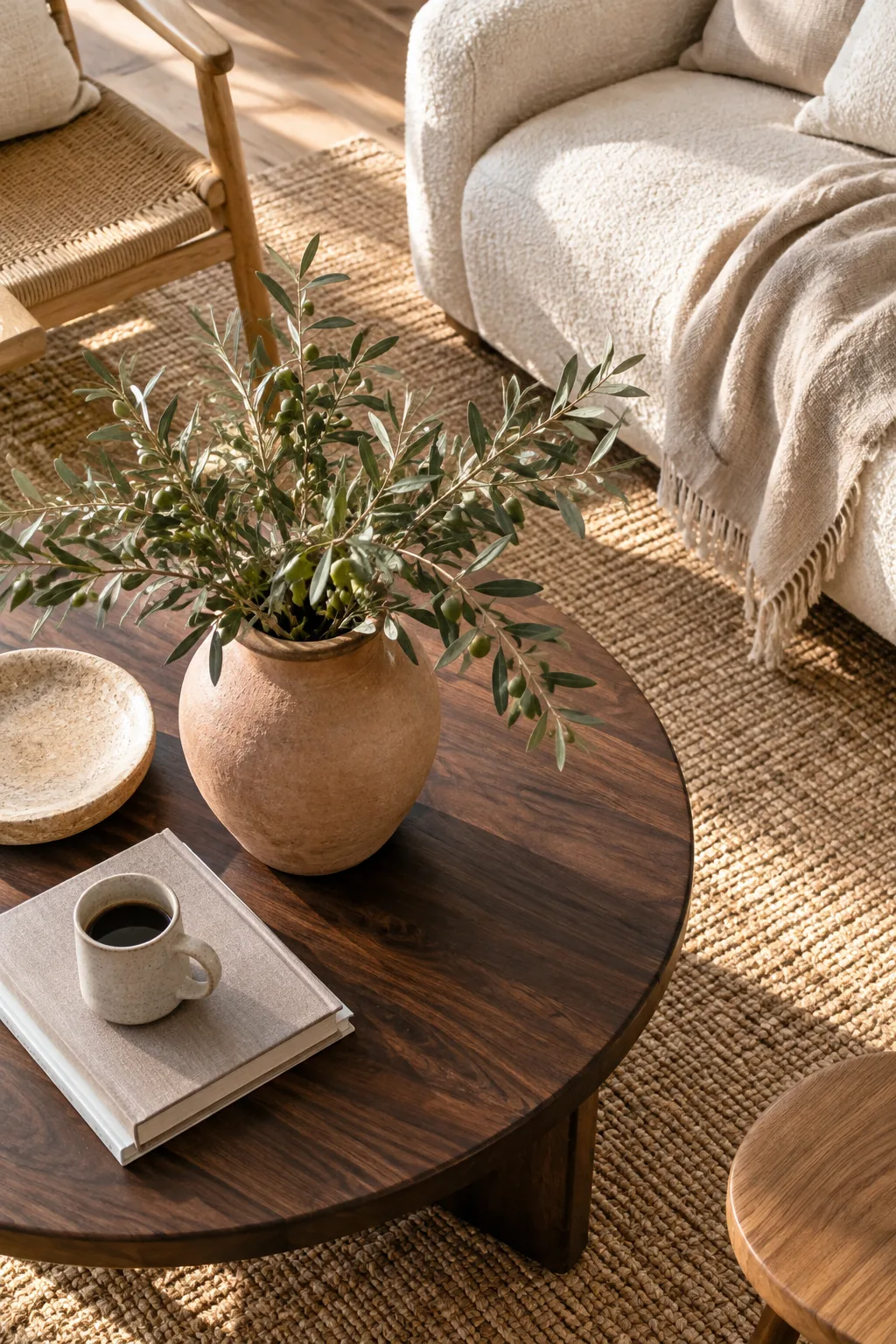
- Place the tallest dark metal fixture in the corner furthest from the primary doorway.
- Distribute a medium-height bronze element, like a side table frame, near the sofa.
- Add a small metallic tray or sculptural object to the coffee table for a final grounded touch.
Creating this subtle, asymmetrical triangle of dark metals pulls the viewer’s gaze smoothly around the entire living area.
Scaling Metallic Accents
Keep your metallic profiles incredibly slender, opting for wireframes and thin poles rather than heavy, blocky bases. Delicate metalwork delivers the necessary contrast while fiercely preserving the lightweight, ethereal quality of your morning retreat.
Adding Warmth with Color
Incorporate subtle terracotta, rust, or warm clay undertones through small accessories to add depth without breaking the neutral scheme. A matte ceramic vase resting on the table perfectly injects this necessary earthy warmth into the cool foundation.
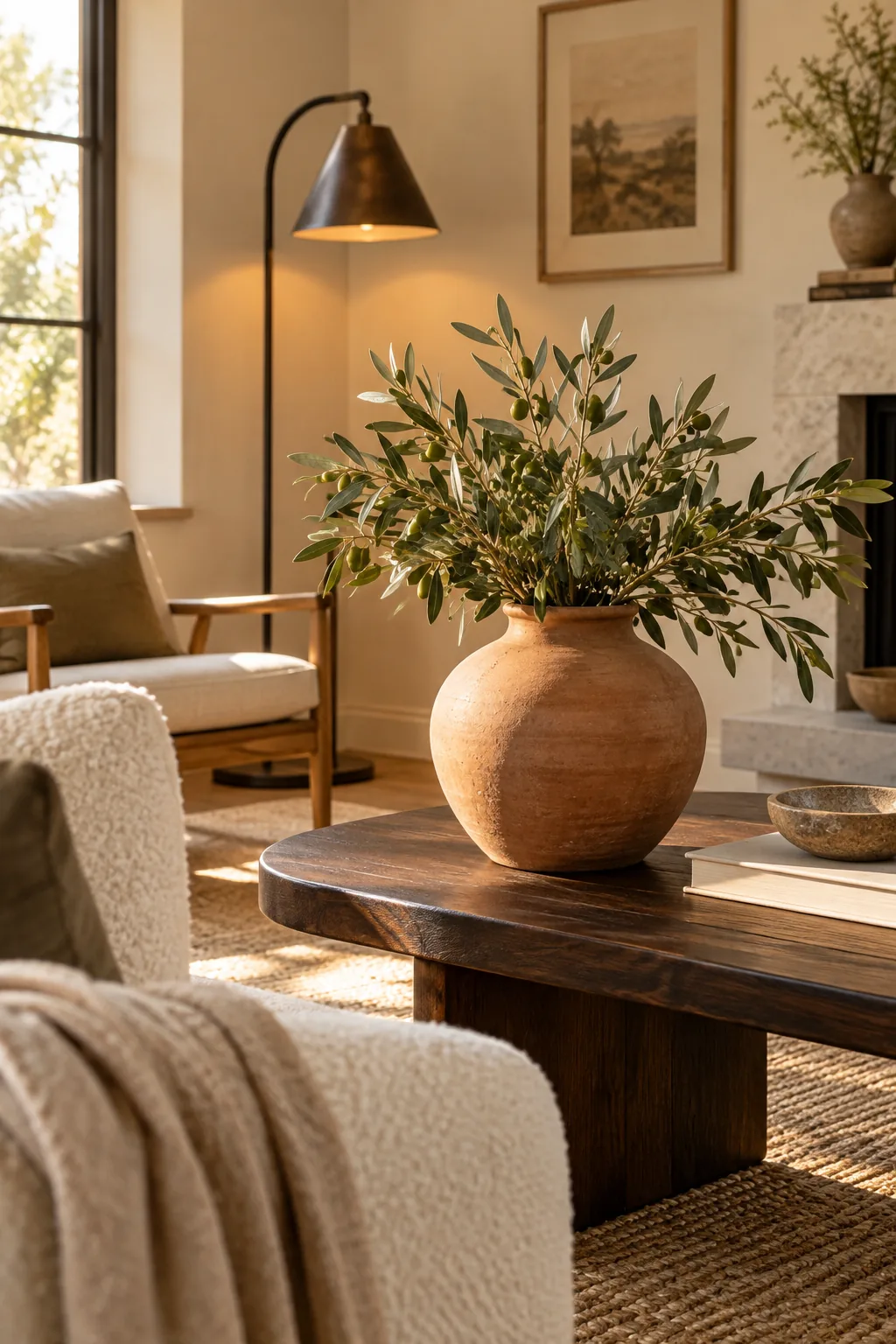
Because matte ceramics absorb rather than reflect light, they provide a beautiful, grounding contrast against highly polished wood surfaces.
Distributing Accent Colors
Limit your warm clay or rust accents to exactly three distinct points in the room to maintain strict visual intentionality. Scattering these tones between a vase, a woven throw, and a small art piece creates a seamless, predictable rhythm.
Introducing Organic Shapes
Offset the rigid, linear frames of your wood furniture by boldly integrating softly curved silhouettes into your styling. A rounded vase, a spherical lamp shade, or a gently arched mirror instantly softens the room’s geometric rigidity.
Selecting Natural Botanicals
Foraging for dried olive branches or preserved eucalyptus adds an architectural, organic element that requires zero morning maintenance. These muted green and silver leaves naturally bridge the gap between your warm clay accents and pale oak woods.
Selecting Artwork for Neutral Walls
Choose abstract pieces with expansive negative space rather than highly detailed, heavily saturated photographs. Framing these quiet canvases in pale oak creates a seamless visual bridge between your foundational wall color and your heavier accent furniture.
Setting the Mood with Light
Swap out any harsh, cool bulbs for a 2700K ambient glow in all your floor and table lamps. This specific color temperature flawlessly mimics early morning sunlight and casts an inviting wash over your textured surfaces.
Positioning these warm ambient sources at seated eye level eliminates harsh overhead shadows and instantly lowers your morning stress.
Positioning Ambient Fixtures
Keep your floor lamps roughly 36 inches away from the corners of your room to allow the warm light to bounce off the walls. This strategic spacing creates a glowing, diffused halo rather than a concentrated, glaring spotlight.
Managing Window Treatments
Hang unlined, sheer linen drapery panels as high and wide as your wall allows to beautifully frame the morning light. These lightweight textiles filter the harsh glare of the sunrise while adding another crucial layer of vertical softness.
Curating the Morning Coffee Station
Keep your central table styling highly intentional, dedicating the surface primarily to your morning rituals. Leave a minimum of 18 inches of clear, unobstructed space for your coffee mug, a favorite book, and a natural stone coaster.
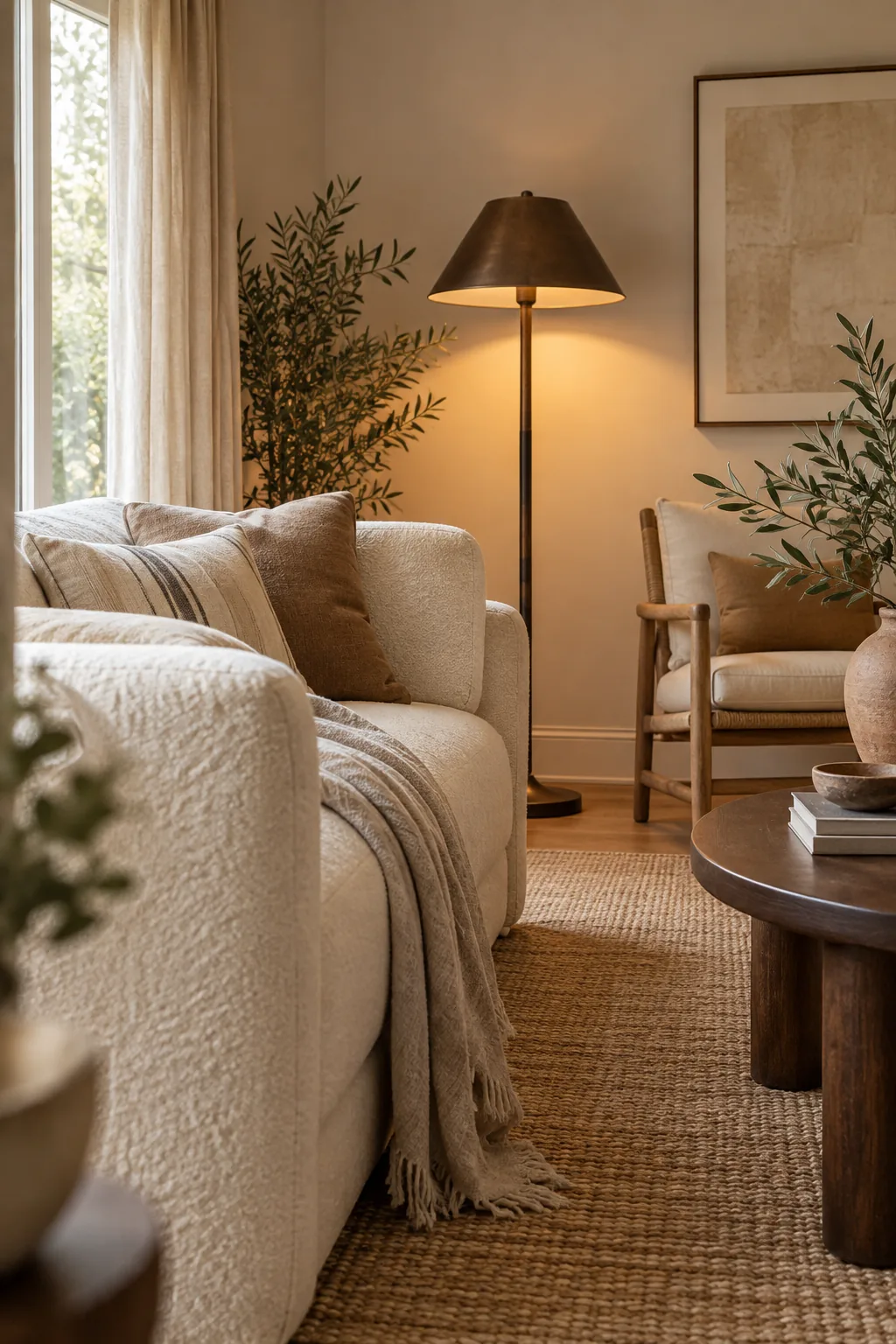
Organizing Tabletop Accessories
Corral your remote controls, matchbooks, and small styling objects into a single, low-profile wooden or leather tray. This simple containment strategy transforms a potentially cluttered surface into a highly curated, peaceful focal point.
More Warm Neutral Living Room Ideas
Explore these distinct variations on the warm neutral palette to find the perfect mood for your home.
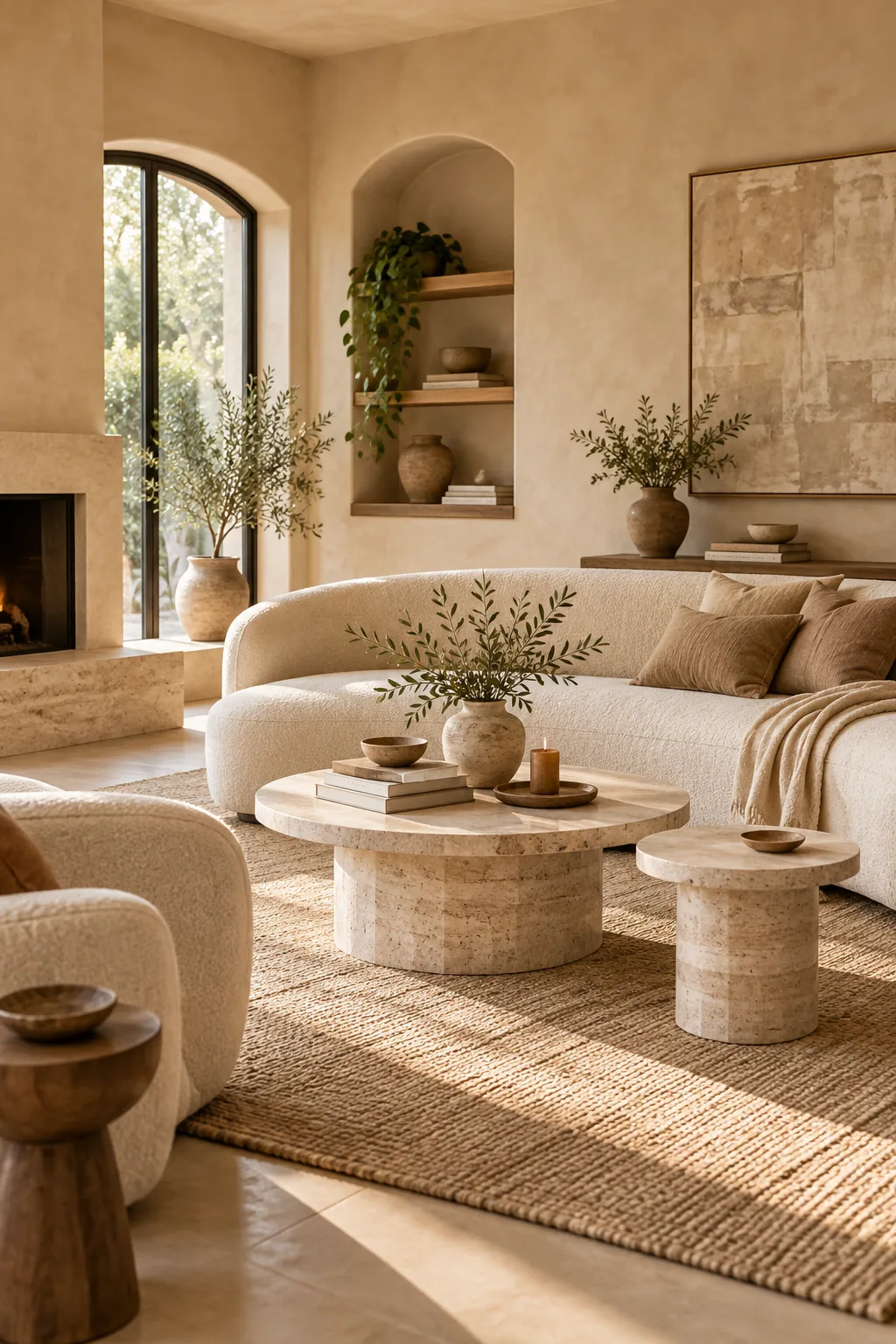
Modern Organic Sand and Plaster: Embrace soft curves and raw materials by pairing a rounded bouclé sofa with textured plaster walls.
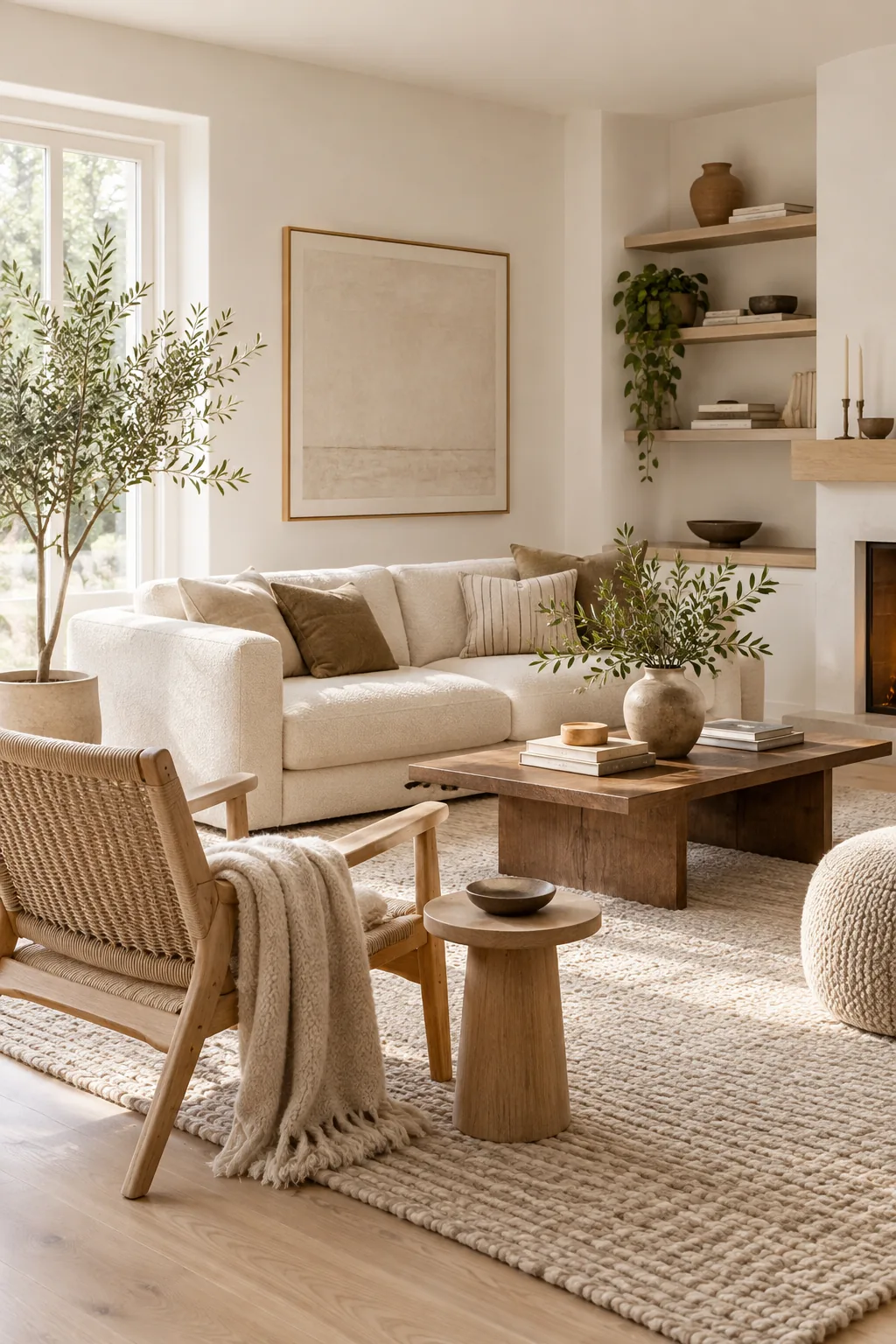
Scandi Minimalist Ash and Wool: Keep the space ultra-bright with stark white walls while adding coziness through heavy wool throws.
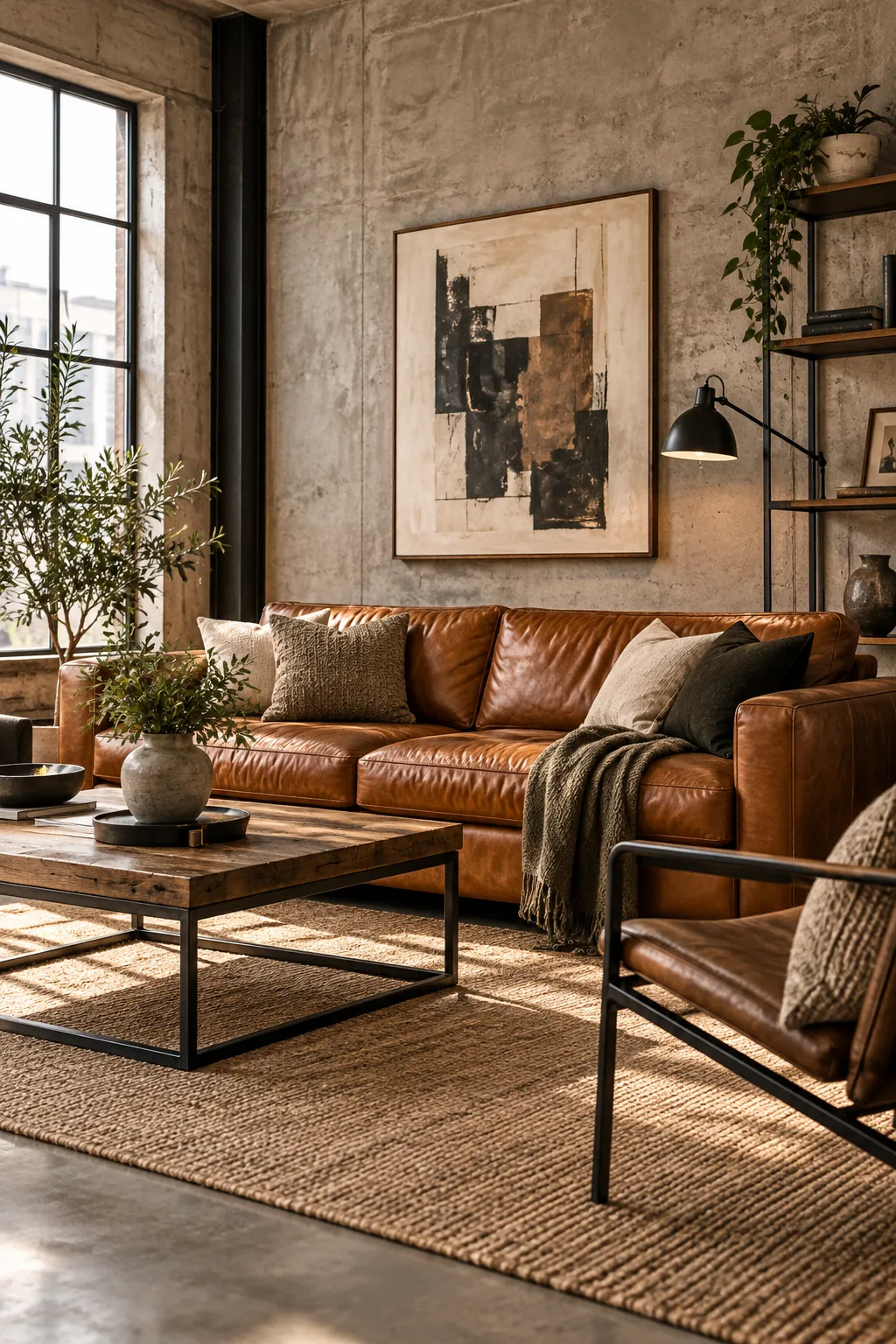
Warm Industrial Leather and Concrete: Balance the cool tones of exposed concrete with the rich, inviting warmth of a cognac leather sofa.
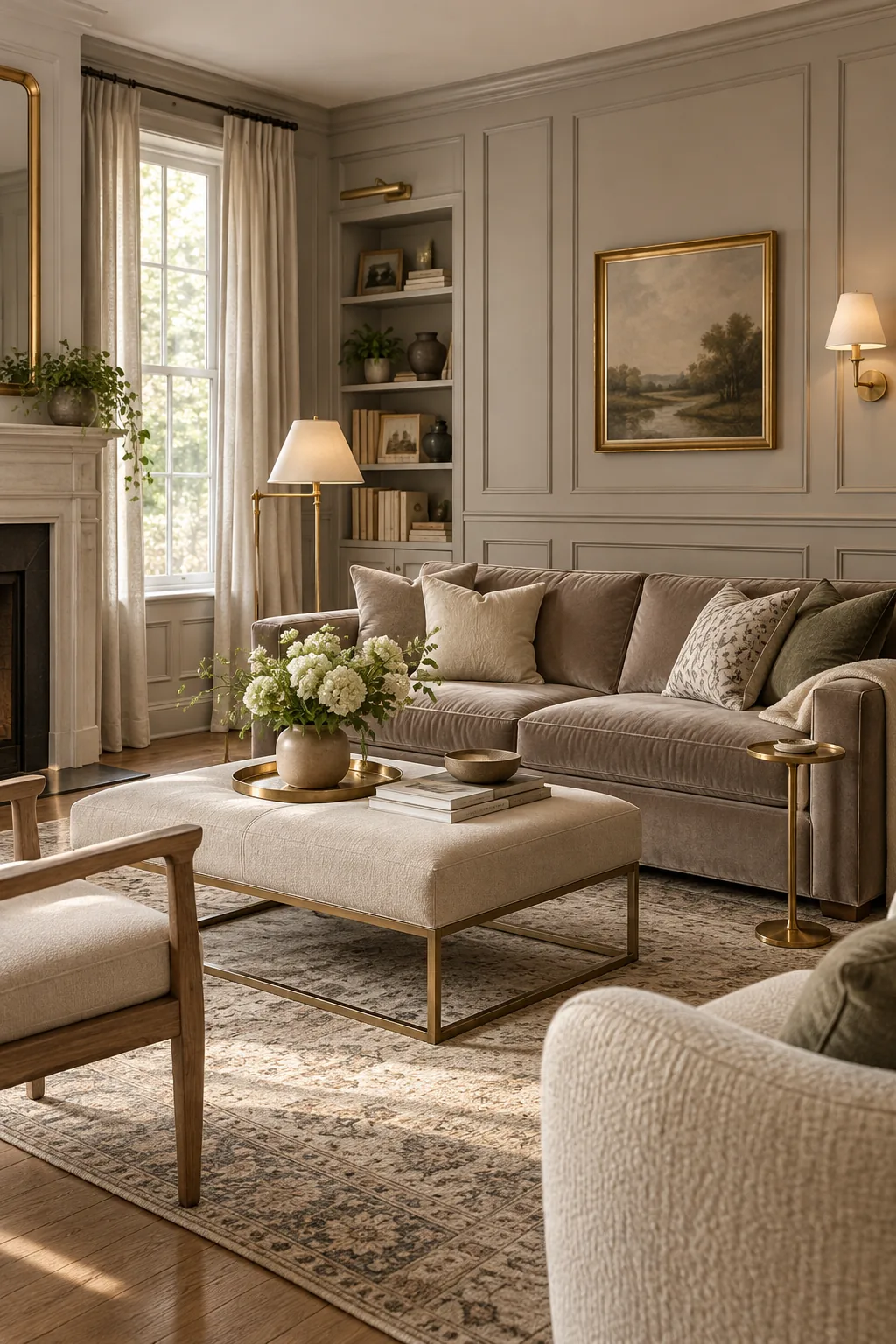
Transitional Elegance Greige and Brass: Elevate a neutral palette by incorporating classic wainscoting and luxurious unlacquered brass light fixtures.
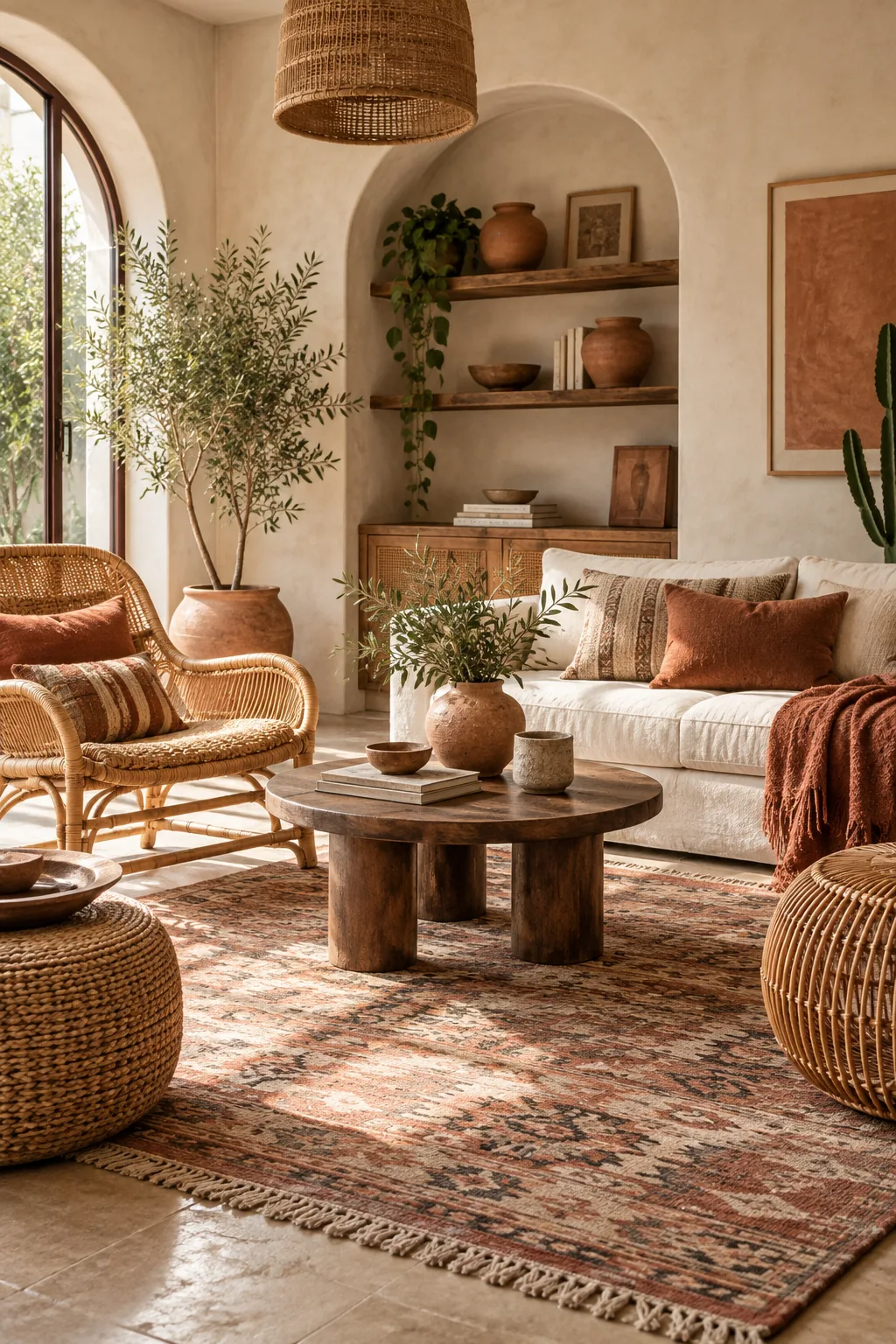
Desert Boho Rattan and Terracotta: Layer earthy terracotta tones over a faded kilim rug to create a relaxed, sun-baked atmosphere.
The Neutral Layering Checklist
Use this step-by-step review to evaluate your own living room directly from the primary doorway. Check off your wood mix, texture variations, metal anchors, and lighting temperature to ensure a perfectly balanced, cohesive space.
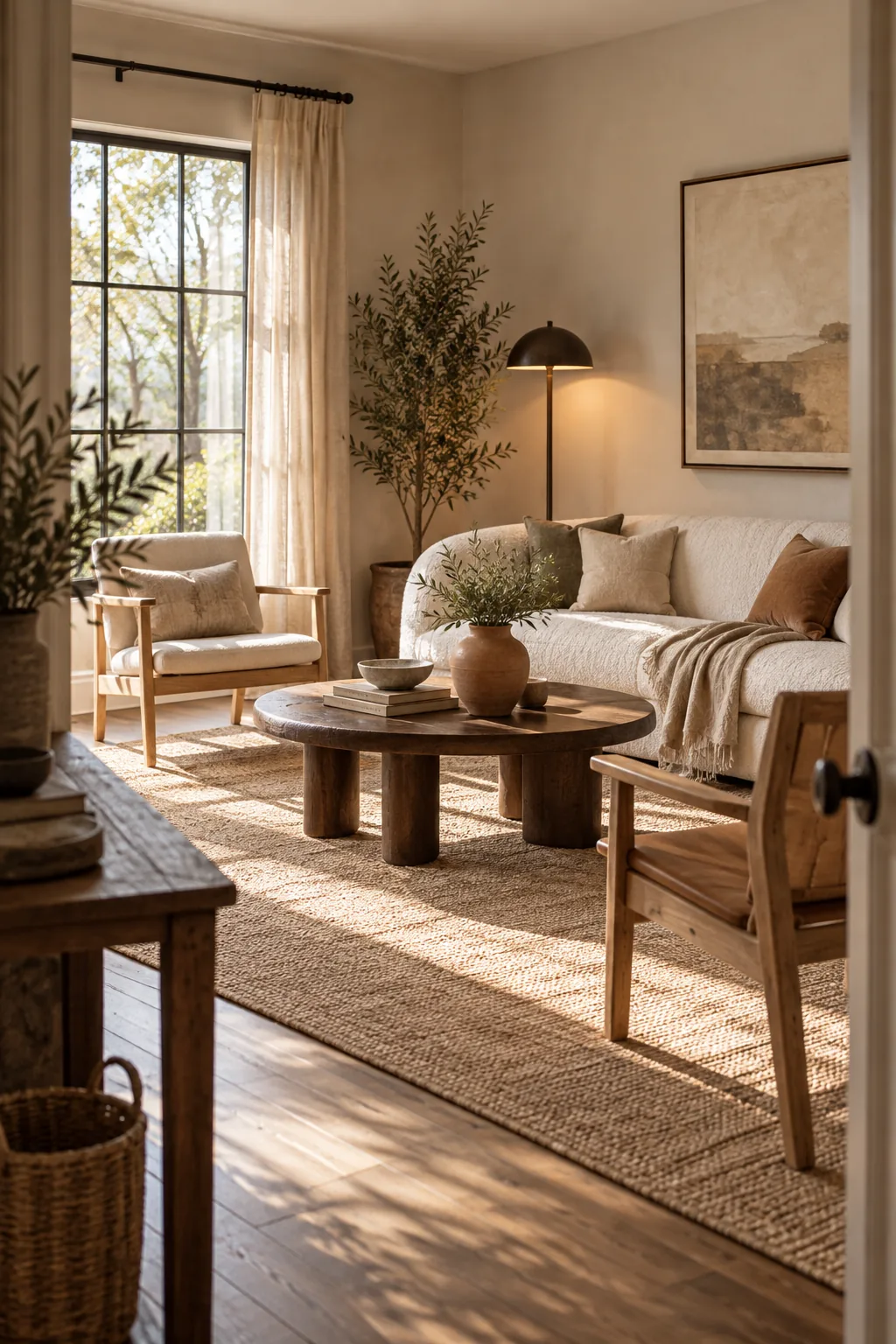
Before finalizing your living room setup, run through this quick layering checklist to ensure every single element works together harmoniously.