
One Porch, 11 Time-Travel Styles
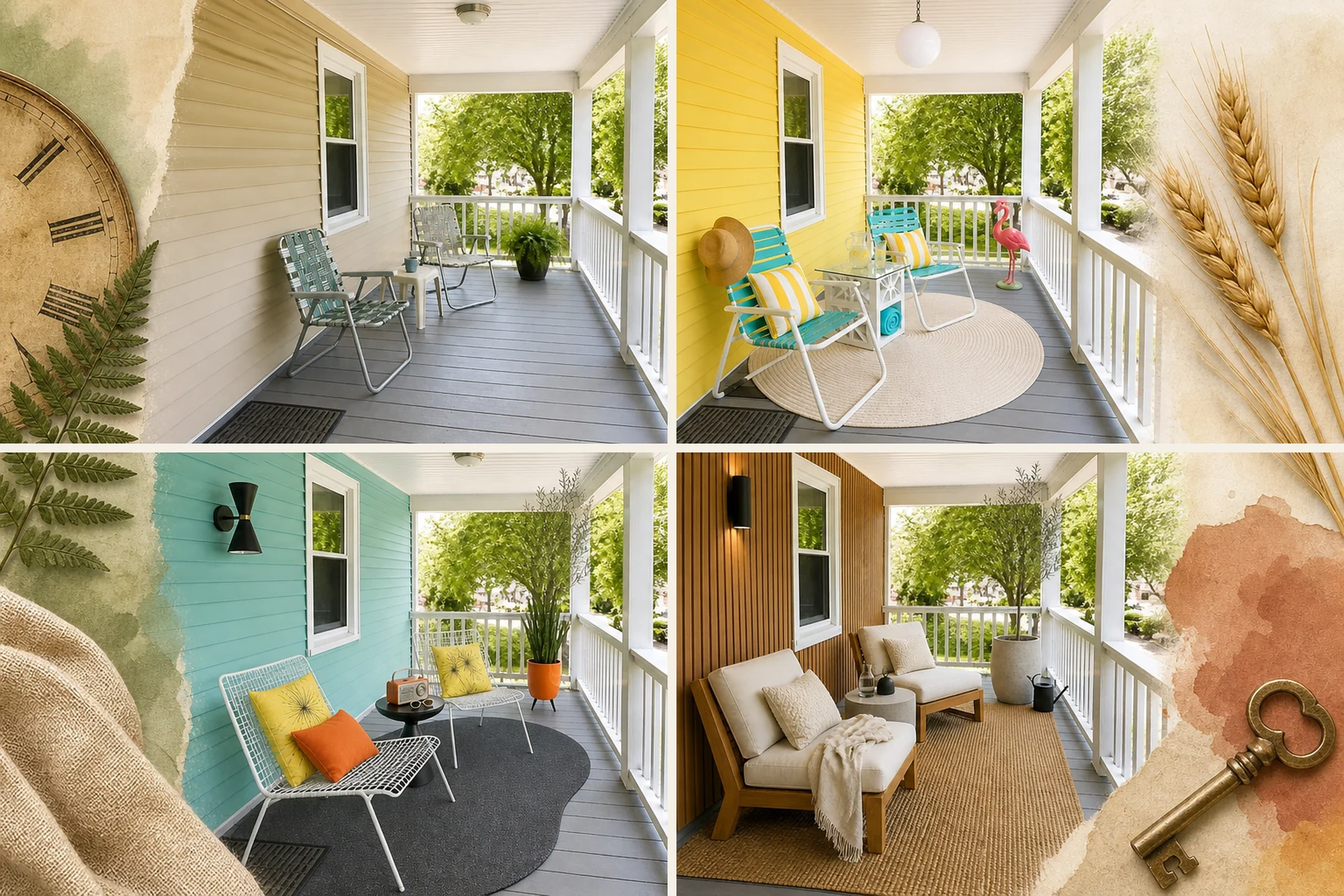
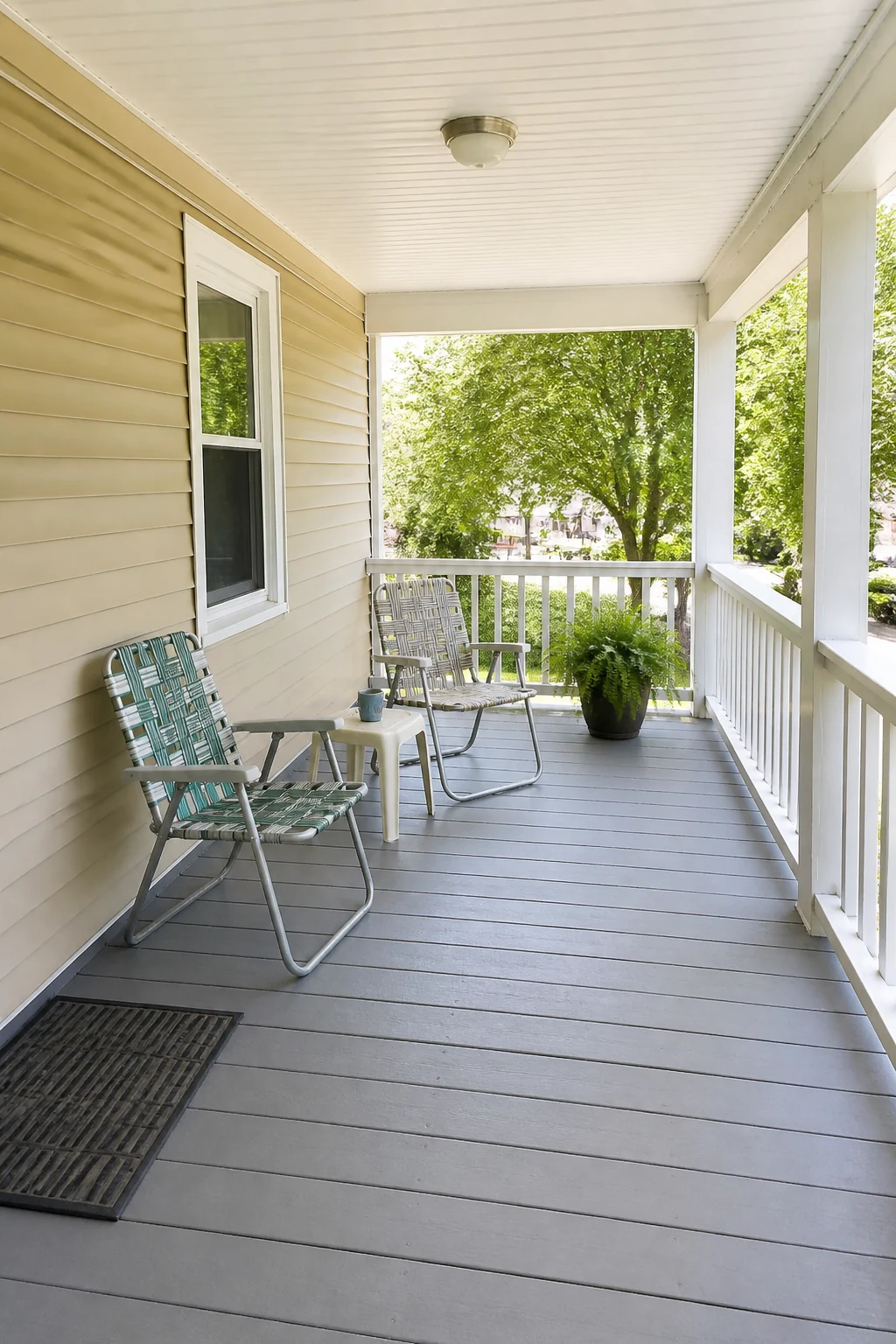
Watch a standard 8×16 front porch transform through thirteen decades of design history. While the basic deck remains untouched, this decade-by-decade styling checklist details the exact furniture silhouettes, color palettes, and signature materials needed to recreate each historical era.
1890s Victorian: Romantic Wicker and Moody Hues
To capture a late-nineteenth-century aesthetic, we painted the existing siding a dark sage green. This deep backdrop immediately highlights the ornate rolled-arm white wicker seating. We then introduced deep burgundy floral tapestry cushions to establish a romantic, moody atmosphere.
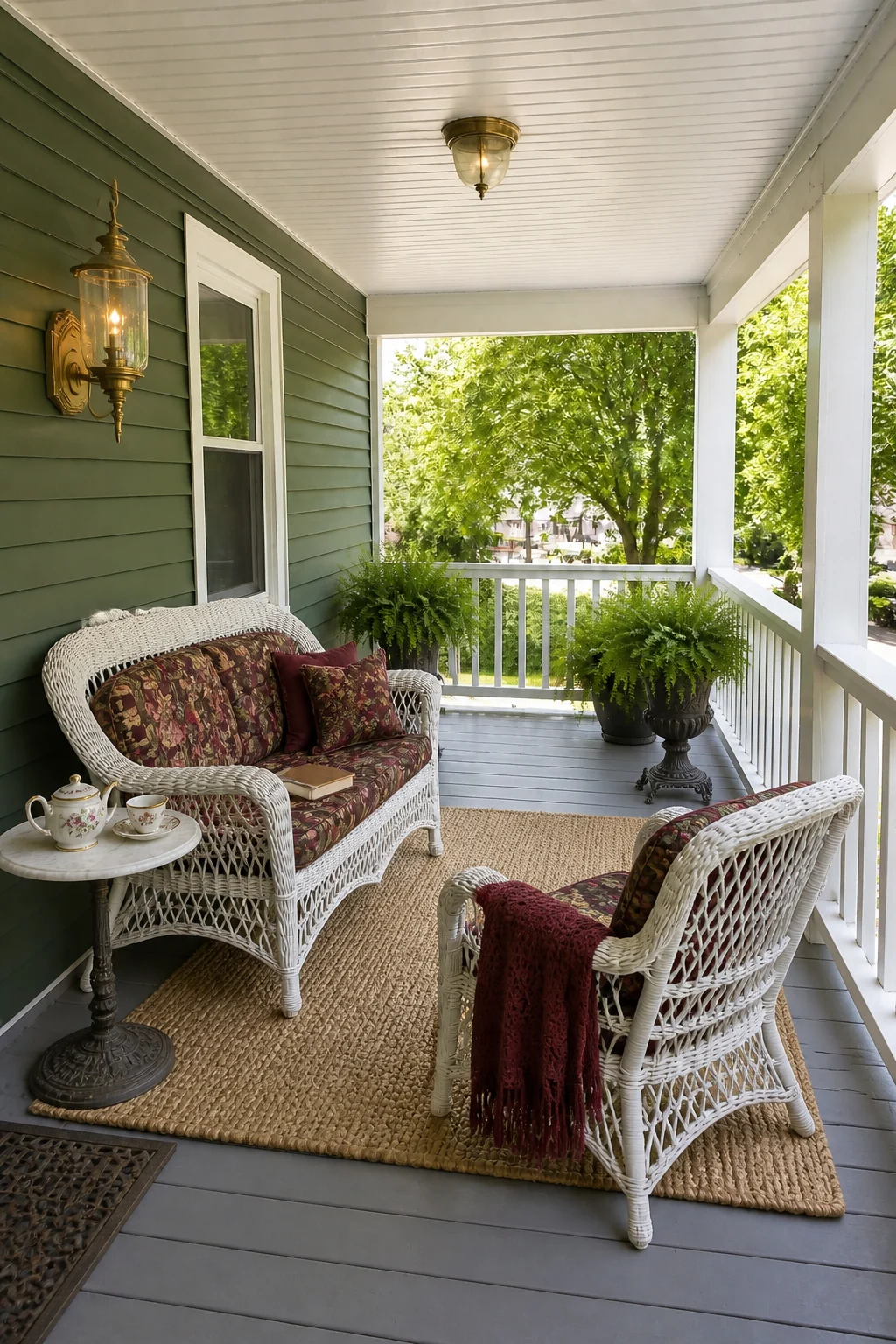
The dramatic contrast of dark walls against bright white furniture creates an instantly recognizable historical outdoor parlor without altering the porch structure. Elevating large Boston ferns on heavy cast-iron urns adds necessary vertical romance, while the woven tapestry fabrics require covered protection from heavy rain to maintain their rich dyes.
Essential 1890s Elements
1910s Craftsman: Sturdy Oak and Earthy Tones
We overlaid the standard exterior with dark-stained wood shingle panels to build a rugged architectural foundation. Heavy quartersawn oak rocking chairs replace lightweight seating, grounding the narrow footprint. Olive green and brick red geometric cushions complete this sturdy, nature-inspired transformation.
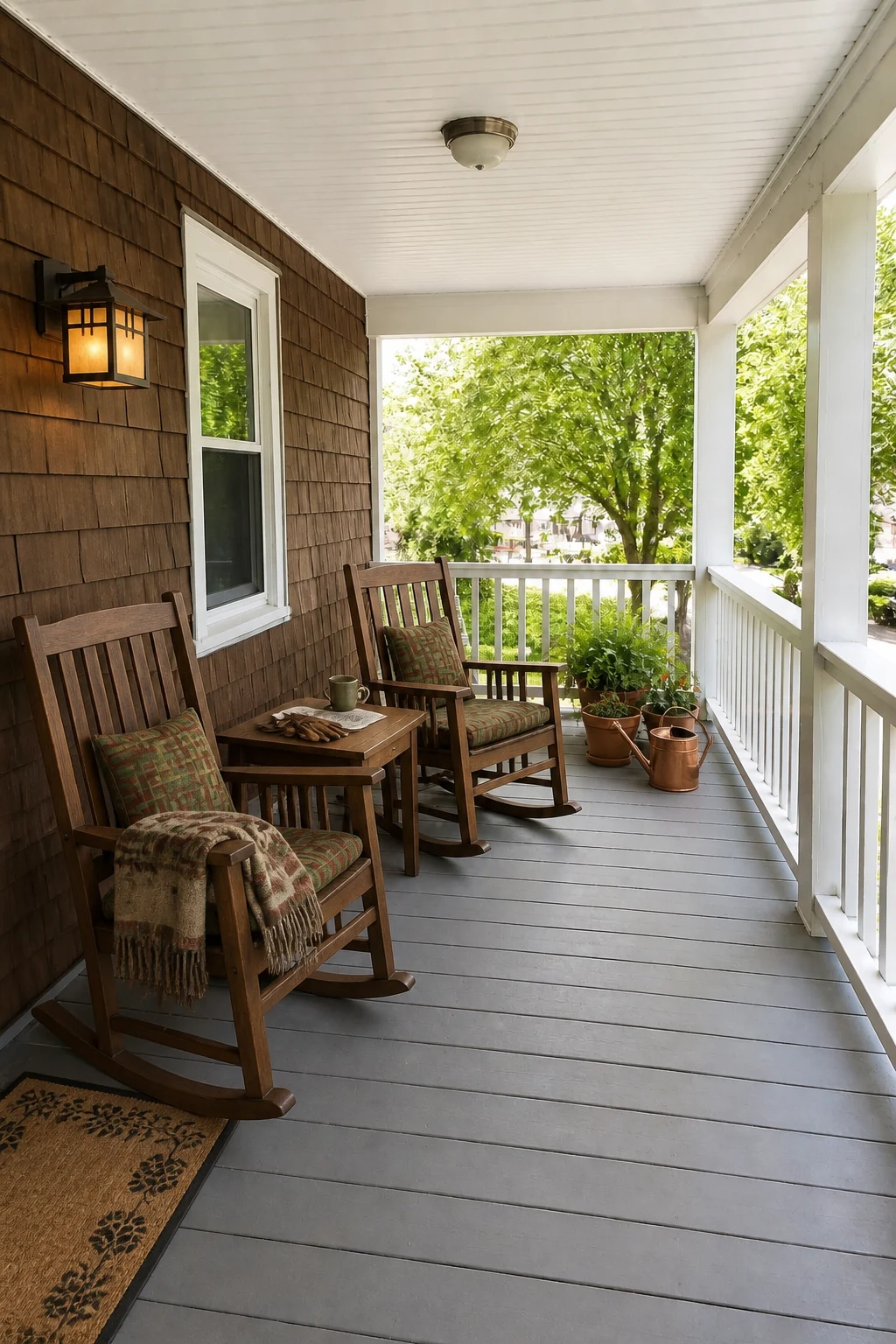
These removable shingle panels instantly shift the era, providing a textured backdrop that supports the heavy visual weight of Mission-style furniture. The warm oak tones and hammered copper accents appeal strongly to bungalow owners, though the solid wood frames require periodic oiling to prevent weather-related splitting.
1920s Art Deco: Streamlined Glamour and Pastels
This glamorous Jazz Age update starts with smooth pastel pink wall panels. We arranged streamlined tubular steel lounge chairs featuring taut black canvas slings. Bold black and gold fan-patterned pillows and a frosted glass globe sconce add striking geometric contrast.
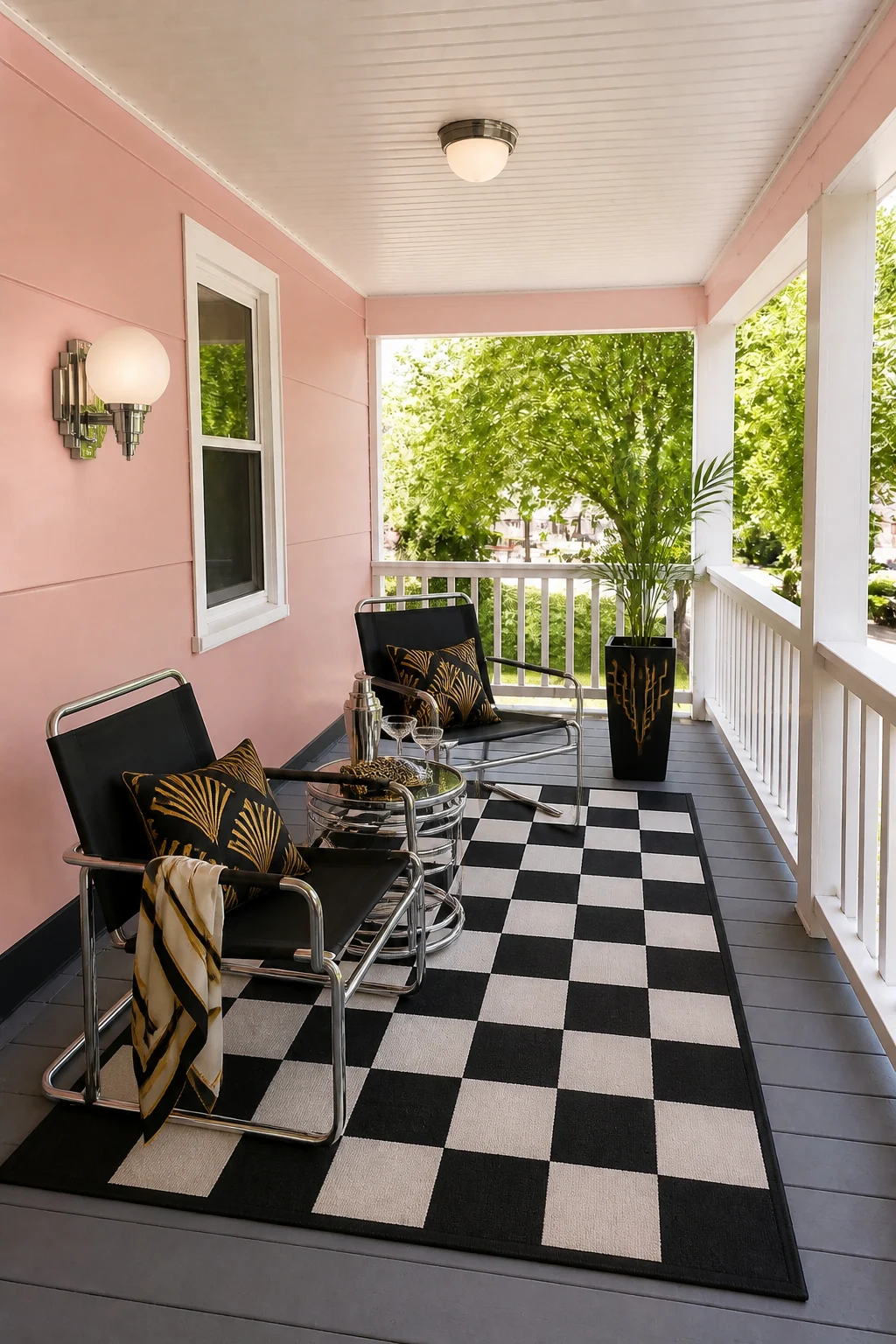
Unexpected pastel color blocking paired with stark black accents creates a high-fashion entertaining space. The sleek tubular steel and mirrored surfaces reflect light beautifully across the deck, making this cocktail-ready styling incredibly easy to wipe down after an evening gathering.
1930s Great Camp: Rugged Bark and Buffalo Check
We covered the neutral wall with bark-edge half-log siding to channel a nostalgic wilderness cabin. Classic forest green wooden Adirondack chairs provide deeply angled, relaxed seating. Layered red and black buffalo check wool textiles and a punched-tin lantern finish the rugged retreat.
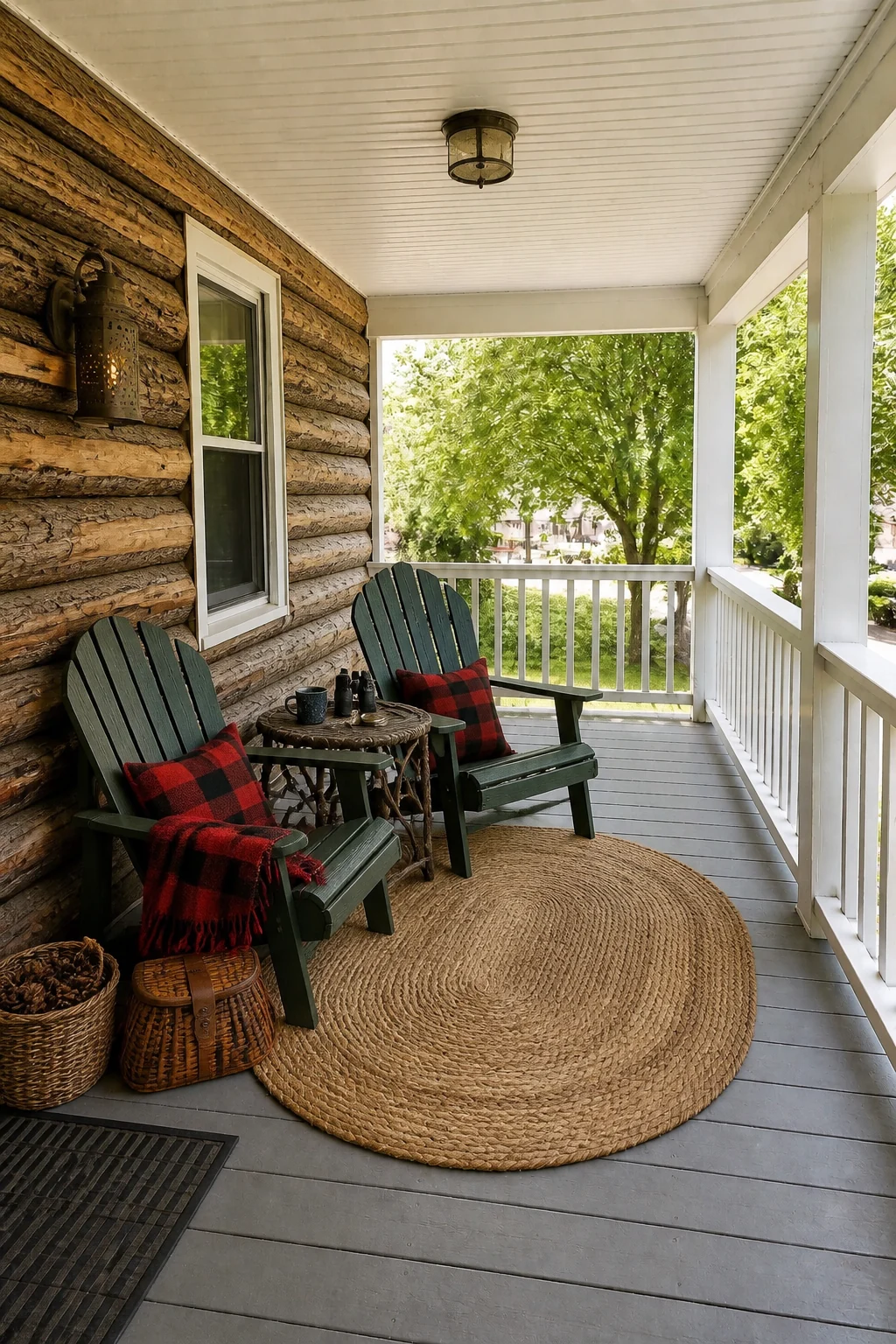
This cozy aesthetic provides a dramatic textural shift from a standard painted porch by leaning heavily into raw bent twigs and natural bark. The universally welcoming buffalo check patterns instantly warm up the space, though the deep-seated Adirondack chairs demand slightly more floor space to navigate around comfortably.
Cabin Retreat Sourcing
- Classic wooden Adirondack chairs
- Woven twig side tables
- Buffalo check outdoor pillows
- Punched tin wall lanterns
1950s Mid-Century: Atomic Optimism and Wire Frames
We painted the siding a cheerful aqua blue to capture atomic-era optimism. White powder-coated wire lounge chairs with slim hairpin legs keep the sightlines completely open. Lemon yellow atomic starburst cushions and a matte black bow-tie sconce introduce playful, space-age geometry.
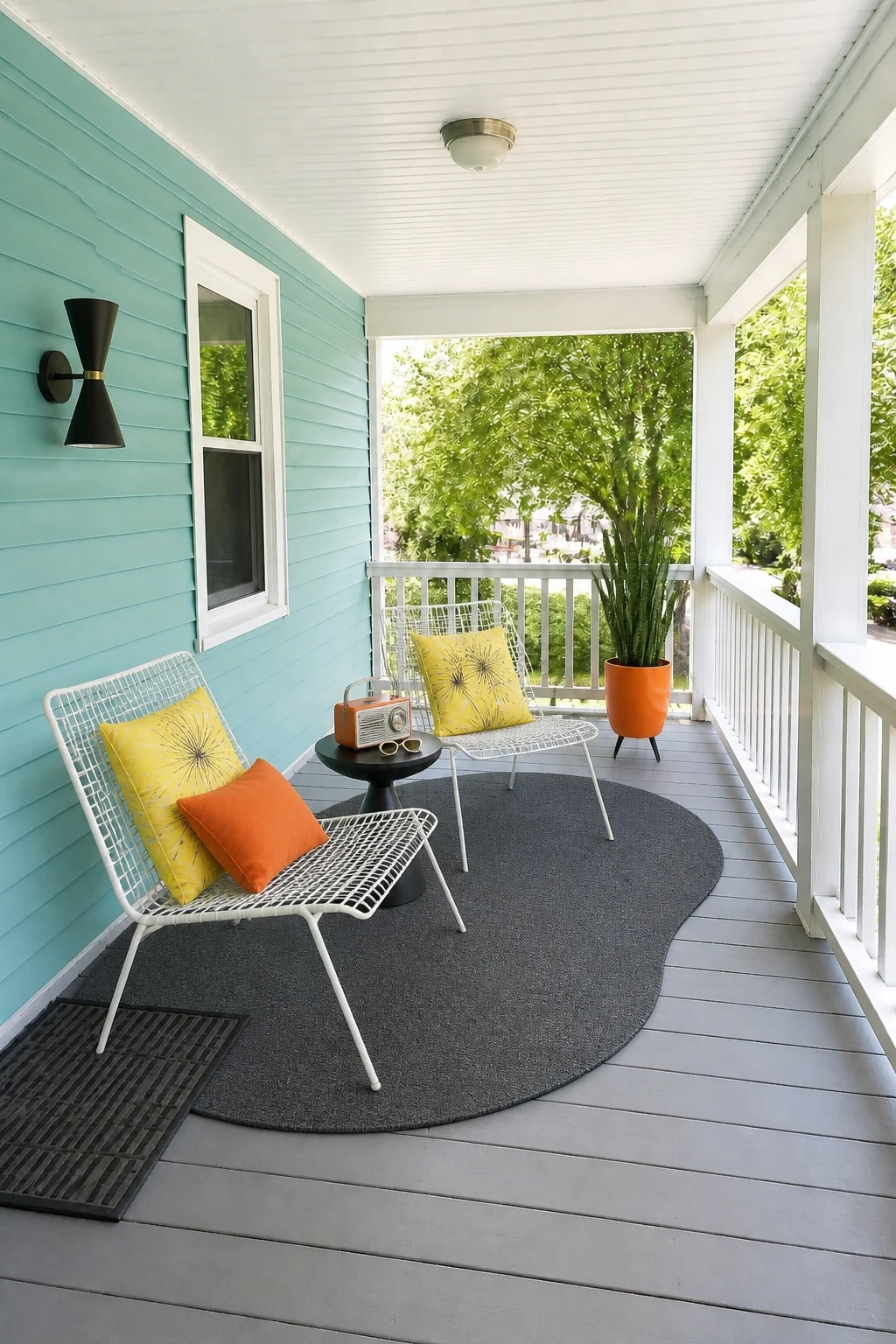
The vibrant aqua wall and iconic wire silhouettes scream mid-century style while keeping the narrow deck feeling open and airy. Bright orange spun-aluminum planters reinforce the era’s bold geometry, and the powder-coated metal seating dries almost instantly after a summer rainstorm.
1960s Palm Springs: Vibrant Resort Style
This sunny vacation mood begins with a bright canary yellow exterior wall. We set up white aluminum lounge chairs featuring wide turquoise vinyl strapping. Yellow and white cabana-stripe pillows and a white breeze-block side table capture the ultimate poolside aesthetic.
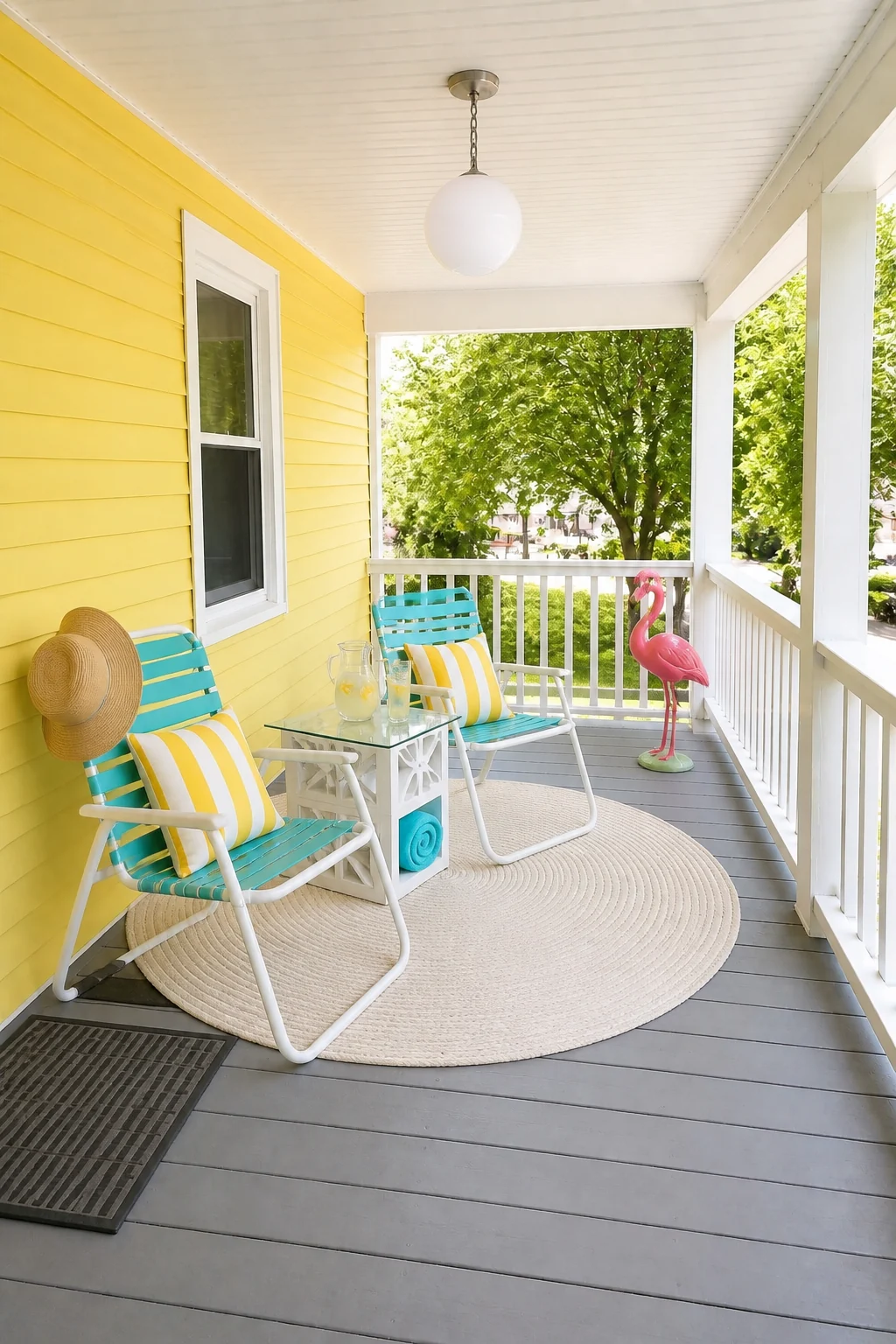
High-impact yellow walls paired with wide cabana stripes create an irresistible resort-style lounging area right at the front door. The glossy pink ceramic flamingo and crisp white breeze-blocks perfectly balance these saturated color palettes, while the vinyl strap seating offers incredibly low-maintenance durability.
1970s Bohemian: Earthy Rattan and Trailing Plants
We grounded this relaxed layout by painting the siding an earthy matte terracotta. A large natural rattan peacock chair serves as the dramatic focal point. We hung multiple spider plants in knotted macrame planters and added mustard yellow shag textiles.
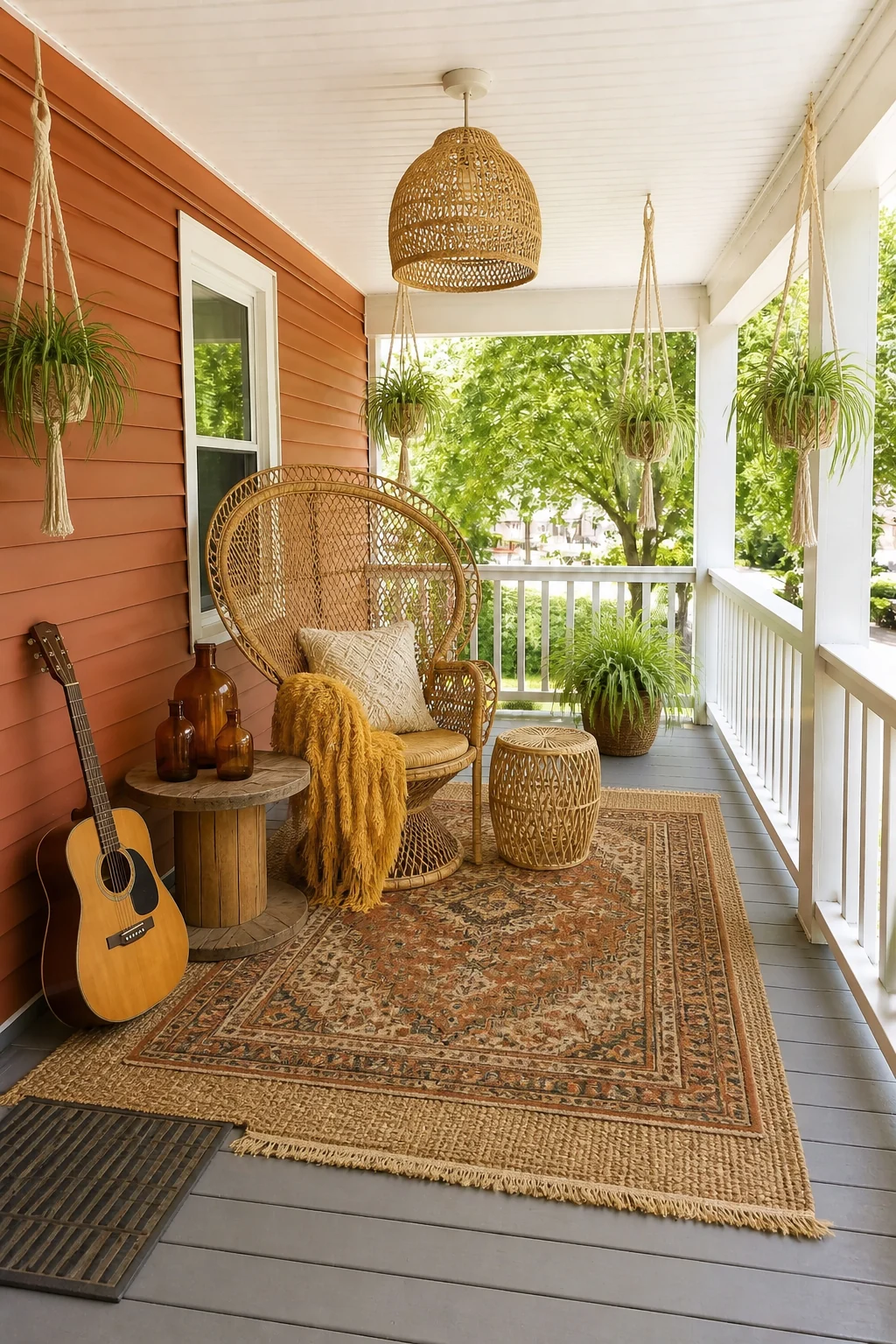
The iconic peacock chair and abundance of hanging greenery instantly communicate a free-spirited outdoor lounge. Grounding the space with warm terracotta walls and layered vintage-style rugs softens the wooden deck, though the intricate rattan requires placement away from direct, harsh sunlight to prevent premature bleaching.
1980s Postmodern: Memphis Geometry and Primary Colors
We applied a bold pastel and primary mural over the stark white siding. Chunky, glossy plastic chairs in red and blue dominate the seating arrangement. Black and white squiggle-print pillows and clear glass blocks push the polarizing Memphis-style geometry further.
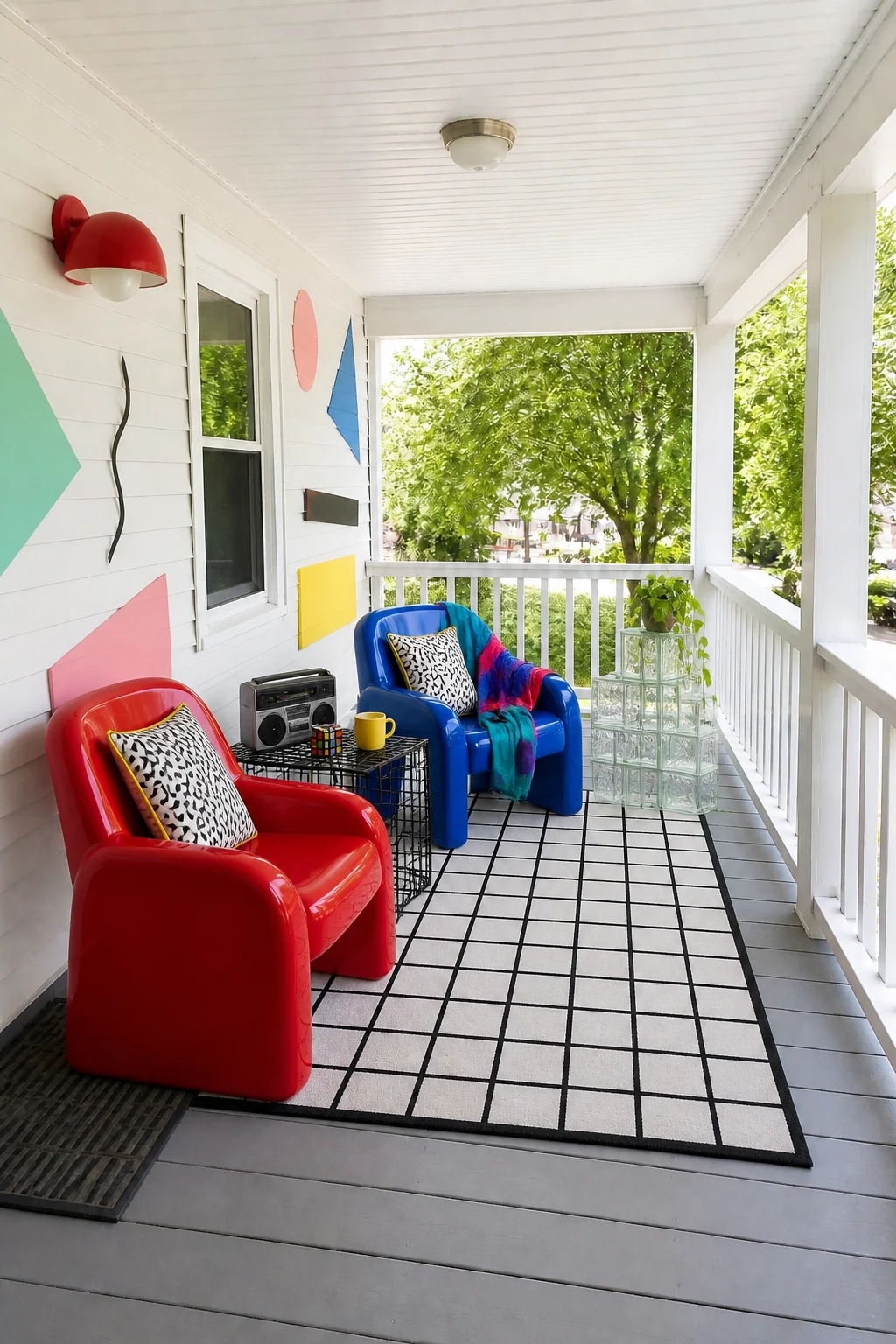
This highly trendy approach stands out dramatically by treating the porch as a graphic architectural canvas. The stark white background allows the primary-colored silhouettes to pop without overwhelming the small space, and the glossy plastic surfaces are exceptionally easy to wipe clean.
Where to Spend for Memphis Style
Invest heavily in one or two chunky, high-gloss sculptural chairs to anchor the look. You can easily save your budget by using inexpensive wire grid cubes or salvaged glass blocks for side tables.
1990s Shabby Chic: Distressed Wood and Soft Florals
We installed removable distressed whitewashed beadboard to mask the generic suburban exterior. A faded rose floral slipcovered armchair and a chipped white crate table embrace deliberate imperfection. Ruffled pale blue linens and an outdoor-rated crystal chandelier complete the romantic cottage feel.
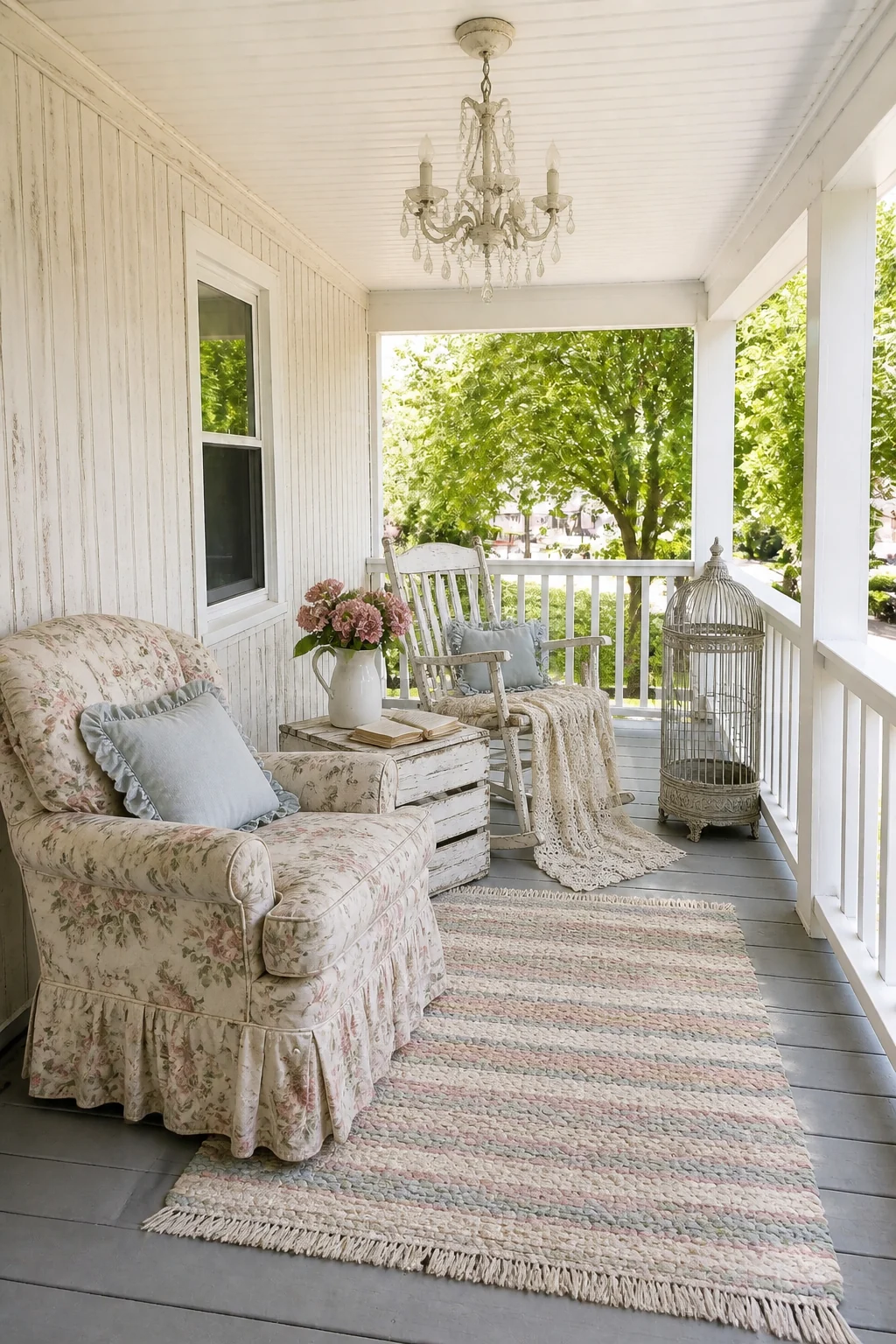
The heavy use of distressed white finishes and faded florals taps into deep nostalgia for a cozy, romantic retreat. Layering ruffled linens creates a heavily textured, forgiving environment that embraces wear and tear, making the washable slipcovers ideal for high-traffic entryways.
2010s Modern Farmhouse: High-Contrast Board and Batten
We covered the siding with crisp white board-and-batten panels for a clean, timeless foundation. Matte black metal spindle-back rocking chairs provide stark, high-contrast seating. Black and white buffalo check pillows and a metal gooseneck barn light finish the quintessential suburban look.
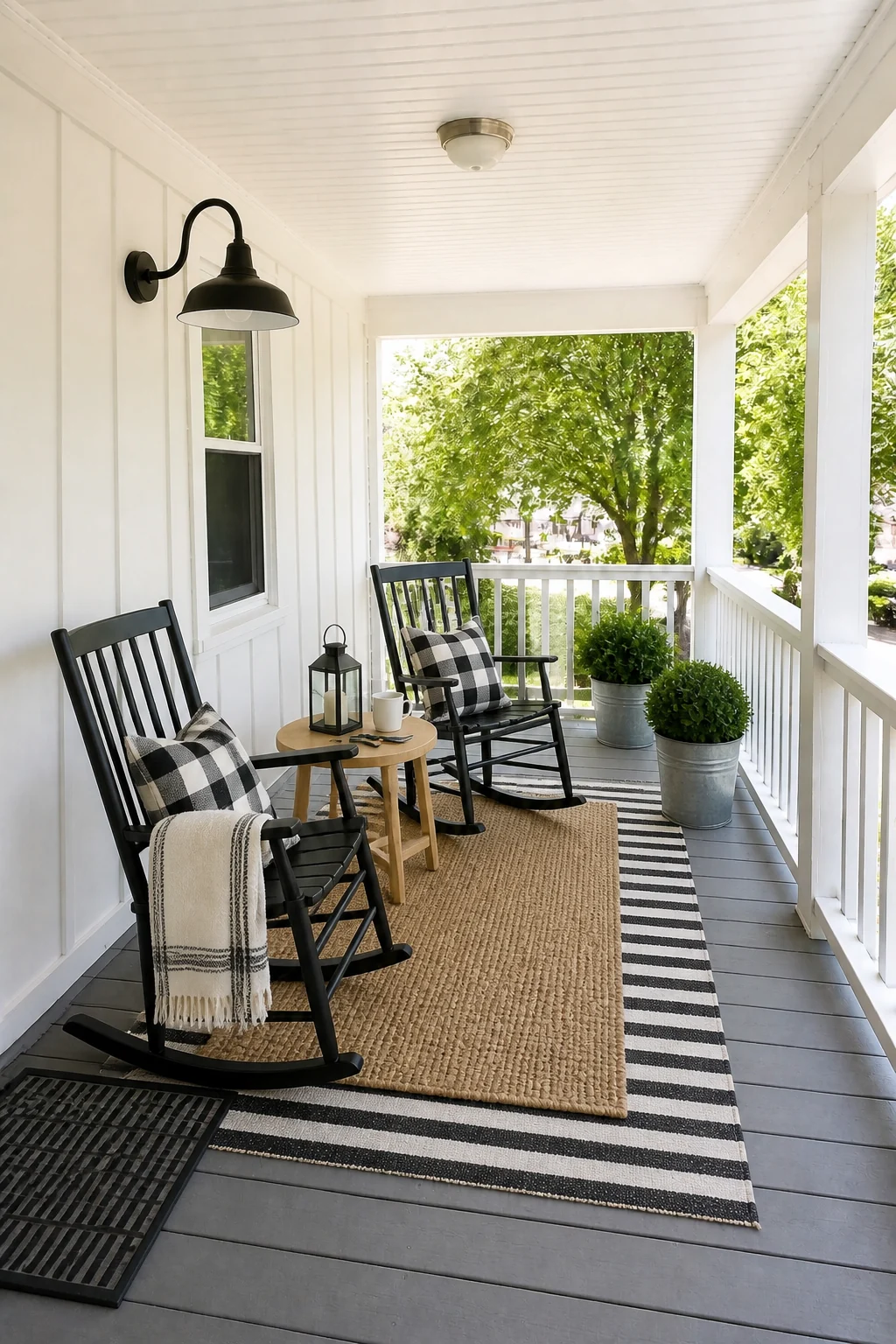
This extremely popular black and white palette offers a welcoming entry that feels both trendy and timeless. Galvanized olive buckets and grain-sack stripes introduce just enough rustic texture to keep the stark white walls from feeling sterile, while the metal Windsor chairs easily withstand harsh weather.
2020s Organic Modern: Warm Cedar and Minimalist Lines
We installed removable vertical natural cedar slats to add immediate architectural warmth. Low-profile solid teak lounge chairs with thick cream cushions offer a luxurious, spa-like resting place. A heavy raw concrete drum table and textured boucle pillows emphasize serene, biophilic materials.
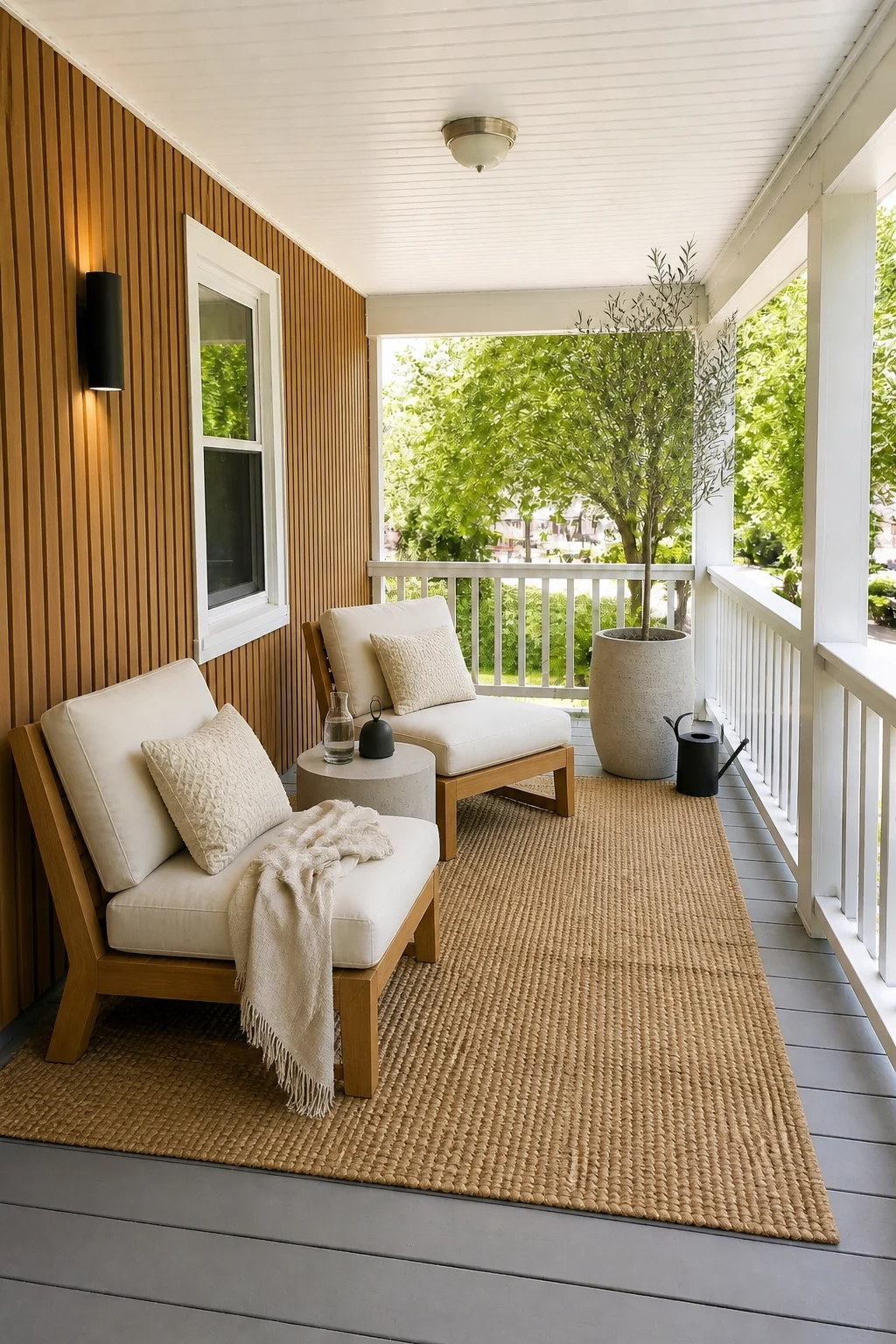
Warm vertical cedar slats immediately elevate the basic porch into an aspirational contemporary retreat. The combination of low-profile teak frames and raw concrete planters delivers a calming atmosphere, though the thick cream cushions require dedicated off-season storage to maintain their pristine appearance.
Choosing Your Era
Your ideal style depends on local environmental constraints. For strict HOAs, the 2020s Organic Modern uses removable cedar slats instead of bold paint. If you face high pollen exposure, the 1990s Shabby Chic aesthetic offers forgiving distressed finishes and washable slipcovers. For narrow footprints needing visual breathing room, the 1950s Mid-Century design utilizes transparent wire chairs to prevent the deck from feeling cluttered.