
One Small Office, 12 Historic Styles
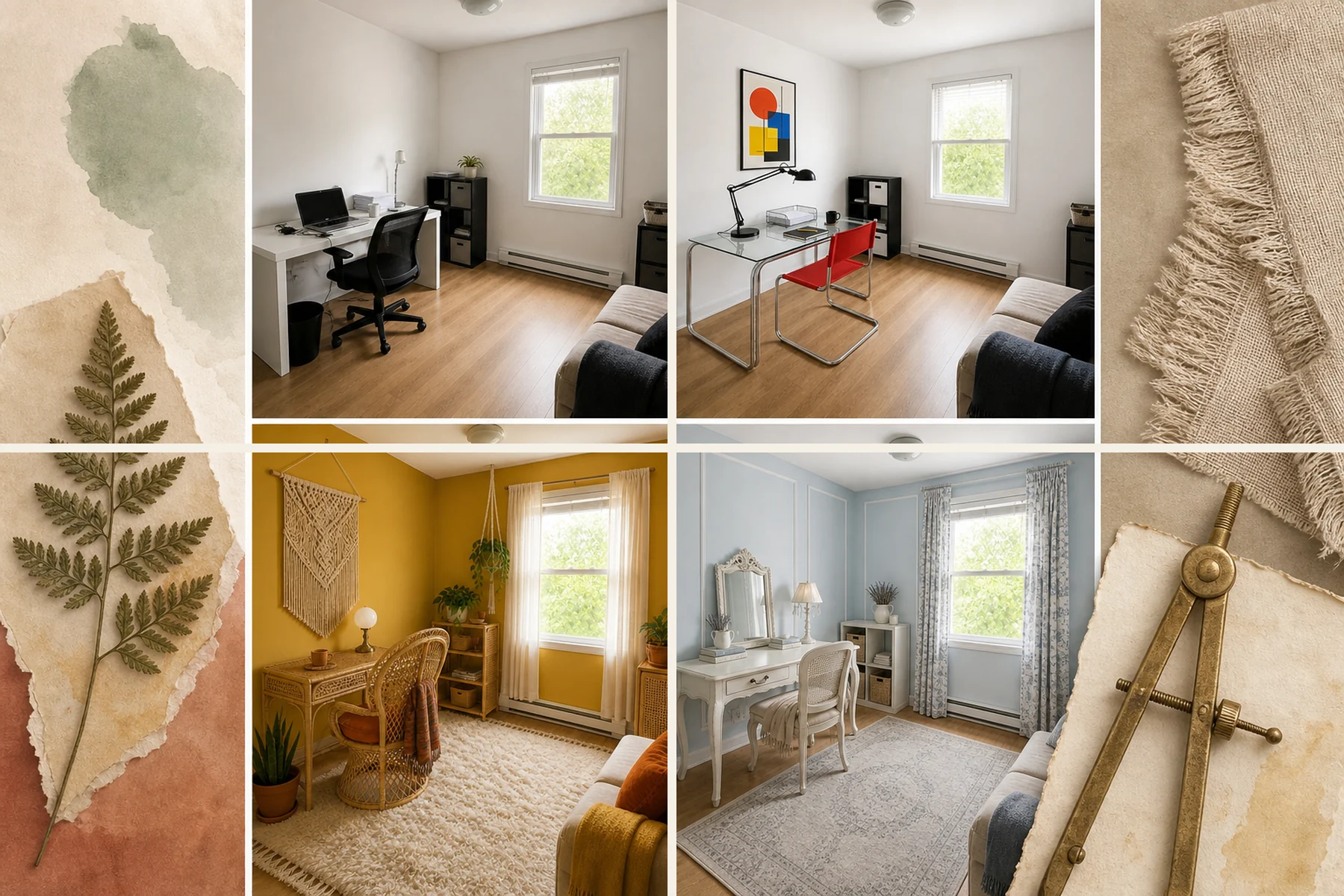
Watch a basic ten-by-ten workspace travel through time without altering its standard window, ceiling height, or baseboard heater. You will get a period-accurate styling checklist for each era, detailing the exact wood tones, metal finishes, and textile patterns needed to achieve the historic look without structural renovations.
Georgian Traditional
To establish an authoritative 18th-century atmosphere, we applied deep hunter green paint and removable picture molding to the walls. We swapped the generic furniture for a polished mahogany pedestal desk and a tufted leather wingback chair. Finally, we layered a traditional Persian-style rug and heavy velvet curtains to complete the transformation.
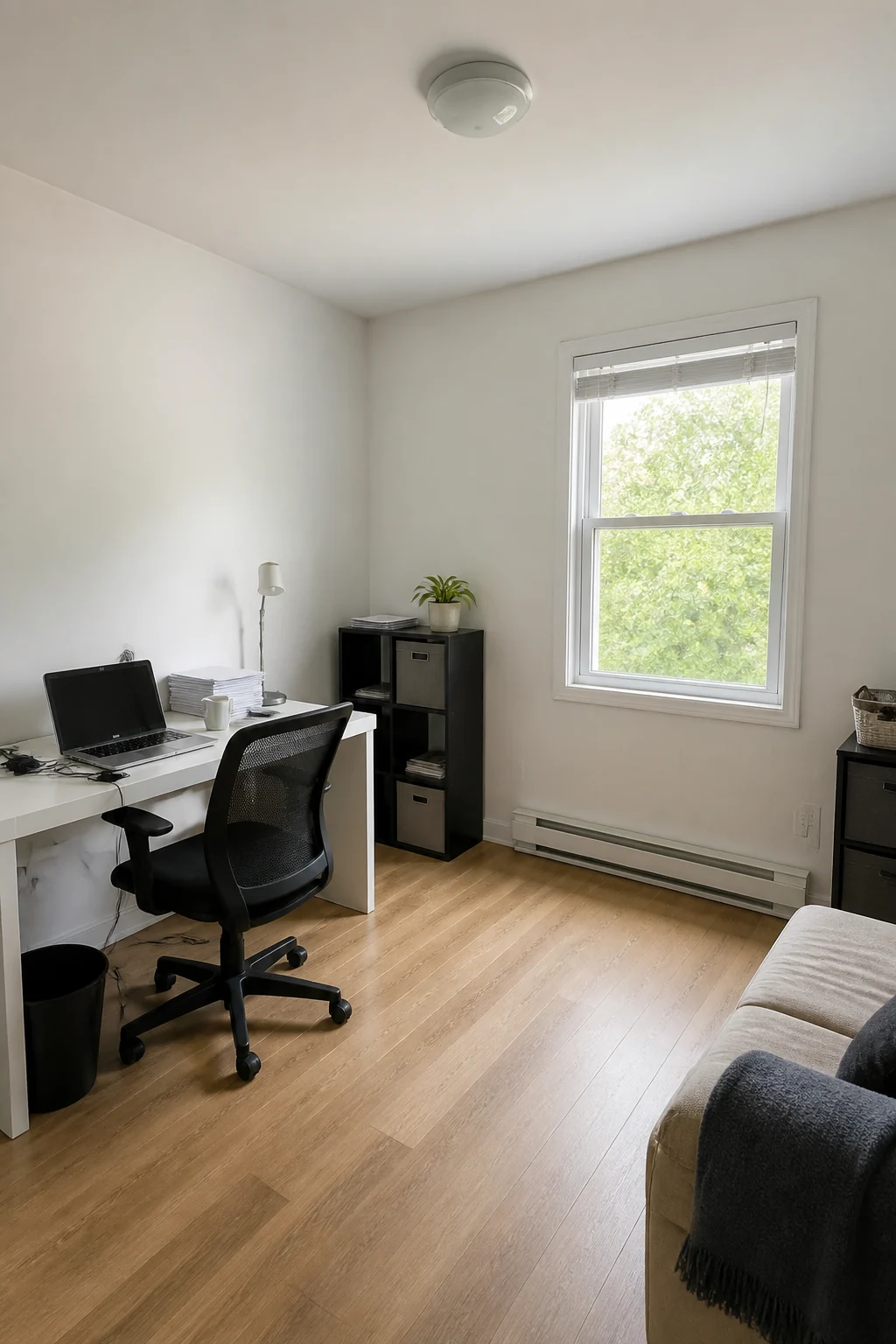
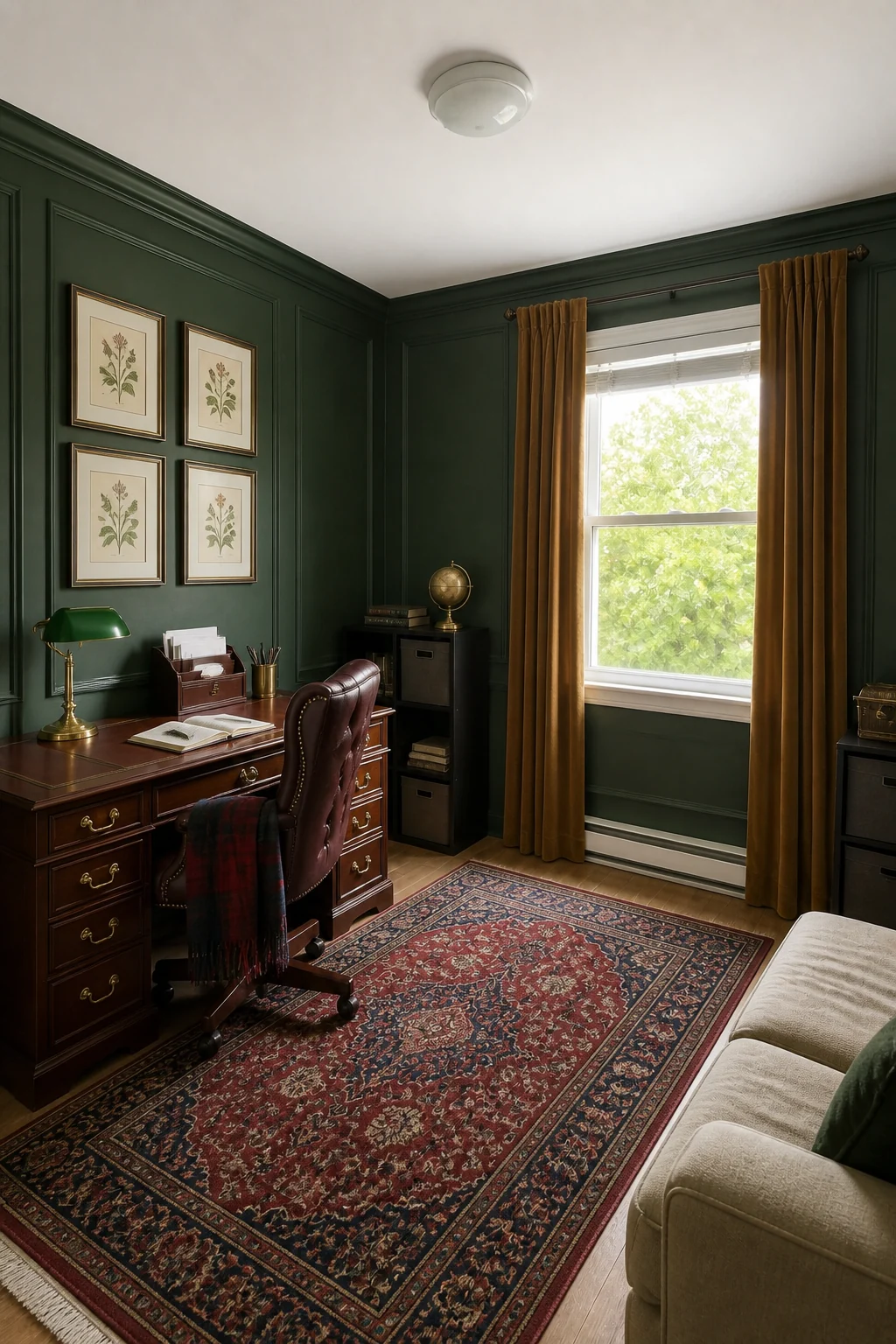
The rich mahogany wood tones and aged brass finishes instantly elevate the small footprint into a distinguished study. By anchoring the center floor with a deep red and navy wool rug, the room feels grounded and absorbs sound effectively, while the dark walls require ample task lighting to prevent eye strain.
Georgian Era Essentials
Shaker Simplicity
We coated the walls in a warm white matte paint and installed a continuous wooden peg rail at two-thirds wall height. The modern desk was replaced with a solid cherry trestle desk and a woven ladderback chair. Removing the rugs entirely exposes the bare oak floors, emphasizing the era’s utilitarian cleanliness.
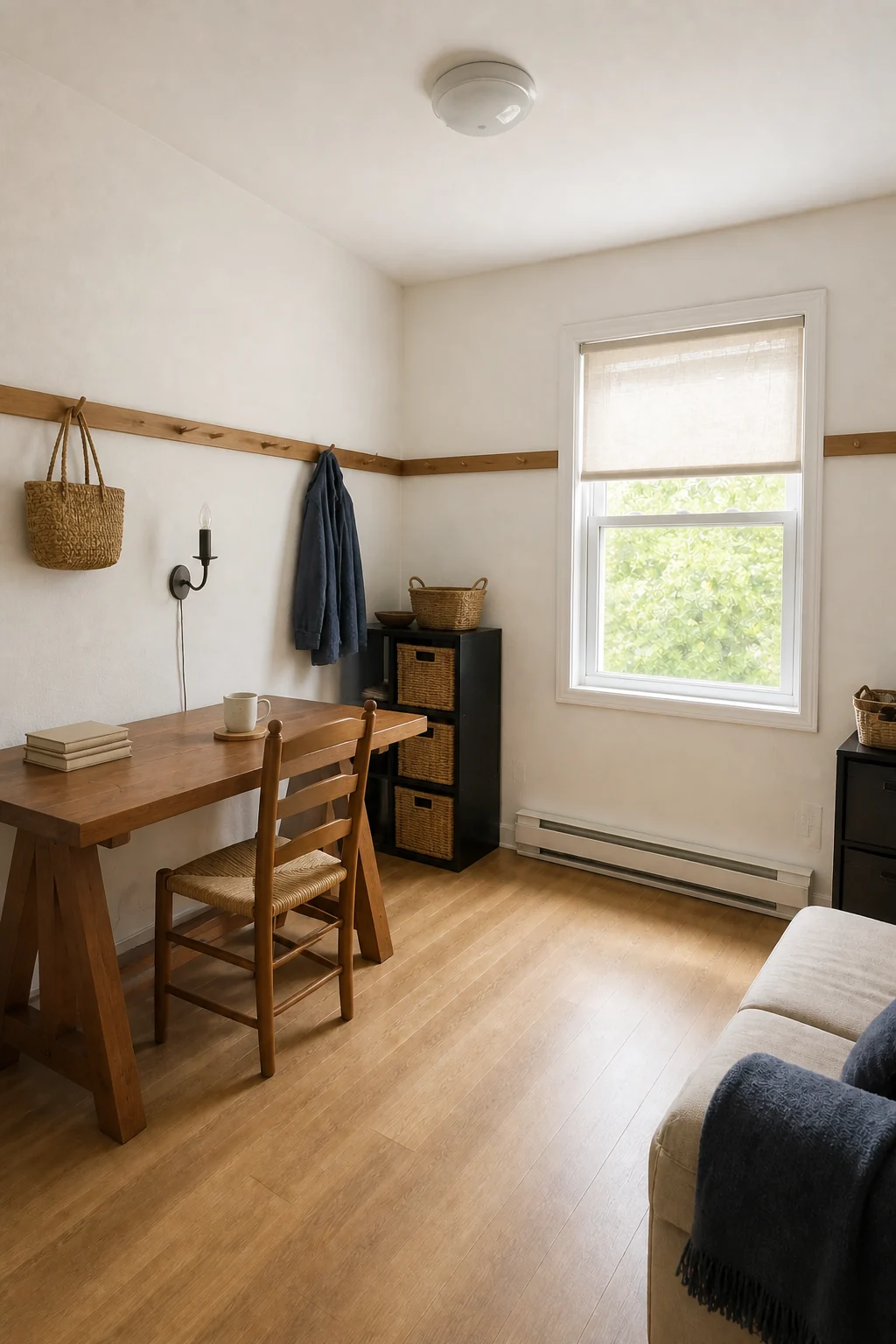
Stripping away heavy textiles and relying on honest cherry wood craftsmanship creates a 19th-century workspace that feels incredibly airy. The wall-mounted peg rail provides era-accurate vertical storage that keeps the floor plan completely clear, drawing the eye upward to visually expand the tight room.
Victorian Maximalism
We enveloped the room in late 19th-century drama by installing a dark plum floral damask removable wallpaper. The layout now features an ornate carved walnut desk paired with a fringed emerald velvet parlor chair. Overlapping oriental rugs and heavy velvet curtains add intense visual weight to the previously sterile box.
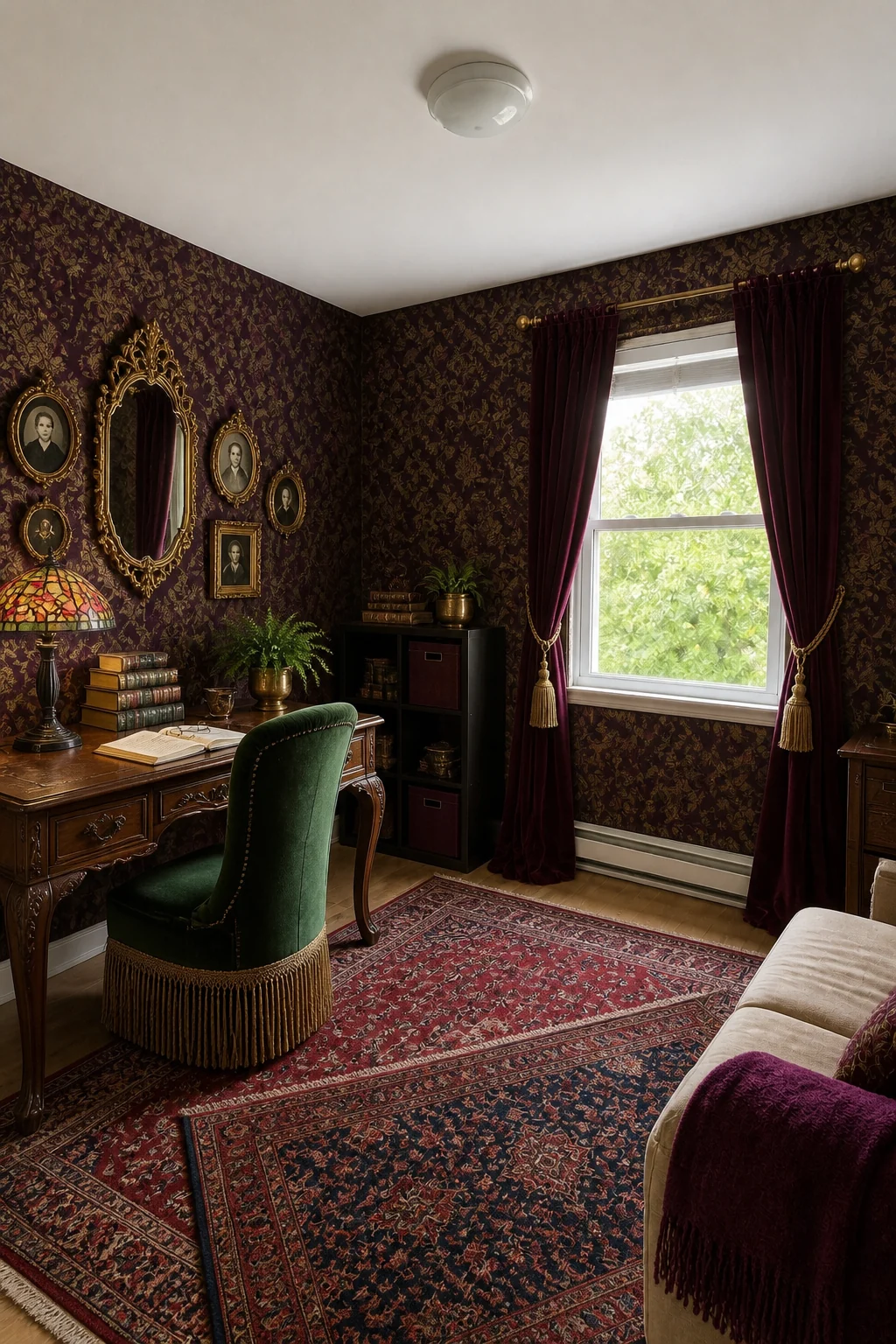
Dense pattern-on-pattern styling and crushed velvet textiles create a highly dramatic, enveloping atmosphere perfect for antique lovers. The carved walnut furniture and stained-glass lighting balance the intense floral walls, while the layered rugs absorb sound beautifully in hard-surfaced home offices.
Arts & Crafts
We hung a highly detailed botanical wallpaper in olive and mustard tones to celebrate early 20th-century natural motifs. The workspace is now anchored by a heavy quarter-sawn oak desk and a sturdy leather armchair. We introduced a glowing amber mica lamp and a flat-weave geometric rug to warm the space and add texture.
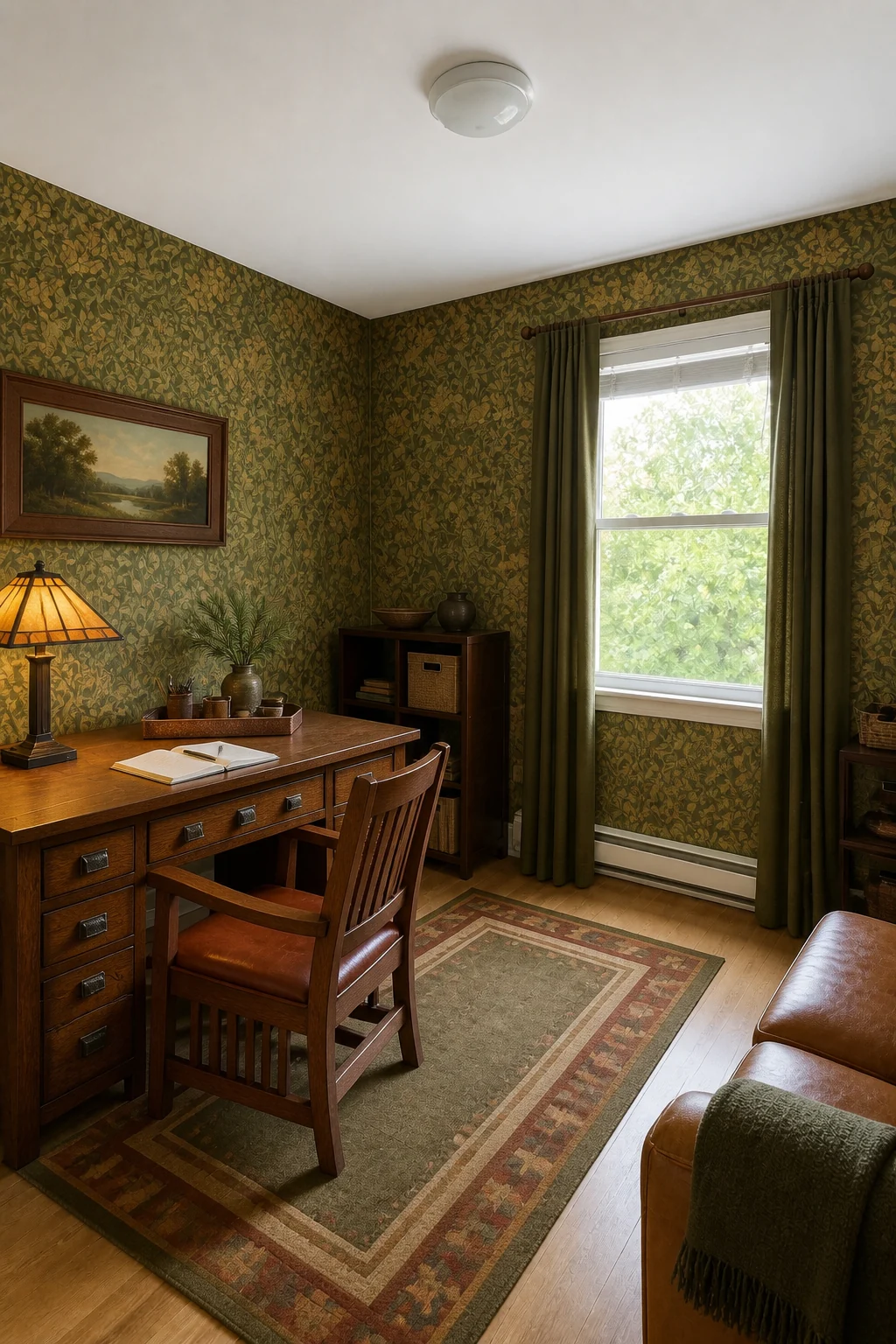
This homage relies on sturdy quarter-sawn oak and hammered copper to celebrate natural handiwork and grounded craftsmanship. The earthy terracotta and olive palette softens the imposing, straight-lined furniture silhouettes, though these heavy wooden pieces demand minimal surrounding clutter to breathe properly in a compact ten-by-ten room.
Art Deco Glamour
We applied a sharp black and gold geometric wallpaper to instantly establish a glamorous 1920s executive feel. The workspace now centers around a highly figured burl wood desk and a chrome-accented velvet barrel chair. A stepped frosted glass lamp and an ivory geometric rug complete the luxurious material palette.
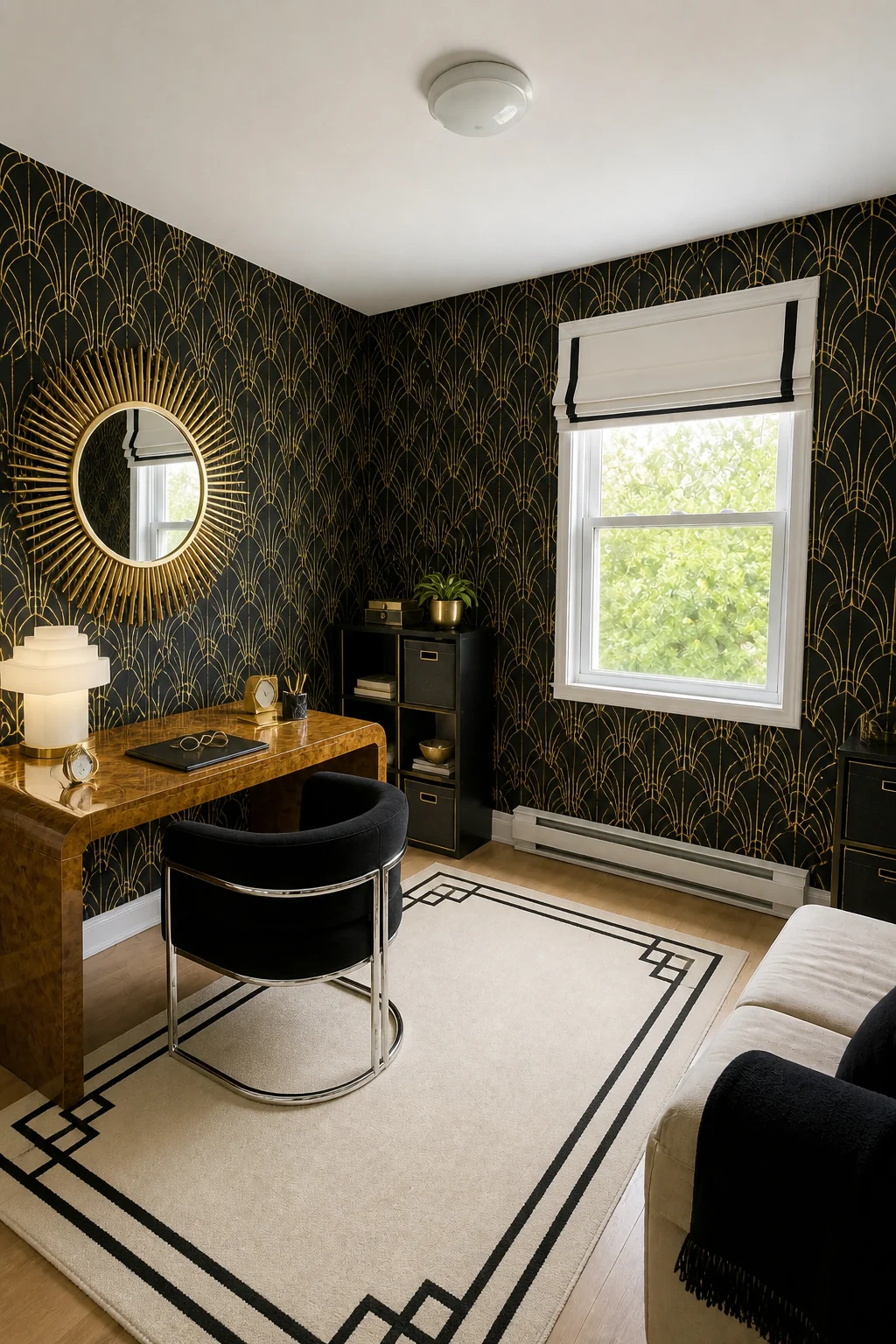
This sophisticated style relies on high-contrast material pairings, matching warm burl wood veneer with cold polished chrome. The repeating fan motif on the walls gives the small space a dynamic architectural rhythm, though these dark, reflective surfaces require excellent natural daylight to truly shine.
Bauhaus Functionalism
We painted the walls a crisp, pure gallery-white and removed all decorative molding to embrace pure 1930s geometry. The heavy furniture was swapped for a tubular steel glass desk and a primary red canvas cantilever chair. We removed all rugs and added a highly functional matte black task lamp.
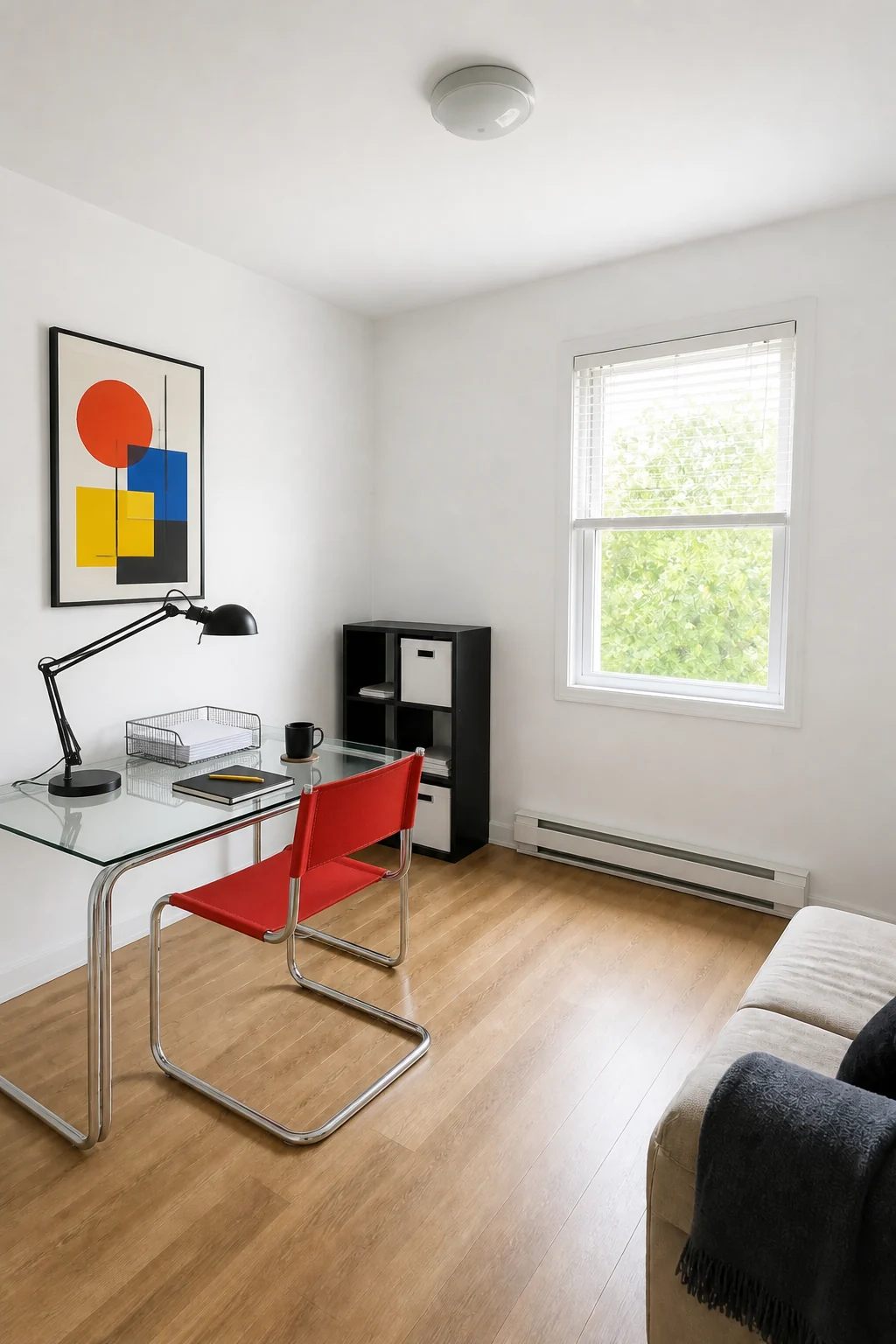
Stripping away all ornament makes the ten-by-ten room feel remarkably spacious and visually lightweight. The transparent tempered glass desk and tubular steel materials reflect light beautifully, while the primary red chair provides the sole, striking focal point for strict minimalists.
French Provincial
We painted the walls a soft powder blue and added subtle white picture-frame molding for a timeless 18th-century country style. The room now features a whitewashed cabriole-leg desk and a distressed woven cane-back chair. Blue and white toile curtains and a faded medallion rug add romantic, rustic elegance.
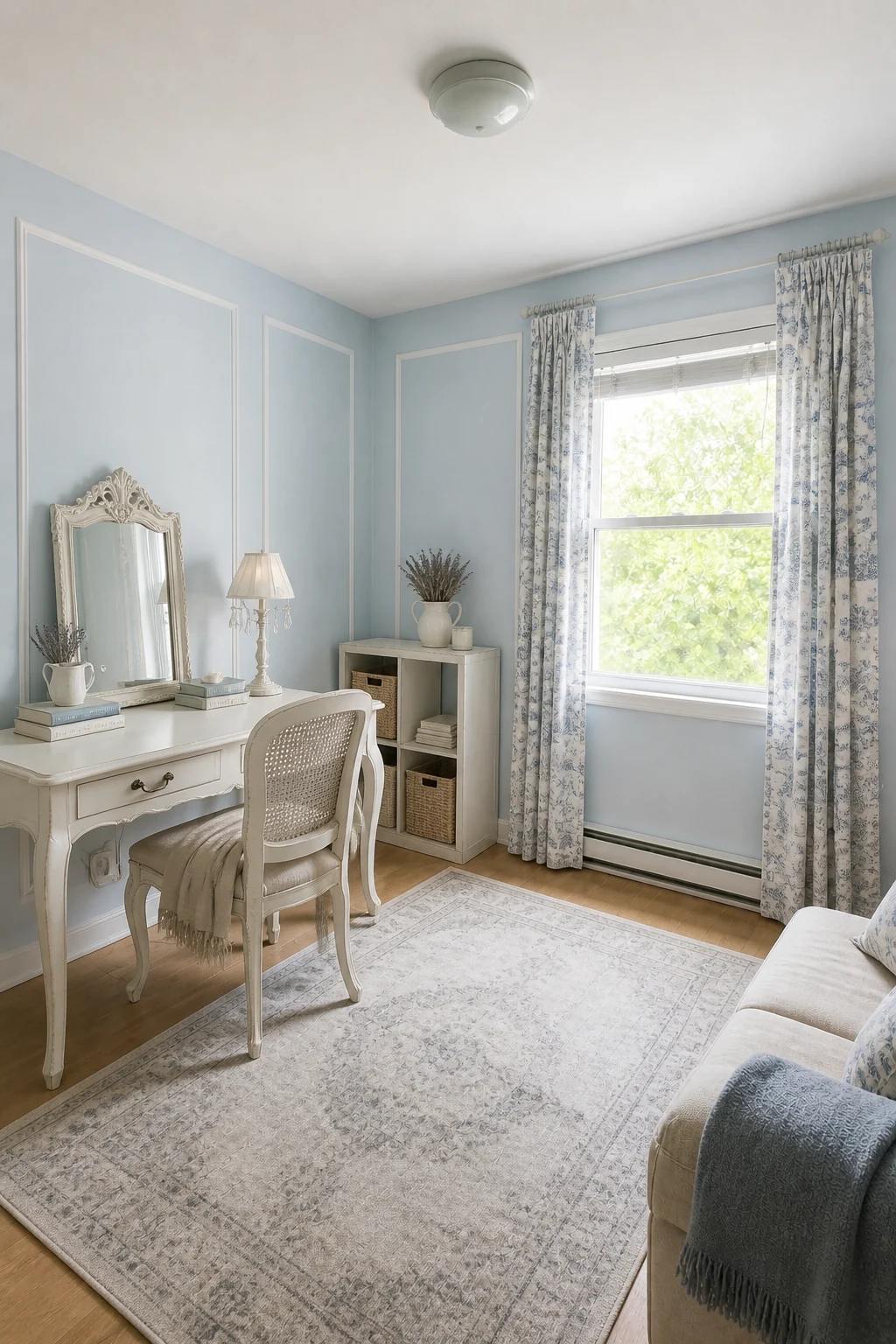
Soft pastel blues and natural linen textiles create a soothing atmosphere that feels instantly welcoming. The curved cabriole legs and distressed wood finishes soften the rigid boxy geometry of the room, while the whitewashed surfaces hide daily dust far better than dark traditional woods.
Mid-Century Modern
We installed removable vertical walnut wood-slat paneling on the left wall to capture the iconic 1950s atomic era. The workspace is anchored by an organic kidney-shaped walnut desk and a teal molded fiberglass shell chair. An atomic orange spun aluminum lamp and a geometric rug introduce vibrant, retro energy.
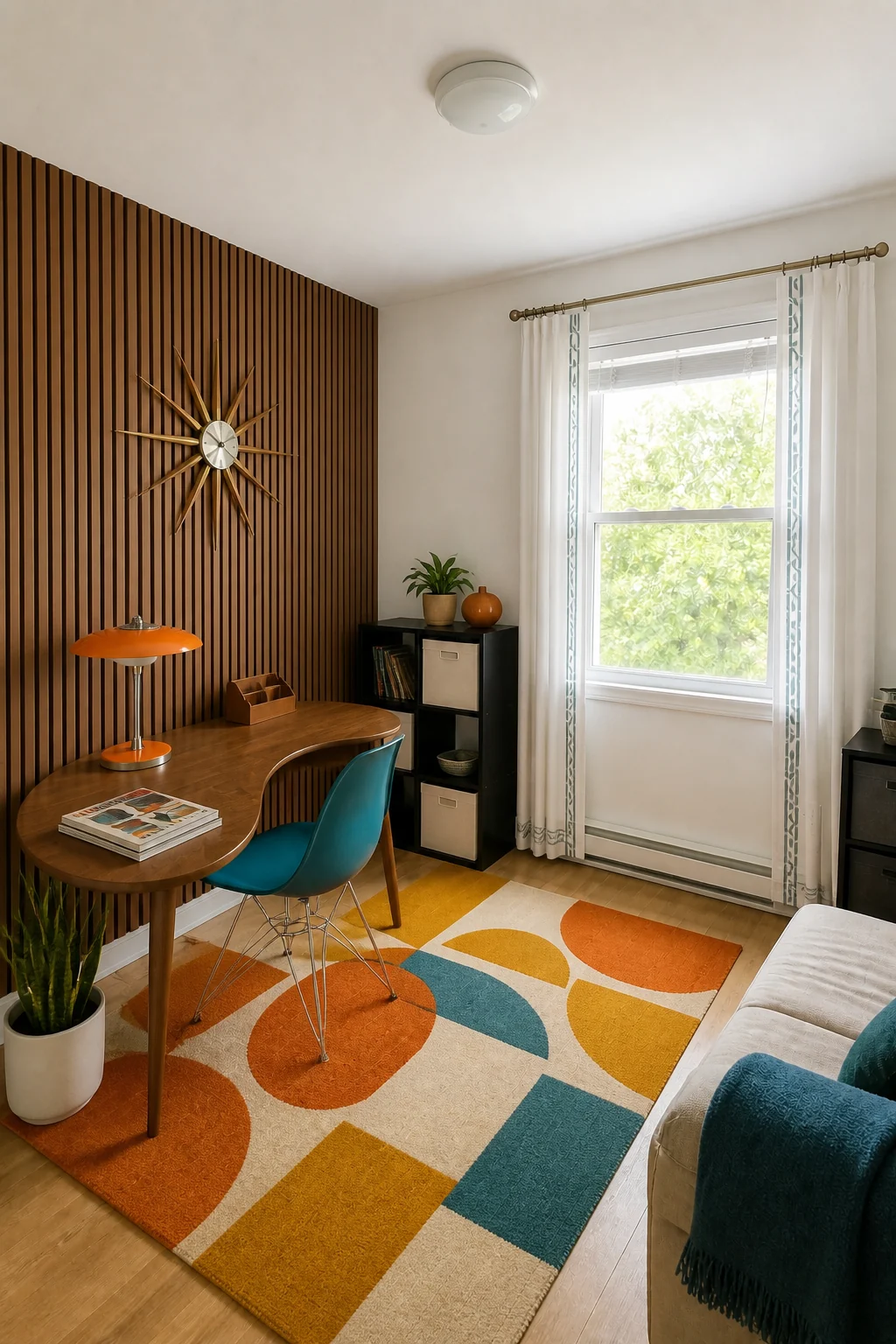
The warm walnut veneer and tapered peg legs provide a lightweight footprint that keeps the small office feeling open. The molded fiberglass chair and spun aluminum lighting introduce era-accurate industrial materials, while the slatted acoustic panels naturally dampen echoes during daily video calls.
Where to Invest
Allocate your budget toward authentic walnut veneer for the desk and wall panels; cheap laminates will ruin the mid-century illusion.
Hollywood Regency
We painted all walls in a high-gloss emerald green to create a bold, 1930s golden-era Hollywood style. The room revolves around a glamorous mirrored glass desk and a gold faux bamboo chair featuring a leopard-print cushion. A thick white shag rug and a brass palm leaf lamp maximize the luxurious texture.
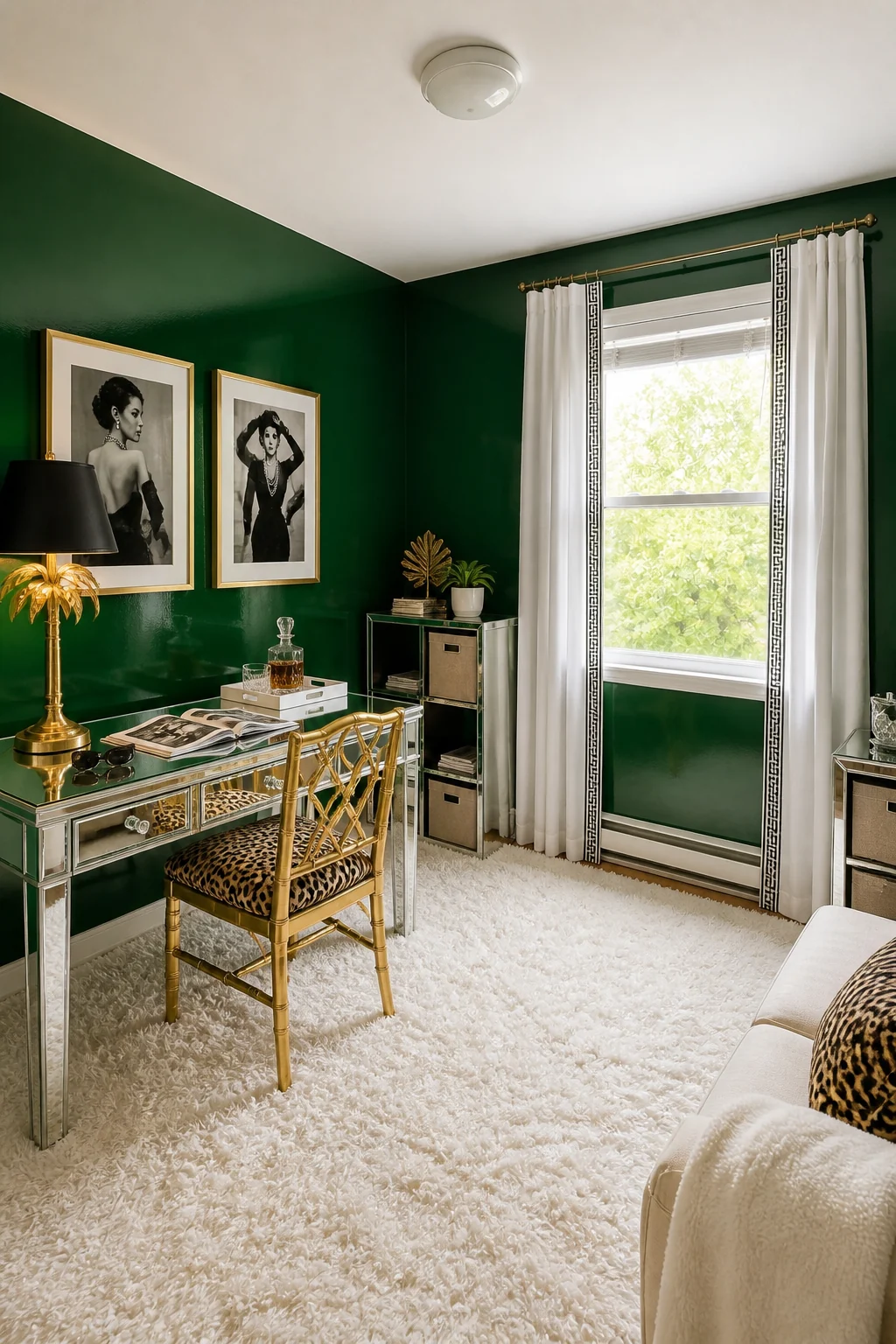
Bold emerald gloss paint bounces light around the room, amplifying the dramatic, highly polished aesthetic. The reflective mirrored furniture surfaces and polished brass finishes visually double the depth of narrow corners, creating a luxurious environment that completely defies the room’s basic shell.
Brutalist Seventies
We applied a removable faux concrete troweled wall finish to emphasize raw, late 1960s architectural brutalism. The space is dominated by a massive blackened oak desk and a heavy oxidized bronze chair. A cast concrete monolithic lamp and a dark gray sisal rug complete this highly textural, moody retreat.
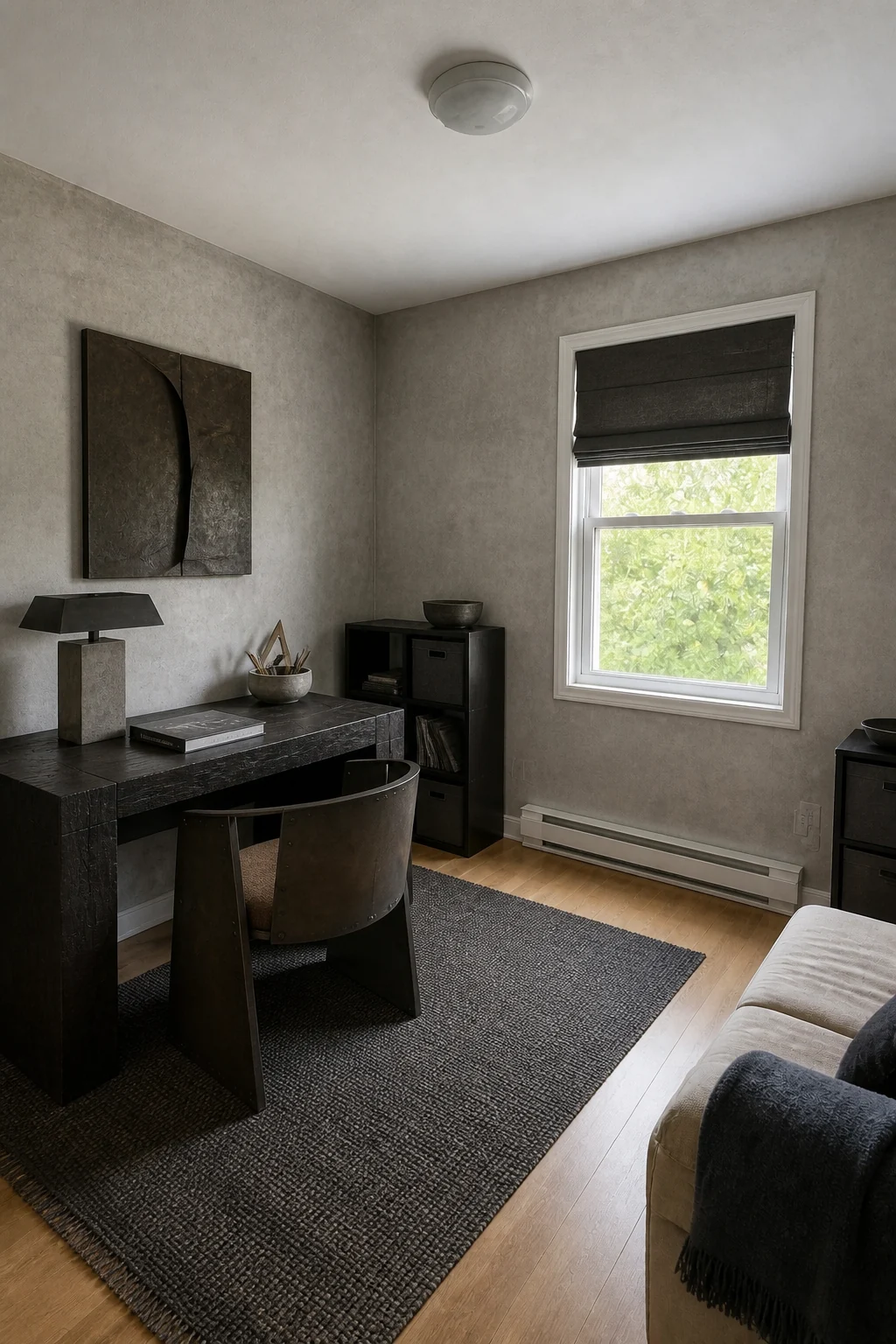
This avant-garde style relies entirely on raw textures and imposing, blocky silhouettes rather than vibrant color. The rough-hewn dark oak finishes and coarse wool textiles absorb light to create a cave-like focus, though these monolithic furniture pieces require heavy-duty floor protection to prevent scratching.
Seventies Bohemian
We painted the walls a warm earthy mustard yellow to set a relaxed, 1970s bohemian mood. The workspace now features a woven rattan desk paired with a dramatic high-backed peacock chair. We hung a macrame plant holder, placed a fluffy flokati rug, and added sheer cream curtains for breezy warmth.
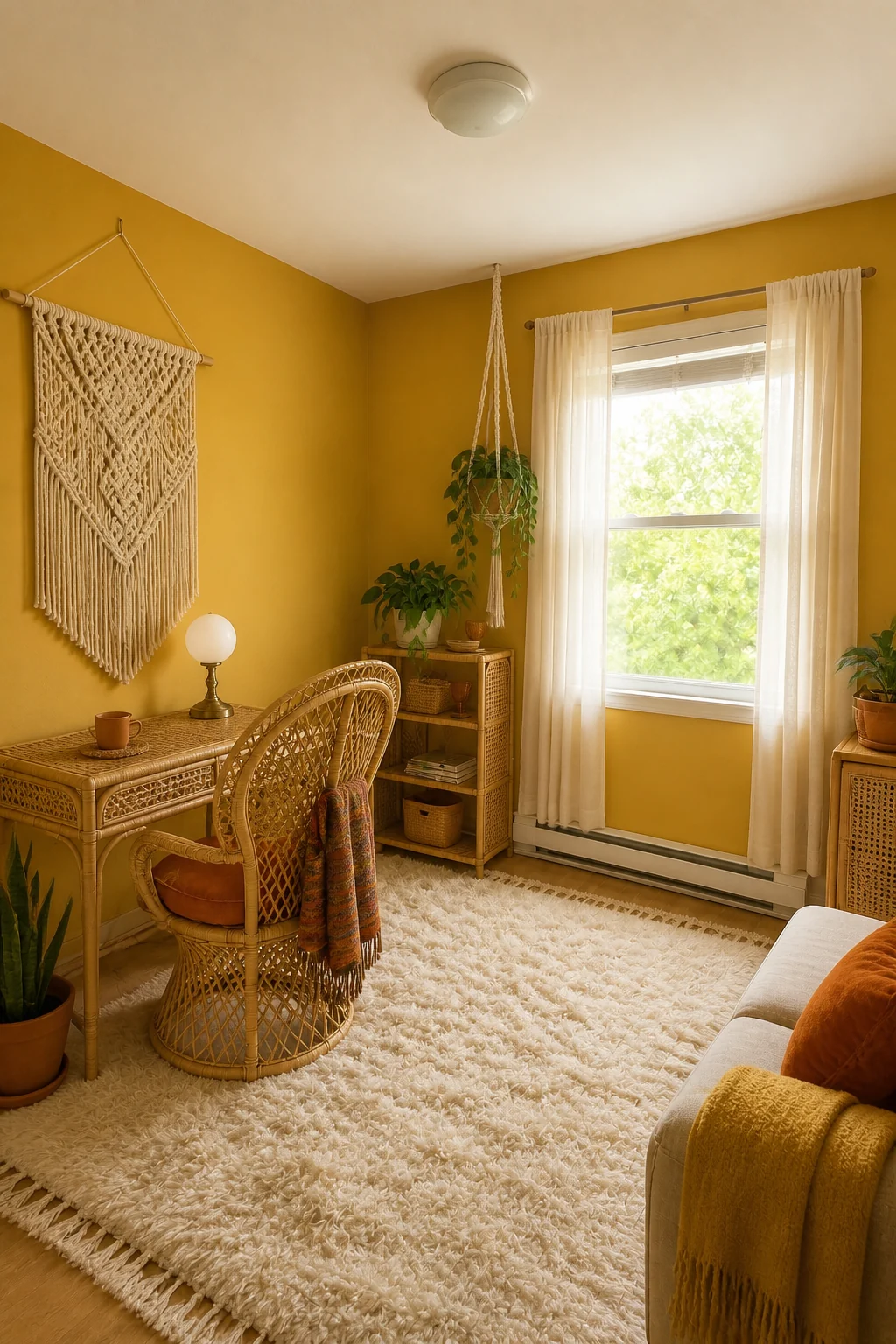
The abundance of woven rattan and knotted macrame cotton introduces incredible tactile warmth to the standard square room. Burnt orange velvet and mustard yellow walls mimic a permanent sunset, while the lightweight rattan furniture easily shifts around to accommodate changing creative layouts.
Memphis Milano
We hung white wallpaper featuring bold black 1980s squiggles to embrace radical postmodern geometric design. The traditional workspace is replaced by an asymmetric electric blue and yellow laminate desk and a cherry-red plastic chair. A playful pill-shaped lamp and stark white metal blinds complete the energetic, rule-breaking aesthetic.
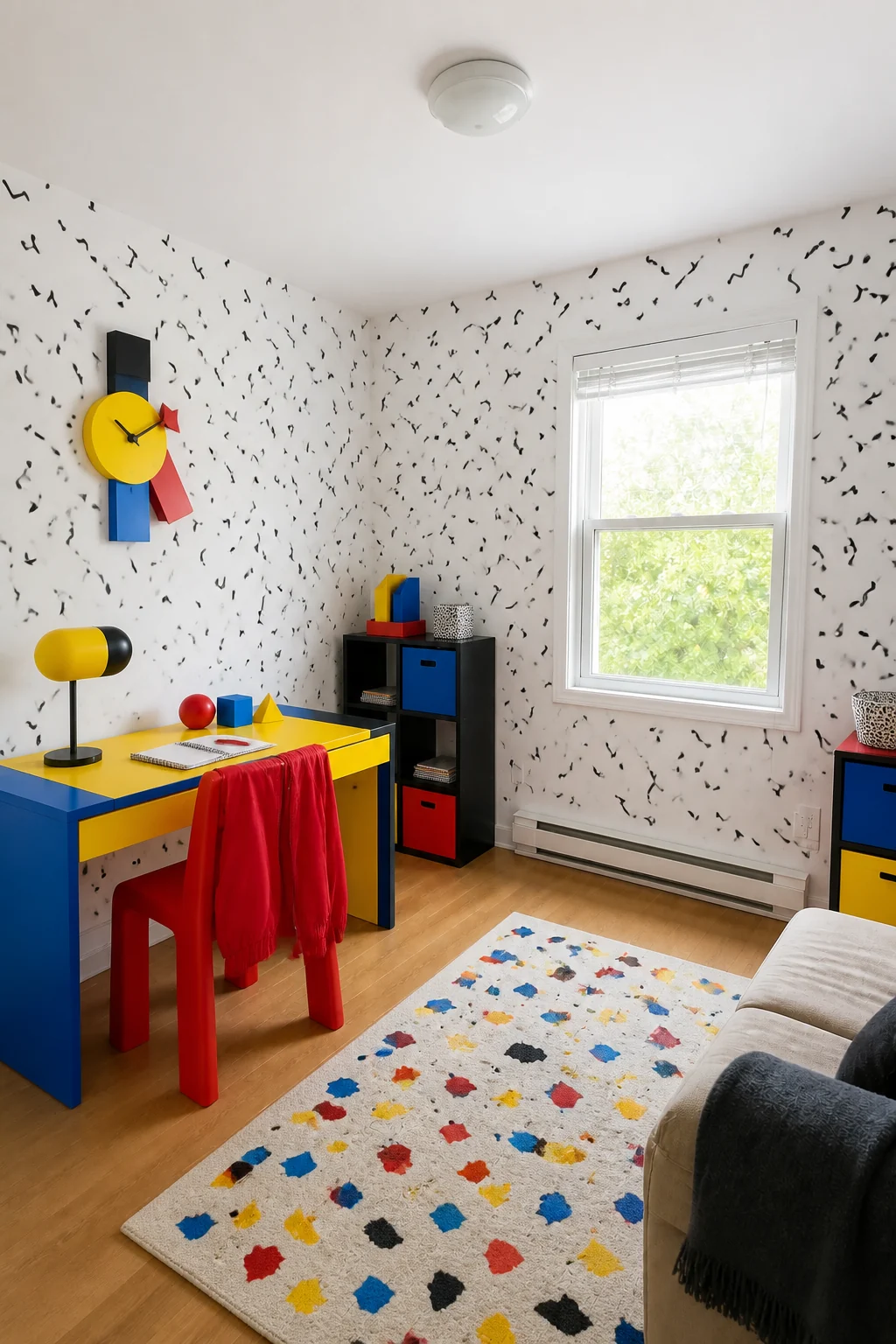
This wild 1980s style shatters the room’s conventional boxiness using clashing primary colors and unconventional shapes. The glossy plastic laminate surfaces and painted metals completely obscure the traditional home office feel, and they wipe clean instantly after messy, hands-on creative projects.
Design Decision Guide
- Minimize Visual Clutter: If you need to maximize a tight footprint without feeling cramped, Bauhaus functionalism works best because the transparent glass desk and pure white walls eliminate visual weight.
- Dampen Sound: For frequent video calls, the Mid-Century Modern vertical wood-slat wall paneling acts as a natural acoustic baffle, reducing echoes in the small square room.
- Lightweight Furniture: If you rent and need easily movable pieces, Seventies Bohemian rattan and wicker offer substantial visual impact while remaining light enough for one person to rearrange.