
16+ Smart Leveling a Sloped Yard Before and After Ideas
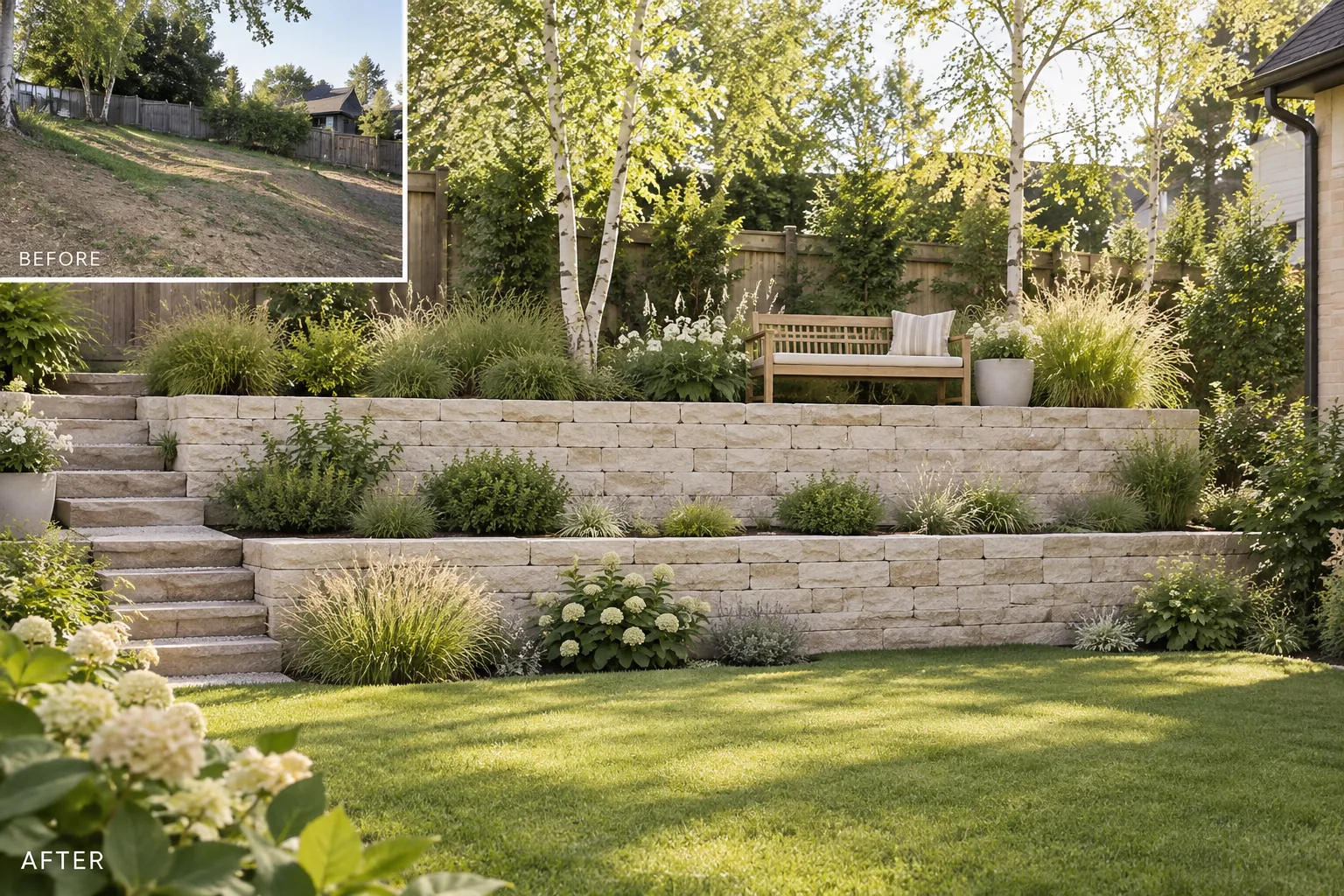
I used to stare at my steep backyard and wonder how we would ever use it. After a lot of digging and planning, I learned that taming a hillside completely changes how you live outside.
1. Stacked Stone Retaining Wall
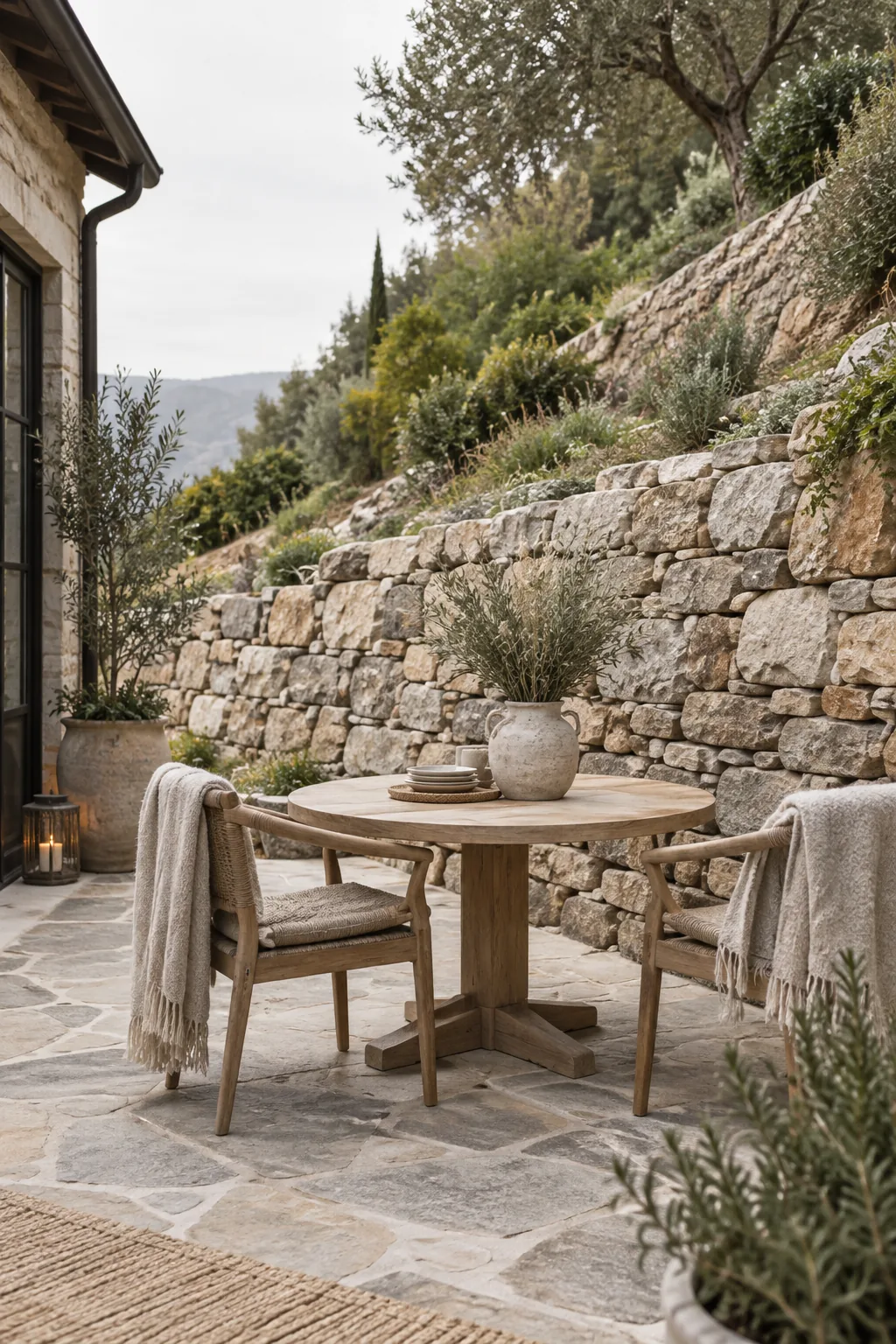
I remember thinking a retaining wall was too industrial for our space, but it actually became my favorite feature. We used stacked natural stone to hold back the highest part of the hill.
This immediately created a flat upper tier perfect for a small patio. It completely stopped the aggressive soil erosion we were dealing with after heavy rains.
Now we have a solid, level foundation for our outdoor dining table. The before and after difference is honestly staggering.
2. Tiered Timber Terraces
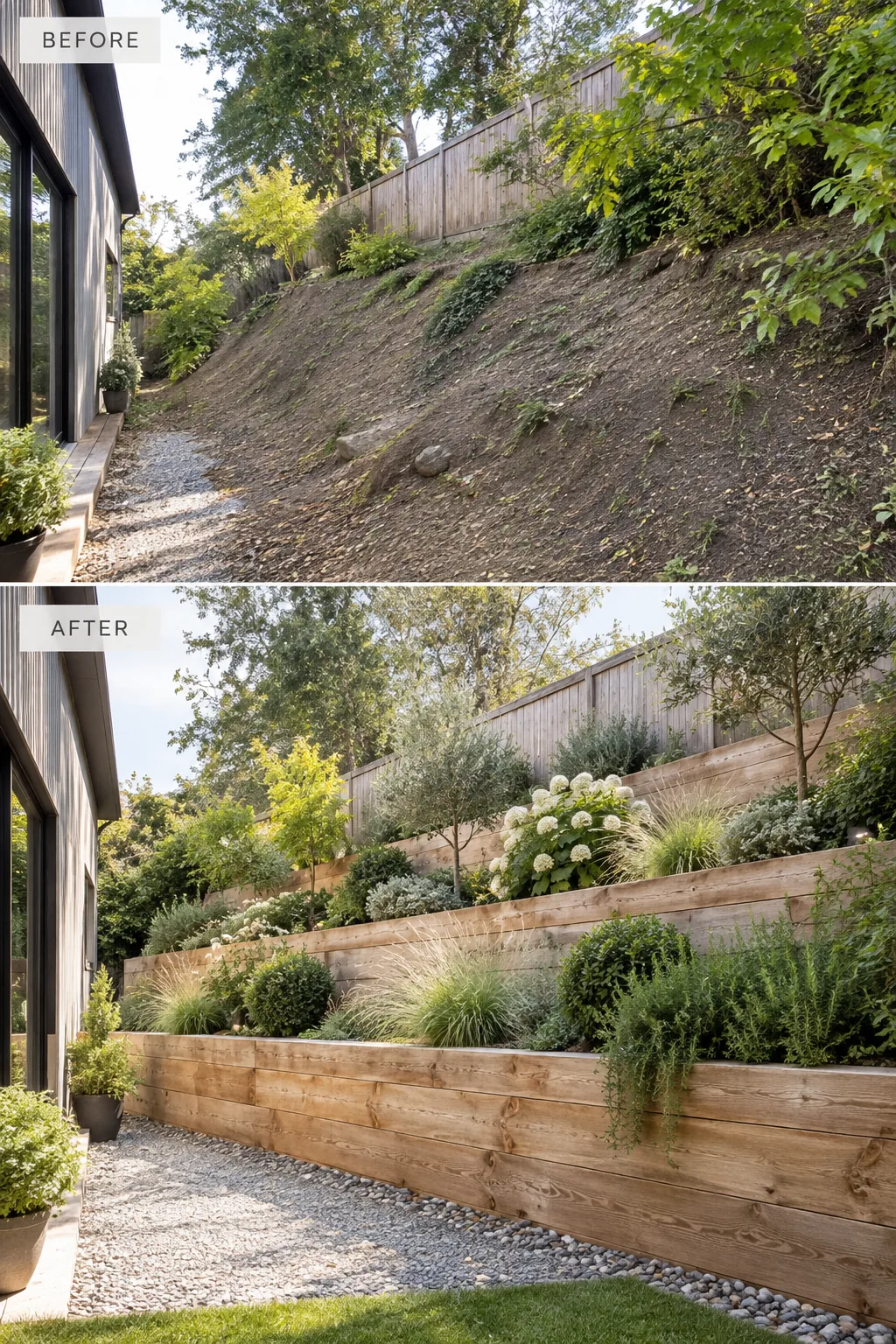
A four-foot drop across a twenty-foot span requires serious intervention to become usable. Building two lower timber walls breaks that steep grade into three manageable, flat terraces. You can fill each new level with topsoil and plant heavy-rooting shrubs to lock the dirt in place.
Just make sure to add proper drainage pipe behind the timber so water doesn't blow out your new walls.
3. Sunken Fire Pit Area
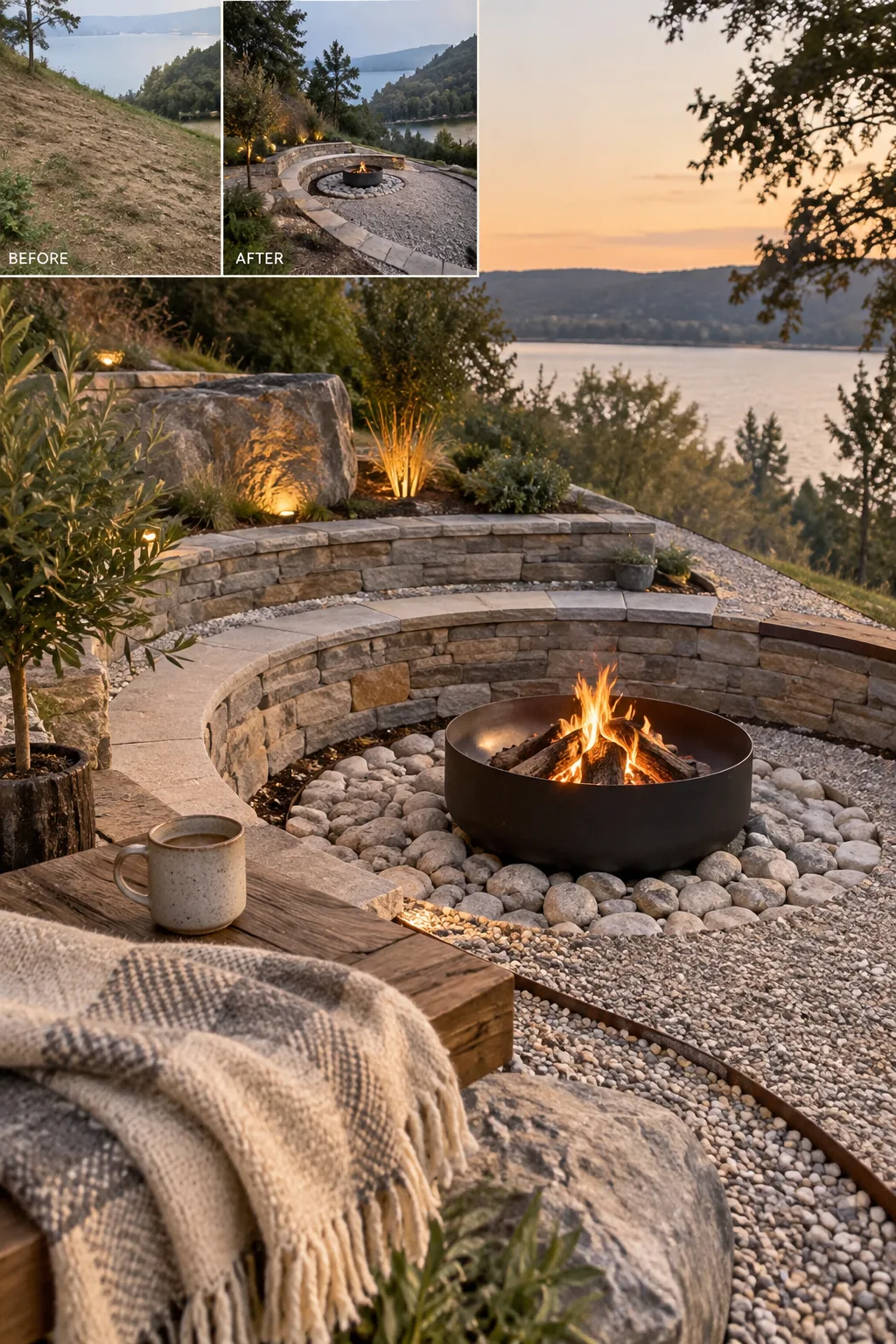
Grass refuses to grow evenly on a steep incline because water rushes right past the roots. Carving out a sunken fire pit area levels a large circle of ground and gives all that runoff a dedicated path around your seating zone.
4. Machine Regrading
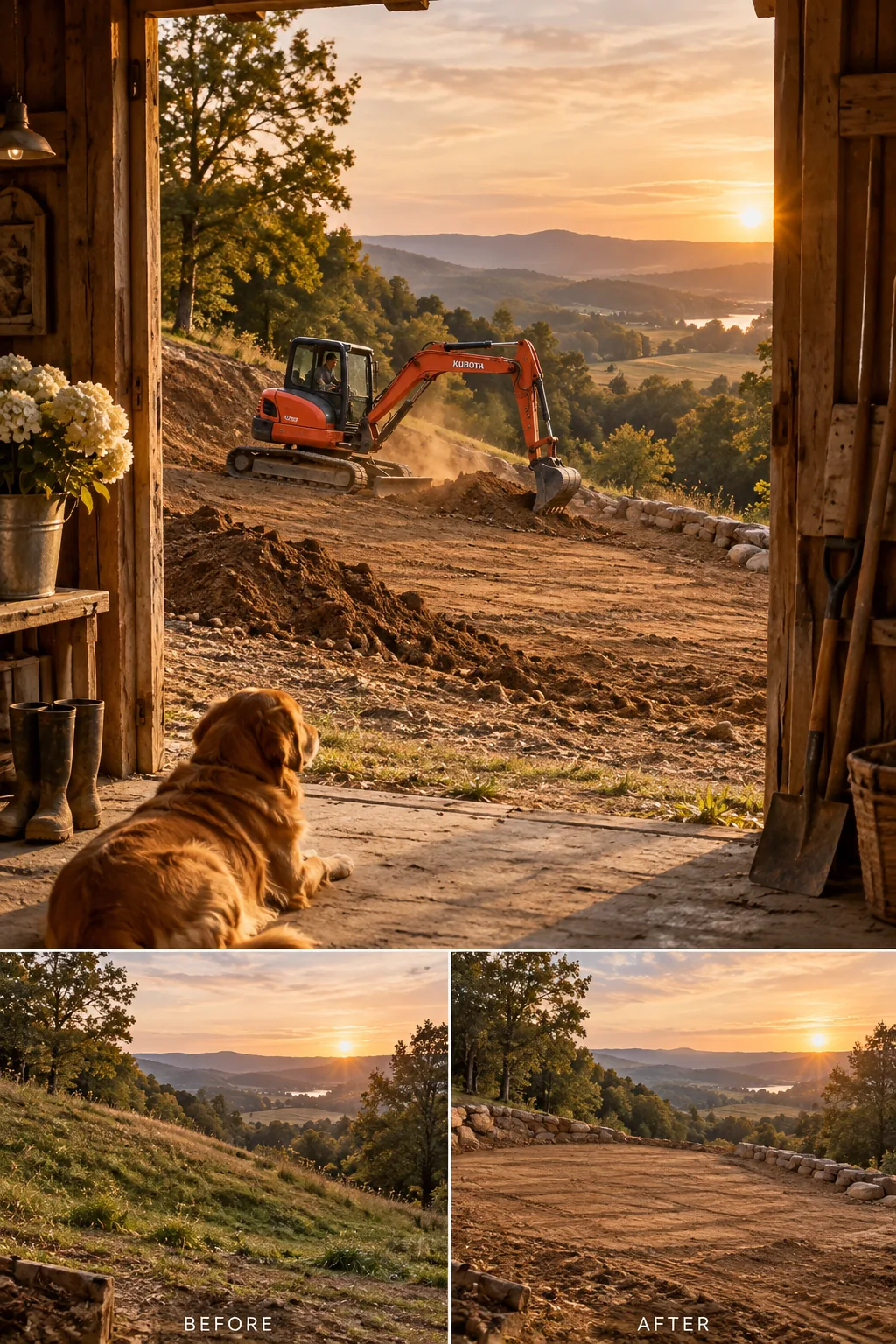
My first attempt at fixing a slope involved hauling bags of dirt by hand.
Renting a mini excavator is the only way to tackle a massive hillside regrading project without breaking your back. You can scrape away the high spots and dump that exact soil into the low spots to create a perfectly flat lawn. It saves a fortune on ordering fill dirt.
5. Modern Planter Boxes
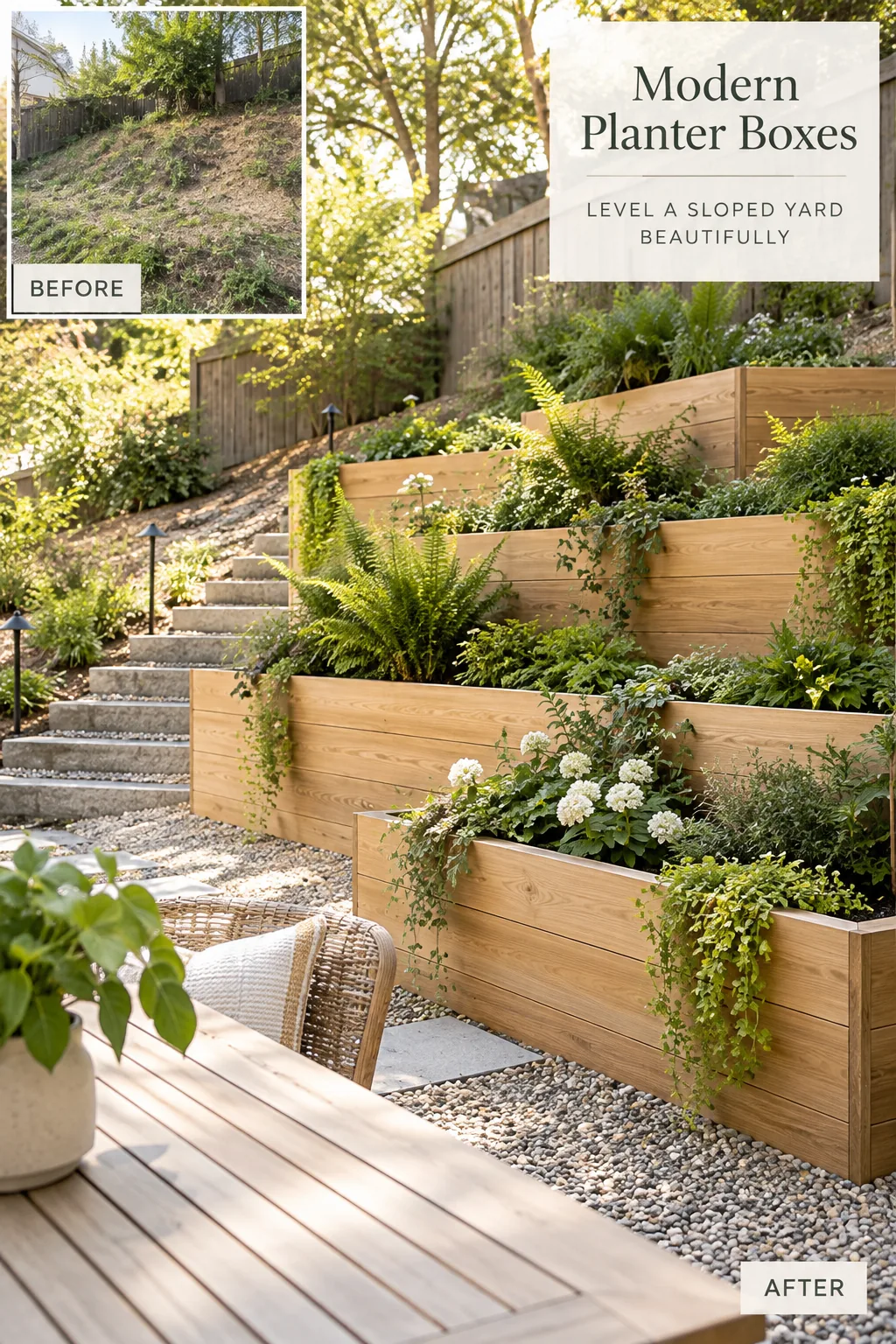
A modern terraced garden gives you sharp, clean lines that turn a messy hill into a structured focal point. You just need a few basic materials to build the retaining boxes and fill them with lush greenery.
- Pressure-treated landscape timbers
- Gravel for drainage
- Rich garden soil
6. Hidden French Drain
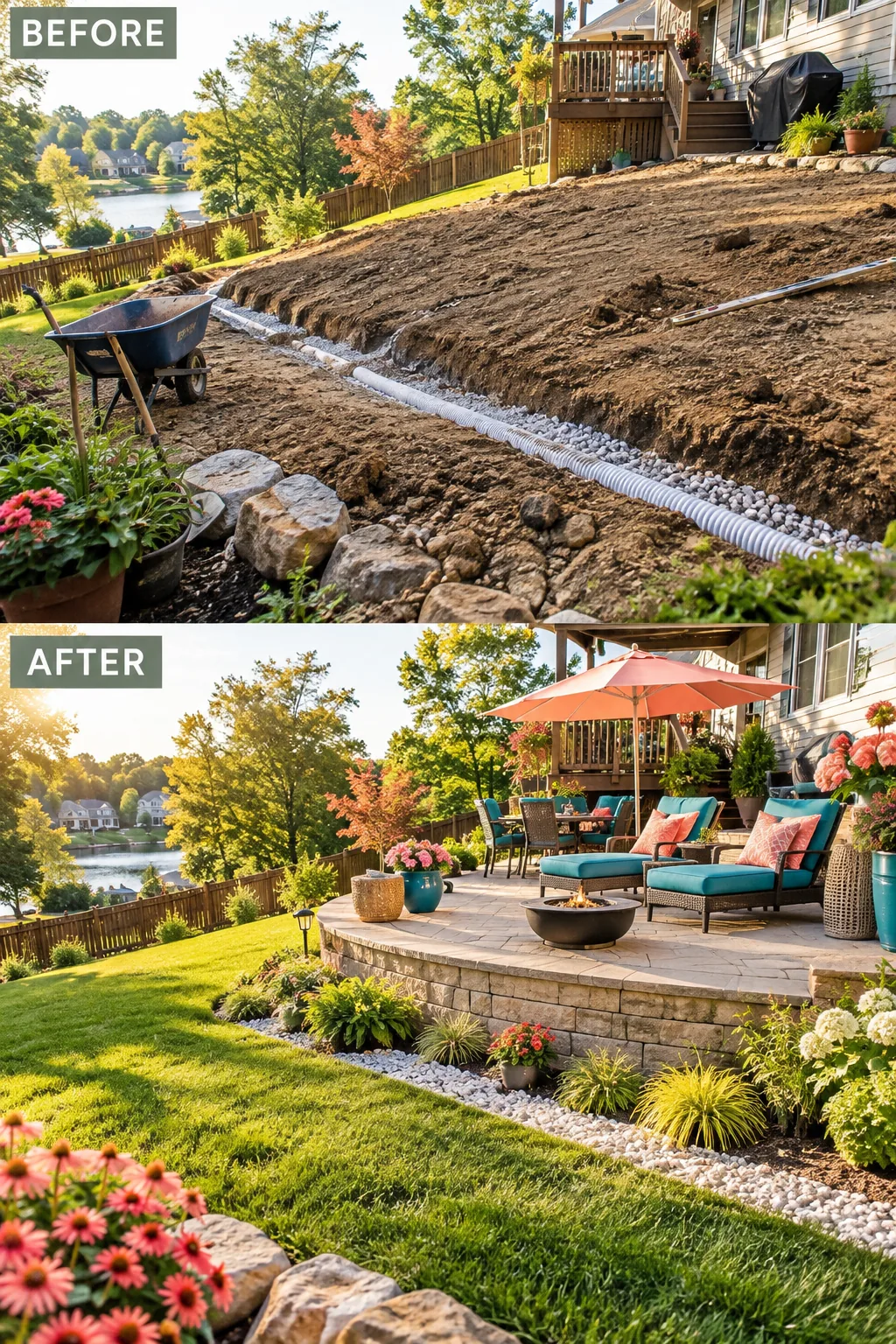
Most sloped yards end up with a muddy, unusable swamp at the very bottom.
Installing a French drain system before you level the dirt pulls that standing water away from your foundation. You bury perforated pipe in a gravel trench across the slope. This lets you build a flat, dry patio right over the problem area.
Why it works: It works because gravity forces the underground water into the trench instead of pooling on your new flat lawn.
7. Flagstone Step Pathway
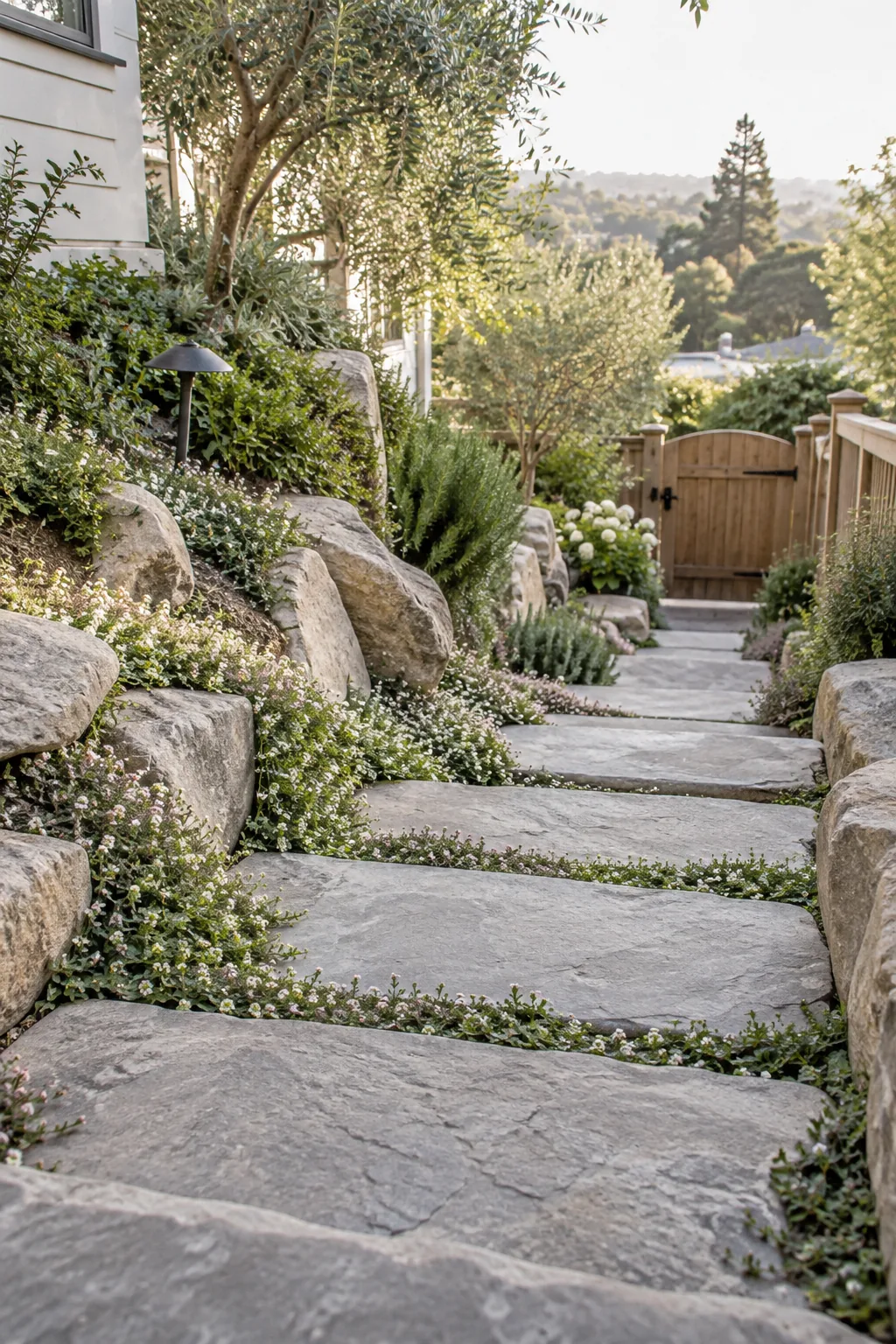
I always hated mowing our steep side yard because the mower felt like it was going to flip over. We finally dug into the slope and built a flagstone pathway with wide, flat steps. Now it is a gorgeous, walkable transition from the front to the back. We filled the leftover angled dirt pockets with creeping thyme to crowd out the weeds.
8. Raised Deck Platform
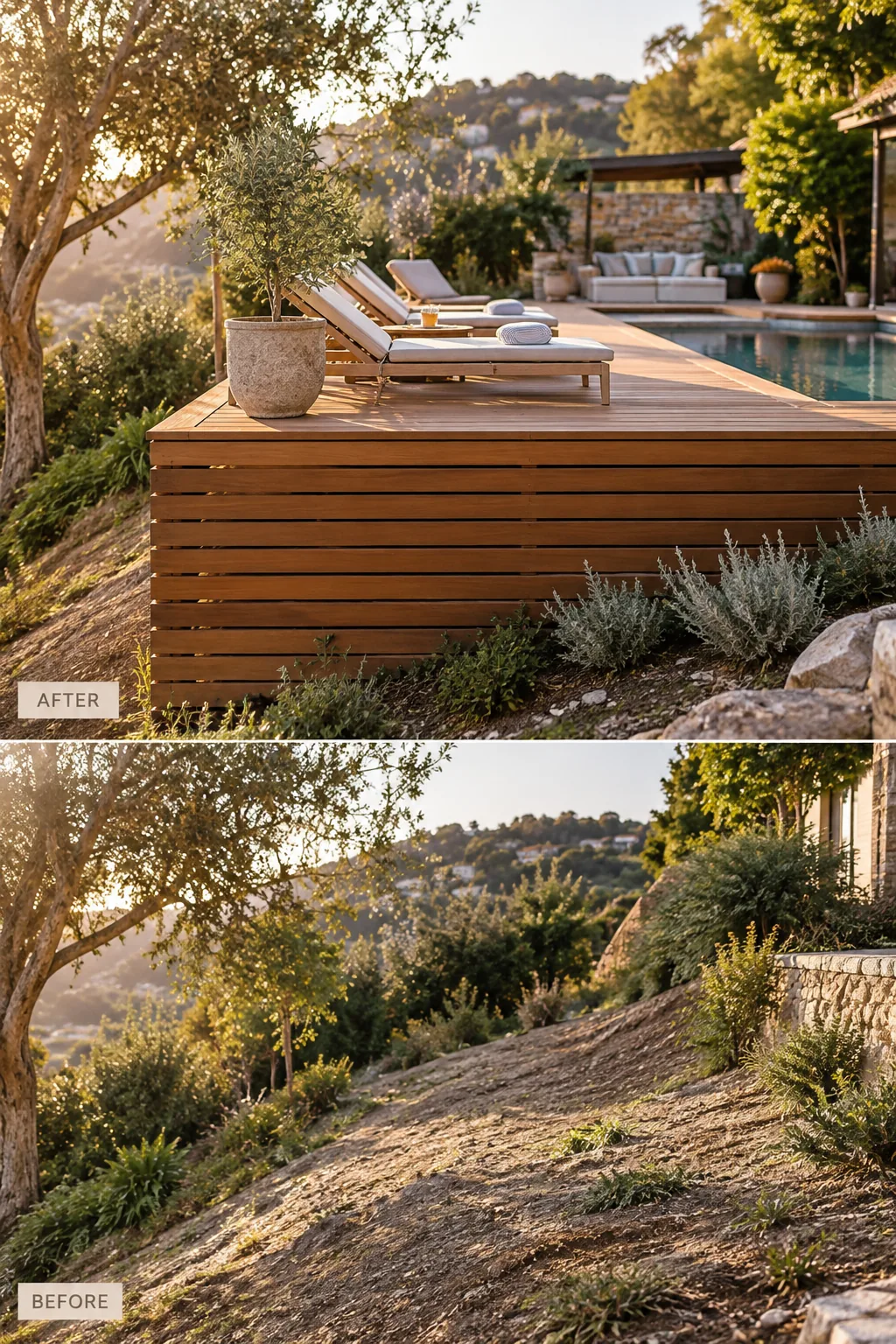
A resort-style pool deck completely masks the fact that your yard sits on a heavy slant.
You can build a raised wooden deck on the downhill side to meet the level of the uphill dirt. This creates a massive, seamless flat zone for lounging without needing to haul in tons of fill dirt.
- Composite decking boards
- Concrete footings for posts
- Hidden structural framing
9. Stepped Brick Walls
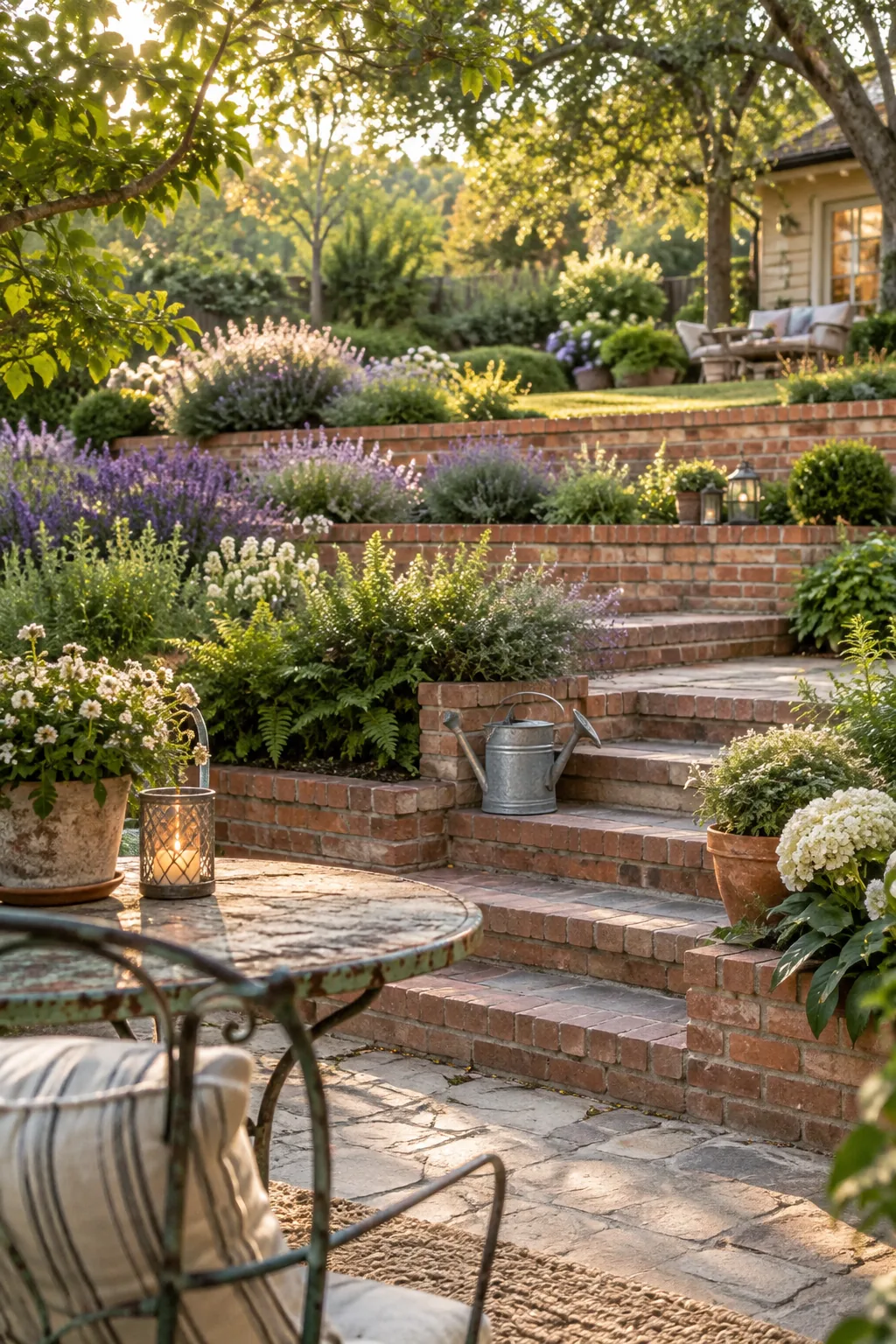
A standard brick retaining wall can safely hold back about three feet of soil before needing heavy engineering.
If your yard has a massive drop, stepping down with multiple short retaining walls is much safer than building one giant barrier. You get these lovely flat planting beds between each wall. It breaks up the visual weight of the brick and makes the whole yard feel wider.
10. Gravel Lounge Pad

We spent a whole weekend ripping out the patchy grass on our backyard hill to start fresh. Replacing the slope with a flat gravel lounge area anchored by steel edging gave us a zero-maintenance spot to drink our morning coffee.
11. Natural Boulder Edge
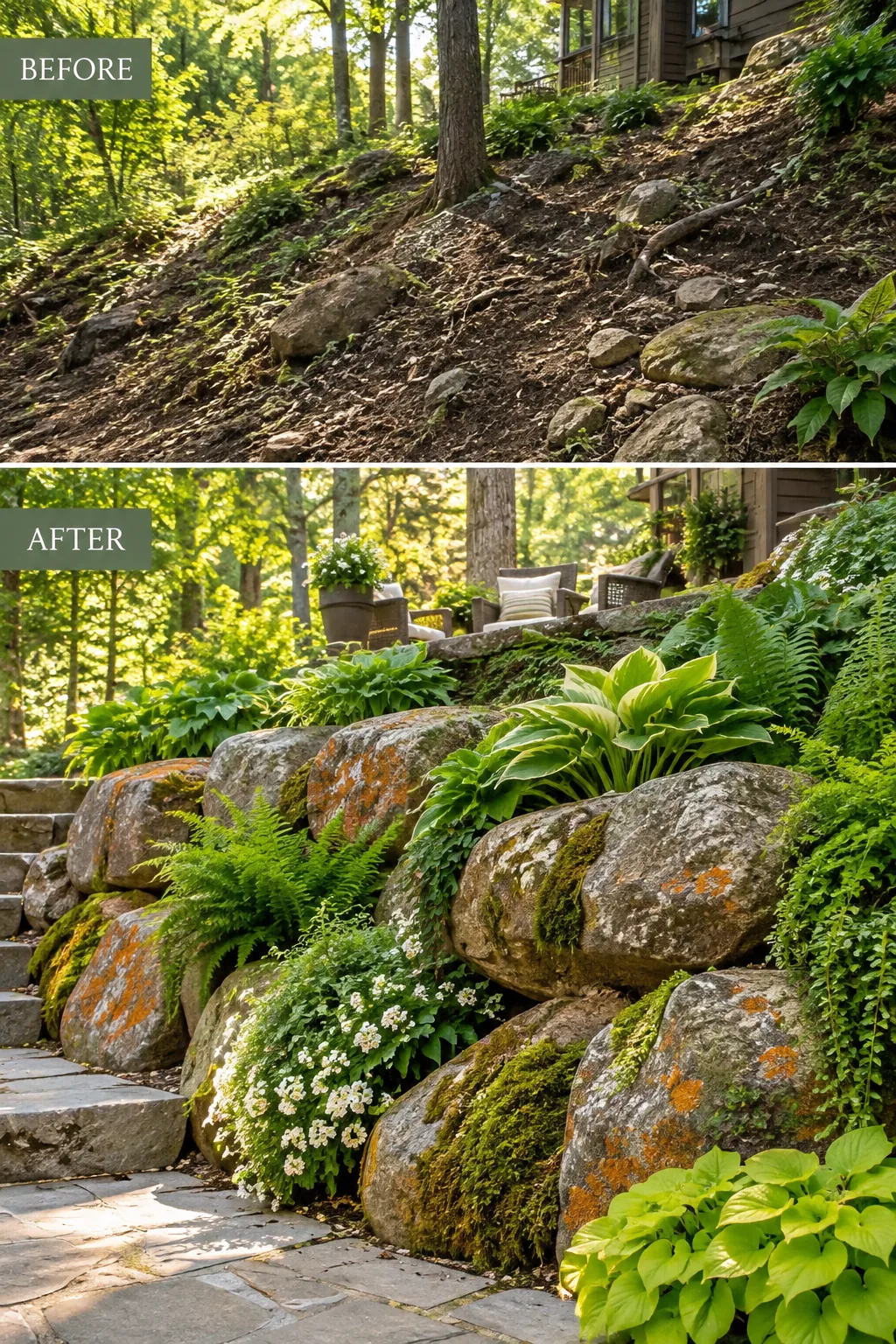
Using large boulders is what makes a natural stone terrace blend seamlessly into a wooded backyard. The heavy rocks hold back the leveled dirt while looking like they have been there for centuries. You can tuck ferns and hostas right into the crevices.
The plants eventually spill over the rocks and soften the whole transition.
12. Dry Creek Bed
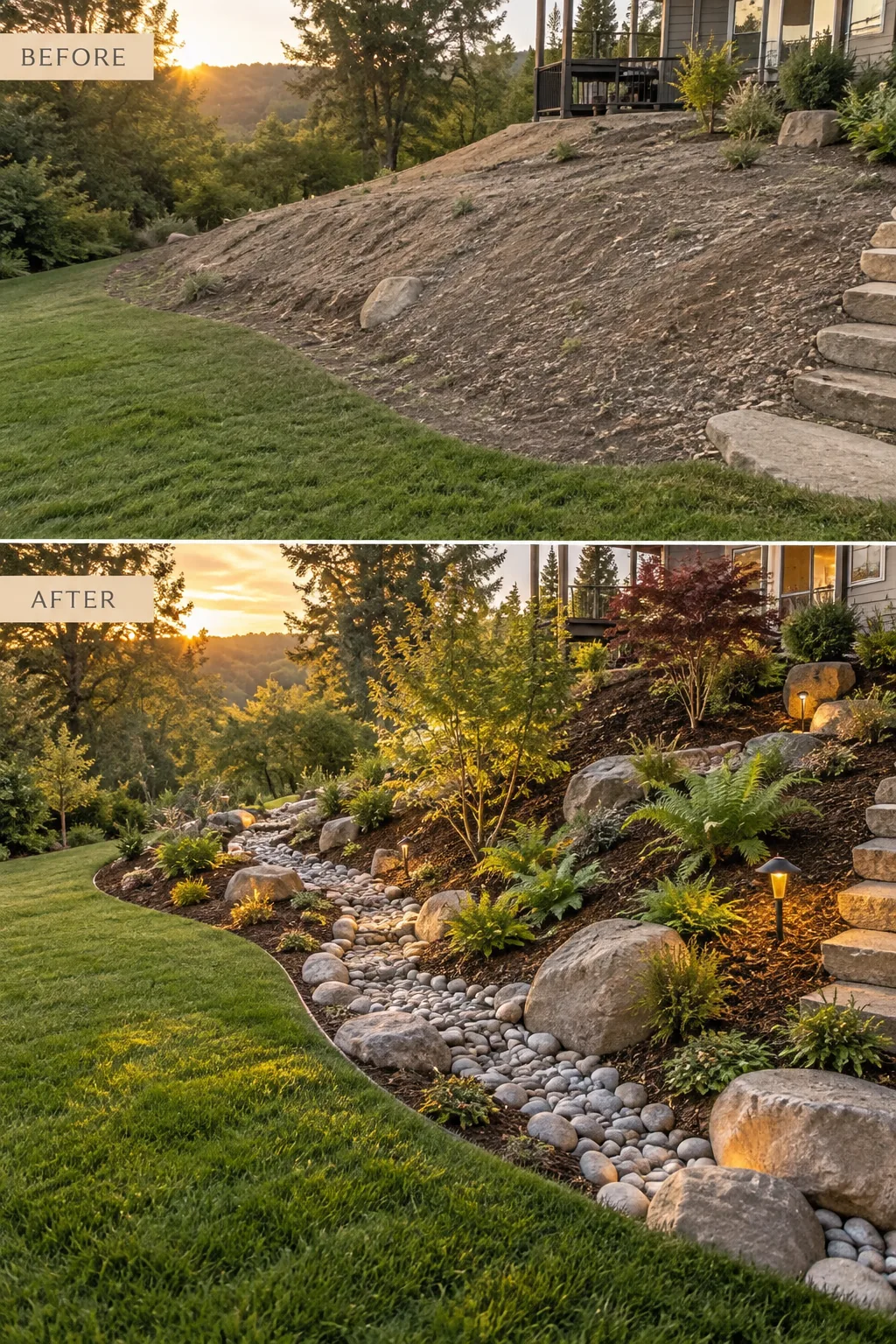
Water rushes down a bare hill and washes away all your expensive mulch. Carving a flat dry creek bed across the middle of the slope catches that runoff instantly.
You line the shallow trench with landscape fabric and heavy river rock. It looks like a beautiful landscaping feature during dry weather.
During a storm, it actively protects your newly leveled lower lawn from getting flooded.
Why it works: It works because the rocks slow the water down and give it time to absorb into the ground.
13. Stepped Garden Beds
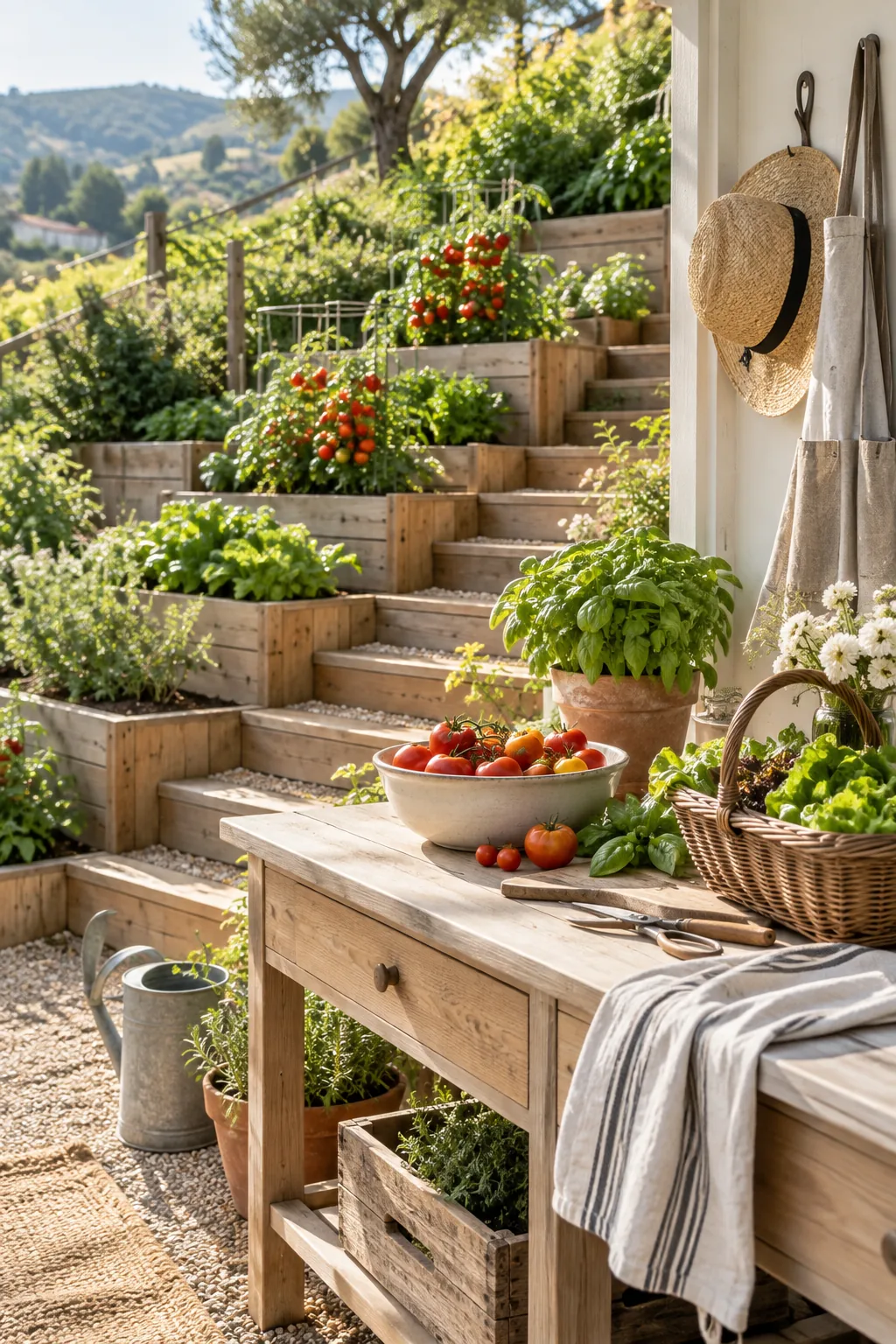
Build your raised garden beds right into the side of the hill to save space.
You can step the wooden boxes down the slope so the top of each bed remains perfectly level. This creates a stunning staircase effect for your vegetable garden. It also means you never have to bend over too far to harvest your tomatoes.
14. Sunken Courtyard
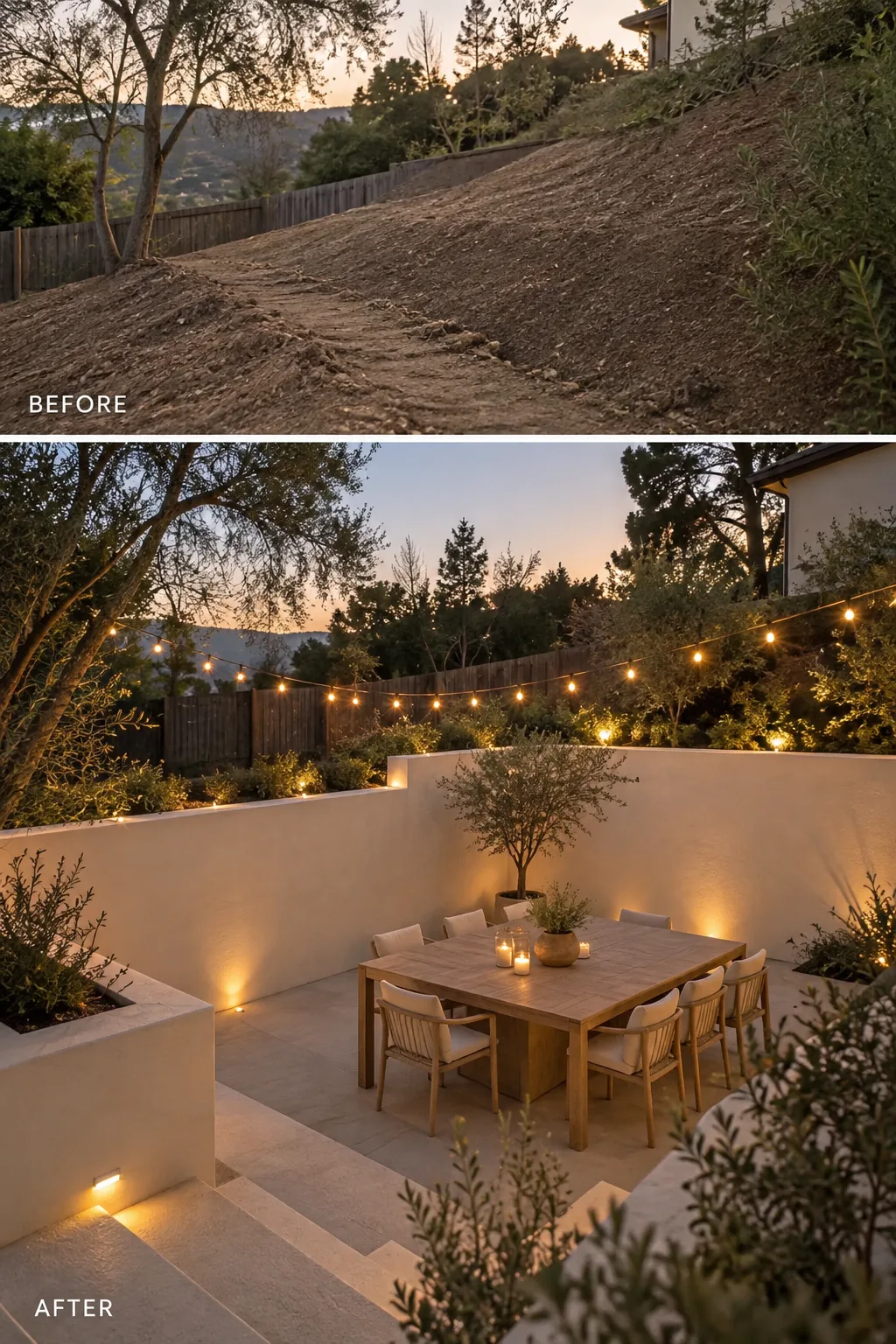
A sunken courtyard vibe turns a steep, intimidating uphill climb into a cozy, protected outdoor room. By digging into the hillside and building a tall stucco retaining wall, you create a perfectly flat square for a dining setup. The high walls block the wind and make the space feel incredibly private. String some cafe lights across the top to finish the look.
15. Topsoil Tapering
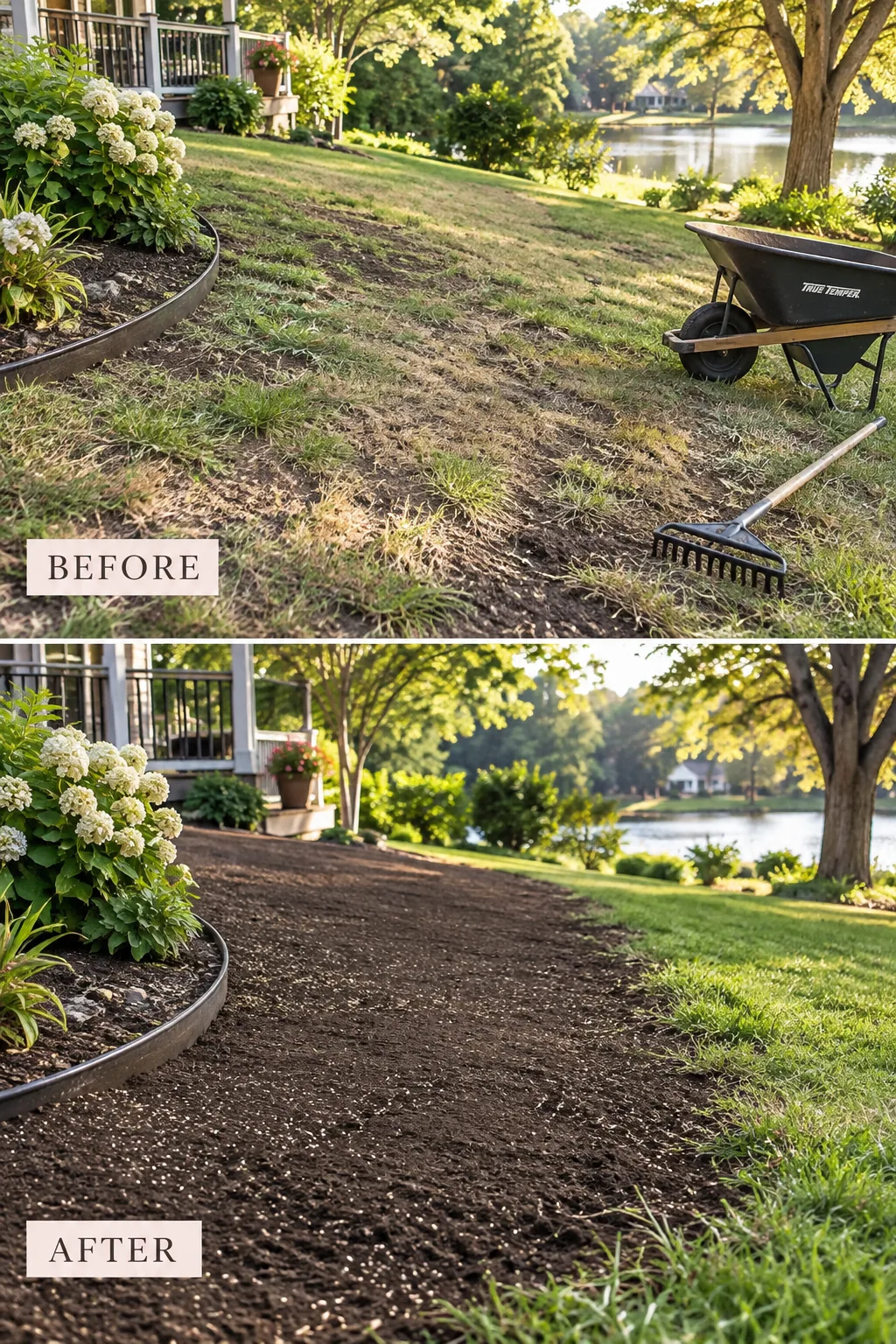
Adding just six inches of level topsoil behind a low landscape border can completely hide a minor yard slope. You simply rake the dirt flat against the edging and taper it back into the existing grass line. Toss down some grass seed, and in a few weeks, the slant disappears entirely.
Why it works: It works because the eye is drawn to the straight horizontal line of the border rather than the subtle grade of the lawn.
16. Interlocking Block Base
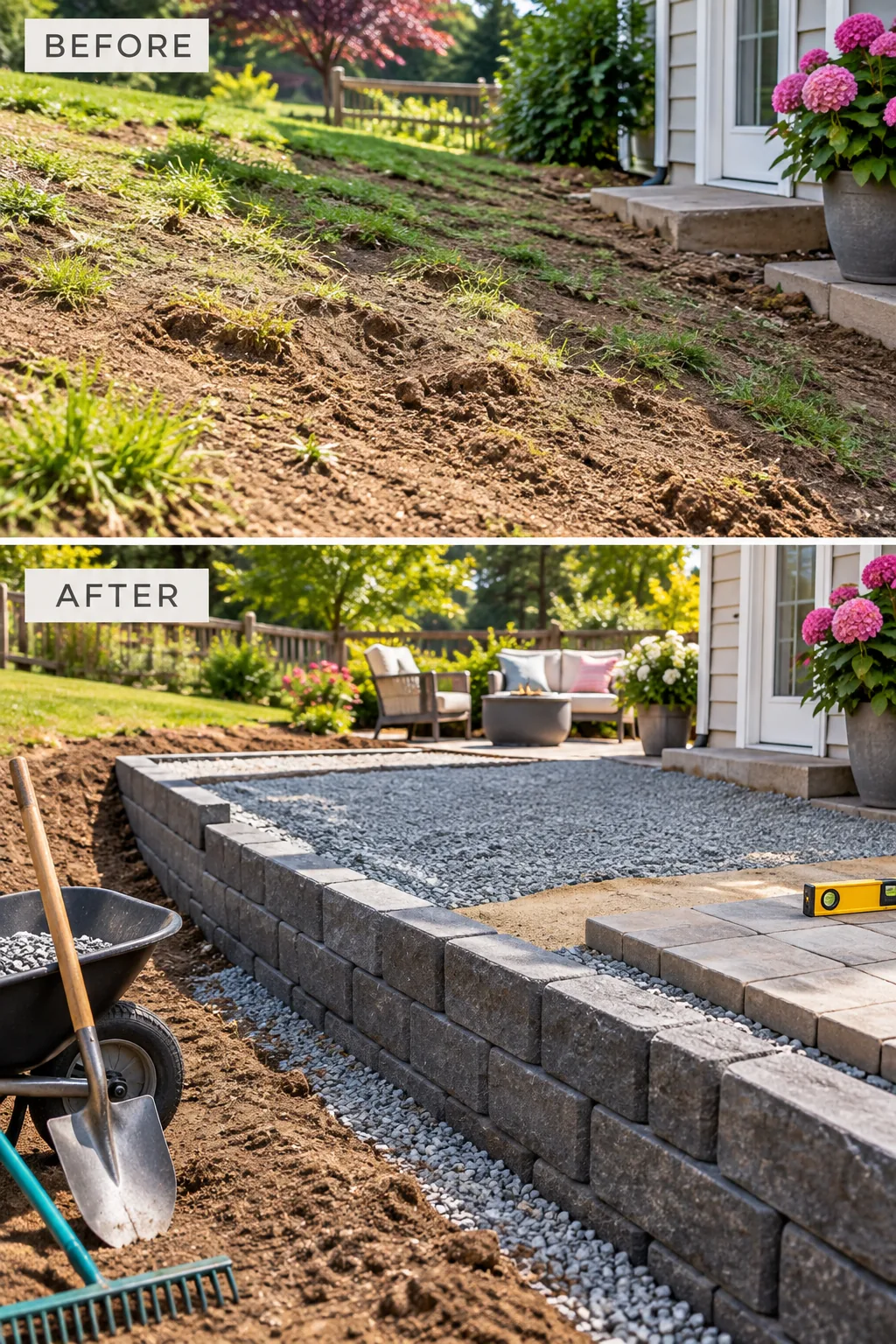
Use interlocking retaining blocks if you want to build a leveled patio without mixing any concrete. These heavy blocks have a lip on the back that hooks onto the row below them. You just stack them up to your desired height and backfill the space with crushed stone and sand. This gives you a rock-solid base for laying patio pavers.
17. Leveled Play Area
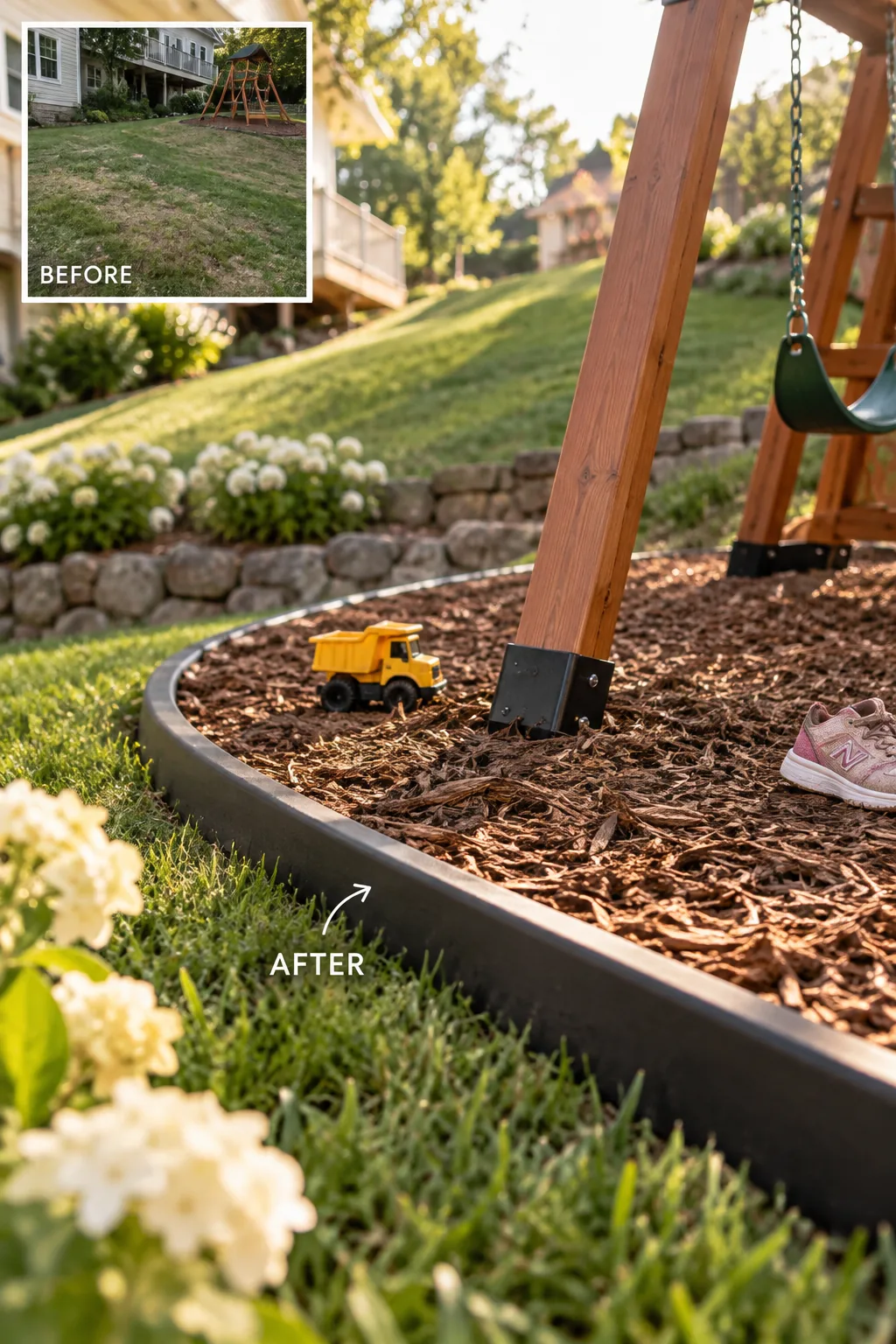
Turn that awkward, slanted corner of your yard into a flat kid-friendly play area. Dig out the high side and use the dirt to build up the low side.
Frame the newly leveled square with thick rubber landscape edging. Fill the entire box with a deep layer of soft play mulch.
Now a swing set can sit perfectly level without rocking back and forth. It reclaims space you probably never used anyway.