
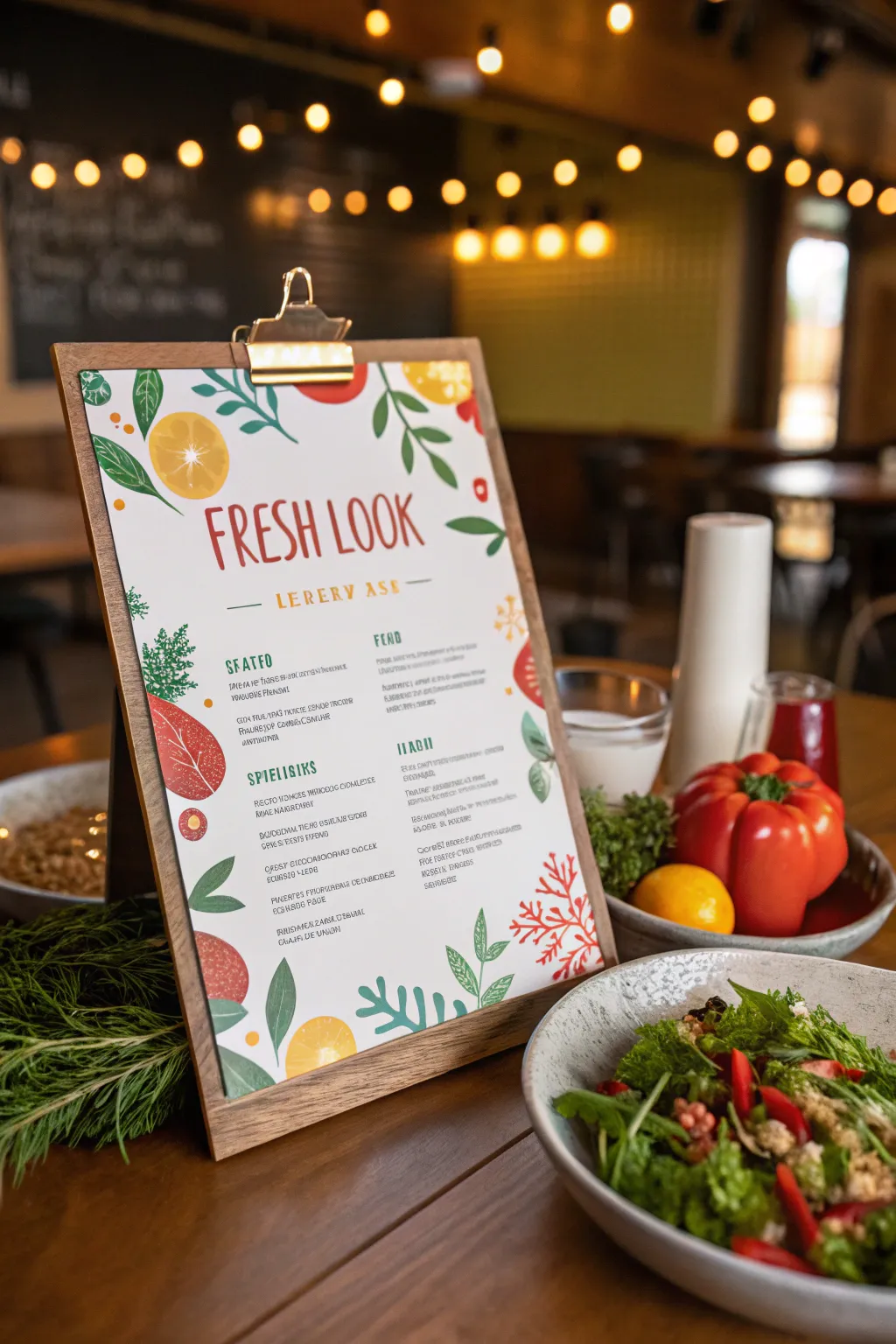
Designing an unforgettable menu is akin to crafting a visual masterpiece that captivates your diners even before they taste the cuisine. Let’s explore captivating menu design concepts that can completely transform your dining atmosphere.
1. Introduce Textured Paper

Employ textured paper to introduce a tactile element to your menu. The feel of premium paper can enhance the sense of quality and sophistication. Explore our creative menu board ideas to further elevate your presentation.
2. Integrate a Surprise Feature

Add a surprise feature like a hidden message or a fun fact to delight diners. I revel in the unexpected smiles these touches can bring to the dining atmosphere.
3. Include Contact and Social Media Details

Include your restaurant’s contact information and social media handles for customer convenience. This not only aids in communication but also promotes social sharing, which is a win-win!
4. Explore Unique Folding Methods

Experiment with innovative folding techniques for a surprising menu presentation. I’ve discovered that an unusual fold can fascinate diners and boost menu engagement. You can explore more fun and practical napkin folding ideas to elevate your table setting.
5. Incorporate Theme-Related Design Elements

Mirror your restaurant’s concept in your menu’s design to create a unified experience. Whether it’s a relaxed café or an upscale bistro, aligning your menu with your theme enhances the overall atmosphere. You can further extend this aesthetic by incorporating creative restaurant chalkboard ideas throughout your space.
6. Incorporate Graphic Details

Enhance your menu with graphic details that embody your restaurant’s character. I often incorporate hand-drawn components to add a personal touch that diners appreciate. These elements are a key part of our best ideas for restaurant decoration.
7. Mix Contemporary with Traditional Aesthetics

Pair modern minimalist components with traditional features for a timeless menu design. This combination creates a stylish yet approachable look, a go-to strategy for me in diverse dining contexts. You can explore more unique ideas for a modern dining room makeover to further refine your space.
8. Apply Color Psychology

Utilize color psychology to affect mood and appetite. I favor using warm colors to stimulate hunger and cool shades for a calming dining setting. You can explore how room colors affect your mood to better inform your design choices.
9. Ensure Accessible and Clear Pricing

Ensure pricing details are straightforward and easily located to improve the diner experience. I advise employing a slightly different color or font thickness to make prices noticeable without overshadowing the design.
10. Maximize Open Space

Strategic use of empty space can give your menu a spacious and welcoming feel. I consistently find that allowing the design to breathe helps diners concentrate on the delightful options at hand. You can explore our top suggestions for a memorable brunch menu to see how this layout works in practice.
11. Explore Striking Fonts

The strategic use of bold and refined fonts can seamlessly guide diners through your menu. I’ve noticed that a careful selection of typefaces enhances both readability and overall style.
12. Delve into Minimalist Aesthetics

A minimalist design can emphasize the elegance of your offerings. I frequently use this approach to focus interest on the essentials, crafting a sophisticated dining experience. You can explore unique minimalist kitchen design ideas to further refine your space.
13. Implement Interactive Features

Think about adding interactive features such as QR codes for a digital menu experience. I appreciate how this method accommodates tech-savvy diners and provides simple updates without needing to reprint. You can also incorporate church anniversary banners to celebrate milestones and engage your community.
14. Tell a Story Through Your Menu

Utilize your menu to narrate a story about your restaurant’s origin or culinary ethos. I believe a narrative can captivate diners and enrich their dining experience.
15. Showcase Exquisite Food Photography

Incorporating high-resolution photos of your signature creations can entice diners and offer a visual sneak peek. I find it amazing how a perfectly placed image can awaken the senses even before the food arrives.
16. Experiment with Rustic and Lively Colors

Pair subtle earthy shades with vibrant splashes to create a visually impressive menu. This strategy is something I’ve used to emphasize important dishes while keeping an elegant feel. You can incorporate these color palettes into your St. Patrick’s Day bar setup for a festive look.
17. Emphasize Specials with Unique Layouts

Highlight exclusive offers and deals using unique designs or accentuated text. One of my favorites involves utilizing a textured background or a subtle outline to make specials pop.
18. Choose a Single-Sheet Layout

A single-sheet menu maintains simplicity and ease of navigation. I’ve discovered this design minimizes overwhelm and helps diners focus on their choices. For more ways to streamline your event, check out our Western themed party inspiration for adults.
19. Incorporate Seasonal Themes

Integrate seasonal themes to keep your menu current and engaging. I frequently refresh designs with seasonal hues and motifs to reflect the changing seasons. You can find fresh ideas for setting up catering tables to help showcase these elements.