
1970s Gaming Room Colors: Spot the Time-Traveling Object
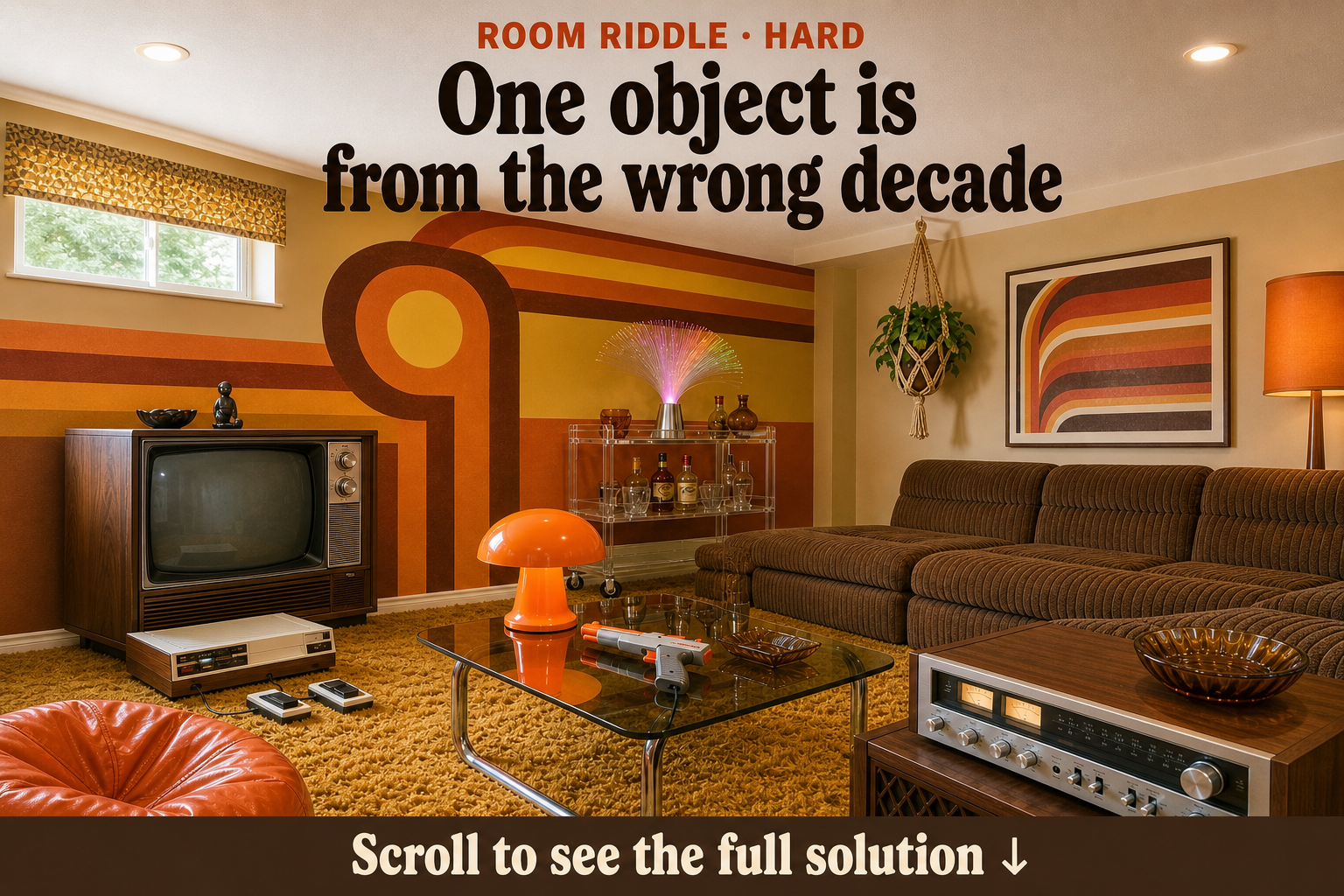
Explore the design idea behind this room and see how its key details work together. Then follow the visual riddle to discover the answer in the full reveal.
Immersive 1970s Earth Tone Palettes
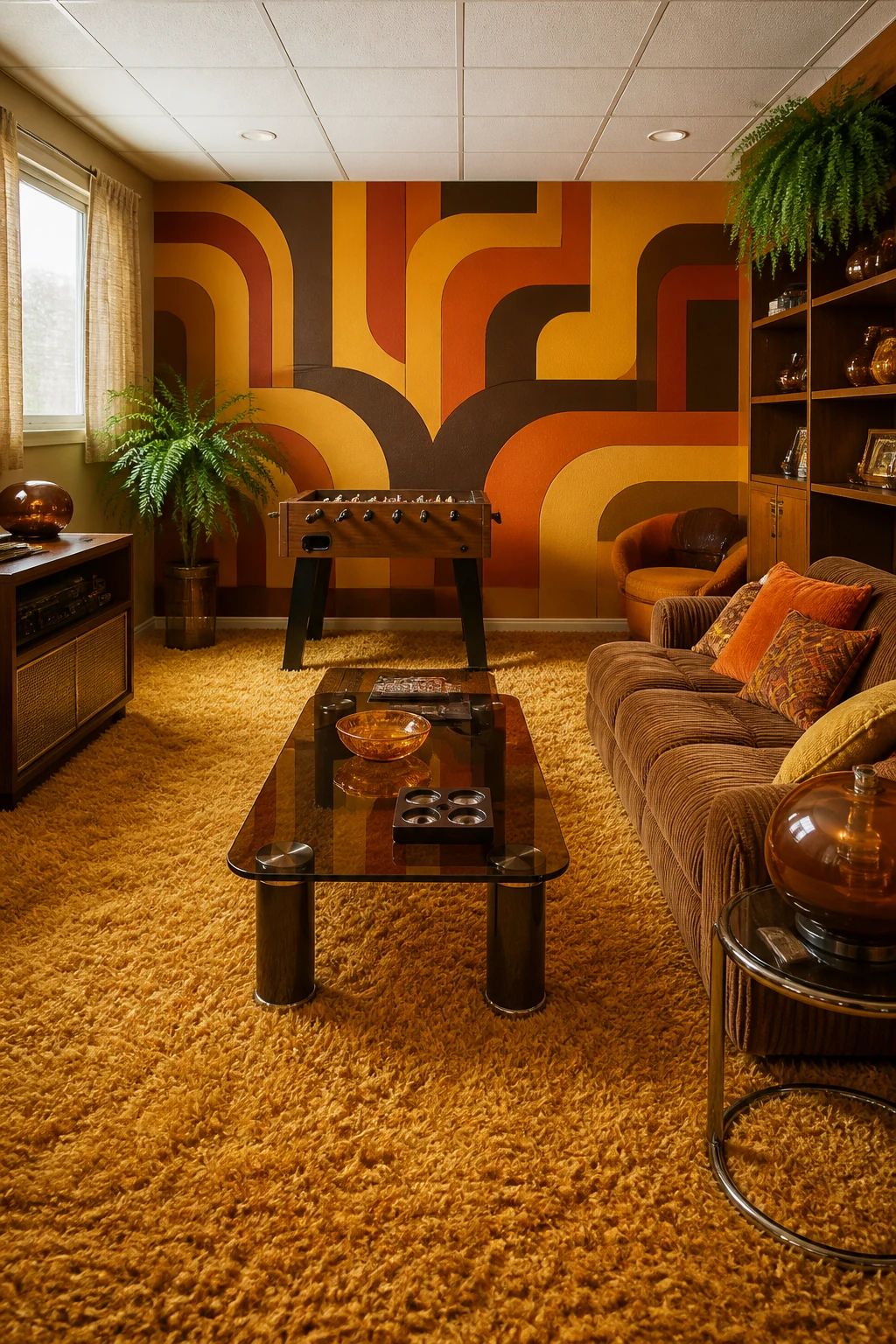
The aggressive 1970s color palette of harvest gold, burnt orange, and brown created an immersive, cozy cave-like atmosphere that smelled faintly of warm electronics and thick shag carpet fibers. Living with these earth tones meant embracing wall-to-wall color saturation, where bold geometric wall murals seamlessly blended with heavily textured flooring to anchor the room’s casual, relaxed energy. Understanding this strict 1970s color palette makes spotting the hidden intruder much more rewarding.
The Time-Traveling Object
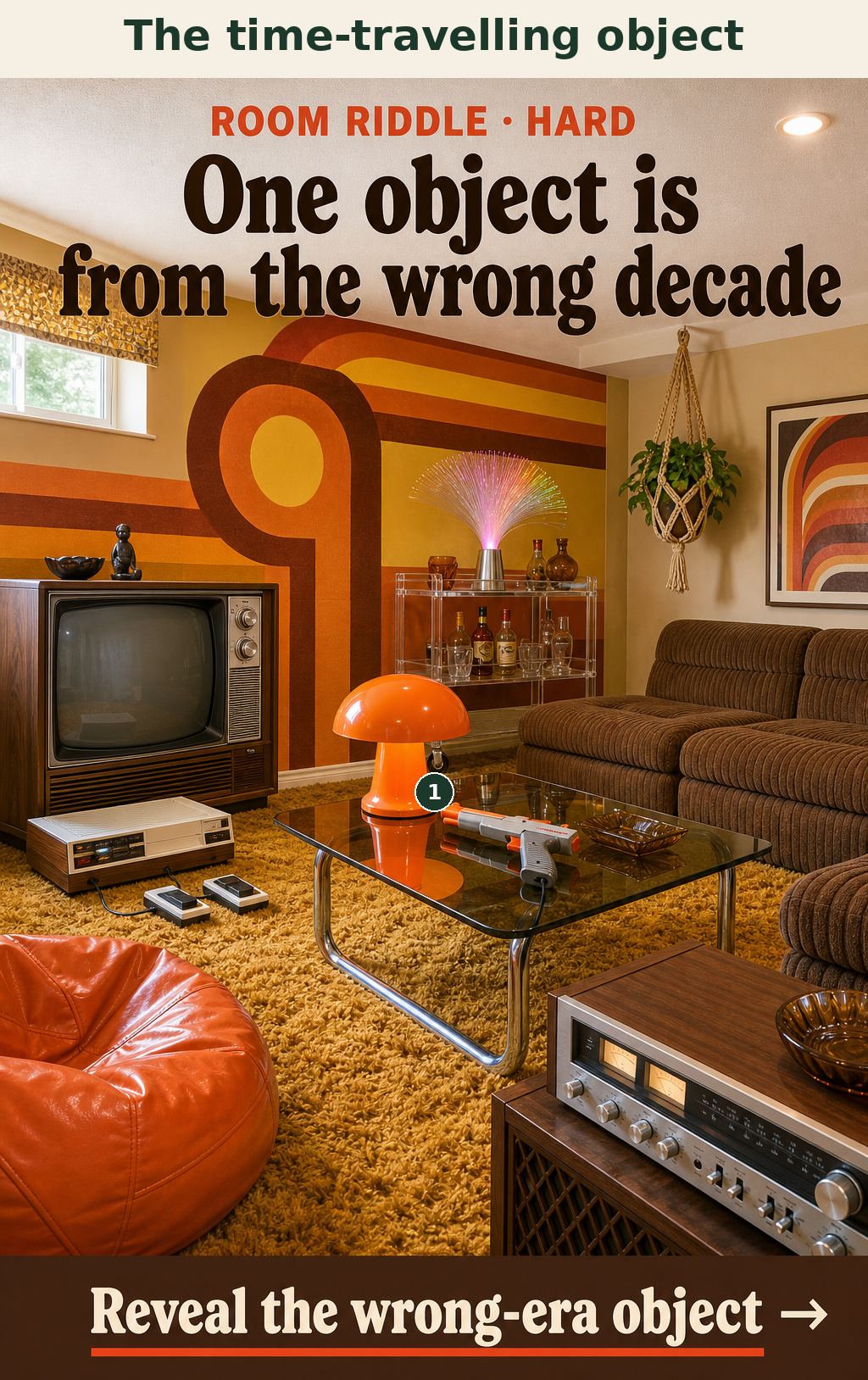
The grey and bright orange video game light gun resting on the smoked glass coffee table is from the mid-1980s, while the rest of the gaming room is strictly 1970s. This lightweight, angular plastic peripheral belongs to a rapid-fire 8-bit console generation that simply did not exist yet. Its purely functional manufacturing contrasts sharply with the heavy wooden cabinetry of the era’s authentic analog technology.
1970s Space-Age Material Mixes
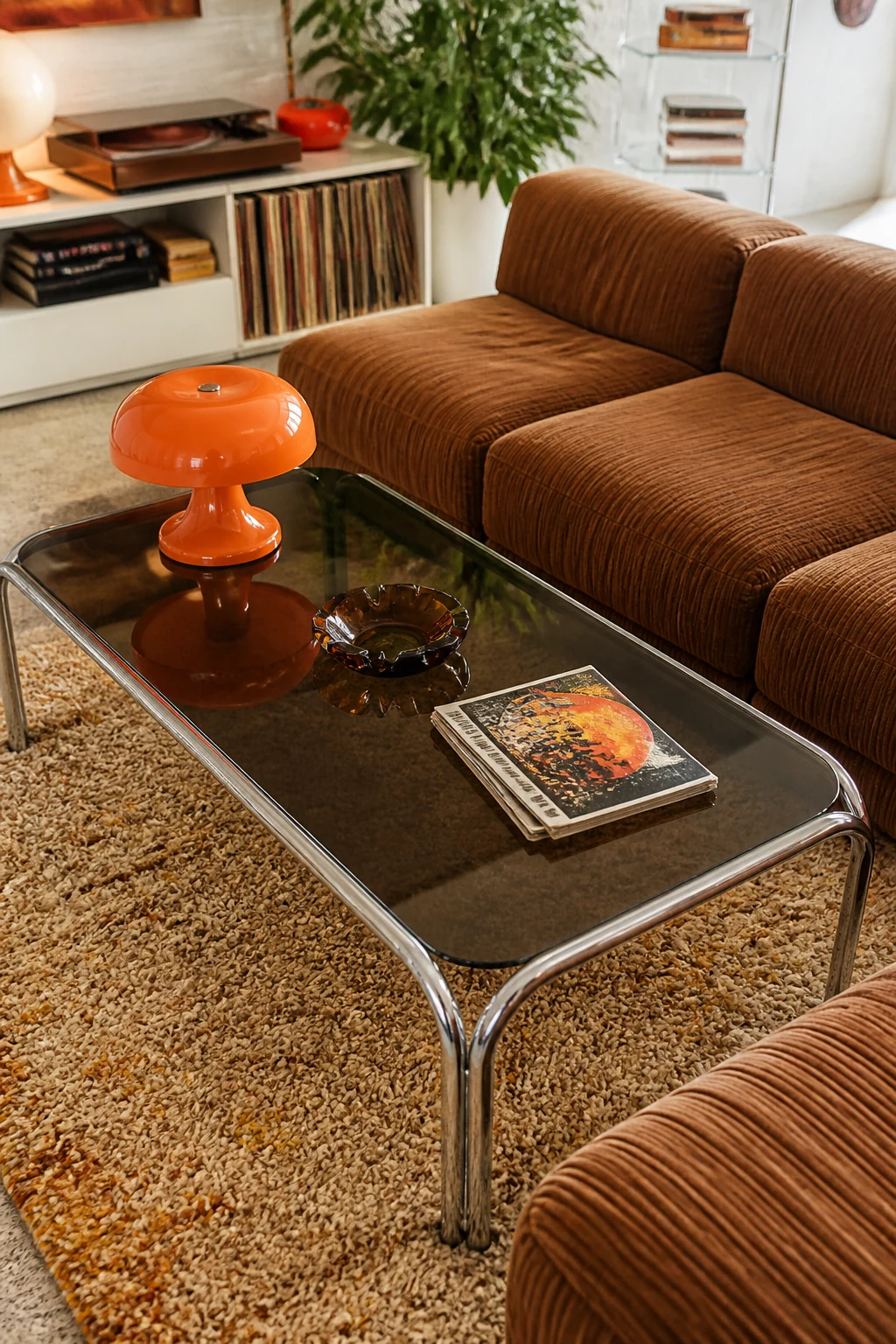
While 1980s gaming rooms shifted toward stark black plastics, authentic 1970s spaces balanced warm, ribbed corduroy upholstery with sleek smoked glass and tubular chrome. Families proudly displayed glossy acrylics and clear Lucite rolling carts that caught the warm glow of plastic mushroom lamps, keeping these basement recreation spaces from feeling visually oppressive. Sliding a heavy glass coaster across that chrome-edged coffee table was a defining tactile memory of the decade.
Authentic 1970s Analog Entertainment
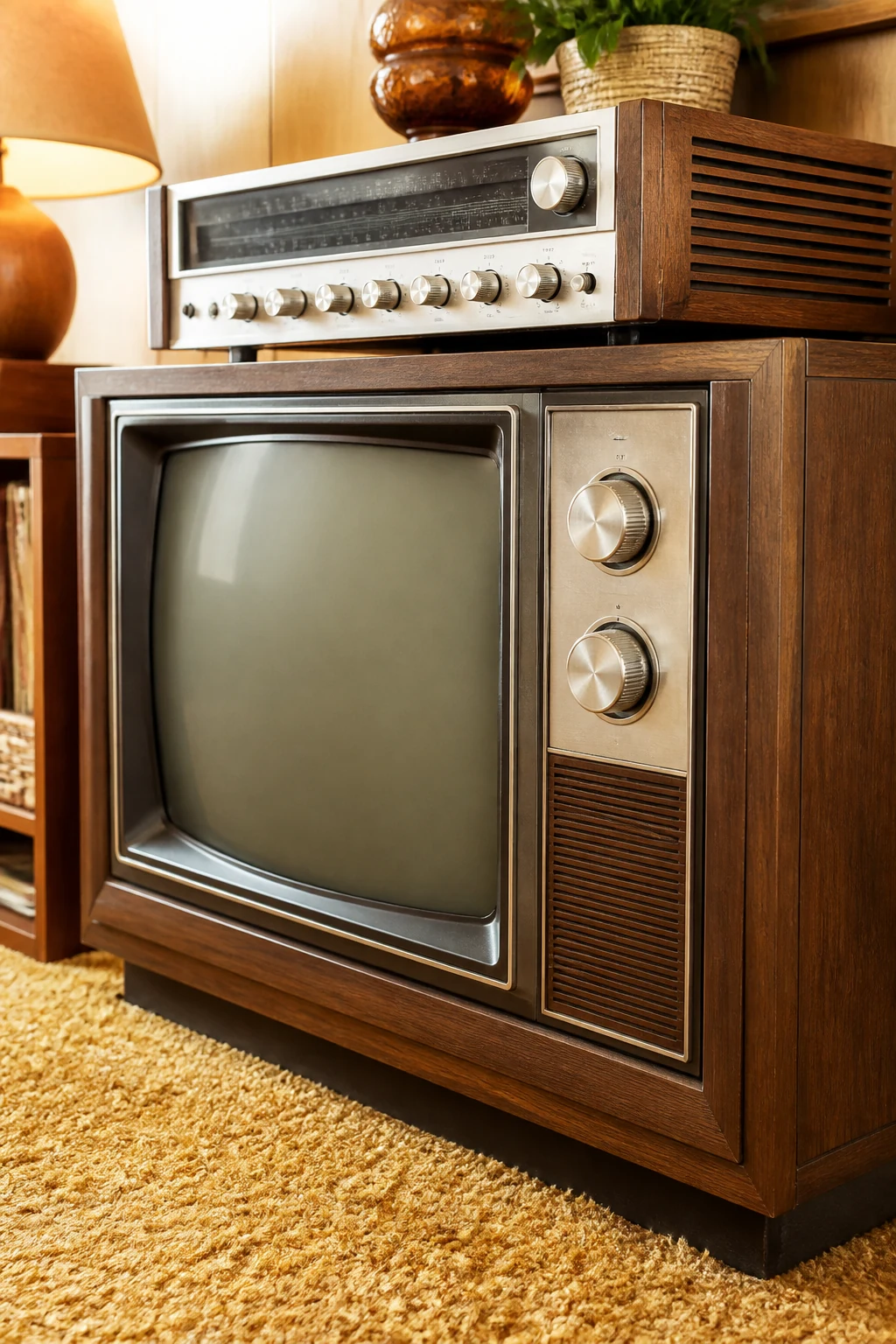
Integrating 1970s technology meant treating televisions and stereo receivers as permanent wooden cabinetry that harmonized beautifully with the room’s earthy decor. You could feel the satisfying, heavy clunk of the silver rotary dials on the wood-grain console CRT television when changing channels by hand. This tactile, analog entertainment experience stands in stark contrast to the lightweight, mass-produced plastic peripherals that would eventually take over family rooms in the 1980s.